← PBD Podcast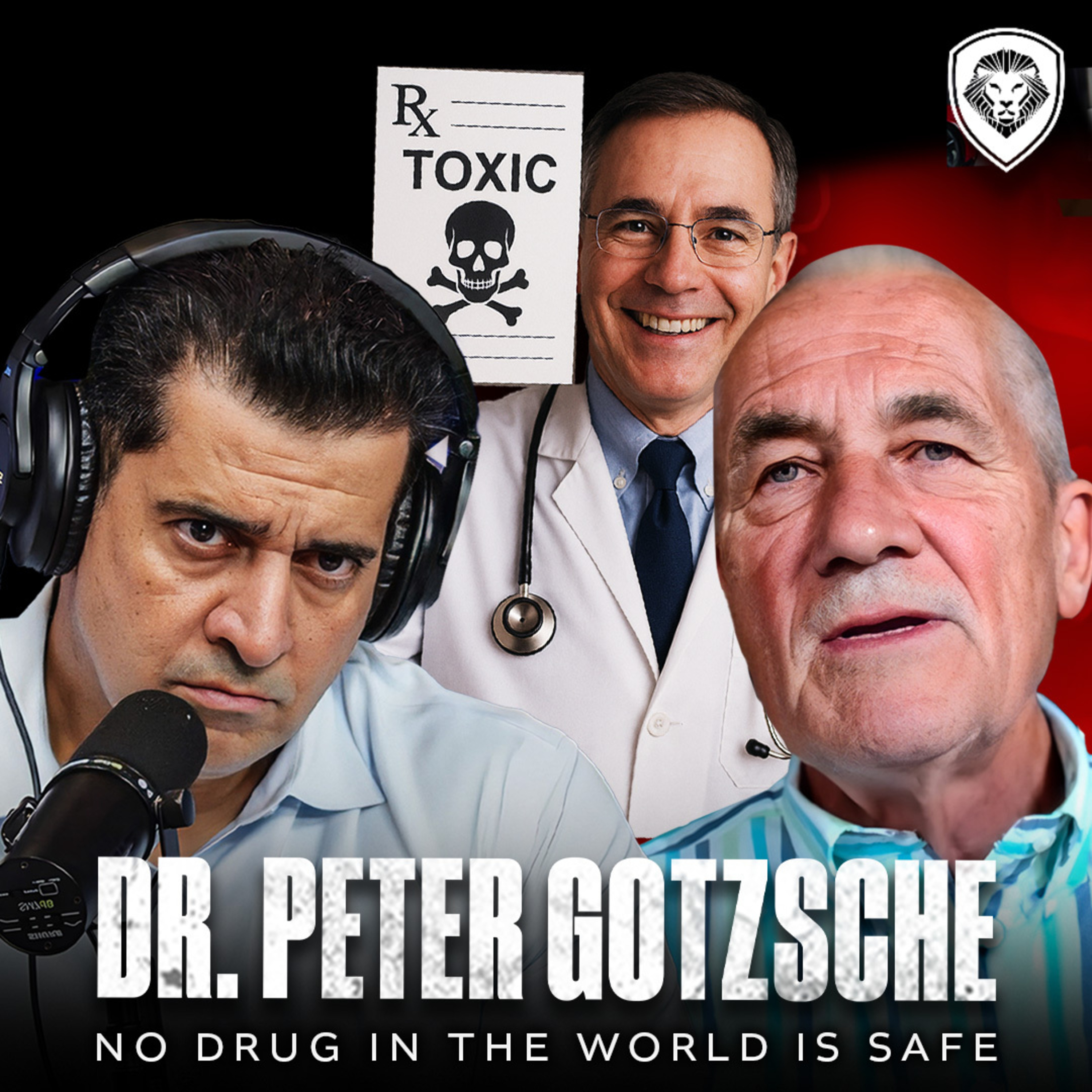
PBD Podcast
"Big Pharma Is Organized Crime" - Whistleblower Peter C. Gøtzsche REVEALS Pharma’s Dirty Secrets | PBD Podcast | Ep. 644
01:16:51
Loading summary
Transcript133 lines
- [00:00]
A
I learned that the business model of drug companies is organized crime.
- [00:05]
B
Why do you call them organized crime?
- [00:07]
A
Every type of person that can be bribed has been bribed. FDA commissioners, the top guys at the fda, and even ministers of health.
- [00:18]
B
How did they get away with it?
- [00:19]
A
The corruption is huge in America. The drug industry has been convicted of more crimes than other industries. I found out that they had committed serious crimes repeatedly.
- [00:33]
B
The trust on a lot of institutions went down. The trust in the US Government down. The trust in mainstream media, down. The trust in doctors, down. The trust in CDC down. The trust in World Health Organization down.
- [00:45]
A
Don't compare me with the cdc. It is actually the most corrupt of all industries.
- [00:51]
B
Where are you getting that data from? Did you ever think you would make it? Adam, what's your point? The future looks bright.
- [01:13]
A
My handshake is better than anything I ever saw.
- [01:15]
B
It's right here. You are a one of one I send you. I don't think I've ever said this. All right, so we have Dr. Peter Goche with us, the author of Deadly Medicines and Organized Crime, How Big Pharma has Corrupted the Healthcare Industry. And he's also got a new book coming out called How Merck and Drug Regulators Hit Serious harm of the HPV vaccine. Dr. Goetche, it's great to have you on the podcast.
- [01:47]
A
Thank you.
- [01:48]
B
So, you know, the more I read into you, the more interviews I watch of you. You're a whistleblower from 2000, from early days, you know, a lot of times during COVID we saw a lot of new doctors coming out and what they were saying and they were blowing the whistle. But you've been doing this for a minute, and your background started off of, you know, a master in science in biology, chemistry in 1974. And then you go work in the industry, you actually sell some of the products in big pharma, then you go become a doctor, and then later on, you see what's going on and you kind of start blowing the whistle, saying, wait a minute, let's take a time out. I don't think we're going the right direction here. So if you don't mind. What prompted me wanting to do this interview with you is a few weeks ago, I was at a show called Jubilee, where 20 folks are. 20 kids are sitting next to me, around me, and they're debating me on different topics. And one of the girls said something about that she's mentally ill. And when I asked her, who told you you're mentally ill? She said herself and her team of doctors And I kind of want to go into that space. I'll show the clip here in a minute, but before we get started with that, if you don't mind taking a minute or two and just kind of share with the audience your background, that'd be great.
- [02:56]
A
As you say, I became a biologist at first and didn't know what to do. So my grandfather, who was a doctor, suggested I went into the drug industry. And I hadn't been there for long before I realized that these people were cheating on the doctors. So I couldn't stay there. So I took the worst way out by taking a whole new education, becoming a doctor while I still worked in the drug industry. So that was pretty hard, but that's. That's what I did.
- [03:30]
B
Got it. And so when you got in, after how much longer after you got in, you learned about, you know, how it had become a business and what they were doing maybe wasn't the best solution. It was more of a business than an actual solution for the patient.
- [03:46]
A
Well, I have always asked questions since I was a little boy. And even though I was a biologist and didn't know much about drugs, it didn't take me long before I found out that the clinical trials had been manipulated and what salespeople were telling doctors were not correct. It was pretty easy to find this out, actually.
- [04:12]
B
So what did you learn?
- [04:16]
A
Well, some years later, as you say, I wrote this book about organized crime. So I learned that the business model of drug companies is organized crime. I wasn't allowed to use this term when I published an article in the British Medical Journal because they are so afraid that they might be sued by Big Pharma. So they called it corporate crime. But it. It's far worse than this. It is organized crime according to US Law. That is their business model.
- [04:47]
B
Unpack that for me, because that's a strong statement, and I've seen you in other videos, but maybe for some people that haven't heard it, why do you call them organized crime?
- [04:58]
A
It's pretty simple, really. I went out on the Internet and I googled the 10 biggest drug companies in the world, and I found out that they had committed serious crimes repeatedly and had been fined sometimes billions of dollars. But it's a tiny bit actually compared to what they earned by their crimes, which is why the crimes just continue. And according to US Law, the Racketeering act, organized crime is about doing things repeatedly, which can be fraud. And that is all over the place, both in research and marketing, bribery, political corruption, obstruction of justice, embezzlement. So These are things that you can see the big pharma companies do all the time.
- [05:54]
B
How do they get away with it? If that's what they do, how do they get away with it?
- [06:00]
A
Well, now I'm talking to an American. I will tell you. That's pretty obvious, actually. The big pharma companies, they bribe your politicians, both Republicans and Democrats. And it's therefore very difficult to do something effectively against the organized crime.
- [06:25]
B
It's very difficult to do anything with them, with the organized crime. Okay, so, Dr. Goche, if you don't mind going a little bit deeper, because right now, like, I want the audience I've seen you speak eloquently with, getting into details of what things you found. This is surface level. Would you mind getting a little bit deeper for the audience to understand what you're saying?
- [06:49]
A
Yes. For example, I wrote in my book that virtually every type of person that can be bribed has been bribed, including FDA commissioners, the top guys at the fda, and even ministers of health. So it is very widespread to bribe people. And of course, doctors are some of those who are bribed the most. And if you work in the industry, you start by buying the top doctors, the professors and department chairs. So when you look at how much money these people earn in the United States by being on a drug company's advisory board or whatever they do, these are obscene amounts according to European standards. So the corruption is huge in America. It is actually the most corrupt of all industries. It even supersedes big oil and other industries. So the drug industry has been convicted of more crimes and more serious crimes than other industries. And this is absurd because they are dealing with our survival, our health. So it shouldn't be that way.
- [08:14]
B
Okay, so how different is it the way big pharma can get away with things? Because while you're saying these, we know these numbers. I mean, I'll pull up this number here, Rob, if you want to pull it up. The amount of lobbying that we do in America versus by industry versus other industries is not even close. If you zoom in a little bit in 2024, leading lobbying industry by industry. Rob, I can't see the top industry in the US Big Pharma. 293 in millions. Then it's electronics, then it's insurance, then it's real estate, securities, oil, gas. Oil and gas is one third of what we do with big Pharma. So that validates it. But I guess maybe open it up, because one thing that you'll typically hear is the only two countries in the world that they allow for Big Pharma to advertise is New Zealand and us. We've heard about that before. How different is Big Pharma managed and handled in Europe, in the Middle East, Asia, versus the way it's handled in us?
- [09:10]
A
I would say very differently. I know Bob Kennedy personally. I met him for the first time six years ago. And Bob has many good ideas about how to improve the health of Americans. And one of his most important ideas is to ban commercials on prescription drugs, because we know that this is very harmful for the population. And not only that, it is also very costly for our national economies to allow all these nauseating TV ads on American television, for example.
- [09:49]
B
Yeah, but how different is it in Europe, Asia, Middle East, South, Central America? Have you studied how it is done? Maybe even where you are right now? You're right now. Are you in Copenhagen? Are you in. Are you. You're in Denmark. Okay. How different is Big Pharma managed and handled in Europe and Denmark?
- [10:11]
A
Well, in one way, Big Pharma does business in the same way in the whole world. But as you said, it's only New Zealand and United States that allows direct advertising of prescription drugs to consumers. So this makes a huge difference. And I believe we can see the outcome of this in national statistics. For example, the last time I looked at this, the United States uses 18% of its gross national product on healthcare. This is about double as much as we do in Europe. And part of this is because you have many middlemen in healthcare that we don't have in Europe, but also that you use drugs to an extreme extent in the United States, even very expensive drugs. And yet the net outcome of all this is that Americans have a shorter life on average than Europeans, even wealthy Americans. So it's not a question of some Americans being poor and not able to afford a good living, but it is very much because of over diagnosis and over treatment with drugs.
- [11:36]
B
Over diagnosis and over treatment of drugs. Yeah, I can. I mean, that's not, you know, disputable. That is the first thing they do when you go see a doctor. Hey, your kid's got adhd. Here's the medicine. Hey, I'm having a hard time. Mental illness, hey, you know, take this medicine, take that medicine. Instead of, maybe you have financial issues, maybe you have family, maybe you have certain things that you got to address. So there's no question, but who's doing it. Right. Is there a case study of a country where you've studied to say, this country does it right? We should model after XYZ.
- [12:13]
A
Well, the Nordic countries, Sweden, Denmark, Norway, Finland and Iceland, they have actually been mentioned by US politicians as something that America should live up to. For example, we have a national health care where we take care of everybody. We don't need insurance that many people can't even afford in America. So the public health care system is very, I believe, very beneficial. And I can give you one example that comes from America. Quite some years ago, a very famous study was published that looked at over 3,000 counties in America. And that study found that for every 20% more family doctors there were in a county, total mortality dropped by 6%. These are incredible revelations and I'll try to explain. How can this be? Well, one reason is that a family doctor knows the patients they have, so they are not so keen to over diagnose and over treat a specialist are they might be more reluctant to follow guidelines because they know that this particular person in this case, it would actually not be beneficial to follow the guidelines. So they actually don't prescribe a drug that is called for in the guidelines. So this is one reason why it is of great benefit for a country to have very many family doctors and so to speak to keep the specialists at arm length. But you do the opposite in the United States. So this is also a problem.
- [14:16]
B
So we have more specialists than family doctors?
- [14:21]
A
Well, I don't know your numbers. I just know that you focus a lot on the specialist rather than family doctors in America.
- [14:29]
B
Is that because it pays better?
- [14:32]
A
Well, I don't know what the reason is, but it would be beneficial for your population if you had more family doctors and fewer specialists.
- [14:42]
B
Okay, so if we look at these numbers here, as of 2022, there were approximately 279,000 active primary care physicians, which represents 29.9% of all active U.S. physicians. This implies that 70% are physicians and specialists. Huh. So it's roughly a 3 to 1 ratio, little bit higher than 2 to 1 ratio, Little bit higher than a 2 to 1 ratio, 2 and a half to one ratio when we're looking at that. And Rob, if you can go back to the other number that you had, that was interesting. The 2019 study with the 3,000 counties in the US found a direct correlation between the supply of primary care physicians and improved life expectancy and lower mortality rates. While the study didn't specifically cite a 20% increase, it did establish that an increase of 10 primary care physicians per 100,000 people was associated with a 51 and a half day increase in life expectancy. So if you take that to, say, 100 per thousand, that would be 515, which is a year and a half. That's interesting. The same increase of 10 pcp was included. Drop in mortality rates from conditions like cardiovascular disease, cancer, respiratory illness, which are often addressed in primary care. Can you go a little bit deeper with this topic of primary family doctor versus specialists?
- [16:10]
A
Well, first of all, this study you just showed. I'm impressed about how quickly your people can find relevant information while we're talking. But the study I talked about is a lot older. This is not the same study. So. But. But actually, they. They tend to show about the same pattern. I can see. And when we talk about drugs, there is one thing that is very important for me to tell you and the audience, please. I have. I have done investigations on how many patients our prescription drugs kill. And I have concluded in an article I published recently that our prescription drugs are the most important cause of death. They even supersede heart disease and cancer. This is deeply shocking and tells you a lot about how dangerous our drugs are and how much they are overused, because the main killers are opioids, arthritis, medications like Motrin, which you can buy over the counter. And surprisingly for many people, psychiatric drugs are a very big killer. And if you look at these drug categories, we could easily reduce the consumption of these drugs by 90% and yet have a more healthy population that would live longer. So this reflects how terribly harmful drug marketing is.
- [17:59]
B
You said the most important was prescription drugs. You didn't say the worst. Most important cause of death is prescription drugs.
- [18:09]
A
Yes, that's the main cause of death.
- [18:14]
B
No, I know, but it's not. You didn't say it's the most. You said it's the most important one. No, no.
- [18:20]
A
It is number one cause of death, ahead of heart disease and cancer.
- [18:25]
B
Rob, can you verify that prescription drugs are the number one cause of death ahead of. Ahead of cardiovascular and cancer?
- [18:34]
A
Yeah, it is. And when Bob Kennedy testified in Congress when he ran for the post as Secretary of Health, he mentioned my research on both hearing days. But that was an older version where I said that our drugs were the third leading cause of death. I have now concluded it is the leading cause of death, which should tell everybody that they should be careful. If they go to their doctor, also their family doctor, and come home with a prescription, they should investigate themselves. What are the benefits and the harms of this drug? And is it really necessary? Is it too dangerous for me to use this drug? So I wrote a whole book helping people to find reliable information on the Internet it is called survival in an over medicated world. Look up the evidence yourself and people would think that this is too difficult for me. I'm not educated as a doctor, but it's actually more easy than you would think. So I have a lot of examples in that book that shows people it's not so difficult as you might think. And then you might not go to the pharmacy and this might help you survive actually.
- [19:55]
B
So can you go back to the other source? So here Rob asked the question is prescription the leading cause of death in the U.S. cDC came back and said number one is heart disease, number two is cancer. And then it goes into unintentional injuries which include drug overdose, you know, fentanyl opioids, all that other stuff. But it also says on the bottom that some researchers and it quotes you and we didn't put your name in here. Quotes you and says some researchers like Peter Kocher in Deadly Medicine Organized crime argued at adverse effects of properly prescribed medications are underestimated and could rank as the third leading cause of death if counted comprehensively. But this is debated and not reflected in CDC's official leading cause table. So how are you getting the source to say it's the leading cause of death now? If it was a third a few years ago, now it's the leading cause. Where are you getting that data from?
- [20:56]
A
Well, let me first say that the CDC is not a reliable source of information. This has become abundantly clear Recently. Bob Kennedy fired the whole vaccine committee because several members received money from the vaccine industry. So now they have a much better committee and that will also help American health, no doubt. And for example, I have written a book about vaccines where I document that what the CDC writes on their homepage about influenza vaccinations is sometimes totally wrong. They write that these vaccines can help people survive. This has never been documented, that they can decrease hospitalizations and so on. In reality, the flu shots are not very effective. So don't compare me with the cdc. I believe this is not a reliable organization. This has been documented many times. And now you ask me where do my data come from? Well, that's very simple. I looked at the drug groups that I was very familiar with and then I looked up systematic reviews of the randomized trials. How many deaths were there on drug, how many deaths on placebo? And then I had usage statistics. I could see how many people were on these drugs. And in some cases there weren't good randomized trials. But then I used the best observational studies I could find. Where There was a comparison group that was very much alike, the group that was treated, but which was untreated. And then you could see what the mortality was in these two groups. I will give you one example that will be surprising for people. Antidepressants are among the most used drugs at all. One fifth of all Americans are on an antidepressants. Antidepressants every day. But when you give drugs that affect brain functions, they become problematic when you get older because you might lose your balance. And if you fall and break your hip, one fifth of the patients will be dead within the next year. So one reason why antidepressants kill very many drugs, very many people, is that it is being used by very many elderly people. And some of these fall and die. This will surprise many people, but it should not be surprising because, I mean, if you drink alcohol, you will also have balance problems. Everything that affects the brain can give you balance problems.
- [24:02]
B
Okay, so let me be the devil's advocate and just say, you know, then why are people living longer? Because somebody in medicine is going to sit there and say, I totally understand what the, you know, the Prozac. And we're going to get into that because I'm going to show you the clip here because I want to know what you're going to say about this. But some may say, well, doc, then why are people living longer? Life expectancy, you know, 100 years ago was not what it is today. 50 years ago, it's not what it is today. What is the cause of us living longer? Oh, is it because of medicine? Is it because of better advancement in science? Is it because of why are we living longer? What would you say to that?
- [24:40]
A
Well, this is not really my area of research, but what I have read is that there is good agreement that the increase in longevity is not due to drugs. It is due to social factors that people have become more wealthy, they eat better food, generally, they exercise a lot. If you compare people at my age with my grandparents generation, they were generally fat, they ate far too much. And exercise, they had partly heard of it. Doing sports, they didn't do that, not even when they were young, most of them. So exercise is very helpful for our longevity. We know that. So there are many factors that are not drugs that help help us live much longer today. Does that resonate with you?
- [25:45]
B
Yeah, I don't know. Because when you said that, you said your grandparents were much fatter than you. I just typed in right now, are we fatter today or 100 years ago? Just to kind of see what Numbers it'll bring up. And it says in the 1920s and 1930s, obesity was rare. Estimates suggest that only about 1 or 3% of adults were obese versus today, 42% are obese today. And that number is astronomically increased since then. And a wider change. Food supply, you know, shifted from fresh and local to processed. High sugar, high fat, you know, portion sizes. We eat a lot more physical activity. It says it's lowered a little bit because we're behind the computer more. So it's interesting because I'm trying. I read a book one time by Ken Langone. He is one of the original guys of Home depot. He's an $8 billion guy, wealthy guy. He's made a lot of money for himself, successful. He wrote a book called I Love Capitalism. And in the book I Love Capitalism, he talks about how his father died at 62 years old. And if blood thinners were around then, his dad would have lived to 85. And he says, I've been on blood thinners for 30 years. That's what his claim is. So to me, I have a. I'm trying to keep a balance on where did they get it right and where did the abuse come in? For example, I'm going to show you this clip. Rob, if you can pull up, play this clip. This last four weeks ago. I'm in a room with 20 kids. Politically, they're all socialists and some communists. They're making the argument of capitalism and anti capitalism. I'm the capitalist, they're the 20 anti capitalists and they're debating me. One of the girls I talked to, she says she is mentally ill. And I want you to see this exchange and you tell me how we got here. Go ahead, Rob.
- [27:38]
C
Mentally ill. So that was something I had to deal with. But I'm mainly mentally ill because I am disabled in a capitalist country.
- [27:44]
B
Tell me more about mentally ill. Who qualified you as somebody that's mentally ill?
- [27:49]
C
Me and my doctor team.
- [27:51]
B
Who, who. Who convinced you that you're mentally ill?
- [27:55]
C
Me and my doctor.
- [27:57]
B
What's the specific category of mental illness? Is there one? You know why I asked this question? Let me explain to why I asked this question.
- [28:03]
C
I don't even like this psychological industry. I don't really stand for, like Sigmund Freudian politics or anything like that. I don't have access to even a result or a solution to my disability. As someone with a connective tissue disorder, it's genetic.
- [28:18]
B
Have you been able to go to different doctors and get yourself tested?
- [28:21]
C
Yeah.
- [28:22]
B
You have?
- [28:22]
C
Yes. In California yes, but not enough. I can't find a specialist.
- [28:27]
B
You can't find.
- [28:28]
C
You can't find a specialist or anyone in your life that's willing to find anyone? Well, they could if. Or they would if they had money, but. Yeah.
- [28:36]
B
Would you be okay if I pay for a specialist for you to go see?
- [28:39]
C
Yeah.
- [28:39]
B
Would you take money from a capitalist to help you go see specialists?
- [28:42]
C
I mean, yeah, sure, why not?
- [28:43]
B
I'm gonna have you go see two. What, do you live in California?
- [28:46]
C
Yeah.
- [28:46]
B
I'm gonna have you go see two specialists. But would you also be open to seeing somebody else? I choose as a psychologist that may. No, you're not.
- [28:54]
C
No, you choose as a psychologist, you're choosing who exactly gets to determine what.
- [28:58]
B
My mental health looks like?
- [29:00]
C
No. No.
- [29:01]
B
Okay, then. I wish you nothing but the best. So nowadays, more than ever, the brand you wear reflects and represent who you are. So for us, if you wear a Future looks bright hat or valuetainment gear, you're telling the world, I'm optimistic. I'm excited about what's going to be happening. But you're a free thinker. You question things, you like, debate. And by the way, last year, 120,000 people got a piece of Future Looks Bright geared with valuetainment. We have so many new things. The cufflinks are here. New Future Looks bright. This is my favorite, the green one. Just yesterday, somebody placed an order for a hundred of these. If you watch the PBD podcast, you got a bunch to choose from. White ones, black ones. If you smoke cigars and you come to our cigar lounge, we have this high quality lighter cutter, a holder for the cigars. We got sweaters with the valuetainment logo on it. We got mugs. We got a bunch of different things. But if you believe the future looks bright, if you follow our content and what we represent with valuetainment with with PVD podcast, go to vtmerch.com and by the way, if you order right now, there's going to be a special VT gift insight just for you. So again, go to vtmerch.com, place your order, tell the world that you believe the future looks bright. There is this, you know, immediate link, and this is her following up. Maybe we'll show this afterwards. But there's this correlation with the amount of people today that want to say they're mentally ill. I don't remember this when I was 16 years old. I don't remember this when I was 8. I'm 46. It's not like that was 80 years ago. That was 26 years ago. That was 30 years ago when kids were going to school. I don't remember a lot of mentally ill statements being said by kids. We were fairly normal. What's happened the last 30 years to have so many kids saying they're mentally ill? This is my concern where big pharmas targeting kids and they're easy candidates. What do you have to say about this girl right here that you just watched in the clip, as well as what's happening with young kids that are saying they're mentally ill?
- [31:07]
A
Oh, I have a lot to say about this.
- [31:09]
B
Please.
- [31:09]
A
Because now we are into psychiatry. But before I go there, I just want to tell you that you're absolutely right about people have become more obese and therefore it is surprising that we live longer. It's the same in Denmark. People are fatter today than earlier and yet life expectancy goes up. But if we had not become fatter, I'm sure it would have gone up even more. But let's leave that and talk about psychiatry. This is a very tragic chapter of medicine. It is the only medical specialty I know of that definitely does more harm than good to its patients. And one reason is that when psychiatrists were battling with psychologists, who were more popular in the 50s and 60s than psychiatrists, then the psychiatrist invented a new idea. We are doctors, so we can prescribe drugs which psychologists cannot. So we have to focus on drugs. And then they invented this disease manual, dsm, the American Psychiatric association. And it just became worse and worse over the years. And what I mean by this is that virtually everything in life, normal conditions, can now be defined as a psychiatric disorder. For example, you are not even allowed to grieve more than two weeks if you have lost your wife or husband, because then you might get a diagnosis of depression. This is insane. You must have had a very bad marriage if you are only unhappy for two weeks after your spouse suddenly died. But this, this is how it is now that you get a diagnosis so easily. And I can give you an example. One evening we had dinner in my home and our youngest daughter was there with her very laid back boyfriend. And we talked about psychiatry. And then I said, hey, wait a minute, I will go and get the diagnostic chart for adult adhd. So I came in with it. We were four people. We all tested positive for adhd, even the very laid back boyfriend. It is so totally ridiculous. Because ADHD is not something that exists in nature. You can find a giraffe or a lion, they exist. But ADHD doesn't exist. It's just a name. You have a normal distribution of behavior. Most of us are in the middle and some of us are more energetic and perhaps irritating and gets annoyed if we listen to a boring lecture. So we move our feet and maybe we stand up and walk around a little to signalize to the lecturer, I'm tired of you, please stop this. And these are some of the features that identify what you call ADHD. So when I lecture, I often find that the 1/4, up to 1/2 of the audience test positive for adult ADHD. I try this test on them and then I tell them afterwards, don't be unhappy. I also got this foolish name and some of the most interesting and dynamic people I've ever met in the whole world. They all test positive for ADHD because they are energetic and sometimes irritating. For some years I joked about we also need a diagnosis for all those who are too quiet. And then it came adding attention deficit disorder without hyperactivity. And then I started joking. Now we need a diagnosis for people in the middle so that we can medicate everybody.
- [35:28]
B
What did they come up with for the middle? I'm curious, I'm waiting.
- [35:32]
A
I don't know. But it is so ridiculous that it takes so little to get a psychiatric diagnosis. It is very, very, very harmful. And that's why I agree with American psychiatrist Peter Bregan, who is now approaching 90 years of age. He once said, I think it was on an Oprah Winfrey show, that the worst mistake you can make in your life could be to look up a psychiatrist if you have a mental health problem, because you are virtually certain to get one or more diagnoses and one or more drugs. And this is not the solution. Peter almost did not use psychiatric drugs at all in his clinical practice. He used psychotherapy even for people who are psychotic and schizophrenic. And there are now randomized trials that show that psychotherapy even works in these serious conditions.
- [36:34]
B
Okay, so when you're talking about when you saw that lady who's saying she's mentally ill, what do you think is causing an increase in that? Is it education? Is it big pharma? Is it victimhood, mentality? Is it society? What do you think is causing an increase in that?
- [36:53]
A
I can give you one example. My wife and I became very angry when a so called ADHD bus visited our children's school. So the idea with this bus, which came from the Danish ADHD association, was to inform children about that they might have adhd. So perhaps it would be a good idea to become tested and the material that was given to the children had been worked out in collaboration with a drug company. My goodness. I call this corruption. And there was a school teacher somewhere who had sent most of her pupils to being investigated for adhd, and a lot of them came back positive. So my conclusion was that the school teacher was the problem, not the children, because she couldn't keep order and discipline in her classroom. So then it must be the children's fault. So just follow the money in psychiatry. It will tell you what you want to know. And a lot of the patient organizations, like the Danish ADHD association, have been corrupted by industry money.
- [38:18]
B
Got it? Yeah. You know, as you. As you go through this and you see this and you see how it's becoming normal with the medication that they're handing out, what specific. When you hear about these SSRI medicines, what can you say about them? What's the research you've done and what side effects they have specific to SSRIs?
- [38:39]
A
Yes. What is most important, perhaps, about these antidepressants is that when you study how good the effect is on depression compared to a placebo, then you get a result that is so small that it is far below what you call the least clinical significant difference. I mean, in order to make a difference for people, you need more than just what you can barely detect in a randomized trial. So the psychiatrists have themselves shown that these drugs, their effect is way below what is clinically relevant. So you might wonder why they have become so popular. But that's all about money. And then what are their main effects? It's not to make depression better, because very few can feel any difference. No, half of those who are treated get sexual problems. And in half of those who get problems, the problems are severe. For example, males who become impotent or cannot get ejaculation, and females who cannot get orgasm. And these effects can actually become permanent. So that when people have stopped the antidepressants, they might be incapacitated for life. And in some cases, this has caused people to commit suicide. So this is one of the very bad effects of depression pills. But there is another one, and that is that they double not only the risk of suicide, they actually double suicides. And not only in children, but also in adults. This has been shown, for example, by researchers who had access to FDA data, which are much more reliable than what the drug companies and their paid allies among psychiatrists have published in journals like the Indian Journal of Medicine and JAMA and JAMA Psychiatry and Lancet and so on. So, and suicide Prevention programs all over the world. They recommend antidepressants if you are suicidal. I was invited to Washington D.C. in June by a veterans group. So we had a meeting in Capitol and also a press conference. And what has happened was that when the Veterans Administration introduced a suicide prevention program, it of course involved antidepressants because such programs always recommend antidepressants. And in the following years, usage of antidepressants in war veterans went up. And what happened with suicides, they also went up because this is what the drugs do to people. It is so totally insane. And I actually become very sad whenever I think about it. Particularly when children are driven to suicide with something that on top of this is even called happy pills.
- [42:06]
B
Yeah, it's interesting because just I think this is a week ago or maybe. Rob, is this a week ago or two weeks ago, something like that? I believe last week. Yeah, last week. Here's what Bobby Kennedy had to say about SSRIs. Go ahead, Rob.
- [42:19]
C
We know places like Uvalde have experienced one of the worst mass shootings in history. The CDC has previously been responsible for studying gun violence.
- [42:29]
A
A lot of those programs have been cut.
- [42:30]
C
Now, would you still consider gun violence.
- [42:33]
B
A public health crisis?
- [42:34]
C
And.
- [42:36]
D
I certainly consider mass shootings a health crisis. And we are doing for the first time to real studies to find out what the ideology of that is. And we're looking for the first time at psychiatric drugs. You know, he's kind of mad shit. People have. Have had guns in this country forever. When I was a kid, we had shooting clubs at our school. People, kids, my classmates, other people would bring a.22 rifle with their guns to school and park it in the parking lot. Nobody was shooting. Said there's never been a time in America in the history of humanity. And people walked into a crowd, into a church or a movie theater or a school or crowd of stage and just started randomly shooting. It's happening in our country. It's not happening around the world. And there are many other countries that have comparable levels of guns that we have in this country. We had comparable levels in the 40s, 50s and 60s. And people weren't doing that. Something changed and it dramatically changed human behavior. And one of the culprits we need to examine is whether the fact that we are the most overmedicated nation in the world. And a lot of those are psychiatric drugs that have black box warnings on them that warn of suicidal and homicidal ideation. So we are doing those studies right now for the first time. And we will have an Answer.
- [44:09]
B
So that kind of, you know, validates what you were saying. But what are your thoughts about what Bobby just said right there?
- [44:17]
A
I believe Bob Kennedy is absolutely right. It has been debated a lot whether antidepressants can cause homicide. But we know also from animal experiments that these drugs can make people hostile and aggressive. And when my research group got access to clinical study reports from the European drug regulator, we could see in these voluminous reports that there were cases where people have become belligerent and hostile and homicidal when they came on these drugs. This is not what the drug companies publish in their clinical trials. They delete such information. They even delete suicide attempts. We have also shown this by having access to confidential study reports that two suicide attempts on fluoxetine in children. Fluoxetine, that's Prozac. They didn't appear in the published report, but only in the internal Eli Lilly company report. This is fraud and it kills people. The fraud kills people. When Prozac was marketed, it became the most complained about drug in America. There were an enormous amount of reports on suicidality and homicidality and so on. And of course you can't know in every single case whether that person would have become homicidal anyhow. But, but there are other research that shows that not only antidepressants but also ADHD drugs can make people hostile, for example.
- [46:11]
B
Yeah, you know, as you, as you're going through this, I just think about my four kids and you know, when you're around schools, different schools, not all schools, different schools. We lived in California for a while, so a couple of our kids went to California. We have two kids born in California, one born in Texas and one born in Florida. And as you're going through the, the different approaches they take medicine for kids. I remember one day we're in California, we can't have, you know, religious exemptions and not have our kids take the vaccines. They have to take the vaccines. Whatever the mandates they had, we had to take them. We're in Texas. We're in Texas and you know, our kids went to a private school, Christian private school. But one day I get a call, my wife's like, the kids are, the school's asking for vaccine card. I said, yeah, but this is Texas and it's religious exemption now we have to give it to him. I said, there's no way. Let's call Bobby real quick. We call Bobby at 11 o' clock at night. He calls me back. We get on the phone for 45 minutes to an hour. He's getting all these other people on the call and it's right. Texas demands it. Then we come to Florida. At least Florida allowed for religious exemption. But as of yesterday, I don't know if you heard the news or not, the Surgeon General of Florida ends all vaccine mandates for kids. It was announced yesterday. Joseph Ladapo. Here's what he had to say. Go ahead, Rob. What I'm most excited about is an announcement that we're going to make, that we're making now, which is that the Florida Department of Health, in partnership with the governor, is going to be working to end all vaccine mandates in Florida law. All of them? All of them.
- [47:54]
A
All of them.
- [47:58]
B
Every last.
- [47:59]
D
Amazing.
- [48:00]
B
APPLAUSE.
- [48:02]
A
Yeah.
- [48:05]
B
That's unbelievable. Unbelievable. How many people does it sound like it's in their ride?
- [48:10]
D
Couple hundred.
- [48:11]
B
Couple hundred?
- [48:11]
A
Yeah.
- [48:12]
B
Every last one of them. All of them. Is he saying anything else? They've been clapping for about a minute already, so we can pause it. This was a big deal, Doc, because during COVID everybody was like, I don't want to have my kids take it. And I don't know what the number is. Today, 71% of Americans took the COVID vaccine. This is not even the COVID vaccine. This is just vaccines, period, that are mandated where parents don't have an option. And Florida is the first state that's done this. What are your thoughts on this?
- [48:45]
A
It's great. I did see the news already and I have been against vaccine mandates all the time. There are some vaccines that are just unbelievable. For example, the measles vaccine has saved the lives of countless number of people. So I get sad when some fundamentalists, they don't want to get the measles vaccine. And you had this outbreak in Texas not so long ago, but when you consider vaccine mandates, you have to balance benefits and harms. And in Europe, politicians were generally against vaccine mandates because they were afraid that this would only increase the numbers who would be vaccine hesitant in the population. And I agree, it's better with good arguments to try to convince people that we have some vaccines that every one of us should take. But we also have vaccines that are doubtful. And one concrete example is the COVID 19 vaccines. To me, it was a horrible decision in the United States to recommend these vaccines from age 6 months and upwards because they are harmful for young children. The risk that they get a bad infection is extremely small. Whereas one to two children out of 200 get inflammation in the heart when they get an MRNA vaccine from Pfizer or Moderna. And when you get myocarditis which is called some of these children die. These vaccines have killed some children. So to me, it has always been insane to in the United States recommend Covid vaccines down to six months of age. And not only that, but to recommend boosters when you are already vaccinated twice and you already had the COVID infection despite being vaccinated. So you have a good natural immunity. Why on earth should you take booster after booster? It is nonsensical. And the European Medicines Agency even at one time warned against all these boosters because we know that too many vaccinations can actually weaken the immune system. So also on this, I support Bob Kennedy fully, but he has received a lot of flack for this in mainstream media in the US this is simply not fair and it's not correct.
- [51:36]
B
Yeah, I mean, and by the way, if you go back to that number, Rob, the the ChatGPT report that you had pulled up. So right now, if you look at the vaccine coverage, kindergarten students, 92 to 93% for the MMR, the DTAP, the polio and the varicella full vaccine series by age 3, 73% complete the recommended 7 series. And then on the bottom you see what this means is vaccination rates remain relatively high in the states, but many key vaccines are slipping below 95% threshold, which is considered necessary to maintain herd immunity, especially for measles throb. If you can go a little bit lower. The drop in full vaccination series completion, 73% signals that while many children receive individual vaccines, a notable portion are not fully up to date. And the rising exemption rate now 3.6% further underscores challenges of maintaining widespread immunization coverage. So you know, some of them, you know, and forget about the COVID one out of all the vaccines, if you don't mind going through it, I know you said measles where some of the parents, the fundamentalists are not really are going a little too far and you're seeing a little bit of the growth in Texas. What other vaccines do you yourself feel a little bit more comfortable with? And which ones do you not forget? The COVID all the other ones.
- [52:59]
A
I have taken virtually any recommended vaccine and so has my wife who is a clinical microbiologist. So you can name them polio, diphtheria, tetanus and so on. But there is one thing about vaccines that people usually don't know about. Danish vaccine researchers have found out, and this has been called a milestone in an article in Nature about vaccines. They have found out that live Attenuated vaccines like the measles vaccine, they actually decrease mortality more than you would expect from its specific effect on measles. So even if there is no measles. Measles epidemic in a country in Africa and the children get vaccinated with the measles vaccine, their mortality drops. This is incredibly important to know. And we also have the opposite result that dead vaccines, they tend to increase total mortality. So if you use these vaccines in an area where the risk of getting infected is very low, you might actually increase mortality. So vaccines are much more complicated than people think. And therefore it was horribly disturbing that the COVID 19 pandemic aggravated scientific censorship and lack of freedom of speech to an unbelievable extent that I never thought I should see in my lifetime. We need to debate science. We need to debate vaccines. They are much more complicated than you think. We cannot have censorship. This is detrimental for our democracies. And look what we had during COVID 19. It is so disgraceful.
- [55:02]
B
Yeah, I mean, hopefully the next time something like that happens, we're ready for it in ways where people will remember how many doctors were silenced and got strikes on you. I mean, I got a couple strikes just for having Bobby Kennedy on the podcast and videos were taken down during that time, the peak of COVID where they didn't want you to talk about any of that stuff. So hopefully that won't be the case in the future. Let's continue with the next part. Rob, can you do me a favor? Show the clip. Do you remember when. When Tom Cruise was on MSNBC talking to Matt Lauer and they were talking about psychiatric medicine, and as a Scientologist, he pushed back and at the time he was criticized for it heavily. And later on a lot of people came back and gave him credit for standing up, but it was pretty heated. I don't know if you've seen this clip or not, Rob, if you don't mind playing the clip.
- [55:57]
E
No such thing as a chemical imbalance. So postpartum depression to you is kind of a little psychological gobbledygook? No, no, I did not say that. I'm just asking what you. What would you call it? That is the post. Now you're talking about two different things. That's what she went on the antidepressant for. But what happens the antidepressant, all it does is mask the problem. There's of vitamins and through exercise and various things. I'm not saying that that isn't real, but. But aren't there examples where it works? You don't even you're glib. You don't even know what Ritalin is. If you start talking about chemical imbalance, you have to evaluate and read the research papers on how they came up with these theories.
- [56:34]
B
Matt, do you remember that clip between Matt Lauer and Tom Cruise back in the days with Matt Lauer?
- [56:43]
A
Well, I'm not sure I remember the clip, but the lie about a chemical imbalance making you depressed is one of the worst in psychiatry. This is simply wrong. And it is extremely harmful, this lie. Because if you're a patient and you are told you have a chemical imbalance, and here is a drug that will fix your imbalance, why would you ever stop taking this drug? Because if you have a deficit to begin with, shouldn't you take it for the last of your life? So this has been incredibly, incredibly harmful. And it has never been shown in scientific research that any psychiatric disorder is caused by a chemical imbalance, perhaps with some extremely rare exceptions. But now we are talking about major conditions like depression and psychosis and so on. And I have illustrated this with an allegory. If you come out to a house that has burned down and you find ashes, it was not the ashes that set the house on fire. So some of this research looks into people who are depressed, and if they can find any change in their chemistry, they cannot conclude that those changes started it all. It could be like the ashes in their house. And we know, for example, that antidepressants, they create a chemical imbalance. Other psychiatric drugs create a chemical imbalance because that's the whole reason for using them. So antidepressants, SSRIs, they increase serotonin, and this creates various issues like sexual problems and suicidality and so on. So interesting. Scientology. It's strange because if you get associated with Scientology, people stop listening to you. But we should not look at who people are. It's a bit like Bob Kennedy. We should look at what they say. Is it correct or not?
- [59:04]
B
Yeah. Are you a Scientologist yourself? Because I've worked with many of them and. And they're extremely hard working.
- [59:11]
A
Of course, I'm not a Scientologist. I'm a scientist. I don't believe in any kind of religion, and I see Scientology as a terrible sect that I would never become a member of.
- [59:24]
B
Well, I was just gonna send you a book, if you were interested to, as a form of invitation, if you wanted to read Dianetics, because I have a lot of it on my house.
- [59:31]
A
No, thanks. Please.
- [59:33]
B
Okay. Well, it was just an offer, you know, nothing more than that I'm not a Scientologist, but I just have a lot of them in my house that has been given to me over the years. So, by the way, last thing I want to talk about, you've spoken about mammograms. If I'm not mistaken, you've said some things about mammograms. You said mammograms. Screening for breast cancer screening does more harm than good by leading to false positive over diagnosis and over treatment. What did you mean by that?
- [60:05]
A
Well, I made with a collaborator, the Cochrane Review on Breast Screening, which we published in 2001. So we collected the randomized trials where half of the women had been screened and the other half had not. And we have updated this review over the years. Now, mammography screening has been sold to the public with two statements. It saves lives and it saves breasts, because by coming earlier, you can spare women's breasts to a greater extent. Now, the sad truth is that both these statements are totally wrong. Women don't live longer because they go to mammography screening. Total cancer mortality, including breast cancer mortality, is exactly the same. Total mortality, all causes is the same. Then what about breast cancer mortality? We have documented that this is a biased outcome. And this is a long story I won't give you here, but you can't trust when doctors decide, did this woman die from breast cancer or another cancer or from a third reason this decision has been proven to be biased. So we should not look at breast cancer mortality. After all, people go to mammography screening to live longer and they don't live longer. And then when you screen for cancer, and I can give prostate cancer as an example, people of my age, most of us have prostate cancer, but we should not get screened because most of these cancers are harmless. They will not bother us for the rest of our lifetime. But if you screen for breast cancer, for example, you find a lot of cancers and cell changes that you would never have found if you had not gone to screening for the rest of your life. Now, when you have found this, you treat it. And how. The irony is that the earliest cell changes, those we call carcinoma in situ, it's not even cancer, it's just cell changes. They are often diffusely spread in not only one breast, but sometimes both breasts. So when you find this very early cell change, sometimes a woman loses both breasts. And the net result of all this is that more women lose a breast if they go to screening than if they don't go to screening. So I have argued for quite some years that mammography screening should be stopped. But that hasn't made me the most popular man in the world.
- [62:59]
B
Yeah, I can. I can see that. I can see that. I can see how some people are not going to be happy with you. I don't think you're trying to make friends. I don't think you're in the business of trying to make friends, specifically in the, in the medical field or the pharmaceutical field. I don't think you're trying to, you know, have these lobbyists calling you and asking you to go to dinner with them. I don't see that as a top 10 list, bucket list type of things that you want to do. Last thing, you have a new book coming out. This book is called How Merck and Drug Regulators Hit Serious Harms of the HPV Vaccine. What can you say about Merck? I think it's Merck and. Yeah, what can you say about this book and specific to Merck?
- [63:49]
A
Well, Merck, as so many other companies, is widely known as committing fraud again and again. And I start the book by recalling the Vioxx affair, this arthritis drug called Vioxx that killed people because they got heart attacks. And Merck hit this for many years. And they committed fraud several times by omitting cases of heart attacks in their clinical trials. When they submitted their manuscripts to a New England Journal of Medicine and Annals of Internal Medicine, this was revealed later. And also by studying FDA data, it became obvious that Merck was committing fraud. So we have a company that is used to committing fraud. And I document in my book that Merck also committed fraud in relation to Garasil, its HPV vaccine. There were some clear cases of fraud, very serious neurological adverse events from Denmark, for example. I know about them, that Danish investigators tried to report to Merck during a clinical trial, and Merck refused. That they just blankly refused. And they did not appear in Merck's reports. So this is outright fraud. And I read 112,000 pages of internal Merck reports, not every single page, because some of them were laboratory values. But when I had read all that, I realized that there were very many ways where Merck cheated with their safety data. It was just unbelievable what Merck had done.
- [65:43]
B
So can you give some examples of it?
- [65:47]
A
In my mind, there is absolutely no doubt that the HPV vaccines cause serious neurological harms in rare cases. But when you look at the benefits, they are very modest. For example, if people attend cervical cancer screening regularly, you can treat cell changes before they become cancer. So in that case, the vaccine will have no effect. And actually the vaccines have also killed some people. So you need to factor this in when you decide whether you want your young girls to get vaccinated.
- [66:32]
B
Yeah, I'm looking up this scandal with Vioxx. In 2004, they had to pay $4.85 billion in sediments to patients and families. And the case exposed challenges with drug safety monitoring, FDA oversight and Merck's internal handling of safety data. It's pretty wild when you think about what types of fines some of these pharmaceutical companies have had to pay. And the hpv, when you look at that, the challenge, the criticism they get is how aggressively they leverage lobbying and marketing to make it a widespread adoption. What numbers do we have with what HPV did compared to Vioxx? Do we know.
- [67:24]
A
It will be difficult to exceed the Vioxx scandal? Because I have estimated that Merck killed over 100,000 patients with Vioxx. And the risks with the HPV vaccines are not at all in this league. They are far, far smaller. So this is a very different situation.
- [67:52]
B
Got it. You said something about Motrin earlier. So what could you say about the day to day basic stuff that a lot of people take? Advil, Motrin, Aspirin, you know, Tylenol. What do you have to say about those basic things that to us it's like, it's not a big deal, it's just over the counter.
- [68:09]
A
The fact that you can buy some of these drugs over the counter, make people believe that they are safe.
- [68:15]
B
That's exactly right.
- [68:17]
A
But there is no drug in the world that is safe. Because if a drug has a benefit, it will also harm some people. This is unavoidable. And if you look at the benefits of arthritis drugs, then doctors typically tell you if you have pain somewhere, take Tylenol and then an arthritis drug as well. Take two drugs. But the research actually shows that it is enough to take Tylenol. You don't really get any better pain relieving effect by taking two drugs. But what you do is that you increase your risk of dying because arthritis drugs kill very many people through heart attacks and bleeding, stomach ulcers.
- [69:09]
B
So.
- [69:12]
A
I would never in my life take any of these arthritis drugs. And these were the drugs that I did research on when I worked in the drug industry. So I know a lot about them and I defended a doctoral thesis about them many years ago.
- [69:31]
B
Yeah, very concerning when you are not in this space. He said something earlier when he said you don't have to be a doctor to be able to research some of this stuff and find out for yourself, which is kind of a challenge to the average person to say, do a little bit more research on your own before you take any medicine that a doctor prescribes to you. And I think that's very good counsel to be giving specifically when it's coming down to kids. You know, sometimes we care more about our kids health than we do of ours, which is noble. But it's important to go through and not just take it just because somebody's a doctor. Wow. They know what they're doing. Take anything they give you. I think what happened post Covid, believe it or not, and I don't know if this is a good thing or a bad thing, the trust on a lot of institutions went down. The trust in, you know, the U.S. government, down, the trust in mainstream media, down, the trust in doctors, down, the trust in cdc, down the trust in World Health Organization, down. The trust in a lot of these things that we used to uphold as the highest level of credibility was lost and in many ways exposed during COVID which some say it's a good thing. But to the average person it's like, who the hell do I now trust? Who do I trust?
- [70:47]
A
That's correct. But America has a unique chance right now. And I know several of the people. I interviewed Jay Paracharya in June when I was in Washington, the new director of the nih. And it was like meeting an old school friend for both of us. It was fantastic. And we agreed on virtually everything. So to have Jay at the top of the NIH is a huge step in the right direction of regaining people's trust in science and in the nih. And Bob Kennedy's firing of the whole CDC vaccine committee was a good step in the right direction. Yeah. We haven't put up the interview with Jay Bhattacharya yet on our website because we have too much work to do. So we have a big backlog. I also know Martin Koldorff, whom I have also interviewed on our broken Medical Science channel, actually the first one I ever interviewed. He now has a central role in the CDC's new vaccine committee. And Martin was one of the three people who wrote the Great Barrington Declaration. And Jay Paracharya was another one of them. And they have been proven right. Sweden was the only country in the world. Martin is Swedish, even though he was professor at Harvard. Sweden was the only country in the world that did not lock down because they followed the science and not the politics. And Sweden has had the lowest excess mortality practically in the whole Western world. Because they did not lock down. Because what happens when you lock down? Well, if you sit at home and you have pain in your chest, you are not allowed to go out because your society is locked down. You are afraid of going to hospital because my goodness, I might get Covid if I go there. And then you stay at home and then what? You might die from your heart attack. So mortality from other races go up when we lock down our societies. And what, I mean, it was so insane what we were exposed to. Not to mention face masks, they don't work. There have been big randomized trials of face masks. And why should we dress whole nations as bank robbers if they don't work? That's another big scandal in health care recently. But with the people you now have in the US in leading positions, I am, I am quite optimistic that America has a better chance, as I said in the introduction in this program than in my whole lifetime of doing better in healthcare.
- [73:39]
B
Well, I feel the same way. I'm glad, you know, these folks who have common sense, logic and actual science and are not trying to be politicians are in there. I just hope they do the right. They do what they said pre getting into politics, which they are now. I hope they complete it. Because we're not. This is not going to be the last pandemic we're going to be dealing with. This is not going to be the last time politicians are going to try to control the world. This is not going to be the last time. You know, lobbyists are going to try to push a vaccine or product through that's going to make them $100 billion over a couple of years. This won't be the last time. But we need better, stronger guidelines in place where the average individual who doesn't have access to resources and money can protect themselves. Doctor, it's been great speaking with you. We're gonna put the link to your both books below for the average person if they want to order it. How Merck and Drug Regulators Hit Serious Harm of the HPV Vaccine as well as Deadly Medicines and Organized Crime. How Big Pharma has Corrupted Healthcare. Any final thoughts before we wrap up the interview?
- [74:51]
A
Don't forget Deadly Psychiatry. This is also an important book.
- [74:57]
B
Oh, you have another book called the. Okay, can you go to that as well? Rob the Deadly. Just go on Amazon where you were at. Rob Juan is named.
- [75:03]
A
Yeah, two years after my book about organized crime, I published a book called Deadly Psychiatry and Organized Denial. Because psychiatrists lie about what they can achieve with their drugs all the time if they didn't lie. Their specialty could not survive. So I have published several books about psychiatry and some of them are freely available on my website. So I hope people will just go there and get them.
- [75:31]
B
We're gonna put the link to your website as well. Thank you, Doc. Appreciate your time.
- [75:35]
A
Thank you.
- [75:35]
B
Take care, everybody. Bye bye. Bye bye. Nowadays, more than ever, the brand you wear reflects and represent who you are. So for us, if you wear a Future Looks bright hat or a valuetainment gear, you're telling the world I'm optimistic. I'm excited about what's going to be happening. But you're a free thinker. You question things, you like, debate. And by the way, last year, 120,000 people got a piece of Future Looks Bright geared with valuetainment. We have so many new things. The cufflinks are here. New Future Looks Bright. This is my favorite, the green one. Just yesterday, somebody placed an order for a hundred of these. If you watch the PBD podcast, you got a bunch to choose from. White ones, black ones. If you smoke cigars and you come to our cigar lounge, we have this high quality lighter cutter and a holder for the cigars. We got sweaters with the valuetainment logo on it. We got mugs, we got a bunch of different things. But if you believe the Future looks bright, if you follow our content and what we represent with valuetainment with PVD podcast, go to vtmerch.com and by the way, if you order right now, there's going to be a special VT gift insight just for you. So again, go to vtmerch.com, place your order, tell the world that you believe the future looks bright.