← PBD Podcast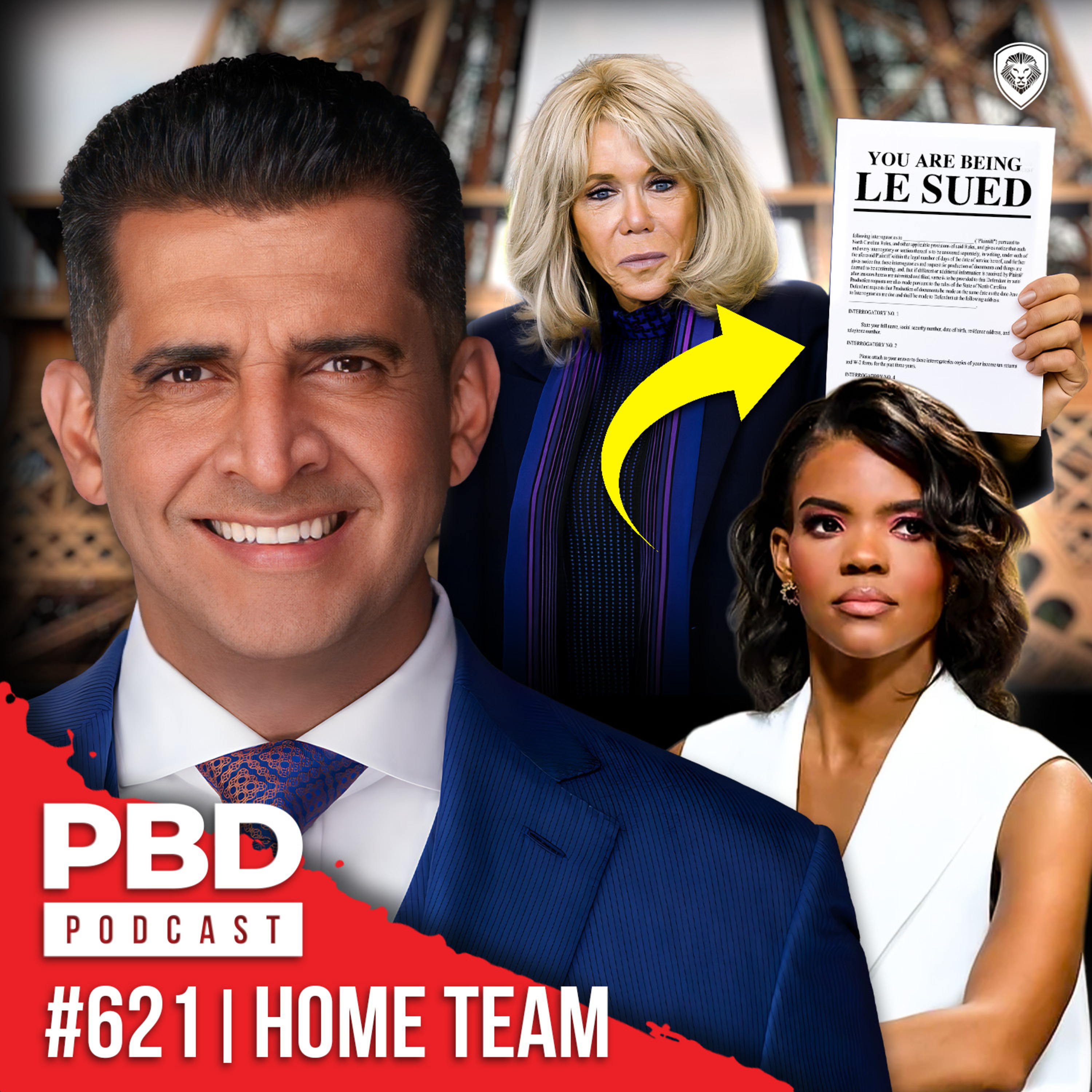
PBD Podcast
Candace Owens SUED, Obama EXPOSED, Hulk Hogan DEAD & Trump In EPSTEIN FILES? | PBD Podcast | Ep. 621
02:34:35
Loading summary
Transcript901 lines
- [00:02]
Patrick Bet-David
The FIFA World Cup 26 is coming to North America next summer.
- [00:06]
Adam Sosnick
It's the ultimate celebration of sports and culture and an opportunity to elevate your company. Get closer to where business meets the.
- [00:12]
Patrick Bet-David
Beautiful game with a premium hospitality package.
- [00:15]
Adam Sosnick
Build partnerships in the best seats and suites.
- [00:17]
Patrick Bet-David
Achieve goals over world class food and beverage.
- [00:20]
Adam Sosnick
Get closer to wins on and off the pitch.
- [00:23]
Patrick Bet-David
Book a package@fifaworldcup.com Hospitality tipping. Culture is out of control. Yesterday I tipped someone just for handing me a napkin. So when hotels.com gives me up to 20% off for being a member, I finally get tipped. And you know what? It feels good. Hotels.com members save up to 20% off at hundreds of thousands of hotels. Did you ever think you would make it? Adam, what's your point? The future looks bright. My handshake is better than anything I ever saw. It's right here. Okay, gang. Episode 21 Lots going on a lot of things. There is a Macron in France that's not too happy to the point where they had to sue an Owens in America. So we're going to talk about that because it's going to be very interesting when they get into the discovery phase and what kind of things are going to discover. Maybe they're going to discover something that, you know, just looks a little weird, you know what I'm saying? But that's a different story that we'll get into. But maybe they're confident nothing's going to be happening there. We got more Epstein stuff coming up. At one point, they said they want the judge to release everything. Then the judge from Florida says, no, we're not going to release. Why wouldn't you release? Today's Epstein thing continues. So let me get this straight. Let's finish off this Epstein thing and move on to a different topic. No, no, no, no, no. Let's tease the audience that we are going to go and give it to the judge to release. Then you go to the judge and judge from Florida says, no, we're not going to release. Do you like back and forth, back and forth, back and forth in the interim, not a good week for Columbia University. $220 million. They have to pay up. They got to pay up. Okay. And that's a massive victory for the people who were going against Colombia. And guess who's sitting there on the sidelines saying, oh, my God, I think we got away with it. But then Tom told me this morning, Marco Rubio says, harvard, you're next. Don't think for a second you're done. And then at the same time somebody else had to pay $36 million. I think that's the CBS one. So now you have CBS having to pay the President $36 million for the edited interview of Kamala Harris. And President Trump flaunts a new capital gains tax break that could send the market skyrocketing with capital gains on properties. Folks, I mean, this is some wild stuff. Obama's office, not Obama. Obama's office responds to Trump's accusation of treason. Outrageous. Again, not Obama. Obama's office. Because, you know, Obama's above this. I mean, it's not like he. He went on his wife's podcast and he says, I don't follow anything. People ask me all the time, oh, I didn't know. I don't follow any of that stuff.
- [03:16]
Tom Ellsworth
I was. I was out back. Smoking asylum.
- [03:19]
Patrick Bet-David
Yeah, of course you wouldn't follow any of that stuff. But Tulsi Gabbard says Obama and propaganda media deflect from one important fact on Russia collusion narrative. Trump announced this massive trade agreement with Japan, causing three Detroit automakers to be concerned about the Japan trade deal. Because Japan auto, Toyota. Wait a minute. What are we doing with those guys? So we'll address that. Trump revives push for Japan to increase UA US made car imports in Jacksonville, Florida. Police investigating viral video showing officer punched punching driver in the face. And let me tell you something. I watched a video today, his stepdad was talking, saying, I remember when I was 22 years old and I watched a video and it hurt it. And he was kind of going, you know that when he went through it, it. The only thing that stuck with me was, it hurt it.
- [04:10]
Adam Sosnick
I was just gonna say, did he use the actual word hurted?
- [04:13]
Patrick Bet-David
And I went in the comment section, I saw everybody put, it hurt it. It hurt it. Is that proper? Is it proper to say it hurt?
- [04:19]
Adam Sosnick
It hurt.
- [04:20]
Patrick Bet-David
Finney. It's hurted. Don't do this again. You're gonna take us back to that one skit with Conan o' Brien and that girl, Ben Affleck's ex wife that came and said, you went to Harvard, you should know this word.
- [04:31]
Adam Sosnick
He takes out the big show and actually, you're wrong. I love that Jennifer Gardner. Was it her?
- [04:35]
Patrick Bet-David
Yeah, it was Jennifer Gardner. So, all right, by the way, California, the $20 minimum wage idea that they had, which was brilliant. Let's just raise a minimum wage. Let's just raise a minimum wage that led to 20,000 job loss. Okay. Let's take minimum wage to 50 bucks. How about we do that? Okay. And See what that does to it.
- [04:55]
Tom Ellsworth
Cause meat effect.
- [04:56]
Patrick Bet-David
Exactly. Home price hits record high in June dragging down sales Space X warns investors Elon Musk could return to US Politics. Don't forget about it. Besant backs feds independence on raids rates amid Trump's criticism. Meaning, hey, you know, we, we, let's not kind of get too crazy here. Let's keep it separate. But, you know, I do think we have to do something with the rates, but we do need to keep it separate. We talk about the Macron lawsuit. Top DOJ official plans to meet with Ghislaine Maxwell about Epstein case as House panel pursues subpoena. Jon Stewart slammed CBS for decision to cancel the Late show with Stephen Colbert. Stephen Kobach declares himself a martyr and warns the gloves are off. Were they ever on in searing response to Trump. Now, you have to realize, folks, Stephen Colbert's a pretty intimidating guy. I mean, listen, let's not get it twisted. Yeah, he'll, I mean, not Jon Jones.
- [05:56]
Adam Sosnick
He'll email the hell out.
- [05:58]
Patrick Bet-David
Not Rampage Jackson. Not, not Mike Tyson. Not a game, not a game. Not Fury. Not these guys, not any of these, you know, fighters. You know, not George St. Pierre, but Colbert when he puts a threat out there, folks. Ooh, some scary stuff, man. I mean, the only person scarier than him is Brian Stelter, who really wants you to believe that the late night host losing CBS millions was fired because of Trump. It's all Trump's fault. Remember back in the days, thank you, Obama. Now it's thank you, Trump. But that's kind of comes with the territory. You got to take it. So it's an interesting story in New York Post. Putin knew Hillary Clinton had physical, psycho, emotional problems but kept it quiet during the 2016 campaign, says Gabbard. A New York Post story. Now you have to see what she was taking. Very interesting stuff. Tim Dillon had dinner with J.D. vance and he, you know, shared something that happened with the dinner, which is kind of a, kind of weird. But we'll talk about it. You know, Tim Dillon, funny guy, very good at what he does. Loved by many millions. Love that guy. But let's get right into the podcast, folks. You know what's back? You know, a fun fact about Tom Ellsworth that you all need to know about. Tom, how many yetis do you have in your kitchen?
- [07:17]
Tom Ellsworth
I believe I have about three. 30 of these letties, Tom has 30 yetis.
- [07:23]
Patrick Bet-David
Question is, how many yetis do you have in your kitchen? Right. How competitive are you?
- [07:28]
Tom Ellsworth
Can you keep up?
- [07:29]
Patrick Bet-David
Can you keep up? So guess What? The yetis are back. Rob, if you want to put it up and play the video, we have the pink ones for the ladies. Fellas, go buy your wife the pink or the white one. Press play, Rob, and you can lower the audio a little bit, but you got the white ones. The future looks bride with the valuetainment logo. You got the blue phelis. Black future looks bright, takes us to your office. You got the small ones, the big ones, all of them. So if you're somebody that drinks a lot of coffee, or you drink a lot of tea, or you drink a lot of protein, whatever it may be, or you're Adam, you are somebody that's constantly. What does Adam do with his bottle of water? He's always does the bubble. He does the bubble thing for his voice.
- [08:08]
Vinnie Fisher
That's why I got the pink yeti.
- [08:09]
Tom Ellsworth
You know what we have, ladies and gentlemen, pay attention here. These are the taper bottoms that fit in all cars.
- [08:15]
Patrick Bet-David
Yeah.
- [08:16]
Tom Ellsworth
Taper bottom. Don't have to worry about it. Regardless of car you have, it fits in a cup holder in the front.
- [08:20]
Patrick Bet-David
That's what I'm going to do right now.
- [08:21]
Tom Ellsworth
And look at this. The pink and the white one.
- [08:24]
Vinnie Fisher
You know what in there?
- [08:26]
Adam Sosnick
Bigger, better.
- [08:28]
Tom Ellsworth
And pat, you know the pink and the white one. Bigger, better, insulated than the Stanley. Your wife will love these. Better than Stanley's.
- [08:35]
Patrick Bet-David
Again, remember, when we do these guys, we don't do a big order, okay? We even have the one yet all the way at the bottom for. For dogs, okay? The yeti pole, okay? Can you imagine your dog's even going to be optimistic about the future guys, if you get this form. So go place your order. We want a million Future Looks Bright pieces all over the. All over the world. And if you support the brand, go support Future Looks Bright. Get yourself a yeti. And while you're there, maybe pick up a hat or two for yourself as well. All right, let's get right into it. Rob, first story. What is the audience saying? They want us to go with the first story. Did we do the poll?
- [09:09]
Tom Ellsworth
Oh, we did. Right now, 42% of the audience wants to hear about Obama being guilty of treason.
- [09:15]
Patrick Bet-David
Okay. All right, so Obama, you asked for it. We're coming to you first. Obama office responds to Trump's accusation of treason. Outrageous. Let me read this. Jenna Thomas, Ellsworth, I'm coming to you first, so please be prepared with all your notes ready. Obama's office spokesperson Patrick Rodenbush. Great. First name rejected. The office of the Director of National Intelligence reports claim that Senior Obama administration officials orchestrated the Russia collusion hoax, stating out of respect for the office of the presidency, our office does not normally dignify the constant nonsense and misinformation flowing out of this White House with a response. And he called the allegations outrageous and ridiculous. A weak attempt of distraction, he said. Nothing in the document issues last week undercuts the widely accepted conclusion that that Russia worked to influence the 2016 election but did not successfully manipulate any votes. The ODNI report released by Tulsi Gabbard on Friday found overwhelming evidence that the after Trump won in 2016 election against Hillary Clinton, President Obama and his national Security cabinet members manufactured and politicized intelligence to lay groundwork for a years long coup against Trump. Tom, what's your thoughts on the story?
- [10:32]
Tom Ellsworth
So there are three things hiding in plain sight here. The first that's hiding in plain sight was that Obama was nowhere in sight. He didn't come to a podium. He didn't do one of those impromptu interviews. The media that follows him around where he goes for his foundation or things he does didn't come up behind him. He didn't go on the podcast with his wife where he was talking about young men and things and needing gay friends a week ago to come back and says, I don't need any of this crap. No nothing. Obama was silent. Why is Obama silent? Ask yourself, ladies and gentlemen, he's above this. Or maybe he's deep in it. Maybe he's not above it. He's deep in it. And so he sends a pack. A spokesperson, Patrick Rodenbush, which is what Obama doesn't does. He's never riding Bush is got an issue here.
- [11:20]
Patrick Bet-David
What was that?
- [11:21]
Tom Ellsworth
Now he goes the office of the presidency and the office. So they're speaking in third person. Whenever you have people in Washington that are cornered, they speak in third person. I think this issue is not something that will be dignified by a statement. Now I'm not even making a statement. See, I'm referring to the issue in third person. So Obama is his office from the office of Obama. And then if it hits the fan, what do those politicians always do? Well, that statement from my office may have been premature. So now it's a statement by your office. It's not you. And then lastly, in plain sight. Vinnie, look at these words. Nothing in the document issued last week undercuts the widely accepted conclusion. Hang on. Now they're going to state the widely accepted conclusion. Russia worked to influence the 2016 election but did not successfully manipulate any votes. Wait a minute. That Wasn't the conclusion, the conclusions the Dems say wasn't that Russia worked to influence it, but didn't, did not successfully vote. They said this is an illegitimate president. In 2016, they worked to influence votes. So now they're restating it. So whenever you. So whenever you don't want to answer the question, restate the question. Were you home by 11 o' clock last night, Tom? Dad, you always tell me to be home by midnight. I don't know what the problem is here. Did I answer the question? No, I restated it. I restated as. As if I'm trying to talk to my dad and be cool. And I said, son, that wasn't the question. Were you home by 11pm last night? Dad, I don't know why this is a question. That's how politicians work. So all in here, this is here. And you want to know why this is happening? Myself and many other people think this is happening, Pat, because the treason word was used and that diagram presented by Tulsi Gabbard had what they don't like, backup and evidence.
- [13:18]
Patrick Bet-David
By the way, here's Tulsi. If you want to play the clip of Tulsi Gabbard while she's talking about this entire issue. Is this the one, Rob, from the clip?
- [13:26]
Tom Ellsworth
So I have two.
- [13:27]
Vinnie Fisher
Yes.
- [13:27]
Tom Ellsworth
This is her announcing some of the indictments against Obama. And then I also have her talking about the media being complaining about implicit in the Russiagate hoax.
- [13:35]
Patrick Bet-David
Go for it.
- [13:39]
Brandon Tatum
Thank you very much. Good afternoon. President Trump's direction and with the support and coordination with the House Intelligence Committee Chairman Rick Crawford today, we've released a declassified oversight majority staff report that was produced in September of 2020. The stunning revelations that we are releasing today should be, of course, concern to every American. This is not about Democrats or Republicans. This has to do with the integrity of our Democratic Republic and American voters having faith that the votes cast will count. There is irrefutable evidence that detail how President Obama and his national security team directed the creation of an intelligence community assessment that they knew was false. They knew it would promote this contrived narrative that Russia interfered in the 2016 election to help President Trump win, selling it to the American people as though it were true. It wasn't. The report that we released today shows in great detail how they carried this out. They manufactured findings from shoddy sources. They suppressed evidence and credible intelligence that disproved their false claims. They disobeyed traditional tradecraft intelligence community standards and withheld the truth from the American people. In doing so, they conspired to subvert the will of the American people who elected Donald Trump in that election in November of 2016. They worked with their partners in the media to promote this lie, ultimately to undermine the legitimacy of President Trump and launching what would be a years long coup against him and his administration.
- [15:19]
Patrick Bet-David
Yep, there you go. So that's that. So this is something real that happened. If this gets proven and people see it, the question then becomes which is where Vinnie always goes to? Nothing will happen. Nothing will happen. Obama. But they are saying that Obama may be asked to be subpoenaed. Okay. House Speaker Mike Johnson says Congress might subpoena Obama over Russia conspiracy. Is this it? Rob, can you play this clip?
- [15:46]
Tom Ellsworth
I think we have a responsibility to follow the truth where it leads and to do it in an unbiased fashion, to do effectively the opposite of what that other team did. They're engaged in a partisan political plot to take down their foe and the other party. We need to be about the rule of law and bringing order to the chaos and searching out the truth because the American people are owed those answers. We have some very bright, very capable, very strong leaders at Judiciary and Oversight. You know, Chairman Jim Jordan, he does Jamie Comer and the other committees that would be involved. And I do expect that whether there's a special counsel appointed, which some are suggesting and or in conjunction with the House investigations, that we will get the answers and there will be accountability to the extent that we're able to do that, referring people to the DOJ for prosecution and any other measure that is appropriate. As we begin to uncover more of.
- [16:38]
Vinnie Fisher
The facts, does it get tricky at all with the former president, President Obama, looking at what his role in this is and bringing him in for some sort of deposition, potential subpoena?
- [16:47]
Tom Ellsworth
Well, listen, I mean, I can't. We have no concern about that. If it's uncomfortable for him, he shouldn't have been involved in overseeing this is. Which is what it appears to us has happened.
- [16:55]
Patrick Bet-David
Okay, so where does he say that he's going to be?
- [16:59]
Adam Sosnick
Well, I think that was like just. That was just him, Pat, saying basically, like, what about Obama? That's him going, well, if he's involved, then it is what it is.
- [17:07]
Patrick Bet-David
That's not how I hear it. I'm reading an article here that says Mike Johnson says that he might be subpoenaed. Okay, he might, he might not be. Now the reaction by the media, Rob, that Tulsi says what she says, that's the one I want to see. Go for it.
- [17:21]
Tom Ellsworth
Cnn, shut it off members of the.
- [17:23]
Brandon Tatum
Media who were complicit in this from the very beginning, who were leaked early copies of this or at least lines from this January 2017 Obama manufactured intelligence assessment. They printed what they were fed. People like Ellen Nakashima from the Washington Post, who by the way went on to win a Pulitzer prize because for years she was so good at lying and not telling the truth to the American people that they gave her an award for it. These people are still here. Ellen Nakashima is still harassing people who work within the intelligence community who are calling up and reporting her, you know, using burner phones to try to ask them harassing questions.
- [18:06]
Patrick Bet-David
Okay, who is this person she's talking about? Can you pull up the profile? Let's find out who she's talking about. Tom, do you know that person?
- [18:13]
Tom Ellsworth
Yes. She is a Washington Post reporter and what she does is she basically is a regurgitator and then she presents herself as a Washington insider. I've got all these contacts, got all this stuff going on and. But she gets fed by the dnc, so she is their mouthpiece in the media. That's what she is. And they arrange for her to get a Pulitzer Prize in investigative journalism where all she's doing is regurgitating.
- [18:39]
Patrick Bet-David
Can you google who she is and just go to her Wikipedia? I want to find out who this person is. How do you say your name?
- [18:46]
Tom Ellsworth
Tom Nakashima.
- [18:48]
Patrick Bet-David
Nakashima. What do you mean Nakashima? Are you being sarcastic? This is sensitive topic. Tom. What do you mean Nakashima?
- [18:54]
Adam Sosnick
It's really Nakashima. You better knock it off. Tom Nakashima for I knock it off.
- [18:58]
Tom Ellsworth
Here it is.
- [18:59]
Adam Sosnick
Ellen Nakashima.
- [19:00]
Patrick Bet-David
Okay, go to Ellen Nakashima.
- [19:02]
Tom Ellsworth
Let's go. Look where she went to school, ladies.
- [19:03]
Adam Sosnick
And gentlemen, could I guess Harvard, a.
- [19:05]
Patrick Bet-David
Little bit Haro, Pulitzer, Berkeley. It doesn't get worse than that. So she went to Berkeley, London, University of Brooklyn for journalism. London. She began her journal career at Hartford Current and in Quincy, patriot legend before joining WaPo as a report in 1990. White House reporter since South Asia. She won a series of awards, okay.
- [19:27]
Tom Ellsworth
Covering national securities since 2009.
- [19:30]
Patrick Bet-David
One of the ones that was guest invited to state dinner hosted by US President Joe Biden in honor of Prime Minister Fumio Kashida at the White House. Okay, so that's what our friend.
- [19:44]
Tom Ellsworth
She's a Washington insider.
- [19:45]
Patrick Bet-David
Yeah, that's what I hear. She's talking about on information that's going on now listen, as this is going. Is this a method of overshadowing something else that may be taking place because just yesterday when it comes down to the Epstein story. Let me go to that. So we were told that they're going to ask a judge to do what, to release the files and let, let the people see the files. Right. Is that what they promised us? Tom?
- [20:15]
Tom Ellsworth
Yep. Called unsealing testimony.
- [20:19]
Patrick Bet-David
Perfect. And then what happens when we're told that judge denies request to unseal Epstein grand jury transcripts in Florida. So why would he do that? Why would this judge do that? Okay. Federal judge in Florida, Judge Robin Rosenberg denied the Trump administration's request on Wednesday to unseal grand jury transcripts. Rob, it says you have a video here from 2005 to 2007 investigation into the Epstein, citing the Justice Department's concession that laws on criminal procedure generally forbid unsealing grand jury testimony except in narrow circumstances, stating in her 12 page order the court's hands are tied. And Justice Department requests, driven by special circumstances, historical interest by the public aim to bolster claims that it had no left no stone unturned. And noting since July 6, 2025, there has been extensive public interest and a basis for the memorandum conclusions. The decision frustrates the administration's efforts to address the pressure from the right wing supporters demanding more Epstein related disclosures. Is this the clip, Rob about Yes, this is.
- [21:31]
Tom Ellsworth
Caroline Levitt was asked if the Trump administration is going to appeal the judge's ruling.
- [21:35]
Patrick Bet-David
Go for it.
- [21:36]
Tom Ellsworth
A Florida federal judge refused to allow.
- [21:38]
Vinnie Fisher
The Epstein grand jury materials to be released.
- [21:40]
Adam Sosnick
Does the president want the administration or.
- [21:43]
Vinnie Fisher
Justice to appeal that ruling?
- [21:44]
Adam Sosnick
Ms. That was just breaking as the director and I were coming out here, so I haven't had a chance to.
- [21:48]
Patrick Bet-David
Talk to the President about it.
- [21:50]
Adam Sosnick
I understand there are two other requests from the Department of Justice that are ongoing, but I'll let this president speak to whether he wants to see an.
- [21:57]
Patrick Bet-David
Appeal in the Department of Justice. I'm sure can give you a statement.
- [22:00]
Tom Ellsworth
On that as well. Is he supportive of the effort to.
- [22:02]
Adam Sosnick
Talk to Ghislaine Maxwell? I know that Todd Blanchard mentioned that earlier this week.
- [22:05]
Patrick Bet-David
Ms.
- [22:06]
Adam Sosnick
The President spoke to this yesterday and he said he thinks it's an appropriate idea.
- [22:09]
Patrick Bet-David
You know, obviously the developments with the Epstein case with the judge, but I wonder, has the White House, White House counsel, the DOJ explored any other documents.
- [22:18]
Brandon Tatum
That could be released to the public.
- [22:21]
Patrick Bet-David
That don't have to do with that grand jury testimony?
- [22:24]
Adam Sosnick
Ms. To my knowledge, the Department of.
- [22:26]
Patrick Bet-David
Justice has moved forward with the request to unseal that grand jury testimony. And as you know, they have also moved forward with interviewing Ms. Maxwell, which I believe will be taking place very soon.
- [22:38]
Vinnie Fisher
I feel bad for Caroline Levitt because she has no clue what's going on. Meaning she has to get out there and sort of put on the charade as if she's involved. She has to sort of.
- [22:48]
Adam Sosnick
Well, I'm pretty sure she's. I'm pretty sure she's the brief.
- [22:51]
Patrick Bet-David
Let's stay on the topic here. So instead of you being concerned for her, she's really broke. So. All right. Roy Black, legendary defense attorney for Epstein, Justin Bieber and Kennedy family dies at 80. So Epstein's former lawyer just died. Obviously, he's 80 years old. But the story that comes out at the same time, you know, you hear some other stories releasing that Bill Clinton wrote a letter also to Epstein for his 50th Daily Mail drops warm and gushing letter to Epstein as Trump sues over claim. He also wrote a batty body note of pedophile half century. This is Daily Mail story. And then on top of that, while this is going on, House panel votes to subpoena Bill and Hillary Clinton over possible links to Ghislaine Maxwell. All of these stories with Epstein are coming out. A lot of people are quiet about it. And then a BBC story drops. I don't know if you saw this BBC story that just dropped. White House pushes back after reports that Trump is named in the Epstein files. Did you see this one, Vinny?
- [23:48]
Adam Sosnick
I did not.
- [23:49]
Patrick Bet-David
Okay, so this is from BBC. White House through spokesman Stephen Chong dismissed reports that President Trump was informed in May by Attorney General Pambani that the names appeared in the documents as fake news story with chunk stating nothing more than the constitution of the fake news story concocted by the Democrats and the liberal media. Just like the Obama Russiagate scandal with President Trump was right about the Wall Street Journal reported Bondi's told Bondi told Trump during a routine briefing that the files contained hearsay about many people, including Trump. But being named is not evidence of wrongdoing. FBI Director Cash Patel, the criminal leakers and fake news media tries tirelessly to undermine President Trump with smears and lies. But the story is no different. Vinny, your thoughts with the story on.
- [24:35]
Adam Sosnick
What'S going on, man? It just the more and more they're trying to like distract us and put us over here and look over here. Listen, I hate to even say it, but maybe, just maybe Elon Musk was right. Maybe Elon was right. What was it in June he tweeted out of nowhere, Trump doesn't want it released because Trump is on that list or whatever, by the way. And again, this doesn't mean he did anything. He admitted, yeah, I knew him. Yeah, whatever. There's footage of him. There's footage of you hanging out with him, with Melania, with whatever person he was with. That's okay. Back then everybody was hanging out, everybody was chilling. Just. You just don't want your name involved. This is the worst. You nailed it. The worst fumble. Just say yes. I was around him. We were in Manhattan. We're all rich, we're all doing it. I didn't know what the hell to the extent of what he was doing. And once, you know, he got convicted for pedophilia, that's when I broke everything off. Just because your name is in there doesn't mean you're guilty, okay? And I think that's what they're trying to, to freaking cover up because, like, not to go backwards, if you don't mind, the, the Barack thing, the Barack Obama, I think it's a distraction. But at the same token, why is everybody pissed off? Everybody in the View and everybody's mad. How dare you go after next president. He's not untouchable. Look at the precedent. They said with Trump, with everything that they did with Trump, Pat, from trying to arrest him for 100 years, from Mar A Lago this and all that shit, they shot him in the freaking head. And that no ex president is untouchable. Okay, I can show you the mug shot of Donald Trump, okay? And then think about this. He tried to Obama and them, if it's all factual, they tried to overthrow the government. We picked who we picked. We picked Trump and they tried to undermine him. He used the FBI, he used the CIA. Pat, you know what? They should have have a public trial. I don't give this Epstein stuff, okay? Have a public trial, okay? And if he's guilty, put Obama's ass in jail for the rest of his freaking life, okay? Because people need to know, Pat, if this happens again and somebody comes in, they could look back and go, oh shit, let's not do it because Obama's in jail for this shit. And then we wonder why the trust for the government is at an all time low, ok? It's at the worst it could possibly be. You want to gain it back then hold these people accountable, put them on trial. And if they're guilty, put their ass in jail. The Epstein thing, I think is the biggest freaking fumble, period. Remember Adam, when we first started talking about this, what, two weeks ago? It's like, yeah, only losers, only whatever. Look where we are. It's the top of the news every single day. It's about this because it seems to me that they're covering it up. Something isn't right. And I keep going back to the children. We always worry about the people involved. It's the kids. And did you see this, Pat? Tom, did you guys see this? This is a deposition where he's asked if Epstein had a personal relationship with Trump. And they say something about underage 18 year old girls. And you tell me how you take away from this this clip. Go ahead, Rob.
- [27:33]
Tom Ellsworth
Have you ever had a personal relationship with Donald Trump?
- [27:39]
Patrick Bet-David
What do you mean by personal relationships?
- [27:42]
Tom Ellsworth
Have you socialized with him?
- [27:44]
Patrick Bet-David
Yes, sir. Yes, yes, sir.
- [27:47]
Tom Ellsworth
Have you ever socialized with Donald Trump.
- [27:50]
Patrick Bet-David
In the presence of.
- [27:53]
Tom Ellsworth
Females under the age of 18?
- [27:58]
Patrick Bet-David
On WhatsApp, no one can see or hear your personal messages. Whether it's a voice call message or sending a password to WhatsApp, it's all just this. So whether you're sharing the streaming password in the family chat or trading those late night voice messages that could basically become a podcast, your personal messages stay between you, your friends and your family. No one else, not even us. WhatsApp message privately with everyone. Starting a business can seem like a daunting task unless you have a partner like Shopify.
- [28:32]
Brandon Tatum
They have the tools you need to start and grow your business. From designing a website to marketing to selling and beyond.
- [28:38]
Patrick Bet-David
Shopify can help with everything you need. There's a reason millions of companies like Mattel Heinz and Allbirds continue to trust and use them. With Shopify on your side, turn your.
- [28:48]
Brandon Tatum
Big business idea into Sign up for your $1 per month trial@shopify.com special offer.
- [28:58]
Vinnie Fisher
Though I'd like to answer that question.
- [29:00]
Patrick Bet-David
At least today I'm going to have to assert my 5th, 6th and 14th amendment rights.
- [29:06]
Tom Ellsworth
Have you ever had a personal relationship with.
- [29:08]
Adam Sosnick
Okay, so now have you ever been around him with under 18? He grins, he smiles and he goes, I wish I could, but I can't. Under the fifth Amendment, like, like if this is a video, let's just say that Trump is worried about coming out. I mean, it's going to come out and that could just mean. I wish I could just say no, he had nothing to do with anything. But my lawyer has directed me, Tom, everything has to be pled the fifth.
- [29:29]
Tom Ellsworth
So I'll tell you, Epstein is a scumbag.
- [29:32]
Adam Sosnick
100%.
- [29:33]
Tom Ellsworth
We have all the things and he got a sweetheart deal in Florida. But let's set that right. Okay.
- [29:37]
Patrick Bet-David
Yeah.
- [29:37]
Tom Ellsworth
There were 22 victims. There was, you know, several charges, and then it got reduced, and he was given a minor charge of solicitation. That really happened. Epstein was a scumbag. Everybody agrees. But when you look at this, Vinnie, I. I got it. I'm not defending him. I'm pointing out is how these processes work. The reason he says no is if I say no, I never did. They then in court find one picture of you and a girl that's under 18 that could be somebody else's daughter that was at the same party, and therefore you were socializing with Donald Trump with a girl under 18. Yeah. So you end up whenever you're getting these narrow questions with a grand jury or a voluntary federal deposition, and I think this was the latter. People always take the fifth through it because what they're trying to do is they're trying to say, your Honor, given that, I'd like to enter this into evidence and to bring this into court. So then the district attorney says, well, he denied all this. You're saying all this is true. You've got all these pieces of evidence. Okay, I guess we're going to court here. That's how this thing works. So it doesn't. This doesn't presume guilt on either side. This is how the process works. If you were depose Vinnie on something like this, your lawyer would be telling you, vinnie, just take the fifth. Take the fifth. Take the fifth. Make them go into court and produce the witness that you bought the keg with your credit card to a party and you had underage cousins and people that were there and somebody got drunk and got hurt. They would tell you the same thing. That's the process. I am not saying that Jeffrey Epstein is not a raging scumbag or was.
- [31:11]
Adam Sosnick
Yeah.
- [31:12]
Tom Ellsworth
The late.
- [31:12]
Patrick Bet-David
Yeah, Adam.
- [31:14]
Vinnie Fisher
So Russia. Russia. Russia. Epstein. Epstein. Epstein. Russia is Epstein. Epstein is Russia. In my opinion, Finel is Einhorn. Finkel is Einhorn. Einhorn is Finkle. That's what's going on here. Because there's a lot of similarities here. I'm not sure if you intentionally put these stories together, because I actually think there's a lot of synergy in what's happening here. Do you remember in 2016 what was happening? They're having these meetings. Russia. It's Russiagate. Stand up, stand by. On the next episode of Russiagate. We were all glued to our tv, and admittedly, I fell for it. I'm like, this guy is a Putin puppet. The media said it. It must be true. Turns out the media will lie. We all understand that.
- [31:53]
Tom Ellsworth
Tonight, the Steele dossier, this reporter has seen.
- [31:56]
Vinnie Fisher
So Trump was out there. It's fake news. It's a hoax. It's a witch hunt. Everyone's like, okay, Donald, sure, buddy, but Putin puppet. Turns out Donald Trump. Donald Trump was telling the absolute truth and nothing but the truth. But the media ran with it. Russia did try to interfere in the election. True. Trump campaign conspired with Russia. False. Paul Manafort. Remember we had Paul Manafort on the podcast. This was in the height of Adams, like, lunacy. I was like, this piece of Paul Manafort I'm gonna expose. He came on here. I was like, what a guy. Nice guy. Yeah, Lobbyist. And that was like sort of the snowball effect. I was like, you know what? Maybe the media lied to me about this Russia thing.
- [32:46]
Tom Ellsworth
They did more than like, Leslie Stahl had air cover from the White House. Well, she said, Donald, this is 60 Minutes.
- [32:54]
Vinnie Fisher
Okay? Leslie Stahl. Yeah, she's the one who.
- [32:57]
Tom Ellsworth
She was speaking like a judge on the federal district.
- [32:59]
Vinnie Fisher
Higher ground here, right?
- [33:00]
Tom Ellsworth
Yeah.
- [33:00]
Vinnie Fisher
We know that the FBI had their own sort of agenda and they were seriously flawed. We know that the media got this story and completely ran with it, divided the country. Robert Mueller, he didn't say one frickin word that. There's a lot of correlation. What's going on with Epstein, with Russia. We don't know what's true. We don't know what's false. We know that Donald Trump did hang out with Epstein. This isn't even a question.
- [33:24]
Adam Sosnick
See the videos? Yeah.
- [33:25]
Vinnie Fisher
There's pictures of them hanging out. Just because you've hung out with somebody and you were named in some sort of whatever, lawsuit. Yeah, buddy, I've hung out with Andrew Tate dozens of times. That doesn't mean I was sex trafficking women. That doesn't even mean that he was sex trafficking women. So we don't know what's true, what's false, what's media, what's a plant. This is why when our friend Sean Hannity came on, he said, listen, I'm just gonna kind of sit back, relax, wait for the facts to play out. That's kind of where I'm at with this. I don't get embroiled, but in every single media story.
- [33:57]
Adam Sosnick
But, Adam, but don't you. And I mean truth. But you're my brother. I love you to death. I want to know, don't you want. Don't you want accountability? Meaning, Adam, I. I disagree. Not a lot of these people. No, they don't. Because Barack was this savior, the yes, we can, the BS Artist. Okay? What they did, what they did. People want to talk about January 6th. To hell with January 6th. These people were like, he won. Let's create this fake story. Hillary, Go pay for this fake CA and push it through the Department of Justice. And what, to overthrow the government? To defy the will of the people? Adam. So when I say accountability, and I get what Sean Hannity was saying, it's going to take some time. Be patient. We've been patient from before jfk. Go to those people. You know what they told those people too. Be patient. Cut to 2025. Adam. Cut to 2025. They're still like, here are 10 more documents that don't say, we're still waiting. And again, Adam and I'll start with the, the Russia thing. How much shit did pat you. I'm sorry, me? Adam. Dude, my career, my friend, I've lost friends because they're like, you're with the Russia asset Putin, blah, blah, blah, blah. So zero accountability for that. And when it comes to Epstein, not one famous high ranking pedophile scumbag is going to be dragged in front of the courts. So we could see them. I want to see them. Why the hell was he going to the White House 17 times to see Bill Clinton? Explain that to me. What are they talking about? And when you walk into his house.
- [35:32]
Vinnie Fisher
Let me ask you, what do you think they were talking about?
- [35:34]
Adam Sosnick
Adam he flew to his, he was.
- [35:35]
Vinnie Fisher
On the airport, but go there for a second. The Epstein Clinton thing, what do you think?
- [35:40]
Adam Sosnick
Actually personally, probably some money moving stuff. Probably some bit. Because you do, by the way, if you saw the interview with Daryl Cooper with the Tucker, say what you want about Epstein, he was very good at being a piece of, you know, what moving money, offshore accounts, probably some money stuff with the Clinton foundation, which I think he was attached. And then Adam, maybe some girls.
- [35:58]
Vinnie Fisher
That's what money managers do.
- [35:59]
Adam Sosnick
But you ready for this? Adam? I believe Vincent o' Shauna believes that it was somebody. Hey, listen, when you come to the island this time, I got you, I know how you like them and blah, blah, blah. When you walk into his apartment in Manhattan, why is there a picture of him in a blue dress pointing right when you walk in? Do you think that means I got.
- [36:15]
Vinnie Fisher
Evidence that Jeffrey Epstein donated to the Clinton campaign?
- [36:18]
Adam Sosnick
Is there? I think there's a connection with him with either Lex Wexner and him, whatever it is.
- [36:22]
Vinnie Fisher
I'm just saying that a lot of times these big donors, what do they call Them mega donors get preferential treatment.
- [36:29]
Adam Sosnick
What's Epstein's connection, Tom?
- [36:32]
Vinnie Fisher
What do you call it?
- [36:32]
Adam Sosnick
Because at the end of the large.
- [36:34]
Tom Ellsworth
Bundlers, they call them bundlers.
- [36:35]
Vinnie Fisher
And bundlers are what exactly?
- [36:36]
Tom Ellsworth
Bundlers are people that know a lot of people who know a lot of people. So I work with five high end people that each of them is taking money from say 10 millionaires. And so now that's 50 people represented by those 10 and then represented by me. So you create a paper trail that is hard to follow and that, and then all that money goes into a pack very legally. But then nobody knows who got the money into the pack. But now the pack goes to do the will of the dnc. That is one of the flaws in the campaign finance, which is what people ask for. Campaign finance reform eliminated abundant Rob Chad.
- [37:13]
Adam Sosnick
GBT Pat about his. Well, what was the question that you put in?
- [37:16]
Tom Ellsworth
The question was what are Jeffrey Epstein's connections to the Clinton Foundation? And here's what it came several points.
- [37:22]
Adam Sosnick
Of connection from the finance.
- [37:23]
Vinnie Fisher
Finance.
- [37:24]
Adam Sosnick
Go to number two, Robbie. He helped concede the Clinton Global Initiative gave philanthropy donations. So he, he. Besides what they were talking about, Adam, I, I just, and I'm not one of those.
- [37:35]
Vinnie Fisher
So maybe let me hear me out. The, you know, we talk about signal and noise, maybe the cornerstone of their relationship. We're talking about Clinton and Epstein for a second. Maybe the cornerstone of the relationship was genuinely money, political money, financial.
- [37:49]
Adam Sosnick
Yeah.
- [37:49]
Tom Ellsworth
That stuff didn't happen 20 this happened this 2002 and he visited the White House 17 times between 93 and 95.
- [37:58]
Adam Sosnick
So yeah, that's a lot.
- [38:00]
Vinnie Fisher
The foundation of their relationship was probably business, political money, and then there's ancillary stuff. Hey, by the way, when you come to the island, you know, we're going to have a little party, we're going to have a little fun and then little things like that happen. So like there's like the meat. Right. And then there's the steak and then there's the sizzle, of course. So the, the genuine steak was. There was a business transactional relationship.
- [38:23]
Patrick Bet-David
Yeah.
- [38:24]
Vinnie Fisher
And then there's some ancillary and you.
- [38:25]
Adam Sosnick
Ready for this though? And just, just off of history, Bill Clinton has been accused of sexually assault. Juanita Broderick said he attacked her in a freaking hotel room, almost ripped her lip off. Don't forget about his actions with Monica Lewinsky. Hold on. Which is all consensual. Consensual. But at the end of the day, Adam, that's the type of guy that you want to do business with and then bring him to your island and then record him doing shit so you could have dirt on.
- [38:46]
Vinnie Fisher
Allegedly.
- [38:47]
Adam Sosnick
Allegedly. That's all. Allegedly.
- [38:48]
Vinnie Fisher
Let me say one thing about Clinton, and I was a Clinton fan. I think you even voted for Clinton your first time.
- [38:53]
Adam Sosnick
No, I would have if I was.
- [38:55]
Vinnie Fisher
I think was a great president. Meaning as far as the numbers and the deficit and what basically where the company or the country was in the 90s. But hear me out for a second. Everyone wants to go immediately, like, because Bill Clinton got a blow job. Monica Lewinsky, he's obviously a child, child sex trafficker. He's obviously likes underage women. I'm not there. I think Clinton, especially if you're married to Hillary, probably like to step out a little bit, you know, blow off a little steam. Not have to look at Hillary every single day and maybe had some fun with extracurricular activity with ladies at Epstein island or wherever. That doesn't mean that they were underage women, though. That's the problem I have. People are like, well, Clinton obviously likes underage women. It's like, what evidence do you have of that? There's a ton of evidence that he likes normal women, but no evidence that he likes underage women. And that's where things get so caught up in the gray area. It's like, where'd we just go for Virginia Goofy was underage women.
- [39:47]
Tom Ellsworth
Guys, we could go back and forth on this. The question is, and it's an honest question all American is asking, you said, okay, well why don't we just have, have them unseal the records. And then suddenly a judge, a district judge. And I think there's 94, I believe it's 94 districts in the United States and 13 circuit courts, also known as court of appeals and the circuit courts. The 13 circuit courts have the balls, they have the clout. And so you take one of these district judges from the Southern district of Florida, I think it is district two, and saying, oh, I'm not going to unseal that. It's, wait a minute. This was coming from the, this was coming from the federal government, coming from cabinet, saying, let's unseal it. And then a district judge says, no, no, no, we're going to leave it sealed this.
- [40:30]
Patrick Bet-David
Who didn't do it?
- [40:31]
Tom Ellsworth
Yes, sir.
- [40:31]
Patrick Bet-David
She was appointed by Obama.
- [40:33]
Adam Sosnick
Yep. Weird.
- [40:34]
Patrick Bet-David
Yeah, but a little bit lower.
- [40:36]
Tom Ellsworth
But you see my point, Pat. It's, this is a mid level federal judge and the, the circuit court of appeals is above that. So it's like, wait a minute. Why do you have now district judge are real judges, but she's not like a supreme court justice.
- [40:50]
Vinnie Fisher
It says on the bottom, Pat, she declined to release additional grand jury documents.
- [40:55]
Patrick Bet-David
That's what we were reading.
- [40:56]
Tom Ellsworth
And by the way, she's married to Florida state attorney for Palm Beach County, Michael McAuliffe. Was he part of the Palm beach county group?
- [41:02]
Vinnie Fisher
We read that earlier, bro.
- [41:03]
Tom Ellsworth
That sent everything up.
- [41:04]
Patrick Bet-David
Rob, can you click on who Michael McAuliffe is? Yes, sir. Go to that one. Adam, stay with us.
- [41:11]
Vinnie Fisher
I'm right here with you.
- [41:12]
Tom Ellsworth
Pat, is he connected to the Palm beach crew that sent all the Epstein case up to the federal.
- [41:18]
Patrick Bet-David
Can you type that in Chat GBTC who he is.
- [41:23]
Vinnie Fisher
Where are you at with all this, Pat?
- [41:24]
Patrick Bet-David
Hang on. Let me just kind of go through this background with Michael. So this. This just totally.
- [41:31]
Adam Sosnick
It's so weird.
- [41:32]
Patrick Bet-David
Prosecutor, 30 years Southern District Florida attorney, handling high profile criminal honors. In terms of.
- [41:40]
Tom Ellsworth
Was he on any of the Epstein cases? Rob?
- [41:41]
Patrick Bet-David
Prosecuted the Louisiana KKK grand dragon for hate crimes. Staging the palm of the year 2018. LED125 prosecutions. Can you put in. Is there any link between him and Epstein? Any link between him and Epstein? Any link between him?
- [42:00]
Vinnie Fisher
They were college roommates.
- [42:03]
Patrick Bet-David
See what comes out.
- [42:04]
Tom Ellsworth
He was the state prosecutor for Palm Beach county in 08 when Epstein was.
- [42:08]
Vinnie Fisher
He was the prosecutor.
- [42:10]
Patrick Bet-David
No documented, personal. The only mention of McConaughey is Epstein related material. Appears in 2010 reference. Epson's lawyer, Jack Goldberger reportedly asked McAuliffe, then a state attorney, to drop certain charges. But this request doesn't indicate any deeper relationship or involvement. Moreover, there's no indication that McAuliffe ever assisted Epstein. Can you ask the same question on.
- [42:33]
Tom Ellsworth
Why were they asking him? So why was Epstein's lawyer asking him? Because he was on the team.
- [42:37]
Patrick Bet-David
Hang on one second. Ask Grog the same exact question. Is there any connection between McAuliffe and Epstein and Epstein?
- [42:47]
Adam Sosnick
Fast, Rob.
- [42:48]
Patrick Bet-David
Zoom in a little bit for us 40 year olds. 47.
- [42:52]
Vinnie Fisher
47, 39.
- [42:53]
Patrick Bet-David
Let's see what it says. Jefferson with the notorious financier. No, I'm trying to find out.
- [43:00]
Adam Sosnick
Yeah, come on.
- [43:02]
Vinnie Fisher
What is all this? Hitler Answer. Come on.
- [43:04]
Adam Sosnick
Come on, Grok.
- [43:06]
Patrick Bet-David
Is it really taking this long, Rob?
- [43:08]
Tom Ellsworth
Yeah, Grok. Super Grock takes a little bit longer for some.
- [43:10]
Adam Sosnick
Oh, there it is.
- [43:11]
Patrick Bet-David
Yes, there is a professional connection between them. Homage. Stemming from a call of oversight of Epson case in the year of 2008 plea deal. However, there's no publicly available evidence. Friendship, financial ties on this. So Jeffrey Epstein, finance. You're convicted okay, Michael McAuliffe go a little bit lower up succeeding McAuv at prison was stating McCaule involvement after the Epstein plea deal. During Epstein's probation and house arrest period which later ended lasted to 2010. Key events included Epstein's attorney Jack Olbournt requested them. We already read that. Probation and released him from house arrest early. That request was denied. An email from assistant attorney Barbara Burns to McAuliffe described the situation as this dragon just keeps praising raising its ugly head and emphasized that Epstein was a registered sex offender that was fortunate to get a deal of the century. Burns further noted that Epstein's team was pushing for leniency, but the office stood against it. McAuliffe's office was responsible for enforcing the terms of Epstein's supervision release, including decisions on his travel and work privileges. While McCauf did not negotiate the original 2008 deal, he inherited and managed its aftermath. The professional link that draws. Okay, so then he's married. Particularly due to McAuliffe's marriage to Judge Rosenberg in July after Rosenberg requested a Grand jury transcript 2004 the citing issues Social media in some reports alleged conflict pointing that McCaules prior role in the case and suggesting. This is very interesting.
- [44:34]
Adam Sosnick
Oh my goodness.
- [44:35]
Patrick Bet-David
Okay.
- [44:36]
Tom Ellsworth
It could influence decisions to keep records sealed.
- [44:39]
Patrick Bet-David
Okay, so then if that's the case. So go back to that lady's Wikipedia if you don't mind.
- [44:47]
Tom Ellsworth
Sure.
- [44:47]
Patrick Bet-David
You just had it a minute ago. Yeah, if you can go to hers. So she's appointed by Obama. Okay. She assumed office in 14, which is the last two years of Obama. She's a Duke University person.
- [45:02]
Tom Ellsworth
JD, Duke undergrad, Princeton.
- [45:04]
Patrick Bet-David
So if you're appointed by Obama and you don't want to release it, you're definitely not releasing it because you're trying to protect Trump. So why wouldn't you release it? And the conflict of interest with your husband prior links to it. Very interesting. This is very interesting to me on why that's happening.
- [45:35]
Adam Sosnick
And all these back to. It's all Florida. It all goes back to Florida where this guy got a sweet. A pedophile that he.
- [45:41]
Tom Ellsworth
Florida didn't give him the sweetheart deal when it was sent to this, I believe the Southern District of New York. The Southern District allegedly was told, hey, this guy belongs to intelligence. And they reduced it to one charge of solicitation.
- [45:53]
Adam Sosnick
But it all stems from Florida, correct?
- [45:55]
Tom Ellsworth
Well, Florida did the. Florida did the work. And then the federal government says, hey, hey, hey, let me. Let me take care of that.
- [46:00]
Adam Sosnick
Yeah, exactly.
- [46:00]
Tom Ellsworth
It's like when the FBI walks In on a local crime and says, hey, we'll take this over now. And the local sheriff says, we're perfectly capable of investing.
- [46:08]
Vinnie Fisher
Said that he was an intelligence asset.
- [46:10]
Adam Sosnick
Alex Acosta.
- [46:11]
Vinnie Fisher
Did they say FBI? Because I think Lord Loomer mentioned FBI.
- [46:14]
Adam Sosnick
He's. No, they said he belonged to intelligence, and I was told not to touch him, to leave him alone.
- [46:18]
Vinnie Fisher
But I think they specifically said FBI, did they not? Did Laura Loomer make that Alex.
- [46:24]
Adam Sosnick
Alex Acosta said.
- [46:25]
Patrick Bet-David
He says the one that said it.
- [46:26]
Adam Sosnick
Yeah. And then when he was questioned, he goes, I never said it. It's like, come on, bro.
- [46:29]
Tom Ellsworth
Well, he said he did remember saying it, but he didn't know. Who told him that? Jeffrey Epstein.
- [46:34]
Vinnie Fisher
It was a Chevio telephone.
- [46:36]
Adam Sosnick
It was a guy in a shot shadow with a hat in the dark.
- [46:39]
Patrick Bet-David
Listen, let's move on. Obviously, again, two things, you know, the more and more they keep coming back to these types of things, believe it or not, the more they're making it worse because they're not making it go away. So either say, we're done with this. We're not coming back. Or two, if you're claiming that you want this stuff to be leaked, do it ASAP and address it. But it keeps. Like, every week. How many weeks have been. We've been going through Epstein, Almost three. Every week we want to go through different stories, distinct reapers. Well, they said they're going to release, and the judge said no. Well, they said there's something versus, like, hey, do something. Make a decision. Or, you know, just say you don't want this thing to be leaked. But one of the two decisions.
- [47:27]
Tom Ellsworth
We aren't keeping it open, Pat. We're reacting for sure.
- [47:30]
Vinnie Fisher
I'll tell you what, it's the best show on TV right now.
- [47:33]
Tom Ellsworth
I mean, and now Epstein's lawyer is.
- [47:35]
Vinnie Fisher
Renewing for season 20.
- [47:37]
Tom Ellsworth
Epstein's lawyer died. You know how he died? He drowned paddleboarding with Hillary Clinton after committing suicide by hanging on a palm tree at that same beach after he was shot.
- [47:45]
Vinnie Fisher
Oh, he was also 80 something years old.
- [47:47]
Patrick Bet-David
Everybody telling the truth.
- [47:48]
Vinnie Fisher
Also 80 years old.
- [47:49]
Patrick Bet-David
It's not even a legend.
- [47:51]
Adam Sosnick
It's a. It's a joke.
- [47:52]
Patrick Bet-David
Okay, I bought Tom dad jokes. Three of them on his birthday. And that joke was not in the book. That was an original for Tom. Great.
- [48:00]
Tom Ellsworth
Great gift.
- [48:01]
Patrick Bet-David
Bad decision. Yeah, great gift. Bad decision. I agree. All right, let's go talk about a state that we should constantly give proper recognition to. Let's talk about the number one state in unemployment, in homelessness, highest in taxes, and the One that keeps coming up with bad ideas here.
- [48:19]
Tom Ellsworth
Get the trophy right now.
- [48:20]
Patrick Bet-David
California's $20 fast food minimum wage that they came up with that everyone's like oh my God, revolutionary. If California can do it, so can you. Well before you try to be California with this $20 an hour minimum wage idea, watch these numbers closely. The $20 fast food minimum wage led to 18,000 fewer jobs. A National Bureau of Economic Research paper reported that California's $20 an hour minimum wage enacted in September of 2023 effective in April of 2024 led to 2.7% employment decline. That's a big number in the fast food sector compared to other US regions with a median estimate of 18,000 jobs lost. Relative to counterfactual. Adjusting for pre AB 1228 trends, the decline increased increases to 3.2%. The employment policies Institute estimated non tipped restaurant workers lost 250 hours annually, equating to $4,000 in lost income or seven weeks of work per employee. California Globe reported that thousands of fast food jobs were shed in anticipation of higher costs, including 1200 drivers at Pizza Hut after 1200 drivers just at Pizza Hut. Holy moly. After the law took office took effect, restaurant automated to avoid higher wages with some closing entirely. Stanford University Data indicated over 10,000 fast food jobs were lost by June of 2024 to year ago despite the governor's office claim job increase, a claim contradicted by federal data. By the fall, California Gavin Newsom signed and defended the minimum wage law. Tom.
- [50:07]
Tom Ellsworth
So guess what cause meat effect. So I take you back to New York City. Was it Michael Bloomberg that said fast food workers in New York City were going to get like 15 bucks an hour. This goes back Rob. This goes back a little while, several years. We could find it really, really really fast. So Michael Bloomberg comes out and says okay, minimum wage has to go up New York and we have to go up for fast food workers. You know fast food workers have to get a minimum a living wage. Really? 16 year old kid flipping burgers part time after school needs needs by law to have a, a, a living wage. Are you kidding me? So anyway, guess what that led to? Kiosks.
- [50:42]
Adam Sosnick
Oh, he's kiosks.
- [50:43]
Tom Ellsworth
So suddenly you went into McDonald's. Ever been to McDonald's and just robot. Yeah, and just you go up to the wall. It's like a kiosk. And by the way it's the same thing that happens and Everybody was screaming 20 years ago when Southwest Airlines was one of the first to put kiosk in Airports. Wait, what about the workers to all of us used to fly planes. What about the damn lines? Yeah, this is easier. I like this. So guess what's happened. California puts in this and guess what? You have cause and effect combination of Pizza Hut. Some of them said we can't even operate. So group one, Pizza Hut, we can't even operate. We're closing some of them. And we also, thanks to crime in Oakland, everyone closed all of them. Right then you would now have all of these other people. Where the decision in New York that led to the kiosks getting into McDonald's, this accelerates adoption of kiosks. This accelerates, creates automated food, food handling back, back on the grill. That's what this does. Because capitalists go, if I'm going to be forced to take these workers and go to 20 bucks, I'm not. My, my cost structures aren't made for that. And by the way, if property taxes are going on, what is that Pizza Hut sitting on California dirt that has California property tax. So you start adding it all up and, and suddenly if you're just looking for votes, you put the $20 minimum wage out there. But if you're looking for burgers, that's not what you want to do because pretty soon burgers are harder to find because they're closing. That's what's happening here. And you're also seeing faster adoption of kiosks. Like when New York City came out and said Michael Bloomberg President 2020 support a $15 an hour minimum wage, but it stands a minimum wage has evolved over time because donors that said, hey man, I own 10 McDonald's, you're not going to see a penny in your election funds, shorty, if unless we can do something about this minimum wage, it's hurting me. And so that's what happened. But the kiosk accelerated in McDonald's after New York came out and said this, because capitalists look, hey man, I'm not trying to run these kids out of my McDonald's. Whatever is the best, most cost effective way to get burgers to the person standing there with their $10 bill, I want to do it. And if you're going to make me do minimum wage here, then I'm going to look at it and say, well, the airline's putting kiosk, maybe I'll put in kiosk. That's all that happened. And suddenly this is some evil capitalist thing and no one's talking about the National Bureau of Economic Research. All they needed to do was to point out who was the guy that led this. So they're saying fast food leads to fewer jobs. So they're talking about fewer jobs and are talking about this impact. Talk about the leader that has caused this, and this is Gavin Newsom. Gavin Newsom is reduced, and he'll come out, take credit to healthier California because I've been slowly eradicating the scourge that is fast food on our diets. He'll take credit for it in some way.
- [53:41]
Patrick Bet-David
Adam, your thoughts on this?
- [53:42]
Vinnie Fisher
So minimum wage. This is a. This is a discussion, I think, that gets people very riled up and emotional because this is one of those issues where emotionally I was like, pay these people more. Years ago, when I first started doing all the save that money content, I went down to downtown Miami. There was a Fight for 15 parade, basically, about fighting for 15. Now it's interesting, the conversation has shifted to the fight for 20. And I felt so bad for these fast food workers. They're the people that work at the airports, the people that work, you know, sort of the medial jobs that nobody wants to do. And I felt so bad for these people. But interestingly enough, this is what Pat always talks about. Not a lot of them spoke English. I didn't see a lot of them who are looking to improve or basically saying, I'm trying to do better in my life. They just said, pay me more, pay me more, pay me more. So on the surface, you're like, oh, okay, I feel bad for these people. But when you peel back the onion, you peel back the layers, and you actually look at it from the small business perspective, which I appreciate. I've learned so much sitting next to pbd. You realize this. All these raises are just going to get passed on to the consumer as. As a tax, basically. So the. Your. Your hamburger is going to cost more. The prices to basically go out and eat at restaurants are going to cost more. The small business owner will probably cut staff or cut hours, reduce hours. You talked about automation, you talked about kiosks. There's also a ripple effect of what leads to inflation. Because let's say you're making 20 right now, and there's people who are at 15 that are fighting for 20. And the people at 15 get the 20. You're at 20. You're this person's manager. You're going to say, all right, well, you just gave this guy 20. I want 25 now. I want 30 now. And because now this person got for their 15 to 20, now your 20 is going to go to 25. So everything is Going to get inflated, inflated, inflated. And the small business owner is going to say, what the hell's going on here? They're, they're going to pass the, the, the higher pricing on to you or they're going to go out of business, which you've seen so many times in California. And then you have that one lady in California who said, basically, fight for 15, fight for 20, I'm fighting for 50. And do some simple math. $50 an hour is a hundred thousand dollars a year. So now you're flipping burgers, making 100.
- [56:00]
Tom Ellsworth
GS and a Happy Meal is a very unhappy 22 bucks.
- [56:05]
Vinnie Fisher
Very true.
- [56:06]
Adam Sosnick
Very sad.
- [56:06]
Patrick Bet-David
Yeah. I mean, look, it's so funny. A guy sends me a man act about, well, let me tell you, you know, here's what I'm going through and this is what I'm doing. I'm like, read these four books. Yeah, but aside from reading those books, what can I do to make more money and all this? I said, go to business conferences. Yeah, but aside from going to the business conferences and what do I need to. I want to know the real secret. I said, have better friends that, you know, offer better peer pressure to you where you're the lowest earner out of all your friends. Never be the biggest earner. Yeah, but I want the real secret.
- [56:36]
Adam Sosnick
Excuses.
- [56:37]
Patrick Bet-David
I'm like, buddy, bro, listen, I'm not the guy for you.
- [56:40]
Adam Sosnick
Yeah.
- [56:40]
Vinnie Fisher
There's no secret.
- [56:41]
Patrick Bet-David
If you, if you want minimum wage to increase and you're making the argument about it being unfair, how are you recreating yourself and improving yourself? What new skill set are you picking up? How are you getting better? How are you changing this mindset of it's everybody else's fault? Instead of you taking responsibility, what are you doing about it? I had a guy I was talking to and he's like, man, what do I do to make more money? This guy's over 300 pounds. I said, lose 60 pounds, you're 60 pounds away from making more money. What do you mean? I said, dude, you realize your body was built to be 180?
- [57:11]
Adam Sosnick
Yeah.
- [57:13]
Patrick Bet-David
You know how impossible what you're doing is called doing the impossible? How many people whose body was built to only have 180 pounds can go around all day carrying a 120 pound dumbbell? That's what you're doing.
- [57:27]
Adam Sosnick
Yeah.
- [57:28]
Patrick Bet-David
I say you're doing the impossible. I said it's impossible for you to compete with somebody else that's 60 pounds lighter than you. You want a career promotion? Yes. Lose 60 pounds. Oh, that's harsh. No, no, it's a truth. It's the truth. Well, I'm having a hard time finding girls. Are you surprised? And you know what's always the confusing things, like, hey, why doesn't she like me? Can we introduce her to me? I'm like, bro, you're £300.
- [57:55]
Adam Sosnick
Yeah.
- [57:55]
Patrick Bet-David
What do you mean she doesn't like you? Well, Biggie was £300. Biggie was a rapper.
- [57:59]
Vinnie Fisher
Biggie was the best rapper alive.
- [58:01]
Patrick Bet-David
Biggie was a rapper.
- [58:02]
Tom Ellsworth
He broke three of her ribs giving her a hug.
- [58:04]
Adam Sosnick
Did you see?
- [58:05]
Patrick Bet-David
Did you see the types of girls they got? Biggie, yeah. No, no, bro, you're not Biggie, okay? No, you're not.
- [58:12]
Tom Ellsworth
You're huge.
- [58:12]
Patrick Bet-David
Yeah, but let me listen. As much as I'm having fun with this, as much as I'm having fun with this, I'm 23 years old, $49,000 in debt, nothing's going right in my life, bad relationship, just the girl I wanted to marry. Doesn't work out, and I'm by myself, asking me, would you allow your future daughter to marry you? And the answer was a unanimous hell, no. And then what happened? I changed. I made changes. What was the most basic change? I wouldn't stop reading business books. What was the other change? I kept going to business events. You know, I'm talking to Tony last week, Tony Robbins. I said, tony, you know, I went to UPW at 21 years old, long Beach. I went to Tony Robbins conference at 21 years old, 25 years ago. Let me tell you what happened. I go to this event, I'm attending it, right? I'm like, oh, my God, what am I going to do? I'm going to this place. So I go, I'm at Long Beach Convention center and I'm sitting next to a guy. Craziest thing happens to me. I'm sitting next to go. So I'm trying to. So, you know, why are you here? And I'm learning how to speak. So I'm kind of like a little awkward. It's mechanical. It's very awkward. It's like one of those things, like. So it's like you're popping in life. So I sit next to this guy and I said, so what's your outcome of being here? What brought you here? This is, man, I'm just trying to have a breakthrough, bro. I'm like, wow, it's pretty impressive. How old are you? 45 years old. How old are you? I'm 21. He's trying to break through. Yeah, I've just hit a wall. Like, damn, you know, now you start sympathizing with the guy, like, seriously, you've hit a wall. So now I'm trying to help him out. I'm like, oh, wow, it's pretty. Listen, I mean, life is good. Yeah. What caused you to hit the wall? It says, Three years ago I sold my business for $400 million. Ever since then I've been a little bit lost. Can I hit a wall? What is that wall? I want to find that wall, Doug. I want to hit that wall. Find that wall for me. Let me hit it. Bam. I hit the wall, right?
- [60:09]
Vinnie Fisher
I need the coordinates.
- [60:11]
Patrick Bet-David
Then I'm talking. So then I'm like, wow, there are people that are at $400 million with a standard of you want to recreate yourself. That's when I realized this is a never ending process in life. There are billionaires that are going through, trying to find the next phase in their lives. And unfortunately, people that are fighting to raise minimum wage. You're being screwed. You really are. Instead, you know, for me, what was the biggest saving grace was the books, was the relationship. And I went to 4 to 10 business conferences every single year. That 21 year old guy is now putting a conference called Vault conference. Nearly 12,000 people are going to be there. The keynote speakers, Tony Robbins, Martha Stewart and David Falk. Where you saw Michael Jordan negotiations and now you. And now this is leading to us doing. Today we're about to get on a plane to go to Arkansas to sit down with a couple clients that we have an engagement with. We're literally going to be with their employees. These guys got, now we started working with them three, four years ago. They had a EBITDA that was making 2, 3%. Right now they have an EBITDA of nearly $7 million for this first six months of the year.
- [61:16]
Adam Sosnick
Let's go.
- [61:16]
Patrick Bet-David
And we're gonna go hang out with these guys, Morgan and Sean. We'll have a good time with those guys when we go to Arkansas.
- [61:20]
Tom Ellsworth
Healthy double digit.
- [61:21]
Patrick Bet-David
Healthy double. And they, they're, they're, it's a couple hundred million dollars.
- [61:23]
Tom Ellsworth
Seriously.
- [61:24]
Patrick Bet-David
We're gonna get on the gym, we're gonna go spend some time in Arkansas. Arkansas. I told him, I said, I can't wait to see the beach in Arkansas. It's incredible. It's beautiful. The waves, when they hit the side, it's beautiful. It's just a, it's, it's an incredible experience. What's the moral of the story? What's wrong with Arkansas if, if if somebody is watching this, arguing for $20 minimum wage and you're seeing the consequences, the market is going to do something very simple to you. If you're not worth the money, they'll fire you either. The customers will fire you, the company will fire you, and the market's going to say, go lie to somebody else and see if somebody hires you. And if they do, see if you'll keep the job. Half the battle is if you can keep the job. And some guys can't land a good girl, but can you keep her? Some girls can land a great guy, but can you keep them long term? It's a lot of work. Maybe you are worth what you think you are. Market will say, no, you're not. If it's saying, no, you're not and you want to do something about it, or if you want to have a, you know, a complete different recreation phase for yourself, breakthrough, go to the Vault conference in Orlando. Come join us. We're all going to be there. My family's going to be there. Kids are going to be there. Wife's going to be there. Everyone's going to be there. And it's exciting times that we're doing at this event. We got some special, special things that'll be announced at that event. But that's the $20 minimum wage argument. Oh, my God. Let's raise that 20 to a real number instead of just $20 minimum wage. By the way, watch what's happening here. According to Wall Street Journal. You ready for this? Home prices hit record high in June.
- [62:45]
Tom Ellsworth
Damn it.
- [62:45]
Patrick Bet-David
Dragging down sales. Home prices said record high in June. Okay, dragging down sales. Let's go through this. So the national median existing home price in June rose to $435,000, a record in data going back to 1919, a 2% increase from a year earlier. While U.S. existing home sales fell 2.7% from prior month to a seasonal adjusted annual rate of 3.93 million, the slowest pace since September, according to the national association of Realtors. Homebuyers were hesitant, with unaffordable home prices and mortgage rates above 6 1/2 percent, making purchases difficult. Lawrence Young, NAR's chief economist, said, the fact that we hit record high home prices is reflecting multiple years of undersupply. Nationally, there were 1.53 million homes for sale or under contract at the end of June, down 0.6% from May, but up 15.9 from June of 2024, with more than one in four listings on Zillow getting a price cut. That's a big number. The highest proportion for any June since at least 2018. Diana Ayala Sefi branch manager at New American Funding in San Antonio, stated, there is a lot more inventory and the demand is not that great. So that makes for a better market for who? The buyer. Noting sellers are becoming a lot more flexible. So this story, Tom, is a weird story. It's a story that's telling you the prices are going up, but it's also telling you sellers are more flexible to wanting to sell. Tom, your thoughts on the story?
- [64:21]
Tom Ellsworth
Well, I don't know who's more full of crap politicians or headline writers. And you I am getting, I just, you know, you know we should do every, every day. You know we should do every day, pat, just have 15 minutes. All of us sit here and we just go fast. Popcorn. We decode headlines for the short attention span reader. For people that don't want to read headlines, they just want to know what it means and we could just do it. So home prices hit record highs, dragging down sales. No, sales have been low for now, three years, record lows. And what that means is the number of houses that transacted. Vinny, like Vinny, Vinny, we've been looking at Zillow you were looking at down here. You're looking for a nice condo, two car garage.
- [65:02]
Adam Sosnick
So you've got put a wife in it too, hopefully.
- [65:05]
Tom Ellsworth
Well, you wouldn't put her in the garage. But I mean, I know.
- [65:07]
Adam Sosnick
You know what I mean? The all depends on our attitude. But go ahead.
- [65:10]
Tom Ellsworth
Yep. So, but the point is you're looking for, you know, a great housing for yourself with a secure garage and they're just, there's no inventory, they're not for sale. And the reason is people didn't want to sell their houses because they had a really good interest rate on their mortgage. Well then guess what also has been happening? The property tax has gone up. And also that happens more gradually during reassessment. But the homeowner's insurance has gone way up like California and Florida. And so if you read into the Wall Street Journal story, it's like we're starting to see price cuts. But people like you are still looking at the interest rate and what that does to your payment. And as soon as you buy that place, the property tax is going to reassess at the transaction, which that's up. And then the homeowner's insurance is up. So what you have is everything is up. It's not just this, but the first, I believe and I connect with Bill Pulte, who's, you know, president, the director, you know, of Fannie Mae and doing a great job in Washington. And he's been saying we need interest rates to come down a little bit so we can get the market moving a little bit. If we can get one of the things to move, get the interest rates to move so more people could afford the payment with the property tax, with the, you know, the, the insurance, maybe we could get this market going. But the Wall Street Journal here is just saying, yeah, you know, home prices hit record high. That's dragging down the sales. Okay, but you know, there were some price cuts starting to happen. But the truth is the number of transactions is at a still way low. Another words you can say this is up a percent, that's up a percent, that's down a percent. But just, and you can play games with percents. Words talk, numbers scream percents don't tell the whole story. But they're part of the numbers. It's the number of transactions just aren't happening because overall it's a housing affordability crisis. That's what the issue is. And prices are up because the great houses are still selling, not briskly, but they're selling at higher prices.
- [67:23]
Patrick Bet-David
So what does it mean?
- [67:25]
Tom Ellsworth
It means that the market right now, there's not really a market for buyers right now. They need more, they need more things to be on a market at a moderated price. So when they buy that house, then the property tax is more moderated.
- [67:39]
Patrick Bet-David
Do you think sellers today. Rob, what is the number of, do you remember the number, Tom, on how much cash people had during COVID how we reached a all time high of 2.4 trillion of cash and it went all the way down 1.4 trillion.
- [67:53]
Tom Ellsworth
That's right.
- [67:54]
Patrick Bet-David
And then what is, what is the cash people have today?
- [67:57]
Tom Ellsworth
And then the other alignment with that was the total amount of credit card debt that we went, that's right down to 700 billion.
- [68:05]
Patrick Bet-David
And we blew 1 trillion.
- [68:07]
Tom Ellsworth
And we blew it right past 1.1 trillion when the government said 2022, everybody can go out and play.
- [68:12]
Patrick Bet-David
No, there's a. What is the right way to ask the question? Because a lot of this matters. If I'm a buyer, this is the number I'm looking at.
- [68:20]
Tom Ellsworth
What is the federal government statistic on total savings? And this will be coming from. I think it's St. Louis Fed that used to keep this actually, I'm sure of it. It's St. Louis Fed used to keep statistics on consumer savings and total credit card debt.
- [68:36]
Patrick Bet-David
This number matters the most because during COVID I remember the chart that they said during COVID Is it showing it to you? During COVID they showed that the total cash during COVID showed that total cash Americans.
- [68:58]
Tom Ellsworth
Okay, there's one stat that the AMS average monthly savings is 496. People are saving about 500 bucks. But what is the total reserve like total savings reserves for Americans.
- [69:11]
Patrick Bet-David
Pro savings days Doorboard buster deals are on at Lowe's, Milo's Pro Rewards members save an additional $120 on a GE 21.9 cubic foot top freezer refrigerator. Plus members save $70 on a Bosch hammer drill. Now only $99. Not a pro Rewards member join for free today. Lowe's we help you save valid through 723 while supplies last selection varies by location. Loyalty program subject to terms and conditions. C loz.com terms for details subject to.
- [69:39]
Adam Sosnick
Change the McDonald's snack wrap is back.
- [69:42]
Patrick Bet-David
You brought it back. Ranch snack wrap, Spicy snack wrap.
- [69:47]
Adam Sosnick
You broke the Internet for a snack Snack wrap is back.
- [69:58]
Tom Ellsworth
Average saver balance is seven. Is that it? $7,460.
- [70:03]
Patrick Bet-David
What I'm looking at, what I'm trying to find out is because if cash is low and I'm a buyer, fine. Yeah, I'd be curious to know how much cash people have. Because if the liquid cash we have right now is super low, then guess what, it's a good time to go buy because sellers need cash. But if the cash in hand people have right now is at an all time high, nobody gonna be selling, the leverage isn't on you. So it becomes a very awkward time where sellers are willing to sell, but they're not motivated seller for the most part. So anytime I'm trying to buy something, I'll ask, is the seller motivated? They're motivated, but they're not desperate. Okay, well what does that really mean? So you're not really fully motivated. Everybody's is motivated. Right, but not at the levels of wanting to drop the price by $50,000 or $100,000, depending on the price of the house. So a lot of that matters with the amount of cash that we have at hand. At least a couple of years ago it was tough because everybody was greedy. Adam.
- [71:13]
Vinnie Fisher
Well, I'm not going to make any realtor friends by saying what I'm about to say, but the most overrated investment you can possibly make is buying a house. I'm not saying it's a bad investment. I'm not saying you're going to lose money. I'm saying it's the most overrated investment. So let's play a little game here, Vinnie, because you've been asking about buying a house here for a second. If you're going to buy a million dollar house, million dollar house, put down a little down payment, put down 50 grand, you're a veteran.
- [71:38]
Adam Sosnick
Okay, I got the VA loan.
- [71:40]
Vinnie Fisher
There you go. So right now, interest rate, 6%, whatever it may be, 30 year mortgage in 30 years you say, all right, I bought this house for a million. How much do you think? You asked. You actually spent and paid for that.
- [71:53]
Adam Sosnick
House on the actual house 30 years from now.
- [71:56]
Vinnie Fisher
Okay, how much did you spend?
- [71:57]
Adam Sosnick
Is it less than half?
- [71:59]
Vinnie Fisher
What do you mean less than 500?
- [72:00]
Adam Sosnick
Like the house is a million dollars?
- [72:02]
Vinnie Fisher
Yes. How much did you spend on that million dollar house?
- [72:04]
Adam Sosnick
Like actually on the house? 750,000.
- [72:06]
Vinnie Fisher
Well, you didn't spend 750 because it costs a million. But it's more than a million.
- [72:11]
Adam Sosnick
Yeah, it's more than a million. Well, how much?
- [72:14]
Vinnie Fisher
$2 million.
- [72:15]
Adam Sosnick
I don't want that.
- [72:16]
Vinnie Fisher
Well, you buy a million dollar house, 6% interest rate, 30 year mortgage, boom, boom, boom, boom, boom. Do the math. You're going to spend two million dollars on that one million dollar asset. Do you understand what I'm saying right now? You don't. Vinnie, don't buy a freaking house, bro. That's.
- [72:33]
Adam Sosnick
That's all you have to say? What the hell are you doing? Freaking Jeopardy mortgages.
- [72:37]
Vinnie Fisher
How much did you spend on a million dollar house? 750. No, you're spending more than the million because you have to basically make payments and on your payment there's interest.
- [72:46]
Adam Sosnick
I know that.
- [72:47]
Vinnie Fisher
Over 30 years, your million house is going to cost you $2 million. Double it. Double it. Double it. That's my point. So for young people out there, this is my message to you. Don't buy a house. If you're young, you're single, you're working on your career, you're working on starting a business, you're not married, you don't have kids, you're working on your life, don't buy a house. I totally understand. If you're established, you have a family, you have kids, you know we're going to live for the next decade, you may want to consider buying a house 100% if that's who you are. If you're young, you're single, bro. Keep your flexibility high and your overhead low. Work on your career, work on your business, work on yourself. Don't get lied to and confused by the Realtor association. Saying that renting is throwing away money. It's only throwing away money if you don't save money. Save that money and use the diff difference to invest that money. I know plenty of realtors who rent. I don't know any financial advisors. Listen, that don't own stuff.
- [73:51]
Patrick Bet-David
Let me tell you what I do the math. Let me tell you what I found out yesterday for the very first time.
- [73:55]
Vinnie Fisher
Tell me.
- [73:56]
Patrick Bet-David
I found out that our governor doesn't own a home or a car. Do you know Governor DeSantis doesn't own a house or a car?
- [74:03]
Adam Sosnick
Smart guy is under his wife.
- [74:06]
Patrick Bet-David
Did you hear what I just said?
- [74:06]
Adam Sosnick
Yeah, it's weird.
- [74:07]
Vinnie Fisher
Did you know why?
- [74:08]
Tom Ellsworth
I. I did not know that.
- [74:10]
Patrick Bet-David
If you Google does Ron DeSantis own a house or a car?
- [74:14]
Adam Sosnick
What?
- [74:14]
Tom Ellsworth
He does not a car, but his wife is a sporty little model.
- [74:19]
Vinnie Fisher
Jesus, Tom.
- [74:20]
Patrick Bet-David
Okay, so that was inappropriate, but let's go back to this. So yeah, he doesn't no private home. Okay. Does not own any private real estate and doesn't own a car.
- [74:31]
Vinnie Fisher
What does this 401k look like?
- [74:33]
Patrick Bet-David
There's no public. Some person owned register private vehicle. No public record of the Santa's personal private vehicle.
- [74:39]
Vinnie Fisher
What's kind of that though?
- [74:40]
Patrick Bet-David
No, no, but it's kind of. It's kind of weird for governor to not own. You ought to be.
- [74:46]
Vinnie Fisher
I don't think so.
- [74:47]
Patrick Bet-David
Well, I understand you don't think so because you're like the anomaly.
- [74:50]
Vinnie Fisher
But no, no.
- [74:50]
Patrick Bet-David
I'm saying to you.
- [74:51]
Vinnie Fisher
But maybe he's on to something.
- [74:53]
Patrick Bet-David
I. It's very tough for you to want others to be optimistic about homeownership in your state while you're not. It's like when I went and bought a Ford. I bought it from this guy named Jaime Godina. Every once in a while I give this guy a shout out. I bought a few Fords from him. We bought it for our family. And I've always referred over to him bunch of people. He sold me an Expedition. He sold me a. No, he sold me a. He sold me a Focus or an Expedition. But I'm like, what do you drive? Oh, I drive an Expedition. What do you have Product of the product. I don't know it. The idea of people. I did an interview 2011. Rob if you go to Denver Post. But David. Denver Post. But David, I'm wearing this beautiful orange sweater. Ghetto. Look at that.
- [75:42]
Adam Sosnick
Look at that.
- [75:42]
Patrick Bet-David
That's from Gap.
- [75:46]
Tom Ellsworth
Hang on.
- [75:49]
Vinnie Fisher
Look at that sporty little model.
- [75:50]
Patrick Bet-David
Oh my goodness. Embarrassing. Look at those. Okay, zoom out a little Bit. Let me see. When the story.
- [75:54]
Vinnie Fisher
What was the article?
- [75:55]
Patrick Bet-David
What was the. When Was it written?
- [75:57]
Tom Ellsworth
April 28, 2016.
- [75:59]
Patrick Bet-David
Okay, 2016. So 10 years ago. And go to the title of the article, Rob, I don't think that's 2016.
- [76:05]
Vinnie Fisher
Home buying.
- [76:06]
Patrick Bet-David
No, because 2016 already in California.
- [76:09]
Vinnie Fisher
And rent.
- [76:10]
Patrick Bet-David
This is not 2016.
- [76:13]
Tom Ellsworth
It says updated. So I. It doesn't.
- [76:15]
Patrick Bet-David
It's up there. No, the original is 2012.
- [76:18]
Vinnie Fisher
We've talked about this article, but I don't remember.
- [76:21]
Patrick Bet-David
If you go up there, the story says what?
- [76:23]
Vinnie Fisher
Rent.
- [76:24]
Patrick Bet-David
Home buying. Go with coal. Clear logic and rent. I mean, I am for the renting. If you're re. If you're building something up. And that's what I did. I had a half a million dollars cash in 2009, and I said, I'm going to put into business instead of buying a house. And five years later, four years later, I bought a house. And then that made me money. And then I flipped it when I bought a house in Plano. That made me money. And then we eventually moved out here. And when we moved to Florida, we first rented for the first six months, and then we bought a house. I bought a small little house. Very small little condo is what we bought. Just.
- [76:54]
Vinnie Fisher
You got that small little house here in.
- [76:56]
Patrick Bet-David
Yeah. Okay, so. So it all depends on the homeownership. I just thought it was very interesting that the governor doesn't own a house or a car.
- [77:03]
Vinnie Fisher
Can I give you one more piece of insight? Because I fully agree with you that if you're building something, you should rent. And you could use basically the difference to build your business. I would make the argument that. That you don't have to be building a business. You can be building yourself something. You are your own business. You are your number one asset. The number one.
- [77:25]
Patrick Bet-David
Adam, I got the argument. I'm moving on to the next story. I'm thinking you're telling me some inside scoop you have on why the. The Santas doesn't own a house, and you're telling me you're building.
- [77:33]
Vinnie Fisher
Well, no, pbd, I'm not gonna let you just. Just bulldoze my argument here for a second.
- [77:37]
Patrick Bet-David
I understand.
- [77:38]
Vinnie Fisher
Because there's a lot of people out there that don't.
- [77:40]
Patrick Bet-David
Adam, I understand what you're saying.
- [77:42]
Vinnie Fisher
You do, because you're smart, 45 years.
- [77:44]
Patrick Bet-David
Old, you don't own a house. I'm a multi millionaire. You're not a multi millionaire. You're not like, you're not sitting there like, absolutely on top of the world. The average person Isn't you. The average person isn't you.
- [77:56]
Vinnie Fisher
But they can be me.
- [77:57]
Patrick Bet-David
No, that's not the best life.
- [77:59]
Vinnie Fisher
Says who?
- [78:01]
Patrick Bet-David
Says who?
- [78:02]
Vinnie Fisher
You're saying you're having millions in the bank is not a good. Not a good thing.
- [78:04]
Tom Ellsworth
You.
- [78:05]
Patrick Bet-David
You. You think the. The fear of commitment to building.
- [78:08]
Vinnie Fisher
No, no, no, no, no, no, no, no, no, no.
- [78:10]
Patrick Bet-David
What?
- [78:10]
Vinnie Fisher
God, what are you.
- [78:13]
Patrick Bet-David
Why don't you own a house?
- [78:15]
Vinnie Fisher
Because it's way better to rent you for.
- [78:17]
Patrick Bet-David
For who?
- [78:18]
Vinnie Fisher
For me?
- [78:19]
Patrick Bet-David
You think for you it's better to rent 100. You think it's good for you?
- [78:22]
Vinnie Fisher
Because I'll give you numbers.
- [78:24]
Patrick Bet-David
Yeah, because I've taken all the money. I will agree it's better for all of us that you're not driving that part.
- [78:30]
Vinnie Fisher
We're on the same page, folks.
- [78:32]
Patrick Bet-David
I. I don't think it's a good.
- [78:33]
Vinnie Fisher
Idea, but because I've taken all the money I've saved and I bought bitcoin, I've invested into my 401k, I've invested into ETFs, I invested into index funds and the money I would have made buying, which historically is what, 3 to 5%? I've made 10, 20, 50, 100%.
- [78:51]
Patrick Bet-David
Yeah, I get that's math. PVD.
- [78:54]
Vinnie Fisher
You're a stats guy. You're a math guy. Tell me where I went wrong. You and America. And America's broke.
- [78:59]
Patrick Bet-David
Let me ask you.
- [79:00]
Vinnie Fisher
Most Americans are dumb, fat, broke losers.
- [79:02]
Patrick Bet-David
Let me ask you.
- [79:03]
Vinnie Fisher
And they're trying to improve and I'm giving them solutions. And you're like, no.
- [79:07]
Patrick Bet-David
Are you buy a house?
- [79:09]
Vinnie Fisher
But you just said, don't buy.
- [79:10]
Patrick Bet-David
Are you ever planning on owning a home?
- [79:13]
Vinnie Fisher
Eventually, yes.
- [79:14]
Patrick Bet-David
Why is that eventually? No, no. But when will your argument be right?
- [79:19]
Vinnie Fisher
Well, from a numbers perspective, it might never be.
- [79:22]
Patrick Bet-David
Okay, perfect.
- [79:22]
Vinnie Fisher
But from an emotional perspective, I would.
- [79:24]
Patrick Bet-David
Much rather have you keep that argument and not contradict yourself.
- [79:28]
Vinnie Fisher
So tell me, I've been very clear on.
- [79:30]
Patrick Bet-David
Will you ever own a car?
- [79:34]
Vinnie Fisher
If my wife wants me to buy her a car, yeah, we gotta take.
- [79:36]
Patrick Bet-David
But would you ever own a car.
- [79:38]
Vinnie Fisher
For you, maybe, but it's not a top priority.
- [79:41]
Patrick Bet-David
Why would you buy a car for you? Tell me.
- [79:43]
Vinnie Fisher
To piss you off.
- [79:49]
Patrick Bet-David
Why would you buy a car? Because the argument.
- [79:52]
Vinnie Fisher
I'm not anti buying a car. I'm say I do. It's funny how you. I love the breakdown that you did. It just came out on valuetainment about why to do a prenup. Why not to do a prenup. I love what you did there because what you did is you Drew out the numbers and you said, all right, so you want to have four kids, you want to have private school, how much is your mortgage? How much is your house? And you did the math. And I love that about what you did that you did math. Most people cannot afford a house with a mortgage with kids, with two cars in the garage, with food, with groceries, with insurance. The math. Don't math. And things have shifted so astronomically in America today that you're just going to be broke if you keep perpetuating the same. Get a mortgage, get your house in a car. I'm not saying you're perpetuating that. But most people are broke. Most people are paycheck to paycheck because they're following the old rules of life. Our times have changed.
- [80:51]
Patrick Bet-David
Our. Our audience that watches whatever we talk about here, okay, the average person whose minimum wage, I guarantee you they're not watching a podcast. A minimum wage person would hate our podcast.
- [81:06]
Vinnie Fisher
Probably us.
- [81:07]
Patrick Bet-David
A minimum wage person hates people like us. The person who's begging to raise minimum wage, they're not going to like a podcast like this. They're going to be sitting here saying, I can't stand what these guys are talking about. That's what they're going to say. But the people that are watching, they want to grow for a phase. I get it. To rent. I wrote the article. I said what I stood for. Then when, later on, when you decide to have a family, wife and kids, security matters, community matters, protection matters, many different things matter, finances matters, write offs matter. There's a lot of other arguments on the opposite side.
- [81:43]
Vinnie Fisher
I made the argument, man.
- [81:44]
Patrick Bet-David
I know, I'm, I said, if you're.
- [81:46]
Vinnie Fisher
Young and single, don't do it. If you're married in a family, you.
- [81:49]
Patrick Bet-David
May want to consider young and.
- [81:50]
Vinnie Fisher
Did I not say that, bro?
- [81:51]
Patrick Bet-David
You're not young.
- [81:52]
Vinnie Fisher
I'm. I'm giving advice to people out there.
- [81:54]
Patrick Bet-David
Saying if you're young and you don't.
- [81:56]
Vinnie Fisher
Think we have 25 year olds who are watching this being like 19 years.
- [82:00]
Patrick Bet-David
Away from getting Social Security, this guy, you understand what I just said to you? You're 19 years away from getting social.
- [82:08]
Vinnie Fisher
So what you want to do in.
- [82:10]
Tom Ellsworth
19 minutes, so PBD up, what you.
- [82:13]
Vinnie Fisher
Want to do is make it about me. It's not about Adam. Adam's doing freaking great. I'm Talking about the 25 year old there, the 30 year old out there who's like, should I buy a place? No, Hector, keep your money.
- [82:24]
Patrick Bet-David
Save that money with the 25 year old. I am with the 25 year old. And by the way, that was your Russia hoax. This is the other hoax that you'll eventually come out of as well. But it's going to take a while.
- [82:35]
Vinnie Fisher
No.
- [82:35]
Patrick Bet-David
Until that comes out.
- [82:36]
Vinnie Fisher
No. Because this one's with conviction. This is with life experience. That is just media.
- [82:41]
Patrick Bet-David
It's, it's, it's a life with very few commitments. It's the, it's, it's a different life. I'm gonna move on to the next.
- [82:48]
Vinnie Fisher
Story is what I'm on this story.
- [82:50]
Patrick Bet-David
You stay on this story, buddy, for the rest of your life. You're gonna be.
- [82:52]
Vinnie Fisher
I'm gonna be right here renting the story.
- [82:55]
Tom Ellsworth
This is three times you've tried to get to the story.
- [82:57]
Patrick Bet-David
So let's get to the next story here. Let's get to the next story. So Macron decides to file a lawsuit over claims. Frances first lady was born male. Okay, and Rob, is this the one with Candace Owens? This is the one with Ken, can you go to my Twitter, please?
- [83:14]
Tom Ellsworth
Yes, sir.
- [83:15]
Patrick Bet-David
If you go to the Twitter last tweet I have which breaking story right there. Let's just read Nick Sorter's content and then you can show mine. Can you show more on his tweet, Rob? Okay, there you go. Breaking news. They have filed suit against Candace Owens saying his wife is a. For saying his wife's a man. The discovery in this case has gone wild. Macron accuses Owens of publishing outlandish, defamatory and far fetched fictions that fueled campaign of global humiliation and relentless bullying. The 215 page suit was just filed in Delaware. No response from Owens yet. Then go back to my tweet. And I said this was a terrible move by Macron. They better be 100% right. I can only imagine what discovery phase of the lawsuit will look like. They may find something.
- [84:05]
Vinnie Fisher
They're gonna find something, right?
- [84:06]
Patrick Bet-David
And this is this Candace responding to that, sir. Okay, go for it. You were born a man and you will die a man. That's the point I'm making. So give us a sample. I'll send my doctor to take your blood. Figure it out real quick. However you want to go about this. Hey, how about just giving us some pictures again of you growing up, you know, raising your children? That would be fine for whatever reason to phone, by the way. Like I said, we'll get to the bottom of it, right? That is what discovery is for and ask a lot of questions. You're probably hoping, oh, you know, which, this will go away and at least we'll say we sued her. We'll say we went after her. She'll probably file for this to get dismissed. I'd like to make it to discovery. I think that we owe that to the world. Anyways, you guys, we are revolting against this. We're revolting against the perverts that run the world. And I want to be very clear here. I count you among them. I think you're sick. I think you're disgusting. And I am fully prepared to take on this battle on behalf of the entire world. Okay, that's what I'm going to say. On behalf of the entire world. I will see you in court. You can pause, right? What a dumb move by Macron. Absolutely. What a dumb move by Macron. There's nothing about this move. Adam, what are your thoughts on this story here? Your name you wanted to talk about?
- [85:30]
Adam Sosnick
You want me to start with these guys? Count me in, coach. And here's the thing. That's. Nobody's talking about her. Her team didn't get the lawsuit. Like, whoever the pr. Rob, can you find out who the PR team is? It's a PR team from here that deals with crisis management.
- [85:47]
Patrick Bet-David
Yeah.
- [85:47]
Adam Sosnick
Their crisis management path. So they went. They went to the Financial Times with the story. Tommy. And they released it there. You know how Candace found out? The same way we found out online. So that's what they found out from Financial Times. And that tells you everything. This was never about truth. It's about headlines. Like, let's go back. What Candace did, the research. What we learned about her is, bro. When she wants a topic, and she figures it out. Remember when she first started talking about this? Me and Beck walking the ufc, Tom. And she's just bouncing around in the back. And I'm like, candace, we hug, we give each other love. And then she's like, you're not gonna believe this. And me and her sat there for one hour, and I was like. And Pat's talking to everybody. I forgot who was there. And then Pat looks at me and goes, what's wrong? And I go, cohen's wife is a dude. Pat's like, what the hell are you talking about? So she does the research. They hit the bee's nest, and they pissed off the wrong person. So they hired the American crisis firm. And that's the move. That's what you do when you just want people to, like, look like, oh, look what I'm doing. I'm pressing charges. But, like, this is the first time ever a sitting world leader is suing a podcaster A content creator.
- [86:58]
Tom Ellsworth
A different country.
- [86:58]
Adam Sosnick
From a different country. But, like, it's not. This is. You nailed it. This is the problem. They're gonna have to show documents. They're gonna have to show medical records. She nailed it.
- [87:08]
Tom Ellsworth
You skipped a step. Go back.
- [87:10]
Adam Sosnick
What?
- [87:10]
Tom Ellsworth
Tell everybody what they offered her originally. They wanted her to be quiet. They sent an emissary and they offered Candace a bunch of money.
- [87:17]
Adam Sosnick
Yeah, they offered her cash first. Yeah. Shut the hell up. Annuity.
- [87:22]
Vinnie Fisher
An annuity or settlement.
- [87:24]
Adam Sosnick
Or a settlement.
- [87:25]
Tom Ellsworth
Paid like an annuity.
- [87:26]
Patrick Bet-David
Why would you do that?
- [87:28]
Adam Sosnick
Yeah, they did. Exactly. And here's the thing, guys. It's so simple. It's so simple. All you have to do to shut the world up. They're making it bigger. Do a blood test. Have. Have an outside entity. But you can't just say, okay, give us the blood test. They're gonna put a. Dudes have a blood test. Show it. Just prove it. You want to shut her up? Prove it. Which, when it comes down to it, this is what. And she nailed. That's a great point that was overlooked. What she said. When it comes to elite, to hell with the boys and the girls, okay? I don't even give a. Male, female, whatever. It's the pedophilia part that people aren't talking about, okay? That's the real point. I don't give a damn. Boy or a girl. Live your. Live your truth or false. Whatever the hell. The fact that the media and the power structures are more focused on the gender accusations. These guys. This. Apparently her teacher groomed her. Groomed Macron when he was 14. Allegedly. And it was so bad that Macron's parents robbed, fact check me, Took them out of that. That class, man. They were like, no, this guy's a freaking girl. Whatever the hell he was, she was a pervert. They're obsessed with covering up pedophilia. That's the pattern. From Epstein to this, to Macron's wife, husband or whatever. It's the same playbook every single time. And it's like they always get away with it. And I'm happy that she's staying on to it. Them suing her is the biggest mistake they're ever going to make, because now we're going to find out the truth.
- [88:48]
Patrick Bet-David
But they felt. They felt for her, trapped them.
- [88:50]
Adam Sosnick
That's the beauty of it.
- [88:51]
Patrick Bet-David
Fell for her trap.
- [88:52]
Adam Sosnick
Good.
- [88:53]
Patrick Bet-David
They fell for her trap. And it's. It's such a amateur trap. Like, what are you doing? What are you doing? She got exactly what she wanted from you. Yep. She wanted you to sue her. She wanted you to do this.
- [89:10]
Adam Sosnick
Yes. She won.
- [89:11]
Patrick Bet-David
Because now that you're doing that. Okay. And story comes out. Say story comes out and she does. Or, you know, whatever. He does the blood work and it comes out. You're a female. Guess what? Done with.
- [89:27]
Adam Sosnick
You win.
- [89:28]
Patrick Bet-David
That's right. It's done. It's a very easy thing to do. But the. If you two one, you have two choices. Do the blood work, don't do the blood work. Let's go through both of it. You don't do the blood work, you're a man.
- [89:42]
Adam Sosnick
I.
- [89:43]
Patrick Bet-David
Yes, you do the blood work. You're either a man or a woman. So if you do the blood work, you're a woman. Oh, bad look for Candace. But you do the blood work and you're a man. Game over.
- [89:53]
Adam Sosnick
It's a wrap.
- [89:54]
Patrick Bet-David
So what's the chances she will agree to do the blood work?
- [89:57]
Adam Sosnick
Absolutely zero. Absolutely not. I'm with Tommy. That exposes.
- [90:01]
Patrick Bet-David
Yep. It happens at all, Tom.
- [90:03]
Tom Ellsworth
And what's funny is McCrone wants us all to believe that this marriage is like Hawaii.
- [90:08]
Adam Sosnick
Why?
- [90:09]
Tom Ellsworth
Okay. Warning. Dad joke.
- [90:11]
Vinnie Fisher
Thanks, Pat.
- [90:12]
Tom Ellsworth
Think of.
- [90:12]
Vinnie Fisher
Think about kids.
- [90:13]
Tom Ellsworth
Coke.
- [90:14]
Adam Sosnick
No.
- [90:14]
Tom Ellsworth
Nuts.
- [90:16]
Vinnie Fisher
I'm sorry, guys.
- [90:17]
Patrick Bet-David
Okay, Adam. Go ahead, Adam, tell us.
- [90:22]
Vinnie Fisher
So Bridget McCrone is a man. She's a woman. She's a man. I could just imagine Trump on his daily activities. All right, Mr. Trump, Susie Wiles here. We're gonna go over the top five things we got to cover today. Right now. We got tariffs. We got China. We see what's going on with the eu. India. We just struck a deal with Japan.
- [90:39]
Patrick Bet-David
Cool.
- [90:39]
Vinnie Fisher
We got wars. Russia. Ukraine. Got it. Israel. We're going to see what's happening with Taiwan. Immigration, the border shut down. Terrorism. You know, we. We're stopping a lot of things out there. We see what's going on. But the biggest thing. We gotta locate Bridget. McCrone's dangling. We gotta figure this thing out.
- [90:57]
Adam Sosnick
Yeah.
- [90:57]
Vinnie Fisher
The world wants to know what's going on. Candace did a whole thing about this. It's one of the highest viewed shows going on there. We gotta find that dick. We gotta do it. And I feel like there's a lot of people who genuinely put that at the top of their list. Kind of like my Epstein thing. Is it important to know? Is it relevant? Sure. How does this change your life? If they find out the truth or not? How does it change your life? Because in my opinion, there's people who are just not following this whatsoever. There's people who are interested.
- [91:27]
Adam Sosnick
Yeah.
- [91:28]
Vinnie Fisher
There's People who are focused. And there's people who are completely obsessed with this.
- [91:33]
Adam Sosnick
Yeah.
- [91:33]
Vinnie Fisher
They've watched every single episode. They know everything that's going on here.
- [91:37]
Adam Sosnick
Are they losers? They're a lot of losers out there.
- [91:42]
Vinnie Fisher
Let me say one thing. We just talked about the people not buying a house. Whatever. I guarantee you there's people out there, 50 pounds overweight, broke, struggling to figure out their life who are like, I'll tell you everything you want to know about Bridget's Macron's dangling. I know everything.
- [91:58]
Adam Sosnick
Yeah.
- [91:59]
Vinnie Fisher
And those people are losers.
- [92:00]
Adam Sosnick
But ready for this? Adam, this isn't like a Jersey Shore episode. And Snook, this is Tiger King Dahmer. Yeah.
- [92:08]
Vinnie Fisher
Mixed up, but there's a difference in a French penis.
- [92:11]
Adam Sosnick
Those people are just a reality TV whatever. Why people are worried is Adam, if it's true, if this is true. This dude groomed a 14 year old boy who became the president.
- [92:24]
Vinnie Fisher
He decided to marry her.
- [92:26]
Adam Sosnick
No, him. Oh, no. Hold up. Yeah, but Adam, go bring it back. The grooming. Same thing with Epstein. Ask you one.
- [92:32]
Vinnie Fisher
I'm ask you one specific question.
- [92:34]
Adam Sosnick
Yeah.
- [92:35]
Vinnie Fisher
They find out the truth here. No hyperbole. How does this affect or change your life at all?
- [92:40]
Adam Sosnick
No, I want to call the. If it.
- [92:41]
Vinnie Fisher
Does it change your life at all? Does it help you?
- [92:44]
Adam Sosnick
Actually. Actually, it changes the global. Like Adam, think about what happens to the world.
- [92:48]
Vinnie Fisher
Changes the world.
- [92:49]
Patrick Bet-David
Let's do this. Let's do this.
- [92:51]
Vinnie Fisher
Okay, maybe I'm wrong. Maybe I should be laser focused on this. Go ahead.
- [92:54]
Patrick Bet-David
You realize we're running a podcast and you realize it's reacting to a story.
- [93:00]
Vinnie Fisher
I'm.
- [93:00]
Patrick Bet-David
If you don't give a shit about the story, say I don't give a shit about the story. I'm not coming to you. So let's stay on the story. And to you, this is a nothing burger. Let's go to some people that actually care and want to know opinions, not facts, to podcast. This is not that big of a deal. We're talking about it, so let's stay on that.
- [93:19]
Vinnie Fisher
What's your opinion?
- [93:21]
Patrick Bet-David
My opinion on this is embarrassing for a world leader of a country like France. If this is exposed in the EU with the relationship that he has, it's an absolute embarrassment. If the story comes out that. Have you and I met other girls that are married? What do you think about when you hear stories of a man married to a girl that's 20 years older? How old is he about? What's the age difference, the age gap between the two of these guys?
- [93:53]
Adam Sosnick
He was 14. And she was. He was 14, Pat. And she. He was 4. 39.
- [93:58]
Tom Ellsworth
25 years.
- [93:59]
Patrick Bet-David
So what do you think about a man who is a leader of a Nation Marrying somebody 25 years older?
- [94:07]
Vinnie Fisher
Completely weird.
- [94:08]
Patrick Bet-David
24 years old.
- [94:09]
Vinnie Fisher
It's against nature.
- [94:10]
Patrick Bet-David
That's a very weird age gap.
- [94:13]
Tom Ellsworth
This is a world leader.
- [94:15]
Patrick Bet-David
You're a player. It's not like a desperate man.
- [94:17]
Tom Ellsworth
Correct.
- [94:17]
Patrick Bet-David
A 25 year old marrying a 49 year old.
- [94:20]
Vinnie Fisher
So why did the losers in France vote for him?
- [94:22]
Patrick Bet-David
So, but, but, but where I'm going with this is if this gets leaked, there's a couple things here, okay? Credit to where credit's due. I had Hannity on, on Tuesday, and then we talked about Tucker and all this other stuff and this person and that person and this person. All the names were coming up and one of the things was, you know, why do you now regret offering Tucker $100 million? I think you asked me that question. Right. And what did I tell you? I said to me, when you look at people that are content creators, journalists, whatever you want to take it. Podcasters, there is a few things that makes a talent get eyeballs. One, high level of trust where they feel like they're reasonable to their entertaining. Like, for example, Joe seems like a guy you trust. People believe him.
- [95:17]
Vinnie Fisher
Joe Rogan.
- [95:18]
Patrick Bet-David
What does Rogan think about it? It's a very high score for him. Entertaining. You're funny, you're a good storyteller, you're entertaining to watch. Right. Three, you bring constant value to me. Four is people want to know your perspective. I wonder what he thinks about it. I wonder what she thinks about it. Oh, my God. Emergency podcast. What does PBD podcast crew think about it? What does XYZ think about it? Right. You know what the other one is? Somebody that's willing to take a risk on a story. And that risk could do what? Destroy them? Or for people to say, respect. Guess what? This girl goes up and look, we just did a podcast two months ago, disagreeing with I would never have my son serve the military and all this other stuff. And I'm like, yeah, I'm not with it. I'm proud to be an American.
- [96:07]
Vinnie Fisher
You're saying when Candace says, Candace said that.
- [96:08]
Patrick Bet-David
I'm not, I'm not with this. We talked about this. And what did you say? You said something about, was it that one or was it another position?
- [96:17]
Adam Sosnick
It went to say, it was just, it was just the conversation. Even if you talk to the president, they gave you. Okay, My thing was just in secrecy. Like when we Talk. I don't share it with anybody.
- [96:26]
Patrick Bet-David
That's what it was.
- [96:26]
Adam Sosnick
Yeah, that's just me.
- [96:27]
Patrick Bet-David
Yeah. President Trump called and said this. Okay, great. But in this case here, if. If this comes out to be true, you know why this is massive? Because it means podcasters are getting the attention of presidents and prime ministers to create the truth to come out, something that the BBC's of the world couldn't do. And guess what? You got to respect that, period. If somebody does that. That's why this is important. If it happens or not, do I really care? No. Do I care whether he's married to a guy or not? I think it's weird. Do I look, tell my guys, my kids, hey, he's a great example of a man. Absolutely not. Do I go up there and say, hey, look, you can also one day marry somebody 24 years older? When you were 14 years old, your teacher was 38, you can one day marry him or her or whatever you want to call it. Right. We're going to find that here soon. That's kind of weird, but in this context, this thing just got spicier. And that means, again, another one of those things. If you're double dumb and you want a story to continue, do exactly what Macron did to Candace. Congratulations, dummies. You officially extended the story for, you know how long? Do you know how long they extended the story? You think this is going to go for a week? You think it's going to go for a month? You think it's going to go for a year? This is going to be extended for 24 months to 36 months is what they just did. Double double dumb on them. Double dumb.
- [98:08]
Vinnie Fisher
Unless of what they did, they're 100% right.
- [98:11]
Patrick Bet-David
If they're 100% right, then, like I said, good. And if they are 100% right, guess whose credibility gets this.
- [98:18]
Vinnie Fisher
Candace. Goes into the garbage.
- [98:19]
Patrick Bet-David
If they're 100% right. If they're 100% right. But by the way, here's the thing, though. If somebody right now accused you of being a girl before. Okay, but hear me out. If somebody accused Adam of being not, not gay, but somebody says you were born a woman, somebody says you're born a woman.
- [98:37]
Vinnie Fisher
Yep.
- [98:38]
Patrick Bet-David
Somebody says the truth is out, Vinny's born a woman. Those are all implants, the hair. Tom's a woman. Okay.
- [98:45]
Adam Sosnick
Yes.
- [98:45]
Patrick Bet-David
Let me ask you a question.
- [98:46]
Vinnie Fisher
Yes, sir.
- [98:47]
Patrick Bet-David
If you know for a fact that you're a man, how do you actually react to that? I actually want to be honest with you. If Somebody says, you're born. How do you react? And let's just say, let's choose a podcaster every single week. This podcaster, he or she keeps saying, vinny's a woman. Vinny's a woman. Vinnie, come out and say it. It. We all know your girl. Your voice cracks every once in a while. Hey, Adam, we know you're a girl. Why don't you show the picture of you?
- [99:15]
Vinnie Fisher
Oh, yeah.
- [99:16]
Patrick Bet-David
Okay. What are you gonna do?
- [99:17]
Vinnie Fisher
Time for discovery, ladies.
- [99:20]
Adam Sosnick
Honestly, I asked to go on their podcast, and I, on camera, go behind the towel and I'll flash them and be like, what is that? Number one. Number one. All right, so you've been here. No, I can't fly small man. That's number one. I'll prove the proof is in the pudding. And number two.
- [99:34]
Patrick Bet-David
Blood.
- [99:35]
Adam Sosnick
Bring. Bring a. Bring a blood test. Draw me right there. Show me right then.
- [99:38]
Patrick Bet-David
There's one above both of that. You know what it is?
- [99:40]
Vinnie Fisher
Birth certificate.
- [99:41]
Patrick Bet-David
No, no, no, no, no. There's one above all of it.
- [99:44]
Adam Sosnick
Adam's apple.
- [99:45]
Patrick Bet-David
No, there's one above all of it. What the are you talking about? Like, there's not even a need to respond.
- [99:52]
Vinnie Fisher
Yeah, okay, nothing.
- [99:53]
Adam Sosnick
Good point.
- [99:54]
Patrick Bet-David
Yeah, there's like. What do you mean? Like, I'm a woman. I don't know if you understand what I'm saying to you right now. Like, when somebody says something, let me tell you, they're getting their money from this. Sometimes they're getting the money from. Yeah, say it like, what am I entertaining? The one. When we're getting money from Qatar, we're getting money from Assad. Who the hell are we getting money from?
- [100:14]
Vinnie Fisher
Clients.
- [100:15]
Patrick Bet-David
If we get up there, let me tell you what's going on. Pump the brakes, buddy. The fact that you sued, you freaking double dumb community. What the hell are you thinking?
- [100:28]
Tom Ellsworth
Just say French.
- [100:29]
Patrick Bet-David
You just validated. What a double dumb move.
- [100:34]
Vinnie Fisher
Well, they.
- [100:35]
Patrick Bet-David
I mean, I don't even know what else.
- [100:36]
Vinnie Fisher
Imagine the conversations.
- [100:37]
Patrick Bet-David
Who the hell was the advisor that said, let's sue?
- [100:40]
Adam Sosnick
It's. It's the pr. I'm pretty sure it's a pr.
- [100:42]
Patrick Bet-David
If you came to me and I said, you came to me, you're at the house 10 o' clock at night, you're crying, you're like, pat, this. This girl won't stop saying I'm a girl. What should I do?
- [100:50]
Vinnie Fisher
Yeah, impregnate her?
- [100:52]
Patrick Bet-David
No, like, what do you think I'm gonna say? You better sue her? What are you talking about?
- [100:57]
Vinnie Fisher
Like, but it's. Now you're making A fantastic. Imagine them arguing about. But it's not like. It's not like Candace did a podcast or two about this. She did a full on Netflix series about Bridget McCrone's alleged penis.
- [101:10]
Patrick Bet-David
You know, it's like such a dumb thing to want to sue, but bro, unless you're right, 24 years older, you've been at 14 years old. That's criminal.
- [101:21]
Vinnie Fisher
That's very weird.
- [101:21]
Adam Sosnick
Criminal.
- [101:22]
Patrick Bet-David
That's criminal. I mean, I don't care if you're a girl or a guy. What are you talking about?
- [101:26]
Vinnie Fisher
This says a lot about the front you're talking about. Says a lot about that society.
- [101:30]
Patrick Bet-David
This is some of the stuff that. Who the hell is in your ear? Who is in your ear? But anyways, it doesn't help that there was that video of him getting smacked upside the head by him or her on the, on the. What do you call it off the plane? Nothing. What is. Oh, we just got a kinky thing that we've been doing. I mean, he's been punching me since I was a 14 year old student after class when I would get detention. I mean, you're giving us such easy jokes that elementary kids can make jokes about this. That reaction when he got the flipping on double dumb. What a double, double dump thing.
- [102:02]
Vinnie Fisher
A reaction when he got slapped in the face and he's like, what a.
- [102:06]
Patrick Bet-David
What a dump. Okay, Vinnie, I'm coming to the next story. Jacksonville, Florida, police investigating viral video show an officer punching driver in the face. Okay, we've seen this video. So if you want to play the video that we've all seen, guys, okay? And brace for impact. That's a little bit disturbing when you watch the video. Guy gets smacked upside the head by cop. And then Vinnie's got a bunch of stuff that he wants to say. So I'm giving you warning. It's a little bit disturbing. He's going to get hit in the face. Vinnie, if you want to tell us what's going on so far, just for this video, not the other context of stuff, what happens?
- [102:38]
Adam Sosnick
So what let up? Okay, so William McNeil Jr. He's getting pulled over and. Thank you, Pac. He didn't have his headlights on during inclement weather. And just an FYI to everybody out there, that's like what, it's law in Florida. If your wipers are on, your headlights have to be on too. Okay, on top of that, he wasn't wearing a seatbelt. Okay, so now all you're getting. And mind you, this incident happened months ago. He waited a month and Then just posted this one piece of content to get the public pissed off. And this is when he starts. Okay, and then I have Rob, I sent Rob a video of the pre thing, but this is what this guy William McNeil posted. So Rob, go ahead and post.
- [103:19]
Vinnie Fisher
This is not the. Just driving and just a clarification.
- [103:22]
Tom Ellsworth
The traffic stop happened in February. The video footage was obtained in March. And then they sat on this until July to release it.
- [103:29]
Vinnie Fisher
He did.
- [103:30]
Adam Sosnick
He did. He waited months. And, and I'll tell you what, because the sheriff does something great in this interview. But go ahead, Rob.
- [103:36]
Tom Ellsworth
He keeps looking.
- [103:37]
Patrick Bet-David
Tom, stop. Tom, go back a little bit. Go for it. Go ahead.
- [103:40]
Adam Sosnick
When he, when he pulled me over, he walked up over my door because my window don't work right. And then he, I said, I said, so what I did wrong? Yeah. He said, well, for one, your headlights are off under this weather. I'm like, okay, there's multiple people, headlights.
- [103:55]
Patrick Bet-David
Off first of all.
- [103:55]
Adam Sosnick
And then, and then there's, and then there's no right rain. It doesn't matter. You're still required to have headlights on. Can you, can you pull that lava?
- [104:03]
Patrick Bet-David
There's no rain. There's water on the window up top of the sunroof.
- [104:07]
Adam Sosnick
Can you call your supervisor? Can you call your supervisor? All right, go for it.
- [104:15]
Vinnie Fisher
Oh, damn.
- [104:16]
Patrick Bet-David
Exit the vehicle now.
- [104:17]
Adam Sosnick
Exit the vehicle. Show me your hands.
- [104:21]
Patrick Bet-David
This episode is brought to you by Greenlight. Get this.
- [104:23]
Brandon Tatum
Adults with financial literacy skills have 82% more wealth than those who don't.
- [104:28]
Patrick Bet-David
From swimming lessons to piano classes, us.
- [104:30]
Brandon Tatum
Parents invest in so many things to.
- [104:32]
Patrick Bet-David
Enrich our kids lives.
- [104:33]
Brandon Tatum
But are we investing in their future financial success?
- [104:35]
Patrick Bet-David
With Greenlight, you can teach your kids.
- [104:37]
Brandon Tatum
Financial literacy skills like earning, saving and investing. And this investment costs less than that. After school treat start prioritizing their financial education and future today with a risk free trial@greenlight.com Spotify greenlight.com Spotify hey, it's.
- [104:51]
Patrick Bet-David
Ryan Reynolds here from Mint Mobile. Now I was looking for fun ways to tell you that Mints off offer of unlimited Premium Wireless for $15 a month is back. So I thought it would be fun if we made $15 bills. But it turns out that's very illegal. So there goes my big idea for the commercial. Give it a try@mintmobile.com Switch upfront payment of $45 for a three month plan equivalent to $15 per month required new customer offer for first three months only. Speed slow after 35 gigabytes of networks busy taxes and fees extra. Cementmobile.com Here I'm here.
- [105:29]
Adam Sosnick
What is your reason, sir? What is your reason? Step out now. No. Resisting arrest. Resisting us. Fighting the cops. Okay, Fight. Fighting the cops behind your back. Okay, now, now, you guys see this video. If you just see this. What, what are you seeing? What, what do you. How deceiving is social media? You see this? And. Oh, my God, the cops are bad.
- [105:57]
Vinnie Fisher
Disturbing.
- [105:58]
Adam Sosnick
By the way, the cop that hit him, PBD with the, with the hit. He's under investigation. He was relieved of duties. That's being dealt with. But now, what you guys didn't see. And Rob, can you play the clip that I, I, I sent you?
- [106:09]
Vinnie Fisher
Yeah.
- [106:09]
Tom Ellsworth
Just so you know, where, where the actual window breaking happens is more than six minutes into the traffic stop.
- [106:15]
Adam Sosnick
Yeah. So this, But Bob, I sent you one that has. Okay, yeah. So remember, six, almost six and a half minutes of dealing with this guy. And so watch. They're going to show you this. I want you guys to see this. And I'm going to say my piece. Go ahead.
- [106:25]
Patrick Bet-David
Can you call your supervisor?
- [106:28]
Adam Sosnick
Can you call your supervisor? All right, go for it. Okay, now watch this.
- [106:33]
Patrick Bet-David
Is there a reason why you're popping the door open like that?
- [106:35]
Tom Ellsworth
I don't have a window that works.
- [106:37]
Patrick Bet-David
Is there a reason that you're pulling me over? Yeah, absolutely. There's a reason why I'm pulling you over. For one thing. Inclement weather.
- [106:42]
Adam Sosnick
You don't have your lights on.
- [106:43]
Vinnie Fisher
Two things.
- [106:43]
Patrick Bet-David
You're not wearing your seat belt. It's daylight.
- [106:45]
Adam Sosnick
I don't need the lights. And it's not weather.
- [106:47]
Patrick Bet-David
It's not raining.
- [106:47]
Vinnie Fisher
This is an increment.
- [106:48]
Patrick Bet-David
It's not raining.
- [106:48]
Tom Ellsworth
Okay, I'm not arguing with you.
- [106:49]
Patrick Bet-David
I'm telling you while I'm pulling you over, give me your driver's license, registration, proof of insurance.
- [106:53]
Adam Sosnick
No, no.
- [106:55]
Patrick Bet-David
Excuse me.
- [106:55]
Adam Sosnick
How you supervise it.
- [106:57]
Patrick Bet-David
Step out of the vehicle.
- [106:57]
Adam Sosnick
Step out. Step out of it. Look, no. And then. Okay. Locks the door. Watch this, Watch this.
- [107:02]
Patrick Bet-David
Tom, just slam the door and lock it. I'm already talking. Told you. Right now you're under arrest for resisting. Sir, is your last warning. Open the vehicle and exit before we're going to break the window. Open the door and exit or we are going to break the window two times.
- [107:19]
Adam Sosnick
Three times.
- [107:20]
Patrick Bet-David
Going to break the window.
- [107:21]
Adam Sosnick
Open the door four times.
- [107:23]
Patrick Bet-David
Under arrest for resisting.
- [107:24]
Adam Sosnick
Open the door five times.
- [107:26]
Patrick Bet-David
Under arrest for resisting.
- [107:29]
Adam Sosnick
Open the door.
- [107:30]
Patrick Bet-David
Exit. You are under arrest for resisting.
- [107:33]
Adam Sosnick
Okay.
- [107:34]
Patrick Bet-David
Exit. You are okay for resisting.
- [107:39]
Adam Sosnick
Okay, now, guys. Okay, so see how this went. Rob, I'm gonna have you play the, the, the the sheriff in a second. But, guys, he just, like, pulls out the phone, okay? Post it online like he's the victim, okay? And then the Internet goes crazy. The officer, like I said, is going to get in trouble. But here. Here's the thing. And I want everybody to understand this. If you're getting pulled over and they're asking for your driver's license and you're thinking, just listen. If you have no warrants, you have a valid license, just comply. He could have been on the road in five minutes, okay? But the guy wanted this moment, all right? And when they searched his car, Rob, guess what they found? An unsheathed serrated knife sitting on the passenger side on the floorboard, okay? The cops are saying that he reached for it. I think they're still disputing that. But you know what this reminds me of? You guys remember when Tyreek Hill was going to the Miami gates, feeding like a maniac? Got pulled over, okay? Closes the door, closes the window, arguing with the police, okay? He acted like an entitled, rich, freaking brat. He didn't want to listen because the rules don't apply with him. And then guess what? When they interview him, you know what he said? I'm just being a black man. That's it. I'm just being a black man in America, bruh. That's not it, okay? That's not why you got pulled over, okay? You were driving like an idiot. And there's this sentiment now towards cops back and especially, like, in the. In the younger community, African American community. It's like, no, I got to do shit. Roll up the window. Just comply, okay? You're never going to deal with this situation if you just listen. We all do it. Give me your driver's lice. I don't. I don't put on a camera and try to fight with the freaking cop. Just listen to what they're saying. It's the law. It's the law they're at. It's a traffic stop, okay? This guy would never be in this situation. Same thing with George Floyd. If Joy Ford wasn't a scumbag, he never would have met that cop, Derek Chauvin if you weren't a scumbag, okay? And this guy's a. A scumbag in my eyes. And Rob, play this video of what the sheriff said.
- [109:31]
Patrick Bet-David
Social media is not reality. One video clip devoid of context can be very misleading Given that me, Neil.
- [109:40]
Adam Sosnick
Never brought this incident to JSO's attention.
- [109:42]
Patrick Bet-David
But rather pushed the cell phone camera.
- [109:44]
Adam Sosnick
Footage that he had in his possession.
- [109:45]
Patrick Bet-David
Since March 5th out on social media.
- [109:49]
Adam Sosnick
One can only assume, and I'm saying.
- [109:50]
Patrick Bet-David
I assume, that he intended to inflame.
- [109:52]
Adam Sosnick
The public administrative process is still ongoing.
- [109:55]
Patrick Bet-David
And as such, I will neither defend.
- [109:58]
Adam Sosnick
Nor commend officer Bauer's response to resistance.
- [110:00]
Patrick Bet-David
Until all the facts are known and the investigation is completed. However, as the leader of this agency.
- [110:06]
Adam Sosnick
I will not remain silent while important.
- [110:08]
Patrick Bet-David
Facts and information are buried to advance an anti police agenda.
- [110:12]
Adam Sosnick
Agenda?
- [110:13]
Patrick Bet-David
The truth is William McNeil Jr was non compliant with JSO officers within 21 seconds after he was stopped for multiple civil infractions.
- [110:22]
Adam Sosnick
His non compliance quickly rose to the level of criminal resistance to a police officer. McNeil was arrested and pled guilty to.
- [110:28]
Patrick Bet-David
Resisting a police officer without violence.
- [110:31]
Adam Sosnick
Force absolutely looks ugly. And because all force is ugly, whether.
- [110:35]
Patrick Bet-David
Or not the officer involved acted within.
- [110:37]
Adam Sosnick
Outside js, this whole policy, that's still what we're investigating. Yeah, that punch, by the way, he's getting under investigation. That cop was relieved of his duty and good do an investigation and get him in trouble. But this attitude, this sentiment towards cops of the hell with them and they're just trying to kill us and that's horseshit. And this. And the stats are on our side, okay? Just comply. Give me your driver's license. You know how easy that is here? Okay, Officer, I didn't know. I'm sorry. Let me put them on. Bye. You're gone in five minutes. Instead you would have played this. Roll the window, close up, not listen. That's what you get, that's what you get. But don't try to. That's why he's trying to inflame the public and try to make us against cops. All the cops are trying to kill us. His family was speaking up too, like, oh, it's just because he's a black man and no bullshit. It's because you're acting like that. And that's the behavior.
- [111:24]
Patrick Bet-David
Adam.
- [111:25]
Vinnie Fisher
I just love the way that this sort of played out. I like the way that our friend Rob sort of teed this up. Because if you only see the first video first he's a victim. I was shocked.
- [111:34]
Adam Sosnick
Yeah, shocked.
- [111:36]
Vinnie Fisher
And then the one thing like punch him in the face. I'm like, oh my. Here it is again. George Floyd.
- [111:42]
Adam Sosnick
Yeah, exactly.
- [111:43]
Vinnie Fisher
Michael Smith. Here it is. And the, you know, the weirdest part, the weirdest part, I don't know if you could play that video, Rob. As soon as the glass breaks, he's calm. You see how calm that dude, he.
- [111:53]
Adam Sosnick
Knows what he's doing. He knows what he's as if it's.
- [111:55]
Vinnie Fisher
Like I expected this.
- [111:57]
Adam Sosnick
Yeah. And it's on camera. And it's on camera.
- [111:59]
Vinnie Fisher
It was like. That was the weird. See how calm he is? Watch. Look how calm he is.
- [112:03]
Adam Sosnick
Yeah. Look, look, look, look. Yeah. Oh, yeah. I didn't do anything. Yeah. My camera's running.
- [112:09]
Vinnie Fisher
Because he knew this was going to happen.
- [112:11]
Tom Ellsworth
Of course.
- [112:12]
Adam Sosnick
Of course.
- [112:12]
Vinnie Fisher
And what's so.
- [112:13]
Adam Sosnick
Look how innocent he looks.
- [112:14]
Vinnie Fisher
What's so important is playing the beginning and then also, let me tell you the ending of this, because it tells the truth.
- [112:23]
Patrick Bet-David
A part of me when I'm watching this. He doesn't look like a bad kid. I'm sorry, guys. He doesn't look like a bad kid. Okay, I'm watching this thing like right after he gets hit in the face. Go back to it, Rob. And I know this is not a popular position I'm taking right now. Go back to him. He's getting hit in the face. Okay. And he holds. Okay, press play right there. We don't mean to be playing this episode. So watch this. Boom. Immediately. Hands go up.
- [112:51]
Vinnie Fisher
Yep.
- [112:52]
Patrick Bet-David
Okay. Hands go up. And the way he talks. He's not. Does this guy have a criminal record or no?
- [112:58]
Adam Sosnick
I'm checking right now.
- [112:59]
Patrick Bet-David
No criminal record.
- [113:01]
Adam Sosnick
However, February. No, February was resisting. No previous records.
- [113:06]
Vinnie Fisher
Let's just assume he's not a criminal.
- [113:07]
Patrick Bet-David
No, but I'm actually. But let me go through it and I'm gonna go with a very different angle. Can you find out if this guy's got a criminal record? Nothing about his that moment behavior tells me the guy's got a criminal record. Does he have a criminal record? It's been described a 22 year old biology major in marching band. He gives me a bite of a marching band guy. Member out of Livingstone College. No prior convictions. Pleaded guilty and resisting. Okay, so. So, okay, hang on. Just wait for me. Just wait for me on what? I'm going here. Can you play the clip with the stepfather? Rob, go to the stepfather playing the clip. Okay, go to the stepfather playing the clip. And. Yeah, go, go. Make it bigger. And then go to the next slide. Let him play. And then the stepdad speaks and then the lawyer speaks. Zoom in a little bit.
- [113:51]
Vinnie Fisher
This is him.
- [113:51]
Patrick Bet-David
Yeah.
- [113:52]
Adam Sosnick
And do nothing wrong.
- [113:58]
Patrick Bet-David
You wait for it. The stepdad comes around.
- [114:02]
Adam Sosnick
Really just scared to see that video.
- [114:05]
Patrick Bet-David
Made me go back to me when I was. When I was 20 and I'd heard hurt. Made me upset.
- [114:15]
Adam Sosnick
But I seen what my son did that I had to do.
- [114:18]
Patrick Bet-David
Okay, pause right here. All right, so unfortunately, unfortunately, last night something happened with one of our kids anyways, and I have to go pick him up and I'm talking to him and we're having a long conversation on the way back. You know what the conversation was? Hey, you screwed up. What are you going to do? Doesn't change my unconditional love for you. Doesn't change the fact that I'm going to be your dad for the rest of your life. Doesn't change the fact that you always know you can count on me. Always. You can count on me. But guess what? You screwed up. And that causes a decision to be made. Okay, how much you think this kid, up until this point, lived in a household or a community or mentors that have been feeding him this thing about black this, cops, this? How many years do you think he's been fed this? A lot.
- [115:17]
Adam Sosnick
In the media. Doesn't help.
- [115:18]
Patrick Bet-David
He doesn't give me the vibe that he's that guy, though. He just did this because it's been fed to him. He gave me the vibes of a good boy that is trying to be better. But guess what? When someone. The basic stuff. When the law tells you, hey, cop pulls you over, do what they ask you to do.
- [115:39]
Adam Sosnick
Simple. What?
- [115:40]
Patrick Bet-David
Like the only reason you would behave like that is because someone fed you nonsense, and now this is what's happening. And you're not a victim. You're not a victim. There's laws. Follow the law. Here's why I pulled you over. This is what happened. It's such a disappointing thing. And then the other part is like the lawyer that shows backups, the same lawyer that you've seen before. If you go back to the link, Robin, you go to the third slide with the exact Instagram thing I sent you. You've seen this guy's face before. There's these guys that. This is a business model. They just wait for things like this to happen. And that same lawyer, you see him all the time. Go. Go to the last one. That's it.
- [116:18]
Tom Ellsworth
Ben Crump is.
- [116:19]
Patrick Bet-David
Yeah, you always see him in situations like this. It's kind of like the other lawyer who was the goat on sexual harassment. What's her name? They did a documentary on her. No, not Albright. That's a different name. What is her name, Tom? I had her on a podcast 12 years ago, 11 years ago.
- [116:32]
Tom Ellsworth
Oh, Gloria Allred.
- [116:33]
Patrick Bet-David
Gloria. Guess what Gloria's daughter does? Same exact thing she does. You know, that same exact thing she does, her daughter does, give or take. So I don't know. I'm watching this kid. I'm like, dude, if a better person was in your ear, you would be someone else. You ever seen Tupac when he was younger? People claim he was gay. You ever seen the Tupac? It's like, well, I don't know. All I know is the fact that when it comes down to art, you know, I'm very, you know, this, this, and that, right? And then all of a sudden, couple years later, that's it. This is the interview. You ever seen. Look at the way he talks. My name is Tupac Shakur, and I attend Tamapai High school, and I'm 17 years old.
- [117:11]
Vinnie Fisher
Do you like being 17?
- [117:14]
Adam Sosnick
Like, 17's such a weird age.
- [117:15]
Patrick Bet-David
It's such a. In the middle age, you're not 18 yet, and you're older than 16. But I like it. It's nice. It's like a learning stage for me. Look at the way he speaks body language. How many tattoos do you see? Okay, well, 18. All right, who got a hold of him all of a sudden?
- [117:31]
Adam Sosnick
What?
- [117:32]
Patrick Bet-David
Got a hold of him all of a sudden? This guy turns out to become a gangster. Tough guy. Yeah. That's why Fat mother. Is that not. That's all I need in the life of sin is me and my girlfriend. That's the troublesome guy. That's that guy. That's. The life goes on, you know? That's that guy, you know? I don't know, dude. The wrong person in your ear can destroy your life. The right person in your ear can help you out, man. My biggest challenge with that is who's in your ear? Okay. You're some of the guys that end up winning at the highest level, and they make money, and they grew up in an environment that there was a lot of mess going on. Who's in your ear? This kid. You know, who's in your ear? Just being fed victimhood mentality. Being fed victimhood mentality. Being fed victimhood mentality. And you're buying it. Okay. Parents, when it comes down to your kids, when your kids screw up, they screw up. Let them face the consequences, have their back, do everything. Can as a parent, but they need to know it's a screw up. Just like we went through it. Tom and I were having a conversation yesterday. And, you know, when Tom was a kid, he was also pretty. What's the word? There's a word for it.
- [118:47]
Vinnie Fisher
Rambunctious.
- [118:48]
Patrick Bet-David
Yeah. By the way, Tom was. You know, people see Tom right now as a final product. Tom was. You know, he got in trouble, like, in a different way.
- [118:58]
Adam Sosnick
Like. Like what? Like, will Ferrell. Gator don't play that. Gator don't play.
- [119:01]
Patrick Bet-David
No, no.
- [119:02]
Adam Sosnick
Tom was out there.
- [119:03]
Patrick Bet-David
But what's the point? You know, as boys, you're going through it, but guess what? Good parents raised a man that now has raised incredible girls with his wife. Okay, so. But what is that? Somebody at one point of your life taught you you screwed up. Man up. You screwed up. And unfortunately somebody told this guy it's the cops fault. And now he's gonna have this on his father. Time he goes to a job interview. Yeah, what happened? Well, let me tell you. Wasn't fair. Go to employer and say it wasn't fair. Who the hell wants to hire somebody that always says that it's not fair? The moment I hire, I'm in an interview and I catch the language of it's not fair victimhood, blame bashing the previous boss. I'm not attracted to you. You literally can watch someone's interview and see how they speak. And I'm like, yeah, no, you're gonna talk shit about us here very soon. Goes back to this one guy. When I'm at Oheka Castle, this one guy comes up to me, says, let me tell you, Patrick, I've been in New York life. I've been in Primerica, I've been in Transamerica. I've never had a good leader to work with. Now I found you, I know everything's going to change. And I told him, I said, no, no, very soon I'm going to be the fourth bad guy you work for. And you're going to go to a different company. Couple years later, same exact thing happened.
- [120:19]
Adam Sosnick
Gone.
- [120:19]
Patrick Bet-David
Gone. There's a pattern. And that language is either taught, it's the individual. So to me, when I'm watching this kid, this is not a bad kid. It's not a bad kid. He effed up.
- [120:33]
Adam Sosnick
Yep.
- [120:33]
Patrick Bet-David
Don't, don't. Don't get me wrong, like, I'm not sitting here telling you it's a screw up. Yes. And the media using his to pander. So black. Black on black. And I love the fact that the sheriff that was speaking on TV is a black guy.
- [120:43]
Vinnie Fisher
Of course.
- [120:43]
Patrick Bet-David
You don't think he wants to help another guy out. Watch this movie that I keep telling everybody to watch. It's called the Forge. Jenna watching a forger. No, I told Mario to watch the Forge. I think Mario watched the Forge. And I'm telling a bunch of people. Yeah. TK Waters. I don't know who you are, sir. Thank you for your service. Respect to you. I Have no idea who this man is. I've never met him. I've never spoken to him. The way he handled himself, I guarantee you he probably has some positive influence on some young men around him for sure. Nephews, you know, kids in school that got in trouble, that he challenged them to get better. I had a guy like this in the army, and they fixed me. They challenged the hell out of me when I was 18 years old and I was acting up and put me in my place. We need men like this. These are. These are the heroes that we. What's that, Tom?
- [121:30]
Tom Ellsworth
He grew up in the army.
- [121:31]
Patrick Bet-David
Did he really?
- [121:32]
Tom Ellsworth
His father served in the United States army as a command sergeant. He grew up as a military brat stationed at several bases with his dad.
- [121:39]
Patrick Bet-David
Isn't that awesome?
- [121:40]
Vinnie Fisher
Yes, it's truth.
- [121:41]
Patrick Bet-David
Isn't that due to his father's service while they would plan Marines, but changed his mind when a cousin was killed in 1990 during a robbery in Ramona neighborhood of Jacksonville? You know, So I don't know, man. I don't like hearing stories like this. And it bothers me for two reasons. Because that kid is one decision away from being an incredible citizen and living a great life. And the people who keep feeding this victimhood mentality are going to keep continuing this behavior. It's never going to stop. But he's not George Floyd. No, this kid's not George Floyd.
- [122:11]
Adam Sosnick
Absolutely not.
- [122:12]
Patrick Bet-David
This kid is not any of those other kids that we read about. No, this is actually a good kid.
- [122:17]
Adam Sosnick
You know, but Pat, it could have easily. It could have easily become something crazier because. Rob, can you show really quick when they break the glass of the car, this is what's laying on the passenger side on the floor. Like when you're a cop and you see that, that's a whole different situation. And then remember, he leans into that side, you don't know what the hell's going on. You don't know why he's resisting. So going back to the initial point, just follow their instructions. And that's it.
- [122:43]
Vinnie Fisher
It.
- [122:43]
Adam Sosnick
That's it. You don't never. It never has to escalate.
- [122:46]
Patrick Bet-David
What is that? Is that.
- [122:47]
Adam Sosnick
Is that a Crocodile Dundee knife?
- [122:50]
Patrick Bet-David
Okay, so that's a Crocodile Dundee knife.
- [122:52]
Adam Sosnick
Laying on the floor.
- [122:53]
Patrick Bet-David
That's top of ramen. That's water. Do you see anything wild, anything crazy there or.
- [122:57]
Adam Sosnick
No, other than the knife.
- [122:58]
Patrick Bet-David
Is that deodorant?
- [122:59]
Adam Sosnick
Yeah.
- [122:59]
Patrick Bet-David
So the only thing is the knife. Yeah, but do you see crack pipes? Do you see anything like that?
- [123:03]
Adam Sosnick
No, not at all.
- [123:04]
Patrick Bet-David
I don't see anything like that.
- [123:05]
Vinnie Fisher
Adam, look, you know, you don't know what someone's going through until you really kind of step into their shoes. Yesterday, I was having a conversation here at valuetainment, and it's a guy we know. We all know him. We all love him. And I was like, what's up, man? You okay? He's like, you don't know what I'm dealing with right now. And he went down a laundry list of things that's going on with his family. I was like, oh, man, I'm so sorry. I had no idea. Oh, your father, man. Like, I feel for you. And he's like, people don't know what I'm going through right now. People don't know. And I was like, man, like, I hear you. And. And we're all going through things, and you put yourself in this guy's shoes. You know, we all have our. You know, they say, you know, it's my truth. It's my truth. It's my truth. You know, there's something that a lot of black people have to go through. It's called being black while driving. And we don't know what it's like to be black while driving. We don't know. We all deal with this.
- [123:53]
Patrick Bet-David
I'm curious. What did you tell that guy? What did you tell that guy, Whoever that guy is? I don't know who you're talking about, but what did you tell that guy?
- [123:59]
Vinnie Fisher
I. I told him a lot of times it has to do with improving yourself. I said, you have all this chaos around you. How do you feel about yourself right now? It's like, nah, I'm not happy with where I'm at. I got to do this, I got to do that. I got to improve. I said, you're absolutely right. It's kind of like the airplane analogy. It's like, put on the oxygen mask on yourself before you start helping others. You want to help everybody. You can't fix all these people around you.
- [124:21]
Patrick Bet-David
Yeah.
- [124:22]
Vinnie Fisher
You have to improve yourself.
- [124:23]
Patrick Bet-David
I want to move.
- [124:23]
Vinnie Fisher
It's kind of what I told you. But I'll say just one thing.
- [124:25]
Patrick Bet-David
Yeah.
- [124:26]
Vinnie Fisher
Everyone out there is dealing with things like, you don't understand what Jews want, how sensitive they are about the Holocaust. You understand how Armenians are about the genocide that happened in Turkey. You understand. You know, he said, assyrians don't say things about their mom.
- [124:37]
Patrick Bet-David
Yeah.
- [124:37]
Vinnie Fisher
You don't know when blacks while driving. You don't know what it's like to be Hispanic and be an immigrant here. You don't like what? It's a woman. Be gay. We all have our different things that we are dealing with. And I totally understand, okay? You put yourself in these people's shoes. I understand why that young black kid was hesitant to step out of the car.
- [124:52]
Adam Sosnick
No, no, hold on.
- [124:52]
Vinnie Fisher
I understand.
- [124:55]
Adam Sosnick
He was white.
- [124:55]
Tom Ellsworth
Hold on.
- [124:56]
Adam Sosnick
If he was white.
- [124:57]
Vinnie Fisher
Hold on.
- [124:57]
Adam Sosnick
They've tried.
- [124:58]
Patrick Bet-David
Given the message, you validated my point.
- [125:00]
Vinnie Fisher
No, I understand why he was skeptical. I would encourage him to understand where the police are coming from right here and why you need to listen to the police.
- [125:11]
Adam Sosnick
The backup cops were black. He. Adam, the question. If he was white or Spanish, would they have done the same thing? Absolutely.
- [125:17]
Vinnie Fisher
I'm not making it.
- [125:18]
Adam Sosnick
Absolutely.
- [125:19]
Vinnie Fisher
I'm. I'm making it. This is what you're feeling.
- [125:22]
Adam Sosnick
No, I'm not feeling. I know you've seen all that.
- [125:24]
Vinnie Fisher
Countless stories, like George Floyd, like Michael Brown.
- [125:27]
Patrick Bet-David
I'm moving on, bro. I am not with that. That premise position you took, that's not where I'm going. I'm going to. Whoever's in that kid's ear destroys his life. And he's got to know as an adult, if you live in a screwed up environment, you know what's right or wrong. You hit a certain age that you know you're doing something dumb. At what age do you know you're doing something dumb? Tell me. I'm not, but hang on. I'm asking you guys, at what age do we learn that we're doing something dumb?
- [125:55]
Vinnie Fisher
When you're a kid.
- [125:56]
Patrick Bet-David
At what age? Tell me what age? At what age?
- [125:58]
Vinnie Fisher
I know you're six, ten. I don't know what you told me.
- [126:00]
Patrick Bet-David
What do you think it is? I'm actually asking, at what age do you know? You're kindergarten? Like, do I need somebody to tell me, don't smoke crack? Do I need somebody to tell me that eating too much cheesecake is. At what point do you know you're making a bad decision?
- [126:14]
Tom Ellsworth
You're six, seven years old, fairly young.
- [126:16]
Vinnie Fisher
You're kindergarten.
- [126:17]
Tom Ellsworth
And you're out there doing things, and you suddenly somebody gets hurt and the teacher's yelling, you're like, well, that was dumb. Okay, so you don't have to be.
- [126:24]
Vinnie Fisher
That old to figure it out.
- [126:25]
Patrick Bet-David
Very basic answers. Like six, seven years old. Right? You'll learn it's bad. I'm gonna tell you this one story. Sandra Bayes was a director of psychology at Glendale Community, Glendale high school. I'm 26 years old. She invites me to go. I said, give me the most troubled kids in the school. I want to go work with them. I'm an alumni. I want to work with this class. They give me 30 kids and I go in there, I got all these gangsters, 14 year old girls that are pregnant. And what do you call the ankle, the bracelets. These are those kids, right?
- [126:54]
Tom Ellsworth
I have court monitors.
- [126:56]
Patrick Bet-David
And so Sandra Bass is sitting there. If she hears this, she will remember this. We have pictures, we have videos. It was a great conversation that we had. But I'm in there. None of it was publicized. It's always been private. And I start going one by one. So you don't know. You don't know my life. Oh, really? Yeah. I don't know your. You don't know what life I lived. Okay, perfect. Let's do an exercise, buddy. What's that? One by one by one, I want you to tell me how hard your life is. Everybody, I'll go first. Go. You know Papa Pa, and you don't know what it is to be black. Cool. I don't. Next. I'm being pressured because I'm short and girls are judging me. Never forget that kid or meaning kid. Cool. They make fun of me because I'm super short. It was a super short kid.
- [127:47]
Adam Sosnick
Great.
- [127:48]
Patrick Bet-David
Painful. Next. Boom.
- [127:50]
Tom Ellsworth
Next.
- [127:50]
Patrick Bet-David
Boom. Next. Boom. One girl, I get to her, she's like this. I'm not going to tell you. I said, you don't want to shirt? No. So you don't have to shirt if you're not comfortable. And the next thing you know, she breaks down, crying, runs out. Two of her friends, whatever, run out with her. One or two of her friends run out with her. I said, privacy. Only if you're comfortable, Cher. And remember, the director of psychology is watching an amateur seeing. Hey, you kind of crossed the line because that's why she's there. Next. By the time we're done, you hear everyone's challenges. How I got pregnant, how this, how that last kid comes back in and she's breaking down. She says, you know what? I just have to say it. I just have to say it. I just have to say it. I said, only if you're comfortable, Ms. Space, go ahead. Couple months ago, whatever the timeline was, this 14 year old girl comes home, sees dad dead from doing heroin. And a mom doesn't know how to live without him because he's the breadwinner, takes the rest, injects herself and she dies right in front of her. Let me tell you, the room is silent. Everybody is uncomfortable. You know how people are laughing. You are short, dog. Oh, yeah, they're making fun. No one's making fun of nobody. No one. Sandra's sitting there emotional. She knows the story. I don't know the story. The rest don't know the story. And everybody's like coming around. I'm so sorry. I'm so sorry. It was such a beautiful moment. And you know what that was? Here's what that was. I used that moment for the rest of my life when people would tell me how hard it is to build a business, how hard it is to raise kids, how hard it is to do this. I'm like, bro, whenever you get up thinking your life is so hard because the challenges you're feeling, you. You want everybody to feel sorry for you. Trust me. I ask at the end, who in this room is willing to trade their problems with her? No one, I said, then stop bitching about how hard life is because there's somebody else right now that's holding their baby and they lost them. A six year old, a ten year old, and they lost him. That's pain. Don't tell me how hard your life is. There's somebody that lost a parent. That's life. It sucks. It catches up to us. Had a client of mine, I sent a video to him, his 35 year old wife got brain cancer and she dies out of nowhere. How does that happen? Is that fair? No, but to me, this concept of like, you know, you don't understand what I'm going through. You don't understand what I'm going through. Don't get me wrong, folks, I'm not telling you, don't sympathize. I'm not telling you we don't need empathy. I don't. I'm not telling you, I just empathize with a guy that we're sitting here talking about the fact that he's acting like a victim. I'm saying I'm empathized with him because he doesn't give me the bad vibe. He gives me vibe of a good freaking kid. Doesn't give me any bad vibes. Right. But he's been fed some bullshit that makes him feel like a victim. Some men are raised by freaking mamas that don't want to give up their sons because no one's ever good for their son. So that boy will never get married and they're holding their son hostage. Let the boy freaking go. Be someone else's love. Let him loose. The man needs to live his life. No more Mr. Nice Guy. Go, go. And so a boy is raised being a mama's boy and then you're soft left. Later on, you're soft. And you always remember when you. When you cried, Mama was always there. So you're like, you become an adult. You're like, I want to cry because that's how I get my attention. Stop it already, man. Like, there is, you know, leadership is hard. Parenting is hard. Being a husband is hard. Being a man is hard. It is, you know, and no one's selling the easiness of this part, but I'm not with that. I think at certain point, you have the. I'm 14, 15 years old. All my friends are smoking weed. Smoke weed, smoke weed. No, I never smoke weed. No, I don't want to smoke weed. First time I smoke weed is because I chose to smoke weed. I don't want to smoke weed. I didn't have a brother that, you know, like Fred Trump. I don't have anybody in a family that died. No, I'm like, no, I'm not going to smoke it. Why? You can show. Is it restraint?
- [132:28]
Adam Sosnick
You can show that practice in.
- [132:29]
Patrick Bet-David
No, I'm not going to do it. No, I'm not gonna do it. No. Let me tell you, it's all on for. I don't know if I agree. Like, fight that a little bit. Fight that urge of, you know, needing that sympathy and that. Oh, feel sorry for me, man. Fight that flipping urge. You're gonna be held hostage for the rest of your life with that unnecessary attention. It's not. It's not good. It's not necessary. And so to me, I get what you're saying. Like, when I talk to you and we talk family, I get you. Once I understood you, I'm like, okay, I get it. You know, I understand when he came to us, you know, your father had passed away, girl, all that stuff, I get it. I sympathize, I empathize. But you can have a hard time being around me all the time. Like, you know, you don't understand. It's unfair, this. No, that's not. Because we can control our thoughts and our decisions.
- [133:25]
Adam Sosnick
Does it ever feel like you're a.
- [133:26]
Patrick Bet-David
Marketing professional just speaking into the void? Well, with LinkedIn ads, you can know you're reaching the right decision makers. You can even target buyers by job title industry, company seniority skills. Wait, did I say job title yet? Get started today and see how you can avoid the void and reach the right buyers with LinkedIn ads. We'll even get you a $100 credit on your next campaign. Get started at LinkedIn.com results. Terms and conditions apply. Close your eyes.
- [133:56]
Adam Sosnick
Exhale.
- [133:57]
Patrick Bet-David
Feel your body relax. And let go of whatever you're carrying today. Well, I'm letting go of the worry that I wouldn't get my new contacts in time for this class. I got them delivered free from 1-800-contacts. Oh, my gosh, they're so fast. And breathe.
- [134:12]
Adam Sosnick
Oh, sorry.
- [134:13]
Patrick Bet-David
I almost couldn't breathe when I saw the discount they gave me on my first order. Oh, sorry. Namaste. Visit 1-800-contacts.com today to save on your first order and we can improve. Very simple. I had no plans of talking about this, and I didn't even think this was going to be. I was planning on going to the story for five minutes and we move on to the next one. But to me, nothing about this kid gives me bad vibes. He's just got, unfortunately, the wrong people in their ears and the wrong people that are in their ears, they have wrong people in their ears, and they have wrong people in their ears. 22 years ago, I read a book called 10 Generational Curses. It's not actually. Not a big book. You've never heard of this book before? And one by one by one, I'm going through this book, type in 10 generational curses. It's a book. I think that's the title of the book. Can you go to Amazon? That's the one. The third one. Third one down. Yeah, that's the one. When did it come out, Rob? What's the year that it came out?
- [135:07]
Tom Ellsworth
2006.
- [135:08]
Patrick Bet-David
19 years ago. I said 22. So that's the book when it came out. And I'm going through it. I'm like, oh, interesting. Oh, interesting. Oh, interesting. Alcohol, when my dad was an alcoholic. Abuse, when my dad hit me. Drugs, when my dad. This gamble, when my dad was gambling. There's a freaking. Cut it. Stop the damn curse. No, it's not gonna get to the next generation. It's gonna be. Stop right here with me. I'm the new leader. I'm the new leader. No one in my family is going to be passed down to, period. It stops right here. You stop that pain. You get to do that as a man, as a leader. It's not easy to do. Don't blame your dad. Don't blame your grandfather. No, move on. We don't know the whole story. Let's move on and be leaders. That's what we need today in America, in the world, everywhere. We need more men like that, like that. That sheriff that came out and you know, what was his name?
- [135:58]
Tom Ellsworth
Waiter, TK Waters.
- [135:59]
Patrick Bet-David
TK Waters respect you, sir. Man, like this is driving me insane. Someone's got to put a stop to this behavior. Constantly feeding this in their ear. Feeding. It's not fair. It's not fair. It's not fair. Stop it. No kid wants that. My son yesterday wanted me to say it's not fair. Not going to give it to him. It's not fair. No, it is fair. It is fair. Publicly, I'll defend you. Privately, you screwed up and he says you're right. Okay, good. Let's move on. What do you want to talk about? And we talked on midnight last night. Awesome conversation. We moved on, manned up, took responsibility. Let's move on. Everything's going to be okay. Damn, this just pisses me off. But anyways. All right, so what story do we have that is there? Do we want to do Jon Stewart? Do we want to go to.
- [136:47]
Vinnie Fisher
You want to. You want to end on something a little more lighthearted?
- [136:50]
Patrick Bet-David
All right, let's.
- [136:50]
Vinnie Fisher
That was pretty intense.
- [136:52]
Patrick Bet-David
You know what? Let's do Columbia time. Are you. You okay with that?
- [136:54]
Tom Ellsworth
Yes.
- [136:55]
Patrick Bet-David
Let's go to the Columbia story and Harvard. By the way, I don't know if you guys heard about the 220 million with Columbia and Harvard. You got to hear about the story prior to doing this. The Manette contest ends in about a few days and Vinnie looks like he's about to break the record. We got eight days left. If you can go to manec.com leaders bulletin. Rob. Check this out, folks. Lightweight Ashley Glenn is all the way at the top.
- [137:17]
Adam Sosnick
Wow.
- [137:18]
Patrick Bet-David
At 394. Carlo was here yesterday, bought a new watch. Oh, Handsome Giancarlo.
- [137:24]
Adam Sosnick
Nice.
- [137:24]
Patrick Bet-David
Freaking love that.
- [137:25]
Adam Sosnick
I got him a neck from a girl. Oh, Hecka was like, oh, you didn't tell me he was that good looking. I go, yeah, because I'm not gay.
- [137:31]
Patrick Bet-David
She. She had a call with John, John Kiraku, CIA officer. Then he got the rest of the crew there. Then, oh, Scott Storch came up. Oh, all right. Scott Storch, eight plays Paul Williams. Mr. Handsome Paul Williams, who's very fashionable Rhino YouTuber is also under on number seven, Rob. Let's go to middleweight. Let's see what we got on middleweight. Minute where we got Tommy at the top. He's competing. Constantine number two, 549, Aaron Montes, three. Then he got Dean Mason. Dean is 13 points behind Aaron. Come on, Dean. Come on, ship. Play a lot of good guys there. Go to the next one, Rob. Heavyweight, we got heavyweight Masons at the top, tied with Daniel the Brinkat okay, good. Michael, Mara. And then you got Sebastian. My quick shout out to Daniel. What a freaking good guy. What a sweet guy. Danny, wherever you are, you're a phenomenal guy. And then go to the last one. Who's the last one that we got? Go to the last one that we got.
- [138:21]
Vinnie Fisher
Super heavyweight.
- [138:22]
Patrick Bet-David
Look at the super heavyweight at the top. Look at this handsome bachelor single.
- [138:26]
Adam Sosnick
Connect me if you want to say hi.
- [138:29]
Patrick Bet-David
By the way, if you want to see Lindy Lee win, if you want to see Vinnie win, come close to me, somebody. Come on, baby.
- [138:39]
Adam Sosnick
For America.
- [138:40]
Patrick Bet-David
Ah. And then you got the rest of the camp that's on there and. And we'll see what will take place. But on the user side, go to the user side. I sent somebody to Zeus Vega the other day. Zeus wrote such a phenomenal article about. I shared it all over my next support. Michael Lamb and Shataj on War Top three. They're competing to come to the dinner and then go to the next one. Right. By the way, anybody can start competing for that as well. New people, existing. Zeus is not. It's not even close. 100 points.
- [139:08]
Adam Sosnick
Holy 3100.
- [139:11]
Patrick Bet-David
Dorothy. Look how close Dalton and Dorothy are. And then Heck is at fourth place and he got everybody else.
- [139:15]
Vinnie Fisher
Timothy, who's this guy? T Rone. I don't see this.
- [139:20]
Patrick Bet-David
T Rone Johnson. Let's go to this next one here. Let's go to this next one here and wrap it up. Where's that story? I just, literally, I just looked at the story.
- [139:30]
Tom Ellsworth
It's in the addendum.
- [139:31]
Patrick Bet-David
Addendum, pitch X, addendum, page six. Oh, there it is. Columbia University to pay out more than $220 million in deal after violating Jewish student civil rights and massive win for Trump's administration. Brandon and Humberto are very excited about this. Let me go to it right now as you go through this story. The Trump administration secured a settlement with Columbia University requiring the Ivy League school to pay more than $220 million, including $200 million on settlement discrimination claims and $20 million to the Jewish employee. Employees discriminated against amid anti Semitism demonstrations on October 7, 2023, Hamas attacks against Israel, with a spokesperson for the House Oversight Committee stating subpoenas will be issued in the future to further investigate related issues. Colombia agreed to submit to independent monitoring to ensure compliance with merit based hiring and admissions and discriminatory program and aligned with Supreme Columbia Supreme Court's 2023 decisions banning race based affirmative action. The settlement described by Columbia Active president Claire Shipman as The agreement marks an important step forward after a period of sustained federal scrutiny and institutional uncertainty. Rob, can you go to Trump's tweet? Oh, you have it up already. Thank you. I am pleased to announce that the administration has reached a historic agreement with Columbia University. They've agreed to pay a penalty of $200 million to United States government and a $20 million Jewish employees who were unloved in the target. Columbia has also committed to ending this ridiculous DEI admitting student base only on merit and protecting the civil liberties of their students. Numerous other higher education institutions that have hurt so many and been so unfair and unjust have wrongly spent federal money, much of it from our government. And our upcoming oh, damn. Meaning they're coming up. It's a great honor to have been involved and I want to thank and congratulate secretary Lindy McMahon and all those who work with us on this important deal. I also want to thank and commend Columbia University for agreeing to do what is right. I look forward to watching them have a great future in our country, maybe greater than ever. I love the tweet. Tom, thoughts on the story?
- [141:39]
Tom Ellsworth
Well, attention. Yale, Harvard, Brown, Dartmouth. Who am I leading? Berkeley, Syracuse, you know, the rest of the Ivy League Mafia. Guess what? You're next. This is called a precedent. This is called. Wait, let me quote a famous liberal that some of you Ivies may like. An Inconvenient Truth. This is a very inconvenient truth because it's an inconvenient precedent. It's got a dollar figure, it's got a date, it's got a reason. It's gotta be a problem if you're Harvard. And they're also saying subpoenas will be issued in the future. Why? Because people are going to come forward to find out who gets what of the 200 million and the 20 million to the employees because they're going to get to the bottom of who was discriminated against. And by the way, these are Jewish employees that were afraid to go to work, that were heckled walking in, that were physically. They weren't beaten, but they were jostled about and they were chased. They were very scared going into work. And you're being surrounded by these crowds. And $20 million is going to go to the Jewish employees who are discriminated. And by the way, below, into the fine print, which is something that the NYPD wanted. You know what it is, Vinnie?
- [142:55]
Adam Sosnick
What?
- [142:55]
Tom Ellsworth
A ban on masked protests. Guess what? If they were to say, hey, there's people protesting in the quad, they're saying these things like this, and they're wearing masks. Nypd, not the university. Pd. NYPD said, yeah, we'll be right over.
- [143:09]
Adam Sosnick
You can grab them.
- [143:10]
Tom Ellsworth
And guess what? You're taking your mask off, buddy. So you can't have mass. This is huge. On about five different layers. Something happened on Columbia and they didn't push back at. Meanwhile, across the aisle at the Ivy League, Harvard was in court within the last week pushing against, trying to get their grant money back, criticizing the, you know, the Trump administration being complete jerks about their defense.
- [143:40]
Patrick Bet-David
Not one were they really being complete jerks.
- [143:43]
Tom Ellsworth
Harvard was completely. Now, does Harvard feel that they have a point? Does Harvard feel that they have a legal angle? Does Harvard feel that they have something? Yes, they do. But when you step back and look at it, you guys are being uncooperative and you're using the court system to protect your grants is what you're doing. And so. Okay, all right, you want to do that. Well, just this way. So you want to make it legal. That's what you want to do. Harvard, last week, you were doing this, these, the disrupting these hearings and doing all this stuff. And you want to take legal thing with the administration. I've got some legal thing. The State Department would like to know about how you have been approving visas and would like to know about how you have been sponsoring people with visas. And the State Department would like to know what countries you've been specifically bringing people in from and what you're doing and how you've been doing it. So why don't we talk about that? So now what Harvard gets now is Marco Rubio saying, all right, well, if you want to take the legal path, tell you what, the State Department would like to open up some hearings and would like to find this out instead of Harvard getting with the program saying, hang on, hang on, hang on. Let's, let's, let's see if we could talk about this. They go to the microphone, Pat, and say, this is yet another retaliatory step by the Trump administration to violate Harvard's First Amendment rights. Wait a minute, check the quote. How is the State Department doing an investigation into your practices of assisting foreign students to get visas have anything at all to do with your First Amendment rights? So you know what they're doing, the inflammatory quote, yet another retaliatory state step by the Trump administration to violate her at Ms.
- [145:19]
Patrick Bet-David
Right.
- [145:19]
Tom Ellsworth
So here you've got Columbia saying, all right, we're going to agree. We're going to pay some money to some People, those Jewish employees were totally terrified. It was bad. We're going to give them a settlement, too. We're going to take care of this, and we're going to submit to oversight, we're going to submit to the subpoenas, and we're going to clean all this up. Sorry about that. And now that's what we're going to do. And this is Columbia's acting president, Claire Shipman. Why is there an acting president? Because the other president was stuck in a cannon and shot out at something hard. So that's that. And meanwhile, you've got. Harvard wants to make everything a legal bitch and make everything a fight and everything. Push him back. This precedent at Columbia, I hope it carries forward, because there's a tale of two cities. We will keep litigating, we will keep pushing. We will keep doing all this stuff at Harvard. Columbia says, you know, maybe we effed up and maybe we should just sit down and get a settlement together and get on with life. That's what Columbia just did. And that's what the. The president tweeted on Columbia said. Thank you. Let's get on with it.
- [146:20]
Patrick Bet-David
Yeah. And by the way, good for them on that happening. But this is the beautiful thing about bullying and bad policies. You can only get away with bullying for so long, especially in America. You can only get away with it for so long. You can only get away with bad policies for so long. Eventually people learn it's a bad policy. Go to Detroit, Dearborn at once. It was one of the greatest cities we had in America. Wealth, everything. Liberal policy showed up, destroyed the place. Look at California unemployment. They were in the top 20. They were not the top five or top 10. Do you know the year before Newsom became governor, what California ranked in unemployment number 16? You know where California is at right now for unemployment number one? Yeah. So listen, it's on Newsom. You go to Florida. We have fun with Newsom a lot here. The fact that he doesn't own a house or a car, the reality of it is, the best Governor DeSantis in Florida. The reality of it is, guess what? He did great for Florida. People feel safe raising their kids here. It's a great environment. He's done a phenomenal job as a governor. But bad policies and bullying eventually gets exposed. And that's exactly what these Ivy League schools were doing for the longest time. And anyways, Adam, your thoughts on the story.
- [147:34]
Vinnie Fisher
Well, these universities are supposed to be safe spaces. How many times have you heard that? It's a safe space. Protect yourself. It's a safe space. Space. Unless if you're Jewish. And we've seen so many times, you know, during COVID there was stop Asian hate. Because people were hating on Asians because they thought, oh, you started covet. All right, that's very prejudiced and it's very racist on any of these campuses. Trans rights, women's rights, gay rights, blacks, lesbian, any type of. You could be anything you want. You're protected unless you're Jewish. And here's what I've experienced. People say, adam, how do you have thick skin? How do you have such thick skin? It's called practice. Once you start getting f, you screw yourself, all right, cool, you're an idiot, you suck. All right, cool, kill yourself. All right, I'm going to kill you. And you start getting death threats on the regular. You start getting very thick skin and you start to realize, holy moly. So, you know, I'm equipped for this because this is, quite frankly what we do at this point, a professional. Imagine being 18, 19, you got nothing to do with what's going on in the Middle east, in Gaza and Israel whatsoever. You're a Jewish kid in New York and all of a sudden you're getting harassed, bullied, death threats. How do you deal with this? You have a daughter who's 19 now probably you have another daughter who's 16. Could you imagine?
- [149:00]
Tom Ellsworth
She's 14, 19, 14, I apologize.
- [149:03]
Vinnie Fisher
Could you imagine if she was dealing with something like that on campus? I have a close friend who's younger cousin goes to Harvard. I asked him two years ago, I said, so how is it like, oh, it's not that big of a deal, man. I go, but because we're seeing things on campus and there's a whole, we have a whole stats on what the encampments. Rob, if you could pull that up. It's not that bad. I saw him a couple months ago, he's like, oh, no, dude, it's bad. I go, but you told me a couple years ago wasn't that bad. He goes, I was wrong. It's bad. It is like really freaking. I fear for my life at Harvard. So imagine this. Here's a stat right here. 99% of schools don't have this crap. Most kids in schools, as you can see here, are just going to school. They're not protesting, they're not encampments. But these elite universities, the Harvards of the world, the Columbia's of the world, and so on and so forth.
- [149:55]
Patrick Bet-David
That's where this chart, if you could explain the chart.
- [149:57]
Vinnie Fisher
So what Happens here is a distribution to the left.
- [149:59]
Patrick Bet-David
It shows the tuition of the biggest schools. You notice the tuition. The high, like 60,000 plus. That's Ivy League. Okay.
- [150:06]
Vinnie Fisher
So protests and affordability. So the higher the price the school, the more likely it is for encampments and protests. So all these institutions of higher learning are just indoctrinated?
- [150:17]
Adam Sosnick
Yeah, of course. It's insane.
- [150:18]
Vinnie Fisher
So if you're going to community college here in Miami, on the streets. Yeah, I don't have time for that.
- [150:22]
Adam Sosnick
I gotta go to work.
- [150:23]
Vinnie Fisher
At these institutions of higher learning, this is where they're indoctrinating kids. This is where Marxism and socialism and Islamism have sort of teamed up and said, yes, let's get a hold of these kids. You got white kids wearing the terrorist rag, the. Whatever they call it. Hijab, or what is. What is the Palestinian rag? Whatever it's called.
- [150:43]
Tom Ellsworth
The Ray Bans and the dish towel thing.
- [150:45]
Vinnie Fisher
Yeah, the dish towel thing.
- [150:46]
Patrick Bet-David
What do you mean, terrorist?
- [150:47]
Vinnie Fisher
What is whatever? The. The Palestinian rag is the thing that they wear everywhere.
- [150:51]
Patrick Bet-David
Oh, I don't know what you call. But you're talking about the flag. That's not a tail.
- [150:54]
Adam Sosnick
You talk about the red and white.
- [150:56]
Vinnie Fisher
Talk about the white scarf thing, whatever they were.
- [150:58]
Patrick Bet-David
And it's called the terrorist flag.
- [150:59]
Vinnie Fisher
Terrorist rag.
- [151:01]
Tom Ellsworth
It's the.
- [151:01]
Patrick Bet-David
That's what you're calling.
- [151:02]
Vinnie Fisher
That's not what I'm calling.
- [151:03]
Tom Ellsworth
The white headdress with the black. Whatever it's called, spots on it.
- [151:06]
Patrick Bet-David
Right.
- [151:07]
Vinnie Fisher
So here's the problem that I've realized. Do you know what Bibi Netanyahu's approval rating is in Israel? In Israel, it's somewhere around 30, 40%. It hovers. Meaning in Israel, 60% plus of Israelis don't approve of what he's doing. It's a democracy, just like in America. More than 50% of the country doesn't approve of Trump. It's a democracy. 46 respondents. There it is right there. So here's the challenge that you have in the world right now. All right, so you don't approve of his. Of what? Bibi Netanyahu. All right, so you hate Israel. Okay, cool. All right, so because you hate Israel, you hate Zionism. All right, Then that leads to. Because I hate Israel, because I. I don't approve of Zionism. Now, I hate Jews. And you go from not liking Bibi and approving what's going on in the war here to kill all the Jews. What was the whole thing that Dave Portnoy was basically protesting against? Kill all the Jews. So it's A slippery slope. I don't wish this for anybody. Black, white, Asian, Mexican, Assyrian, Armenian, gay. Nobody deserves this. But Israel is the only Jewish state is going to have to deal with this. And they're used to it at this point. You know the happiest people in the Middle East? The happiest people in the Middle East? Israelis. Who is the, the least happiest people, the angriest people?
- [152:25]
Patrick Bet-David
Iran.
- [152:26]
Vinnie Fisher
Iran. So that should tell you something right there. To my Jewish friends out there, I'll just say this. Start developing thick freaking skin. That's all I can tell you. Because this ain't going anywhere. Get used to it. Be proud. Be who you are. Be reasonable. I've, I've, I've, I've, I've embroiled this into three camps, if I may. There's the people out there who basically say Israel can do no right. They're the worst. Kill all the Jews. You're never going to win these people over. There's the people who basically are Israel. Israel can do no wrong. They can't do anything. Everything. They got to protect themselves. I'm not even in that camp. Then there's the, there's the reality, and this is my opinion that Israel is a good country and a bad freaking neighborhood and sometimes they got to do some pretty bad things to some bad people and that it's killer be killed in the Middle East. You went on a nice little lecture yesterday in our meeting about you guys don't know what it's like on that side of the world world. You have no clue what it's like in the comfort of your own home in America or in western cities what it's like living in that side of the world. I say this all the time, that the Middle east is not the Midwest. You have no clue what it's like when your, your neighbors are Hamas, Hezbollah, the Houthis, Islamic Jihad. And what's going. You have no clue in America. We're freaking out about trend agua. This is trende agua times 10. And you should be living in Iran right now, straight up. But because Islam, Islamic evangelicals terrorists took over Iran, we have the luxury of having PBD here now. You shouldn't be here and there's a lot of people in the world are being displaced because of what's going on in the middle.
- [154:07]
Patrick Bet-David
Deport me now.
- [154:08]
Adam Sosnick
You want to send them bad them down. We're all going to be out of a job.
- [154:12]
Vinnie Fisher
But pvd, if you would please take a sec, why don't you?
- [154:16]
Adam Sosnick
Breaking news what is about to get.
- [154:19]
Vinnie Fisher
Sorry.
- [154:20]
Tom Ellsworth
Keep going.
- [154:20]
Vinnie Fisher
Yeah. What you said yesterday was very true. What don't people understand about living in the Middle East?
- [154:27]
Patrick Bet-David
Okay.
- [154:30]
Vinnie Fisher
Amongst those people, what don't does the average Americans not understand of living in that side of the world?
- [154:36]
Patrick Bet-David
Yeah, I mean, look, it's just knowing the fact that your neighbors are constantly chaotic in the Middle east, you're not going to understand it. It's not like in America, you don't worry about it because you don't see what's going on in Canada and Mexico. Those are your neighbors. It's not something you go to sleep thinking about wars and being bombed on and all this other stuff. It's going to teach you a very different perspective. But, yeah, the only thing I would tell you that I'm uncomfortable with, if this thing goes so far to one side that we can't call out and debate, that's the only thing. So as long as it goes to a point that I can't call out and debate that now you're dealing with freedom of speech. And that's a problem no matter what it is. I should be able to call out the President Trump. I should be able to call out Obama. I should be able to call out. People should be able to call me out. I should be able to call out blacks, whites, Jews, Christians, Hindu, Muslims, everybody. And if it's to the point that a person's walking on eggshells, if I say something, you're an Islamophobe, you're a anti Semite, you're a bigot, you're a this, you're that. That's, that's what's forced a lot of people to get so aggressively on the opposite side. But what Columbia and these universities did, yeah, they're being held accountable and good for them. They've been brainwashing people for God knows how long. You want me to spend 60, $80,000 sending my kids to your school for them to be brainwashed that capitalists are bad and America's bad? It's a terrible country. That Thomas Jefferson, Washington. These people were horrible slave owners and all. No, no, no, I'm good. I'm good. Yeah, yeah, I'm, I'm not interested in that. Takes me back to when I, Hillary and Trump are doing a debate. I'm in chow hall in Harvard.
- [156:17]
Vinnie Fisher
Yeah.
- [156:18]
Patrick Bet-David
And I'm seeing a hundred percent of people that were in the room were rooting for Hillary. That's when I realized this is not a freaking school. This is a. What do you call it? A indoctrination camp. Vinny, you wanted to say something?
- [156:31]
Adam Sosnick
No, I just wanted. I wanted to clarify. Soil. It's not a terrorist scarf. It's called a keffiyeh. And then. Adam, there's no reason that.
- [156:38]
Vinnie Fisher
That Americans should know what a keffi is at all.
- [156:41]
Adam Sosnick
Well, I mean, they should, but they're.
- [156:42]
Vinnie Fisher
Wearing it like it's the newest fashion. Like it's Jinko jeans in the 90s.
- [156:46]
Adam Sosnick
I get it, but. And then, and then with David Portnoy, it wasn't kill the Jews. He had. They had some idiot wore that had that sign that said F the Jews. There's a big difference between Kill the Jews and F the Jews. But I, I think Colombia, all of the. Any. Listen, you could go to any protest.
- [157:01]
Vinnie Fisher
You'Re going to see signs.
- [157:04]
Adam Sosnick
Well, you said, Dave Portnoy, it wasn't the. It wasn't about killing Jews. But in regard to the protest, you could pro. All you want have this. Do what? That's freedom of speech, freedom of assembly. Go do your thing. Okay. When you're abusing and hitting and harassing any race of students, I'm happy that they're going to pay the bill. Good. And my favorite thing out of the, out of what you said, Tom, was the mask situation. If you're going to go out there and you're going to talk to shit and you're going to walk the walk. Let us see your face. Let us see your face.
- [157:33]
Tom Ellsworth
Any demonstration, all participants must be unmasked.
- [157:37]
Adam Sosnick
Every single body. Because guess what? On January 6, if they let everybody take off your freak. Everybody mask. If you have a mask, you're going to go to jail. I want to see everybody. Because guess what? Maybe there were the FBI, we could see who the hell your faces are so we don't have to deal with the aftermath. So that's my.
- [157:51]
Tom Ellsworth
It's also happens to be. If you're protesting and you're not wearing a mask, you have nothing to worry about. If you're protesting and doing some nasty stuff. No, we want to know you so that other witnesses can say, identify. That was the guy.
- [158:01]
Patrick Bet-David
We gotta wrap up. I got the armored truck outside. I gotta go pick something up. You'll see what that is in the interim. The great Hulk Hogan just died at the age of 71. Hulk Hogan just died right now at the age of 71.
- [158:14]
Adam Sosnick
Yes, we just saw him. We were just a couple months ago.
- [158:17]
Patrick Bet-David
It's just here on the podcast.
- [158:18]
Adam Sosnick
Wow.
- [158:19]
Patrick Bet-David
71 years old, suffering cardiac arrest at Florida home. Legend. Legend.
- [158:26]
Vinnie Fisher
When was he on the podcast?
- [158:28]
Patrick Bet-David
Less than a year that was November just passed away.
- [158:30]
Adam Sosnick
Tom's playing a song for Hulk, Tom.
- [158:32]
Patrick Bet-David
And Brandon and all their.
- [158:33]
Adam Sosnick
Tom's going to play a song that.
- [158:34]
Vinnie Fisher
Came on the queue was perfect with him at Margo.
- [158:38]
Patrick Bet-David
Yes, we were right.
- [158:39]
Vinnie Fisher
Was there.
- [158:40]
Patrick Bet-David
You are right. Anyways, gang, nine months ago, tomorrow we have a podcast coming out with Chris Kappy. Chris Cappy's an 11 Bravo military vet that we discussed a lot of different things. What DARPA's working on that'll come out tomorrow. Enjoy the weekend. We will do this again next week. God bless everybody. Take care. Bye bye, bye, bye.