← PBD Podcast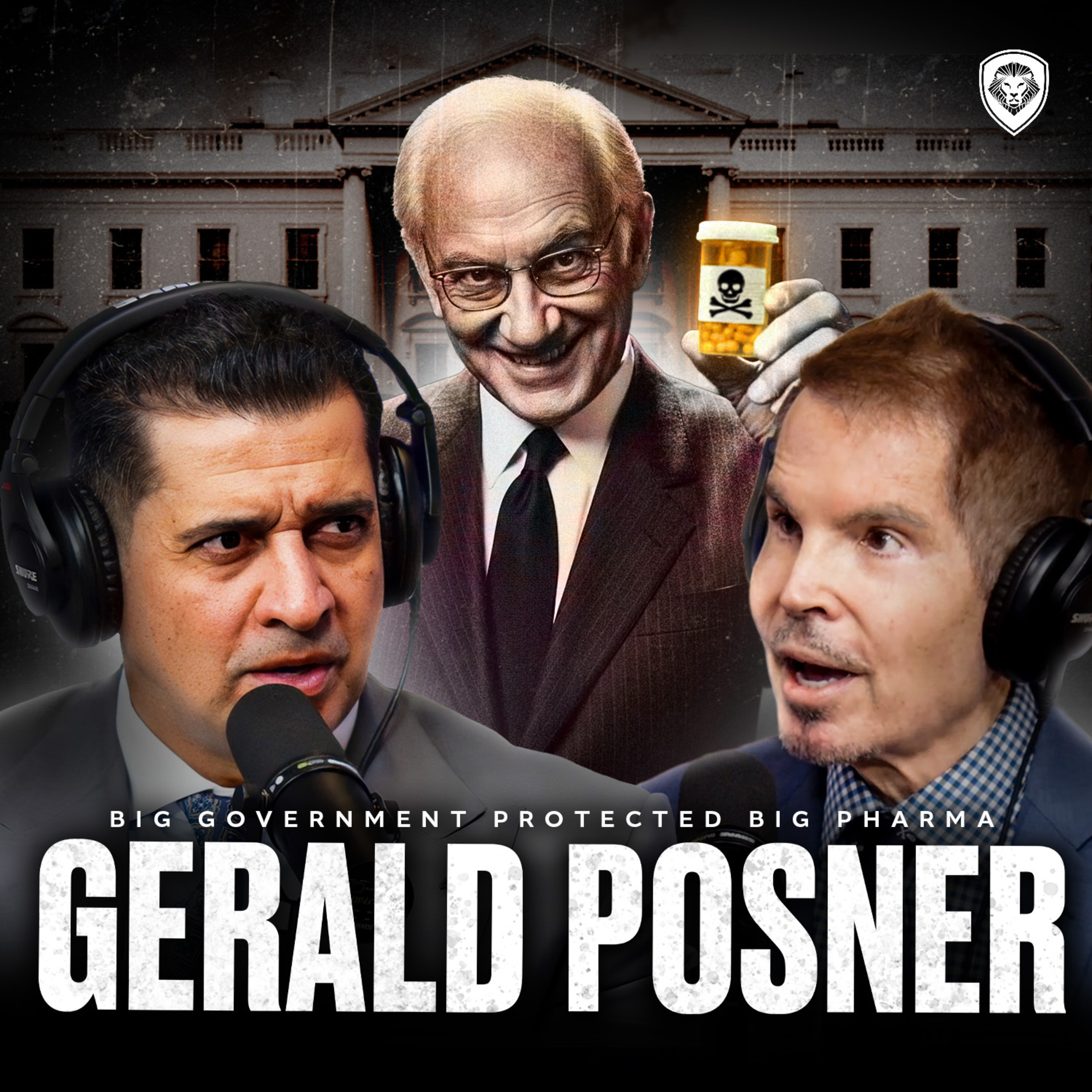
PBD Podcast
“Government Protected Big Pharma” - Gerald Posner On OxyContin, FDA Lies & Vatican Secrets | PBD Podcast | Ep. 663
02:07:06
Loading summary
Transcript312 lines
- [00:00]
A
When did cocaine become illegal in America?
- [00:02]
B
This was the Wild west days. So we think of big Pharma as this giant. This is a multi billion dollar business. But just a hundred years ago, it was nothing.
- [00:10]
A
Merck went from producing less than a pound of cocaine annually to a hundred and eighty thousand pounds a year.
- [00:20]
B
They signed the agreement, they went back and did the same thing. They put it on steroids. So you know what it proves? It goes to show that. Exactly right. They essentially got away with it.
- [00:29]
A
Can Trump and Kennedy reverse what happened in 1986 with the childhood Vaccine Act?
- [00:34]
B
Once the pharma companies knew you're not going to get sued anymore, guess what? They go from staying out of the business to developing vaccines for just about everything.
- [00:44]
A
When they were trying to castrate PETA, they used to give them a certain drug that now they're giving to kids as a form of puberty blockers.
- [00:52]
B
I have to tell you.
- [00:53]
A
Here we go.
- [00:54]
B
Funding this. It's an ideology.
- [00:56]
A
Wait, who is this? Is that a Pritzker? Wait, this is. This is not a joke.
- [01:00]
B
No, that's. And that's not a joke.
- [01:01]
A
First cousin.
- [01:02]
B
Yeah.
- [01:02]
A
First and openly transgender billionaire. Stop it.
- [01:05]
B
Yeah. So the Vatican says we can go off the grid if we have our own bank. And Generali, an Italian company, had more life insurance policies of Jews in Eastern Europe than anybody else. They had targeted them and signed them up. And when those Jews went to the death camps, Generali took the cash value of the policies off and their profile profits went through the roof. Adam, what's your point?
- [01:40]
A
The future looks bright. My handshake is better than anything I ever saw.
- [01:44]
B
It's right here.
- [01:46]
A
You are a one of one I send you right about said this. So we got a special guest in the house and here's why. He is very versatile. There's a lot of different topics we can talk about with him. So let me give you an idea what books he's written. Multi New York Times bestseller. Wrote a book called Case Close about Lee Harvey Oswald and JFK assassination.
- [02:08]
B
No.
- [02:08]
A
Wrote another book called God's Bankers, A History of Money and power at the Vatican. Wrote a book called Pharma, which is one of my books that I'm going to be talking about with him here today. And he wrote a book about Hitler's children. He talked. Wrote a book about Killing the Dream with mlk. There's a bunch of different books he wrote and there's many angles we can go here today. And we've been going back and forth and we're finally doing this, but I'm excited to talk to you today, General. Sincerely.
- [02:35]
B
I am seriously excited to talk to you because you're one of the few big influencer mega podcasters who doesn't stick to just one item. I can turn you on and watch Eric Adams. I can turn you on and watch Tommy Robinson. I love that. I can see Nick Fuentes on a given day. I can see a business executive. And I like that because, you know, from my work on books, I sort of jump around.
- [02:58]
A
Yeah.
- [02:58]
B
I like to look at the finance of the Vatican. And then when I think I'm an expert almost on that bo, I go to the publisher and say, you know what? I'd like to do something else. Let me learn about another field I know nothing about.
- [03:07]
A
So I want to start off with this because we're going to talk about a bunch of different. I want the audience to learn about your background, UC Berkeley, all the stuff that you've done as well. But I want to start off with pharma. So greed, lies, and the poisoning of America. Just a couple weeks ago, the President announced, I think it was at the memorial of Charlie Kirk. We're there. He's talking about tomorrow. We're making a big announcement, me and Bobby Kennedy. And then they released ties of, you know, Tylenol to autism and don't take it. And then Tylenol tweet, retweet comes up from 2017. We don't recommend you taking Tylenol when you're pregnant. All this other stuff, this book, as you go through the history of it. I'm going to start off with this page 7. I'm going to read it to the audience, and I want you to go from there. Okay, so page seven. Until 1900, there was no national medical license law. In most states, anyone could call themselves a doctor and open a practice and treat patients. The lack of basic medical knowledge meant that there were few boundaries for promoting a drug. That was the case with the first inexpensive but powerful central nervous system stimulant called cocaine. It had been discovered by a German doctor student whose chemistry dissertation was about how he had isolated the pure alkaloid from coca leaves. He named the alkaloid cocaine from the Latin ina from it simply means from coca. Merck, one of the first firms to concentrate on cocaine, touted it in products for everything from numbing aesthetics to cure for ingestion and hemorrhoids. Even as an aid in eye surgery, it reduced bleeding by tightening blood vessels. Cocaine was officially the sanctioned remedy of the United States. Hay fever Association. The US Surgeon General said cocaine was effective for treating depression tobacco and sold cigars laced with 225mg of cocaine for soothing nerves. While dentists pellet cocaine infused for toothaches. A gram of cocaine costs an average of 25 cents at any druggist. The largest mail order catalog of the era. Sears and Roebuck sold a hyper hypodermic syringe. A Scottish doctorate invented it only a few decades earlier. And a small amount of cocaine for A$50. The bottom in cocaine based remedies meant that over a two year span. Folks pay attention to this. Merck went from producing less than a pound of cocaine annually to £180,000 a year. How far along have we come from cocaine being a drug? The doctor used it today.
- [05:40]
B
No, it's, it's unbelievable because pbd, think about this. When you said Sears and Roebuck sold a little kit that you could use, that was the Amazon of its day. That was where everything went. That was, you know, so you were essentially going on the biggest retailer that you could find. They sold a packet that would make it easy. And cocaine is just one example. So what? This was the wild west days. This was the days you said they knew very little about medicine and what was curing. But they did know when a stimulant worked. So they knew cocaine worked. And what really was the start of the rest of the pharmaceutical companies that we know today by the companies, by the way, a couple of German cousins in New York City called the pfizers had a $2,500 loan and borrowed $1,000 for their family and set up a factory to make what? Morphine. Because during the Civil War they found out there was a tremendous demand for morphine. Battlefield people are suffering. They knew morphine helped kill pain. There's questions about quality. So Pfizers get going. There's a guy called Edward Robinson Squib, he's in the military. He knows that. He starts squibbing company. Why? To make morphine. You get the same thing from a fellow called Eli Lilly. He knew that there was bad morphine being sent to the front. He sends morphine and you get it with Wellcomm and Burroughs, Davies, all these companies that today are pharmaceutical companies that get their start on an addictive product at a time when you could walk into a store and buy it. And the great thing is Bayer, Bayer Aspirin. We think about them. They had smart guys inside the lab. The Germans dominated the pharmaceutical company. And over a five year period from 1898 to 1903, their scientists in their labs discovered four different drugs. The first one in 1898 is acetaminophen, what we call Tylenol. Okay, they came up with that. Pretty amazing. And then in 1899, they come up with aspirin, a wonder drug. In 1900, they come up with a better morphine and they name it after the German word for heroic heroes, heroin. They market it, they trademark heroin in the United States and they sell it as a cure for morphine addiction. It's fantastic.
- [07:44]
A
Stop it. Yeah.
- [07:45]
B
No, no, I'm kidding you, not. And it does, of course, cure for morphine addiction. You'll give up morphine, you'll go to heroin. They also solved it to, to be able for babies for cough. And then in 1903, at the end of this five year period, they came up with the first barbiturate, phenobarbital, which they also had. So now think of this. They've got Tylenol, they've got Aspect, they've got heroin, they've got phenobarbital. And they made decision not to put one on the market because inside their laboratories with laboratory rats, one of them was showing all types of harms. Guess which one? Tylenol. They did not put ecinaminophen on the market. They marketed phenobarbital, no prescriptions required. They marketed heroin and they ended up marking aspirin. And what changed the whole bit? So you think, you know, okay, so the United States, 1906, we passed a Food and Drug act, pure Food and Drug act, that didn't stop drugs from being sold like heroin and cocaine. It just said you had to put on the label what was in the bottle before that you could have elixir and just say, it's going to make you wonderful, strong, muscular. You, you used to work out at the gym, used to work at Bally's or wherever else. Now you could take an elixir and go in there and you'd be Superman. You know what? Now they had to tell you on the label what was in there after. But what really changed, it was 1914. They passed an act, the Harrison act, and they banned narcotic importation and they really did to stop the Chinese from bringing in opium and all. But once they stopped the, the importation of drugs, then pharma went cold turkey. They had to say, oh, we can't sell anymore morphine, we can't sell heroin, we can't do all of that. They had to look around for other drugs. They found. They found one in insulin up, the Canadian researchers found. But it's really not until World War II when penicillin comes around. It's an industry looking for a product. And this you'll like because you're such a business guy that when Moody's starts to cover American industries for the first time around 1915, pharmaceuticals is not even a category. It's such a small industry that's not even listed. It's a subset of the chemical industry. So it doesn't become its own industry until near 1930. So we think of big Pharma as this giant. It is. It's a multibillion dollar business, but just 100 years ago, it was nothing.
- [09:54]
A
So 1930, 1915, Moody's comes out by 1930. It's an industry. Prior to that, it's not seen as an industry.
- [10:01]
B
It's seen as a subset of chemicals.
- [10:03]
A
So by when did people start becoming license practice, you know, being a doctor, medicine.
- [10:10]
B
So the, the states varied. There was no federal law, no Trump executive order that said everyone's got to have a, you know, doctor's degree tomorrow. So you'd start to see states license slowly. The idea. And then of course, once the state started license, a group of very fellow smart guys got together and said, hey, you know what, we should sort of be the doctors group, the ama. Let's form a council that everybody has to get to and we'll lobby the states together and we'll go ahead and do it. And so that really happens. But it's not until the 1930s, late 30s, that you get the first law from Congress that says you have to have a prescription for, for anything that is a narcotic based drug, but you still didn't need prescriptions for anything else, which is really remarkable. And there's a little law passed, by the way, at the end of the 1930s, which is really interesting. The FDA, there are about 30 drugs that are in existence at this point. You don't even really have penicillin yet. And, and they passed a law that said, by the way, doctors, when they get their license, they're smart. And there aren't many drugs out there. So if a drug's approved for something, a doctor can prescribe it off label for whatever they want. That made sense when there were like a dozen drugs. Now we have like 3,000 drugs. That law still exists. And half of all the prescriptions in the United States every year that are written are written off label. Doctors decide they're going to use it for something else. So we think the FDA process should go through this multi billion dollar process to get approval. You get approved for a certain purpose, then a doctor can ignore it and use for whatever else. So doctors, for instance, take a drug that's used for the sexual castration of sex offenders and they're prescribing it on the side for pediatric converting children and stopping puberty and blocking puberty. That's an off label application of the drug. It's one of the greatest loopholes in the United States in the drug industry. And, and Botox, when Botox first started, it was actually for a sort of an eye situation where your muscle would not start twitching. That's what they got the original approval for. And then some doctors notice, hey, it looks like it lessens the effects of wrinkles on faces. People started to prescribe that around the country. Allergan, who was the company who owned it, they didn't care. They were making more billions and billions of dollars from it. So, you know, we think that the drugs that are being prescribed are safe for use, more or less.
- [12:29]
A
Yeah, I want to come back to that puberty blocker here in a minute, but let's stay on this here. When, when did Merck realize cocaine is. When did cocaine become illegal in America where doctors couldn't prescribe it?
- [12:40]
B
Doctors can't really prescribe Cocaine from 1914 and on.
- [12:44]
A
1914 and on. And what caused it? What changed the Harrison narcotics?
- [12:49]
B
Yeah, it blocks it across the board.
- [12:51]
A
What happened for them to say, you can't do it anymore?
- [12:53]
B
Okay, so what happened is they weren't focused specifically on cocaine. They were focused on all of these, what I called narcotics and stimulants. However, what it means is pharmaceutical companies are very, very look at. They don't just fold their hands up and say, oh my God, you don't let us prescribe cocaine anymore, so now we have to find another drug. They find ways to be able to put that same stimulant, methamphetamines or whatever else into other drugs. So In World War II, we were giving tens and tens of thousands of bennies to pilots who, who were flying because we wanted them to be able to have long flights and never fall asleep. When they were bombing Dresden or firebombing Tokyo or hitting the enemy lines. We wanted to make sure they weren't getting drowsy. The Germans were doing the same thing. And as a matter of fact, by the 1960s, the biggest, you know, we all know about Oxycon and those drugs. In the 1960s, the drug of choice was diet clinics. People were Giving out essentially what they called black beauties or real speed. It was all pharmaceutical based doctors the same way. In Broward years ago, there used to be pill mills for the opioids. There were doctors pills in diet centers back in the 1960s where women would go to lose weight and people would get it all. Officially the equivalent of cocaine, but in a different product having the same purpose for a different tool. They always find a way to remark interesting.
- [14:13]
A
So I remember in the 80s and 90s, it was ephedrine. I don't know if you remember. Ephedrine was a hot item. Wrestlers were taking it, you know, bodybuilders were taking it. It was, you're gonna get cut up. And it was a product by. I don't know what it was. I'll remember the name of the video. Yellow jackets or it was GNC would sell this thing. Ripped Fuel. I think it was Ripped Fuel.
- [14:33]
B
I remember that I was going to a gym in New York and although I have no size, I wanted to be ripped and cut up. And I do remember the GNC product. And ephedra was. Well, but ephedra fell into one of those great loopholes, which is supplements. So we have all of this regulation on drugs and what you can do, right, you have to pass these tests. But with supplements you can sort of say whatever you want. It's the wild west still. So you can have the, you know, all of the semarella and all these, you know, items today that you go onto Instagram and you answer one ad and the next thing you know, you've seen 16 different products that are claiming you're going to be smarter, better, you know, in two minutes your hair's gonna grow, you're gonna have less wrinkles, you're gonna be alive and thinking like a 20 year old. When you're 90 years old, those are supplements, totally unregulated.
- [15:25]
A
Got it. Okay. So, yeah, because ephedrine was a super, super hot item. And you'd go to the gym, everyone's taking it. You know, wrestlers were taking it. It was a very, very hot item. But, but let's stay on this history of what happened with pharma. So when you're talking about these companies, you talk about the Merck family, you talk about. Is it the Sackler family? Am I saying it correctly? You're talking about Arthur Sackler, all these other guys. Arthur Sackler acquired Purdue. When you do your investigation and you learn about these families, was their motive a good motive at the beginning or was the motive. Let me find something to get people to get addicted to so we can make money. What was the motive?
- [16:03]
B
So, and I spent a lot of time with the families of OxyContin victims, the children who died, the parents. And they believe that the motive was from the beginning to find an addictive product. Because what's better to sell an addictive product? It's pretty good. It's like tobacco, big tobacco, right? It's fantastic. You get a nicotine addiction. It helps a little bit on the addiction, but I actually think that in most cases, and put the Sacklers aside For a second, 99% of pharma people disagree with me. The people in the laboratory who are working on the drugs, they're really looking for a cure or something better. They are looking for that. Where it goes off, it moves. Then over to marketing, so they get the patent on a particular drug, it lowers cholesterol levels, it helps on insulin. You're doing a little bit better on this. It might be a bit better cognitive. Now the marketing team takes it and says, let's really push it. So what happens on OxyContin is a perfect example. They, the Sacklers, they owned a British company and there was a woman who was looking to create hospice care, which we now know everybody has hospice care. But at that time it didn't exist. And what was stopping her from doing it was she needed a long acting painkiller because you couldn't send people home to die if you had to give them a drip of, you know, the equivalent of heroin every four hours. The Sacklers came up with it, they invented it, they found a 12 hour time release form of morphine. Big thing. Then over in the United States they said, you know what, morphine's got a bad name. People think of morphine, they think of end of life. So no one's going to take a 12 hour morphine pill. So they put in oxycodone, which is a painkiller and they market as OxyContin. Now you say what did they market? It just addict hundreds of thousands of people and kill them? No, but what they did is they over marketed, so they're approved for a few specific purposes. And then they start to send their salespeople out and say, by the way, it's pretty good for back pain. Hey, osteoarthritis, it might help you for osteoarthritis. Guess what? They tested for osteoarthritis PBD before the FDA and it didn't work for that. But they're still selling it for everything they Oversold it, doctors start to sell it, they set up pill clinics. So greed gets involved. Look at, there are plenty of people to blame. So I always say don't just blame the family that came up with the drug and then marketed. It was also over marketed by doctors who set up pill mills, who pushed it, by the fda, who got lazy and didn't come in anything and do anything. On top of it by state attorney generals who didn't act for the longest time and they let them get away with it. There, there's plenty of blood to go around on the opioid crisis.
- [18:37]
A
Arthur was a marketing genius, in other words, that's what he was. He was a marketing guy.
- [18:42]
B
Oh my God, he was the marketing genius of pharma. He brought Madison Avenue sales techniques to the pharmaceutical industry in the 1950s. And here's how he did it. This is so fantastic. So in the 1950s they had had penicillin. They got that in World War II. Government paid for it, nobody owned the patent. They. So the prices dropped real cheap. So all the drug companies said, hey, we've got to come up with a variation of penicillin, put our own patent on it, get a 20 year license and then mark the prices up. So they did that. Tetracycline, all these different antibiotics. And there's a company over there that has a drug called teramycin. It's not very different. It's Pfizer and it's one molecule difference from another competitor's antibiotic, which means in plain English, it's no different. You take the competitor's antibiotic, it's going to do exactly the same thing as this drug, terramycin. Arthur Sackler goes to the head of the company and says, guess what? You give me $10 million, roll me out with a million dollar campaign, which was big money, late 1950s, I'll make your drug the number one selling drug in the world. And they said, you got to be kidding, but we'll give you a chance. And he's the guy who invented the sales teams that go out and try to sell the doctors. He's the one that had them all ready to go out. He's the one who did full color ads, advertisements to doctors, everything else. He made that drug number one. Hoffman LaRouche, a little Swiss pharmaceutical company said this guy's good.
- [20:07]
A
Hoffman LaRouche, yeah.
- [20:09]
B
And guess what? They hired him to make Librium, which was their first anti anxiety drug. The number one drug in the country. And then the big one, Valium. They said, hey Arthur, can you help us make Valium? Big wow. He marketed the hell out of that drug. Made it the number one drug in the world for 15 years. That's before OxyContin was even on the drawing board. So he knew how to sell.
- [20:30]
A
So how was he tied to OxyContin? Because he died in 87, but OxyContin doesn't come out till 96.
- [20:37]
B
Boy, you should be on the legal team for Arthur Sackler's team because they tried to save his name on all the buildings. You know, when all the buildings were taking down the Sacklers on the. On the schools and everything else, Arthur Sackler's second, third wife said, hey, don't take down Arthur's name. He died before OxyContin was even out. Right? His DNA, his selling ability is what taught that firm how to sell. If you understand his brothers, there were three psychiatrist brothers, by the way, Arthur was the oldest of the three. The other two went ahead. They knew how to do it. And although Arthur was out of the company, the Sacklers were tar and feathered. As such a bad name, you couldn't just distinguish and say, oh, by that one. That one died beforehand.
- [21:20]
A
Got it. So his philosophy of advertising is what helped shape how to get OxyContin out there.
- [21:28]
B
No question. They knew how to sell it. They sold it in. And I'll tell you, one of the things that's difficult, by the way, as a sidelight, we know that, you know, they used to sell all these drug reps would be some wonderfully cute, beautiful woman. She'd be going to the doctor to try to sell it. Some guy who looked great. They were all like, you know, handsome and beautiful. They. They were going out to sell the drugs, and they would give the doctors tons of freebies, right? Your doctor would give you a freebie, then say, why don't you try this? You can't do that with a prescribed drug like oxycontin. So no freebies allowed. So we weren't able to do that. But what they did is they were really smart. They got these pain groups together. They funded the pain groups. They lobbied Congress to be able to say, and doctors, we need more pain. And they did a brilliant thing. They had a group of doctors who said, by the way, you know, all this bad news about taking morphine and that is addictive, and it's gonna ruin your life. You're gonna end up as a dribbling homeless person on the streets of San Francisco. It's not true. They've tarn. Feathered it for Too long. If it's taken just for pain, you won't get addicted. It'll be fine. There was a reevaluation going and they funded that. They bolstered it. They had those doctors go around and speak. Some of them are true believers. So they weren't all fake, but they were funded in part by Purdue. And so in this reevaluation, people started to give out. Prescribed more OxyContin, thinking there was no downside. Now you can't get an OxyContin unless you've had three different surgeries on the same day.
- [22:58]
A
Got it. So I'm looking at it right now. Where he worked in the 40s, he joined advertising agency William Douglas McAdams where he remained active until the day he died. The Harvard University historian wrote in 2019 that the Sackler did not invent direct sales to physicians, but they were a pioneering influence. The median advertising hall of Fame wrote in 98. No single individual did more to shape the character of medical advertising than the multi talented Dr. Arthur Sackler. His seminal contribution was bringing the full power advertising and promotion to pharmaceutical marketing.
- [23:33]
B
So, so, so ppd. You'll get this completely. Arthur had a view. The pharmaceutical companies were stuck in the mud. They said, we have an unusual financial model. We don't sell directly to patients, we sell to doctors. We've got to convince doctors to prescribe our pill. He said, no, no, sell to patients. So he got these medical health writers in Time magazine, in national and all these different places to talk about the new wonder drug. He would hype it, people would read about it, they'd go to their doctor and ask about it. That's why we see so many television ads in America for Pharma products since 1997, direct to consumer ads. So you think to yourself, hey, wait a minute, why are they spending all that money advertising to us, the patients? We can't prescribe the pill. We can't go out and get it. But he knew that you could create the demand and he sold volume to women. Two thirds of the prescriptions for valium for its 15 years were to women. And he sold it to them. My wife often, you know, shakes her head when she sees this. He sold it to men this way. He said, men, you need Valium for the following reason. You go out, you earn the paycheck, you're bringing home the money, you're bringing home the butter and bread to keep the family going. You're under stress and you're going to get an ulcer. Value will keep you from getting Ulcer make you better at business. Now, for women, you are hysterical. You're a little high strung, and you're taking care of the children and you're supposed to be doing everything at home. I'm gonna make you less high strung. You won't be so hysterical. Take Valium and you'll be better off. Now, today we would have him tar and feathered and he'd be up in front of Congress for such a sexist ad. They were also selling at the same time Ridlan so that women could do more housework faster, believe it or not. So combination of Ridlan for faster housework and V volume to take the edge off the 1960s advertising, when I look at it, is the type of thing you would think that you're making it up. It has to be from the Onion, but it's true and it worked.
- [25:36]
A
Are there. Are there videos of Arthur Sackler actually speaking like, are there things of a lot of Doc. I can't find anything of them right now.
- [25:44]
B
No, no, it's. So two things happened. Whatever was out there, the Sacklers ended up tying up. Right. So there's not. There's nothing. There's. You go to Wiki Commons, there's nothing that you would look for material. You want to see him talking. There isn't. There used to be some videos of him because he was a major art collector. This is a guy serious. Right. He had the largest collection of, as a matter of fact, sidelight. So I did a Freedom of Information request. I always do freedom information requests. Most of the time it's a waste of time. They send you back a thing that says, get lost, we're not going to give you anything. And then three years later, they give you something that's redacted. And on the Sacklers, I got documents I thought were really interesting for the 1950s. These guys were hardcore communist. Yeah, we forget about that. The Sackler families, the three Sackler brothers. This is amazing. So, yeah, this is fantastic. So Jewish immigrant parents come to New York in the early 1900s at a time when, if you remember, when Eugene Debs ran as a socialist for the presidency and a third of New York City voters were voting socialists at the time. A majority of Jewish immigrants, because they came in had from a socialist background. Now, he grew up in that atmosphere, but he was much further than that. He was investigated. Both, all three Sackler brothers were by the FBI. He used his advertising firm that you just mentioned a moment ago to give jobs to people who lost it in the government because they had been Tarred and feathered as Communists under the McCarthy investigations. He said, come over and work for me. And he said that one of the greatest he. He liked this British physician that had gone over to China and died. He viewed communist China as the great revolution. Wow. And here I think he held those beliefs until he made his first billion. And then he sort of gave up on socialism and communism. But they came from real red roots. Yeah, you get it.
- [27:41]
A
Capitalism will do that to you. Successful do that to you. You start winning, you're like, yeah, I don't know if this.
- [27:45]
B
I don't know.
- [27:47]
A
Distribution of all the wealth and giving it to everybody else. So it's interesting because there's a story about the guy, Arthur sackler, when in 1950, Pfizer only had seven salespeople, he went in and by 1957, he encouraged Pfizer to increase their sales team. They went from seven in 1950 to 2000 in 1957, and Pfizer took off. So this guy's a marketing genius with a consulting firm that he used to be with. That somebody else be up right there from 8 in 1947 to 2000 by the end of it. Okay, so we're learning about that part.
- [28:21]
B
Now.
- [28:22]
A
Let's go back to OxyContin. So OxyContin 1996 comes out. How was it sold? What happens to it? How bad were the damage is? What can you tell us about the history of OxyContin?
- [28:34]
B
So the disgraceful part about OxyContin was that the FDA gave Purdue a part of the label. On the label, you look at the label, it said, likely to be less addictive because they thought it's a 12 hour pill, not taking it every four hours. So it makes sense in common sense if you think about it. Maybe if you're not taking it as often, it may not be as addictive. But guess what? They had no studies to show that. So they allow them to put that on the label. It's a big selling item, right? Oh, my God. They went to doctors and they said, by the way, we have a less addictive product. Which it wasn't.
- [29:08]
A
Who was? It was a lobbyist.
- [29:10]
B
No.
- [29:11]
A
So did somebody lobby to get.
- [29:12]
B
The Sacklers did it themselves. They worked that. They. They were there. Richard Sackler, the. The sons, the grandson of Arthur Sackler, they worked it before the fda. And by the way, the FDA approval officer, two years later leaves the fda, and what does he do? He goes to work as the chief medical officer at. Yep, you get it. Purdue Pharma. And this is one of the things we hate in Washington. We all hated, right? And so what happens is by 2000 and 2001, five years after it's released, there are reports already in the New York Times and the local press and everything else. Because where did the Sackler start to sell it? They didn't sell it in New York City. They didn't sell in Santa Monica, where you were for a while. They didn't sell in San Bernardino or wherever else. They went ahead and they sold it in Appalachia. They said, you know what? We think there's a real market there. And you know why? These are people who are working blue collar jobs. They're working tough jobs in mines and in fields and everything else. They're in pain. They've got real pain. We can help to sell this and alleviate pain. And they start to sell it in little towns in Kentucky, little towns moving up through, all the way through the Appalachian belt. There are pharmacies that have towns that are 7,500 people and they're getting 12 million pills. So you think there's a problem. People are coming all around to get the pills by 2001. There are stories about the problems with Oxycontin, and guess what? Nothing happens by 2007. They end up. They have to actually make a plea. Purdue does. They're sued by the federal government because they're over marketing. And they have to sign a consent agreement. So it's the OxyContin. The opioid crisis hasn't really killed 250,000Americans yet. They sign a consent agreement. You'll love this, being in business and says, we're never going to do this again. We're never going to over market. We're never going to oversell it. Everything else, they signed the agreement, they went back and did the same thing. They put it on steroids. And from 2007 until 2019-20, when they start to finally the whole focus is on them. And then they go bankrupt. They essentially got away with it. I always thought. I tried to let the facts speak for themselves in my book, but I always thought the Sacklers could have had a criminal charge the family brought against them, possibly for conspiracy or that no attorney general wanted to look at it. They just wanted the money from them. That was the end of it.
- [31:34]
A
Limu Keymoo and Doug, here we have the Limu emu in its natural habitat, helping people customize their car insurance and save hundreds with Liberty Mutual. Fascinating. It's accompanied by his natural ally, Doug.
- [31:51]
B
Uh, Limu is That guy with the binoculars watching us.
- [31:54]
A
Cut the camera. They see us.
- [31:56]
B
Only pay for what you need@libertymutual.com Liberty Liberty, Liberty Liberty Savings variant by Liberty Mutual Insurance Company and affiliates excludes Massachusetts.
- [32:04]
A
It's okay not to be perfect with finances. Experian is your big financial friend and here to help.
- [32:11]
B
Did you know you can get matched.
- [32:12]
A
With credit cards on the app? Some cards are labeled no ding decline, which means if you're not approved, they won't hurt your credit scores. Download the Experian app for free today. Applying for no ding decline cards won't hurt your credit scores. If you aren't initially approved, initial approval will result in a hard inquiry which may impact your credit scores.
- [32:32]
B
Experian.
- [32:35]
A
Okay, so at this point, from 1999 to 2021, I think 650, 645,000 people have died because of the drug.
- [32:44]
B
Right.
- [32:45]
A
And I wonder when you're saying they went to the blue collar worker, right? Appalachia is where they started. They're like, these are hardworking people. They're on their feet all the time, say, take the pill. This is what's going to help you. 12 hours, all this stuff. So it wasn't through. It wasn't through TV advertisement that they go to them. Meaning, you know, we know the story about us in New Zealand, the only two countries where you can advertise for, you know, pharma and all this other stuff, right? And I've heard you say you'd like, if you were one of the advisers to President Trump, you would ask him to stop doing that in America. If. Let's just say that does happen. How does a company like this still get oxycontin in people's hands? How would they do it?
- [33:23]
B
So you know what, boy, you hit the key because pbd, they never ran a TV ad for oxycontin. You can't run a TV ad for controlled substance. So you know what it proves? It goes to show. That's exactly right. So you juice the sales by running the TV ads. No question. All right? They would. Pharma companies are smart. The people who are spending the money, they're not spending money, by the way, and billions of dollars on TV ads because they're not getting a return. They understand through focus groups and that that they can create a demand for a new drug. So somebody's going to be on a cholesterol medication. They see a new drug advertised, they go to their doctor or call them up and say, hey, what about that new drug? The doctor doesn't know how much you pay for the drug? They never know. Right. They don't know what type of insurance you have, what your drug plan is, so they prescribe it. Those work. But OxyContin is the proof that word of mouth also works, especially when it comes to an addictive product. So you don't need one television ad. They. They weren't spending big money on the ads. They were spending on lobbyists. They were spending on the drug teams. They were doing all types of bonuses, you know, for selling the most. All the things you would expect for drug sales. Yeah.
- [34:28]
A
It says the last time they advertise on TV was in 2000s and they haven't since then, allegedly. This is what this article is talking about, Purdue Pharma. So then that means it doesn't matter if you have an addictive product or not, whether you advertise on TV or not, you're still going to get in the hands of people. So what has been the progress and the level of regulation for something like OxyContin? We know 645,000. Let's just say at this point, Shaft, a million people have died from 99 till today. What can regulators do? What can a. So. But RFK comes out and he says, you know, Tylenol during pregnancy is linked to autism. Right? Of course. We've looked at the amount of vaccines that we take. I think you just tweeted that two days ago. Rob, if you want to go to Gerald's Twitter account, just two days ago you posted this. It could have been three days ago. It's one of the recent posts that you put up with the amount of vaccines that is being taken before versus now.
- [35:25]
B
Oh, my God. It's unbelievable. No, no, no, it's fantastic.
- [35:28]
A
Right there. Okay, so that's the one that you posted.
- [35:30]
B
Right.
- [35:30]
A
So 1986 versus today. Go ahead. If you'd like to break the sentence and then bring it back to. Bring it back to Tylenol. And what they can do to regular. Like if he comes out and say, avoid taking Tylenol during pregnancy, what can they do about OxyContin?
- [35:46]
B
So, well, OxyContin, they can restrict it by saying, guess what? You can't do 90 pills at once. In Florida, in Broward, which was the pill mill capital of the world for a while, used to go along the highway. You'd see the signs, you know, call for pain doctors. You'd see these security guards right here. This was the spot. As a matter of fact. You'd go in. The doctors were smart. They didn't take insurance. It was cash only. And they dispensed from their clinic. So you went in, you said, I've got terrible pain. They'd write you up. They'd give you the maximum of 90, 90 days of pills, three pills a day or whatever else. You'd walk out with 270OXYCONTIN. You'd pay cash for it. You'd go half a mile down to another one. There was no database at the time of how many doctors you went to. That's why people are coming in from Georgia and Kentucky. You'd see all the foreign license plates in front of the place. They'd leave with thousands of pills. They'd go back and they'd sell some. They became mini dealers. That was the wealth. Now there are regulations. You can't dispense from inside the practice. You can't do cash only. You can only give a certain amount out. So they put limitations on it.
- [36:48]
A
What were the 270 selling from? I'm curious what kind of money doctors were making.
- [36:51]
B
So. So doctors, this is a great thing. And some of them were prosecuted because they got real greedy and weren't paying taxes. The couple lost their license, things like this, right? So, you know, they're driving. They've got a Lambo and they've got a Ferrari and they've got a few watches, and they're reporting $40,000 a year in income that eventually comes to get you on the behind. But they, those pills, they would sell them to patients. For the most part, they were costing five to $6 a pillar on the outer market, $20 a pill to $25 a pill. So an immediate markup. And they were like gold. And they were selling. So the government can restrict the amount. The government can put those in state by state. They were doing it then. The federal government can do it now. Here. This is what I call not the greatest scam, because vaccines serve a purpose. You know, you can get a vaccine against polio and things like this. It works. But the number of vaccines is interesting. Talking in 1986, from birth to 12 months, you're talking literally five vaccines. Now all of a sudden you're talking a couple of dozen. Why? Because. Is it because we've learned to be better at medicine and all of a sudden we're preventing more illnesses? No, what's happened is in 2017 and 2018, the pharmaceutical companies had almost left the vaccine business. Why? Liability. They were being sued. And then the government gave them a free pass, a get out of jail free card, set up a Fund. That said, by the way, you get a vaccine, you know what? This is really for the public goods. So you're a drug company, you're doing a vaccine. Somebody gets sick, they turn into Quasimodo. They can't think anymore, they've lost their eyesight, they can't sue you. They'll come to the vaccine fund. We'll taxpayer money, we'll give them some money. That'll be the end of it. Once the pharma companies new, it's like opening. It's like the green, you know, flag at the, at the race start running, you're not going to get sued anymore. Guess what? They go from staying out of the business to developing vaccines for just about everything. So we and our children are a living experiment of the future effects of vaccines. We will find out what they are. Like. You talk about Tylenol, not take it. What about 2017 when the maker of Tylenol says, don't take it if you're pregnant? Well, you know, you know, who wrote that? That was the lawyers. So the lawyers said that. The lawyers said, don't take anything while you're pregnant. Don't even look at it. Don't even look at a Tylenol bottle while you're pregnant. That'll keep us from getting sued. But as a practical matter, you know, the lawyers on vaccines, they've gotten away with just about as much as you can get away with.
- [39:22]
A
By the way, this, this National Child Vaccine injury Act of 1986. The president was Reagan. Okay. At the time when it happened, who were the people? The senator was Orrin Hatch, Republican out of Utah. Ted Kennedy was involved out of Massachusetts. Senator Paula Hawkins was involved out of Florida. And, and then you had a couple other people that were involved. What was the idea to say that this is actually good thing to pass? Who, who convinced these guys we should do this to protect. Who are we trying to protect? The folks that are making a vaccine or we're trying to protect the individuals that are getting injured by the vaccine.
- [39:58]
B
So, you know, denial is a very strong, you know, tool. They convinced themselves. And Hatch was pretty pro pharma. Hatch was a pro pharma Senator Kennedy was a pro pharma senator. These guys, you know, talked a good game, but they were on pharma's payroll to that extent. I'm sure people on both sides of the aisle are going to say, oh, not Hatch, not Kennedy. But it's true. They did a lot of work for PhRMA and they justified in their head this way by giving a break to the pharmaceutical companies so they don't get sued into oblivion by every smart lawyer who comes down the pike. We're going to allow them to do things that will really help children in the long run because we're going to protect children in this country from getting illnesses and diseases you get in other countries. And boy, I'll tell you, you know, as you well know, you can't get out of the hospital after giving birth here without getting a vaccine given to a child that's just a day old. It's. It's pretty hard to do.
- [40:53]
A
You know, I just looked up the following. I said, how much money? Rob, can you ask this question? How much money did Hatch and Ted Kennedy. Kennedy raise from Big Pharma? Okay, let me give you Hatch's first name. Hatch's first name was Orin. O R R I N O R R I N When you pull this up, here's what you'll notice. It says to me that Hatch got from Open Secrets. It says roughly $2.871 million at a.
- [41:27]
B
Time when $2.87 million meant a lot. And wow. Wait a minute.
- [41:32]
A
Look at that.
- [41:32]
B
Wait, but hold on. Pbd. This is great. That's just the direct money from pharma companies. Now what does pharma do? They set up advocacy groups for, for people who are afflicted by health problems. So if they want to get a small drug approved as an orphan drug, what they call an orphan drug for these small genetic diseases that afflict only a small patient population, they're really terrible diseases, Huntington's disease and other things. But pharma will find a few of the people who are suffering from that. They'll give them the funding and the organization often to become an advocacy group. Those advocacy groups will also contribute to the politicians and, and they aren't counted as drug money. So that too, I guarantee you that if we were able to go down the list and if I went back through all of the, what I call the Associated Pharma enterprises and front companies and everything else, that 2.7 is three and a half or four, but 2.7 direct drug money.
- [42:29]
A
So how do you, how do you get ahead of this? You know, like can Trump and Kennedy and Maha and those guys come out and reverse what happened in 1986 with the childhood Vaccine Act?
- [42:42]
B
They have. So they have a lot on their plate. And the question is, where do they want to spend their political capital? What do you want to do? You know, I think about this often back when Obama was president, when Obama was out of office and the people were crazy for abortion rights on the left and all that. They said, oh, we need a national abortion bill. Right. I would say to people, why didn't Obama pass that? When he had the presidency and it had the House and the Senate, they said, oh, because he was busy on health care. You have to prioritize. I get it. You can't do everything on your wish list. So same here with Trump and Kennedy. They can't do everything on their wish list. They haven't yet stopped direct to consumer advertising for tv, maybe that's coming. They put a limit on it. They are. And when I say they, Trump, but particularly Kennedy, I know from talking to pharma people behind the scenes, and I love this, they are sweating. They couldn't stand that he was gonna come into office. They were hoping that Trump would put him into some position in the cabinet that had nothing to do with health. And then when he comes to hhs, they didn't know what to make of it. And they're sort of holding on with white knuckle fingers on their tabletops, thinking they've got a countdown. You know how you're in. You've never been in jail. I've never been in jail. But if we are and we have a sentence and we're knocking off the time on the wall of how many days left.
- [43:59]
A
They did that in the military boot camp.
- [44:01]
B
Three years you had. Okay, the. I remember that story when your mother said you wouldn't fight. We left Iran, so you didn't have to go in the military. And you're in the military now. What's the matter with you? So they're waiting for Kennedy to get out. But let me tell you, this administration has the ability to make fundamental changes to the pharma machinery. It's not going to be nirvana, it's not going to be a panacea, but they can make changes then if the American public sees that, that is to their benefit. And they're going to see it to the benefit in one way. How? Paying lower prices. That's how the public judges it. If they can go and get a medication that was costing them $300 a month and it costs 120amonth or 130amonth, guess what? Most of them aren't shareholders. They aren't people holding the public companies to every quarter to come up with a better profit. So that's how they see it. And I think that this administration can deliver big time on a lot of fronts.
- [44:54]
A
Yeah, I think this would be Big but you know, so two things I take away from this. Even if we prevent Big Pharma from advertising on tv, if the drug is addictive, it's going to get to the people anyways. And once you get them addicted once or twice, they're always going to come come back. They don't need a commercial to keep coming back to you. So you got it. You got to get them hooked on a product and they'll be be back customers.
- [45:13]
B
Well, and so what happened? What did OxyContin create? So OxyContin, because of the crackdown on all the legal analgesics, the pushed the market for the illegal market. That's one of the reasons fentanyl has now led to Fentanyl is the number one cause of death in the United States. Guess what? So you're taking OxyContin, you're addicted to Oxy Purdue, by the way, what are they working on? They were a one hit drug. You know, you used to have one hit wonders for record bands. They were a one hit company. That was it. It put them on the Forbes wealthiest families list in 2014. They entered with $14 billion and it was this is who? Sackler family. The Sackler family. And Forbes called them the Oxy clan. At that point they went from nothing to $14 billion based on one drug. They were looking at another drug which would have helped you if you were constipated because one of the side effects of being on opioids is you get constipated. So I love how pharma companies find that there's a side effect from the drug they've given you and then they look to make money on the drug to treat it in a different way. But when OxyContin gets dried up, guess what users who are addicted say? They say, God, I'm paying $20 for that pillow. Or I'm having to go to a doctor and go through a house or I have to go to CVS or Walgreens and they're looking at me like I'm a drug addict. I can buy fentanyl pills that are 50 times as strong on the street for a few dollars. So it pushed it into a much more dangerous market. And that's why I think we saw the increase initially in 2122 during the pandemic in the number of overdose deaths.
- [46:40]
A
This is it, the OxyContin clan. You're talking about a $14 billion newcomer to the Forbes.
- [46:44]
B
And let me tell you, you know this because you're a very successful guy. You've created an empire. It's tough to be off that list. And come on, at 14 billion, that's a big enter. Sudden you didn't go from 2 billion and then your stock value went up and all of a sudden. And remember there's something else about this. We are accustomed to seeing mind boggling numbers. Musk, $500 billion, whatever else. But guess what, as you know, they're all share prices for the most part.
- [47:10]
A
Right.
- [47:11]
B
These guys had a private company, they weren't public. So Purdue was family owned. The board was controlled by the Sackler family. When they're worth 14 billion, it's a real 14 billion. It's not because they have an inflated price at some point of an ipo.
- [47:27]
A
Got it? Yeah. So Rob, can you go a little bit lower just to see what happens here? Zoom in a little bit. The richest newcomer to the family, Sackler family, which owns Stanford Canada based Purdue Pharma flew under the radar when Forbes launched its initial list of wealthiest families in 2014. But this year they cracked the top 20 edge and got stored. Family like bush melons and Rockefellers had that. The sacklers build the 16th largest fortune in the country. The short answer is making the most popular and controversial opioid in 24th, 21st century OxyContin. Purdue, 100% owned by. It's 100% owned by them.
- [47:56]
B
Yeah, yeah.
- [47:56]
A
Has generated estimated sales of more than $35 billion since releasing its time released supposedly addiction proof version of the painkilloxicon Oxy codone back in 1995. Its annual revenue are about $3 billion. Still mostly from OxyContin. The Sacklers still own separate drug companies to sell Asia, Latin America. Wow, look at these guys.
- [48:17]
B
So what they did, by the way, which is very interesting, they did not use their money to go off and buy a 500 foot yacht. They weren't competing with Larry Ellison to see if they had a bigger yacht than the Saudis or whatever else. They didn't go out and buy a big villa in the south of France for $20 million and go all the time to Monaco with. They bought their names and prestige on the Guggenheim and on the Tate and on the Serpentine Museum and on the, and the Tufts Medical School. They put their names on buildings at the National Gallery, at the Metropolitan Museum. They were building monuments to themselves, the modern day pyramids. The Sackler was everywhere. So they made a lot, they gave a lot away and they still kept plenty. And even when they eventually had to contribute to a settlement, you know, the company goes Bankrupt. And they, the Sackler family, they go to the judge and they say, hey, by the way, this is a fantastic deal. Think about this ppd. So you have a company, it's injured all these people, it goes bankrupt. You've made billions and billions of dollars and you have thousands of suits against you by all these people who are saying you, you ran the company and you over marketed. Sure. So you go before the bankruptcy court and you say, guess what, I'm not bankrupt, I've got a lot of money. But I'd like you, the bankruptcy court to discharge all of the suits against me to make them all go away. And the bankruptcy court says, well, you got to contribute some money. So the sector said, okay, we'll give like $2 billion. Then they said, we'll give like $3 billion. And then people wanted more and so they put in five and then they put in six billion. They, they eventually contributed over $6 billion as a family, almost coming up to seven to get rid of all the litigation against them. So now they have a get out of jail free card instead of 14 billion. Maybe they're left as a family with 5 or 6 billion. But they didn't lose the country club memberships, they didn't lose all of that. They kept a lot of money and they still emerged with a get out of jail free card. So for the Sacklers, not the greatest outcome, but not the worst by a long shot.
- [50:19]
A
Yeah, they went from being communist to now, you know, becoming some of the richest families. They bought a property, $30 million property. Is selling his $30 million property. I don't know which one this is when we went to $30 million property they're selling. Can you look this up, Rob? They're selling their 30 million dollar property. I'm trying to see where it's located at. Oh, it's in Boca Raton.
- [50:39]
B
Well, because.
- [50:39]
A
Yeah.
- [50:40]
B
Where does everybody come who's has legal problems in another state, from New York or wherever else they come right to Florida. You homestead, put as much money as you can into your homestead. Right. Make sure that nobody can touch that. And that's the safest thing. So it makes sense that that's the case. But you know, you said before you were talking about, I know this like a left turn detour. But sometimes the Sacklers made all the money, the brothers. And then I never heard them talking about communism anymore. And they weren't talking about overthrowing the government or whatever else. But then sometimes you look at these people like mam dme running for the mayor of New York, comes from a wealthy family. Guess what? He's not coming from dirt poor family. Or that he's like a champagne socialist. So there are those people who have some money who still think that the idea is good to redistribute wealth. Now maybe if he makes a billion dollars, he'll change his mind, but.
- [51:29]
A
Well, it's always exciting to redistribute other people's money, just not your own money. Right. People are excited about doing it with others.
- [51:34]
B
That is absolutely true.
- [51:36]
A
I can't find out where this area is. I don't think it's in Boca, but it's one of the properties that they have. So let me get to the next part. So this is very interesting history as you're going through it. Right. Let's talk about Xanax. I had an old friend of mine who was addicted to. What are the pills that you take that pain relievers.
- [51:54]
B
Xanax is an anti anxiety sort of.
- [51:58]
A
No, not Lorizapam and stuff like that. It was Vicodin.
- [52:02]
B
Oh yeah, Vicodin, absolutely.
- [52:04]
A
So he got to a point that he was taking 25 Vicodins a day.
- [52:08]
B
Amazing.
- [52:09]
A
And a dentist was selling it to him. Right.
- [52:12]
B
Because the dentist prescribe that. They, dentists prescribe more Vicodin or things like that than almost any other doctor because dental pain. So nobody, the government doesn't look at a dentist with a lot of OxyContin or Vicodin prescriptions, oddly, because they expect that to be part of the practice. So dentists get away with it.
- [52:29]
A
Yeah. But this dentist in Glendale, after he passed away, he died from taking one night. I think he took 50 of them or something like that and obviously never woke up. But this dentist that later on came out, I found that the dentist was selling it to another Armenian kid. And that Armenian kid was selling it to my friend. And then at one point he just couldn't. He just couldn't get a hold of himself. What do you know about Vicodin and Xanax?
- [52:54]
B
Yeah, so Vicodin, another painkiller, same thing. It has an opioid base. You will get addicted to it just as you can with anything else. So Vicodin is one of those drugs that people think is safe for the short term. And what those drugs do, by the way, Vicodin is a perfect example. When they sell them, when they sell them in a prescription base, they don't just sell you the actual opioid part. They mix it into a pill that has Tylenol. So it comes with 325 milligrams of Tylenol in the pill. Now you're taking 15 or 20 of those. Let me tell you, PBD, you are past the legal limit for what you should be taking for your liver for Tylenol. So you're already beating the hell out of yourself. Forget about the addictive part of the drug. You're just killing yourself just from the amount. It would be like taking half a bottle of Tylenol every day. That's going to put you under. And one of the things the Sacklers would do is they would come in and say on these deaths. So the government challenged them at one point early on and said, people are dying of overdoses of oxyconin. They would say, no, let's do, give me the toxicology report. And then in the toxicology report, nine times out of 10, it's not just OxyContin, somebody's got some liquor, they smoked a little bit of weed. They had, they had Vicodin that they put in, which is different. So they would say, well, we're not doing it. It's all mixed in. So that's what also happens. The guy who's taking the Vicodin is probably having maybe a couple glasses of wine. He's doing other things. It's all leading to kill yourself. Now Xanax, completely different. Xanax is you have this 15 year reign. And I say it in admiration only because it's so hard to stay at the top. It's the number one drug in the world, but Valium did it. So Valium is the number. Everyone thinks Valium is harmless, right? There's no downsides. Then after it's out for 10 years, Congress finally gets around to looking into it and they have all these horror stories of people addicted to it. They can't get off of it. Guess who comes in? Upjohn. They've got a great thing. They have a drug called Xanax which is going to help you get off of your Valium addiction and be less addictive. And they put that drug out in 1990, just at the time when a thing called the DSM, the Diagnostic Statistical Manual where psychiatrists write it up to describe things. They created a new condition called panic attacks. So before 1990, you couldn't prescribe a drug like Valium for panic attack because it wasn't in the DSM, it wasn't there. So Dr. Couldn't write a script for it. Now all of a sudden it becomes a treatable condition. So you go to the doctor and you say, by the way, I'm having a panic attack. I'm about to go on PBD and I'm nervous as hell. I'm having a panic attack. Guy gives me a prescription for 30 Xanax. So Xanax became the number one drug. Knocked Valium off the shelf by a mile and was a, and still is, the sort of flavor of the moment when it comes to kids who get in trouble. You'll find an 18 year old who's overdosed. I guarantee you that they have a combination of drugs in them, including sometimes fentanyl and other things, and, and a Xanax in there because they think that a Xanax that they often find in their mother or father's medicine cabinet is harmless. They think of that as like taking an aspirin.
- [56:01]
A
So you're about to make a trade based on a friend's text, but which.
- [56:05]
B
You do you listen to, is it.
- [56:08]
C
We could buy a house in Tulum.
- [56:12]
B
Get optioning those options.
- [56:16]
A
We could lose everything.
- [56:19]
B
Or let's do a little research, get.
- [56:22]
C
Your head in the trade and make the investment decision that's right for you.
- [56:25]
A
Learn more@finra.org TradeSmart.
- [56:33]
B
When did making plans get this complicated? It's time to streamline with WhatsApp, the secure messaging app that brings the whole group together.
- [56:42]
A
Use polls to settle dinner plans, send.
- [56:44]
B
Event invites and pin messages so no.
- [56:47]
A
One forgets mom's 16.
- [56:49]
B
And never miss a meme or milestone. All protected with end to end encryption. It's time for WhatsApp message privately with everyone. Learn more@WhatsApp.com yeah, so back in the.
- [57:00]
A
Days in the 1890s, this is the Sigmund Freud thing that he used to call it the anxiety neurosis in the 1890s and then eventually panic attack is.
- [57:09]
B
When it became 1980. Yeah, yeah.
- [57:11]
A
So interesting. Okay, so you said something earlier when you said when they were trying to castrate pedophiles earlier on they used to give them a certain drug that now they're giving to kids as a form of puberty blockers. Can you speak on that, please?
- [57:32]
B
So one of the greatest scams, medical scandals playing out in our lifetime right now to me is this horrible whole pediatric gender business. It's an industry that's formed and pharma's part of it. There are the multi billionaires who are funding it, like the Pritzker family, one of the Pritzker family members, heir to the $37 billion Hyatt foundation, changed from a man to a woman from James to Jennifer. There's a person who runs the Taij Foundation. There are people. Martine Rothblatt, also man to woman billionaire. They're funding this. It's an ideology.
- [58:13]
A
Wait, who is this? Is that a Pritzker?
- [58:16]
B
Yeah, that is a Pritzker. Did you know James. Now James, that. Now James. The. And a.
- [58:20]
A
Wait, this is. This is not a joke.
- [58:22]
B
No, that's. That's not a joke.
- [58:23]
A
How is he. How is this guy related to cousin, the first cousin?
- [58:28]
B
Yeah.
- [58:28]
A
Hang on one second. I've never heard of this before.
- [58:31]
B
Yeah. No.
- [58:31]
A
Jennifer Natalia Pritzker, who was born James Nicholas Pritzker, is an American investor. Pritzker retired as a lieutenant colonel from the Illinois Army National Guard and was later made an honorary Illinois colonel. Founder of The Taiwanese Foundation 1995 Enterprises, in August 2013, released a statement to employees of Taiwan Enterprise and Pritzker Family Museum of Library sequence of media status as a transgender woman, making her the first and openly transgender billionaire. Stop it.
- [59:00]
B
Yeah. And. And you should look up there. Martine Rothblatt. R O T H, B L A T T. Now, why do I mention this? You can't get something going, okay, Martin Rothblatt, American lawyer, author, entrepreneur. The Was this guy originally. Man, the. And you can't punch him in the face. They have billions of dollars, and what they do is they're very, very smart about spending it. So they will give a grant. And I go through this. I have a thing called the transgender Money Pipeline. I did an article about it. They will give a grant, let's say the University of Illinois or University of San Francisco, and they say $20 million, $22 million grant, whatever else. But we want you to open up a gender studies program. We want you to have a study to look at bringing children, possibly who might be born in the wrong body. Let me tell you, Sidelight, hate to say this, no question, nobody's born in the wrong body. Just not true. There are people born intersex. Right? They have to make a decision. But. But, but children today are taught, hey, maybe, maybe you're in the wrong body. You're not happy. You're autistic. The autistic kids who are converting over to think that they are another gender are 60 to 70%. And guess what studies show In Europe, the bulk of the children who think they're another gender, if they're left alone and they're not given drugs and medication, turn out actually to be gay. If they're boys, they turn out to be gay. If they're girls, they turn out to be gay. They aren't actually another sex. But what happens is now all of a sudden you have doctors stepping in and say, guess what if we take that child? Think of this, your own son or something. This is unbelievable. Before they get to puberty and we block their puberty, so if it's a boy, we don't let testosterone get in. Because once they get testosterone, they get the deep voice, they start to develop some of the manly things, they get a little bit more aggressive. So we don't let testosterone stop. We give them a year or two to think about whether they want to be another sex. And then if they do, we start them on cross sex hormones, which is estrogen for the boy, the girl, we stop it. So they don't get any estrogen. And we put it that drug that's being given out, that's the drug that is used to castrate sex offenders. And guess what? The trans activists say the following. No side effects. So if we stop puberty and you decide you change your mind in a year or two, you can restart it. Guess what, Bones? I have 10,000 adverse impact reports filed with the FDA about fragile bones, bones, chipping teeth, chipping long term cognitive disc. There's all types of problems. And once they get in the pipeline, once they move to cross sex hormones, and then if they move to surgery, I'll just tell you this, it's mutilation. You're cutting off body parts. You go in, if you go into a doctor today and say, by the way, I think that I have adhd, so give me Ritalin or give me some drug to treat it, doctor's not gonna just take your word for it. But we are supposed to. If you're an 8, 9, 10, or 11 year old child who says, by the way, I think that I'm really a girl, not a boy, guess how the business is built. It's called gender affirming for a reason. You can't tell that child no because you might make them so depressed they'll kill themselves. That's the canard that's been used. If you say no to them, they're gonna kill themselves. Absolutely false. The studies show that's not true. They, the people killing themselves are the ones who transition over and are left sterile with all types of butchery on their bodies and they can't come back. So my view of this is, I am no longer with my longtime agent in New York. I submitted a transition. No, this is interesting. I submitted a book proposal about following the money in the gender Industry.
- [62:36]
A
Oh.
- [62:37]
B
And they. And he came back and said, inside, this is a problem in publishing. A lot of people said, oh, my God, that's a terrible book. It's, you know, you're. It's transphobic. I said, no, no, no. It's just following the money. I'm just following where the money goes. I'm now represented, by the way, My new agent is J.K. rowling's agent in London.
- [62:54]
A
You have the right person.
- [62:56]
B
Because I figured she has been mercilessly attacked non stop for saying, by the way, her original thing she said was they wrote an article that said, you know, people with uteruses. And she said, you mean women with uteruses. My wife, by the way, had breast cancer four years ago. She's fine, she's okay. She wrote a piece in the Wall Street Journal because when she was having the breast cancer at University of Miami, a nurse said to her, your prognosis for chest cancer is good. So she said, chest cancer? Swear to God, I have breast cancer. She said, the University of Miami nurse said, we like to be inclusive. There are some men, 1% that get breast cancer. Then we looked into it, pregnant people. You don't have a vaginal birth anymore. You have a frontal birth, you don't have breast milk, you have chest milk. So small minority, funded sometimes by progressive feelings. She rules. Like this time. Yeah. When did a woman become a dirty word? And the nurse said to her, we don't like to offend anyone. And what my wife said to her was, you know what? You're offending me. You're making me feel uncomfortable, which is really interesting. And I just think that in the end, we are in a situation today where what's going to stop it? Trump's stopping it in part because he's stripping it out of federal government. You can't stop it in the states. In California, with Newsom. Newsom's going to run for president, 28. And this should hang around his head. He signed into law laws in that state that make sure that parents cannot be notified if their children want to be called a different name, a different gender, or they're transitioning at school, the school officials cannot tell them. And if you're a parent in a custody battle and one parent wants to transition the child and the other one's against it, that can become a factor in the custody fight. That's absolutely insane.
- [64:48]
A
I mean, we saw that story, right? There's multiple stories of that where kids are like, let them at least age. Let them become 18, and then let them Go through it. I even think Dwayne Wade's ex wife, who's their child transitioned. I think the wife, ex wife wanted it to take his time. But Dwayne's like, no, we have to let them go through it. I may be wrong. Has objected. There you go. Dwayne Wade's ex wife, Siobhan, has objected his petition to legally change her daughter Zaya, name and gender, claiming he violated their custody limit, not consulting her. Such significant decision. Wade has supported Zai's identity in his seeking legal name and gender change, while she alleges the petition was made without her input and concerns about media commercialization and potential profit. This is such a common sense thing that's just, you know, taking advantage of these kids that don't know what they're going through right now.
- [65:42]
B
No. So, you know, I wrote a piece called who Put the Kids in Charge? And that's really it because the system is rigged now. So the kids think about this. In medicine, we're talking about medicine and pharma. What is, what do doctors and pharmaceutical companies say you have to have before you can have an operation of surgery? Whatever. You need informed consent. Kids can't give informed consent. They can't understand at 12, 13, 14, what long term consequences are. They don't appreciate any of that. And when you said, you know, you had that example a moment ago, ppd, I can't tell you how many people, if I wish I had a printout of it of in Hollywood, how many celebrities have like a trans child, because it's this very progressive sort of, you know, like can do whatever you want, don't worry about it. We, we want you to be whoever you think you are. And parents who think that they're doing a favor to their children going through that. All I can tell you is if you read the accounts of what they call de transitioners, kids who went through and are now trying to come back, but it's too late because they've already had a double mastectomy or whatever else as a girl and, you know, it's with you for life. So we're not talking about doing something. Where would those same parents. By the way, I have a question for you. Would you allow, at what age would you allow like your son Dylan to get a Tattoo?
- [67:04]
A
Not to 95.
- [67:05]
B
Yeah. Okay, so there you go. I mean, think of it. The things that we wouldn't let kids do because we know that they are not making a permanent decision, but on this, we're letting them do things that are going to Change the rest of their life. 95. I love that. I'm sure he's going to appreciate that.
- [67:19]
A
He's going to be like, dad, you're no longer. What if you're no longer here? I'll be watching you, buddy.
- [67:23]
B
It'll be in the trust. It'll be in the trust agreement.
- [67:28]
A
One of them like tattoos. So we're going to see what's going to happen. But.
- [67:30]
B
Hi, I'm Gerald Posner. I'm an investigative reporter. I've written 13 books about everything from chasing Nazi war criminals to the Heroin trade to 911 to Saudis to fundamentalists and to the drug industry and to money inside the Vatican. You can ask me just about everything on my next get. Reach out to me and talk to me about 9 11. Find out what's happening in terms of the Epstein files. If you want to find out what's happened in the recent Trump assassination attempt by crooks, I'm looking into that as well. I've got a whole series of things, including the transgender industry, on children that are on my hot list. So send me some questions.
- [68:06]
A
So you've gone through, you've gone after a lot of different people. You went through after God's bankers. How dare you go after the Vatican, Right? You went after them, but you also went after the Saudis, right? I think you wrote something about where you went after the Saudis and the book Secrets of the Kingdom. Which of the two was more upset when he went after them? Oh, Saudis or going after the Saudis?
- [68:28]
B
Because the Vatican is fantastic. I'm Catholic. I was raised Catholic, altar boy, the whole bit. My wife's Jewish, so we cover both sides. We'll be fine. The Vatican has survived for 2000 years by doing what it's been through the wars. The Huns have come in, Rome's been sacked. A guy's writing a book about all the dirty dealings and the money laundering and everything else, and they do what they do best, ignore it. They're long. They've got the long view. You talk about, you talk about sequencing, they sequence. They've got the long view. This is the aggravating story today. Don't worry about it. They've dealt with the. The sex abuse crisis by spending $3 billion in the United States to settle cases. With 19 parishes going under, they have each one in its own legal silo. So if one goes under, it won't affect another one that has more money. They have the long view and it will work out. So my book on them was aggravating. But as a matter of fact, I wrote. I had the local bishop in Miami write a letter on my behalf from St. Stephen's where that's my parish, saying, this is a really good guy. He's a great investigator. He's like a pit bull of an investigator. Please let him into the secret archives. That's what the Pope calls the Secret Archives. And then the fellow in Washington who's the nuncio to Washington, seconded. He saw it sent on to Rome and they saw it and they said, you got to be kidding. We're going to let this guy into our secret Archives? No way. They closed the door faster than anything. They're smart. They just. But whereas the Saudis. So in the end of the book on why America slept, I have a guy who's still in Guantanamo Bay, Zubaydah, the Abu Zubaydah. He was picked up in 2022, in March of 2022. He was at that time the highest ranking Al Qaeda guy we got. He was wounded in the pickup. The Americans, this is a 911 story. 911 story Americans. We. He's wanted by the Saudis because he had pulled off terror in there. So they say, hey, you know what? Let's get some special forces guys who can pass as Saudis. When he wakes up, we're going to pretend we turned him over to the Saudis and he's going to be scared out of his mind because he knows the Saudis aren't nice guys like us. They're going to pull his fingernails out and kill him. He wakes up, it's fantastic, and he says, oh, thank you. So you guys call this number. He gives him a telephone number. It's a private cell phone number of the nephew of the king of Saudi Arabia, who owns racehorses, who won War Emblem, who won the Kentucky Derby and everything else. A very westernized guy, head of the biggest media empire. And the Americans can't figure it out. So they go back to him and they say, you're a liar. He told us he doesn't even know you. He said, call these two numbers. Call these three numbers. He gives two more Saudi princes in the head of Pakistan's Air force. What does our great CIA do? They can't figure it out. They go back and they tell the Saudis, hey, this guy in custody. And then when they tell Zubaido, by the way, we're really Americans, he says, I lied to you. I just made it all up. I had these telephone numbers in my memory, all four of those guys that he gave the cell phone numbers to. They died within like two months of each other. The first one dies when he goes to the hospital for liposuction. The 41 year old Prince, he gets an infection, he's dead. The next one dies on the way to his funeral the next day in a one car accident. The third prince, 25 year old prince, my favorite, dies official cause of death from the palace of thirst in his Rolls Royce 25 miles outside of Riyadh. I kid you not forgot to take a bottle of Evian.
- [71:48]
A
What's the guy's name that died from thirst?
- [71:51]
B
Prince Bin Amdun Bindar. You'll see him as you see him there. You'll the and if and then the head of the Pakistan Air force, Moshe Ali Mir the dies when his plane blows up the and so here's my point and I think you'll get this. It's called Chapter 19, the Interrogation. Time magazine ran it as a cover story.
- [72:18]
A
Yeah, they're right there. It was 25 years old Prince.
- [72:20]
B
Yeah.
- [72:21]
A
And a distant relative of the then. Yeah, yeah, King fan. He died of thirst in the scorching heat of desert while on a car trip. And he was in his Rolls Royce.
- [72:30]
B
Right. So what it doesn't tell you by the way, is within a month and a half of us telling the Saudis that he was one of the cell phone numbers, private cell phone numbers that was given to us by a ranking Al Qaeda operative who was captured, who was Bin Laden's lieutenant now Abu Zubaydah. Guess what is still down in. Oh God, this story drives me crazy. I'm sorry. He's still in Guantanamo. CIA went around as they can. Do you understand this? And behind the scenes I would hear from reporters who would say they're trashing you. They're saying that you got taken by a story by guys who claim they were interrogating Zubaydah. It's just not true. You got duped by some guys who told you this story. None of it's true. So you know what I would say? Okay, if I'm wrong, I could get things wrong. I'm not perfect. Release the tapes of his interrogation. Let's see Zubaida's interrogation. He either said it or he didn't say it. And then guess what? In 2009 the head of the CIA then says, oh by the way, we destroyed some of the early tapes of interrogations with some of the detainees, including Zubaida, so his early tapes don't exist anymore. The CIA destroyed them, so you can't even see them. So I'm not Saying, by the way, you asked me what's worse, the Saudis or the Vatican? I'm not saying The Saudis knew 911 was happening. I'm just saying that there were some senior members of the royal family who had provided money to bin Laden not to go ahead and strike the US but to play jihad outside of the kingdom. They didn't want him inside Saudi Arabia causing problems. So he was in Afghanistan at that point. Before that he had been the Sudan. Stay outside of the kingdom, don't go against the royal family, don't strike against us, and here's some money to keep you going. Two of them, I think, knew that he was going to pull off an action on 9 11, but they had no idea what it was. If they had known, they would have tried to stop him because they would have realized that you were waking up a giant and waking up the United States. But there are 911 families that are still suing to try to get information from the Saudis. I don't think Donald Trump has been fantastic as a president on so many different fronts on an opening up things. I don't he, he needs, it's what we talked about before, triage. What's more important, he needs the Saudis now more on the Middle east peace and on the Abraham Accords than he does on releasing information on 9 11. So what are you going to push the Saudis on? If you're the Trump administration, you're going to push them on something to do a deal in the Middle east, try to bring peace for the future. Not worried about what happened unfortunately, 24 years ago? Yeah, sorry for the long answer.
- [75:10]
A
No, that's a, that's, that's what I was, you know, wanted to hear, not whether it's true or not. So your, your guesstimation is the Saudis were behind the 9 11, not the.
- [75:23]
B
Government, not an official policy. They never sat around a table, the royal family, and said, hey, you don't want to fund an attack on America. Because they knew that Saudis are very good at playing both sides of the table. They don't want to upset business, they don't want to upset oil production, they don't want to upset oil sales. OPEC is more important to them than things like this. But Bin Laden is a pain in the ass because he comes from a prominent Saudi family in construction. They have a lot of money. And when in 1990, the kiss of death for them with him became the Iran Iraq War because the Saudis had bought more arms from us than anybody else. Bin Laden said to the king, I'll come in with my Mujah Jeddin and I'll defend the kingdom in case Saddam Hussein comes in. King said, thanks a lot, but I'm going to have the Americans come in. And so when the Americans sent troops over to the Holy Land, it's the land of Mecca, right? You know, it was a big controversial decision. He, bin Laden was furious. He never forgave them. So as far as he was concerned, the royal family had sold out. So they weren't friends. But the royals had to figure out a way to keep him away from causing problems because he would have liked to have overthrown them as much as he would have liked to overthrown the United States. So the money they gave him was not to have him go and attack and take down the World Trade center and attack the Pentagon. It was to be in Afghanistan to help fund all the Mujahedeen to fight the causes, fight the Soviets, which they did right, bring them down in Afghanistan. But it came back, hey, what's the word we always say? Unintended consequences. Be careful for what you don't plan for.
- [76:55]
A
Did you also investigate what happened with building number seven?
- [76:59]
B
I did. And I have to tell you.
- [77:01]
A
Here we go.
- [77:03]
B
The. I know I hear from a lot of people afterwards on Minx, they're going to say it's, it's planned, it's, it's explosive charges, everything else. Here's Mike. I have a common sense question. I ask on this. Forget for a second the explosives question. You're the secret government. You've pulled off this attack. Let's assume for a second it's all done in order to get us to go to war. Towers, come down to the Pentagon. There's no plane whatever else. Now I lived in New York then. Trish and I were there. We know what it felt like. You wanted to go out the next day. I was too old. And volunteer. You wanted to sign up. You wanted to go off and find out whoever did it and do something to them. So you think that the secret government has pulled this all off and then they say, hey, you know what? You know what's really going to make Americans mad, really make them ready to go to war? Let's bring down WTC 7. That'll really make them crazy. Most New Yorkers don't even know WTC 7 came down in the aftermath that they do, but it's a different thing. And I understand. And the questions about insurance and did Larry Silverman really go ahead and he wanted to make the money on It. But in a common sense way, it's.
- [78:09]
A
Very weird timing though.
- [78:11]
B
It is. Hey, that's what makes, that's what makes all this stuff so interesting is the weird timing. That's what's so fantastic about it. That's what drives us crazy as an investigator. And one thing, by the way, and you'll get this, I haven't found any evidence of that. But you know what? I'm in a business, so my business is trying to look into a subject, come up with a conclusion, publish a book. I'd like to have the most sensational conclusion possible. You think I want to come back and say by the way, you know it wasn't. You want to be able to have the evidence that says by the way, I'm going to give you the hardcore core evidence. It's going to convince everybody, including the newfound news editor Barry Weiss at the CBS of the fact that WTC 7 is really explosive. If it's there, great, I'll follow it. And so I say this to anybody. I don't care if you're talking Kennedy, you're talking king, you're talking 9 11. You present new evidence to me, I'll change my mind on something. Anybody who sits here and says to you, as a reporter or as an investigator, I've reached my conclusion and nothing will ever change it. Right?
- [79:12]
A
Nothing will ever change it for you.
- [79:14]
B
Then they're in an echo chamber, something's wrong. You have to be willing to look at new evidence. And so I always say to people now sometimes I get people sending me a lot of stuff, some of it's recycled, some of it's good, some's not. I live in fear. Oh my, my wife will tell you this. I live in fear that of all the stuff that comes over the transom, that in there is a real Watergate 911 type story before the fact and I'm missing it in the flood of other information and I'm not gonna find it. They're gonna go on to somebody else that there's a whistleblower in there that's providing the real goods. But you're always looking for the new information.
- [79:52]
A
Yeah, I mean this guy. July of 2001, six weeks before the 911 attack, Larry Silverstein signed a 99 year lease for the entire World Trade center complex from Port Authority New York to Jersey. The deal was a $3.2 billion deal. As part of the lease, Silverstein was required to insure the property and he immediately began negotiating insurance coverage with multiple carriers. He obtained a $3.55 billion insurance coverage for the World Trade Center. And then obviously important, the policy covered acts of terrorism. And the coverage was spread amongst about two dozen insurers, including travelers, Allianz, Wissri and others. And we all know the money, you know, he argued that the two plane impacted constituted two separate terrorist attack, meaning he should collect double the policy amount. And he got some weird stuff.
- [80:44]
B
No, no, no, no, I agree with you. And you know what's amazing about that? Because you know insurance, you do annuities, life insurance, it's different, but I get it. But hold on, you know, the companies you started terrorism is always excluded. It's the one item acts of God and terrorism, they're never think about.
- [81:00]
A
Now you added here.
- [81:01]
B
No, no, and this, let me tell you, every insurance company that is in existence today looks back at that and makes sure that whoever that was, whoever put that into. What I want to know is this. So the way I would go about it if you said to me, hey, I'm going to give you six months, I know that seems like a long time. Nowadays we live in a 24 cycle and people want it tomorrow morning. But you know, it's slow to do this type of work. But if you said to me to give me six months, what I would do is I would go back to the insurance underwriter and then I'd find out if in their policies that they were writing, in those seven companies that were doing it, was it typical to have terrorism included in the policy? If it wasn't typical, if it was atypical, then I want to know the people that the company that inserted that in and then I want to know post the fall of WTC 7 where that person is, did they leave the company and they're living on an island? Here's the difference.
- [81:49]
A
It's two dozen insurance companies that he was able to eventually negotiate. You know what the payout was? $4.55 billion is what he got.
- [81:57]
B
More than the value of the building.
- [81:58]
A
A little bit weird.
- [81:59]
B
More than the value of the building.
- [82:01]
A
That's just a. Of course, more than the value of the building. So you hear story like this and you're like, you know what, I don't know, you know, and then, you know, I've had so many different people. I had one of our guys, Brandon, who loves this lady, what's her name? Judy Wood. Am I saying it correctly where she, she was maybe talking about it was magnetic, electromagnetic, what did she call it?
- [82:24]
B
Dustification.
- [82:25]
A
Dustification is the phrase she uses, right? And then we had Another person that came in that broke down and he was part of an organization. Richard, is it? Gage? Yes, sir, Richard Gage. That he talked about the explosives and what they did. He was original founder of the Architects and engineers for 911 truth. Just way too many things to get the average person to, you know, you don't even need to be an investigative journalist to say it's kind of weird.
- [82:50]
B
Okay, so let me ask you something though. Yeah. It's just without having gone and spent the time on just that building, if you're the insurance companies going to do the payout, you come to a settlement, he wants double, you come to 4.5, 4.7. That's the deal. You're not just in the business of giving away money, right. You think you might have a team that's going to look into whether in fact there was something that brought it down other than just the debris from the WTC that weakened the structure. So you've got every incentive. You know how they find if you have an exclusion, a life insurance policy that, you know, suicide knocks you out. Insurance companies spend a fair amount of time to try to find out whether that happened.
- [83:28]
A
It's a whole department of people that do that, who I've had multiple insurance policies that didn't pay out because they ended up finding out that the guy didn't pee and it wasn't his pee or he lied about certain drugs, he lied about certain things. So yes, that does happen.
- [83:40]
B
So I would love to know. Another thing that I would be doing is I'd be looking at those departments and those insurance companies that would look for outs and find out what investigation did you do? I want to see the internal investigation. Show me what you did. Was it just bs? Was there a reason? The only reason that they would run it through without doing that type of investigation to find if there was an out is if somehow they were getting a big kickback. But there's too many of them. If it was one or two companies. So I'm always looking at follow the money. Right? Okay, so let's say Silverstein wants the big payout. He's done whatever he has to do to bring the building down. Now the insurance companies are going to give it to him and say, by the way, good going, sorry, see you later. No, they're going to do some investigation. The only reason they're going to soft pedal that is if somehow there's some money under the table.
- [84:24]
A
I would think if you're getting paid 4.5, $5 billion, there's a lot of Things that could be under the table. Like you could give away $50 million and you're still walking away with 4.55.
- [84:35]
B
Right. And so often. But there's often a trail.
- [84:38]
A
So has anyone ever investigated that, that deeply?
- [84:41]
B
No.
- [84:42]
A
I don't know if insurance will allow you to go that deeply because there's a certain level of privacy between the client and the insurance company.
- [84:51]
B
So one of the obstacles is this is when I wish I was a hacker sometimes, not often. I don't really mean that. I wish that I could see those types of accounts and get into them. Because you can't get them officially. You can't see them, and the insurance companies won't give it to you. You can't get in. The government hasn't done that type of investigation, hasn't looked into it, hasn't done a probe. I mean, I hate to throw in like an. Another grenade, but on a separate matter, I spent a few months last year looking into the. Into Epstein. And, you know, is he murdered? Is he not murdered? Is he murdered? Is he not murdered? There are a few people in the prison who work there who still work there. I won't say names because they've never been charged with anything without coming to a conclusion on Epstein's death. I'd love to know what their bank accounts look like. I'd love to know what their family bank accounts look like to see if there was a bump up. I would love to know if people were paid not to do something that night, to not be near a place where they could see or hear anything going on. If they were paid to then be on their phones, let's say, and pretend they were shopping or whatever else. But you can't get access to that. You can't get access to it in a legal way. And you get blocked every way to Sunday. From the government's perspective.
- [86:04]
A
Yeah, there was a three minute recording that they had that originally. Pam Bondi said it's a normal thing, that the camera triggers it every night at midnight. And they're like, wait, what are you talking? And then later on, they drop the three minutes and you're like, there's somebody walking in the background. You just created too many questions to. To be asked. So. So what is your impression of what happened with Epstein? Was, was he a blackmailer? Was he tied to Mossad? Was he tied to CIA? Was he an asset? What is your impression?
- [86:30]
B
Okay, so I think, and I'll give you something here that I haven't said publicly, although you may, because I only have it as one source so far, so I can't print it yet because it's not two source. I think that Epstein enmeshed himself in moving money around for some intelligence groups, some, not just one. And he thought that gave him an immunity card, a get out of jail card. They used him off shelf. Sometimes they can do it on their own, but he had easy access. He had offshore, he had real money. He was able to do it. They occasionally used him for that. I also believe that in all the talk that is currently on. Release the Epstein file. Release the Epstein file. Let's see what's going on about Mossad. They're looking at the wrong government, for one thing. I have a very good source. I'm waiting for the second source. I get nothing but denials that a full copy of what the Epstein did at his townhouse in New York was available to British intelligence. And the reason for that is they either hacked into the security firm that was providing the camera feed for the townhouse, they didn't get it from him officially because they wanted to know with Prince Andrew what was going on. They wanted to make sure that nothing was happening that was going to come up as an embarrassment to the Royal family. And when Andrew rekindled his friendship with Epstein and went back to the house, somebody in the British government said, we've just got to keep an eye on it. We don't have to do anything. And that hack allowed them to see what was happening in that townhouse where Andrew would often go, I don't know if they still have it, but there was a point at which I'm convinced, from what I understand, that British intelligence had a full copy of everything that was going on in that house. They may have, well trashed it since then. And all the talk that I've seen about, oh, people love to talk about Mossad and what about this and that nobody's ever looked over at the Brits. And when I officially contact them and talk to them, they, they, they give, you know, a generic denial of everything. So I'm passing that on to you.
- [88:30]
A
There's a big difference between saying the Prime Minister of UK visited him 32 times versus the Prime Minister of Israel visited him at that Lex Wexner property that was gifted to him. The largest private residence in New York York, the $77 million property where Uhud Barack visited him 32 times. And I had Michael Wolf on the podcast, I don't know, two or three months ago, Rob, where he has 100 hours of recording with Epstein when he's Having a conversation with him at his private residence in New York. And he says, in some cases, Ehud Brock was there. Bill Gates would show up. And I said, was there ever a picture of Bill Clinton on the wall? He said, there was a picture of Bill Clinton on the wall. Dressed. A picture in a dress. The blue dress, the famous painting that we've seen. Yeah. So, I mean, it's way too many weird things going on.
- [89:26]
B
But if you're an intelligence organization, forget the Brits for a second with Andrew. If you're in the Mossad or the US CIA, I even know that early on there were a couple of oligarchs that were hanging around Epstein. You don't think the Russians have an interest in knowing what's happening? So they were all floating around. I think that Epstein believed that that made him safe, that even if one soured on him, another wouldn't sour.
- [89:51]
A
I agree. Yeah, I agree. I agree. I agree that he held everybody accountable in his own unique way, you know, that got everybody be like, yeah, listen, guys, I have something on all of you guys. Just kind of relax. And I need immunity from everybody. And at one point, whoever took him out, allegedly, if they did take him out, eventually, it's like, look, guys, this guy's gonna be a pain in the ass for all of us. Let's just simplify it. And by the way, did you see what Trump said yesterday again about Jhislaine Maxwell? Did you see that, Rob?
- [90:25]
B
Yep.
- [90:25]
A
Just yesterday, Trump said he was seriously considering pardoning Ghislaine Maxwell. He said that in a video interview, Rob, if you put it on X, you'll find it.
- [90:35]
B
But, you know, but I'm not giving advice to Trump. But it would seem to me that the only way you could even think about that is she's got to come up with goods. She has to offer something. And then the question is, you know, there's an Epstein list. Let's have the Epstein list. The Epstein list is in her head. She was close enough to know it. And why is she still alive? Because they're sure she won't talk about it or she doesn't know it. I don't know the answer.
- [90:58]
A
She did an interview with somebody, Rob. Who did she sit down with?
- [91:01]
B
Yeah, but she's. But she's doing nothing. But it was. It was like one of those interviews that I'm glad I'm sitting down with you, but I'm not telling you anything, of course. Yeah, yeah, right.
- [91:09]
A
And I actually look at it a different way. I think it was a Way of. For the DOJ to say we conducted an interview and we got to the bottom of it and we found nothing. I think it's the other way around and not the other. You know, Todd Blanche is who it was that sat down with her and did the interview. Can you play that clip with Trump and Jelaine? I think this is the one. Yeah, this is it.
- [91:31]
B
Who are we talking about?
- [91:32]
A
Ghislaine Maxwell. You know, I haven't heard the name.
- [91:36]
B
In so long I can say this that I'd have to take a look at it. I would have to take a look. Did they reject that she wanted to.
- [91:43]
C
Appeal her conviction and what happened? They were not going to hear her appeal.
- [91:47]
A
I see.
- [91:47]
B
Well, I'll take a look at it. I'll speak to.
- [91:49]
A
I will speak to the doj.
- [91:51]
B
I wouldn't consider it or not consider. I don't know anything about it, so.
- [91:54]
A
But I'll speak.
- [91:55]
B
I will speak to the doj. I don't know. I may not have to speak to the doj. I'll look at it.
- [92:01]
A
I'll.
- [92:03]
B
Who are we talking about?
- [92:04]
A
Is this recent rap, or is this an older one that.
- [92:06]
B
This was 17 hours ago it was posted.
- [92:08]
A
Okay, so this is a recent one. Yeah.
- [92:10]
B
And her father, Robert Maxwell. Massive guy who published my Mengele book, by the way, in the 80s in England.
- [92:17]
A
Really?
- [92:17]
B
Yeah. Hard to believe he was the one who published it. You know, the Mangala book. Yeah, the. He was still alive then. Then, you know, he fell off the yacht, died, and all types of questions about him with Mossad and everything else. So, you know, the intelligence groups and. Look, intelligence groups like this type of stuff, which is an independent operator who's got contacts with everybody. But Epstein is a dream come true because he's not only an independent operator, but he's into enough kinky sex with the high profile. Once you start saying Bill Gates, Bill Clinton, the prime Minister of Israel, the prince in line for the throne in England, you're getting the attention of a lot of spy chiefs all around the globe.
- [93:01]
A
Yeah, there's a lot of interest there. There's a lot of interest there. Are you. Are you following any of the assassination of Charlie Kirk? Are you?
- [93:07]
B
I am, I am. And I don't. And I. And I'm so tempted to start. I hate to do things on spec because you. You spend three months of your time, and then it turns out you don't come up with real goods. And a lot of people are looking into it, but I want to look into everything from the shot what happened? I want to see the autopsy. I want to know the details. I mean, this is cold calculus. I don't mean to say this. Charlie Kirk's assassination is a horrendous thing. The way I'm talking about it in a technical sense. I don't want people to think that I'm diminishing the impact of that death. But in terms of an investigator, I'd like to see the autopsy results. I want to know everything. I want to know more about the kid who's been charged. There's plenty to find out. Hey, I'm still applying. I've got a list, by the way, PBD of FOIA requests on crooks. The kid who shot at Trump and a half an inch over would have killed him because we still don't know anything about him. I still can't get material. I have to the government about the Las Vegas shooter. Remember the one who had the biggest mass shooting ever went up into the building. They still never have given a motive.
- [94:14]
A
To Mandala Base shooter.
- [94:15]
B
Yeah.
- [94:16]
A
Wasn't there. There's some people saying that there was ties to MBS because MBS was staying there at the biggest.
- [94:22]
B
But you can't find out because you can't get the reports. Look it, we live in a country. It's fantastic that you can get things if you get a whistleblower or you can ask for a freedom of information request or whatever else. Fighting for the Kennedy assassination files for 60 years. It's ridiculous. The other day what happens? We get the media Earhart files. You gotta be kidding. I mean, come on. I. I know that they can give us a head fake and like, you know, throw us. I'm trying to get like the Mandalay files. Give me the files on crooks. Tell me what's happening with Charlie Kirk. Tell me what's happening. Why am I fighting for 15 years to get some Oswald 201 file out or whatever else, right? Why is that the stuff that you hold on to? Because that's the stuff that's important. And then a meteor. I have to tell you, I didn't even know we had files still that were hidden on her.
- [95:09]
A
Who's interested in that? I mean, that comes across as a distraction rather than actually, you know, saying, yeah, who's interested in that?
- [95:18]
B
That's like. I mean, I'm sure that I'm insulting some historians who have followed me Gerhardt for years, but it seemed like a major d. Distraction.
- [95:26]
A
Yeah. So what? I don't know if I want to go. It's okay, John F. Kennedy assassination. Right. You wrote something on that as well. And it's controversial against a lot of other people because your position is like, look, I think what they're telling is the truth.
- [95:42]
B
Well, oh, no. So hold on. I never think what they're telling us is the truth. I'm always skeptical. What I think, without any question for me, is that Oswald shot Kennedy that day. He was the assassin. The tougher question is, did he do it for himself or did he do it for a group? That's always the tougher thing. Crook shot at Trump. Right. Did he do it for himself or did he do it for another group?
- [96:04]
A
Do you think there was a second shooter with Kennedy?
- [96:05]
B
I don't think so.
- [96:06]
A
You don't think so?
- [96:08]
B
And now let me tell you. Hold on. The. When I started the. Looking into this in the early 90s, I was sure there was a conspiracy. So when I went to Random House, I didn't sell him a book that said, by the way, Oswald's a shooter. They would have. They would have refused to sign it up. The. I looked into it. I thought it was the Mafia. So that was my likely suspect. And you've. You've met Gotti and all those guys. Yeah, you know. You know, could they have done it? Sure. They hate it. They hated what Bobby Kennedy was doing to them. In the end, I end up going back to Random House, my publisher, in the middle of doing this book, and I said, hey, guys, you actually can put out a book that says this would happen in the case. This is in 92, before the 30th anniversary. And they say, who killed him? I said, Oswald. And the head of the company, Harold Evans, was married to Tina Brown. She used to run Vanity Fair. He said, oswald and who? I said, oswald. They thought I'd lost my mind. They thought I read, went out, read the Warren Commission, came back and that was the end of it. And then I showed them what was new. New ballistics, infantry, everything else. So I think that Oswald's a shooter. I know there are a whole bunch of people. It's a minority opinion. But when we published in 1993 that book, I didn't realize this. I thought no one would read it because you say Oswald was the shooter. And people say, oh, come on, that's a warrant commission. I'm sick of that. We're on to new things. And the 10 people that thought it was the case, they wouldn't spend $30 and buy your book. What I didn't realize is that over the years, that became the most Controversial position. You could have six shooters shooting at Kennedy. Right. Somebody shooting at him from the sewer or whatever else. It was all different when you actually said, by the way, I did an investigation on this for a long time. And then what happens? And pbd, you'll get this. Oh, my God, the legacy media. I criticize it all the time. So the legacy media liked the book New York Times, everybody else said, great book, blah, blah, blah, it's a finalist for the Pulitzer. And that convinces everybody that's a conspiracy because the mainstream press is saying, hey, this Johnny come lately who came in on the case says it's Oswald. And they're all saying it's right, which must mean they're really covering up the truth. So I understand it.
- [98:03]
A
Did you see what Anna Paulina Luna said yesterday about a recent night? Yesterday recently about a video they have that Lee Harvey Oswald was near the vehicle? Have you, have you heard this?
- [98:13]
B
Yeah, I have. I have heard that. And as a matter of fact, it's an old film that she has it out. I've written about it before, as a matter of fact, what happens on the Kennedy assassination. And you'll get this completely stuff gets recycled as news, even as an oversight committee, because people don't know that it's been out before. I understand that. And then somebody gives them a piece of information, they get it out. She's to be credited. She is pushing the government. So I disagree with her that there's a second shooter, but I love the fact that she is pushing for the files to get out. She's doing the right thing in the overseas. This is the one.
- [98:48]
A
Go for it.
- [98:50]
C
Process of tracking down two specific Rob. It's cutting them down. The American people. It was made aware to me this evening that NBC actually has a video that's never been seen before. We're actually going to be sending a letter requesting that from NBC because it allegedly shows Oswald near the vehicle when the assassination took place, which means that he couldn't have been the shooter. So again, we're tracking down all this information. But look, there's even a CIA document that came out that Mr. Morley pointed out that actually said that the CIA never bought the lone gunman theory. And so I think the American people had an inclination as to what we are saying, but we never had the hard evidence until now. And so it's important to note that in a free and fair society, how could you operate or have an agency operating in the shadows? And so kudos to President Trump. Also Director Radcliffe and Tulsi Gabbard for pushing for this transparency. It is going to be generational changing that they've done this and we hope to bring forward legislation to ensure that this never happens.
- [99:48]
A
You think this is a generational changing video that's going to be released?
- [99:51]
B
No matter. As a matter of fact, on my Twitter feed, I have a thing that went viral, viral by my standards. Talking about that video after she gave this interview, saying, by the way, this is an old video. She talks about this as being a new video. This video has been out for years, as a matter of fact, has been debunked. And I don't know if they. Is that it there? It is. So they. So can you play the supposedly smoking gun video? Said last night it's never been seen before. A small problem. And then just go down to a small problem. It's not a new video. It's. It actually is available for anyone to watch. The sixth floor. And it takes place 30 seconds after the assassination.
- [100:30]
A
30 seconds after the assassination played a clip, right?
- [100:39]
B
So you see people milling around, assassinations taking place, right? And what she's saying, you can't see it quite here. Is that a person in that doorway, That's Oswald. And it's not Oswald at all. As a matter of fact, it's been enhanced. That doorway, that little clip right there, if you go back, right? This is so fantastic. It's not like you see Lee Harvey Oswald hanging out with him. The doorway to the Texas School Book Depository, that square doorway over there, that's.
- [101:02]
A
Actually one of them is Lee Harvey Oswald.
- [101:04]
B
That's right. That's right. The guy over on the left there, that's Oswald. And let me tell you, it's Billy Lovelady. It's a different guy. It's been brought down. It's been looked at by people who think it's a conspiracy, you understand? So this film was one of those things, you know what I call it? It's a rookie mistake. She's getting the documents out. Somebody gave her this film and said, by the way, this is really big. This is a big thing. And she didn't know. So I don't hold that against her. It's the way it works. But she's got a tremendously important position in terms of oversight and she can serve an important role. So somebody on her staff has to double check that. All they had to do, by the way, PBD on this. They didn't have to wait for my post to go up on Twitter. They just had to do a Google search and they would have found it. You understand what I mean?
- [101:52]
A
You think they're. That not paying attention to details like that?
- [101:56]
B
I think she trusted. She trusted whoever gave it to her.
- [101:59]
A
I mean, but she is a pretty tough cookie. She would probably gone and looked at stuff herself to see if this video is already live on YouTube or X.
- [102:08]
B
No, I would have thought. I mean, you can go down to the six four and see it right there. And you can see it. Yeah. No, so it was like one of those mistakes. And Jesse. Jesse, by the way, who I love. He's great. You know, it's sort of like he thinks he's got a scoop there. You can tell.
- [102:24]
A
He had the look.
- [102:24]
B
He did.
- [102:25]
A
Jesse's a great guy.
- [102:26]
B
Yeah, he is.
- [102:26]
A
He's a good guy. I like him a lot. So you're a Catholic? Your wife's Jewish, right? Are you a traditional Catholic?
- [102:35]
B
I was. You know, my mother was really devout Catholic.
- [102:39]
A
And would you say you still practice or. Not really.
- [102:42]
B
I still. I'm a cultural Catholic, I believe. I don't go to church every Sunday. Okay.
- [102:46]
A
How long have you and your wife been together?
- [102:48]
B
We've been together. We've been married since 1984, but we've been together since 1980. 45 years.
- [102:53]
A
That's awesome. So 45 years. So, you know, you hear right now. Numbers came out on the level of favorability rate for Israel and Netanyahu on specifically Israel, on Republican Democratic party Republicans before October 7th or right around then, 75% support. Now it's at 64%. It's dropped some 11% to 13%. Democrats went from 55% favorability rate to now 13 or 14%. They've dropped up tremendously. Like, you know, they're not trusting what they're going through. Why do you think that is? Why do you think, you know, Israel. Netanyahu got to this point.
- [103:41]
B
So war is messy. No question about it. If we had social media and cameras and video cameras during World War II, when the British were doing a bombing of Dresden and 40,000 people were killed, or we were doing a firebombing of Tokyo, by the way, those targets were selected because they were civilian targets to break the will of the enemy. We knew there were no military targets there. That's what we were doing. Forget the atomic bombs. The idea was you could target civilians to break it. But here you have an enemy in Hamas that's embedded itself not only in the civilian population, but violating international law by picking the very places like, you know, you're picking the equivalent of mosque and schools and Hospitals, knowing that those are the safest spots not to be hit at. But, but you are sacrificing the population. So war is messy. Netanyahu is not a likable person for most people. The same problems that Orban will have from Hungary or whatever else. People don't like them. And there's another factor here, the coverage in what I call most of the press, so I keep hearing. I watch the Five often on Fox. I like it. It's an old fashioned show. And I see the Democrat who's on there will often cite polls and say Trump's underwater. Trump's underwater on immigration, Trump's underwater on taxes and everything else. Of course he's underwater because everything except for Fox, you, a couple of other outlets, the influencers and that. But in terms of all the mainstream media, all smashing them every day, Trump derangement, they're all covering it negative. They're all talking about the chaos and what ICE is doing and this and that. So it feeds into the public. And the coverage on the Israel Hamas war, from the BBC to Sky News to the New York Times to all the traditional outlets, has been very, very anti Israel. It has. I tell you, as far as I'm concerned, Hamas. You talk about Arthur Sackler being a brilliant marketer. Hamas has out marketed. And that's, I don't mean to say this on October 7th when we're talking about hostages and peace in a way that people think I'm being flippant or cavalier.
- [105:40]
A
You said October 7th. Today is October 7th.
- [105:42]
B
October 7th. Today is the day. Right. But they have won the PR war. They've won it on college campuses. They've won it. And kids think that Israel is just a colonizing country, that they don't quite know what apartheid is. They're not sure what the river to the sea is. Maybe it's the Nile river, maybe it's something else. They don't understand what it means when you say Islamic fundamentalism. So I get it. They won that PR war. Israel has not. And I'm not surprised that those numbers have changed. But what I am surprised at is this. And my wife says this all the time. She runs a small organization called Anti Semitism Watch. She started it in 2022. And you know why? Because she was so aggravated at the adl, she thought the ADL was essentially an arm of the Democratic National Committee. The ADL only called out anti Semitism when it was on the right. They never called it out on the left through George Floyd and all these groups and everything else. They gave them a pass. So she said, I'm going to call it out on the left as well. What she surprised at is that she just wrote a piece, as a matter of fact, for the New York Post called London Falling about how she went back to London for the first time when I did a debate at Oxford, and it looked like a very different culture. She is of the belief that Jews who are Democrats who still support the Democratic Party, who are voting For Mamdani, the 20% of Jews in New York who are voting for him because they have Trump derangement syndrome and they think he'll be the toughest against Trump or whatever else. It's suicide, essentially, because you are embracing a part of the party that's moving in the left to eventually say, we want boycott, divestment and sanctions. We want no sales of arms to Israel. We want to no Israeli professors coming into schools like Harvard and others. So the left of the Democratic Party is a far greater threat. Even with Nick Fuente saying to you the other day, I'm more concerned with Jews than I am with Muslims. And that's a pretty scary thing for Jews to hear. I think that Jews who are part of the Democratic Party as it's moving to the left and this anti Israel in the polling, they're embracing a party that is not their friend.
- [107:42]
A
Yeah, but Nick Fuentes also said if he had to choose between living in a community of Boca or Dearborn, he would much rather live in Boca with Jews than living with Muslims.
- [107:50]
B
Okay, so wait. But in part, if I can just say that's because Jews have this thing often about, oh, you know what, don't say anything. Don't make a big fuss. Oh, yeah, they called us kikes. They knocked the thing off and they threw something at the synagogue and painted don't make a big fuss because it'll just get worse. He can say things about Jews here and they'll say, oh, you're a terrible guy and everything else, but they're not going to come with a baseball bat and take him down. He goes to Dearborn and starts saying that, let me tell you, he's not going to last very long. So there's a bit of a difference.
- [108:23]
A
Yeah, yeah. Dearborn is a completely different story. But I wonder what part of the onus is on them. You know, what part of the onus is on Netanyahu? What part of the onus is on the way this has been handled? What part of the onus is on the questions that are commonly asked of how they could have done things differently. Because, listen, you can talk to guys who never cared about this, and they are now like, oh, my God, Israel's behind it. Let me tell you, Charlie Kirk, Israel's behind it, Let me tell you. Israel's behind, let me tell you. And this is becoming pretty bad. You know, where, you know, it's, it's in my lifetime in America, I've never seen it being this bad.
- [109:09]
B
I agree with you. Let me tell you, Marjorie Taylor Greene sort of thinks it's Israel's war. We're fighting Israel's war. That's it. It reminds me a little bit, by the way, in the late 1930s of the feeling in America that we don't want to fight Europe's war. Remember, there was a big movement, if Roosevelt hadn't gotten that's the question. Did Roosevelt allow Pearl harbor to be attacked? Because there were a lot of Americans who said, by the way, that doesn't affect us. Germans aren't going to be on the shores over here. We're not going to be fighting them. So we don't want to fight Europe's war. Now we're fighting Israel's war. The question you have to ask yourself, which I think is a legitimate one for me, having done, I did a book on Saudi Arabia, secrets of the Kingdom. I did a book on 9, 11, and I do understand that there is a form, it's a minority, and it was called Al Qaeda for a while, and then it was called ISIS for a while. Hamas is a small splinter group inherited of this idea of a religious fundamentalism. You know, you want to call it a death cult or whatever else, but it is a, is an idea of spreading Islamic fundamentalism at its core. The question is, if you have that, is Israel fighting a war, fighting a war for its own purposes. Every country puts itself first, clearly. There's no question about that. But are they fighting a war that benefits the United States at all? Are they, are they benefiting us if they do the Abraham Accords? Maybe so they certainly are benefiting us if peace breaks out there. But the real question was Iran for a long time. And you having been born in Iran, I know you're known part Iranian, Syrian, you've seen that country under the mullahs from the return of the ayatollah, become the great societies of the Middle east, become terrible, horrible, horrible.
- [110:49]
A
From 79 till today, it's been horrible. But I, you know, Charlie, when he wrote that letter to Netanyahu, he also said, you have a hard time with telling the story of what's going on and, you know, texts are being shared by Candace. The fact that, you know, he was wanting to invite Candace and Tucker to the events and he was getting criticized for it, said, well, you can't do all this. And he lost like one of the, what do you call it? And by the way, it happens, I remember when I was there, when I was at Mar a Lago and Charlie raised $41 million, give or take. And there was a couple, this is where Republicans were second guessing Trump and they were going towards DeSantis. And one lady gets up and she says something like, you know, how do you feel about DeSantis? People want to make sure you're not just only Trump, but if DeSantis is a better candidate and somebody made a comment, I think some lady made a comment saying, I know some of you guys are worried, but Charlie is what's great. Charlie is about what's great for America, not just one candidate. And that's kind of how they put it. So I can see the tensions of trying to be a Charlie Kirk, trying to make sure, you know, the, the, the different factions of the Conservative party because there's a lot of them. Yeah, there's a business guys, there's the, the apac. Jewish, you know, guys, there's the, you know, Christians, there's the Catholics, there is the, you know, pro life folks, there's the. And then, you know, you're trying to get everybody to want to play ball. There's those guys that think Israel's behind things. There's those guys that are not for Israel. And this is a guy that's in the middle trying to get everyone to play ball. And that's the toughest job in the world. And he was trying to play it, but, you know, for it to get to where it's at right now, like I said, I don't know if I've seen it worse than what it is today. And you can put the blame on other people, but the part of the onus can also go on them.
- [112:42]
B
Well, you know, part of this is, remember when they went after Hezbollah with the, the pagers and then they, of course, the 5,000 pagers and they, and they hid in Iran. They knocked out that one.
- [112:52]
A
Yeah.
- [112:53]
B
What that confirmed to me is that the Mossad and their intelligence work, they were focusing on Hezbollah and Iran. Hezbollah and Iran. That's what they thought the threats were. And they fell asleep, just like I did that book, why America Slept, why Israel Slept. They fell asleep in the back door because they never thought Hamas would pull off an actual attack like that. They even ignored some of the intelligence that came in from field people that thought it was like that. So they clearly it was a major, major screw up completely. And that is going to come. Look at Netanyahu's time in office is limited. Churchill left after World War II, I get that. And, and he will be leaving and then there will be full investigations, forget about the financial stuff, there'll be full investigations into how did this happen, how was the war prosecuted, what really went on. But it seems to me that it has created this situation in which you have. And Mike Huckabee, how about him as the ambassador over there, because he has that religious basis. Right. As a fundamentalist Christian, to think that Israel has to be in the possession of Jews before the Messiah can come back. It's unusual thing. So you don't want to lose Israel because that just puts the Messiah coming back for a longer period of time.
- [114:05]
A
Yeah, well, we'll see what's going to happen. I think right now there's a, there's a Hamas back and forth going on and they almost put a 20 point offer on Hamas that they are not able to say yes to all of it. So it's almost cornering Hamas to be able to do what they want to do.
- [114:19]
B
Go ahead. But you know, but you say that, but to me it seems like there's such an out here for Hamas. So easy for me to say, okay, okay. But they think their only leverage of the hostages. So it's tough for them to give up all the hostages and the dead bodies because then they think they get wiped out. But if they did that, then the next step, of course is demilitarizing. That's a harder step. But then there's this interim government put up which is really Tony Blair and all these people.
- [114:44]
A
Yeah, Trump's at the head of it.
- [114:45]
B
But guess what? No denazification period. What I mean by that is after World War II, we, the Americans took over Germany together with the Brits. We administered it for four years. We did the same thing in Japan. We had a denazification program which all the Nazis went through and we said, you got bad guys. Look what you did. You killed all these people. Be better. And then we put it back in the government with Hamas there's not going to be any of that. There's no deradicalization period. So some of the people who are now Hamas will be able to work their ways back in there as administrators. They're people who know how to do things. They will work their way back into this governing body. So when Israel has a red line that says, by the way, no Hamas, they won't be Hamas, if that makes sense. But they aren't going away. They aren't leaving forever on vacation. There's a way. There's no de. Radicalization period. I see a way which is going to be very difficult to keep some of the members of Hamas, especially the political wing, away from being part of that administrative group that's running the new government.
- [115:42]
A
It's going to be tough to ask. It's going to be a tough task for them to do. And you have to realize, I am. I lived with Hezbollahs in Iran. Stories of me and my mother, my sister walking in the street. A little bit of hair is shown by mom, and then they show up out of nowhere and my uncle has to show up. And we witness this kind of stuff in Iran all the time. So there is no negotiating with these unreasonable people. They don't agree with the Western way of living whatsoever. It's a complete different way of living.
- [116:12]
B
And so. And one sidelight and I'll get off of this. But I mean, the things that have driven me so crazy for years, I'm watching in England for inst. These massive demonstrations in which they're actually telling Jews to get out of England, whatever else. Meanwhile, England's arresting 30 people a day for online posts that they don't like because somebody's done a Facebook post. They sent a woman, Lucy Conley, to jail for two years for sending out a post that they thought was incendiary about a British person who was attacked by a migrant. They're enforcing all these speech laws, but on the street, you can say whatever you want if it happens to be about Jews. And I've seen it time again. I see people getting out there on college campuses here at Harvard, at our best places, saying, rape is resistance. I'm thinking, you gotta be kidding. You had the we too movement, MeToo movement. You were fighting for women across the thing. Now you think rape is resistance. I see queers for Palestine idiots who actually have a sign with the pride flag saying queers for Palestine. That's like saying, I'm not the guy who invented this, but I see it online. Chickens for kfc. It's true. Why don't you go to the Middle east and find out what Hamas thinks about you when you're transgender? So there's been a. The Kool Aid has been drunk like George Floyd. In the aftermath of George Floyd, all those things people were Fired for saying blue lives matter. They were fired for saying white lives matter. Remember that? There was a period at which you couldn't cross that line. And here it seems to me that this is the new. You know, that it's sort of caught on in a contagion. It's disappointing to see the extent to which that has happened.
- [117:37]
A
Have you ever studied the conflict between traditional Catholics and Jews?
- [117:41]
B
Yeah, absolutely.
- [117:42]
A
Why is that such a big issue? Why do traditional Catholics and Jews have issues? What is the history behind it?
- [117:50]
B
Christ killer. I mean, you know, think about that. Until I was raised when I was an altar, but I'm old enough to remember I was doing the Latin mass. We talked about the perfidious Jews. There were things that, you know, we always understood. As far as we were concerned. It wasn't really the Romans, right. It was the Pharisees. The Jews must have given them over that idea. You think you come from the same thing? I think often, okay, Trish is Jewish. She just doesn't think this guy Jesus is the Messiah. She thinks he's a prophet. I think he's the Messiah. And so we have a difference of opinion, but it's much more than that. You get down to Catholicism and you really think these are the people who rejected Jesus. They're the ones who said, no, we don't think he's the Messiah. They're the ones who killed him. And then over time, what happens? You know, this ppd, they don't have a country. So they are scattered all around different countries. They get put into ghettos and the Roman ghetto and everything else. They're allowed to do things that others aren't. So the Catholic Church wouldn't allow financial managers, to the extent they existed, to loan money at interest. Same as Islam. Jews were allowed to do it. They were the money changers. When the Normans conquered England 1066, there were no Jews in England. They brought Jews in to do what? To collect taxes and to collect fees. So the Brits who living in the British Isles met Jews for the first time as the people collected money, they kicked him out. In 1266, they kicked him back out. Brought him back in a few hundred years later with Cromwell. So this tortured history of Jews are the people about money. Sorry. 1789, the French Revolution sweeps across Europe. This guy called Amschel Rothschild and his five sons walk out of the Frankfurt ghetto where they had been doing money changing. And in one generation that the biggest investment bank in all of Europe, the Pope, has to go to them twice for a loan. Because the church is in such disarray. And the Rothschilds take some heat from Jews who say, hey, you're giving money to the Pope. There's still a ghetto inside of Rome. Do something for us, the Jews. So they say to the Pope, okay, we'll give you this money. You're going to pay us back. But take the wall down around the ghetto. So the Pope does that, and when the loan is repaid, the Pope builds the wall back up and goes to Catholic financiers. It's a great story. I love the true, but it kills that. It fills the trope. Jews and money, they must be controlling, right. The world's secret cabal. And because they don't have a country until 1948, again, in terms of Israel, they're scattered all over the world. So it's this international cabal. And then you get the Russians doing this forgery called Protocols of Zion around 1900, which is very clever. That's actually official book, but it's taken to be real, which is that a group of Jews are sitting down around the table and talking about how to control everybody.
- [120:32]
A
What is the argument given from both sides? How do Catholics tell the story? How do Jews tell the story?
- [120:37]
B
So Catholics tell the story. Now, post Vatican ii, traditional Catholics, I.
- [120:43]
A
Sense a very deep tension from Catholics, traditional Catholics, towards Jews.
- [120:50]
B
I think that that is still the case and it hasn't been changed. And I think that Jews for the most part, try to ignore that and focus only on what I call the more liberal Catholics post Vatican ii, the more accepting version of what Catholicism is. Because let me tell you something. The. In World War II, at a time when Hitler is fanning that they've got the race laws and they're kicking Jews out of jobs and they're deporting them and everything else. La Catalica Civita is this Jesuit journal. It's an official brand of. The Vatican was publishing stuff about Jews that would set your hair on fire about how they are Satan's worship. They. They are the spawn of Satan. They are. The old traditional Catholic view was that Jews and Protestants were bad enough, but Jews were the worst of all.
- [121:40]
A
And what is Jews argument of that towards traditional Catholics?
- [121:45]
B
There isn't really the counter argument because, you know, what can.
- [121:49]
A
The only thing Jews say is we don't believe he's the Messiah.
- [121:51]
B
Yeah, that's right. We don't believe that he's the Messiah.
- [121:55]
A
And. And you're coming. You're not a Jew yourself. You're. You consider yourself still a Catholic, right?
- [122:00]
B
But this is so interesting. So hold on. I did a thing with Ben Shapiro recently, I did podcast, not to mention. And he asked me, hey, what about all these stories that the Mossad killed Kennedy? So I spent 10 minutes telling him why I didn't think that was the case. Even including the fact that they had a security meeting when the foreign minister at the time was Golda Meir and she's trying to figure out who is killing Kennedy in that online. Oh my God. There was a torrent of I'm sick of 2 yids, I'm sick of 2 kikes talking about the Kennedys. I'm sick of you Jews always talking about this or that or whatever. Just so. So at one point I forgot it was Twitter. I'm an idiot. So I said to one person, I'm not Jewish, I'm Catholic. And so they go to my Wikipedia and they see my father was Jewish, he was non practicing Jews. My mother was the devout religious person who brought me up. And they said, oh, you're the worst type of Jew. You're the type of Jew who pretends not to be a Jew, who, so you can sneak into all of the organizations and groups that Jews aren't allowed into because you can pretend to be a Catholic, but you're really a Jew in your DNA in every way. And I thought, you know what, how did I answer that one? So I very much think of myself as a Catholic, but just not a Catholic who's collecting communion every Sunday.
- [123:15]
A
Well, by the way, what's a good book to read on the feud between traditional Catholics and Jews? Is there a book to read on that topic?
- [123:22]
B
There is. Maybe you should do a book on that.
- [123:25]
A
I actually think it would be an interesting one.
- [123:28]
B
Well, okay, so sorry to jump out of the chair here, but the. If you, if you said to me in your work on the Vatican, the money in the Vatican, what was your big get? It turned out to be World War II. Because the Vatican, not surprisingly, was investing in the Nazis and, and Mussolini country at the same time. They're investing in America and Britain. They do what you expect them to do. They're playing both sides. They don't know who's going to win. And as a matter of fact, 98% of the Cardinals at the time were Italian. So their brothers on the other side of the war were generals and admirals and were every. So they knew them. So of course there's some support. They formed the Vatican bank, which is like a cross between Goldman Sachs and the Federal Reserve in the middle of the war, 1942, because Roosevelt is looking for neutral countries doing business with the enemy. So the Vatican says we can go off the grid if we have our own bank. So they form the Vatican bank, they drop off the grid, they invest in both sides and they invest in life insurance policies. You're going to love this of Generali and Allianz. And Generali, an Italian company, had more life insurance companies of policies of Jews in Eastern Europe than anybody else. They had targeted them and signed them up. And when those Jews went to the death camps, Generali took the cash value of the policies off and their profits went through the roof. So the Vatican had these big outsized profits. At the end of the war, the Vatican said, not us. We didn't invest in the enemy. We only invested in the United States and Britain. We were smart enough to know who the winners were from 1939 and everybody forgot about it. Now, who's been trying to prove that over time? The World Jewish Congress and others. So if you're a traditional Catholic, you say, see, look at those Jews. They keep coming after the Church. They attack Pius xii, who is this great Pope in Rome. They say he didn't do enough during the Holocaust. They're trying to get us to pay reparations. All these years later, it just adds fuel to the fire rod.
- [125:15]
A
Can you pull up the story about Rothschild tearing down the wall, Catholic Church and rebuilding it? And then send that over to me. I'd be.
- [125:24]
B
It's in my book and I'll give it to you later. You'll like it. It's a good one.
- [125:28]
A
Is it in the Catholic. The Catholic book?
- [125:30]
B
Yeah. The Vatican, Yeah. God's bankers. And as a matter of fact, I mean, there were Catholic financiers who were insulted. Think in the 1800s when. And by the way, church had an empire, papal states, you know, it wasn't a postage peace land. They had a court of 800 hangers on, as big as the French court. It was a big thing. The King of Naples, everybody else used to come to pay homage to the Pope. He was a territorial landowner. And the great thing about the Catholic Church, which I like so much, when I was raised in it, I knew nuns, Sisters of Charity and then Jesuits. I thought of it just as a religion, but it's the only religion that also has country. So the same priest, all men who are making decisions on faith then put on a different hat and their secretary of state or they're making decisions on policy or whatever else. So they're running a country at the Same time, you know, and before they lost the Papal States, it was a real, a real empire.
- [126:28]
A
Yeah. I mean, so you're not an active Catholic because if you are, you would be attending mass. A traditional Catholic may criticize you and say, come on, you're not a traditional Catholic. You don't understand mass.
- [126:39]
B
That's right. And a traditional Catholic would say that I must not be a real Catholic because my father was a Jew. Now my mother, who was a devout Catholic, she married my father, never took communion again because you're not allowed. It's a marriage outside of the faith. It was considered bad. She went to church, she would say her novena, she would pray for us and all of this. But she never again took communion. It was her own self enforced thing. I grew up at a time when you couldn't eat meat on Friday. Bad for the meat industry.
- [127:09]
A
Well, I'm definitely eating meat on Friday. For me it's. If I don't eat meat, I just feel like I'm not me, I have to eat. I had some bison last night with the most medium rare bison and some beef carpaccio and it was delicious. But Gerald, I've really enjoyed it. I'm glad we did this because you and I were going back and forth on Twitter about doing this in December and then we said, why don't we try to figure out a way to do it sooner? And if the audience is watching, I don't know which book you're going to want to buy. I can tell you I like this one. Okay. Pharma, especially with everything that's going on today. But you can read a lot of different things that Gerald's written. We're going to put the link below and Gerald is officially on Manect. I think people are going to ask you a lot of questions. A lot of questions. Some agree with, some not agree with. This is a way for you to also stay close to the audience. And some whistleblowers may even reach out to you on Manect that maybe they're not comfortable reaching out publicly.
- [127:59]
B
Oh, I get it. Look at. You can ask me about pharma and you can ask me about JFK. You can ask me about 9 11, you can ask me about the Epstein files, you can ask me about Charlie Kirk's assassination. Although I have a little bit more work to do on that. And I'll get back to you. I'll answer them.
- [128:17]
A
It's been a pleasure having you on. Really enjoyed it. Thank you so much.
- [128:19]
B
Thank you very much.
- [128:20]
A
Take care everybody. Bye bye. Bye.
- [128:21]
B
Bye. Hi, I'm Gerald Posner. I'm an investigative reporter. I've written 13 books about everything from chasing Nazi war criminals to the Heroin trade to 911 to Saudis to fundamentalists and to the drug industry and to money inside the Vatican. You can ask me just about everything on mine. Next, reach out to me and talk to me about 9 11. Find out what's happening in terms of the Epstein files. If you want to find out what's happened in the recent Trump assassination attempt by crooks, I'm looking into that as well. I've got a whole series of things, including the transgender industry, on children that are on my hot list, so send me some questions.