← PBD Podcast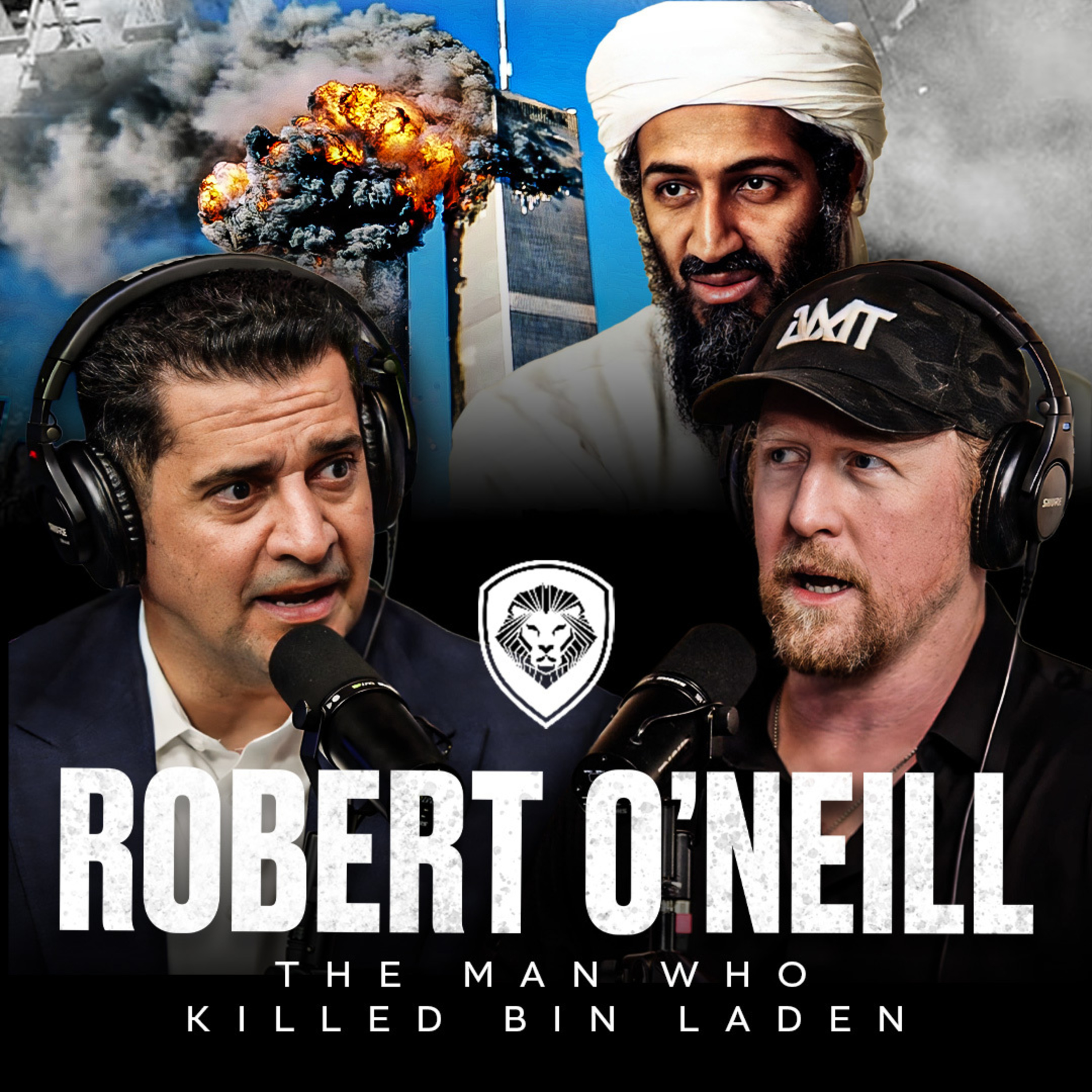
PBD Podcast
“Osama Bin Laden Is Dead” - Robert J. O’Neill TELLS ALL: SEAL Team Six | PBD Podcast | Ep. 646
01:52:45
Loading summary
Transcript524 lines
- [00:01]
A
Wouldn't it be great to manage your.
- [00:02]
B
Portfolio on one platform?
- [00:04]
A
Well, now you can trade all in.
- [00:05]
B
One place on Robinhood. That means you can trade individual stocks.
- [00:08]
A
And ETFs and also buy and sell.
- [00:10]
B
Crypto using seriously powerful and intuitive tools at one of the lowest costs on.
- [00:15]
A
Average without needing to manage multiple apps.
- [00:17]
B
Robinhood makes withdrawing and depositing crypto seamless. Send crypto to your Robinhood account or.
- [00:22]
A
Send crypto from your Robinhood account to.
- [00:24]
B
Other wallets without deposit or withdrawal fees from Robinhood.
- [00:27]
A
Trade all in one place.
- [00:29]
B
Get started now on Robinhood Trading. Crypto involves significant risk.
- [00:32]
A
Crypto trading is offered through an account with Robinhood Crypto llc. Robinhood Crypto is licensed to engage in virtual currency business activity by the New.
- [00:38]
B
York State Department of Financial Services. Crypto held through Robinhood crypto is not FDIC insured or SIPC Protected network fees.
- [00:45]
A
May apply to crypto transfers.
- [00:46]
B
Crypto transfers may not be available to all customers.
- [00:48]
A
Investing involves risk, including loss of principal securities trading is offered through an account with Robinhood Financial LLC member sipc, a registered broker dealer. You're about to make a trade which you do, you listen to. Is it get optioning those options or let's do a little research. Learn more@finra.org TradeSmart Osama bin Laden's dead.
- [01:13]
B
So that one you know for a fact because you looked at his face.
- [01:15]
A
Yeah, I looked at him and then killed him. I looked at his dead face and then when the picture that was taken that wasn't released, those are my gloves holding his head together.
- [01:21]
B
Was there an initial shock like oh shit, we actually found him. Was there like boom, boom, boom, boom?
- [01:25]
A
No, he went this way. I turn here, he here's bin Laden standard. I see him, I blast him, shoot him again. Because with a suicide bomber, especially as a sniper, you aim for the mouth, aim for the forehead, you got to cut him down. And that's just what I did with him. And then moved the wife out of the way and I looked down and his two year old son Hussein was there. And I'm a father. My first thought was this poor kid has nothing to do with this.
- [01:42]
B
Who is the current Osama bin Laden?
- [01:45]
A
Well, I think the current Osama bin Laden is actually Hamza bin Laden.
- [01:48]
B
But you hear about the fact that he was killed in 2019, right?
- [01:51]
A
We said we killed him. I don't think he's dead. I think he's running camps in Afghanistan now. It's just sort of one of the things we don't really want to Talk about because of the withdrawal and how bad it was in 2021.
- [02:01]
B
Then why would the President announce that he was taken out in 2019?
- [02:06]
A
Well, that I don't understand either.
- [02:07]
B
Do we know where he's at?
- [02:08]
A
I don't.
- [02:09]
B
Do you think Mossad knows where he's at? Because Mossad seems to know where.
- [02:12]
A
Every Mossad surprises me, because I think they know everything. They've proven it with the thing with the. With the pagers. It's in their interest to know it. And then you got to figure, is it in their interest to tell us where they are? First you have to admit he's still alive.
- [02:23]
B
You're saying he's not dead? You still think he's alive?
- [02:26]
A
As far as I know he's alive. It just kind of sucks that 25 years later, we're right back where we started.
- [02:51]
B
Adam, what's your point? The future looks bright.
- [02:55]
A
My handshake is better than anything I ever saw. It's right here.
- [03:07]
B
Wrong Missy.
- [03:08]
A
The wrong Missy. No, that's a good one. David Spade's in that.
- [03:10]
B
It's a wrong Missy.
- [03:12]
A
The wrong Missy. Comedy. Yes. Ridiculous comedy. And he. Yeah, he met. He met a really annoying Missy, and then he met a really hot Missy, and then they were texting, but he was the wrong one. He took her on a retreat to Hawaii for his company, but it was the wrong one.
- [03:24]
B
Have you seen this, Rob? I have. Is it good?
- [03:26]
A
That's pretty funny. She's really good, the actress. Oh, she's incredible.
- [03:29]
B
Can you text it to me? Yeah, yeah. Because last night, the kids are like, can we watch? What is the hangover version for the girls? Jennifer said, bridesmaids. Bridesmaids.
- [03:38]
A
Oh, that's excellent.
- [03:38]
B
We open up the movie in the first 10 seconds. I'm like, babe, what kind of a movie are you recommending? Oh, yeah. Do you know the opening scene? You got kids sitting here watching the baby. I forgot. It starts like this. Anyways, good shout out to the wife for recommending bridesmaids. Anyways, it's great to have you here, man.
- [03:54]
A
I appreciate having me.
- [03:54]
B
Thank you for your service and at the highest level and, you know, for the folks who know you, they know who you are. For those who don't, you are famous for taking out Osama bin Laden with your team. You know, SEAL Team Six. So let's start off with a basic question. Who is the current Osama bin Laden? Today's.
- [04:11]
A
I. Well, I think the current Osama bin Laden is actually Hamza bin Laden. They. We. We said we killed him. In, you know, obviously before the bin Laden raid. Yeah, I don't think he's dead. I think he's running camps in Afghanistan now. I think there's 27 camps that he's running in cahoots with pretty much everybody. I mean, even over there, when they say, well, it's isis, it's pretty much the same dudes, they're just saying they're ISIS now waving the new flag. But because of the withdrawal and how bad it was in 2021, they, they've got a lot of camps there. And I think Hams is alive. I think he's running it. I think he's in, in cahoots with the Hakkani network. And it's just sort of one of the things we don't really want to talk about because, you know, Afghanistan is one of those things that we, I think we had at one point after Operation Anaconda, pretty much after Tora Bora, where they all ran to Pakistan. And we were really good at keeping people there and watching the border. So eventually we, you know, we'd run sources in and out, try to find out where bin Laden is, because they're all in Pakistan. And the whole thing with you're either with us, you're with the terrorists was wrong because Afghanistan was fine when I was there in 2005, living in Jalalabad, Afghanistan, in a safe house, which would be unheard of now. We had a small airfield that the Russians built and there was even some Hind helicopters still there that had been shot down with American made Stingers. You could drive a motorbike out in town and eat the local food. You could buy rugs from local vendors and it was okay. But there was no Such thing as IEDs, no suicide bombers, until we decided to surge. The first surge, which was under George Bush. And we were even saying to them, why would you surge now? And that's just the broad brush stroke of how to win anything. And we were even as operators on the ground explaining to them this is going to be bad because right now we can go out in town and we get along with the locals and with our safe house, we're hiring local plumbers, electricians, local security. There's safety and security here. But if you move us out of here and build a big base, bring in thousands of troops, the only ones going outside are scared 20 year olds driving MRAPs running over people. You only let in 5 vendors instead of the rest of them. They're gonna get rich by raising their prices by 800%. They're not. What do you think's gonna happen? And they didn't buy it. And their answer was, well, no, there's no suicide bombers here. There's no IEDs, and what happened, happened. So I don't think a lot of senior leaders, they're more political than wanna know what's actually going on. So I think right now, because of what we did and how we're. We're probably still funding the Taliban and we're funding their camp. So I think it's Hamza. Short answer is Hamza Bin Laden.
- [06:37]
B
Hamza bin Laden. And do we know where he's at?
- [06:39]
A
I don't. And I think it's been tough because we don't have very good human intelligence there. We have signal sort of everywhere, but it's hard to get there.
- [06:47]
B
So Mossad knows where he's at because Mossad seems to know where Mossad surprises.
- [06:51]
A
Me because I think they know everything. You know, they've proven it with putting IEDs in places in Iran where they're meeting, the thing with the, with the pagers. So, yes, I think they do. It's in their interest to know it. And then you got to figure what their interest is. Is it in their interest to tell us where they are? And then we have our agencies that probably. I don't know, we might. And if we do, I must. First, you have to admit he's still alive and that we. Did we put out counterintelligence, bad intelligence, or is he dead? As far as I know, he's alive. And there, there are people that I still talk to that are sources, but, you know, we're all getting old. So no boots on the ground right now.
- [07:28]
B
But you hear about the fact that he was killed in 2019. Right. On September 14, 2019, President Trump announced that he was killed in U.S. counterterrorism operation on Afghanistan Pakistan border. You're saying he's not dead. You still think he's alive?
- [07:41]
A
Right. And so I might have misspoken. One of the brothers was killed before the raid. We killed one of the brothers on the raid. And then, yeah, 2019, they said Hamza was dead. I was out then, but my sources have said he's still alive. But it's one of the things they don't want to admit. And it's different than right and wrong. It's political at this point because there would be people that say, well, Trump said it, so it's gotta be wrong. Or people that say Trump said it, so it's gotta be right. I personally, it makes Sense that he's alive. It makes sense to have camps. And it just kind of sucks that 25 years later we're right back where we started.
- [08:10]
B
What is that right? In September 2024, National Mobilization Front, a resistant group fighting against the Afghan Taliban, claimed that bin Laden was still alive. Bin Laden or Hamza?
- [08:20]
A
Hamza.
- [08:20]
B
Hamza bin Laden still alive.
- [08:21]
A
Osama bin Laden's dead.
- [08:23]
B
Okay, so that one you know for a fact because you looked at his face.
- [08:25]
A
Yeah, I looked at him and then killed him. I looked at his dead face. And then when the picture that was taken that wasn't released. Those are my gloves holding his head together. So he's. He's gone. But there's Sarah Adams, I think is her name is a follow that she knows a lot about it. She's at a former agency.
- [08:38]
B
She's phenomenal.
- [08:39]
A
She, She. I don't know if you had her on here.
- [08:40]
B
I haven't had her.
- [08:41]
A
If you want. She's the one that, like, I can pretend I know what I'm talking about because I've listened to her, but she's the one that would know. And I think she thinks of. Hamza's alive still.
- [08:50]
B
So she also thinks Hamza is alive. And she, she has. She said that publicly. Okay, She.
- [08:55]
A
I mean, she screams it from the rooftops publicly.
- [08:57]
B
So if we know where he's alive, then. Then why would the President announce that he was taken out in 2019?
- [09:05]
A
Well, that I don't understand. Either it's almost like with the body double thing, or we. Seymour Hearst said that we were mutilating bin Laden's body and we threw him over the Hindu cushion. That he was never, you know, I don't. And President Trump retweeted that and he said. He just retweeted it to say it's out there yet sitting in that office. A retweet's a lot more. Has a lot more leverage than that. So for that too, I don't know why, but I think he's alive.
- [09:32]
B
Yeah. So you're talking about how you talk. You can. You're isolate each one of them. Are you talking about a tweet many years ago when president said that Osama bin Laden was never killed? So that's what you're talking about.
- [09:43]
A
There was something about a Seymour Hearst article that said he, he was dead, but he was mutilated. I'd have to look up the.
- [09:49]
B
He retweeted. He retweeted.
- [09:51]
A
He retweeted something. Yeah.
- [09:52]
B
And I'd have to look that up, Rob.
- [09:54]
A
I'm looking. Right.
- [09:54]
B
He retweeted something that at the time they said, you know, President Trump retweeted at a QAnon claim that. Yeah, something like that, I think is 2000. What you. What year would this be?
- [10:07]
A
That would have been.
- [10:08]
B
Wolf. No, not 12. What year would it be? I want to say October of 12. Maybe I'm wrong. So if you can kind of pull up when.
- [10:15]
A
No, I think he was president when he tweeted something out because I was at a pool in Phoenix and because they. Oh, and there's something along the lines of this with the Seal Team 6 operators being killed on extortion 1 7. Which happened, but it wasn't the bin Laden team, if that makes any sense.
- [10:28]
B
Yeah, so.
- [10:29]
A
So, and I'm kind of mixing this up a little bit, too. I'm just, I'm thinking back to it.
- [10:32]
B
So, so let's, let's, let's isolate that. Let's. Let's kind of focus on each one.
- [10:36]
A
Of us on one end.
- [10:37]
B
You're saying Hamza, the son is still alive?
- [10:41]
A
Yes.
- [10:41]
B
And President Trump said he died. And you know, in 2019, he says, no, he's still alive. He died. You're saying he's still alive.
- [10:49]
A
Okay.
- [10:50]
B
Osama bin Laden. That whole conversation with that one was a different story because, you know, himself, President Trump and some others are like, why would he be dead? I had D.J. shipley and Cofactor. Which cofactor? I think he said he was there with you on the mission or one of the 90 guys that was working on the mission.
- [11:09]
A
Yes, he would have been one of the guy. The guys, the. That don't get credit for being heroes that came in because Seal Team 6 and the army rescued Seal Team 6. And people, people are always caught up around who shot in line. It's like, well, think about the pilots and the air crew that came in and we went in on stealth helicopters, lost one. Imagine the guys coming in on a Chinook. That's not stealth. And so he. Cole would have been one of those guys.
- [11:28]
B
Yeah, he was Seal Team 10, if I'm not mistaken.
- [11:30]
A
Oh, at the time. Well, I think he was six, too.
- [11:33]
B
Was he six?
- [11:34]
A
I'd have to call him.
- [11:35]
B
You, you, you. You could be right.
- [11:36]
A
DJ Was at my squadron. He was actually in my team. I was his team. Shipley. Yes. Okay. So Shipley was. I was his team leader. He was not on the mission. Should have been. He's one of the best ever. And then Cole also. I. If there was a lot of moving parts. We initially started with 23 guys and the two air crews. And just because the. Well, President Obama wanted to beef it up, he gave us what's called the gorilla package. So we had more seals on more birds, and then we had more rangers as well, and further back to the border and then into a place called FOB Salerno. So Cole, Pop probably was there. I can't. I wasn't with him. I don't know.
- [12:11]
B
Okay, so. So, okay, so Cole could have been Seal Team 6. I think he was a Seal Team 10. But, you know, so he see you, we're sitting there talking, and I asked him a question. That's my challenge with it. And you're the main guy that can push back on this, so please do, sir. So for me, I sit there and here's how I think about it. We hear about the kidney failure Osama was having back in 02, right? When they're saying these types of kidney failures, you're lucky if you live six to 12 months. Best case scenario, five years, the guy lives nine more years. Okay, so there's one camp that says the guy was already dead. Then you have the second camp that says, well, you know, where he was stationed at In Pakistan was 0.8 miles away from the. The West Point of Pakistan, which they call a Kakal, or what K A K U L. Phenomenal name. It's like a military training camp base that they have there. And so that's 0.8 miles. So Pakistan always knew where he was, and that was their way of keeping him control. And that was intentional. If anybody wanted to take him out, they had him under control. And that's the Pakistan. Okay. Third one is when you sit there and think about it and say, all right, we took him out, and then we decide to dump him in the middle of the ocean. And if we decide to dump them in the middle of the ocean, history of America, that's never happened. The only place that's ever happened to is in the movie Optimus, where Megatron is dropped and dropped in the middle of the ocean. And I think that movie was like, right around the time where that movie with the whole scene happens. Then while you're talking about all this stuff, which is really the craziest thing, is after Osama bin Laden dies, you know when that event takes place, within 18 months, 0 dark 30 comes out. Yeah, 18 and a half months, 0 dark 30 comes out. So I go in there and I look into Zero Dark Thirty. Of all the movies that they've done, the Producers, it's Annapurna production company and out of all the movies they've done Hurt Locker, they've done Foxcatcher, the Wrestler Story, they've done Her. They've done so many big movies, they can go American Hustle, there's Joy. They've done so many great movies. They've also done the Sausage Party, which I don't know if you know what that is. If you do, you have a certain sense of humor.
- [14:24]
A
I think that's the only one of those I've seen.
- [14:26]
B
Vice is also one you may have seen Vice as well with Dick Cheney. Do you know, out of all the movies they've ever done, out of all the movies they've ever done, I researched to see what was the fastest movie they ever made. The fastest movie they ever made in 18 months was zero dark dirty. So Osama bin Laden dies, May of 01, if I'm not mistaken. May. May of 2011. May of 2011. May 2, 2011, if I'm not mistaken. Then the movie comes out December of next year, 2012. So you're talking 19 months. Ish. Year and a half. They've never made a movie faster than that. So I sit there and I say, what? What did they know? What? And then there's just too many things for a regular guy like me to question and say, did we really kill this guy? If we did, why would we dump his body in the middle of the ocean? I don't know. So what do you say to that?
- [15:12]
A
I disagreed with that off the bat because they did tell us even before we went on the mission. That was the plan. And again, going back to leaders, not really understanding how stuff works. They said they don't want a shrine for Osama bin Laden for people to go worship. Not understanding that hardcore Sunni Muslims are not going to go worship a shrine because that's a. You worship Allah. That's it. That's why don't draw pictures of.
- [15:33]
B
And I've read that as well, so I agree with you.
- [15:35]
A
So I disagree. We. I didn't dump him in. I didn't see him get dumped in. I get asked now people will say, how do we know his body's not at the Agency in a. Out of Betadine? I don't know that when we got. We brought his body to Jalalabad, Afghanistan. We showed Admiral McRaven, who was in charge of Joint Special Operations Command and the CIA team, especially the woman that Zero Dark Thirty was about, showed them the body there. We had a quick debrief around the Body discussing exactly what happened. Then we brought his body up to Bagram airfield where the three letter agencies did their stuff. And then we handed him over to the army. And they were Green Berets, maybe Delta. They took his body. That's the last I saw him. I've been told, like everyone else, they dumped his body in the ocean. Wasn't there, so I can't confirm it, but that's, that's what happened there. With what, let's see. Oh, with. As far as the, the kidney dialysis stuff, I think.
- [16:24]
B
Oh, two was when they CIA started reporting he's got kidney issues. He's got maybe five to ten months.
- [16:29]
A
That's counterintelligence.
- [16:31]
B
Right?
- [16:31]
A
Because sources get paid and they're smart enough to know, to tell people enough just to get paid. And I don't want to give too much up because this is my source of income. I come in, I tell them stuff that get paid, tell them more stuff. If someone comes in and says, yeah, this has definitely been laud, and I saw, I saw the dialysis, the targeter would know. No, you didn't, because he didn't have one. So he was. His kidneys were fine.
- [16:52]
B
Okay, so the kidneys are fine. And this is report that came from who? What's this one? Kidney garden Gardening in the President. Pakistan General Pervez Musharraf said yesterday he thinks Osam bin Lamid had probably died from an untreated kidney disease. I think now, frankly he is dead for the reason he is a patient. Kidney patient. General, continue to tell CNN, contradicting U.S. intelligence officials that say they do not know if bin Laden has suffered from kidney problems. He said he knew the Al Qaeda leader had taken two dialysis machines into Afghanistan. One was specifically for his own personal use. I don't know if he has been getting all the treatment in Afghanistan. So you're saying this isn't true?
- [17:29]
A
Yeah, I'm saying it's counterintelligence. And then again, as we've seen especially recently, a lot of media outlets are just an extension of intel agencies, so. And again, I, I like to just speak from what I've seen, like I wasn't on the moon, so I can't say they landed there. I was in bin Laden's bedroom. There was no dialysis and he seemed fine. He was walking when I met him. And there, you know, there was nothing in there to indicate that at all. Then you start getting into Pakistan. They have every reason to, because that's the center of the universe in that part of the universe. They have every reason to not necessarily piss off Al Qaeda too much. So being close to the academy. Yeah, I mean, the ISI knew he was there. Parts of it did. Parts of the intel. Not all of the military. I doubt it. But even when we were presented with it, we were. There was a couple of options to get bin Laden. And we had the, the team they picked in a room when they were naming the options, and one of them was a multilateral mission with the Pakistanis. And we're like, yeah, try that. And he'll be gone before we even get in the helicopters. But so Pakistan knows he's there. And, and again too, when people ask about the. The response were that close to their West Point. You got to figure up in New York, if we were invaded near West Point, it wouldn't be the cadets showing up, it would be the local police. So the cadets aren't showing up. It doesn't, I mean, yeah, they know he's there, but there's not going to be an assault force. My big. I had a bigger concern going into a battle. Bad Pakistan was, wasn't dealing with the Pakistan army. I didn't want to kill a Pakistani policeman because we're in his country, not at war. He doesn't know why we're there. He's doing his job. And I want to, I want to be very sensitive. I'm not going to go blast some policemen in Pakistan. So. So many different moving parts. A lot of them I have theories on. Some of them I've seen, which is what I believe, but the rest is sort of just hearsay.
- [19:08]
B
Got it. So the Pakistan. Now, was Pakistan working with you guys as a team? Did they want him to be taken out or no?
- [19:15]
A
I don't know. I know one of their colonels was living across like, the, like a couple hundred meters away. And I, I mean, they could have told us. I don't even know how the intel worked. But he was definitely there and to the point. I think the Pakistani intel service was working with him so tight. That's why even like Khalid bin Laden was confused on the stairs. They heard something in the front yard. They're not quite sure who's here. Is it the Pakistan military coming in to move us? Maybe, maybe not. Are our tactics that good that we're so quiet? That's also true because we were that good. But I mean, Khalid bin Laden got killed on the stairs because the guy in front of me confused him, just whispered to him, you know, so they're not necessarily like in the guest house guys Got shot at. Then there were other shots. But like, even going up the stairs, Khalid was armed, but he wasn't shooting down the stairs. Like, a lot of guys have places where I've been in urban combat, fighting up in a house is very dangerous. And he was kind of waiting, not shooting. And there was confusion. So what they knew what the Pakistanis knew. And then, I mean, just the way that Pakistan was pissed off and embarrassed kind of tells you they knew what was happening. And if, I mean, who knows, maybe the Taliban would have given us bin Laden, even though they said they wouldn't. And then Pakistan might have. But there's a lot of stuff going on. I mean, everything from saving face to the military industrial complex. You know, who's who, whose pockets aren't getting lined if we kill them in tora Bora in 2002 as opposed to fighting a 20 year war. You know, there's a lot there that, you know, I'm at a point now since after Covid and the lockdown, it's like, you know, get, get multiple sources before I believe anything.
- [20:44]
B
Okay, so. So you're there, you're walking in. You've said this before. You've said he looked like a coward when you took him out. Yeah, right. I think you said he was a coward. He acted like a coward. It reminds me of the speech President Trump gave after. Who was it? Al Baghdadi?
- [21:00]
A
Yes.
- [21:00]
B
He died like a dog.
- [21:01]
A
Died like a dog.
- [21:02]
B
Like a nice little dog. But he was crying, he was doing this. He died like a coward, you know, and he kept going and going and going. Right. With this whole. The video that many of us have seen hundreds of times, it's almost comical when he. When they do it, right?
- [21:15]
A
Yeah. When they do it side by side.
- [21:16]
B
Yeah. When they do it. And they say, this is how Obama announced the person died. And this is how Trump, Trump, in 48 minutes, Obama went like eight minutes or whatever it was. And he moves on. Right. For you when you're there. I've heard the stories many different times. I've watched, you know, the podcast that you've done. How much training did you guys do going up into this, where the preparation of going in was role played so many times, or because you don't know if the guy's moving that many times, it's a lot of audibles. You have to call last minute.
- [21:46]
A
It's. It's more audibles reading off of each other. Like when I get asked, how did you guys clear a compound that big? Because we mastered the basics. If you get really good at the easy stuff, you're going to be fine and there's no need to talk yourself into an ass kicking. So when I get asked that question, how'd you do it? I'm like, well the guy in front of me went left, I went right. And we just did that over and over. So we were just. Because of the combat, when we first started going to war in Afghanistan and Iraq, we just changed our tactics because basically before 911 there was fighting, you know, Grenada and Panama and then a little bit in Desert Storm, but we were using Vietnam tactics. We once we started getting shot at by real people in mountains and deserts, you got to change everything up. But when we were told this team, who'd been probably 400 combat missions each, but we'd all been working together at least for 10 years each, when they said, when the commanding officer of Seal Team 6 had us in a room and finally said, the reason you guys are here is because this is as close as we've ever been to Osama bin Laden, the common answer was, cool, can we go right now? Because we didn't need to train for it. We're ready to go, we know what we're doing. Obviously the pilots are going to need to know the routes or they're going to design the routes. They need to know where we're going with the mountains are. But yeah, we were completely ready for it. And it wasn't. We, we trained on the outside. They had constructed a compound that looked like the outside so we could get used to seeing what the exterior looked like. But the second anyone tried to say, well, here's what the inside, don't tell me what you think it looks like because it won't. Don't tell me how many men, women and children are there. Tell me how many people you've seen and I will figure it out when I get there. It's like if you keep telling me when we go in the front of his house there's immediately going to be a left hand turn, that's probably not the case. It'll be a right hand turn. I don't want to, don't, I don't.
- [23:22]
B
Want to get into situations right here.
- [23:24]
A
Yeah, yeah. So we, we wanted to know that. And that worked out well because we were supposed to drop part of my team off outside on the north end and then we were going to the rooftop. But because of the complications with the weather, with the updraft, our pilot just put us off with the snipers again. And we knew from training off to Our left is a double door. We'll just go through there and start the war from here. But don't I. If I don't want you to tell. Don't assume anything. My tactics are good. My team is great, and we'll figure it out when we get there. But we, you know, we trained a lot, and that was more of to show the powers that be, this is what we offer. Because there were different kinds of bombing campaigns. There was a thing called the hammer throw where we've seen a Pacer. We can throw one bomb at him and hit him. But you know that's never going to work because bombs and grenades aren't like Hollywood where one blows up and the whole house comes down and 50 people fly into the ditch. It's like, you're going to miss. He's going to run. So just sent. And even President Obama was so cool. He said, I was never 100% convinced bin Laden was there, but after seeing you, I knew you could show up, find out and come back.
- [24:21]
B
He told you that?
- [24:22]
A
He didn't tell me personally. He told us in a room before Campbell, Kentucky, after the raid. And that was just cool that he had that faith. Just go find out and come back safely.
- [24:31]
B
How many people were in that Fort Campbell meeting?
- [24:34]
A
Well, they had the 23 shooters, the air crews, most of the Cabinet. Hillary Clinton did not show up.
- [24:41]
B
This is Post.
- [24:41]
A
Yeah, this is after the radio. Like a week later.
- [24:44]
B
A week later, you're all in Fort Campbell.
- [24:46]
A
It was kind of awkward because a lot of these dudes to this day will never talk. You'll never hear from. They want to live on a farm and whatever. And then it's, you know, even that night we're there and it says, Seal Team 6 kills Osama bin Laden. A lot of guys are uncomfortable. And then all of a sudden we're doing these dog and pony shows, going everywhere to meet politicians and admirals and generals. And we had an award ceremony in Florida in front of a bunch of people. And guys are kind of like, this isn't good. Yeah. So it was. And then we met President Obama, which at Fort Campbell after a unit from the army just got back, probably the 101st up in Campbell. And he, you know, he met with them, talked to them, and secretively he could come to a room where we were. And that's when he told us that. Which is kind of. I mean, he made some good calls that were. They weren't political at all. And he. It wasn't left or right because, like, Secretary Gates is Republican, obviously more Democrats than Republicans. But they made a decision based on what. What is the right thing to do. And it was before an election. And even though Zero Dark Thirty was fast, it was after the election. And if we screwed that up like President Carter did, Desert One, you're not getting elected. And so it wasn't. This was not a political choice.
- [25:48]
B
Yeah. I mean, listen, the movie is a little too fast to. To think about how quickly you produce something movies.
- [25:55]
A
Three years.
- [25:55]
B
Three to five years to make.
- [25:56]
A
Yeah.
- [25:56]
B
In 18, 19 months. You have a ready to go. And you got clearance from CIA, from everybody. Use some of those, you know, stories. Who knows what. What.
- [26:05]
A
I never. I never thought of that either. That. I mean, do they have stuff in place they're ready to have they recorded?
- [26:10]
B
Well, apparently they'll say it was rewritten and they had to change the ending. And they had. They were already working on it and they bumped it up as a number one priority of a movie to make. Who knows?
- [26:19]
A
It's just.
- [26:19]
B
It's a lot of things that makes you question, but walk me through. You know when you. When you go in the room and you finally see him. Okay. Was there an initial shock, like, oh, we actually found him. Was there like boom, boom, boom, boom?
- [26:31]
A
No, it was like super fast. Started below the last set of stairs. The woman that found bin Laden was 100 right on every single person in there. Even though no one at the agency believed her, which is crazy. But we're at the last set. The guy in front of me who.
- [26:44]
B
Is the woman with CIA.
- [26:45]
A
Yeah. The one that movie was based on. They called her Maya in the movie.
- [26:48]
B
In real life, her name is not Maya.
- [26:50]
A
Yeah. I promised I would never describe her or say what her name is, but she was that cool. Like that good.
- [26:55]
B
Why was she that good?
- [26:56]
A
I don't know. When the best part of the movie. 0dart 30. Jessica Chastain nailed it. When she sat down to lunch with the director Leon Panetta, played by James Gandolfini, and he said, what else do you do for us? And she said, nothing. I do this. That. That was just cool. That. That's kind of describes what she was like. She was there.
- [27:14]
B
Did you ever meet her?
- [27:15]
A
Oh, yeah, she was. She was the first person that we met when they told us it was been live.
- [27:19]
B
What was her personality like?
- [27:21]
A
Serious. I didn't want you guys anyway. I wanted to bomb this. I know he's there. 100%. Get done training on that site for 12 hours. Then we'd go back to our rooms and we'd all stand around a two scale model that someone had built of bin Laden's house. We would talk about the perfect plan, we discussed contingencies, and every night she would say something similar to. Okay guys, right now, Osam bin Laden is on the third floor of this house. Don't understand why we're not going. Have a good night, see you tomorrow. No, she knew it. And it was the whole who told.
- [27:48]
B
Her what gave her that kind of confidence. Her team? Or was it, was she a one man show? Was she like a.
- [27:53]
A
No, it was a team. There was, it was actually a team mostly of women and they were working everything from Pakistan, from Afghanistan, from, from the States. I ran a, I was running the outstations in Afghanistan. So we had all these stations on the border to run sources. In early of 2011, my 12th deployment at an agency base, I think the targeting team for bin Laden was there. And I didn't even know they were there. We were at a point there, like I would do battlefield interrogations on Al Qaeda guys on target, and in between, like, who were the men in the house, what are their names, what are they doing, blah, blah. I would just sneak in, what, Where's Osama bin Laden? And we would both laugh at each other, both of them being a terrorist because like no one knows he's gone. And the agency women are right there and they know it, they're just not saying anything. Like it was almost to the point where the problem with a lot of these, like SEAL Team 6 and the agency is that they make too many movies about us making us look cool. We're not that cool. Well, this team was that cool. The agency team, they were that cool. So when we met her, she just, she, every night she would say stuff like that she wanted to kill him because if we hit him with the Air force's plan, like 22 JDAMs, joint direct action munitions, 2,000 pound bombs, no one's ever gonna find out. She was like, we don't need the DNA. I'm telling you who's there. We can kill him. And so she, like, she got to the point where the very first day after she was introduced, she had a PowerPoint brief explaining to us how she and the team found him. And it got to the point where like, look, we just believe you. I don't need to hear this anymore. I. He's there. And so we were, we were, I was 100 sure. So at the end, going up the last set of stairs with one guy in front of me, it wasn't A bravery thing on my part because the point. The guy in front of me had taken a shot before I got there, and I got there as a two man.
- [29:33]
B
How many seconds before you heard a shot you got up there?
- [29:36]
A
Oh, seconds. Because I. When we went up the path, Boom, boom, boom.
- [29:39]
B
You go up.
- [29:40]
A
Well, no, he. He took the shots before I know.
- [29:42]
B
What I'm saying is, he takes the shot, you're automatically. Why is he shooting? Let me go to where he's at.
- [29:47]
A
The guys behind him. I was about eight back, seven back. They started clearing the second floor. He's. His job as the number one man is pointing up. So he shot before I got to him.
- [29:54]
B
Why did he shoot? What did he shoot?
- [29:56]
A
He saw some faces behind a curtain at the top of the stairs. He saw something.
- [29:59]
B
And you were instructed, if you see it, take the shot.
- [30:01]
A
Well, I mean, if you see bin Laden, we're gonna shoot. Unless he came out of the shower hands up, like, naked. We're gonna kill him. He's a suicide bomber. He's gotta be. So I got to him, and my job is to. I want more because he. Bin Laden's up there, and I want two more dudes. I want four dudes. I'll take two. And I'm ready to squeeze. And he started saying to me, didn't know it was me, knows it's one of his guys. Like, we got to get up there. Not talking so much, but his movements, because those are the suicide bombers we got. We can beat him. We gotta go now. And I. For me, it wasn't bravery. It was like, I want to get this over with. I'm fucking tired of thinking about this. And I squeezed him and we went through the stairs, and he ended up tackling two people that he thought were suicide bombers, which to me is amazing.
- [30:41]
B
Goosey.
- [30:41]
A
The guy had the guy in front of me, so he. He jumped on. I mean, this is Medal of Honor shit right here. He. Because I know we're gonna blow up in the room. He jumps on people he assumes are putting on vests. And. Because again, left, right, he went this way. I turn here, here's bin Laden standing there, and he's holding. He's holding his wife up. She was wounded. And I saw him, and I was like, he's taller than I thought. He's skinnier. His beard's white. That's his nose. He's not surrendering. And all you need to do for. To set off a suicide vest that you're wearing is have the leads right here and just touch Them So you can do the whole, yeah, I surrender, boom. And it's fast. I've seen suicide bombers and they're very fast, very permanent and scary and loud. And I'm not dealing with that. Like, when I went up there, I was like, let's get it over. I see him at, blast them, shoot them again. Because again, not like the movies, shooting someone in the chest, they have a will to live and they might survive. With a suicide bomber, especially as a sniper, you aim for the mouth, aim for the forehead, you got to cut them down. And that's just what I did with him. And then move the, the wife out of the way. And bin Laden's at the, at the, at the bottom of the bed too. And, and even with, you know, I'm kind of going off, off the story here. I love to talk about the humanity of people everywhere. Most people in a combat zone are not combatants at this moment. After I shot bin Laden and moved his wife, I looked down and his two year old son Hussein was there. And I'm a father and I'm, I remember my first thought in bin Laden's house was this poor kid has nothing to do with this. You know, it's like, almost like, what is going on here? Then I move them and I, I turn around, I'm gonna go back and get the pictures, but I sort of hesitate just for a second because we're gonna die. But. And one of my guys, there's other SEALs, I was the only guy in his room for a couple of seconds. Other guys were coming in and one of my guys stopped me and he goes, hey, you good? And I said, what do we do now? And he said, now we find the computers. We do this every night, man, hundreds of times. I said, you're right. Holy. And he goes, yeah, you just killed Osama bin Laden. Your life just changed. Get to work.
- [32:35]
B
Is he the commander? Are you reporting to him or.
- [32:39]
A
No, no, no, he was another dude coming in the room. So I'm assuming most guys got into the room eventually. So this was one of the guys from my team. Obviously, I'm not going to say who.
- [32:48]
B
But, but he's a SEAL Team 6.
- [32:49]
A
Yeah, yeah, these were all, at this point, these are all Seal teams.
- [32:52]
B
Everybody that went in. You guys are all Seal team six?
- [32:54]
A
Yeah.
- [32:55]
B
Okay, that's the 8990 or how many, how many people total was that in on the mission?
- [33:00]
A
23. 23.
- [33:01]
B
23. And then there's another.
- [33:03]
A
Well, we had one guy that wasn't. And I still don't know who he was, but he spoke fluent Urdu without an accent, which I think is just badass. There's some dude that, he can carry a gun, he's really good, he's a shooter, he speaks Urdu, he's an American. It's like, I want to know who this dude is because that's like, here's a guy that it shouldn't be talking about the guys that killed, but line, that was easy. Go shoot a guy who's this dude. That's awesome.
- [33:22]
B
So you kill him. The wife is not dead yet? No, the wife is not, she didn't die. The son is how old then?
- [33:30]
A
He was 2, I think. Kid on the stairs was 19 or 20.
- [33:33]
B
Kid on the stairs were 19 or 20. The son is 2. That son today is 16 years old. Do you have our nightmares of thinking about that kid coming after you?
- [33:42]
A
I don't have nightmares about him. I, I honest. And again, this is me being an optimist. I hope he has learned like this is not the way to go. I mean, and again, like I'm not looking for it and you know, if they come looking for me, the next guy I kill will be in my own house. I don't want it to come to that. But I know how to deal with them and it just, it is what it is. I, I mean, because I'd heard again, rumors, I'd heard that bin Laden was even talking to his, his kids about don't get into this line of work. I've heard Nur bin Laden, I think, who is his cousin who said something similar to, well, if you line up 10 members of any family, there's going to be an asshole. He was ours. So I, I don't know, I mean I, I don't want a bin Laden showing up in New York, but it is what it is.
- [34:21]
B
What is, what is the kid's name? The, the two year old @ the time?
- [34:24]
A
I think it's Hussein.
- [34:25]
B
Hussein bin Laden?
- [34:27]
A
I believe so.
- [34:27]
B
So Hussein bin Laden, can you pull him up? Hussein bin Laden, he, he is born in 2008, which makes sense. Wife. So Hussein Bella, can you go on his account on his profile? If we go to him, what did the FBI say about him? FBI said nothing, just Osama bin Laden, Family background simulator was famously known as the elder brother or something like. No, that's a different one. That's, that's a different one that they were talking about, the one that was there. Okay, and, and let me ask, at the time when this happened and you took out bin Laden, is he the first 10 people you've killed in your.
- [35:03]
A
No, no.
- [35:04]
B
You've been there many times.
- [35:05]
A
Oh, yeah, a lot. He wasn't the last guy I killed with that gun.
- [35:08]
B
He wasn't alone.
- [35:09]
A
No, I did another deployment because we, we did the bin laden raid on May 1, May 2, 2011. And we, you know, we went through an emotional roller coaster with, hey, we did it then. Our names are not our names, but The Seal Team 6 is out then. But it's a high because we chopped the head off the snake. And then in August, extortion 17 was shot down. We lost 30 guys, 30Americans.
- [35:31]
B
What was that all about? That's a very weird story.
- [35:33]
A
Right. And that's where the, that's where the conspiracies come in that people. Because people don't. It was months apart and they say, well, Hillary Clinton and Barack Obama had Seal Team 6 killed to shut them up. Which is ridiculous. Ridiculous.
- [35:42]
B
But, but, but if you don't mind kind of going through this because it was, it was, it was the, the single biggest event of the most, you know, people getting killed. Not tier one.
- [35:56]
A
Oh, yeah.
- [35:56]
B
You know, soldiers getting killed on an operation. And it was the, the shots fired came down from who the bad guys. The resultant killed 38 people.
- [36:07]
A
Yeah.
- [36:08]
B
And a military working dog on board, including 17 U.S. navy SEAL, two U.S. air Force parrot Rescue, and he had a couple combat patrol. I mean, this was huge. This was huge.
- [36:20]
A
Well, I talked to some of the guys involved. Actually we backfilled them at Ford Operating, Operating Base Shank, where they took off from. And there was a conversation between, I want to say Jonas Kelso, who was a commanding officer, and Lou Langless who was the master chief. And because they're going in on a quick reaction force, which is dangerous, and they knew where they were going in the tangy valley. And they normally have two helicopters, but they said something along the lines of the second one's definitely going to get shot down. The first one might not. So they put everybody on one helicopter and it had nothing to do with the bin Laden raid. But people want to. Just because it was Seal Team 6, everyone from the bin Laden raid is still alive. And then these. But we lost the best guys we had on extortion 17. Like, we look at those dudes, that's a, I mean, not quite a thousand years, but hundreds of years of combat experience you can't get back. And, but so anyway, I did go back to back for them with a different squadron and we finished up in Afghanistan 2012.
- [37:12]
B
Okay. So when, when it was Osama bin Laden, I think the government put a $25 million bounty on him. We put another $25 million was on Saddam Hussein, if I'm not mistaken. Trump just announced. President Trump just announced $50 million on Maduro. Why would Maduro be the same as Saddam Hussein and Osama bin Laden combined? Is it just inflation or is he that much more dangerous than those two?
- [37:37]
A
Well, I think that President Trump's looking at the drugs coming in, the fentanyl coming in. We have new opioids coming in now that doesn't even respond to any treatment. People dying from that stuff, too. So I'm assuming coming through Maduro, that's got to be something to do with it. The cartels, I think that they're considering a lot of the narcotraffic terrorism and they're, I mean, we'll see if it works. We never really, it's hard to say. We've never done, but putting political and military pressure on that. There's a lot of, you know, stirring the pot with a lot of this stuff to everything from international law to, you know, we've got ships down there now, probably subs are, you know, you got to be careful. Where are we going to put guys? You know, it's been shifty in the past, but I mean, if they consider them a terrorist, just like the, the cartels, they're. They're going to be able, they're going to be able to do what they did in Iran and hit him with bombs.
- [38:26]
B
You think it's going to be harder to catch him or harder to catch Osama bin Laden?
- [38:30]
A
Probably Maduro. Probably harder to get him. Really. Tell me why and, well, if you want to hit it where he's living, hit him with a bomb, that's probably not that hard. But then you're tiptoeing the line of, okay, his election is not necessarily the cleanest one ever. He's still an elected official in a sovereign nation. Right. So can you just go bomb them because you don't like them? We've tried it a lot and it hasn't ended well. What do we do then after that? Because we've tried to instill our own guys there, too. We've done it before, try to put freedom places that they don't want it. Is it our job to do that? You know, stop this shit at the border, which I think they're doing. It's. There's a lot going on. Again, I'm not privy to all of it right now. I know The Secretary of Defense. I know a lot of the guys in the cabinet, but they haven't asked for my opinion.
- [39:15]
B
If, if you were handed $10 million to go get them, would you be able to know how to get them? Like you think you can put a.
- [39:21]
A
Team together to get them $10 million? Oh, I don't know. I mean I have to get, I'd have to find my best Spanish speaking friends. And then I look at the private sector with some of their stealth submarine technology. You need to find a way to get inside of someone so you need human intelligence inside. You got to get them with a coup, which I think would be, I think that's. Is that happening in Iran right now? What are they doing with the, that's.
- [39:42]
B
That'S what they did in 79. They're trying to do it.
- [39:44]
A
Yeah, yeah, yeah. I mean it's not something as, as crazy as the Islamic revolution, but you're going to need to get him inside. I mean even with like one of the biggest mistakes we made in Iraq was get rid of the bath party. His generals and leadership are not, they don't necessarily believe everything Saddam is doing, but we've seen what Saddam does to people that even cross him a little bit. It's like a vote in North Korea. Like they're having a competition who can clap their hands the fastest. But I think if you get into spy, if we had the Ba'ath party and just kept him in power, there wouldn't have been a lot of the looting and stuff. There certainly would have been that bad of a civil war between the Sunni and Shia. But again, we just didn't understand it. So what do you do in Venezuela? How do you get a coup in Iran? You don't want to insert the Shah's son. I don't think you know more about it obviously than I do, but somehow you got to find the will of the people. But we've shown before that the people will rise up to a point and then we just stop supporting them. We did it in early 90s with the Shia and in, in, in Iraq. You just, we'll come in, we'll get them out of Kuwait and then we'll march to back. Well, we just backed out. Look what we did in Afghanistan. We'll just leave everything there. We're leaving our allies in central Afghanistan and you get to the point where who's going to trust us? Like if they're willing to go and they're all in, are we all in? Have we been all in? So It's, I don't. $10 million? I don't know if it'd be enough.
- [40:58]
B
You don't think 10 million would be enough?
- [40:59]
A
Well, it depends on how many guys. And. And now we're talking about the private sector, like Blackwater type shit. They're going to want to get paid, so.
- [41:04]
B
So if it's dead or alive. If it's dead or alive, you're saying 10 million, you don't think you could do it?
- [41:10]
A
Well, based on the budgets that we spend with the military, I don't think 10 million is enough.
- [41:13]
B
What do you think it would take?
- [41:15]
A
I'd have to break it down. I don't know.
- [41:19]
B
What do you need? Like, right off the bat, like, you need.
- [41:22]
A
You need sources.
- [41:23]
B
So you need like a Maya. Yeah, probably like that. On the private PMC side, how much do they run you?
- [41:31]
A
Oh, I don't. I wouldn't even know there, because they're betting their lives on it. I don't even know what it's worth to them. I think 25 million was short on. And then if you get someone like that too, if you're a true believer, are you going to give it all up for a little bit of money? You need to pay them more. You need to make it like life altering for their family money, which, I mean, 10 million, it's a good start. But if you talk about the logistics that go into it, well, how are you going to do it? I mean, ideally internally, without dropping bombs. But if you start dropping bombs, how expensive they are, and do you have 10 million for a military operation? Absolutely not. We, we wouldn't even get the door closed at the Pentagon for $10 million. I mean, toilet seats are 700 bucks apiece.
- [42:09]
B
But I'm talking about PMC. If you started a PMC right now, somebody came in and said, look, I'm gonna fund the pmc, I'm gonna run it. You tell me a team to put together. Can you get the job done with a $10 million contract? We'll go get some private military guys. You were saying you couldn't do it now?
- [42:24]
A
50 million, probably.
- [42:25]
B
50 million. So then the bounty's right on the point. Right on.
- [42:28]
A
You know what? That's a great point right there because I'm sure they did a little bit of math and that's.
- [42:32]
B
Well, Eric Prince was on the podcast, I don't know when this was, a year, year and a half ago, and we're talking about Venezuela. And by that time there was no bounty on. On him. Is that it, Rob, where it's At.
- [42:44]
A
I'm still looking for it. Okay.
- [42:45]
B
And. And he said for $40 million, he could topple the regime in Venezuela. That's what Erik Prince says. And Eric Prince is.
- [42:53]
A
Yeah, he's. He's got the background. He would know more than I do. And if I said 40 million, I'm keeping 10 myself, obviously.
- [42:59]
B
That's exactly the number.
- [43:01]
A
Yeah.
- [43:01]
B
So you're saying 40, 50 million bucks to get the job done on Maduro, but.
- [43:05]
A
Yeah, I mean, how much is it going to cost to find out where he is? And then you've got to vet your sources. Is it one guy telling me or do I have five? And what. What's what? What do they want out of it? Where do they live? Do they know each other? And we need to have confidence in where he's at. So we need proof of life a few times. And then how often does he move? He's not going to be doing the same patterns. He's not going to be taking this if anywhere. Who, like, just like, who are his food tasters? Are they family? You know, what, do you poison them? Do you. Do you talk him out of it? Do you make him a source? Probably not. I bet they've tried that. When did making plans get this complicated? It's time to streamline with WhatsApp, the secure messaging app that brings the whole group together. Use polls to settle dinner plans, send event invites and pin messages so no one forgets mom's 60th. And never miss a meme or milestone. All protected with end to end encryption. It's time for WhatsApp message privately with everyone. Learn more@WhatsApp.com hey, business owners, we know you know the importance of maximizing every dollar. With the Delta SkyMiles Reserve business American Express card, you can make your expenses work just as hard as you. From afternoon coffee runs to stocking office supplies and even team dinners, you can earn miles on all your business expenses. Plus you can earn 125,000 bonus miles for a limited time through October 29th. The Delta Sky Miles reserve business card. If you travel, you know, minimum spending requirements and terms apply. Offer ends October 29, 2025.
- [44:37]
B
What do you do if you do that? You're going to. He's going to have to come up here and. Hey, where are you going to? Let me. Let me live?
- [44:43]
A
Yeah.
- [44:43]
B
How am I going to live? You're going to put me somewhere in the city. All the other informants.
- [44:47]
A
No, I think we offer Dubai at that point just because it's nice.
- [44:51]
B
Is that, Is that Is that a model or is that just a, you know, I think we should offer from Dubai? Well, I've just done this in the past with other people.
- [44:58]
A
I don't know. Well, I'm just seeing what's happening in Europe and what's happening in parts of the Middle East. They're turning the Middle east into what Europe used to be. Like.
- [45:03]
B
Yeah.
- [45:04]
A
And it almost seems like, yeah, don't. Don't mess around here now. Like, I would feel safe going to Dubai. I wouldn't go to London. So.
- [45:10]
B
No, there's no, no question. But why not London? What do you not feel safe about London?
- [45:16]
A
Just the. It just seems. Well, the first thing would be because of my Twitter handle. Maybe I've said something they don't like about anything from open borders, mass migration to men in girls, sports. We just had a dude arrested at Heathrow for his Twitter. He was a comedian at Twitter. Handle arrested, jail. Like, they had to bring him to the hospital because of stress levels. I wouldn't go there for that. I don't want to get in a knife fight. That would happen in London, easy. So. But Dubai, like we would say Dubai is great because they're not going to tolerate it.
- [45:46]
B
It's one of the safest places, by the way.
- [45:48]
A
Right? Yeah. And it's beautiful. It's beautiful.
- [45:50]
B
It's beautiful. Nothing like it. So, okay, so Maduro 50 million. Not only does the number sound, like, pretty accurate, but for you, you don't even know the motive of going after a guy like that.
- [46:00]
A
No, I mean, it's the drugs coming in and out, but there's. I think there's probably different ways of dealing with it. You got to start with the Mexican government and what are, you know, what are they getting out of it? Why aren't they stopping? I mean, look how quick they shut the border down between open borders to. Now we're shutting it down now. I mean, now we're at a point now I think, I think even with. With marijuana, like we're sm. We're smuggling it into Mexico now because we're growing better stuff in California. So I guess you gotta. It's one of those, put yourself in someone else's shoes and what's their motive for being here? Is it because of the drugs? Yeah. Is it because of the violence? Possibly, but the violence come with the drugs. So I mean, it's everything from the legalization, you make stuff legal, so the demand. There's not a reason to kill each other over it. There's a lot involved with this and as we've seen with everything from like, usaid, where's the money actually going? What are people's motives?
- [46:50]
B
How much of your confidence of going and taking him out was in your training, preparation, and how much of it was in Maya and her team that was able to tell? You know, I know exactly where he's at. He's here right now, third floor. I don't know why you guys are not going right now. How much of it was that? Because when I asked you to go get him, what would you need? The first thing you said is, how am I going to get my intel?
- [47:13]
A
Well, yeah, if we had a team, which they probably do, I'd want to talk to them first. Because like I was saying months before that I was joking with terrorists about where's bin Laden, Knowing we're never going to find him. But they knew. So right now someone probably does. It's a question of when do you pull the trigger and how? Because, I mean, even with us, I mean, we were told a cut two, three weeks before. They already had five options they let us know about. Maybe there was more. What else, you know, how else are they going to do it? So, so there's, there's just so much. There's so much to consider.
- [47:41]
B
Do you automatically see when they put. If you think about the history of us putting bounty on different people so far, bounty we put on two people at that number, they're gone. Do you think the fact that the US government put 50. This guy's days are numbered. He's going to be done out in no time.
- [47:58]
A
I think the bounty is more of a. Guys that are close to him and realize they can get the bounty just for, for information leading to his death. That's. I think that's the money insider turns.
- [48:07]
B
Against him to get the 50.
- [48:09]
A
We've seen it before with, I think with Uday and Kusay Hussein. I think it was a relative that realized there was like 20 million or something like that on both. And they're both in the same place. Yeah, it's like, wait a minute, I can just tell him where he is and then I can get both paychecks and that. And then, you know, if they get some sort of agreement and monetary value, maybe so. Because when you start talking about the, the budget to kill someone, use the military, they don't really care. It's, it's the incentive.
- [48:33]
B
What would that look like if, if I'm a, if I'm a guy to him, where I'm sick of it myself. Venezuela, do I find A way through Signal to get a hold of somebody and say, hey, I know where he's at. I'm an insider. What can you guarantee for me to be safe?
- [48:46]
A
Yes.
- [48:47]
B
And then does somebody say, take them out, we'll pay it to you and go, how does that communication work?
- [48:52]
A
That's a good one too, because as we've seen, Signal can get. I mean, I don't think anything's really secure when you get down to it, someone's listening to something. Especially with AI now the way it is, I think that you have to get your team inside, who's willing to take the spot on the throne, and then we have to discuss how do we get this out, and then what do we do as soon as it's over type stuff. Because. Because you're making a big announcement of $50 million. People see that. And then the realization, this is closer than I think. So what can the three of us here do to take him out? And even plausible deniability, but not. But then with them, how do I get a source? Is that a double or triple agent? Who am I talking to about this? And then Maduro, I've never met him, but it strikes me as a guy that you don't want to be in a room with him and his henchmen when he finds out you double crossed now. So there's a lot of personal risk there too. And again, it comes back to trust. Who. Who do you trust? Especially in the US Government, who does he trust? That's it.
- [49:46]
B
I mean, you know.
- [49:47]
A
Well, he's paying his guys off, too.
- [49:48]
B
I know, but 50 million, once they announce something like that? You paying your guys that kind of money? I don't think so. They just seized $700 million of his assets. By the way, his plane is 500 yards this way.
- [49:59]
A
No kidding.
- [49:59]
B
I'm telling you. 500 yards. This airport right behind you, there's a part where it's about, you know, probably quarter of a mile. All the planes that is there is planes that the government has seized from individuals. They seized $700 million of the guy's assets. Multiple private jets. One of them is right here.
- [50:17]
A
No kidding. Yeah. Yeah, I know he had a lot of assets. And it's another thing, too, with how, how. Right there.
- [50:22]
B
700.
- [50:23]
A
Oh, wow.
- [50:24]
B
$700 million.
- [50:25]
A
Now, does that put a. Put a big damper in what he's got going on? Because, I mean, when we hear Elon Musk is the richest person in the world, I bet Vladimir Putin has more money than he does.
- [50:33]
B
You're in that mindset, you think he's got more money?
- [50:35]
A
Oh, yeah. There are dudes in Saudi Arabia having, you know, 747 competitions who can buy one for their buddies, type. Like, there's people with a lot more money than Elon Musk. Is he one of them? He's in the drug trade. He's in the right spot country that he runs. What's his GDP?
- [50:49]
B
I guess, if. But. But even if he got 700 million.
- [50:52]
A
That'S a chunk of change.
- [50:53]
B
If they're trying to give $50 million. $700 million is not a lot of money to keep all your guys happy. So if the US government really wanted to divide and conquer, the 50 million creates such a distrust in your team, what do you do next?
- [51:11]
A
Well, that's it, too. It creates distrust. That's why, I guess you got to keep your circle small. Yeah, but then, I mean, who are you dealing with? The United States? Like, you have a source that tells you they're going to pay this money or get it to. Who are they for? I mean, is it. Is it a test of loyalty? And again, that's. That's back to the whole thing of, once we get rid of them, don't necessarily get rid of the entire regime because they do know the chain of command.
- [51:34]
B
Rob, how many big bounties has the US Government ever put on someone's head? Like, think about the big bounties. I'm actually curious. We know about three of them so far.
- [51:43]
A
I know, I know. Bin Laden, Saddam Hussein. I don't think they even put one in Iran. Maduro, and then I. I'd have to look that up. I don't know.
- [51:51]
B
Rob, are you. Are you looking it up? I'm talking about Rob. Rob. And what's your name? I'm. I'm actually curious because what I'm trying to find out is, you know, who. Who has survived it, who has made it, you know, who has been able to. Osama had 25. Saddam had 25. Imad had 15. Racer 25. Uday and Hussein. Hussein, 15 million apiece.
- [52:25]
A
Yes.
- [52:26]
B
Maduro's got the 50. Now. What is the. Like, you know, when Khomeini would put a fatwa on different people, he put on a Salman Rushdie.
- [52:36]
A
Yeah.
- [52:36]
B
When he wrote that book, Satanic versus Nothing happened to him at the beginning. Later on, he was stabbed.
- [52:40]
A
Yeah, he got stabbed on stage.
- [52:42]
B
Yeah. Who's that? Fausto Isidro. Mesa Flores, El Chapo. Isidro. Rob, can you check how many of these people are alive?
- [52:52]
A
Cuz a Lot of them we mentioned were eventually taken out by the military.
- [52:55]
B
Well, that's what I'm thinking. What I'm trying to think is the ultimate fatwa is when the US Government puts it on you, if you think about it.
- [53:03]
A
Right.
- [53:04]
B
So what's the likelihood you're gonna make it?
- [53:07]
A
Yeah, I don't know. I mean, some of the ones we were there, we were at war in the country or a country nearby. But again, Uday and Kuce, even Saddam in the hidey hole, like someone. Someone knew he was there so they can get paid. So the monetary aspect works. And I think with Maduro, it's going to be different because you, you know, not so much Saddam, but Osama bin Laden surrounded himself with true believers, so the money doesn't matter to them. And they, you know, they want to be martyrs anyway, so the money means nothing. But yeah, with him, I mean, it's gonna be the guys around him that want to get paid. It's gonna be that simple. But it's a question of how do we do it? I mean, if we. That. That could be the reason. Not so many, but the military assets that we have around South America right now are enough to launch.
- [53:52]
B
Yeah, but if you work for Maduro, and you know, Maduro's got $700 million of assets that was seized. I've taken money away from its people. And you yourself are making three grand a month, and you're kind of like, wait a minute, you stole from the people and you haven't taken care of me and my family, and I'm working like a slave. Wait a minute, why am I going to do this for? You stole. It's not like you made this money the right way. I'm willing to take the 50 million, handful of people round up, boom, they go in. So who knows? I don't know what's going to happen here. By the way, going back to Osama bin Laden, the story about when I don't know who it was that came out and said, hey, they went to the government. They said, we'd like you to release the 59 pictures you took of Osama bin Laden in the one video. And then they came back and what do they say? There's two reasons why we don't want to release them. One of them is the what it's going to do to increase the temperature, because that pictures, those pictures are going to be used to create hate and anger against. And there was another reason why they didn't want to release it. Did you agree with them when they didn't want to release the pictures and the video.
- [54:55]
A
No, I think they should release them just for the, the argument of, of we didn't kill him or we killed a body double. And now, I mean, even if we showed people, it's going to be, well, that's AI generated, so it's fake. People that don't believe aren't. They don't want to believe. And then, I mean it is true that it's violent like it's not like a video game. And his face was destroyed, literally holding it together to get a picture. So we do have the ones taken from his bedroom and then we have the professional ones taken after at Bagram Airfield. And I don't know why they haven't released them. I don't know why they. Like I said, you should hang them from the Brooklyn Bridge and let the vultures take care of them. That's the solution. Everybody can look, but they don't want to. They didn't want to. They said about the shrine, but then the videos, as far as I know, I mean, I didn't carry a camera. I don't know anyone that did. We're not big into carrying video cameras. The same reason, you know, for the same reason cops do it. They get busted later. And I've even seen from personal experience with Monday morning quarterbacks who were 5,000 miles away from his bedroom. But they know everything that happened. So it's, it's, it's. I would rather not have video than have guys end up in prison if something bad went down that at the time. Because you're making life and death decisions in the blink of an eye and if you have months or years to analyze movement, that's, that's the problem. So I don't know anything about the video.
- [56:03]
B
Yeah, that's the one right there. Risk of inflaming anti American sentiment and threats to national security if the photos were used as propaganda by terrorist groups. So as of 2025 Photos Room in CIA and Pentagon classified archives and I've never been released to the public. And 2012 Judicial Watch filed the Freedom act, but nothing happened to it. So when you're there, did you guys have cell phones or.
- [56:25]
A
No, I did not. I, I don't know if anyone did. We, we, I, I did have a camera and it, but it was, you know, 2011, so it was just, it was an iPhone. It was a little camera. Other guys had cameras too. As far as I know, people taking.
- [56:36]
B
Pictures at the time.
- [56:38]
A
Just the official one bedroom.
- [56:40]
B
Just the official ones in a Bedroom.
- [56:42]
A
Well, they weren't official, but they were from the shooters because a lot of us carry cameras just based on the amount of shooting and killing we did. They would like pictures almost like a crime scene. Can you get a picture please of what went down when you went in the room? Which is kind of a pain in the ass, but fine. So we all had, and we knew we wanted to get pictures back. God forbid one of the helicopters with his body gets shot down. We had redundancy with DNA, a body and then different pictures were taken.
- [57:04]
B
How do they know? How would they know that some of you guys didn't keep those pictures yourself? We, I don't, oh no, not, I'm not saying that, but I'm saying say somebody's like, dude, I'm going to keep this and one day I'm going to give it to my grandson when he doesn't believe it, I'm going to keep it.
- [57:16]
A
How?
- [57:16]
B
How do they know what, some guys didn't take their own pictures? They don't.
- [57:20]
A
I mean it must have been a trust thing. I guess I know me personally and I can't speak for everyone. It was more of a get in, get him and then let's see if we can live. I don't have time for all this other shit. Like I will get the evidence, I will get the body, I will find the intelligence. We got 23 minutes. It took us 47 minutes. We got to get out here, we got to blow up that helicopter. Let's go. I want to see my kids again. Hey, what is up? This is Robert J. O', Neill, former SEAL Team 6 operators. I was fortunate to be on some of the most high profile missions in our very long war on terror. But I am now on MINEC and you can connect with me there and we can literally talk about anything. You can text, we can do video calls, I can give you messages and go to Manect. Find me. Literally nothing is off limits. Any crazy questions you have that you may or may not want the answers to, I am more than happy to do it. So find me on my nect again. This is Robert J. O'. Neill. See you there.
- [58:10]
B
Okay, that's interesting. So you know, when did you feel comfortable yourself publicly talking about this? Because you know, you know this isn't the first time you've been asked this where within the community, especially when you're, you know, SEAL Team 6 to openly come out and talk about it, it's a little bit of a risk you have, not from anybody like us, but it's from your own peers that may say, hey, Rob, what are you doing? Why are you talking about this?
- [58:36]
A
Yeah, it started immediately it with. Because some of the guys on the mission weren't in the, on the third floor. They're on the second floor, first floor, outside rooftops. The first question they got asked, that they asked when they hey, Geronimo Eka, who got him? And they would say they would. People said, I got that. I got him. It was actually kind of funny to me. I'm known for like keeping morale up, telling jokes and stuff like that. And my nickname was actually Nisro. NSRO stood for Navy SEAL Rob o' Neill Nisro. And the most common thing was Nisro got up. And I guess they would say, shit, we're never going to hear the end of this kind of joking. But that happened. And then so on the way people knew we got picked up guys on the helicopters, rasking guys on helicopters. We landed at Bagram. There were air crew guys, mechanics. They're pointing at me. Everyone knows we had, we. We all stood around his body when we landed. The command, the ground force commander, I won't say his name, he's still in. He went to Admiral McRaven who was there, said, do you want to meet the guy who killed him? And he said yes. He brought him over to me in front of the whole team. Admiral McRaven said to me, your life just changed like that. And then from there, guys got emails, they went home to Virginia Beach. We know guys in DC, NY and Coronado. Guys are calling me because, hey, don't tell anybody. But because they all ask who got them. So now bartenders know, everyone knows to the point where to me it's almost like, look, the team got him. I turned right because of the guy in front of me. I don't need this shit. And it just, it did turn awkward. So you're not getting the toothpaste back in the tube on this one. And then it just, it slowly just came out. Even to the point when I did go back to Afghanistan, I did another deployment, gotten more gunfights. But when, even when I left, it just, I don't. The first time I talked, like, talked about it publicly was when I donated my, the shirt that I wore and the, the flag that I wore into Bin Laden's bedroom anonymously. Like it's there at the 911 memorial still anonymously. I'm not taking credit for this. Carolyn Maloney, who's a, who's a Democrat representative from New York, she helped me get the thing in the museum. But then we went back to a back room and there was 30 so families of people who lost family members on 9 11. And she asked me just to say a few words. So I told the story of Bin Laden going into his room, seeing him, killing him. You know, there was even firefighters in there. I had the FDNY patch here just so that you're going to see this if I aim my gun at you. And they just. The response was mainly, there will be no healing. But this is closure, having a face with a name. And I was like, you know, my name's already out. I have written journals. I'm going to try to get it authorized by the Pentagon, which is the way to go. The Pentagon then gives it to the other agencies for the official version. And they signed off on it. And I just thought, if I can help 30 families with healing, I could help a couple hundred thousand just with a face and a name. So, you know, long story short, that's how it came out. But you know, my, my plan was to stay in the Navy for 30 years, grow a kick ass mustache and be an instructor in Coronado. That's it. But you know, you want to make God laugh, tell him what your plan is. So it's, it was not like I just, you know, killed him and then got on, got on Fox News and started saying, look at me, everyone.
- [61:35]
B
The book, the operator. How long did the approval process of the book take?
- [61:40]
A
That only took about eight months for me. And that was surprising. I thought that, I thought it would still be there. Yeah, because it has to get approval from everyone involved. And I'm assuming like Seal Team 6 would see it, just throw it right in the trash or someone at the agency. But it was, I mean, I think it was well written and it wasn't a political bias. I started taking my notes because in 1996, when I checked into SEAL training, my father, who thinks I'm involved with everything, he said take like even before I got there, he said, there's a picture of Drown proofing in Life magazine with these SEAL candidates tied up in a pool. And he goes, see, I see the calves on that guy with his back turned. That's you. I can tell. And I'm like, dad, I'm literally not even in the Navy yet. That is not me. But he told me a military guy. No, no, no. Just, he's, he's my, I grew up playing basketball with. Obviously grew up with him. But your dream was to go into.
- [62:29]
B
College basketball and work with him.
- [62:31]
A
Yeah, yeah. But, yeah, it's just, uh. He said, start writing a journal. Someone's gonna want to read your. This is back in 96. Start writing a journal. Someone's gonna want to read it. And my response to him was, who was gonna want to read my book? No one, but I did that. And so I had a manuscript and then I just put the extra chapters and I was like, you know what? I'll get it edited and we'll just see what happens. And they approved it. The only thing they took out was the letter six. And they made me say Special Forces instead of Delta.
- [62:59]
B
To say what? And my years as a Seal Team 6 warrior.
- [63:05]
A
Yeah, it doesn't. They took Seal Team 6 off there. My years is a SEAL Team Warrior. Got it. And so you'll see.
- [63:09]
B
Why did they want that?
- [63:10]
A
I don't know. Because they had to. Because if you read the book, it says spent eight years at Seal Team 2 and then at Seal Team 4, and then eight years at Seal Team edited. It's like, that's kind of cool, I guess.
- [63:21]
B
And that was them. That's them telling you this?
- [63:23]
A
Yeah, they edited that output. Special Forces. And then even my publisher said, I think we have a book like this is ready to go.
- [63:29]
B
So. So how after the book was released, your peers, the guys that were there, the guys that are in the game, the guys from, you know, prior to you post you. How many of these guys called and were supportive? How many were like, dude, what are you doing?
- [63:42]
A
Well, it's. It was explained to me when I got Two things were said to me. I'll never forget the day I checked. Checked in. So I finished selection that we call Green Team, checked into Red Squadron. The two things that were said to me were when we all retire and get out, if we all work together, we'll be millionaires. But that's never going to happen. Didn't make sense to me. And then they also said this. My commanding officer at Red Squadron, who's a great guy. I don't want to say his name because he's not here. Great guy. He's out now. I think he retired as an admiral, which is very cool. And then the other thing was this. You're on a freight train right now that's going 200 miles an hour that way. And you can stay on as long as you like. Once you jump off, it's going to keep going. So I. There's guys I haven't talked to since. There's guys I've heard from that are fine, that are Supportive just because I did it the right way. And there are other dudes, not so much, but face to face, everyone's been cool. I've had guys say, don't quite understand why you wrote a book, which is cool. And then, you know, my comeback to them is like, well, you know, we don't write books. I'm like, yeah, I saw that. I read that in a bunch of books written by Vietnam seals. I've seen it at Barnes and Noble in the military history section. No one writes books, but I'm happy that people elite. I wish everyone on that raid would write a book, including the air crew, because I'm very happy that George Washington had a biographer. When he crossed the Delaware. I know what happened that night. You know, I doubt he was standing up in the icy conditions, but I want to know that brave men went to do that to build the nation. And I want to know, like, I. People now are more interested in the training to get there and the helicopter ride in and the helicopter right out than they are what happened on the target? Because who gives a. Bin Laden's dead. The team got him. But what were. Like I said, the humanity riding in. One of my best stories is when riding in 90 minutes. These pilots have been flying these helicopters for a week and a half. They're the best in the world, thank God. But we don't know if they work. We don't know if there's a private first class in the Pakistani armor looking that way with this finger on a red button, waiting for helicopters instead of watching India. We don't know that we could get shot down. 90 minutes, we gotta live. So don't. If you're worried about something, your worry's not going to affect. You're wasting your energy. So on the ride, I'm with dudes. I've, you know, I've known everything about them. We, we train together, we shoot together, war together, skydive together, all this stuff together. And I'm looking around the helicopter on the flight in as I'm counting to keep my mind off the count to the thousand and back. And the funniest, like, I laughed at this. I looked down and one of my guys had put his headphones on listening to music. And he fell asleep. And my thoughts to him were, you're asleep, literally on the ride to Osama bin Laden's house. You have ice in your veins. And I see why women find you attractive. This is just awesome. I remember thinking that and then laughing. I'm like, what the shit are we thinking about? And then we get further in and I don't know how I remembered it, but I had the tattoo. I was.
- [66:21]
B
He's still alive. Yeah, yeah, okay.
- [66:23]
A
And I said to myself as I'm counting, 556, 558, freedom itself was attacked this morning by a faceless coward. And freedom will be defended. And I don't know, that's what President bush said on 9 11. And that's like the realization, holy shit, this is the team, man. We're going to kill them. And if we, if we die together tonight, what a fight ending. But he's gonna die. And we might die with him. But that's, that's why they sent us. Like there's, I mean, there's no, we're not taking him alive. Mint is still 15amonth for premium wireless. And if you haven't made the switch yet, here are 15 reasons why you should. One, it's $15 a month. Two, seriously, it's 15amonth. Three, no big contracts. Four, I use it. Five, my mom uses it. Are you, are you playing me up? That's what's happening, right?
- [67:07]
B
Okay, give it a try.
- [67:08]
A
@Mintmobile.Com Switch upfront payment of $45 for three month plan. $15 per month equivalent required. New customer offer first three months only, then full price plan options available. Taxes and fees extra.
- [67:17]
B
See mintmobile.com the Jack Welch Management Institute at Strayer University helps you go from I know the way to I've arrived with our top 10 ranked online MBA. Gain skills you can learn today and apply tomorrow. Get ready to go from make it happen to made it happen and keep striving. Visit strayer.edu Jack Welch MBA to learn more. Strayer University is certified to operate in.
- [67:42]
A
Virginia by Chevin as many campuses including at 2121 15th Street north in Arlington, Virginia.
- [67:49]
B
If you go like this, you said what?
- [67:51]
A
Well, yeah, yeah. And it's. Well, and my, my joke too is like if they seal Team 6, we, we were like dropping, we're like dropping a bomb. We're just going to tell you that. We're going to tell you what happened on board. Pretty much everyone's going to die inside. If they're bad guys, if they, if they want him captured. There are nicer guys in the military than us.
- [68:11]
B
How many people got killed in that?
- [68:13]
A
On our guys or their guys? Four dudes and one wife. Because. And that was even something weird too. That tells you about rules of engagement and how they're ridiculous. Why would you hamstring, you know, the middle linebacker on the first play on defense when I got in, because they dropped us off, we blew a door that didn't work. Came in through this way. There was already a gunfight in the guest house in the front. And one of my guys had shot through from the outside through. And he killed the courier and his wife. And he's the team leader. Like, he's a senior chief in the Navy, very experienced. And I came in and he goes, shit. She just jumped in front of him. Am I in trouble? And I'm like, dude, forget why. Let's go find Osama bin Laden. The rules. It's like she jumped up. She's a martyr. That's a good sign. She's martyring herself. Yes. He's in here. Come on. Why? Why what? What lawyer told you you should be worried about shooting the wrong person? That's why you don't carry cameras. Whatever. We're here to kill Osama bin Laden. We're in Pakistan. I think that's illegal anyway. Like, we're under title 50 right now.
- [69:12]
B
Nobody got in trouble, right? Nothing.
- [69:13]
A
No, no, no, no, no. And we're really good at. This isn't. Okay, this. I don't want this to sound wrong. We are really, really good at compartmentalizing what happens. And I would even tell my guy my. Because you got officers outside, enlisted, inside, and I don't want to put you in a position where you report to your commanding officer. I don't want you to be full of shit either you tell the truth, but we're going to tell you what the truth was. And I'm serious. Because I don't want that Monday morning shit coming around. The best. The best example of tell you what the truth is. And it's going to sound exactly the way they're going to write the movie. Like three shots on the. On this. On the Somali pirates. Sure. But one of the. One of the examples I have is Iraq. One of the best summers of My life was 2007 in Iraq because I'm a young Navy SEAL, SEAL Team 6. I'm here to hunt people, and I want to. So it was a. We were. I mean, we were. We were. The gloves were taken off. We're on kill missions to kill Al Qaeda because they're torturing the Sunnis. Like, they'll show up in town. So we're going to find them and kill them, and then the Sunnis start helping us. But, like, we would do target. Target if we only killed 11 guys in one night. We're like, why do we waste our Night like there's more out there, but we're on. We would hit a target. It's your target or not, but you find intelligence. Oh shit. The neighbor, he's got back. So you run over there, hit the target, whatever. And we were really good. Like we're not killing everyone. We're. The more latitude, like when I bring up lawyers, the more latitude you give us, the better we're going to be. We're going to play shot. I'm not going to hurt these people. We're the good guys. Like the two year old son. Al Qaeda wouldn't have done that for us. But we're going to do this. Whatever. But it's so fast because we want to leave before the sun comes up with our helicopter pilots can handle it. But I want, I don't want to put them in danger daytime. So when we would wear our, those like those quarterback things they wear and we'd keep our maps and, and one of my officers kind of came in, so he's a, he's the commanding officer. We're doing our thing. And I was like, hey, we found this here. We're, we're in building 21 1. I want to hit building 37 0. So we're going to go over there right now. And I look at him and my boss and I said sir, you know what, you're in charge. And he looked at me and said, oh, make no mistake, I'm not in charge. I'm responsible. You're in charge. Don't fuck me. And then, you know, he's like, I got the macro, you got the micro. So we would do that. And even when he was.
- [71:23]
B
Well, that's the truth.
- [71:24]
A
Yes. Because he could get in like if we did something maybe a general would be pissed about.
- [71:29]
B
Right.
- [71:29]
A
I don't want him to know that happened. I will tell them. It was very clean, we went in, boom, bad guy, here's his gun, there's a picture.
- [71:35]
B
So is it kind of how your kids eventually get to a point where they sit down together, have a meeting and say, look guys, we can have each other's back. No one's going to snitch on anybody. And if mom and dad ask what happened, we're all going to say the same thing. We will solve it together here. But we're not going to tell them everything that happened. Is it a little bit like that?
- [71:55]
A
I think so. And if my kids.
- [71:57]
B
Depends on kids. I'm just saying I know some kids, maybe four of them.
- [71:59]
A
But if they, if they were doing it for the right reasons and didn't hurt anybody. I can appreciate their loyalty to each other.
- [72:06]
B
Yeah.
- [72:07]
A
If they hurt someone, I have a problem with that, man. It's like, it's, you know, don't just lie to me because you're trying to get it. I would rather have, you know, deal with the consequences now because I screwed up and admit it.
- [72:17]
B
Yeah.
- [72:17]
A
Like some of the best bosses I've ever had. Because, Ice, if anyone says they don't screw up every day, they're just lying. I would screw up all the time and ever. And my. One, some of my best bosses would. Would two. I remember two in particular. They wouldn't come up to fight because I'm ready. I'm. I'll get defensive. I'm going to defend my position or whatever. They would just say, you're just so much better than that and leave. It's like, oh, I'm never gonna let you down. I'm better than that. I was ready to fist fight, get my ass kicked too, but you expected more out of me.
- [72:47]
B
When's your birthday?
- [72:48]
A
April 10th.
- [72:49]
B
My dad's April 10th. You're always like, your bro. Your mind is always like this fast. How did you adjust from that to civilian where everything slows down?
- [72:58]
A
Oh, really difficult.
- [72:59]
B
Is that why the whole DMT thing you got on like, is that's what helps you slow down a little bit or.
- [73:03]
A
No, no, DMT helps with the post traumatic issues.
- [73:08]
B
That's what I'm. Because. Yeah, but even you, like, there's some SEAL team guys you talk to. They're not as you're.
- [73:16]
A
I just. I talk really fast.
- [73:17]
B
But that, that's because this is going very fast. Right. So that, that translates into this. How do you. How do you slow yourself down? Are you able to or.
- [73:26]
A
Well, I quit drinking. So that helps.
- [73:29]
B
You make better choices.
- [73:31]
A
Oh, absolutely. Yeah. I've never. You know what I like about that is I have to apologize less. Like, check my Twitter. And then, like, I got a bunch of phone calls to make on this one.
- [73:39]
B
By the way. You know what Twitter needs to do? They need to almost say every tweet and put your alcohol level.
- [73:44]
A
I was gonna say that there were years where I wish I had a breathalyzer on both my. My phone and my. And my steering wheel. Like, okay, we're good. No, the DMT thing, because again, the humanity, the realization I'm fortunate that I've never killed anyone on accident. And, and this is weird too, especially all the combat. I've never seen one of my friends get wounded or killed in front of me. So I'm fortunate. But I do often wonder about some of the guys I've killed. And, and because at Seal Team 6, like the furthest kill that I've ever had was outside. It might have been 20 yards away. The most, most of them were in rooms and a lot of them were in front of family members. And like, there was one house in particular, One guy in particular I think of every day because I, I remember in Iraq, I think Ramadi coming into a room is the one man. There's a guy in the, in the main room, blast him. And then I had to do a, I did a one man entry on a room that was open because there's levels of threats. One is an open door. You got to get the open door and there's unknowns and like that. So I went in kind of on a one man entry, which is not. You don't want to do that. You want a buddy, never want to go alone. But I went into a room and there's this dude laying next to his wife. And it's two in the morning and I go in there and he's got a, an AK47 right there. And he, you know, he wakes up, he starts throwing these kicks and I'm thinking, okay, I just woke you up. I'm going to give you a calm down. Okay, come on, whatever. And he starts going for his gun. And I'm saying to him, I don't know if he speaks English, but I'm like, no, no, no, no, don't, don't, don't, don't, don't, don't go. And he goes for it. Blah. I kill him. And his wife sees it and his kids are there. And I start, so one thing I wonder is now, did I just kill a terrorist or did I just make three more? Then I start wondering, well, why did I? This is later on. This is like seven years later. It's like, why did I shoot that guy? It's like, well, because he went for his gun. But why did he go for his gun? Well, because I'm in his room at 2 in the morning. Why am I in his room at 2 in the morning? Well, George Bush decided on a personal vendetta that we should just invade Iraq. Now he's dead. And then you start to get further into it. If I'd met this dude over coffee somewhere else in a different country, did he know a joke? Was he cool? Probably not terrorists, but you start that, your mind starts to wonder about shit like that. And then it's like depression comes with that. A little anxiety, sleeplessness. Like, I. There were times when I'd have to lay in bed and turn something on or green noise on my phone. Just. I can't let my mind wander into this space. So I got into like DMT and stuff like that. Ibogaine especially, because it helps with the ptsd. But PTSD is not like a. I saw, I saw a funny one. Not funny, but they talk about PTSD like, yeah, 4th of July sucks because, you know, it reminds me of, you know, my wife had sex with someone else and now I'm afraid of fireworks like that. It's not the loud bang, but it's the. It's when you get in your own head. And I. I just had two guys go down. We have to go to Mexico for psychedelics because it's not legal in the country because it works. And they went down. And like, I'm talking. I had a buddy's wife call me and say, yeah, he's drinking heavily and I need something to happen. Go to. Go to Mexico, take ibogaine, do dmt. And then they're just different people. So it's. The ptsd, though, is a weird. It's a. It's. It seems for everyone it's seven years later. Yeah.
- [76:46]
B
I had a friend of mine who was Delta when he was. He got my orders, so he ended up doing 20 years. We met at Fort Campbell, Kentucky. Missing for 12 years. Can't find him. Finally find him. He's doing his 20s, getting out. Hey, let's meet up. What's going on with you? I'm having a really hard time. Where are you? Somewhere in Europe. I'm going to come visit you. I go to Europe to visit him. Sitting down. He is really going through it. Good guy. I think he's been married two or three times. Didn't work out the type of guy that you want as your buddy, like that kind of a guy. Came out, went through it very hard for about four or five years and eventually was able to find a way to enjoy his life. And he's back to being a civilian. Doesn't live in the States. He's out. He's completely. He told me something. He says, pat, anything I saw on the news, I know what we did and we gave the truth. Like, I'm there. All the major things of what happened. I was involved in many of these things. I don't believe anything the media tells. Were you ever at a point where you're in there and you're seeing how it's being reported to the media. You're like, yeah, that's wrong, that's wrong. They're full of shit. Nope, nope, nope. Okay, great. I don't trust nobody. Did that happen to you?
- [77:57]
A
Yeah, it did. I wanted to believe. Well, when I got out too, I went and worked for Fox News for a while. I was interviewed on major media stations and to be fair, I had positive experiences with everyone except pbs. They were horrible. But yeah, now just seeing, just having seen and I'm not picking on Fox at all of them. Having seen like the, the 7:00am meetings with the senior producers, here's a, here's the narrative we're going to push. Here's what not. You're not allowed to say, we are going to push this and say whatever. And then even so far up the.
- [78:25]
B
Chat, that's what Fox would say.
- [78:26]
A
No, not Fox. I've been in the meetings, but I've seen similar stuff. I'm not trying to, I just worked there, so I'm not trying to, I'm not trying to pick on anybody. Fox has been great to me and CNN's been great to me. But they all have those meetings, they all have the agenda, they're all supposed to push something. And a lot of it's not true. A lot of it's political agenda. And why, who's getting paid for what? There, there are smart people on every network that have said shit that it's like, you know, that's not true. What's your agenda? You know, why are you getting paid for that? There's, I mean, you know, everything from the, you know, I was banned from Delta Airlines for not wearing a mask. But you're not allowed to say masks don't work because they don't work. So. Yeah, yeah, yeah, I don't a lot of this coming out. That's why I'm glad Elon Musk bought X because that's a, that's the fastest breaking news we're going to get. Is it always true? Probably not. The algorithm is going to push the agenda that, you know, one minute you're looking at breaking news and then all of a sudden there's a midget wrestling. Whatever, whatever.
- [79:17]
B
I mean, some people like that though. Well, yeah, wrestling's entertaining for some people.
- [79:20]
A
Anyone getting in the ring beat each other up, you gotta, you know, respect.
- [79:23]
B
Yeah, there's a business model for it.
- [79:25]
A
And, but the Delta guys too, like, like your, like your buddy when they, they were in some, some over there, they saw the worst of it. So it is to hear guys talk about it, though, and just acknowledge the. They asked a lot out of all of us. And it's not even the SEAL Team 6 or the Delta guys. Think about the dude that no one knows about who was an E5 in the army and just drove around like Route Irish in Iraq and all you're thinking, you don't even have to have been blown up, but thinking, am I going to blow up now or now? Or now? Am I going to blow up now? Like just the stress on you and then it happens. I know. I've heard of guys didn't know that died leaving the. From a mortar.
- [80:02]
B
Wow.
- [80:03]
A
There's no front lines. We're not fighting in trenches. They are now, God forbid with those drones, but there's so much stress there too. I mean, this guy's admitting it is. Is incredible. But, like, for dying and dying, like.
- [80:14]
B
You'Re in the shit or you're leaving and get blown up, like with a.
- [80:16]
A
Magazine, going to the Talk to get a brief and boom, Just random, random shit. But what?
- [80:23]
B
Smelly everything and you're going to heaven.
- [80:25]
A
It's like, hey, life can't get anywhere.
- [80:27]
B
Let me tell you. Am I making it to heaven or no, it's not a way you want to go.
- [80:31]
A
Speaking of that, though, going to heaven and psychedelics, the medicine talks to you. It's you talking to you. Your brain opens. One of the coolest things, especially 5. Meo DMT said to me was, the only people who go to hell are people who think they deserve to. And it sort of told me about healing and forgiveness. Right there, it says, you think you're good. If you can love yourself and forgive yourself, then you're going to be okay.
- [80:51]
B
Do you see what Trump said recently? He says, if I'm able to broker a peace deal. Did you see this one or no? You have to see this one, Rob. Do you know which one I'm talking about?
- [80:59]
A
Ukraine?
- [81:00]
B
No. He says, if I'm able to go break a peace deal between these guys, I think I'm going to heaven. Have you seen this one?
- [81:07]
A
No.
- [81:07]
B
I have to see this. You have to see this. I can't believe he said this. I thought at first it was a joke, but he's being interviewed. Do you have one of those clips saved, Rob? You have it somewhere. So he says, look, I think this is gonna lock in a spot for me to go to heaven if I can broker a peace deal between. You have it somewhere, Bob. Is this the one?
- [81:28]
A
Yes. I want to end it, you know, we're not losing American lives. We're not losing American soldiers. We're losing Russian and Ukrainian, mostly soldiers. Some people as missiles hit wrong spots or get lobbed into cities like Kiev and towns. But, you know, if I can save 7,000 people a week from being killed, I think that's a pretty. I want to try and get to heaven if possible. I'm hearing I'm not doing well. I am really at the bottom of the totem pole. But if I can get to heaven, this will be one of the reasons. Well, I think I saved a lot of lives with India, Pakistan. They were going at it. The planes were being shot down. That was going to be maybe a nuclear war of let that go. And I did that through trade.
- [82:11]
B
I was his sense of humor.
- [82:13]
A
He's funny. He, I. He showed me the Lincoln Bedroom. His first term, we went to dinner at the White House. It was actually me and Pete Hexeth and my wife Jessica and his wife Jen. And we went, well, it was funny too, because my wife Jessica gets starstruck. And we found out. And I said, hey, pack a back. We're going to the White House. And she said, oh, man, is it going to be big dinner. And I said, no, intimate. And he goes. She said, am I going to be sitting near him? I said, you're going to be sitting right next to him. And she said, oh, my God, what do I say? And I said, well, that's the good news. You don't need to say shit because he won't shut up the whole time. And he's funny. But he said, with the Lincoln Bedroom. We went up there to see it. And that was one of those moments. Looking at Lincoln's bed where his son died. Yeah, that's. Well, that's before he ran, too. That's in the tower. There's one in the White House.
- [82:53]
B
What was he like for you? What was it?
- [82:54]
A
He's awesome. He's. Because the first time I met him is when he was judging or running the Miss USA pageants and I was a judge. So I met him. Yeah. Weird. My first job was in D.C. so I got to see behind the curtain a little bit. Very up and up. I wasn't aware of the filth that goes on there yet because I came from a team and I believed this stuff. Yeah, if you look up the White House dinner, it's on there. But no, his sense of humor is awesome. He's just a funny dude. He's big heart. But when we went to Lincoln's bedroom to see Lincoln's bed. Lincoln's desk, where he famously wrote those like he's pissed off. Write a letter but not send it. Yeah. And then. And then looking at the South Lawn at night, and then there was a desk with. Underneath his glass on the desk was the Gettysburg Address signed by Abe Lincoln. And I'm having this out of body, like, I've seen a lot of shit, but this is one. And I turn around, and he said something along the lines. Yeah, he said something along the lines of, you know, not everybody gets to see this, unless, of course, you donate to the Clinton Foundation. And I'm like, you just can't stop. Like, you can't even look. But it was just funny the way he said it. Yeah, he's. I mean, he's a good dude. Look, he didn't need to do this. He has a good life. You know, if you like being a billionaire and married to supermodel, that's a pretty good life.
- [84:01]
B
Did he ask you. Did he ask you a question and say, hey, so tell me, did it really happen or not? I don't believe it happened.
- [84:05]
A
No.
- [84:05]
B
That never was brought up. So what was the occasion? What was the purpose of the dinner? Well, did he invite you?
- [84:10]
A
I met him at first because he said he was thinking about running for president, so. And I was in Dallas, which is fine. I'm single in Dallas, and I'm like, I got nothing going on. I'll fly up to New York and go to Trump Tower. So we met there, and then. And then he was elected. And I knew Pete Hegseth from Fox. We were both working at Fox, and. And I don't even know. Well, it was his first term, so Pete probably wasn't even a consideration for Sec Def. So he just said, you want to go to dinner at the White House with Donald Trump? Like, well, yeah, I want to go. I'll grab my wife. If she wants to come, I'm coming. I'll be there. And it was. And it was even. Even to the point where you a Trump.
- [84:42]
B
Were you a supportive of him at the time?
- [84:44]
A
Yes, when I had just gotten out of the military.
- [84:47]
B
I know in 2018, you said something like the parade was or.
- [84:50]
A
No. No. Yeah. Well, there was different. Well, I don't. I'm not a yes man. I'm. I'm just gonna tell him what I think. Well, the parade. And I said, because you're not. I didn't tell him personally, but my thought was, what you're not considering.
- [85:01]
B
Was that one of those Breathalyzer tweets?
- [85:03]
A
No, this was sober. The Breathalyzer tweets usually come with a mug shot. No, it was. What you're not considering, again, is the human element. Because we were still had guys in Afghanistan. And it's like, now, should these troops, should they be at home with their families? Or do you want them practicing marching for a few weeks? They don't need to do this. Our Abrams tanks were not designed to go down Constitution Avenue. They're designed to invade Iraq. This is a bad idea. Now, the way they did it now was kind of cool with the. With the. I think it was Army's anniversary. It's kind of neat. But again, did those troops want to be there? Even one of my guys, one of my green Bray I went to treatment with, he said, you see how shitty those guys were marching? I'm like, they didn't practice. They don't care. They shouldn't be marching. Just let them go out there and why. And you stop critiquing a master sergeant. What the fuck? But, I mean, at first, yeah, it was a bad. I think it was a bad idea. I still don't agree with that in.
- [85:56]
B
D.C. but sitting down with Obama and Fort Campbell, sitting down with the president, what did you notice a similarity. Any similarities between Charisma.
- [86:04]
A
Charismatic as hell.
- [86:06]
B
Both of both of them.
- [86:07]
A
And, you know, I met. I've met President Bush, too. I met President Biden. I met President Biden before President Biden. I met him as a vice president. So he still had his charisma. Is cool. To get to that level, you have to have a certain something, a certain aura. President Obama is a lot more polished and cool. He's just cool. When he. When he came in the room, when we were at Campbell, we were all in good moods because we're alive. But just to hear, hey, everybody, like, President Obama's there with his tie and whatnot, and President Biden is there. It was just cool. Trump is. Trump's different because he's more of a. He's more of a dude. He's. He's. He's more. I mean, not. And I don't. I know President Trump better than President Obama. But, like, I think you could have a beer with Obama. My buddy Dakota Meyer was a Medal of Honor recipient. Did what? I know he finished half. He's like, I gotta give a speech. Trump doesn't drink, but he'd be just cool as to hang out with Trump. Trump's a. Trump's a guy's guy.
- [86:57]
B
Yeah. Can you imagine? The guy doesn't drink, doesn't do drugs, doesn't do any of that stuff. But he's a guy's guy.
- [87:02]
A
Yeah, he is.
- [87:02]
B
And he really is a guy's guy.
- [87:04]
A
Yeah. And he gets out there, like, he was playing in the Rose Garden. His new sound system. Yeah. And he's out there and he's kind of doing the dance up on the rooftop. But my thought was, well, here's a dude that runs these. Like, his hotels are the best I've stayed in. Here's a guy that knows what he's talking about. He knows what music to play. He knows the ambiance. He knows everything and just be. And he knows how to troll. Like the media hates him, but he just always messes.
- [87:24]
B
One of a kind. Yeah, he's one of a kind. I mean, the. The. These influencers with. What's going on with these military influencers. How do you process that yourself? Where guys are coming out? You know, for the longest time, you're watching Tim Kennedy.
- [87:36]
A
Yeah.
- [87:37]
B
And Tim Kennedy, freaking. He's a man's man. Whatever they want to say about the.
- [87:42]
A
Yeah.
- [87:43]
B
Medal of Honor or whatever the challenge was with that. He's a man's man. He fought in the ufc. Any guy that wants to sit there and say, you're a tough guy, go ahead and sit up against him, see what he says. But what do you. How. How much. How much criticism and pressure is there from the actual community, the fraternity of guys that went at that level to hold each other accountable and be like, no, you never got that metal. Why are you saying that? Why are you over exaggerating? Why are you doing this? Why are you doing that? How much? How do you process that yourself?
- [88:11]
A
Well, with Tim Simp, not simply. If you're a black belt in jiu jitsu and you won fights in the ufc, you're. You're very accomplished. That's badass. His was a Bronze Star. Okay. There's. There's two different Bronze Stars. You can get. You can get a Bronze Star as an admin ward, you get a Bronze Star with Valor for combat against the enemy. He's got a Bronze Star without valor. And I think on one podcast or two, he. He sort of said he had a Bronze Star with Valor, which, to me, it doesn't matter. I have four of those. I don't give a shit. But they started making a big deal out of it. He started fighting back, and then the book he wrote and other guys, I took him at face value. I've never worked with him. I know him well, and I think the World of him. I think he's a great guy with a big heart, family guy, ufc. I'm certainly not going to tell him face to face. Hey, you're, you're, you're not a tough guy. But yeah, I mean I've heard stories that there are dudes in his unit saying, hey, you need to just chill out a little bit with this because it seems I wasn't with him at all. It seems that kind of efficient story came about like you sitting down talking like we are and kind of embellish a little bit. And then, you know, you write about in a book that gets approved and if you're, if guys are telling you you need to knock it off, you should probably knock it off if you're not telling the truth. But the vet on vet hate I think can be handled with a phone call and a face to face meeting instead of online. Is a horrible idea to trash each other. I think that's the worst thing you can do.
- [89:24]
B
How did, was it, Is this the one? What? Maybe I'm mistaken. It was somebody else. Where three guys sat there, they were calling somebody. Was that about Kennedy where they said, oh, okay, yeah, I remember that so. Because I know there's a handful of these guys that there's one channel just flat out sister and calls people out. What's this one say?
- [89:42]
A
I don't even want to give him a platform.
- [89:44]
B
Get called out under investigation for falsely claiming a plan receiver on controversy came to live July 12th. The military community members screwed nights. Okay, that's the one that we're talking about. Yeah, yeah. So these three guys came out and they said he didn't. And I think Kennedy did apologize if I'm not.
- [89:58]
A
No, he apologized.
- [89:58]
B
Yeah, he apologized.
- [89:59]
A
But see, that's not enough too when you're dealing with vultures like this who have probably survivor's guilt because they never did anything, they're going to do everything they can. It's like the whole crabs in a pot type thing. You pull one out the wrist, try to drag you down and I mean, unfortunately, if you're not telling the truth, you got to remember a bunch of shit. And that just seems the case here. And with these, again, I'm thinking the long term here, whatever. We have a problem like we're 50 year old combat vets. We have our issues. Think about the 16 year old kid who's going to graduate college in a few years and wants to join the military. He sees like this online. That's not going to say, oh yeah, I definitely want to Be a part of that community. It's like, dude, you don't need to make it public. And certainly just because you're trying to get famous off trashing someone who is famous, that just. It doesn't make sense to me. It doesn't register.
- [90:40]
B
Yeah, I. I think they've gone after a few guys.
- [90:44]
A
Yeah, I'm one of them.
- [90:44]
B
He's one of them. You're one of them, Latrell. I believe they did at one point. Which one was that one? That one was. What movie was that?
- [90:52]
A
Lone Survivor.
- [90:53]
B
Lone Survivor with Mark Wahlberg. Right. I think it was.
- [90:55]
A
And you got to figure too, the guys that are trashing them, they weren't even in the army yet. When launch Survivor, I was on the mountain. I was there for that one too. And simply saying his story is wrong, I would challenge without a gunfight. You go to the Korengal Valley in the summer just by yourself like he was. See how you handle it. Is this story not 100% like the movie? Probably not, because it's Hollywood. That is a scary place to be. And just Marcus broke his back and was buried alive for two days. Don't say he's a liar if you have no frame of reference. I was. I mean, I wasn't even there with Marcus, but I was there at the time. I was awake for three days looking for him. And that's a hell of a mission.
- [91:30]
B
You were looking for him for three days?
- [91:31]
A
Yeah, I was actually one of the guys to. One of the last guys to see most of those dudes alive, because I was at that safe house in Jalalabad, Afghanistan. This is June of 2005. And we had heard that the SEAL Team 10 and SEAL Delivery Vehicle Team 1 had guys there they were inserting in the Korengal to look for Ahmad Shah. And my initial reaction as a young shooter is like, well, shit, I'm gonna get on this mission. So we drove over. Plus, I know the guys, they had already inserted the snipers. And I remember talking to the team that eventually got killed on Turbine 3. 3. I talked to Dan Healy, who's a senior chief at the time. I went to sniper school with him in 1998. And he's from New Hampshire. And we bullshit. A good to see, hey, how about Sam Adams? How great is that? Or like that? And we tried to get on the Hilo, whatever. And our command said, no, we're not. You get whatever however happens. And we took the motorbikes back to the safe house. Have a good fight, guys. We'll see you later. And then the sun came up, and one of our bosses, who was a Ranger major at the time, said, hey, your boy just got up. We got to go find him. And we found out a Hilo was shot down. They don't know if anyone survived. They gave us. They thought Matt Axelson and Marcus the trail were alive. We got their cards that have, like, a picture and three sentences. Like, my first car was a Ford pickup that was blue so that when you see him, he'll can. You were going to know it's him. And then they wouldn't even fly us in. We had to find vehicles that we could steal, Humvees, donkeys, maybe some water and drive as far as we can, then walk up to the crash site. And so we got up a certain place, and it was. I mean, it's hot, it's humid. It's June in Afghanistan, and everyone around you wants to kill you. They eventually flew guys into the crash site. We turned around, went to Asada bad. The note came in, like, even talking to the agency, because we got a note, and they said, well, we're not sure this is Latrell. It might be a setup because he didn't cross the T's in his name. And we're like, yeah, but he got a social, right? This is him. We got to go back. So we went back in, climbing these mountains that are just ridiculous. Like, my only complaint about the movie is the mountains weren't steep enough because you're in New Mexico, not the Western Himalaya. So then we get up to the top. We're going back down. Rangers come in, got Marcus, flew out, and we're in a spot like, this is why. Because we still got to leave. And we're. This is why training is so hard. Because if we wanted to quit right now, where the fuck are we going to go? We're just here, man. We're just here. This is it. And so. And then to see guys that maybe join the later three, four years after that, criticize him. It's like, why don't we talk about what you did instead of what he didn't? Be proud of yourself. Don't bash this guy. I mean, he's going through enough. His friends died right in front of him. That's a lot.
- [94:00]
B
Yeah, it's a. It's a. It's a wild story.
- [94:03]
A
Oh, it's incredible. And no one knows what happened unless you were there.
- [94:05]
B
Right? It's the thing with this, you know, with military. You know, for guys that serve, it's. You you get, you know, you get. I remember when I'm talking to. Same guy, I'm talking to you about Delta. Okay. Why don't you, why don't you tell this story? I can't. Why not? I don't even want anybody to know I serve.
- [94:24]
A
Why?
- [94:25]
B
Well, because, you know, we made a pact.
- [94:26]
A
Yes, they did.
- [94:27]
B
So you, you don't want. It says, Pat. I'm telling you nothing. Write a book. No. What if you, you know, you can make some.
- [94:34]
A
No.
- [94:34]
B
Nothing. He didn't want to do anything about it. He didn't want to talk about it.
- [94:38]
A
You know, Delta's the best in the world about that. They, I mean, why is that, though? They, they are just really good. They're very, very prideful about the, Their, their. The secrets of their mission and what they do together. They don't want anyone. I don't know, they just respect it. Like, I've been to their compound and they've got trophy cases and whatnot. But there's. There's curtains over them. No one can see them unless you're a guest specifically, like from another unit. And then when everything's secure, they'll bring them up and you can see, like, Saddam's guns and like that stuff they did in Colombia. But then they put the curtains back. They don't tell anyone anything.
- [95:12]
B
Get out of here.
- [95:12]
A
And people say to me, like, they're like, yeah, silent professional makes Navy SEALs. No, we're not. Delta is the silent professionals, not us. We're, you know, I mean, granted, there is stuff I, I don't say, but seals are not exactly known for being the silent profession Delta is, and they're really good about it, and they're very professional. Tonight, turn down the noise of the day and focus on the rest with agz, the nightly drink for winding down and resting up. New from AG1. AGZ supports your body's natural selection sleep cycle with clinically studied key herbs, adaptogens and minerals in amounts supported by research. And no melatonin. Helping you wake. Feeling rested, wind down, rest up with Agz. Learn more at drinkagz.com Deborah had to have surgery. I had hip surgery in November of 2024. Her United Healthcare nurse, Crystal checked on her. We do a routine call after surgery and I can could tell that she was struggling. Deborah needed help. My infection markers were through the roof.
- [96:12]
B
And Crystal knew what to do.
- [96:14]
A
I called the hospital and said she's coming in and got Debra the help she needed. Crystal and United Health Care saved my life. Hear more stories like Deborah's@uhc.com benefits features and or devices vary by plan.
- [96:26]
B
Area limitation and exclusions apply. Where does that come from, though? That has to be.
- [96:33]
A
So it's history.
- [96:35]
B
It. Didn't the founder of Delta write a book? I didn't.
- [96:38]
A
Charlie Beckwith. Is that name something like Inside Delta for.
- [96:41]
B
Yeah, he wrote a book about it. Right. So if the founder did that, then the rest of the guys don't. Who at one point said guys, I don't give the founder. Yeah, I thought he wrote a book about it.
- [96:52]
A
If I'm not mistaken, he wrote Inside Delta Force.
- [96:56]
B
Didn't he live in Frisco, Texas or somewhere in Texas? I thought he moved to like Frisco.
- [96:59]
A
Yep.
- [97:00]
B
He died in Austin, but he used to. Did he ever live in Frisco, Texas or Dallas, Texas? You see Dallas, Texas or Frisco? Nothing?
- [97:07]
A
No.
- [97:08]
B
Interesting.
- [97:09]
A
Yeah.
- [97:09]
B
Everybody would talk about how this guy wrote a book, but the Delta guys, you can't.
- [97:15]
A
They didn't, they didn't like that. And I mean, to my friends who were at Delta or veterans from Delta, they were not happy with his book. But we've seen it with Richard Marcinko. He founded Seal Team 6 and he wrote a book. It was. He couldn't get it approved so he wrote it based on fiction. And he was like. They would say, well, people up top would say bad things about him. But shooters loved him because he got in trouble for doing the right thing for his guys. Getting the guns you need, getting you the plane tickets you need, doing the job you need to do. And he was, he was loved. I don't, I don't really know. Well, Delta so secretive. I don't really know what they think about him either. I'd work with Delta and they're fantastic.
- [97:50]
B
So what was the biggest thing that you sensed about them? You got Air Force, you got the paratrooper, you got all these other guys. What was about Delta that was different.
- [97:57]
A
Than my initial, My initial reaction to Delta? This is no bullshit. The first time I worked with them was I. When I just checked into SEAL Team 6, my initial reaction was, that's Delta. I really hope I meet the guy who eventually kills Osama bin Laden. That would be so cool because you.
- [98:11]
B
Thought it would be a Delta's.
- [98:12]
A
Of course they're going to get it. It's going to be in a landlocked country. Why would SEAL Team six get it? Delta's gonna get it. I think we got it because they concentrated on Iraq and we stayed in Afghanistan.
- [98:21]
B
Does everybody know, like this is the consensus, like, you know how in the NBA you ask the current players who's the greatest player of all time? Young kids will say LeBron, but a lot of guys will say Michael. Does everybody know Tier One? That Delta is the way to go?
- [98:34]
A
I probably shouldn't say this, but you can tell Michael Jordan's the best because he's never said he is. And I'm not saying Delta's the best because they don't say they are. Because, I mean, if you ask me right now, we're better. Our tactics are better, we operate better. But pull a Delta guy, if you can get him here, he'll tell you the same thing about them. And they were just. I mean, they were awesome.
- [98:52]
B
But if somebody watches this right now, the way you describe Delta is that Delta is better than a Seal Team 6.
- [98:56]
A
No, I didn't say that. No, we're better. Let's. I'm going to make that clear. Our tactics were better. I think. I think we're. I think we are.
- [99:02]
B
Tactically.
- [99:03]
A
Yes, tactically, but they're going to. They're going to pick us apart, too, because our tactics were different. We. It's hard to say they were awesome. Why? And it could be jealousy for me, because they had this mission called vehicle interdictions. The vis in Iraq on little birds, and you're just sitting on the. Like sitting on a bench on the outside of a helicopter that's so small. When you want to take off, you just put your thumb here and the pilot squeezes it, and then you're hunting people. That's cool. I was jealous. Like, why don't we get that? Come on, man. And that's where even some of the animosity. They're not that good. Yeah, they are. But. But I mean, even working with him, it was such a good. Even with. With Delta, and it was Seal Team 6. What I loved about it was every single day I get to go to work with people who are better than me. And there was no undermining. Like, I'm going to take his position by fucking him. I'm going to find out. Like, even with guys that would outshoot me, which is rare, I didn't want to try to screw with him. I would find out, why did you move that pouch from here to here? What time do you wake up? And when do you work out? Do you go to the range first or do you go to the gym? What are you doing? What do you eat when you go to bed? What's making you shoot faster? Are you concentrating on from Here to here. And that's slow, because slow is smooth, smooth is fast. Why are you so fast? And everyone did that. And so, I mean, so we'd work with Delta, have different styles of training, but then we'd cross it and find the better way. And we were good at. Because we're in eastern Afghanistan, they're in western Iraq. We would compare. Well, here was the standard operating procedures. Al Qaeda knows what we're doing, sort of. How do they adjust? And how did you readjust? And I got to tell my guys, so what's. Just to be prepared to get there. What. What worked, what didn't? Delta got hit really hard because one of our Vietnam tactics was when there's an open door, wide open, run in there. We got to solve the problem. Al Qaeda knew that from whatever they read. So they would have doors open, some guys would run in. All of a sudden there's two PKMs and they're shooting at. So that. Then that's when we all figured out, okay, we got to slow the down.
- [100:46]
B
Who was most impressive in that with speed? Who did you see where you're like, holy?
- [100:50]
A
Well, when I first checked into Red Squad because we finished selection for Seal Team 6 and close quarters battle was our bread and butter. We're gonna. For us, combat comes down to an entry point. We're gonna go here, and we're fighting right there. So we were just. When I. We finished selection, all based on close quarters battle, six, nine months straight. And I thought we were fast. Because the way you want to train someone with CQB is white lights, loud music, fast as you can. Because I want to see how you handle stress. You know, can you come to a situation, make a mistake, and get over it, and we'll talk about it later? Or do you dwell on that and make a bigger mistake? So you do that with speed, but then with speed, you get everyone on point. And I checked into Red Squadron. I'm in with the train now with my squadron, and they're gone. And I missed. Like, where did they. They're just going through the house fast. So they were that fast. And by the time I got to work with Delta, we were already that fast. But then it wasn't a question of who can go faster, it's who can go slower, who can talk less, who can effectively communicate without talking. Because I would see guys in house, like, even when I was training my guys. Hollywood thing is, you put a bomb on the door, fire in the hole, and you blast it. I'm like, look, stop yelling. Fire in the hole. If you see an operator, put a bomb on the door. I need you to assume it's going to blow up in three seconds. Stop yelling. Why don't you just yell? Here we are. I had a guy in training one time, he turned a corner, pointed up and yelled, stairwell. And I said, look, I'm watching you. And you point it up. I'm assuming you either ran into a stairwell or there's a 15 foot Al Qaeda guy. Either way, we're going up. Shut up. And we. It's like a, when you're done saying what you're saying, stop saying it, get rid of the noise and just read off each other. Because all that adds to is a confusion, which is good initially to see how you handle the confusion, then slow down. And then we actually started backing off of bullshit. Like we literally made it easier for us. We're gonna stop with the lights, we're gonna go quiet. We have night vision. I would even bring my guys into our kill houses when we had like a four story kill house, brand new, but they're through selection. So these are the best dudes the Navy has to offer us. And we're gonna train them up. And in order to show them why it's better to go with night vision and quiet instead of running. Cause one of the attitudes was, well, we're gonna get in a fight anyway, let's to get it on. It's like, all right, you're going to stand in the middle here and here's your guy. Like we have simulation, which is like paintball. You guys stay in this room, two teams are going to come in and get you. You can shoot them whenever you see them and then turn the lights off. Now my guys have night vision and all of a sudden they're all dead. It's like, see, that's why we go quiet. You knew they were coming. Now imagine if you're sleeping. You don't know they're coming. We're going to get you. This is how we win. So that's your lesson right there. You just got killed. You're dead. Now go do an hour with a tire drags and come back.
- [103:26]
B
But by the way, was the Maya girl our people? Was she CIA or was she Mossad?
- [103:32]
A
She was the CIA.
- [103:33]
B
Did you deal with Mossad when you were out there or not?
- [103:35]
A
Not intentionally. So I maybe some of the intel possibly gather intelligent.
- [103:40]
B
Gather intel, sharing. Like, wasn't it CIA, Mossad working?
- [103:44]
A
Probably, but because we're going to be the guys going in the house. It's better to not be associated with Israel. That's. Well, because even as a joke for, for messing with guys to make them scared and talk to us, like, brought up a joke like, hey, can we like, wear an Israeli flag on this mission? And like to hear a senior officer go, no.
- [104:06]
B
Why is that?
- [104:06]
A
Yeah, just for fun, like.
- [104:08]
B
But what would, what would the reaction be from the other side? You were an Israeli.
- [104:11]
A
Well, al Qaeda. Because they don't know what we're going to do to him now. Because the Americans at least. Well, I scared.
- [104:16]
B
What a way to throw them off. If you were Israeli flag. That's what I said to say that damn Mossad's out here.
- [104:21]
A
Yeah. And what are they going to do now that they have me? Maybe if I talk, they won't take.
- [104:24]
B
Me to wherever because they fear Mossad like that.
- [104:27]
A
Oh, yeah, well, I've seen it. I've seen it before with cocky terrorists that spoke English. Because the way that I would set it up when I would do the interrogation is I'd put the guy right here. I'm right in his face, and my interpreter is right here, and we're going to talk this way. You look at me, listen to him. I don't want you two talking. I don't need some bullshit rapport. And I remember talking to one guy and he said in English, dude, I know the deal. This terrorist. And I go, really? What's the deal? He goes, you're going to arrest me? You're going to send me to Abu Ghraib? I'm going to be out in 30 days. I'm going to kill more people, more of your guys. And so I said, oh, you've dealt with Americans then before, haven't you? And he said, yes. I go, well, did they look like me? And he kind of looked down. I'm wearing no body armor, short sleeves, tattoos and a beard. And he looks at me and I go, oh, we're not here by accident. I'm here for you. And that scared him. But imagine if I had a Star of David on. That would have been badass. So just, anyway, just keep it like ripple shirt off. And it's. Wow. Yeah.
- [105:27]
B
So. So when, when, when you saw the Iran deal, when, when they, when you know, the B52 bomber, when they're going out there and, and the three facilities that, that we hit up and by using the intel from Assad working together, was that a project that Sammy, you're like, I don't know if they're going to get this. Or was that something we're saying no, we're going to be able to get it because working together Colle and that.
- [105:51]
A
Was the thing with me. I'm, you know, I've been to war and I'm kind of anti war unless we're serious. Like with them. I, it was, I don't want to see an invasion of Iran. I don't want to see troops going into Tehran. If you're going to hit this regime and their nuclear sites, hit them very, very hard and then tell them no, don't do that again. And now let's negotiate shit like that. That's how you should hand, I think a war.
- [106:15]
B
And then it looks like that's what he did though.
- [106:16]
A
Yes. And it looks like it's working. Cuz I don't know where the Ayatollah is now. Is he out yet or.
- [106:20]
B
He's been missing for a while and a lot of people, people are saying maybe, you know, the, the, the IRGC and I think you commented on this about a couple weeks ago, right? Yeah. What do you think is going on with him missing?
- [106:30]
A
Well, I want to, I want to say they have that, that silent coup and then they're, they're the people who are in place and the Iranian people, they, they, I don't think they, they're happy with the Islamic revolution. I think they want what they had in 1978 back. And so I think that's hopefully, again, I'm not involved. That is slowly coming about and they just, they have a, a democratically elected government in Iran because it can turn back into what it was. You know, it can be a destination. I mean it's beautiful, you know, I mean even hiring contractors, I've had people say, yeah, I went rock climbing, I was in Iran. It was great. I'm like, I mean it's great, but if they tell you you're a spy, it's a problem. But if you can have that back, get another rock climbing, get into the fishing, the water, the sea, you know, it's like it could be a great. I hope that's going on now.
- [107:18]
B
Yeah, it's going to be.
- [107:19]
A
I'd love to hear your input on that because you know more about it than me.
- [107:22]
B
Well, you know, the, the reality of it is. So who, who would like to see Iran fall? Who doesn't want to see Iran fall? Do they have the person, who is the person at least before Khomeini was a guy from France that was causing a little bit of the ruckus in Middle East. So they can go and Leverage him. And he had so much momentum in the country. Millions of people are going in the streets protesting, supporting Khomeini. They're not doing that for anybody right now. Not Reza Pahlavi. They're not doing it for any of the major Iranian names. There isn't anybody that's been able to produce that kind of loyalty while people are hitting the streets. Then a lot of people are saying, well, the reason why they're not doing that is because they're, you know, because we're telling them not to. But we have 50,000 people on our side. That's not how this works. When people really want a revolution and they're inside of it, you can't stop them. People are going to go out and they're going to protest. They're not. You need visually to show anti or support for somebody. That is the only thing you're going to be able to do if you don't have. Well, no, it's not safe for them to do it. I just don't think they have the right person right now.
- [108:28]
A
No, they don't.
- [108:29]
B
And no matter how many people, for many years, I've wanted Reza Pahlavi to be the person to do it, but, you know, I just don't think he's the right guy. And I think he's a very. I've said this multiple times, he's a very nice guy, sweet man, but I think he's doing what he's doing to make his mom happy and his dad proud. But deep down inside, I don't think he wants the job.
- [108:51]
A
Say this is a.
- [108:54]
B
This is a very, very nasty job. This isn't for everybody to be able to get there and get the job and lead certain people. They have to know you're just as capable as they are to get to certain levels that, you know, they're willing to get to. When Trump got in, people said, there's something wrong with this guy. He is willing to push the envelope as much as we can. We believe his threats. Nobody believes, you know, a lot of people's threats right now with Iran. So I don't know. I don't know what's going to happen. I can tell you Israel probably wants somebody to go out there and do it. Israel tried to help Reza Pahlavi to go out there and get some attention, but the US hasn't yet gotten behind him. And he's going to need us to get behind him to give some kind of a support, some kind of a retweet, some kind of a thing.
- [109:40]
A
Hasn't happened.
- [109:40]
B
Maybe it's going to happen next few months. Maybe it's going to happen. Hasn't happened yet.
- [109:43]
A
Is there an infrastructure in place where they can have elections yet?
- [109:46]
B
Oh, no way.
- [109:47]
A
I didn't think so.
- [109:47]
B
No way. No way. No. What's in there right now is, you know, it's a war right now. Who's going to be replacing the, you know, the spiritual reader leader, you know, and who's going to take. No, it is a very, very different situation there right now, though. Very well.
- [110:03]
A
Because, I mean, I. And I just think from reading and stuff that when the Islamic revolution started, it sounded great to them until they saw what it actually was. Because not everyone in Iran's Muslim. Is that right? I mean, but if you talk to the, like the normal person on the street, they think it's a bunch of jihadis.
- [110:16]
B
Great people, by the way.
- [110:17]
A
Yeah, that's what. That's. No.
- [110:18]
B
Great people. Yeah. No, but to me, I had the founder of IRGC here a year ago, nine months ago, he came in here, we did an. He walked in and they're all like. He's like, what do you want to talk to me about? I said, what do you think I want to talk to you about? Like, I'm from Iran. You're the founder of Islamic revolutionary guy right there. Mohsen says Ghara. Right. If you look at the affiliation, he was the founder of irgc.
- [110:41]
A
No kidding.
- [110:41]
B
Yeah, With Khomeini. So he was the guy that would open up all the tapes that he sent to Iran to create the revolution.
- [110:47]
A
Wow.
- [110:48]
B
This is one of the guys that caused Iran to fall, this guy. And it was a fascinating conversation.
- [110:54]
A
Oh, I'm sure it was.
- [110:54]
B
He himself never thought it was going to get as nasty as he did. And then obviously, eventually, till today, a lot of people don't trust the guy, saying he's still connected to it.
- [111:02]
A
Well, he's giving him reason not to trust him.
- [111:04]
B
Yeah. Yeah. But we'll see what's going to happen. Did you ever work with the IDF or.
- [111:08]
A
No.
- [111:08]
B
Did you?
- [111:09]
A
No, no, no. Maybe ones and twos. I know they came to our compound in Virginia Beach a couple of times. I was never there with them. Got it. And I mean, some. I've discussed some stuff with them, you know, since I've been out.
- [111:20]
B
Was there any other military or, you know, tier one military unit that you work with that's not US based where you said Holy.
- [111:28]
A
They got their special boat service SBS in, in the uk. They're incredible and I love them. Because, well, I mean, they're. Nate. Well, they're, they're Royal Marines and then our equivalent of Navy SEALs, so special boat Service. What I loved about them was I realized that Brits are. Because I'm a huge believer in morale. Keep morale up. Have a sense of humor about everything. Never lose your sense of humor. And the Brits had the same sense of humor, but just a little different. And I describe them as like a piano. They're the sharp keys. Like, I get it, it's a little off, but you're funny. And they were just great. And their tactics were awesome. They taught us. They called it fibua. Fighting in built up areas. We call it mountain military operations, urban terrain. But they learned from fighting in Northern Ireland. Tactics of walking down streets and where you aim and stuff. Just a shitty fight. Obviously the Irish and Northern Irish and the Brits. And even when I started training at Seal Team 2, when I first checked in, I didn't understand why one of the SBI SBS guys hated three of us. It was o', Neill, Brennan and Brennan. And they hated us because we're Irish, from my town. Like, why would you hate the Irish? But working with them overseas a lot, in Iraq, a lot in southern Afghanistan, in Kandahar. And those dudes had their shit together. They're excellent. They're just hard as you come.
- [112:43]
B
Serious humor.
- [112:44]
A
The humor's great, but they're serious. They're hostage rescue, snipers, close quarters battle the water. They, they're like us, you know, over the beach, over the horizon. Shitty cold misery loves company and it's like almost a Viking when the, the worst the seas the more they're laughing. Can't say enough about. I've worked with these Special Air Service as well and the Australian sas. Great guys. I have a lot. I just have love for the SBS because I worked with them so much so they were my. They were incredible. You know who else is really good is the Norwegian jaegers. And yeah, they're really good and. But they don't get a fight a lot because they're government. But we go up there and hang out in Norway. They skiers, phenomenal rock climbers, phenomenal. Tactics are awesome. And. And what's funny about that?
- [113:24]
B
Like super soldiers physically and shape.
- [113:26]
A
Well, physically was funny because they're, they're from Norway, so they're all tan blue, like I'm not gay or anything, but check this dude out. So dude. But it was funny though. They, they came to Virginia beach to train with us and they said, well, you guys have been rolling through Oslo, picking up our chicks. We're in Virginia Beach. It's go time for us Revenge.
- [113:44]
B
We're going to come take yours.
- [113:45]
A
But again, that sense of humor and just phenomenal, dudes. The German comp stormers were great combat divers. The best in the world probably. But yeah, we're just. Yeah, solid, solid sbs, those. But I have a. There's an affinity for them.
- [113:56]
B
Yeah, there's, you know, it's always where, you know, like if you look at basketball, these guys are coming from Serbia. You know, these countries that come here. Like, who is Joe? Who is this guy? You're moving that slow, but you're making it look so easy. No, Joe. Luca, why do you guys. The way he goes in so slow.
- [114:12]
A
Have you.
- [114:12]
B
Yeah, you're averaging 30 points.
- [114:14]
A
10. 10. How are you doing this?
- [114:15]
B
It's just a very different game.
- [114:16]
A
Have you seen the interview? And they said, well, were you at all disturbed by the booing? And he says, I played in Serbia, brother. And they show that, my God, looks like a European football match.
- [114:28]
B
It's the best. Anyways, brother, this has been great. I can probably speak to you for another few hours, but I'm getting texts I got at 3:30. They're waiting for me on the. On the other end. But I really enjoyed it. I'm glad we did this. And is there anything you're working on right now that you want the audience to know about?
- [114:44]
A
Yeah, I'm. My podcast is called the Operator Podcast and I put that out usually every week, depending on my travel schedule. And I call it the Operator because I'm not calling myself that. What I'm saying is I'm an operator. But so is everyone doing anything to help anyone else that doesn't get credit? Like the. I always bring up the trash man in Manhattan who wakes up at 2 in the morning. No thanks. He cleans Manhattan. The single mom is an operator. So what I do is I tell you my opinion as an operator. And as an operator, I want you to tell me what you think. And unlike a lot of people, if you tell me I'm wrong and I am, I'll admit it. So the Operator podcast is a big one in New York. I just started the operator Cannon Co. Cannabis for again, sleep, PTSD, cannabis gets a bad rap, a lot of psychedelic stuff. But robertjoneal.com I just started the Operators Collective, which is sort of. It's not a speaking agency, but it's presentations. Everything from black belts and jiu jitsu to seals to Dakota Meyer, who mentioned is a Medal of Honor recipient Marine. If you just need someone to show up and motivate or do training or anything like that. We just started it, so we're not even sure what it is.
- [115:42]
B
Are you on Manek, by the way?
- [115:43]
A
Because people, I am right now. I just heard.
- [115:46]
B
Okay, so Manect, our audience is definitely going to reach out to you. Love it. Shipley and Cole got on it and boom, non stop people reaching out, doing stuff with them. So. But we're going to put the link below to your website on how to find you and we're going to put the link to your podcast as well. By the way, story just came out that you may want to rob. Share this story with them about how trash men and certain jobs are more comfortable with their lives and they're better at pressure, under pressure because they don't worry about what people think about their jobs. Give it to them afterwards. I think you'll be able to share that with some of the podcasts that you're doing.
- [116:17]
A
My man.
- [116:18]
B
This was great. Thank you so much again, thank you for your service. I enjoyed it.
- [116:20]
A
Thank you for having me.
- [116:21]
B
Take care. Bye bye.
- [116:21]
A
Hey, what is up? This is Robert J. O', Neill, former SEAL Team 6 operators. I was fortunate to be on some of the most high profile missions in our very long war on terror. But I am now on Minec and you can connect with me there and we can literally talk about anything. You can text, we can do video calls, I can give you messages and go to Manect. Find me. Literally nothing is off limits. Any crazy questions you have that you may or may not want the answers to, I am more than happy to do it. So find me on Manect. Again, this is Robert J. O'. Neill. See you there. Martha listens to her favorite band all the time.
- [116:57]
B
In the car, gym, even sleeping. So when they finally went on tour.
- [117:04]
A
Martha bundled her flight and hotel on Expedia to see them live.
- [117:08]
B
She saved so much, she got a.
- [117:09]
A
Seat close enough to actually see and hear them.
- [117:13]
B
Sort of.
- [117:14]
A
You were made to scream from the front row.
- [117:16]
B
We were made to quietly save you more.
- [117:18]
A
Expedia made to Travel savings vary and subject to availability.
- [117:22]
B
Flight inclusive packages are atoll protected.