← PBD Podcast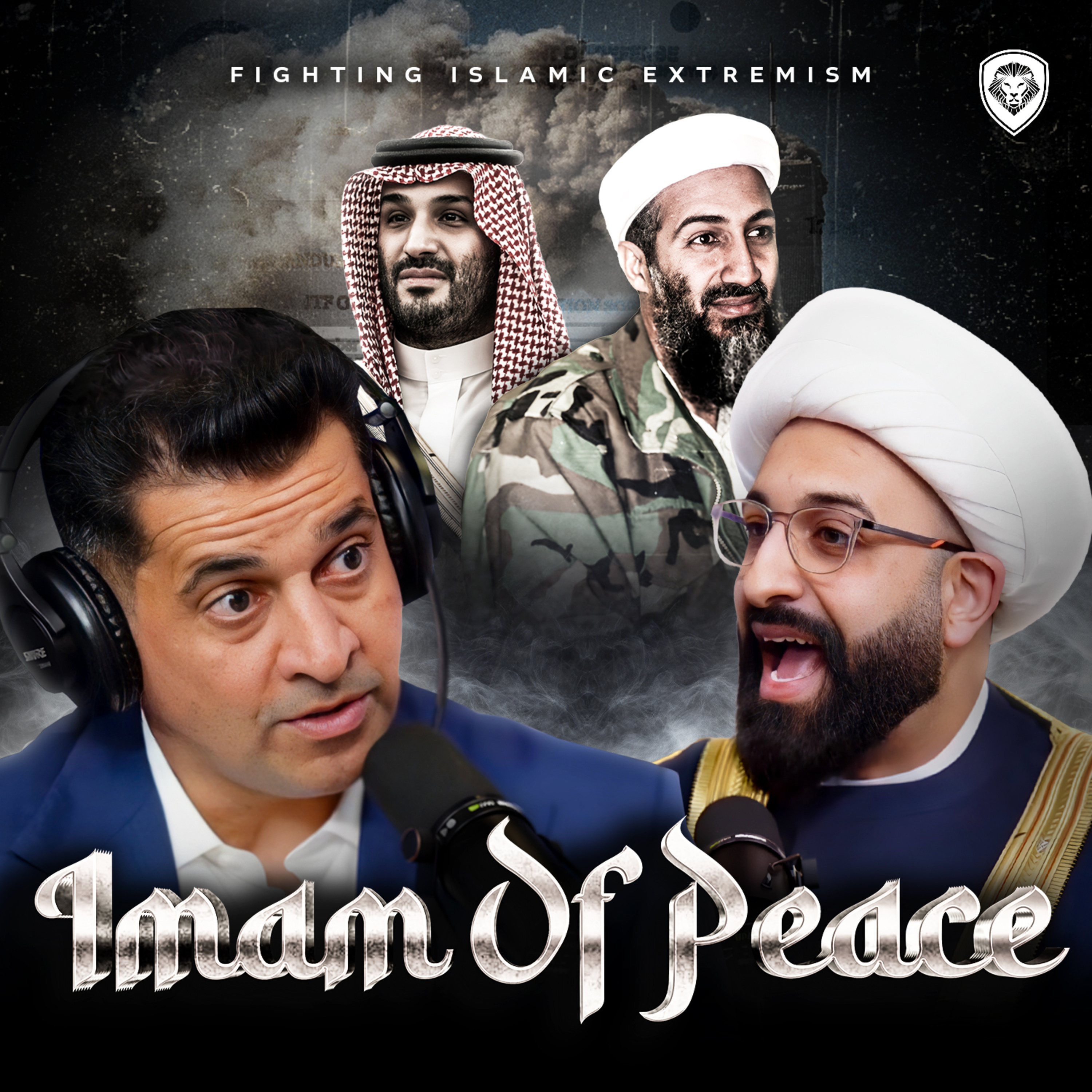
PBD Podcast
“The Clash Of The Turbans” - Imam Tawhidi EXPOSES Islam Extremism, Iran’s Regime & War On The West | PBD Podcast | Ep. 706
02:06:32
Loading summary
Transcript358 lines
- [00:00]
Imam Muhammad Tawhidi
Khomeini is the Persian Hitler. That's exactly how you need to look at them.
- [00:04]
Patrick
Khomeini is The Persian Hitler.
- [00:05]
Imam Muhammad Tawhidi
100%. Someone who could execute 30,000 people with no trial.
- [00:11]
Patrick
What percentage of Muslims around the world would be seen as extremist?
- [00:18]
Imam Muhammad Tawhidi
Osama bin Laden, for example. Many people do not know he was a member of the Muslim Brotherhood. Al Qaeda came from the Muslim Brotherhood. ISIS came from the Muslim Brotherhood. Hamas is the paramilitary wing of the Muslim Brotherhood. But Obama brought to them and made them the face of the Muslim community in America. The Muslim population in America.
- [00:41]
Patrick
What do you say? Obama?
- [00:44]
Imam Muhammad Tawhidi
That's when they declared victory. They became advisers to the White House. Is useless. This guy is a real criminal. Patrick, There needs to be the clash of the turbans. Turbans need to start clashing. Did you ever think you would make it?
- [01:15]
Patrick
Adam, what's your point?
- [01:16]
Imam Muhammad Tawhidi
The future looks bright.
- [01:19]
Patrick
My handshake is better than anything I ever saw. It's right here. You are one of one, I think I've said this. Today we have a special guest with us. Imam Mohammed Towedi Tawhidi. Tawhidi, depending on how you pronounce it. I'm from Iran, Tawhidi. And this is a very, very interesting figure I've been listening to, watching for many, many years. He is the governing member of the Global Imams Council, Advisor to counterterrorism at Trends Research and Advisory. Imam Taweedi, it's great to have you on the podcast.
- [01:59]
Imam Muhammad Tawhidi
Delighted to be here. Thank you for having me.
- [02:01]
Patrick
Anytime. Okay, so there's a lot of topics I want to go through, but before we get started, if you don't mind, take a minute and maybe share your background before we get into the question so the audience knows.
- [02:12]
Imam Muhammad Tawhidi
Sure. My name is Muhammad Tawhidi. I'm a third generation Imam. I am an ordained Islamic cleric. I was ordained in the holy city of Qom in Iran, which you're familiar with. And I'm a Australian citizen. I currently reside in North America and I also have extensive travel in the Middle east with a focus on the uae. I specialize in Islamic law and my faith. For those wondering, I am a orthodox Shia Muslim. Orthodox is not an Islamic term, but it is the closest for the listener to understand that I am not a reformist in any way. I believe in reform of societies. Reform that does not involve change of religion. So I want religion to remain what God revealed it as and not man made. Because man made is not accepted within Islam.
- [03:12]
Patrick
Okay, so the current population of Islam is what, 1.7, 1.8, 1.9 billion?
- [03:19]
Imam Muhammad Tawhidi
Climbing up 2 billion.
- [03:20]
Patrick
Climbing up to 2 billion.
- [03:21]
Imam Muhammad Tawhidi
Okay.
- [03:22]
Patrick
How many people of the Muslim Islamic community, how many of them view things the way you do? I've heard you say about this before, it's not a big percentage of people, but for you, a lot of people call you to Imam of Peace. I think your handle is even Imam of Peace. You may even call yourself Imam of Peace. Right. And there's always a, you know, confusion between the. This is the religion of peace. But we saw what happened on 9 11. This is religion of peace. But we saw what happened with Hamas and Israel. This is the religion of peace. But we saw what happened in Australia just recently. This the religion of peace. But so, but to me, you seem. You seem pretty peaceful to me. You give me the vibes that you actually are trying to pursue peace. However, of the 1.9 billion, give or take close to 2 billion, how many of them think the way you do?
- [04:13]
Imam Muhammad Tawhidi
Right. So I am a follower of my religion. And to break it down in a. In such a simple way, I don't think it would be fair for the religion itself or for its adherents or for countries like the uae, Bahrain, who are working very hard to establish peace and harmony all their populations. So the distinction we need to make is between Islam and Islamism, Islam as a religion and Islamism as a contemporary political ideology that uses Islam to gain power. And Islamists are not a monolith. So there are Islamists who believe in participating in democratic principles. You'll find them running for congress, and you have those who will simply engage in jihad. And jihad can be categorized in many, many ways. And I mean violent jihad. I don't mean the struggle of the self against one's desires. No, I mean going into a society and changing it, going into a community and hijacking their values and. And then preventing the host community from enjoying those values. Free speech, freedom of religion, expression, and so on. So I would advise that we need to separate. We need to draw a fine line between the Muslim Brotherhood that was in the west first and the Muslims who came afterwards who just want to lead a normal life. So there is no percentage that I can give you because we're not talking about the same issue. We're talking about a group of people who have hijacked a religion. And those people need to be understood, because in Arabic we say, which means you're stirring beside the pot or beside the cup. We need to stir in the cup in order to get the flavor of the sugar we put in it. So that's exactly what the extremists want to do. The extremist doesn't tell you he's an extremist, and the Islamist doesn't tell you he's an Islamist. They tell you we're Muslim. Osama bin Laden, for example, Many people do not know he was a member of the Muslim Brotherhood. Al Qaeda came from the Muslim Brotherhood. ISIS came from the Muslim Brotherhood. Hamas is the paramilitary wing of the Muslim Brotherhood. This is not Sunni Islam. This is an organization with its own charter. That's the distinction we need to make. Otherwise, we will be discussing an issue that is very distant from the disease itself.
- [07:07]
Patrick
Okay, so how different do you view the world? So let's put them in a different community, because I think it's very important to do this. You have those who are the extremist, okay, which you're kind of talking about. Then you have those who came afterwards. Not the first Muslim Brotherhood that came. The other ones that just came. They're like, look, I just want to live in America. I just want them in Australia. I just live in. I just want to live my life and have a regular life. Then you have those who are like you, you know, claiming. Presenting peace as the basis of the way you want to live. Okay, give me in your. When you're talking to Tommy Robinson, you said, I think there's around 5 million people like me. Like you. Then he said, and really, really like me. It's only about 500,000 people that are like me. You said this to Tommy, I think, seven or eight years ago when you guys did an interview. Okay, but today, if you're able to break it down, I think the. The. The extremist is this. The people that are just living their regular life is this and this. Or maybe even if you want to add anything else to it as well. How would you break down those sects?
- [08:17]
Imam Muhammad Tawhidi
Yeah, I think I was very general when speaking to Tommy in that interview, and I believe. I believe I understood the question to be within Australia. So how many like you within Australia? And I still believe those numbers are accurate. I think the majority of Muslims are not only supportive of peace, they lead a peaceful lifestyle, and they do not want to see the Muslim Brotherhood or bin Laden or ISIS or Hamas as their representatives. And the evidence of that I would point to is the reaction to October 7th. How many did we see flood the streets in support of Hamas? How many did we see? I could safely say across the American continent, round about 150,000. Would have flooded the streets between Toronto and Montreal and New York, and that continues. But it's the same community. I don't think we saw 3 million flood the streets. Muslims supporting Hamas. That did not happen. And that turns into a policy question until when is the White House and parliaments around the world going to allow the Muslim Brotherhood to be the face of the Muslim community? Because that's exactly what it is in Obama's time. Care, which, congratulations to Florida and to Texas, I think very, very important move designating CARE as a terrorist entity, which.
- [09:50]
Patrick
They'Re being sued right now, by the way. I don't know if you saw that.
- [09:52]
Imam Muhammad Tawhidi
If there's anything we could do as experts on Islam and on counterterrorism to support the state of Florida against CAIR and Texas against Cairo, please reach out. I'll say this. I don't know whether they'll win or lose. It does not matter. The point is we cannot allow them to operate freely. And I do understand there is a lack of Muslim expertise pushing back against CARE because they're intimidated by them. They're like a mafia. That's exactly what they are. They're a Muslim mafia. And so congratulations to that. That is a very important distinction. Because CARE cannot walk into certain mosques. Please don't think CARE has the ability to walk into any mosque in America. No, they'll be kicked out. They have their own mosques. They have their own centers that they. It's like a ghetto. So they're very isolated. But Obama brought to them and made them the face of the Muslim community in America. The Muslim population in America.
- [10:49]
Patrick
Why do you say Obama?
- [10:50]
Imam Muhammad Tawhidi
Because that's when they declared victory. They became advisers to the White House. If a president of the United States of America hosts a Ramadan iftar where Muslims break their fast, and then he brings a member of the Muslim Brotherhood community to initiate the call to prayer, that is a symbolic victory for the Muslim Brotherhood worldwide. That is the. That's like infiltration 95 for them. That's how they see it. And they simply go back and tell their members, you know, it's. It's not just about symbolism. It's more about motivation. Because the Muslim Brotherhood can go 10 months with no success, and all of a sudden, Ramadan comes and they're in the White House. So it's. It somewhat validates everything that they have been doing before they came into the White House, and it will, by extension, validate everything they do afterwards.
- [11:45]
Patrick
Okay, so fair. Which is celebration. Totally get it. That's a big deal. I also think Mamdani winning New York City is also a big victory because they they're taking over the financial capital of the world. That's a massive validation when, when Mandani won. But again, let's go back to it. So you're saying when you saw October 7th happen, how many people did you see worldwide or in the streets? Canada, U.S. 150,000. Fair. We can debate that number and we can fact check that number worldwide.
- [12:14]
Imam Muhammad Tawhidi
I think it's more.
- [12:15]
Patrick
Okay, so it's a massive number that happened worldwide. But that's not the question I'm asking. I'm going to come back to the comment you made about this, but this is the question I'm asking. What percentage? We've seen the numbers, but according to you, this is your world. You're studying anything and every article that comes out. When I was in the insurance space for 20 years, any article that came out on the insurance space, I have to read it because it's my world. So this is your world. What percentage of Muslims around the world would be seen as extremists? Sunni, Shia, doesn't matter. What percentage would you say as extremist?
- [12:49]
Imam Muhammad Tawhidi
I do not believe I could give you a percentage because it would need to be based on studies on this issue. And I am unaware of a study that presents it in this manner. But I can tell you this. The uae, how about we speak on a very realistic level so I can actually answer your question in a different way. I might not be able to give you a percentage, but I want to give you an honest answer. Decisions in the Muslim world happen where? They happen in Riyadh, in Saudi Arabia. They happen in Mecca and they happen in Abu Dhabi, the uae. They don't happen in Tehran and they don't happen anywhere else. This is important. The decision makers of the Muslim world, both religion and region, are heading in a direction that is not only about the Abraham Accords, but it's more towards peace, coexistence, harmony, prosperity, building bridges with societies, total rejection of extremism and so on. That is a massive society because it's not only about numbers. If we're talking numbers, then we have to go to Indonesia because they have the largest Muslim population per country. But.
- [14:03]
Patrick
And they're 98. 90, 98 for 92. Something like. They're massive.
- [14:07]
Imam Muhammad Tawhidi
So they don't make decisions for the Muslim world. It happens in Saudi Arabia. My message is more than welcome in Saudi Arabia. My message is more than welcome in the uae. And the same applies to Bahrain. I'm not saying it's not welcome in Indonesia. No, it is. But there are decision makers in the Muslim world. And if the decision makers are heading in a certain direction, that should be able to answer what where the religion is heading in terms of direction and mood and priorities and so on. And we'll also give you a clear understanding of the future of the religion if it is being led by Abu Dhabi, the Abraham Accords, the Abrahamic family house, that sort of narrative and total rejection of the Muslim Brotherhood. So, though I can't give you a percentage of how many Muslims out of the 2 billion are extremist, how many are fundamentalist, how many are just Muslim by name, how many are practicing, how many practice only in Ramadan? That's a breakdown that I cannot provide, honestly. But what I can say is that the decision makers of the Muslim world are heading in a direction that is very positive. Right? And I also believe that they are being supported greatly by the rest of the Muslim world. Pakistan, for example, the Muslims in India, for example. These are massive populations that are in line with what Mecca, Saudi Arabia and the UAE are doing. And there are other countries that are not in line, right. Such as the Palestinian territories and others that are obvious.
- [15:41]
Patrick
Okay, so this is. This is. Let's use basic, simple stats. I've seen all the way up to 20% extremists, which I think that's BS. And I've seen all the way down to 1%, which I also think it's a low number. Let's use 5%. Let's use 10%. Pick a number between 5 to 10%. Most numbers you can see will give you a number between 1 to 10%. A lot of studies are out there. Per percent is 20 million. Per percent is 20 million, right? So if we go to 5%, that's roughly a hundred million, give or take, right? Okay, so now imagine 100 million is a third of America. You know, 100 million at 5% is a third of America, 100 million. When you look at Australia, Australia may be a lot of land, but it's not a lot of people, right? Canada may be a lot of land, not a lot of people. UK may be a big island. You know, it's. So when you. When you then break it down that number and they go into these different countries. So now imagine you are the leader of that country, you're the president of that country, and President Trump comes to you as an advisor. Keir Starmer comes to you as an advisor. Mark Carney comes to you as an advisor, saying, Imam Tawidi you sound very reasonable. You sound extremely peaceful. You sound like somebody I can sit down, have a conversation with. We can laugh, we can talk. And I feel the genuineness from you. Right. What do I do when I'm dealing with immigration, when I know 100 million of this sect, this religion, Muslim Islam is extremist and they support the violence? A big percentage support, you know, say you put 1 or 3% support what? Houthis, Hamas, Hezbollah. You know, I live with Hezbollah in Iran. I was there for 10, 11 years. I've met many, many, many members of Hezbollah because, you know, my sister, my mom, we would walk in the streets and you would see things and it would pull up and like, oh my God. Shivering. You're worried about what they're going to do next to you. You live in fear. It's not a nice place to be. How do we filter out who we let in, who we don't? Do you use a zero tolerance policy, don't let anybody in? Do you take the risk with what we took immigration the last four years in America under Biden, that people came in and who knows what percent? Because our job is to protect America first. Right. What advice would you give to them?
- [18:18]
Imam Muhammad Tawhidi
Yeah. Your immigration policy needs to be tied to your understanding of sovereignty. So if sovereignty is sacred, then immigration policy needs to be looked at through the same lens. You cannot have a weak soft immigration policy at all. The UAE is a perfect example. So is Saudi Arabia. How is immigration doing there? It's perfect. 200 nationalities living together. Why? Because there is an excellent, not just good, an excellent vetting system. You cannot be someone who harbors jihadi ideology and simply apply for a visa to go to a Gulf state, they won't accept you because there is a serious vetting system. And if they figure out that you somehow got through. And by the way, there were some famous people who built a career simply because they were deported out of the UAE during the Arab Spring, the so called Arab Spring. The policy is beautiful. The minute they figure out they made a mistake because they let someone in who then went online and, and made a comment or supported a certain narrative that is against national security, immediately. Knock, knock. Where's your bags? Pack up. DXB Dubai Airport, straight out of the country. There is no negotiation when it comes to safety. Why? Because it's a security decision. So American immigration policy needs to be looked at through a security lens, not a political lens. That's what we're seeing in America. Everything with regards to the border has been a political question, not A security question in. In the Middle east, the borders are looked at through the lens of security. That is why there are zero terrorist extremists in Abu Dhabi. That is why there is no one blowing himself up in Riyadh, in Jeddah. That's why it's very important that we speak in this manner, though it may be foreign to the American listener. But the understanding of national security in the Middle east is very different because we know these people. The extremists that are migrating to the west are those who were rejected from our societies, those who would be in prison, Muslim Brotherhood communities. You can mention millions of extremists to me. I will not deny that. I'll tell you, you know what, that is exactly right. And if we go to those individuals and we understand their ideology, one way or another, it will take us back to the Muslim Brotherhood, an organization that is 98 years old, who planned this disaster 100 years ago. Patrick, how do I deal with a politician who thinks in four year terms? How do you discuss immigration with a politician whose mentality ends in four years and who sits with you nine to five? So whatever you tell him, he looks through a. He puts. He fits you in through the nine to five schedule. After five, he's in a bar, he's, you know, he's out of this world. Fighting Islamist extremism is my life. I don't have a 9 to 5 schedule. I can't sit with a lawmaker who before meeting with me is dealing with, I don't know, something with the economy and then he wants to deal with lgbtq, with all due respect, issues. It's not about listening to us. It's about listening, following up, and acting upon it. Which is why I have a policy between me and myself. If I sit with a lawmaker and I give him advice and he doesn't listen and something goes wrong, I will never speak to them again. There are no second chances. Because this community, we understand, we lived with them, we ran away from them, we can identify them without having to study about it. We know these people. When we say they're a threat, they're a threat on many level. Not just on many levels. Not just because they reject America. No, no, no. The whole idea of immigration needs to be revisited simply because not all immigrants are equal. Not all immigrants are equal. And I dare mention someone like Ilhan Omar. I would not see her as a legitimate immigrant to America. I simply don't. There's a vast difference between her and a Muslim who came from another Muslim country who Built an amazing career in America and serves in the military, for example, and defends America. And you will find those Muslims who side against her and her policies and they're very visible.
- [23:06]
Patrick
What would happen if she went to UAE or Saudi? What would they do with her? If she said she wants to go be a resident there, would they welcome her?
- [23:17]
Imam Muhammad Tawhidi
There are laws in place if she enters lawfully. I imagine that again, I'm not the decision maker here on immigration, but I imagine those who follow the law will be treated by the law equally. But I doubt for a single second Muslim Brotherhood narrative will be accepted for a single second. I doubt, you know, a like of a post by Care could get you deported. There is absolutely zero tolerance to extremism. Absolutely. In the uae. And when I say absolutely, I mean from top down. The. The youngest UAE citizen will not accept extremism. It's that serious. And, and look, if you, if you're looking for freedom of expression, you'll find it. But freedom of expression does not mean I get to say I want you beheaded. That's not a view that is considered respectful or an ideology that has a place or should have a place within society. You know, the extremists in America openly say we are here to bring down democracy. That's exactly what they say. We are here to establish a global caliphate. We want Sharia law, right? Try that in Saudi Arabia and see how long you last. Try that in Abu Dhabi. See how long you last. The thing with religion is it came to guide. So I'm a Muslim. I believe that God sent a religion to guide me. Religion is not here to rule by the sword. Religion is a source of spirituality and taking the human hand by their hand to areas where they can excel in their humanity, in their moral understanding of life, in religion, in the relationship between themselves and God. That's the role of religion. The minute you turn the Quran into a constitution like we have in Iran, where people are being hung and beheaded, that's when you know, okay, so Islam has been used as a constitution so Khamenei can become king of Iran. And that's what he is. He's a king. He's not a cleric. He's not a man of God. Persia was always ruled by kings and now we have a king with a turban. That's exactly what he is. Not a man of God. He's the pharaoh. He's the Persian pharaoh. Khamenei is the Persian pharaoh.
- [25:53]
Patrick
Khamenei is a king of Iran. Okay, so why do you say that? Because what? Because he can do anything and everything.
- [26:02]
Imam Muhammad Tawhidi
And the whole idea of a. Of elections in Iran is a farce. It's fake. There are no elections in Iran whatsoever. No Iranian has a voice under the system of walayat al faqih, which is the guardianship of the jurist. Can I just explain that to the American listener? Now, we're familiar with communism. We're familiar with socialism, democracy. There's a system in Iran that's not just theocracy. It is the guardianship of the jurist al faqih, which means Khamenei, or a person in his position before him. Khomeini is the guardian over all Muslims, not just the Shia Muslims, even the Sunnis. He claims he's the guardian over Islam. The Pakistanis, the Malaysians, Indonesians, Saudis, uae. It's ridiculous. Okay, what does that mean? It means he has the authority, absolute authority on behalf of God to do whatever he wants. He can look at you and say, patrick, you and your wife are divorced. And boom, just like that, your. Your marriage is terminated simply because he said so. So the whole idea that 90 million people are expected to vote for a president, and then the president goes and kisses the hand of Khamenei and says, you know what? Ignore the people. Whatever you say, I will do that is the biggest scam in the history of scams that the Iranian people have to live through. You know, and it's not. Not just a disaster, it's something that is somehow tolerated by the international community, especially the Europeans. They tolerate it. There are no elections in Iran. United nations, what do you have? You have a president, you have prime minister attend. You have kings attend. Fine. You have chancellors, you have chairman of certain parties attend, like the ccp, Fine. But there is no such thing as a president. And then above him, there is the supreme Islamic leader who rules on behalf of God, who gets to run the country, and he thinks in his mind, run the world the way he wants. That is Islamism. There is no such thing as God speaking to Khamenei, telling him, you're my deputy, on behalf of the Savior, the Mahdi. So kill as you like, bomb as you like, butcher as you like. There is no such thing in the Quran that says that what we have is a regime. We don't even have a government in Iran. There is no government. And it's very wrong for people to think there is a government system in Iran. There is. No. It's a regime. It's a cult. A cult of clerics that govern Iran in the Name of God. Why? Because it's the best tool to to use against populations in mass religion. Because the minute you oppose Khamenei, it's not that you opposed the ruler. No, no, no, you're certainly not Muslim anymore. How can you oppose the supreme ruler who is the guardian on behalf of God and his savior on planet Earth? So clearly you're not a Muslim. Clearly you can't be praying because if you pray then you would have had the piety to stand with the regime. And if that's the case, then you must also eat pork. And slowly, slowly they will drive you out of anything called faith. And that's when you become a mufsaddafil ARDH execution, you're a corrupter on planet Earth and so on. We need to distinguish between Islam and Islamism because there is a lot there that the Islamist relies upon you to ignore. The Islamist will not tell you I am an Islamist and they are Muslims. No, he'll tell you I am Muslim and they're again, extremist doesn't tell you he's an extremist and Islamist doesn't tell you he's an Islamist. They're using the religion. Half of them don't even pray. You think Ilhan Omar can recite the Quran? You think she can open the page and start reading that? Impossible. These people, the majority of care, don't even know the structure and the chronology of the Quran. They don't even know the context behind revelation. These are people who if they need anything now chatgpt, that's their faith. But governments have allowed them to be the face of the Muslim community In.
- [30:08]
Patrick
America in 2009, 2008, late December 2008, you went back to Rome. Right. To go to school there for three years.
- [30:16]
Imam Muhammad Tawhidi
And Rome from 2008 until 2013.
- [30:20]
Patrick
Right. But you went back 0809 to go to school there and you were there for, for 2013. Yes. And Rome is where Khamenei is from. I believe if I'm not mistaken, Khamenei is in Rome. If not, that is where he studied with Ruaholah Khomeini back in the days when they were fighting against the Shah in the plans of the first time exile. The second time exile, they've tried multiple different times. Khomeini was kicked out and he went to all over place. And then eventually at France, when you went to school there, you can break down what the school structure is so the audience can also understand when you went to school there, at what point was it when you said I can't subscribe to this teaching. I got to get out of here. What. What caused that?
- [31:07]
Imam Muhammad Tawhidi
Okay, beautiful question. Now, Khamenei was born in Mashhad. That's Khorasan, the other side of the country. Mashhad and Qom are very important. So our listeners is where the holy shrine of Hazrat al Masuma is the sister of Imam Riza, who is buried in Mashhad. Imam riza is the eighth successor of the Holy Prophet. So we add 12. 12 verse. We have 12 imams. Number eight is Imam Riza. So that's the holy city of Mashhad. And I was born in the holy city of Qom. And I went back to study in the holy city of Qom in December 2008, and I stayed until 2013. Now, Khamenei and Khomeini both studied in the holy city of Qom, and including Hassan Nasrallah, the former Secretary General of Hezbollah, they all studied at Qom. Now, Qom is a seminary that has education that is basic, intermediary, and somewhat entry level into the advanced studies. People usually finish their studies in Qom and then head over to Najaf in Iraq, which is the main ancient seminary for Shia Muslims in the world. And that's a thousand years old when it comes to Qom. Qom was a open society, an open seminary, where you had mosques and Islamic centers and you had a cleric, a senior cleric who had 20, 30, up to a thousand students sit around him and he would speak about theology and Islamic law, doctrine, ethics, mysticism, you name it. Come the Iranian Revolution of 1979. And by the way, it's not an Iranian revolution. There's nothing Iranian about it. The listeners need to know that Khomeini was an Indian man, right? He's not even Iranian. But it was a Islamist revolution, not an Islamic revolution. An Islamist revolution coming to the 1979. Khomeini understood that he had to do something about these clerics. He had to do something about Islamic law that is governing Iran and governing society. So what he did was, is that he turned these freestyle education circles and systems into institutions, and he turned the seminary into a university. And he called it Al Mustafa International University, the university which I studied in. And I should say, Patrick, one of the best decisions I made in my life, as I always say, was withdrawing from that university.
- [33:44]
Patrick
Why is that?
- [33:45]
Imam Muhammad Tawhidi
Because it is the university that is ruled by the irgc, ruled by the military that is responsible for supporting Hezbollah and Hamas and the Houthis and so on. But we should also mention that it is not a university like the traditional universities that we have. It is the umbrella organization for over 10, 15,000 schools and institutions, educational and seminaries in Iran, across the country, and now even in the Middle East. And they have deputies everywhere, recruiting students now. So it's building on Kiaban on Mualam street is not an actual university you can go in and study. No, it is a administration that sends you off to another university. When you graduate from that university, you get a certificate from Al Mustafa University. So these guys will teach you a revolutionary Islam. How do we export the revolution of Khomeini to Australia, to America, to Canada? How do we bring American citizens? And if I could just ask. Could you on Google just put school with an I? Yes, school Qom. Q, U, M. Yeah. Okay, that's the first one there, you see, that is where Americans go to. Click on that first picture for me, please. Okay, so you see on the left side where that white banner is? That's my room. I was in there with 13 students. That's my dormitory. The first level is where you have the classrooms. And that you see at the bottom there, that. That rails, the blue and white rails at the bottom. That there takes you to the basement. Okay. Beneath there, there are more classrooms that look just the same. So first level, second level from the top, coming down are where students sleep. And then the ground floor is the classrooms. And beneath that is more classrooms. My room is room number 13. Where. No, on. On the right side, where the banner is.
- [36:01]
Patrick
That's where you were at.
- [36:01]
Imam Muhammad Tawhidi
That's where I was for two years. This is where the British, the Australians, the Westerners who are taken from the west are taken here. Why? To learn Farsi. You learn Farsi, you can understand what Khamenei is saying. He can move you properly. This is the first thing they do. You see those two pictures there? That's the main library that was added in later. Khamenei and Khomein. At the very top, that's the library that was added later. That's higher.
- [36:28]
Patrick
Who gets to go there? Anybody can go to the library?
- [36:32]
Imam Muhammad Tawhidi
Yes, because everyone here is vetted. Everyone here is an asset. So the deputy of Al Mustafa University who comes to the west sees you as an asset. Okay, Imam Tawhidi, Australian passport. You speak English, you speak Arabic. You're somewhat charismatic. You're convincing. You know what? Let's take you to Qom. And so this is where the brainwashing happened. From here, they take you to the Friday sermons of Khamenei this is where they first come in. First year is Farsi and second year is. They call it Tamhidiyya, which is the basics of Islam. Then you move on to the university, university style seminaries. Right. Now here's the issue. They say one year, but it's never one year. We have 12 imams. All of them except one have funeral days, three days, birthdays, three days. You know, the holidays of the revolution, the victory, this, that, this, that. You're looking at a year and a half to two years here for learning Farsi. And they use that to not just strengthen your language, but for you to be accustomed with this region, this street.
- [37:40]
Patrick
Who were some of your classmates?
- [37:41]
Imam Muhammad Tawhidi
Okay, before we get there, next door is the P of the besiege. The besiege, which are the. The youth corpse of the IRGC is literally next door to this building. So my classmates are. I'm going to say this, and I haven't said this before. The clerics who are now running the Al Quds march, which is the pro IRGC Hezbollah march, on the last Friday of Ramadan, every single year, running them in New York and in Toronto. They were my classmates. We studied together.
- [38:16]
Patrick
Did they get brainwashed?
- [38:17]
Imam Muhammad Tawhidi
Of course, because everything they do. Look, a cleric needs to talk religion. How do you know? A cleric respects himself when he sticks to what he is meant to be doing. Religion, theology, doctrine, community service. They're all politicized political clerics of no value. Their. Their understanding of religion is very shallow, very deep. I mean, it needs to be deep, but it's very shallow. You know, an atheist can take them down easily with two questions because they haven't been taught the proper foundations of theology and doctrine. In Islam. It's always been Khomeini's biography, Khamenei's biography. When he was born, he came out of his mother's womb and there was a scream in the. In, in. In the heavens. Ya Ali. Have you heard that? Okay, so that's what they're taught. Everything revolves around the character of Khamenei as the savior.
- [39:14]
Patrick
Did you ever meet him?
- [39:15]
Imam Muhammad Tawhidi
No, I have not. Here's the thing. Meet face to face. No, but we were together in a. So when he came to Qom. He came to Qom and we were chosen by a cleric. I'm going to mention his name, Sheikh Adman. I won't mention his first name, but he was the man responsible for the Australian students. He came to me and he said, we're doing two things. We are going. The week before Khamenei comes to come to Tehran, and I still have the entrance ID badge that you wear, and you attend. You're not sitting in the front lines because that's where the IRGC officials sit. You're sitting towards the center of his sermon. I saw him. And again, to be honest with you, they prepare you for a spiritual event. It's not like the bus drops you off and you enter into a mosque and then there he is. No, no, no. It's not tunnels, but it's alleys that you walk through that are prepared with banners and signs and flags and just symbolism, revolutionary symbolism. And then you enter. And the gods everywhere, the sipah, and they're green and sometimes blue. And then they usher you. And you know, your director of the group, on that day, he changes because his life depends on this. He becomes a different person. He's not the guy that is nice with you, like, so he's very strict. He takes you in. We sit here. And then when you go in, you see there's an ocean of people. You're not the only one, not the only group. And before Khamenei comes, you have his henchmen, clerics, who come up on the microphone, who rally up the audience. So by the time Khamenei is coming out, that's why people are walking behind him and kissing the place where his feet touch. And, you know, death to America. Death to English. Death to Israel. Dead to the hypocrites. That's. That's how it happened. They build you up. And I'll tell you this. As deviant as Khamenei is and as crooked as his people are, they are excellent speakers. Khamenei is useless. The only thing he's good for is he's a really good speaker. Khamenei can move a rock when he speaks. And I felt that this guy is a real criminal. I'll tell you, there's a lot of psychology involved. You see where Khamenei sits? That's a shipping container. He sits in a shipping container. So two shipping containers that are stuck together and they're welded together. If you want to pull it up.
- [41:57]
Patrick
Brad, pull this up.
- [41:58]
Imam Muhammad Tawhidi
Yeah, pull this up. He's actually in a shipping container, and it's bulletproof. So you're about to make a trade based on a friend's text, but which U do you listen to? Is it. We could buy a house in Tulum, get optioning those options. We could lose everything. Or let's do a little research, get your head in the trade and make the investment. Decision that's right for you. Learn more@finra.org TradeSmart.
- [42:35]
Patrick
Which shipping container?
- [42:36]
Imam Muhammad Tawhidi
Not Khomeini.
- [42:37]
Patrick
That's Khomeini.
- [42:38]
Imam Muhammad Tawhidi
That's.
- [42:38]
Patrick
That's the Robin of Hitler. Basic names. Rob, how are you getting this wrong? Shipping container.
- [42:46]
Imam Muhammad Tawhidi
Okay, hang on. You see that third picture? The third picture? The third picture. Yeah, that. So that's a shipping container. There's a curtain behind him. Or you can just go back and say change the two words to Friday sermon. Yeah. Okay. See that, the first picture, for example, you see that, that's a shipping container that he's in. Or for example, change the. The last two words. Put. Oh, sorry, sorry. Leave them. Add to them the word Qom. Q U M. Because he was in a shipping container in Qom. Of course, with pictures, they won't show it, but where he stands. That third picture on top, the one I pointed to earlier, that one there, for example, behind him is two welded shipping containers that they put him in. And they're covered, you know, they're not going to have DHL or anything on them. They're covered up nicely. And because, number one, it's security and no one can get to him. Except for a guy called Waheed. You want to pull up the name Waheed just next to Khamenei, Put Waheed.
- [44:02]
Patrick
This guy.
- [44:02]
Imam Muhammad Tawhidi
Okay, that guy. That's his number one henchman. He's the real ruler of Iran, not the president. It's this guy. To get. He's the head of Khamenei's office, Khamenei's affairs. Waheed. There should be a Wikipedia about him.
- [44:17]
Patrick
He's a right hand man to Iran's Ali Khamenei, often known as General Vaheed.
- [44:24]
Imam Muhammad Tawhidi
Yeah, he goes by one name, Waheed, in the whole country.
- [44:28]
Patrick
Okay, so where were you going with this, with who he is? Okay, Rob, can we turn on the AC a little bit now? It's a little bit hot.
- [44:34]
Imam Muhammad Tawhidi
Waheed is the guy who decides where Khamenei he goes. And we need to understand the makeup of Iran as a country so we can understand how we got to Hezbollah, how we got to Hamas, because Hamas is for sale. Hamas was paid by Iran. They're Sunni, but the Shia paid for them in Iran. I want to be fair to you and to the listeners. I want to take a step back. Many people say the reason why the Muslim world is successful, and they mean the UAE and Saudi Arabia, they say, is because they pushed Islam to the side, not because Islam is good in these countries. That's what they say. And of course, that's not right. In Iran, we have a system where the clerics rule over not only the government, but also the hospitals, the technology sector, the education sector. There is no sector in Iran in the intelligence that the clerics are not ruling in. So you cannot have a fully functioning, vibrant society when you don't have experts on top. The uae, what they did was they respected religion. Religion is sacred. It cannot be placed in an intelligence department or in a hospital. So they bring experts to these fields. That is the difference, my brother. That's the difference. Iran went down, down this path of destruction because it is run by mullahs. It's run by clerics. It's not run by experts.
- [46:22]
Patrick
Khamenei's family. I don't know if you've looked at this or not. Apparently, the family is worth $92 billion, give or take. If you type in Khamenei, net worth. Oh, yeah. 95 to $200 billion on the kind of money they've made. So. So, Vahit, are you saying Vahid could be the. Who could he be in the future when Khamenei is no longer here with us?
- [46:46]
Imam Muhammad Tawhidi
No. Waheed is the decision maker.
- [46:48]
Patrick
He will never be anything. No, because he wants to be behind the scenes.
- [46:52]
Imam Muhammad Tawhidi
He has to be behind the scenes.
- [46:54]
Patrick
So he runs Iran, in other words.
- [46:55]
Imam Muhammad Tawhidi
He'S the guy who runs the country.
- [46:57]
Patrick
He runs.
- [46:57]
Imam Muhammad Tawhidi
He runs the country.
- [46:59]
Patrick
Have you met him?
- [47:00]
Imam Muhammad Tawhidi
No, of course not.
- [47:01]
Patrick
What do you mean, of course not?
- [47:02]
Imam Muhammad Tawhidi
No, I'll tell you this. Can you put. Just type my name in Google? Just put Tawhidi and then. No, no, no Tawhidi. Okay, you're gonna do that. Okay, wait. And then next to it, just put Hassan and then put Khomeini.
- [47:21]
Patrick
Rob is having a rough day today. Not Khamenei. Yeah, Khomeini.
- [47:25]
Imam Muhammad Tawhidi
Okay, just. Just go. Go to Images.
- [47:29]
Patrick
Also, you met with Khomeini's grandson.
- [47:31]
Imam Muhammad Tawhidi
Of course I was. You know, that's.
- [47:34]
Patrick
You and him.
- [47:35]
Imam Muhammad Tawhidi
You could even consider me somewhat of an advisor to these guys.
- [47:38]
Patrick
This isn't home.
- [47:39]
Imam Muhammad Tawhidi
This is in Tehran. This is in the shrine of Khomeini in his private residence. Now, I want you to take a look at this picture. By the way, Patrick, I'm not being arrogant here, but I just want you to see what exactly you're looking at so you know who you're doing a podcast with today.
- [47:57]
Patrick
How long ago is this?
- [47:58]
Imam Muhammad Tawhidi
This is 2016. Okay, zoom into the plates.
- [48:02]
Patrick
I see chai.
- [48:04]
Imam Muhammad Tawhidi
Okay, what do you see on my Plate. No, no, no. Go back, go back, go back, go back. Okay. Stay there. What do you see on. On. On that? On my plate, I see tea, but.
- [48:17]
Patrick
I don't know what that other piece is.
- [48:18]
Imam Muhammad Tawhidi
It's an orange. Okay, but what am I missing? I'm missing orange peels.
- [48:23]
Patrick
Okay, he has the peels.
- [48:27]
Imam Muhammad Tawhidi
Right?
- [48:28]
Patrick
So he peeled it for you.
- [48:29]
Imam Muhammad Tawhidi
Correct.
- [48:30]
Patrick
I got what you're saying. So the relationship is he was serving you.
- [48:38]
Imam Muhammad Tawhidi
More like being kind and generous.
- [48:40]
Patrick
Respect. In a good way.
- [48:41]
Imam Muhammad Tawhidi
Yeah. Yeah.
- [48:43]
Patrick
How was he. How was Khomeini's grandson?
- [48:45]
Imam Muhammad Tawhidi
This guy doesn't believe in. In anything. He's an atheist, in my view. I. I think he. If he could, he would take out Khamenei.
- [48:53]
Patrick
Are you kidding me?
- [48:54]
Imam Muhammad Tawhidi
Yeah. No, this guy.
- [48:55]
Patrick
And he still lives there.
- [48:56]
Imam Muhammad Tawhidi
Look, I'm saying this. I know this. This might bother him, but he in no way is a. Is a cleric in the same manner as Khamenei.
- [49:06]
Patrick
Why do you say that?
- [49:07]
Imam Muhammad Tawhidi
No, this guy's fed up. His grandfather made the revolution and he gets no say in governance. They give him a mosque. Here's your grandpa's grave. Go clean and serve it. Yeah. He has no say. He's a teacher. They won't even let him in. They say in order for you to become on the expert council of Iran, you know, Magisa Khabragan, you need to take a test. And he tells them, I'm the grandson of Khomeini. I take a test. I need to be testing you guys. Right?
- [49:39]
Patrick
What's his relationship with Vaheed?
- [49:42]
Imam Muhammad Tawhidi
I mean, it has to be diplomatic or else. He's a pragmatic guy. He knows. He knows. Look, Khamenei put his own brother Hadi. Do you want to Google this? Go up to Hadi Khamenei. This is a k h a. No, no, no. Hadi with just a h a d.
- [50:04]
Patrick
I. K h a m e. K h a m e. There you go. Shakamo Khamenei.
- [50:11]
Imam Muhammad Tawhidi
No, no, no.
- [50:12]
Patrick
K h a m e N e I N e I. There you go.
- [50:17]
Imam Muhammad Tawhidi
No, Hadi. Hadi. So h a d I Rod. H a d I D I. Yeah. Okay. This is Khamene, his brother. He was under house arrest. Many people don't know this.
- [50:30]
Patrick
Why was he on house arrest?
- [50:31]
Imam Muhammad Tawhidi
Go down. It should. It should say opposition. He's a reformist. So Khamenei got his people to attack his own brother. Right. Some conservatives blamed Khamenei for the attack. Right. So this is Khamenei lives in a world of contradictions. Remember the Ahmadinejad and the Green Uprisings? Okay, so Mousavi is his cousin. Is Khamenei his cousin? And he would come out and say, khamenei is corrupt. His own brother says, my brother is corrupt. His uncle says, my nephew is corrupt. His sister's husband, who fled to France, wrote a letter to Khamenei. He said to Khomeini, sorry, he said, how dare you appoint my wife's brother as the head of Friday prayers in Tehran when he is 1, 2, 3. He accused him of being part of the LGBT community, right, In a letter. And the guy lived in France. And then, yeah, he's dead. But the point is, Khamenei is very misunderstood in the West. Misunderstood. Americans don't know who's speaking to their students. When these uprisings happen in universities and Khamenei puts out a tweet and says, I congratulate the students in America and North America. They're upright. That's not just foreign interference. Americans don't know what they're looking at. This is the Shia Osama bin Laden. That's exactly how you need to look at him. This is the. Osama bin Laden was Sunni. He's the Shia version of Osama bin Laden. And Khomeini is the Persian Hitler. That's exactly how you need to look at them.
- [52:13]
Patrick
Khomeini is The Persian Hitler.
- [52:14]
Imam Muhammad Tawhidi
100%. Someone who could execute 30,000 people with no trial. I mean, no comparison. You're looking at the Holocaust. Two million more. But I'm talking about the, the concept and the will. Okay, you worked for the Shah. What were you, a chef or a driver? Execution. This level of mentality and terrorism we see in the likes of Hitler.
- [52:35]
Patrick
What caused you to leave, though? What caused you to say, I'm leaving Australia?
- [52:39]
Imam Muhammad Tawhidi
I did not come to the seminary because I didn't have anything else to do with my life. Many of the people who go there, go there because you're given a stipend, $30 a month, you're given a room, food, right? And if you memorize the Quran and important books from our corpus, what happens is you get a higher stipend. And of course, with religion comes respect. That's why many people choose to go there. I did not do that. I went to study. I went to. Because I'm a third generation imam, I went to increase my education, my theological education. But the minute you tell me I cannot read certain books and I cannot visit certain scholars. You see, I was a fundamentalist. I am a former extremist. I used to support Khamenei. I used to support these criminals. So the. But the thing is, I came from a society that allowed me to read whatever book I wanted to read and to visit whatever scholar I wanted to visit and sit with. For you to. Now tell me. I cannot do that. I didn't come from Uzbekistan or Pakistan or Iraq like other students were. No, I came from the West. You cannot tell me I can't read certain books. So that triggered it for me, that you.
- [53:59]
Patrick
In a classroom that happened where they told you you can't read those books?
- [54:02]
Imam Muhammad Tawhidi
Oh, no, no, no. What would happen is I would naturally see signs of scholars in their offices. Ayatollah so. And so. And I would go to their office, and they would give me books. So I would take the books back to the dormitory. And before I knew it, my dormitory was broken into. They searched me when I was praying, you know, congregational prayers. They searched my room. And when I came back, I found everything was not how I left it, and it bothered me. And so I began to understand there's an issue here that I was not aware of. And then I started to investigate who the other clerics were. What was their problem with these clerics? And I found out, you know what? You can still be a good Muslim and reject Khamenei because there are grand ayatollahs who are the grandsons of the prophet who reject him. So I immediately started to visit those guys, and I sat with them and I read their books. And I saw, you know, this is exactly what I came here for. Religion. You had me in Al Mustafa University telling me that Tel Aviv needs to be bombed, right? And dead to America and dead to the uk and the Queen is Satan, right? And America is the big Satan, and Israel is a small Satan. I understand your hatred towards them, but that's not what I came here for. I came to study theology. I found it in the offices of the grand ayatollahs who were opposed to Khamenei. That's when I said, okay, there's more here. So I picked up the phone to my father. I said to him. He didn't tell me. He said, well, I wanted you to understand on your own. He knew my father was in Iran. We moved from Iran to Australia.
- [55:52]
Patrick
How heavy. How higher up was your father? You're fourth generation, so I'm third generation. Third generation.
- [55:58]
Imam Muhammad Tawhidi
Third generation.
- [55:59]
Patrick
How higher up was your father?
- [56:00]
Imam Muhammad Tawhidi
My father is a community cleric.
- [56:03]
Patrick
Okay?
- [56:04]
Imam Muhammad Tawhidi
Community. I'm not involved in. In my world at all. But he didn't want to get involved in this type of conversation, but I understood. And when I understood, I said, you know what? I'm not getting involved with these guys anymore. And of course, once they realize that you are no longer subscribed to their ideology, the first thing that happens is that they cancel your visa.
- [56:26]
Patrick
Right.
- [56:26]
Imam Muhammad Tawhidi
Though I was born in Iran, I was there as an Australian citizen. So they cancel your visa and then you have to figure it out on your own. But my visa still had time. I just did not submit to renew it. I had like eight, nine months left. So what I did was I stayed in Iran and I stayed in another school that was offered a dormitory that I was offered by these other good clerics. They're all fundamentalist, but they were less corrupt. So their corruption would be financial. Wasting money on unnecessary initiatives. It wouldn't be murder and blood and. And trying to take down the West. None of that.
- [57:09]
Patrick
What were they teaching you there? Like if you were to say the core, core teaching, who is the enemy? Who did you see them sell hate to the most? Who were you supposed to hate and love you know the most?
- [57:22]
Imam Muhammad Tawhidi
Okay, so you love whoever Khamenei loves and you hate whoever Khamenei hates. It's as simple as that. If that is fixed, love changes. Doesn't matter. Point is, you need to be loving who the state loves.
- [57:34]
Patrick
So who the common a hate?
- [57:36]
Imam Muhammad Tawhidi
Of course America, of course Israel. Of course the uk of course the west in general. I mean, who is border though?
- [57:42]
Patrick
Who is at the top? Who is at the top of the hate for Khamenei? America, number one.
- [57:47]
Imam Muhammad Tawhidi
Number one. The great Satan ahead of Israel, of course.
- [57:50]
Patrick
Okay, so the mag Bad Omrika, Mad Bad Om.
- [57:54]
Imam Muhammad Tawhidi
That was a regular thing that happens every single day. You see it once a week after the Friday sermons, but it happens every single day in every single mosque that is operated by the regime dead to America. And I'll tell you this. I saw you ask me a question when you played my warning in 2009 after the attack in Australia. Do you remember what that question was today? No. When I thanked you for playing my clip from 2019.
- [58:28]
Patrick
When we set out to create a shoe that blends comfort, function and luxury, we had the choice to make it fast. We had the choice to make it cheap. We chose neither. Instead, we chose Tuscan Italy. We chose true Italian craftsmanship. Each pair touched by 50 skilled hands. We chose patience, spending two years perfecting every detail. And we chose the finest quality at every step. Introducing the future. Looks bright collection. Not rushed, not disposable. Not ordinary, rather intentional. Luxurious, timeless.
- [59:09]
Imam Muhammad Tawhidi
Limu game.
- [59:10]
Patrick
Oo and Doug. Here we have the limu imu in its natural habitat, helping people customize their car insurance and save hundreds with Liberty Mutual. Fascinating. It's accompanied by his natural ally, Doug.
- [59:27]
Imam Muhammad Tawhidi
Limu is that guy with the binoculars watching us.
- [59:29]
Patrick
Us. Cut the camera. They see us.
- [59:31]
Imam Muhammad Tawhidi
Only pay for what you need@liberty mutual.com. liberty. Liberty. Liberty. Liberty Savings. Very unwritten by Liberty Mutual Insurance Company affiliates excludes Massachusetts.
- [59:43]
Patrick
What was the question?
- [59:44]
Imam Muhammad Tawhidi
Question was, if you're criticizing these guys, then why are you still Muslim? Do you remember that question you said? Well, one could ask him why he's still a Muslim. And I. I really think we cannot not answer that question. It's very important because it ties into the tens of millions of Iranians who don't say that to America, who don't attend these mosques, who don't attend these rallies. What you're seeing is a few million. Fine, 20 million. 30 million. How many millions love Khamenei? 30. Fine, no problem. I'll be generous in my numbers here, but at least half the population is either not practicing or they hate him. Why is that the case? Why are they still Muslim?
- [60:27]
Patrick
Not enough, though.
- [60:28]
Imam Muhammad Tawhidi
Yeah, but why are they still Muslim?
- [60:31]
Patrick
I don't know if they're Muslim. Like, like. Let. Let me give you an idea. I think you said something very powerful today. You said.
- [60:39]
Imam Muhammad Tawhidi
So.
- [60:39]
Patrick
So to an average Christian, they think every Muslim's read every the Quran cover to cover. Okay? So think about it. To the average Christian, what do they think? Oh, you're a Muslim. You've read the Quran, you've studied the Quran. You know everything in the Quran. And you said what you said, you think Ilhan Omar knows what's in the Quran?
- [60:59]
Imam Muhammad Tawhidi
She doesn't.
- [60:59]
Patrick
She's a chatgpt Quran person. Right. Is who she is. Okay, so what do you call those? I think there's a big percentage of Muslims that are Muslim because it's who their father was, it's who their mother was. It's traditionally Muslim. It's not Muslim because they studied all the religions and they chose Muslim. It's because they're traditionally there. Now, for you, third generation, you listen. That's a tradition. I had a guy here who was the fourth generation of teamster union, from the union that Jimmy Hoffa came from. But he's a fourth generation. Guess what his son is probably going to do? Union. Why that? Tradition. However, you're talking different Muslims, you know, what about these guys? And what about those guys? And what about these guys? And what about these guys? They all follow the same book. So if you're seeing what's going on, if it's 100 million around the world that are extremists and the middle ones that are good, they're just living their lives. I don't know if they're practicing. I don't know if I would say 50%. I don't know if I would even say 70% of Muslims practice Muslim their religion. I would say they're just kind of living their lives. And they're not the fanatical. That's not who I'm worried about. That's not who the Westerns or the conservative or certain ideologies worried about. It's the hundred million that fully are the extremists that see the west as the enemy.
- [62:28]
Imam Muhammad Tawhidi
Agreed. More than 100 million more. But there is a. Could we go on Google and just Google for me in the shade of the Quran. There we go. Now that is the Quran of the extremists. This is my Quran. This is mine. That is their Quran.
- [62:53]
Patrick
What's the difference?
- [62:54]
Imam Muhammad Tawhidi
Exactly. Is a highly influential commentary of Quran by who? By Sayyid Qutb, one of the founders of the Muslim Brotherhood. The Muslim Brotherhood have their own Quran, Patrick. They don't follow this Quran. And the reason I didn't bring it with me is because it is 30 volumes.
- [63:13]
Patrick
Is that English?
- [63:14]
Imam Muhammad Tawhidi
That is English.
- [63:15]
Patrick
May I?
- [63:16]
Imam Muhammad Tawhidi
You will definitely. Of course.
- [63:19]
Patrick
Yeah.
- [63:20]
Imam Muhammad Tawhidi
It's English. I bought in English so you can touch the text because only Muslims can touch the Arabic text. So I have to clarify this because there are Muslim viewers who will think that Tawhidi gave Patrick a Arabic Quran. So it's in English. Continue.
- [63:34]
Patrick
I'm listening.
- [63:34]
Imam Muhammad Tawhidi
Okay. This here is the first time in history that a Quran is interpreted by a man who says, I will interpret it based on my own views, based on my own understanding. Because how does Quranic interpretation happen? I need you with me.
- [63:56]
Patrick
Tell me, how does it happen?
- [63:57]
Imam Muhammad Tawhidi
It happens when the verses are measured against other verses or against other teachings of the Prophet.
- [64:02]
Patrick
Okay.
- [64:03]
Imam Muhammad Tawhidi
Or through scholarly consensus or either through qiyas, which is analogy, or through rational approaches. When it comes to the Quran of the Muslim Brotherhood, it is the first time in history that a guy says, I will interpret it the way I want to interpret it. And I do not care what the Quran says in other places. And I do not care what it says. What. What the Prophet says. This is not unacceptable. That is the Quran of the Muslim Brotherhood.
- [64:36]
Patrick
Okay.
- [64:38]
Imam Muhammad Tawhidi
Ask me your question.
- [64:40]
Patrick
No. But to me, you know, it's kind of like saying, you know, Joseph Smith came out and he came out with the Book of Moroni and he said Jesus, after he died, he resurrected and went to Vermont and he found six tablets. And that's how the, the Mormonism and the Latter Day Saints started. And they went from Vermont to, I'm going to miss some of this stuff from Vermont to Chicago. Everywhere they went to get kicked out and his father had some issues and eventually they end up in, you know, I think gets killed, he gets killed in one of these places and then they end up in Utah and that's where they build their thing. So they have the Bible and they have the Book of Moroni. Right? The Book of Mormon. Translation is translation. Okay, but if you go to the OG of Prophet Muhammad, let's go to that to you who was Prophet Muhammad? Forget the translation. The face of Muslim is Prophet Muhammad. Is that fair?
- [65:38]
Imam Muhammad Tawhidi
The face of Islam.
- [65:39]
Patrick
Face of Islam is Prophet Muhammad.
- [65:40]
Imam Muhammad Tawhidi
Correct.
- [65:41]
Patrick
Who is Prophet Muhammad to you? You seem like a very reasonable guy.
- [65:44]
Imam Muhammad Tawhidi
Correct.
- [65:45]
Patrick
Who is he to you?
- [65:45]
Imam Muhammad Tawhidi
The messenger of God?
- [65:46]
Patrick
He's the messenger of God.
- [65:48]
Imam Muhammad Tawhidi
Correct.
- [65:48]
Patrick
Okay, tell me, you know, to you what you admire about him the most.
- [65:58]
Imam Muhammad Tawhidi
Everything.
- [65:59]
Patrick
Please unpack that.
- [66:00]
Imam Muhammad Tawhidi
Okay. The Muhammad that the west has been introduced to is not our Muhammad. The Muhammad of the Quran, very important. And please, Patrick, ask me any question and if you feel I haven't answered you, please go back and make sure that you, you're satisfied with my answer. I'm not here to evade any anything.
- [66:28]
Patrick
So please, just so you know, you don't give me that vibe at all. So you don't even have to explain yourself. Yeah, thank you.
- [66:32]
Imam Muhammad Tawhidi
Thank you. Arabia needed monotheism. This was a society that was worshipping dates and stones and burying their daughters alive, worshiping idols. The tradition of Abraham was corrupted. In Arabia. We call this the time of ignorance. God sent a man, we believe, in the same way he sent Moses and Jesus. His name is Muhammad. He sent him to Arabia not to start a new religion, but to continue the religion of previous prophets. Moses being, you know, the final Jewish prophet and Jesus being the messenger for the Christians. Now you may believe him to be the son of God. I see him as a prophet of God. But what we agree upon is that he was a messenger of God. What he came with came from God came from the. You call him the father, I call him Allah, the Prophet Muhammad. You may read the Quran that he came down with. And we say he came with, but it was revealed to him. So it did not come down as a tablet, it came down as verse by verse or certain verses together. His focus in Arabia was monotheism. Who is God, who is our creator and our responsibility towards him. That's it. That is the main fundamental pillar of the message of the Prophet. Do not worship idols. Do not worship idols that you create with your own hands and when you get hungry you eat them out of dates and so on. Do not have sexual relations with your parents. Do not kill your parents. Do not murder the innocent, for example. Respect the basic Noahide laws. This is exactly what our Prophet advocated for. Then there is a development of a religion. That is where it gets more interesting because it all goes back to those people following the Prophet Muhammad. The Prophet Muhammad was born in 570. He passed away in 632. He was a prophet for 23 years. In 23 years all of his battles were defensive. And you can look this up as I'm speaking. They were all defensive. And we can speak about treatment of Christians, of Jews, of any group. Ask me any question, I'll tell you this, but before we do so I want to just point to a book that I think is valuable just for context by John Tolan. The Faces of Muhammad. Right. So this book shows you that the west itself. In this book the author Mr. Talan speaks about the faces of Muhammad in the West. Muhammad during the medieval era. How did the western world view him? Muhammad during the Reformation era, Muhammad during the Enlightenment era. So when you ask me about my prophet, this question is coming from the developments and events happening in our time. Muhammad was never looked at in a single way by the West. He was looked at as Muhammad the businessman, Muhammad the poet, Muhammad the warrior, Muhammad the father, the father of orphans, Muhammad the statesman. Right. So when I, when I speak about the Prophet Muhammad, I'll tell you this. He was a man sent by God to Arabia to guide them to, towards monotheism and ethics. That's it. That is who he was, that's what his mission was and that is exactly what the Quran focuses on. But yes, it's a book that speaks to a developing community. There's going to be conflict, there's going to be war and there's going to be peace. There's going to be a lot of difficult conversations to be had and we should not shy away from them.
- [70:52]
Patrick
What's the, what's the most difficult part of the Quran that you had to accept?
- [70:56]
Imam Muhammad Tawhidi
No, I accept it all with no difficulty.
- [70:58]
Patrick
None of it?
- [70:59]
Imam Muhammad Tawhidi
No, because there's no Question you can ask me that I do not have.
- [71:01]
Patrick
A rational answer for the most basic one I'll go to that you've probably been asking millions times that you know of. So Aisha, how do you process that?
- [71:09]
Imam Muhammad Tawhidi
Aisha was not married to the prophet at a young age. She was an adult.
- [71:14]
Patrick
And I've heard you say this before.
- [71:16]
Imam Muhammad Tawhidi
She was an adult.
- [71:16]
Patrick
Do you know how many people who.
- [71:18]
Imam Muhammad Tawhidi
Are.
- [71:21]
Patrick
Islam, Muslim scholars who do the complete opposite, who don't even debate it, but you debate it?
- [71:28]
Imam Muhammad Tawhidi
They're preachers. They're not imams. They are preachers. The son of an imam is not an imam. Just because your dad has a mosque and leads prayers and gives you the microphone to speak, it does not make you a theologian.
- [71:40]
Patrick
If the, if the average person goes and checks to. By the way, let's do this. Let me ask the question in a different way, right? If he did MARRY Aisha at 6, if he did consummate at night, would you still be a Muslim?
- [71:52]
Imam Muhammad Tawhidi
The thing is, he would never do that.
- [71:54]
Patrick
No, but here's a different question I'm asking, right?
- [71:56]
Imam Muhammad Tawhidi
He would never do that.
- [71:57]
Patrick
I'm not asking that question. If your prophet, if this is an. If it's a key word. If he did marry a six year old, if he did consummate, which means, you know, have sex with somebody at night, that some people would, you know, define that as rape. They wouldn't even consider that as sex. If he did, would you still be a Muslim? Would you still see yourself as a Muslim yourself?
- [72:20]
Imam Muhammad Tawhidi
Patrick, I'm not running away from the question. I swear on my life and on my mother's life, I'm telling you, when you say prophet to me, it means an infallible being that does not make a mistake or make error. It doesn't make sense, then let me.
- [72:36]
Patrick
Ask a question in a different way, okay? You're born into a family that is non religious at all. You have to find your own way. It's not third generation imam, they're not Muslim. But it's not atheists, maybe it's agnostic. You go pick and choose and find your own. Not Christian, not Presbyterian, not Jehovah, not nothing, Right?
- [73:03]
Imam Muhammad Tawhidi
I would eventually end up as Muslim.
- [73:05]
Patrick
And as you say that, you say that, you say that now and you know, I understand saying that. You know, I would also say I would end up being a Christian myself and I would say that, but neither one of us know that for a fact. We can play that and say yes, but I get the positioning of you having faith in what you're saying if we put something on a board, facts of each religion out there, let's name one of them the religion of whatever. But the founder of that religion, who was admired by a couple billion people, if it was factually proven that he married someone at 6 and they had sex at 9, would you ever consider that religion? If I didn't say Muslim, I said if it was proven that the founder had done that, would you ever accept that religion?
- [73:57]
Imam Muhammad Tawhidi
No, of course not.
- [73:58]
Patrick
You wouldn't?
- [73:59]
Imam Muhammad Tawhidi
No.
- [73:59]
Patrick
Okay, beautiful.
- [74:00]
Imam Muhammad Tawhidi
But again, the prophet for us. When you say Muhammad, you know what I process an infallible human being that does not make mistakes at all or any error. So it's impossible that he would make such a decision. And plus, the issue of Aisha, you have to weigh it against the society and the dates around her. She was born after her sister Asma, and she died before Asma. And I have it in a study which I can definitely send you. She was either 18. From 18 to 21 years old. There is no Muslim consensus that Aisha was 3 or 6 or 9 or 15. There are, there are more popular opinions because there is a state behind the publications promoting them. Yes, that I accept. But again, with all due respect, if you put a book in front of me, a history book, and you tell me this book was authored by a very respected man, you know what? I'll tell you? I'll tell you. With all due respect, Brother Patrick, I know you. You gave me a book. You put, you put a book in front of me, but God gave me a brain and I can do mathematics and I can understand exactly when she was born, where she was. It's not hard to work it out. Well, 18 to 21.
- [75:21]
Patrick
Okay, final verdict, according to your opinion is 18 to 21, right? According to your opinion.
- [75:27]
Imam Muhammad Tawhidi
But I have Islamic sources for it.
- [75:29]
Patrick
But those are also sources.
- [75:31]
Imam Muhammad Tawhidi
But they are.
- [75:32]
Patrick
So the two sources are debating each other.
- [75:34]
Imam Muhammad Tawhidi
Again, a source is. Is measured and is judged based on the author and based on the. The credibility of the source. So when you're telling me that she was. It's narrated, that she's six or nine, I understand where that comes from. And I can also tell you that book is banned in certain countries. So that's the same book for. And I don't want to mention, I don't want to offend X percent of Muslims by saying this, but I'll tell you this. If a book is rejected because it was relied upon by isis, it should also be rejected if it tells you that Aisha was Six. And that my prophet was a rapist. You reject the book in its totality.
- [76:16]
Patrick
Do you know? So what is the worst rumor ever made about you?
- [76:23]
Imam Muhammad Tawhidi
Worst rumor about me?
- [76:24]
Patrick
What is the worst rumor ever made about you? Worst rumor ever made about you? That. That. It's almost like it's insane.
- [76:34]
Imam Muhammad Tawhidi
No, but the, you know, I would weigh worst by the value of the source of the rumor. So if there's someone important.
- [76:47]
Patrick
Yeah, but, but this is, this is. You have to realize when, when, when people make rumors about Clinton and they'll say he went to Epstein island and you know, he raped somebody. He did this, he did that. Okay. And then there is a moment where he's holding up a check of $850,000, another woman that got $850,000 that they settled and he's. Epstein pictures are coming up. Okay. How come these rumors are not there of Jimmy Carter? How come these rumors are not there for Jimmy Carter? The rumors were very different with George Bush Sr. The rumors were director of CIA John F. Kennedy. Where was he the day John F. Kennedy got assassinated? Okay. The rumors of. Everybody's different. Can you imagine? You are the prophet of a denomination of a religion where the main source Muslims have to overcome the objection is the fact that your prophet married a six year old and consummated at nine years old. That's not one person spread. This isn't President Trump saying Obama was born in Kenya. And you know, here, go show your birth certificate. And the day the White House released the birth certificate, my graphic designer said this is a BS birth certificate and Obama. This is a fake birth certificate we're looking at. Right. This is not that. This is something that's been around for a long time. So it's not like it's a one person that's against Muslims. That is saying the founder was six. You know, married a six year old nine year old. That's everywhere. Now let me ask you the second one. The second one is what is your impression of what happens if I am a Muslim and I die and I go to heaven? Are there 72 virgins waiting for me? Where are you at with that?
- [78:41]
Imam Muhammad Tawhidi
Two questions, Patrick, that need unpacking.
- [78:43]
Patrick
Oh, do it. Go for it.
- [78:44]
Imam Muhammad Tawhidi
Okay. Firstly, with regards to rumors, I gather you're a proud Christian.
- [78:50]
Patrick
I am.
- [78:51]
Imam Muhammad Tawhidi
Okay. What's the rumor about Mary? Peace be upon her.
- [78:56]
Patrick
Okay.
- [78:57]
Imam Muhammad Tawhidi
The mother of Jesus.
- [78:58]
Patrick
Yeah.
- [78:58]
Imam Muhammad Tawhidi
What do our Jewish brothers in Abrahamic faith think of Mary?
- [79:04]
Patrick
Not the same.
- [79:05]
Imam Muhammad Tawhidi
Okay. And it's not nice either.
- [79:07]
Patrick
It's not nice either. No.
- [79:10]
Imam Muhammad Tawhidi
Does it bring you value that Christianity is part of an Abrahamic lineage from Abraham. Well, Adam, Noah, Abraham, Moses, this tradition all the way down to Jesus that the Bible refers to. Of course you have something to stand on theologically. Okay, I understand. The whole concept or faith that Jesus Christ is the Savior and the son of God. I understand. And that being above everything I just mentioned, I understand that. But the rumor about Mary, the mother of Jesus Christ is a very serious one. And, and it still stands according to the Abrahamic faith of Judaism which both your prophets and my prophets come from. Your prophet was Jesus Christ was Jewish. At the end of the day, for us, he's a prophet of the Israelites.
- [80:12]
Patrick
Okay?
- [80:13]
Imam Muhammad Tawhidi
And all of God's prophets for us were Israelites. We don't have female prophets by the way, Obviously. But the Prophet Muhammad is the only Arab, non Israelite prophet. Do you know that that rumor still stands in the tradition of every single Jew? And that rumor stands in the seminaries. You know how that rumor was neutralized, at least in the Abrahamic household of ours. This book, the Quran, did the greatest service to Christianity. The Quran that I believe in, this is the same Quran. When you say people follow a book. This is the same book that if I were to open the very heart of this book now, give or take a few pages here and there, because of course you're dealing with a publication that puts a license and a contents page, right? This, we call it Qalbul Quran. The heart of the Quran.
- [81:27]
Patrick
Yeah.
- [81:28]
Imam Muhammad Tawhidi
So the viewers can see it. The first chapter in the heart of the Quran is Surat Maryam, the chapter of Mary. And it begins by narrating the miracle of the birth of Jesus Christ. Islam is the only religion that told our Jewish brothers and sisters that Mary gave birth to Jesus without a husband. This is the same book, by the way. You point to a religion for me that did this service to Christianity and to Jesus Christ and to Mary, other than Islam.
- [82:08]
Patrick
You didn't answer the question.
- [82:09]
Imam Muhammad Tawhidi
No, but I'm getting there.
- [82:10]
Patrick
No, you're not answering.
- [82:11]
Imam Muhammad Tawhidi
I'm getting there.
- [82:11]
Patrick
So I. So you have to realize I was an atheist for 25 years of my life, right? And what you just said, right there was one of the reasons why I had a hard time being a Christian because for me it was. That was an era of naivete. How hard is it for somebody to convince the people that I was a virgin and I'm pregnant and I haven't had sex with anybody? How did I get pregnant for somebody to believe that? Who's a logical person who's a math guy, which is me. I'm not a Christian 25 years. I'm an atheist. You couldn't get me to go into a church. I thought it was for the people of the week. So a lot of these things you're saying, logically, I was the guy that you were talking about. And I'm not even a Jew. I was just an atheist. I'm like, no, this is the life I lived. Living in Iran. Seen all the bombing Simon Hezbollah. Seeing what Saddam Hussein was doing, seeing what Khomeini was doing. Seeing what happened to a once great nation where anybody from around the world would come to vacate any wrong vacation for Iran? No. So I came from that. But you haven't answered the question yet.
- [83:20]
Imam Muhammad Tawhidi
Please ask.
- [83:21]
Patrick
The question is about the Prophet. You know, the, the, the criticism of him. When you read the stories about his wives, when you read the stories about Aisha, specific to Aisha. I ask you two things. It was Aisha and it was the 20. The 72 virgins when I die.
- [83:41]
Imam Muhammad Tawhidi
Yes. Okay, so 72 virgins is real. That's in, in Islam. It's in the, it's in the, the, the, the concept.
- [83:48]
Patrick
That's a little weird.
- [83:49]
Imam Muhammad Tawhidi
The concept of it is in the Quran.
- [83:51]
Patrick
Yeah.
- [83:52]
Imam Muhammad Tawhidi
But again, allow me to unpack, please. So when you read these things in the Quran, please, Patrick, please. Let's not forget the type of community these statements were being issued to. We're not talking about Oxford graduates or Harvard graduates. This was a primitive society in need of guidance. And therefore, in their mentality, there were certain things they considered to be worthwhile and rewards. And unfortunately, one of them again, is women. Right. So the word 70 in Islam and in Arabic tradition and Arabic literature in general means a lot. It does not mean exactly 72. You know, you'll have preachers. Again, I'm speaking about preachers. Preachers who say, every one of these virgins comes with a hundred maids, so we're not going to stop counting. And every maid has a secondary maid. So what is this? You know, at the end of the day, there is a solid Abrahamic tradition that is focused on purity and piety. And then you have the development of a religion. And there are conversations between the, the religious hierarchy and the adherents of that religion. We have traditions, for example, where our Prophet was sitting down and people would come and ask him the same question and he would answer in a different way. He wouldn't misguide people, but he would give the same answer in a different way. And the companions would say, why would you answer them differently? He says, because the first one was a farmer. If I give him examples using trees and fruits, he would understand. And the second guy was a businessman. If I speak to him in real estate, he'll understand better. It's more about being relatable. So, number one, the idea of 72 virgins is not a pillar in Islam. Meaning that if you don't believe in it, you cannot be a full Muslim. No. It is there in the Quran, part of a conversation between the religion and the developing society, with a reminder that you're talking about a society. Patrick, can I just ask my brother here, can you just go to the. Go to Google? Patrick, firstly, I should have said this first. I congratulate you on, on your clarity. Really? I haven't done podcasts in America for seven years, maybe eight years. Yes. I don't. I get.
- [86:31]
Patrick
Why is that?
- [86:31]
Imam Muhammad Tawhidi
I get invites.
- [86:33]
Patrick
Seven, eight years.
- [86:34]
Imam Muhammad Tawhidi
I can open my phone and show you the type of people. Right. But if I don't listen to a podcast myself and I don't respect the interviewer, I don't. When I listen to you on other shows, I'll get to you now when I listen to you interviewing other people, you know, when you're listening to someone and in your mind you have something to say about it, you're that guy. You always say exactly what I'm thinking. And I congratulate your clarity on many of these issues. But please, this is good. I want to continue. Go there and put Quranic verse, enter the home from its door. Okay. Click on that. That go down. There's a first link, right? 189. Wait. Okay, there we go. Chapter two, verse 189. You want to highlight that, please, the second sentence. Okay. Do you see that, Patrick? I'm going to go to the end of that verse there. Righteousness is not in entering your houses from the back doors. Rather, righteousness is to be mindful of Allah. So enter your homes through their proper doors. Patrick, tell me, why is it that Archangel Gabriel. This is. Again, I'm speaking about the Islamic tradition. Archangel Gabriel, who carried each and every one of these verses down onto the Prophet Muhammad. And in the Quran, we are told when revelation comes down, the Prophet, his temperature goes up, right? It's something heavy that's being bestowed upon him. He's receiving a message from God. He begins to sweat. He's in fear. Now the Prophet has to go through that entire process for then a verse to tell him, please tell your guys. Tell the Believers. He's speaking to the Muslims. The new, the first Muslim community in Mecca. Enter your home from the front door. What were you doing? Like what were you doing? Do you see? That's the level of intellect we need to be mindful of. These are people who were not accustomed to anything logical that you and I have. You know, you know when you meet someone, basic common sense and basic logic that does not exist. And you can't expect it from someone who buries his daughter alive. You can't someone who thinks burying daughters alive is a shame. That's the level of mentality our prophet had to deal with. Patrick. Jesus Christ came to a civilization. He came to a civilization where there were Romans and the Jewish civilization alone is huge. That's why he didn't have to go through what our prophet went through. Our prophet was dealing with people who don't get it. The struggle was real. I'm telling you, you're not dealing with a single situation. This is the type of people he has to tell them, when you go home, please use the front door. Like revelation needs to take place because they were digging holes from the back of their homes and entering from the back after completing pilgrimage. But why would you have a front door if you don't use it?
- [89:46]
Patrick
You're saying the, the, the, the following of Prophet Muhammad during the time that he was and where he was there wasn't a level of advancement. So it was a higher level of naivete with the people versus Jesus came to a place where there was already an established society. Is that what you're saying?
- [90:02]
Imam Muhammad Tawhidi
Beautifully said.
- [90:03]
Patrick
Okay, so then, then help me correlate those two together. Because one would say that's even a bigger opportunity to manipulate and deceive and persuade a more naive audience than you would a more educated audience, which would be tougher to do. So.
- [90:22]
Imam Muhammad Tawhidi
No, but they had their own traditions and they had their own gods. As I said, they worshiped their own idols. They had everything in place. There was a functioning tribal society.
- [90:33]
Patrick
Who were they? Who were they idolizing before Prophet Muhammad?
- [90:36]
Imam Muhammad Tawhidi
The idols. Do you want to pull that up? Just put the idol of Lat. Lat. Yeah. No, no, Lat with a T. Yep. And Oza U double Z A U double Z.
- [90:58]
Patrick
A U double double Z. Double Z. No, no, U Z, Z A. Yeah.
- [91:06]
Imam Muhammad Tawhidi
Yeah, there you go.
- [91:12]
Patrick
The three chief goddess of raven religion, pre Islamic and she was worshiped by the pre Islamic Arabs and the Allat and man at the stone cube of Nakhla near Mecca was held sacred as part of her call she mentioned in Quran 5319 as being one of the goddesses when people worship. So he comes in, he comes in a time where the level of naiveta is high. But prior to that they had some traditions, just like Abraham.
- [91:37]
Imam Muhammad Tawhidi
Abraham had to deal with the nimrod and the idol worshiping. But keep that. Go back to that Wikipedia page, please. I want you to click on right there where your mouse is. You see pre Islamic Quraysh. Click on that. Okay. That is the chief Arabian tribe that ruled Mecca. It's called Quraish. And our Prophet was from Quraish. So he came not only to a society, he was rebelling against his own people. They were the establishment. You see that? So many people think that our Prophet came against Jews and Christians. That's tribal alliances we'll get to later on. But the establishment itself was the Prophet's family. The so called conquest of Mecca, where the Prophet came in and took Mecca, he was simply coming back home. So by law, if the chiefs of, by tribal law, by international law, if the owners of the land submit to you and by tribal law and Islamically all laws submit that the Prophet entering Mecca without a single drop of blood being shed, right? He took over Mecca, so he came back home. He's from Quraysh. He came to guide Quraysh and Quraysh opposed him and tried to murder him. So upon return, what he did was without spilling a single drop of blood, he entered Mecca, which is today the holiest site for Muslims. And there are reasons why Mecca is the holiest site for Muslims. It's not just the location where God placed his home. I don't know if, if we're aware of that. Can you just click on Mecca? The first line right there. Beautiful. Okay, click on that black cube there, the picture. So we Muslims believe that Adam, our father, Adam the father of humanity. Because again Muslims believe there were humans before Adam. So he was a prophet. Prophet to who? There must have been a nation that he came to guide. The point is the Prophet Adam, so we refer to him as Prophet Adam came to Arabia and created the base for this Ka', Bah, for the house of God. And then Abraham came and built it. And ever since then it has undergone renovations. So floods would take place, for example, the flood of Noah, we believe. And then there's this theological question as to why the flood of Noah would even disrupt the structure of the Kaaba. And that's because it was full of idols at the time. It wasn't the, the as sacred as it is after it was. It was purified by the Prophet. So this was full of idols. Inside it were idols, where that door is above it and around it were full of idols. So I think we came down a different path. But going back, I still want you to know the Prophet came to an established community that had amazing poets, had mathematicians, but when we say ignorant, they were ignorant of things to do with religion, with God, and they were firm in their belief of idols, and they had some terrible, terrible traditions, such as burying their women alive. And to be honest, when you said, what's the issue that you struggle with a lot in Islam, I thought you were going to ask me about the wife beating verse. I really thought so, but then you took it another path. But we can discuss that, too. But when it comes to the community, please keep in mind the community was not a highly developed community at the time.
- [95:17]
Patrick
Okay, so what happens if, by the way, just so you know, for me, you know, sometimes people see and they're wondering, patrick's an Islamophobic. Is this. Is that. My chef that's been with my family for three years, who's with us in our house, is a Muslim chef from Turkey, and he still is a Muslim. He's not converted to Christianity. He's a Muslim himself. He cooks for us. I had an assistant guy named Hutan who was a Muslim, who was with me for one year. One of the nicest guys I met in my life. But then I got hundreds of stories on the other side as well, of what happened that I personally witnessed. So I want you to know I've met many, many peaceful people like you, who are Muslim, who are incredible human beings to have dinner with, have conversations with, and major respect to those guys. This is not a blanket statement on everybody. A part of my challenge is trying to see if the two can coexist. Because if you can't coexist, then don't force it to coexist. Let them individually build their own societies and see what can happen. Let me go to my next question here with you, and I know how you are, so you're probably going to want to comment on that as well, and you can go forward. I'm. I'm really interested in hearing both your answers on, on both topics, but let's just say you leave today. Okay? We finished the podcast. I tell you, Imam, respectfully, I don't think you're 100% there. I think you need to consider, you know, becoming a Christian and you say 100%, no way. You know, even if I came from that agnostic family, I would still end up being where I'm at right now. You said that earlier, about 30 minutes ago. But say something happens. You have a miracle that happens. Something happens. You go to sleep tonight, you have a, you know, dream. It's a dream you're actually sitting down, having a conversation with Jesus and anything that you're seeing, all of a sudden, next day, you know what? I'm going to become a Christian. If that were to happen, what happens to you?
- [97:31]
Imam Muhammad Tawhidi
The holidays mean more travel, more shopping, more time online, and more personal info in more places that could expose you more to identity theft. But LifeLock monitors millions of data points per second. If your identity is stolen, our US based restoration specialists will fix it, guaranteed. Or your back. Don't face drained accounts, fraudulent loans or financial losses alone.
- [97:52]
Patrick
Get more holiday fun and less holiday worry with LifeLock.
- [97:55]
Imam Muhammad Tawhidi
Save up to 40% your first year. Visit LifeLock.com podcast terms apply. Dreams are not evidence or proof for us, nor for the logical.
- [98:10]
Patrick
Forget about the dream. You read the Bible, you had a moment, you prayed, which I have, and you pray and you decide you want to become a Christian. Your choice. What happens to you?
- [98:21]
Imam Muhammad Tawhidi
I already believe in Jesus Christ as a prophet of God. No.
- [98:24]
Patrick
But you leave, you denounce as being a Muslim and you become a Christian.
- [98:28]
Imam Muhammad Tawhidi
Okay, let me answer you, please. But please allow me to answer you.
- [98:33]
Patrick
No problem, I haven't interrupted you. So you go.
- [98:36]
Imam Muhammad Tawhidi
No. Believe me, it's a real pleasure sitting with you, Patrick. Not only are you respectful, you come from a region where you understand exactly what I'm saying. And I love the fact that the viewers will know that if I am in any way not being direct, you would have the knowledge to say, hang on. Right. So I appreciate that these questions don't apply to me, Patrick. This question doesn't apply to me. And the question that you asked when you played my when I was warning the west, you said, well, someone can say, why is he still a Muslim? That doesn't apply to me either. Why? Because that would be asking me to let go of what is mine. I didn't say leave a religion that I adhere to or believe in. I'm not speaking about belief here. This is not an issue of faith. I will not let go of what is mine. I repeat for you, it is mine. What does that mean? It means I am a Muslim who is Arab who comes from the tribe of Thay, Thay being one of the most prominent ta', I, the prominent tribes in Arabia. And God sent a prophet, you know, How? In Judaism, God sends prophets from the Israelites for the Israelites, right? So God sent a prophet to us who spoke our language and God sent down his book in my language. The Quran says inside that we created it or we made it an Arabic Quran in order for you to understand. Meaning that its original language was not Arabic. It was made Arabic for us. If God in Islam wants to speak to the Somali community, he speaks to them in Arabic. They can translate it all they like. But this is the language of Islam, Arabic. God doesn't have a language, but God spoke to us in Arabic, in my language, in my mother tongue. And he sent a prophet to us. He didn't put us in a different continent. And then a prophet came to us from a different continent. Like Islam moved and people converted after receiving its message in Malaysia and Indonesia and the Indian subcontinent. This is mine. My ancestors are the companions of the Prophet. Adi Bin Hata Matai gave two eyes for the Prophet in defending him. I am not a convert that came walked into this religion 50 or 20 years ago. My DNA is as old as this religion. When the Prophet first came to Arabia, we believed in him and we stood by him and we did everything he said. This religion is where it is today because of us and people like me. The Arab Muslims, the children of the companions of the Prophet, the children of the family of the Prophet, those who intermarried with the Prophet, those who took his message and defended him and spread his message for him, that's us. That is why Islam is run out of Mecca. That is why it's run out of Saudi Arabia and out of the uae. Because we are the first generation Muslims who the Prophet would receive message from God and hand it over to our people. My forefathers to be suggesting that I leave. It's mine. Why would I let go of it? Khamenei needs to leave the religion, not me. Khomeini needs to leave the religion. Ilhan Omar needs to leave the religion. The Muslim Brotherhood needs to leave my religion. It belongs to me. Patrick, if you have 10 homes as an example and someone decides to squat in your home and then society tells you, well, you have many homes. One of them is called Bahrain. One is called Oman. One is called naming Muslim countries. Why don't you leave? You're going to say what I understand, but it's mine. That's how I feel, Patrick, when I see these extremist Islamists, it's not my opinion versus theirs or theirs versus mine. It is them who have crossed the line into my faith. And have hijacked it and with money and influence, have come here first and have become the face of my religion. That's how I feel. So please, it's not us versus them. It's them thieves who need to leave. He needs to swap his turban for a crown representing my God and my prophet with his turban. That turban curses him daily. If he wears it, saying it's a symbol of religion and piety. That turban curses Khamenei daily, and my turban is on it, then I am wearing it. That's the difference. I'm a theologian, right? I'm a cleric. I'm not a politician. I speak to you in this manner. So when I speak about my religion, I am speaking about something that is mine, not something that I subscribe to or heard about or I was born with. No, it's. It belongs to us. I was born with it. I will carry it till the day I die. That's the difference.
- [104:11]
Patrick
Patrick, I wish you knew. I wish you knew how much I respect people who have the ability to be reasonable and have reasonable conversation and to have conviction. We don't have to agree on things. I have tremendous respect for your likewise ability to be reasonable and have the conviction that you have and the pride of where you are and saying, it's not me that needs to leave, it's they need to leave. But that still doesn't answer my question. Okay. That was a beautiful seven minutes you went on. I'm asking. No, no. I love it. And I would have let you go 30 more minutes. I don't want you to take it as if time is limited. Although we are coming to the end, I'd like to go a few more minutes with you is if you were to leave. And let's change the question. You have a very persuasive way of delivering your message. You have a following. You have tens, if not hundreds of millions of online views. You have millions of followers. People follow you and what you have to say. Say you influence somebody. You'll never meet this person, but he follows your teaching, the way you suggest what books, what sect, what scripture to go through, and the way you deliver the message. That person's been a follower of you. And the way you teach the religion of Islam, the way you go through it last 10 years. And that person chooses to leave, what happens to them? That person says, I no longer want to be a Muslim.
- [105:51]
Imam Muhammad Tawhidi
Like apostasy.
- [105:52]
Patrick
Yes.
- [105:52]
Imam Muhammad Tawhidi
They're free to leave.
- [105:54]
Patrick
According to who?
- [105:55]
Imam Muhammad Tawhidi
According to Islam. There is no law that is agreed upon that says they need to be killed.
- [106:01]
Patrick
Okay, so then how do you. And I'm trying to see if you've ever done anything, because I don't know if you have or haven't. How do you view some of these social media influencers that are out there debating the religion of Islam? How do you view some of these guys? Get a lot of views.
- [106:22]
Imam Muhammad Tawhidi
You said it influences, not scholars.
- [106:25]
Patrick
So give me some names. Like who would you see and say this is a valid person that they. You've called a lot of people out there. Isn't anybody bigger to call out that Khamenei today? You've called that Khamenei.
- [106:35]
Imam Muhammad Tawhidi
Khamenei is not big.
- [106:36]
Patrick
You've called that Vahid. Okay, You've called the Khomeini. You've called out. You've called a lot of people.
- [106:41]
Imam Muhammad Tawhidi
They are midgets in the region.
- [106:43]
Patrick
They may be midgets in their region, but there are giants with the amount of money and influence that they have in control that they have. So you can. You can say that, but they have control. And guess what? As amazing as the Shah of Iran was, he was able to only control that beautiful place for 37 years. These guys have been able to control it for 46 years.
- [107:05]
Imam Muhammad Tawhidi
46 years because of the west, because of America.
- [107:08]
Patrick
That's a different conversation. We can get to get to that as well. But I want to. I want to get to the question, when you see some of these influencers, who would you say? Reasonable. Just a, you know, social media guy. Not a real guy. This guy's a real guy. Who would you say? And have you debated any of these guys?
- [107:27]
Imam Muhammad Tawhidi
I'm not a debater. I. Sometimes things happen and you find yourself in front of someone talking. I'm not a debater.
- [107:36]
Patrick
But you have to realize the young, the youth is consuming their content around the world and it's just going to get bigger. And that's depicting what you believe in, right?
- [107:54]
Imam Muhammad Tawhidi
If there is one man that I would direct people to listen to or read his words and read about him, it would be Sheikh Zayed, the founder of the uae. It would be that man, the father of the current president, Sheikh Zayed bin Sultan Al Nahyan. Please pull him up. That man. That man took the UAE from a regular Arab state that could go anyway anywhere other states went, and he turned it into a beacon of hope. And never once did he violate Islam or his principles or his morals. This is what a Muslim leader looks like. Why is it, Patrick, that when the Leader of isis, for example, speaks. People say, look, Muslim leader. Why is it one Khamenei? He speaks. He's a Muslim leader. But when this man speaks, no one says, muslim leader. No, he is a Muslim leader. This is a legend who passed away. And may God have mercy on his soul. This man is the reason why we have the Abrahamic family house today. He's the reason why Christians have the biggest parish in the uae. He's the reason why there's coexistence. You know, he's the reason why the Pope gets up from the Vatican and visits Abu Dhabi to sign the Abu Dhabi document on human fraternity. He's the reason behind it. There's an archive of books and text and speeches of this man, that if every Arab state had a ruler like him, it would be heaven on earth. I say that, and I chose this man because he has passed away. And no one can accuse me of trying to get closer to a current ruler. He has passed away, and he left behind a legacy that is Islamic, that makes Islam look exactly how our prophet wanted it to be.
- [110:05]
Patrick
When did he pass away?
- [110:06]
Imam Muhammad Tawhidi
He passed away.
- [110:08]
Patrick
2004.
- [110:09]
Imam Muhammad Tawhidi
Yeah. So you know that amazing mosque, Grand Sheikh Zayed Mosque in Abu Dhabi that world leaders go to? He's buried just outside the courtyard. It's a fascinating place to visit and see. Just. I mean, he didn't get. He started the mosque, the construction of the mosque, but he didn't get the opportunity to pray. Yeah, it's the Grand Mosque of Abu. Yeah, that one there. Sheikh Zad Grand Mosque. If you want to click on that in bold, that is the mosque. These. That one there. It's a fascinating place.
- [110:45]
Patrick
You know, that's it. That's where.
- [110:46]
Imam Muhammad Tawhidi
That's Abu Dhabi.
- [110:47]
Patrick
That's Dubai.
- [110:48]
Imam Muhammad Tawhidi
Yeah. This is what Islam looks like. No extremist preachers.
- [110:52]
Patrick
I've been there.
- [110:53]
Imam Muhammad Tawhidi
Yeah. No terror cells, no Muslim Brotherhood nonsense.
- [110:58]
Patrick
Yeah.
- [110:58]
Imam Muhammad Tawhidi
Right. And, Patrick, I know we're limited on time, but I can't end without showing this to you. I'm not selling anything. This is important. This is the cancer that has infiltrated America. This is from our organization, Trends Research and Advisory. The CEO sends you his regards to. This here is for you. This is about the international organization of the Muslim Brotherhood. It shows you how they started 98 years ago in Egypt. An infiltrated society. This here is their organizational structure. Tell me how we're doing with time. And this, by the way, is their path to a caliphate globally. This is what the UAE is putting forward to warn. And by the way, this is A few volumes out of, I think 30 volumes. The project is, it's like 15 volumes out and translated into 16 languages. This is their path to a caliphate, the Muslim Brotherhood, cancer. And they need to be called out. You know, we can speak about Islam all day. We can speak theology, we can speak about conversions, no problem. But when I walk out of the studio, this is the cancer that we have to face.
- [112:16]
Patrick
Which one should I read first? The one you're holding this guy. Okay.
- [112:19]
Imam Muhammad Tawhidi
Yes.
- [112:19]
Patrick
Just so you know. What. What book my son is reading right now. My son is reading the Quran right now. I have my oldest son read Communist Manifesto at the Shrug. The Bible, the Quran. He's going to read about all these guys to learn for himself and get questions. I can tell you, for me, I'm going to go through this book and read it myself. But, you know, I can talk to you for six more hours. You don't have 50 more questions for you, but we can't do an eight hour podcast. Go for it.
- [112:53]
Imam Muhammad Tawhidi
Well, I didn't give you this in the start, but I came here with something for you. Because if I hand this over to you in the beginning, then it could be bribery. You might be nice to me throughout the whole conversation.
- [113:06]
Patrick
That's fair.
- [113:06]
Imam Muhammad Tawhidi
So at the end, this, my brother, is 100 reals.
- [113:10]
Patrick
Oh, you gotta be kidding.
- [113:12]
Imam Muhammad Tawhidi
From the time of the Shah.
- [113:13]
Patrick
It is amazing.
- [113:14]
Imam Muhammad Tawhidi
Rare, uncirculated. I've had it with me for nearly 15 years. And I said, you know, this needs to go to brother Patrick.
- [113:21]
Patrick
You're amazing, because I feel you would appreciate it. Are you kidding me? Like, you mind if I show it to him?
- [113:26]
Imam Muhammad Tawhidi
Please do. Yeah.
- [113:27]
Patrick
This is. This is the kind of stuff that just means the world to me. Gifts like this, this is the kind of stuff that you'll never be able to buy from me. Never for the rest of my life will you be able to buy this from me. This goes in the safe. You're amazing. I appreciate this gift. And, and I have to. I have to tell you, you know, I think there are some podcasts that, that you do where at the end, you know, I'll. I'll walk away. Like, I'm going to go have lunch right now with a guy. I'm going to say, you know, who won today? I think the audience won today. I think the audience wanted it because the audience is kind of going to watch this and they're going to say, there's some things I really like. What, you know, the imam had to say. He made a very good point. There and there's something against. I was actually. Interesting question, Pat. Ask him what he had to say here. But either way, we're getting smarter. And. And the basis that I like about this, a lot of times people will say, well, come, you know, you come. Bring me on. Bring me on if you can. Respect. I'll bring anybody on. And you've been nothing more respectful from the beginning to the end. I respect that a lot. And I look forward to us having many, many more conversations like this again, the two of us together. Anytime you need to get a hold of me, you can get a hold of me anytime. This has been a pleasure sitting down here talking to you.
- [114:42]
Imam Muhammad Tawhidi
Thank you very much. Patrick. I would like to end with very brief statement that we are all different people and we don't have to be the same. We're different. We were created differently, but we find ourselves in the same region, speaking the same language, eating the same food, going the same places. And I think allowing the extremists to operate with no criticism and without shedding light on their cancer that they bring to society is wrong. And with what we did today, we were able to not only highlight that, but also give you an understanding into what is in my mind and also what made me who I am today. There's a lot of things that we did not discuss, which we will leave for future interactions. But I want to say one thing. The truth is worth it, Patrick. The truth is worth it. It's worth losing friends over it. It's worth being controversial over it. It's worth the challenge. This could have gone many different ways, Patrick. You know, people were telling me, be careful. You never know how this would go. But I'll tell you this. The truth is worth getting in front of millions of people and saying, this religion is here to serve and guide in its principle, in its origins, was heading in a certain way that is about belief in one God, harmony and coexistence between all people, and that it was hijacked by the extremists. That needs to be said, and it needs to be said by someone like me.
- [116:30]
Patrick
What do you do with the 100 million of them?
- [116:34]
Imam Muhammad Tawhidi
The 100 million, believe it or not, are governed. That we're going to go with 100 million. Regardless of how many they are, they're always governed by a small number on top. If the small number on top are dealt with, then you will find the hundred million dispersing. Like every other society, there are religions that no longer exist, languages that no longer exist. Why? Because their scholars passed away what should.
- [117:00]
Patrick
Happen to those guys?
- [117:03]
Imam Muhammad Tawhidi
We have a few more minutes.
- [117:04]
Patrick
Yes, Patrick?
- [117:06]
Imam Muhammad Tawhidi
There needs to be the clash of the turbans. Turbans need to start clashing. Not physically, verbally. There needs to be presence online, on TV of imams who reject the Muslim Brotherhood, say Osama bin Laden does not represent us. He would be executed in Saudi Arabia had he been caught. And the people doing that would be Muslim for killing so many Americans. There needs to be imams who come out and speak in English. Unfortunately, there's a language barrier. I understand I'm not the only one who speaks in this manner. There are those in Farsi, which you are familiar with, and those in. In the Arabic world as well. I need to mention Piers Morgan. After October 7, people were turning to the Muslim world and they want to see the face of the Muslim community. And I'm really sorry to say this, the people that Piers Morgan had on his show were not imams. They were preachers or academics, and they were anti Semites at the same time. You know, Gaza.
- [118:16]
Patrick
Who are you referring to?
- [118:19]
Imam Muhammad Tawhidi
You know, it's not about defamation. I don't want to dirty my mouth with their names. People like followers of Hezbol Tahrir. Okay. They should not be the face of Islam.
- [118:32]
Patrick
But it's important for you to qualify because I think, you know, if you don't, don't assume everybody that is non Muslim, that's a Christian or Jew or something else that they know everything about the different sex that you're seeing, especially the naive in the middle that will see. So you just said someone's name.
- [118:53]
Imam Muhammad Tawhidi
It's an organization.
- [118:54]
Patrick
What can you talk. Talk to us about that organization and.
- [118:56]
Imam Muhammad Tawhidi
What they're teaching is an organization that. Its logo. Just put it up, please. Pull it up for Hezbol Tahrir. T A H R I R. Okay. You see that logo? Yes. That Planet Earth. Just click on that logo for me, please. Look at that. That's their logo. The banner of Al Qaeda pierced through planet Earth. They want global caliphate. These guys exist everywhere. So one of the guests, a medical doctor from the UK that peers had on after October 7, because that's when people want to hear from Muslims. Right? Was from this organization. And again, I'm not blaming peers in any way. I'm answering your question. I'm saying such platforms need to bring in Muslims who have clarity of mind and thought and have depth in their understanding of religion, of the Quran and can answer questions. Right. Not Muslims who just want to speak about Gaza and the Palestinian cause, which is Neither here nor there. You know, the Palestinian cause is not central to Islam or to the region. It's another issue. Like we're dealing with every other issue.
- [120:14]
Patrick
Would. Would you and Muhammad Hijab agree on a lot of things?
- [120:17]
Imam Muhammad Tawhidi
Of course not. Definitely not. I'd be damned if he approved of anything I said bury myself alive if he agreed with me.
- [120:27]
Patrick
Why do you say that?
- [120:28]
Imam Muhammad Tawhidi
That's a disgrace. Why do you say absolute disgrace?
- [120:32]
Patrick
Hijab?
- [120:34]
Imam Muhammad Tawhidi
Him and his community. Him and his.
- [120:37]
Patrick
Are they part of that community or no?
- [120:38]
Imam Muhammad Tawhidi
Correct.
- [120:40]
Patrick
Okay, so the community you were talking.
- [120:42]
Imam Muhammad Tawhidi
About, the Muslim Brotherhood in general, is not a monolith. It comes in many faces. The academic face, it comes in the long beard, no mustache. Appearances. They come in different forms. But if you look, if you ask me about him, it's the same as though telling me, if deputy of Khamenei in America agreed with you, how would you feel? No, these are people I do not categorize as peaceful people. People who want to coexist with Christians and Jews at all. This is not a community that is the face of Islam at all. Our father Abraham wants us to live together. That's what I'm getting at. What does Abraham want when we say we are an Abrahamic family? What does that mean? It means our father Abraham wants us to coexist, live in harmony, live together, not spill each other's blood. Whoever does not champion coexistence and harmony and peace and I don't like the word tolerance, but I understand it. You know, I'm tolerating you. No acceptance of one another. You're a human. I accept you on that level as a human, without the need to change you. So then I can accept you. No, I accept you the way you are and that religion is here to guide. You have yours, I have mine, and mine looks very much like yours. And yours looks very much like the Torah. Why? Because the one God spoke to, Moses spoke to Jesus, spoke to the prophet Muhammad. It's the same source of information. No one copied anyone. No one plagiarized anything from anyone. But this is Islam. Monotheism and Arabic characteristics for an Arabic society. A lot of blood was spilt for people to then realize we need peace and coexistence. I believe in the professional way, diplomacy, interfaith dialogue, research studies. That's the path I take. I don't take the path of stripping your shirt in public, which is what these people do, chanting and screaming and yelling. There's a foolish, childish. What are you going to change in the world No, I believe in professional discourse, which is why we have the amount of followers that we have. People listen to us and which is why the extremists hate us the most because of the impact we have on people in society.
- [123:18]
Patrick
Yeah, the other doctor that you were talking about, what upset you about the doctor? The, the. What did she say? What did he say? Is that the.
- [123:29]
Imam Muhammad Tawhidi
No, no. You want to put up medical doctor.
- [123:31]
Patrick
Yeah, Here, who's a medical doctor. But what did he say?
- [123:35]
Imam Muhammad Tawhidi
I'll tell you. Wait, I think if you go on images. Waheed, I think it's him. I think, yeah, this, this handsome chap. Now this, this is Hezbol Tahrir. Hezbol Tahrir tells you like peers needs to know this guy would Hezbot Tahrir enter the society in order to bring it down. They want a global caliphate. If they, if they rule, they would execute the king. If they rule, they will execute the king and execute non Muslims. And even Muslims like me would be third class, not even second class, if not total outright apostasy, beheading. Hezbol Tahrir is cancer. Their Muslim Brotherhood on steroids. The Muslim Brotherhood is more pragmatic. They'll participate in elections, you know, they'll, like in Morocco, for example, they'll show respect to the king, but when Gen Z uprising starts, they start funding them. So Muslim Brotherhood is more strategic. Hezbollah. Tahrir outright tells you, we don't believe in your courts, we don't believe in your incorporation systems. We will operate with that incorporation. There is no legal status and there's nothing you can do about it. This guy cannot be. And by the way, peers did not agree with him on anything. Peers was really good. My issue is, look, by the way, look, look at the hat that he's wearing, the red, that is the Muslim Brotherhood cap. If you go to Hassan Al Banna, the founder of the Muslim Brotherhood, that's the cap they wear. He's coming to studio telling you he's an extremist, and then you expect him to condemn Hamas. Of course he's not going to do it, which he never did. But my issue with peers is that there needs to be proper imams from the UK who are platformed in an equal amount or bring them face to face. As I said, Clash of the turbans. Excuse me. Let them clash. Let the British and let the Americans see the clash within the Muslim community. Let them see it. Because if they don't see it, they only see this guy.
- [125:46]
Patrick
Are you proposing you're open to the idea or you don't want to have anything to do with it?
- [125:50]
Imam Muhammad Tawhidi
No. Piers invited me, but he invited me at a time. His producer did invited me at a time where people were eager to get on screen to capitalize on the suffering of the Palestinians. And I prefer a more civilized, calm discussion with the host alone, and I prefer it in person. And I also appreciate being asked relevant questions like you asked me today. These are the questions Americans think of when they see someone who looks like me. And you ask me about Imam of Peace. When I was first called Imam of Peace, I adopted it, Patrick. Why? Because, unfortunately, if you. If you don't put yourself in a box, they will put you in a box. That's the main reason why that. That is my handle.
- [126:42]
Patrick
Well, this is part one of, I'm sure many. And it was a pleasure having you on.
- [126:48]
Imam Muhammad Tawhidi
God bless you.
- [126:49]
Patrick
Thank you for the gift. God bless you as well.
- [126:51]
Imam Muhammad Tawhidi
Thank you.
- [126:51]
Patrick
Safe travels. And is there anywhere you want people to go to to learn more about you? Where would you like them to go?
- [126:58]
Imam Muhammad Tawhidi
Just. I'm on Twitter. I mean, at Imam of Peace.
- [127:04]
Patrick
There you go. Rob, if we can put that handle below so the audience can go find them. And I appreciate the gifts and the books, folks. God bless. Have a good one. Take care, everybody. Bye bye. Bye, bye.
- [127:14]
Imam Muhammad Tawhidi
God bless. Bye.
- [127:16]
Patrick
When we set out to create a shoe that blends comfort, function and luxury, we had the choice to make it fast. We had the choice to make it cheap. We chose neither. Instead, we chose Tuscan Italy. We chose true Italian craftsmanship. Each pair touched by 50 skilled hands. We chose patience, spending two years perfecting every detail. And we chose the finest quality at every step. Introducing the future looks bright collection. Not rushed, not disposable. Not ordinary, rather intentional. Luxurious, timeless.