← PBD Podcast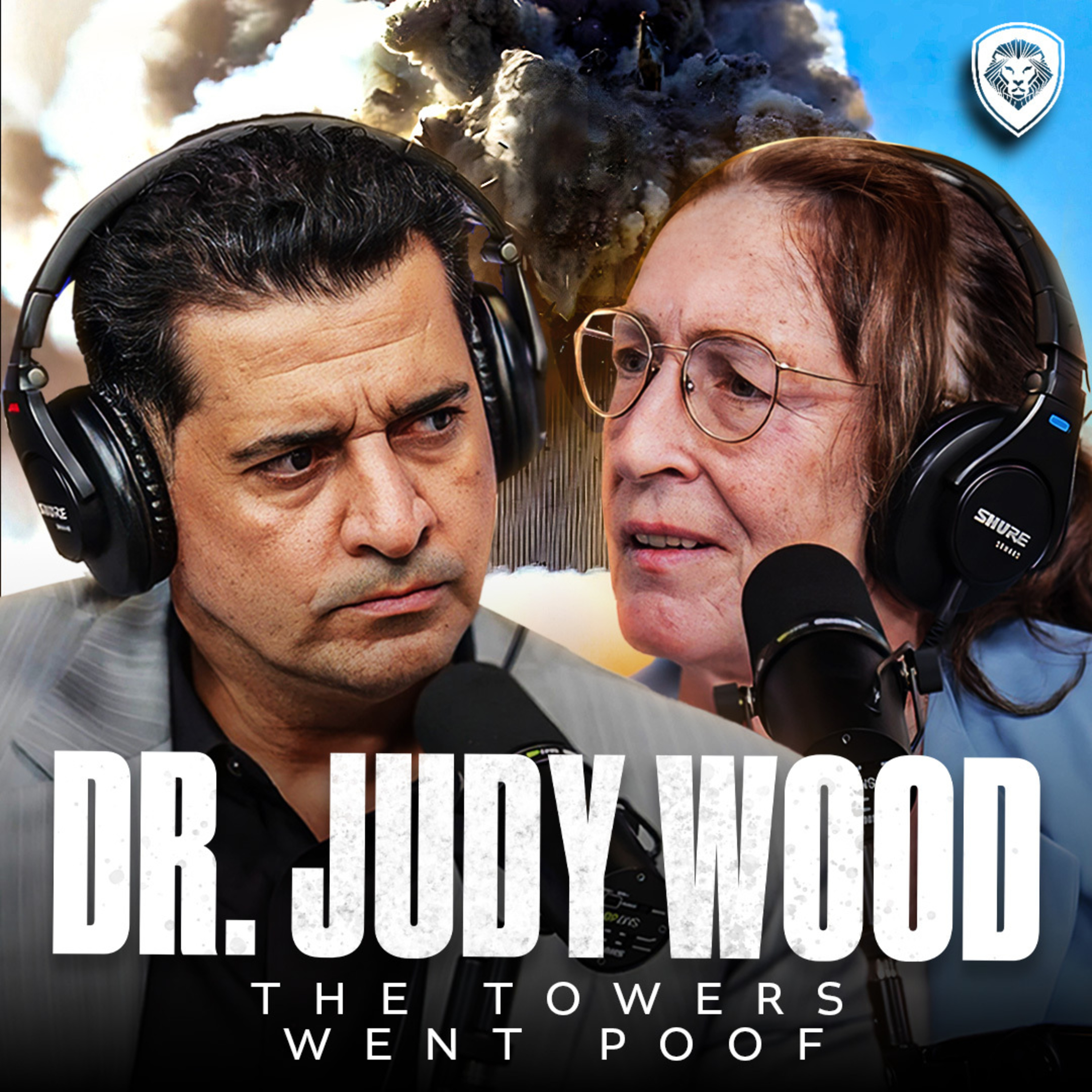
PBD Podcast
“The Towers Went Poof” - Dr. Judy Wood: 9/11, Twin Towers Collapse & Direct Energy Evidence | PBD Podcast | Ep. 651
01:09:49
Loading summary
Transcript431 lines
- [00:01]
A
Wouldn't it be great to manage your portfolio on one platform? Well, now you can trade all in one place on Robinhood. That means you can trade individual stocks and ETFs and also buy and sell crypto using seriously powerful and intuitive tools at one of the lowest costs on average without needing to manage multiple apps. Robinhood makes withdrawing and depositing crypto seamless. Send crypto to your Robinhood account or send crypto from your Robinhood account to other wallets without deposit or withdrawal fees from Robinhood. Trade all in one place. Get started now on Robinhood Trading. Crypto involves significant risk. Crypto trading is offered through an account with Robinhood Crypto llc. Robinhood Crypto is licensed to engage in virtual currency business activity by the New York State Department of Financial Services. Crypto held through Robinhood Crypto is not FDIC insured or SIPC Protected network fees may apply to crypto transfers. Crypto transfers may not be available to all customers. Investing involves risk, including loss of principal securities. Trading is offered through an account with Robinhood Financial LLC member sipc, a registered.
- [00:55]
B
Broker dealer this episode is brought to.
- [00:59]
A
You by State Farm Checking off the boxes on your to do list is a great feeling.
- [01:04]
B
And when it comes to checking off.
- [01:05]
A
Coverage, a State Farm agent can help you choose an option that's right for you. Whether you prefer talking in person on the phone or using the award winning app, it's nice knowing you have help finding coverage that best fits your needs. Like a good neighbor, State Farm is there. The book is titled where did the Towers Go? And it's very thorough, very detailed. What do you think happened to the towers?
- [01:33]
B
This didn't look like a collapse. This doesn't make sense. Am I insane or is the rest of the world insane?
- [01:40]
A
So what do you claim?
- [01:41]
B
Energy was manipulated differently than what we've seen before.
- [01:44]
A
So energy was essentially directed and used as a weapon.
- [01:48]
B
What they were doing is bringing in fresh dirt, putting it on the ground, stirring it around, taking it back out, bringing in more dirt.
- [01:54]
A
So you thinking they brought the dirt and the dirt wasn't there?
- [01:57]
B
I've got pictures of the dirt trucks bringing dirt in.
- [02:00]
A
Maybe they're comfortable with this theory.
- [02:02]
B
It's not a theory. I just talk about evidence.
- [02:05]
A
What would be someone's motive to do what they did to 9 11?
- [02:08]
B
911 was an attack on human consciousness. Since 9 11, people have not been thinking so clearly or so deeply. They hear something. Oh, okay. People don't know what they're looking at. This Bible is there this Bible on.
- [02:21]
A
The rock yeah, the Bible didn't burn right.
- [02:24]
B
And it has formerly liquid metal fused to the page.
- [02:28]
A
So you're wondering how he put it up there.
- [02:30]
B
Oh, I'm not wondering.
- [02:32]
A
You know, how he did it.
- [02:32]
B
Yeah.
- [02:43]
A
Did you ever think you would make it, Adam? What's your point? The future looks bright. My handshake is better than anything I ever saw. It's right here. You are a1of1.
- [03:00]
B
My son's right about. I don't think I've ever said this before.
- [03:08]
A
So I think if you're like me, there's one event that we all remember we were at the last 30 years and that's 9 11. I remember I was at and I was working on Morgan Stanley Dean Witter. I'm on the eighth floor, Morgan Stanley Dean with a Glendale. And then all of a sudden news comes out. Oh my God. What's happened to 9 11? First plane hit, second one we see hit live. And then the rest of his chaos go home. It's insanity. Fast forward. We had 9 11. We celebrated the anniversary of it four days ago. Okay. Which is now 24 years. It feels like it was yesterday. Right. And as you go through this, it never gets old for me to want to keep learning more and more about what happened there. Most important thing is we got 2,753 victims who are no longer with us, of which 1653 have been identified. The other 1100 40% till today, Dr. Judy Wood, and have not been identified. Right. So if that's my son, if it's, that's my family friend, anybody that's emotionally connected to me, I want to find out what happened to them. So now fast forward today. Today we have you on Dr. Judy Wood. Your background, when I look at your background, okay, you got a BS in civil engineering, 1981 structural engineering, masters in engineering mechanics, applied physics. You got a PhD from Virginia Tech, professor, mechanical engineer. And you've done a bunch of different things. You know, your research, all these other things that you done. Forensic study, over 40,000 images on 9 11. What happened to it? And you have your own opinion on what happened there? I've had Richard Gage on in the past before. We've had certain guests on in the past that we got a strike for on YouTube, 9 11, World Trade center to Towers. What happened to it? We got a strike for. But with that being said, it's great to have you on the podcast.
- [04:53]
B
Well, thanks, I'm glad to be here.
- [04:55]
A
Yes. And I think the audience who is also curious with this topic, our audiences generally Very curious. They want to know what you think about it. So let me kind of walk through some of the options and you tell me what you think happened to World Trade Center. Maybe give a little bit about your background. If you don't mind, I would like.
- [05:09]
B
To start out by saying when something like this happens, something this big, there are always three narratives that come out.
- [05:16]
A
Please.
- [05:17]
B
The first one is the official story.
- [05:19]
A
Yep.
- [05:20]
B
Second one is the official conspiracy theory.
- [05:22]
A
Okay.
- [05:22]
B
Or a few alternatives. The third thing is the truth. And the best way to cover it up is to keep people arguing between the first two. Round, round, round, round. So they forget to look at the evidence.
- [05:33]
A
How you think we're a three yet or we're not there yet?
- [05:36]
B
I've only looked at evidence.
- [05:38]
A
You've looked at evidence.
- [05:39]
B
That's all I look at, evidence.
- [05:41]
A
So then let me do this, because for. For all of us that are still trying to find out what happened to this, you know, this is just an event that happened. All of a sudden, boom, let's move on. Don't worry about it. Don't look over there. Right. We've all seen the documentaries, the movies, all of it. So some say planes brought him down. Okay. Some claims are what people say. Number two is controlled demolition thermite. You've heard about this Richard Gibb explosive. Three is missile, military planes. Four is directed energy weapon, which is one of your claims. And I want to hear. I want to hear it. I want to hear what you have to say. Then another one, smaller one, mini nuke hypothesis, inside insurance job and structural weaknesses. What do you think happened to the towers?
- [06:21]
B
Well, if you want to, you know, keep people arguing round, round, round about theories, and if somebody doesn't have a theory, somebody assigns them one. And if you want to bring out the truth and somebody doesn't want to come out, what's the best way to cover up irrefutable evidence?
- [06:39]
A
Okay.
- [06:40]
B
You call it a theory, and then you mutate it some. And then, oh, she talks about space beams or talks about hurricane powering the space beams. They have various things that get propagated around the Internet. Pretty soon people don't read my book and they don't even know what's in it, but they go that route. What. What my book really is designed to do is to train people or show.
- [07:04]
A
The books of the audience. The book is titled where did the Towers Go? Okay. And it's very thorough, very detailed. So, you know, it's empirical evidence, Right? Empirical evidence. So maybe walk through, you know, what you think happened there. Just assume no one's heard you lecture on this before. Walk me through what you believe happened there.
- [07:25]
B
But it is important to realize that people tend to jump on whatever they hear first. They don't know the difference between evidence and conspiracy theory. They don't know how to sort through it. And what I'd often, when I would be teaching experimental work is to stress the students. Collect all the, all the data you can. You don't have to use it all, but you can't use data you don't have. So, okay, let's look at everything and maybe it means something, maybe it doesn't. Just because I have collected doesn't mean it's connected to this, that and the other. And look at phenomenons that you understand and ones you don't. Another way of blinding yourself. Sort of a double blind study just to look at reality rather than immediately jumping to a conclusion. If you saw a hazy environment above the ground, a lot of people call it smoke. Well then you're already assuming fire is the cause, but that's biasing your observation. So let's bring up a new vocabulary. I call it fumes. Could be chemical, fumes could be particulate, who knows? It's not defined. Just like dustification. Let's see. A lot of people say it's evaporation. Well, evaporation implies high heat. We don't have proof of that. Crushing or pulverization, that's a mechanical force. They're making assumptions with those words. So if we start out with a new vocabulary, we can observe the physical phenomena going on. And that really helps to see what is there. One short story I'd like to put out is early on I had an artist write to me so delighted that somebody was talking about what happened. And he explained why he could see it. He said in art class the teacher taught him this discipline of seeing what's there by having like a wooden shelf where you couldn't see your hands and drawing under that wooden shelf, draw what's over there. You can't see your hands, so you have to look at the image. And what distance do I pick up the pencil and put it back down? So you see the relationship of everything in the picture instead of just assuming what's. And I thought that was brilliant. It's a neat discipline. So to be able to do that with making observations. That's why I come up with this vocabulary like Cheetos, tortilla chips. You aren't going to confuse the debris with food, but it can we do this?
- [09:59]
A
I want to organize you is what I want to do. Because when you're a genius like you, your brain is all over the place. My job is to try to deliver your message to a sixth grader where they walk away. And you're speaking right now so far as if you're speaking to your own audience. So don't worry about the. Don't even look at your notes. I want to get the information from you. Don't look at your notes. I want you to be with me. You're speaking to a regular audience that's not out of your community. These are regular people like me. They don't have the degrees. They haven't gone and done the. Applying your expertise in material science, image analysis and infer info metry to a forensic study of over 40,000 images, hundreds of video clips, a large volume of witness testimony, analysis of dust samples, seismic data and the analysis of other environmental evidence painting to the destruction of the World Trade center complex. People haven't done that. The average person hasn't gone and filed a suit against the NIST contractors. Right. Where alleging scientific fraud in the World Trade center investigation. Later on the case was dismissed, but the Second Circuit affirmed and the U.S. supreme Court docket shows your petition which is the number 09/dash548. The average person hasn't gone that far to find the truth. What I want you to do is maybe walk us through simply 911 World Trade center happens. Okay. A person like yourself, where your background is in what you do, what was your initial reaction? When did you become curious to want to investigate your own thing and what were some of the things that happened afterwards?
- [11:28]
B
Okay, thanks. The thing that I'm trying to emphasize is most people when they see something, they may not see what's really there. How do you get yourself to see what?
- [11:38]
A
Can you stay with me and just stay with me? Just do me.
- [11:41]
B
Yeah, that's what this is.
- [11:43]
A
I get that. What I'm saying to you is you're speaking to a regular audience. Dr. Judy, I want you to think I just asked you. 911 happened. 2001, the world says, oh my God. Weapons of mass destruction were attacked. George Bush, we're going. I'm going to join the military. Right.
- [12:02]
B
Okay.
- [12:03]
A
What was the first reaction you had when you saw World Trade center happen? What was your first reaction from your lens? How you view it?
- [12:11]
B
This doesn't make sense. I was in the faculty conference room. They're showing this video on the TV set. I looked at it and went, you know, they called it collapse. And I'm thinking, what does the collapse look like? It was kind of. Kind of like an avalanche. You know, this part gets going, it gets this part going and more and more and more. And pretty soon the whole thing's going. It doesn't go 1, 2, 3, poof. This didn't look like a collapse. It's squirting up and out. Looks more like a drinking fountain. You know, Bubbler and I looked around the faculty conference room and kind of like, you guys aren't buying this. What kind of a wacko did we hire? That was a very weird feeling. Am I insane or is the rest of the world insane?
- [12:51]
A
So this is what you're telling me? This is what all of us saw?
- [12:53]
B
Yep. And you can follow some of those pieces coming down and they dissolve before they hit the ground.
- [13:01]
A
It's pro savings days at Lowe's. Get up to 35% off select major appliances and save an additional $1,000 when you buy four select LG major appliances plus get a free Dewalt 20 volt max 5amp hour battery. When you buy a select Dewalt 20 volt max tool. Get the job done for less. At Lowe's we help you Save. Valid through 926. Selection varies by location while supplies last. See associate or lowe's.com for more details and qualifying items. The Jack Welch Management Institute at Strayer University helps you go from I know the way to I've arrived with our top 10 ranked online MBA.
- [13:39]
B
Gain skills you can learn today and apply tomorrow. Get ready to go from make it happen to made it happen and keep striving. Visit strayer.edu Jack WelchMBA to learn more.
- [13:51]
A
Strayer University is certified to operate in Virginia by Shev in as many campuses, including at 2121 15th Street north in Arlington, Virginia.
- [14:08]
B
The traffic lights you can still see.
- [14:17]
A
Can you go from the beginning, rob? The first 10 seconds. So this is where a Richard Gage and Mitchell many from his community will say this was an explosion thermite. Right. Instead of maybe other claims. You're seeing this. You say, I don't believe what they're saying. What next necessary steps do you take to get to your conclusion?
- [14:46]
B
It's not a collapse. A collapse is a kinetic energy driving it. You have something slamming to the ground. All right, let's go look at the seismic signal. If all that building got cut up by bombs or gravity collapse, it's going to be whacking to the ground. There is no discernible S or P wave in the seismic signal, only a surface wave which is what you get like when you get off your mattress in the morning, it recovers your weight comes back up. There's no impact like hitting a tuning fork or you snap a rubber band. That's what the P wave should be. And it's the first signal to arrive at the seismic station, followed by the S wave. And the delay of those two is how they calculate the distance from the epicenter. I think people have heard that a lot. But there was no S wave or P wave. The signal did not travel through the earth. It was only a surface wave. And the surface wave was not appropriate size. It was very small magnitude. Comparing to the King Dome and some other things. King Dome is like 1/30, that's 3 01-30th. But made equal or more of a seismic signal or the equivalent on the Richter scale, they calculate by the surface wave. So using the surface wave of the towers compared to the surface wave of the Kingdome, the towers were the same or less.
- [16:13]
A
So what does that mean to you?
- [16:16]
B
Something isn't right here? And then later realize if King Kong picked up the towers, chucked them into outer space, it would do the same thing with a surface wave because the weight was coming off the ground and the surface was bouncing back up like you get off your mattress in the morning. So if you had bombs in the building or gravity collapse, whatever that stuff's going to, this stuff's going to hit the pavement. Well, let's go look at what's out there. What? No debris. There's vehicles parked at street level that are there after the towers go poof. See, I don't use the word collapse. That's got message to it. I say go poof. It went away. The towers went poof. A couple hours later. There's a picture I have of an ambulance parked in front of Tower One. It's right at street level. Yeah, there's some stuff here and there, but nothing what you expect. And some people say, well, you know, exploded outward and get shot out. Well, then the adjacent buildings should look kind of machine gun fired. They don't.
- [17:25]
A
You talk about the. Which building is that? You're talking about the Banker Trust building?
- [17:31]
B
All of them around.
- [17:32]
A
Oh, okay.
- [17:33]
B
Yeah. If you get these towers and squash them down like you're stepping on a soda pop can to collapse it. There's. There's stuff inside that would have. Would. Or if you have explosions inside, they're launching stuff outward. Because if it's not there when the towers are gone, where'd it go to? Dust almost all the building turned to dust.
- [17:52]
A
And that's the phrase you use is dustification.
- [17:54]
B
Yep, we need a word for that.
- [17:56]
A
Okay, so what causes the event of dustification to happen?
- [18:01]
B
Well, you know, you look at lots of different pieces of evidence, but you start realizing that, that the pieces broke down more and more. There's a picture of a guy coming home. It's between the. The south tower was the first to go poof, then the north tower went poof. Halfway between those two at 10:15, you can see the clock behind the guy, guys walking down the street, dust all over the place. Perfectly clear from his knees up. But from his knees down is this haze. That's. How could that fine of dust settled out of the air in that amount of time. And I realized, and it's consistent with other images, that coarse dust landed and then turned into fine dust.
- [18:44]
A
Okay.
- [18:45]
B
And then, you know, stayed, you know, aloft for a long period of time. So there's some kind of mechanism that's causing the material to come apart more and more and more down the atomic. Down to the atomic level.
- [18:58]
A
What causes that to happen?
- [19:01]
B
Well, let's first look at just the evidence. It's hard to jump from there to the conclusion. And you start looking at more and more things. And what I have in here is evidence, direct evidence and parallel evidence. Parallel evidence is like a tornado. Let's look at what tornadoes do. My favorite picture is this one or video is this tornado in Texas about 10 years ago. The roof has gone off his house, but the top floor, the computer paper is neatly stacked up, untouched big screen television. How does that happen? It wasn't wind that did that and other parts you've seen tornadoes. Something totally is destroyed. There's some kind of a mechanism that, a field effect that causes this. You can't tell me when did that.
- [19:55]
A
Okay, so let's do this. When did you write this book? 15 years ago. Right. 2010. I want to say.
- [20:02]
B
Well before actually. That contains the evidence that was submitted in the federal keytam case. But I put it in a more organized fashion.
- [20:09]
A
Okay, but when was this book published? 2010.
- [20:12]
B
Yeah.
- [20:13]
A
Okay, so that's 15 years ago. Right. And when did you start researching what happened to 9, 11. When did you fully take a deep dive saying, I want to find out what happened?
- [20:22]
B
Deep dive. Well, I thought at first that the grownups were going to take care of it. I was naive. And then there's also the involvement of the 2000 election. They said they were going to fix it next time. They couldn't fix this one. And in the 2004 election, it was even worse. I went, well, the grownups didn't fix that. They're not going to fix this 911 problem. Somebody's got to do it.
- [20:44]
A
So when you start four or four.
- [20:46]
B
Yeah, yeah.
- [20:47]
A
Okay, so let's say 2004. 2000, if I was to get obsessed and my background, if I am a, you know, bachelor's in civil engineering and master's in engineering Mechanics, Applied Physics, Ph.D. in Material Engineering science. This is your world, right? And that's in 1992 when you got your PhD, which is nine years before 9 11. So it's peak of the peak of the peak, right? Things that you've done. And all of a sudden 911 happens till 04, nothing takes place. Election, you know, Al Gore, Bush, all right, they're not going to touch this either. Let me go investigate this. You do six years, you write this book, then you put this in the world. And I'm assuming probably hundreds of thousands of copies have been sold. People have read this all over the world, right? When you write a book like this, you're going to get feedback from others who are going to question you. That's not true. This is this. People from the FBI are going to reach you. Insider is going to reach you. Other engineers are going to reach out to you. People that were internally who lost the family or relative. I'm assuming you've gotten thousands and thousands of emails over the years, right. Of people that want to reach out to you. Then this becomes a question from 2010 that you wrote it till today. Okay, These are your claims. Where did the towers go? Poof. Justification. Have you made any progress on what you believe actually caused the 911 events? The world Trade center towers going down? Have you come to a conclusion?
- [22:11]
B
Well, it was energy was. Was instructed to do something differently than we've normally seen before. And.
- [22:20]
A
Energy was essentially directed and used as a weapon.
- [22:23]
B
Well, I won't get into exactly the motives behind it, but. But energy was manipulated differently than what we've seen before. Like nobody's really taken apart a tornado and seeing exactly what that does. Let's say somebody weaponized a tornado. There's just, you know, looking at the mechanism rather than, you know, the device. I don't get into the serial number of the parts that went into it or what the operator had for breakfast or details like that. But physically, what happened. There's. There's another technology out there that people aren't familiar with and why the subtitle of my book is what it is is let's consider Hiroshima, 8-6-1945. The evidence of what happened that day was evidence of a technology that could be used for nuclear power plants. So let's look at the silver lining in the cloud and let's use it for good. Making nuclear power plants. That is not to say nuclear power plants destroyed Hiroshima. What happened on 911 is evidence of a technology that could be used for free energy. What this thing was capable of is amazing, truly amazing. Imagine turning this 500,000 ton building to dust in midair, most of it to dust in midair. Having it all come apart, all the molecular bonds and atomic bonds coming apart. That's pretty impressive. Like okay, what if somebody goes oops and does it the wrong way? There goes the planet. And actually as it was there was evidence that this process continued. And Bankers Trust is an example. They repaired it but it was infected and kept going this process. So they end up taking it apart four years later.
- [24:10]
A
So I know you're not comfortable using the weapon using the phrase directed energy weapons weapon. But let's just use directed energy. Let's set aside the word weapon to use directed energy. Say I'm somebody that has unlimited resources, I have money and I wanted to be able to use directed energy to make something dustify. Let's just use that as a word. How much money would I need to have to be able to use the technology to do so?
- [24:39]
B
Well, go visit John Hutchison, he can show you. John Hutchison did it as just a fun thing to do.
- [24:46]
A
That's right. And I'm aware of that.
- [24:48]
B
Yeah. Actually when I was looking at all the evidence of all these different quirks that were going on, I happened upon this person's Facebook and I saw these pictures, went oh my gosh, that's the same type of thing that happened on 9 11. So then I got into it more and went and you know, visited them. And how he does it is create a static field. He used to use a Tesla coil but then or Van de Graaff generator. Now I think he used a Tesla coil or the other way around and then interfere radio frequency signals and it's a square wave or a sinusoidal wave. The wave shape is important and interfering those in a particular place weird things happen. Now he isn't real, I guess. Meticulous. It's like let's have fun, let's turn this thing on. But weird things happen. You get levitation or you get disruption. In other words the material would levitate or it would come apart and you see on 9, 11. Upside down cars. They aren't toasted. The upright ones are toasted. It's like.
- [25:58]
A
What do you mean, upside down cars?
- [25:59]
B
Cars parked with the wheels in the air. Those cars that are parked, you know, they're on the roof with the wheels in the air.
- [26:06]
A
You don't think that can happen by things dropping and hitting it and causing it to flip and ends up being on the back a block away. It's a block. I can't see that happen a block away. That. That there is when. When you have. Because there's a couple things I did. I. The Hutchinson fan, when he did this in 1979. This is the levitation of objects. Metal bending or fracturing. And there's even that example of that one.
- [26:31]
B
Cast iron.
- [26:32]
A
Right. That just kind of starts. Rob, I don't know if you have that clip or not with cast iron. Just kind of starts bending in and all of a sudden it claps. Right. If you want to pull that out.
- [26:39]
B
And it was cold to the touch. In other words, the energy came out of the material. It was cold to the touch.
- [26:44]
A
Afterwards. It was cold to the touch. Interesting. Brandon has that clip and friend and you want to. That's one right there. Third one, Rob. Yeah, that's the one right there. So this is, if you want to maybe tell the audience what they're looking at right now, this is an example.
- [27:00]
B
Of the field effects. You interfere different fields. Fields of static field with a radio frequency signal. And this happens.
- [27:13]
A
And this is iron.
- [27:15]
B
Yeah.
- [27:16]
A
And Rob, if you can, because this is going to take a while to go through it. If you want to fast forward a.
- [27:20]
B
Little bit and notice the fumes coming out of it.
- [27:23]
A
Right there. Stop it. Yeah, right there.
- [27:25]
B
You see how fumes are puffing out of the top of it.
- [27:30]
A
And then boom. Okay. Well, when you see that, one would say, that's not what happened to World Trade Center. World Trade center just flat out came down.
- [27:38]
B
Well, this is a small amount, I get that.
- [27:42]
A
But look what happens to it. If we're talking about, you know, directed.
- [27:46]
B
It's crumbled a little bit afterwards, but it isn't completely. Like I said, he would experiment with trying this and that and the other, and sometimes he would get levitation. One thing that was interesting, he has a toy boat on some water and he has his gizmo on. The water's jumping up and you can tell when he turns the gizmo off. And then the boat appears to catch fire right after he turns the power off.
- [28:10]
A
And he doesn't know why?
- [28:16]
B
Knowing why is the next step. But there's people that were experimenting with lifters and when they turn the gizmo off, they catch fire.
- [28:25]
A
Okay.
- [28:25]
B
So it's like something that builds up.
- [28:27]
A
So the one question led to this. The first question I ask you is if I had unlimited resources, how much would it take for me to be able to do this? Right? And you said, ask Hutchinson. Okay with what he did.
- [28:38]
B
No, go visit. Go visit him.
- [28:39]
A
Go visit Hutchinson.
- [28:40]
B
You go visit him and then, you know, that's free.
- [28:42]
A
There's a difference between doing to something this big versus doing it to a World Trade Center.
- [28:48]
B
Yeah.
- [28:48]
A
Causing him to come down and doing it on the international scale while everybody's not working home, watching it live. If you haven't tested this before and you screwed up, the world's gonna be like, who was behind this? Right. So if you're gonna test directed energy, you would have had to test it 10, 20 times on smaller buildings to make sure you're ready, that you do it on the national scale with all the cbs, abc, NBC, everybody's watching it. You don't look like a clown. So to me, in order to test it at that level, don't you have to have tested it before in smaller buildings?
- [29:27]
B
And there are very suspicious things that have happened in time before that. But the important thing again to remember is the average person doesn't know what they're looking at. And that's the impressive thing about this trick, was that the entire planet watched this happened, but they don't know what they're looking at. So they can be told something else and they'll just buy it. They don't understand what this is.
- [29:52]
A
No, I know that, but what I'm saying is if I'm researching this, like here's what I did, I went online and I said, okay, have we had any. And by the way, there's a follow up question to this. I went online and said, have we had any directed energy weapons being used in the history of mankind? Rob, if you want to ask this question on ChatGPT, see what comes up. There was even one as recent as Israel that did it this year in 2025 with a drone. But if you look at the three, three things comes up. Laser weapon systems aboard USS Ponce, the Navy that we had in 2014 in the Persian Gulf. And this system engaged in test targets including UAV drones and small boats, and was authorized for self defense use.
- [30:28]
B
Well, I've only read about slingshots, BB guns and bow and arrow. So it's got to be one of those, you know, in other words, people only look within their repertoire, they don't observe. And if they're told that it hasn't been used before, then okay, it has been.
- [30:42]
A
Yeah, but that's not what I'm saying. What I'm saying is I went and looked at to see what's being used. So that's one of them. The other one was the Turkey's Alka system in Libya in 2019, which is six years ago.
- [30:51]
B
Let me disclose to you that I contacted the Directed Energy Directorate with Turkey. No, in the US and, and showing this evidence and saying somebody in your outfit doing this. Oh, we don't have no idea what that is and we wouldn't be able to explain it. Of course that's what they're going to say publicly. But they didn't say you're wacko for suggesting that.
- [31:14]
A
I don't think the average person would call you wacko though. I don't think the average person would call wacko. And the last one I pulled up is the, the one in Turkey was a hybrid electromagnetic laser system that they claim to have not shown have shot down a Chinese made Wing Loong UAV in Mistrato, Libya.
- [31:32]
B
Did you look at the Oklahoma City? I did look at the roof. It's got cylindrical holes in it. How did that happen? With a, with a spherical bomb?
- [31:42]
A
So how do you think it happened?
- [31:44]
B
I look at, just look at the pattern of it. A cylindrical.
- [31:46]
A
Is that what you're talking about there?
- [31:49]
B
If you look at the image from the roof.
- [31:53]
A
Can you do roof image Rob, Oklahoma bomb and just go roof image?
- [31:57]
B
It's got like scalloped cylindrical holes that actually when I first saw Building 6 at the World Trade Center, I thought that was the Oklahoma City building. And I got the two confused because they look very similar. There's just one story difference in height, otherwise they look very similar.
- [32:15]
A
So if you go, what is that a good view for you right there?
- [32:20]
B
It's not as good as some of the ones I had on my website.
- [32:24]
A
Okay. Is it still on your website?
- [32:28]
B
I wouldn't be able to find it because it's, you know, years ago it was stashed in there. But you look at it and it's scallop shaped cutouts in the roof.
- [32:35]
A
So what are you claiming when you see that? What are you speculating?
- [32:39]
B
But I don't buy the story that a bomb parked next to it on the street, which would be a spherical shape wave, is going to make cylindrical cutouts in the building.
- [32:52]
A
Okay.
- [32:53]
B
That doesn't make sense. Also, there are toasted cars in the block away from Oklahoma City. Cars just appear to go into spontaneous combustion. That's after it's been smoothed out.
- [33:05]
A
Okay, so you're saying that. What I'm trying to do is. I'm trying to say, okay, in order for this directed energy weapon allegedly to have been used on the World Trade center, that had to have been tested before. For example, what do you think is more powerful? This or a nuclear bomb?
- [33:26]
B
This.
- [33:27]
A
Tell me why he destroyed the entire planet with this.
- [33:31]
B
Yeah, it might not be able to stop it. And that's another thing that scares me. The first time the nuclear bomb was tested, the scientists did not know if it was self quenching. They were willing to try it because if it kept going, there goes the planet. They did not know if it was self quenching. In other words, they're willing to experiment on the planet and that's why this is so scary. And what happened with Bankers Trust, that continued to disintegrate as time went on and they finally unbuilt it. They took it down piece by piece.
- [34:06]
A
Okay, but they did test a nuclear weapon.
- [34:09]
B
Right.
- [34:10]
A
There was an original test that took place that the world knew about, that people in the military knew about. Right. If.
- [34:20]
B
Do you know about every top secret project?
- [34:23]
A
I don't know every top secret project, but I do know if the government at the highest level was trying to use directed energy weapon to bring down the World Trade center, they would have had to test it somewhere before to not look like idiots in the global, you know, marketplace to see. So if that's the case where let's just say, let's put it and say it happened, great. I want to know how did you do it to get to a point where you're comfortable with a million cameras on you, that you're going to nail it and convince the world that no, it was a plane that brought it in.
- [34:56]
B
It's not my crime. I didn't, I didn't plan it.
- [34:58]
A
What does that mean?
- [34:59]
B
I didn't plan 911. I didn't.
- [35:02]
A
I know, but you wrote about it. You're the one that wrote a book.
- [35:04]
B
Called what did the Time Writing what the Evidence Shows.
- [35:07]
A
Okay, so I'm asking you a question because you've spent more time on this than me. What?
- [35:10]
B
I mean, I'm talking about the physical phenomenon, not who did what to whom, when.
- [35:13]
A
No, but that would be what I would go to investigate. I would want to know if this happened. If we have, and by the way I want to consider it as. Because the way my mind works is if a crime is done one by one by one, my job is to eliminate. If I got seven people here that are claiming one of these seven killed that family one by one by one, I want to go through all of them. I don't want to leave any one of them to chance. Okay? Cuz then I'm going to be like unusual suspect Kaiser Sosa, and I don't want to be the guy that he walks up.
- [35:45]
B
Well, see, I don't know the serial number of the product. I don't think it even got registered.
- [35:49]
A
But you're doing that again. I'm not asking about the serial number, Dr. Judy, respectfully, what I'm asking you is for the government to be able to launch something like this on the global scale and fool everybody. They have had to have tested this before.
- [36:02]
B
But you're acting like you need a blueprint of the design of something. I'm saying what on this level of what got done, it couldn't have been kinetic energy, it couldn't have been thermal energy. You know, there were 14 people that walked out of Stairway B after the building went away.
- [36:18]
A
I do know that.
- [36:19]
B
They weren't crushed, they weren't burned up. And there were two people above that that even survived just riding the wave down. And one guy went home at night. You know, his wife was shocked.
- [36:28]
A
So what do you think?
- [36:29]
B
Why do you think her husband died there? That there was something that did not crush people, okay. It didn't cook them to death. So that eliminates about every weapon that's known.
- [36:40]
A
Isn't there a possibility that some areas of it, like, you know, when I was in Iran and we would have things that would happen or the bombing, they would say, go hide under the stairs. It's the safest place you could be. Right? Sometimes you could get lucky. Sometimes you could get very lucky and you could make it. Things do happen. Plane crashes happen. 99 people die and one person makes it. And you spend the rest of your life telling that story. Titanic, there was a lot of survivors. How many people died? A lot of people died. But there was a few survivors that they made movies about it, right, that we read about.
- [37:10]
B
Pascal Bazeli survived when the building around him didn't. He was, he was building around him was gone. They call him the surfer. That he came down without the building around him. But you know, if it's not a kinetic energy weapon and not a thermal energy weapon, it was something that isn't in the Whatever you call it. Multiple choice menu.
- [37:33]
A
Nowadays, more than ever, the brand you wear reflects and represent who you are. So for us, if you wear a Future looks bright hat or a valuetainment gear, you're telling the world. I'm optimistic, I, I'm excited about what's going to be happening. But you're a free thinker, you question things, you like, debate. And by the way, last year, 120,000 people got a piece of Future Looks Bright geared with valuetainment. We have so many new things. The cufflinks are here. New Future Looks Bright. This is my favorite, the green one. Just yesterday, somebody placed an order for a hundred of these. If you watch the PBD podcast, you got a bunch to choose from. White ones, black ones. If you, if you smoke cigars and you come to our cigar lounge, we have this high quality lighter cutter and a holder for the cigars. We got sweaters with the valuetainment logo on it, we got mugs, we got a bunch of different things. But if you believe the future looks bright, if you follow our content and what we represent with valuetainment with, with PVD podcast, go to vtmerch.com and by the way, if you order right now, there's going to be a special VT gift insight just for you. So again, go to vtmerch.com place your order, tell the world that you believe the future looks bright. You use the phrase dustification, right? That things just disappear, they turn into dust?
- [38:53]
B
Well, they didn't disappear. They, they came apart into dust.
- [38:58]
A
But what does that mean though, if they, if they, if they turn into.
- [39:00]
B
Dust, the material came apart and is.
- [39:04]
A
The, is the physical material still around or. It's, Most of it is no longer around.
- [39:10]
B
Well, it's not around there, you know, kind of gone with the wind. It blew down the Eastern sea.
- [39:14]
A
Okay, so if that's the case, how long did it take to clean up all the mess that was left from the 911 from, from the World Trade center coming?
- [39:21]
B
I mean, the dust.
- [39:23]
A
Well, if you're, if it's dust, it would take a week or two to clean up.
- [39:28]
B
Oh no, it's down the Eastern seaboard. It's down into Delaware. It was getting deposited, the dust.
- [39:35]
A
Yes, I know, but were there physical items that they had to clean up?
- [39:39]
B
There weren't big items.
- [39:41]
A
So then why did it take 40,000 people, construction workers, firefighters, police, engineers, and 1.8 million tons of debris and rubble.
- [39:51]
B
And steel to remove from what I saw, and I actually went there and saw it, the mechanism or whatever the effect it got initiated and it wasn't self quenching. It kept going and going, going. When what they were doing is bringing in fresh dirt, putting it down the ground, stirring it around, taking it back out, bringing in more dirt.
- [40:11]
A
So you're thinking they brought the dirt and the dirt wasn't there.
- [40:14]
B
I've got pictures of the dirt trucks bringing dirt in.
- [40:19]
A
Yeah, that can be manipulated because that could be them taking the dirt out and it looks like they're bringing it in. That could be a way for someone. Again, I am going to play the. To be super speculative of this because I think that's fair to the audience for me to ask some of these questions to get to the bottom of it. Because if it did happen, man, we got some work to do to go find out what happened with this thing here.
- [40:46]
B
I was there physically in person visiting it several years later. And they have those gates where they let the trucks in and out and they don't want anybody around there to be able to take pictures inside. And I see that something's going to happen. Get the camera ready. The gate opens up. The guy drives out, drives up Liberty street just past the 10:10 firehouse and stops. He slides out the passenger side. Another driver hops in the driver's side and continues on. In other words, the guy who takes him in and out of the site was not the one that drove it off someplace. Thought that was pretty interesting.
- [41:27]
A
Okay.
- [41:28]
B
But there's a whole lot of just information like that. But what becomes important is physically what's going on and be able to see. You don't need to have the answer to see that something weird is going on with the material. The material is constantly breaking down.
- [41:41]
A
I think something weird happened. I just don't know what the weird thing is. I do think something weird happened on 9 11. I don't trust that. Just a building flew in and then boom, it goes down. Because. Because case study doesn't give the individuals who believe in that credibility. It doesn't?
- [41:57]
B
Yeah. Airplanes. People like to argue about airplanes. I think that was the emotional attachment, the gay people. To give them a reason for what.
- [42:05]
A
Happened in buildings to gay people?
- [42:07]
B
No, no. To get people to get them to attach to it, you know, to their emotions.
- [42:14]
A
I thought you were going to drop a new. That's just like a gay airline or something. No, no, I don't want to start rumors now. So you're saying to gay get people, not gay people.
- [42:21]
B
Right.
- [42:21]
A
To get people. My apologies.
- [42:22]
B
Yeah, to get people to. Yeah, I can see how it Sounds like that. I'll slow down, I'll slow down to get people an answer or something they can attach to. Oh, that's what they need, a reason why the buildings went poof. Oh, I saw that airplane. So therefore that did it. And some people argue for airplanes, some people argue against airplanes. And what I like to say is airplanes can't turn buildings to dust in midair.
- [42:46]
A
Yeah, I don't believe that.
- [42:47]
B
Real airplanes can't and neither can fake airplanes. So there's no point in talking about the airplane issue because that's just a distraction away from what is actually happening.
- [42:55]
A
You know how I, in the craziest way, how I process this. Why did they take the Richard Gage interview down? Why? I don't know. And by the way, I pushed them. Why did they take it down? I don't know. You know, why? If this stays up, maybe they're comfortable with this theory.
- [43:15]
B
It's not a theory. I just talk about evidence. That's why I can't give you the serial numbers of it.
- [43:20]
A
Yeah, yeah. Okay. So did you ever investigate to see if there was any other, any of these directed energy experiments taking place at mass level?
- [43:30]
B
I didn't need to because of something happened over there. That doesn't conclude what happened here. I'm looking at what happened here.
- [43:36]
A
Yeah, but if you want to buy this house, the real estate agents going to look at the surrounding houses to get a comp to say how much this house is worth. It's called comps. So if I got a case like this, they'll say, you know, this reminds me of the Roe v. Wade. This reminds me of such and such case. This reminds me of such and such case. Why do they do that?
- [43:54]
B
This is a comparison. This is a physical phenomenon.
- [43:57]
A
So this has never happened before.
- [44:01]
B
Maybe it has. And there's this, like I say, there's other places I could question, but there's so much information about this one. I know what happened with this one. You know, there's characteristics that you start, you know, seeing that you would recognize again, like if you understand what happened at the World Trade center and then you look at the Pentagon, you go, oh, I've seen that before. I didn't need to investigate the Pentagon so much. But there it's, there's not as much evidence, I mean, information available because it's, you know, secure location. But with the World Trade center, because they had this public document, the, you know, this report and so forth, it had to be public, the information.
- [44:40]
A
So I just went online and I typed what Is that Rob?
- [44:43]
B
That's the Pentagon on 911.
- [44:44]
A
Oh, okay. Got it.
- [44:47]
B
You know, it's. It has the questions of its own, but I just. I didn't need to get into other. That's it.
- [44:52]
A
Let's. Let's stay on 9 11. So when I look at. So I typed in. How many movies have used directed energy weapons before in the past? Just movies. Because sometimes the way I see movies is movies are, you know, 30 years before. Right. Typically before something happens, they'll drop it in movies and they'll get us ready to say, this is coming soon. Relax, it's going to be okay. Oh, shit. 30 years later, we're going to make robots. You're going to own them 10 to $30,000. You're going to be fine. All right, I got 72 robots as employees now. Hey, Johnny. Hi, Rob. How are you? What's your day looking like? You know, and then we're just. Yeah, they told us some movies. Irobots, this is coming. So it's finally here.
- [45:28]
B
So there's actually one that I. Somebody sent me a link to where. I don't know what it was called. Not Pink Panther, but something like that. Where, where they used gizmos that dustified a building.
- [45:40]
A
Oh, trust me, I've seen them in movies. So. So there you go. So you have one with Star wars iconic blaster. Death Star super laser. Okay. Kind of cool. Star Trek has phrases. Phasers as DWs. Okay. The day Earth Stood Still. Klatuz robot Gord uses a disintegration beam. War of the Worlds. There's a new one as well that they did 20 years ago, but. Martian heat race devastates cities. Fantastic Voyage 66 laser scalpel used inside a human body. Flash Gordon and Tron use beams as weapons. Ghostbusters proton packs as quasi dw. Then you got Independence Day. Alien ships fire massive city destroying beams. Starship troopers, plasma weapons and interstellar combat. Fifth Element energy rifles and alien tech. I mean, you can see in movies these things have been used. And if they've been used in movies, I believe this exists. I don't think this is like something that's out of the ordinary. So I'm not speculating that they exist.
- [46:47]
B
Would you believe it's top secret?
- [46:50]
A
Could be. I do.
- [46:52]
B
The response I got back from the directed energy director, it kind of was hinting that way, like, we're not going to talk about it. It's just like, I don't know, we don't do. We don't do that.
- [47:01]
A
I don't know about that? I don't know about that. Because if they can't disclose it, I know they can't disclose it. But to me, if there's eight and a half months it took to clean up 1.8 million tons of rubble and steel and they needed 40,000 workers to clean it up, where is the dustification?
- [47:21]
B
So you're assuming it's a normal site. You're assuming it's a normal. A normal site with normal.
- [47:27]
A
What's an abnormal site?
- [47:29]
B
If people spent that long cleaning it up, what are they cleaning up? I've got photos from the afternoon point.
- [47:38]
A
8 million tons of rubble and steel and.
- [47:40]
B
No, they calculate what went into building the buildings. That's the ingredients of what went into the buildings. So they say, well, we hauled out that much debris, I wouldn't see a receipt for it. There isn't any. And I saw pictures on 911 on West street there. Thus that tall. There's no junk. You could essentially drive your vehicle down.
- [48:05]
A
So you don't believe there was eight and a half months of 40,000 people volunteering to clean up all the.
- [48:10]
B
Oh, they were doing stuff. Yeah, they were like the bucket brigade and whatnot. But it wasn't material, that much material being taken out. There's a lot of dirt going out.
- [48:20]
A
You think it was just dirt?
- [48:22]
B
No.
- [48:22]
A
Can you find a clip? I'm actually now. Now you got me curious. Clips of workers cleaning up World Trade Center. Do you have any clips of it, of them doing that?
- [48:32]
B
There was bucket brigades taking stuff out carefully in case there was a body in there. And let's see if I can find.
- [48:41]
A
If you type in like 911 cleanup. Is there 911 click. I have. Here's one I just found. Rob, is that. Okay, so that's 911 cleanup. What is that? That's not dust, if you want to look at that, Dr. June.
- [48:52]
B
Yeah. That's not 110 stories worth of material.
- [48:57]
A
So what do you think it is?
- [49:01]
B
Think of a game of pickup sticks where you have a pile there and if they're really standing up and you try to make them look like they're.
- [49:09]
A
More, but so you think they're manipulating.
- [49:13]
B
Okay, this picture is right after 9 11.
- [49:15]
A
Let me see it.
- [49:16]
B
That one over there. And that's ground level. That's the plaza in that globe that was in the middle of the plaza. There's some holes in the ground, but that's the patio level of the plaza.
- [49:30]
A
Okay, so what was the temperature when all this stuff was coming down?
- [49:33]
B
Actually, folks who were running through it Said that the dust was actually cooler than ambient temperature. It burned like acid burns, but it was cooler than ambient temperature, which I thought was kind of weird. Hey, business owners, we know you know the importance of maximizing every dollar. With the Delta SkyMiles Reserve business American.
- [49:52]
A
Express card, you can make your expenses.
- [49:54]
B
Work just, just as hard as you. From afternoon coffee runs to stocking office supplies and even team dinners, you can earn miles on all your business expenses.
- [50:02]
A
Plus, you can earn 125,000 bonus miles.
- [50:05]
B
For a limited time through October 29th. The Delta SkyMiles Reserve business card.
- [50:09]
A
If you travel, you know, minimum spending requirements and terms apply. Offer ends October 29, 2025. Mint is still $15 a month for premium wireless. And if you haven't made the switch yet, here are 15 reasons why you should.
- [50:22]
B
One, it's $15 a month.
- [50:25]
A
Two, seriously, it's $15 a month. Three, no big contracts. Four, I use it. Five, my mom uses it. Are you. Are you playing me off? That's what's happening, right? Okay, give it a try. @mintmobile.com Switch upfront payment of $45 for three month plan.
- [50:40]
B
$15 per month equivalent required.
- [50:41]
A
New customer offer first three months only. Then full price plan options available, taxes and fees extra. See mintmobile.com okay, so a lot of.
- [50:51]
B
Strange and, and this is a good one. Where did building four go? That's one of my favorite ones. Eight wall. It's gone. And the, the level right underneath it where the mall was is still intact. Roadrunner survived. There's a Warner Brothers store there with Roadrunner in it. It didn't get crushed.
- [51:12]
A
I want to know who built that structure. Right. That's who I want to hire.
- [51:16]
B
Right, Right.
- [51:17]
A
So what's this, Rob? What do you have here? That's Roadrunner.
- [51:20]
B
Well, that's the, the remaining wing of the north part of building four. Here's. Here's building four here. And where my finger shows, that's what you're seeing is just that block above that guy. Yep. That's just, that's just this part, but this whole part went missing.
- [51:39]
A
Okay.
- [51:39]
B
The big, the large part. And that's what you see here where I dashed it in.
- [51:45]
A
What things could make those things go missing?
- [51:48]
B
A tornado.
- [51:49]
A
A tornado.
- [51:50]
B
Yeah. Another thing I like to point out is static electricity was discovered in the year 600 B.C. so we're told in our books. But do you believe it took them 2400 more years to discover electricity? How many times was it discovered and undiscovered and whatnot? And still we don't really learn about what tornadoes are as a general public, but obviously it isn't just like a vacuum cleaner. There's a different kind of process, electromagnetic process going on.
- [52:24]
A
Okay, well, let me ask you. Before we came up, you said something about flat earth. What is your thought on flat earth?
- [52:30]
B
I think the northern royal albatross had it figured out before humans were even around.
- [52:38]
A
Which is what? What did he figure out?
- [52:41]
B
That you fly east, you keep flying east and you get back home, you leave home flying east. And when they have their nests, the southern part of New Zealand and also off the coast of the Chatham Islands, in that little island. And when the babies fledge, they fly east and they hang out off the coast of Chile for about five years till they grow up. Then they fly east again and keep going until they get back home. And they know exactly where their nest was that they came from.
- [53:09]
A
So what does that mean?
- [53:12]
B
They don't turn around and go back.
- [53:14]
A
So it's not flat.
- [53:15]
B
Right.
- [53:15]
A
Okay, that's good. So you don't believe birds, flat.
- [53:17]
B
Right. They could do laps around there.
- [53:18]
A
That's great. Yeah, we like that. We like the fact that we do laps.
- [53:21]
B
There was one last year, baby, that didn't stop very long in South America. After a month he kept going and he made it as far as Tasmania, almost to New Zealand when his thing fell off. They have a GPS gizmo that's with a solar panel on it. They glue it to the feathers, but when they molt, it comes off. They have a longer term one that they put around their ankles. But this one was cool, like, go boy, go.
- [53:46]
A
You literally track where he's at.
- [53:48]
B
Yeah, he almost made a complete lap around the planet.
- [53:51]
A
Wow.
- [53:52]
B
They can go across the Pacific in about one or two weeks.
- [53:58]
A
What a great time. The frequent flyer miles and just kind of traveling and relaxing.
- [54:02]
B
They don't flap their wings? No, they sleep. When they leave their nest, they don't touch solid ground for another five years. They may land on the water, but they don't land on solid ground.
- [54:14]
A
So they sleep while flying?
- [54:16]
B
Yeah, they don't flap, they soar.
- [54:20]
A
Wow. Most people can't fly and have a hard time sleeping. These guys sleep while they're flying. That's some major respect for them to be able to do something like that. So what are we gonna do with this? Okay, if you wanted to say motivation, I'm actually curious where you're gonna go with this. What would be someone's motive to do what they did to 9 11? Who would be the People that would want to bring down the World Trade Center.
- [54:47]
B
Well, I'm not one of them, but I can look at what's happened since then, see the effects. One thing that really bugged me after 911 was we had all these flying spy gizmos being put out and spy cameras everywhere. People wouldn't have put up with that about 9 11. But the biggest thing that I would like the viewer to understand is that 911 was an attack on human consciousness. Since 9 11, people have not been thinking so clearly or so deeply. They just kind of go along, nodding, nodding along, and they hear something. Oh, okay. And we need to get back to that. It's like a degradation of our culture. And that's sort of one of the big aims of my book is going through this evidence and teaching people to observe what they're seeing, not what they're being told to see.
- [55:39]
A
Wow.
- [55:40]
B
But it's a big deal. I've got this cute story probably heard about Jack Willems. The very first jet airplane P59 was flown by Jack Willems when they had it on the ground. Jack Willems, Willems, W O L A M S. When they had on the ground, to hide this top secret technology, they put a fake propeller on it. And the propeller kind of looked like some boards off of a, you know, some planks off of a wooden fence. And then, you know, they take it off and they fly it away. And when my dad read my book, he got to that, he was In World War II, he went, oh, yeah, I thought those were weird, but I didn't think any more of it. People don't know what they're looking at. And then apparently Jack Willems was at the local pub drinking a bunch and said to the P39 pilots, I have an airplane that doesn't have propellers on it. And then he went, oops. How do you back that up? Well, next day he rented a gorilla suit, derby hat, cigar out of his mouth, and flew up next to the P39 pilots. Then that night at the watering hole, you see that escape gorilla from the zoo? I see nothing. I know nothing. Who'd want to admit it? Yeah, but people don't see what's really there. They see what they think they're supposed to see.
- [57:07]
A
Yeah. By the way, when you got your degree and you Finish up your PhD, what did you do for work from 92 till 01? What did you do professionally?
- [57:17]
B
Well, there's more of a story behind that. I was, what do you call it? A postdoc student, for some of That I got injured, as in killed and then come back from. From that. A whole lot of stuff. You know, I've had a full life.
- [57:33]
A
Good for you.
- [57:34]
B
And that's another reason why I felt like I need to go into 9, 11.
- [57:38]
A
Well, what did you do full time? What was your full time job? Were you a professor? Did you work for a company as a mechanical engineer?
- [57:44]
B
I mainly when I came back from that, I was doing a postdoc and then I became a professor.
- [57:52]
A
Okay, did you ever. Did you ever work on a job, like as a mechanical engineer? Like, did you work?
- [57:57]
B
I wasn't a mechanical engineer. Engineering mechan is a little bit different.
- [58:00]
A
Okay, so materials. If I get a degree in civil engineering, Engineering mechanics, Applied physics and material engineering science, what job do I go pursue? What do I do for a living.
- [58:11]
B
If it's not with academia, Testing materials.
- [58:15]
A
Did you ever do that?
- [58:16]
B
Running experiments? Yeah.
- [58:18]
A
Who was it with?
- [58:20]
B
I was at Boeing.
- [58:20]
A
You're at Boeing?
- [58:21]
B
Yeah, for intermission. Also works at. For a short time at NASA Langley.
- [58:29]
A
How long were you at NASA? How long?
- [58:30]
B
Not long. It was part of the program. Doing your degree and then you go work at NASA.
- [58:37]
A
How long did you work at Boeing?
- [58:41]
B
Not long.
- [58:42]
A
Ten years, five years, three years, six months. Three months?
- [58:47]
B
No, like a year at each places. Yeah.
- [58:51]
A
So you've mainly been academia your entire life?
- [58:53]
B
Yeah. Or a hospital patient. Got it.
- [58:56]
A
So that's interesting.
- [58:57]
B
Well, I also was a. Was a draftsman for a while.
- [59:01]
A
What do draftsmen do?
- [59:03]
B
This is before the computer.
- [59:05]
A
Oh, got it. Would you. Yeah, I got it.
- [59:07]
B
It can.
- [59:08]
A
Okay, well, listen, any final things you want to say before we wrap up the podcast, Any final thoughts that audience should look into? We're going to put the link below for people to be able to go out there and order. Where did the towers go? I know Brandon for sure is going to buy it. I know a bunch of guys will buy it. But what else would you want to leave the audience to think about?
- [59:27]
B
Think about how careful we need to be to not be led around. What do magicians do? They get you to lie to yourself. They get you to believe something that isn't true. They get you to make an assumption, a jump of something that isn't true. And so if you're constantly being. It's either this, this or this. No, but this doesn't agree to it. Oh, don't look at that. Instead you need to look at what is in front of you. Think of that exercise that that artist did, putting his hands underneath a wooden shelf.
- [60:02]
A
Actually, that's Very interesting.
- [60:03]
B
Yeah, yeah. And you're forced to look at one piece relative to another and see what is really there.
- [60:08]
A
Yeah.
- [60:09]
B
Because it's a hard thing to do. You have to train yourself to do it.
- [60:12]
A
I could never do it. I could never do it. But you know, to me, I simply want to know what happened. It's a big day. It's one of the worst days in the history of American history, especially last 50 years. If we go to 60s, that changes. But last 50 years, many would put it at the top. Worst day that we experienced and we still don't know what happened.
- [60:33]
B
We know what my PhD was. The dissertation developed a method for measuring deformation of materials and stresses. And when I came back with that evidence, it contradicted all theoretical results up to that point. Theory didn't correctly predict what was there and it became what a colleague of mine started using it. It went to work for Motorola measuring the stresses in microchips. Because you're going to get any two dissimilar materials bond together. You're going to get huge stresses on the interface.
- [61:15]
A
Have you been to the new World Trade Center? The new ones that built.
- [61:17]
B
I've been to the new World Trade Center. I've been to the. What do you call it? Museum several times.
- [61:25]
A
You have been to the museum?
- [61:26]
B
That's pretty weird. You know that video of the spire dustifying?
- [61:31]
A
Yes.
- [61:31]
B
They have that you see right when you come in the door. They probably won't now that I'm pointing it out, but it's a smaller part of the bigger picture. They have it more from. But they have the dustifying spiral right.
- [61:42]
A
In front of it. When you go there, do they know who you are?
- [61:45]
B
No. Nobody knows who?
- [61:46]
A
No. So they don't give you a hard time when you go in there?
- [61:50]
B
No, no. And this Bible is there this Bible on the rock? Yeah.
- [61:57]
A
The Bible didn't burn.
- [61:58]
B
Right. And it has formerly liquid metal fused to the page.
- [62:04]
A
And this is in the museum?
- [62:05]
B
Yes. Just before you go, they. They run you through this loop de loop around and just before you leave, I thought I missed it and I was turning around to go back and there it is. It's like in the middle of the aisle.
- [62:17]
A
Do they find out whose Bible it was or. No, because I'm sure the family would love this.
- [62:21]
B
They probably don't know, but there's some very interesting things if you know what you're looking at there, like a fire truck where only the electrical stuff is. Is toasted in it, nothing else.
- [62:37]
A
You are fully convinced that's what happened?
- [62:39]
B
That there's. Oh, not that one, but some other ones.
- [62:44]
A
Rob, please get it right when you're showing pictures like this.
- [62:47]
B
That's all right.
- [62:47]
A
Serious meaning.
- [62:48]
B
He probably doesn't have that one.
- [62:49]
A
He needs to take it seriously. I mean, let me.
- [62:51]
B
This one they have. Beyond the paywall at the museum. There's stuff outside the paywall, and you have to pay more to go inside the control thing. But these are weird as they are. Yeah. Check out that ambulance. It's just got holes in it.
- [63:06]
A
Yeah.
- [63:08]
B
Random holes.
- [63:10]
A
That's wild. And they still have it up there?
- [63:12]
B
Yeah.
- [63:13]
A
You're convinced? So what do you think about Richard Gage and his organization, what they did?
- [63:21]
B
They're either not real bright or they're deliberately misdirecting. Now, Richard Gage bought a copy of my book. It was April 9, 2011.
- [63:32]
A
Shoddy order that he made.
- [63:34]
B
Well, he bought it off of somebody with a. With a check that's to a bank from 89Eleven Truth. So 89Eleven Truth paid for the book?
- [63:42]
A
Why do you think that's a big deal?
- [63:44]
B
That he has it? He has the information.
- [63:46]
A
Oh, I'm sure. Would you ever sit down with him in a debate format?
- [63:50]
B
Sure, but he has no interest in the truth. Because the way, like, even this thing they had this past week.
- [63:55]
A
Yeah.
- [63:56]
B
It looked like a junior high girl was throwing spit wads at somebody. They had a professional engineer. Supposedly his whole presentation. This is supposed to be for Congress or something, was about debunking my book. Nothing of material. He didn't. Didn't talk about the lack of S and P waves, but lack of debris.
- [64:13]
A
So you would sit down with them if we did something?
- [64:18]
B
Sure, but. But I don't think his interest is in that.
- [64:22]
A
All right, let us see what we can do with them. We will. We'll see. Maybe we can do something with.
- [64:27]
B
There's also maybe. Maybe he's, you know, been a victim of that idea that you only see what you think exists.
- [64:34]
A
You think so?
- [64:35]
B
Yeah, it's. So it's got to be either slingshot.
- [64:40]
A
BB gun or Richard Gates. His own community. He started, ousted him, fired him. I think something. Didn't. Something happen to him, Rob?
- [64:49]
B
Yes, he was.
- [64:49]
A
I believe he was removed from the architects and engineers for 911. He started that. Right. And how many people were part of that organization? 30,000, 3,000.
- [64:58]
B
Started it. In response to my request for corrections to nist. Yeah, that came out. And a couple weeks later is when the first 8911 truth website went up. And no one who Ever talked to Judy Wood, was allowed to be in 8911 truth. And if you talked about the Ketam case, you were banned from the group.
- [65:18]
A
Have you? Because you heard President Trump announcing that he would release everything they have for 9 11. What happened to World Trade Center? Were you following that story or not?
- [65:29]
B
Yeah, I think he was saying that and didn't really know get votes but. But I don't think he knew what was there. And there's plenty of other stuff going on.
- [65:40]
A
Who doesn't want this thing to be released? Who doesn't want it to be released?
- [65:43]
B
All of them. Ron Johnson was speaking at that thing earlier this week on Wednesday, and he made a good comment that Trump has a lot on his plate right now. And they've already hired one investigation for this. Why should they hire another one? Because the first one didn't give you the answer you wanted. But something else that Ron Johnson said is Adam's not sure there's some things that could ever be released. I think that's the case. But think of this in the wrong hands.
- [66:20]
A
What the director of energy weapon would be.
- [66:22]
B
This technology. I wouldn't call it. I'm not specifying it as a weapon.
- [66:26]
A
What would you call it?
- [66:28]
B
This phenomenon, this technology.
- [66:30]
A
Your big wood words. I learned that.
- [66:32]
B
Yeah. Now I don't know if you saw the part about Ed Leedskalnin. He's a Latvian guy who came to the US from in Florida. Southern Florida. You need to go down there. I'd love to go there with you to Nixon Homestead. He built this castle the size. He excavated big rocks out of brain coral and build a castle out of it. And then I forgot what happened and he had to move it and his friend put a flatbed truck there and by morning had it loaded. If somebody was ever watching, he'd stop. He'd stop working on it. It's like leaving your gun cabinet unlocked. You don't leave your gun cabinet unlocked unless everybody knows what the gun.
- [67:17]
A
So you think he had dew and he moved it with the gun?
- [67:20]
B
Well, he didn't have a weapon. He knew how to. He levitated the stones by himself.
- [67:26]
A
Strapped the W. Yeah. He had access to de.
- [67:29]
B
Yeah, he could manipulate the energy to levitate stuff and I think that's how the pyramids were built. He had this little rinky dink tripod that couldn't hold more than 100 pounds and lifted 15 ton stones.
- [67:48]
A
Well, I mean that part where you're going and they show how they build the pyramids back in the days in Egypt and when you hear the phenomenon. It makes no sense that. So what did they use for them to be able to, you know, move it? What type of power did you have? You know, so there is something there when those topics come up.
- [68:09]
B
Yeah. Look at Ed Leedskowen's little castle. It's, you know, like two or three stories from.
- [68:13]
A
Can you find that castle of his?
- [68:15]
B
A coral castle?
- [68:17]
A
Is that it? The coral castle.
- [68:19]
B
It's about a couple of stories tall and he made a little power plant in it.
- [68:22]
A
Which guy is it? Is it. Is it that guy?
- [68:25]
B
Yeah, that's it. That building on the right, those are 15 ton stones that each one of them. Yeah, he excavated rain coral.
- [68:32]
A
So you're wondering how he put it up there. Oh, I'm not wondering, you know, how he did it.
- [68:36]
B
Yeah, he. He has written book, a little book on it.
- [68:40]
A
Have you met him?
- [68:41]
B
No, no. He died in 1950 something.
- [68:43]
A
Oh, okay.
- [68:44]
B
He was sick and rode his bicycle to the hospital and died there.
- [68:48]
A
He's sick, he gets on his bicycle, goes to the hospital and dies there.
- [68:51]
B
Yeah, I think it was TB or something like that that he had. But yeah, there's apparently like neighborhood kids watching and he'd stop. He'd stop working. And I think it's because you need.
- [69:05]
A
To earn to know that kind of stuff.
- [69:07]
B
Yeah, you need to earn that privilege. It's like understanding how to destroy the planet. You don't just turn that loose.
- [69:15]
A
Understanding how to destroy the planet.
- [69:17]
B
It could be.
- [69:18]
A
Let me ask you, what's your favorite movie?
- [69:23]
B
Space Camp. I don't know. I'm thinking of some fun.
- [69:25]
A
Space Camp. Yeah, you like space?
- [69:27]
B
A League of Their Own. That was fun.
- [69:28]
A
I like League of Their Own. There's no crying in baseball. Right.
- [69:32]
B
Is that right? Right, right, right.
- [69:34]
A
Yeah. Was that League of Their Own or no, that's. Is that the one? I said it correctly?
- [69:37]
B
Yeah, that was League of They Were Crying.
- [69:39]
A
Madonna's. No, Madonna.
- [69:41]
B
Yeah.
- [69:42]
A
It's actually a very good movie.
- [69:43]
B
Yeah.
- [69:44]
A
Yeah. There's no crying in baseball. I remember that line. That's a good movie. Favorite book of all time. Trying to figure you out. Dr. Judy Wood, trying to figure you out. What are you going to say? Favorite.
- [69:56]
B
Aren't too many books. First one I ever read was on the beach by Neville. Shoot.
- [70:01]
A
And that's your book.
- [70:02]
B
That was the first one I ever read it. It made a big impression on me.
- [70:04]
A
All right, well, thank you so much for joining us.
- [70:08]
B
Keep people's mentality, like near the end of the book where they know that they're going to get wiped out with a nuclear wave. Lady has to go out and plant her spring flowers and you see that, that's a human nature. Pretend it doesn't exist and continue on. We have people doing that now.
- [70:25]
A
I for sure believe that we have people doing that. I was hoping I could figure out what happened on 911 and well, you.
- [70:34]
B
Know, there was a hurricane. Hurricanes have a static field outside of them.
- [70:39]
A
What was it called? Hurricane Brandon.
- [70:40]
B
Hurricane Aaron.
- [70:41]
A
Aaron, yeah.
- [70:42]
B
It was under reported. It wasn't non reported. It was under reported.
- [70:45]
A
Right, right, right. Hurricane Aaron. That's right.
- [70:47]
B
And you know how TV stations love to just really make it all it's worth. Oh, and there was a airline attendant flying out of Boston that morning. He saw the people who supposedly disappeared whoops into, into tower one or two, I forget which. He saw them that morning in the office and then anyway flew out the other direction. But they never talked. He was totally unaware there was a Category 3 hurricane right there.
- [71:16]
A
All of that, I can get there. The directed energy. Let's not use a W word. So I don't want to upset you. The directed energy side, it's just the mechanism.
- [71:28]
B
Just call it the mechanism. What happened? Don't give it a name.
- [71:32]
A
I just don't want to upset you. But it's been great spending time with you. It's been great.
- [71:37]
B
This is evidence.
- [71:38]
A
Yeah, no, that's great. And like I said, I'm going to put the book below. Rob, if you can put the clip, the link to the book, where did the towers go? And we'll put the clip to you, the link to your website as well. And if the audience wants to get ahold of you, they will. Well, thank you for coming out. This was great. Appreciate you. Appreciate you. Take care, everybody. Bye bye. Bye bye. Nowadays, more than ever, the brand you wear reflects and represent who you are. So for us, if you wear a Future Looks Bright hat or a valuetainment gear, you're telling the world. I'm optimistic. I'm excited about what's going to be happening. But you're a free thinker. You question things, you like, debate. And by the way, last year 120,000 people got a piece of Future Looks Bright gear. With valuetainment, we have so many new things. The cufflinks are here. New Future looks bright. This is my favorite, the green one. Just yesterday somebody placed an order for a hundred of these. If you watch the PBD podcast, you got a bunch to choose from. White ones, black ones. If you smoke cigars and you come to our cigar lounge. We have this high quality lighter cutter and a holder for the cigars. We got sweaters with the valuetainment logo on it. We got mugs. We got a bunch of different things. But if you believe the future looks bright if you follow our content and what we represent with valuetainment with PVD podcast, go to vtmerch.com and by the way, if you order right now, there's going to be a special VT gift insight just for you. So again, go to vtmerch.com place your order, tell the world that you believe the future looks bright. Limu Emu and Doug here we have the Limu Emu in its natural habitat helping people customize their car insurance and save hundreds with Liberty Mutual. Fascinating. It's accompanied by his natural ally, Doug. Uh, Limu is that guy with the binoculars watching us. Cut the camera. They see us. Only pay for what you need@libertymutual.com Liberty Liberty Liberty Liberty Savings Ferry unwritten by Liberty Mutual Insurance Company and affiliates Excludes Massachusetts.