← PBD Podcast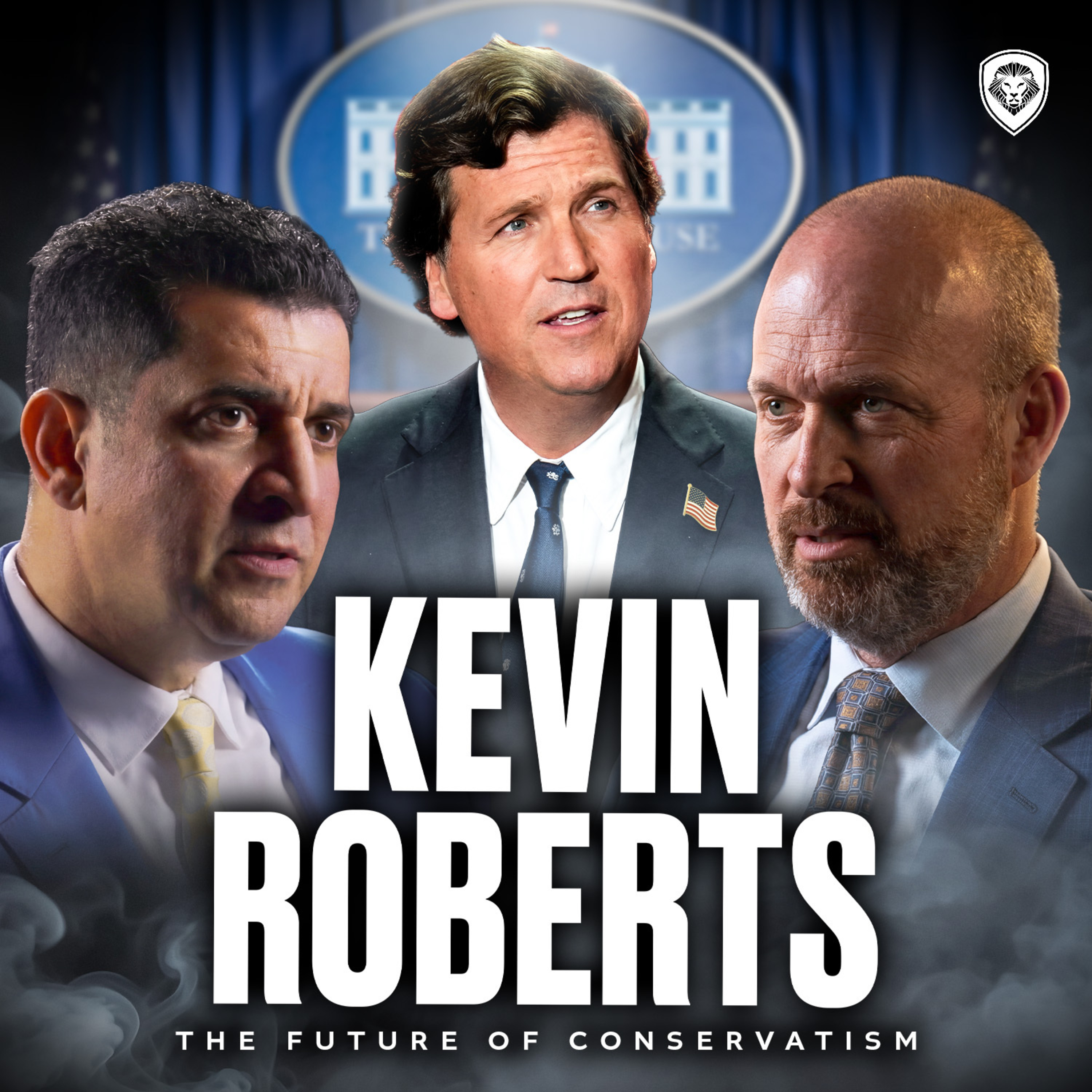
Loading summary
Transcript309 lines
- [00:00]
Patrick
Tucker had Nick on and they did a podcast to get and he got a lot of heat for it. Article that came out, maybe even. You spoke about it, about going to your staff and apologizing. What did you apologize for?
- [00:10]
Kevin Roberts
A couple of phrases in there that I regretted. Project 2025. We're young Americans. All of the elites have all of this power. And here's a plan to take it back.
- [00:19]
Patrick
Your fiery talk you gave at World economic forum. I DM'd you. I said, great job. That was amazing.
- [00:25]
Kevin Roberts
And if I may, I will be candid and say that the agenda that every single member of the administration needs to have is to compile a list of everything that's ever been proposed at the World Economic Forum and object all of them wholesale.
- [00:37]
Patrick
You get a call, somebody wants to give 2 million-plus. But he was on the Epstein island and he had a relationship with Epstein, but 12 years ago. Would you still accept the money?
- [00:50]
Kevin Roberts
That's all. We believe that so called transgender surgery is bad for anybody because of what you saw in Rhode island yesterday, not to be clear. Not that everyone who has gone through that surgery would do that kind of thing. The World Health Organization is discussing foisting gender ideology upon the global South.
- [01:09]
Patrick
How do you address this?
- [01:10]
Kevin Roberts
You outlaw it. You outlaw it because it's bad for the human person.
- [01:14]
Patrick
So what would happen if they just said, period, you can't do it in America, full stop, we'd become a better society. Did you ever think you were made again, Adam? What's your point? The future looks bright. My handshake is better than anything I ever saw. It's right here.
- [02:01]
Kevin Roberts
You are a one of one my son's right about.
- [02:02]
Patrick
I don't think I've ever said this before. Great to have you on, man.
- [02:11]
Kevin Roberts
I've been looking forward to this. Thanks for having me.
- [02:13]
Patrick
Yes, I remember you. First time I messaged you was your fiery talk you gave at World economic forum. I DM'd you. I said, great job. That was amazing. And you responded back and we reacted to it here and then from there. Obviously a lot of other stuff has happened which we'll talk about, but it's great to have you here.
- [02:29]
Kevin Roberts
Thanks for having me. Thanks for everything you're doing to help make this America's golden age.
- [02:32]
Patrick
Thank you. So I'll tell you my story and then I want to kind of learn more about Heritage Foundation. You know, your responsibilities, what you do as the president, and if the conservative movement is fractured, if so, how? If not, you know, can it be fixed? I was introduced Many years ago, I went to an event at Miramar Hotel, Santa Monica. Keynote speaker was George Will. And I know nothing about the conservative movement. I'm a business guy, 29, 30 years old, minding my own thing. I learned I'm a capitalist. But, you know, my mother said they were communist. Dad said they were imperialist. And then when I went to this event, I'm like, oh, Claremont Institute. What is Claremont Institute? And then this guy invited me to his house where they would have debates. The chief of staff of Bill Clinton would debate the chief of staff of President Bush at the founder of Public Storage's house. I think his name was Wayne Hughes or something like that. And then I spent some time with Larry Arn and all these other guys and then Fred Weiba. And I'm more and more, this conservative stuff is interesting. And then obviously I get exposed to everybody else. So Heritage foundation, for people that don't know. If you don't mind telling everybody what Heritage foundation does, we've been around 52
- [03:40]
Kevin Roberts
years, 53 years now, this year. And what we do is focus on public policy problems. First of all, in the 1970s and 80s at the federal level, but increasingly, especially over the last four or five years since I've been president, also at the state level, all for the purposes of devolving power from Washington and giving it back to the states and to the people.
- [03:59]
Patrick
And.
- [03:59]
Kevin Roberts
But the thing that made us unique in the 1980s, Patrick, was that we didn't just write white papers, which the typical work of a think tank. I don't even use the word think tank to describe Heritage, although I think we do the best thinking in the business. We're a public policy advocacy organization because the purpose of our research is then to walk across the street, go to Capitol Hill and advocate for that research to help draft legislation. We also have an issues campaign arm called Heritage Action that is able to do, under federal law, more of that advocacy work. They do our lobbying on Capitol Hill on behalf of the American people. The other thing that we do that a lot of Americans don't pay attention to, which is okay, is that we help to connect the conservative movement around the world. We're very active in the Far east, in Europe, in Latin America, increasingly in Africa, all for the purpose of restoring self governance. And so while we are nonpartisan, we are unabashedly, philosophically conservative. And we believe that not only is a smaller government good, but the reason that a smaller government is good is, is because it gives you and me and all 330 million Americans more self governance. That's the reason that heritage exists.
- [05:06]
Patrick
I love it. Okay, and you guys got started in early 70s, 73. Okay, and how much? The other day I'm having a conversation with a McKinsey guy consulting, and he's a senior partner with them, been there for 25 years. And I said, how much has the consulting business with you guys changed? And he says, I gotta tell you, he says, 10 years ago, if a client would call us, you know, half a million dollar engagement, Million dollar engagement. Can you write us a analysis on the industry, what, you know, SWOT analysis, what we have going on, we'd write a paper and we'd give it to him. Half a million, $2 million. He says, three years ago, two and a half years ago, whenever Chad GBT came out, he says, I went on there and I wrote out. Client asked me for the same exact product. It's a million dollar product. I went on chat GBT and I said, write it out for me, the report. It spits out the report. I give it a couple prompts, then I take it. Then I give it to my executive team to prove before I send to the clients. They said, we know you use Chachi Beatty because he's testing them as a senior partner. But it's scary that this is 90% work of what we would do. What, what could it turn into the next 3, 5, 10 years? Where am I going to with you?
- [06:18]
Kevin Roberts
I think I know where you're going.
- [06:19]
Patrick
So you're writing white papers back in the days and you know, you kind of, you know, you, it's a, you're not going to get younger guys coming out and calling you guys out and, you know, having all this pressure that you have. And everybody kind of looks at you guys as professors and scholars and we have to listen to them. And this is, this is how the system works. And you know, you got to work your way up as a columnist and you do this. Then social media hits, then everybody's got a voice and everybody's doing what it's doing. How much harder is it to do what you do today versus what it was pre social media era?
- [06:47]
Kevin Roberts
Gosh, it's a heck of a lot harder.
- [06:48]
Patrick
Okay?
- [06:49]
Kevin Roberts
And I've seen that. I'm an educator by training, but and have been in public policy for a decade, just in the decade that I've been in because of social media now because of AI. It's changed, but it changed even before then. Our longtime president, co founder, the late Dr. Ed Fullner, passed away last year, said that and he remained on our board and a close friend of mine, great mentor, he said, up until the last months of his life, he said, Kevin, the change that he had to adapt Heritage to, which was the advent of Fox News, which was a good thing, right? The advent of the very early days of social media, that, that paled in comparison to what we were now having to deal with. Not just we at Heritage, but the whole ecosystem of organizations like ours. The advent of AI. But one thing in particular, Patrick, that I'll home in on, and that is that everyone can be a self appointed expert. Now I say that with great celebration. I think that's good. You know, Heritage is funded not by a few grand white knights in Washington D.C. but by 565,000 individual members, everyday Americans. Which means that although we're headquartered in dc, we're not of dc. All of that to say we celebrate the democratization of information. But to your question, the heart of your question about how that has made our work more difficult, we have to adapt to that. And so what we've done, the bottom line is continue to do the research now aided with artificial intelligence. You'll never have a paper that's published by Heritage where artificial intelligence has written it. But we would be inefficient, we'd be sort of dumb if we didn't use AI for some of the data research. And then of course, we double and triple check that. But the big thing that we've done is shorten a lot of our research so that it can be more timely. We've spent a lot of time and resources on how to message some of these long standing conservative principles and policies. And in a lot of ways, while I think a lot of people outside of Heritage deserve credit for this too, Heritage has helped to lead the way in that adaptation to this environment we're in. We still have work to do to adapt to it fully, but ultimately what we want to do is get good votes on good legislation and good votes on bad legislation. We're pretty good at both. And obviously the environment we're in with technology is challenging, but filled with opportunities.
- [08:59]
Patrick
Would you say the current conservative movement is fractured?
- [09:02]
Kevin Roberts
Sure.
- [09:03]
Patrick
Okay, how do you think we got here and what can you do about it? Or is it like this is the normal new, this is what we got to accept moving forward?
- [09:09]
Kevin Roberts
Well, you're tempted. This historian, you know. So you're going to get two responses.
- [09:14]
Patrick
That's why you're here? Yes, please.
- [09:15]
Kevin Roberts
Thanks. The two responses. One is the historical response, which is to offer some legitimate Hopefulness. So as a historian, I would say that the conservative movement, every generation or so, is fractured. And there are a lot of reasons for that. One of them is conservatives aren't prone to what has become a pretty common impulse by the radical left toward intellectual totalitarianism, where it really is groupthink. Conservatives reject that. We're always much more comfortable in sort of our larger conservative family of having those family conversations. But the second thing is to lean on Burke from the late 1700s. He'd say that conservatives always struggle being in power. We're a movement that is very good on ideas, very good on the academic side of it. But when, and I think this has been proven, struggle to stay in power to govern. Which isn't to say that the policymakers who are conservatives right now are bad at governing. It's that right now we're struggling as a movement to understand that this moment we have with Donald Trump in particular as president, with a majority in the House, albeit narrow, but a really competent and, you know, virtuous speaker in Mike Johnson and a Senate leader who's actually playing ball with conservative John Thune. Those are fleeting in modern American history. And so what we try to do at Heritage, to address that fracturing, is to say there's a time and place for those intellectual debates. Heritage is always going to be part of that, right? That's ours, one of the chambers of our heart. But when we're in power, let's be sure that while we continue to have those conversations, perhaps they are less vocal so that we can focus on taking advantage of the political opportunity we have. I think the reason, Pat, that we say that at Heritage so naturally, is because of the people we represent. We don't represent any elected official. We represent millions of Americans, several hundred thousand of whom support us. And we understand that while they may have an interest in these intellectual debates, and I certainly do as a historian, that ultimately they want points on the board. They want to see real policy change. But I that's a somewhat long winded way of saying the fractured nature of the movement always concerns us. And we're always at Heritage, as our co founder, longtime president Ed Fullner, would say, famously, to add and multiply, let's focus on those things we agree on and those policy issues we disagree on. So let's talk about this on the side while we help our guys and gals govern.
- [11:39]
Patrick
How. How tough is it to be? I run a for profit, right? So I'm not used to running a nonprofit. And when I run for profit and I Go raise money and the board wants to tell me what to do. I've always kept 51% equity, so you can't tell me what to do, but you can give me feedback. Because as an operator, as an owner, I prefer that. Now today, my insurance company, the last three years, when I sold, I'm not. So it's a different mindset now. They have to kind of sit there. It's their company, it's their business, and they're going to give you feedback. How different is it as a nonprofit where your, you know, the 2024 numbers are, I don't know, $133 million, that's public 2025. You guys haven't finalized it yet. And you guys, I don't know what the number was, 517 to 600 employees, depending on what that timeline was. You're a good sized organization. That's a very, very successful. Assets were sitting, I think, at 431. You guys are a real strong organization. But you come in, you're. I think if I'm not mistaken, you're Roman Catholic. Okay, so you come in. I know Roman Catholics, they're very different. I know Christians, I know not, you know, evangelical. I know alds, all these. But when you come in, you probably have certain ideas that 90% you agree with everybody, but the 10%, you probably don't. Right. How is it managing donors that are giving you money? Because you may say something like, well, you know what? Like, you guys just went through it, right? Last year, I don't know what it was. Newsmax said 60 employees and staffers left. I think the number was 30 when they left. And $13 million moved to Pence's organization, which, by the way, I never even knew he had an organization. AAF or AFF, I don't know, whatever it's called. And you know, 13 out of the $15 million, they go to them and then, oh, my God, what do we do now? Because the comments that were made. How do you manage your donors who, God forbid, if you say something, they're out. How do you manage that?
- [13:35]
Kevin Roberts
Yeah, a couple of excellent questions in there, and I'll deal with them in sort of chronological order. For me, in terms of lessons learned as a leader, I learned this 20 year, 25 years ago when I started a K through 12 Catholic school. And I went directly from the classroom, having been a history professor, history teacher, debate coach, to starting the school, which is a way of saying I didn't really know what I was doing. Probably thought I knew more no doubt. I thought I knew more than I actually did. And I thought I could run it as, quote, unquote, my business. I was the founder with a couple of friends from high school, one of them a Catholic priest. And I realized, oh, man, that doesn't work because it's just. It's not that easy. And the businessmen and businesswomen we had on that school board told me that, thankfully, in a very friendly way. And so I became a real devotee of Jim Collins, from good to Great. But in particular, my single favorite book, I'm doing really small gesture with my hands because that addendum from good to great for the social sectors is, I think, well, for me.
- [14:29]
Patrick
I will say I skipped that part, but I remember it. I do remember it.
- [14:32]
Kevin Roberts
All of my for profit business leader friends say, Kevin, I didn't read that part. Yeah, but I have every great that
- [14:37]
Patrick
he put it in there, right? Because I can see a guy like you like, saying, this is what I needed.
- [14:40]
Kevin Roberts
Because at that point I was thinking, look, I know that I'm called because of my faith to start this school. I know that I've got without any hubris. This is a gift from the Holy Spirit. I've got some leadership skills, maybe even some business acumen. I'll just go into business. And some of my friends were telling me that. But I knew I was called to do this school. That little addendum changed my life because it made me realize this. This is the thesis. To get to the heart of it, Collins says almost verbatim, a nonprofit CEO is not a for profit CEO. He or she is a legislative leader. And I sat back and I thought about that and I said, I'm a guy who likes politics. It's my first passion that resonated with me. And so among the many things, for example, fast forward 20 years that speaker Mike Johnson and I commiserate on is both being legislate leaders. And I say commiserate because while he's grateful for the job that he has, he can't snap his fingers and even have 100% of his Republican conference join him. I can't snap my fingers as a nonprofit leader anywhere, including at Heritage, and expect all of the board, all of the donors, all of my colleagues to salute and move on. We have to build coalitions. And so the second thing that we have honed over the years at Heritage, certainly before I got there, and we have continued it, is working in coalitions. And so sometimes that means when you have a political realignment, which we're in the middle of right now, because of Trump and because of the rise of populist conservatism, something as a historian, I believe is very congruous with our founding, there will be a handful of people who decide they don't want to be part of that. And the way we manage that at Heritage is to continue to add and multiply, to continue to talk about what our aspirational vision is for the future as a way of managing that coalition. What other organizations, former political leaders, want to do, and I mean this with the greatest Christian charity that I can summon, is, fine, they can go do that. But I can tell you, at Heritage, as I said on my first day, every day we're on offense. And if there are people who are nipping at our heels because they have a difference of opinion about our tactics or maybe even how we are applying longstanding principle to policy, we respect them. But we're just going to speed up and the American people are with us, which is why I can sit here smiling, telling you this story.
- [16:51]
Patrick
Right? So. So going back to it. But what do you do when they come to you? Because I'm at an event. Charlie's doing the big fundraiser two years ago, three years ago in Mar a Lago. And I would say exactly when this is. This is. You know how the annual one he does at the end of the year at Mar a Lago. It's got to be end of 21 or end of 22. It's when DeSantis is doing well. When would that be? When did DeSantis launch his book? Five months before he launched his book. It could be December of 21. Can you put. He launched in March or May of 22, 23. Okay, so then that's February 20, 2023, two months prior to that. So December of 2022, we're at Mar a Lago and Charlie's up there. The Great Lake Charlie, which we both love. I've seen what you said about him as well, may he rest in peace. He's up there doing his thing and he raises some $41 million. And I'm just sitting there watching everybody. And all I'm paying attention to. I'm not in this space. I'm a business guy, so I'm new to the political space the last five years. And just because I have opinions, it's not like I'm somebody that's, you know, can run. I'm not born here, so it's not like I don't have any interest for governor whatsoever. I just, I'm interested because it's combat sport. And that excites me, right? I'm just sitting. I'm like, okay. One lady gets up and says, we want to know some of you guys who usually give. You know who you are. I've been watching you. Every year when you come to the TPUSA event, you're not giving any money here because you're worried whether Charlie's going to be Team Trump or Team DeSantis. You guys should give because you trust Charlie, not whether he's going to support Trump or DeSantis. And I said, okay, that's exactly what I came here for. And then I sat there and I saw the other person. And because of that, we're deciding to give. I don't know what the number was. $2 million, probably in her late 70s, early 80s. This lady, very attractive, very well put together, strong presence, great. And then I said, huh? Charlie has to deal with making all of these guys happy. Some are Christians, many are Jews, some are pro Trump, pro business. Some are G3 money, which means they didn't build the money, so they want to give the money away. So they're probably more liberal than conservative. Some are G1 money, G1 money are probably going to be more Trump than DeSantis. And then some are more hardcore conservative, like old school conservative Reagan. And Trump's a disruptor. And I said, what a tough job to have. So that's why, when I watch and see what you guys have to do, how do you manage all these personalities that may or may not agree with you? What do you tell them? Do you call them? Do you have the one on one conversations? How do you manage these relationships?
- [19:35]
Kevin Roberts
Man, I can't tell you how 100% accurate and astute that is. In fact, Charlie and I would occasionally, two or three times a year, commiserate on that, not complaining. We're grateful truly for all of those people, and not just because of the material resources that they would give our respective organizations, because every single one of those people is a patriot, right? And we're grateful for them. And so the way I manage it, I know that he did an exceptional job. The way that I attempt to manage that is to have conversations with people. I have an open door policy at Heritage. I am on the phone a lot with a lot of different people. Policymakers, donors, donor prospects, friends out in the movement. But I will tell you that there are two things that are really key, actually, three I would say. The first is, and I try to lead with this, articulate a very clear vision about where we're going. Because that means that in almost every gathering of the center right, of conservatives, libertarians, people like free market people who are social conservatives, almost every gathering, there's going to be 80 to 90% agreement on that aspirational vision. And so at Heritage, what we're doing to that end is focusing on the American family, on the dignity of work, on free enterprise, on national security, on citizenship, what it means to be an American, including an American who immigrates and assimilates here into our culture. Right. And so that aspirational vision is key. But the second thing is to be transparent. And I think the new cycle that Heritage went through over the last few months, which we didn't just weather, but we flourished through, is because of that ethos we have of transparency. But the third thing is we have to recognize that leaning on not just my particular faith, but I think almost anyone of faith would say this. We're called to do what we do, not just to win elections, not just to have our favorite policy. And you're called. Yes.
- [21:28]
Patrick
When you say we, who is we?
- [21:29]
Kevin Roberts
We, as we at Heritage are called. Every single one of us. We're nonsectarian, but almost every single person. Heritage is deep faith. Of course, we respect them all. But every one of us is called to wake up every day and not just help good policy get implemented, however we're going to do that, but to be cheerful warriors, because we love that aspirational vision so much. And I say all of that because it makes those relatively infrequent conversations of differences of opinion be put in context. And I'll give you a story, an example. I've got a friend now, he's a longtime Heritage donor. He's a friend who's a retired OB gyn. And he sent me a. I won't use his name because it sound like I'm being nasty to him. It's quite the opposite, as you will see. But he sent me this email about a year or two into my tenure at Heritage, and he said, kevin Roberts, I know that you are a big pro lifer, and I know that pro life is a big issue for Heritage. We work on every issue. One of the few entities that does. And he said, but you emphasize it so much for reasons I can't understand. Yeah, I'm reading this the way I think he's writing it, that I'm just thinking we're not going to be donors. Well, I called him and I said. I said, david, I'm not calling to restore your Gift. I'm calling to listen. He said, well, I'm surprised that you called me. I said, why? He said, because the email was a little hot. I said, no, talk to me. I genuinely want to listen. You and I going back to transparency, this guy and I, you and I have a difference of opinion on this issue. You have a difference of opinion with Heritage. We're not going to change our position because you have this difference of opinion. But I'm wondering if maybe you can remember that we agree 100% on all of these other issues that we work on. And I'll tell you, up until this very moment that I tell this story, not only did he continue to be a donor and has expanded his giving, but more importantly than Christian or Jewish. Christian.
- [23:22]
Patrick
Okay.
- [23:22]
Kevin Roberts
Although there are stories like that with. With Jewish friends, especially over the last few months. But the second thing is we've become good friends. And while we still have a difference of opinion on that issue, that's not a deal breaker for him or for Heritage.
- [23:35]
Patrick
I love that.
- [23:35]
Kevin Roberts
That's how we.
- [23:36]
Patrick
Yeah. And I foresee being like that. Right. Because when you. When you make money, the profile of somebody that has money, they're not easy people, or else they wouldn't be successful. They're drivers, right. They're demanding. They fairly get. They tend to typically get what they want. So they could sit there and say, you know, if I just cut you a million dollar check and you got up there and, you know, for example, let's use the instance of what happened, right, where Tucker had Nick on. Right? Tucker had Nick on, and they did a podcast to get. And he got a lot of heat for it. And right afterwards, I think you said, we will always stand with Tucker and the relation. You said something very positive, complimentary towards Tucker. And I think even Tucker spoke at Heritage two years ago, two and a half years ago, at one of your events. So he's complimentary of you guys as well. But when that came out and then some of the people walked, there was a article that came out. Maybe even you spoke about it, about going to your staff and apologizing. What did you apologize for?
- [24:36]
Kevin Roberts
I apologized for two things. Mixing up personal friendship with institutional friendship, and secondly, especially for Jewish friends. But for anyone, a couple of phrases in there that I regretted. And I can tell you, my closest Jewish friend called me the next morning and he said, kevin, I know you're not an anti Semite. You've expanded the work of anti Semitism and heritage. And he said, you're a Roman Catholic. I know your faith well enough to know you couldn't be, he said, but this is something that you need to address head on. And so it's sort of like the conversation with my retired OB GYN friend and donor that this Jewish friend, up until this very moment as we sit here, has been a great guide in setting up conversations for me and for us at Heritage to have. The reason those have gone well in spite of not just the news cycle, but what seems to be an agenda that goes well beyond the video controversy is because people know the recorded heritage. I think it's safe to say, if you think about my colleagues who work on the scourge of anti Semitism, there's no organization, at least of our size and scope, that isn't a single issue organization that's done more to expand work against anti Semitism. And so that's really carried the day. And as we sit here with this recent flap and news cycle having concluded, people realize, oh, I know Heritage. I'd say people know me and the work I've done, especially as a Catholic leader against antisemitism. But the most important thing is I know their aspirational policy vision for the future, and we want to be part of that. Let's get to work. Because remember, we might just have six or eight or nine more months to get good policy.
- [26:14]
Patrick
But what were the two things you apologized for? You said two things you said you apologized for.
- [26:18]
Kevin Roberts
I thought that the script of the video was, in a couple of cases, was ineloquent, and I talked about that then, so I don't have to repeat them. But the point is, I thought from my Jewish friend's point of view, that while he could excuse it, that maybe other people who didn't know me.
- [26:31]
Patrick
I get that, but I'm trying to. Your Heritage foundation, you guys, your main cornerstone is freedom of speech, right? So I watched a video multiple times, and multiple times it sounded like a very reasonable video. I'm a Syrian Armenian. I don't have any problems with them, with anyone who's Jewish whatsoever. We've had BB on, but we've had Nick Fuentes on. We're the only podcast in the world that within 30 days had Bibi and Nick Fuentes on. No one's ever done that before, not mainstream or podcasting. We'll talk to anybody and have a great conversation with them. But I want to go back to it. Is it when you said you can be. You can be someone who supports the Jewish. Jewish. Someone who can criticize the Jewish community without being an anti Semite I think you said something like that. Right. Do you still stand by that position?
- [27:27]
Kevin Roberts
Oh, absolutely.
- [27:27]
Patrick
Okay.
- [27:28]
Kevin Roberts
That's not what I apologize for.
- [27:29]
Patrick
So wasn't that what you.
- [27:30]
Kevin Roberts
No, it was mixing personal friendship with institutional friendship. And it sort of goes back to one of your earlier questions about being a nonprofit leader. Heritage is not my business. Heritage is a nonprofit organization. I get privileged.
- [27:44]
Patrick
Like Jim Collins. Yeah, right. Earlier.
- [27:45]
Kevin Roberts
And so that's the first thing. And then the second thing is some really genuinely close friends of mine who are Jewish said, kevin, there are a couple phrases in there that we forgive you for. But, you know, while we support your stance on free speech and not canceling people, it's also a separate matter to make sure that one of the ways that we can sustain free speech and speaking freely is to make sure that our words are carefully chosen. That was. That was a thing that I wanted to address.
- [28:09]
Patrick
So I live in Florida. We came here because of the. We like DeSantis. I think he's the number one governor in America.
- [28:15]
Kevin Roberts
He's done a remarkable job.
- [28:16]
Patrick
I think he's done a phenomenal job, and I'm a big fan, and I recruit for him all day long to get people to come here. We moved a lot of people to Florida because I can easily promote him, unlike the previous governor when I lived in California, Newsom, I lived in Texas as well, and I could promote for him as well. He was an easy governor to promote for. Even Perry was an easy governor to promote for. But, you know, sometimes when, you know, in our company, okay, we have people here that work in our. That want to be part of it. I mean, they're hardcore Christians, you know, and hardcore. We got to protect, you know, Zionist, and we got to, you know, you can. And then we have guys that are, you know, on the other side where they're like, wait a minute, why can't you criticize them? You know, why. Why are they coming out with certain legislation where you can be critical of some of the things they're doing with, you know, to criticize AIPAC or to criticize this. Why can't you do that? And I'm right. Here is where I'm at, right? And I watch both. That's what I like. I like to see both sides. Where do you stand with it? What's your position?
- [29:17]
Kevin Roberts
It's really important, and this is Heritage's position, that there's a difference between political Zionism, which is the right of the Israeli state to exist, which we support 100%, probably rather famously, the second, and divorce that from theological Zionism. And those of us who are Christians, depending upon what our particular Christian faith is, have differences of opinion on that because they're theological and because Heritage is a non sectarian organization, we honor all of those. And we have some people who work on very pro Israel policy who are Christian Zionists within the organization, within Heritage, we have others who are not Christian Zionists. They agree 100%. We at Heritage agree 100% on political Zionism. But we have to, as a non sectarian organization, allow this theological disagreement, which really inside the workings of Heritage, don't have a place because we're not a religious organization. And I think one of the fruits that's come out of the last few months is Heritage playing a role in reminding people of that delineation. And it's helped some of the fracturing of the conservative movement because people, whether through ignorance, just not having read about this, or maybe having forgotten, they have conflated political Zionism and theological Zionism. They're two different things. And I think that may be a helpful way for people like you and me who are in the middle of those. Those questions, although, you know, 100% supportive of Israel's right to exist, that we remind people of that.
- [30:45]
Patrick
Got it. So when you're getting calls and, and let's just say you have a big donor that's calling you and they're saying, hey, we don't like what you said, maybe you could have been different on how you approach this situation on Israel. Do you guys put events together and allow folks from opposing sides to debate and have conversation where the donors can't see it?
- [31:08]
Kevin Roberts
Yes, we do. In fact, we pride ourselves on that.
- [31:10]
Patrick
Can you give me an example of that?
- [31:11]
Kevin Roberts
Sure. Let me take back up one step real briefly, if I may, because this is really important context. Although it's gonna sound like nerdy think tank talk, Heritage is famous for something called its one voice policy. Unlike other policy organizations in D.C. where different scholars at the same organization can have different voices, different positions on issues, Heritage, if we speak on something, it's as an institution, a single voice, one voice. Why? Because we're advocating for policy change. You can't write a white paper, meaning
- [31:39]
Patrick
you guys at the top have to be aligned 100%.
- [31:41]
Kevin Roberts
We publicly, we have to be, have one position, the same position on a policy issue.
- [31:48]
Patrick
So for in front of the donors, you guys have to be aligned behind closed doors. We can debate and discourse, but total
- [31:55]
Kevin Roberts
sausage making there has to be. Right?
- [31:56]
Patrick
I agree fully. Okay, I got it. Okay, so. But at the end of the day, once we get out of that door, in front of everybody, we're on the same page, united.
- [32:03]
Kevin Roberts
That's right. Okay, so that's important context for the story I'm going to tell. So we have this one voice policy. It had become sort of moribund when I and my leadership arrived in late 2021, for whatever reason, I don't know, but we were charged by the board, revitalize the one voice policy. And the way, interestingly, although it doesn't quite meet the eye initially, the way you do that is to actually increase the debate internally. Our rules are it's got to be collegial, it's got to be professional, can't be personal. And the way you amplify that is to have competing voices come in and do public events. We're not saying that having someone who disagrees with us on tax policy or education policy is somehow going to now change our own policy. But we're saying we're confident enough in our own research, our own position, that of course we want to have public debates. The big issue example I want to offer is our changing policy on China. Heritage led the way on most Americans. Belief, certainly mine, that America was going to prevail on China because our free market and American values were going to turn China into US. And when I got to Heritage, by the time I got to Heritage, I was convinced by none other than Donald Trump that that was wrong, that China had been taking advantage of us, that American policy had been too weak.
- [33:23]
Patrick
Wait, so you go, so you guys got started in 73. This is Nixon, Nixon triangular diplomacy. We go to strengthen China, we open up the market. They go from number 10 to number two in GDP. Russia drops to weaken, USSR, Soviet. So at that time, we can convince China to think like us. That was the mindset of Heritage, the
- [33:45]
Kevin Roberts
prevailing mindset, not just of Heritage, but of the conservative movement under George W.
- [33:50]
Patrick
Bush's presidency into our way of thinking.
- [33:52]
Kevin Roberts
Exactly. And the thing is, that was well intentioned. And so I get to Heritage, and I had the same misguided thought, right? So this is not Kevin saying, man, I've been right for 25 years. Listen to me. I get to Heritage and say, guys, we have to change our policy. And so what do we do? We start having public debates, conversations on our stage at Heritage, introducing, including for our own colleagues that, you know, maybe we were wrong, well intentioned. And then we published this big paper in 2023. And everything for us starts with the research in order for us to talk about it right. A new cold war with China in 2023, the Washington establishment went nuts.
- [34:30]
Patrick
Why?
- [34:31]
Kevin Roberts
Because that's not. The prevailing Republican establishment thought we're going to turn China into the United States. This story leads to one of my favorite stories in my tenure at Heritage. Our aforementioned longtime president, Ed Fullner calls me and he says, kevin, we were wrong on China. And I want to come to an all staff meeting and I want to explain why. I said, ed, you don't have to do that. You know, there's risk to you. People will think that, you know, it's your fault. You've got nothing to be blamed on. I had the same idea. He came to a staff meeting and he said, I want to tell all of you that the policy we're now embarking on, which is a hawkish position on China, where now the conservative movement is certainly the Trump administration is, we have to be with. And he said, if we're going to have the humility to persuade people that we were wrong and now we're right, it starts with conversations internally. It starts with conversations on this stage, because sometimes policymakers need to develop that humility. I am extremely proud, ironically, of that Humble Moment by Dr. Fullner, by Heritage as an institution, because what we said was our research was good, we were well intentioned in the policy prescriptions that we offered. But that was a generation ago, and circumstances have clearly changed. And if we don't read reality truthfully and see what China has been doing, who in Washington will? And so that really is how we operate, which is why, to connect to the recent story that you were asking about, we'd never doubted that we were going to flourish through that kind of news cycle, because every three or four or five years, there's some controversy that Heritage starts because we are willing to take a look at the facts and tell the story as we think it is.
- [36:19]
Patrick
Right. In the NBA when they do the collective bargaining agreement. I don't know if you're a sports guy or not.
- [36:24]
Kevin Roberts
I'm a huge sports guy.
- [36:25]
Patrick
Okay, who do you like? Who are your teams?
- [36:26]
Kevin Roberts
Well, the Texas Longhorns.
- [36:27]
Patrick
Anything they. Okay, good. You guys got a good quarterback. My son wants to meet him. He's.
- [36:33]
Kevin Roberts
He's a great guy.
- [36:33]
Patrick
Big fan of his. Yeah, that's what I hear from everybody. But so look at different teams, different sports, and think about it from the standpoint of which teams would you buy? I wouldn't touch the NBA today. I just don't trust what they're doing. But in sports, each sport is different. You Got owner, fan, player, right? NBA became too player friendly. When it became too player friendly, the players owned it. All Star Game sucks. They've lost the dunk contest. People don't even watch the first time. I didn't watch All Star Game. It's horrible. The regular season games suck. There is no defense. You know, they're averaging 120 points a game, which we're accustomed to. 89 points, 95 points a game back in the 90s.
- [37:13]
Kevin Roberts
You sound like a Knicks fan.
- [37:14]
Patrick
Yeah, well, you know, Bulls, Cavs, you know. Although I'm a die hard Laker fan up until LeBron showed up.
- [37:20]
Kevin Roberts
I was trying to trigger you. I'm a Celtics fan.
- [37:22]
Patrick
Are you really? Okay, that's good. So Lakers, Knicks, I was there the last time we beat you guys. Game seven, Kobe, I was at the game. I took my pastor, Dudley, Rutherford. We had a great game. What a game. What a great game. Yes, for us. You guys had a hard time that day, but you now have more than we do. But you have one more chip than we do now.
- [37:38]
Kevin Roberts
I was just, I was just growing to like you. Come on now.
- [37:41]
Patrick
But when you think about these things, you know, and you watch how NFL does it, which NFL protects the small markets and you get a superstar, he's going to stay with you for 15, 20 years. You're not going to lose him. You go to the NBA, God forbid, you bitch and moan, trade him. Or else, you know, I'm going to go on social media. I think NBA, NFL has it figured out. I think MLB's doing okay. Although they're allowing Dodgers to get a little bit too powerful. The bigger guys to you, who is your number one? Okay, so you got player owners, fan, who is the number one customer to Heritage?
- [38:20]
Kevin Roberts
The American people.
- [38:22]
Patrick
The people are the number one donors or the people?
- [38:24]
Kevin Roberts
No, the people. Now some of the. When I say people, I really mean everyday Americans. People who are small business owners, blue collar workers, grandmas, whoever they are. Now, of course, several hundred thousand of them will also be donors to us. You know, for the most part, small donors. And we very much treasure them. So in no way am I being dismissive or ungrateful, obviously. But the reason Heritage has been so successful, the reason people call us, other people say this about us, we try not to get engaged in this. Call us the most influential conservative think tank in the world, is because we put the American people first. And so I'll tell you a story that underscores this. A few years ago, four years ago now, I was asked to come into A meeting of Republican senators to try to by the conservative senators in the Republican conference, stop the end of your omnibus, which is just fancy Washington, speak for spending more money that we don't have. And I went in and I said, I'm not here on behalf of my colleagues who are budget scholars, although I rely on their work. I'm not here on behalf of our board, although I'm grateful for their service. And I'm definitely not here on behalf of, you know, my importance, whatever that may be or not be. I'm here on behalf of Heritage members and I have to speak on their behalf and say, you have to stop spending this money. That mindset that has allowed us to be influential because we then pair that with what I think is the policy brilliance of our colleagues and then some, in some cases, policymakers who are willing to become our spokesman on things.
- [39:57]
Patrick
What is the average age? That's what I'm searching. Brianna, what is the average age of a donor at Heritage right now?
- [40:02]
Kevin Roberts
Probably late 60s.
- [40:03]
Patrick
Oh, really?
- [40:04]
Kevin Roberts
Yeah.
- [40:05]
Patrick
Is that pretty accurate with TPUSA as well, or.
- [40:08]
Kevin Roberts
No, probably not. I've talked to Charlie about that, although I forget what theirs is. And part of that is Heritage is one of the two or three largest membership driven organizations and because a lot of that is through snail mail, that that donor base will skew older.
- [40:27]
Patrick
Yeah. I'm curious. And the reason why I'm asking this question is the youth. So what, what are you doing to win over the youth? Because if you look at what's going on right now, so even, even with the topic of social media that we started off with, right. You'll see these guys going viral and you know, the Gaza situation, Palestine and Israel and genocide. We've all seen these debates on Piers Morgan, you've been on a couple of the debates, right? Yourself. So how are you? What is your plan or Heritage plan on? Hear them out, maybe speak to them, maybe see why they see, the way they say the things they say. What is Heritage's plan with the youth?
- [41:16]
Kevin Roberts
Two big things. And I appreciate the question because I'm still a teacher at heart. And so while I'm probably not the best as a Gen Xer to be the messenger, I have a great passion for my colleagues who are engaged in that. But two big things. On the one hand, be us, be authentic, which is not but an arrogant comment. Did you say us be us, be Heritage.
- [41:36]
Patrick
Got it.
- [41:36]
Kevin Roberts
What do we offer the conservative movement? What do we offer the United States of America? I think the best policies that are out there and A lot of those policies have to do with issues that young Americans care deeply about, like affordability, like a much more restrained national security posture. But the second thing is we've had to learn to adapt to the environment we're in. And so we have invested a lot in not just social media, but what I would say is to be present. And so even in my own speaking engagements, engagement with organizations around the country, we have a preference for those organizations that are working to reach the younger electorate.
- [42:12]
Patrick
Why?
- [42:12]
Kevin Roberts
Because we've pretty much figured out how to talk to people who are my age and older. And not that we'll always take that for granted.
- [42:19]
Patrick
Right.
- [42:20]
Kevin Roberts
But we know how to do that. Let's go work with Turning Point. This is why Charlie and I became good friends. It's why we continue to collaborate with Turning Point.
- [42:27]
Patrick
How do you guys collaborate? How does Heritagen A couple of ways
- [42:31]
Kevin Roberts
it'll sound a little simplistic, but it does speak to a larger trend. We try to do co branded events and so that we're trying to get our base and their base at the same event, although they're good at both of those. And the second thing is, I mentioned earlier in our conversation this issues advocacy part of Heritage called Heritage action. It's a 501C4 can do more generally defined political things. We do some collaboration with Turning Point Action on some of those issue camps, campaigns and it's allowed us to take some of the tactics that they have used and perfected with younger Americans and integrate that into our own work.
- [43:06]
Patrick
Who is the biggest spokesperson for Heritage that's in their 20s?
- [43:12]
Kevin Roberts
Well, this Emma Waters, which might be early 30s, but Emma Waters is in that category. And what's wonderful about Emma is that she's become, I think, the leading scholar on family policy, on right minded ways including policy and culture, to witness to family life and the role that federal government may play in that.
- [43:36]
Patrick
Yeah, I always ask myself, you know, Humberto came up to me the other day, says we should launch a new series called how to fix whatever Disney, how to fix this, how to fix the NBA. And you know, I'll go to a business and I'll kind of look around. I'm like, I don't know if I would put the entrance there. I would put it over here. I don't know why. The hostess, when I ask where the bathroom is, she just pointed. This is a $200 a person plate. You don't point. You walk my dad to the bathroom. We were at Flagler's the other day, restaurant on My wife's birthday, Valentine's Day. And my dad asked one of the hosts, not the, what do you call it, the ones that come and pick up the stuff bus, I don't know, what do you call them? Anyway, so she comes, she's picking the stuff and she says, where's the restroom? My dad's 83 years old. And she says the restroom's at the front, but let me have such and such take you lady came, walked over there, said that's all I was paying attention to. I said, that's great. This is why I love Flagler's restaurant. And Mikhail does a great job running that restaurant. Italian guy. So when we set out to create a shoe that blends comfort, function and luxury, we had the choice to make it fast. We had the choice to make it cheap. We chose neither. Instead, we chose Tuscan Italy. We chose true Italian craftsmanship. Each pair touched by 50 skilled hands. We chose patience, spending two years perfecting every detail. And we chose the finest quality at every step. Introducing the future. Looks bright. Collection. Not rushed, not disposable, not ordinary, rather intentional, luxurious, timeless. What does heritage do? And I don't even know if it's part of your strategy or if it's important or not. If it's not, then just say pat, it's not that important. What does heritage do? To become cool, attractive to 20 year olds? To say, you know what, heritage is cool. I want to go because you guys have a lot of history to, to learn from my kids. You know, there is many, many institutions to go through to learn. It's very important for companies like you guys to make it. Very important for, for us, it's very important to make it because we need that conservative ideology to. This is not an easy job you have. Your job is very, very hard. And the job of Heritage or Claremont or any of these guys, tpusa, you guys have a very difficult job to work. How do you track more of the youth?
- [46:03]
Kevin Roberts
Truth number one, we're authentic. The one thing that Gen Z, it's
- [46:08]
Patrick
got to be more than that though that's a vanilla answer.
- [46:10]
Kevin Roberts
So I want, I don't mean it to be vanilla, although it's fair for you to say that. What I mean by that is. So bear with me for one minute please. Is that what the biggest critique that Gen Z has of our generation of the United States more than anything else is that the existing institutions are not authentic. Congress, media, law enforcement, unfortunately. And so for Heritage, we're not going to go out and say we're going to change what we've been saying. We're going to change how we do the core of what we're doing. We're going to be us. And I'm going to get to the second thing, which is something that we learned to your point, but the greatest or the segment of the population that loved our Presidential transition project the most, Project 2025. We're young Americans. You know why? Because it is a massive critique of what youngest Americans have of this country, which is all of the elites have all of this power, and here's a plan to take it back. And heritage, in spite of all the slings and arrows, you notice this part of our ethos, we're willing to take those, is going to stand tall and keep pounding, pounding, pounding, pounding. So we have to continue to be us. But the second thing is, and this is what we're getting better at, we're not great at it yet, is using modern technology to access that segment of the population. And we're doing a much better job of that than we did three or four years ago. But a lot of it, I will say, is also the people you spend time with. So heritage is sort of a 0.3. Heritage is sort of leading a reconstellation, if you will, of the conservative organizations in Washington and organizations like Claremont, like Turning Point, like American Moment, like Center for Renewing America, like the Conservative Partnership Institute. We'll work with anybody, Pat. But these are the organizations that are going to be authentic and also, to the extent that it makes sense for them, going to use the tools, social media in particular, to access a segment of the population that we haven't enough. That combination has allowed us to have quite a following with younger Americans, but we still have to grow in that.
- [48:21]
Patrick
Yeah, I wonder. I wonder what that movement would be, because it would need to be intentional. I don't know if that's enough on what you're talking about, because what I do know is your philosophies of the way to live are right. That's winning ideology. So I think. And we're seeing younger men becoming more conservative. We're seeing, you know, specifically younger men, not younger women. You see the stats when you're looking at it. So this is good, because yesterday my son and I were talking, he was reminding me at the vault conference that he wasn't there. And I said, well, you weren't at the vault conference. He says, how do you not remember? You called me. That's when Charlie died. I said, that's right. We spoke, and my oldest Son has never gone emotional for it. He's not. He's a very, very strong, you know, son. The day when that happened, I was at the vault conference, had to call him, and he says, dad, I need to talk to you. And when I came back and I walked with him for 30 minutes, he's never hugged me for 30 minutes like that. I've never seen him do that. So we. We are relying on you guys to get it right, because this is not what I do full time. My job is a different thing than you guys. So for us, I think you guys have a very important role to do a better job of getting the message out to the youth. And I don't know how you do it. Obviously, we saw the playbook of how Charlie did it, and Charlie would go out there and sit at the colleges and he would do the high school thing and all that stuff and get out there with the messaging even more. But I think you have a. You have a. You carry a burden. Whether you want to call it a legislative burden or just a burden that burdens on you, because your messaging and the history that you have needs to get to the kids, not just to people that are already agreeing with you. When Charlie and I first time sat down 2017, Adam on the podcast, I said. I said, how many people you got here? Thousand people. So why is everybody white? He said, no, they're not. I said, I'm just asking why? Is it because I'm not white, I'm Middle Eastern, my wife's white. But I said, why is everybody white? He said, well, you know, we have 36 people that are Hispanic and 20 people that are this. I said, that's 95% white. He said, well, we're gonna work on it. And he said that to me. I was like, you know what? It's great. So. And the next thing you know, you go to tp, usc, all types of people are now showing up, right? Is that even a, you know, is that even a thought because I'm blue strategy? Is that even a Strat? Is that even a plan? You're like, that's not really that important to us. We're gonna focus on this demographic. It's kind of like, you know, cars. We not really wanted to go into sports car market. We're trucks. We're F150, we're this. Or do you really want to get into the YouTube?
- [50:56]
Kevin Roberts
No, we absolutely want to get into it. My point in saying that we've improved in that regard, but we have some improvement to make is Just to be transparent that we haven't figured out how to unlock that door. A closer collaboration with Turning Point has helped. But I will tell you, when it comes to your point about these almost all white audiences, we have had some modest success with African American outreach. Before I got to Heritage, I was running the Texas Public Policy foundation, and we had begun to hone in pretty well this outreach to voters in South Texas, almost all of them Hispanic. There are obviously huge increases in support by Hispanics, both men and women and black men. And what I would call the MAGA coalition. Where Heritage comes in is in addition to wanting to reach those audiences, as Charlie did, is also to help be the glue behind the scenes between the principles and the policies, how you message it, and then learning from these other organizations we're collaborating with more closely, how we ourselves can do it.
- [51:56]
Patrick
Right. And a part of it is, if it's not part of the strategy, it's not part of the strategy.
- [52:01]
Kevin Roberts
It's a vital part of our strategy. Why? Because we exist to restore self governance to the American people. That can only happen if there are conservatively minded men and women in Congress and in state legislatures, which means you have to do what you have to win elections. And so Heritage always thinks in 50% plus one terms. We are a coalitional organization.
- [52:19]
Patrick
I've spoken at Amfest a couple times. I've spoken at CPAC. And when I go to CPAC and I look around, I'm like, okay, and I go to TP usa. Got it. Energy TP usa, nine and a half. Energy cpac. Six. Right, six and a half. Unless if the main keynote speakers come, then it's a different story. Right. It's a lot of business be done deals. I haven't been to event to see what it's like. But the point is, the energy of who comes there is very important. So strategically, who do you invite? Are your guests? People that youth will say, I really want to hear what he has to say. I really want to hear what she has to say. I don't know what that is. These are things that you guys got to deal with on an organization.
- [53:00]
Kevin Roberts
But those are the questions to ask for sure.
- [53:01]
Patrick
Right. But you're the biggest one and you guys are a name that we all know. Like one time I'm with Brian Tracy. I invite him to speak at our event at Reno. And I said, Brian Tracy. You know, I'm one of the biggest donors of the Heritage. Brian Tracy. Yeah. There's no way. So I went and typed up Brian Tracy. Wow. Brian Tracy. Heritage Foundation. I didn't know that. There's a lot of people that you guys have that people don't even know these names. That. What it made me think about is, how do I not know this? How are they marketing? Who is in there? How are they telling that story? I think there's a massive, massive opportunity there. One opportunity that I think would be there if you opened it up. And we were at a church in Dallas. It was called Watermark. One day, the pastor says, open three hours. Ask me any questions you want to ask. Members came in, it got heated. Why do we do this? And why do we do that? And why do we do this? And I'm like, oh, my God, attendance is going to go down next Sunday. Boom. Skyrocketed. Why? They just want to know that you. You know, authenticity. Authenticity that you wanted to. You're allowing people to be heard. Okay, let's talk about something that's probably.
- [54:06]
Kevin Roberts
By the way, I'll just say we'll take that for action. So the next time we talk, I'll give you a progress.
- [54:10]
Patrick
Great. I can't wait to hear about it,
- [54:10]
Kevin Roberts
because I agree entirely.
- [54:11]
Patrick
I can't wait to hear about it because I want to see you guys succeed at the highest level. So next one. I have four kids. Okay. Birth rate right now is 1.58. Everybody I meet, I tell them, have a lot of kids. Okay, what can we do to get the youth to start thinking about having a family, having kids? Or maybe the crisis is so massive that it's gonna take decades to fix. But how would you address it?
- [54:37]
Kevin Roberts
It's gonna take a generation to fix. For people who are interested, we just published what we call a landmark paper, long, long social science study on family policy. And people know the diagnosis. Well, there are cultural, economic, religious, social factors that go into this. But what we're saying in this bottom line is while those need to change, and I'll come back to a couple of them that I think in particular need to change, there may also be a role for federal and state policy. And so we have proposed, even as a conservative organization, that you invert some of the existing policies in federal law that disincentivize marriage and probably disincentivize the birth rate and actually incentivize young Americans before the age of 30 to get married and to have children. We're saying, to be clear, though, that's downstream from some bigger factors, what's going on culturally and economically. And just like you say to young people, you encounter get married, have a lot of children. Our institutions, which are upstream of the institution of the federal government, have to do a better job of cultivating among Americans the desire to be married and to have children, our religious institutions, our other cultural institutions. And so these things have to occur in tandem. The good news is, while the data is admittedly mixed, in some cases, in some countries that have done this, particularly Hungary and Israel, there have been modest improvements in the marriage and birth rates. And so we at Heritage are sober about the timeline. We think that it will take to reverse this a generation, 20 or 25 years. But we believe we're not yet at the point of no return, although probably there are some societies in the west that are.
- [56:15]
Patrick
Okay, while we're speaking. I just wrote this down, and I appreciate that we have some case studies of where it's working, where it's not. Okay, question for you. What, what hurts or help? What affects birth rate the most? One, I have affordability, two policies from the top. Incentives for me to say, let's have three kids, let's stay married, let's do this right, instead of, you know, The Lyndon Johnson 1964 policies of single mothers. Let's give them more welfare, let's give them more incentive to not get married. I'm getting all this money from the government. Why would I get married? It's cheaper. You know, it's better for me to keep having these kids. Media who were turning as heroes, okay, and then manipulation, feminism. So out of those five, I got affordability policies, media, who we sell as heroes, and feminism. Who's impacting that birth rate to be at 1.58 the most.
- [57:09]
Kevin Roberts
I want to be abusive and, and help this multiple choice and add a sixth, which is culture. I'll put those last three in the same. Yes, because. And it is a little. I mean, it actually is hard from a social science point of view to. To disaggregate exactly the. The percentage of blame for each of those. But culture, broadly, I think is the most important. Having said that, what we argue in the paper, and a lot of people who didn't think they would be convinced by argument have become convinced of it, is that if you have upstream these cultural trends that you outlined so well and in 1965, the misnamed war on Poverty aggravates that by disincentivizing marriage and at least in some segments of the population, birth, then you have the situation that we're in. And then what's happened, especially over the last 15 to 20 years as healthcare and higher education costs have skyrocketed We've foisted upon that really bad context the impossibility from the standpoint of many young American men and women who want to be married and want to have kids, of believing financially they can make it happen. And so what we're trying to do is address in that paper the last two of those, the federal policy and economic policies that need to change. We at Heritage, even though we have a little bit of cultural influence, will have to rely on Americans and American leaders to do their part. For example, we even say this in the paper. American policymakers using the bully pulpit not just to push a particular policy, but to talk about this positive vision of what it is to be married and have children can in fact help culture and those trends reverse.
- [58:48]
Patrick
Have you seen any incentive that's been done for folks to want to stay married and have kids? Are there any countries that you look at, you say those guys did it, right? They dropped at one point. We know China right now opened it up. Their birth rate is horrible. When they say they got 1.4 billion people, I don't even know if that number is accurate because when you do the math, it doesn't make sense. When they went to the one child policy, you just do the math on chat GBT, the numbers don't go to 1.4 billion. So I don't know where they're at. Maybe they are, maybe they're not. What have you seen that's worked in a different country? That the government incentive to cause people to have more kids and get married.
- [59:24]
Kevin Roberts
Two countries, the gold standard is what Israel has done. Now, they've got some intrinsic advantages, largely religious, largely homogenous. But we believe that the policies that they've enacted, which we mimic in our paper, have also played a role. Because remember, we're not saying that our policy proposals are the end all, be all. We're just saying that if you get these other cultural and social trends reversed, these can be really helpful. But the second country more like us, although much smaller, is Hungary. There the data is mixed to positive. But the one piece of data we're not expecting to see this, the one piece of data my social science colleagues learned that is really instructive is there was a dramatic decline in Hungary after they implemented pro family policies in the married abortion rate.
- [60:12]
Patrick
What do you mean?
- [60:13]
Kevin Roberts
The abortion rate by married women, okay, it dropped by 50%.
- [60:17]
Patrick
What did they do to cause that?
- [60:18]
Kevin Roberts
They began incentivizing marriage. They began incentivizing birth. One of the proposals we make in our paper, for example, incentivizes both of those somewhat modeled on the Hungary example. The Hungary example, actually, after a certain number of children will eliminate the national tax burden, income tax burden on that. On that married couple. We don't go quite that far. But there in a society that resembles more the pluralism of the United States, there is hopefulness. So we believe what needs to happen is that Congress should basically plus up the Trump accounts to include an incentive for marriage, a $2,500 tax credit for men and women who get married by the age of 30. And then we want to expand the adoption tax credit, which is $17,260, to include natural births for those families. We still want people to adopt.
- [61:08]
Patrick
Unpack that for me, if you could. The $17,000 one.
- [61:11]
Kevin Roberts
If. If you and your wife decide you want to go adopt a child, there is a $17,000 tax credit.
- [61:18]
Patrick
Does that exist right now?
- [61:19]
Kevin Roberts
It exists right now.
- [61:20]
Patrick
And when did that happen?
- [61:22]
Kevin Roberts
Several years ago. I forget which year, but it's been on the tax code for a long time. What we're arguing is that take that same concept, we still want, of course, people to adopt. Even more people to adopt. It actually will probably help both of these pieces of data. But take that same part of the tax code and expand it to births, natural births for a married couple. That's real money. That probably begins to change behavior. Does it get the fertility rate from where it is now 1.58 to replacement rate 2.1? On its own, no. But if you have the president and his entire administration talking about the beauty of marriage and family, if you eliminate all the disincentives in our safety net programs toward marriage, you probably start knocking on the door of the replacement rate over 10 or 15 or 20 years.
- [62:08]
Patrick
What if we did husband and wife married. Each kid that's born, you're still married. The first two kids, fine, no problem. Third kid, $25,000 tax credit. Fourth kid, $50,000 tax credit. Fifth kid, $100,000 tax credit. I think we can afford that. Because if I was to. Maybe we can do the fifth kid. 75,000. Reason why I say that is because if. How. Rob, can you type in data? How many husband and wives have a. Have five kids together? You know what I'm saying? I don't know how to ask that question. How do you ask the question? What's the proper way to ask that question?
- [62:51]
Kevin Roberts
I would.
- [62:52]
Patrick
How many husband and wives have five kids together? I'd want to know what that number is. Can you pull that up? Because what if. What if the incentive was after two, because first two, you got to do it anyways. Right. By the third one, if I'm going 25, 50, 75, 100 for the sixth, I had this. What's his name, Dr. Taylor Marshall, that you may know. Right. He's a Catholic. He became a Catholic, left the Episcopal Church. He was a priest there. And he became. He's a great, great storyteller. And he said, they have eight kids together. I said, why do you have eight kids? He says, I'm a traditional Catholic. I said, tell me more. He says, pull up how many kids traditional Catholics have on average? I said, I don't know what the number is. 4.9. How many kids do you have?
- [63:35]
Kevin Roberts
We have four. And our fellow traditional Catholic family say, y' all are kind of pulling up
- [63:39]
Patrick
the caboose, Roberts, kind of hurting the average. So what does it say, Rob? Oh, wow. Really? The number is 5%. I love that. I wonder, can you ask the question of what that number looks like the last 10 years? The last 10 years, what that number looks like? So maybe if we do five. Yeah. What do you think about that system to incentivize 3rd, 4th and 5th kid of husband and wife staying together?
- [64:02]
Kevin Roberts
We're enamored with that idea. We didn't propose that in our paper because we want to do more research. So two things I will say. What you described is basically Hungary system. And the second thing is we see this family policy paper as sort of a launch point to commence conversations like what you and I are having. We thought, especially given the news cycle, that we would get a lot more blowback on this paper, including from some conservative circles. While there are truly, you know, legitimate critiques of using government policy argument that as a conservative organization, we shouldn't be talking about government programs for anything.
- [64:36]
Patrick
Okay.
- [64:37]
Kevin Roberts
And while that is a good faith, legitimate.
- [64:39]
Patrick
That's the only argument.
- [64:40]
Kevin Roberts
Yeah, for the most part.
- [64:41]
Patrick
Okay, got it.
- [64:42]
Kevin Roberts
Our response is, well, you're not going to be able to afford what we're doing if you don't have more kids as a civil society. And so what we will continue to do is do research on. On programs like what you've described. The second point I will say is I think there's a real opportunity here for states to participate. In fact, as a conservative, I would prefer states to do most policy. State legislatures could receive block grants from the federal government to go innovate and see over 5 or 10 or 15 years with incentives for them if there is an improvement in both the marriage and birth rates.
- [65:14]
Patrick
Yeah. I think that would be one way for somebody to think about. I think the other part is also universities. You're seeing more women are going to college getting four year degrees than men. I think the number is 64% versus 36. So some could say that's a pro or con because they're also being brainwashed longer with more the woke way of thinking when you go into college. So I don't know if that stat is even a positive thing.
- [65:39]
Kevin Roberts
No, we don't believe there's obviously good for anyone graduating from college, whether men or women. But we're really concerned about the war on and the crisis of manhood in the United States, which doesn't come obviously at the expense of women. The complementarity of men and women should cause us to really be concerned about. The thing that sticks out for me, having a then teenage brother who committed suicide when I was nine is the quadruple is four times as likely for boys and men in this country to commit suicide than women. We have a real crisis here in culture, in the economy, in policy. And what we're saying at Heritage is because we're conservatives, not libertarians. All due respect, our libertarian friends, we can see a role for the common good for federal policy to play
- [66:28]
Patrick
it four times more likely. So sorry to hear that. I, I read that somewhere. He was 15 years, 15 years old when it went. Yeah, you hear the stories? It happened our school to one of my kids classmate and he came home explaining. I'm like, you got to be kidding me. No, babe, I'm like, are you serious? Yeah. What are you talking about?
- [66:47]
Kevin Roberts
Yeah, it's just so common.
- [66:49]
Patrick
It is a tough conversation to have. So why do you think that's happening today? You think the main reason is parents allow social media to, you know, be available to them too early?
- [66:57]
Kevin Roberts
Well, we know that social media has a huge role to play. In fact, one of the most common critiques that we at Heritage make of social media, especially TikTok, is the effect that it has on young women, especially TikTok on young women. But broadly defined social media, the breakdown of the family, of course affects both boys and girls, but also institutions have no longer served any young American well. But I think young men have felt that particularly profoundly. And so this goes hand in hand with the big chunk of our family policy paper, Pat, that focuses on the diagnosis where we get into a lot of these cultural and social factors. At Heritage, we believe very much not just in articulating policies that we'll go fight for, but shoulder to shoulder with Fellow Americans, things that we as individuals can change through individual action or at our local level. And each of us needs to sort of pick up a little bit of the burden to make sure that, whether it's suicide, mental health, broadly the dramatic concern that both young men and women have about the inauthenticity of our institutions, that we're doing what we can in our individual, family and local lives to improve culture, because no policy can offset these cultural trends.
- [68:07]
Patrick
Your parents, did they raise you guys conservative?
- [68:10]
Kevin Roberts
They did. They got divorced when I was young, but both remained conservative. My grandparents spent a lot of time raising me. They were Reagan conservatives. I was the first registered Republican in my family. Because growing up, although we were all conservatives, because growing up in Louisiana at that time, it was actually hard before I was born for people who were conservatively minded to literally go register as Republican in that Democratic state.
- [68:34]
Patrick
It was just hard, period. Or for people to know.
- [68:37]
Kevin Roberts
No, it was very difficult to actually go into the county clerk or the parish clerk and register as Republicans, the
- [68:42]
Patrick
Democrats, because they would know. Because you're going to get judged. And so they're going to. Why would you register a Republican?
- [68:46]
Kevin Roberts
Exactly. And there's, and there's, you know, no Republican Party as an institution after Reconstruction.
- [68:50]
Patrick
Were your parents, did they get the divorce after your brother passed away or was it pre.
- [68:58]
Kevin Roberts
Before.
- [68:59]
Patrick
Before. Oh, okay, got it. So my parents married and divorced each other twice.
- [69:05]
Kevin Roberts
Really?
- [69:06]
Patrick
They got married, my sister's born, they got divorced, they got remarried. I'm born, they got divorced. It's probably the best thing that ever happened. They couldn't be in the same room together. It was a challenge. But as a kid going through it, oh, my God. It was a lot of pressure on me as a young boy because I love my dad and I love my mom and I love my family. And to lose that, seeing the steps when he's coming up and we had a glass door, and I know my dad was home at 8:30 in Iran, and I never experienced that again since 1989. It was hard on a young man to go through it.
- [69:38]
Kevin Roberts
It had to have been.
- [69:40]
Patrick
It does have an impact in a big way. So going to today with what just happened, the tragic event that happened yesterday in Rhode Island, I'm sure you saw it. It's all over the place. And yesterday I'm finishing up. Dan, my security says, did you just hear what happened in Rhode Island? What happened in Rhode Island? Another shooting. I said, what are you talking about? Yeah. A father, Transgender father. Robert Dorgan ID AS RI Hockey shooter Who gunned down family as sick posts are revealed. He comes in, kills two family members. Then accidentally. They still don't know whether he killed himself or he accidentally shot himself. One article says that he accidentally shot himself. Another article said that he killed himself. And then three others were shot and they're hospitalized. And then one of the daughters was being interviewed. Rob, do you have the interview of the daughter being interviewed? The daughter is being interviewed. I don't know if you saw this one or not. The daughter is being interviewed and yeah, the daughter's being interviewed and they said what happened? And he says, my dad is. He's. He's dealing with stuff. He's sick. He. Yeah, that one right there, Rob, the one to the left. This is the daughter right after when it happened. Go ahead.
- [70:57]
Kevin Roberts
Sean McKenley. And he's dead now. She described that shooting suspect as her father. She came out of the police department behind me here in tears after presumably being interviewed by police.
- [71:15]
Patrick
My father was the shooter. Father was the shooter. What happened? Shot my family
- [71:25]
Kevin Roberts
and he's dead now. Reasoning. Was there a family argument? He has mental health issues. So, yes.
- [71:33]
Patrick
You want to pull up his picture, Rob, you want to pull up this picture on who the father is? Because typically, you know, Kevin, when we hear this stuff, it's a transgender. That's the father that, you know, is. You typically hear a young boy going through this. We've seen the stats that the shooters right now, mass shooters. Number one is transgender male to female. Number two is transgender female to male. And we see common pattern. You're starting to see more of this happening. Do both sides agree that there needs to be something done about the mental health of these folks, that these transgender. Transgenders.
- [72:12]
Kevin Roberts
Both sides agree on that. For people 18 and younger, in fact, it's. It's a 80 or 80. 20.
- [72:20]
Patrick
Both sides agree on that.
- [72:21]
Kevin Roberts
On that. Where there continues to be disagreement.
- [72:23]
Patrick
85.
- [72:24]
Kevin Roberts
85 in symbols. Yeah, it's very good. And that's why there have been some really good policies, whether Trump executive orders or also state laws passed. And Heritage has been part of that. But where there continues to be disagreement is on what you do with adults. At Heritage, we believe that so called transgender surgery is bad for anybody because of what you saw in Rhode island yesterday, not to be clear, not that everyone who has gone through that surgery would do that kind of thing. There does seem to be a mounting body of evidence that suggests a correlation between that surgery at any age, mental health issues and increasingly, although we're running the numbers on this at Heritage acts of violence. We have to come to grips with that as a society that in a way that transcends left versus right, because this really is about the human condition. If we continue to get that wrong, then these conversations we're having about family policy and restoring our institutions and authenticity are going to be for naught.
- [73:20]
Patrick
And I'm not address this though. How do you address this?
- [73:23]
Kevin Roberts
You outlaw it. You outlaw it because it's bad for the human person.
- [73:27]
Patrick
So then what do you do with Caitlyn Jenner? You outlaw. You prevent her from being able to do the surgery. You prevent. You guys, your position is that you don't even allow people to do that.
- [73:39]
Kevin Roberts
It's, it's, it's proven to be terrible for the human person.
- [73:42]
Patrick
When, when was it illegal? When did it become legal?
- [73:45]
Kevin Roberts
I don't remember the year, but it obviously has. The number has intensified over the last 12 years.
- [73:51]
Patrick
Can you look it up, Rob? So is it more?
- [74:00]
Kevin Roberts
Is it.
- [74:01]
Patrick
And again, you're not, you know, I'm not asking you a scientist that I'm asking, hey, you know, but I wonder how much of this is the medication they put in their bodies that makes them behave this way. That there needs to be accountability for that, to say, hey, you know, this is what we can no longer.
- [74:19]
Kevin Roberts
And we like that idea too. One of the reasons is that we not only work in coalitions, but we often work toward an ultimate goal via incremental steps. In fact, sometimes people call us radical incrementalists. We're willing to take a quarter of the enchilada if we can keep working there. So if that's the kind of thing that policymakers can agree on, left and right heritage would be fully supportive of that. Knowing that ultimately we have an ideal position that would be much stronger than that.
- [74:46]
Patrick
There isn't a credible. What are you searching, Rob?
- [74:49]
Kevin Roberts
I searched the number of transgender committed violent acts increased or decreased in the last 10 years in the United States.
- [74:55]
Patrick
I'd want to know when it became legal for the surgery. For the surgery. When did it become legal to. When did it become legal to do gender reassignment surgery? There you go. Or was it like a thing that people did? There's a single one year denture going to go home. Early 1999, not clearly illegal, but legally uncertain. In early 29, many doctors and lawyers weren't sure whether the surgery was lawful, but it involved altering healthy anatomy. Some fear it could be result as an assault under criminal law. Because of the uncertain, Americans who wanted surgery often went overseas and a Famous example is a Christian, Christine Jorgensen, an American who underwent surgery in Denmark starting in 1951. 52. Banned nationwide. Interesting. So what would happen if they just said, period, you can't do it in America, full stop.
- [75:59]
Kevin Roberts
We'd become a better society because we would have fewer Americans. I mean this in sincere charity towards people suffering from gender dysphoria. We wouldn't be using physicians, organizations, the financial incentive that some physicians have, which is real. We wouldn't be using federal policy to tell our fellow Americans, each of whom we love as sincerely as we love our wives and our children, that that's a good thing. A healthy society tells the hard truths in charity, even when it really does hurt. And in this case, not just because of what seems to be data pointing toward a correlation between having the surgery and acts of violence. More research needs to be done to be clear. We know that even if those weren't happening, it's bad for the human person, because social scientists have shown there is a strong correlation between that surgery and mental illness.
- [76:50]
Patrick
You see the $2 million lawsuit two weeks ago, which I think it's great.
- [76:53]
Kevin Roberts
It's helping change policy.
- [76:54]
Patrick
Oh, no question about it. Because I'm sure a lot of lawyers, when they saw that, they said, okay, hey, if your kid was forced to go through this, call us. We'd love to. The transitional wins. $2 million against the new York docs who pushed up. I. I have a feeling we're gonna see a ton of these stories over the next two, three, four, five years, which is great. Doctors are gonna be like, you know what? I just don't want to touch it. Nope, I'm not gonna. You know, I don't want to be caught up in this lawsuit. Let's talk about something else. Munich. Marco Rubio gives the talk. People are talking about, you know, how monumental it was, the greatest speech he ever gave in his career. And more and more, you're seeing how much his name. His name is being thrown. For the first six months, it was J.D. vance. J.D. vance. Jd Vance. Now you're seeing Marco Rubio for 2028. Of course, it's very early to kind of go to, you know, where that's at. But what are you thinking about what Marco Rubio is doing? He's getting a lot of heavy jobs. He's getting jobs with a lot of responsibility, way more than JD Is. Why do you think that is the case?
- [77:57]
Kevin Roberts
Well, I think they're both awesome. Number one, that's the official heritage position. The entire cabinet's awesome. And I really do mean that sincerely. I thought the secretary's. Rubio's speech at Munich was.
- [78:08]
Patrick
I don't want to get you. I know JD Wrote the forward on your book, so I don't want to,
- [78:12]
Kevin Roberts
you know, that's okay. But we don't make endorsements at Heritage, and the vice president knows that, too. I thought Rubio's speech at Munich was awesome. I thought Vance's speech last year at Munich was awesome. I think the president is. I think his Cabinet is. Whoever the standard bearer is for conservatives in 2028. And the following is where Heritage can put its thumb on the scale, because this will be about ideas and issues. Is going to be someone who wants to devolve power from Washington to the states, who has an aspirational vision for the American family, a more restrained but still very lethal national security apparatus, who wants to restore free enterprise. Not crony corporatism, but small business free enterprise. Like how you cut your teeth and continue to do so. Whoever that man or woman is, sign us up for that any day of the week. I just sit back, take my Heritage hat off, and think how lucky we are as a movement conservative. I'm just being Kevin as a guy that we have all these men and women who are not only so good on substance, but thinking about Rubio's speech, who are so doggone articulate about it. That doesn't happen often in the history of the conservative movement. We ought to be smiling about the opportunity, really.
- [79:16]
Patrick
So that doesn't happen typically, huh? So you have guys that have good, good ideas, but they're not good orators.
- [79:23]
Kevin Roberts
That's right. I mean, think about Trump's Cabinet. The thing that strikes me, again, more as a historian than a policy leader is that he's doing less of this now. But in the first months, he was doing, over the extended lunch break, all of the interviews with the Cabinet secretaries. Every single one of them is really good at speaking, really good with media. Some of them, of course, have done that for their professional careers. But in the case of Rubio and Vance, for that matter, you have two deeply intellectual guys.
- [79:51]
Patrick
You think that's intentional?
- [79:53]
Kevin Roberts
Yeah.
- [79:53]
Patrick
Hiring?
- [79:54]
Kevin Roberts
Absolutely. Absolutely. Because Trump understands that in addition to the policy success that he has to have in a second term, he's passing the baton not just to one of those people or another, but probably that entire group. He'll leave it to the American people to decide who that's going to be. But that's why at Heritage, we're so excited. And whoever the standard bearer is is not going to be a blast from the past in 1980s or, you know, the last Trump term. It's going to be one of these men or women who understands what time
- [80:19]
Patrick
it is, how much, how much. When you think about like you have
- [80:24]
Kevin Roberts
four kids, boys, girls, one boy, three girls.
- [80:27]
Patrick
Okay, so let's just say your son says, dad, one day I want to think about being a president one day. Okay, great. Son, what do you think are 3, 5 qualities today for me to want to be a president? Very different than what it was 40 years ago. Things have changed. But what would you say?
- [80:44]
Kevin Roberts
Those things are the first on my list. And I would tell this to my son Philip, or, you know, any young man or woman thinking about it is something that's always been on the list. Be a person of faith, whatever that faith is. Secondly, be someone who loves this country so much that you would be willing to sacrifice everything for it. And if you can get there, then we can get into the qualities that would make you a good president. 3.3. Call out problems that you want to fix, but every single time tie them to a solution. The American people want to know you've acknowledged their pain, their concern, but they also very quickly want to know why they as Americans should be hopeful. Number four, be as deeply read as you can be. No surprise that this history teacher says this, especially about American history, political philosophy, economics. And fifth, because you think want to limit me to five, which is fine. Never stop practicing the craft of communication. And not just the really important communication for big public speeches, tv, radio appearances, but something I've learned in my career. Continue to learn the importance of internal communication. Communication with staff, with colleagues, guidance, directives to people who working for you, if you succeed in being president, will need to know exactly where you stand.
- [82:08]
Patrick
You've taught debate before, right?
- [82:09]
Kevin Roberts
I have.
- [82:10]
Patrick
Give me three to five things about debate. Number one, good debater. Good debater. Does these three to five things.
- [82:16]
Kevin Roberts
Number one, never accepts the framing of the opponent.
- [82:20]
Patrick
Never accepts the framing.
- [82:21]
Kevin Roberts
Never, never give ground. I think, I think about my, my, my recently departed high school coach, Judy Hadley, may she rest in peace. She said, roberts, stop being so nice. Do not accept anything the other side says. Okay?
- [82:36]
Patrick
Wow.
- [82:36]
Kevin Roberts
Secondly, don't be a jerk about that.
- [82:38]
Patrick
Okay?
- [82:39]
Kevin Roberts
So that's a comment about countenance and comportment. Third, focus on two or three key points, period, on which the outcome of the debate hinges. And fourth, smile, smile, smile.
- [82:59]
Patrick
And so by the way, when you look at this, does Trump take everything out of the like? And then comes Trump. So what do you then do with Trump.
- [83:05]
Kevin Roberts
Trump told Rogan the reason he's a good communicator is because he's the master of the weave. My kids still talk about that.
- [83:11]
Patrick
Yeah, yeah. So how. How much did he change and disrupt the playbook of what it looks like to be a candidate, be presidential? He'll call people losers. Just last week he said, you know, Bill Maher, who's been actually good to him, he said, Bill Maher is the big. I should have never invited him to the White House.
- [83:28]
Kevin Roberts
Well, he's created this whole genre of these truth social posts where he goes through that. And, you know, I read these with my kids and we laugh on Saturdays or Sundays. And at the end of that post about Bill Maher, he says, thank you for your attention to this minor matter.
- [83:42]
Patrick
Oh, he said minor matter. He didn't say that. Thank you for this, dude. This minor matter.
- [83:49]
Kevin Roberts
But he's doing this, right? This is his humorous, although serious, somewhat serious way of throwing a brushback pitch.
- [83:56]
Patrick
I'm willing to bet Bill Maher read that and he laughed his ass off when he read that.
- [84:00]
Kevin Roberts
I would hope so.
- [84:01]
Patrick
No, no, no. Knowing his sense of humor, he probably looked at and said, you know what? I can see Trump saying something like that when it comes down to this. Okay, so question. Here's a tricky question for you. Let's see how you can answer it. You get a call, somebody wants to give a good amount of money to Heritage, 2 million plus. But he was on the Epstein island and he had a relationship with Epstein. But, you know, 12 years ago, would you still accept the money?
- [84:35]
Kevin Roberts
That's all. He knew the man or she knew the man.
- [84:40]
Patrick
Let's just say there's some exchange emails where suspect and he visited the island and there's some emails that are suspect. Would you still accept the donation if
- [84:49]
Kevin Roberts
we could get to 100% certainty that it was a business relationship? Nothing. That would be sorted. Then we would entertain that. But we would obviously have to do a lot of research. We're very careful about those kinds of things.
- [85:02]
Patrick
I can only imagine. Right. Like we have to. You have.
- [85:04]
Kevin Roberts
I mean, we would be. Anyway, as a matter of ethics. Sorry to cut you off, but we would need to be anyway. But it's our ethics that would require that more than anything.
- [85:11]
Patrick
Can you even stop it if a guy wants to give the money?
- [85:13]
Kevin Roberts
Oh, sure, I've given money back. Not because of that.
- [85:17]
Patrick
How does that work? How does that work out?
- [85:19]
Kevin Roberts
I've had that.
- [85:20]
Patrick
You just call and say, we can't accept.
- [85:21]
Kevin Roberts
I've had that experience in my leadership stop in Texas. We've had it a few times at Heritage. This happens in our. In our line of work. We're not alone in that regard. You call and say, look, we're. We're misaligned on this. Or you might have had an expectation, speaking to the donor, that you were going to give this sizable donation and we were going to do different work. Particularly, you know, you're expecting us to change our position on something that's just not what we do. We're not pay to play at Heritage, so that's. For us, it's almost easier because people know that about us. I'll give you an example. We love American corporations, But only about 1.2% of our funding, give or take a little bit, comes from corporations. And that's because we want to make sure that we are free to do independent research and solutions. And we're going to. We're going to posit our research, our solutions first, and then people who want to support that financially can come in after the fact. We still, of course, value input and feedback and all that, but it's not going to change what we say or
- [86:25]
Patrick
how we go about it. Yeah. How do you think the. The. Because when you look at the list of things that they've. They've gotten right and I've done, good job. Murder being down 20, 21%, you know, border locked in. No one's coming in. We're not dealing with any of that stuff. How do you think they handled Epstein? Could they have done it any differently? Because, you know, it was a fumble. It is becoming an issue that everybody's talking about. When it comes down to kids, nobody cares if you're Republican, Democrat. It's kids. You don't mess with kids. Right. How could they have done that differently?
- [87:01]
Kevin Roberts
Our expectation at Heritage in any situation like this, including this one, obviously is full transparency. And my friend Congressman Clay Higgins, he's a congressman from my hometown of Lafayette, Louisiana, has been thoughtful in saying, yes, you do that, but you also have to make sure that you protect innocent lives. You know, whether they be victims who. Who've chosen not to be named and identified, or people who might be wrongly accused of wrongdoing. And as long as you can achieve transparency with that, that always needs to be the gold standard. Any administration or congressional leadership that falls short of that is not doing an A plus job.
- [87:37]
Patrick
Right. Did you think Epstein was going to become this big of an issue?
- [87:42]
Kevin Roberts
I did. Because I'm close to everyday Americans. I spend as little time in Washington, D.C. as I can, because it is a place where the water really does taste differently. And so not just because of my job, but through my own hobbies, I'm out talking to everyday people. And they knew something was wrong there, to state the obvious. And they knew that something needed to be done. And if people perceive that there isn't full transparency, all that's going to do in our media environment is just sustained the controversy.
- [88:12]
Patrick
Right. How do you handle it now, now that it's front and center? Thomas Massie's up there. Ro Khanna's with him. You got social media behind a lot of guys. Massie has to get up and say, I want everybody to know I'm not suicidal. You know, I'm not thinking about when's the last time somebody who was a representative got up and said something like that? Pam Bondi right there. I'm not suicidal. I eat healthy food, the brakes on my car and trucks are in good shape. I practice good trigger discipline and never point a gun at anyone, including myself. There are no deep pools of water on my farm, and I'm a pretty good swimmer. That's funny when he says something like that, right? Yeah.
- [88:49]
Kevin Roberts
But I'll say about him with, with respect to him in his office, that that kind of thing doesn't help because if on the one hand, you're going to call for transparency, which we do at Heritage.
- [88:58]
Patrick
Yeah.
- [88:58]
Kevin Roberts
You also need the policymakers to be serious and sober about this. No one's threatening his life. And so I would caution Mr. Massie, anyone in Congress about being too cute with something that the Americans want to get to the bottom of. Go focus on the transparency. Don't see this as an opportunity to make X posts. And let's get to the bottom of it.
- [89:16]
Patrick
Somebody would say, well, just a minute ago, we quoted a tweet by Trump saying thank you for your attention to this minor matter. Right.
- [89:23]
Kevin Roberts
Like, not about the Epstein issue about a comedian who needed to be busted on the chops. Very different issues.
- [89:28]
Patrick
But even, you know, even with this. And by the way, we've invited Mass yell multiple times. He's never come down here. And people are like, why don't you invite Massie on? We'd love to talk to him. We've had Ro Khanna on to see, you know, what position he has. And he'll say, you know, 91% of the time I support the president, but the 9% that I don't is. You've heard him say that before. Right. So, by the way, this, if it continues this way. I saw somebody, we were talking yesterday or the day before, they're suggesting maybe Pam Bondi step aside and bring in Trey Goudia. Right. Some of the conversations. Yeah. And I'm a big gouty guy. I'm a very big Gowdy guy. I think Gowdy just has the presence. He can fight. He's smart. Not that Pam Bondi's not, but this is a heavyweight job. This is not an easy job to handle. And I don't know if, you know, Bondi even expected it to be this difficult because she made some promises, then she didn't, then it made it bigger, then it was an issue. So what do you do now? You know, because if it keeps going, it's not gonna get any better. Every day, something new pops up, and it's just distracting to the current administration with all the victories they're having.
- [90:36]
Kevin Roberts
I'll leave personnel decisions to the president. He's gotten them right for us. If transparency was right on day one, it's right on this day. And I think that's the way out of this.
- [90:45]
Patrick
Got it. I saw a video that said, you guys, I would assume if I've never been a president before, I would need to, especially Trump, who's never been in politics before, he would need to rely on somebody to put draft picks together. Right. Because you come in. How many jobs is it? 4,000. I don't know the exact number.
- [91:06]
Kevin Roberts
4,500.
- [91:07]
Patrick
4,500 jobs that I have to place. Okay. You know, no one can hire 4,500 jobs on their own and interview everybody. Right. And sometimes they rely on Heritage to say, here's some names to look at. This is this. This is, you know, the research is that a role that Heritage has historically played to help give options to the president, who to consider for positions we have.
- [91:29]
Kevin Roberts
We've done that since 1980, when, when President elect Reagan asked Ed Fullner at Heritage to help him with that. And it's grown from putting together, in that case, about 300 names for a somewhat lower number of open positions to what we did in 2024 with 110 other conservative organizations, which is a massive database that the administration.
- [91:50]
Patrick
Not only you, it's. It's within different organizations together.
- [91:53]
Kevin Roberts
And that's why I think this time around, it's been so successful, because it was. It was conservative movement wide. A lot of organizations, not just Heritage, deserve credit for that. And because of your.
- [92:03]
Patrick
How does that help me understand? I don't even know how you guys do that.
- [92:05]
Kevin Roberts
How do you do that through our networks? You know, people who are adjacent to us in the work we do daily in Washington, but also for Heritage, because we're out in the country more than we are in Washington and people have served in state governments or they have competency or expertise in a particular government agency. And we get their resumes and we vet them and then we also do training for them for the potential.
- [92:30]
Patrick
What is the vetting process? Because, you know, when you hear about, hey, you're going to run for this job, is there any things in your skeletons in a closet or any. Does that actually happen?
- [92:40]
Kevin Roberts
We do some of that for our, our database just so we can know if there are any issues there. Obviously, if the president chooses to tap someone, they go through the FBI background check, which is even more significant. The reason it worked this time so well is because there were so many organizations that were part of this. I mean, I think about our own coalition, the Young guys at American Moment, just vital, especially as it relates to young people coming into the movement. And Heritage was sort of the glue, sort of the quarterback, if you will. But we had 110 organizations in that the 109 organizations deserve as much credit as Heritage does. And I see this historically, Pat. I've never seen the conservative movement this coordinated, this mature, if you will. And by that I don't mean like in terms of emotion, but in terms of institutional health. At Heritage, we see the emergence of all of these new organizations right of center as a sign of health for our movement. And we're privileged. I mean, it's a real privilege for us to continue to be seen as the quarterback of that. And so for us at Heritage, we always want to work in those coalitions. We're seeing the success with the first 13 or 14 months in this administration.
- [93:48]
Patrick
You know how when you hear the story and I went to all the Republican debates, so I'm talking to all the guys, I'm trying to find out, well, hey, J.D. vance came because Don Jr. Liked him and Thiel and Musk. So that's kind of how that name came in. And I've heard that from a lot of different people. Who did Besant come in from? Who suggested Bessant? He came out of nowhere and I think he's a phenomenal pick.
- [94:16]
Kevin Roberts
He's who suggested him know the treasury secretary pretty well. And I think Scott Besant, I mean this sincerely, Scott Besant, he made the
- [94:25]
Patrick
phone call and said, I want this check.
- [94:27]
Kevin Roberts
Scott Besant is the phenomenal performance you're seeing by him as Secretary of Treasury. That is Scott in business acumen and leadership, in other words, I think. And nothing against anyone else who's in the running for that, but I figured Scott would get that pick because if you spend some time with him, one on one or in small groups, he is at least as good as he is on stage, to say nothing of the great policies that he's implemented. He is. I was gonna say the unsung hero, but people are already seeing him as one of the stars of the administration.
- [94:55]
Patrick
Oh, oh. There's no question about it. I'm a big fan, and I love the way he handles media. In his own way. In his own way, he's authentic. He's authentic, but he's firm, strong, you know, will fight back with a smile like your rule number four. He keeps that smile on, and that's not easy to do. So he's a very capable guy. So. So you don't give credit to anybody. That suggests the best thing. You think Besson did it himself?
- [95:21]
Kevin Roberts
Well, if I knew of someone who would deserve credit, I don't think I would say it publicly.
- [95:26]
Patrick
I got you.
- [95:26]
Kevin Roberts
But I do firmly believe, to. Not to be cute, that Scott deserves credit.
- [95:30]
Patrick
But I get. I think everybody deserves credit for getting the job. I think Rubio deserves credit for getting the job. But I wonder, because he was a wild card, you know, he was with Soros two times, nine and six, 15 years. And nobody thinks highly of Soros, you know, open society, we all seen. So to trust a guy that is actually complimentary, that comes from there, who understands the market as well as he does. There are so many people that would have. If I. If you looked at the resume on paper and you don't interview the guy, you said, absolutely not. Hell no. Put it over here. But whoever. He was able to make it through that. And that's like when a team drafts somebody and brings them from another country. And all of a sudden you're like, that guy was the MVP the World Series last year for the Dodgers. Yeah. He's a pitcher from where? Japan. What?
- [96:27]
Kevin Roberts
Where'd that come from?
- [96:28]
Patrick
Where did that come from? Yeah. So whoever the scout is, if you're watching this, whoever you are, respect to you on whoever suggested.
- [96:35]
Kevin Roberts
Really important point. Yeah, it's a really important point.
- [96:38]
Patrick
It's a really important point. Because I wonder, you know, of course, the credit. Have you been in the room of processing candidates with the president, See what his system is for that?
- [96:48]
Kevin Roberts
No, I have not.
- [96:49]
Patrick
You've not been. I wonder what he looks at that he values above. Of course, we know loyalty is one. But I wonder, is it a. What do you think? What do you think? What do you think? How does he do this? Oh, he won here. What school did he go to? What college? Oh, he went to that college. I wonder, what are the. For myself, when I'm in a room and somebody comes and I'm impressed by certain things, somebody who works with me, they'll say, here's the seven things. Pat will be impressive. I wonder what gets him to say, okay, all right.
- [97:16]
Kevin Roberts
Authenticity.
- [97:18]
Patrick
I think it's got to be more than that.
- [97:19]
Kevin Roberts
Well, it is more that. But if he thinks that you're full of bs, you're not going to make it to the second round of questions. Or if you do, it's. It's for pure entertainment value. But talking to people who went through that process, you got to be prepared for a range of questions and not as to tell you something you probably know, not just the duties and what meets the eye, but a lot of things sort of. You know, going back to your point about the Treasury Secretary having worked for Soros twice, that had to be overcome at some extent or another, probably through questions like that.
- [97:49]
Patrick
Who is. Who is the guy that is the Godfather who says, hey, Ted, I know what the president said about you in the election, your wife, the comments. You got to get over it. This is about America. This isn't about you, Marco. And all the stuff you guys said. That's how.
- [98:06]
Kevin Roberts
This is.
- [98:07]
Patrick
It's nasty. Debates are nasty. You guys got to get over it. This is. This is. This is about America. Hey, Mr. President, that stuff was said about, boom. Is there someone like that or is that a. There is someone like that.
- [98:19]
Kevin Roberts
There's. But it's not a godfather. It's a godmother. Susie Wiles.
- [98:24]
Patrick
Got it.
- [98:24]
Kevin Roberts
Great. Chief of staff, underappreciated leader of our movement. I don't think she'd want to be called leader of our movement, but she is not just because she serves the greatest president in modern American history so well and so sacrificially behind the scenes, but because she has conversations like that.
- [98:44]
Patrick
How long have you known her?
- [98:47]
Kevin Roberts
Since I've been at Heritage.
- [98:49]
Patrick
Okay.
- [98:49]
Kevin Roberts
Yeah. So four or five years.
- [98:50]
Patrick
So. But has she been a player in the conservative movement for a while? Like, have they known.
- [98:54]
Kevin Roberts
Yeah, she has been behind the scenes with campaigns and conversations like that. And, you know, having the ultimate trust of President Trump in particular would be enough. But I think Susie, in addition to doing a great job as chief of staff, has Also shown a real acumen for where the movement's going, what the pain points are. She sort of leaves the policies and the issues up to people, other people, although she's fully capable of doing that. She wants to figure out how you keep this governing coalition together. And so we had a conversation thread earlier about conservatives not governing well. Susie also deserves credit for reminding conservatives you're in power. This is what you need to do in order to stay in power. Not just for the sake of having power, but for doing the people's business.
- [99:38]
Patrick
I love that she's the godmother mother, and I can see that. I remember when the president won, Dana White was there. A couple people were on stage, and he's asking people to get up there and speak. Dana really didn't want to speak, but he said a couple words, and then Susie was there. Susie didn't want to go speak, and she didn't say anything, and she just kind of went away. I'm like, who is she? That's who I want to know. Who is she to. To have this? Because that's a very important role, that Very, very important role. Somebody behind closed doors that you don't hear about a lot. But, you know, John Maxwell would call her the E.F. hutton, the person that sits there that, you know, everyone looks at her to get the nod. Okay, no, we're not gonna do that. This. Boom. No. Okay, we're not also going to do that. How about this? Okay, this one's okay. Let's learn more about it. Everyone I talk to says that about it. By the way, would. Would Trey get the knot from you? Trey Gowdy? Are you. Are you.
- [100:32]
Kevin Roberts
We don't weigh in on that.
- [100:33]
Patrick
What do you think about Trey? What do you think about Trey Gowdy?
- [100:35]
Kevin Roberts
Great policymaker. But we're not. We're not calling for a change in ag, to be clear.
- [100:40]
Patrick
I totally get that. I totally get that.
- [100:41]
Kevin Roberts
But once. Once the president would nominate someone, then we would, as we did with RFK and Tulsi, a couple of other cabinet picks. We would go help help them get across the finish line with ads and working Capitol Hill. But we leave the initial choice to the president. In this case, we have no problem with Attorney General Bundy.
- [101:03]
Patrick
You're very nice.
- [101:05]
Kevin Roberts
Well, that's how I was raised. I believe I've got a moral obligation to Christian charity, which I exercise imperfectly.
- [101:12]
Patrick
And by the way, I've met her, and she seems very nice as well. But if I was the president, and I said this very early on when you look at the president's promise that he made the 20 promise. Not one of them said Epstein, that was other people's promise. That was Patel's promise. That was Pam's promise. That was other people's promise. And not saying, you know, if the audience wants it, the people want it, you got to get it. You know, if that's what they voted for, they want. But it was never his promise. And it could have been handled in a very different way. Very different. Remember, I don't run American Heritage. I can say this. You can't say that, but I can say, you know, this comfortably. And she seems sweet. And I think a move that could happen is what happened with. Who was the. Michael. Is it Waltz Michael, who went on the. Did he go to you? Not U.N. ambassador of U.N. now ambassador of U.N. right. That kind of a movement. Because what I do like is that the turnover rate is lower than the first administration. First was 43% in the first 12 months. Second is 28 or 29% less in the first 12 months, which is good.
- [102:29]
Kevin Roberts
It is. And there's a correlation between that and policy momentum, which is where we're going to be focused.
- [102:35]
Patrick
You think midterm's gonna be a bloodbath, or are you pretty optimistic?
- [102:38]
Kevin Roberts
I'm cautiously optimistic. I don't think it will be a bloodbath, provided two things happen that the economy, as I expect that it will, and My chief economist, Dr. E.J. antony, believes it will continue to improve. But the second thing is, and this is a taller order. Members of Congress, the leaders of Congress, have to articulate what the legislative vision is. It goes back to an aspirational vision. As conservatives, it's not enough to just run against the radical left. You gotta tell the American people what the outstanding work is and what the timeline is for getting it done.
- [103:09]
Patrick
Sir, this was a great conversation. Appreciate you for coming down. I really enjoyed it and this is what I expected it to be. I was hopeful it was going to be this and ended up being good. Thank you so much for coming down.
- [103:22]
Kevin Roberts
Well, thank you. And for what it's worth, and not that you need to hear from me, I did, too. I thought it would be enjoyable, thorough. Look forward to doing it again and also to updating you on our success in reaching young Americans.
- [103:32]
Patrick
Beautiful.
- [103:32]
Kevin Roberts
God bless you.
- [103:32]
Patrick
God bless you as well. Thank you. When we set out to create a shoe that blends comfort, function and luxury, we had the choice of to make it fast. We had the choice to make it cheap. We chose neither. Instead, we chose Tuscan Italy. We chose true Italian craftsmanship. Each pair touched by 50 skilled hands. We chose patience, spending two years perfecting every detail. And we chose the finest quality at every step. Introducing the future. Looks bright. Collection. Not rushed. Not disposable. Not ordinary, rather intentional. Luxurious. Timeless.