
Podcast
Peer Effect
Hosted by James Johnson · EN
Best way to scale? Your peers have the answers.
This is the podcast for scaleup founders looking for insightful, actionable wisdom from some of the best operators around. Each week we’ll explore one secret that other founders and experts are using right now and how to implement it.
It’s practical wisdom to build the company AND life you want. Hosted by renowned founder coach and advisor James Johnson.
You’ve survived to £1m, now let’s scale to £10m+.
64episodes
Episodes
Newest firstAll episodes

Why Network Effects Beat Product Now (The AI Shift Killing Your Moat)
Feb 1800:35:13Tap to summarizeYou spent a year building a feature. Someone just replicated it in a day using AI.This isn't hypothetical. Roei Samuel is watching it happen in real-time. As founder of Connected - a marketplace helping 5,700 fractionals work with scale-ups - he's spinning up products daily that took his team a year to build in 2020.His conclusion? Unless you're building quantum computing or genuine deep tech, your technology moat is dead. AI killed it.Here's what makes this different:Roei isn't being dramatic. He built and sold a media company that scaled to 9 million monthly users, worked with the Premier League, NBA, and NFL, and joined the senior management team of a PLC at 26. He's seen what creates lasting value.And his take is clear: product doesn't create defensibility anymore. Network effects do. When every feature can be replicated in weeks, the only moat is how your users create value for each other - and how hard that is to reproduce.You'll learn:Why AI just eliminated technology moats. What took a year to build in 2020 now takes a day. Your 10% optimization? It'll be copied in months. The only defensible businesses are built on network effects and brand—mechanisms competitors can't easily replicate.What network effects actually mean. It's when one user's participation improves the experience for all users. Could be data (more users = better matching), could be multi-sided supply (Roei's fractionals average 3 roles each, solving the liquidity problem), could be customers becoming promoters.How most businesses can access network effects. You don't need to be a marketplace. If you're good at turning customers into promoters—testimonials, LinkedIn posts, word-of-mouth - you're building network effects. The best businesses layer multiple mechanisms.Why hiring full-time is becoming the last resort. Smart founders now think: (1) What can I automate? (2) What requires a fractional specialist? (3) Only then, do I need full-time? This isn't theory - startups on Connected average 3.7 fractionals each.How to solve marketplace liquidity problems when starting. Don't try to build both sides simultaneously - it kills companies. Use SaaS-enabled networks: give one side free tools (dashboards, benchmarking) while you populate the other side. Roei did this launching Connected in the US.Why you shouldn't scale until you nail cohort metrics. Don't worry about growth. Start with 150-200 users. Measure daily active usage, retention, behaviors that drive engagement. Roei invested in Lapse based purely on cohort analysis—they raised £8M seed, then £30M Series A from Greylock. Zero monetization. Just strong network effect metrics.How to identify your specialty if going fractional. Lean into where you deliver tangible results fastest. Not what you're best at. Not what's most fun. Where can you prove ROI in 6 months? That's your first case study. That's how you build track record.Why living out of alignment destroys everything. Roei's real mission isn't about fractional work - it's about helping people live authentically. The reality check:This isn't anti-product. Product still matters. But product alone won't save you when competitors can replicate features in weeks. Network effects create the compounding advantages that turn good products into defensible businesses.If you're building a business in 2026 and you haven't thought about network effects, you're building on sand. AI just raised the stakes.One action: Listen to the end for Roei's hiring sequence every founder should use immediately.More from James:Connect with James on LinkedIn or at peer-effect.com
Transcribe →
Your Investors Want You to Fire Your Team (The Power Dynamic Nobody Discusses)
Feb 1600:14:05Tap to summarize"What do I do if my investors tell me to fire a bunch of my team?"Alex sent this question to the Peer Effect Post Bag. And the answer from James Johnson and Freddie Birley cuts deeper than "evaluate your team."This is Season 6, Episode 1 of Post Bag—where founders, CEOs, and leaders submit their hardest questions and get straight answers from two coaches who've worked with dozens of scale-ups. No fluff. No corporate speak. Just practical takes on the problems that keep you up at night.Here's what makes this different:The question seems straightforward: investors say fire people, what do you do? But James and Freddie immediately go two levels deeper.First: Is your team actually the problem? Second (and this is the one most founders miss): Why are you even asking this question?The reality check:This isn't about whether your team needs changes. That's the surface question. The deeper issue is: who controls your business? If you feel like your board does, you've already lost. They're there to enable and magnify you, not direct you.Disagreements often come from fundamental misunderstandings. High stakes and exhaustion make founders defensive. And once you're defensive, you're reactive. Once you're reactive, you've given up control.If you're asking "what do I do when investors tell me X," the real question is: why are you asking permission?One action: Listen to the full episode for James and Freddie's complete framework on founder-board dynamics.More from James:Connect with James on LinkedIn or at peer-effect.com
Transcribe →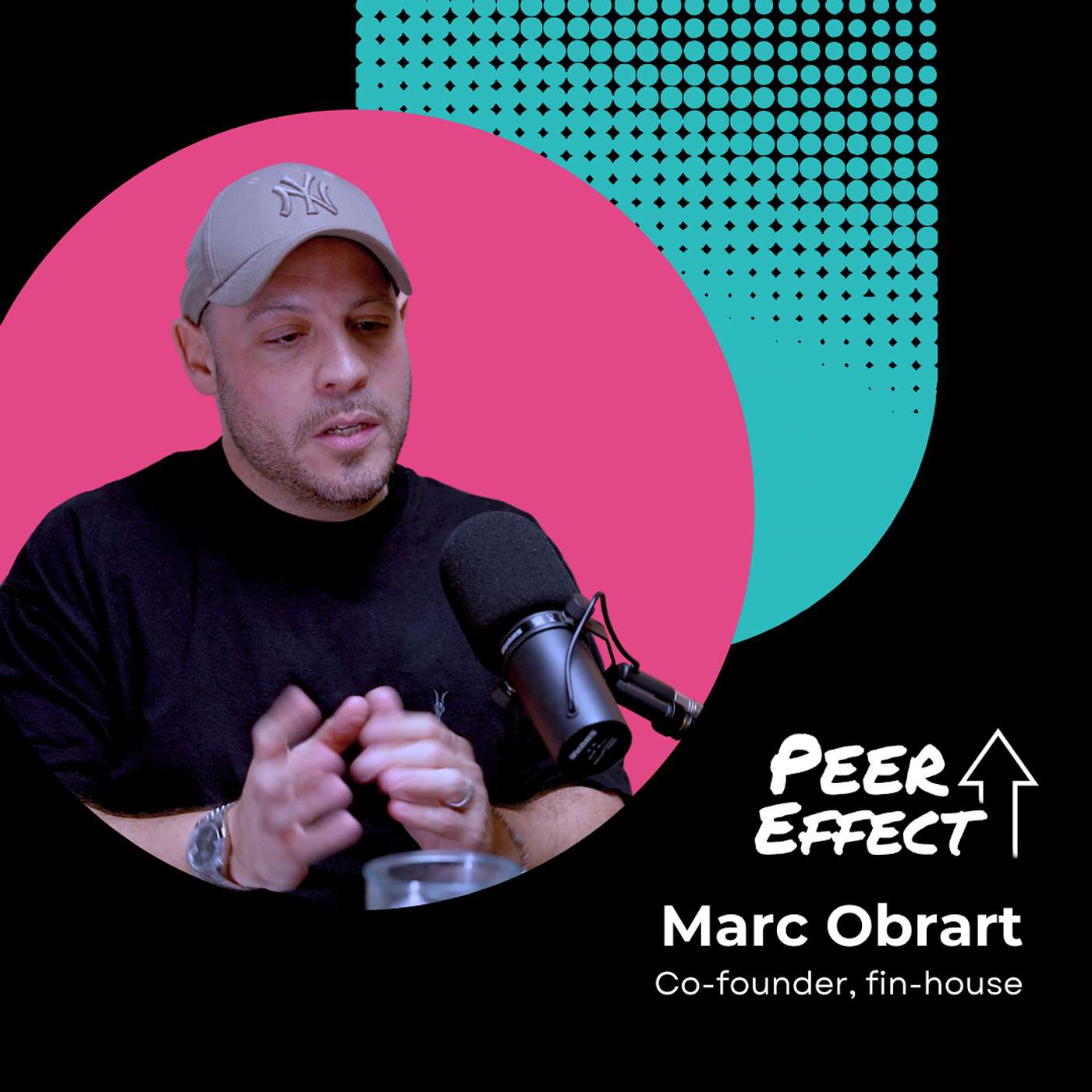
Why Your Bank Balance Is Lying to You (The Cash Flow Framework That Saves Businesses) - Marc Obrart
Feb 1100:33:54Tap to summarizeYou've got £250K in the bank. You're profitable. Everything looks fine.Then your VAT bill hits and you're scrambling. Or a major client payment is 60 days late and suddenly you can't make payroll.Marc Obrart has seen this exact scenario play out dozens of times. As co-founder of Fin House, he provides finance teams and CFOs to 50+ scale-ups. And the pattern he sees most often? Founders managing by their bank account instead of understanding the two stories every business tells.Here's what makes this different:Marc's not talking about hiring expensive CFOs or implementing complex ERP systems. He's talking about getting the basics right - and most founders don't have them in place.His approach is simple: finance should be embedded in your business, not isolated in a dark corner. When finance is done right, you have access to forward-looking data that lets you make confident decisions about hiring, marketing spend, and growth.You'll learn:Why your bank balance is a terrible way to manage your business. It tells you where you are now, not where you're going. Founders look at £250K and think they're fine—then their VAT bill goes out in three days and they've forgotten to connect the dots.The rolling 13-week cash flow framework and why this specific timeframe matters. In 13 weeks (roughly 3 months), you should know everything: new hires coming in, monthly payroll, payment terms from customers (30-90 days), supplier obligations. This is your Bible. If you don't have this, you're flying blind.Why VAT catches founders out more than margins, profitability, or any other metric. It's a red herring—you're collecting it, sitting on it, and then suddenly you owe £150K and don't have the cash because you thought it was available. Ring-fence it. Track available cash separately.The two stories your business tells: your profit story (management accounts) and your cash story (cash flow). These are completely different. You can be profitable and run out of cash. You can have cash and be unprofitable. Get your profit wrong, you have time to fix it. Get cash wrong, you're out of business in 30 days.Why you probably don't need an ERP system or NetSuite. Most businesses can run on Xero with proper bookkeeping, controls, and forward-looking insights. Don't overcomplicate it.How to know if your finance setup is useful. If you're skipping pages in your management pack, they shouldn't be there. If you don't understand something, it's not simple enough—and that's the finance team's fault, not yours.Marc also shares his background as an FA-qualified football coach and how explaining tactics to 9-year-olds taught him to simplify finance for founders. The crossover is remarkable: clear, concise messaging that people can actually understand and act on.The reality check:This isn't about fancy systems or complicated models. It's about nailing the basics: up-to-date bookkeeping, a rolling 13-week cash flow, and understanding your 3-5 key KPIs (not 25). If you don't have these in place, you're managing by gut feel—and that's how businesses end up in trouble.If you've been managing by your bank balance or avoiding your finance function because it feels too complicated, this episode shows you exactly what to fix.One action: Listen to the end for Marc's single recommendation every founder should implement immediately.Questions? Email hello@peereffect.com or find us on LinkedIn.More from James: Connect with James on LinkedIn or at peer-effect.com
Transcribe →
The PR Playbook That Actually Drives Revenue (Hint: It's Not Press Releases) - Harrison Duhr
Feb 400:29:11Tap to summarizePR feels like an unquantifiable luxury when you're trying to hit profitability. But Harrison Duhr has helped hundreds of startups use media to drive actual business outcomes - fundraising, hiring top talent, and landing ideal customers.As Head of North American Brand at London and Partners, Harrison's secured coverage in CNBC, Bloomberg, Fortune, and TechCrunch for startups scaling between the UK and US. But his approach completely flips the traditional PR playbook.Here's what makes this different:Harrison's not talking about press releases or chasing tier-one publications on day one. He's showing you how the PR landscape has fundamentally shifted - and why the independent media trend is where smart founders are focusing their energy now.You'll learn:Why Wall Street Journal coverage isn't the right first move (and what actually builds momentum)The independent media opportunity that's wide open right now - and why journalist-turned-founders are your ideal partnersHow to build PR relationships that tangibly support fundraising rounds, customer acquisition, and hiringThe one tactic that puts you in rooms with investors and ideal customers without any cold outreachWhy testing your narrative internally comes before pitching externallyThe cultural nuance between pitching in New York vs. London that trips up most foundersThe reality check: This isn't quick-win PR. Harrison built a Bloomberg partnership over 8 months. But those relationships compound - they drive business outcomes, not just vanity metrics.If you've been treating PR as "nice to have," this episode shows you exactly how to make it drive revenue.One action: Listen to the end for Harrison's single recommendation every founder should act on immediately.Questions? Email hello@peereffect.com or find us on LinkedIn.More from James: Connect with James on LinkedIn or at peer-effect.com
Transcribe →
Bet on Yourself and Stay True to Your Vision, with Jonathan Cornelias
Dec 19, 202400:24:54Tap to summarizeWhat does it take to scale a startup without losing sight of your vision?In this episode of the Peer Effect podcast, Jonathan Cornelias, shares the lessons learned from building four companies, including Elevent Inc, a marketplace connecting experience providers and companies to deliver unique, memorable virtual and physical experiences.Jon opens up about the mindset and strategies that have helped him navigate the challenges of scaling a business while staying true to his vision.Together we’ll dive into:Why belief in your idea and finding joy in the journey are essential for long-term success.The power of disciplined experimentation, prioritising ideas by impact, confidence, and effort, and iterating step by step.Why an effective go-to-market strategy often matters more than product perfection early on.How learning from others’ successes and mistakes can shortcut your path to growth.Jon’s insights will inspire you to embrace challenges, bet on yourself, and stay focused on what truly works for your business!Connect with Jonathan Cornelias on LinkedIn to follow his journey and learn more about Elevent Inc.More from James: Connect with James on LinkedIn or at peer-effect.com
Transcribe →
Redefining Success & Integrating Work and Life, with Kelly Ryan Bailey
Dec 11, 202400:26:55Tap to summarizeWhat if work-life balance isn’t the answer?As founders, the pressure to keep moving forward can feel relentless. But what if the secret to success isn’t sprinting harder, but intentionally slowing down?In this episode, I sit down with Kelly Ryan Bailey, a serial entrepreneur who’s launched 15 startups, one of which sold for $300m, to explore the power of pausing. Kelly has mastered the art of aligning personal and professional success, turning moments of reflection into a framework for sustainable growth.Together, we dive into:Why aligning personal and business goals is critical for long-term success.The role of intentional pauses in preventing burnout and fueling creativity.Kelly’s “growing forward” method for reflecting and resetting goals.How redefining success can lead to a more authentic, fulfilling life—without sacrificing financial growth.More from James: Connect with James on LinkedIn or at peer-effect.com
Transcribe →
Separating Identity from Business and Building Boundaries as a Founder, with Sean Campbell
Dec 5, 202400:23:47Tap to summarizeHas your identity become wrapped up in your business?Setting boundaries and separating your identity from your business could be the first step to building a successful business sustainably.Sean Campbell, Co-Founder & CEO at Cascade Insights, has navigated this very issue for the past 25 years and has learned through the ups and downs of running two businesses. Together we unpack:How to separate your identity from your work.The importance of delegating and creating space for your team.Why it's important to expose yourself to information you disagree with.For more, follow Sean Campbell on LinkedIn to learn more about his current business, Cascade Insights.More from James: Connect with James on LinkedIn or at peer-effect.com
Transcribe →
Mastering Hiring & Building Teams that Thrive, with Akbar Karenga
Nov 27, 202400:24:05Tap to summarizeWhat is the true cost of a bad hire for your company?In this episode, we’re joined by Akbar Karenga, founder of Maarusi, a talent and people consultancy driven by his passion for diversity, equity and inclusion. Akbar is an expert in high-stakes hiring and shares powerful tips for founders who need to hire fast without skipping steps. Together, we discuss:• The key difference between hiring to grow versus hiring to simply keep up.• When to bring in pro recruiters and how to create an effective, unbiased hiring process.• The hidden financial and cultural costs of a bad hire—and how to avoid them.Connect with Akbar Karenga on LinkedIn for more hiring strategies and insights.More from James: Connect with James on LinkedIn or at peer-effect.com
Transcribe →
Scaling Smarter: How Founder Forums Propel Success, with Kevin Lavelle
Nov 13, 202400:29:36Tap to summarizeWhat does it really take to scale beyond the early wins? For founders who’ve already seen a degree of success, reaching the next level means facing new challenges, and Keven Lavelle, founder of Harbor and Mizzen + Main knows all about it.He’s taken both companies to impressive heights, from securing a spot on Time Magazine’s 2024 Best Inventions list to hitting hundreds of millions in revenue!Together, we dive in:How joining a founder forum can offer you unmatched support & accountability– and where to find them!The differences between founding your first and second startup—and why experience doesn’t always mean an easier road ahead.Lessons learned in building a peer network that challenges you to make better decisions, see blind spots, and avoid common scaling mistakes.Stay updated on Kevin's journey of building Harbor by following him on LinkedIn.More from James: Connect with James on LinkedIn or at peer-effect.com
Transcribe →
Navigating Sustainable Entrepreneurship with Bob Bowden
Nov 6, 202400:17:42Tap to summarizeEver felt overwhelmed by the challenges of starting and scaling a business? In this episode, we’re joined by Bob Bowdon, founder and CEO of VidaFair, a pay-per-stream video platform. Bob has worked as a reporter and producer for companies such as Bloomberg, Choice Media, and PBS.Together, we explore:• How leveraging your immediate network can make all the difference in hiring.• The importance of embracing a sustainable growth mindset for long-term success.• Knowing when it's time to pivot in your entrepreneurial journey.For more insights connect with Bob Bowdon on LinkedIn and explore his work at VidaFair.More from James: Connect with James on LinkedIn or at peer-effect.com
Transcribe →