← Petersboat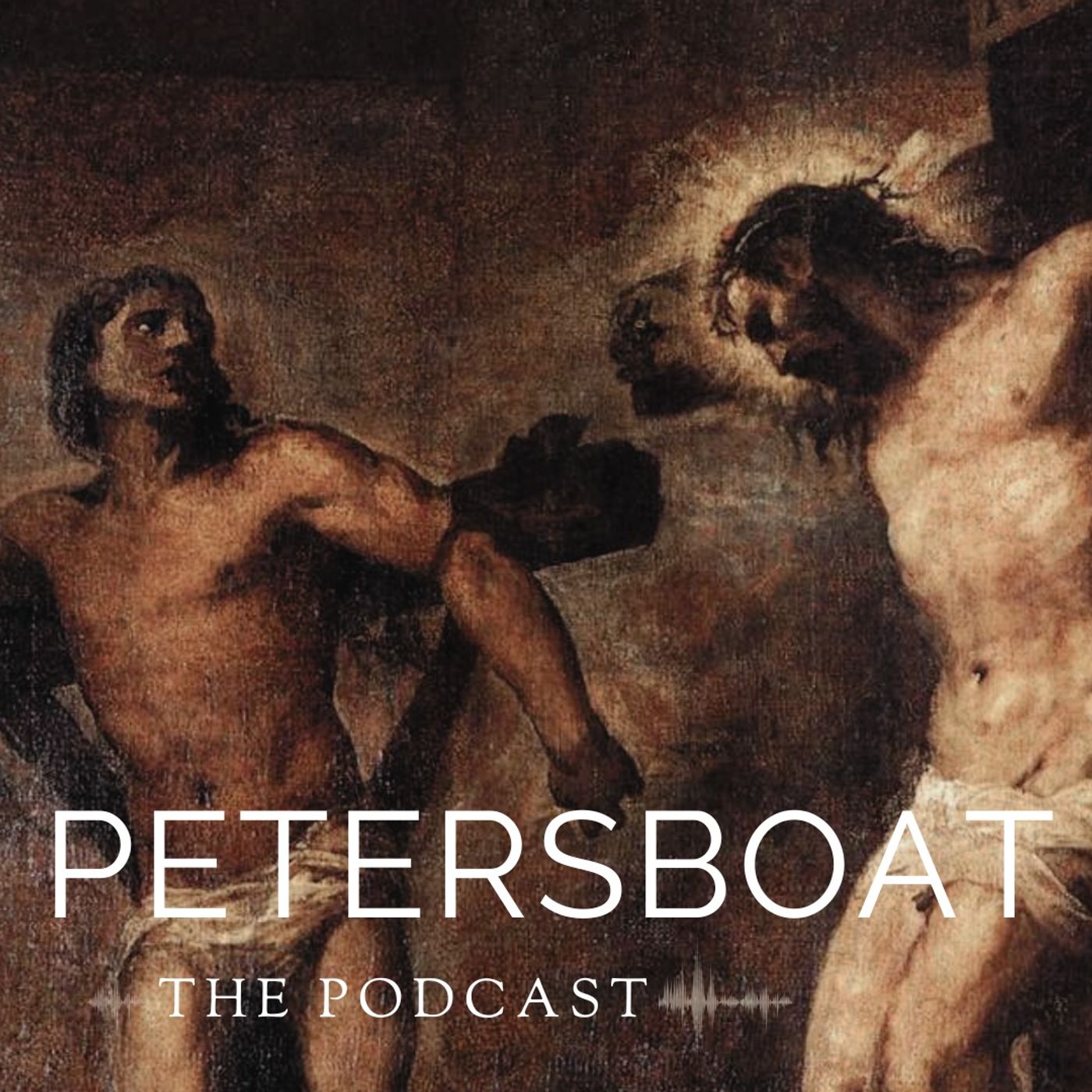
Petersboat
The Monday After | From One Happy Thief to Another on the Feast of Christ the King
00:15:26
The Feast of Christ the King was established by Pope Pius XI in 1925 to implore all people - especially leaders of Totalitarian States - to allow Christ to reign in their hearts, that He might direct their thoughts and actions according to the Father's will. Only then, by the forgiveness of their sins, would they be poised to bring peace to the world. The worst thing about an atheist is not so much that he doesn't believe in God, but that he doesn't believe in sin. That's when things get really ugly.
Loading summary
Transcript1 lines
- [00:00]
A
It doesn't take a scientist to understand the atheistic philosopher. Everybody feels that's default position. Well done. It's default. Come on. I was an atheist six times before I got out of bed this morning. You know, I don't want to put words in Pope Pius XI's mouth or anything going back to 1925, when he established the Feast of Christ the King for the church and for the world. I wouldn't want to presume that this is how he would say it, but I would imagine he might agree that the worst thing about the totalitarian regimes and their dictatorships, I don't think he would say that the worst thing about those fascist and communist leaders is that they. They didn't believe in God. I mean, that's not great. But the worst thing is that they didn't believe in sin. A man who doesn't believe in the reality of original sin, who won't acknowledge it, or who chooses not to believe in the existence of evil, well, this man is going to try to create peace forcefully. He would ultimately oppress people. He would ultimately get rid of certain peoples if he has to. He would probably isolate himself and a nation. If he won't acknowledge the reality of the spiritual wound of sin, like the offense of turning against God's will for us, if he won't acknowledge that it's a spiritual wound, he will try in every other way to heal himself from it. You know, so that's where you see all the things that are still around us to this day, ways of trying to heal our mind and our body and our soul without acknowledging sin. I mean, but I always say, like, you can't. You can't meditate away sin. It's a spiritual wound, and it's happening in the heart of man. It needs a savior, not just another ruler of this world. It needs one whose kingdom does not belong to this world. So the Feast of Christ the king is 100 years old this year, mentioned. It was established by Pope pius xi in 1925. Interestingly, fun fact, and we said this in the church yesterday, when our Diocese of Rockville center on Long island was formed in 1957. This is the first newly established parish, Christ the King, in the new Diocese of Rockville Center. So it's not that there were no other churches. There were lots of churches on the island built at the end of the 19th century. But the first newly established parish after the newly established Diocese of Rockville center, which had been the Diocese of Brooklyn, was, is this parish Christ the King? Really cool? So Pius xii, who came after Pius xi, was known also to have a devotion to Christ the King and wanted leaders of nations to know that. But also, like when he hears about a new diocese in New York and New York being known to the world as the capital of capitalism, he would imagine the name Christ the King would be good for a parish in New York. Christ the King was a devotion that was popular in the church back then and so was fitting, but also is always a word to the nations and to rulers of people that Christ wants to reign in our hearts so that we become good leaders of men in the world. Now, we said this yesterday, and it's really awesome to look at in the reading, so we'll do it again here. Christ is on the cross, and now they're mocking him. In fact, the words of the Gospel are sneering at him, jeering at him, that they are reviling him, all right? So they even put the crown of thorns on him. Some king you are, they're saying to him. So although they're mocking him, he is truly reigning on the cross because he even says to the criminal hanging next to him, when that criminal says, jesus, remember me, when you come into your kingdom. Jesus says to him, this day, you'll be with me in paradise. Paradise, okay, that's what we're constantly trying to create, constantly trying to earn and establish for ourselves. But it is the fruit of the Spirit. The paradise that Christ is talking about on the cross as he's doing the Father's will, even unto death, is the paradise that Adam and Eve lived in before the fall, in the Garden of Eden, referred to as a paradise. They were with God. He walked with them in the garden, and they were with one another in love. It was peace, the peace that comes from being with God and doing his will and then loving one another in that divine will. But then they were deceived, and they're deceived into taking the fruit, reaching for the fruit, manhandling the world, called to be good stewards of it. Adam was like a king and Eve was like a queen. And they were ordering everything according to God's natural and now divine law. But they are deceived by the evil ones who try to reach for the fruit and the fruits of the spirit, like peace or joy, but they can't be taken. They are given by God. They're given to us freely by him when we give ourselves freely to him to say, thy will be done, thy kingdom come. As Christ taught us to pray. That's why he taught us this prayer. Say to the Father, thy kingdom come, Thy will be done on earth as it is in heaven. The kingdom that the criminal saw happening in Christ's heart is this living in the Father's will, even unto death. Paradise, of course, in this world, this fallen world, if we're going to do the Father's will and live in it, it will be a cross, because the world is now fallen. So to live in paradise in this world is to be crucified. It's always going to be a little unpopular. We might get mocked for it, sneered at, or jeered at for it. We might be thought foolish as Christ was. Do you know one of the earliest forms of graffiti that would have been on the streets walls of Rome mocking the early Christians? It was a man's body, a donkey's head on a cross, crucified. So a man's body with the head of an ass being crucified. And it was the way that the people were saying to the Christians, you are fools because you worship an ass. You worship an ass. To be Christian, to follow Christ is to follow Christ crucified. It will not be easy because this world, people are going to accuse us of condemning them because their conscience is going to condemn them of sin. They're not going to want to look at the sin, so they're not going to want to look at us. You know, the very thing that enabled that criminal to recognize the kingdom in Christ was that Christ was praying for those who were persecuting him. Forgive them, Father, for they know not what they do. And he was taking care of his friend and his mother. John, behold your mother, woman, behold your son. He was loving people even while he himself was suffering. And when Christ reigns in our heart, sin no longer reigns in our heart. The evil one does not reign in our hearts. When we allow Christ to reign in our hearts, Jesus said one time, if we cast out demons by demons, like other demons just come, take its place, and many more and worse ones. So, for example, if you have like an alcoholism problem, you know, if you start going gambling to take your mind off the alcoholism, driving one demon out with another demon is just going to make it worse. It's going to lead now to smoke and stuff and then probably stealing at work and all that kind of stuff. Stuff. So. But if we allow the spirit of God to drive out the demon, then Christ comes to reign in us. You know, nothing but good takes its place and he brings the peace of the kingdom. This is why we left everything to follow him and why we always wanted to be with our lady, because Jesus and Mary were like this. The new king and queen, the new Adam and the new Eve. And they lived so united to God's will that they were ordering all of creation all around them, the way that Adam and Eve did before the fall as king and queen. Adam and Eve, they were ordering creation according to God's will. But that's how Jesus and Mary lived and why we were like, what is going on with these two people? To be with them is to. Is like being in paradise. That's what we were saying. That's why we left everything to follow them. And so we said yesterday in the church, when we were baptized, this, this Jesus of Nazareth was poured into our hearts. The Father gave the water, the spirit of his son. His spirit is his eye. And he was poured right into our heart alongside of our eye, as we've been saying. And the soul is this mysterious, immaterial part of us that's uniting the mind and our heart and our body, you know, so with all of its passions and appetites and the mind trying to make sense with its desire for self preservation at all costs. Not in just desire, but it was made for that. It was designed to preserve the life of the body. That's what the mind does, right? It's all survival instinct, it's all survival. But then the heart, the spirit in the heart, in a sense, right? The heart of the person, his spirit, his eye. I can wield myself in sacrificial love, but that will always be a kind of revolt because the mind was made, you know, to protect me. That's what it was made to do. So I, I have a hard time sacrificing myself because I have to die to myself. I literally have to tell my mind. I know it seems crazy, I know the world's gonna mock it, but I'm saying to my mind, but you have to do this because we have to love. So get over yourself and it's okay, don't worry, I got you. Yet we have to like literally say to ourselves, trust me, it seems irrational. I know it seems unreasonable. And atheistic philosophers, I know that they're going to say this is irrational or unreasonable because it is an offense against what the mind naturally wants to do, which is self preservation. But there is a new wine here, a new law at work. It's not like the old law. Even the old law given to Israel was for the preservation of Israel. It is, in a sense, this first and natural law. When Christ comes, something new happens, truly, you know, new wine being poured into new wineskins, which is a new way of looking at things, a new way of thinking, a metanoia, a change of our mind. When we tell our mind to become new wineskin for this new wine, it's Christ pouring himself out for us on the cross. So when we make the prayer of that criminal our own, and we say, jesus, remember me when you come into your kingdom. We recall that on the night of the Last Supper, when He gave us the Eucharist, Jesus said, do this in memory of Me. So even as we ask him to remember us, he looks at us and says, remember me. Remain in me that I might remain in you. Remember, he said that in John's gospel. So the Eucharist as a way of remaining in communion with Him. So obviously it keeps that baptism alive. The baptism can grow on this. We become strong. And what is it we're bringing into the world. We want to live like Christ did as a prince of peace in this world, so as to be crowned with glory in the world, to come to share in his kingship. But he lived his life as a servant, a prince of peace, just as our lady did as a handmaid of the Lord. And then he's given a crown after death, and she a crown in the next life. The glory that awaits the one who serves with Christ, who knelt down to wash our feet at the Last Supper, to show us what it looks like to reign with him in this world. So after all the masses yesterday, there was a Eucharistic procession where we could look at Jesus and His humility, reigning even now in the Eucharist as He pours Himself out for us in love, remembering that he's giving Himself to us as humbly as he did on the cross when he gives Himself to us in the Eucharist. Right? Behold the Lamb of God who takes away the sins of the world. And we look foolish for worshiping him in what looks like bread, just as the first Christians who worshiped him at the foot of the cross looked foolish in the eyes of the world. We know that this is what the Kingdom of Heaven looks like in this fallen world. This is what restoration looks like. You know, I didn't say this yesterday, but I'd like to end with it here, in a world where there is such a thing as sin, the reality of original sin affecting everyone in a fallen world, there will always be the need for rule and order or borders or laws and law enforcement in order to protect ourselves from evil men with evil intentions. Those who reject the peace of Christ. But the kingdom of heaven is also here, reigning in the hearts of those who are open to reconciliation with God and one another. In the forgiving, peacemaking heart, you find the Child of God. Remember, Jesus said, blessed are the peacemakers, for they will be called children of God. Because peace is begotten of the Holy Spirit. Just as Jesus was conceived by the Holy Spirit in the womb of the Virgin Mary. Begotten, not made. And peace is begotten, not made. Man is constantly trying to fabricate it, invent it, manufacture it. He cannot, because peace is from God. Begotten, not made. The feast of Christ the King is a reminder to the whole world every year that peace comes through the blood of his cross, the forgiveness of sins, reconciliation with God, and then offering that forgiveness as well to one another. Christ not only reigns in the heart of the man who allows him to reign there, but also in the hearts of others whom that man loves. That's how the kingdom grows. It's from one heart to the next, from one heart to the other. Don't let anyone ever tell you that we were forcefully baptized by an institution. You were brought to the font by loved ones who wanted for you what was given to them.