Loading summary
Transcript119 lines
- [00:00]
A
Sam foreign.
- [00:53]
B
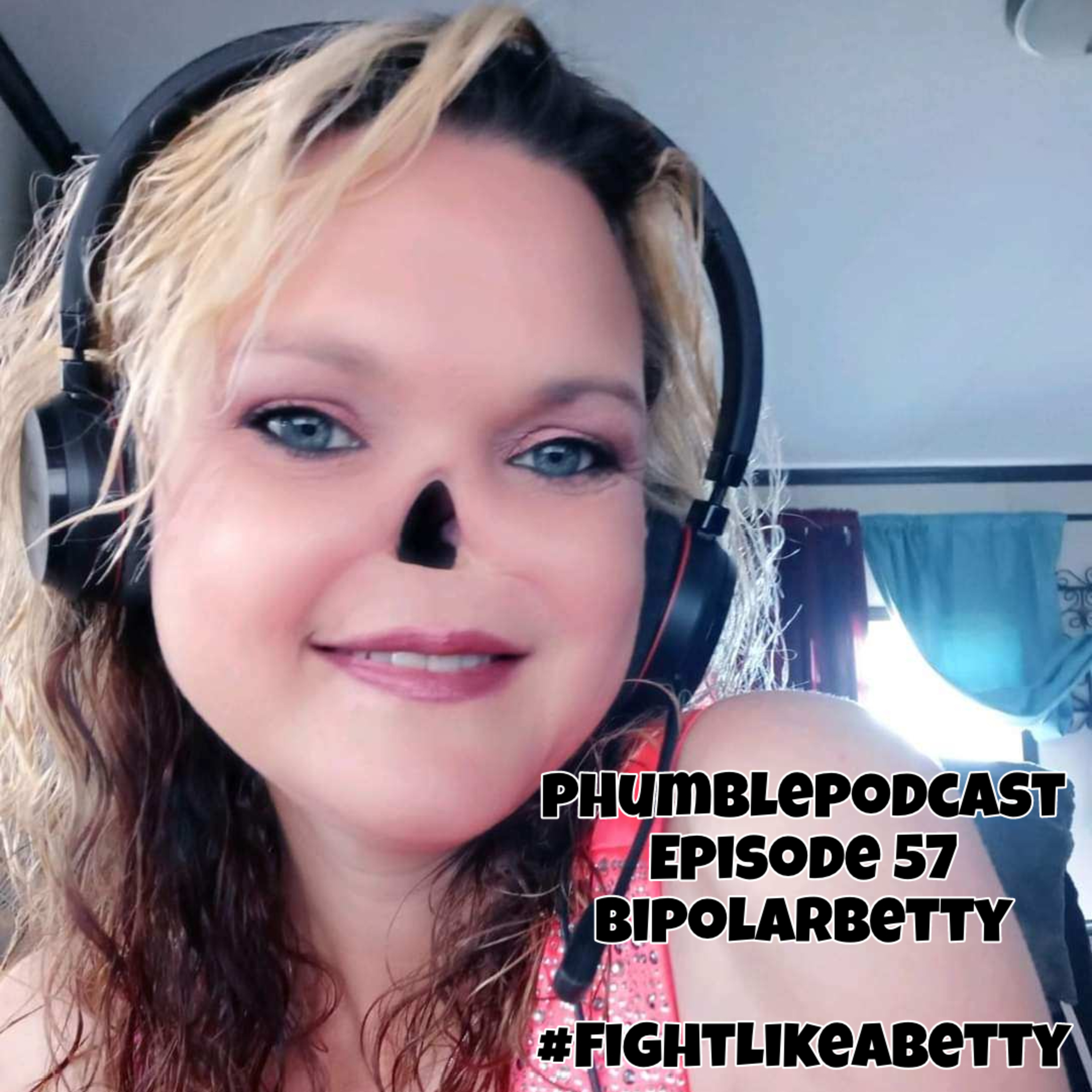
I have an incredible guest for us on episode 57 of Fumble podcast. She is heroine. She is an inspiration. She is, to me, a beacon of hope for others who either have similar challenges that they faced or better or for worse. And I think I found. I found her on TikTok, and I immediately had to reach out to her to let her know that I was touched personally. And it would have been an honor for her to jump on the podcast to share her story. She goes by Bipolar Betty on. On TikTok and Instagram, mainly on TikTok. And she has an incredible story to share, and I think there's no better place to do it than on Fumble Podcast, because Fumble Podcast is about what. It's about togetherness. It's about learning. It's about purity of. Of mind, and. And it's about curiosity. And there's no negativity on this episode, on this show in general. And. And I just wanted to learn about Betty's story, and I wanted everyone that's listening and maybe having their own struggles to be able to relate and connect with her. Without further ado, Bipolar Betty, or I just want to call you Betty, if that's okay. Welcome. That's fine.
- [02:29]
A
You can.
- [02:30]
B
Betty, welcome to the show. Welcome to the episode. Thank you for joining. I appreciate you.
- [02:37]
A
My pleasure. Thank you.
- [02:40]
B
Yeah. Now, as. As the audience can see, Betty had to have her nose removed. And I'm going to let you explain it and, And. And describe exactly the story behind that and what. How that decision came to be and where your emotions were behind that and all of that. So please take it away.
- [03:03]
A
Okay. So in. In October of 2013, our youngest son had a. He had to get a feeding tube place. And then in May, so I had this sore in my nose, and, you know, it just itched all the time. The whole left side of my face would go numb. The tip of my nose, it's really bad. And then like a. Like a small lump was right here. And, you know, trying to adjust to life with. Having a child with a feeding tube is pretty consuming. So, you know, it kind of got pushed on the back burner. And I was actually in the hospital with him for six weeks, and our middle son was diagnosed with mrsa. He had a spot on his neck, and it was, you know, it was staph. So I thought, oh, no, you know, everyone naturally has staph in their nose. Anyway, so I went to, like, a freestanding er and he said, well, you know, it's not. It's an infected hair follicle. So he gave me flonase and a steroid and like a antibiotic. And then so, you know, life kind of hit fast forward for us. And our son, he kept hitting it with his head. He would hit my nose with his head. And it. I understand the very definition of blinding pain because there were times where I thought, I'm going to pass out. It hurt really bad. And my nose was like swollen and the numbness and itching was getting worse. And you know, I was just so tired all the time. And I thought, well, you know, it's no wonder I'm tired. I was losing weight and of course I was not exactly on the heavy, heavy side, but, you know, a little heavier than I am now. And what people are accustomed to seeing me and they're like, oh, you are looking so good. What are you doing to lose so much weight? And, you know, actually had family members think I was, you know, doing some kind of drugs to lose weight. And so. And I was just so tired. And so finally I was like, well, I'm not even gonna bother going to my primary care. We had insurance that I didn't have to have approval. So I just went ahead and made an appointment with the ear, nose and throat specialist. And I went in to see him and he said, well, it's not an infected hair follicle. It's like a scratch. And I thought, well, I did have my nose pierced, so I thought maybe, you know, it flipped over and scratched and it just wasn't healing and. But oh my gosh, it was, it was so bad. And, you know, looking back now for the, the doctor at the freestanding ER to see that what he thought was an infected hair follicle and then go to ear, nose and throat specialist and then that, that sore now looks like a scratch. I mean, that it tells you something about how aggressive this cancer was.
- [06:07]
B
Wow.
- [06:08]
A
And, you know, I told him, I'm scared, and he's like, tina, it's. It's so rare. You know, don't. Let's just not anymore. It's so rare and let's not even worry about it. So he gave me a cream to put on it. He gave me two different antibiotics, and I went to see him every single week for two, two and a half months. We tried with cream, we tried without cream. I went through six different antibiotics. There was actually one that wasn't even quite a approved yet. It's just a high, high powered antibiotic. And, you know, he exactly approved. But you know, we need to. I can't Figure out what this is. I was like, we'll do a biopsy. And he's like, no, you know, there's nothing to biopsy. It's a scratch. There's nothing to biopsy because my cancer. Cancer typically grows from the inside out. You know, you think of skin cancer, it starts deep in the skin and then grows to the surface. Mine grew backwards. So mine started on that surface area and was growing into, you know, this area.
- [07:18]
B
Yeah.
- [07:19]
A
And going through all the cartilage. And so finally I was like, look, look, I don't. I can't afford to come and see you just for you to tell me that I have to go to Dallas. He said, well, I've been researching some doctors in Dallas. He didn't tell me that it was a head and neck cancer specialist. And I went to big Baylor in Dallas. So, you know, my doctor really didn't tell me that I was actually seeing a cancer doctor. And I thought it was just a higher specialist in ENT or something. Anyway, so I go to see him and he's like, well, let's do a culture. And I said, they've already done a culture and didn't find anything. And I said, can't we just biopsy it? You know, let's just pull out the big guns. I'm a firm believer in let's. Let's do this. I don't have time for this. And he's like, well, you know, we really need to start slow and blah, blah, blah. And I was like, fine. So then about a week after I got the culture done, they called me, and I was actually at my friend's house, letting her play with, you know, cutting my hair. And I got the phone call, and, you know, she said, tina, it's all normal bacteria. So there wasn't any abnormal bacteria in my nose. And so at that point, then it was the surgical biopsy. He didn't want to start with the biopsy because the area that it's in, they had to put me to sleep. It was a surgical procedure. And so they scheduled me for the biopsy, and I went in and had it done. And, you know, he came out and he told my husband, it, you know, it looks like an ulcer in there. You know, I really. I don't think it's really anything to worry about. So. And again, you know, looking back now, to him, it looked like an ulcer, whereas it started looking like an infected hair follicle. And we're talking like maybe four months span of time. And so they did the biopsy and he said, give it about a week and we'll give you a call. I said, okay. So a week went by, I didn't hear anything. And, you know, it was on a Thursday. And so, well, I'll wait until Monday. I'll call him on Monday. If I, if I don't hear from them and never heard from them, and then, you know, life fast forward again till it was the next Thursday. So it was two weeks. And I finally called the doctor's office. I was like, look, you know, surely you'll have the results of this biopsy now. She said, well, the doctor is going to have to call you and, you know, give you the results of that. So I thought, okay. And you know, at that point in my life, I was very, I. I depended on God a lot in that point in my life. And I remember being in the kitchen one day and I was sweeping the floor and, you know, it's going over my mind and just mulling it over and over in my mind, you know, almost like preparing myself to find out I had cancer. And I thought, you know, I just prayed and I thought, lord, why does it feel like I want to have cancer? Like I don't. Nobody wants to have cancer. But of course you want answers. But. And I really feel like in that moment, God was just kind of preparing my heart. And so I did. I didn't hear anything from the doctor by like, I think it was 5, 5:30, which is, you know, close the business. So I thought, fine, I'll go get in the shower. And then, you know, of course, the second I have soap in my hair, the phone rings.
- [10:59]
B
And it's always like that. Yeah,
- [11:03]
A
I am standing there in my bathroom and, you know, dripping, pouring wet soap getting in my eyes, you know, standing there like the day I was born. And he goes, well, you know, the reason you've had so much issues with this sore healing is because it's not, it's not a sore, it's cancer. He said, that's the reason why you've had so much trouble with it because, you know, it's cancerous. And he said, we need to do. They did what was similar to a Mohs surgery. It's Mohs, you can look it up. And basically what it is is they take very, very thin layers of tissue at a time and they flash freeze it in the operating room and they keep taking small layers until they have clear margins. Clear margins being they don't see any of the, the cancerous cells. So they did that surgery and it was so painful.
- [12:02]
B
You were awake for that or was. Were you under?
- [12:05]
A
No, no. I mean, they had put me under. There's no way I could have tolerated that pain.
- [12:10]
B
But you're talking about afterwards. You're talking about. Yeah, afterwards. Oh, man. Yeah, yeah, yeah, yeah.
- [12:15]
A
I woke up and, you know, they were giving me fentanyl and morphine. And the morphine, it wasn't doing anything for the pain. Fentanyl. I might as well take a drink of water. You know, you might as well be shooting water in, because it does absolutely zip, nada. And then the morphine. I was still in all that pain, but I was so loopy. I couldn't make the words come out to tell them I was in that much pain.
- [12:43]
B
Oh, my God. And that feels almost like a backfire.
- [12:47]
A
Yeah, that feeling is literally. Literally terrifying. That was one of those moments in my life where it was just to be. To have your brain fully conscious and, you know, have something going on, but not be able to communicate it. All I could do was moan and cry, and, you know, my husband came over there, and finally, he was like, you know, she's in a lot of pain, and she's like, well, she's had a lot of morphine. He said, I don't care what she's had. Give her something different. Because look at her. Take five seconds and actually look at her. Because the nurses weren't really paying attention. And anyway, so they had to do. Of course, they did a CAT scan. I think the CAT scan came before the surgery. And now I found out on Thursday I had cancer. By Wednesday of the next week, I was in an operating room. I mean, it went that fast?
- [13:50]
B
So they did.
- [13:50]
A
And they found out.
- [13:51]
B
Operation. They did this first operation. You're in. You're in massive pain afterwards. But they hadn't taken off the whole nose yet.
- [13:58]
A
Right.
- [13:59]
B
This was just tissue. Yeah.
- [14:02]
A
Yep.
- [14:02]
B
Yeah.
- [14:03]
A
My nose. He said, like this. So the. The layers of tissue in your nose, think of it like a sandwich. Right. So the outer skin is the bread, and then there. The inner lining is the bread. And then everything in between, there's, like, cartilage and tissue, and it's like the meat. He said, basically, I took off that inner layer of bread and that layer of meat. Yeah, right. It was, like, backwards, but it was. It was on this side. It was on my left side.
- [14:31]
B
Okay.
- [14:32]
A
And anyway, so he's talking about radiation, and so I had this, like, big plastic triangle kind of thing in my nostril for about a week. And, you know, my nose was really swollen. And he said, you know, just be prepared when we take that out that that could collapse because there's not enough tissue to hold and hold the form. Oh, yeah, that's why they put the triangle thing in there, to give it some time to heal and keep the shape. So he said, you know, I just want to prepare you for that. And so I was like, okay. Well, I was very blessed in the fact that it didn't happen. And so he. I went in for my follow up after that surgery, and the oncologist said, well, it's much, much worse than we thought it was. And now. So the way he talked to me the first few times I saw him was very, very different than the way he talked to me when he was giving me this information. He. His voice was very low. He was very monotone. He was very, you know, just kind of like, all right, so here is where we're at now. It is much worse than we thought it was. Much, much worse than we thought it was. And just the tone of his voice changing like that. I was like. It was, you know, so.
- [16:02]
B
Yeah, of course.
- [16:03]
A
Yeah. Radiation. And, you know, at that point, I'm not fully understanding what it would look like to not have a nose to. You know, he's like, well, you know, you'd have to take that whole side off. He said, you're a young, attractive woman. We don't want to permanently disfigure you. And I was like, yeah, I really can appreciate that, and I thank you for that. But what good is pretty if I'm in a box six feet under?
- [16:25]
B
Oh, my God.
- [16:25]
A
You know. Yeah, my family doesn't make me pretty.
- [16:28]
B
And would that have been the result if you kept it?
- [16:32]
A
Yeah, oh, yeah. Because it was very fast growing.
- [16:36]
B
Oh, my.
- [16:37]
A
And, you know, it was invasive squamous cell carcinoma was the official diagnosis. Invasive squamous cell is. It's one of the most aggressive types of. It's actually a skin cancer, but it's. It's real deep skin cells, but it is a skin type cell. And. And it was. It was growing fast. And, you know, he's talking radiation. And, you know, they really don't do chemo for skin cancer unless the radiation isn't working real well. They'll sometimes do them, you know, together to help the radiation work better. And he's telling me about this radiation, and I'm like, Yeah, can't we just cut it off? You were at least, you know, yeah, yeah. I'm like, can't we, you know, cut it out? But Keep in mind, at that point, my brain was not fully comprehending what was going to happen, what it would look like after.
- [17:39]
B
Yeah.
- [17:39]
A
And so I go to see a radiation. I'm sorry, this story is really long. Don't worry.
- [17:44]
B
No, you know, important.
- [17:45]
A
It's the whole story. So I go to a radiation oncologist and, you know, he wanted to look at it, and he still hadn't talked to the surgeon, but I needed to be. They make a screen mold of your face and neck, and so I needed to be fitted for that because they make it, you know, specifically for each person, and it's so they can concentrate the radiation in the little squares and. But he's like, well, I want to look at it. So this part was kind of cool. He. He took a scope, you know, with a camera scope to look up in there.
- [18:24]
B
Yeah.
- [18:24]
A
And it had a light on it. And when he stuck it up in there, that little, like, quarter size place where the other doctor had taken the cancer, you could see it. It like, lit. I was like, oh, that's cool.
- [18:37]
B
Okay. Lit up. Lit up your face.
- [18:42]
A
Yeah. You know, and then, you know, it's on a screen so you can actually see. I love science. Like, oh, there you go. Yeah. Science of the anatomy. Anyway, so he's like, well, let me talk to the. Let me talk to the surgeon and see what he has to say. And, you know, we'll kind of go from there because I'm like, you know, I really, I. I don't want radiation. I really don't want radiation. I looked it up and because people were like, oh, if all you have to do is have radiation, that's fine. And I was, I put a post on my Facebook and I'm like, have y' all even bothered to Google this? I could have ended up with my saliva glands killed because of the area that, that they were doing. So I could have lost the sight in my left eye. My saliva glands could have stopped working, which means I myself would have needed a feeding tube for the rest of my life. There was a great risk to my brain. It could have caused a tumor on my pituitary gland, because it is way up in here. And so, you know, I was really. I really did not want radiation.
- [19:47]
B
Yeah.
- [19:48]
A
And so my husband and I, we went out to eat lunch, and the doctor called while we were at lunch, and again, with the difference in the tone of his voice, and I was like, man, I'm about to get waylaid. And. And something about, you know, that hearing that tone in his voice again. And knowing that that means I'm getting some really harsh information, I just conceded. It was almost like I just stopped the fight. I just gave up. You know, I was like, fine, you know, we'll. We'll do the radiation. And I was very, very upset about it. Very upset. And I got home and I was sitting there watching TV a few days later, and commercial for Cancer Treatment Centers of America came on the television. So I called them and asked them if they had any experience with nasal cancer. And he said, well, it's really rare and we only have one hospital that has the head and neck specialist that can do the nasal cancer. I had to go to Chicago. Side note, if you ever have cancer and your insurance will allow you to use Cancer Treatment Centers of America, please do so. Because they handle all of the logistics. They had me on a flight in three days. They paid for the flight. I got there. They paid for my hotel room. They gave me vouchers for food. And they'll do that even when you go for your treatments. You know, they pay for the flight. Limo picks you up. Limo picks you up at the airport, takes you to your hotel. I think the hotel was $40 a night. And then, you know, again, they give you the vouchers for breakfast, lunch and dinner. So they really. And if you've ever. I appreciate it so much. After I started going to MD Anderson, because it was not the same show, although their doctors are phenomenal. Anyway, I digress. So I go to see their head and neck specialist in Chicago and she's like, well, what that doctor did wasn't even a cancer removing surgery. She's like, it wasn't nearly aggressive enough. And.
- [22:12]
B
Yeah.
- [22:13]
A
So I went into the next surgery not knowing if I would have a nose. It wasn't something that I could really prepare myself for because it wasn't, you know, definitive. So I left my family in Texas and I flew to Chicago thinking I may be going home to my family without a nose. It was just very emotional. It's very, very hard. And I had my friend with me and she tried her best to, you know, kind of make it fun. I would. I took a picture before every surgery. You know, we were going to take a selfie or we were going to fight cancer, but first we need a selfie and, you know, just.
- [22:55]
B
Yeah, yeah, yeah.
- [22:59]
A
And so I came out of the surgery and I still had the outer skin, the outer structure of my nose, but she had to take much, much more out of the inside.
- [23:13]
B
Yeah.
- [23:13]
A
So they had my face packed. I don't Know if you've ever had a sinus surgery where they. They put the cotton, and. And she was like, okay, there is. She said, you're going to be shocked when you see all the cotton that comes out of your face, you know, after this surgery. And I.
- [23:33]
B
I know about that because I had no rhinoplasty when I was younger, and. And, yeah, afterwards, it was like a full newspaper worth of. Yeah, it was a lot.
- [23:43]
A
Yeah.
- [23:44]
B
Yeah.
- [23:44]
A
They have the black rings, you know, they. They have the black strings. And so, yeah, you know, and I had people. I had people that would come up to me because I would. I would cover it when I went out when, you know, we went to the dining hall to eat, and I would. I would cover it.
- [24:10]
B
Okay. Yeah.
- [24:11]
A
And I have people come up to me and say, honey, you're beautiful no matter what. You don't. Don't feel like you have to hide anything from anybody, especially not us. We are all in this fight. And there was always the closing. There was this one time they were doing karaoke in the dining hall, and somebody got up and saying, we are the champions, and everybody in the dining hall was singing with him. It was. It's just so powerful. Oh, my God, that feeling. I mean, it was just. Just powerful knowing that, you know, you're not alone. Yes, You're. What you're going through, maybe, you know, physically different, but everybody's in this fight. And, you know, sometimes I feel that way about life. You know, everybody's got their own struggles. Everybody's got their own things. And your struggle may not be the same as mine, and mine may not be the same as yours, but we're all struggling. We're all in this together, and
- [25:15]
B
it's 100% true. You. You are. Like I said at the beginning of this episode, she's an inspiration. And you took that. You took that initial negative in your life, The. The cancer being. Being what it was, and you've gone from the. The fears, you've gone from the. The. The worries and the stress. And. And you finally made that call not only to. To get rid of it, but you've turned that around, and that has become your superpower. Believe it or not, that is. That is your superpower. You are able to inspire people. I'm telling you, that is. Yes. Watch Fried Green Tomatoes. That is. That is her. She. She had me watching a movie, and I did. And I get why Tawanda. A hundred percent, you are stronger. You are stronger.
- [26:10]
A
Yeah.
- [26:10]
B
Than. And. And you're stronger for it. You're Better for it. You're still beautiful. And, and listen, it's, it is exactly. It was your calling in a way. Right? Like they always say, sometimes blessings happen in a disguise. Right? And that was your, that was yours. And I believe that. You know, I don't have to tell you all this. You already know. But the bottom line is like, you know, it's just, it's just that, like this, this. Something as small as this podcast was as a result of you inspiring me to, to reach out. You know, I've reached out to. I've reached out to 56 guests prior to you and, and you know, and they all have their stories, right? Some are funny, some are, you know, some are more serious. I had a. I had actually one of my friends, he lost his finger as a result of physical abuse from his stepfather, which he didn't even know was his stepfather back then. So, yeah, he got shot in the hand and he shared the story on here. So it's, it is, it is stories like that and like yours that I think people need to hear because we all get used to bitching and moaning about day to day things. Oh, man. Like, you know, my coffee's cold. Or my, you know, like my, ah, that's not what I ordered. Right? Like, we get so, yeah, we get so stuck in these things. And then you're like, wait a minute, hold on. Yeah, like it's, it's, it's.
- [27:47]
A
Okay.
- [27:47]
B
First of all, a lot of people don't even have the luxury of getting food, right? If you really think right. People and around the world that are in third world countries and they're, they're happy with whatever you give them. The. Unfortunately, here in Sacramento, the homeless rate is skyrocketing and it's becoming so, it's becoming so bad. Yesterday I saw a guy, like, there was a, there was a half coffee cup, a Starbucks coffee cup on the ground. Someone had left it. And this homeless guy came and he was excited to drink it. Like, he was excited to drink it. And it was just like, to me, it was like, yeah, what am I complaining about? I don't have WI fi. Like, what am I bitching about? You know what I mean? It's like, I think social media is great for these reasons because it can connect real people and it can connect the world in a beautiful way, but it can also be toxic. And, And I've seen, and I've seen it and I've seen your posts. I've seen your posts about the trolls online that, that make a business from Poking fun or. Or just throwing BS on the comment section. But honestly, that's all they are. They're trolls. Just like the movie. It's just. They're just trolls.
- [29:05]
A
Yeah.
- [29:06]
B
And, you know, and when we feed into it, they're winning. Right. And it's not even about losing. It's about. Yeah, because they're gonna be there regardless. Right. All I do. I get those. Obviously, you get those. As you shared on TikTok, it's. I like to channel my energy towards people who are actually trying to unite, trying to be together, learn from each other. It's so. We're all so beautiful in our own ways, man. We all have so much to offer to the world. Everybody was born for, with a purpose, you know, Your purpose is. Is this. And it could evolve again. Right? It can evolve and become something bigger. I mean, for God's sakes, you have.
- [29:47]
A
Yeah.
- [29:48]
B
You have your own Wikipedia now. So. So that's.
- [29:51]
A
I. Do you.
- [29:53]
B
Do you have your Wikipedia page? You. You mentioned it to me a few days ago, and I looked it up and I was like, yeah, yeah, you
- [30:01]
A
were on Google Me. I was like, yeah, yeah, me.
- [30:06]
B
Exactly. Hey.
- [30:07]
A
But I just. Why not myself that way?
- [30:10]
B
Why not you? Like, that's somebody that needs to be the story that needs to be heard.
- [30:15]
A
Right?
- [30:15]
B
It's easy. Yeah, it's. It's. It's a beautiful story, and obviously it's the first that I've seen, but you're brave enough and you're strong enough to. To share your story online and look how much it's inspired people. Right? Forget the negative ones. They fade away. They don't. They. Negativity is. Is temporary. Love and positivity is everlasting. I always. I always believe in it, so.
- [30:44]
A
Food for the soul. Yeah. People ask me all the time, why don't you just turn your comments off? And I'm. I think I made a post about it not too long ago, and I'm like, you know, I don't want to. I. You know, I'm not gonna stop living my life and doing what I want to do because somebody doesn't like my face. Avert your eyes.
- [31:03]
B
You know, don't follow me or don't. Don't look in my post. That's it.
- [31:08]
A
You're not my victim. You're not my victim.
- [31:12]
B
When I'm on TikTok, I'm just swipe. If I don't care, I swipe. I don't. I don't need to come. I don't need to go out of My way to say, hey, I don't like your comments or I don't like your posts. I don't like this. Feeding into negative energy only begets a miserable life at the end of the day.
- [31:27]
A
And, and right. More miserable too. Yeah.
- [31:31]
B
And I've made that mistake when I was younger, right. When I wasn't, I wasn't woke, as the kids say. Yeah, yeah. But you know what? It, it's, it's an energy I don't want to surround myself by. I want to, I'm, I'm all about love, togetherness. Comedy, obviously, is a big part of my, my shtick and I love it. But it, it's, it's a, it's a source of unity at the end of the day.
- [31:58]
A
Yeah, absolutely. We use so much, so much just, you know, really, really dark humor. And like, my husband will look at me and you know how people look at you and like, act like they're gonna pick their nose kind of thing and look a boogie on you? He'll do that. And I'm like bragging just because you have nostrils and I don't. You need to stop.
- [32:22]
B
Yeah, there you go. And that's beautiful that you, you can, you can poke fun of it because that's, you know, like life is to live, laugh and love, man. That's it. What else is there? Like, everything else is, is, is, is a disaster because it's, it's such, it's setting you up to just be miserable. And I'm done doing that. I did that when my younger age, when I was younger. I've made my mind up. I'm, I'm truly at my purest and freest form when I'm pursuing my acting career, pursuing my comedy, and, and I'm speaking with wonderful people like yourself, so.
- [32:57]
A
Well, I appreciate that.
- [32:59]
B
Well, Betty, ma', am, I really appreciate you getting on. Why don't you plug away your, your, your tick tock so. So people can come follow your story? Go ahead.
- [33:10]
A
Yes, yes. Just be aware. Okay. So my, my name is Bipolar Betty for a reason. Betty is not my real name. My real name is Tina. Betty is a Persona, kind of like Tawanda, you know, she's my power, my, my sass. And, you know, because a Betty back in the 80s, I'm old and a Betty was, you know, a sassy, pretty girl. And so anyway, and then I really am bipolar. I have bipolar type 2. And I have, unfortunately it is, I have depression that is medication resistant. So the medications, they really don't help. They really don't and, you know, my. My psychiatrist and I were just talking about this actually yesterday or day before yesterday. She's like, you know, the thing is, Tina, is you just get hit with so much, you literally do not have time to grieve one thing before the next big thing comes along. Because she said, your life, it's not little things. I've been with her for five years, so, you know, she said you're. It's. It's a lot of it circumstantial, and there's really nothing we can do. So I don't really meditate because my brain is just like, all the time, and I can't get it to calm down. And the harder I try to get it to calm down, the worse it gets. But I do do yoga. You know, I take. Try to take my vitamins and all that kind of stuff. Get good rest, all that kind of stuff. I take medication to sleep. My husband woke up one morning. He's like, you're up early watching tv. And I was like. He said, you didn't go to sleep, did you? Yeah. Did you take your medicine?
- [34:50]
B
I can empathize with you on the sleep part. I. I don't sleep much. I. I wake up from a thought. Actually, the name of this podcast came from me waking up at 2 in the morning with. With like, oh, Fumble Podcast. There it is. And then. But then I couldn't sleep for four hours. But it was. That's. That's how I came up with it. My mind, I think, is. Because it's. It's. It's. It's. It's clear. So then all of a sudden, anything. Anything. It catches. It's just like, bam. And I. When I think about something, I overthink it, which is something I'm working on. Not overthink, but anyway, I. I can relate.
- [35:25]
A
Yeah.
- [35:26]
B
Yeah.
- [35:26]
A
How much more time do we have? Do we have time for me to finish the story?
- [35:30]
B
Yeah, yeah, go ahead and finish that up. And then I.
- [35:33]
A
We'll.
- [35:34]
B
We'll wrap up the conversation. But I do want you to come back with whatever next chapter in your journey. I. I'd love to hear about it on the episode. On. On another episode. Yeah.
- [35:45]
A
Yeah.
- [35:45]
B
But, yeah, go ahead and finish that and let me know about your. So that people can follow you.
- [35:52]
A
Yeah, yeah. And it's, you know, Bipolar Betty. And I also have an Instagram. I have a YouTube channel. I'm not real. I'm not real good at using it, so I really don't get on there very much. And I kind of forget about my Instagram sometimes, just because Tick Tock is a very much a creative outlet for me. It's very much an emotional outlet, and I use it that way. You know, I'm alone a lot because I can't leave the house a whole lot. I have seizure disorder, so I can't drive. You know, I work from home. I really don't leave the house. And so when I'm hurting, that's just me reaching out. That's me. Everyone's like, you know, they. They see these people making these posts like this, and they think they're doing it for attention, but I see it differently. You know, I see it as. They're just like, hey, I feel very alone right now, and I need to get this out of my head and out of my heart. And so they're. They're sharing and being extremely vulnerable. To be that vulnerable is. It takes a lot of strength and courage. So, you know, I think too much of it is, you gotta be careful. I can send myself down a spiral. And sometimes you can watch my videos and you can literally see the bipolar, because I will go from laughing and joking to, you know, either mad or crying. You. You can just watch it.
- [37:19]
B
Yeah.
- [37:19]
A
Anyway.
- [37:21]
B
Well.
- [37:21]
A
But
- [37:23]
B
yeah. Yeah, it's just
- [37:26]
A
so you. You.
- [37:27]
B
You also are. You're. God bless you, by the way. I. I know you. You didn't have. You've had a challenging life, and I know that we only scratched the surface today with. With, you know, discussing the.
- [37:41]
A
Yeah. And yeah, there's. There's a whole lot of other things,
- [37:45]
B
and I'd love to have you back, talk more about all of that. I want you. Definitely. I want you to back.
- [37:50]
A
And.
- [37:51]
B
And I. I have your contact, so I will reach out to you. But yeah, as far as the chapter about your nose, and we've talked a little bit about your bipolar, too, and hence the. The username Bipolar Betty. And everyone give this person a follow because her story is amazing. And I go on her page and I catch up sometimes on like, six, seven videos. And I just looked up. I'm like, okay, so this is what she did four days ago. This is what she did three days ago. And I just. And I. And I'm truly interested in, you know, your perspective on life because it's a unique one. You know, it's a unique one because you're in a unique situation, but that makes you even more special, you know, so it's. We're.
- [38:42]
A
And.
- [38:42]
B
But that doesn't take away from everybody else. Everyone's special. I'M just saying your situation is. It's something everybody's got their own.
- [38:53]
A
Well, I appreciate that, and I. It's very humbling to me. It's very, very humbling to me because I. Like I said, I don't see myself that way. It's not, you know, I didn't do tick tock to become famous. You know, that's not why I started it.
- [39:10]
B
But that's.
- [39:11]
A
Honestly.
- [39:12]
B
Yeah, but that's what makes. It makes. It makes people connect to you because you can see that. You're not trying to be a clickbait. You're not trying to pull people in with. With, you know, like, fun titles on your post. You're not doing any of that. You're just talking from the heart. And after a while, people start to be like, okay, this is legit. She's actually sharing her real life with us. And that's why there's no better way than doing it organically, which is what you're doing.
- [39:46]
A
Yeah. I always use my hashtag, fight like a Betty.
- [39:50]
B
There you go. Everyone fight like a Betty. Whenever you have a hard day, just think, what would Betty do? Exactly. Yeah, Betty. Thank you.
- [39:58]
A
We're gonna have a. Thank you. Thank you so much for having me. I truly appreciate it.
- [40:04]
B
And it's been. It's been a pleasure. Pleasure's all mine. Everyone know you know where to find me. I'll. I'm posting more crazy stupid videos online. I do my comedy shtick, but obviously follow Bipolar Betty. Follow me Pejdomaniac on TikTok, Twitter, Instagram, Snapchat. I'm on all of them. And. And obviously Fumble Podcast. Don't forget to subscribe on YouTube and on Spotify. This has been episode 57. Lovely, Tina. Bipolar Betty. Thank you so much.
- [40:36]
A
Thank you. Bye, Sam.