Podcast
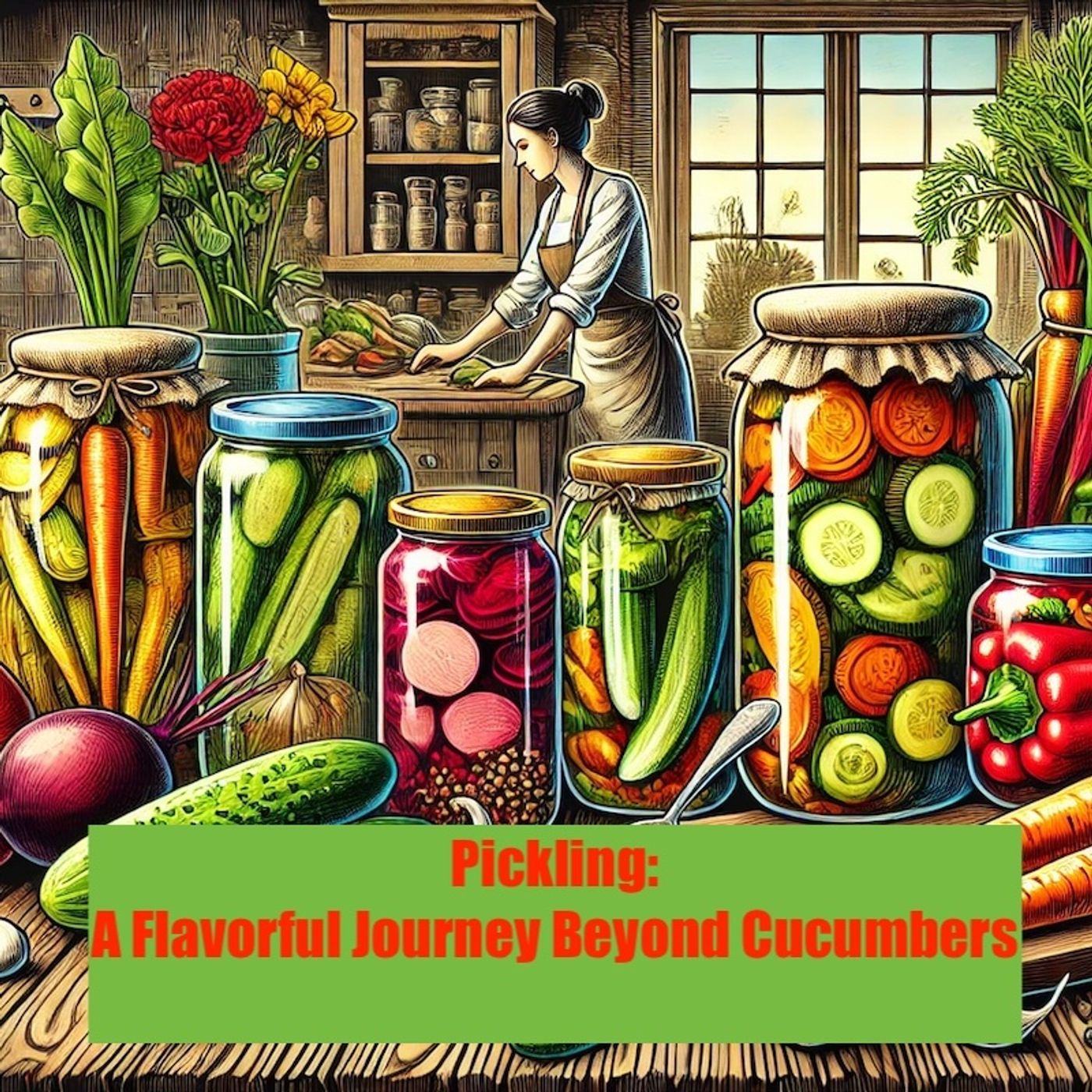
The Art of Pickling: A Flavorful Journey Beyond Cucumbers
Pickling is a time-honored tradition that transforms ordinary vegetables and fruits into tangy, crisp delicacies. While many associate pickling solely with cucumbers, this versatile preservation method can be applied to a wide array of produce, creating a pantry full of colorful, zesty treasures. Let's embark on a culinary adventure to explore the world of pickling and discover how to elevate your home cooking with these delightful preserved morsels.
At its core, pickling is the process of preserving food in an acidic medium. This can be achieved through fermentation, where natural bacteria produce lactic acid, or by adding vinegar to create a brine. The acidity not only preserves the food but also imparts that characteristic tangy flavor we associate with pickles. This ancient method of food preservation has been practiced for thousands of years, with evidence of pickling dating back to 2030 BCE in the Tigris Valley of India.
Before diving into the pickling process, it's essential to ensure your kitchen is properly equipped. High-quality glass jars with tight-fitting lids are a must, as is a large pot for boiling filled jars. A jar lifter is invaluable for safely removing hot jars from boiling water, while a canning funnel helps fill jars neatly. You'll also need a nonreactive saucepan for preparing brines and a sharp knife for precise cutting of vegetables and fruits. Some enthusiasts also invest in a mandoline for uniform slicing, particularly useful for vegetables like cucumbers and onions.
The beauty of pickling lies in its simplicity. Always choose the freshest vegetables or fruits for the best results. When selecting produce, look for items that are firm and free from blemishes. Cucumbers for pickling should be small and compact, with thin skins and minimal seeds. Vinegar forms the base of most pickling brines, with white, apple cider, or rice vinegar all being suitable options. Each type of vinegar imparts a unique flavor profile to your pickles, so don't be afraid to experiment.
Salt is crucial in pickling, but be sure to use pickling or kosher salt, avoiding iodized varieties which can cause discoloration and cloudiness in your brine. Sugar can be added to balance the acidity, though it's optional. Brown sugar or honey can be used for a more complex sweetness. Whole spices like mustard seeds, peppercorns, and dill seeds, along with fresh herbs such as dill, thyme, or bay leaves, add depth and complexity to your pickles. Garlic and ginger are also popular additions that can significantly impact the final flavor.
The pickling process begins with preparing your produce by washing and cutting it into desired shapes. For cucumbers, you might leave them whole for dill pickles, or slice them into spears or rounds for bread-and-butter pickles. Onions can be sliced into rings or quarters, while carrots might be cut into sticks or rounds. Next,...
Pickling: A Flavorful Journey Beyond Cucumbers
Hosted by Quiet.Please · EN
The Art of Pickling: A Flavorful Journey Beyond Cucumbers
Pickling is a time-honored tradition that transforms ordinary vegetables and fruits into tangy, crisp delicacies. While many associate pickling solely with cucumbers, this versatile preservation method can be applied to a wide array of produce, creating a pantry full of colorful, zesty treasures. Let's embark on a culinary adventure to explore the world of pickling and discover how to elevate your home cooking with these delightful preserved morsels.
At its core, pickling is the process of preserving food in an acidic medium. This can be achieved through fermentation, where natural bacteria produce lactic acid, or by adding vinegar to create a brine. The acidity not only preserves the food but also imparts that characteristic tangy flavor we associate with pickles. This ancient method of food preservation has been practiced for thousands of years, with evidence of pickling dating back to 2030 BCE in the Tigris Valley of India.
Before diving into the pickling process, it's essential to ensure your kitchen is properly equipped. High-quality glass jars with tight-fitting lids are a must, as is a large pot for boiling filled jars. A jar lifter is invaluable for safely removing hot jars from boiling water, while a canning funnel helps fill jars neatly. You'll also need a nonreactive saucepan for preparing brines and a sharp knife for precise cutting of vegetables and fruits. Some enthusiasts also invest in a mandoline for uniform slicing, particularly useful for vegetables like cucumbers and onions.
The beauty of pickling lies in its simplicity. Always choose the freshest vegetables or fruits for the best results. When selecting produce, look for items that are firm and free from blemishes. Cucumbers for pickling should be small and compact, with thin skins and minimal seeds. Vinegar forms the base of most pickling brines, with white, apple cider, or rice vinegar all being suitable options. Each type of vinegar imparts a unique flavor profile to your pickles, so don't be afraid to experiment.
Salt is crucial in pickling, but be sure to use pickling or kosher salt, avoiding iodized varieties which can cause discoloration and cloudiness in your brine. Sugar can be added to balance the acidity, though it's optional. Brown sugar or honey can be used for a more complex sweetness. Whole spices like mustard seeds, peppercorns, and dill seeds, along with fresh herbs such as dill, thyme, or bay leaves, add depth and complexity to your pickles. Garlic and ginger are also popular additions that can significantly impact the final flavor.
The pickling process begins with preparing your produce by washing and cutting it into desired shapes. For cucumbers, you might leave them whole for dill pickles, or slice them into spears or rounds for bread-and-butter pickles. Onions can be sliced into rings or quarters, while carrots might be cut into sticks or rounds. Next,...
1episodes
Episodes
Newest first