Loading summary
Transcript217 lines
- [00:00]
Sponsor/Advertisement Voice
This message comes from US Bank Simplify how you do business with Business Essentials. A powerful combination of no monthly maintenance fee checking and card payment processing. Deposit products are offered by US bank national association member fdic.
- [00:16]
Alex Goldmark
Hi, it's Alex Goldmark here. Thank you to everybody who pre ordered our book. You are helping make this a success. The poster that should come with it will ship soon. It was not supposed to ship with the book and we should have been clearer about that if you filled out the form on our book website. Thank you. You should have gotten a confirmation email. But if you didn't do that or you didn't get an email, there is still time to get the poster. Send us an email and we will send you a link to fill out the form. To get the poster you will need to have proof of purchase that you bought it before April 6 and an address in the United States. Email us@planetmoneypr.org planetmoneypr.org, put poster in the subject line and do that before April 17th. Thank you for your patience and thank you very much for supporting this big book project.
- [01:07]
Fisher Nash
This is Planet Money from npr.
- [01:12]
Alexi Horowitz-Ghazi
For most of my life, whenever I walked into my local bookstore, I never gave much of a thought to how that day's particular assortment of books actually managed to make it there. I didn't suspect for a moment that for every new book on display, there might be literally thousands of others that had been passed over and left out in the cold. Until one morning this January. That's when I found myself walking into a small independent bookstore called Carmichael's in Louisville, Kentucky. I was there to meet a bookseller named Fisher Nash.
- [01:41]
Fisher Nash
That is me. I am Fisher the bookseller.
- [01:43]
Alexi Horowitz-Ghazi
Fisher greets me wearing an all green getup, green jumpsuit, socks, shoes.
- [01:48]
Fisher Nash
I wore green today in honor of Planet Money.
- [01:52]
Alexi Horowitz-Ghazi
We love that Fisher lives and breathes books.
- [01:57]
Interviewer/Producer
If you were a character in a novel, how would you describe yourself?
- [02:01]
Fisher Nash
Oh wow, that's a really hard question. I would probably say I am a quirky bookseller whose personality is mainly books.
- [02:13]
Interviewer/Producer
How do you feel about yout've Got Mail?
- [02:14]
Fisher Nash
Oh, I love youe've Got Mail, the Meg Ryan movie from the 90s. It's so good. It's my favorite bookstore movie.
- [02:23]
Alexi Horowitz-Ghazi
And in their job at Carmichaels, Fisher holds one of the greatest responsibilities in the whole publishing ecosystem system.
- [02:30]
Interviewer/Producer
Who decides what books end up in bookstores?
- [02:33]
Fisher Nash
That is me. It is primarily me. I am the book buyer.
- [02:38]
Alexi Horowitz-Ghazi
The book buyer is a specific role at basically every bookstore or book chain around the country. At Carmichael's Bookstore, Fisher is the book buyer.
- [02:47]
Fisher Nash
So I am the one who meets with sales reps from publishers, and I'm the one who decides which new books we're going to bring in, how many, and where they will go.
- [02:56]
Alexi Horowitz-Ghazi
Book buyers like Fisher will be deciding the commercial fate of the Planet Money book. And so I wanted to understand how these decisions actually get made. Now, running an independent bookstore, Fisher explains, is a game of thin margins. Order too few copies of a popular new book and you'll be depriving your store of much needed financial lifeblood. Order too many and you'll be clogging up coveted shelf space that could be holding more lucrative titles.
- [03:22]
Fisher Nash
Newer titles, which are the ones that I bring in, are typically the riskier bets.
- [03:27]
Interviewer/Producer
So you're kind of the risk taker around here.
- [03:29]
Fisher Nash
I am. Sadly, I don't think I'm a risk taker in my real life, though.
- [03:34]
Alexi Horowitz-Ghazi
Every book that Fisher does consider taking a bet on has to make it through a series of hurdles, a kind of existential decision tree. Before they can land a place in Carmichael's bookstore, the first question Fisher asks, should they buy any copies of the book at all?
- [03:49]
Fisher Nash
Yeah, we are not stocking every book that comes out because we don't have the space.
- [03:53]
Interviewer/Producer
It really is like a real estate puzzle that you're solving all the time.
- [03:56]
Fisher Nash
It absolutely is, because space is at a premium. It's a small store, so we really have to figure out where things are going to go. And do we even have space for all of these things?
- [04:07]
Alexi Horowitz-Ghazi
Looking around the store, this scarcity issue is clear. The whole place is around 1800 square feet divided into two rooms, which means Fisher's got to make some tough calls. For those that do make the cut,
- [04:19]
Fisher Nash
the second question is, how many am I going to bring in? Am I going to bring in one? Because it's important to be represented on the shelf, but it's not necessarily going to fly off the shelf.
- [04:28]
Alexi Horowitz-Ghazi
Or should Fisher order two copies, knowing that doubling down can actually make a book more visible to passing customers?
- [04:34]
Fisher Nash
So you'll notice when you look at the spines, you can see it stands out. When there's two copies of something, people are more likely to be like, oh, they've got more copies of that. I wonder what that is.
- [04:44]
Alexi Horowitz-Ghazi
If Fisher wants to up the ante, the next biggest bet would be to buy a total of four copies. That is the minimum number they need to qualify for the display table. This is a table right in the center of the store where a very lucky selection of new Books are stacked several copies high, with a single upright copy on top proclaiming its title to all who would read it.
- [05:05]
Interviewer/Producer
So this is sort of like the most prominent billboard or placement in the store.
- [05:09]
Fisher Nash
Yes.
- [05:09]
Interviewer/Producer
This is like the Holy Grail.
- [05:11]
Fisher Nash
It is the Holy Grail getting on the display table, or at least on
- [05:15]
Interviewer/Producer
the path towards the holiest grail of all.
- [05:18]
Fisher Nash
Yes. Which would be the bestseller list.
- [05:21]
Interviewer/Producer
Is that the shelf right behind us?
- [05:22]
Fisher Nash
It is the shelf right behind you.
- [05:24]
Alexi Horowitz-Ghazi
Fisher and I turn around and right there in front of us, like a wooden shrine to the almighty book market, was a real physical encapsulation of the bestseller list. In one bookshelf at the top, a little festive banner proclaims bestsellers 20% off. And this shelf was one of the big reasons I'd come to Carmichael's on this very day, a Sunday, to witness one of the most hallowed rituals in the world of books.
- [05:49]
Fisher Nash
And that is the changing of the best sellers. Every Sunday, we look at our two lists, our ABA indie bestsellers and our New York Times bestsellers, and we remove anything that has fallen off those lists that is no longer a bestseller. We take it off, we put it back on the shelf, and then we see anything that has joined the list and we need to pull it off of itself, appropriate shelf and add it to the bestseller list.
- [06:17]
Interviewer/Producer
So this is like the moment where fortunes are won or lost.
- [06:21]
Fisher Nash
Exactly.
- [06:22]
Alexi Horowitz-Ghazi
Fisher makes their way methodically through both bestseller lists this week. Almost all of the previous bestsellers managed to maintain their position. The list can apparently be very sticky, though one new book does get added to the shelf. Fisher says the bestseller list simply reveals the nation's collective preferences over the past week. But they say they have noticed a pattern to the kinds of books that they'll see on the list in any given week. There's usually a celebrity memoir, a political tell all, a self help sensation, and
- [06:53]
Fisher Nash
then there's usually what I would call a dad book. It was the Wager by David Graham for a long time. Now it's the Gales of November by John Hugh Bacon.
- [07:01]
Interviewer/Producer
Okay, both shipwreck stories.
- [07:04]
Fisher Nash
Absolutely. Yes.
- [07:05]
Alexi Horowitz-Ghazi
I guess shipwrecks are like catnip for dads. For the financially inclined, there's sometimes an economic history book, like this week, there's Andrew Ross Sorkin's 1929. But the thing that unites all these books is that before they could be anointed to the list, before their triumphant moment getting promoted to the bestseller shelf, they had to actually get in front of customers. And for that, they all had to pass this final test. They all had to get a green light from book buyers like Fisher at thousands of bookstores big and small around the country.
- [07:39]
Fisher Nash
I'm kind of the last person before it gets to the store, so I am the last gatekeeper because I decide whether we're even going to have it in the store or not.
- [07:49]
Alexi Horowitz-Ghazi
Hello and welcome to Planet Money. I'm Alexi Horowitz. Ghazi Even after you've made it through the gauntlet of the publishing market to land a book deal, after you've spent years perfecting every sentence and every illustration, after you've scoured the earth to find the best place to print the book and spent sleepless nights cranking out tens of thousands of copies. Even after all of that, there is still one final group of judges who will determine whether a book makes it onto a shelf near you. The Booksellers behind the Counter Today on the show, the third episode in our series, Planet Money sets out to actually sell a book. We burrow behind the bookstore shelves to learn the secret codes that publishers use to try to convince booksellers to carry the book from little mom and Pops to airport juggernauts. There will be corporate intelligence networks, bargain bin shenanigans, and a giant industrial saw chewing up books by the thousands. Call it pulp nonfiction.
- [08:50]
Sponsor/Advertisement Voice
This Message comes from LinkedIn ads. Ever invest in something that seemed incredible at first but didn't live up to the hype? For marketers, that's impressions. When ads don't create revenue, that's a tough conversation with the CFO. Instead, invest in results your CFO will love. LinkedIn Ads generates the highest roas of all major ad networks. So advertise on LinkedIn. Spend $250 and get a $250 credit. Just go to LinkedIn.com NPRpod Terms and Conditions apply. This message comes from Wise, the app for international people using money around the globe, you can send, spend and receive in up to 40 currencies with only a few simple taps. Be Smart and get Wise Download the Wise app today or visit wise.com Ts and Cs apply this message comes from Capella University. You know that feeling when there's a spark building inside you that you were meant for more? That's your own drive pushing you towards what's next. Capella University gets that with their flexpath learning format, you can set the pace and earn your degree without putting life on pause. You've built experience and know what you're capable of. Now this is your time to turn that momentum into more. The only real question is, what can't you do? Learn more at Capella. Edu.
- [10:15]
Alexi Horowitz-Ghazi
Whether you realize it or not, America's intellectual life is still largely determined by what books actually make it to market. And making it in the book business really comes down to getting around a series of gatekeepers. There are book agents and then book editors, and then there are people like Fisher Nash, the bookseller. Fisher is kind of the final boss between books like ours and the customers who might actually want to buy them. So we're going to do a dive into how Fisher actually makes these decisions, in part to understand how the Planet Money book might fare. This all plays out, Fisher explains, through a process that is repeated three times a year. Every publishing season, Fisher will be inundated with all the publishers catalogs outlining their new releases from tiny independent presses all the way to the big five publishers that dominate the market. And each catalog can have as many as 2,000 titles. Fisher's job is to go through every one of those titles because they don't want to leave a single literary stone unturned.
- [11:12]
Fisher Nash
I added it up last year because I was curious. It adds up to anywhere, depending on the season, anywhere from 12 to 15,000 titles that I'm looking at.
- [11:20]
Interviewer/Producer
Wow. And roughly how many slots do you have available when you're sifting through these 12 to 15,000 titles?
- [11:27]
Fisher Nash
Not that many.
- [11:29]
Alexi Horowitz-Ghazi
Fisher says each season they'll usually end up ordering somewhere around 3,000 titles, about 20 to 25% of the books on offer. And Fisher's goal in placing these bets is to select books that'll connect with Carmichael's customers and keep the bookstore profitable. The way this selection process works is that Fisher will go onto this website, Edelweiss. It's an online platform that gives booksellers access to all the major publishers catalogs in one place. Fisher takes me into the back office and fires up Edelweiss on their laptop to show me how this all works in practice.
- [12:00]
Interviewer/Producer
Should we do one? Can we pick a catalog to look through?
- [12:03]
Fisher Nash
For fun, let's look at Norton.
- [12:05]
Alexi Horowitz-Ghazi
Ooh. Norton, of course, is the publisher of the Planet Money book and also a financial supporter of NPR. At the top of Norton's winter catalog for 2026, we spy a new history of ancient Carthage called A New History. Fisher runs me through the different variables they use to decide how many copies of a book to buy or whether to it at all. First, there are the basics. For example, the book about Carthage.
- [12:31]
Fisher Nash
It's a hardcover. It is $39.99 list price, which makes sense for a more academic history title.
- [12:38]
Alexi Horowitz-Ghazi
There's the COVID image so Fisher can imagine the book on the shelf. There's a quick summary of what the book's about, along with the author's name. For that, Fisher is checking to see if the author is a household name. Is this the latest celebrity memoir from Matthew McConaughey? Is it a political tell all from a former White House insider? Does the author have a big social media following that'll often be listed prominently?
- [12:59]
Fisher Nash
So it would say she has 3.7 million followers on Twitter, which does matter to me because I know she has an audience already that she's also going to be pitching the book to.
- [13:10]
Interviewer/Producer
And like, what number feels significant enough to make a difference?
- [13:14]
Fisher Nash
I guess it depends on the book, but anything in the millions I pay attention to. Because if only 1% of your audience buys your book, if only 1 out of 100 buy it, that's 10,000 people, which is a lot. That's still more than most people will sell of their book.
- [13:33]
Alexi Horowitz-Ghazi
In the case of Carthage, Fisher has never heard of the author, a historian named Eve MacDonald, nor does she have more than a million followers. But Fisher still wants to check to see whether Eve MacDonald potentially lives nearby. Some of the biggest book purchases that Fisher makes are often because the author is local.
- [13:50]
Fisher Nash
For example, if she's a University of Louisville professor, I'm going to buy more because that person will have a built in audience here.
- [13:57]
Interviewer/Producer
Gotta root for the home team.
- [13:59]
Fisher Nash
She's a professor of ancient history at Cardiff University.
- [14:02]
Interviewer/Producer
Sort of the Louisville of Wales.
- [14:04]
Fisher Nash
No shade to Cardiff.
- [14:08]
Alexi Horowitz-Ghazi
Every catalog entry that Fisher surveys has a section denoting any publicity campaigns or media appearances. Will there be a book tour or other live events? Will the author be going on TV or showing up in any podcasts? Could they potentially get on fresh air? Terry Gross, for a long time has been kind of the Moby Dick of book publicity. Each entry also lists the physical dimensions of the book, which Fisher says can affect whether it'll physically fit onto the shelves in the store. So another thing that matters, the page count.
- [14:37]
Fisher Nash
If it's 500 pages or less, then I just think, okay, kind of standard book size. If it is 1200 pages, I'm thinking even if I want a lot of it, I'm going to bring fewer into the store because it takes up so much room.
- [14:53]
Interviewer/Producer
And you're wondering like how many people are going to sign up for a 1200 page book.
- [14:57]
Fisher Nash
Yeah, that's not as many people as will sign up for a nice, tight 350 pages. There's kind of a sweet spot, like between, I think it's 250 and 400. It's kind of the ideal book range.
- [15:09]
Alexi Horowitz-Ghazi
The Carthage book is right in that sweet spot at 368 pages. And another very important piece of information that Fisher will often look for in the metadata is the size of the publisher. First print run.
- [15:21]
Interviewer/Producer
What does the print run tell you?
- [15:22]
Fisher Nash
It's really a measure of publisher confidence.
- [15:25]
Alexi Horowitz-Ghazi
If a publisher prints a lot of copies for a book's first print run, say 100,000, that's an indicator they think it'll sell well and that Fisher might want to get in on the action. The next piece of information in a book's catalog entry is whether booksellers like Fisher can return the book.
- [15:40]
Fisher Nash
95% of the books that we buy are returnable, meaning we can return this to the publisher if we don't sell it after a certain amount of time.
- [15:46]
Interviewer/Producer
So kind of hedges the risk that you might be taking by ordering this book.
- [15:51]
Fisher Nash
Exactly.
- [15:52]
Alexi Horowitz-Ghazi
Publishers themselves assume the risk for books that do not sell, because bookstores can return unsold inventory back to the publishers and essentially get their money back, which, if you think about it, is pretty wild. Usually the retailers assume the risk, like Vons supermarket buys orange juice from Tropicana. But if they fail to sell those cartons to customers, it's on Vons to figure out how to recoup their losses. Publishing is different from basically every other industry out there. And this weird business model goes back to the Great Depression. That's when publishers offered this deal as a way of keeping bookstores afloat and ordering freely. And no major publisher has dared roll it back since. So bookstores buy their new stock from publishers with this little insurance policy. They're usually paying around 50 to 60% of the list price. And the list price for the Carthage book is about $40.
- [16:42]
Interviewer/Producer
So you're putting up the capital at the beginning, which is maybe 20 bucks per copy, and then if you don't sell it, eventually you could send it back and get that 20 bucks and
- [16:52]
Fisher Nash
get that 20 back minus the freight that it costs to send air.
- [16:55]
Interviewer/Producer
I see. So a little bit of cost.
- [16:57]
Fisher Nash
A little cost, but we could send it back if it doesn't sell.
- [17:00]
Alexi Horowitz-Ghazi
Finally, we get to the most important section of all for Fisher to make their decision, the comparable titles and sales tracking section. This is where the publisher lists similar books so booksellers like Fisher can see how many copies of those titles their store has sold in the past. If the same author has published a book before. Fisher can see how well they sold. So in the case of historian Eve MacDonald's new book about ancient Carthage, the
- [17:23]
Fisher Nash
comps for this title are Eve MacDonald's previous book, Hannibal, both the hardcover and the paperback.
- [17:29]
Interviewer/Producer
Some people are just competing against themselves.
- [17:32]
Fisher Nash
Exactly. This is very useful though, because the numbers here tell me that we have sold her in hardcover before.
- [17:38]
Alexi Horowitz-Ghazi
The author's sales track record, or TRACK for short, is one of the biggest indicators that an author's new book may already have an audience at your bookst. And it makes ordering that new book a safer bet.
- [17:49]
Fisher Nash
And I can see that we sold a total of three copies, which doesn't sound like that much, but for a history book in a small bookstore, that's a pretty decent amount. It tells me I'm going to buy her again. We have a market for her.
- [18:01]
Alexi Horowitz-Ghazi
Fisher decides they are going to order the book because of all the factors we've talked about. And one other little thing. As they're considering each book, they're also sometimes thinking about specific customers who might want that book.
- [18:14]
Fisher Nash
We have a few customers that I just, I know very well and they're very regular. So when I see something that I know that they specifically will buy, I tag them for it so that I can let them know when they walk in the door.
- [18:24]
Alexi Horowitz-Ghazi
And in the case of Carthage, I
- [18:26]
Fisher Nash
know exactly which customer is going to be interested in this book. I've even tagged him down here. I shall keep his name private.
- [18:34]
Interviewer/Producer
I love that you're looking through all of these publishers catalogs and sometimes you'll see a book that you know a particular customer will be interested in, and so you order it for them.
- [18:42]
Fisher Nash
And I know they might be the only person interested in it.
- [18:46]
Alexi Horowitz-Ghazi
In the end, Fisher decides to order one copy of a new history for each of the two Carmichaels bookstores. And this whole evaluation process that Fisher applies to every book, the one that's taken about 10 minutes to explain, when Fisher does it, it actually happens in a fraction of that time.
- [19:02]
Fisher Nash
I try to Give each title 30 seconds or less, which doesn't sound like a lot.
- [19:08]
Interviewer/Producer
So all of the years of work that's gone into thinking up the idea for a book and crafting a book proposal and the publishers figuring out how much money they're willing to put on the line for the advance, and then going through the trouble of editing the book and getting it together to craft the sales copy, all of that eventually boils down to 30 seconds of intense scrutiny amidst thousands of other books to decide Whether or not it gets into a bookstore.
- [19:35]
Fisher Nash
Yes, that sounds really harsh, but that 30 seconds is a very rich moment filled with information.
- [19:42]
Alexi Horowitz-Ghazi
As to the question I was really here for, how did the Planet Money book fair in that information rich 32nd trial by fire? Fisher says they first encountered it last November while blazing through Norton's winter catalog. And Fisher knew that a lot of Carmichael's customers listened to npr.
- [19:59]
Fisher Nash
I'm like, cool. They wrote a book, even though I wasn't as familiar with this particular npr. Product. Yeah, there's probably a better word than product.
- [20:09]
Interviewer/Producer
No, no, no. We like to be commodified.
- [20:10]
Fisher Nash
Okay.
- [20:12]
Alexi Horowitz-Ghazi
Fisher's analysis on size and page count. The Planet Money book was in the sweet spot. They liked the sample images of the whimsical color illustrations. There weren't any blurbs, but that seemed fine since it was being written by a public media company often supplying the blurbs. Finally, Fisher quickly scans the comparable titles. They see that one of them, the 99% invisible book, had sold well at Carmichael's, as had the Atlas Obscura food book.
- [20:36]
Fisher Nash
Atlas Obscura is a pretty recognizable brand. 99% Invisible is a pretty recognizable brand. Planet Money is a pretty recognizable brand. So I knew that I wanted something
- [20:47]
Alexi Horowitz-Ghazi
similar in terms of the number of copies they wanted. Fisher was aiming to thread a sort of needle. On the one hand, they were worried about over ordering. In the past year, they'd taken a big bet on a new book by a popular author whose last book sold like bananas. They'd ordered several cases of the book, only to discover that customers did not really care for it. And yes, the books are returnable, but because bookstores have to pay shipping, they'll often wait several months. In the meantime, those unsold books eat up valuable real estate and capital.
- [21:17]
Fisher Nash
And then we're stuck with 24 copies of a book that just sit around for months and months and months. And I see it, and it reminds me I was wrong to buy so many up front. I didn't have to make that choice. I could have just gotten six or seven.
- [21:32]
Interviewer/Producer
Every day you're reminded of that decision.
- [21:34]
Fisher Nash
Oh, yes.
- [21:35]
Alexi Horowitz-Ghazi
But at the same time, Fisher was also worried about under ordering. They'd also recently had an experience with this, with Andrew Ross Sorkin's book 1929, A History of the stock market crash that sparked the Great Depression. Fisher had ordered only a few copies of that book, which sold out almost immediately. And that's an outcome Fisher wants to avoid because compared to over ordering the book, selling out on the first day
- [22:00]
Fisher Nash
it would be worse because we're losing sales. If people are coming in on sale date for a brand new book and we run out of it because I didn't buy enough, then we might miss it's pennies. But it really does add up. For a small bookstore, you really don't
- [22:17]
Interviewer/Producer
want to be leaving any money on
- [22:18]
Fisher Nash
the table under ordering. Yes, but we also don't necessarily have the space to just take constant risks. So it is a balancing act.
- [22:27]
Alexi Horowitz-Ghazi
And the balance Fisher decided to strike when it came to the Planet Money book was to order four copies for each of the two Carmichaels locations, enough to feature them on the display table, but not so many that it'd be a big problem if they turned out to be slow sellers.
- [22:41]
Fisher Nash
So I made that decision fast. 30 seconds. We want it. We want display quantity. Four at each store. Move on.
- [22:48]
Alexi Horowitz-Ghazi
And four copies at each store. It would have stayed if it hadn't been for a conversation with Fisher's sales rep from Norton, a woman named Meg Sherman, because there is a final step to the ritual of this seasonal book order. Every season, booksellers like Fisher will go through a given publisher's catalog, but they don't actually lock in their book orders until they have a sit down conversation with a representative from that publisher. You see, sales reps might know things the book buyer doesn't know. The big picture context that might not have come through in the catalog, and relevant updates like if the book got optioned by a major Hollywood studio or if the author did manage to catch the white whale and get on fresh air. The sales agent can offer a little corrective if they think that one of their booksellers is underestimating the demand for a given title, including the Planet Money book.
- [23:34]
Fisher Nash
I talked to Meg, my sales rep, later at our meeting, and she said, you'll want to keep an eye on this. You might want more than you think you do.
- [23:41]
Alexi Horowitz-Ghazi
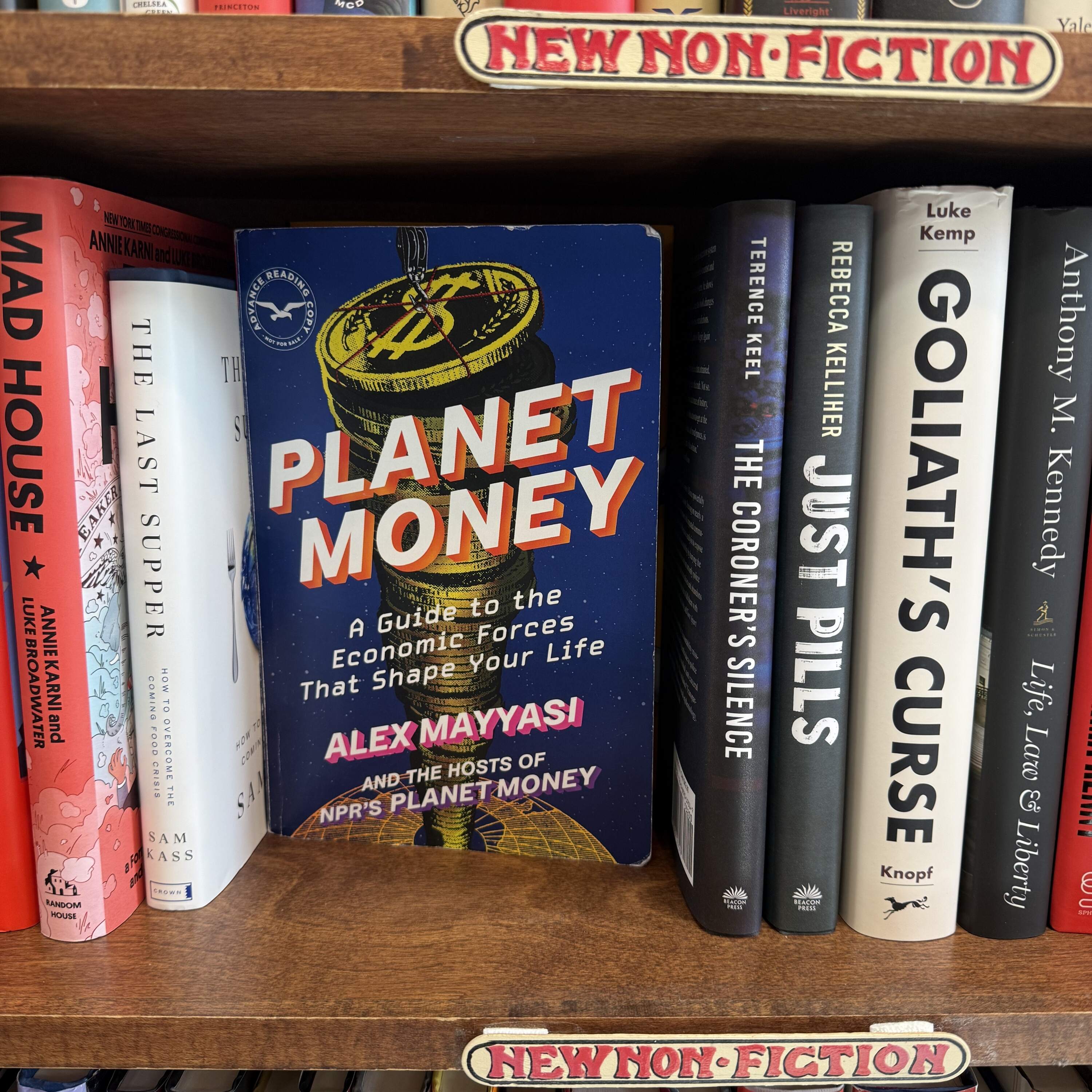
So by the end of November, Fisher decided they wanted to up the order for Planet Money books. But they would decide exactly how many a couple months before the book launch in April. Now Fisher could turn to the second big part of their role as Carmichael's book buyer. They had to answer the question of where in the store the book would actually live. And this decision can have big implications for whether a book actually sells. Fisher takes into account how the publishers themselves have decided to categorize the book. Publishers assign their titles something called a BISAC code.
- [24:11]
Fisher Nash
BISAC stands for Book Industry Standards and Communications.
- [24:15]
Alexi Horowitz-Ghazi
Norton had assigned the Planet Money book a BISAC code for Business and economics. It's actually printed on the book above the barcode. For Fisher, that could mean shelving the book in the business section, which might be useful for readers specifically seeking it out. But at Carmichael's, the business section is kind of tucked into a back corner
- [24:33]
Fisher Nash
because it's not immediately visible when you walk in the store. I didn't want it to kind of disappear back there because I do feel like it's the kind of book that people will see and say, hey, I listen to Planet Money. What's this book about?
- [24:45]
Alexi Horowitz-Ghazi
Fisher did not want to doom the Planet Money book and Carmichaels to selling fewer copies. Fisher had actually made this mistake recently with Andrew Ross Sorkin's 1929. Not only did they order too few copies, but they'd consigned the book to the dreaded backwaters of the business section. So this time they decided to categorize the Planet Money book as general new nonfiction, which lives on a big shelf near the entrance to the store. Let's take a look at where the
- [25:12]
Interviewer/Producer
book is going to live.
- [25:13]
Fisher Nash
It will be between Karl Marx's capital.
- [25:18]
Interviewer/Producer
All right. Next to Karl Marx, the original Planet Money host.
- [25:23]
Fisher Nash
Oh, that's funny. It might be different by the time the book comes out.
- [25:26]
Interviewer/Producer
Kind of depends how well Marx is selling.
- [25:28]
Fisher Nash
Yeah, he sells pretty well here.
- [25:32]
Alexi Horowitz-Ghazi
But the book will also maybe more importantly, live on the coveted display table at the center of the store. Fisher and I walk over to see exactly where it'll go.
- [25:41]
Fisher Nash
We'll move Karl ove Knaus guard. He can go somewhere else.
- [25:45]
Interviewer/Producer
That'll just be the latest part of his struggle.
- [25:48]
Fisher Nash
And we will probably put it somewhere here between right now. It would be a tensity and this James Lee Burke.
- [25:53]
Interviewer/Producer
There's a nice little Planet Money sized hole right there.
- [25:56]
Fisher Nash
There you go. Listeners can't see this.
- [25:59]
Alexi Horowitz-Ghazi
So after all that, after subjecting the book to their 32nd trial by fire, after getting a gentle nudge from Norton's sales rep, Fisher says there was one last minute factor that went into the final number of copies they decided to order. Apparently the fact that I was visiting Carmichael's bookstore for this episode is meant that Fisher was now anticipating more local demand for the Planet Money book. The act of observation had warped the experiment. Not my intention, but so it goes. And in the end, Fisher decided to order 20 copies of the Planet Money book per store. So no fewer than 40 copies total. As for the holiest grail in the game, the best seller shelf, to even get a shot at that, the sales team at Norton would have to be thinking much bigger than one little chain of independent bookstores in Louisville, Kentucky, they'd have to initiate their plan to launch the Planet Money Book into the stratosphere. That's coming up after the break.
- [27:02]
Sponsor/Advertisement Voice
This message comes from Grainger. For the ones who get it done, Grainger offers the professional grade products you need to get the job done, with fast delivery and access to technical product experts ready to help you meet any challenge, call click granger.com or just stop by. This message comes from LinkedIn ads. Ever invest in something that seemed incredible at first but didn't live up to the hype? For marketers, that's impressions. When ads don't create revenue, that's a tough conversation with the CFO. Instead, invest in results your CFO will love. LinkedIn ads generates the highest roas of all major ad networks. So advertise on LinkedIn, spend $250 and get a $250 credit. Just go to LinkedIn.com NPRpod Terms and Conditions apply. This message comes from Capital One. Capital One offers checking accounts with no fees or minimums. What's in your wallet? Terms apply. See capitalone.combank for details. Capital One NA member FDIC Fisher Nash
- [28:08]
Alexi Horowitz-Ghazi
is just one bookseller out of thousands all around the country, and independent bookstores are just one sales ch where this will all be playing out. So to get a sense of the Planet Money Book's chances out on the broader marketplace, I had to go one final link higher in the great chain of publishing to the person tasked with figuring out the strategy for wringing every possible dollar and cent out of the planet money book. W.W. norton's Director of Trade sales, Stephen
- [28:36]
Stephen Pace
Pace Yes, I. I mean, if there's anything that would define me, it was the fact that nothing bothers me more than not being able to make a sale.
- [28:46]
Alexi Horowitz-Ghazi
Stephen fell in love with the book business while working at a bookstore as a teenager. Since then, he ran his own bookstore for a while, became a sales rep for major publishers all before rising to become the head of trade sales at Norton. Do you ever anthropomorphize your books?
- [29:00]
Interviewer/Producer
Like think of them like they're little
- [29:02]
Alexi Horowitz-Ghazi
characters in Toy Story or something, with their own hopes and dreams?
- [29:05]
Stephen Pace
Well, it's funny you say that. I grew up understanding that books are like babies. When we get to the place where we've got a book that's finished and it's being put in boxes and sent out to stores around the country, I make sure that we're taking as good a care as we can for each one of those little babies.
- [29:25]
Alexi Horowitz-Ghazi
Stephen's role in the publishing process begins basically as soon as an editor brings in a book idea for serious consideration. See, while the editor's primary job is to obsess over the writing and design of a book, Steven's mandate is to obsess over what the book might mean as a financial investment. At its core, Stephen is trying to estimate how many copies a book might sell. To do that, he starts by building a model. At first, whenever a new book idea is being seriously considered for acquisition, the model is just based on the comparable titles and how they've sold over time. This is what helps Norton determine whether they buy the book and for how much.
- [29:59]
Stephen Pace
My job is to both protect against the downside and to try to ensure the upside.
- [30:04]
Alexi Horowitz-Ghazi
Once Norton is committed to publishing a book and as it moves through the production pipeline, Stephen's job is to keep updating the model. To do this, he's constantly running a kind of intelligence operation, hoovering up the market signals from his vast sales force. Norton has sales reps for the independent bookstores in each part of the country, and there are reps for bookstore chains and online retailers all negotiating over how many copies of a given book they will order.
- [30:30]
Stephen Pace
The orders are the intelligence that comes back to us.
- [30:35]
Alexi Horowitz-Ghazi
Because as Norton's sales reps are hitting the ground, pushing the Planet Money book to the thousands of book buyers like Fisher all around the nation, they are all also running those order estimates back up the chain to Stephen in Central Command. He's then feeding all that information into his model to decide the number of copies of a book Norton will print in the first run. He needs to print enough books to supply all the estimated demand.
- [30:59]
Stephen Pace
My job is to make sure that the first print is both aspirational. I want to have more books than I think I can sell in all cases, but I also have to sell everything I make. So I'm both setting a goal for myself and finding a pathway to achieve it every time I set a first print.
- [31:18]
Alexi Horowitz-Ghazi
Stephen's challenge is kind of a version of what Fisher faces at Carmichael's Bookstore, but at a much bigger scale. He needs to ensure there'll never be a customer in any bookstore asking for a Planet Money book and coming away empty handed.
- [31:31]
Stephen Pace
If I don't have enough books, if I start to sell and I don't have books and I gotta wait six months to print and get those books back in, I'm dead in the water. It's just almost no way I can come back to a book six months later and gin up the same kind of demand that I had.
- [31:46]
Alexi Horowitz-Ghazi
So he doesn't want to print too few copies, and he wants to be able to print later runs of the book in a quick and convenient way by, for example, printing the book domestically. At the same time, if he prints too many copies, he'll risk clogging up Norton's warehouse.
- [32:01]
Stephen Pace
This what we call the opportunity cost, right?
- [32:03]
Alexi Horowitz-Ghazi
Right. The more time the books sit there unsold in the warehouse, the more they cost by crowding out books that might sell faster. One of the biggest potential costs in figuring out the print run is the number of returns that might be coming back. Remember, because of the weird specific way publishing is set up, if a book doesn't sell as well as the model had estimated, all those bookstores will be free to send unsold inventory back to publishers like Norton. This is a massive challenge that the publishing industry has adapted to over the years with a few different techniques. The first is called remaindering. That means selling off unsold books at a huge discount.
- [32:40]
Stephen Pace
Remaindering is when you say, get a large quantity of a book back and someone who might run a book warehouse who sells books at 40 off might come to you and say, okay, I see you have a lot of inventory and I will pay you $3 per copy to buy all of that inventory. And they sell it through all kinds of various channels.
- [33:05]
Alexi Horowitz-Ghazi
So when you see a third party retailer on Amazon selling books for way less than the listed price or 50% off bargain bins at a bookstore, those are often remainders. Publishers often ask that remaindered books are marked in some ways so they don't re enter the regular market. So you might see a book with a black Sharpie mark on the side or a hole punched out of the barcode. Sometimes, however, publishers decide it actually makes more economic sense to cut their losses entirely and simply destroy unsold inventory by pulping it. Basically ripping a book apart so it can be recycled into new paper and other products. Because for publishers, it's not a good look to have a ton of your precious works in the bargain bin or to have too many hardcovers on sale when they're about to, say, release a new paperback. Steven points to the example of Walter Isaacson's biography of Elon Musk, published by Simon and Schuster a few years ago.
- [33:58]
Stephen Pace
It sold very well for a while, right? And then one day it just stopped.
- [34:03]
Alexi Horowitz-Ghazi
Stephen doesn't know the actual numbers of leftover books here, but he says it could easily be in the hundreds of
- [34:08]
Stephen Pace
thousands when you have that many books, you really have to try to recover some of that inventory cost and the loss. So they would remainder in Elon Musk,
- [34:18]
Alexi Horowitz-Ghazi
Steven says they'd likely try to sell off a big chunk of books, depending on the remainder's market, and then pulp the rest.
- [34:24]
Interviewer/Producer
So it's trying to sort of like minimize your losses.
- [34:27]
Stephen Pace
Yes. Yeah. It's an auction, if you will, kind of a fire sale auction.
- [34:32]
Alexi Horowitz-Ghazi
Have you ever seen a batch of books being pulped? Yes, this was back in the 90s. At the time, Stephen says he was working at one of the big five publishers as a sales rep, and he and the other reps were invited to a warehouse to see how the company handled some of its unsold inventory.
- [34:47]
Stephen Pace
It's a giant conveyor belt and you put books on it and it runs up to this giant shredder machine, and it just runs 24 hours a day, seven days a week. And their idea was to try to give us, you know, a sense as a sales team that they were destroying this over inventory. It wasn't piling up in the warehouse. It wasn't like we were going to be forced to turn around, sell all this return merchant, you know, we all walked out of there aghast. We could not believe. I mean, we were really like, did you? I mean, we were all crying, like, can you believe? And there it is, just getting chopped to shreds, you know, and it's like one moment it's worth 29.99, the next moment it's worth worth 10 cents in paper. You know, something that took years and put it in that machine and then, you know, like a wood chipper. In 15 seconds, there's just no sign of anything at all that remains. And it's soul crushing.
- [35:43]
Alexi Horowitz-Ghazi
Stephen says that image of industrial literary carnage has stayed with him over the decades. And now, as the head of a sales operation for a major publisher, it still informs the way he thinks about printing and waste.
- [35:56]
Stephen Pace
When you think about that, right, As a salesperson and you go like, well, wow, all those returns coming back really are just a disaster. You get better at what you do because that's a fate that just seems to be almost evil for books to have to endure, right? We care so much about them, the last thing we want to see is just get them chewed up by a giant chainsaw.
- [36:20]
Alexi Horowitz-Ghazi
Steven says Norton does not use pulping to manage its returned inventory, though they will occasionally pulp damaged books. But that all means that his calculations and figuring out how many books to print are even more important. So that's where he pours a lot of his energy.
- [36:34]
Stephen Pace
You know, it's just, it's trying to be very, very concise on what you think you need and not too much beyond that.
- [36:43]
Interviewer/Producer
You're chasing like, perfect efficiency.
- [36:45]
Stephen Pace
That's exactly right.
- [36:46]
Alexi Horowitz-Ghazi
As the head of trade sales, Stephen says it's his responsibility to think about the long term economic life of all their books. A publisher is sustained in the long term by a steady back catalog of dependable sellers. And so his ultimate goal for the Planet Money book is to get to a second printing and then a third and so on. But in order to set the book up for a long, strong life, you want that freshly born baby book's first steps out into the world of retail to be as strong and steady as possible. Because the better the baby's debut, the higher its lifetime potential earnings are likely to be. So Stephen says he's mobilized his entire sales force to get the Planet Money Book into every retail outlet you can imagine. What channels are we going to be
- [37:31]
Interviewer/Producer
in at this point?
- [37:32]
Stephen Pace
Everything. Everything. Every chain bookseller, every independent bookseller. I mean, it's one of the biggest advances that we will, we will have in all of 2026. It's, it's approaching in the Michael Lewis vein of distribution. You'll see it in an airport store and you'll see two bays with 10 copies.
- [37:52]
Alexi Horowitz-Ghazi
Right, so we're going to see the Planet Money book in airports?
- [37:54]
Stephen Pace
Oh, yes. Oh, we hadn't told you that yet. Well, yes, we will be in every full on airport store.
- [38:01]
Alexi Horowitz-Ghazi
The book, Steven tells me will be available on bookshop.org, amazon.com it'll roll out in libraries, gift shops, military bases, even cruise ships.
- [38:10]
Stephen Pace
We left no stone unturned.
- [38:12]
Alexi Horowitz-Ghazi
I didn't know you could buy books
- [38:13]
Interviewer/Producer
on a cruise ship.
- [38:14]
Alexi Horowitz-Ghazi
Oh, yeah.
- [38:15]
Stephen Pace
Not only on the cruise ship, but in the ports of call, there are retailers that actually have carts and when the cruise ship is letting off, they pull a cart up there and it has 20, 30, 40 different books on it and people, you know, oh, I finished my book. I need another book.
- [38:31]
Interviewer/Producer
Yeah.
- [38:31]
Stephen Pace
Two of the cruise lines actually have small bookstores.
- [38:35]
Alexi Horowitz-Ghazi
Stephen says the book will also roll out in Europe and the Middle East. Norton's gotten orders from Thailand, Singapore, even Malaysia. There's a Korean translation slated to come out in June and a Chinese translation scheduled for September. The Planet Money book was apparently going planetary. But I have to say, in the days after I spoke to Steven, all of this still felt kind of abstract, like a collection of daydreamy plans for something way off in the future. Until one day earlier this week.
- [39:06]
Alex Goldmark
Let's go this way.
- [39:07]
Interviewer/Producer
Okay.
- [39:07]
Alexi Horowitz-Ghazi
That's when my boss's boss, my grand boss, Alex Goldmark, and I decided to take a stroll down the rustic cobblestones of the South Street Seaport in lower Manhattan. So this is where the kind of real idea for the Planet Money book was born.
- [39:21]
Alex Goldmark
Yeah, I would say right there is where my journey with the Planet Money book began.
- [39:25]
Alexi Horowitz-Ghazi
Alex points out the picnic table where almost four years ago, he first sat down with NPR's literary agents to talk about a potential Planet Money book. Before he really knew. Knew how much work all of this would entail.
- [39:37]
Alex Goldmark
Making a book is hard.
- [39:39]
Interviewer/Producer
Did you think it was gonna be this hard?
- [39:42]
Alex Goldmark
No, no, no, no. Absolutely not.
- [39:44]
Alexi Horowitz-Ghazi
Yet after everything that had happened here, we were on a very special day, the very day of the Planet Money book launch. And as it happens, there's an independent bookstore right down the street called McNally Jackson.
- [39:58]
Interviewer/Producer
Should we see if the Planet Money
- [39:59]
Alexi Horowitz-Ghazi
book is in the bookstore store?
- [40:01]
Alex Goldmark
Yeah, let's see.
- [40:02]
Alexi Horowitz-Ghazi
It's there. My grand boss literally squeals with delight. Or maybe surprise, because we found the book right in the center of the front window display, nestled between about a dozen others.
- [40:14]
Interviewer/Producer
Oh, my God.
- [40:15]
Alex Goldmark
It's there. In a place of honor.
- [40:18]
Alexi Horowitz-Ghazi
This looks great.
- [40:19]
Alex Goldmark
I love it.
- [40:20]
Alexi Horowitz-Ghazi
Alex and I pop inside.
- [40:22]
Interviewer/Producer
Hello.
- [40:25]
Alexi Horowitz-Ghazi
And at first, it's. It isn't clear where to actually grab a copy to buy. There's only one in the window display. We got to. We got to figure out where we are in the store here. It seems the booksellers took the buy sack code a little more literally. To find the book, we have to go to the business section, all the way in a back corner. Ah, there it is. Okay, a little off the beaten path,
- [40:45]
Alex Goldmark
but we are right at eye level, so that's great.
- [40:48]
Interviewer/Producer
Love that.
- [40:49]
Alexi Horowitz-Ghazi
We're hoping to witness somebody encounter the Planet Money book in the wild. So Alex and I pretend to read other books while stealing glances at passersby to see if any of them might bite. It's a little bit sleepy in here. Finally, the day is getting late. I still have to finish the script for the very episode you're listening to right now. So I grab a book and walk up to the bookseller at the counter.
- [41:15]
Interviewer/Producer
I've decided I just have to do it myself.
- [41:17]
Alexi Horowitz-Ghazi
Oh, all right. 3,000, 276.
- [41:21]
Interviewer/Producer
I guess I'll go for it. All right. That's the sound of the first Planet Money book sale.
- [41:32]
Alexi Horowitz-Ghazi
I think so.
- [41:32]
Alex Goldmark
Yeah.
- [41:33]
Interviewer/Producer
I did it sweet.
- [41:36]
Alexi Horowitz-Ghazi
Holding the book in my hands with a bookmark and receipt tucked between the pages, I can't help but think of something Tom Mayer, the book's editor admiral about this very moment. After all the effort that's gone into getting this new baby book out into the world, still nothing is guaranteed. And this moment is so intense, it's like the night before a play opens. We don't know how it's gonna be received. And what happens next kind of depends on the audience. Will they skip the show altogether? Will they pack the house and leap to a standing ovation? We have no idea. So will the Planet Money book end up earning a place on the hallowed bestseller bookshelf at Carmichael's Bookstore or McNally Jackson? Or will it find itself writhing in anticipatory dread as it slides down a conveyor belt into the gnashing jaws of the proverbial pulping pit reader? Only you can decide Are you curious about how bestseller lists actually work? Want to hear about how authors have tried to game their way into bestseller status? That is our next installment in the Planet Money book series coming up in the next few weeks. As we've mentioned in other episodes, perhaps ad nauseam, Planet Money is taking this book on tour around the country, maybe to a city near you. Check it out@planetmoneybook.com or pick up a copy of the book wherever they are sold, maybe on a cruise ship. This episode was produced by Willa Rubin with help from Emma Peaslee. It was edited by Jess Jiang, fact checked by Sierra Juarez and engineered by Robert Rodriguez. Alex Goldmark, my grand boss, is our executive producer. Also, we first learned about Fisher Nash through their substack in a post about the economics of book buying. The substack is excellent. It's a behind the scenes diary of the world of books, appropriately titled Fisher the Bookseller. We'll link to it in our show notes. I'm Alexi Horowitz Ghazi. This is npr. Thanks for listening.
- [43:36]
Fisher Nash
This message comes from Capella University. That spark you feel? That's your drive. For more. Capella University's flexpath learning format lets you earn your degree at your pace without putting life on pause. Learn more@capella.edu.
- [43:51]
Sponsor/Advertisement Voice
this message comes from Capital One. Capital One offers checking accounts with no fees or minimums. What's in your wallet terms apply. See capitalone.combank for details. Capital One NA Member FDIC.