Loading summary
Transcript109 lines
- [00:01]
Alexi Horowitz-Ghazi
This message comes from Capital One. Banking with Capital One helps you keep more money in your wallet with no fees or minimums on checking accounts. What's in your wallet? Terms apply. See capitalone.com bank for details. Capital One NA member FDIC. This is Planet Money from NPR.
- [00:25]
Noel King
Taylor Swift's new record got all kinds of people all hot and bothered. They said it was sloppy, it was immature, just not that good.
- [00:34]
Sabrina Carpenter
Her name was Kitty made her money being pretty and witty they gave her the keys to this city.
- [00:41]
Alexi Horowitz-Ghazi
Some listeners were disappointed it didn't sound as advertised.
- [00:45]
Sabrina Carpenter
This is a sad day to be.
- [00:47]
Ann Powers
A Swiftie and that's just my truth.
- [00:50]
Noel King
But it is also capitalist genius.
- [00:53]
Elias Light
Death of a Showgirl the life of a capitalist. That's what I think this album honestly should be called.
- [00:59]
Noel King
The Life of a Showgirl broke records for sales the equivalent of over 4 million albums sold in the first week. At the same time, a lot of fans had concerns about the actual quality of the album. If the album didn't sound so great, how did it sell so much better than everything else? The answer to that question may just be the trade secret behind Taylor Swift.
- [01:22]
Sabrina Carpenter
Inc. Hey, thank you for the lovely bouquet. You're sweeter than a peach but you don't know the life of a show girl bab and you're never ever gonna.
- [01:35]
Noel King
Hello and welcome to Planet Money. I'm Alexi Horowitz. Ghazi today on the show. Sure, Taylor Swift is a talented musician and performer, but we're here because of her talents at money making. Our friends over at Vox's daily News podcast today explained had a great dissection of how musicians are using new business savvy to game the charts and play off the spending habits of their biggest fans. None more than Taylor Swift. So we are turning it over to Noel King at Today Explained to take us through, as she calls it, capitalism. Taylor's version also why T Swizzle doesn't even really care if you like her album.
- [02:12]
Sabrina Carpenter
Thank you for an unforgettable night. We will see you next time. Give it up for the band.
- [02:23]
Sponsor/Advertisement Voice
This message comes from Vanguard Capturing value in the bond market is not easy. That's why Vanguard offers a suite of over 80 institutional quality bond funds actively managed by a 200 person global team of sector specialists, analysts and traders. They're designed for financial advisors looking to give their clients consistent results year in and year out. See the record@vanguard.com audio that's vanguard.com audio. All investing is subject to risk. Vanguard Marketing Corporation Distributor I'm Noel King.
- [02:59]
Elias Light
My full name is Elias Light, and I report on music for the Wall Street Journal.
- [03:03]
Alexi Horowitz-Ghazi
Are you a Taylor Swift fan?
- [03:06]
Elias Light
I am. A little more of the early stuff, a little less of the more recent stuff.
- [03:11]
Alexi Horowitz-Ghazi
What did you think of the new record?
- [03:14]
Elias Light
It was not my favorite, but again, as a reporter, I try to keep that out of what we write.
- [03:20]
Alexi Horowitz-Ghazi
You don't want to tell me what your beef?
- [03:23]
Elias Light
I mean, I'm more of a melody and rhythm guy than a lyric guy, but I found some of the lyrics to sort of be cringy to a level where they pulled me completely out of the experience of listening.
- [03:33]
Sabrina Carpenter
Every joke's just trolling in memes. Sad as it seems, apathy is hard.
- [03:39]
Alexi Horowitz-Ghazi
She set a record, as I understand it, for biggest debut week. How big was it?
- [03:43]
Elias Light
So she cleared the 4 million threshold, which honestly most of the industry thought could not be done. And the previous record was around 3.5 million, set by Adele. Hello.
- [03:58]
Sabrina Carpenter
It'S me.
- [04:00]
Elias Light
That was a decade ago, and at that time, sort of streaming was just taking off and a lot of artists were very wary of it. We need to fight, like the Spotify thing.
- [04:11]
Sabrina Carpenter
I really believe that we in the music industry can work together to find a way to bond technology with integrity.
- [04:19]
Elias Light
And when Adele dropped that album, she kept it off streaming, not just for the first week, but for something like seven months. And the only song that was available to stream was hello, that massive first single. And she just. The sales numbers were through the roof for that. More recently now, artists are very comfortable, most of them, with streaming, especially the stars. They want to have their album in every possible place that a fan might want to listen to it.
- [04:46]
Ann Powers
I pre saved my album on Spotify. Did you?
- [04:51]
Sabrina Carpenter
Hey, it's Sabrina. You can pre save my new album Short n Sweet on Spotify now, but.
- [04:57]
Elias Light
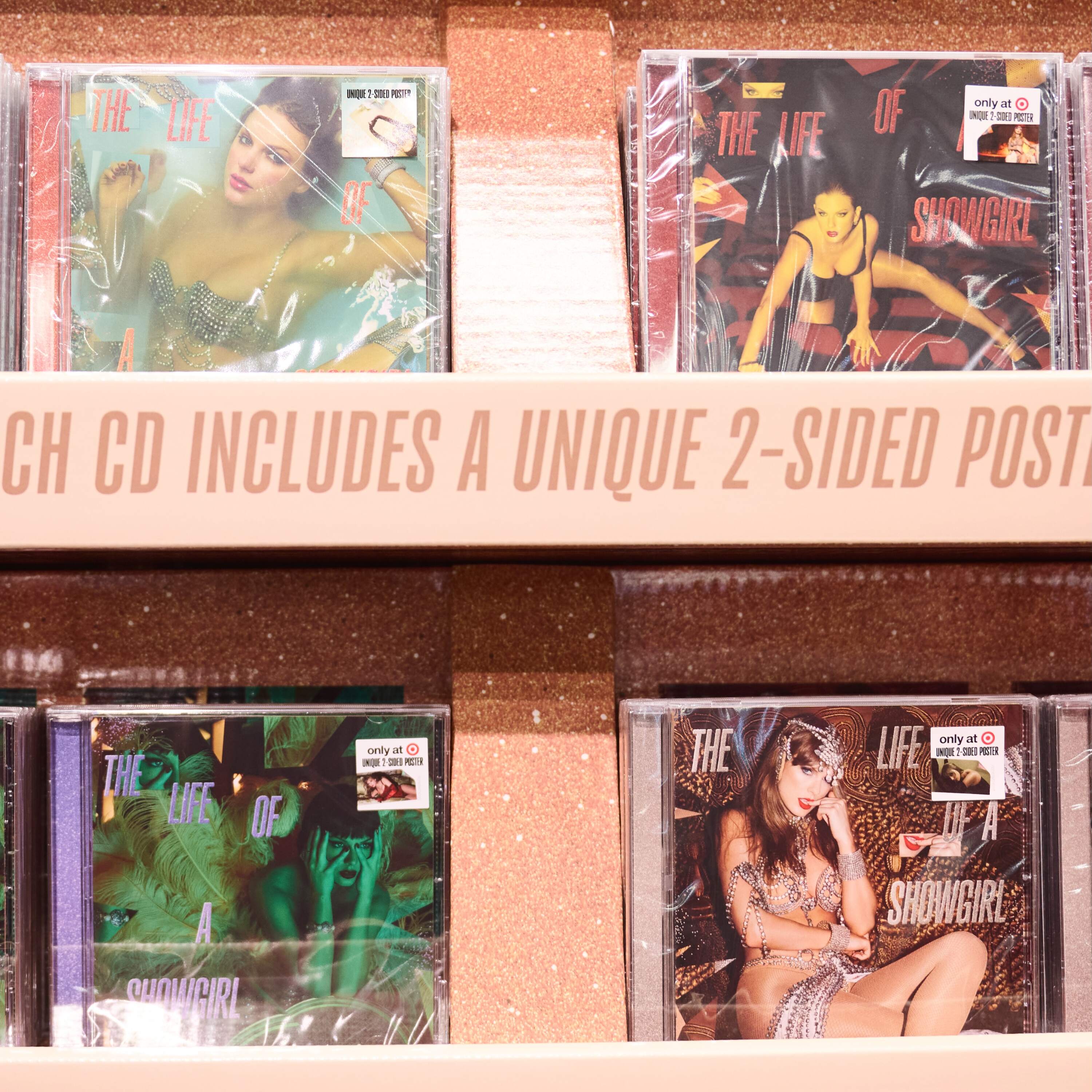
Sort of a new technique has become popular for the first week, which is release a lot of different variations of the album. And that both gives your biggest fans a lot of different ways to support you and also allows you to kind of boost your first week sales numbers.
- [05:14]
Alexi Horowitz-Ghazi
Okay, so Taylor has released a bunch of albums since Adele released 25. This was the first one that beat the record. And what you're saying is it beat the record because there were so many different variants you could buy?
- [05:28]
Elias Light
That's a great question. I mean, we don't have a counterfactual, but it certainly helped. I mean, she just did a absolutely massive amount of physical sales. Breaking news, Taylor Swift is back and she's breaking records. And now when I say records, 1.2 million copies of vinyl alone in the first 24 hours. I think it's genius. If they're buying it, why not keep giving it to them, Boy. So I think there were 27 different physical editions. There were a couple of those CDs came in kind of box sets which had clothing.
- [06:03]
Sabrina Carpenter
My Life of a Showgirl cardigan just came in.
- [06:06]
Ann Powers
Cardigan arrived.
- [06:10]
Alexi Horowitz-Ghazi
In pretty box. I mean, I don't even own a CD player, but I have a CD now.
- [06:16]
Elias Light
Some of the Vines vinyl came with different, like, jewelry items. There was like a bracelet. People liked a necklace.
- [06:23]
Sabrina Carpenter
That is why I bought 1, 2, and 3. I got the hairbrush and the barrette. So let's open it up.
- [06:33]
Elias Light
Some of the CDs came with bonus acoustic tracks. There were also the digital download versions that came with bonus acoustic tracks.
- [06:45]
Sabrina Carpenter
And you're never, ever gonna.
- [06:49]
Elias Light
Some of them had voice memos from Taylor about songs that she'd done instead of the acoustic.
- [06:55]
Sabrina Carpenter
Opalite is a song on my album that I think is just so infectiously contagiously.
- [07:03]
Elias Light
So there was a really wide range of options for the super Taylor F.
- [07:12]
Alexi Horowitz-Ghazi
I'm not going to say it's cheating because all's fair in love and capitalism, but album variants are very clearly a strategy to boost sales numbers. Why?
- [07:23]
Elias Light
Yeah, I mean, so I think one thing people sometimes don't understand. I mean, artists never want to admit it, but a lot of artists, and also their labels are fiercely competitive and they really care a lot about sort of the commercial reception of their work. They want to say they got a top 10, a top five, ideally a number one. The problem with streaming, right, is for the listener, it's like this amazing offering where you're paying $11 a month for almost all the music in history, right? But for artists, a lot of their biggest fans actually will spend more money on their behalf. They want to support them. And certainly there's other ways you can kind of tap into that. Buy merchandise by selling concert tickets. But one way they've increasingly tried to do it is by releasing a lot of kind of variations of this album and making them more like collectibles. A lot of people who buy the vinyl don't even listen to it. They just put it up on the wall. So I bought every single vinyl and CD variant for Taylor Swift's the Life of a Showgirl, so you don't have to.
- [08:19]
Ann Powers
It's so pretty.
- [08:21]
Alexi Horowitz-Ghazi
Side A. Oh, my God, look at the rippling.
- [08:24]
Elias Light
And then at the same time, again, if you can get one fan to buy Three, five, seven copies. That is just gonna boost your numbers. And most artists, again, especially at this level, they're competing with their peers, and they want to win, so they want to kind of push every lever that is available for them to get a big first week.
- [08:45]
Alexi Horowitz-Ghazi
Taylor Swift does go the extra mile. It's what people like or at least recognize about her. This thing about I'm going to do 38 variants to boost my sales. She's not the only person doing it, I imagine. Who else?
- [09:00]
Ann Powers
No.
- [09:00]
Alexi Horowitz-Ghazi
Yeah.
- [09:00]
Elias Light
I mean, again, this has become a super popular tactic. So the 10 biggest albums last year, ranked by physical sales, came in 22 different versions on average. Where you've really seen it come into play is when artists are in kind of tight races for number one. And last year, there was a race that turned a lot of heads.
- [09:20]
Sabrina Carpenter
Oh, I leave quite an impression after.
- [09:23]
Sponsor/Advertisement Voice
Three number one albums, would have thought.
- [09:25]
Elias Light
I feel amazing. It was Sabrina Carpenter versus Travis Scott, and it was very close. And as it got near the end of the week, they were both. I mean, Travis put out, I think, six different digital variants on the final day of the week, and Sabrina put out three of her own. This is a chess move. Sabrina's pretty much like, I want y' all to stream the hell out of this album in this song, boost my numbers up for the day so I can eclipse Travis Scott. Honestly, she didn't come to play. She took courses from Ms. Taylor Swift on how to secure that number one album.
- [10:02]
Ann Powers
I'm sorry.
- [10:02]
Elias Light
And it's just the digital variants are sort of the easiest one to put together. It's like, oh, look, here's my album. Plus a voice note or an acoustic song or. Sometimes people honestly don't even add music. They just put out different artwork. So you can just throw them out very quickly and say, hey, fans, this is only available for, you know, six hours. Go get it again. In that case, because the race was so close, Sabrina Carpenter ended up winning by only about 1000 units.
- [10:30]
Alexi Horowitz-Ghazi
This is a really interesting way to kind of game the music business, which, of course, is a business, as these artists know. Is there anyone lobbing critiques at this strategy?
- [10:42]
Elias Light
Yeah, I mean, definitely. As the strategy has become more popular, the backlash has sort of become a lot louder. And you see a lot of fans who are arguing that this is kind of exploitative. You're basically kind of milking your most passionate supporters for as much money as you can take from them. You know, there's also a growing body of fans who are concerned about the environment, and they're worried that all these CDs and records, if they're not made in a sustainable way, are pretty wasteful. Again, because Taylor Swift's so big and because the album did have a pretty polarizing reaction, there's been a lot of chatter online about sort of whether she needed to do this and whether she's kind of gone too far.
- [11:23]
Alexi Horowitz-Ghazi
Having all 20 versions of the same album with the exact same music on it is wasteful and it's very capitalist.
- [11:30]
Elias Light
And you shouldn't have this rush to, like, buy one cover and then two days later there might be another one that's out.
- [11:36]
Alexi Horowitz-Ghazi
Like, at this point, you could just tile a bathroom with how many different versions of one album she's put out.
- [11:41]
Elias Light
Side note, I think it is that thing where I bet she probably could have broken the record without putting out 38 different versions. But if she wanted to get to 4 million, she only cleared that mark by 2,000 units, which is a pretty small amount, right? So, yeah, she squeaked in, she squeaked by. So if you, if 4 million is your goal, it might have been the 38th variant that got you there. They have the data, we don't. But again, whether or not artists should sort of care about fairly arbitrary commercial goals is a valid question. But it seemed pretty clear that 4 million was the target.
- [12:19]
Alexi Horowitz-Ghazi
Do you think the new normal is 12 variants, 20 variants, 38 variants?
- [12:25]
Elias Light
I think for now it definitely is. What we see happen, and we've seen it happen again and again is sort of artists, again, they care intensely about getting the biggest numbers possible. They'll come up with a strategy to do so, and then the chart rules will change and they will have to adjust. Right. So a while ago, there was a popular period in the music industry where you could bundle album sales with tickets. So you would find artists who had a really great live business selling just an album accompanying a tour ticket. And they would do huge numbers, which they could never achieve if they weren't able to kind of link those two together. Then the bundling was kind of mostly banned and sort of the new era came in. And now people are more into this variant strategy. At a certain point, if the chart rules change again, there will be a new. A new system they come up with. I think the one thing you can guarantee is that artists and labels are always going to try to figure out whatever strategy they can use to maximize that first week.
- [13:35]
Alexi Horowitz-Ghazi
Elias Light WSJMux coming up, everyone's a critic.
- [13:55]
Sponsor/Advertisement Voice
This message comes from NPR sponsor Zoom. Work isn't just meetings. It's calls, chats, docs, emails, calendar invites, events and more. And Zoom brings it all together on one platform. Everything flows together so that you can finally focus on what matters. With Zoom, ideas happen faster, projects move forward, and your workday finally works for you. Zoom is more than meetings. It's a unified platform powering how people get work done. Learn more@zoom.com podcast and Zoom ahead. This message comes from NPR sponsor AARP. Where do you see your career in 12 years? What are you doing now to help you get there? The sooner you start enhancing your skills, the sooner you'll be ready. That's why AARP has management, finance and small business reskilling courses, all to help your income live as long as you do. Because the steps you choose to take today will help you love what you do in the future. Learn more@aarp.org skills I'm Ann Powers.
- [15:05]
Ann Powers
I'm a critic and correspondent for NPR Music. I have been called a Taylor Swift whisperer. I'm a music critic, and in that capacity I have been writing about Taylor since she started making music back in the early mid 2000s. So I'm not a Swiftie, but I definitely respect her, absolutely respect her as an artist and as a businesswoman and as a pop cultural phenomenon and all the things. I found it really interesting to observe the backlash against Taylor Swift.
- [15:41]
Alexi Horowitz-Ghazi
Some of those lyrics are AI generated. Can I prove it?
- [15:45]
Noel King
No. Worst writing lyrically she has ever done in her entire career. Worst, tackiest, most out of touch, most childish.
- [15:56]
Alexi Horowitz-Ghazi
I have been for years a huge, huge Taylor Swift fan. I would still consider myself a fan, but I do not like this album.
- [16:03]
Ann Powers
Which is more intense this year and with this release than it was with her previous release, the Tortured Poets Department, Although that album also did incur a bit of a backlash. I'm most interested in how both critics and the general public are now responding to Taylor in a very different way than they did even about the Eras tour. She is sort of like I imagine her clinging to a giant pendulum as it swings back and forth. You know, I feel that's what's happening with her. And this is this is possibly inevitable with anyone of her stature. I mean, she really occupies a unique space in popular culture, certainly in pop music. But I really think we're seeing it play out that Taylor Swift has become the avatar for so many of our anxieties, so many of our dissatisfactions. And that's pretty interesting to watch.
- [17:06]
Alexi Horowitz-Ghazi
Yeah, let's talk about some of the anxieties and dissatisfactions in whether or not Taylor Swift deserves this. So in the first half of the show, we talked about how Taylor Swift is a very, very successful businesswoman. No shock there. But two things happened with this album. The first is there are so many variants. There's a Target exclusive Crowd Is yous King Vinyl. There's a hairbrush that falls apart. There's a tiny bubble in a champagne collection. Right. It's on and on and on. So there's that and. And then there's that. A lot of people, when the album first dropped, decided they didn't really like it.
- [17:40]
Ann Powers
Yes.
- [17:41]
Alexi Horowitz-Ghazi
How do we square those two things? Do those two facts depend on one another?
- [17:46]
Ann Powers
They're in relationship with one another. I'm not sure if they depend on one another. What's interesting about the backlash about the album itself is that it seems to have been triggered by the leak of the lyrics for a particular song. Actually Romantic.
- [18:04]
Sabrina Carpenter
I heard you call me boring Barbie when the coke's got you Brave, which.
- [18:10]
Ann Powers
Is the song that allegedly is aimed at the pop star Charlie xcx, an attack on her. Honestly, it is a pretty crass song. You know, it's broad humor. It's not subtle. Yeah. And I think the timing of that leak was a big negative for the reception of this album.
- [18:41]
Alexi Horowitz-Ghazi
But, Anne, it's not like. And then we realize that Taylor Swift is Rick or. And then we realize she's gonna, like, what? How did everyone become so irritated about the same thing?
- [18:51]
Ann Powers
Yeah, I mean, this has been building for a while, actually. I think after Tortured Poets Department came out. Since that time, I've started to see more and more online chatter about Taylor Swift's wealth, her social status, and her choice to continue to write songs in which she is the, quote unquote, underdog, even though she is so on top of the world. Not coincidentally, I think this was going on as a kind of larger backlash has been brewing against very wealthy Americans in general.
- [19:25]
Alexi Horowitz-Ghazi
And her response, Taylor's response is what exactly?
- [19:28]
Ann Powers
Well, Swift did a small number of interviews upon the release of the record, and in one of them, on the Zane Lowe show on Apple Music, she basically said, I'm not the art police.
- [19:39]
Alexi Horowitz-Ghazi
It's like everybody is allowed to feel.
- [19:42]
Sabrina Carpenter
Exactly how they want.
- [19:43]
Alexi Horowitz-Ghazi
And what our goal is as entertainers is to be a mirror, which I'm.
- [19:47]
Ann Powers
Sure to her felt, you know, open hearted and confident and reasonable. But I think to others that almost felt like, I don't care about your opinion.
- [20:00]
Alexi Horowitz-Ghazi
If it's the first week of my album release and you are saying either my name or my album title, you're helping.
- [20:06]
Ann Powers
So this was particularly exacerbating to Swifties, to fans who also have been struggling. And that has been a notable part of this backlash. It's not only professional critics, it's not only online trolls who never liked Taylor Swift anyway. A lot of very die hard Taylor fans are also publicly raising doubts about their hero.
- [20:28]
Alexi Horowitz-Ghazi
Yeah, there is something to that I don't care about your feelings vibe. Because if you listen to Taylor Swift's music, including songs on this album, like Elizabeth Taylor, to hear this artist who so frequently seems to be playing to us and telling us, hey, feel really bad for me, come out and say, oh, but I don't care what you think. This is not a two way street, guys.
- [20:51]
Ann Powers
Well, this is where my opinion might differ from some others opinions.
- [20:55]
Alexi Horowitz-Ghazi
Oh, tell me.
- [20:56]
Ann Powers
I don't think she's playing the victim so much on Life of a Showgirl. I think she's playing the villain. I think she's inhabiting a role consciously in which she can express these negative emotions, but she's doing it in this very swaggering, macho way. The one song that truly does trouble me on this album is called Cancelled.
- [21:19]
Sabrina Carpenter
Good thing I like my friends Cancell.
- [21:24]
Ann Powers
And in that song, Taylor Swift is addressing her friends who have gone through struggles with the media that resemble the ones she's gone through.
- [21:36]
Sabrina Carpenter
They're the ones with matching scars.
- [21:40]
Ann Powers
So those lyrics, you can read them several different ways. I suppose the word canceled has been in the vernacular for a while, right? But in 2025, in the America of 2025, the word canceled hits a certain way. It's far more associated with the right, with the maga movement and with President Trump himself than it is with anyone else. And I have to think Taylor Swift knew that. It's sort of. I mean, she may live in some kind of, you know, fame bubble, but it was surprising to me when I heard that song. And actually I immediately thought, oh, this is risky and not in a good way.
- [22:19]
Alexi Horowitz-Ghazi
A lot of people have asked whether a person can create great art when they are rich and happy. So I remember when Cowboy Carter came out and there was this line in one of the songs where Beyonce talks 16 characters. That was it. Where she talks about being overworked and overwhelmed.
- [22:35]
Ann Powers
I'm like.
- [22:35]
Alexi Horowitz-Ghazi
And that line really triggered people. They were like, no, girl, you're not. There is. So this is a similar type of pushback from a very, very broad audience.
- [22:52]
Ann Powers
Beyonce did something very smart and very deft, which I also think was, you know, she did it out of Conviction, which is that at a certain point in her career, she stopped speaking so much personally as representatively. She started connecting her personal stories with the history of racism and, you know, oppression.
- [23:17]
Alexi Horowitz-Ghazi
Need another.
- [23:21]
Ann Powers
She's continued to do that. Also, uplifting her family, uplifting her community as she's defined it. In that way, she has managed to sort of make her music bigger than herself, make her art bigger than herself. America.
- [23:44]
Noel King
America has a problem.
- [23:49]
Ann Powers
Consider that next to Taylor Swift, she has very much clung to autobiography as the center of what she does.
- [23:59]
Alexi Horowitz-Ghazi
Beyonce is, you're arguing, very clearly evolving and Taylor Swift, and this is an argument I heard a lot about this album. She is not growing as an artist. What do you make of the critique that this album is an example, not that Taylor Swift isn't a great artist, but that she's not growing?
- [24:19]
Ann Powers
I find it strange that being a pop star and producing albums is sort of being talked about as if it is a life journey of self improvement. Like, have we asked that of. Did we ask that of Mick Jagger? You know, I don't know. I don't necessarily think we did. Another thing is I don't have any problem with someone writing songs about adolescence for their whole life. Like, that's fine with me. Now, do you want to hear my theory about the record?
- [24:48]
Alexi Horowitz-Ghazi
You're damn right I do.
- [24:50]
Ann Powers
I don't think Taylor Swift made this record to make more money. I really don't like, does she need the money? Obviously not. I do think, however, that she's very interested in controlling her public narrative and controlling the narrative that she's building through her albums. She's very, very focused on her music being the center of everything. And I think she made this record because she is now in a happier place in her life. And she just can't stand the thought that that last album tortured Poets Department, which shows her at her most vulnerable is the album that's gonna stand. As she's going through this happy phase, as she's getting married, she needed another marker on the highway. She needed a marker on the highway that said, hey, I'm happy now. I'm in control. I have power. I no longer, you know, feel the way I felt when I was wallowing in my own misery. Do I blame her for that? No, I don't blame her for that. I get it completely, but let's recognize it for what it is. It's a marker on her highway, and she's going to go somewhere else pretty soon. Soon.
- [26:02]
Noel King
That was NPR's Anne Powers speaking to Noel King from today Explained. Today Explained is Vox's excellent daily news show. They tell one news story every afternoon. You can find it wherever you get your podcasts. This episode of Today Explained was produced by Ariana Espuru, Aminah Al Saadi, Laura Bullard, and Adrian Lilly. I'm Alexi Horowitz Ghazi. This is npr. Thanks for listening.
- [26:30]
Sponsor/Advertisement Voice
This message is sponsored by dsw, the birthplace of the humble brag. Full of all kinds of shoes that get you at prices that get your budget. And when there are never ending options for every style, mood, occasion and budget, there is unlimited freedom to play. And that's something to brag about. So go ahead. Stock up on fresh sneakers from your favorite brands or try those boots you always secretly knew you could pull off. Find the shoes that get you at prices that get your budget. Dsw. Let them surprise you.