Loading summary
Transcript92 lines
- [00:00]
Greenlight/Broadcast Announcer
This message comes from Greenlight. Ready to start talking to your kids about financial literacy? Meet Greenlight, the debit card and money app that teaches kids and teens how to earn, save, spend wisely and invest. Start your risk free trial@greenlight.com NPR
- [00:18]
Jeff Guo
this
- [00:18]
Planet Money Narrator/Reporter
is Planet Money from NPR. A couple weeks ago, Planet Money producer Luis Gallo and I found ourselves on a dark, glassy river in the middle of the Amazon rainforest. We climbed into a small canoe.
- [00:34]
Jeff Guo
Jeff, don't tilt us.
- [00:37]
Planet Money Narrator/Reporter
After settling in a bit, you have to be in the middle.
- [00:39]
Jeff Guo
Wait.
- [00:40]
Planet Money Narrator/Reporter
Always in the middle. We headed up river.
- [00:43]
Jeff Guo
And we're off.
- [00:45]
Planet Money Narrator/Reporter
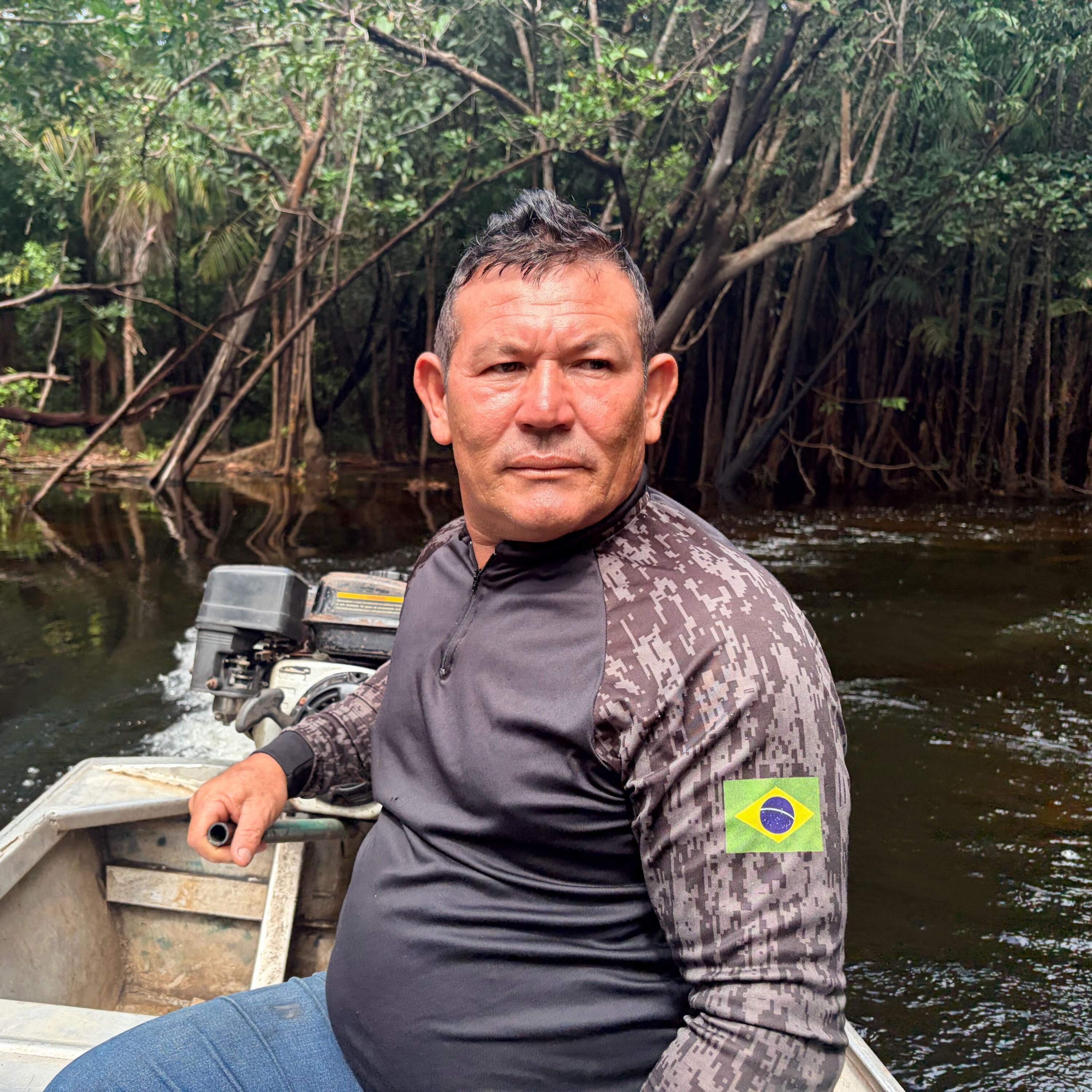
We were here to investigate a change that's been happening in the worldwide multi billion dollar business of pretty little fish. You know those tropical fish you often see at the pet store, the neon colored ones, the ones that shimmer like sequins? Some of them actually come from the wild. In fact, one of the world's most popular species of pet fish is caught right here in the Brazilian Amazon. Our guide for the day is Valderiz Cicada. People call him Deco. Deco says get ready for an aventura, an adventure to see what we can catch. Will you ask Deco just to tell us a little bit more about where we're going? Our producer Luis, who speaks Portuguese, actually he speaks a lot of languages, was interpreting.
- [01:39]
Jeff Guo
He's saying that we're going upriver to get a better sense of where the fish live because they live in shallow water.
- [01:47]
Planet Money Narrator/Reporter
The river that we're on is called the Rio Negro, the Black River. It's one of the main tributaries of the Amazon. And for several months out of the year, the river level rises and floods the surrounding rainforests, creating this dense tropical swamp. It's like we're in the middle of a forest, but the ground is water.
- [02:06]
Jeff Guo
Totally flooded.
- [02:07]
Planet Money Narrator/Reporter
Deco steers us through a maze of graded waterways, deeper and deeper into the forest. Oh. Ow. Oh. Jeff.
- [02:15]
Jeff Guo
Careful with the branches.
- [02:16]
Planet Money Narrator/Reporter
So the Rio Negro is called this because the water here is actually black. It looks like we're floating on a river of black tea. For Deco, who catches pretty little fish for a living, this unique water is the reason he has a job. You see, the color comes from the plants of the jungle. As their leaves and bark soak in the river, they release chemicals called tannins that stain the water. It is literally a kind of rainforest tea. And just like regular tea, the water here is acidic. It's slightly sour. So the fish that you find here, they are adapted to this weird water. This is where they reproduce. And for a long Time, the Amazon was the only place where they reproduced. Eventually, we reach a quiet, darker part of the forest. Deco leans overboard and he starts flicking the water with his fingers. He tells us that is how you attract the fish. Jeko is in his 50s. He's tan and compact with big bear paw hands.
- [03:20]
Jeff Guo
Has the net.
- [03:21]
Planet Money Narrator/Reporter
He says he dips his net into the water and when he lifts it out. Oh, there they are. There are about a dozen of these little fish, like little squirming eyebrows. Oh, they're jumping around. These ones have electric blue spots on their heads. He scoops them into a big plastic tub. So how much would one of these fish cost? Deco says in Brazil, you might pay about two Brazilian reais. That's about 40 cents. Out of that, he gets paid a few cents, which for a single fish is not a lot. But the river is teeming with these and all kinds of pretty little fish that you can sell on a good day. Deco says he can collect 10,000 of them, filling up tub after tub. Over the last few decades, people here have taken hundreds of millions of tropical fish from these flooded forests, selling them to aquariums and pet stores all over the world. These fish have been the main economic lifeline for most people in this remote part of Brazil. Deco told us he started working as a fisherman when he was 14 years old, and now he's 54. Thanks to these tiny fish, Deco's been able to raise five kids, send them all to school. He's proud of that. But Deco told us he's not sure how much longer he'll be able to keep doing this job. He said he's afraid eventually this job won't even exist anymore because orders for these fish are. Are way, way down. The market for pretty little fish from this part of the Amazon is drying up. And that is the reason we're here, to understand how that happened and how some folks in this little town are trying to fight back. Hello and welcome to Planet Money. I'm Jeff Guo. Today on the show, we are in Brazil on a mission to trace an unusual supply chain that connects this remote town in the Amazon to pet stores all over the world. A supply chain that has come under threat not because the fish are disappearing. This is not one of those stories. No, this problem is an age old business problem. The fishermen and women of the Rio Negro are facing competition, alarming competition from thousands of miles away.
- [05:43]
Greenlight/Broadcast Announcer
This message comes from Greenlight. Ready to start talking to your kids about financial literacy? Meet Greenlight, the debit card and money app that teaches kids and teens. How to earn, save, spend wisely and invest. Start your risk free trial@greenlight.com NPR
- [06:01]
Planet Money Narrator/Reporter
we first met our fisherman, Deco in a town called Barcelos. There are no roads that lead to Barcelos. It's a few dozen streets crammed along the banks of the Rio Negro between the river and the rainforest. There's an airstrip, a floating gas station, and a big blue and white church. In Brazil, Barcelos is known as the capital of ornamental fish.
- [06:24]
Jeff Guo
Here we are.
- [06:25]
Planet Money Narrator/Reporter
At one point, 80% of the economy here depended on the aquarium fish trade. These fish are so important that every year this tiny town celebrates them with a humongous festival. It's called the Festival of the Ornamental Fish. We've been told that this thing is so spectacular that we have to see it for ourselves. When we arrive, the whole town is getting ready.
- [06:46]
Jeff Guo
It's feeling hot.
- [06:48]
Planet Money Narrator/Reporter
All along the main strip, we see fish signs and streamers hanging off the
- [06:53]
Jeff Guo
lamp posts, like, you know, something's about to happen.
- [06:56]
Planet Money Narrator/Reporter
In the town square, there's a ten foot statue of Jesus. The pedestal that he's standing on is covered in fish art. And there's actually a specific fish that we keep seeing over and over again. This fish is on that Jesus statue. It's on all the banners around town. Oh, my God. Everyone's wearing T shirts with this fish on. This fish, it is called the Cardinal Tetra. This is the one that Deco spends most of his time trying to collect. It is bright blue with a neon red stripe down the valley. It's like a little iridescent sunflower seed. There were some on display in the tanks near the town square there. They are so tiny. The cardinal tetra is one of the most popular aquarium fish in the world.
- [07:40]
Jeff Guo
In the sunlight, they glow.
- [07:42]
Planet Money Narrator/Reporter
Yeah, you have almost certainly seen a cardinal tetra at some point in your life. And the person who first told us about the Cardinal Tetra and this town and this festival is a guy who has been doing everything he can to keep fishermen like Deco in business. His name is Scott Dowd. We met him by the docks near the church.
- [08:01]
Jeff Guo
Hello. Hi.
- [08:03]
Planet Money Narrator/Reporter
Oh, it's great to finally meet you in person.
- [08:04]
Scott Dowd
Nice to meet you in person.
- [08:06]
Planet Money Narrator/Reporter
Scott is a conservation biologist, used to work at the New England Aquarium. And the first time he came to Barcelos back in the 90s, he wasn't worried about the fishing industry, he was worried about the fish. He told us that at one point, Barcelos was almost single handedly supplying the global demand for cardinal Tetras. So he and his colleagues were trying to figure out just how many cardinals the locals were collecting every year and if that was sustainable.
- [08:33]
Scott Dowd
We concluded that there were at least 20 million cardinal tetras taken every year, every year from this region.
- [08:44]
Planet Money Narrator/Reporter
That sounds like a lot, but is that a lot?
- [08:46]
Scott Dowd
Yeah, 20 million is a wicked lot, as we say in Boston.
- [08:50]
Planet Money Narrator/Reporter
And that was just the fish that they could count. Scott estimated that the total number could even be double that. 40 million fish every year.
- [08:59]
Scott Dowd
And at that point, I got a bit of a sinking feeling in my stomach, and I felt, this has gotta be too much.
- [09:07]
Planet Money Narrator/Reporter
But then, as they started to study this part of the Amazon, they discovered two things. First, that there were a lot of cardinal tetras in these waters. So many that even 40 million was just a drop in the bucket. They also learned that most of these cardinal tetras are doomed to live very short lives. Every year there is a drop, dry season, the river level goes down, and millions of them die. So Scott and his colleagues started to think that collecting these cardinal tetras was maybe more than just sustainable. It might actually be good for the Amazon and for the people of Barcelos, because if the locals could make a living collecting these fish who would otherwise die, then they wouldn't be doing destructive things to the Amazon, like, I don't know, burning it down to make room for cattle, which is a real thing that happens. Scott remembers going to a big fish conservation conference to announce these findings.
- [10:02]
Scott Dowd
And I was quite nervous to take this podium here. I was about to tell these people that have fish named after them, they've written the textbooks that I grew up on. I was about to tell them that I was advocating for the extraction of potentially 40 million individual freshwater fish every year. And it's a good thing.
- [10:26]
Planet Money Narrator/Reporter
Usually conservation biologists, they are trying to advocate for the opposite, for keeping animals in nature. So this was like telling a bunch of dentists, hey, here is a type of candy that is actually good for you.
- [10:39]
Scott Dowd
I was prepared at that podium to be pelted with fruit and shoes, but he wasn't.
- [10:46]
Planet Money Narrator/Reporter
His fellow conservation biologists looked at his data and believed what he was saying, that the cardinal tetra industry was helping and not hurting the environment.
- [10:55]
Scott Dowd
I was almost in tears. I was shocked.
- [10:59]
Planet Money Narrator/Reporter
So Scott kept coming back to Barcelos year after year, getting closer and closer with the fishermen and fisherwomen, watching this annual festival get bigger and bigger.
- [11:09]
Scott Dowd
Just this explosion of joy and happiness and celebration for these little fish and the impact they've had on this community.
- [11:18]
Planet Money Narrator/Reporter
Scott told Us. It's hard to understand until you see this festival. The stadium is huge. The main event takes place inside this incongruously large stadium.
- [11:28]
Jeff Guo
Should we enter, Jeff?
- [11:29]
Planet Money Narrator/Reporter
Yeah, let's go take a look inside.
- [11:31]
Jeff Guo
Yeah.
- [11:31]
Planet Money Narrator/Reporter
When Luis and I arrive, there is an announcer counting down to the start of the show. Cinco min Mutoys. Five minutes to go, Luis. This is popping. This stadium is called the Piabodroma. Here in Barcelos. Piaba is the word for little fish. So this glass, gleaming white, multi story Piaba drome is literally a stadium dedicated to the little fish. Three minutes to go. Up in the box seats, we meet the mayor as well as Ms. Barcelos, who was wearing this glittering dress and sash. She told us her grandfather was a car. Cardinal Tetra fisherman. And then we are seconds away.
- [12:20]
Jeff Guo
The dramatic music.
- [12:22]
Planet Money Narrator/Reporter
Yeah.
- [12:22]
Jeff Guo
The countdown. 37 seconds, 36, 34.
- [12:26]
Planet Money Narrator/Reporter
And the show is on. A man steps out in an enormous feathered headdress and he's welcoming everybody to Barcelos, the place where the cardinal is the king. And then the dancers come out, dozens and dozens of them in sequined costumes doing all kinds of complicated choreography. The whole crowd is singing along. We are cardinals. We are cardinals. And then, okay, the five story crane is rolled out and there is isabelli, you know, Ms. Barcelos. She's wearing a tiara and descending in a basket covered in pink butterflies. And then she's holding this bedazzled, oversized cardinal tetra and dancing with it. And, okay, we are not going to describe this whole event for you because, well, this went on for more than five hours straight. No joke. There were multiple costume changes. They brought in parade floats. We saw a fully motorized cardinal Tetra the size of a houseboat. Some of these boats even had fireworks shooting out of them. This was better than any super bowl halftime show you have ever seen. But the whole time we were there, there was this one thought that kept bothering me because here was all this hullabaloo about these fish, about the cardinal tetra, about a business that we knew was in trouble. Good to see you again. The next day when we talked to some actual fishermen and fisherwomen, they were telling us a much less optimistic story about Barcelos and about the Cardinal Tetra. Scott introduced us to one of them. Her name is Aramara Castro Mara for short. Mara calls herself a proud Piabera warrior. Piabera is the local word for someone who collects these little fish, these little piaba. And a lot of the local piabaras and piaberos. Folks like Deco, they bring their fish to Mara. She and her husband are kind of like fish brokers. They sort the fish and send them downriver to the exporters, who in turn put the fish on planes and send them all around the world. Mar told us the best time to be a piabera harvesting these ornamental fish was back in the 90s and early 2000s. That's when the business was at its peak. She said, if only you could see the port back then. All these boats would come in, these beautiful little white boats with fishing nets on top, the fishing nets of the piaberos. There used to be hundreds of them out there fishing, Marr said. But then something happened that would turn Mara and Deco and Scott's world completely upside down. It was the year 2000. Scott was back in his office at the New England Aquarium, just flipping through one of his fish magazines when he saw a photo of a beautiful cardinal tetra. But this wasn't a wild cardinal tetra from the Amazon. No, this was a farmed cardinal from Florida. You see, even though most aquarium fish
- [15:57]
Scott Dowd
are farmed, cardinal tetras come from very unusual water. It wasn't easy to produce these fish on fish farms.
- [16:07]
Planet Money Narrator/Reporter
But now you had this article celebrating how fish breeders in Florida had cracked the code. Scott felt sick.
- [16:14]
Scott Dowd
I actually scanned that page to show the fishers.
- [16:20]
Planet Money Narrator/Reporter
On his next trip to Barcelos, Scott delivered the news.
- [16:23]
Scott Dowd
There were gasps, and it was quite an eye opener.
- [16:28]
Planet Money Narrator/Reporter
Everybody knew what this meant. The people of the Amazon no longer had the monopoly on this popular pet fish. Competition was coming. And Scott says there is no way to overstate just how big of a deal this was.
- [16:43]
Scott Dowd
The world changed for me, and the world changed for Barcelos, and it changed for the whole forest. Everything changed.
- [16:52]
Planet Money Narrator/Reporter
Now, it didn't change all at once, but slowly these farmed cardinals started making their way onto the market. By the late 2000s, demand for cardinal tetras from their natural habitat in the Amazon was plummeting. Mara told us she saw a lot of her fellow Piaberos and Piaberas giving up and wondered if she should give up, too.
- [17:21]
Jeff Guo
So she was desperate. She was like, yeah, like, what are we going to do?
- [17:24]
Planet Money Narrator/Reporter
But, you know, Mara calls herself a pia bera warrior. So there was only one choice. She was going to stay in the business, stay and fight. And Scott was going to help. He's known Mara and her family since she was a little kid.
- [17:38]
Scott Dowd
We thought, okay, it's game on. We have to compete and we have to win. What do we have to do? To make Barcelo's cardinal tetras the most lucrative, the most attractive to everybody in the supply chain.
- [17:54]
Planet Money Narrator/Reporter
Scott now runs a nonprofit called Project Piaba, which is a bunch of volunteers in the US And Brazil trying to keep this cardinal tetra industry alive. In Barcelos, Mar told us the number of piaberos and piaberas has gone from hundreds to only about 30 nowadays who are still actively fishing. And what they're up against are these vast fish farms in Singapore and Vietnam and Malaysia who have all figured out not only how to breed these cardinal tetras in captivity, but how to do it on an industrial scale. And look at it this. These piabaros and piabaras face a classic business problem. Someone has come out with a competing product and is eating their lunch. So what do they do? Well, they. If this was a business school case study, this is where the professor would ask, what are your competitive advantages? And what are your competitive disadvantages? One disadvantage for the wild cardinals is that they come from this unusual water, so they sometimes struggle to adapt to life in an aquarium. So now Scott's been working with other scientists to design this special regimen to help wild caught cardinals get used to life in captivity. Before they get sold, we prepare them
- [19:05]
Scott Dowd
for their life in aquariums. They receive the best fish food in the world. We also acclimate them for pH.
- [19:14]
Planet Money Narrator/Reporter
So what I'm imagining is this fancy pants finishing school for fish.
- [19:17]
Scott Dowd
Exactly.
- [19:19]
Planet Money Narrator/Reporter
Another disadvantage is that there's a lot of red tape in Brazil, so it can take weeks to get these fish out of the country. Mara and Scott have been lobbying the government to speed things up, But Scott's major project recently is to try to promote what he sees as the wild cardinal tetra's greatest advantage over their farmed cousins, which is that these fish are wild. They have a story. So Scott's been working on a way for potential customers to trace exactly where their wild cardinals were caught and to learn about the piabera or piabera who caught them, maybe even watch a video of the festival.
- [19:52]
Scott Dowd
We're giving them access to the story of where their fish came from, the people that caught their fish, the impact that has had on the lives of these rural Amazonians. The.
- [20:06]
Planet Money Narrator/Reporter
So it's kind of like the photo of the farmer that you see on the side of your fair trade coffee bag. Do you really think you can bring this big business back?
- [20:15]
Scott Dowd
I don't know.
- [20:16]
Jeff Guo
I
- [20:18]
Scott Dowd
can't stop trying, though.
- [20:22]
Planet Money Narrator/Reporter
Now, there is a version of this story that ends right here with a big Question mark about the future of this little town that depends so much on this tiny little fish. But while we were in Barcelos, we also learned about this other fish, a much bigger fish. The story of that is after the break.
- [20:47]
Greenlight/Broadcast Announcer
This message comes from BetterHelp. This international women's Day. Let's celebrate the leaders, the caregivers, the hype, friends with all they handle. Women need to care for themselves, and therapy's a great way to do that. Visit betterhelp.com NPR.
- [21:07]
Planet Money Narrator/Reporter
One of the reasons we came all the way to Barcelos is to try and understand what happens in a town where the main industry, the industry that most people depended on, is fading away. And when we were out there in the flooded forests with Deco, he told us this story about the town's history. A story that started to put everything that was happening to the Piabaros and to Barcelos into perspective. It was late in the morning. We had spent hours with Deco, watching him flick the water to attract the little fish. He told us about the good old days, Back when he was a teenager. Being a fisherman was just what everybody did. It was a good living, he told us. You would drink a lot and. And have fun and wouldn't plan for the future. He said. Maybe we thought that things would just keep getting better and better. But then it ended. We'd gotten to a place on the water where it felt like the trees were closing in on us. Deco was using a red paddle to steer us past the logs floating in the water. And from time to time, he'd snap off a branch from a nearby sapling to mark which path we'd taken. And that is when Deco told us a story about his parents. Because his parents were not Piaberos back then, the main industry in Barcelos was something else. He told us that his parents worked in the rubber industry. Latex. Everybody worked in the rubber industry. Before the town was known as the capital of ornamental fish. It was known for its rubber. Rubber trees come from the Amazon, and Barcelos was part of the huge Amazonian rubber boom in the early 1900s. But by the time Deco was growing up in the 70s, that industry had long been fading away. What happened to their jobs?
- [23:18]
Jeff Guo
So the demand for rubber stopped, so their jobs ended.
- [23:22]
Planet Money Narrator/Reporter
Deco told us nobody could pay their bills. Everyone owed money. Everyone went under. And the reason the world stopped buying their rubber, it was competition. Foreigners had taken this valuable tree from the Amazon and figured out how to grow it in other places. They set up huge rubber plantations in Southeast Asia nowadays The biggest producers of natural rubber are Thailand and Indonesia and Vietnam. Deco says, yeah, after they planted the trees over there, the world didn't need to buy rubber from Barcelos anymore. So people started to move away. Whole towns were disappearing. As a kid, Deco himself wasn't sure if he'd be able to stay in Barcelos, except there was this little fish, the cardinal tetra. Some explorers had come through in the 1950s and noticed that it was prettier than any little tetra the world had ever seen. And so the gears of a new economy started turning. The cardinal Tetra essentially saved the town of Barcelos. But now competition has come for these cardinal tetras, and it's almost like the exact same story all over again. In fact, these farmed fish even come from the same countries that planted all the rubber trees, like Indonesia and Vietnam. There is a pattern here, right? First, the world notices that the people of the Amazon have something unique and valuable, like a special tree or a pretty little fish or other stuff like that tasty treat we call cacao. But eventually, the rest of the world figures out how to take the Amazon out of the equation, how to take people like Deco out of the equation. We asked Echo if he thought maybe this time could be different, if this plan with Scott and Mara and the rest of the Piaberos could stop the ornamental fish industry from disappearing here. He said, of course he hopes so. But then he mentioned something else, something that completely changed how I thought about this whole situation. Something that showed me just how quickly the economy of this town has been evolving on its own. Deco said, yeah, my intention is to keep working with the cardinal tetras. But hey, there's always sport fishing, right?
- [25:50]
Jeff Guo
So it's is do some ornamental fishing, but also make ends meet with sports fishing.
- [25:56]
Planet Money Narrator/Reporter
So that is when we learned that Deco himself is not a full time Piabero. Not anymore. These days, he also works as a sports fishing guide. And he told us, yeah, a lot of former Piaberos now work as fishing guides.
- [26:15]
Jeff Guo
Yes, a lot of them have gone into sports fishing.
- [26:27]
Planet Money Narrator/Reporter
Yeah, they work as guides and also some people work as chauffeurs or hotel workers or cleaners, you know, to cater to all the tourists who are coming in. And as he said this, a lot of things we saw in town started to make a little bit more sense coming here. I think I'd been so focused on this story of the cardinal Tetra, the story of Scott and the Piaberos, and what this all meant for the future of Barcelos. But all along there had been these clues that I hadn't really been paying attention to. Clues about this other future for Barcelos. For instance, the hotel that we were staying at, the Hotel Amazonita, it was pretty new looking. It didn't seem like the kind of hotel you would build in a town where the economy is collapsing. This hotel also had a pizza restaurant, which seemed a little weird. And at lunch it filled up with loud dudes wearing wraparound sunglasses. Some of them were carrying long black equipment cases which now, in retrospect, probably contained fishing rods. And you know that statue of Jesus in the town square, the one decorated with all the fish? Well, it wasn't just the cardinal tetra on there actually. There was also this other fish. It's green with black stripes and red fins. And in real life it is about 36 times bigger than the cardinal. This fish is called the peacock bass. It is a trophy fish. And these days there are a lot of people talking about how Barcelos is the perfect place to catch one 18 pound peacock. Barcelos, there are all these videos on YouTube is the best place for.
- [28:03]
Greenlight/Broadcast Announcer
Look at that thing.
- [28:03]
Planet Money Narrator/Reporter
You just wake up on Amazon, baby, and look. We had known that there was sport fishing in Barcelos. Scott had even mentioned it to us. But up until this point, I hadn't realized how big this sport fishing industry had gotten here and how much it was changing the local economy, creating other kinds of opportunities. Deco told us one of his sons now works at a hotel in town. He told us the name. Oh, my God.
- [28:33]
Jeff Guo
Van der Jussen is his son, the one who works at a Masonita.
- [28:36]
Planet Money Narrator/Reporter
He's your son?
- [28:38]
Jeff Guo
Ah, we met him.
- [28:40]
Planet Money Narrator/Reporter
Turns out Deco's son was like the first person we met in Barcelos. He was the nice guy who checked us into our hotel. So when we got back to town, we asked him to talk. Van der Yosen Sequeira is 29 years old. We interviewed him on the balcony of our hotel where he works as the manager. He told us it's the tourists who are bringing a lot of money to Barcelos these days. He said, look, that wing of the hotel over there, that's all new down there. That is all new too. The local state tourism agency says that somewhere around 10,000 tourists come to Barcelos every year, most of them hoping to catch one of those peacock bass. Some locals are even starting to brand Barcelos as the new capital of sport fishing. And sure, Van der Olsen told us it's cool to have a Pia Baro as A dad. He said he and his dad spent a lot of time out there on the water together. But that life, he thinks of it more as part of Barcelos history now. So this was the missing piece of the story. This town, which was once a rubber town, then became a Cardinal Tetra town, is now well on its way to becoming a sports fishing tourism town. And this pivot toward tourism, it's not an uncommon move for a lot of places where the main industry has faded away. Like Park City, Utah, went from mining to skiing. Or Provincetown, Massachusetts, which went from commercial fishing to being a seaside resort. And in thinking about the story of Barcelos, I realized one reason why tourism is such a popular economic strategy. Because tourism is the one industry that can't be picked up and moved away. Like, sure, you can take the rubber trees out of the Amazon, you can even take the Cardinal Tetra out of the Amazon, but you can't take the Amazon out of the Amazon. If people want to enjoy a beautiful day out on the Rio Negro, they have to come here. And, you know, tourism is also kind of a last ditch economic strategy, right? It's what is left after everything else has been outsourced or offshored or out competed. And for Mara, our Piabera warrior, it's kind of sad.
- [31:11]
Jeff Guo
So I'll tell you this. So most of the people I speak to that are working in sports fishing tell us that they would definitely come back to become ornamental fishers.
- [31:18]
Planet Money Narrator/Reporter
Because. She said ornamental fishing is more peaceful, it's more tranquil. You're out there in your little canoe. You're not getting yelled at by tourists. You're working for yourself. Mara told us she wishes that the town would put more time and money into helping the Piaberos. As much time and money as it does putting on the big festival every year that supposedly celebrates the piabiros. She said it's not all just about the festival. And I had been thinking about that a lot too. Like, how is it that the number of piaberos is dwindling, but this festival just keeps getting bigger and bigger every year. And I think the only way to make sense of it is that this festival is about more than just the piabaros. It's about nostalgia and heritage and cultural memory. And also probably it is about boosting this new tourism economy. Because these days, to survive in our cutthroat global economy, you gotta play to your strengths, to your competitive advantages. And what the people of Barcelos have above all is a story. A story about how the town was saved by a chance tiny little blue and red fish. It's a pretty good story, even if that blue and red fish might not be its savior anymore. By the way, Mara wasn't able to get into the stadium for the festival this year. She says there were just too many people, but there was a big screen set up in the plaza with plastic chairs, so she just watched the show from there. Okay, I want to tell you how excited I am to see you all in person on our book tour. I'm going to be in D.C. on April 8th and Boston on April 9th. We're going to do a fun little experiment to see which audience is, let's just say, wiser. The book is called Planet Money, a guide to the economic forces that shape your life and we're coming to a dozen cities. Every stop will be unique with different hosts and guests. And if you get a ticket, you can also get a tour exclusive tote bag with your purchase while supplies last. I'm supposed to say that, I guess. Anyway, find the show nearest to you in the link in the show notes or go to planetmoneybook.com and thank you. This episode of Planet Money was co reported and produced by the Amazing Luis Gaio. It was edited by Marianne McCune, fact checked by Sarah Juarez and engineered by Kwesi Lee. Alex Goldmark is Planet Money's Executive producer. A special thanks to to Carrie Kahn and Daldemar Gio from NPR's Rio Bureau, Jolie Animota, Jackie Anderson, Fernando Breslau and Sharon Dewar. I'm Jeff Guo. This is npr. Thanks for listening.
- [34:05]
Greenlight/Broadcast Announcer
This message comes from Greenlight. Ready to start talking to your kids about financial literacy? Meet Greenlight, the debit card and money app that teaches kids and teens how to earn, save, spend wisely and invest. Start your risk free trial@greenlight.com NPR this message comes from Capella University. That spark you feel? That's your drive for more. Capella University's flexpath learning format lets you earn your degree at your pace without putting life on pause. Learn more@capella.edu. this message comes from ezcater, the workplace food platform. Ezcater helps organizations order food from favorite restaurants, meet dietary needs and stay on budget with employee meal programs, flexible payment options and 247 customer support all on one platform. Learn more@easycater.com.