
Podcast
Planet PE
Hosted by Planet PE · EN
Planet PE is a podcast on private equity. Every week, a private equity player takes me backstage to talk about their positioning, challenges, USP, vision.
The podcast has been created by Ace Advisors, your partner in external communications. www.ace-advisors.com.
I also edit a weekly newsletter, The Week That Was, with the best private equity news of the week (in French). Subscribe here --> http://eepurl.com/gI91vD
9episodes
Episodes
Newest firstAll episodes
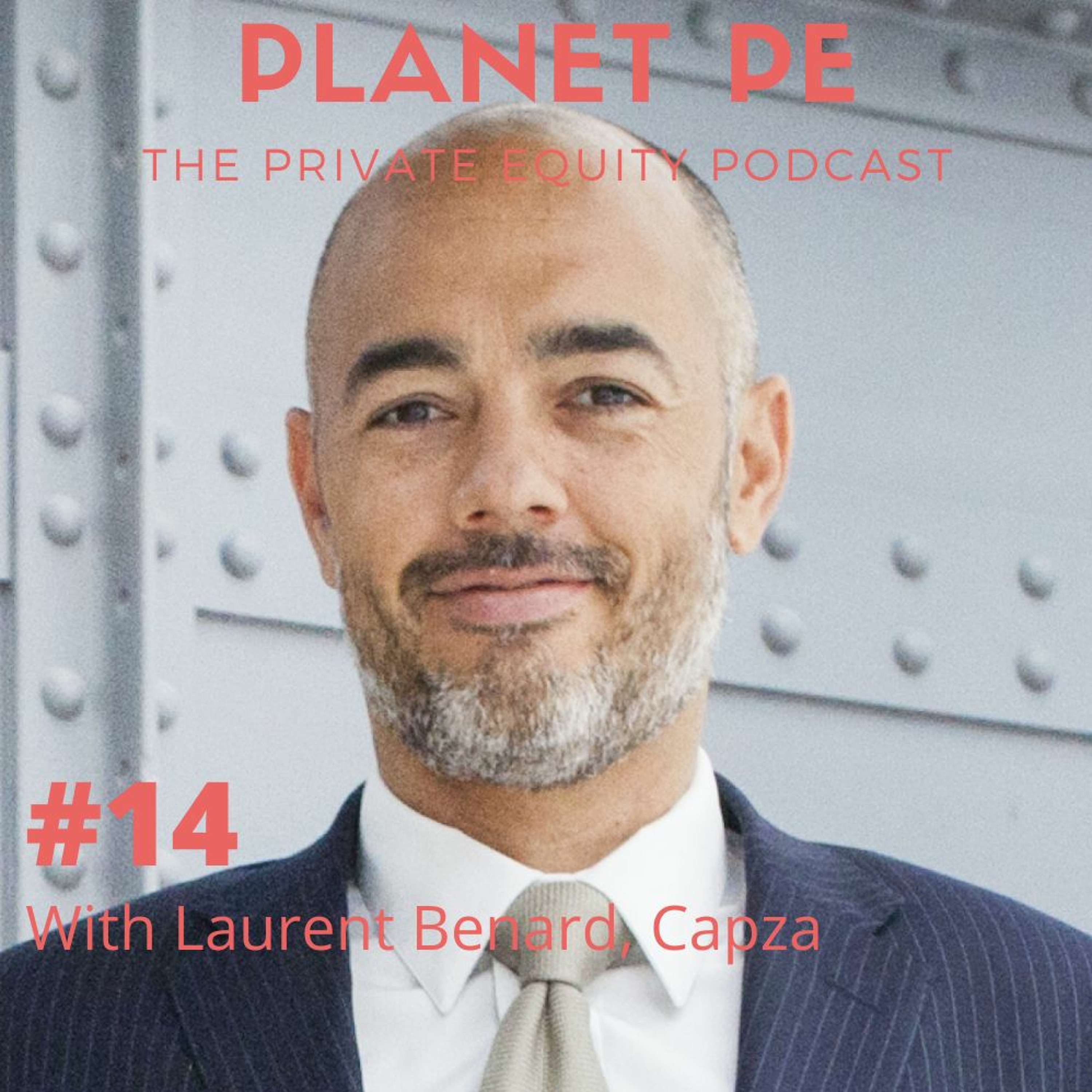
Laurent Benard, Capza and Sneha Hiremath
Sep 24, 202000:17:53Tap to summarizeWe are seeing more and more private equity firms diversify into new strategies. A lot of them have truly become investment platforms deploying several investment strategies, some connected to one another, others where the connection is more difficult to spot. To tell us more about the platform strategy today is Laurent Benard, CEO of Capza. Here is what I asked him: - Who is Capza? - What pushed you to broaden your horizons until very recently integrating venture capital through the acquisition of Time for Growth ? - We are currently going through unprecedented times because of the Coronavirus situation. How are each of your strategies positioned in today’s market ? - How do investors react to your platform strategy? - Do you believe that with a platform strategy a management company is better equipped to face an economic crisis ? - Can a platform strategy with large amounts of AuM make these firms too big to fail? - How does Capza’s future look in the next few years ? More acquisitions in the pipe ? - Do you have any personal favorites amongst the different segments you operate in ? Enjoy!
Transcribe →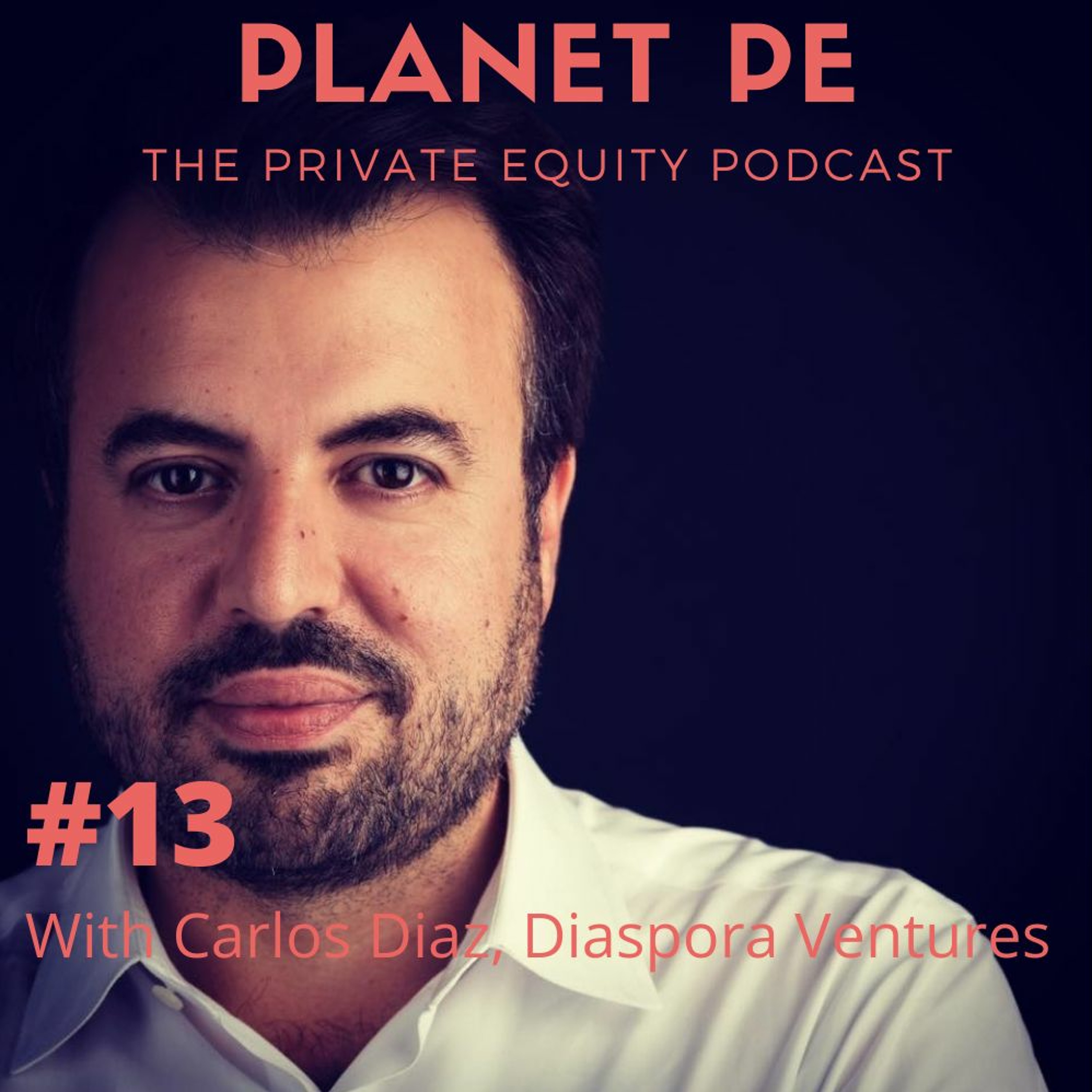
Ep 13 with Carlos Diaz of Diaspora Ventures
Sep 17, 202000:24:53Tap to summarizeToday we’re going to talk about fundraising. Fundraising is always quite a stressful process, it is not an easy task raising a significant amount of money in a short period of time, well which more often than not becomes quite long. A few months ago, in reponse to this challenge, Angel List launched a concept called Rolling Funds. It’s new, its intriguing and so I chatted with Carlos Diaz, who launched Diaspora Ventures a few months ago and started raising money through a rolling fund. Here is what I asked him: - What are you looking to achieve on the tech scene with Diaspora Ventures? - You co-founded Diaspora Ventures in July 2020 and launched a rolling fund. Why a rolling fund instead of a classic VC fund ? - You have raised 2.5M$ so far. How did you go about it and how does the fundraising process work in general through a rolling fund ? - A quarterly fund launch means that you will be fundraising all the time. Sounds quite tedious and time consuming, will you be on the road all the time ? - What about the terms and conditions and the exit process ? Are they different? - In time, do you think that rolling funds could replace certain categories of classic VC funds ?
Transcribe →Kevin Monserrat - Consilience Ventures
Sep 4, 202000:24:02Tap to summarizeKevin Monserrat is the CEO of Consilience Ventures, a platform using digital currency to bring together leading experts, deep tech start-ups and investors, to create a high-tech VC ecosystem that aligns the interests of its members and adds value to all. In this episode of Planet PE, Kevin talks to us about: - How CV is doing things differently, - How investors benefit from CV's non-traditional VC model, - How liquidity is created for investors, - How CV ensures its growth despite a zero fees model.
Transcribe →Adam Lygoe - Macquarie AM
Jul 10, 202000:18:20Tap to summarizeIn the 11th episode of Planet PE, I interview the biggest infrastructure fund in the world. Macquarie Asset Management (MAM)manages 340 bn€and has more than 1000 institutional investors. Adam Lygoe, Senior Managing Director at MAM and head of clients solutions Group in the EMEA region, takes us backstage and tells us how Macquarie managed fundraising and investor relations during the lockdown period due du Covid19. Great insights not to be missed. Spoiler – in April 2020, Macquarie raised AUD 3,5bn, compared to AUD 20bn over the whole of 2019.
Transcribe →Isabelle de Crémoux - Seventure
Jul 3, 202000:19:38Tap to summarizeIn Episode 10 of Planet PE, Isabelle de Crémoux, CEO of Seventure, takes us backstage and talks about: - Seventure's positioning in digital tech and life sciences but also in sports. - Seventure's core value-add across all its verticals. - The firm's position as leader in Europe in the microbiome segment in life sciences. - The impact of Covic 19 on the current portfolio and the opportunities it may create. As always, my guest ends the podcast with a piece of wisdom for young PE professionals. Enjoy!
Transcribe →William Greene - Stafford Capital
Jun 25, 202000:19:19Tap to summarizeIn Episode #9 of the podcast, I chat will William Greene, Partner in charge of infrastructure at Stafford Capital. Here is what I asked him • Stafford's overall activities. • The infrastructure business - strategy, investment segments and geographic focus. • Will you be seeing more investment opportunities in the context of the Covid19 crisis? • How has lockdown impacted your current investments? Do you think performance of the current funds will suffer or take longer to realize? • What prompted you to get into the real assets space, infrastructure in particular? • What advice would you give a young professional working in real assets? • A favorite business ressource that you would like to share with us?
Transcribe →Nicolas Celier - Ring Capital
Jun 19, 202000:16:29Tap to summarizeEpisode 8, sponsored by Jasmin Capital. In this episode I take you backstage to meet Nicolas Celier, co-founder & CEO of Ring Capital. Here is what I asked Nicolas: • What is the story behind the creation of Ring Capital ? • What is Ring Capital doing differently ? How do you add value to your portfolio companies ? • Over the past few years there have been so many initiatives around venture capital and around startups, do you think that the space is getting too saturated ? • Tech trends evolve so quickly nowadays, does that make you suffer from FOMO ? The fear of missing out ? • So far, what are your takeaways, as an entrepreneur who has built his own firm ? • A favourite business ressource you would like to share with us ?
Transcribe →
Eddie Misrahi - Apax Partners
Jun 11, 202000:17:26Tap to summarizeEddie Misrahi is CEO of Apax Partners, a private equity pioneer in France, having started operations in 1983, and investing today in mid-market and development. In Episode #7, Eddie takes us backstage and talks about : - Apax Partners’ market position. - How the firm has evolved since Eddie joined 30 years ago. - What the firm’s defining moments have been over this long period of time. - Apax’s USP in today’s competitive market. - Eddie’s own career progression at Apax. - His advice to young PE professionals and his favourite business ressources. Questions or comments ? Contact me on Linkedin, https://bit.ly/3dTMQ2r Enjoy !
Transcribe →Nicolas Renauld - Indosuez Wealth Management
Jun 5, 202000:17:09Tap to summarizeNicolas Renauld est Global Head of Portfolio Management de l’activité Private Markets d’Indosuez Wealth Management. Dans cet épisode du podcast Nicolas me parle de plusieurs sujets passionnants. - Le positionnement d’Indosuez Wealth Management à l’égard du private equity. - Les modifications potentielles de la stratégie dans le primaire, le secondaire et le co-investissement suite à la crise de la Covid19. - Le recul qu’a l’équipe par rapport à la crise de 2008. - Les attentes en matière de transparence de la part des GP. - La disparité de communication entre les fonds small mid market et les fonds upper mid market. Bonne écoute!
Transcribe →