Loading summary
Transcript351 lines
- [00:00]
A
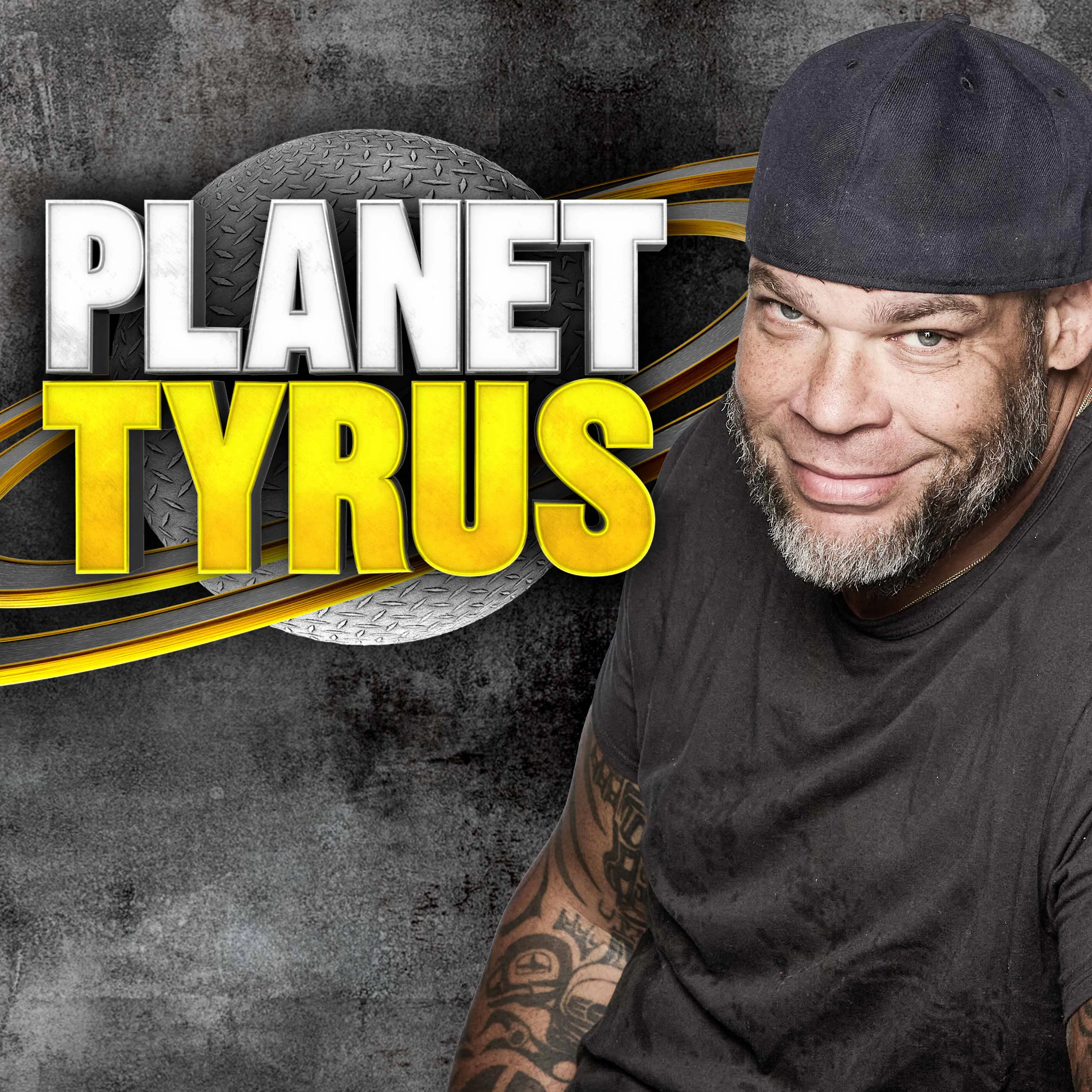
Foreign. What it is. This is Tyrus. And this is our first Sirius XM Radio edition. So you're gonna have to close your eyes. Not if you're driving. And hear the words, because you'll have to visually. But we can do that because we're story. I am a storyteller. And Harry, my trusty sidekick on this one, welcome. And we're going to talk about the greatest subject in the world right now, which is America, because it's America's 2-50- birthday. So what better than a little piece of America with Harry and Tyrus on planet Tyrus.
- [00:40]
B
Thank you, Tyrus. Tyrus.
- [00:42]
A
Thank you.
- [00:43]
B
Do we have to do radio, like, radio things?
- [00:45]
A
Are you going to talk like you're from the 50s? Like, we're excited to be here? We're going to be hotter than popcorn on movie night.
- [00:49]
B
Yes, yes, yes, yes.
- [00:51]
A
Pants up to our chest line. Because back then you could be buff and chubby.
- [00:54]
B
Yes.
- [00:55]
A
So, yeah, Short suspenders.
- [00:57]
B
Hey, you can still do that.
- [00:58]
A
Yes. And you know what? I'm wearing a hat for this. For no apparent reason.
- [01:04]
B
You can't see us because you're driving.
- [01:05]
A
We're still going to video this. So you can still catch us on our YouTube channel, right?
- [01:08]
B
Yes, you can.
- [01:09]
A
Which is doing phenomenal. So you can, you know, you can check us out on Siri and then subscribe.
- [01:13]
B
Right.
- [01:13]
A
And then after you get the visual, or actually you get to hear. What is it hearing.
- [01:17]
B
So you can get the audio.
- [01:19]
A
Audio. That's the word. That's why I brought you in, Harry. Yep.
- [01:22]
B
And then you can go to YouTube, turn and turn off the audio and get the visual.
- [01:26]
A
Or you could have both.
- [01:27]
B
Or you can have both. You could listen to it on the radio. Well, it won't be taped.
- [01:32]
A
You know what? They're about to click us off, so let's get into it. All right. This is America. America with A capital M. America 250. Yeah. America stories.
- [01:40]
B
And here on Planet Tyrus, we're not going to tell you all those stories that you hear all over. All over the web.
- [01:46]
A
We're looking for exclusive, cool, everyday American stories. Americana.
- [01:52]
B
Yes.
- [01:53]
A
That's where this is. Americana.
- [01:54]
B
Americana.
- [01:55]
A
This is Americana. Stories of Americana.
- [01:58]
B
So, Tyrus, I picked out a few stories here.
- [02:00]
A
All right, cool.
- [02:01]
B
That are underrepresented Sweet. In the media from our 250 years. This is across the board.
- [02:06]
A
Isn't that crazy that it's only 250 years?
- [02:09]
B
It's so. That's such a short amount of time.
- [02:11]
A
And as a guy who's who's, you know, on the wrong side of 40. Just kidding. I'm 50. I've made. I've been here a quarter of it. That's crazy. It's absolutely all the. Sometimes you. When you think of America and how far America has. Has come in such a short period of time, it's like a blip.
- [02:30]
B
Yeah.
- [02:30]
A
And people will still complain.
- [02:32]
B
Yeah.
- [02:32]
A
Like, that's a lot of. We made a lot of drastic changes that took other countries thousands, you know, in some cases of years of just accepting other people. And, you know, so it's amazing that where we are, we're at. And we get to celebrate it and talk about it. So let's. Let's dive in.
- [02:48]
B
And that's also just America. Like, remember what Kenneth La Cavora was talking about with, like, humankind.
- [02:53]
A
Yes.
- [02:53]
B
And if all of our existence was a book, humankind wouldn't even be like, the last sentence of the book.
- [02:59]
A
Yeah. Like the plant. Like dinosaurs would have a run on it. Be the entire book.
- [03:03]
B
And America's like a piece of a letter.
- [03:06]
A
Yeah. With like a. We're like.
- [03:07]
B
We're like a comma.
- [03:08]
A
Yeah. Or asterisk.
- [03:10]
B
Yeah, Like. Yeah, exactly.
- [03:11]
A
A little more fancier.
- [03:12]
B
All right, first story. Let's get right into it. After 10 minutes. Get right into it.
- [03:16]
A
Yep.
- [03:18]
B
The real life Ghost army from World War II. That's the headline of this one.
- [03:22]
A
Okay.
- [03:23]
B
Instead of relying on brute force, the US army created the 23rd Headquarters Special Troops, a top secret unit made of artists, actors, and sound engineers. They used inflatable rubber tanks, fake radio broadcasts, and massive speakers playing battlefield audio to fool the German army, saving thousands of American lives.
- [03:48]
A
How does. That's American ingenuity. How does. How do you think that even came up? You know, like, hey, there's a war going on and, you know, and Germany, literally, if they didn't run out of gas in Africa, it might be a very different conversation we're having here. We might have a different dialect, to be honest with you. Like, Germany was every. There was no bad ideas in terms of trying to fight for freedom and that. I wonder how that conversation happened. Like, hey, I've got an idea. You know, because 1. Where does 1 get inflatable tanks?
- [04:25]
B
Yeah.
- [04:25]
A
Yeah. If so, is there a website where we could get one?
- [04:28]
B
Yes. Just fill this entire room with it.
- [04:31]
A
So they just propped up a fake to make them seem like the numbers were more.
- [04:36]
B
Yeah.
- [04:37]
A
And you know what I think, because America, when America jumped in, the war changed, like, immediately. Like, and we had a whole nation Our whole nation was behind us. I mean, there was just people, of course, the brave men and women that served. But then you think about home. Everyone was making sacrifices. Food rationing, turning your car in, you know, giving up everyday luxuries to support the boys overseas. And it was. It was an amazing time in terms of. Every American knew what was on the line. And I think that's what it makes it. That's why they call it the greatest generation. And I think it's. It's undisputed.
- [05:21]
B
Yeah.
- [05:21]
A
Because everyone was willing to pitch in and do things. And nowadays, you know, we're so spoiled from those results that, you know, whenever we hear things, everything's an inconvenience, you know, now. So I think for me, when I look back at that time, America was just. It was a. It was so young, but so wise, and that's just a brilliant idea. So, I mean, it was. You had the real soldiers doing the work, and then the people who weren't cut out for that, they still found a way.
- [05:47]
B
Yeah.
- [05:48]
A
To be impactful.
- [05:49]
B
Do you think it was a budget thing, too? They were like. I mean, we could just make it look like it.
- [05:54]
A
And I think sometimes it's. It's. I call it peacocking. That's the greatest display of peacocking ever.
- [06:02]
B
Yeah.
- [06:03]
A
Yeah. You know, I'm saying, like, it's just. You're. You're showing. The peacock wants you to realize that he's awesome, but he doesn't want to fight. That's why he invested so much in plumage.
- [06:11]
B
All bark, no bite. That's what this.
- [06:13]
A
I mean, he's literally every short guy at a bar.
- [06:15]
B
Yeah. Yeah.
- [06:16]
A
You know, puffing up his chest, you know, like, hey, don't come over here.
- [06:18]
B
Yeah.
- [06:19]
A
You know, happen.
- [06:20]
B
Yeah.
- [06:20]
A
And he's like, seriously, don't come over here.
- [06:23]
B
Yeah.
- [06:24]
A
And I. But how. How effective that was to where it at least got in the head of the German soldiers, to where they put doubt without actually putting any life on the line, because that could have gone horribly wrong.
- [06:37]
B
Yeah.
- [06:38]
A
You know, like, you. Somebody inflate one of the tanks. Could you imagine, like, one German surrender? And as I'm sitting on the tank
- [06:45]
B
surrender, it's like a. Like a bouncy castle. And they're taking down the bouncy castle,
- [06:50]
A
and you're like, his tank is running out of air. You know.
- [06:54]
B
Yeah. It all takes is one German one. And he just has binoculars, and he's like, oh, my gosh.
- [06:59]
A
Yeah. Or the color was off.
- [07:01]
B
Yeah.
- [07:01]
A
You know, like, it was. Or it was faded in the sun or like the.
- [07:05]
B
The speakers that are playing.
- [07:06]
A
Yes.
- [07:07]
B
You know, like the. The battlefield audio. Like, if they just started, like, getting finicky and what happened here?
- [07:13]
A
Imagine like, I'm. Check. Can I get a mic check. Can I get a sound check? Yeah, I'm sorry. Our sounds on here. Or someone has a hot mic or like a.
- [07:20]
B
A song cuts in, like a weird radio frequency comes in, and, like, they start playing a song.
- [07:24]
A
Or commercial.
- [07:25]
B
Or commercial, yeah.
- [07:27]
A
So many things. And it. That wasn't a thing where, like, the Germans were going to laugh, right?
- [07:31]
B
Oh, yeah.
- [07:32]
A
They. If anything, they're going to. It would have inspired them because they're like, they don't have any more troops left. Their morale's down. They're. They're peacocking us because we're gaining ground. So the intimidation factor, the men so much of, again, not speaking from someone who's actually been in combat, but in life, you can mentally be beat. You know, just the idea of something or the fear of the unknown sometimes can be enough to make somebody not want to fight anymore. So that's an incredible story, and that just goes to American ingenuity because so much of our resources were put on the front line to where we still found another way to where everybody was involved. And I think that's the beauty of that story.
- [08:18]
B
Got that right. Let's go. The next one. Here we go. The invention of the Secret Service. On April 14th in 1865, the very day he was assassinated at Ford's Theater, President Abraham Lincoln signed legislation establishing the United States Secret Service. Ironically, its original mission had nothing to do with protecting the President. It was created specifically to combat the rampant problem of counterfeit currency circulating throughout the country. It wasn't until 1901 that presidential protection became a permanent part of the agency's duties.
- [08:58]
A
Well, first of all, I guess it's not a secret anymore. So we kind of. Breaking news. Yeah, we. Spoiler alert.
- [09:04]
B
Service.
- [09:05]
A
You would think, given the results of what happened after we signed that, that they would switch. But counterfeit had to be unbelievable back then because one, there was so much pillaging going on in this, in the south, because that's, you know, you had. They wanted two presidents, they wanted two nations. And so who's going to stop them from printing money? Then you had, like, it's crazy how much fake wealth was going on during that time. So that had to be a real thing, because it's not like today where we had all of the, you know, bells and whistles. They got a little. They can take A little marker. I don't know how many times that's happened to you, but every time I pay for something with a hundred dollar bill. There's nothing worse than someone, you're, you're going in there, you, you pay with a hundred dollar bill. And the lady holds it up in the air.
- [09:51]
B
Yeah.
- [09:51]
A
And looks at it. And you're like, in front of everyone. You're like, is there a problem? And she's like, I'm just making sure it's real. I'm like, is there something I'm wearing? Is the T? And then they do the worst thing ever where they get the yellow marker on, they run a line through it and then they look, okay, you're good.
- [10:04]
B
What does it even do?
- [10:05]
A
I don't know.
- [10:05]
B
I don't know.
- [10:06]
A
I got. That happened to me so much that when they gave me back money, I was like, hold on, can I borrow your marker? And I did it today. And you know what? The cashier was pissed off, like, sucks down, like, hold on, I want to make sure this is, you know, I don't want to fake 20 because why would you make fake hundreds? Yeah, I would make fake tens and fives. Not that I'm condoning counterfeit, but if you must, it would be small bills. And then back then you had, was it gold, silver dollars? So they were easy to recreate and then they had no. So that probably was a huge problem. And. But of course the Secret Service then had to switch to protection because shooting a president was very fashionable in our history. You know, we was at Garfield, Roosevelt's probably. Roosevelt and President Trump are probably two of the absolute insane reactions to being shot ever. You know, Reagan was shot. We know what happened with Kennedy. But Roosevelt was shot while giving a speech and he had the notes of the speech and it apparently it was a long ass speech and. Yeah. Because it was like thick.
- [11:17]
B
Yeah.
- [11:18]
A
And it was. Kept the bullet from going into him. I think he still bled. I think it got through. But it was the speech that slowed it down.
- [11:24]
B
Right.
- [11:24]
A
And the cold part. He finished the damn speech.
- [11:28]
B
Yeah.
- [11:28]
A
He literally like, you shot me as I was saying, you know, and then President Trump gets within a micro inch of having his brains blown out.
- [11:39]
B
Yeah.
- [11:40]
A
Jumps up and yells, fight, fight, fight. And I guarantee you if, if Secret Service was not there, I mean, was not forcing him to leave, I think he would have finished his speech.
- [11:51]
B
Yeah.
- [11:52]
A
You know, and I think that is invaluable. I think the problem, what sucks now is that we have been, whether it's the media Whether it's corruption and stuff, we saw during President Trump's campaign, instead of having our best and brightest, you know, there was deis. And it was. I think the Secret Service has started out as a very honorable thing, a thing where, like, when you were. When you were. You were in the Secret Service, it was. It was country before anything else. And I. I think that's been blemished in the past few years, I think. What do you think?
- [12:26]
B
Well, for one thing, Lincoln, The Gettysburg Address is known as one of the shortest speeches.
- [12:34]
A
Yeah.
- [12:34]
B
So he's lucky that when he was giving the Gettysburg Address.
- [12:37]
A
Yeah.
- [12:37]
B
You know, something. Something bad didn't happen. But it's also, like, the Lincoln assassination was really theatrical because John Wilkes Booth,
- [12:45]
A
like, it was literally in a theater.
- [12:47]
B
Yeah. And he shot him and, like, jumped over, hopped on the stage. And what did he say? It was like, six super saran.
- [12:53]
A
Yeah. He was like some cold Latin.
- [12:55]
B
Yeah. And then. And then ran off. Like, that's like a movie.
- [12:57]
A
Right. Well, again, we're looking at a time where security wasn't anything. Where it is. I mean, honestly, if he would have ran to the next town, you know.
- [13:05]
B
Yeah.
- [13:06]
A
He could have changed his name.
- [13:07]
B
Yeah.
- [13:08]
A
You know, a lot of deadbeat dads back then would just go for a walk.
- [13:11]
B
Right.
- [13:11]
A
And not come back because it wasn't like you could track him.
- [13:14]
B
Yeah. Well, he broke his. He, like, broke his leg.
- [13:16]
A
Yeah. That's. And then probably the reason why he got caught.
- [13:18]
B
Yeah. He's hobbling.
- [13:20]
A
Yeah.
- [13:21]
B
And they're like, that's got to be John Wilkes Booth.
- [13:22]
A
Plus, it's hard to forget a guy who's dropping Latin.
- [13:26]
B
Yeah.
- [13:27]
A
And everyone else has a Southern accent. With a Southern accent. No, no.
- [13:30]
B
It's also so great that he was, like, a wannabe actor.
- [13:33]
A
Yeah. Of course. He was like.
- [13:34]
B
He was like. I think he was, like, in the mid tier of professional actors at the time.
- [13:39]
A
And. Well, I mean, I guess. And he had his major performance at the end. Not to make light of the assassination of a president, because Lincoln, again, was one of those presidents who changed the course of this nation. And my favorite thing about Lincoln is that he was flawed. He wasn't necessarily against slavery in the beginning. He had his own issues with racism, but he was willing to sit down with men that he normally would not sit down with in a time where there was no upside to it, you know, and he was to do that in a leadership position because there's a certain narcissism to be a leader and not to the. You know, every Great leader has to have a little bit of narcissism in him, you know, and for him to change his way, knowing what the cost was, I'm sure when he had made the decision to end slavery, to proceed in the Civil War, he had to know that it was life threatening. He had to know that there were, he is changing a whole way of life. He's changing the culture of this country. Yeah, there, there had to be an understanding that there might not be any coming back from this. And I think that's the difference between everyone's like, how do you, how do you rate a president? You know, was he willing to look death in the face for the betterment of our country? And I think there's, that's a short list of presidents. George Washington, obviously, Abraham Lincoln, Theodore Roosevelt. You got to talk about Ronald Reagan in that context. People don't, it's going to be controversial, but you gotta, you gotta throw President Trump in there whether you like it or not. I think right now the world is too close to it. I think at the time when Abe Lincoln was doing what he was doing, I'm sure that half the country hated him, if not more.
- [15:47]
B
Yeah. And people say the country is divided now. It's like, yeah, it was way more divided back then.
- [15:51]
A
Literally, it was almost color coded divided. So. But to still go forward with the mission knowing that the result could be the end of your life, your family's life, forget your career. So I think that when you talk about presidents and that Abe Lincoln will always be that way and we always, and it's funny, it kind of never really went away, even with the money, because all the other coins faced other directions of Abe Lincoln. If you look at, if you take them a penny, quarter, nickel, dime, 50 cent piece and a penny. And we would always say, my black friends and I would, when we were growing up, we would always say, like, you free the slaves and they turn their back on you, you know, because he was, and also he was the only one who was copper. So there was some, there was some lingering hate there that never didn't go away. But regardless of the fact, they couldn't unchange what he did because America at its core wanted change. And I think that's the beautiful part of America. And we, we get lost in that now because we're all spoiled. And it's easy to say that, you know, I'm oppressed. You're not oppressed enough this day and age. You're absolutely not. And even for those who were oppressed, they had the opportunity to fight through it and grab the American dream. So. And I think that's what's amazing about now is that we're all able to sit around in podcasts and radio shows and say whatever the hell we want, within reason. And that is something for. For presidents who gave their life like Abraham Lincoln did for a change that he is, will always be remembered because he gave. I think George Washington, when he gave up the presidency, he's like, I'm not. Trading one king for another was probably the most amazing thing. A president to give up power and then another one to free. To where all men are created equal. I think those are. That never gets old.
- [17:50]
B
Yeah.
- [17:50]
A
You know what I'm saying? So you hate that he lost his life, but I think it was almost necessary. I hate to say that, but I think it was almost necessary for the change. Like he gave his life for better America. And I think that's why he'll always be remembered.
- [18:06]
B
Thousand percent. All right, ready for the next one?
- [18:08]
A
Yep.
- [18:08]
B
This one lived in Boston for a period. This is a fun Boston one.
- [18:11]
A
I grew up there for a little bit. Okay.
- [18:13]
B
The Great Molasses flood.
- [18:16]
A
I missed that one.
- [18:18]
B
In Boston, a massive 2.5 million gallon steel tank of molasses ruptured, unleashing a 15 foot tall wave of sticky syrup that barreled through the streets at 35 miles an hour.
- [18:34]
A
Oh, man.
- [18:35]
B
It crushed buildings and trapped horses, causing a bizarre and deadly disaster that eventually led to a major changes in the U.S. structural engineering and corporate regulations.
- [18:45]
A
But it was a delicious disaster.
- [18:48]
B
Yeah. Yeah. Can you. People are getting like, bulls. And they're like, yeah.
- [18:52]
A
Or you don't. How do you write that letter?
- [18:56]
B
Yeah. Hey, it was 1919 also.
- [18:59]
A
Yeah. Cousin Earl is no longer with us today. Who did it? I want names. Molasses. They're like, molasses who?
- [19:09]
B
They're like, we have to bury him. He's like, well, he's.
- [19:11]
A
He is buried and he's delicious, apparently.
- [19:13]
B
Molasses.
- [19:13]
A
Yeah, he's sweet. There's.
- [19:16]
B
Yeah, he's. He's in a better place.
- [19:18]
A
How do you. You open that? And it had to be like Austin Powers, right?
- [19:24]
B
You're like, no, no, Like Charlie the Chocolate Factory. Yeah.
- [19:29]
A
It's like this blob of.
- [19:32]
B
Yeah.
- [19:33]
A
Hold on.
- [19:33]
B
You think you could run away from it?
- [19:34]
A
Like, I. I kind of feel like if you got, you know, if you got ran over by was your time, you know, like. Yeah, I think it was your time. I mean, again, to anyone, if there was someone like my great, great. I Don't think you tell that story.
- [19:51]
B
No, no, no.
- [19:52]
A
It's.
- [19:52]
B
It also depends on, like, the viscosity of the molasses. You know, like, is it. Is it high viscosity or low viscosity?
- [19:59]
A
It's not like it was Aunt Jemima's syrup.
- [20:02]
B
Right.
- [20:02]
A
It was like that tree SAP. Molasses.
- [20:05]
B
Yes. Like honey. Like a thick, honey.
- [20:07]
A
Thick goop.
- [20:08]
B
Yeah.
- [20:11]
A
Can you imagine? And then I guess there will be some people were like. Because they wore the wigs and stuff back then. So the wig's trash. The wig's gone.
- [20:18]
B
It's gone.
- [20:19]
A
You know, but, like, getting the syrup out of your. Because you're not. Yeah. No one's telling that. The reason why. No one's probably heard of that story. There is no folklore. There is no reenactment. Although I would pay to see a reenactment of that era.
- [20:33]
B
Yeah.
- [20:34]
A
You know where. Like, I think about the Shining, where the blood.
- [20:37]
B
Oh, out of the elevator. Yeah.
- [20:39]
A
Just imagine it was molasses. That scene would have been a half an hour.
- [20:42]
B
Oh, my God. Yeah, you're right. Yeah. But it's also like, the flip side of that is you should be able to avoid it.
- [20:48]
A
Yeah.
- [20:49]
B
But once you're stuck, you're stuck.
- [20:50]
A
You're stuck. Yeah.
- [20:51]
B
It's over. Once you're in there, it's like a horror movie.
- [20:53]
A
The Blob.
- [20:54]
B
Yeah.
- [20:55]
A
No, no. How long does the city have? Three days and four fortnights.
- [21:02]
B
Like, does it harden?
- [21:03]
A
I would think that's the. The. I think for the horses and stuff is probably not. They. Once they were in there.
- [21:10]
B
Yeah.
- [21:11]
A
I think once it consumes you.
- [21:13]
B
Right.
- [21:14]
A
There's no getting out.
- [21:16]
B
There's no getting out.
- [21:17]
A
I mean, I guess you could eat your way out, but there's. That's a lot. And it's. Oh, man, I can't imagine the Dentist bill after that. But. So they changed the. What do you think they changed to? Just. Hey, as a rule.
- [21:30]
B
Yeah.
- [21:31]
A
You cannot have more than 30 gallons of molasses at a time. Maybe that's where the drums came from.
- [21:35]
B
Right. They were like. We figured out the breaking point. They're like, this is the breaking point.
- [21:39]
A
Or everyone switched to T. Yeah. No more molasses.
- [21:42]
B
Molasses is done.
- [21:43]
A
You know, it's funny because you would always hear what people would say to you, like, get the molasses out your ass and get moving.
- [21:48]
B
Yeah.
- [21:48]
A
Maybe that's where it came from.
- [21:50]
B
That could be it.
- [21:50]
A
Yeah. Yeah.
- [21:51]
B
That could be it.
- [21:52]
A
I'm not crying for him.
- [21:53]
B
Yeah.
- [21:54]
A
Because if he was moving. He wouldn't. Moving.
- [21:56]
B
Yeah.
- [21:57]
A
Yeah.
- [21:57]
B
That's rough.
- [21:58]
A
Tragically funny.
- [21:59]
B
It's also not like it's not going to be able to seep into, like, the grates. You know what I mean? Like, it's not going to, like, be able to flow like water does into the grates.
- [22:07]
A
Yeah. So it's just there.
- [22:08]
B
It's just there.
- [22:09]
A
At least the town smelled nice.
- [22:11]
B
Yeah.
- [22:11]
A
For a little while.
- [22:12]
B
Because I could imagine it's like a gingery smell. Right. Like ginger snap.
- [22:16]
A
I'm assuming that would be the plus side.
- [22:19]
B
Right.
- [22:19]
A
Because otherwise you smelled horses and people throwing shit out their window.
- [22:24]
B
Yeah.
- [22:25]
A
So, yeah. You don't clean it. I don't.
- [22:27]
B
Like, get rid of the city Move.
- [22:29]
A
Like, yeah, we've. Boston's lost. English? No. French. No.
- [22:34]
B
Yeah.
- [22:35]
A
Molasses.
- [22:35]
B
Yeah. Like, Boston. It actually used to be where Springfield is, but.
- [22:38]
A
Yeah.
- [22:38]
B
Yeah, that's where the molasses was.
- [22:39]
A
So they actually.
- [22:40]
B
Real Boston.
- [22:41]
A
So eventually, obviously, it was biodegradable.
- [22:43]
B
Yes.
- [22:43]
A
So eventually they got rid of it and they got a delicious treat out of it. So that's the positive side of it.
- [22:49]
B
All right, this is the next one. When is Independence Day really?
- [22:53]
A
Okay.
- [22:54]
B
Independence Day is one of America's most iconic holidays.
- [22:57]
A
Yeah.
- [22:58]
B
But was the 4th of July, 1776, really the day the country declared its freedom from Britain? The truth is that the pivotal Moment came on 2 July, when Congress voted to approve the resolution for independence. But it took another two days to. To finalize the wording of the Declaration, which is why the Fourth holds the official title and the nationwide celebration.
- [23:22]
A
When we had Brett Bear on our podcast, we talked about this and was the. Oh, man, my brain's tripping. Was his last name Lee? Because the fir. It was a businessman that. We don't have headphones on, so we don't have a guy. And a guy to tell us.
- [23:36]
B
We can throw him on right now if you want.
- [23:38]
A
But anyways, he was in the meeting and he stood up and said, the hell with this, you know, we're going to get away from. From England. And there was a lot of argument that that should have been the Declaration of Independence when they finally made a decision. And then the second they had to put the wording right, because people, they were. There were some arguments. I think one of the biggest arguments was All Men Created Equal. That was. There was some issues there. The gentleman from the south, some disagreements. I'll say that politely.
- [24:07]
B
Yes.
- [24:10]
A
But I think the finish. I think England still didn't take him seriously because at that point in time, no one had ever like, got away from a king or, you know, had got independence. So I think it's the Fourth of July. I think it's when it's done, it's signed, it's hot off the roller.
- [24:29]
B
Henry Lee was a guy's.
- [24:30]
A
Yeah, Henry Lee. Yeah. See, I was, I knew it was Lee.
- [24:32]
B
Yeah.
- [24:33]
A
And Henry Lee had the, had the balls to do it because it was treason.
- [24:37]
B
Yeah.
- [24:37]
A
Like you were going to be hanged. Your family is going to be hanged. You see that Your house would have been burned down like the English did. Not around or mess around. Sorry. It's going to be beep. Oh, Siri. We can say serious.
- [24:47]
B
I don't know.
- [24:47]
A
I don't know. Yeah. Oh, yeah, we got ahead. Yeah. Yeah. We're not going to f bomb it up, but yeah, it was a delicate matter and it could be your own countrymen that would sell you because it was Loyalists. They were like, wait a minute, I don't mind paying my taxes with, with the, with England. Like, I like the protections that comes from it, the profit, the economy. So it wasn't, it had to be a group decision and I think taking the extra two days to get the wording right and then finally presented it. So I, I, I, I pushed back. I would say it is the fourth of July, because once it was signed, sealed, delivered, it was the 4th of July.
- [25:19]
B
Right.
- [25:19]
A
The second it came out. But then you could have to go back to when the, the date that Henry Lee was the one that stood up and got them to vote, you know, the second did it and all that stuff. So you could make an argument that I think that was what, in June? My memory escapes me, but. So you could say then, or it could have been when we actually defeated England that you could say that was our independence, you know, because once we 4th of July, we said, yeah, but then there was a pretty big, you know, we had to, we had to get free. So I push back on that story. I say it's, it's the 4th of July is accurate. What do you think?
- [25:54]
B
Well, I also think, you know, there's, there's proofreading to be done. Yeah, I may, I myself make a lot of typos.
- [26:00]
A
Yes. So, you know, kind of something, you don't want it to be open for a lot of interpretation. Like most men are created equally.
- [26:09]
B
Right. Like, take those two days.
- [26:12]
A
Yeah.
- [26:12]
B
To really think about the wording and be like, is that the right word?
- [26:16]
A
I think we should all do that. Think of how many emails you send or text messages you send when you're emotional.
- [26:22]
B
Yeah.
- [26:22]
A
Because it had to be emotional.
- [26:23]
B
Right.
- [26:24]
A
I'm sick of this shit. Yeah, we're out. Like, hold on, hold on. I don't think we could write, hey, sleep on it. Yeah. Hey, King, kiss our ass. We're free.
- [26:31]
B
Yeah.
- [26:32]
A
We need to expand upon that a little bit, you know, and so I think taking 48 hours to. Basically, because those men were speaking for an entire. For all the colonies.
- [26:42]
B
Yeah.
- [26:43]
A
So it damn sure better be right.
- [26:44]
B
Yeah.
- [26:45]
A
And you want. And you want to be sure. So. And I think if we all did that with text messages, you know, your first reaction sometimes isn't the best way to handle business. So when it comes to something, I wouldn't have been shocked if they took a week or a month.
- [26:59]
B
Yeah. I mean, I've definitely made that mistake. You know, now I do the. Sleep on it. Yeah, you should sleep on it. Is. And like we talked about with Lincoln, what he would do if he had a disagreement with someone. He'd write a letter, put it in his drawer, and then he would look. You would look at it a week later, and he would, like. Most of the time he's like, I don't. I don't feel that way anymore.
- [27:16]
A
Yeah.
- [27:16]
B
And he wouldn't send it, which is such a good. With X, there should be, like, a little. A little, you know, icon that you can click where it's like, draw this, like, put in a drawer.
- [27:24]
A
That's a great idea. If more people back then had Abe's way of doing it, he probably wouldn't have got shot.
- [27:30]
B
Yeah.
- [27:31]
A
You know, d be like, I'm going to shoot the. You know what? I'm going to sleep on it. I'm going to sleep on it for a few days and see how I feel in a couple weeks. That's a great thing, and it's something we can all learn from. So if you. If you have a snap judgment, sit on it 48 hours.
- [27:45]
B
Yeah. That's what that could be. The icon. Sit on it.
- [27:47]
A
Sit on it. Yep.
- [27:48]
B
Press the sit on it icon.
- [27:49]
A
I'm going to hold off on it. Yeah. All right.
- [27:51]
B
Final story.
- [27:52]
A
All right.
- [27:53]
B
The Culper spy ring. Long before the CIA, George Washington used a small, brilliant network of everyday citizens in New York to outwit the British. Operating right under the noses of British command, this ring used invisible ink, code books, and dead drops to smuggle vital intelligence that fundamentally saved the American Revolution.
- [28:20]
A
Every time I hear a story about George Washington, I just get more and more just in awe and Impressed. And understand this. He was what, in his 30s doing all this like he was a young guy.
- [28:31]
B
Yeah.
- [28:31]
A
I mean that's. And our forefathers were not even father. I mean they were. I guess back then you didn't live to 100. But still to be that young and that wise and using everyday people because you know what there, that was brilliant. Because England's. One of their biggest downfalls was their arrogance. To the colonies they were just above it. And they're like, these are our leftovers. We don't take these guys seriously.
- [28:56]
B
He was already forming a democracy.
- [28:57]
A
Yeah. Literally underneath them and everyday people. That is how America works. That is our roots is every day Americans that make America go. All the leadership in and out, whomever, president, whatever. But it's the backbone of this country is everyday America. This country does not work if we don't have everyday Americans doing things. And, and how. I mean, spy versus Spy, Invisible Inc. Like, I mean.
- [29:25]
B
Yeah.
- [29:27]
A
How cool must it. I mean again, you're fighting for freedom, but to know that again, it goes back to the first story where they were. They had the ghost with the inflatable tanks and stuff. And then. Well, maybe that's where they got it from. But it's the same thing where. That's why I think America is so great. Because it's, it's, it, it's. The unsung heroes are everyday Americans, normal people with the same issues and stuff that we all have. But when it comes time to step up the. The Americans DNA is just different.
- [30:00]
B
Yeah. And also, I mean, George Washington, he was just so like innovative. And he was also just cutthroat.
- [30:06]
A
Yeah.
- [30:06]
B
You know, like Shane Gills had a great bit about it. Like how insane you have to be to on Christmas Eve cross the Delaware in the ice and be like, I don't care that it's Christmas.
- [30:16]
A
Yeah.
- [30:16]
B
He's like, we're gonna go in there and while they're sleeping we're just gonna get them again.
- [30:20]
A
It goes back.
- [30:21]
B
Yeah. Crazy.
- [30:23]
A
They wanted it.
- [30:23]
B
Yeah.
- [30:24]
A
And I'll be honest with you. It was cold.
- [30:27]
B
It's cold.
- [30:27]
A
Yeah. I'm not sitting in the snow.
- [30:29]
B
Yeah.
- [30:29]
A
I gotta be in the snow. I'm gonna fight. Because at least if you're fighting, you're sweating, you're warming up. I'm not going to sit next to a river and freeze my ass off all night.
- [30:36]
B
Yeah.
- [30:36]
A
And then get up in the morning where they're well rested with their fires and their tents and their food and their numbers and Christmas morning. Christmas morning. Yeah. I Guess Santa Claus came down the chimney, but he wasn't bringing gifts.
- [30:50]
B
And. And George Washington, like, the British would do the. Like the line, you know, and then they would just, like, face each other and do this. And he's like, that's stupid.
- [30:56]
A
He's like, well, we get. We were getting smoked.
- [30:58]
B
Yeah.
- [30:58]
A
Yeah. You know, they had.
- [30:59]
B
So why would you do that?
- [31:00]
A
They had to. Well, when. When the settlement first happened, that was the biggest problem in the Indian wars is that the Native Americans wouldn't line up.
- [31:08]
B
Yeah.
- [31:08]
A
They would shoot from behind trees and
- [31:10]
B
they would, like, climb trees and jump out.
- [31:12]
A
Like.
- [31:12]
B
Yeah. They're like, what do they do?
- [31:13]
A
You're not following the rules of war, you know, sir, you're cheating.
- [31:16]
B
You know.
- [31:17]
A
No, this is war, Jack. We fight. Yeah, but you can't. That, I think, gave us a huge advantage. And it was a huge disadvantage because, again, it was England's royal arrogance that we capitalized on. Because when you're fighting for your. For not just your life, your. Your family's future, because if it went the other way, his entire family would have been strung out and hung up. You know, like, anyone involved with it would have been. And would have been dragged out publicly and hanged and stuff like that. And so you're not gonna. You can't fight with rules. That's one of the problems we have today is because I think it was Machiavelli who said, your biggest problem is, like, you have morals and your enemy doesn't.
- [31:58]
B
Yeah. That's crazy.
- [31:59]
A
Yeah. You know, and he. He wanted it. And he knew that if you lined up Britain and fought them on their playing field, they were going to get smoked.
- [32:08]
B
Right.
- [32:08]
A
And, you know, there's a great movie, the Patriot, with Mel Gibson.
- [32:11]
B
Yeah.
- [32:11]
A
I love that movie. Absolutely love that movie. I don't know how much. How much of it's actually accurate, but as far as the fighting goes, it was the militia.
- [32:19]
B
Yeah.
- [32:20]
A
You know, because they weren't fighting, like, England. There was rules and, like, don't shoot the general and, you know, all this other stuff. And everyone dressed nice and good morrow, you know, like. And no, no, we're fighting. And it changed the way war is fought. And it actually showed that that was England's biggest flaw. So, again, George Washington, if you don't listen, the cool thing about history is it's there. Like, pick up a book, do something different. I mean, if you got to scroll through it, you don't get the same thing reading it first night. Like I said, Brett Baer had a. Had a great. Has a great book out. I enjoyed reading about the history of this country and because we do live in the greatest country in the universe that we know of. Like I said, we still don't know all the UFO stuff, but that's another episode. And we've got a bunch on YouTube. So definitely check out Planet Tyrus YouTube so you can get. And you can see us in studio talking with my cool hat.
- [33:08]
B
Yeah.
- [33:08]
A
My USA hat. So I hope these stories were fun and cool. I enjoyed them.
- [33:14]
B
I had a great time.
- [33:15]
A
Yep. And again, sure you keep your molasses locked up.
- [33:18]
B
Yep.
- [33:19]
A
Cuz it's a mess.
- [33:21]
B
Keep it tight.
- [33:21]
A
Yep. So check us out on all our socials and stuff and what it is.