← Planet Tyrus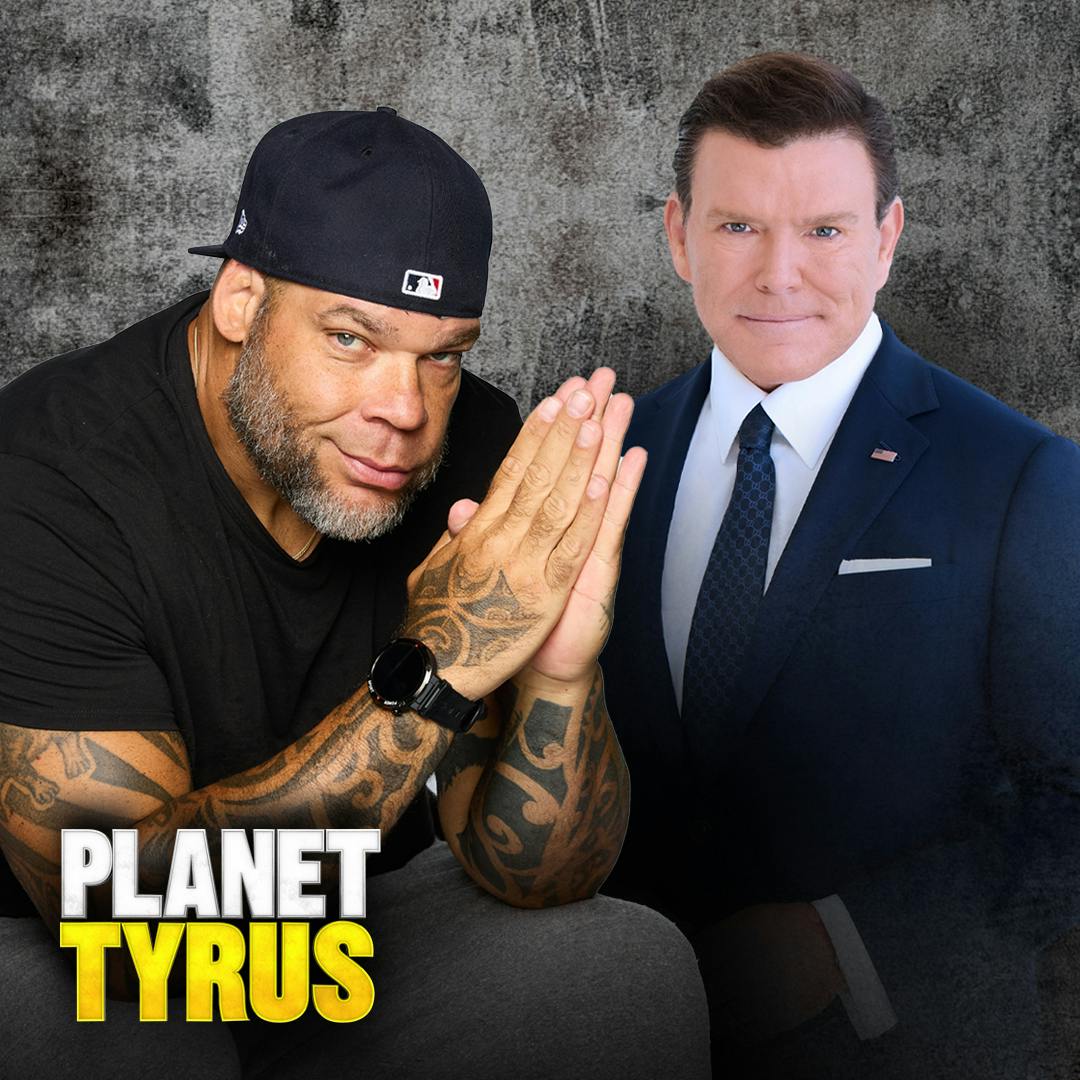
Loading summary
Transcript61 lines
- [00:00]
A
What it is America, it's Planet Tyrus and you are in my gravitational force. I am very excited today because I get to talk to one of my favorite people at Fox and in life, the great Brett Baer. I refer to him as America's newsman because he calls it like it is. He literally is never afraid. He's not afraid of controversy. He's going to tell the news whether you like it or not. I remember when he was calling the elections, when he called Arizona, so many people were upset and angry and blamed him he thought was the news. And I had so much respect for him because there was so many people that wouldn't have done it. There was a lot of networks that refused to do it because they didn't want any pushback or whatever. But that's not what it is to be a newsman. That's not what it is to be integrity. So whether you like it, whether don't like it, indifferent, whatever. I had a lot of respect for him because he is a newsman. Also, I have no idea what his political affiliations are because he doesn't discuss them because he's a newsman. And I feel like he's one of the last great American newsmen. And so with that, he's also a New York Times best selling author. Oh, so am I, hopefully for a third time. But he has a new book out and I'm really excited about it and it is to rescue the American spirit. Teddy Roosevelt, the Birth of a Superpower. And this book is great. As a former history teacher in My Other Lives, which will be another solo podcast, I'll tell you about that chapter of my I've lived a lot of lives and so is he. He's also talks about a lot of lives and he has a series of books and I highly recommend especially a book for the families to do something together reading a book. I know we all watch TV shows and we watch streaming and we listen to podcasts, but hey, maybe crack a book open with the family and learn about history. I think it's important history repeats itself. It always comes back around. And I always talk about Animal Farm if you want to learn about politics and how it works. Because it's literally, even though it was written, I think in 1942 or five, I can't remember it was one of those two. It's very present today. And this is a book about the life of Teddy Roosevelt and it is very, very ironically similar to what we have going on today. Very a lot of similarities to him and President Trump. Very similar to the client of the country. And of course, his goal, Theodore Roosevelt's goal, was to make America a world power. The world power. And President Trump's job is to maintain the world power. And this book is a great book. And there's a couple of. I like blurbs, right? I'm a big blurb guy. And that's when people write, you know, little things about your book, and I'm gonna read a couple of them. If. If joy in living was nature's gift to Theodore Roosevelt, then this captivating portrayal of Teddy is Bret Baer's gift to us. From Roosevelt's resilience over the tragedy to his heroism in war, from his midnight rambles as police commissioner to his dramatic fights for reform as governor and President, Behr summons the irrepressible spirit of the man. What an engaging storyteller. What a joy to read. And we all know that Bret Baer can spin a yarn. We've been listening to him for decades tell us what's going on in the world. And even he even. Even breathes smart, you know, like, he's just. He. He's a great communicator. And when you have a great communicator talking about a great former president, nothing but good things can happen. I'm very excited about this. And a couple of quotes I get a chance to ask, I'm going to ask him about. The one that just that really sticks out to me is, is I have enjoyed life as much as any nine men. I know that to me, is one of the coolest catchphrases ever. I myself, personally, I would have said 10. It's a nice round number, but nine works. But that is just a man who has. He takes the good, the bad. And anyone who doesn't know Teddy Roosevelt's story from the time he was born, severe asthma to, you know, at one point, he does a speech and literally gets shot and finishes the damn speech. Like, just. He's an amazing man who's lived a lot of lives. And I think he has three important messages, and that is, you know, take care of yourself, have morals, and honor your family. And I think that echoes also the man telling the yarn, telling this, producing this book, Brett Baer, who is, as we know, an amazing family man. Again, he's America's newsroom Newsroom, though that's Dana Perino. And, oh, man, I feel bad now. I didn't say anything about Bill Helmer. Bill, you're a newsman, too. You know, you just, you know, you're a Cincinnati Bengals fan, so it's hard to get behind you. But again, this is a tremendous book. I'm excited I get a chance to talk to him about it, and I didn't want to waste any time talking to him about the book, so I actually did the open without him, so we would just focus on the book. So you will get the full time with Rhett Bear talking about this book and there will be no hyperbole, no gaslighting, no side stuff. And I promise I will not go off on tangents and ask him about his golf game or his golf pants. Okay, maybe once. I don't think I can get through any conversation with him asking about his golf pants. Those of you who don't know, check him out on social media. The man is an island of coolness. And if you really want to know something about him, check out him and his Sugar Hill Gang rap is phenomenal. I don't even think they can do it as good as he can do it. So this man is a jack of all trades, master of some, and I'm very excited to have him with us today. So without further ado, the great Brett Baer. Good morning, sir.
- [06:05]
B
Hey, how are you?
- [06:06]
A
Thanks for joining me on Planet Tower today. Look, I, I'm a huge fan of your, your history books and it's, it's tough for me because you and Kill Mead are like the one, two punch of historical stuff. And he had a book where he talked with. About Roosevelt and Booker T. Washington, which I, I really enjoyed. And then what was your thought process? Why now? Because usually history repeats itself. We know that a lot. Why, what made you want to bring up Teddy Roosevelt again at this time in this particular. What's going on in the world today?
- [06:42]
B
So first of all, this is the sixth book and I know you've, you've seen others. Eisenhower, Reagan, fdr, Grant.
- [06:51]
A
Grant was my favorite.
- [06:52]
B
Yeah, it was a cool one. Grant, Washington, and now this. I, you know, it takes about two years, this process. I've got it down to two years. The first one took about four, but, and, and Kilmeade's book came out as I was in the research process. So I'm like, ah, but they're very different.
- [07:11]
A
They're very different. That's very different.
- [07:14]
B
Yeah, and I read it during the process and it's, it was an awesome read. So the reason I chose him is because one, he jumps off the page as far as a character. Like, the anecdotes around Teddy Roosevelt are just spectacular. They're like really rich and it's so. I love writing in a way that brings the reader into the room, you know, and it's really easy to do with Teddy Roosevelt because he's got his own writings. Everybody talks about him as this passionate, bigger than life figure. But I wanted to focus, as I did in each one of these books. Tyrus is a soda straw moment that maybe history overlooked. And my soda straw moment was really what he wanted his legacy to be, which was that America be a global force in the world and respected as a world power. At the turn of the century, we were just kind of coming into our own. And he does that by engaging in the world. He reaches out to the warring countries of Russia and Japan, and they are really devolving into a bad situation that could be a big war. He gets them to come to the US To Portsmouth, New Hampshire, and he gives each delegation a boat. They have their own spot. He does the logistics. He shuttles back and forth to try to get to a peace deal. And they finally do, and Teddy Roosevelt gets the Nobel Peace Prize for doing that. It puts America on the world stage as, hey, they solved this thing, and they're the ones that did it.
- [08:46]
A
You know, it's funny how duality, right? Because history. I've been talking a lot about George Orwell's Animal Farm, right? That book, which was written, I think, in 1942 or 45 or. And how relevant it is today when you see. And it's the same thing, we're seeing the mirror image today where President Trump was in a very similar situation. Let's just take the one like the Gaza situation where he's brokering peace. But we're not seeing the same results of, like, getting the Nobel Peace Prize. But Roosevelt was also kind of polarized. He was an annoyance, and not just his opposite in his own party. And one of the things you talked about is, like, they literally made him VP to, like, just put him somewhere. I mean, put him in a box. Yeah. And I'm reading that, and I'm like, this reminds me so much. It's very different because no one could put President Trump in a box. But normally if someone said to me, hey, you're gonna be vp, I wouldn't look at it as like, oh, man, they're holding me down.
- [09:46]
B
You know, at the time, that job was really nothing. You know, it was pre Dick Cheney, and before the vice president became a very active partner, it was more just a ceremonial title. But you're right, there are similarities with Trump. Larger than life. Also stirs the pot is an annoyance to the establishment, but is a populist, is. You can't really box him down on where he is going to be on every issue. You know, Teddy Roosevelt was pro capitalism, pro business, but he wanted capitalism for everybody. He was elitist in that he grew up in a rich family, but he was really about fighting for the poor guy, the downtrodden guy. He's the first president that gets involved in a labor dispute. He solves a coal Miner strike in 1902. He files 40 antitrust lawsuits against J.P. morgan and other big.
- [10:36]
A
He was an environmentalist, maybe our first.
- [10:39]
B
Yeah. He saves just some huge territories in the US that today the National Forest Service and. And all of that, the Park Service is because of him. He signs Tyrus 1300 executive orders. And just to put that in perspective, George Washington to McKinley, number 25 president signed 1,200 together. All in the 25 presidents he signs. 1300 Trump first term, 210 executive orders.
- [11:10]
A
Which we think is a lot.
- [11:12]
B
Yeah. Second term right now, 220. So think about 1300. He was about expanding the power of the executive. And you know, I think he's just going to be looked back as one of the most consequential presidents. Obviously he was because he's ended up on Mount Rushmore.
- [11:33]
A
You know, when you think about him, you know, you say he. He was born, you know, in money or a silver spoon in his mouth, but he had a lot of. He came out fighting, he was ill. His father was extremely tough on him. He lived a lot of lives. I think that's an overused term, but he lived a lot of different lives. And I think that when you have a president who has lived the ups and downs and is more relatable, I think we see better decision making because it's not political. I think his decisions were based off his life experiences. More so than what was best for the party.
- [12:12]
B
Exactly. You know, he goes through a lot. You're right. He's born and he has debilitating asthma to the point where his mom says, I don't even think you can get out of bed. She was really worried that he was going to die. In the early days, he spent his life in a room behind a window. There's this great shot in the hour special on Fox Nation where it's Abraham Lincoln's funeral going up Broadway in New York past the Roosevelt brownstone and in the window are two boys and one of them is Teddy Roosevelt looking at Lincoln's funeral going by and you know, it's just amazing. To think about in that image, the next time those two would meet would be on Mount Rushmore. And I think, you know, he uses that asthma. And his dad, you're right, bucks him up and says, you gotta get strong as a. Something that he had to get over. And each one of the presents I wrote about, everybody had a crucible to go through, something they had to get through. You know, Eisenhower came from really poor Abilene, Kansas. Reagan, alcoholic father. The FDR obviously fights through polio. He comes from rich family, but has polio and has to fight through that. And that helps him. That's his crucible. Grant, again, abject poverty is selling firewood on the side of the road. Washington goes through a really tough time in his life early on and obviously fights through the Revolutionary War. And Teddy Roosevelt, the asthma really him up. But then there was this despair. He marries the love of his life called Sunshine. Her name is Alice Hathaway, and she's just everything he wants. And they are about to have a child. She gives birth. He's a state lawmaker in New York. He's coming back. And she dies on Valentine's Day, the same day his mom dies. And that despair, that grief forces him to go out west and try to find himself in the badlands of North Dakota.
- [14:23]
A
You know, he's a better man than me because I would have outlawed Valentine's Day. Like, I never would. The Valentine's Day would have been done. Like, there would have been absolutely no Valentine's Day. But let me ask. In today's technology, when you think about all the advances we have and everything that's basically at our fingertips, even us talking, we don't have to even be in the same room. When I look back at great men, they seem to have accomplished a lot more with a lot less college education. Then they go out in the wilderness, then they get a job. It just seems like they were always improving themselves. And you realize that. That you'll meet, like, I'll be like, oh, man, I'm exhausted because I had to. I had to tweet and text today. It just feels like back then, when a man or When a man or a woman wanted something, they went and they got it. Regardless of where. I mean, he would go, I'm gonna go find myself, so I'm just gonna leave everything and go off. You know, it's like, we don't do those things, you know, we call Dr. Drew or, you know, or something like, you know what I'm saying? Like, when you see the lives that they live Is there ever a part of you that's like, man, because you're a very accomplished guy. I mean, you're. I. I refer to you as America's newsman. You're one of the last remaining newsmen, because you know what? I have no idea what your political beliefs are, and I think that's awesome. You know, and it does. And when you interview someone, it doesn't matter whether they're Democrat, independent, whatever. It's the same questions. And then eventually, if they. And the one time I interviewed you, when I see those glasses come off, I know. I know it's about to get real.
- [15:53]
B
It's about to get.
- [15:54]
A
It's about to get real. That was the biggest of. You know, I've been on the America's panels twice. It's been an honor. And you took the glasses off, and I remember saying to myself, oh, be ready. He's gonna ask your book.
- [16:05]
B
When that just came on, I was going someplace, and.
- [16:09]
A
And I appreciate that, but. Going someplace. When you look at his life, I look at it, and I'm like, He should be 250 years old, but because he's doing all these magnificent things. And then you think of stuff that. That he did that's still around today. Because I was telling my kids, I was talking to my daughter about, I'm gonna talk about Theodore Roosevelt. I was like, well, why? He's so old. I'm like, go look in your bedroom. I'm like, why? You know what a teddy bear is? Yeah. And she's like, well, what's that? I said, who do you think that comes from? And I wouldn't tell her I made her. And she's like, well, I'll just Google it, you know? And it's like, back in the day, she would have to read a book, you know? Now she just Googled it, the way everything works. But it's funny that the imprint that he left, I don't think. I think if people took the time, they would realize how much his changes are still relevant today.
- [17:00]
B
100%. You know, the teddy bear story is awesome. It's. A lot of people just don't think about it, don't know it. But, I mean, I'll tell it really quickly. It's. It's 1902. He goes on a hunting trip. He's a big hunter.
- [17:13]
A
Yep.
- [17:14]
B
To Mississippi. And the people he's with are worried because they're not finding the bear bears that they want to hunt, and they finally get a cub, and they. They don't want it to escape. Before the President has a chance to shoot it. So they tie it to a tree and say, president Roosevelt, here's a cub over here. And he walks over and he says, I'm not shooting a bear tied to a tree. I'm not doing it. And he says, let that bear go. And the story gets out that he's. He refuses to shoot the bear. It shows up in the papers. A candy store owner in the Bronx, who his wife and him made stuffed animals just for kids on the street, decide to make a stuffed bear and call it Teddy's Bear. They then ask Roosevelt if they can use the name. He says, of course. And they start the Ideal toy company based making teddy bears. And it becomes the biggest toy in.
- [18:22]
A
The world in history. I mean, it's still here. Some of his. Real quick. Some of. I mean, you've got a. I love a good catchphrase. I think my favorite from him is, I have enjoyed life as much as any nine men I know. Like, what does that mean to you when you. When you discovered that or when you researched that? Does it relate to you at all?
- [18:44]
B
Of course, yeah. I mean, he's had nine lives. Nine different lives. And, you know, he just was ahead of this passion for life. And you can see it in every one of the things he does. He, like, throws himself into it to the point where I think his speech, the citizenship speech that he delivers in Paris, which eventually becomes known as the man in the arena speech, is really, really powerful and translates to today. You know, it's not the critic who's throwing grenades from the outside. It is the doer, the guy that's in the game, that's in the arena, that is the true hero of the story. And, you know, this is paraphrasing, but you gotta get in the game.
- [19:30]
A
You gotta get dirt under your fingernails. You gotta, you gotta. You gotta be.
- [19:33]
B
We tell our kids that. We tell our kids you gotta do something. You had to take action. And, you know, you can't just sit there and, you know, type in your basement on X or TikTok and, you know, you gotta do action. You gotta do something. And he, you know, delivers that speech after the presidency. And I think he's kind of talking to himself because he wants to get back in the game. And so he tries to run for president again. The party says, no, thank you, and William Taft, Howard Taft is the nominee. And so he says, screw it. I'm going to run as a third party, progressive party. But he calls it the Bull Moose Party. Yeah, he goes all around the country. And he gets a lot of attention in Milwaukee. He delivers a speech and an assassin comes up and tries to take him out.
- [20:23]
A
Yeah. And he finishes the damn speech.
- [20:25]
B
The bullet hits his eyeglass case in his pocket. And a speech that he has there, a 50 page speech, but it goes into his chest and the blood is dripping all the way down his chest. It's all bloody. But he continues to speak for 45 minutes and he says, nobody can take me out. And he's just that kind of character.
- [20:51]
A
If there was a movie to be made by you, would this be the president you would make the movie on seeing how you, you've studied so many. Yeah, I always go back and forth. What I think is, you know, who would be the best? Who's the number one president? I don't think that's really a fair. Because every president had different trials and challenges and whatnot. I always go with George Washington because he gave power away. But, you know, but then when you look at what Roosevelt. A lot of his things that we don't think about are still relevant today. You know, there's no Yellowstone. There's no. I don't think their conservation is the way it is. And a lot of people will argue because he was a hunter, but it was because he was a hunter that he cared about the environment and he wanted the animals healthy. That's like a misnomer. So if you. Would he be the one that you would. If we were new to the movie, would it be him?
- [21:42]
B
It's. He's definitely the most charismatic, I think, you know, Reagan obviously was a great president. It would be a great movie. My book was about the summit between Reagan and Gorbachev where, you know, it's kind of hanging in the balance and, and he gets it across the finish line. But that Reagan was so good at delivering things. So that that book was about a speech that he delivers in Moscow at Moscow State University to kids, Communist kids under a, a bust of Lenin. He's in Moscow for this summit and the speech is, communism will never work. It's going to be in the dustbin of history. And history overlooked that speech in Moscow as he's with Gorbachev. And so he's a real character who would be a great movie. But I actually think Teddy is probably the best as far as, you know, like things that jump off the page and probably would jump off the screen.
- [22:37]
A
Uh, and I just. Even the, even the iconic glasses, I mean he could put the handles on there if he wanted to. He was just, he was Just a rebel. And I dig that. And some, a couple other just real quicks. I know I don't get a lot of. I know you got to go soon. But one of the things that is quotes that, it just really hits home with me is take care of your morals first, your health next, and finally your studies. That to me, again, it's always about improving, isn't it? It's always about taking care of business and then what's next. Like, yeah, he, he never struck me as a guy who was satisfied. He was like, oh, I'm a lot of people, like, I'm president rest of my life. I'm chilling, you know, like, that's a lot.
- [23:21]
B
He was on to the next adventure. And the next thing you know, he went around the world. He went to Africa safari, went down the, the Brazilian South, South America River. He almost dies from malaria. He's just an adventurer. And you're right, he's looking at the next thing to do. But the thing that's overlooked is that he was also really a good family man. Like really loved his family to the point where he had six kids. And when he's in the White House at 4:00 every day, if he was in with a dignitary in the office, his kids would come in and say, pa, it's time. And he would say goodbye to the dignitary and he would spend an hour with his kids playing. He would roller skate on up and down the hallways in the White House. They had bicycles, they were, had animals all over the place. There was like laughter and hide and seek and scaring the staff. And he was playing. And Edith, his wife, said, Teddy Roosevelt is essentially our seventh child. And his oldest child, Alice, who was the daughter of the wife who died on the same day as the mom, she was a troublemaker. She would smoke on the roof and she'd bring in boys.
- [24:38]
A
To the White House.
- [24:39]
B
To the White House. And so he says, I can either control the country or I can control Alice. I cannot do both.
- [24:49]
A
And that's a dad for you. I can relate because I have six myself. And speaking of, you know, your son is starting to make moves. I'm, I'm trying to get him, I'm trying to lock him in, to get him in this chair on this podcast.
- [25:03]
B
Yeah, he'll do it.
- [25:04]
A
Oh, yeah. As when you, when with you, obviously you have an amazing career and health is very important. You, your family, you guys have had some scares and things like that.
- [25:16]
B
Yeah.
- [25:17]
A
Your studies, obviously, books like this clearly let me know that you're still continuing to want to learn and stuff and. Which is very cool. So does that. I'm assuming that that that type of quote would hit home with someone like you because you also live a lot of lives. I mean, you're an accomplished rapper. Your, Your, Your golf game is solid and. But your golf pants game is extraordinary. I.
- [25:44]
B
Although my wife has now intervened, she said, we need to get over the pants.
- [25:49]
A
Oh, come on.
- [25:50]
B
That's part of.
- [25:51]
A
It's an American pastime. That's like telling the change in baseball to put a softball out there. Listen, I even contacted the guy who makes your pants. Trying to get some of my size. I. I'm losing weight just so I can get a pair of Brett Bear golf pants. Tell her she can't. She must not intervene on this one.
- [26:08]
B
I know. I agree.
- [26:09]
A
I have.
- [26:09]
B
Still in the closet.
- [26:10]
A
Yeah. But we. Neither one of us has ever won an argument. So it's.
- [26:13]
B
Which is true.
- [26:14]
A
Is difficult because you. You can sit down with world leaders and bring them to their knees, but at home, you're like, yes, dear. No, no pants.
- [26:21]
B
I have a very funny story. I'll tell you. When my wife and she, you know, gets in my ear about something, I'll be watching like a golf tournament. And you know how on tv, the ifb, I put it in my right ear. So my producer's always talking to me, especially on something like election night, like, we're going to Ohio. We're going here. Always in my ear. So as I'm talking, I'm listening and digesting. So if my wife is. Is on my right side and I'm watching the golf tournament, she's like. And she says, you're not even listening to me. And I'll turn and say, here's what you just said. You know, bom, bom, bom, bom, bom. If she's on my left side, I am totally screwed.
- [27:00]
A
You know what?
- [27:01]
B
I don't. I don't take.
- [27:02]
A
I chew always in the right ear. And the, the reason why I hear is because usually I have to turn the TV down. So before I. Before it even begins, turn that down. And I know that I'm not going to get to finish my basketball game because this is going to be at least 35 to 45 minutes. And I have to promise myself not the daydream about the basketball game or if I get caught staring. At least you have the skill set to where you can still watch. I can't watch because I'll just try to hear just one thing. Yeah, Just drift off and then ends up doing a horrible thing. Obviously this book is out. People can get it on Amazon and everywhere. All books are sold. And I'm waiting for my autographed copy, but I ordered two last night because I'm going to force my kids to read this. I think it's important. It's great.
- [27:54]
B
That's really the goal, by the way, Tyrus. I'm trying to. I think it's important to get history back in the bloodstream and if you can make something readable and, and kind of fun to read and you can read it on a beach or something over the weekend, I think that that's good for our kids. It is missing.
- [28:10]
A
It is missing. And the one thing about your books which I. It is a quick read. And what I mean by that is like, I got hooked in the Ulysses like that, you know him had the same jacket on for three or 30 days. He smelled like alcohol. My. You got me like I'm in it. And you know, just because it was like, these are world leaders, but they're also. At the same time, he's fighting a war and he's not fighting a war from behind a desk. You know, like. And. And you talk about some of these great American leaders. And what's funny is. And I talked about briefly in the beginning, like the book Animal Farm. And I'm like, I tell someone, read it now, read it as right now. And then look at the. The political climate. And you tell me and if you see any correlations, if you see any similarities. And out of six kids got one to do it. And he was like, oh, they argue over the same things. And I was like, you know, and this with. I guarantee you in this book, there is solutions for a lot of people who have questions about the political process, who maybe don't understand the arguing, the fighting back and forth or why we do it, but he was doing with his own party because he stood for something. He stood for principles which were more important than party. And I think when someone can take this and apply it to their own life, to where you put your own morals, you put your health first, you put your family first. You don't have to be a president and you don't have to discover the teddy bear to do those things. But it does help to see that great men with all the things of his accomplishment. I think if you asked him, if he was here today, what would be most proud of, he'd be probably talking about his kids.
- [29:49]
B
Totally 100. I think you're the same way history is cyclical. You know, I think we can look back and we learn where we are and then also where maybe we're going.
- [29:59]
A
You know, as in my former lives, I was a schoolteacher and I taught history. And I remember telling my kids the same thing. Listen, this ain't hard. This is the only class where the answers are in the book. All you got to do is read. If you read it, you'll pass the test. If you don't read it, you're going to fail. And don't come to me and tell me anything because I'll know that you didn't read it. Because again, I'm not inventing this. I'm not pulling this out of thin air. It's literally in the book. And this is a great book. And thank you so much for your time today, sir. I know you have a million hits, but I, I really was getting, I wanted to get in depth of this book because I don't feel it's so hard when you're, you know, you know, you got a book and every. But it's you. Everyone wants to talk to you about everything else. And I was like, as much as I have a million questions for him, I. I really feel like we gave this, this book the credit it deserves. And again, I'm sure it's already on the bestsellers list and does well. And I'm looking forward to finishing it off this weekend.
- [30:57]
B
Hey, thanks, man. I appreciate the time.
- [30:59]
A
Oh, thank you. Always a pleasure. All right, now it's time for a little coaching tip. Little coaching tips. I got my, got my paper, my playbook right here. Very simple. Make your bed. Very simple. Make your bed. You get up in the morning, before you hit the shower, before you grab the coffee, before you brush your teeth. Make your bed. Takes minute, minute and a half. Unless you, you know, you, you're a pillows person. Where you got to restack those pillows. Maybe you got too many pillows, two per each side, I think is adequate. But maybe you have a spread. But make your bed. It says a lot. Now listen, I recently took this on because for a long time I did not make my bed. I would just leave it as it was. Some of it's because I live in a hotel way too much. Therefore there is someone who does that for you. But when you are home, when you get up in the morning, make your bed. Because what does it do? It's a little thing. You're getting prepared for the day. You're starting your day, completing a task so you're getting things done. So if you want to get things done, you get it done. You get it the right way. You get up in the morning, you stretch, you get your morning pee in, you brush your teeth. And when you come out, you make your day in bed one. It'll impress the wife, right? Or the girlfriend or the. And then when you go to your kid's room and say, hey, make your bed. They won't say some smart ass stuff like, well, you didn't make yours, I'm go check mine, mine is made. No clothes on the floor, quick pickup, do a scan. But you want to start your day, always make your bed. It's a little thing, but it turns into big things. And you will find through the day that you will finish the tasks ahead of you. You won't leave them unturned, so to speak. See what I did there? You won't need turn down service because you, you make it yourself. So you want to have a good day. You want to stay on top of things. You want to consistently continue to grow and improve. Start each day off right, brush your teeth, make your damn bed, and always, always put your shopping carts.