Loading summary
Transcript771 lines
- [00:00]
Charlie Sheen
Foreign.
- [00:09]
Tyrus
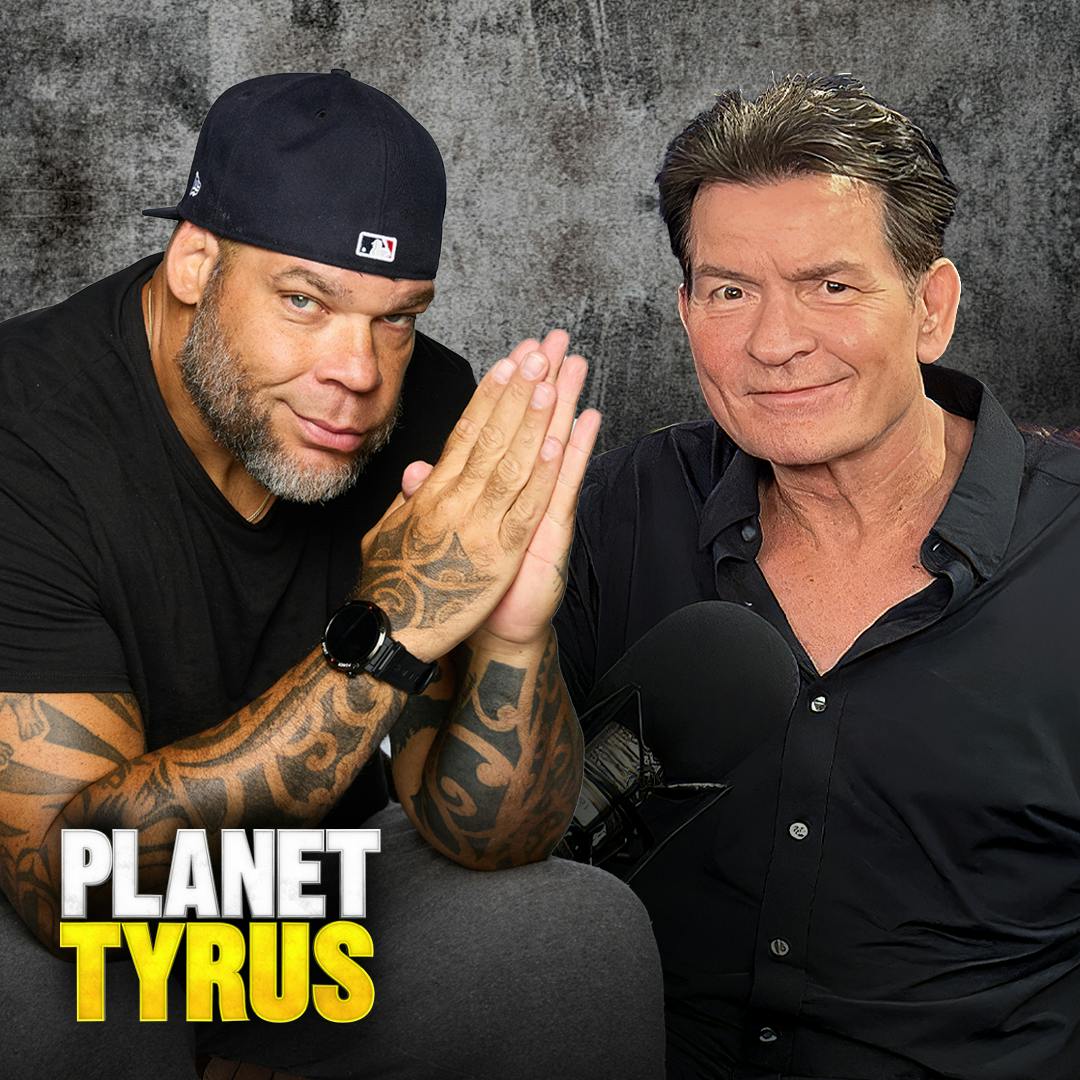
Tyrus. And in my gravitational pull this week, I have the amazing Charlie Sheen. You had an amazing career, I think.
- [00:16]
Charlie Sheen
Thank you.
- [00:17]
Tyrus
At least. I mean, you've done a ton of movies, and we're getting all this stuff because one of my favorite movies. And they gave me a list, but I didn't need a list because Cadence is one of my favorite movies of all time. I was. My football team. We were doing the Chain Gang Song while we were training and stuff. Like, it was seriously. Oh, yeah. The sound and Brother, Give me Water. Like, that movie does not get enough credit.
- [00:40]
Charlie Sheen
Thank you.
- [00:41]
Tyrus
That was a really good movie.
- [00:42]
Charlie Sheen
Thank you. Yeah.
- [00:43]
Tyrus
You know, not that you inspired the hand tattoos, but, you know, I had the eight balls.
- [00:48]
Charlie Sheen
Yeah.
- [00:48]
Tyrus
But those were that. And I think Platoon are two movies that you just really played that role that everyone. You just. You weren't present. And as the movie came, like, in Platoon, you were in. There was an innocence there. Sure. Like, it was virtuous. You. You signed up to do the right thing.
- [01:08]
Charlie Sheen
Right.
- [01:08]
Tyrus
And then you woke up in hell.
- [01:12]
Charlie Sheen
Perfectly described. Yeah.
- [01:13]
Tyrus
Yeah. You know, and then you kind of. We kind of watched you evolve right now. And then in Cadence, it was basically looked like you just got out of Platoon. Right, Right. Yeah. Went to a bar, got hammered, got some hand tattoos, got in a fight, and ended up in Stockade. Right. So it could have been a sequel. Right. Was. Was acting something? Was. Was it your first love?
- [01:36]
Charlie Sheen
It wasn't.
- [01:37]
Tyrus
It wasn't, No. I know. Yeah.
- [01:39]
Charlie Sheen
It was baseball.
- [01:40]
Tyrus
Baseball, yeah.
- [01:42]
Charlie Sheen
Acting, you know, making Super 8 films, you know, with my family and my friends. That was. That was a hobby.
- [01:49]
Tyrus
Well, you know, your friend list is pretty significant because it wasn't in a wrestling term. It wasn't a bunch of ham and eggers. Like, wasn't Academy Awards and Emmys and global numbers.
- [02:01]
Charlie Sheen
Like, there's a few. Yeah.
- [02:02]
Tyrus
For the people who might not know.
- [02:03]
Charlie Sheen
Like the short list, the Penn brothers, Sean and Chris. Yeah. The Lows, Rob and Chad.
- [02:11]
Tyrus
Some. Some guy named Downey Jr. I think he.
- [02:13]
Charlie Sheen
Well, no, he was. He came a little bit later, and he was never in any of our. Any of our shows.
- [02:19]
Tyrus
You guys just got together like when. When you're younger and just started making films for fun?
- [02:23]
Charlie Sheen
Pretty much, yeah. Yeah. Because I didn't surf, so. And I didn't really skate.
- [02:28]
Tyrus
I wasn't being surfing growing up in California either.
- [02:30]
Charlie Sheen
Yeah.
- [02:30]
Tyrus
The big feat, probably. And my natural fear of being a great white meal just wasn't. Yeah.
- [02:37]
Charlie Sheen
Because the only place they can't get you is on land yes.
- [02:40]
Tyrus
Which is. And it's 100%.
- [02:42]
Charlie Sheen
It is 100%. Yes.
- [02:44]
Tyrus
Unless you're Samuel Jackson.
- [02:46]
Charlie Sheen
There's that thing.
- [02:46]
Tyrus
Yeah. When they jump out of the air and snatch you. Right. Or a shark tornado. I guess. But was it tough when was. Because here's the deal. I played sports and then later in my sport life I kind of fell in and started doing entertainment stuff. I know for me that it was, it was tough for me to let go of the sports life and mentality. Was it because it was, you were a little bit younger when you realize that hey, I'm not gonna be playing baseball anymore. Was that difficult or was it a choice where you decided.
- [03:17]
Charlie Sheen
No, it was, it was a, it was, it was situational and it was, you know, it was, it was tied to complete academic failure. And so when I realized that those two stay eligible as a paid in hand, you had to exist hand in hand. Yeah, it. I just had to hang up my cleats.
- [03:37]
Tyrus
So I went through, when I was playing ball, I went through a year where I was gonna be ineligible. And I remember that terrifying feeling because.
- [03:44]
Charlie Sheen
Of, because of grades.
- [03:46]
Tyrus
Yeah. Because I was the cool smart ass in the back of the classroom instead of doing my work. Right. Because I was gonna play in the NFL anyway. So what, what do I need to do this course shit for? And I remember when they said, well, smart guy, smart ass, you don't have a 2.0 grade point average going into the summer. So you're not, you're not gonna play football next year.
- [04:04]
Charlie Sheen
Oh, that was. The bar was 2 point in California.
- [04:06]
Tyrus
At a 2.0 grade point.
- [04:07]
Charlie Sheen
And you were.
- [04:08]
Tyrus
Which is not a high bar, you know what I'm saying? That's like, I guess now it would be considered a 4.0 because school suck now. But when we were coming up, you actually had to do the work you did. Yeah. You had to have a C average and, and 2.0 is barely that. So I spent, I took about six summer school classes trying to get eligible. And I remember like spending that whole summer all my friends were going to in California summer, going to the beach, going to Big Bear to doing all these things. And I'm at home, high desert transitional school, taking classes, trying to get eligible. That's when the light turned on for me, like, hey, I can't be in this situation again. Right. I have to actually start using my brain.
- [04:45]
Charlie Sheen
So was that, was that your senior year?
- [04:47]
Tyrus
It was my sophomore year. Oh.
- [04:50]
Charlie Sheen
Of college, of high school.
- [04:52]
Tyrus
Like it was going to be all over.
- [04:53]
Charlie Sheen
Oh, okay.
- [04:54]
Tyrus
Like, it was.
- [04:55]
Charlie Sheen
It started early.
- [04:56]
Tyrus
Yeah, well, the attention, because of my size and stuff. The football attention started early. Basketball attention started early. Started getting, oh, this kid's this, that and whatever. So I was like, you know, I got it. They'll take care of me.
- [05:08]
Charlie Sheen
Sure.
- [05:09]
Tyrus
And they're like, no, you got to get your grades. You ain't done yet. But it did trigger me to be like, hey, maybe I should actually start reading books. And. And which I did. Which it turned out, luckily for me, when my athletic career was finally over, I actually had an adjusted brain to where I could do other things, so. And you trained. I mean, it wasn't like you took a step down. Like, you went from, you became. I mean, you were a household name, what, by the time you were in your early 20s?
- [05:34]
Charlie Sheen
20.
- [05:34]
Tyrus
Yeah. I mean, that's a lot on a kid, isn't it?
- [05:36]
Charlie Sheen
21. Yeah. No, it was a lot. It was a lot. And it seemed like it happened overnight.
- [05:42]
Tyrus
Everybody wants a piece of you.
- [05:44]
Charlie Sheen
Yeah.
- [05:45]
Tyrus
A lot of friends.
- [05:46]
Charlie Sheen
Yeah. A lot of new friends.
- [05:48]
Tyrus
Ton of friends, right?
- [05:49]
Charlie Sheen
Yeah.
- [05:49]
Tyrus
A lot of buddies.
- [05:50]
Charlie Sheen
Lots of buddies.
- [05:51]
Tyrus
Yeah. And then when things go wrong there, never there.
- [05:54]
Charlie Sheen
Yeah. It's fireflies, right?
- [05:57]
Tyrus
Yeah. And you had it, I think a lot of times, people, I myself included, because it wasn't just, you know, your brother Emilio was, Was a star also pretty much a household name. You guys did very different things. I think he was more on the funnier side. And then, of course, your dad was legendary. Is legendary. So that's a lot of pressure, you know, to live up to his standard. I mean, you had Platoon, he had Apocalypse now, you know, like he's. And of course you guys in cadence together was you having your. The family in the acting world was that difficult thing to manage too.
- [06:35]
Charlie Sheen
I think, I think it was double edged. I think it was. I think it motivated me, but it also, and it wasn't, it wasn't about being competitive. It was just about being, you know, wanted to be considered as, as valuable or as worthy as, as. As I watched them, you know, I think Emilio more so than. Than dad, because dad was a constant.
- [07:00]
Tyrus
Yeah.
- [07:01]
Charlie Sheen
That was just since our earliest memories are of him on a set.
- [07:06]
Tyrus
Right. Yeah. You grew up on it.
- [07:07]
Charlie Sheen
Yeah. Yeah. But when I saw what Emilio was doing and I was still in high school but really close to getting out, you know, and, and I was like, that's, you know, I, I could reach out and touch it, but I couldn't be a part of it.
- [07:22]
Tyrus
When I think yet. Yeah. What I think is Rare is that you guys didn't really overlap. A lot of times when you see brother actors or family, they all kind of play the same lane and there's just levels of it. You know, not to throw shade or anything, but you had like, Baldwin was this bigger than life star. His brothers kind of had some moments. Right. But they never really. But, you know, it was the Baldwin, but it was Alec. It was. You know, they never really talked about where you were considered like the serious actor. You did. It wasn't until like Major League, I think, was the first time that I thought like it was. You did something kind of comical because. And yeah.
- [07:59]
Charlie Sheen
Even Ferris Bueller might have been just the first glimpse.
- [08:01]
Tyrus
Yeah. Just like a piece of it. Because he did such heavy stuff.
- [08:05]
Charlie Sheen
Sure.
- [08:06]
Tyrus
Like Platoon. The reason why. And it's funny because there were so many war movies, so many Vietnam movies, so many things. But Platoon's still here and it still stands up to anything new.
- [08:18]
Charlie Sheen
Yeah, it's a trip.
- [08:19]
Tyrus
It's like it's the standard.
- [08:21]
Charlie Sheen
Yeah. And it was an independent film essentially, you know, shot for 5 million bucks.
- [08:26]
Tyrus
Yeah. I mean, you think about. Because you had Hamburger Hill. Yeah. A lot of big stars. You had Casualties of War with Sean. There was a lot of other stuff, but there. And again, you don't know how to put Platoon. Kids today know that movie.
- [08:38]
Charlie Sheen
And, and I think also Full Metal Jacket.
- [08:41]
Tyrus
Yeah, Full Metal Jacket to a certain extent.
- [08:43]
Charlie Sheen
Right, but Full Metal Jacket is two movies.
- [08:46]
Tyrus
Yes.
- [08:46]
Charlie Sheen
Isn't it though?
- [08:47]
Tyrus
It's like it's the beginning.
- [08:48]
Charlie Sheen
Yeah.
- [08:49]
Tyrus
Cuz that's the part I watch.
- [08:50]
Charlie Sheen
Yes.
- [08:50]
Tyrus
I watch. Right. Till he gets shot. Once they shoot my favorite guy.
- [08:53]
Charlie Sheen
Yeah. Once they get to Vietnam, it's kind of, kind of like. Yeah, it's. It's hard to double London for Vietnam.
- [09:01]
Tyrus
So powerful.
- [09:02]
Charlie Sheen
Oh, yeah.
- [09:03]
Tyrus
The opening thing, Joker and, and, and the, the guy losing his mind and we watch him again. It was very similar. Like, very, very innocent guy, much like yourself and Platoon. The difference is you evolved, right? He didn't.
- [09:17]
Charlie Sheen
No.
- [09:18]
Tyrus
He got eaten a lot.
- [09:18]
Charlie Sheen
He did, yeah.
- [09:19]
Tyrus
You know.
- [09:20]
Charlie Sheen
Yeah. And it's a stunning performance.
- [09:22]
Tyrus
Yeah. I think he never gets enough credit.
- [09:24]
Charlie Sheen
He doesn't.
- [09:25]
Tyrus
He's done so many things.
- [09:26]
Charlie Sheen
I know.
- [09:27]
Tyrus
No, I think he plays Kingpin now. Like, he's, he's. Yeah, he's an awesome actor. I watched being, like I said, being in sports and being on the road pretty much my entire adult life, I had movies, movie theaters right back I used to go to see everything. And then when you look back now, because you Accomplished so many things. What do you think you're like when you. If you. If I was to say, like, what is the movie that defines you? Which. Which one would you say it was? Because you've got a lot to choose from. It's only. You have one hit wonder. You've got at least three iconic classics.
- [09:58]
Charlie Sheen
Yeah, no, thank you.
- [09:59]
Tyrus
On top of the other stuff, but I'm saying stuff like if I stop somebody in the hallway and like, hey, they got chili dogs over there. They'd be like, oh, major league. You know, one of the greatest lines ever.
- [10:09]
Charlie Sheen
Thank you. Thank you. Wearing a vest with a tie.
- [10:13]
Tyrus
Yes. Yeah.
- [10:14]
Charlie Sheen
Ridiculous.
- [10:16]
Tyrus
I got chili dogs. I still laugh whenever I. Such a good. Was that on the script or was that you?
- [10:20]
Charlie Sheen
No, no, that was all on the page.
- [10:22]
Tyrus
That was on the page.
- [10:23]
Charlie Sheen
Oh, yeah, yeah. Everything fabulous in that film was on the page. And it's. It's. It's in the top three scripts that I've ever read. Forget comedy, drama, you know, romantic, whatever. No, it was. It was. It was just. You just knew, just the first time you read it that this was special. In fact, I was late for an event and I'd gotten the script and David Ward was waiting for some feedback if I, you know, connected to it or if I was interested. And I remember sitting in the back of a limo with, like, I don't know, a hundred people, like, somewhere, you know, expecting me at a certain time, and I wouldn't get out of the car until I finished that script. And I had, like the. It was like the last 15 pages. So imagine, like, having to go to the bathroom, watching the movie, you know, watching.
- [11:16]
Tyrus
You're not leaving.
- [11:17]
Charlie Sheen
You're not leaving.
- [11:18]
Tyrus
You're not.
- [11:18]
Charlie Sheen
No.
- [11:19]
Tyrus
And again, just like Platoon, there's a ton of baseball movies with some amazing actors.
- [11:26]
Charlie Sheen
Yeah, it's funny.
- [11:27]
Tyrus
Durham, you know, you got. Well, Kevin's got two. He is at the one where he's pitching the. Detroit. He's pitching the no hitter.
- [11:32]
Charlie Sheen
Right, right, right. For love of the game.
- [11:34]
Tyrus
Yeah, for love of the game. And of course, you have Field of Dreams, which is like a. It's like a family movie where you're trying to introduce your kids to baseball a little bit. But, like.
- [11:42]
Charlie Sheen
Yeah.
- [11:42]
Tyrus
And then there is Major League. And again, it takes the whole cast to make something. But sure. Iconic characters.
- [11:49]
Charlie Sheen
Right.
- [11:50]
Tyrus
You know, and then, of course, you. And for you, I think, again, you didn't. You haven't told me this one, but. Yeah, but I'm trying to set up because I feel like I want to Guess because major league brought all your passions together.
- [12:03]
Charlie Sheen
Yeah.
- [12:03]
Tyrus
You got a chance. And, you know, and word on the street is you were throwing 86 miles an hour. Fastballs legit. I'm just on several. Several solid sources.
- [12:14]
Charlie Sheen
It had. It had a little more giddy up than I think everyone was expecting me to show up with, you know, which was cool because David Ward saw that and said, okay, I can make that look like, you know, 99, 101. He said, yeah, we can. We can work with this.
- [12:31]
Tyrus
Well, they just put a little sound on it. But the thing is, like, it wasn't four takes when you pitched.
- [12:36]
Charlie Sheen
Right, right, right.
- [12:38]
Tyrus
Guy does his wind up, cut. Stunt doubles.
- [12:40]
Charlie Sheen
Yeah.
- [12:40]
Tyrus
Pitch, you know, then the catcher catches, you know, like you. It was. It was like he's really pitching.
- [12:45]
Charlie Sheen
Right, right.
- [12:45]
Tyrus
And I think that little thing made.
- [12:47]
Charlie Sheen
Thank you.
- [12:48]
Tyrus
Such a difference.
- [12:49]
Charlie Sheen
Thank you.
- [12:49]
Tyrus
Because people appreciate that.
- [12:52]
Charlie Sheen
To have that entire wind up and delivery in slow motion for that final pitch, I think really brought that sequence just to, you know, just brought it to life in a way that just gave it that extra, extra thing, you know?
- [13:07]
Tyrus
And your interaction with your manager, it was just the whole dichotomy of it. Everyone who plays a sport related to that, to the old school guy.
- [13:17]
Charlie Sheen
Yeah. You know, he was terrific. He was a lovely man.
- [13:22]
Tyrus
I have used his phone call on about four jobs that are TV shows I didn't want to do.
- [13:29]
Charlie Sheen
Oh, wow.
- [13:30]
Tyrus
I got called by this wrestling company, like, hey, we want to bring you in. Say, I don't know, I got a guy down there on some white walls. Can I call you back? And they're like, huh? And I didn't call him back, but, like, that's one of the. You're getting called to be a manager for the Cleveland Indians. Right? And he's like, I don't know.
- [13:46]
Charlie Sheen
He's selling tires.
- [13:47]
Tyrus
Yeah, he was selling tires at the time. It was just. Obviously it was a movie. Was a big part of my childhood.
- [13:52]
Charlie Sheen
Amazing.
- [13:52]
Tyrus
Yeah. And then it all just kind of came together. Wild Thing. You get the great track. That's another thing that is associated with you and all your movies. You always have a kickass soundtrack.
- [14:02]
Charlie Sheen
Right.
- [14:02]
Tyrus
You always have the song.
- [14:03]
Charlie Sheen
Interesting.
- [14:04]
Tyrus
Wild Thing Platoon. You know that. That score.
- [14:08]
Charlie Sheen
Yeah.
- [14:08]
Tyrus
That everyone who's ever been dumped or has had a bad day in their car presses play. And at some point they're doing this in their living room, you know, Like, I know I've done that. A few. Is New Zealand when Defoe is getting shot up.
- [14:20]
Charlie Sheen
Right, right, right. You know, it's like a crucifixion action, isn't it?
- [14:23]
Tyrus
Yeah, but it's like you play it all the way through.
- [14:25]
Charlie Sheen
Right.
- [14:25]
Tyrus
You don't play it out loud. It's a headphone gimmick. Or in your car with the windows rolled up.
- [14:29]
Charlie Sheen
Right.
- [14:30]
Tyrus
And then of course, the. One of my all time favorite movies was Cadence and we talked about that.
- [14:34]
Charlie Sheen
That's interesting because that one's kind of like fell between the cracks and I don't get it. Yeah.
- [14:40]
Tyrus
Like. And here's the thing. And is was cool. I think also the time maybe it was a little too close to home because, you know, there was this rift at the time as a black man and white guy. And you always get put into movies where it's complete opposites or it's stereotypes.
- [15:00]
Charlie Sheen
Right.
- [15:01]
Tyrus
You know, and I think one of the things that made me really love the movie was when you kicked the dude's ass in basketball. And I remember one of the actors said, you just got your ass kicked by a one eyed white boy. And I laughed my ass off. Because just because you're black doesn't mean you're good at basketball.
- [15:16]
Charlie Sheen
Interesting.
- [15:17]
Tyrus
You know, like it's such a little thing, but like it just made it normal because I played basketball in high school and some of the best players weren't black. It just, you know, as it goes up, it just happens to work that way. But when you're just guys playing a game that has nothing to do with it. And it was just. And you had problems, they had problems. And you guys just kind of. The relationship grew, you know. And then there was that tough moment where you just told the truth because you said. He said help, but he didn't mean it that way, you know. And then they were like, oh, you just let him off. And then, you know, of course they're like, they said that to you were like, hey, you're looking mighty white today. And then when you were leaving, the friendship was bigger than whatever happened because they started doing. You were doing the dance.
- [15:59]
Charlie Sheen
Sure.
- [16:00]
Tyrus
You know what I'm saying? But it was. I. I still have that movies on my playlist.
- [16:03]
Charlie Sheen
Like, seriously?
- [16:04]
Tyrus
Yeah, it's a great. I. I think it's some of your best work. I really do.
- [16:08]
Charlie Sheen
That's a true. Wow.
- [16:09]
Tyrus
It was such a good. I was. They gave me the list and I was offended. I was like, where's Cadence? And they were like, so, oh, you guys got some homework?
- [16:17]
Charlie Sheen
Yeah.
- [16:18]
Tyrus
So it's like. But I think that was kind of your. Which made you different than Emilio. I Your dad is just a whole different. Yeah, he's an institution.
- [16:27]
Charlie Sheen
Got his own planet. Yeah.
- [16:28]
Tyrus
But you. But still, most in the entertainment business, most kids, with very few exceptions, don't ever get close to the institution, you know, and, and you veered off and made your own institution. Like, no one says they don't. It's crazy because you never get compared to any. To your dad or your brother, because you all had your own tree, so to speak.
- [16:56]
Charlie Sheen
Yeah.
- [16:57]
Tyrus
And other people get our lanes. Yeah. Like, your lanes were solid.
- [17:00]
Charlie Sheen
Yeah. Thank you.
- [17:01]
Tyrus
It was no crossover. Yeah.
- [17:03]
Charlie Sheen
I, I, I, you know, again, stuff like that. Just. There was never a plan. Like, Emilio didn't set out and say, I'm gonna handle this. And then I didn't show up and say, all right, you already did that, so I'm gonna go do this. It just organically, the way the opportunities arrived, the way things played out. I talk about in the book that Emilio was. He was originally cast as Chris Taylor in Platoon.
- [17:25]
Tyrus
That would have been different.
- [17:26]
Charlie Sheen
It's a different. It's a different movie.
- [17:27]
Tyrus
Completely different.
- [17:28]
Charlie Sheen
But then. And that never. It wasn't, it didn't create a rift between us. It wasn't ever. You know, we didn't really even talk about it that much. He didn't love the script. And I'm not out of school with that. He'll tell you. I didn't, I didn't see.
- [17:42]
Tyrus
That is amazing, because I come from when you're coming up. Yeah, I'll do it. Yeah. I didn't even read some, like, right. I'm like, wait, how am I dying again? You know, a bear. I always get killed by a guy, like, well, around your height. You know, in the movies, I always get killed. And it was one movie that I got. They asked me. I was in the wwe, and they're like, hey, there's this movie. Yeah, I'll do it. And they're like, do you want to see the script? No, I'm good. Wow. And then when we're on set and I see they, they, they flew me in and they had to put me in a body cast to make a body cast to me. A body double thing. Right. And there's this thing of me, and I was like, oh, this is cool. What, is there like some cool stunt? Like, no, no, no. The killer's going to climb out of you. I was like, I'm sorry, what? And like, in the script. Look, go look at it. When you have the fight scene and he kills you, because I knew I was going to kill. He Then cuts you open, climbs inside of you, and then your bad guy buddies bring you back to the lair where then he climbs out of you.
- [18:36]
Charlie Sheen
Trojan horse.
- [18:37]
Tyrus
Yeah, yeah, yeah, that's real.
- [18:39]
Charlie Sheen
Wow.
- [18:40]
Tyrus
So I'm watching this at the Toronto Film Festival and I'm like, I hate. Dude, let me ask, do you hate the sound of your voice when you listen to yourself act and stuff?
- [18:48]
Charlie Sheen
I used to, but I had to, I had to surrender to just being okay with it.
- [18:54]
Tyrus
Right. And I kind of the same thing. But I'm in the movie theater, I'm watching it and I'm like sitting around and you know, it's like my first like kind of film where people are paying attention a little bit, right. I basically gave birth to a man on screen and I was like, I just gave birth to 115 pound English actor.
- [19:09]
Charlie Sheen
But that's kind of awesome.
- [19:12]
Tyrus
But it's terrible at the same time, you know, because like, people are like, ew.
- [19:17]
Charlie Sheen
But did you start reading the script after that?
- [19:19]
Tyrus
I paid attention, yes. I learned how to sing. I mean, because, you know, is scary.
- [19:24]
Charlie Sheen
Right, right.
- [19:24]
Tyrus
You know, and especially. Okay, so.
- [19:27]
Charlie Sheen
Oh, that, that an opportunity.
- [19:29]
Tyrus
Would you say no and you wouldn't get the opportunity? You know, that's.
- [19:33]
Charlie Sheen
Yeah.
- [19:33]
Tyrus
You know, it's like when you get established, you're able to, to pick and choose, Right. But when you're coming up. I just never wanted to risk, like, if it's terrible, I'll make it work.
- [19:42]
Charlie Sheen
Sure.
- [19:43]
Tyrus
If they're, you know, like, I'll just figure it out because it's a paycheck, you know, you kind of. At least that was my mindset, obviously, when nowhere near the success that you did with your films. But you mentioned briefly the memoir. How hard is it was it to write that memoir? I wrote one myself, my memoir. Right. And it did all this New York Times, all this bestseller stuff, right. I did when I was writing it and I had a writing coach and we're just, you know, I'm pulling parts of my life and I had to, you know, I grew up with a lot of like crazy abuse and all this shit. And I'm talking about all this stuff, right? And the stuff that I normally would never talk about, right? And all this stuff is coming out and I'm talking about relationship with my mother, which I never talk about, and you know, not knowing my father and like all this stuff. And I pour all this out into this and this book is done and I'm sitting there and it's like two weeks before the book's coming Out. And I go, oh, shit. I don't want to talk about this with strangers. I just realized that, like, I just put all my shit out there, right. I called the. I say, hey, we got to. This isn't good. I changed my mind. We got to shut it down. We got to shut it down. We'll do something else. And they're like, it's in production. It's already in. Wow. Stores. And he's like, it's going to be fine. It's not going to be fine. Like, I don't want this out there.
- [20:54]
Charlie Sheen
So you had that. You had.
- [20:56]
Tyrus
Did you have that moment with this.
- [20:57]
Charlie Sheen
Where you're like, I, I. I did, and I didn't, you know, because the doc was happening at the same time as the book. And so I knew what I'd already spoken about in the doc, and I knew that was. I'd already hit send on that one, you know, So I was like, yeah, Yeah. I was like, well, if the book doesn't follow up a lot of that stuff and follow it up differently, you know, it's just a different way to tell stories, obviously. And so I, again, it was just one of those things. I just. I just rolled the dice. And I stopped trying to, you know, predict what the results were gonna look like, what the reaction was gonna be. And it was just a thing about, you know, you keep stuff inside for so long, and I have a ton of experience of how that feels.
- [21:46]
Tyrus
Yes.
- [21:46]
Charlie Sheen
Keeping shit in, you know, you just carry that weight. Yeah. I didn't need any more.
- [21:51]
Tyrus
But it always escapes in the worst ways. It's always somebody who doesn't deserve it that catches it. You know, when you're.
- [21:59]
Charlie Sheen
Oh, you mean, like when you're holding.
- [22:01]
Tyrus
That rage or that sadness or emptiness, it's always the person who's trying to get close to you that catches the hell.
- [22:07]
Charlie Sheen
It's misdirected, usually. Yeah.
- [22:09]
Tyrus
Yeah. Because they become a safe place, not knowing.
- [22:12]
Charlie Sheen
Right.
- [22:13]
Tyrus
What's inside you.
- [22:14]
Charlie Sheen
Yeah. What box they just unlocked. Yeah, yeah, yeah. But, but, yeah, but then, you know, when it was out there, it was one of my early interviews promoting both projects, and one of the producers, this lady said to me, wow, that was great. That was really cool that you were open, talking about stuff. She says, a lot of people have the experience that you had where they put it all out there, and then they panic about discussing it. And I said to her, well, if you're going to put it, you know, in a doc and a book at the same time, you. I think you better Be ready to discuss it.
- [22:49]
Tyrus
Yeah.
- [22:52]
Charlie Sheen
You know, in the interviews and which is.
- [22:55]
Tyrus
In my experience, my fears was that the people that. Because one of the things I did and maybe is I made sure that I was the villain or I was the poor choice in every story. I never put. I never made. I never played the victim.
- [23:15]
Charlie Sheen
I didn't either. I totally relate to that.
- [23:18]
Tyrus
Yeah. I said I was a thief. I said I was a thug. I was a liar, a cheater. I was, you know, all these things. But I was never a victim.
- [23:27]
Charlie Sheen
Right.
- [23:27]
Tyrus
And I thought that was. That was my message, was like, sure, I'll own my stuff. You know, and that doesn't mean for like owning your stuff and accountability and the way my mind works. It isn't about necessarily. You want forgiveness. Right. You want. You would. The best thing in the world is to go to somebody you hurt or you let down and say, hey, I failed you. I'm sorry. And they say, I forgive you. What I learned, especially when that feeling came over the thing is that I had not forgave myself yet. And forgiveness isn't about them. That's the lesson I learned. It's about you. You letting go. They might not ever forgive you. So you can't carry that with you forever.
- [24:11]
Charlie Sheen
No.
- [24:12]
Tyrus
All you can say is like, I've. I've wronged. I know I've wronged.
- [24:16]
Charlie Sheen
Sure.
- [24:16]
Tyrus
I'm doing everything I can not to be that person anymore. I'm sorry for what I did to you, but I'm going to forgive myself so I can move on.
- [24:23]
Charlie Sheen
Sure.
- [24:23]
Tyrus
Yeah. And that's not always a popular thing for people to hear.
- [24:26]
Charlie Sheen
Right.
- [24:26]
Tyrus
But that's the only way you get that off you.
- [24:30]
Charlie Sheen
I totally. I totally agree. Yeah. Yeah. And I think another piece of that is what I would encounter is the expectation of somebody want, you know, me needing someone to be on my timeline of forgiveness.
- [24:46]
Tyrus
Exactly.
- [24:46]
Charlie Sheen
You know what I'm saying?
- [24:47]
Tyrus
It might not ever happen.
- [24:48]
Charlie Sheen
Right. Or when they say, you know what? Let me sit with that. Excuse me. Let me get back to you. And that could be six months or a year, or it could be the next morning. Or it could also be the awesome version example of it where they're like, oh, what, you. You're still thinking about that thing?
- [25:05]
Tyrus
Yeah. That's the best thing you want to hear.
- [25:07]
Charlie Sheen
That was. We were past that 10 years ago. You're like, oh, shit. Okay, cool. Thank you. Yeah.
- [25:15]
Tyrus
People. Because there's always. And that's another thing too. You are in a position to where you didn't have to do Any of this, you could go off into the sunset. It's not like you're strapped for cash and struggling, you know.
- [25:28]
Charlie Sheen
Right.
- [25:29]
Tyrus
You could have just gone away. Why was it important for you to come out, not just do a book and a documentary so everyone gets to, gets both sides of it.
- [25:40]
Charlie Sheen
Right.
- [25:41]
Tyrus
Whether, you know, people who read are going to read and people who watch, you know, docs are going to die. So there's two giant audiences there.
- [25:46]
Charlie Sheen
Sure.
- [25:48]
Tyrus
Why do it? I guess.
- [25:51]
Charlie Sheen
It was not the, What, what was left behind, you know, before I decided to put down the bottle and just get, get responsible and, you know, become an adult, I guess. Yeah. It just, it, it didn't feel like that that really was the message that, that, that I wanted as the, you know, the final chapter in, as far as the public is concerned. You know, I, I knew personally there was going to be, you know, just a lot of cool stuff in, in my future, you know, but I just, I couldn't leave it behind. It's. It that couldn't be the final scene in the movie.
- [26:37]
Tyrus
Well, yeah, because you also, you also.
- [26:39]
Charlie Sheen
Grew up in the public eye, right?
- [26:41]
Tyrus
Yeah. For a lot of people who don't. Who, who didn't. You've lived a lot of lives, you know, and, and so you're trying to live new lives now.
- [26:50]
Charlie Sheen
Right, right, right.
- [26:51]
Tyrus
So you're trying to bury some of the old stuff. And then for people who have aspersions or have, you know, he's this or he's that or whatever.
- [26:57]
Charlie Sheen
Right.
- [26:58]
Tyrus
This was your way of saying, like, listen, here it is. Yeah, do what you want with it.
- [27:03]
Charlie Sheen
Sure.
- [27:04]
Tyrus
But I'm moving on and hopefully you move on with me.
- [27:06]
Charlie Sheen
Exactly. Yeah. And it was a chance to, to, to just, you know, have a hand in a, in a, in a reset.
- [27:15]
Tyrus
Right.
- [27:16]
Charlie Sheen
And, and, and, and adjust the narrative in a way that, because, you know, I, I, I'm sure there were, you know, before these projects, I'm sure there were people out there that either saw me as, as, as the guy in the, in, in the bowling shirt writing jingles or the guy screaming, winning, you know, so it was important for me to just, you know, I don't want to say set the record straight, but just tell your story.
- [27:46]
Tyrus
Yeah, here it is.
- [27:48]
Charlie Sheen
Yeah. And let people know, hey, there was a lot more stuff going on behind the scenes that led to that meltdown that led to that departure.
- [27:58]
Tyrus
Well, it's very hard for people when they watch you on TV or movies. They don't realize when the camera turns off, it's a Very different world that you live in.
- [28:08]
Charlie Sheen
Sure.
- [28:08]
Tyrus
And it's dark, it's lonely. Like, every time you look around, you don't know if somebody's patting you on the back or pulling your wallet out from underneath you, you know? Then there's the thing that we are always gone. That was what my family's issue with me was. When you were home, you were home to rest, pay bills, and try to get everything in. In two days. Sure. And we're not ready yet, you know, and then you're gone. You don't have time to make up with your wife. If you have a fight when you get home, you don't talk for two days and you're back on the road for another month. You know, like, there's. People don't realize that again, there's benefits. You get the money, you get the recognition. Sure. The downside of it is your personal relationships struggle. You know, it's. It's a tough thing. And then you get into the point where you're like, look at the life you have. Look what I. What I do provides this life. And they're like, well, we didn't want that life. We want you. And you know what I'm saying? It's like, Right. But then they say that you're like, okay, cool, let's turn in the Jags, get some Kias. Let's get a log cabin in Maine. Right. Just downsize and, hey, I'll do a movie once a year.
- [29:10]
Charlie Sheen
Right.
- [29:10]
Tyrus
Well, let's not do that. Yeah, hold on. Yeah, you know, that's the. That's the. That's the thing. If. If you don't. And if it's too personal question, we'll. We'll edit it. But what was the moment that you were like, enough for the bottle. What was the moment that was it. Several things. Yeah. It was a combination. That takes a lot.
- [29:34]
Charlie Sheen
It was a combination. Yeah. It was like, you know, just being smart enough to start paying attention to my body, and when the outside. When the insides are trying to literally live on the outside, that's a moment that. That needs. Needs adjusting, you know, but it was also. I just didn't feel. I didn't feel that I was available to the people that. That count on me the most and, And. And available in a way that. That they came to rely on, but then had to. Had to make adjustments based on my choices, you know? Yeah. I just. I got. I got really tired of. Of. Of just disappointing people and ultimately letting myself down.
- [30:31]
Tyrus
Especially when you're. Now. My. My thing wasn't alcohol. My thing was. Was food and, and having a woman in each town and all that.
- [30:40]
Charlie Sheen
Right.
- [30:42]
Tyrus
Those things. Like I would, and I would drink and stuff, but more socially. But never could drink. Not to get a buzz, you know, But I was different because I had to do it in a group. Like, I wouldn't go home and like drop a. Pour a bottle of scotch and like empty it while I watch the baseball game. Okay. So I was more of a. It was more of a thing where I had to be out and had to be on all the time. I had to be the funniest guy in the room, you know, be the, the coolest wrestler around. I had to enter, I had to make sure everyone liked me, which is.
- [31:09]
Charlie Sheen
A full time job.
- [31:10]
Tyrus
It's a full time job.
- [31:11]
Charlie Sheen
It's exhausting.
- [31:12]
Tyrus
And you're not taking care of the people who actually care about you.
- [31:16]
Charlie Sheen
Right.
- [31:16]
Tyrus
Who are dealing with you when you can barely walk from doing too many stupid. Because you and the boys went. Because we would, you know, wrestling is simulated combat. But all that hurts. Like you can't, you know, and then you go out, the buddy's drinking all night, don't call home. Then you're in an arena somewhere and they're like, hey, would it be cool tonight if I suplex you through a table? Yeah, let's do it, bro. Let's. Yeah, let's do it. And then you're the. Then you come home, you can barely walk, and it's your wife that has to take care of you, you know, and, and you just don't. And then you're bitching at her because she's on you about stuff, you know, like the, the reality of life is tough because in front of the camera, it's everyone, everyone likes you, everyone wants to support you. In real life is hard and that's a tough. And you can't play a character in that.
- [31:57]
Charlie Sheen
There's no script in real life, is there?
- [31:59]
Tyrus
Yeah.
- [31:59]
Charlie Sheen
No, no.
- [32:01]
Tyrus
When you, when you look back at such a. So many highs.
- [32:08]
Charlie Sheen
Can I touch on something, though? The thing that you just talked about, about that was always in a group and you wanted to make sure everybody was having a good time. Yeah, Something. Yeah, I can totally relate to that. But another thing that I would always. That struck me at the end of the night. It felt like the entire night was one long interview.
- [32:32]
Tyrus
Yes, right.
- [32:33]
Charlie Sheen
With a bunch of different people for the last. For four, five, six, seven, ten hours. Right. And all I did was answer questions about myself and pay for. And pay for. Right. And I Didn't feel like I learned anything.
- [32:47]
Tyrus
No.
- [32:47]
Charlie Sheen
Because I wasn't engaging. It wasn't a two way street. And it wasn't like, well, tell me about that. You know, you do that for a living. You know, what is that? What does that look like? I'm curious. Genuinely, you know, so it was just, it got into that thing.
- [33:01]
Tyrus
It's like you were always working.
- [33:02]
Charlie Sheen
Always working. Yes. Yeah. It was a full time job with very, very few benefits.
- [33:08]
Tyrus
You look back on it, you're like, especially when you. Isn't it weird when you run into somebody that you used to like party with and stuff and they're still there?
- [33:15]
Charlie Sheen
Yeah.
- [33:15]
Tyrus
And it's the most awkward in the world. They're like, oh, man, there's this new club in Santa Monica, bro. You got to check it out. And you're like, you're 65 years old, sir. What? Let it go. Yeah.
- [33:26]
Charlie Sheen
It's a young man.
- [33:27]
Tyrus
What are you doing? I'm playing gin rummy with my 11 year old this weekend. You know, we got an extra chair.
- [33:32]
Charlie Sheen
Yeah, yeah.
- [33:33]
Tyrus
And maybe afterwards we're going to make brownies.
- [33:35]
Charlie Sheen
Sure.
- [33:35]
Tyrus
You know, like that to me is a bigger high than going in.
- [33:38]
Charlie Sheen
And you were looking forward to that.
- [33:40]
Tyrus
Oh, yeah. And then when I get there, because she's 11 now, right. She like literally just two days ago, she got photos done with her horses. Oh, okay. And I got choked up. I was upset. My wife was like, what's. I said, she's grown. Yeah. Like they grow so fast.
- [33:57]
Charlie Sheen
Yeah.
- [33:57]
Tyrus
And for though everyone who's with them every day, it's like, oh, yeah. But when you're gone all the time and like you walk in and when you left and all of a sudden you notice your kids, an extra 2 inches is like, yeah, I miss that, you know?
- [34:08]
Charlie Sheen
No, I would, I would experience some of that in, in the middle of a divorce.
- [34:12]
Tyrus
Yeah.
- [34:13]
Charlie Sheen
And you know, the kids are allowed to be here but not allowed to be there. And so there's those gaps. And there was this one moment, it was a trip because toddlers. When does a toddler stop being a toddler?
- [34:26]
Tyrus
Like three, four, I think when they start asking all the questions.
- [34:30]
Charlie Sheen
Okay. Yeah.
- [34:31]
Tyrus
Why is this? Why is that? Why is this? We forget it's new to them.
- [34:35]
Charlie Sheen
Sam would always include her. She would identify herself in the description of what she was doing. Sammy does this. Sammy going here. The day that she came out of the car one day and said, I use the word. I was like, it was a trip. Because then she had transformed to the place of self. Identification.
- [34:55]
Tyrus
Yes.
- [34:56]
Charlie Sheen
Of, like, knowing that she's her own human, you know, and it was. And then I saw things from that moment, just the evolution of. But that was. That was a flashpoint I found was fascinating because it's.
- [35:09]
Tyrus
It's You. Like.
- [35:11]
Charlie Sheen
Like I said, that doesn't relate to what you were talking about.
- [35:14]
Tyrus
No, no. But it does in a sense, because I can. I can relate because, again, I talk about in my book, I had three kids in 2011, and none of their hairs matched. You know what I'm saying? I was. I was diverse.
- [35:27]
Charlie Sheen
Wow.
- [35:27]
Tyrus
I had one from each different culture.
- [35:29]
Charlie Sheen
Well, I have five with.
- [35:30]
Tyrus
Yes.
- [35:31]
Charlie Sheen
Three women.
- [35:31]
Tyrus
Okay. So we're both a couple hours.
- [35:33]
Charlie Sheen
We're in the same club.
- [35:34]
Tyrus
We're in the same club. And at first, when it. When the news hit me, I tried to avoid it.
- [35:43]
Charlie Sheen
Right.
- [35:43]
Tyrus
I was like, hey, you know, and. And. And it was funny because I was married before that, and we tried to have kids. We could never have kids, so I assumed that I was. So when we. And I got divorced, I was party time. I could do whatever I wanted. Right, right. First three women I dated, I got knocked up. You know what I'm saying?
- [36:01]
Charlie Sheen
And we've been a thousand, at least.
- [36:03]
Tyrus
Yeah. Although if I ever see the. The fertility doctor, I'm him up on site because that was a horrible. Oh, you went through that whole thing. Because it wasn't her, it was me. So when we got divorced, you know, because she, you know, it was some. There was some cold. I need a real man. You make. You're six, eight. You're this big monster, and you can't. You're shooting blanks. The hell is that possible? And I was like, I don't know. I don't know. Adopt one, you know, but it just didn't. You know, it didn't work out. But that became my excuse to disconnecting from the marriage. Right, right. You know, and then you always. We always find an excuse. We're clever. When we don't want to deal with our own. Sure. We always find something, you know, like, hey, what was that you said last February? Well, I'm out. I just hit me. You know, and they're like, what? So.
- [36:50]
Charlie Sheen
Took me a minute to process. But, yeah, yeah, here's my verdict.
- [36:53]
Tyrus
I struggle with that. And then you can't be everywhere, so no matter what you do, somebody's gonna miss out.
- [37:01]
Charlie Sheen
Right.
- [37:01]
Tyrus
So then you go through that. That thing where you just. You try to pay it because you're able to. Sure, sure. And then you realize that, well, as long as I'm paying support and everybody's good, I'm a good dad.
- [37:13]
Charlie Sheen
Right.
- [37:14]
Tyrus
And then you'll see some guy playing at the park with his kid and you're like, I'm not a good dad.
- [37:18]
Charlie Sheen
Yeah.
- [37:19]
Tyrus
You know, it's. That's tough to deal with.
- [37:21]
Charlie Sheen
Yeah. You see, you see them with that.
- [37:24]
Tyrus
You envy the school teacher with the weekends off.
- [37:26]
Charlie Sheen
Yeah.
- [37:26]
Tyrus
Who's spending time with his family.
- [37:28]
Charlie Sheen
Right, right, right.
- [37:29]
Tyrus
But he's not having thousands of people want an autograph from him. So it's like, it's. There's this tough duality and then that's what I think leads to a lot of the dark times. Sure.
- [37:37]
Charlie Sheen
Yeah. Just craving a balance.
- [37:39]
Tyrus
Right.
- [37:40]
Charlie Sheen
Some type of balance. And then you get resentful about the job.
- [37:43]
Tyrus
Yes.
- [37:43]
Charlie Sheen
Pulling you away from that. And then you get resentful about the other side because it's, it's creating distractions at the job and it's. I mean, I don't. I don't know that there's a solution. Maybe just there's.
- [37:58]
Tyrus
I think you. I think we all have to kind of. If you choose this path, they never tell you the dark side of it.
- [38:07]
Charlie Sheen
Right.
- [38:08]
Tyrus
But you have to live it. And either you survive it or you don't, you know, and we, we've. We know plenty of people in this business that did not survive. And I'm not just talking about whether they. Something, their life ended or whatever, but I'm just saying just complete a shell of whom they are and what they are. And the worst thing in the world is when you see a guy who had it for a little while, it's gone and he's trying to get it back.
- [38:32]
Charlie Sheen
Right.
- [38:32]
Tyrus
That's some of the most painful things to see somebody that like.
- [38:35]
Charlie Sheen
And he's the only one that can't see that it's not re. Attainable, if that's even a word, you know? Yeah.
- [38:43]
Tyrus
And in wrestling, you see it in a lot. You know, you're wwe. There's guys who are. One time, you know, they were the top wrestler in the world and then they don't. A lot of times they don't have a transition because the. One of the mistakes that a lot of wrestlers think, like, well, I'll just go into acting. But wrestling and acting are two different things completely. Two different animals.
- [39:01]
Charlie Sheen
Right. They have the performance component in play, but in a different, A very different.
- [39:09]
Tyrus
Way in the sense that like, wrestling is one take, you get one moment.
- [39:12]
Charlie Sheen
Interesting. Yeah.
- [39:14]
Tyrus
Acting, you have to be able to have that one take. And then be able to do it 30 more times.
- [39:19]
Charlie Sheen
Sure. Yeah.
- [39:20]
Tyrus
You have to be able to play that character.
- [39:21]
Charlie Sheen
You got to tell the same joke at a party 30 times and get the same laugh.
- [39:26]
Tyrus
Yeah, same laugh.
- [39:27]
Charlie Sheen
Yeah.
- [39:27]
Tyrus
Whereas wrestling these guys, they do it once, like, okay, we're good. Well, that's just one angle. And then let's try it different ways, you know, and then either you have that in your bag. Sure. Or you don't. And you see a lot of guys that. And it's not just wrestling. It's just. It always seems like wherever you're at, you want to do something else. Like someone's a great actor also, they want to be a singer.
- [39:44]
Charlie Sheen
So I could never relate to that.
- [39:47]
Tyrus
Yeah.
- [39:47]
Charlie Sheen
You know, it's like, wow, you've. You've, you've owned this space. I mean, you've killed it.
- [39:53]
Tyrus
You got a good lane.
- [39:54]
Charlie Sheen
Right. Yeah. What. And there's people doing the other thing, like at, you know, world class level. Why? What, what's, what's the, what's the allure?
- [40:06]
Tyrus
I always think it's arrogance and having. Yes. People around you.
- [40:09]
Charlie Sheen
Probably.
- [40:09]
Tyrus
Which is probably a dangerous thing. Like one of the things mash did you have you. In getting to a better place, getting to be the best. You did you have to cut your circle significantly.
- [40:24]
Charlie Sheen
Yes and no. A lot of that circle cut itself because the people that suddenly just like from one day to the next, you really literally have suddenly nothing in common with them.
- [40:37]
Tyrus
Right. And a lot of the time is. And this is the painful part is, is that your relationship was based on friendship. Their relationship was based on your stardom. So let's just say, like, you know, after Two and a Half Men debacle, Bullshit. Like, oh, he's done, you know, he's. He's never going to do a major thing again. So I don't, I don't like him anymore. You know, like, there's this, you know, with me, it was, you know, when I started working at Fox News, everybody was like, oh, well, Tyrus. Like, the hell with him. Like, look at him. He's a, he's a conservative Uncle Tom now. Like, he's like, these are people. Because they're like, well, because, you know, but if I was acting and I stayed wrestling at the time when it was, everything was super left, you know, Hollywood was what it was. But it's changed a lot now. But when that happened, it was friends that I had for years, boys that I thought I had just block phone numbers and like, oh, I'm sorry, man. I Can't believe you'd work for that network. And I was like this racist network that gave a wrestling brother football smart ass an opportunity on a comedy show, right. With absolutely no reference that like, other than doing some cracking jokes in a locker room for 12 years, like, you know, there was no, they took a chance on me so that there. Because CNN wasn't hiring, you know, like, they wouldn't even hear me at the door. Wow. You know, so I just, I, and you carry that, you know. And I went from this popular guy I was getting. I was on two or three different TV series and I was starting to kind of make my way and all of a sudden it just stopped, you know, and it was like producers and stuff, casting directors who would be like, hey, I love to have like, ah, how long is this Fox thing gonna go? You know? And you're just like, what does that matter? It's a comedy show. Wow. I make jokes. Right. You know, I'm not, I'm not running for president. And it just, it changes. You know, the people change. Obviously you're an iconic figure. Whether you like it or not. Like, that's never going to go away. No matter, you know, you, you're with the book and the documentary and, and your, your personal relationships, you're making that change. And, and I think that's admirable and I think that's good for you.
- [42:44]
Charlie Sheen
Thank you.
- [42:45]
Tyrus
There are, and, but there is always going to be people that don't care because they're just in love with the guy on the camera, you know, and all they care about is if you're gonna do another film now that you're back. I mean, it's. Are you. I think when you get older you get this thing called wisdom, right?
- [43:01]
Charlie Sheen
Yeah.
- [43:01]
Tyrus
You know, like, and, and when you make decisions now, how much of it do you rely on just your gut or do you just surround yourself with the right people or you. Is it's just you now making the calls?
- [43:11]
Charlie Sheen
It's always been gut and that continues to, to, to be the case. But it's, it's, it's the same gut that did lead to, you know, a lot of really smart and good decisions with great outcomes that, but that same gut did.
- [43:33]
Tyrus
You're preaching to the choir, man.
- [43:35]
Charlie Sheen
You know what I'm saying? So it, but it's, but I, but I don't feel like there's a disconnect anymore. I feel like that the thing, you know, the instinct here is aligned with the intellect up here and I think, no, I'm not in a rush to do anything. Which is good.
- [43:57]
Tyrus
Right. Which would be bad if you were. Yeah, I think.
- [44:01]
Charlie Sheen
Yeah. Because I don't want to have survived all of that and then just suddenly jump into something that doesn't really honor.
- [44:10]
Tyrus
That journey just to say, I'm do see, I'm doing something.
- [44:13]
Charlie Sheen
Hey, I'm back, and it's cool. I mean, this whole moment that. I mean that, you know, we're in the middle of.
- [44:21]
Tyrus
Right.
- [44:22]
Charlie Sheen
Is. It's. It's exciting. And. And. And was generated by. By doing two Pro2 checking two boxes that I'd never done before.
- [44:32]
Tyrus
Yeah. I'm always. Documentaries. Always. I typically don't like him because I'm forced to watch them.
- [44:39]
Charlie Sheen
Right.
- [44:40]
Tyrus
My wife is a documentary junkie. Junkie.
- [44:43]
Charlie Sheen
Yeah.
- [44:43]
Tyrus
And hates movies. Oh. So it's one of those things where we probably should have discussed that before we got married. But it's like. But as a man, you. You know how it works. Right. I'll be like, hey, the new Marvel movies out. She's like, I'm not watching that. You watch that by your damn self. Oh, by the way, there's a Betty Crocker documentary on and how the cookbooks got started. I can't wait, honey. You know, so. But that's.
- [45:07]
Charlie Sheen
That's easily the. The. The worst documentary ever produced.
- [45:10]
Tyrus
Yeah.
- [45:11]
Charlie Sheen
Is the Betty Crocker. Yeah.
- [45:12]
Tyrus
Oh, they're all. I. Yeah. Because I always watch them from the aspect of who's producing it. Right, right. Because sometimes, you know, and they're usually not kind of men we get murdered on most documentaries. Unless, of course, we're the serial killer they're talking about.
- [45:27]
Charlie Sheen
Right.
- [45:28]
Tyrus
And from. And in your documentary that doesn't happen. Is that. Were you. Did you have a lot of hands on. On everything, or was it. Where did you just trust them to tell the actual story?
- [45:38]
Charlie Sheen
I was hands on with a lot of the prep for it as far as the archival and helping the director really get what he needed. You know, just get all the details right. And all the material.
- [45:56]
Tyrus
That's a huge risk.
- [45:57]
Charlie Sheen
Yeah. But then I didn't want to be a producer on it because then it would look like shaping the narrative.
- [46:05]
Tyrus
No, no. So you just basically said, here it is.
- [46:07]
Charlie Sheen
Yeah. So once I gave all the, you know, everything that I could provide, I was never in the editing room. I saw an early rough cut and had two notes just about the way I looked. Not about.
- [46:23]
Tyrus
Right.
- [46:24]
Charlie Sheen
The content, you know, and I. And I just. I stayed out of it. I stayed out of it.
- [46:30]
Tyrus
Was that. Was that difficult because it wasn't.
- [46:33]
Charlie Sheen
It wasn't. I. Because the amount of time that I spent with Ramsey, Andrew Renzi, who directed it and produced it the year leading up to it, we developed a friendship and a trust and just really bonded in a way that I really felt that it was, it was, it was going to be in the best possible hands imaginable.
- [46:57]
Tyrus
And, and to put something out there that you were like, hey, this is my story, and I'm just going to tell it. And wherever the chips fall, they may. That's not something that's done very often. We see a lot of people who are like, oh, pull this back.
- [47:11]
Charlie Sheen
And I can tell when I'm watching those. And I feel, And I, and I feel ripped off.
- [47:16]
Tyrus
Yes.
- [47:17]
Charlie Sheen
I won't mention names.
- [47:18]
Tyrus
Yes.
- [47:18]
Charlie Sheen
But, but there were a couple recently.
- [47:21]
Tyrus
Yeah.
- [47:21]
Charlie Sheen
I was like, really, dude? Come on, man.
- [47:23]
Tyrus
I've done a lot of like. Okay.
- [47:25]
Charlie Sheen
Yeah.
- [47:26]
Tyrus
All right.
- [47:27]
Charlie Sheen
Right. So I, I, I didn't, I, I didn't want that to be people's response to it, you know?
- [47:34]
Tyrus
Right.
- [47:34]
Charlie Sheen
I wanted them to be like, oh, damn, this dude was just like, he just told it.
- [47:38]
Tyrus
But then again, that kind of falls in with who you have always presented yourself to be.
- [47:42]
Charlie Sheen
I think so. I think so.
- [47:44]
Tyrus
Yeah. Whether good, bad, or indifferent, you always wear a straight shooter, I think.
- [47:47]
Charlie Sheen
Right.
- [47:48]
Tyrus
Probably more than you needed to be. Sure. Because you would say things that people with similar issues would never admit to, would never put themselves out there like that. And I always applaud people who are willing to stand up and say this. I'm flawed.
- [48:03]
Charlie Sheen
Right.
- [48:04]
Tyrus
Up.
- [48:05]
Charlie Sheen
Right.
- [48:05]
Tyrus
I own it. And other people, it's. Well, you have to understand the pressure. And they always have a reason for bad behavior and mistakes or, you know, not dealing with your demons or whatever. That's always somebody else. There's always, like, a hint of narcissism in there.
- [48:23]
Charlie Sheen
Sure.
- [48:23]
Tyrus
And I just, just meeting you for the first time, I don't get any of that. And I wouldn't you. Because I was even, you know, I would tell you, like, you sound like a dude who's not ready to me.
- [48:31]
Charlie Sheen
Thank you.
- [48:31]
Tyrus
You know, from a guy who grew up around drug addicts and people, like, who didn't meet their potential and, or had issues or whatever. They're very good at gaslighting. Wow. You know, they're very good at, like, saying what needs to be said in that moment to keep the facade going, you know, And I don't, I don't get that from you at all.
- [48:47]
Charlie Sheen
I appreciate that. Thank you.
- [48:48]
Tyrus
Yeah. You're not bullshitting.
- [48:49]
Charlie Sheen
I don't get that from you either.
- [48:51]
Tyrus
No, because I'm too big. You know, my face. Here's the thing about my face. This is probably why I get in trouble a lot. I cannot hide.
- [48:58]
Charlie Sheen
Right?
- [48:58]
Tyrus
Like, if someone is talking and I don't like them, my face is like, this guy. And they'll be like, is everything okay? I'm fine. Why? Well, yeah, you look like you want to hit me.
- [49:06]
Charlie Sheen
Really?
- [49:07]
Tyrus
Hold on, let me. How's that? Like, nope, you still want to hit me. Damn. So. And that's, and that's. It's rare because a guy of your stature doesn't. You don't need to do this. And I think it's, it's, it's admirable that you're putting yourself out there.
- [49:21]
Charlie Sheen
Thank you. Thank you.
- [49:23]
Tyrus
What if someone was to ask you, like, what's the biggest takeaway they. You would want them to take from the documentary? What. What would you tell them? Like, it's like, hey, what, what to you was the moment of the documentary that most, that most impacted you when you actually sat down and got to watch it for the first time?
- [49:42]
Charlie Sheen
That, that, for, for me personally, it, it was the, it wasn't one specific thing. It was more of a, it was more thematic, and it was the scene historically, the relationship with my dad and just how, just how, how much I really treasure that.
- [50:09]
Tyrus
Right.
- [50:09]
Charlie Sheen
You know, and, and, but being able to see it, it, you know, through all the years and all the different. Just, you know, everything that, that he, That I put him through, that he put me through, that we went through together. Yeah, that was the thing that I. Because what I talk about in the, in the. Well, it's how I describe the book is that I, I, I think it's a story about, About a little kid just trying to get back home.
- [50:42]
Tyrus
Right.
- [50:42]
Charlie Sheen
That's what I think it's about. You know, and so I can see similarities with my dad in the doc. Even though he's not. He doesn't sit down for interviews. He's in the fricking doc. I mean, he's a central figure, you know, and so it just gave me. Just, not that I needed to be reminded, but it just. For today's reality, it just re. Cemented what I know we've always had.
- [51:15]
Tyrus
You basically made a. And kids shouldn't be watching this anyways, but you made a photo album of your life, your ups and downs, and you were able to look back and see your relationship with your dad.
- [51:29]
Charlie Sheen
Yeah.
- [51:29]
Tyrus
In a way that most people would never get to do. Because it was documented.
- [51:33]
Charlie Sheen
Exactly. And that's where Renzi. Where the director. That's where he. That's the stuff I could never tell him in a meeting. Hey, make sure.
- [51:43]
Tyrus
Yeah. Representing yourself in a negotiation for money, it never. It's not going to go well.
- [51:49]
Charlie Sheen
Never.
- [51:49]
Tyrus
Because, you know, we all have a. We all want to be the good guy at the end.
- [51:53]
Charlie Sheen
Right.
- [51:53]
Tyrus
You know?
- [51:54]
Charlie Sheen
Yeah.
- [51:54]
Tyrus
And sometimes you can get there, but you have to show. You have to give them a reason to cheer for you, which means you got to show the villain. You got to show the. The dark side, because that's what connects people to you. Because they. More people go through bad shit, and when they see someone that they admire or they see somebody that they look up to, or they. Or they repeat their catchphrases in movies and stuff, and they see that they're a human being, too, who's made mistakes, it's a lot easier for them to process their own shit.
- [52:26]
Charlie Sheen
Interesting.
- [52:27]
Tyrus
Because it's like, hey, there's a guy that had it all, and he had the same problems I did. So maybe I'm not as bad of a loser as I thought I was. Because everybody hurts. Everybody makes mistakes. The difference is, is that you had to be better in front of everyone, no matter what was going on in your life, whether you had a bender, whether you had a divorce, whether you weren't talking to your family, whatever was going on. No one gave a shit on Two and a Half Men. When that camera turned on, you had to be hysterical, and you had to be better than the episode before. So we would keep tuning in.
- [52:57]
Charlie Sheen
Sure.
- [52:58]
Tyrus
That pressure to always be better, regardless of what's ever going on. And I can tell you there's been a million times or where I've. Five minutes before I go on tv, I make the dumbest mistake of answering the phone while I'm fighting with a loved one or whatever, and you're dealing with stuff, or you're like, yeah, you know, and like, I want to see my kid. And like, you're not gonna let me see my kid. And, you know, you're going through all.
- [53:16]
Charlie Sheen
These things, and it's impossible, possible to carry that.
- [53:20]
Tyrus
And then you walk out there like, all right, action. Hey, yeah, let me pick up my fake kid and hug him. And I don't get to see one of my kids. You know, it's like.
- [53:27]
Charlie Sheen
It's interesting. Yeah, yeah. And it's.
- [53:30]
Tyrus
It's.
- [53:30]
Charlie Sheen
And people say, well, you know, you need to be able to draw that line.
- [53:36]
Tyrus
Try It.
- [53:37]
Charlie Sheen
Yeah. Thank you. Try it.
- [53:38]
Tyrus
Yeah. That's like people. It's better to love and lost and not love at all. Try it. Right. You know?
- [53:43]
Charlie Sheen
Yeah, yeah. No, it, it's, it's. No, you're right about taking that last minute phone call.
- [53:50]
Tyrus
Don't do it. No, but you have to do it.
- [53:52]
Charlie Sheen
Yeah.
- [53:52]
Tyrus
Because then you're going to be told you're never there when they need you. Right. And then when you answer it, because they know him and you can't use it as an excuse. You can't say, well, you don't understand.
- [54:00]
Charlie Sheen
Right.
- [54:01]
Tyrus
The complexity is what I do, you know, because they don't give a.
- [54:03]
Charlie Sheen
Right.
- [54:04]
Tyrus
Right. You know, so like you can, you can't. I'm in character.
- [54:07]
Charlie Sheen
Yeah.
- [54:08]
Tyrus
I can't break character until the DVD comes out. They don't care.
- [54:11]
Charlie Sheen
No, no. You know, and then it's, it's, it's not their reality.
- [54:16]
Tyrus
You know, it's a, It's a tough life. But then you have moments, you know, and.
- [54:24]
Charlie Sheen
Sure. And where it's all worth it.
- [54:26]
Tyrus
Yes.
- [54:26]
Charlie Sheen
Yeah.
- [54:27]
Tyrus
And getting to see the things that you've done, even in Cadence, you and him was phenomenal.
- [54:34]
Charlie Sheen
And. And he wasn't supposed to play that role. He had a much. He was directing.
- [54:39]
Tyrus
That's not the same movie without him.
- [54:40]
Charlie Sheen
I know, but his character was originally cast as Gary Busey.
- [54:46]
Tyrus
You made a good move.
- [54:47]
Charlie Sheen
Yeah, well, he made it for us. His. It was his first job after the accident.
- [54:53]
Tyrus
Right.
- [54:53]
Charlie Sheen
Bonked his head, you know, and he wasn't. Right. And he wasn't ready to go back to work.
- [54:57]
Tyrus
Right.
- [54:57]
Charlie Sheen
And he shouldn't have been cleared. He was still a fall risk. Interesting. Interesting.
- [55:05]
Tyrus
That was the, the big dynamic.
- [55:06]
Charlie Sheen
Yeah.
- [55:07]
Tyrus
When he said, you know, he tried to give you chocolate and I have a photograph memory, so it's worthless, but I remember movies and. Right. But there is that moment where he's trying to reach you, offers you chocolate. I got a kid your age and this, that, whatever. And he's like, wait, why can't we do this? And you just look at him and say, cuz I can't stand everything you stand for.
- [55:28]
Charlie Sheen
Wow.
- [55:28]
Tyrus
You destroyed him in one sentence. And every. No one's an idiot. We know that's your dad.
- [55:35]
Charlie Sheen
Right.
- [55:35]
Tyrus
And you're his son. And that was like, how many conversations does that happen in America where a father's trying to reach his rebellious son and he's like, I don't want to be like you. Wow. Yeah. I don't want anything to do with you.
- [55:47]
Charlie Sheen
You know?
- [55:47]
Tyrus
And that and that. And his reaction was just. No words. He just. And then he was never the same the rest of the film.
- [55:53]
Charlie Sheen
Interesting. You're right. Yeah.
- [55:55]
Tyrus
But, like, that was that. That doesn't work if it's not that father son dynamic. I think that's why I get pissed when people don't include that movie. I'm like, there's a reason why you remember lines from movies either. They're like, I don't remember one line from out of Africa and it won. It won an Academy Award.
- [56:12]
Charlie Sheen
Right, right, right, right.
- [56:13]
Tyrus
You know what I'm saying?
- [56:14]
Charlie Sheen
Yeah.
- [56:14]
Tyrus
No disrespect, but that movie was terrible. But, yeah, my mother made me watch it.
- [56:20]
Charlie Sheen
Okay.
- [56:20]
Tyrus
To get me to stop complaining about the Color Purple not getting in.
- [56:25]
Charlie Sheen
I don't think I ever saw the Color purple.
- [56:27]
Tyrus
You should. Mr. Good. You'd like.
- [56:29]
Charlie Sheen
Okay.
- [56:29]
Tyrus
Yeah, mister's good. Yeah.
- [56:30]
Charlie Sheen
All right.
- [56:30]
Tyrus
Yeah. Oprah's good. Harpo is good. It's a fun. It's a fun.
- [56:34]
Charlie Sheen
No, it's.
- [56:34]
Tyrus
It's.
- [56:34]
Charlie Sheen
It's an iconic film.
- [56:36]
Tyrus
Yeah. It's. And it's got those lines and stuff. It's not bad.
- [56:38]
Charlie Sheen
One of those.
- [56:39]
Tyrus
I would recommend just films I. It made. Missed one of those. Yeah. I missed Edward Scissorhands.
- [56:43]
Charlie Sheen
Okay.
- [56:43]
Tyrus
I didn't. I didn't know anything about at the time. I think I was living on couches, trying to play ball. Right. It's my daughter's favorite Halloween movie. So I sat down with her, and she's like, you gotta watch this movie. It's phenomenal.
- [56:52]
Charlie Sheen
Did it land with you or.
- [56:53]
Tyrus
I felt it was like Dr. Seuss ran away kind of a movie. I was waiting for the Cat in the Hat to show up.
- [56:57]
Charlie Sheen
Right, right.
- [56:58]
Tyrus
But I also, like. I like the nostalgia of the old. Because I feel like with. With. And before I go, like, the world has gotten so fast that I kind of miss the 90s a little bit.
- [57:09]
Charlie Sheen
I think we all do.
- [57:10]
Tyrus
I think it's just, you know, just to slow down, you know? Like, I. I don't think you need to answer your damn phone every time somebody calls you. I think social media is the worst thing in the world. I think it's terrible for kids. Like, no one. Like, I make my kids go outside and they and their other friends look at them like they're crazy. You know, when they come over to. They have. We have play dates now. Wow. When we grew up, it was, get your ass out the house. Don't come in till five. Right on. Thirsty. There's a hose, right?
- [57:35]
Charlie Sheen
Yeah.
- [57:36]
Tyrus
You know and if you did come in the house, you got made to do chores.
- [57:38]
Charlie Sheen
Sure.
- [57:38]
Tyrus
So you stayed outside all day, rode bikes, played pickup baseball. We used to play baseball in the streets with a tennis ball.
- [57:44]
Charlie Sheen
Yeah. You know, we did, too. Yeah.
- [57:46]
Tyrus
And that. Those were some of the most. Yeah. Serious games. I still remember the home run I hit, you know, like, even though I was playing Little League and all the other stuff. Like, I think about the street ball games and arguing over whether a catch was 10 yards. And you're marching one, two. You're short. Like, no, let me do it. My legs are longer. See, we made it, you know, like.
- [58:04]
Charlie Sheen
Right.
- [58:05]
Tyrus
But that was.
- [58:06]
Charlie Sheen
You were the chains.
- [58:07]
Tyrus
Yeah, the chain. Yeah. And we played car markers. It was like the touchdown was the other side of the station wagon. And this. And.
- [58:13]
Charlie Sheen
Yeah.
- [58:14]
Tyrus
The manhole was home plate, you know, and you always had a cool neighbor who would let you use something as a second base or whatever. And I think about that, and I drive through neighbors and travel. I don't see that anywhere anymore.
- [58:23]
Charlie Sheen
You don't?
- [58:24]
Tyrus
And I'm like, it's such a disservice. Like, it sucks that we. They'll say, well, we evolved.
- [58:28]
Charlie Sheen
Right.
- [58:29]
Tyrus
Do you feel like that? Do you think.
- [58:31]
Charlie Sheen
I mean, I think the technology has. I don't know if. If the humans have.
- [58:35]
Tyrus
Yeah. Right. You know, people need to play outside more, I think.
- [58:38]
Charlie Sheen
Yeah. As long as it's not lacrosse.
- [58:41]
Tyrus
Well, you know what? I can't say that because one of.
- [58:43]
Charlie Sheen
Your children plays might.
- [58:44]
Tyrus
They might happen, because if you told me that I was going to be at equestrian events as a black man.
- [58:49]
Charlie Sheen
Right.
- [58:49]
Tyrus
With his daughter, I would have told you. You're out of your mind. Like, a lot of times I'm the darkest dude there, you know? Like, it's like, wow.
- [58:56]
Charlie Sheen
Yeah.
- [58:56]
Tyrus
And I get invited to, like, polo games and stuff. And I'm like, oh, yeah. Bucket list. Living the dream. Wow. You know, hey, come out. Do the coin flip for the polo team. And I'm like. And then they were pretty. They were prestigious, and I love them. My daughter loves them. And. But again, for me, it was a whole new world that I knew absolutely nothing about. Never took any interest in it. Right now I'm, you know, I'm obsessed with it. I have to know everything because my daughters do it. She's 11 years old, and she's. She's jumping a meter. 10, so. And just like any. And I thought it was something she would just kind of do. And then next thing I know, apparently she's Tiger woods out there because she's jumping against. She's killing a year and she's jumping a meter 10, which is basically almost four feet. I think it's like three and a half, three, three feet. It's insane. And 2,000 pound animal. Every time she jumps, I die a little, you know, like, how could you not?
- [59:48]
Charlie Sheen
How could you not? Yeah, my, my, my daughters did that for a couple of years. And I, I, I remember that feeling, like, oh, yeah, you want to do something and you can't.
- [59:56]
Tyrus
And then if you do cheer, it's not allowed.
- [60:00]
Charlie Sheen
Yeah. It's not encouraging.
- [60:01]
Tyrus
Yeah. Because I cheered the same. There's no Jason. I'm a Celtics fan. If Jason Taylor hits a three at the buzzer, I'm going, I'm doing the same thing for my kids whenever they do anything, you know, I guess when I'm doing, I'm a spectacle, right? You know, and my wife's like, we don't even sit together. Like, she's like, sit over there. Don't make any noise. Don't bother anybody. Like, just, just quiet, you know? And I'm like, no, that's not who I am. And my son, he hits, he hits a home run in baseball, I'm going, I'm going insane for him. He strikes out, I'm there for him.
- [60:28]
Charlie Sheen
Right.
- [60:28]
Tyrus
You know, but that, you know what, when did you. Let me ask you, just baseball real quick before we go. When did you stop crying when you struck out? I remember striking out was the worst walk in your life. Back to the dugout.
- [60:41]
Charlie Sheen
Oh, yeah.
- [60:41]
Tyrus
Because you don't want your teammates to see you crying.
- [60:43]
Charlie Sheen
No.
- [60:43]
Tyrus
So you hold it all the way in and you always get a drink of water in the thing, and that's when you boo. Hoop out.
- [60:47]
Charlie Sheen
I think probably 10, maybe 12 is.
- [60:50]
Tyrus
When you finally, like, is that too late? No, no, no, no, no, no. I was, I was 18. No, my, I just went through that with my son. My son's 14. But when he was 10, if he struck out, he was crying, my heart would just fall apart, right? I like pop up, ground out, just don't strike out. Because the rest of the game he's useless, right? Because he's, and now he can't leave.
- [61:12]
Charlie Sheen
He can't get past.
- [61:14]
Tyrus
I'd sneak around because I knew, right? So he'd come around the dugout, I'll be waiting. I'd give him a hug, and I was like, hey, man, it was just, it just wasn't your pitch, right? Just wasn't your pitch. You know, Swing.
- [61:23]
Charlie Sheen
That at bat is over.
- [61:25]
Tyrus
Yeah, it's done.
- [61:26]
Charlie Sheen
It's over.
- [61:26]
Tyrus
You know, and then now he'll. He'll strike out. He'll just kind of tip his hat to the pitcher and he'll walk back and I'll be like, you all right? He's like, yeah, win my pitch.
- [61:36]
Charlie Sheen
And I'm like, the stuff he used to tell him.
- [61:38]
Tyrus
Yeah.
- [61:38]
Charlie Sheen
And I was like, nice, nice.
- [61:40]
Tyrus
You know, and. But I always.
- [61:42]
Charlie Sheen
What level is he playing at?
- [61:43]
Tyrus
So he's 14. He does travel ball. Okay. And. But he's. He's left handed.
- [61:51]
Charlie Sheen
Okay.
- [61:52]
Tyrus
He's a switch hitter and he's six five.
- [61:55]
Charlie Sheen
Okay.
- [61:56]
Tyrus
Wow. So. But the problem is, is that he's outgrowing the strike zone. Like, he's doing fine. He's. He's leads his team in average and dingers at the moment. But I keep saying, like, you know, very few guys that height and he's only 14, which means I'm gonna be looking up at my son, you know, which is okay.
- [62:16]
Charlie Sheen
But you think it's switching sports.
- [62:19]
Tyrus
That's what I mean.
- [62:21]
Charlie Sheen
You've got the, you know, we've got the anomalies of Ellie De La Cruz. You've got o' Neill judge.
- [62:27]
Tyrus
It can happen.
- [62:28]
Charlie Sheen
Yeah. Yeah.
- [62:28]
Tyrus
But my thing has always been not to drag the path for them, you know, Like, I don't want you to feel like you have to do what I did. Like, I play football and it did some great things for me, led to some stuff I did. You know, if my son's a 6, 8 artist, so be it. Or an architect or a scientist. I. I just don't ever want to put. Because I also know. And you relate to this, the other side of it, and you're like, I don't want him to go through that. Right. You know, because the entertainment business is brutal, and in a lot of cases, it eats you up. Sure. So there's a certain part of me that would be like, get a nice job, meet a nice girl, have a family, something consistent. Yeah. You know, like, because this, you know, and a lot of us can't get back up.
- [63:19]
Charlie Sheen
Yeah.
- [63:19]
Tyrus
You know, and those of us who can. There's no. We can't sell you the recipe there.
- [63:26]
Charlie Sheen
There isn't one.
- [63:27]
Tyrus
Like, if someone came to you, hey, Charlie, how do I get my career back? You'd be like, yeah, I don't know.
- [63:32]
Charlie Sheen
Yeah. I keep believing.
- [63:33]
Tyrus
Write a book, do a documentary. Try that, you know? But yeah. Hey, man, I really appreciate this time, man. I really, I didn't know what to expect. Going really cool.
- [63:45]
Charlie Sheen
Likewise. Thank You. Thank you. And then I'm going to get yelled at for the lacrosse thing. And they are recruiting athletes from that sport for other.
- [63:53]
Tyrus
Yes.
- [63:53]
Charlie Sheen
Yeah.
- [63:53]
Tyrus
Lacrosse is a great.
- [63:55]
Charlie Sheen
Yes, it is. The problem, though, is the reason it's never going to be front and center, mainstream. Like the thing everybody's watching and cheering for. You can't see the ball.
- [64:05]
Tyrus
No. And they don't fight. You got to have the hockey aspect to it. You got the lacrosse fight breakout.
- [64:11]
Charlie Sheen
There you go.
- [64:11]
Tyrus
Maybe knee on the ball.
- [64:12]
Charlie Sheen
Neon the ball and let's.
- [64:14]
Tyrus
And the masks. Here's the thing. You can't connect with the player.
- [64:20]
Charlie Sheen
Yeah.
- [64:20]
Tyrus
Because you can't see him.
- [64:21]
Charlie Sheen
Can't see him.
- [64:22]
Tyrus
But football, you had the big hits and you had the football, which you could, you know. But in lacrosse, it's like, he'll throw a thing, and you're like, do you score? The ref said he did, so we'll take him for his word at it.
- [64:32]
Charlie Sheen
You see it in slow motion, like.
- [64:33]
Tyrus
Oh, yeah, that's fancy lacrosse and. And jumping horses. Same kind of deal. The difference is it's pretty awesome when they're. You know, when they're jumping the horses and stuff. But there's other signs of it that I was like. Like the hunter stuff and the. Where they get judged by a judge. A pageant, like you and the horse. And if the horse lands on the wrong foot. Wow. And I'm like, my daughter handled that because she was doing all three, and she came back from one, and they had what they call a nick. So when the horse's hoof hits the pole, it's frowned upon. And. Which is typically the judge takes points off.
- [65:06]
Charlie Sheen
Right.
- [65:06]
Tyrus
But she did the thing. Competition's over, and she won first place.
- [65:09]
Charlie Sheen
Oh, wow.
- [65:10]
Tyrus
And that's what I thought. And I went walking down to congratulate my daughter, and she's got a look on her face that. And it's my face. So I'm like, I know the look. Right? And I was like, what's the matter? She's like, I don't want this ribbon. She's. I had two nicks. There's no way I want it. This is. Dad, this is. This is a pageant. You know, I don't want it. I was like, she.
- [65:28]
Charlie Sheen
She took herself out.
- [65:29]
Tyrus
Yeah. And then she said she had this. She told me and her mom, my wife, she said. She said, hey, we got to pull the plug on this thing. It's already spilling out anyways. Like, I don't want no parts of this. I just want to race the clock. Like, I'll jump against the clock. It's fair, right? If I win, I win. If I don't, I don't, I don't need some, some old people telling me that my horse wasn't pretty when I know she was right. So I was like, all right, sweetheart. I couldn't have been proud of her. So, yeah, the jumping aspect, I'm all for it. Like, I'm all in it. I'm going to win it. Yeah.
- [65:54]
Charlie Sheen
I got you.
- [65:55]
Tyrus
I get, you know, that's why I'm not retiring and like, I planned on it next year, right? Yes, dad. And I gotta, Yeah, I, I, I.
- [66:03]
Charlie Sheen
Exceeded my, my, my fantasy retirement year as well.
- [66:08]
Tyrus
Yeah, it's fine.
- [66:10]
Charlie Sheen
Whatever. There's more work to do. There's more cool work to do.
- [66:14]
Tyrus
Yes.
- [66:14]
Charlie Sheen
And then how about the people that retire and then they go home and the wife is like, you're useless.
- [66:20]
Tyrus
Yes. Yes. That's my biggest dude. I'm home three days a week and they're like. And my wife is like, I am not a hotel. I'm not cleaning up after you make your bed. Like, you don't come in the morning. Like, you know, like, do your trash needs to go out.
- [66:36]
Charlie Sheen
Right.
- [66:37]
Tyrus
Fix this, fix that.
- [66:38]
Charlie Sheen
The honey dudes.
- [66:39]
Tyrus
Yes.
- [66:39]
Charlie Sheen
Honey do list. Yeah.
- [66:40]
Tyrus
And, and then, you know, there's Sometimes you're like, I shouldn't be getting treated like this. After all, I'm, you know, sure, I'm doing big things until. And then like that take out the trash. Right. That's all you're doing here. But it also, it humbles you. And then, you know that they, they care about you. But yeah, that's the other thing about retirement. I didn't know what I was do.
- [66:59]
Charlie Sheen
Going to.
- [66:59]
Tyrus
To do. I think sitting in the sun for about because I like to. That's one of my favorite things. The older you get, the less you need. And like sitting in the chair and my. With the sun on my face outside is like one of my favorite.
- [67:11]
Charlie Sheen
It's a great feeling.
- [67:12]
Tyrus
Yeah. You just there is that you don't be bothered.
- [67:15]
Charlie Sheen
Yeah.
- [67:15]
Tyrus
It's like, just give me 15 minutes and the rest of the day is yours. That's when that becomes the most, like, that's the trip that you're looking to take.
- [67:22]
Charlie Sheen
Right.
- [67:22]
Tyrus
I think, I think you're doing it right because it's the, it's the little things at the. I don't want to say the end, but like, when we get to a point, it's like we don't need the. You don't need the thousand people around you and the. Right, the. You just need a little sun on your face and your family to understand that. Like. I'm trying.
- [67:39]
Charlie Sheen
Yeah.
- [67:41]
Tyrus
Yeah, I'm trying. Okay. You know, and I think that's how we navigate through all this stuff. We just keep, we keep trying. So the documentary is on Netflix, right. And the book, where can everybody get it?
- [67:54]
Charlie Sheen
They can go to.
- [67:57]
Tyrus
Throw them on the spot.
- [67:58]
Charlie Sheen
Charlie Sheen book dot com. Thebook of Sheen dot com something.
- [68:02]
Tyrus
Great title, by the way.
- [68:03]
Charlie Sheen
Thank you. Thank you. I came up with that. I don't know where to find the book.
- [68:08]
Tyrus
I mean, I'm sure it's on Amazon, right?
- [68:10]
Charlie Sheen
It's on Amazon, right?
- [68:11]
Tyrus
Yeah, it's on Amazon. You probably could pick it up at a Barnes and Nobles perhaps.
- [68:15]
Charlie Sheen
It's all the airports.
- [68:18]
Tyrus
You see yourself at the airport.
- [68:19]
Charlie Sheen
I do. It's pretty cool.
- [68:21]
Tyrus
Let me ask you.
- [68:21]
Charlie Sheen
Pretty cool.
- [68:22]
Tyrus
When you sit in the thing, do you ever, like, pick your movie?
- [68:25]
Charlie Sheen
Oh, from the, from the menu.
- [68:27]
Tyrus
Yeah. When you're, when you're sitting in the first class, you're flying somewhere, are you just all private now?
- [68:31]
Charlie Sheen
But no, I don't do private.
- [68:33]
Tyrus
Yeah, my wife and daughter do. I don't. Do you ever pick your own movie?
- [68:38]
Charlie Sheen
I never have.
- [68:39]
Tyrus
Really?
- [68:40]
Charlie Sheen
I never have.
- [68:41]
Tyrus
For real?
- [68:41]
Charlie Sheen
For real.
- [68:42]
Tyrus
I feel like a dick then because I always, I'll be like, oh, look, it's the Gutfeld show. Fox is on. Huh? Who's this guy? Oh, this is a riot.
- [68:48]
Charlie Sheen
But that's, that's, that's a half hour commitment.
- [68:50]
Tyrus
Yeah, yeah, yeah.
- [68:51]
Charlie Sheen
So you're, you're, you're picking an episode. Yeah, if there was some two and a half stuff, I may, you know, when no one's looking, just, you know.
- [69:01]
Tyrus
Because I've even said, hey, you know, I'd flip on Fox if I were you. This is, this young guy on here, he's hilarious. Tell me what you think. And they're like talking and like, oh, yeah, that's pretty good. And then there's just like a slow kind of a turn. Wow. Like, thanks for watching. You just gave me a point on my ratings. Appreciate you. But that's, I would think because your movies are still on the air. Is that cool when you look and see Platoon on there and Major league.
- [69:24]
Charlie Sheen
Yeah, no, it's like, it's a trip to have to have done work that is multi generational that, you know, that's like even if you think a major league, just as, you know, for baseball, you know, for the baseball relationship between a father and A son.
- [69:40]
Tyrus
Right.
- [69:40]
Charlie Sheen
Now that. That film is sort of handed down. It's like a rite of passage for.
- [69:44]
Tyrus
Yeah.
- [69:45]
Charlie Sheen
For that, you know, for that kid's.
- [69:47]
Tyrus
Who's your favorite team?
- [69:48]
Charlie Sheen
I'm a Reds fan.
- [69:50]
Tyrus
You know what? I respect that.
- [69:51]
Charlie Sheen
Yeah.
- [69:51]
Tyrus
I respect that. You got. My manager, Frank Conan. I'm a Red Sox fan, terribly.
- [69:56]
Charlie Sheen
Okay. Yeah. And he, you know, he sniffed October, his first season, which is good, you know, but we, you know, got that young pitcher. Yeah.
- [70:06]
Tyrus
We knew we were monsters there.
- [70:07]
Charlie Sheen
We knew we weren't going to beat anybody. Right. But it was nice to at least.
- [70:11]
Tyrus
Yeah. We made it. And I was like, you know, just don't lose to the Yankees. But we did it anyways.
- [70:16]
Charlie Sheen
Right.
- [70:17]
Tyrus
But our team was super young, you know? Like, I think we had, like, five, six rookies on there.
- [70:22]
Charlie Sheen
Right.
- [70:22]
Tyrus
And then Chapman was just phenomenal.
- [70:24]
Charlie Sheen
Unbelievable. He didn't give up a hit from.
- [70:27]
Tyrus
Yeah. Like, you know.
- [70:29]
Charlie Sheen
Yeah.
- [70:30]
Tyrus
The only thing that had me worried is he sweat a lot. Like, he was profusely sweating. And like, Cleveland, you know, I was like, we okay, bro? Is this because he was shredded? 37 years old, throwing 103.
- [70:42]
Charlie Sheen
Yeah.
- [70:43]
Tyrus
I grew up in the A's era, you know, with the Bass brothers and stuff, So I was like, right. Oh, boy, are we good. I've seen a little Barry Bond forehead coming in here. And again, Barry Bond should be in the hall of Fame 100. Never failed a test.
- [70:57]
Charlie Sheen
Yeah.
- [70:57]
Tyrus
Sorry.
- [70:58]
Charlie Sheen
And the.
- [70:59]
Tyrus
The people's foreheads grow. You don't know how Mother Nature works.
- [71:01]
Charlie Sheen
Yeah.
- [71:02]
Tyrus
You can't prove it.
- [71:02]
Charlie Sheen
The greatest hitter of all time. Of all time that we'll ever see in our lifetime.
- [71:09]
Tyrus
I think I remember. Yeah. No. 72 home. I remember where I was when he. When he broke the. When he hit the deal, when he hit. When he went yard. I was in Louisville, Texas, watching, and I was like. I was working out for the Cowboys at the time, and I was like, this dude is. And like, the Red Sox, we were irrelevant at that time. Know, But I was like, this. This guy. And he had. And he had so many guys around him. So many monsters. You had Sor McGuire, you had Frank Thomas, you had the. In Detroit, you had Cecil Fielder, you had Rob Deer. You had all these guys that were just monsters, and he was just so far above them.
- [71:48]
Charlie Sheen
Yeah. Well, he got three pitches every week to. To hit.
- [71:53]
Tyrus
Yeah. That's it. Yeah. Not throwing nothing to him, you know.
- [71:55]
Charlie Sheen
And he hit them all.
- [71:56]
Tyrus
Yeah. And then I got lucky. We got Ortiz. Thank you, Minnesota. And broke the curse. But I Think we started a new curse.
- [72:04]
Charlie Sheen
You think so?
- [72:04]
Tyrus
Yeah, I think we did. I think we did. We, we, we made some really bad. When we traded Devers, I was like, here comes the curse. Like, you don't trade a Yankees killer because he's a little pain in the ass in the dugout and got nothing back for him.
- [72:22]
Charlie Sheen
No, you didn't.
- [72:23]
Tyrus
We didn't get nothing back.
- [72:24]
Charlie Sheen
Ouch.
- [72:25]
Tyrus
And it was just a. The management didn't like. And we had all those young guys and like I said. And then of course we had the veterans. I don't think I missed a game this year. I was on my app. I don't think I missed a game. Like, I made a conscious effort to make like you. You have redemption and stuff like that. And, And I'm like, I was having some issues with my marriage. You know, me being knucklehead and stupid and listening to fans more than my wife. You know, all that fun.
- [72:49]
Charlie Sheen
Sure.
- [72:50]
Tyrus
And I was like, you know what I'm gonna do? I'm gonna, I'm just gonna watch baseball again. I'm gonna get back to just watching baseball. It's gonna take at least two hours of my time. I just sit patiently, watch the game, make sure I learn all my players names, you know, and just. I'm just gonna watch baseball. Baseball. Will.
- [73:04]
Charlie Sheen
Will.
- [73:04]
Tyrus
I don't need the noise, you know?
- [73:06]
Charlie Sheen
Right.
- [73:07]
Tyrus
And it was phenomenal. Like, just absolutely phenomenal.
- [73:11]
Charlie Sheen
I get that. I, I wrote this book to the musical soundtrack of that is baseball. It's the only thing I could have on the television with any volume at all.
- [73:23]
Tyrus
Right.
- [73:24]
Charlie Sheen
It was usually like a 2. Because you don't need it just to hear enough. Just to hear, hear the crowd go.
- [73:29]
Tyrus
On the strikeout or hear the ball click. Boom.
- [73:31]
Charlie Sheen
Just something just to turn. But that, that, that was. This was written with, with baseball. Because it's just, it's, it's, it's, it's poetic.
- [73:43]
Tyrus
It is. With all the other great sports in this country. It is, it is our pastime.
- [73:49]
Charlie Sheen
Yeah. I, I tried writing to football and it was, it was a disaster. Yeah, it was.
- [73:55]
Tyrus
And you have to watch. Right. And. Yeah. Although, listen, I've. I've been known to yell a lot of umpires. You know, I, I interviewed Cal Ripken one time. Like I went to Baltimore when the enemy territory.
- [74:07]
Charlie Sheen
Okay.
- [74:07]
Tyrus
To talk to him.
- [74:08]
Charlie Sheen
How was that?
- [74:09]
Tyrus
It was awesome. He was awesome. He gave me a bat. Oh, wow.
- [74:12]
Charlie Sheen
But game used.
- [74:13]
Tyrus
I asked him. No, he liked me that much.
- [74:15]
Charlie Sheen
Okay.
- [74:16]
Tyrus
It was his minor league baseball club. But it's still a bat. Sure, I'll take it. And I asked him about, because I'm a purist. And I was like, do you really want to see a robot umpire behind the plate? And I was expecting the purist answer. And he says, I cannot wait. Wow. The players, because they're like, umpires have too much power.
- [74:36]
Charlie Sheen
Wow.
- [74:36]
Tyrus
They don't like you. The strike zone gets tighter. Sure. And we see, you know, and they make a bad call, they won't fix it. He's like, they have too much power. Right. I mean, checks and balances. I'm like, human error is part of the game.
- [74:49]
Charlie Sheen
Angel Hernandez, is that the guy? Yeah, yeah, he was. He was an extreme example of all of that. When he even.
- [74:57]
Tyrus
I know this is going to make me sound misogynistic, that the first female umpire and the first strike, she comes call was like a foot outside.
- [75:03]
Charlie Sheen
This wasn't really.
- [75:03]
Tyrus
Yeah. I was like, oh, this is my nightmare. Wow. This is my nightmare.
- [75:07]
Charlie Sheen
She made a few good calls.
- [75:10]
Tyrus
She was no worse than any other umpire. Right, right, right. They blow calls every game behind the plate. Right. You know, so when I. I heard.
- [75:16]
Charlie Sheen
About her, it was like, all right, well, hold on. Let's. Let's. Let's see how this plays out. And then when I saw her, I was like, oh, well, of course.
- [75:23]
Tyrus
Yeah.
- [75:24]
Charlie Sheen
She just like, fit in perfectly. Just the. Just the attitude. And she just looked like a baseball lifer.
- [75:31]
Tyrus
Yeah.
- [75:33]
Charlie Sheen
Is what I'm talking about. Yeah.
- [75:34]
Tyrus
And that has nothing to do with whether you pee sitting up or sitting down. It doesn't either you know the game or you don't.
- [75:38]
Charlie Sheen
Exactly.
- [75:39]
Tyrus
And baseball's the one sport where they will see through it like that.
- [75:42]
Charlie Sheen
Yeah.
- [75:43]
Tyrus
You cannot your way through with a baseball fan.
- [75:45]
Charlie Sheen
No.
- [75:45]
Tyrus
If you're like, oh, three, six, double. They're like, what is. What base is that? Exactly. You know, and so. And they're. And they're telling me, I gotta let you go.
- [75:54]
Charlie Sheen
It's over.
- [75:54]
Tyrus
Yeah, we're done. This, Whatever this was. But no, man, it's been an absolute.
- [75:59]
Charlie Sheen
Oh, likewise pleasure, man.
- [76:01]
Tyrus
And man, it was a lot of fun.
- [76:02]
Charlie Sheen
Thank you. Thank you.
- [76:04]
Tyrus
And congratulations on all your new success and. And good luck with the book and the documentary and watching it tonight.
- [76:10]
Charlie Sheen
Oh, right on. Awesome. Thank you.
- [76:11]
Tyrus
Appreciate you, man.
- [76:12]
Charlie Sheen
Thank you. And next time I'm on. I'm on Gutfeld, you're going to be there.
- [76:15]
Tyrus
I'll typically be there.
- [76:16]
Charlie Sheen
Okay.
- [76:17]
Tyrus
Unless, of course, there's jumping or a baseball game. That's why I stay. Independent contractor. Can't miss the kids. I missed enough. So now I try not to miss anything, right? As much as I can.
- [76:27]
Charlie Sheen
I got you.