Loading summary
Transcript185 lines
- [00:00]
A
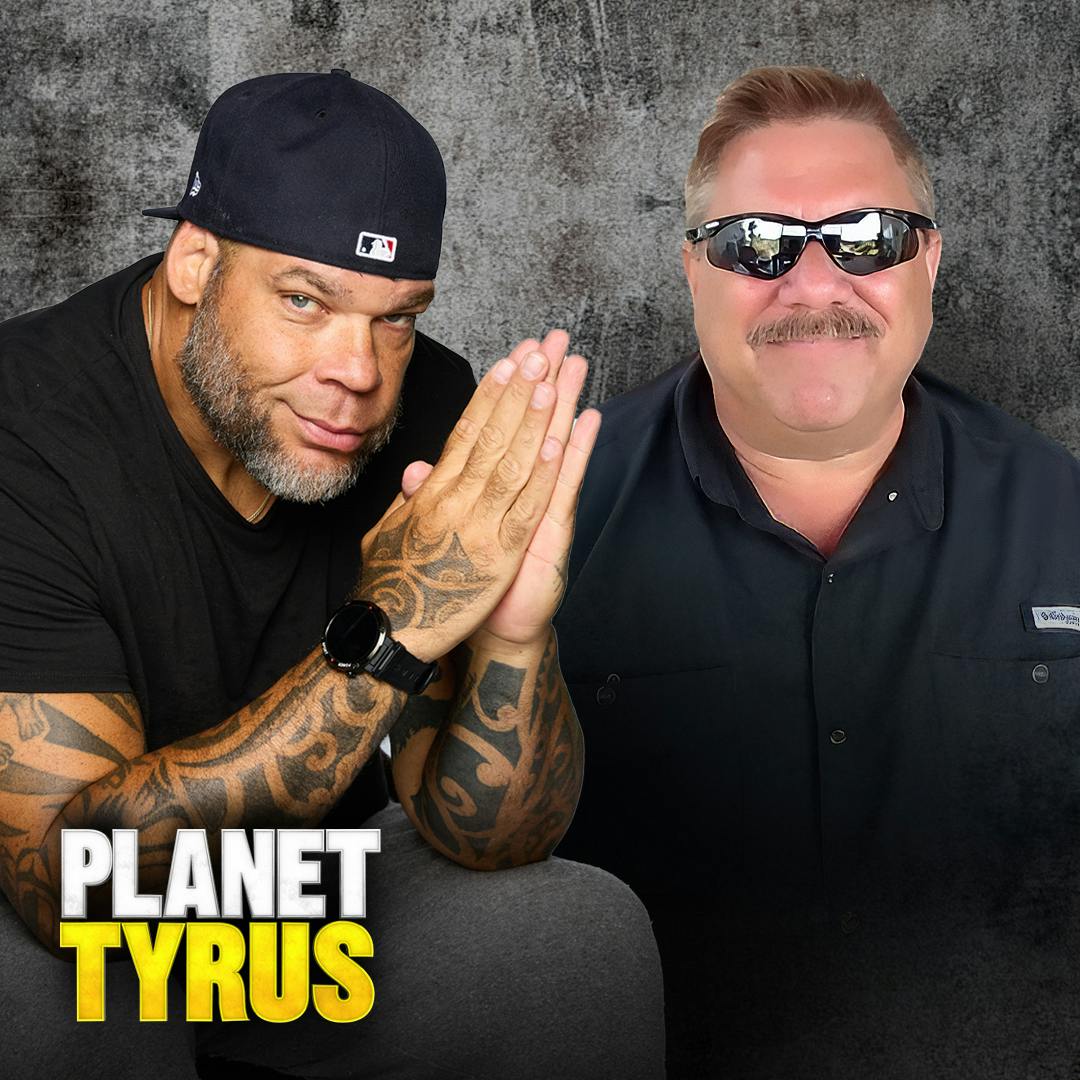
What it is, this is Planet Tyrus, and today we're gonna talk about conspiracies, not political conspiracies that everyone and their mama wants to talk about. We want to talk about the greatest conspiracy in the history of this country. It's whether their Bigfoot is real or not or is affectionately known as Sasquatch. And joining me today is Matt Moneymaker, Bigfoot expert, and of course, from the great series on Animal Planet, finding Bigfoot. And he's a. I would say he's the top guy in the field, so to speak, when it comes to this. We have met before, but we've only ever talked on a couple Fox shows for about two minutes. Today we get to sit down and break down the mystery that is Bigfoot. So put your seatbelts on. It's gonna be a hell of a ride. No stranger to me, this is one of my favorite people to talk to, Matt Moneymaker, those of you who know Searching for Bigfoot, the great series on Animal Planet, but he's been in the field investigating since the 1980s. He. I would consider you the leading expert on the. The phenomenon that is Sasquatch or Bigfoot. And just right off the bat, now, you went to ucla. That's not. That's not a junior college. That's a prestigious university that you had a scholarship for or somebody wrote a check, a large check to go to. What makes a college young man change his whole life?
- [01:35]
B
It was during college that I had the opportunity to. That's really what started it all. Met a couple of guys. I was looking for a book in a bookstore in la, in Hollywood. And the guy at the bookstore said he knew some people that worked, you know, some older guys, Vietnam vets who worked in la, who were prospectors, and they go up to this area in the Ventura County. They both saw one. And I said, I got to meet these guys. And then I met them, and I realized they both saw one. They said it had to be nine feet tall. It was up in the mountains. It was at night. It was in the moonlight. But it walked right around their camp among some rock formations, and they said the thing had to be 9ft tall. And I was like, wow, that's like in Southern California. That's like the next county over from la, but it's up in the mountains. And I had to check it out. And I thought, you know, how could it be that they could be that close to la? Well, when you go up in those mountains and you realize there's no roads back into some of Those places. And it's a wilderness area. And you got a backpack in there. And once you're in there, you would never know that you were that close to la except for at night. The sky crown.
- [02:45]
A
I grew up in California. I been in Mount Wilson. I've been to Big Bear, I've been to Fawn skin Mammoth. Like once you get past those windy roads, even the squirrels look at you differently because you're not. Oh yeah, you're not in Kansas anymore, Dorothy. It is an entire. It's an entire ecosystem that we know absolutely very little about other than, you know, what you see. And there's huge black bears at one time, grizzly bears. So there was a big enough ecosystem to support a dominant predator. So it's not completely out of the impossibility of realms that there could be a large animal successfully breeding and living in the California mountains and people would not be within earshot of it.
- [03:30]
B
Right, exactly. And especially if they're nomadic and they're not staying like in the same canyon all the time. So if people were to find tracks, et cetera, or see them and then a whole bunch of people go back, back into that area, it's just like there's no guarantee that they're going to be there because they're moving around. And that nomadic element of them is one of the things that's kept them undiscovered because they're not going to defend territory if there's incursions, if there's intrusions. They might throw rocks and make scary sounds and get mad, but they're not going to attack. They'd rather bug out and just avoid the problem and go somewhere else. And that usually happens before they could be surrounded or captured or anything that people would want to do. They have a lot of options as to where they can go and they use those options. And it's almost like they're really hardwired to avoid direct conflict. Unless it's like under their terms, like at night you're in your tent, they're coming around in the dark on their turf, they throw rocks, they make sounds, but they know they can get away. And if they hide behind enough obstructions, they know that you're not gonna light em up with a spotlight.
- [04:43]
A
Right.
- [04:43]
B
So I mean, they're that intelligent. They're really. And intelligence, one of the elements of it, it comes from. They're very large animals. They're like, I mean, dude, they're much bigger than you. They're.
- [04:55]
A
And I'm considered a large human being.
- [04:57]
B
Yeah, they're Much bigger. And so every part of this bigger, including their heads. And if their heads are really large, they wouldn't have smaller brains than us. They would have larger brains if they've got a much larger head that's dome shape. And they do things with that large brain. They don't do the same things that we do. They don't do music and engineering and architecture, but they know their environment very well, and they seem to know what we do. And they're very strategic and very cautious. They put that large brain to use. And that's one of the things. I mean, humans underestimate that they think if they're out there, they're not building houses. They're covered with fur. They must be stupid animals like every other one. And I completely underestimate how wily these things are, because they've got large brains.
- [05:46]
A
So take me back. So you're. You go on this. You start meeting people when you're in college. Is there a specific day where you're like, this is my life. Like, what was it was.
- [05:57]
B
It was that trip and actually the continuation of the story. I found some guys to go take me up there backpacking. And on the way up there, we found very fresh tracks, like crossing the trail. And we were so far back in an area where, like, you can't even as much take a bicycle. It's really rough hiking. And a few miles back in, and I saw those tracks, and I just kind of fell to my knees, and I'm like, oh, my God, they're real. And I knew right then. I mean, that was the first time I had kind of gotten near to them, so to speak. And then not long after that, we were hearing the big, loud, heavy knocking down in the canyon below where those tracks were. And bigfooters had never talked about this knocking thing before that, because bigfoot researchers before that didn't really go in the field. What they would do is they would collect newspaper articles or sometimes go out and be filmed for a TV show. But if you would spend a lot of time in these bigfoot areas, you, would hear those kind of sounds Anyway, so they made these knock sounds. I didn't know what they were. And not long after that, as we kept going up the canyon, we heard other knock sounds, as if they were applying in the same kind of sequence of three knocks. Bang, bang, bang. Which don't sound like a woodpecker. They sound like a home run hit in a baseball stadium. I mean, really loud, heavy knocks. And still we didn't know what they were. I Was like, what, is there a hermit down there? And then, you know, chopping wood, and then we hear another one further up the canyon. And. But. And so we didn't see one on that trip, but then we heard the, what you call the, you know, the owl on steroids hoots later on that.
- [07:47]
A
Night, which you've supplied us with.
- [07:50]
B
And it was pretty intense. But, yeah, that was the point that I realized these things are real. Nobody else is really going after these things. And, you know, from kind of, you know, I grew up in la, grew up in Hollywood, and I knew how important it was not to, like, kind of follow the crowd, but to find something unique and different that nobody's really doing, but that will become a big deal. And I thought, okay, this is it. I'm gonna make this my thing. Nobody even knows about this. And their minds are gonna be blown when they realized these things are real. And I thought, at that point, they're going to know that they're that close to Los Angeles, as if that was going to be the focal thing. And then I had moved to Ohio, and in Ohio, when I met the bigfooters out there and I went out there, I chose to go to law school in Ohio because there was so much bigfoot action in eastern Ohio, and I wanted to have that. I didn't want to leave California and thinking I was leaving the bigfoot stuff behind. There was even more in eastern Ohio. And it's a place that's full of deer in eastern Ohio. So it made sense. And it was out there while I was in law school, going out to these locations on the weekend and like, staying all night long in places that I finally had that face to face encounter. And then I knew for sure that they were real. And I like, said, you know, I'm going to start an organization about this and pull in the people who want to look into these reports and also receive reports, because the guy who was doing that, a guy named Peter Byrne of the bigfoot research project before that, he'd get a lot of TV exposure. He'd receive reports from all over the country, but, like, he summarily would dismiss anything east of the Mississippi, which was arbitrarily. And he was doing it almost like for political reasons. He wanted his sponsor to think that where he was in Washington state was like the epicenter of bigfoot stuff. And the further you get away from Washington state, the less credible the reports are.
- [09:45]
A
Right.
- [09:45]
B
And which was.
- [09:46]
A
Which is fair to the research, because if you treat it like a science, you should take all Data.
- [09:53]
B
Right. But he didn't treat it like a science. He treated it as a fundraising opportunity.
- [09:58]
A
Right. Which unfortunately kind of plagues. That's the one thing about this. And it's one of the reasons why I respect you so much as a researcher. Because you, you don't do that. You are not. You'll come out and you'll say exactly how it is. If it's not there, it's not there. If it's there, you know, you'll stand by it. You're not afraid to challenge somebody if you suspect they're full of shit, you know, and then if some, you know, because I watching the series, and again, you've been doing a long time, I think the Knox I. Again, I don't have the stats, but I don't think I knew anything about Knox until you started discussing it on Animal Planet. I think that's when it really kind of came to where. Because when you hear those knocks, there's only two individuals that are able to do that because the opposable thumb, you kind of kind of have to have that. And the other characters who could possibly do that, chimps, gorillas and orangutans, they don't have a tat this side of the equator. So that night that you had that moment when you actually. What was. I mean, obviously there had to be a little bit of fear, a little bit of thrill. I mean, can you take us through that a little bit? Because that's a life change. That's like a I just saw God moment in a way, you know, like for. Because you're not really sure, you know what I'm saying?
- [11:12]
B
And then you're never 100% sure until you're laying eyes on one. It's just because I had like already kind of devoted my life to it at that point. But after that point I realized this burden lifted off of me of this kind of self doubt, like, well, maybe they're not real, maybe all this is nonsense, etc. So you're going to have that little nagging bit of doubt and that's natural until you finally see one. And then you realize, oh yeah, they're really real. Now, it doesn't mean every single report is real, every sighting is real. But there are animals out there that are causing this and they're very smart and they live in a lot of parts of the country. So I knew they were real at that point. But anyway, what led up to it? Right before that I was out there with another guy. He actually saw. We were separated by about 60ft away. He was in the woods. He was out of my view. This is like 2:30am in a. Like on the edge of a swamp. He saw. He heard them coming, heard chattering, then saw one come around the corner. It stopped dead, probably about 50, 40, 50ft away, and squatted down and started swaying back and forth, looking right in his direction. And he was in the shadows off the road. And it was a dark night and he was freaked out, wondering. He knew this one was looking right at him and he couldn't figure it out. Later I showed him that the night vision goggles that he was using was lighting up his face. It was like shining because they're like illuminated screens. And so it was like lighting up his face in a pale green. And that's what they had keyed, that one had keyed in on. Anyway, that one walked back out of view. Then he heard moving through the woods. And then from the other direction, that one and another one, a much bigger one, charged at him and then stopped about 15ft away. And he got up and lit it up, lit them both up with his flashlight, lit them up, both very well. Well enough for him to do a good drawing of the bigger one. But he got the sense that this was like a mated pair. Cause it was a much bigger one and a smaller one. They both seemed to be full grown. And so then he walks back over to me and says, they're right over there, right over there. What do we do? What do we do? And I just said, listen, we found where they're at. We're gonna come back in here and set up surveillance cameras and let them roll and. And hopefully they'll come and do the same thing again. And then we've got it. So I'm explaining him the plan. And I said, where's my goggles? Where's the rest of my gear and everything? And he said, well, he dropped it over there in the woods when they charged at it.
- [13:37]
A
Which is fair. I think that's fair. I think that's okay. I mean.
- [13:42]
B
Oh, yeah, absolutely. But I said, go back. I said, go back and get that stuff. If they didn't kill you already, they're not going to do it. Now just go back and get that stuff. So he starts walking back in that direction. And as he's walking back, the bigger one circles behind me through the tree line, just inside the edge growth. And that finally comes out of the edge growth, emerges about 20ft or so, kind of behind in the opposite direction, and comes out. And I had known not just from what was going to happen with him a moment before. But for talking to many witnesses, how when they intimidate, they'll come and be scary up to a certain distance, but it's like there's a barrier, like 15, 20ft. They don't want to get any closer than that.
- [14:24]
A
It's like a mock charge, like you'll see with silverbacks.
- [14:27]
B
Exactly.
- [14:28]
A
Very similar.
- [14:28]
B
And they don't want to get physical, but they do want to impress you and scare you. So it did that with me, and I was just like, okay, okay, we're leaving. And, you know, and I started talking in its direction like you do with a growling dog. If you had a growling dog come up, I guarantee you start talking about growling dog.
- [14:45]
A
Easy, boy. Yeah, yeah, exactly.
- [14:48]
B
So I'm just like, we're going, we're going. Look, I'm picking up my stuff. Picking up my stuff. So I didn't. Because I didn't shine a flashlight on it. I didn't see the face clear enough to be able to do a good drawing. But I could certainly see if you got like a quarter moon and you got something that big standing that close to you, you know what, you can see it.
- [15:07]
A
And I'm sure your eyes were dilated to the maximum. There was no blinking. I mean, right. You know, because this is one. You've never seen anything like this. And you're. There's no point of reference, you know, maybe your closest thing. But even gorillas, they're on. On all fours. And even when they're. Even though they're impressive, when you see them in a zoo, you're like, you know, like, they're big, but they're not towering over you, you know, and they're not free, which is a completely different thing. The only thing separating you and him is opportunity. So you. And let me ask, when you. You talked about you heard chatter, do you. Would you support the fact that they have a language or at least.
- [15:46]
B
Yeah, they do a strong vocal language. We didn't, you know, we didn't know what to believe about that. We had heard the Sierra sounds recordings from the 70s, but it was only after the group doing enough expeditions and then hearing that themselves and coming back and saying, yeah, we heard this kind of. It sounds like this growly kind of vocal chatter going on between two of them, and they can't understand what it is. But it certainly has the elements of sounding like a vocal language going back and forth. And of course, the ability to do language that would, you know, our ability that distinguishes us from Other primates is the fact that we walk upright, and that upright posture is what allows the voice box to develop. And then that. And then also you can carry a larger brain if you're balancing it on your shoulders as opposed to hanging over like a knuckle walker. If you're hanging over like a knuckle walker, you can. Your whole body's out of balance if your head is too big. Right. But if you're walking upright, it can be bigger. So you've got large brain, probably a bigger frontal cortex that controls language, and then you have this voice ability. So it evolved with them as a natural primate consequence of bipedalism. And of course, bipedalism does so many other things. It allows you to walk through snow. One thing it allows you, if you're chasing a deer through snow and you're really tall, a deer isn't going to get through the snow as fast as you can and you can catch up to it. And it allows you to see dangers from a bigger distance. There's a lot of things that help allow you to survive better if you're a bipedal primate and I would imagine.
- [17:31]
A
Given that size, with the exception of a Kodiak grizzly bear, which, again, you're looking at Alaska, which, again, we know there's evidence support there, very few things that are going to challenge that smell, that sound. And that's probably what a lot of the knocking is doing. You know, the other animals know, hey, this. We shouldn't be over here, because the top guy is here. I. Yeah, One of the.
- [17:53]
B
Exactly.
- [17:54]
A
One of the things that I. I find so fascinating about this phenomenon is when you hear people give their testimonies when they meet them. And a lot of times it seems like it's a very different reaction to women and children as it is to grown men. It seems like when it's men, it's a little more aggressive and with smaller. It's a little more curious if that. Do you see that? Have you experienced that?
- [18:25]
B
Yeah, in so many different ways. In that, like if they're going up repeatedly to a house or several houses in a neighborhood, you notice that that neighborhood is the one where it's just women and children.
- [18:38]
A
Right.
- [18:39]
B
And there's no men around. And on expeditions, if there's groups of women and they can hear the voices they're very much keyed into. And when you think about it, humans, you don't even need to understand the language. If you hear voices, you can tell the difference between a female voice and a male voice. Even if you don't understand what they're talking about, it just sounds different. So a group of females chattering or singing, walking through the woods, these things will come much closer. So if we have enough people on an expedition, we always try to have an all girl group to go through the woods and see if that works. So in many different circumstances it seems as though they're curious about all of us, but they're less afraid of women and children and so their curiosity will kind of bring them closer. Now why would they have that? Well, it's probably because when they've seen.
- [19:30]
A
Hunters, they're used typically men and aggressive. Plus there's a testosterone level. You know, other animals, you know, there's not like they just met us. Like when you go and again you can go back and some of as far as history will take you, especially with Native Americans in this country there is a always, if you do, there's always a historic element or facts showing a relationship with a bipedal large primate in the woods. Especially when you get to the west coast. A lot of times they had treaties and I believe one group referred to them as, I think called them moon eyes. They could see their eyes at night. But the Native Americans would have in their artwork, their pottery, they would worship these giant bipedal, just call them Sasquatch. And they had reverence for them and this is theirs, this is ours. And they had almost like an understanding. When the white man came through with his musket, he didn't understand nothing but profit. So the relationship changed. And that's probably again if they do communicate was passed down from generation to generation to deforesting. Like they're well aware of what it is the new man opposed to the man that used to be there. When you look, do you use a lot of, do you go back in history a lot to look when you're putting your research together? When you look at areas, do you look at Native population, how it was back then in terms of artifacts? When you're fact finding or looking for what you consider a hotspot, like what goes into your. When you decide like I'm going to go investigate this particular area of woods, what's your baseline? Where do you start?
- [21:15]
B
Well you look at old reports. So Native American legends would be part of that going back into history. So you know an area that has a very well documented, well now well documented documentation of oral histories of Native Americans. So many of them have names and stories that are even if it's the different word they're clearly describing the same things like giant hairy man.
- [21:43]
A
Right.
- [21:43]
B
And some of those have, like, petroglyphs where. Of the hairy man. And so not just stories, but actual visual representations. And. And then there's then the whole layer of. Of early pioneers, settler era, talking about them. And they would call them wild man and use their own words, but then you'd hear from the description kind of the key things of, you know, on two legs, much bigger than a human and completely covered with hair. And then, you know, it's just like those things just like, kind of wouldn't occur at random. And also the element of not just kind of like a scare story, because the stories are like the ones today. They're not of them attacking people and killing them and eating them. And the Alaska thing is a little different. I can get to that later. But for most stories, it's just people see them and they turn around and run away, which is a great survival mechanism. Let me tell you. Retreating consistently is a good way to prevent getting killed.
- [22:48]
A
Would you say. Would you. Would you say they're more optimistic omnivores opposed to. Because I think if they were completely carnivorous, we would have more evidence because they would take more chances. A starving bear is going to. A wildcat is going to take. A mountain lion is going to take a chance. You know, but if you're more of an opportunist and you kind of eat a lot of different things, you don't necessarily need to take the chance of interacting with human beings because they're not your food source.
- [23:15]
B
Right. They're opportunistic. They're omnivores. Humans. And like, like, like there's some bears that are eating mainly meat, but a lot of bears.
- [23:23]
A
Omnivores. Yeah.
- [23:24]
B
Yeah. So they're. They're definitely omnivores. They're. They're. People will see them foraging, and then people will see them also carrying away roadkill deer from the side of the road. So. And, and doing things that sound like they're out there hunting and kind of driving deer. So they go after both things. But it seems like the. What determines where they go. Just like with humans, just like with Native Americans, you know, before the horse, what would determine where they go is where the food sources.
- [23:54]
A
Right. They would migrate. They would just follow the herds.
- [23:57]
B
Exactly. They would follow either the buffalo herds, they would follow the deer herds, but they, you know, if you stay in one place and you hunt a lot of deer, after a while, there's not going to be enough deer, and you got to move on. To somewhere else. So that's why in the united states, with the native americans, There wasn't like, not too many, like what you would call towns or big cities where they built up, because they were on the move quite a bit then before the horse, it was usually by canoe. But there was exceptions. Like in the southwest with the mesa verde group, et cetera, the cave dwelling people, they weren't near navigable streams, but, yeah, in most cases, they were living in such a way where they could move to different places. The west being, the pacific northwest being the exception, because they'd plant it right at the river mouth where. Where the salmon would come up, and that's the place they're going to be. And, but, and, and, but, yeah. So with bigfoots there, they would be. If they were carnivorous, you're right, There would probably be a lot more, A lot more clashes. They would have gone after human livestock a lot more, as opposed to just sticking to their natural diet. And that would have gotten them into trouble and would have, like, gotten posses together to go after them like they did after the wolves. And in the east coast, like the big cats, because east of the mississippi, There used to be. There was wolves and big cats all over the place.
- [25:18]
A
Yeah, we.
- [25:19]
B
And they were.
- [25:20]
A
If you go back, if you go back before settlement, There were. We had cave bears, we had smilodons, we had mammoths, we had giant sloths, we had bison, we had several large, giant antelopes. Like, there was large, just like you see in africa today. The American landscape At one time Looked very similar to that, but it was over. The, the advancement of man Wiped out most of the large herbivores of the plains, like the bison became. I'm just guessing because. Just sheer numbers. But, you know, there was other large animals that roamed america that aren't here anymore. And if you went out with a shovel and a pickaxe, Good luck finding any evidence that they were ever here. I mean, very rarely do you hear someone go, hey, I was digging in my backyard this weekend, and I found a giant sloth, you know, or, you know, or the, the. Oh, I forget. I always, man, I was one of my favorite.
- [26:15]
B
It's only when they fell into tar pits.
- [26:17]
A
Tar pits is the only evidence that we have. And I lived in miracle mile for a while. So literally, it was nothing like getting up six in the morning to go train smelling tar pit in the morning. So I, I can relate. But again, when you deal with naysayers, you're like, well, there should be bones everywhere. Find. It's not necessarily, that's not a key thing when you talk about fact things we know, the footprints, we've all seen them. And you can tell the difference between a real footprint and a fake footprint. Just indentation in the way things set in the mud. Hair samples. I always find that particularly funny to me because, well, there's. You don't have a point of reference, you don't have a common ancestor. So when you test the hair, the results are what? Because you have to have results, you have to have a baseline. So when you get the hair back and you say, well, we think it might be a bear, we think it might be a primate, you don't know because we don't have a link which makes them so mysterious.
- [27:17]
B
And one of the misconceptions is people think that hairs have been brought in and tested over a long period of time. You know, if you go find hares in the woods that you think might be Bigfoots, good luck trying to find like a qualified, capable university that will analyze them for DNA for free.
- [27:36]
A
Right.
- [27:37]
B
And that will have the clout to be able to present their, to present their findings to the scientific community. You won't. I mean, so these statements on TV where people say, oh yeah, we had these hair tested and they came back unknown primate. Well, finally now a university, the University of North Carolina, there is a professor there who really wants to start doing DNA on hair samples. One of the first things he did, which is very clever, was to look into all these claims that were mentioned on TV about hairs getting tested and turning out to be non human primate. And he found out there was really nothing behind that. There was no, like, he couldn't find out, like what lab did that or what studies school did that. It was always very amorphous. And what he found was all these stories about it where people said, yeah, my friend had it tested, or I heard about this. They were, he was tracing it all back to these TV episodes where people were talking about that. And even those people were just repeating stories that they heard from other people. So there hadn't really been good DNA qualified lab. There was a kind of Melba Ketchum who, very good, lots of good reasons to believe that that was just a scam. She, she was accepting a lot of money to test different things, she said, for DNA. But when the results came out, they were just eviscerated by actual scientists who said that this is an actual scientist who did the same, took the actual DNA sequences that were rendered by like a third party. Lab and they render, they, they ran the same sequences like, like through computers and said well this one is a dog and this one is a coyote. So she actually got back legit DNA just mischaracterized it and saying oh yeah, it's part alien and part this like whatever way to kind of make it sensational.
- [29:28]
A
So people would it almost sometimes there has been a change and you would know this better than anyone. UFOs and alien, at one time it was considered just nonsense. Right. Now you're, you're seeing to where now it's, you see legitimate scientists studying patterns. You see a more of a open acceptance. Even the government talks about it and it's less fantasy and more factual and more information. Are we seeing that trend? And again, I'm not, I'm not combining the two, but are you seeing there's more of taking things a little more serious. Even with Loch Ness, they're starting to actually look for reasonable things. Like once they gave up the plesiosaur theory, which is ridiculous because Loch Ness was covered with ice for 10,000 years. Little hard to breathe and sun yourself if you're breathing reptile. But large, bigger than life. 30 foot giant eels is a. Prehistoric eels is a real possibility.
- [30:33]
B
And a dark lake that's almost certainly what those are exactly is eels in the loch. So you just like with sharks you have evolution of like a lot of small sharks and then eventually what evolve. What would evolve is a species of shark that eats smaller sharks.
- [30:47]
A
Yeah, big fish. And a little pond theory where you end up with a super predator because there's no competition. We see it on islands, we've seen it. You know, the poor dodo didn't, didn't need to fly anymore because nothing was chasing it. And then sailors showed up, gone.
- [31:00]
B
So if you have these lakes with these migrating small eels over the eons, you're going to eventually end up with a species of eel that grows larger from eating the smaller species of eel. Just like what happened with sharks. Even today the main diet of great white sharks when they're growing up is.
- [31:19]
A
Smaller sharks, killer whales, favorite food, dolphins.
- [31:24]
B
There you go. You know, so that's kind of what happens with evolution. You get a giant size one that eats the smaller one kind of in the same arena because there's so many of those out there to eat. So. But yeah, that's, that's Loch Ness. And I do think there's something. And I do think they're giant eels. And with these things it was, it was more like, you know, they're not eating other primates, but their size gave them so much of an advantage. And they could move. They, you know, they, they weren't tied to any particular.
- [31:54]
A
And highly intelligent.
- [31:56]
B
Right. They're very intelligent. They needed forest, they needed some prey, and they could move across Asia. And I think they did come out of Asia, the same parts of the world that orangutans and Gigantopithecus came out of. And there's still reports today in a lot of those same Asian countries. And they just radiated out from there, came over the land bridge the same way everything else did. Native Americans did when the ice age. And they could just walk right across like the caribou did. Caribou. The same thing as reindeer in Asia. And is because they get to walk across at one point and they just came in and came into America. And one thing people don't realize about America that's different from other parts of the world is the amount of deer.
- [32:40]
A
Right.
- [32:40]
B
Like, you don't have that much. Much in the way of deer anywhere in Asia. You don't have, like, you're not going to have. I mean, there are ungulate species there.
- [32:50]
A
But we really have the big deer, rabbit, raccoon, possum. I mean, I don't care what neighborhood you're in, you're gonna, you know, in your. Well, I lived in New Jersey for a little while. I had like 10 deer on a regular good morning regimen where I'd come out and drop corn. I mean, then you had. There is so much. And with the elimination of the wolf, the bear, the. The mountain lion, the population explodes, you know, so.
- [33:16]
B
Right. And agriculture helps that too.
- [33:18]
A
Yeah. Because the deer now have things to eat during the winter. They just go chew on the farm stuff or. And people feed them. Like everybody has a deer feeder in their backyard if you have deer.
- [33:27]
B
Yeah.
- [33:28]
A
There's signs of like, protect the deer. Don't run the deer over. So much so that even with hunting, it's not enough because, you know, the hunters are. Hunters are going out there to keep the population down. But they're. It's a. It's a drop in the pan. It really is.
- [33:43]
B
It's nothing compared to what would happen if there was the, the natural number of predators out there. They were eradicated from most of the country, especially the East Coast. And yeah, that's what made it so that prey species which had been kept in check back then could explode. And with agriculture, et cetera. Yeah. The human hunters barely put a dent in the deer population when it's Big. And then you know that it's getting big because there's a lot of traffic accidents. Yes, there's a lot of.
- [34:13]
A
And if you're. Oh yeah, I had to cover my daughter's eyes a lot. But a highly intelligent large primate who doesn't need to take risk, doesn't need to dig through trash cans because it's there. So there's no. And I think that has a lot to do with why we have so little interactions because there's no reason. And tell me myself, I'm not going to, like, if I'm hungry, I can call Uber Eats. I don't need to go in the office right there and beat this dude up and take a sandwich. Chances are I'll get away with it the first time. But eventually they're probably going to arrest me or something bad is going to happen to me. So there's no, there's no risk. I don't have to do that. And I feel like when I hear a lot of people who say, well, then this and why, if they. Seeing them, I think because of these, because of our success, they have benefited from not having to really come out of the shadows because we've made it a little bit easier for a high functioning intelligent being to not. There's. They clearly don't want anything to do. They've seen us enough, they're good and we don't do well camping. So, you know.
- [35:17]
B
Right. They know we're going to leave eventually when we're camping. And one thing, people hearing this one thing, it's going to be hard for them to compute is they, they, they don't understand how rare these things are.
- [35:30]
A
Yeah.
- [35:30]
B
So they're, they think if they're out there, then, you know, I've lived out in these counties my whole life and I've never seen one. Yeah, you won't, because you're talking about something that's very rare to begin with. They're only really out and about moving after dark. So. And people aren't walking around in the woods after dark. And if they are, they got a flashlight with them. So yeah, the woods belong to them. Yeah, the woods belong to them to begin with. But especially the woods after dark do not have people in them. The woods after dark belong to these things in the areas where they're at. But in New Jersey, for example, they're not in every parts of New Jersey. There are parts like down in the Pine Barrens, which is just vast forests for miles and miles. And then up in the northern part of New Jersey, where the Appalachian Trail goes through and the Delaware Water Gap and up there, the bears. I mean, of all the places in the country you would think of, like, where there be a high population of bears, you wouldn't think northern New Jersey, but there is common trek.
- [36:30]
A
I had a type. I'm pretty sure he was a type 2 diabetic bear. He was so. He was. No, he was so chubby. And I basically. And one of the things, like, my neighbors thought I was weird, right? I'll share something with you. So I was renting a farm in New Jersey. Deer everywhere. Huge. It was overgrown, so there was just all kinds of crazy wildlife. And there was this large. I'm probably shaming him. Fat bear. He was so fat, it was embarrassing. He couldn't even get in the dumpster. Like, I would watch him and be like, I almost feel bad for him. So one of the things that I've always done, and it's for me growing up in California, being an outdoors guy all the time, Boy Scouts or whatever, one of the things we were camping is we would always go pee a perimeter. So we would go to trees and pee on all the trees because the animals would. Would know where it was there. So one of the things I did at my farm, I was like, look, you can have this field and this trash can, but. And I would pee on the rest of the park. This is mine. We don't come in here. You. Everything else is yours. You come in here. We have a problem. And guess what? Completely respected I had the cameras never came in my side. And that's something that I always said to people like. Like, well, I got these damn deer. Because the deer won't come in either. They'll go in the field. They'll come just close enough to the house, but they'll walk by the tree where you've marked it consistently. And they will flee. They will immediately run back. And it's a. It's something. And I learned that. And old boy scout guy was like, hey, mark your territory. Mark around your tent. Because before they get to the tent, they'll say, oh, this, this, this. This human is letting me know this is mine. So I think that has a lot to do with understanding your environment and knowing what's around you. Because if there's a mutual respect. The bear never gave me any problems. I don't know if he's still with us because his weight. I was a little. You know, it was embarrassing. I would see him just laying around, and even when I'd be like, hey, bear. You know, and he would just be like, huh. Like there was no sense of urgency, you know, just. But he also knew, hey, I'm on the other side of Tyrus P. Line. So, you know, and he's probably like, I don't know where this bear gets his haircut, but, you know, I'm gonna. You got yours, and I got mine. And natural things like that, I think we've gotten so far removed from. And I think sometimes talking about this, where you're going, and one of the things you do and I want to talk you. You do tours. You take people out into this environment to give them just a sample of. Of these expeditions into the wilderness. Have you noticed a huge disconnect with people? Because I tease my kids. If the power went off, can you guys make a fire? Can any of your friends make a fire, build a fort, make a fishing line out of some tweed and stuff? And my kids can because I've taught them, because it was taught to me. But their friends, if they can't download it, wi fi goes out. They might be eating each other within three hours. When you do these tours and people want to get. Because I think one thing nice about the Bigfoot is it still shows us there's a natural world out there for exploring and things like that, do you think we've gotten so far away from that, or are you seeing there's a resurgence?
- [39:46]
B
No. Well, we have definitely gotten away from it. And the way we see it, experience most, is when we have newbies, as we call them, because most of the trips now, they've been going on for so long and they're so popular that most of the people who attend are people who've attended, like a dozen of them over the years. So there's usually just a small number of people who are first timers. And it's always what's pleasing in a way. It's not surprising. It's pleasing in a way because you could see them kind of come into it, how afraid people are of going in the woods in the dark because they've never done it before.
- [40:21]
A
Right.
- [40:22]
B
So for a lot of people, they've never gone camping at all. But even if they've gone camping, the idea of walking around in the woods without a flashlight on, just, like, letting your eyes adjust and. And like walking down a road or a trail in the dark, is such an alien thing to most of them that they're terrified at first. Like, every little sound freaks them out. And so now we have the benefit of now therm handheld thermal scopes. Are now cheap enough so that there's enough of them on these trips that people are able to pass them around. So if there's a little noise in the brush, they can just look and make sure that it's not a big animal. But there's still that primal fear that happens with newbies, and it's because they don't have that experience that all of our ancestors had all the time.
- [41:12]
A
We used to be the scariest thing in the dark.
- [41:14]
B
That's right. And we were used to. All of us were in the dark in the woods, all of our ancestors, every single night. There wasn't artificial lighting. And if you walked away from the campfire and you didn't have a torch with you, it was freaking dark out there. And you kind of learned to deal with it. So what's beautiful is people are terrified the first time, and then their body kind of learns that, no, they're not getting killed, they're surviving it. So there's less of a fear each time they do it. And then eventually they're able to take the new scared people and be the brave person leading them around through the woods when they were that new scared person, you know, a few times before. And I'll tell you, it's one of the things that keeps people coming back. It's. I don't want to say it's spiritual, but there's definitely something that happens when.
- [42:08]
A
You'Re in that argument. I think there's a spiritual connection to Mother Nature. We should. And the unknown. And it's okay that you don't know every nook and cranny, every acorn. And if there is something, if there is a creature out there that is. That we haven't discovered yet, that should be. You should be excited about, maybe I'll be the guy who makes that connection. I mean, it changed your life, changed your entire trajectory. Trajectory in life. And then now you're bringing other people in. And I guarantee you one of those newbies is going to call home and say, hey, sell all the shit. I'm going to Montana and we're going to find a Bigfoot. You know, so it's like. So that. And I don't think. I don't think there's something wrong with the. The spirit of adventure and wanting to discover something new, you know, and even if it's. You're discovering something that everyone already knew about, but the first time you realize that squirrels, you know, they. They sing to each other and they have their territories, but really they're threatening each Other with death. I think that was one of the funniest things I was. Because my. My daughter, she loves the birds, right? And she likes to. Because I put bird seed out, and the birds all sing. And one day I told her, I said, you realize these birds are singing to other birds. Come over here. I'll kill you. Like, this is. This is mine. They're not singing because they're happy. They're communicating, saying, this is my nest. This is my bird woman. This here is all mine. And look at my. And to understand that, to understand what mother nature is really all about, I think it's gotten so lost, because the thing about bigfoot is patience. And you could.
- [43:47]
B
Right? But here's the thing, the sensory perception thing. You realize when you go out and do this at night, and you're out there waiting, and it's dark, and there's a lot of waiting or a lot of looking around, it's very quiet. You soon figure out that in the normal environment, Social situation that we're all in around people, so much of what you're doing is trying to block out your sensory perception of everything except the thing you need to focus on. You're trying to block out the noise, the stimuli, and everything else. And you need to do that to stay focused. But then when you're out in the woods, it changes. And you. Your mind, all of a sudden, because of the fear factor as well, your mind is really trying to tune in to every sound, every vibe, every nuance. And that's the spiritual thing that kind of happens. It's your mind really trying to tune in. And it's okay that it's doing it for fear, for self preservation, but you really feel it, Especially after a few days of doing that. It's like what we call the city vibe kind of wears off you, but then you're very sensitive to everything going on. And that's probably how bigfoots are. That's probably why they wouldn't want to walk into a city or a crowd of people.
- [45:01]
A
Yeah, it would have to be.
- [45:03]
B
Stimuli is just huge. And they're not used to, like, we have been able to do, to block out, like, every little object, noise, Everything you see just going around. In human society, we've gotten good at being able to say, okay, I've got focus on my thoughts, my business, whatever else. I'm not going to be affected by all of this around me. And it's a different mode of being. And there's a lot of, like, the romantic poets and stuff, you know, and writers like, to, you know, to go on Walden Pond and to go to these places where they're really tuned into nature and something different happens to them that way. And it's really a survival mechanism, but it's a beautiful thing, especially when all you've ever known is the city.
- [45:47]
A
I always, when I go out in the woods, I'll tell my kids, go pick a spot, sit down and just stare at it. Just stare at it for five to 10 minutes. Because when you first sit down, you don't see anything. You just see a green plant. But if you sit there and you're quiet, first you see a little ant goes across. Then there's a butterfly. Then you see there's a spider making a web. Then you're hearing the sound, oh, there's a cricket over there. Then you see a squirrel and a bird. Like, it opens up like a. Like a book to you. If you're just willing to have the patience. And I always. Because whenever someone goes, what. You know, what would you do if you saw a Bigfoot? I said, well, first I'd back up. That's the first thing I would do.
- [46:26]
B
But.
- [46:26]
A
But I would think it would be. I was really patient and I was observant, and I think it's a gift to actually get to see them. I don't think it's. I don't think it's. I don't think it's. You know, certain things happen across runs across the road you're driving. That's one thing. But to go out in this element and to follow the rules and be one, and then you get an opportunity to see it, I think that's way more powerful, I think, and that's probably why it changed your life. Had you seen it run across the street in a car one night on a beer ride with your buddies, I don't think we'd be here.
- [47:00]
B
No.
- [47:00]
A
Was it the. Those and. Let's just this. The emotional spiritual lift had to be phenomenal. It had to be something, because no one else can relate. And I think maybe that's why you get so much. Because one thing I've noticed, people love to hate what they don't understand. And it's. It's so much easier to say, ah, doesn't exist, you know, because if it does exist, what's that say about you?
- [47:24]
B
Well, a lot of the people who. Part of the motivation for a lot of people doing it is they're afraid and they don't want to say it. It's easier to say, oh, there's no Such thing. It's kind of like people denying ghosts, you know, after so many people, it's because you're saying you don't want to believe in ghosts because the idea of it kind of scares you. So you're putting yourself in a safer space. If you can convince yourself there is.
- [47:44]
A
No such thing, you maintain control. Yeah. Human beings have a problem with control. And since you said ghost is an awesome segue, because you sent me three awesome sounds, and I want to. I want to go through them. There's no point in having a squatch expert to not go through these sounds because they are incredible. And again, I. Science is like a hobby. When you hear the sounds, you can tell a difference between a dog growl and a person moan Or a person yell or yawn or even if a person mimics a howl and you hear an animal howl. When I heard these, I didn't hear an animal howl. And you know the difference. It's almost. I don't want to say a musical sound to it, but there was a. You could definitely feel a lung pushing. It just felt like a. Like a standing person letting something out. It just. Right.
- [48:41]
B
And a big, powerful.
- [48:43]
A
Yeah, the loud, like, heavy big one of it would move like you would. It would feel like you were in a. In front of a fan. Like, it's just a powerful roar. You know, like something like when you hear a lion roar. But again, when a lion roar, it's the same. When you hear that, you. You know, like, oh, that's something that can eat me.
- [49:02]
B
When in the lizard brain kind of helps you out. Like something deep and sexual. Your mind kind of analyzes. You can hear a sound and go like, oh, that's huge.
- [49:11]
A
Whatever that thing is. As a guy who's 6, 8, and 320 pounds, when I heard that howl, I was like, that's gotta be at least 2 or 3ft bigger than me. Like, that's gotta be like.
- [49:21]
B
And you're right.
- [49:22]
A
That's got to be like, where he would pat me on the head and say, oh, you trying. You know, like, I didn't know it was teen night.
- [49:29]
B
And people have been hearing these things for years and years and years and didn't know what they were. And they would describe them. And this is before recording and phones and everything became more, you know, dispersed so that people get recordings of them. All they could do is tell people about them later. And the reaction people have is, oh, it was probably a basset hound or people could help.
- [49:51]
A
This ain't no damn basset hound. It's the biggest basset hound of all time then.
- [49:56]
B
Exactly.
- [49:57]
A
I got my. Look at. My guys are fired up. They're ready. So how. Clip one is from Morton, Washington, August of 2010. And. Oh, they give me.
- [50:09]
B
Yeah, this is from a BFRO expedition.
- [50:11]
A
Yes. One of yours. Yes. And BFRO. You look it up. This is where you can go on these expeditions with you. I. If I could ever get time off, man, I would just. I would love to bring my kids to something like that. Just to be able to. To experience and to see the. Just to get back to the wilderness. I think. I don't want.
- [50:28]
B
I'll tell you, there's a really good place in Texas if you ever want to go, like Sam Houston National Forest. We could set you up with a guy who could like walk you right in at night and you would blow your mind.
- [50:39]
A
Okay, you got. Is my team ready? All right, so we're going to roll. And you just kind of take. Let. Let's let them soak it in. And then. And then you give us the play and you break it down for us.
- [50:48]
B
Yeah. Maybe they want to show the waveform that's on the video or they don't.
- [50:51]
A
Have to do have the technology.
- [50:54]
B
Okay.
- [50:56]
A
We have it in post, which means yes. So we will have the technology roll. I like how it was pronounced now. That was at least. I would just. I don't know if we could carry that tune that long. And those loud howls in the beginning and then the short ones at the end. Really speak primate to me. Really speak. Like he let everybody know who needed to know in the general area. And then it was a different communication to someone closer.
- [52:03]
B
Yes.
- [52:04]
A
To him. Almost a reaffirm. Maybe even a reaffirming. I'm.
- [52:09]
B
This is.
- [52:09]
A
We're good. And then it was almost like calming to whom. Whomever in the clan. Because we knew. No, we knew. We do suspect they're social. They don't necessarily roll in groups of 30, but I would assume family groups would be strong.
- [52:23]
B
Yeah. And we don't think they're doing it to be territorial, to say keep out. No. They're so few and far between that they want to connect with others. So they're trying to make contact. They're trying to be friendly with others. They want that approach. And we learned that a long time ago and we put that to use on expeditions that if we went out and made our best approximations of those sounds, that they'll come around to check it out, thinking that you might be one of them. And then once they get close enough to see you're not one of them, then they get a little upset and they start breaking.
- [52:56]
A
Also lets others know in the community, maybe someone's foraging. Maybe someone's getting water. Maybe someone like, hey, we're not alone tonight. Yeah, Pay attention. Which.
- [53:08]
B
Yeah. They don't have phones, so they connect with each other by howls.
- [53:11]
A
All right, so that was one. And again. Let's roll. Let me give two a little. Little background here. Now how. Clip number two from Forest County, Mississippi, December 2004. Can we roll that one? And this was. This is the triple moan, correct? Yes.
- [53:32]
B
Oh, I thought the triple bone is more.
- [53:34]
A
We did that one. Okay, so now we got. Sorry, I'm trying to. We did. The first one was the waveform. Okay. We got the graph on that. And then again. All right, so we're going to roll this one. Let me hear it.
- [53:45]
B
Mississippi has a graph, too.
- [53:46]
A
And Morris County, Mississippi. Yep.
- [53:49]
B
Listen. How similar. This is it.
- [54:29]
A
See that every. But, you know, I'm noticing when you. If you. I've listened to this probably 20 times today, I keep hearing an underlined sound while the large. What I would. Let's just speculate. The dominant males making that big howl that to me screams masculine. Hey. But underneath, I'm hearing clicks and smaller moans and tones. So that could be a family unit communicating as well.
- [55:01]
B
And they very well could. We think in a lot of situations. There was other ones nearby, and it was just the big one making the main moaning that we call the siren like howl that makes the kind of the up and then down. And it's that. When you hear it, the distinguishing characteristic is the sustain.
- [55:16]
A
Yeah. Is how long an opera singer. Maybe because it's not just letting it out. It's the. That's an aggress, not. I don't want to use the term aggressive. I don't need someone going running around a TMZ saying Bigfoot's trying to kill you. To maintain that loud of a sound to carry takes a lot of energy and a lot of air. This is holding your breath for a minute. This is at the top of your lungs letting everybody. We can't hold that for that long, at least not be able to have a rhythm to it. It would just be like a horror movie where a woman just screams. But even the scream. 3, 6 seconds tops. When someone lets out a scream when they're. When a human being's afraid, it's not long. They're not screaming for 30 seconds. Or in this case. And we. That was a shorter version of it. But that was almost 56 seconds of just continuous. You understand the size of the lungs. You gotta. Whales do that shit. You know what I'm saying? Like, you have to have a pretty big chest and strong vocal cords, and I don't think you could do that on your knuckles.
- [56:29]
B
And that's one of the intuitive elements of it, that when people hear this stuff in the woods, some part of their psyche, they realize, okay, I can't do that. If I was to go, oh, I wouldn't be able to carry that on. And the same thing with knocks. When you hear them in the woods, you realize, whatever did. I can't make a knock sound that loud. Like, you could if it was a woodpecker sound. You could probably make a tap, but, like, it's the difference between a woodpecker.
- [56:53]
A
Well, you need a baseball bat and the right tree. And.
- [56:56]
B
Right.
- [56:56]
A
And you'd have to know what you were doing with your rhythm because. And again, I don't have.
- [57:01]
B
And you could just feel that pulse.
- [57:02]
A
Yes, but it's a very consistent communication. And it's not a random sound. It's not throwing a boulder at a rock. It is a. I always thought of it as a warning signal to others. We're not alone tonight. I feel like a lot of times.
- [57:18]
B
That'S one of the functions. It may be in part a warning, but in part, in some cases, we think they're driving deer. They're trying to spook the deer towards.
- [57:28]
A
The one in Wait.
- [57:29]
B
Shepherd.
- [57:29]
A
Yes.
- [57:30]
B
Right. They want the deer, like, to move away from the hunters or. And so they drive deer. And humans sometimes do that. They get in a deer drive line. And oddly enough, when humans do that, you know, they do it. They whack against trees. But very. Not very often do they do that anymore. It used to be more common, although they still do it in states like Vermont. The lineup hunters separate them by, like, you know, like 100 yards or so, and they're all in a line, kind of push the deer out of forest.
- [57:56]
A
It's also how in India, how they drive tigers out of the woods. Very similar. We've seen that behavior in chimpanzees, where the dominant male will grab sticks and be on to let everyone know, hey, this is me. Or they try, when they hunt other primates, they knock on the trees, they bang, they make huge noises, which drives the primates into the chimpanzees sitting quietly on the other side, waiting for them to run from the sound, where they then ambush them. So this is not made up Science. You can see it in other similar species. Now, I'm not chimpanzees. A long way from a Bigfoot. They're, you know, they're a long way from us. But there is certain. We're what, a couple chromosomes away from it. But I'm just saying, like, behaviors behave, same physical attributes, similar results. You use it for hunting, you use it for display. And I think it's the. It's the same thing. It's just with. With Sasquatch, I would say it's a high. It has a lot more meaning that we don't quite understand yet, I would say. And then just because I. It's my podcast and I. I'll do what I want to. I want to play the third clip, the Ohio. How? Because.
- [59:01]
B
Let's do that.
- [59:02]
A
This stuff is awesome.
- [59:03]
B
And I. I was the one who recorded this 1994.
- [59:06]
A
And this is recorded by this young Go hard named Matt Moneymaker. So let's. Let's roll this. And we're right at the time stamp. Let it roll that beautiful footage.
- [59:19]
B
Sam.
- [59:50]
A
There's that underlying communication again.
- [60:04]
B
What?
- [60:05]
A
Again? Animals react to fear. Animals react aggressively. That dog is on cue. Every time that howl. It's at the exact moment that dog is like, hey, something. Right? And if it's a. And animals can tell when it's an. If it's a horn beeping, a dog after a while will move on from it, you know, because it's inanimate object. He's pretty on cue. Every time he hears that howl, he's like, hey. But again, I keep hearing an underlining communication at the end of each howl. Almost like clicks and other stuff going on. So that's. That's a. I feel like we're listening to a dialogue. I. It's not a random howl. It's not a wolf trying to let other wolves know where the food's at. I feel like that's a. A communication. And I would have that argument with anyone very well. Could be because it's. It's. There's a lot of clicks, there's ups and downs, and then there's. And all of them seem to end with the same kind of. And again, these are all different parts of the country by different people at different time periods. Very hard to recreate the same thing three times in a row and different. Different voices because we all have different sounds, but it's the same sound.
- [61:20]
B
And I guarantee you there's people listening in your audience right now who have heard these howls before and did not know what they were. And that's why it's great for people on your show. To be able to hear these. Because in the future, they'll be able. When they hear that sound, they'll be like, oh, my God, that's a squatch out there. So it's wonderful being able to do this, to kind of introduce people. And help them recognize this when they do hear it. Cause it's in a lot of parts of the country. Pennsylvania, New York, New Jersey, Washington, Oregon. And these things have probably spread out. And this is an important point, I think, after. I mean, the united States lost most of its forest. It was at the low point of forestation. Around the time of the depression. Especially in those eastern states. It's like they cut down every freaking tree. It was a wasteland. If you look at old photos from back then, Just a wasteland. Well, the forest is returned in a lot of places. And when the forest returned, Then the deer returned in force. A lot of the animals that, like, in connecticut, at one point, Hardly, like, it was a big deal. If anybody saw a deer in connecticut at all. Like, around the time, like, around the turn of the century, Back then, the forest has come back. And now there's deer. People hit deer with their cars in connecticut All. All the time.
- [62:36]
A
Yeah. You see them more than you see stray cats. And a lot of.
- [62:40]
B
Right. And they were rare at one point. And, of course, abundant before that. But when the forest was eliminated, the deer were eliminated. And then the forest came back. The deer came back, but the predators, Other predators weren't there. And so we think their population of squatches, sasquatches. Is increasing in some parts of the country.
- [62:59]
A
Because of the abundance of food.
- [63:01]
B
Exactly.
- [63:02]
A
And there's more places to be a squatch.
- [63:05]
B
Right. So much more now Than there was during the 30s. During the great depression. Places like ohio Hardly had any forest left. Now, eastern Ohio is mostly woods. So a lot of that, what was farmland. I mean, it was like, they looked at trees as almost like a nuisance and something they could sell. But, yeah, when a country gets very poor, like we were in the depression, it was like people are looking for anything to scrounge. Anything they could make money off of anything like firewood, Train ties, or anything else. And they also wanted to clear the land for farming. So that was what was going on then. But then we. We became. The country kind of came back. People saw some like, you know, they knew that having trees there. Kind of helped stop erosion and things. And just the four. And then trees grown. Trees had some value for when they were cut down.
- [63:57]
A
They also understood air quality is better when you have trees and.
- [64:00]
B
Right.
- [64:01]
A
And it just.
- [64:02]
B
So it came back and so that's why I think there these things are making a comeback. And that's one of the reasons the sightings increased greatly into the 60s and then the 70s and the 80s. There was probably more Sasquatches around in those decades than there was before when. When the. When everything was also.
- [64:21]
A
They pushed further back into the more remote parts of the country because they had to for food source. So there's more food. You get a little closer. You know, if the deer wiped out again, they would. Sightings would go away because they would go deep into more. More places where they could survive.
- [64:39]
B
Exactly.
- [64:39]
A
I could, I could do this with you all day. I had like a bunch of speed round questions but we've, we've. We've handled all of that.
- [64:47]
B
Well. Anytime.
- [64:49]
A
No.
- [64:49]
B
Yeah.
- [64:49]
A
And like I said, I've had the privilege of having you on a couple times. But they always give us like three min. This ain't a three minute conversation. And it's nice to have a conversation where we're not. We talked about it because we started the conversation. We're just going to treat this as a real thing and have a conversation. I did not want to waste. Well, you could have been a coyote. Like there's enough of that shit. We had a real conversation. I think we made some strong points. Definitely again if people want to get a hold of you or they want to do look into. Hopefully some people have to listen to this podcast. Maybe these two guys here. Hey, you still got to come to work. I don't care if you get inspired by Bigfoot or not. Your ass got to come to work. But where can they get information? Because hopefully we aspired a couple of just one dude somewhere to be like, you know what this, this science degree sucks. I'm gonna go. I'm gonna go out in the world and discover and be a pioneer. Because this is really the last great pioneer in this to go out and discover something like we got, you know and it's gonna be life changing.
- [65:55]
B
So what you would do is Google and put in Bigfoot research and, and the one of the first things that will come up will be our organization. We were the first Bigfoot website since the mid-90s and we're still the. The biggest and most popular. So it comes up high. And the results at Google you'll find the website for the Bigfoot field researchers organization. But all you gotta do is remember that and you'll recognize it, but it's bfro.net and you'll see a database where all these sightings are across the country. We've received probably at this point, 75,000 reports, but we've only posted about 10% of those that were really sure.
- [66:36]
A
That's what makes you different. And the reason why I respect you. Because you were the first one to call bullshit.
- [66:42]
B
Yeah.
- [66:42]
A
You know, you're not. You're not doing that. Oh, yep, yep, yep. Because it's. It. It is a passion. And you want the truth. Not necessarily.
- [66:51]
B
We don't want to send people on wild goose chases.
- [66:53]
A
Yes.
- [66:54]
B
We're putting reports out there so people can go check it out. We don't want people having to bother checking out something unless we're really sure that there was a bigfoot involved. And we'd rather not. We'd rather ignore nine out of ten of them that we're not really sure about it because they didn't get a good look at it. Or they're maybe misinterpreting sounds. But it's like we like ones where there's multiple witnesses and they got a real clear view of it and things we know. Okay. This really happened there. So people aren't wasting their time if they're in the area. And lo and behold, when you do that. And if we put it on Facebook too, you have all these people on Facebook from the same area coming forward and saying they've heard the sounds or they've had sightings and. And it's. It's social media really helps with this subject. Facebook, you know, for all people complain about it, boy, does it do a lot of good for bigfoot research.
- [67:45]
A
Well, another thing I think you were an ambassador is you had a really good TV show.
- [67:50]
B
Yes.
- [67:50]
A
And one of the things that. And I think I've seen every episode at least twice. One of the things that I always thought was great is your town halls. And.
- [67:59]
B
Yeah.
- [68:00]
A
But you would. Everyone you treated. We got to prove it first. And I think that's what made the difference for me is like, this guy legit. So many people want to just. You could capitalize and. And do all these things. If you haven't seen finding bigfoot, you can find it. I own. I think I bought them all on Apple, but I. I just, you know, but that's a good place to start. Watch a couple episodes. Just check it out. Open mind. I'm not in the. I don't have to convince anyone of anything. I happen to believe this is a Real being. And I've seen nothing to disprove it, and I haven't seen one. But I just. Based off just science and looking at stuff, I'm more for it than I am against it. But, you know, prove me wrong if you want to. I don't care. It's a great story. It's a great. It's a great part of our American history, and it's all over the world. It's everywhere. We didn't even. Next time I have you on, we got to talk about the aggressive ones in Alaska, but.
- [68:56]
B
All right.
- [68:56]
A
Yeah, the Inuaki, anyway. But I. That was the one I was kind of. When they. You know, that was the one I don't get into, but that was the one I was kind of like, I don't know. But. Because I. I don't think an aggressive species would still be here.
- [69:10]
B
You know, I. I can tell you the whole. We'll do another episode. I'll give you the whole backstory on that show. I don't think that stuff really happened because the lady whose story it was all based on, a Native American woman, later admitted that she made up the story because she just didn't want other people going to that area.
- [69:27]
A
Right.
- [69:27]
B
Because it took on a life of its own. And then there were some people who. Who were all too willing to, if they were going to be in a show, to kind of play up the draw.
- [69:37]
A
Magnetic. The magnetic control, mind control. I was like, they're just stretching it.
- [69:45]
B
For all they can do. And we didn't respect that when we did finding Bigfoot. Our rule among, you know, for the cast members was we weren't going to fake anything.
- [69:53]
A
No, you had a skeptic on there who literally every time was like, nah, it's a muskrat. You know, like.
- [69:58]
B
Yeah, but that's what they brought her on there. That was her role, though.
- [70:01]
A
Yeah, but I'm just saying, most. Most people are not willing to let. We deal with it in politics all the time. Either you're 100% with us, or you're 100% against us. I thought it was a good balance, because whenever I talk about it, my wife will be like, grow up. The only Bigfoot around here is you, okay? You're alone, and there's no friends waiting for you in the forest, so take out the trash and shut up, okay? And I'll be like, you'll see. One day, you'll see. I'll get a piggyback ride home, and you are going to be so embarrassed, and you will not come to Bigfoot dinner. So again, man, always a pleasure. We have to do this again. And I know in the beginning he was like, are we doing this for 45 minutes? And I laughed and I said, bruh, we ain't going 45 because there's just so much information. And again, I'm encouraging anyone. Instead of surfing Netflix and Hulu tonight, Google research, do this stuff. Make it a family project. Do some research, Get a map out, get some tax with some red yarn and start doing some, you know, and. And then plan a family trip and go out and explore this beautiful country. Who knows? You might meet a magnificent relic beast from our. From our own past, which is Bigfoot or Sasquatch. So again, man, I appreciate your time. Thank you so much. Till next time, sir.
- [71:26]
B
Very good. Thank you so much again. You're the most informed guy I talked to, so it's a great pleasure.
- [71:31]
A
Oh, thank you, sir. Sam.