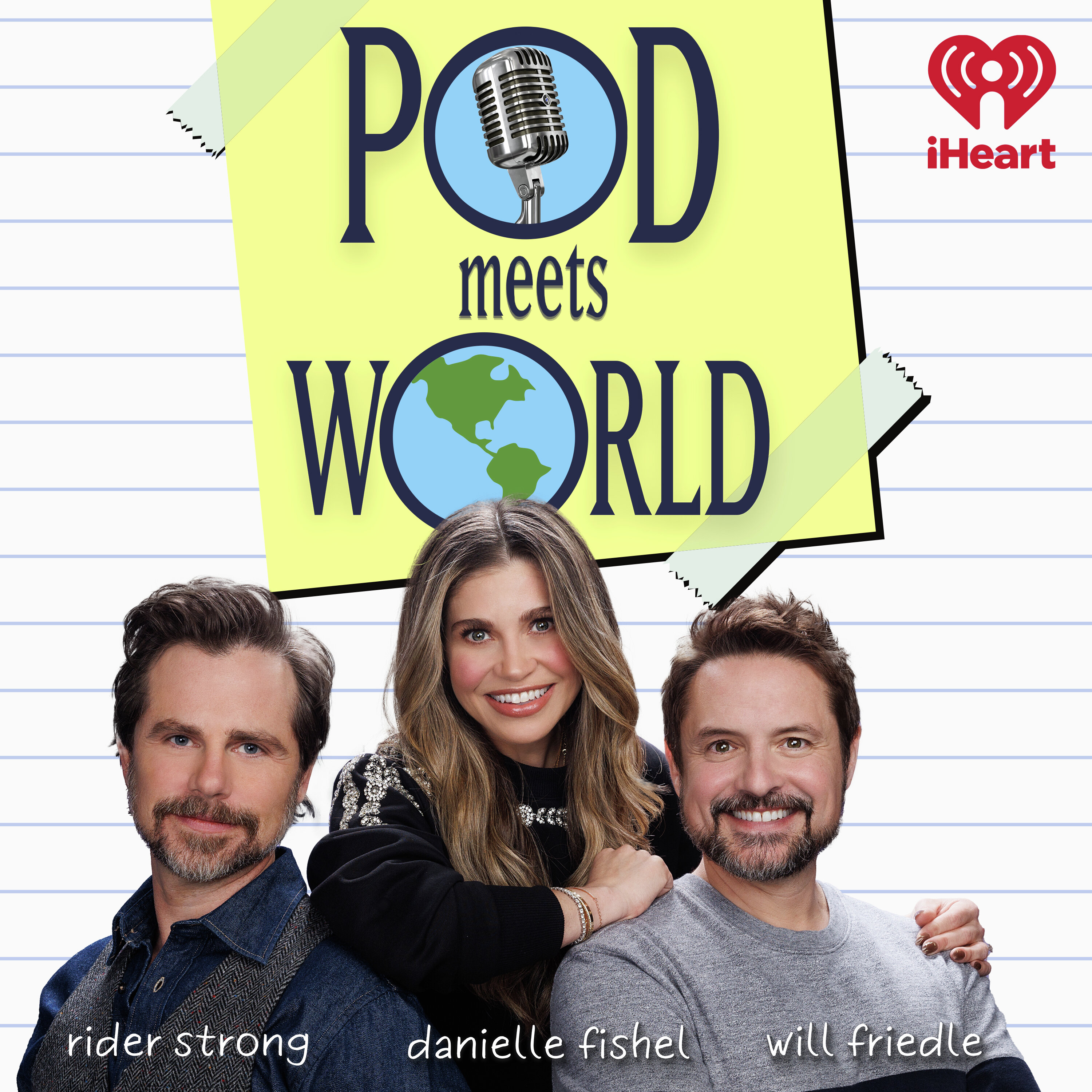
Loading summary
Transcript352 lines
- [00:00]
Podcast Host (High Key)
This is an iHeart podcast.
- [00:04]
Ryan Seacrest
Hey, it's Ryan Seacrest for Albertsons and Safeway this fall, take care of the little ones in the family with Baby Club Savings now through November 4th. Spend $25 on select Baby Club products and save $5. Shop for items like Pediasure bottles, Pedialyte powder packs, Huggies baby wipes, Huggies diapers, Gerber puffs and Gerber pouches. And save $5 when you buy $25 or more on participating products. Offer ends November 4th. Restrictions apply. Offers may vary. Visit albertsons or safeway.com for more details. I'm Scott Hanson, host of NFL Red Zone.
- [00:39]
Danielle Fishel
Lowe's Nose Sundays are for football. That's why we're here to help you get your next DIY project done.
- [00:45]
Ryan Seacrest
Even when the clock isn't on your side. Whether that's a new Filtreat filter or.
- [00:49]
Danielle Fishel
Bosch and Cobalt power tools, Lowe's has everything you need to feel like the MVP of diy. So get it done and earn your.
- [00:58]
Ryan Seacrest
Sundae Shop now in store and online.
- [01:02]
Kelsey Grammer
Lowe's official partner of the NFL make.
- [01:05]
Pandora Jewelry Advertiser
Their holiday unforgettable with a gift that.
- [01:08]
Will Friedle
Says it all from Pandora Jewelry.
- [01:10]
Pandora Jewelry Advertiser
A gift that tells a story and.
- [01:12]
Will Friedle
Shows you know theirs that doesn't just sparkle but speaks.
- [01:17]
Pandora Jewelry Advertiser
From new festive charms to forever rings and personal engravings, this season, give a.
- [01:24]
Kelsey Grammer
Gift that's perfectly theirs.
- [01:26]
Pandora Jewelry Advertiser
Whether you're shopping for a shiny surprise for your significant other, matching bracelets to celebrate your friendship, or a heartfelt gift for a family member. Say more this holiday season with Pandora. Shop now@pandora.net or visit your closest Pandora store.
- [01:43]
Podcast Host (High Key)
High Key Listen to High Key, a new weekly podcast. You better listen. Speaking of tanning, I was sunning my nether regions because I read that you're supposed to like get sun not only only in your mouth, but also in your other orifices. Wait, are you talking about you put your hole into the sun? I did. That's crazy. Downward dog booning the sun. I was gonna say. Is it cheeks open?
- [02:05]
Kelsey Grammer
It's cheeks open all the way wide.
- [02:07]
Podcast Host (High Key)
Is it cheeks open?
- [02:08]
Kelsey Grammer
Uh huh.
- [02:09]
Podcast Host (High Key)
Who's holding them? Enough of that nonsense. Now listen to High key on the iHeartRadio app, Apple Podcasts, or wherever you get your podcasts.
- [02:18]
Ryan Seacrest
This mailchimp horrific jingle is brought to you by mailchimp.
- [02:21]
Kelsey Grammer
Mailchimp.
- [02:22]
Danielle Fishel
You're marketing with AI and more advanced autom. Connect to your store mailchimp your marketing.
- [02:29]
Kelsey Grammer
And boost your clicks.
- [02:31]
Danielle Fishel
Multi channel campaigns now with sms.
- [02:36]
Ryan Seacrest
Let's lit mailchimp your marketing today with the number one AI powered email marketing and automation platform Intuit mailchimp Number one based on publicly available data on competitors customers. Plans vary. SMS available as add on visit mailchimp.com.
- [03:15]
Will Friedle
Little warning for our Pod Meets World listeners this episode contains details of a horrific crime that involves not only violence, but sexual assault and intense grief. Please proceed with caution. One of the many lessons we have hosts have learned while making Pod Meets World is that you never really know what people are going through. We would drive to set every day ready to have fun. I would endlessly talk about boys, Ryder would read a book he had stuffed into his oversized jean pockets and Will would smoke. But as kids we just bopped around laughing carefree while our adult co workers around us doing their job, each hysterical and talented were experiencing difficult adult situations. And now as middle aged human beings ourselves, we know that's not easy. And some of the most successful and funny actors of all time weren't exactly as ready for the spotlight in their personal lives as they were on screen. Matthew Perry, Chris Farley and Carrie Fisher come to mind. And the new book A Brother Remembers by sitcom legend Kelsey Grammer is another example of never really knowing what your favorite character characters in movies and on TV could really be going through at home. This five time Emmy winner who helped define modern comedy as Frasier Crane on Cheers and then his own show, Frasier experienced tragedy at just 20 years old when his 18 year old sister Karen was raped and brutally murdered by men who had intended to rob the Red Lobster where she worked. She was kidnapped, assaulted and then later stabbed by a group that ended up killing a handful of others before they were caught. Kelsey was soulmates with his sister, connected beyond the normal sibling relationship and the way she was taken from him and his own conceived inability to save her still plagues him today. In his honest and brave writing, he finally faces the devastation and pain he feels, offering the reader a glimpse into not only his struggles, but his process of coping with tragedy. Because in addition to Karen, Kelsey's father would be killed by a man in a racially motivated attack. His half brothers would die in a scuba diving accident and his own daughter was slashed by a knife wielding man in a New York restaurant while she tried to pull the attacker off of another person. And yet Kelsey Grammer survived, fighting every day to get up and move forward, letting others enjoy his work on screen and on stage. And so now we welcome to the podcast a sitcom legend and a true survivor. It's Kelsey Grammer.
- [05:55]
Kelsey Grammer
Thank you. Hello. Hi. That was quite nice. Danielle thank you very much.
- [06:00]
Will Friedle
Thank you. Thank you for being here with us. So nice that you're here to share your and Karen's story. It means a great deal to us.
- [06:09]
Kelsey Grammer
I do appreciate it. Thank you.
- [06:12]
Will Friedle
So the story of your sister is so tragic and yet beautiful with your ability as a vulnerable narrator. And I was wondering, at Cheers or Frasier, did a lot of people know this story?
- [06:29]
Kelsey Grammer
No, they didn't, actually. I didn't walk around talking about it a lot. You know, it's been with me, of course, you know, since the day it happened, which is now 50 years this summer. I. I was. I was actually thinking about a friend of an old friend of mine years ago, who actually accused me of using it sometimes to, like, try to score.
- [06:55]
Ryan Seacrest
Yeah.
- [06:56]
Kelsey Grammer
What's the matter with you?
- [06:57]
Ryan Seacrest
Weird flex.
- [06:58]
Kelsey Grammer
Yeah, it was just weird. It was like. It's so funny that he. He brought it up. He said, well, Kelsey, when somebody asks you if you have sisters or brothers, you say, yeah, I had a sister. And then they ask us, and then somebody will ask another question. How are they? What are they doing? I said, well, actually, she was killed.
- [07:13]
Danielle Fishel
Right.
- [07:13]
Kelsey Grammer
You know, and so it would come up naturally, and I would never volunteer it, but I just suddenly thought what a strange friendship that was. I didn't write about it in my book.
- [07:22]
Rider Strong
That's probably not a great friend.
- [07:25]
Kelsey Grammer
It might have been the. The first thing you'd expect from somebody you call a friend, but it was okay.
- [07:30]
Will Friedle
Wow. Yeah, I can imagine.
- [07:35]
Kelsey Grammer
Yeah, it's been something you just abide with for a long time. And I never really. Actually, there's a. There's a great line. Ordinary human unhappiness is life in its natural color, nothing to caval of. And that's an odd line, but I always thought that. I always thought, well, we don't. We don't need reason to piss and moan about our lives. We don't have any real reason to complain about where we are. My purpose in writing the book came when I was kind of instructed through a medium who said, oh, your sister's here with me. She wants you to tell her story. And that was really kind of interesting. I thought, well, I wonder how that would go. So I sat down one day and I started writing just to kind of do some sort of bullet points in my head. I thought, well, maybe I should give this a try. And about an hour later, it had 10 pages of stuff kind of jotted down. And I thought, oh, I guess I'm going to write a book. And that's. That's what turned into Karen and I spent three years working on it, basically.
- [08:31]
Danielle Fishel
I'm so curious, having. Having read the book, what. What were the first 10 pages that came out?
- [08:37]
Kelsey Grammer
Pretty much what you read. The first ten pages.
- [08:39]
Rider Strong
The first ten.
- [08:40]
Danielle Fishel
Okay, so it was linear at the time.
- [08:42]
Kelsey Grammer
It really became a kind of stream of consciousness exercise. And of course, the style is stream of consciousness, but when I was 12, you know, I read Portrait of the Artist as a young man by James Joyce, and I thought, boy, what a load of crap this is. Kind of harpooned myself. You know, we always become what we make fun of when we were. When we were younger, you know, employing that style because it was so immediate. It was like. I mean, I'm working on another book now, and I just basically realize that I want it to be like you're having a conversation, like you have, like sitting. Like we're sitting down for a coffee, right? And maybe, you know, so it's several hundred pages, but still it's. It's like, yeah, well, we're sitting down. I'm going to tell you some stories.
- [09:28]
Rider Strong
Right? Well, I mean, for me, like, what was so interesting about the book was how much of the. The book becomes, or the journey of the book becomes the writing of the book. You know, I mean, you're literally taking time where you're like, I'm not going to write for a little while. I need to. I need to take some days off. And then you come back and say, I'm rereading what I wrote 10 days ago and I'm picking up. And I thought that was so, so interesting. Did you ever. I mean, how far into it were you like, well, I have to finish this. Or were you ever. Were you still constantly. Like, I might just put this in.
- [09:56]
Kelsey Grammer
A drawer and never know once it began, I thought, I have to finish. I have to finish it out what I found, what I found so engaging about it and what, what was what I hope you know, will be shared with other people now that the book's been out for about six months now, but no, maybe four. But I wanted it to be something that I discovered with the reader. And I think that. I think that comes across. But I discovered things about time. And I mean, my favorite metaphor ends up being that that carpenter's tool with the folding tape measure, the folding measure ring device, you know, the thing that suddenly it goes out to 8ft long or whatever, and then you fold it all in and say, it's just about this big.
- [10:41]
Will Friedle
Yeah.
- [10:41]
Kelsey Grammer
And that's all those marks in time Just folded in on each other, and you can open any one of them, and. And you're. In that time that really the organic kind of exercise of time in my life became completely different, completely quantum, I guess, is what you could say about it. And it was a wonderful thing for me to suddenly go. To be transported from a memory of Karen when she was just a little girl to. To something I remembered about my own child, you know? Yeah. Three. Three months ago. I mean, it was. It was extraordinary.
- [11:14]
Danielle Fishel
I'm so curious because so much of the book is about loss, but it's also at the same time about the people that were so important in your life. And so with all the loss the book covers. Has writing the book brought any of those people back into your life?
- [11:28]
Kelsey Grammer
Yeah, yeah. What's funny. So a couple of people who are still alive. Brad Keller, for instance, is one of my great, great friends. I went to the music camp together with when we were 17. Is still a pal, and that's been great. Some of the folks I looked up, you know, that I'd known in the past wanted to talk to me. Some didn't, so I got them.
- [11:47]
Podcast Host (High Key)
But.
- [11:47]
Kelsey Grammer
But what was most important, actually, was to realize, as I'd never realized before, what a great gift my grandparents gave us and to grow up in that. You know, I mean, we. Everybody's talking about privilege and all that kind of stuff these days, but, I mean, we really were privileged for those 10 years. I mean, we were just. And they gave us safety and art and, you know, exposure to a great world. And they fed us, you know. I mean, that is a privilege to live in a world where you get fed, you know, and looked after. And we were told, you know, stories about what it meant to be an American. We were told what it meant to be, like, pioneers. And I mean, because the family was connected to pioneers, my great grandfather crossed the country 10 times on a horse. I mean, you just think this kind of history is extraordinary. They gave us that. Us a sense of where we belonged in history. That was a really great gift. And so I ended up being extraordinarily grateful to them and. And to my mom, because my mom had the courage to kind of. It didn't work out so well with my dad, but she. She said, well, I. I need to go back to my mom and dad. And. And. And I ended up with this amazing man who taught me as a boy, you know. That was a great, great gift. Yeah.
- [13:04]
Danielle Fishel
Yeah, it was. Well, that was one of the things that really stuck with me is the. The the vision of planting the garden you're never gonna get to see. So the fact that he, right before he passed, move the whole family to Florida because he knew you were gonna have the better life down there and never got to be in the home, that was the plan.
- [13:22]
Kelsey Grammer
Thank you.
- [13:23]
Danielle Fishel
That really stuck with me. Where it is, it's somebody. It is planting the garden that you know that you're not gonna get to sit under the shade of the tree, but you're still. You're still doing it. It was really wonderful.
- [13:31]
Kelsey Grammer
Yeah, I had a. I don't know if I. I don't remember now if I wrote about it in the book, but I. Gordon, when I was about 15, came to me in a dream, right? And I was. I'd gone down some weird sort of series of staircases into a. Like a. A late. A late night brothel kind of place where I was having a beer. And he walked in wearing some khaki shorts and, you know, then his socks pulled up to his calf and like a safari shirt. The hell are you doing here? He said, oh, hell, I just had to get out. I was losing my mind. So you left me with them, you know. He said, yeah, yeah, I figured you could handle it by then. And so I got this kind of release of like. Well, yeah, he knew. He was. He was passing the baton to me, basically. Yeah, I was. It was really fun to kind of have that so almost joyous closure with this vision of a man who I. I mean, he loomed large in my imagination, of course, you know, in his. His service in World War II. And he was gone for 28 months. You know, that's extraordinary what those people did that he was part of. And I knew him and I had the privilege to know him, you know, really well. It was a. It was a great gift to know Gordon. Anyway. That's.
- [14:49]
Danielle Fishel
Yeah. I also. Sorry, I just have to say I felt very connected to Jill.
- [14:54]
Kelsey Grammer
Oh, nice.
- [14:55]
Danielle Fishel
I'm. I'm sitting here right now in Avon, Connecticut, in the town right next to West Hartford.
- [14:59]
Kelsey Grammer
No kidding.
- [15:00]
Danielle Fishel
My mom, born and raised in West Hartford and her parents worked at the. And the Hartford. So there's a chance. My grandparents knew Jill's family. There's a. There's very much a chance that that happened. Yeah. So, yeah, it was such a connection.
- [15:13]
Rider Strong
Yeah.
- [15:13]
Kelsey Grammer
I was really in love with her. It was interesting. It was. It was. It was neat to rediscover that as well. And it kind of realized that it was real because, you know, for a long time I just sort of doubted, you Know, you know, you dismiss certain experiences in your life as being all flippant or, or, you know, maybe, maybe too superficial or whatever, but it really wasn't. I mean, we were, we were two kids that actually were trying our best, and I just couldn't quite do what she needed.
- [15:43]
Danielle Fishel
The story of so much young love, though, I mean, there was no way.
- [15:47]
Kelsey Grammer
I was going to be able to make it for her at that point. Right, yeah, those things.
- [15:51]
Will Friedle
Well, one thing I noticed in the book was a real openness to something you have already touched on, talking to mediums and those people who work in a little more of a supernatural realm and maybe that you even encountered a ghost on this journey. Were you always a believer in these things or was, was the, where is how you got there, the need to speak to Karen?
- [16:15]
Kelsey Grammer
Yeah, I, I, I was always kind of interested in this world of, of, you know, what level are we on what, what, what, what aspect of existence is like in, in current form places, you know, or dimensions, if you will. And what is it about the psychometry or any number of other, what they call oracles or, you know, guidance devices or.
- [16:52]
Will Friedle
Mechanisms?
- [16:53]
Kelsey Grammer
Mechanisms, yeah. And so I produced a show 20 years ago called the Oracles, and it never got on the air, but we had readings with seven psychics, basically. And some of them were good, some of them weren't so good. But one of them was this gal Allison, who. And we ended up making a show called Medium about her gifts and about her story. And she was, she was pretty interesting. But there was another gal, Dolores, who was a psychometrist, and she, she had hits. She, you know, you start to learn the language of it. There's a. They get hits. They get, they have sittings, they have a sitter, someone is there, and they're the subject of a reading. Sometimes if they're getting stuff that they don't know this person at all, and, you know that's the case, and they're getting hits of more than 60% that are accurate about them. It's pretty phenomenal. I don't know this person, and yet I know these things about them as a result of some of the information I'm getting from wherever they're getting it. I don't have the gift. I discovered some gifts of insight, I guess, because that's the kind of person I am. I'm empathetic, I guess. Our way of living as an actor is to try to figure out what motivates people, why they do what they do. And so that's always been part of Me, I can kind of see what motivations are for certain people that you might not seem apparent to most, but. So that's my gift. But their gift is really extraordinary. And like with. With Esther, when she first told me the thing, I mean, it was, you know, almost cartoonish in my head because we were on the phone and she lives in England, and there really was a, you know, there's a little rattle I heard, and I thought I heard some bones being thrown around. Okay, okay, see where this goes. And then she pops out with that tell my story thing. And I thought, wow, okay, I believe that. And I've met others who, who brought Karen by and, you know, and got some input, and I thought, well, that sounds a little derivative, like, of what you'd just be able to read if you were interested. So. But I do think it's a very interesting thing. And I've got some, you know, fundamentalist friends or evangelical pals that, you know, say, oh, you know, Kelsey, we can't really talk about this stuff. And.
- [19:14]
Will Friedle
Right.
- [19:15]
Kelsey Grammer
I respect that because, you know, I do think it can muddy the waters. I mean, I do think, you know, your, Your life of. If you are a devotee of Christianity, if you're following the Christian path, it might be wise not to invite in voices from some other place, some other plane. But I do think that, you know, in Revelation, you know, John the divine was actually channeling, so.
- [19:40]
Danielle Fishel
But you do. That's the other thing that's so interesting is because at times you're talking about Buddha, at times you're talking about Valhalla. Yeah, I mean, there's. It seems like you're kind of open to every spiritual path, frankly.
- [19:53]
Kelsey Grammer
Yeah, absolutely. I think. I mean, they're man made, you know, and. But they are, They're. They're taken from moments when man interfaced with the higher power, whatever that is, whatever their, Whatever their series of symbols and. And. And images are that sort of resonate with them. It's still the same story. It's still our interaction with. With God, with. With the power, with our creator. Something that is. Is above us, within us at the same time. And so there's different ways of expressing it. But I love the idea of Valhalla.
- [20:31]
Danielle Fishel
Yeah, me too. Yeah, me too. I as well. Yeah, same. So, yeah, one of the best quotes I heard was, was God is the name that we give the blanket that we throw over the thing to give it shape. And I think there's something kind of interesting about that. Words, you know, you gotta. You gotta call it something Right.
- [20:46]
Kelsey Grammer
Somebody said to me, I think it was, it was Theodore Bacall at some lecturer in my high school where he just said the word yahweh or whatever, basically just means that thing again. Yeah, there it is. Yeah, there's that thing. Yeah. Just keeps coming up.
- [21:06]
Will Friedle
Yeah. That thing we can't quite describe.
- [21:08]
Kelsey Grammer
Yeah. Yeah.
- [21:14]
Will Friedle
Anyone else ever get that nagging feeling your dog is bored? Like, my brunchie just stares at me sometimes with that really again? Look, and I instantly feel guilty.
- [21:26]
Danielle Fishel
Yeah, same here. Sammy has mastered the art of the disappointed sigh. Like she has bills. So mealtime needs to be more than just a pit stop. It needs to be an event.
- [21:35]
Will Friedle
That's why we're obsessed with Nom Nom. They make gently cooked recipes that actually engage your pup's senses. We're talking tantalizing smells, textures and vibrant ingredients.
- [21:45]
Danielle Fishel
And Nom Nom offers six delicious and unique recipes. Pork Potluck, Chicken Cuisine, Turkey Fare, Beef Mash, Lamb Pilaf, and Turkey and Chicken Cookout.
- [21:55]
Will Friedle
These recipes are crafted by vet nutritionists with premium proteins and vibrant veggies cooked in small batches to lock in nutrients. Meat looks like meat, veggies look like veggies. So I feel good knowing it's designed with my dog's health and happiness in mind.
- [22:11]
Danielle Fishel
You can serve Nom Nom as your dog's complete meal or as a topper to spice up their current diet. Cause honestly, would you want to eat the same thing every single day?
- [22:19]
Will Friedle
Uh, no thanks. And look, our dog is our little prince, which is why I'm committed to giving him the best. I serve Nom Nom and you should too.
- [22:27]
Danielle Fishel
Keep mealtime exciting with Nom Nom. Available at your local Pet Smart store or at Chewy.
- [22:32]
Will Friedle
Learn more@trynom.com world that's spelled. Try n o m.com world time for a sofa upgrade.
- [22:42]
Pandora Jewelry Advertiser
Visit washablesofas.com and discover annabe where designer style meets budget friendly prices. With sofas starting at $699. Anabe brings you the ultimate in furniture innovation with a modular design that allows you to rearrange your space effortlessly. Perfect for both small and large spaces, Anibe is the only machine washable sofa inside and out. Say goodbye to stains and messes with liquid and stain resistant fabrics that make cleaning easy. Liquid simply slides right off. Designed for custom comfort, our high resilience foam lets you choose between a sink in feel or a supportive memory foam blend. Plus our pet friendly stain resistant fabrics ensure your sofa stays beautiful for years. Don't compromise quality for price. Visit washablesofas.com to upgrade your living space today with no risk returns and a 30 day money back guarantee. Get up to 60% off plus free shipping and free returns. Shop now@washablesofas.com Authors are subject to change and certain restrictions. Restrictions may apply.
- [23:40]
Ryan Seacrest
Hey, it's Ryan Seacrest for Albertsons and Safeway this fall. Take care of the little ones in the family with Baby Club Savings now through November 4th. Spend $25 on select Baby Club products and save $5. Shop for items like Pediasure bottles, Pedialyte powder packs, Huggies baby wipes, Huggies diapers, Gerber Puffs and Gerber pouches. And save $5 when you buy $25 or more on participating products. Offer ends November 4th. Restrictions apply. Offers may vary. Visit albertsons or safeway.com for more details.
- [24:11]
Podcast Host (High Key)
Listen to High Key, a new weekly podcast. You better listen. That's literally the definition of being an Aries Moon. Just one little spicy off comment, that's all it takes. Everyone loves me at the cancer and then the Aries comes out and they said who the is that? No, you're going to come for me being an Aries and you have a sag Moon. Get out of here. But I'm a Capricorn Rising so that honestly balances it out and makes me more likable. Okay, that is your Capricorn talking. Listen to High key on the iHeartRadio app, Apple Podcasts, or wherever you get your podcasts.
- [24:50]
Will Friedle
If there was a natural disaster and you had to evacuate, what's the first thing you guys are taking with you?
- [24:56]
Rider Strong
Grabbing my first edition books, I think.
- [24:59]
Danielle Fishel
My Charlie Bear, the Teddy bear I grew up with.
- [25:01]
Will Friedle
Oh well, with all of our Boy meets World reminiscing, I'd immediately think of my pictures and home movies. But thanks to Legacy Box, which I can't wait, listeners about, you no longer have to worry.
- [25:12]
Rider Strong
It's been forever since I've looked to see where my old home movies are. They're probably moldy and damaged by this point.
- [25:18]
Danielle Fishel
All our favorite old media breaks down over time and then those memories are lost forever.
- [25:22]
Will Friedle
But now you can just load up a legacy box with old tapes, pictures and even reel to reel film and get all the footage loaded on a thumb drive or put on the cloud, ready to watch and easy to share. It's like magic.
- [25:34]
Rider Strong
And right now you can easily access those memories and protect them forever for 50% off. Off with code meets world.
- [25:41]
Will Friedle
Join over 1 million other families including my own who have placed their trust in Legacy Box. I am so happy to now have moments like my sixth birthday or my first trip to the zoo. No longer collecting dust in the garage, now they're protected and ready for my kids to see.
- [25:56]
Rider Strong
I had some old tapes recently digitized with Legacy Box and was shocked to find some Boy Meets World behind the scenes footage I had never even seen before. I'm so happy it's now archived and safe thanks to the easy process at Legacy Box.
- [26:10]
Danielle Fishel
For a limited time only, you can visit legacybox.com meets world and save 50%.
- [26:15]
Will Friedle
That's legacybox.com meets world. To shop 50% off this sale won't last long.
- [26:21]
Rider Strong
Legacybox.com meets world.
- [26:31]
Will Friedle
There are a lot of times in the book where you mention that Karen is still with you, helping you in life and sharing her thoughts with you even while you were writing the book. And my husband also talks about this with his mother. He says, I can't explain it, but in times where something comes up and we're having a conversation, he goes, I know exactly what my mom would say. And he's sure it is like a direct placement of her opinion into his brain from her. He's like, I just know it. It. I know for certain what she would say. Is that how it feels for you? What are some of the examples of Karen being with you and helping to guide you?
- [27:10]
Kelsey Grammer
Yeah, that's. That's really interesting. The. It, of course it became more present. I mean, I was more aware of it as I wrote the book.
- [27:17]
Will Friedle
Yeah.
- [27:17]
Kelsey Grammer
And then I realized that throughout my life with her, it's probably come up a few times. I mean, I remember I was sitting on a plane once years ago with a group of friends. It was like 30 years ago and I was going to some event, some upfront or whatever it was, and things were cool and we were drinking champagne and there were people all around and it was a real celebration. And a girl I was dating at the time said, you know, your sister's here.
- [27:42]
Podcast Host (High Key)
Really? Wow.
- [27:43]
Kelsey Grammer
You know, maybe she is. So it's come up before. Somebody will grab that phone. But in the descriptions of the, the events while writing the book, the, the sense of Karen around me, with me just became more apparent, you know, because I was accessing it, I was asking her to be there and she was. And it was wonderful. And it also released her in a way, in some ways, you know, to not necessarily feel like she had to be in the everyday of it all, all the time. But I still like her around. I still expect to See her when I'm done, you know.
- [28:24]
Danielle Fishel
Well, that was, that was the thing that was one of the things that really struck me about how it was written is almost seemed like a mirror of grief in that you have times where you're reading the book where everything's good and happy and then all of a sudden there's a letter from the parole board.
- [28:39]
Kelsey Grammer
Yeah.
- [28:40]
Danielle Fishel
And it's like it all comes rushing back right away. So you feel like you're able to take this breath and then you're dragged under the water again. And there's something very. Does it get easier as time goes on?
- [28:52]
Kelsey Grammer
No, it's really weird. It's just. There's still that pang. The pang is just renewed. It just, it just, it's just as vibrant as the first time it happened. But what's weird is it did seem like the first time the parole board actually reached out to me. I, I guess there was a sort of a, a limit in terms of years as to how long that wouldn't happen. And then the, the period passed and the first letter came through and, and I was with Kate at the time, so we've been together for 15 years. And oh my goodness, I just, I wept for days because it was like they just sent a knife through me and they just said, oh, this is happening. You need to do this. You need to now talk about. And suddenly my whole. The 40 years that had passed before were gone and I was still. I was back as that 20 year old young man looking at his dead sister. And it was just, it was a horrible, horrible thing. And I don't know, you know, I don't know how to get around it because, yeah, people deserve justice. And yes, criminals who've done horrible things have a right to try to, you know, make amends and move on in life and stuff like that. I just, there are some instances, I think, I think that it's just not going to happen. But I believe in the process of it. But, and I mentioned it in the book. I think there's one, one of the parole people said to me at one point when I said, you know, this is really cruel stuff, stuff that you guys have to do to people, and all these innocent people who suffered have to suffer again. Why, why is that? Okay? And they said, well, it's, it's not called the victim's justice system, it's called the criminal justice system.
- [30:35]
Podcast Host (High Key)
Yeah.
- [30:38]
Kelsey Grammer
Yeah, yeah, I get it. I mean, you know, and so. And we have a lot of that going on now, you know, Los Angeles. Some of the Bigger cities. You know, we're lost in this repeat criminal stuff. The stuff is going on every day around us. You know, you just keep thinking, how's this possible? But I guess our better angels are telling us to try to be, you know, forgiving and give people second chances. But maybe, maybe 9 or 10 or 11 chances is 1 too many. Yeah, yeah.
- [31:07]
Rider Strong
You talked about how, you know, time sort of is meaningless when you have these pangs and you have these emotional. And there's a really incredible scene in the book where you are. You're playing Laertes, I believe, and. Yeah. And he's talking about his sister being dead. And you have, you know, you were playing the scene, and then you had this incredible dog, Goose, in real life. Goose, who knew that you weren't acting for a moment and came running from backstage or whatever, came to you to try to make you feel better. And it was such a striking scene. It was so beautiful. And then I was also thinking about it how, you know, you've done a lot of comedy and that that's primarily been, you know, the bulk of your career.
- [31:53]
Kelsey Grammer
Yeah. The moneymaker. Yeah.
- [31:54]
Rider Strong
Yeah.
- [31:54]
Kelsey Grammer
Yes.
- [31:54]
Rider Strong
Well, I'm curious about how the grief that you do clearly just have access to on a moment's notice. Like, how has that. Has that been something that you've accessed as an actor, or is it something that you've avoided as an actor and moved away from intentionally?
- [32:11]
Kelsey Grammer
Yeah, interesting. I don't. I'm not afraid of it. I think it actually kind of fortifies comedy to know that there's a tragic side, you know, that there's that balance. I think Frasier was always capable of being quite emotional when it was important, you know, and it was like when he had a scene with Niles when he says, you know, that woman's never been part of this family, blah, blah, blah, blah, blah. I mean, and that got very emotional. I remember there was a great moment between Martin and Fraser when. Where the boys had always suspected that this one summer, their dad was having an affair, and it turned out that it was their mom that was like, oh, my God.
- [32:57]
Danielle Fishel
Yeah.
- [32:57]
Kelsey Grammer
It just felt like. Just like a page ripped out of my own life. Right. And then John and I both sat and thought, isn't it remarkable that we have these feelings about these two people that aren't really real, but they're made real by us? We give them their flesh, their. Their life, their atmosphere, their. Their. Their emotions. And, boy, I just. It just. I mean, I was crying my eyes out back then about, you know, suddenly realizing that you shared a grief with your parent that you didn't. Didn't ever know about before. It was an extraordinary thing. You know, I didn't really know my dad. I talked about that in the book. But having the experience I had with John, having the experience I had with David as my brother and my father were relationships I didn't have in life that I got to experience because of the acting.
- [33:51]
Rider Strong
Wow.
- [33:52]
Kelsey Grammer
So it was kind of a great gift, you know, I mean, that's. And I feel like I. I started to understand what that could be like. Certainly, I mean, probably more idealized than most. I mean, because, I mean, you know, human beings are always disappointing. It's our actual parents. And then people we've known. I mean, might not be quite so perfect in their revelations as we are as actors, but we're quite so willing to embrace, you know, the emotion. But I had a wonderful. It was a wonderful gift to have a brother and a father that I'd never had a relationship with in my real life.
- [34:25]
Rider Strong
That's cool.
- [34:26]
Danielle Fishel
Yeah. There's. I have to read a quote, because as an actor, it just so stuck with me. You wrote. I'm quite willing to share this theory. I think it's simple. Shy people are afraid to speak the truth. Acting as a profession or pastime in which a person can tell the truth and not get in trouble.
- [34:41]
Kelsey Grammer
Yeah. It came to me pretty early on.
- [34:45]
Danielle Fishel
It's just. It really. It did. It just really resonated as I read that. It's very interesting because I've always thought that unless somebody really deals with a tragedy early in life, your childhood really kind of ends the day you realize your parents are people.
- [34:59]
Kelsey Grammer
Oh, that's. That's pretty interesting. Yeah. That's a pretty sad day, that first day that they're like, oh, no.
- [35:06]
Danielle Fishel
Wait a second. You're not superheroes.
- [35:08]
Kelsey Grammer
There's something about that.
- [35:10]
Danielle Fishel
It's very real. But at the same time, it's like, oh, it's kind of depressing.
- [35:13]
Kelsey Grammer
It's very deflating, isn't it? Yeah. Oh, shucks.
- [35:18]
Ryan Seacrest
Yeah.
- [35:19]
Kelsey Grammer
We're all perfect. And now they're just small people. Yeah.
- [35:23]
Danielle Fishel
You're just people.
- [35:23]
Ryan Seacrest
Yeah.
- [35:24]
Danielle Fishel
You're flawed human beings.
- [35:25]
Kelsey Grammer
That can't be possible.
- [35:26]
Rider Strong
Yeah.
- [35:27]
Kelsey Grammer
And then hopefully you have enough time to forgive them.
- [35:30]
Danielle Fishel
Exactly, exactly.
- [35:32]
Will Friedle
Of course, you have eight kids. Which, by the way, feels like a totally different book you could write on. Just a book about having eight children. What did they know about their Aunt Karen before you wrote the book?
- [35:48]
Kelsey Grammer
Interesting. Yeah. Most. I've never really told them a Lot about it. When I started to write the book, the younger set, you know, this group that is now, we just had our fourth one one. So it just became eight kids. It was like three days ago. Oh my gosh.
- [36:02]
Danielle Fishel
Congratulations.
- [36:03]
Kelsey Grammer
Wow. Pretty cool. Christopher has just joined the family.
- [36:10]
Will Friedle
Welcome, Christopher.
- [36:11]
Kelsey Grammer
Yeah, isn't that lovely? But so this younger group, you know, I've, I've told them they can't read the book yet because some of the stuff's too brutal. Sure. They don't really need to be exposed to that yet. My eldest daughter of this cluster, clusters.
- [36:31]
Will Friedle
When you have eight, you can section.
- [36:33]
Danielle Fishel
Them off however you want. You've got several gangs.
- [36:37]
Kelsey Grammer
But so Faith, my, my, you know, my 13 year old, I, you know, I've told her some of what happened, you know, and said, you know, maybe in another year or two you can probably, probably read the book and be able to handle it. It's, it's pretty brutal. But she's a very sensitive kid too, so I, you know, I want to be careful about it some. But Gabriel, my 11 year old, I mentioned him in the book too. He's the one that's more inquisitive. He says, how do you feel about that? How does it make you feel? Does your, do you want to kill the guy that killed your sister? Stuff like that? I said, well, that wouldn't be right, baby. Don't want to take, you know, more death doesn't necessarily make things right. You know, he, but he asks really, really probing questions. It's his thing. It's what he does. He likes to find out what's going on. I think he's going to be, I don't know, some sort of weird genius side of him.
- [37:27]
Will Friedle
Yeah.
- [37:28]
Kelsey Grammer
What he'll choose in his life, but, but he's definitely in it with his whole heart and with his whole head. And it's, it's, it's fun to answer questions from someone who is so thoroughly interested in the answer.
- [37:39]
Will Friedle
Yeah. Yeah, I bet.
- [37:40]
Kelsey Grammer
And I admire him as a person. I admire his, so, you know, his stick to his tenacity and searching for the truth. He's a really interesting kid. They're all interesting.
- [37:53]
Danielle Fishel
Just curious because you touched on it. How. I mean, complex is the wrong obviously word to use, but because it was so much closer to the time of your sister's actual death. What did you feel when her killer's sentence was commuted from death to life in prison?
- [38:09]
Kelsey Grammer
Right. I was sort of on the periphery of that decision, but I thought to myself, well, that's weird. These guys Actually, they received the death penalty.
- [38:16]
Danielle Fishel
Yeah, right.
- [38:16]
Kelsey Grammer
And there were three of them at the time. And I just thought, what. What's going on? And it was, it was actually just toward the end of the Carter administration and the Supreme Court of Colorado just did a blanket commutation of all death sentences because they were reviewing everything. And of course, since then, the death penalty doesn't exist in Colorado, but it. The life without possibility of parole did not exist then as a possible sentence. And so what happened was they had to immediately be placed into a regular kind of paroling situation, which was probably inappropriate for them, but they were the only three for those years. And then of course, now there's just the one left.
- [39:08]
Will Friedle
Wow. I know you read the police report for the first time for the book. How did you take care of your mental health while writing this book?
- [39:20]
Kelsey Grammer
Yeah, that was a really hard day. That's one of the places where in the book I say, I'm gonna be gone for a while. Yeah, I'll check back in in a bit. And I did. I took a few weeks after the first insertion into that report. I mean, then the, the most devastating thing about it was the, Was the lack of identity of. For Karen was that she was just a thing, just a girl, a Jane Doe.
- [39:51]
Pandora Jewelry Advertiser
Right.
- [39:51]
Kelsey Grammer
Corpse. And that the language reflected that. You know, ongoing investigation. Ongoing investigation, Ongoing. First couple hundred pages, they had no idea what had happened. Heaven, or who she was. And to read that just felt so dehumanizing about my sister. You know, it just felt like, well, that's. That's Karen. Surely you know that. Right? But they didn't. It's okay. They were doing their job and it, you know, it got done. I mean, and frankly, police works fascinating to me in terms of, you know, capital cases, I guess. But they didn't really. They. They had a stroke of luck when one of the guys was arrested in New Orleans and he said, I know about the girl in Colorado. That's how it came up. And then a couple days later, they called me. So.
- [40:48]
Pandora Jewelry Advertiser
Tired of spills and stains on your sofa. Washablesofas.com has your back. Featuring the Annabe collection. The only designer sofa that's machine washable inside and out. Where designer quality meets budget friendly prices. That's right. Sofas start at just $699. Enjoy a no risk experience with pet friendly stain resistant and changeable slipcovers made with performance fabrics. Experience cloud like comfort with high resilience foam that's hypoallergenic and never needs fluffing. The sturdy steel frame ensure ensures longevity and the modular pieces can be rearranged anytime. Check out washablesofas.com and get up to 60% off your annabe sofa backed by a 30 day satisfaction guarantee. If you're not absolutely in love, send it back for a full refund. No return shipping or restocking fees. Every penny back. Upgrade now@washablesofas.com Offers are subject to change and certain restrictions.
- [41:48]
Ryan Seacrest
Hey, it's Ryan Seacrest for Albertsons and Safeway now through November 4th. Shop the annual beauty event and save $5 when you spend $25 on select beauty products. Shop in store or online for items like Dove Body Wash, Native Body Wash, Cetaphil gentle skin cleanser, Dr. Squatch body wash, Neutrogena Hydro Boost Water Gel, Dial Liquid Hand Soap and Olay Body wash and save $5 when you spend $25 or more.
- [42:12]
Kelsey Grammer
More.
- [42:12]
Ryan Seacrest
Offer ends November 4th. Restrictions apply. Offers may vary. Visit albertsons or safeway.com for more details.
- [42:20]
Podcast Host (High Key)
Listen to High Key, a new weekly podcast. You better listen. That's literally the definition of being an Aries moon. Just one little spicy off comment, that's all it takes. Everyone loves me at the cancer and then the Aries comes out and they said, who the is that? No, you're gonna come for me being an Aries and you have a sag moon. Get out of here. But I'm a Capricorn Rising, so that honestly balances it out and makes me more likable. Okay, that is your Capricorn talking. Listen to High key on the iHeartRadio app, Apple Podcasts, or wherever you get your podcasts. Hey everyone, Ed Helms here and hi.
- [43:03]
Ryan Seacrest
I'm Cal Penn and we're the hosts of Earsay the Audible and iHeart Audiobook Club.
- [43:10]
Podcast Host (High Key)
This week on the podcast, I am sitting down with Jenny Garth, host of the iHeart podcast. I choose me to discuss the new Audible adaptation of the timeless Jane Austen classic Pride and Prejudice. This is not a trick question. There's no wrong answer. What role would I play?
- [43:31]
Pandora Jewelry Advertiser
You know what?
- [43:32]
Kelsey Grammer
I can see you, Mr. Darcy.
- [43:34]
Pandora Jewelry Advertiser
You got a little Colin Firth.
- [43:36]
Kelsey Grammer
Okay, that's really sweet. I appreciate that. But are you sure I'm not the dad? I'm not Mr. Bennett here.
- [43:46]
Podcast Host (High Key)
Listen to Earsay the Audible and iHeart Audiobook Club on the iHeartradio app or wherever you get your podcast when you.
- [44:07]
Kelsey Grammer
Wanna grow your list size.
- [44:08]
Podcast Host (High Key)
Pop up like it's hot, Pop up.
- [44:10]
Will Friedle
Like it's hot Pop up like it's.
- [44:11]
Podcast Host (High Key)
Hot and when you gotta boost your revenue Pop up like it's hot Pop.
- [44:15]
Kelsey Grammer
Up like it's hot Pop up like it's hot.
- [44:17]
Podcast Host (High Key)
Pick your favorite template you can tailor to your brand. They're mailchimp erific. You're gonna be a fan mailchimp your marketing with our new customizable pop.
- [44:27]
Kelsey Grammer
Foreign.
- [44:33]
Will Friedle
Have you ever. I'm sure the answer is yes. Have you ever thought about what Karen would have done with the rest of her life?
- [44:40]
Kelsey Grammer
Oh, yeah, all the time. Yeah. I'm not sure what it would have been. I mean she was. She was kind of a wild animal. You know, she was really. She was really a fun person but she loved everybody and she loved animals. So I, you know, I. Pictures it might have been on a farm somewhere. Her last, her last year was pretty much spent around. At least the last summer before she went to Colorado was spent around animals on a friend of ours ranch in upstate Florida in a little town called Wee Laca which was. It was pretty fun. It was great. We visit. I visited her there once and there was a wonderful swimming hole. It was. It was so weird. It was like. It was like 150ft deep and it was ice cold water, clear blue and it was only like 12ft across but you jump in it and go, this is an amazing experience. And she and a couple of her friends were there and we all loved each other. I mean her pals and my pals, we all, we all, you know, spent time together and it's. It was, it was a great way to grow up.
- [45:40]
Will Friedle
Yeah.
- [45:40]
Kelsey Grammer
We were a close group of young people and it's funny. Yeah, we didn't really see much of our parents. I mean, mine weren't really around anyway. But it's like we were just a really nice group of kids exploring things, trying things together, listening to music, you know, Led Zeppelin, the Beatles and yeah. James Taylor. It was, it was a wonderful world, wonderful time. And it was kind of an innocence and it did seem like. It didn't seem like a lot of people were getting hurt too much.
- [46:11]
Will Friedle
Yeah.
- [46:11]
Kelsey Grammer
You know, everybody was sort of accepting the fact that oh, we're exploring things. We're. We're together, we're liking, you know, this, this experience. We're growing up together and I, I kind of miss it. I don't know what, I don't know what we would have done if we were just on iPhones and stuff.
- [46:25]
Will Friedle
Right.
- [46:27]
Kelsey Grammer
Seems to be more impersonal now. And we were always. There was always a group of us together, you know.
- [46:32]
Will Friedle
Yeah.
- [46:32]
Kelsey Grammer
Just trying things that Was. That was nice.
- [46:37]
Will Friedle
You have been open for years and in the book about your own struggles with self medicating and some reckless behavior, no doubt connected to what you have faced, how did you stop that cycle?
- [46:49]
Kelsey Grammer
Yeah, it's interesting. I did do. I did about six years kind of actively in. In the a. In the program, you know, an AA12 step kind of thing. But I actually turned more toward God after that.
- [47:02]
Will Friedle
Okay.
- [47:03]
Kelsey Grammer
And, and realized that, oh, that's probably the, the avenue for me, like a sense of faith and a sense of strength and, and connection to God. And one thing that one of the guys I knew who was kind of an old timer in the AA had said, he said, well, you know, the cause of addiction is unresolved grief. That really makes sense for me.
- [47:31]
Danielle Fishel
Yeah.
- [47:32]
Kelsey Grammer
And in a lot of ways I got to resolve it. And once that happened, you know, it was pretty smooth sailing. I mean, I still have a drink once in a while and I enjoy a party with my friends and Christmas Eve, sometimes I'll have, you know, one toddy too many, but it's pretty rare. But it lost its teeth to like stop me from living, you know, for a long time I allowed myself to have it abrupt me. Have it. Have it stop me, you know, have it shift me away from the things I wanted to do. And that was, That's. That's the mistake you make. I mean, and I think, yeah, there's clearly, there's clearly a component of it. There's a disease that's like what you could do. I say a functional disease, I suppose, but it's a disease you can get over, you know, I mean, my son. My son, one of my sons has ocd. And I said, honey, it's okay to like have ocd, but don't let it have you. And it may be an oversimplification, but you can make that decision about things like that. Yeah, you don't have to let it have you. Yeah. So I, I mean, I hope my message about, you know, alcoholism or addiction is, is. Is an encouraging one because it. It needn't have you. You don't have to let it take that place in your life. We. It's pretty tempting. It's, you know, and there are moments when you think, oh boy, I sure do need that. But then it goes away. Yeah. Yeah, that's the same guy. The same guy years ago, said to me, he said, well, you know, eventually the natch, you know, becomes a good thing. And then he said, and this whole thing, one day at a time. I said, nonsense. You know, after a while, you know, you don't have to think about one day at a time. He said, you know, it helps at first when you're kind of a newbie to think, well, if I can get through a day without drinking, that's at least something, you know. He says, yeah, yeah. Eventually you just know you're not going to be going down that path. Yeah, yeah, that's it. But that grief thing really helped. And hence the reason for the book, in a lot of ways, was to offer people a. A context for why you would live that way or why your grief would be overwhelming, and to see that you can actually move on and you can actually take it, have it incorporated into your life. So that the book was always meant to be a kind of. Not an admonishment, but. But a kind of encouragement to say to somebody, remember the joy. As, of course, remember is, you know, the word that I, you know, really focus on. But that gift that those people gave you in your life, the thing you're missing, need to be missing all the time. You know, you can reclaim that joy and. And. And you can weep that it's lost, but it's not lost. You still have it. You still have it. And it's up to you to go ahead and. And dive in there and open the page and say, hi, I miss you. I love you.
- [50:31]
Ryan Seacrest
That's great.
- [50:31]
Danielle Fishel
Okay. So speaking of joy, then, I have to ask what meant more to you the greatest moment you've ever experienced as an actor or that day? Water skiing.
- [50:43]
Kelsey Grammer
Oh, yeah, Water skiing. There's only so many of those you get, right. That and the surfing day. The day surfing when I disappeared through the wave, I just. Those were still the defining moments of my understanding of where I am in the universe and where the universe is with me. I still have them. They're still in there. But, yeah, to remember what was great about that session with Esther, which was the water angel thing, I'd never seen it through Karen's eyes, and that was the gift that she gave me that day, was to see her vision of watching this boy in the water, you know? Yeah. Wow.
- [51:28]
Danielle Fishel
Amazing. Do you still ride a motorcycle?
- [51:31]
Kelsey Grammer
I do. Not as much. You know, my wife.
- [51:35]
Will Friedle
We have eight children.
- [51:36]
Kelsey Grammer
I mean, what the hell? But I will get another one, too.
- [51:45]
Danielle Fishel
I tell you, the way you talked about your dog and the way you talked about your bike, you knew just how important those things were.
- [51:50]
Kelsey Grammer
They were absolute like, you know, talismans of my life. Absolutely. Touch those. Yeah. That motorcycle, it was a great bike. I mean, There was one time, and I think it's called the Texas Canyon, I was doing about 130 miles an hour.
- [52:08]
Will Friedle
Oh my gosh.
- [52:09]
Kelsey Grammer
And it was just heaven. There was nobody, there was nobody on the road. It was a beautiful highway. And you know, there's this thing you do, but when you're going fast on a motorcycle, you know, it's like you understand where the, the center of gravity is, right? And when you're really going fast and you go deep into a turn, you don't decelerate. You have to accelerate, you have to, you have to crank it up a little bit. And then once you crank it just a bit, the bike stands up, the bike finds its center again, and you just feel so safe and secure on. I mean, it's insane, but it's not. It's just when you have this sense like I am completely rooted to the universe in this moment with this man made machine that is part of me, that is part of the earth. It, you. It is one of those expressions of existence, I guess it just, it just blows your mind and so wonderful. And you know you're going somewhere. I mean, we're doing 130 miles an hour through, you know, savage country. You know, they look like John Ford landscapes, desert scapes up, you know, John Wayne movies. And I was going like, you know, Cochise Valley or whatever. And I was going, man, this is fantastic. And you know, it sounds like Zen.
- [53:23]
Danielle Fishel
In the art of motorcycle maintenance. Sounds like exactly what it was.
- [53:26]
Kelsey Grammer
Yeah, it was that experience. And I mean, I'm an eternal juvenile when it comes down to that. It's just fantastic. That's great.
- [53:34]
Will Friedle
In your long Hollywood career, you have been a producer multiple times. Have you ever thought of turning Karen's story into a movie?
- [53:44]
Kelsey Grammer
You know what, I haven't, but there are some people talking to us now about the possibility of it. And you know, I'm giving it some thought. I'm giving it some thought.
- [53:53]
Will Friedle
You're leaving it open.
- [53:54]
Kelsey Grammer
The important thing for me in writing the book as well was to invite people into the joy that we'd had together. Because growing up was wonderful. Growing up together was wonderful. Karen and I together, it was a great thing. I was closer to her than any other human being in my entire life. And it just felt, it just felt that way. And that story, when, when Esther said, you know, I said, looks like just was writing and I realized, oh my God, she was the love of my life. And she said, yes, and how fortunate that you guys were born into the same family. You didn't have to spend your life looking for each other. Yeah, there you were. And she said, yes, you've lived many lives together. Of course, you know, this is when they start to. I don't know if I buy all that stuff. Yeah, I kind of do. You know, I'm living in la. You know, we got guy that reads auras and angels and says, oh, yeah, you've got one right there. He's telling you right now. He goes like, is he talking to. But he told me once, he told me, he said, you've lived 2,485 lives.
- [54:59]
Rider Strong
Okay.
- [55:00]
Kelsey Grammer
Busy.
- [55:02]
Will Friedle
No wonder I'm so tired.
- [55:04]
Kelsey Grammer
And I, you know, whenever I go to an airport, I look at all those airplanes and I see, you know, Qantas or, you know, cafe or, you know, whatever. Emirates or whatever. And I think to myself, is that what it was? You know, have I actually lived that many lives? I've been to all those places from. From all those places. So there's this weird thing that resonates with me, you know. Probably resonates with you guys, too. You think maybe I've been an adventurer. I circumnavigate the globe once. If you still believe it's a globe, you know. You know, I've got a whole bunch of.
- [55:36]
Ryan Seacrest
No, I think, yeah, I got friends on that.
- [55:38]
Kelsey Grammer
The science is out on that.
- [55:39]
Danielle Fishel
The SC is out on that. Oh, man, it would be a wonderful film, Danielle, that now I'm thinking about it as a film. It would be. Would be a wonderful film to see it.
- [55:52]
Kelsey Grammer
Definitely be a sumptuous kind of revisiting of the 70s. Yeah, early 70s.
- [55:58]
Rider Strong
I'm curious.
- [55:58]
Danielle Fishel
I know your. Your sister would be difficult to answer, but who would you cast to play your grandfather?
- [56:06]
Kelsey Grammer
I'm trying to think of an actor that I was. Interesting. You know, that's a really good question. Gordon was such a monumental guy. I mean, I really looked up to him.
- [56:18]
Danielle Fishel
Yeah, you could tell. You definitely could tell.
- [56:20]
Kelsey Grammer
Yeah. I've known very few people like him who seemed to show up, you know, just as surely as the sun was going to rise that day, he was in it. And there. That's a great question. I'm gonna have to get back to you. Okay.
- [56:35]
Will Friedle
Yeah, that's the noodle on that.
- [56:36]
Danielle Fishel
I'm so curious because you touched on it a little bit in the book, but the idea that right before he passed, he actually opened up about the war and being at Guadalcanal. Do you think. And I know you touched on a little bit. You said you weren't Quite sure. But looking back, do you think he knew he was sick?
- [56:54]
Kelsey Grammer
You know what? I kind of do, but I don't know if he was ready to acknowledge it. Right. You know, I'm not even sure if he actually got a proper diagnosis because everybody seemed pretty, pretty surprised when we checked in and he got the diagnosis that he was riddled with, you know, c. Where everybody's like, what? You know, and including him. So it's a. But I think he sensed that he was gone. But that night when he opened up to me about what had happened to him was the first time he spoke to me as a man. I think that was part of it.
- [57:33]
Danielle Fishel
Yeah.
- [57:33]
Kelsey Grammer
I think part of what he was trying to negotiate with me, or at least kind of massage in me, was that you're on a. You're at the sort of precipice of real manhood and tragedy will. Will visit you and you will. You need to know how to maintain your character in the face of what seems like the impossible. And I think maybe that's what that lesson was. And. And to understand that in his heart it had been broken. I think that he had lived with a broken heart for a long time, was still brave about it because, I mean, you know, he lost his mom when he was little. His brother blamed him extraordinary things. And he was a man of great accomplishment. Captain of the crew at Berkeley, which is pretty interesting.
- [58:21]
Will Friedle
Wow.
- [58:22]
Kelsey Grammer
Yeah, he's a dynamic guy and he did his part and he was kind of in terms of World War II, he was. He was, you know, he knew we were manipulated into that war. He thought. He knew that, you know, Roosevelt kind of made plans to fight a war well before we were in it. And he didn't like that. But he went anyway. I mean, he left for two and a half years.
- [58:47]
Will Friedle
Yeah.
- [58:48]
Kelsey Grammer
And didn't. Didn't have his. His wife or his daughter with him. And, you know, they're amazing people. Yeah. Amazing what they did.
- [58:57]
Will Friedle
I did want to ask a work related question. We have often mentioned the pilot of Cheers as an absolutely perfect episode. Perfect of tv on this podcast.
- [59:10]
Kelsey Grammer
Thanks.
- [59:10]
Will Friedle
Did you know immediately Cheers was something special?
- [59:14]
Kelsey Grammer
Yeah. You know, I mean, Frasier Frazier.
- [59:23]
Podcast Host (High Key)
When.
- [59:23]
Kelsey Grammer
I joined Cheers, it was like. Yeah, that was special, too. I mean, I am actually writing about that right now.
- [59:28]
Rider Strong
Oh, good.
- [59:28]
Kelsey Grammer
So discover it again. But. But Frazier was one of those things where it just came right off the page and you thought, boy, this is. This is good. Now I've heard Jimmy Burroughs talk about the pilot of Cheers and say the same thing. He said they'd written a script that was. He said it was a script for radio. He says you could have done that script successfully without ever seeing it. So I think that's a really good indication of what it could be. And I think Frazier had the same hallmark to it. We had some fun with it. We did a rehearsal of it once and got a standing ovation from a. A full house and thought, well, that's weird. We weren't even filming yet. And that's when David came up to me and said. He said, what do you. What do you think this means? And I said, honestly, I think it means you're going to be able to buy a house. He said, what does it mean for you? I said, think I'm going to be able to buy two houses?
- [60:22]
Danielle Fishel
Well, I mean, that's the. I'm. I'm the. The resident television addict and historian. I love it. And I know that there were times where I won't get into names, but other cast members of Cheers would sit there at the table, read and say, man, we really got to get rid of the Frasier character.
- [60:36]
Kelsey Grammer
Yeah.
- [60:36]
Danielle Fishel
Well, where, you know, there were times it was very difficult and, and, and some people didn't even want the character around to then become what Frasier became.
- [60:45]
Kelsey Grammer
I know. It's pretty amazing.
- [60:46]
Danielle Fishel
Was truly amazing. Yeah. Truly extraordinary.
- [60:48]
Kelsey Grammer
It's a reflex. Yeah.
- [60:51]
Danielle Fishel
And I have to ask, just because I'm such a fan, what is working with. With James Burroughs?
- [60:56]
Ryan Seacrest
Like.
- [60:58]
Kelsey Grammer
Jimmy just knows his story, you know, he knows the story he wants to tell. He's, He's. I call it a requisite disrespect. He has. He has no particular respect for anything he's doing except that he just knows what he's doing. And it's, it's just on automatic pilot. You don't get there unless you've done it long enough. Right. No, this is the, this is the thing, you know, I'm, I'm all for trying to give people jobs and stuff, but we got. But the last decade or so, we're giving people, you know, directorships to people who've never directed. And you keep thinking, what the hell are we doing this for? And there was a whole bunch of reasons for it, but lack of preparation destroyed a lot of TV lately. People just weren't showing up. They didn't know how. Jimmy Burrows shows up. He always shows up. He always knows how. He sees what's wrong with the character, he sees what's wrong with the story. He can look at it in two seconds and say, well, you Got to write that better or you got. You don't need that. And, and because he's earned the sort of respect that he has in the industry, people just take the note and do it. Yeah, right. Yeah, it's. It's very hard to find younger writers, especially these days, who will actually take a note. You know, you think, ah, you guys got to get the. Got to get the hang of comedy. Comedy is a collaborative effort, man. It's not like you're sitting in some closet thinking about what's funny, and then there's a bunch of actors who don't know how to make it funny, and you think it's their fault. Some of the funniest, most talented people in the world sitting there doing their best, and it ain't funny. Right. Maybe a rewrite.
- [62:27]
Danielle Fishel
Do you think sitcom is gone? Do you think the sitcom that we know and love is. Is ever going to come back?
- [62:32]
Kelsey Grammer
I don't think so, actually. I think. I think it. It's being gradually sort of reintroduced now. We tried with the new Frasier, and, you know, there was some resistance over at Paramount plus, and they didn't quite know what to do with it. I think they may have even devalued the project as a result. But we were close. We were close. I really liked the new show and I loved where it was going to go, but we haven't really done more than one season of it. Right. We did 20 shows, so that would have been. Oh, hi. Now we. Now we know who you are.
- [63:01]
Will Friedle
Right, Exactly.
- [63:02]
Kelsey Grammer
There's the show now, and now we get the next nine years, which is. You need the first year to figure all that stuff out and have people fall in love with the characters again. Again. I thought we were well on our way, but they didn't know what to do with it. You know, what's happening to now behind the scenes? What I'm hearing is, you know, Amazon wants to put commercials on. They want to make programming maybe just once a week.
- [63:27]
Will Friedle
They want to go back to network tv.
- [63:28]
Kelsey Grammer
So network tv, what a great idea. So it's kind of exhausting, but, I mean, I know I'm. It is a wonderful medium. I didn't like sitcoms when I was a kid because I thought, well, it's not theater, it's not tv. So, you know, but I was a bit of a snob and a jerk.
- [63:48]
Will Friedle
So writer understands.
- [63:54]
Kelsey Grammer
Now. It's the most wonderful way to kind of relate to the audience. It's. It involves you. You acknowledge the audience. You know, they're there. That they laugh. You. You play to them. And that's what entertainment has always really been. You know, I. At one point. What happened to Frazier when Frazier was. You know. But the first five years, we were just swimming, and then they introduced this show called When Animals Turn On Their Owners.
- [64:20]
Danielle Fishel
When Animals Attack. Yep.
- [64:21]
Kelsey Grammer
Yeah, right. There you go. Yeah.
- [64:25]
Will Friedle
We'Re competing with taking points.
- [64:28]
Kelsey Grammer
You gotta be kidding me. Yeah. Who wants to see crap like that? Yeah, but, you know, you put an alligator next to a guy and you see him chomp him, know, you think, well, yeah, I guess I'd like to see that. Different world. I thought, well, how the hell did that happen? And then, of course, then we got to Sex in the City and a couple of other. And they started the single camera comedy thing, which, of course, they didn't know what to do to make you laugh. So they ended up putting calypso music whenever a laugh track would have been.
- [64:56]
Will Friedle
Right.
- [64:57]
Kelsey Grammer
You know, they just. They just said, well, here's your cue. This is your key. Now you can laugh.
- [65:01]
Rider Strong
Laugh.
- [65:01]
Danielle Fishel
Yeah.
- [65:04]
Kelsey Grammer
Yeah. They talk about a Funny Thing happened on the way to the Forum in. In previews, that musical, it was dead. They thought, what the hell are we gonna do? It doesn't light up. It doesn't spark. It doesn't go. And then somebody said, said, well, let's tell them it's okay to laugh. And the first thing, they wrote a song called Comedy Tonight. And that's what opens it, Comedy Tonight. And then suddenly it turned around and the show was a success. So you got to give them permission to laugh. Right. So you have to find some way to do it. You got to give an audience the wink of the eye somewhere and say, come on in. We're gonna have some fun.
- [65:52]
Will Friedle
Yeah.
- [65:52]
Kelsey Grammer
And, yeah, so they traded out with, you know, the. It's not canned laughter. It's actually recorded laughter from the actual event.
- [65:59]
Danielle Fishel
Yes.
- [66:00]
Kelsey Grammer
But there were some shows where they would. Can it do it, you know, years ago. Dick Van Dyke Show.
- [66:04]
Rider Strong
Sure.
- [66:05]
Kelsey Grammer
No audience for that.
- [66:06]
Pandora Jewelry Advertiser
Yeah.
- [66:06]
Kelsey Grammer
But it worked.
- [66:09]
Will Friedle
My last question for you, if anyone is newly facing grief, like a listener has just stumbled into the death of a loved one, what is your advice to them, considering all the work you've done to survive life?
- [66:21]
Kelsey Grammer
Yeah. You have to accept it's not. You're not going to get over it. It's always going to be there. And let it be impossible. Let it be awful for a while.
- [66:39]
Will Friedle
Yeah.
- [66:40]
Kelsey Grammer
Because you can't. You can't have it go away. You just need to let it breathe and breathe in. You and miss that person and then slowly try to climb out and remember what's, what was good between you and hope that, you know, there is justice in the world. There really isn't a lot of the time.
- [67:01]
Will Friedle
Right.
- [67:02]
Kelsey Grammer
But I mean, what's happened with the, you know, some of the highly publicized stuff that's gone on lately. I mean, I don't know, those poor people have lost their. Their loved ones and those beautiful young women have been killed. I mean, it's just awful.
- [67:15]
Podcast Host (High Key)
Awful.
- [67:15]
Kelsey Grammer
And to die that way. It is, I guess, part of the human story. You know, it's been going on for thousands and thousands of years. Tragic endings and horrible circumstances and people's disregard for one another. But through it all, you have a right to embrace the memory of that person and remember them as I've said before in the and the sumptu of their lives and the joy that they brought you. And it may not bring solace now, but in time the memories of those people, that first smile you had, the first kiss they gave you, the first hug you felt, the first time you wept for them because they were in pain, whatever. All those things are precious gifts about what means in life, what means eventually everything to you in life. Those are the only things that actually mean anything.
- [68:10]
Will Friedle
Yeah.
- [68:11]
Kelsey Grammer
That is that connection and someone took it away. And then you have a right to actually be upset about it and you have a right to expect justice. I mean, I don't think you can actually go meet it out yourself. I mean, although, you know, for a long time I thought, well, I'd go kill those guys if I could.
- [68:28]
Will Friedle
Right?
- [68:29]
Kelsey Grammer
But you just don't let them. Don't let that memory be soiled by the way they died.
- [68:39]
Will Friedle
Yeah. The book is called Karen A Brother Remembers by the incredible Kelsey Grammer. It is available everywhere and you should be so proud that you were able to share her story and yours with all of us. Thank you so much for being here with us today.
- [68:54]
Kelsey Grammer
It's a pleasure. Good to see you guys.
- [68:56]
Will Friedle
Good to see you as well. Thank you.
- [68:57]
Ryan Seacrest
Thank you.
- [68:58]
Kelsey Grammer
Take care. Thank you very much.
- [68:59]
Will Friedle
You too.
- [69:00]
Ryan Seacrest
Bye.
- [69:00]
Kelsey Grammer
Bye.
- [69:08]
Pandora Jewelry Advertiser
Let's be real. Life happens. Kids spill, pets shed and accidents are inevitable. Find a sofa that can keep up@washablesofas.com starting at just $699. Our sofas are fully machine washable inside and out. So you can say goodbye to stains and hello to worry free living. Made with liquid and stain resistant fabrics, they're kid proof, pet friendly and built for everyday life. Plus changeable fabric covers let you Refresh your sofa whenever you want. Neat flexibility. Our modular design lets you rearrange your sofa anytime to fit your space, whether it's a growing family room or a copy cozy apartment. Plus, they're earth friendly and trusted by over 200,000 happy customers. It's time to upgrade to a stress free mess proof sofa. Visit washablesofas.com today and save that's washablesofas.com offers are subject to change and certain restrictions may apply.
- [70:07]
Ryan Seacrest
Hey, it's Ryan Seacrest for Albertsons and Safeway. Now through November 4th. Shop the annual beauty event and save $5 when you spend $25 on select beauty products. Products. Shop in store or online for items like Dove Body Wash, Native Body Wash, Cetaphil gentle skin cleanser, Dr. Squatch body wash, Neutrogena Hydro Boost Water Gel, Dial Liquid Hand Soap and Olay Body wash and save $5 when you spend $25 or more. Offer ends November 4th. Restrictions apply. Offers may vary. Visit albertsons or safeway.com for more details.
- [70:38]
Podcast Host (High Key)
Listen to High Key, a new weekly podcast. You better listen. That's literally the definition of being an Aries moon. Just one little spicy off comment. That all it takes? Everyone loves me at the cancer and then the Aries comes out and they said, who the is that? No, you're gonna come for me being an Aries and you have a sag moon. Get outta here. But I'm a Capricorn Rising, so that honestly balances it out and makes me more likable. Okay, that is your Capricorn talking. Listen to High key on the iHeartRadio app, Apple Podcasts, or wherever you get your podcasts. Hey everyone, Ed Helms here and hi.
- [71:22]
Ryan Seacrest
I'm Cal Penn and we're the hosts of Irsay The Audible and iHeart Audiobook Club.
- [71:29]
Podcast Host (High Key)
This week on the podcast, I am sitting down with Jenny Garth, host of the iHeart podcast. I choose me to discuss the new Audible adaptation of the timeless Jane Austen classic Pride and Prejudice. This is not a trick question. There's no wrong answer. What role would I play?
- [71:49]
Pandora Jewelry Advertiser
You know what?
- [71:50]
Kelsey Grammer
I can see you as Mr. Darcy.
- [71:52]
Pandora Jewelry Advertiser
You got a little Colin Firth.
- [71:55]
Kelsey Grammer
Okay, that's really sweet. I appreciate that. But are you sure I'm not the dad? I'm not Mr. Bennett here.
- [72:04]
Podcast Host (High Key)
Listen to Irsay the Audible and I Heart Audiobook Club on the iHeartRadio app or wherever you get your podcasts. When you wanna grow your list size and when you gotta boost your revenue.
- [72:32]
Kelsey Grammer
Pop up like a tie. Hey, pop up like it's hot. Pop up like it's hot.
- [72:35]
Podcast Host (High Key)
Pick your favorite template you can tailor to your brand. They're mailchimp a riffic. You're gonna be a fan. Mailchimp your marketing with our new customizable pop ups.
- [72:52]
Rider Strong
Man.
- [72:55]
Will Friedle
His ability to go from telling such a funny. Being so funny and telling a great story and then just within seconds tapping into raw emotion is just unparalleled.
- [73:13]
Danielle Fishel
Well, he's a genius. I mean, he's an actual genius. And that's when you read the book. One of the first things that happens to him which is just so insane is he's kicked out of Juilliard.
- [73:23]
Kelsey Grammer
Yeah.
- [73:24]
Danielle Fishel
So it's like, what.
- [73:28]
Pandora Jewelry Advertiser
Huh?
- [73:29]
Danielle Fishel
Who the did you keep.
- [73:31]
Kelsey Grammer
I'd love to know.
- [73:33]
Danielle Fishel
Because I mean seriously, you see it just in a conversation with him, but when you watch his work, it's insane. He reminds me a bit of Bill Daniels in that there's this gravitas to him even as he's just sitting there.
- [73:50]
Will Friedle
Yeah.
- [73:52]
Danielle Fishel
And he can make a sitcom Shakespearean. And there's something wonderful about that. And he's. Yeah, he's a living legend. I mean, he really is.
- [74:01]
Will Friedle
Yeah.
- [74:02]
Rider Strong
He's so open, you know. And that's what about actors that I always find so is that the emotions are right there.
- [74:09]
Will Friedle
Yeah.
- [74:09]
Rider Strong
They're just teeming somewhere right under the. And it's like that, you know. Cause you can easily think of actors as fakers or people who, you know. But like he said, it's actually being able to tell the truth. It's actually just always knowing that it's just going to flow out of you, you know, and that's why when he said he wrote the book as a stream of consciousness is like. Right. Because you've been training all your life for a. For things to flow out of you, for the words to come out for the. You know, and, and so that, that accessibility is just. It's so powerful. And you know, you can see like he just. Well, we start talking about a certain subject, he's going to start crying. He's going to let it happen. He's going to let it come through. And then, you know. Yeah, it's. It's an amazing thing to see.
- [74:50]
Danielle Fishel
Well, I mean, if his goal with the book is to introduce you to a person that by the end you feel like, you know, then he did it. I mean, you do. You feel like, you know this girl who was taken when she was 19 in a horrible way. And while you do know all that about her, you also know the kind of free spirit she was, and the guy she was dating and the life she was leading and, you know, going to this place and going to that place and living here and living there, that's one of the things about the two of them. They were total, had total wanderlust, both of them. You could tell, just wanted to travel and see the world. He keeps talking about, like, oh, and then I drove to San Diego again from Florida, and then I drove back, and then I drove to Texas and then I drove. And it's like they're not even flying to these places. They're hopping on motorcycles. They're hopping in cars and they're experiencing the trip, the journey for them.
- [75:39]
Will Friedle
And even when he talked about past lives and he talked about being on airplanes and like, I've been to all these places. I've done all, you know, I've circumnavigated the globe, like. Yeah, yeah.
- [75:50]
Danielle Fishel
It's. Yeah. Really incredible. That might, might be my favorite conversation we've had with anybody. And we've had some. We've had some great ones.
- [75:57]
Will Friedle
Yeah. Really great. I'm so glad he came and talked to us about it. Thank you all for joining us for this episode of Pod Meets World. As always, you can follow us on Instagram Pod Meets World show. You can send us your emails. Podmeatsworldshowmail.com and we've got Merch.
- [76:11]
Danielle Fishel
Hug the people you love. Merch.
- [76:14]
Will Friedle
Pod meets WorldShow.com will send us out.
- [76:18]
Danielle Fishel
We love you all. Pod dismissed. Pod Meets World is an iHeart podcast produced and hosted by Danielle Fishel, Will Friedle and Rider Strong, executive producers Jensen Karp and Amy Sugarman, executive in charge of production, Danielle Romo, producer and editor Tara Sudbaksh, producer Matty Moore, engineer and Boy Meets World superfan Easton Allen. Our theme song is by Kyle Morton of Typhoon, and you can follow us on Instagram @podmeatsworldshow or email us at.
- [76:44]
Ryan Seacrest
Podmeatsworldshowmail.Com hey, it's Ryan Seacrest for Albertsons and Safeway this fall. Take care of the little ones in the family with Baby Club Savings now through November 4th. Spend $25 on select Baby Club products and save $5. Shop for items like Pedias sure bottles, Pedialyte powder packs, Huggies baby wipes, Huggies diapers, Gerber puffs and Gerber pouches. And save $5 when you buy $25 or more. More on participating products. Offer ends November 4th. Restrictions apply. Offers may vary. Visit albertsons or safeway.com for more details.
- [77:18]
Kelsey Grammer
The day begins at the Chase Sapphire Lounge by the club at Boston Logan Airport. You get the clam chowder in San Diego, it's Tostadas New York Espresso Martini.
- [77:27]
Podcast Host (High Key)
It's 10:00am why not?
- [77:28]
Kelsey Grammer
It's the quiet before your next flight, the shower that resets your day.
- [77:31]
Danielle Fishel
The menu that lets you know where you are.
- [77:33]
Kelsey Grammer
This is access to over 1300 airport lines, lounges and every Sapphire Lounge by the club. And one card that gets you in Chase Sapphire Reserve the most rewarding card.
- [77:43]
Ryan Seacrest
Learn more@chase.com Sapphire Reserve cards issued by JP Morgan, Chase bank and a member FDIC subject to credit approval Ah, greetings.
- [77:49]
Podcast Host (High Key)
From my bath festive friends.
- [77:51]
Ryan Seacrest
The holidays are overwhelming, but I'm tackling this season with PayPal and making the most of my money, getting 5% cash back when I pay in four. No fees, no interest. I used it to get this portable spa with jets. Now the bubbles can cling to my sculpted but pruny body. Make the most of your money this holiday with PayPal. Save the offer in the app ends 1231.
- [78:12]
Danielle Fishel
See paypal.com promoter points can be redeemed.
- [78:14]
Ryan Seacrest
For cash and more. Paying for subject to terms and approval. PayPal Inc. And MLS 910457 get ready to power up your play with Nintendo Switch 2. Power up the visuals with 4K support and a bigger more video vivid screen.
- [78:29]
Podcast Host (High Key)
Power of the fun with exclusive new.
- [78:30]
Ryan Seacrest
Games like Mario Kart World and Donkey Kong.
- [78:36]
Kelsey Grammer
Bonanza oh bonanza.
- [78:39]
Podcast Host (High Key)
Nintendo Switch 2 all together, anytime anywhere.
- [78:43]
Ryan Seacrest
Games rated E to E10 games and systems sold separately.
- [78:46]
Podcast Host (High Key)
Compatible TV required for 4K display honestly, honestly, Honestly, no one wants to think about hiv, but there are things that everyone can do to help prevent it. Things like prep. Prep stands for Pre Exposure Prophylactics, and it means routinely taking prescription medicine before you're exposed to HIV to help reduce your chances of getting it. Prep can be about 99% effective when taken as prescribed. It doesn't protect against other STIs, though, so be sure to use condoms and other healthy sex practices. Ask a healthcare provider about all your prevention Options and visit findoutaboutprep.com to learn more. Sponsored by Gilead this is an I Heart Podcast.