Loading summary
Transcript509 lines
- [00:00]
Danielle Fishel
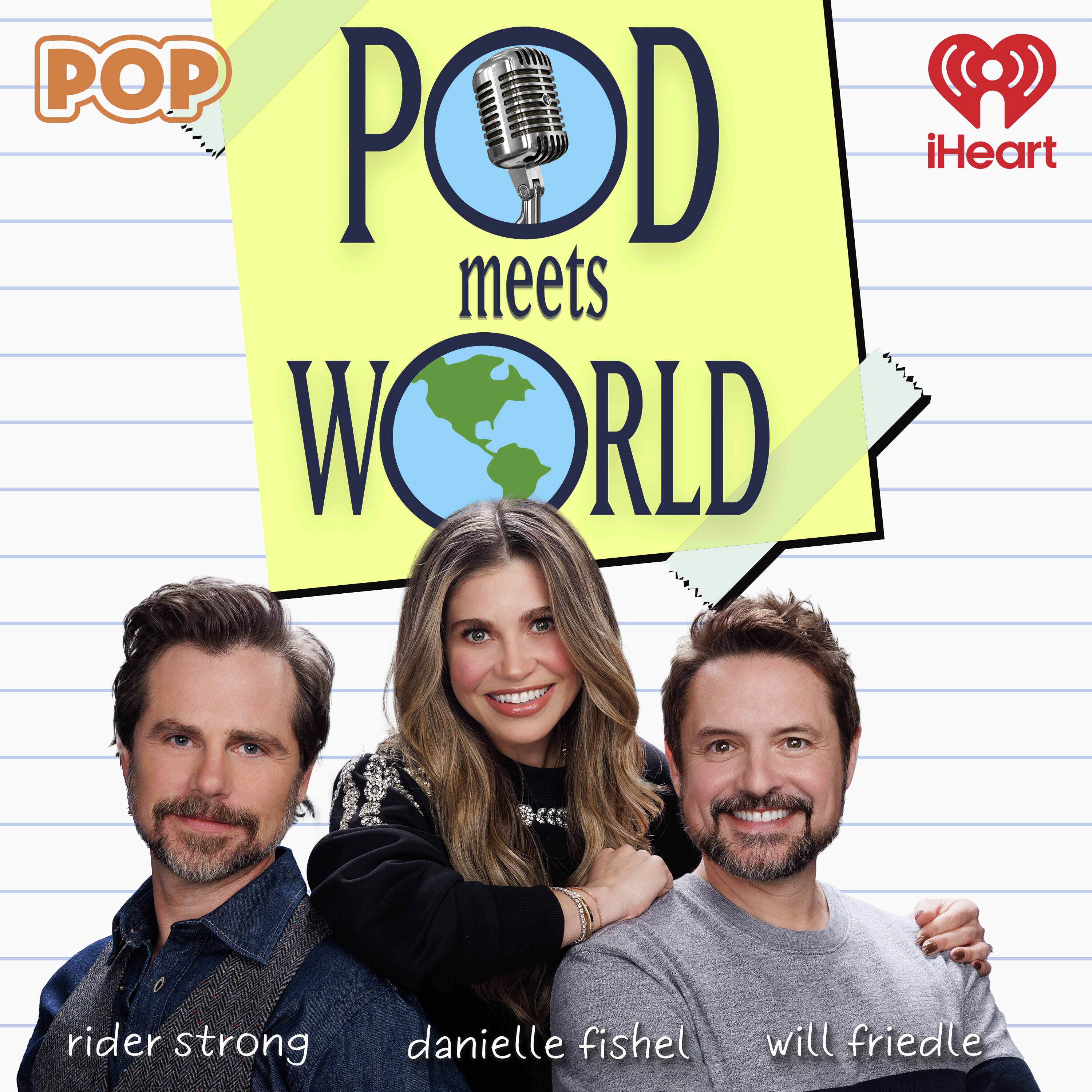
This is an iHeart podcast guaranteed human. I'm Danielle Fishel, Ryder Strong and Will.
- [00:07]
Will Friedle
Friedle from Pod Meets World.
- [00:09]
Danielle Fishel
Whether you're a seasoned small business owner or thinking about getting started, check out season four of Mind the Business small business success stories from iHeartMedia's Ruby Studios and Intuit QuickBooks.
- [00:21]
Ryder Strong
In this latest season, hosts Austin Hankwitz and Janice Torres are talking to self starters about the ins and outs of entrepreneurship and how QuickBooks helps you to get more done in less time. You won't want to miss it.
- [00:33]
Will Friedle
Listen to Mind the Business Small Business Success Stories on the iHeart app, Apple Podcasts, or wherever you get your podcasts.
- [00:40]
Danielle Fishel
Every year I think I'm ready for the holidays and then suddenly I'm the one hosting. This year though, Whole Foods Market low key saved me. Maybe even high key.
- [00:49]
Will Friedle
Same Susan and I walked in for one thing and walked out with a whole game plan. Their heat, neat sides, lifesavers and 365 staples like stuffing mix, cream of mushroom soup and green beans have made my pantry the quintessential Thanksgiving haven.
- [01:02]
Ryder Strong
And Whole Foods has single handedly made me the best host gift giver around. Their curated cheeses or cookie gift boxes Instant hero status for mains.
- [01:12]
Danielle Fishel
I grabbed their bone in rib roast and I'm not kidding, it's a showstopper.
- [01:17]
Will Friedle
So if you're scrambling like we always are, just order, pickup or delivery. Whole Foods is truly the holiday headquarters. New Traditions 0 Chaos Shop for everything.
- [01:25]
Ryder Strong
You need at Whole Foods Market.
- [01:27]
Danielle Fishel
Your holiday headquarters this holiday season is giving famous. And that's thanks to Famous Footwear who has all of the top gifts like Jordan, Fry and Co, Adidas, Nike, Birkenstock, Timberland and basically every brand your family has already texted you about. Online or in store. The selection is huge. They've got styles for everyone. So it should come as no surprise that Famous Footwear is my one stop holiday miracle. And because December is chaos disguised as Yuletide Cheer, you can shop however you need online in one of their 800 stores or get same day delivery powered by DoorDash. It's a lifesaver when you suddenly remember your cousin has feet. Buy one pair. Get one half off at your local famous footwear or famous.com Some exclusions apply. Running a business is hard enough. Don't make it harder with a dozen apps that don't talk to each other.
- [02:19]
Will Friedle
One for sales, another for inventory, a separate one for accounting. That's software overload.
- [02:24]
Ryder Strong
Odoo is the all in one platform that replaces them all. CRM Accounting, inventory, E commerce, hr. Fully integrated, easy to use, and built to grow with your business.
- [02:35]
Danielle Fishel
Thousands have already made the switch. Why not you try Odoo for free at O D O o dot com. That's odoo dot com.
- [02:44]
Will Friedle
I've got a holiday hack for you. Three words. Triple treat pack box.
- [02:48]
Ryder Strong
That's right. Pizza Hut's triple treat box is back. Three courses in a festive holiday box.
- [02:53]
Danielle Fishel
Get two medium pizzas, breadsticks and dessert starting at 19.99.
- [02:58]
Will Friedle
It's the only meal that holidays as hard as your favorite ugly sweater. You know, the one with all the bells and ribbons. Same vibe. More cheese.
- [03:05]
Ryder Strong
Pizza Hut's triple treat box is back for a limited time order now online or through the app.
- [03:10]
Will Friedle
Limited time only. Additional charge for pan, extra cheese, extra topping, select desserts and cheese stick upgrade. Product availability, packaging, prices and participation vary. Taxes, tip and deliver. Delivery fees, extra.
- [03:40]
Ryder Strong
I have a friend who was like a professional squash player when she was younger. Like a champion. I'm not sure. Like some international squash champion. It's like how she got into college and. And now her daughter, who's the same age as Indy, is playing squash and getting very good and already touring the country and, you know, and we went down to the Queen Mary in Long Beach. In Long beach, they set up a Halloween, like a whole. It's called the Dark Harbor.
- [04:11]
Jensen Karp
Yeah.
- [04:11]
Ryder Strong
And you have mazes every year, right?
- [04:13]
Will Friedle
Yeah.
- [04:13]
Ryder Strong
It is so awesome. Is it cool having been to. Yeah. Having this year, having been to Universal Horror Nights, haunted hayrides, and the Dark Harbor. Dark harbor was by far my favorite. Yeah.
- [04:24]
Danielle Fishel
Wow.
- [04:25]
Philip Glasser
Same.
- [04:25]
Ryder Strong
Same kind of thing. Like, they have mazes and, you know, it's just so much fun and you.
- [04:29]
Will Friedle
Believe in this stuff. But apparently one of the most haunted places in all of California is the Queen Mary.
- [04:33]
Ryder Strong
It's so fun. It's so fun. So we went down with this friend and her daughter, and we all got rooms, so we, like, stayed overnight and we had a blast. But one of the things that they had at the card was ax throwing. And I had the funniest moment because, you know, like, with Indy, like, Indy is exhibiting a lot of performance talent. Like, he's very much an actor. He just wants to make people laugh. He can sing really well. He can play piano. And, you know, I've always had this sort of, like, relationship with it where I kind of just want to get out of his way, you know, Like, I don't want to put pressure on him. I don't want to, you know, because there's Obviously, both of his parents are actors. Whenever he does anything, like, he does a play, everyone's like, well, because of your parents, we can see where this comes from, you know?
- [05:19]
Danielle Fishel
Yeah.
- [05:20]
Ryder Strong
So I've always just, like, let him do his thing. Let other teachers talk to him about it. Like, I don't engage. You know, I'm just like, yeah. I mean, I. We play together and we made movies together, but other than that, like, I don't. You know, I don't give him notes. I don't. You know, I just let him do his thing. I was watching my friend. We get up there, do a throwing, and so we wait in line, and then Indy and I are up. And you only get, like, five throws, right? So I throw my ax just flails. Indy throws his. It flails. And I'm like, ah, okay, let's try again. You know, we. And we're both trying. We get five shots. I think, like, maybe I sunk, like, two of them, you know, Indy, it's all just bouncing off. We're horrible. And I'm just like, ah, that's fine. We walk off, and then I watch my friend get up there, my friend Ivy and her daughter, and they throw the first ax. And Ivy's immediately, like, all right, Loretta, come on. You can get that ax in there. You can do this. Come on, girl. And immediately starts coaching. And I watch the two of them get, like, better and better.
- [06:19]
Philip Glasser
Yeah.
- [06:19]
Ryder Strong
Like, I see this dynamic, this, like, mother daughter dynamic where I'm like, oh, this is what it's like when they play squash, right? Like, she is, like, Ivy's racing champion, bro. Dude, she is, like, raising a champion. Like, and it was like, immediately like, oh, we're going to do this. We're going to do this, right? And Loretta, you're going to focus, and we're going to. And I sat there and I was like, oh, that's like, this whole other side of parenting that, like, I've just totally like. So now I'm like, what is the equivalent where I can, like, coach it?
- [06:47]
Danielle Fishel
Yeah.
- [06:48]
Ryder Strong
How can I be like, all right, what's your objective in the scene, buddy? What do you. What's your motivation? We're gonna.
- [06:53]
Philip Glasser
All right, all right.
- [06:54]
Ryder Strong
Acting is reacting. Let's see it. Let's see it. Come on, let's do another take. Okay, you can do better. I want to see tears.
- [07:01]
Philip Glasser
I want to see.
- [07:02]
Ryder Strong
Okay, come on. Can you get this? But there's, like, part of me that was a little like, oh, right. I. I feel this pressure to, like, not Engage. But there's the other side, which is if you see somebody has an ability, you coach, you know? You know, Because I do know a lot. Like, we do know a lot about this. I direct. I know how to talk to kid. And I was like, oh, maybe I should.
- [07:22]
Danielle Fishel
Maybe I should be engaging more actually doing this.
- [07:26]
Ryder Strong
You call that catharsis? You call that catharsis?
- [07:29]
Will Friedle
Yeah, I think it'd be great.
- [07:31]
Ryder Strong
Exactly. Anyway, so now I'm trying to. I'm trying to incorporate, like, coach, acting coach, writer dad. That's like my new. My new things. I was like, you know, there's. There's. There's a little bit of like, hey, buddy, you can do better or whatever, you know, without being too judgment. Too judgmental. Not without making them feel bad. But also, you know, coaching, like, encouraging and being like, you can. I know you can do this. I know.
- [07:53]
Will Friedle
I always thought coach was a weird term for something to do with acting. Like, acting teacher, I think works better than coach. Cause coaching, it's like, there is a. At least with a lot of sports, like, axe throwing is a perfect example. It's repetitive. There is like a mechanical memory, and it's muscle memory, and it's counting the number of flips, and it's so it's like, you can drill that and drill that and drill that. But it's so much more abstract with acting that it's like, yeah, you can do scene studies at night if you want to be that. I remember dating a girl that. That was the first night we went out after dinner. I was like, so, what do you want to do? She's like, do you want to go home to your house and do some scene study? And I was like, I'm hoping that's you from.
- [08:34]
Ryder Strong
And that little girl was Carrie Russell.
- [08:38]
Will Friedle
No, but, like, that's what she wanted to do when we got together was scenes. Now she then went out to become a very successful actor.
- [08:47]
Ryder Strong
Meryl Streep. No big deal.
- [08:49]
Will Friedle
Exactly.
- [08:49]
Ryder Strong
But so there is.
- [08:50]
Will Friedle
I mean, I. But coaching always seemed to me like they were going to be there. Like, exactly. Like I said, like, cry.
- [08:55]
Philip Glasser
Come on.
- [08:55]
Will Friedle
I don't.
- [08:56]
Philip Glasser
I don't buy it.
- [08:56]
Danielle Fishel
Well, and I also think she runs. You run. There's a risk you run as being parent slash coach. Because eventually you look at, you know, Tiger woods or the Williams sisters, if you start to resent the. The sport or the activity, and then it's your parent who's pushing you.
- [09:17]
Will Friedle
Yeah.
- [09:18]
Danielle Fishel
You blur that line. Like, to me, I would think, all right, I do know a Lot. But there are also acting teachers who know a lot. And I can put them in with an acting teacher where maybe if I'm just the parent, I don't have to worry. I don't have to take that risk of my kid eventually resenting me. They can.
- [09:37]
Ryder Strong
Yep. That's been my approach all the way along. But I also. I mean, yeah, I mean, I'm joking, but I also have just realized, like, I should open up to Indy a little bit. Like, I should talk to him about it. Like, the things I do know, like, that I have discovered where, you know, it's like, I don't know, like, maybe every take can be different. Maybe you don't need to lock, you know, I don't know, just like, little notes that I can. Or things that I can throw out.
- [09:58]
Will Friedle
You could, because. So come at it.
- [09:59]
Ryder Strong
From.
- [10:00]
Will Friedle
What do you wish you had when you. Exactly.
- [10:03]
Ryder Strong
Well, that's what I realized is, like, I had a lot of bad acting teachers and I think maybe he does too, you know, because a lot of, like, I think about how many people talked to us and gave us notes that didn't know what they were talking about. They would just be like, you know, And I remember sitting in classes, like, not things that I would stand, but, you know, because we were very lucky. I got kind of out of that scene. But, like, if you stayed in, like, local theater or local, they would give you the word. Like, I remember the first time my brother and I had an audition and our agent, our local agent invited us to our office because we were. We were going to meet Warren Beatty for Dick Tracy. Like, we're screen testing for Dick Tracy. I had only put myself on tape and sent a VHS down to la, and then they were screen testing me and Shiloh. So that morning, our agent, we were flying down to LA and our agent, our local agent in Santa Rosa called us and was like, we need to talk. We need to, you know, make sure you guys know what you're doing. And of course, like, she brought in her, like, somebody who had worked with her, I think it was like a family member, whatever, who had worked on films. And he was going to give us notes. He literally explained how to hit your mark. Oh. He was like, they're gonna draw a T on the ground and you're gonna walk to that and don't say your lines until you hit the T. And we were like, oh, okay. And of course, went down to meet Warren Beatty and they started improvising and we were a complete mess and it was horrible. Did you hit the T. I did not. There was no mark. There was no mark. I mean, basically this guy had been an extra on some things, you know, or worked in commercials. And like, that was the extent of his, like, professional knowledge to give us, which, you know, I don't blame him. But it was like here we were at 10, like, going to do these.
- [11:37]
Danielle Fishel
Spending time right before you go into a meeting, learning about something that's not even going to be there.
- [11:42]
Ryder Strong
Nope. And not even that important. Like that's the easy part of acting to teach. That's the, you know, the hard part is like, just be yourself, just relax, just express. Just, you know, all the things and feel free. And there is no wrong answer. There's just have fun and all those things. Oof. So, yeah, I think about, like, what I can start having the conversations I can start having with Indy about, like, what it's what's actually like to act and maybe just share some wisdom.
- [12:04]
Will Friedle
I swear to God, when you started the story, I thought you're going to be like, and Indy is amazing at squash.
- [12:09]
Danielle Fishel
Yeah, exactly. And now she's an athlete.
- [12:12]
Ryder Strong
No, no. Believe it or not, my kid is not into sports.
- [12:16]
Danielle Fishel
That's weird. That's weird. I find it hard to believe. I think Indy's going to grow up to love sports ball.
- [12:21]
Will Friedle
By the way, Danielle, I do have to say I know you're dealing with a little sickness today. Makes the voice sexy. I gotta say sorry. You got the cat like the Kathleen Turner rasp going on. Just saying thanks, Will. That it's kind of like, hey, honey, what are you doing? You got another Pall Mall? That's right. I go non filter, if you know what I'm saying.
- [12:45]
Ryder Strong
It become New York, apparently.
- [12:46]
Will Friedle
Exactly. And I'm no longer from you.
- [12:48]
Ryder Strong
Everyone knows I'm no longer from you. You never call my voice sexy when I'm sick, Will.
- [12:54]
Will Friedle
It's because your voice is sexy all the time. And I can't keep saying it right.
- [12:59]
Danielle Fishel
We're tired of hearing it, you know. Welcome to pod meets world. I'm Danielle Fishel.
- [13:03]
Ryder Strong
I'm Rider Strong.
- [13:08]
Will Friedle
And that was sexy.
- [13:09]
Philip Glasser
Yeah, I Wilford it all.
- [13:18]
Ryder Strong
This episode is sponsored by Better Help.
- [13:20]
Danielle Fishel
You know, the holidays always get me thinking about traditions. Mostly because my family had so many of them. Some are great, like handing out lotto scratchers after dinner. Some not so much. Like every wrapped present needs to have glitter on it. And as I've gotten older, I realized traditions don't have to stay frozen in time.
- [13:40]
Will Friedle
You can rewrite them exactly like this year I'm starting a new one with Susan. I'm gonna glaze a ham with my own hands. Taking ownership of traditions like that has made the holidays feel more ours.
- [13:52]
Ryder Strong
And sometimes the tradition you need most is taking care of yourself. The holidays can be joyful, but also stressful, overwhelming, even lonely.
- [14:00]
Danielle Fishel
Therapy has become one of my own new traditions, especially during December when chaos runs rampant and slowing down to check in with myself is essential.
- [14:09]
Will Friedle
That's why we recommend BetterHelp. It's online therapy that fits into your schedule. And their therapists are fully licensed and follow a strict code of conduct.
- [14:17]
Ryder Strong
And the process is so easy, you fill out a quick questionnaire. They do the work, and with over 12 years of experience and a crazy high match rate, they usually get it right the first time. And if not, you can switch therapists anytime. No awkward breakup speech required.
- [14:32]
Danielle Fishel
There's a reason Better help has over 30,000 therapists and has helped more than 5 million people. People really do feel supported.
- [14:39]
Will Friedle
And so this December, start a new tradition by taking care of you.
- [14:43]
Ryder Strong
Our listeners get 10% off@betterhelp.com meets world.
- [14:47]
Danielle Fishel
That's better. H E L P.com meets world. Big things are happening at your local CVS. Extra big.
- [14:56]
Will Friedle
So hurry on over because extra big deals are here.
- [14:59]
Ryder Strong
These are deals so extra that they absolutely cannot be missed. And every two weeks there's gonna be more.
- [15:05]
Danielle Fishel
So you've gotta keep coming back so you can keep saving on all the brands and products you and your family use every day.
- [15:11]
Will Friedle
And speaking of saving, extra care is the way to save at cvs. So use your extra care card to unlock savings every time you shop.
- [15:19]
Ryder Strong
And if you're not a member yet, now is the time to join.
- [15:22]
Danielle Fishel
And the best part, it's completely free. Just sign up online or in store and you'll start saving instantly.
- [15:28]
Will Friedle
And always be sure to check the CVS Health app for deals and savings.
- [15:32]
Ryder Strong
Visit your local CVS store or cvs.com extra big deals to shop this week's deals and stock up on your favorite products. From nursing and healthcare to business and it, Rasmussen has a range of programs to fit your goals and passions, no.
- [15:48]
Will Friedle
Matter what your day to day looks like. Rasmussen's programs allow you to balance school with life while you pursue your degree.
- [15:54]
Danielle Fishel
So if you're ready to pursue your education goals, Rasmussen is ready to help you take that next step.
- [16:00]
Ryder Strong
Head on over to Rasmussen Edu and check out the opportunities waiting for you.
- [16:04]
Will Friedle
Your future is a bright one. Rasmussen University can help you get there. Looking for your next obsession?
- [16:11]
Philip Glasser
Listen to High Key, a bold, joyful, unfiltered culture podcast coming at you every Friday. Now, my question is, in game of mafia that we're going to play, are you going to do better than me?
- [16:23]
Jensen Karp
Say it now. Duh.
- [16:25]
Ryder Strong
Period.
- [16:25]
Philip Glasser
I'm going to eat.
- [16:26]
Will Friedle
You going to do better than me? I'm going to eat, Yes. I literally will.
- [16:30]
Philip Glasser
Ryan will. I cannot wait till we both team up and get you out and then one of us gets the other out because we didn't realize they were a traitor the whole time and you were actually an innocent.
- [16:38]
Will Friedle
Y' all won't even know that I'm a trainer.
- [16:41]
Philip Glasser
This is going to be delicious.
- [16:44]
Will Friedle
Well, thank you for coming to our show.
- [16:46]
Philip Glasser
And on that note, thank you for coming to my show. Listen to High key on the iHeartRadio app, Apple Podcasts, or wherever you get your podcasts.
- [17:00]
Jensen Karp
Running a business is hard enough, so why make it harder? With a dozen different apps that don't talk to each other? One for sales, another for inventory, a separate one for accounting. Before you know it, you are drowning in software Instead of growing your business. This is where Odoo comes in. Odoo is the only business software you'll ever need. It's an all in one, fully integrated platform that handles everything. CRM, accounting, inventory, e commerce, HR and more. No more app overload, no more juggling logins. Just one seamless system that makes work easier. And the best part, Odoo replaces multiple expensive platforms for a fraction of the cost. It's built to grow with your business, whether you are just starting out or already scaling up. Plus, it's easy to use, customizable and designed to streamline every process so you can focus on what really matters running your business. Thousands of businesses have made the switch, so why not you try Odoo for free@odoo.com that's o d o o dot com.
- [18:08]
Danielle Fishel
As you could probably guess, producer and husband of this podcast, Jensen will not rest until everyone who's had a character name on Boy Meets World joins us to talk about the show. I can't talk about the show.
- [18:20]
Ryder Strong
Talk about the show.
- [18:21]
Will Friedle
Sorry. You got to talk about the show.
- [18:25]
Ryder Strong
Talk about the show.
- [18:26]
Danielle Fishel
You did the loop. A you did the loop. One of my favorite stories. My friend Brandy and I drove from. Drove from Vancouver to Banff and we were two girls before. Good navigation. Just lost in Canada driving around and I was like, I don't. I think we're not on the. I don't think we're this is the right thing. I think we're in the wrong spot. And she kept saying, no, let's just keep going. Keep going, going. Finally, we come like the miles of not seeing anything. We come across this tiny little, like gas station, one pump and convenience store thing. And I'm like, we have to go in and ask for help. And we go in and I'm like, hi. We are trying to, you know, showing her the map. We're coming from here. We're trying to get to here. And she goes, oh, you took the loop.
- [19:15]
Ryder Strong
Yeah, took the loop.
- [19:17]
Danielle Fishel
You took the loop. No, you're not supposed to take the loop. Just we talked about it for the.
- [19:23]
Ryder Strong
Rest of the trip. You had three hours to drive to finish the loop.
- [19:29]
Danielle Fishel
I was like, how do we unloop? Can you unloop us?
- [19:32]
Philip Glasser
Can you get us back?
- [19:33]
Danielle Fishel
Can you get us back at any.
- [19:34]
Will Friedle
You live here now. Sorry.
- [19:37]
Danielle Fishel
Yeah, you live here now. You don't go.
- [19:39]
Ryder Strong
Sorry.
- [19:43]
Danielle Fishel
Anyway, back to it. Anyone who's had a character name on Boy Meets World joins us to talk about the show. And boy, are we thankful for it. This week we're chatting with a name that made all of us perk up during our season two recaps. It rang many bells and for many reasons. First off, he played the hilariously named Ubaldo in Boy Meets World's season two episode the Uninvited. He's the overly eager partygoer who somehow scores an invite to Melissa's excited exclusive Sean Free hangout. Secondly, he shared the same childhood theater role of one writer strong just a southwest flight away from San Francisco in the LA Company. And thirdly, how can you forget the kid who was the voice of Feifel Mouskowitz in the iconic and American tale movies? With a credit like that, you are forever goaded. Now he's behind the camera producing movies and joining us internationally from set, if you can believe it. Can we take credit for his modern day Hollywood success because of his early turn as Ubaldo? No, but we will. Anyway. Welcome to Pod Meets World. Philip Glasser. Yay. How you doing?
- [20:54]
Philip Glasser
Good.
- [20:54]
Ryder Strong
How are you?
- [20:55]
Philip Glasser
It's been a long time.
- [20:56]
Danielle Fishel
It's been a long time. We are told that you are joining us from London on set.
- [21:00]
Philip Glasser
Basically, I am in my trailer. Literally.
- [21:05]
Danielle Fishel
Well, we are very appreciative. I think it goes without saying that whatever you are currently producing is not as important as talking to us about the one Boy Meets World episode where you played a character named Ubaldo at a house party.
- [21:21]
Philip Glasser
Obviously.
- [21:22]
Danielle Fishel
Obviously Not. We will eventually talk about what you're producing, but not to start. To start. I want to talk about your Hollywood origin story. I know your A Valley Kid, like most child actors at a time, but how did you convince your parents to find an agent and then sit in one on one traffic for auditions?
- [21:45]
Philip Glasser
You know, it was. It was a family thing. So my brother, an older brother, is about seven years older and he acted. So, you know, like every kid brother, you want to do what your big brother does. And I was only four years old and somehow, you know, I was that kid who was always, pick me, pick me. Waving his hand and getting crazy. And my brother's agent said, oh, he's got a good personality. He should try out for petitions. My mother knew a little bit about it. She was a casting director. So I went out for a Wells Fargo bank commercial. My very first. I did. I got the part. So I'm like, okay, this is interesting. And then literally, yeah, like a year or two later, I was five and a half, maybe about to turn six. I auditioned for this cartoon movie for Steven Spielberg and had no idea that I was about to become a crazy character that would be around for a very long time for the role of Fievel.
- [22:43]
Will Friedle
You were six years old when you recorded Fievel?
- [22:47]
Philip Glasser
I started recording at 6. I did it till I was 18. So unfortunately was a little slow for me. I was not upset about it.
- [22:57]
Danielle Fishel
My gosh.
- [22:57]
Philip Glasser
Wow.
- [22:58]
Danielle Fishel
So your first job was a national Wells Fargo commercial and your next job was a Steven Spielberg movie. Fifel. Wow. Okay.
- [23:07]
Philip Glasser
I think that sounds like the normal.
- [23:09]
Will Friedle
Trajectory for most actors in the industry. Yeah.
- [23:13]
Philip Glasser
The problem is I peaked at like 8, though. I peaked way too early. That was the issue.
- [23:19]
Ryder Strong
It's all downhill from there.
- [23:20]
Danielle Fishel
Did you read for Spielberg?
- [23:24]
Philip Glasser
So I actually put myself on tape.
- [23:26]
Danielle Fishel
Okay.
- [23:27]
Philip Glasser
And then. And then I came back in and I did. Actually, I never went in and met them and did another tape. Like in a booth they put me. And then they said, you're it. And this time you have to remember. So this was like 1984. Animation movies weren't big. Like, I want to say Snow White was the highest grossing movie at all time. And it made like 20 something million dollars. You know, Don Bluth was that iconic animator from Disney, did all the Disney movies and Pete's Dragon and. And he teams up with Steven to tell this story that was essentially somewhat about Steven's grandfather whose real name was Fievel. Fievel Spielberg.
- [24:02]
Danielle Fishel
Yeah.
- [24:02]
Philip Glasser
And you know, we do this movie and then all of A sudden, they were the first guys to really bring celebrities because, you know, you had Don Bluth, you had Madeline Kahn, Christopher Plummer, and then Amy Irving were all in the movie. And that wasn't a common thing back then to have celebrities in animated movies. And this movie comes out 86 and makes like $70 million, which can be probably like close to a billion dollars in today's world. And everyone's like, whoa, we get nominated for the Oscar for Somewhere Out There. And it was just absolute chaos ever since.
- [24:35]
Will Friedle
Wow.
- [24:36]
Danielle Fishel
Oh, my gosh. So how did you. How did you know what to do in the. In the studio? Like, it's your first voiceover job. Other voices in this movie, Madeline Kahn, Christopher Plummer, Dom DeLuise. And here you are, a six year old with your first voiceover job. How did you. How did you know what to do? Who helped you?
- [24:58]
Philip Glasser
Well, you know what I mean. Stephen and dawn were in every one of my recording sessions, so that was super helpful. But what they did for me is because I was so young, so was Madeline Kahn, so was Christopher Plummer. I recorded with them my lines. So I always had someone to sort of react with, which is super uncommon when you're doing voiceover.
- [25:15]
Danielle Fishel
Yeah.
- [25:16]
Philip Glasser
So I was really spoiled. I got to work with all these iconic legends, you know, as a little kid who made it super easy for me.
- [25:26]
Danielle Fishel
And so what happens when the movie takes off is ever like, is everyone at school freaking out that they know Fievel?
- [25:33]
Philip Glasser
There was a little bit of that. I think there was some bullying, too. I think people are looking for a tale. You know, kids are interesting.
- [25:38]
Danielle Fishel
Oh, yeah.
- [25:39]
Philip Glasser
You know, I was still, you know, going to, like, LAUSD public school.
- [25:44]
Danielle Fishel
Right.
- [25:44]
Philip Glasser
You know, and it wasn't, you know, it wasn't a thing. And then after that, just voiceovers became such a big part of my life. I was doing like four cartoon series at the same time. Wow. So I went from that to Tiny Toons for Stephen. He put me on that for a while. And then I was on Pound Puppies, the original one, if you remember, with Ruth Buzzi.
- [26:05]
Danielle Fishel
Yeah, yeah.
- [26:05]
Philip Glasser
I did Creepy Crawlers, PJ Sparkles, and like, other stuff. And then got into the ADR world and joined, like, one of these loot groups. And it was just. I literally worked almost every day. Just absolute chaos.
- [26:21]
Will Friedle
Well, it was a great time in the industry because it was one of those times where. And then they got out of it and now they're slowly starting to get back into it. In voiceover, where children actually did children's Voices.
- [26:32]
Danielle Fishel
Yeah.
- [26:33]
Will Friedle
So it's like you would listen to Charlie Brown and all those. And the Peanuts gang were all kids. And then after a while they were like, well, we should get adults to do kids, especially in that kind of early 80s era. And so 84, 85, they did start casting kids again. And it makes a huge difference when it's a kid doing a kid's voice.
- [26:51]
Philip Glasser
Yeah, it's so true. And everything was authenticity with Steven and Dawn. Like, their big thing is you had to be able to sing. Like that was a big thing. They weren't gonna do the Disney model where you could get somebody else to re record. If you couldn't sing, you couldn't do the role. I had to like, sing somewhere out there the very first time I went in.
- [27:10]
Will Friedle
Wow.
- [27:10]
Philip Glasser
Like, no, thank you. So it was crazy. I had no idea what it was going to become. Nobody did. But, you know, the thing that actually came out of it, besides all this other great voiceover stuck, is something that Ryder and I, you know, share, is I got a call from Cameron McIntosh's office. They said, who does the voice for Fievel? They called my agent and they said, we want you to audition for this show, Les Miserable. And I heard of it because it was in New York. This is 1987.
- [27:39]
Danielle Fishel
Yeah.
- [27:40]
Philip Glasser
American Tail came out in November of 86. And I went in and met with like Cameron, Richard J. Alexander and John Caird. And the next thing I know, I'm at the Shubert Theater doing that. Eight shows a week. Absolute chaos.
- [27:55]
Ryder Strong
Oh, my God.
- [27:56]
Philip Glasser
And then you. Then it went to you.
- [27:58]
Ryder Strong
Yeah, I was up in San Francisco, but before that, I want to go back. I just want to hear what it was like to work with. With Spielberg and Don. Like what. What were they like as far as giving direction and how were they to work with?
- [28:11]
Philip Glasser
You know, they were awesome. Stephen was. I want to say, his son Max was not that much younger than me at the time. He was like a dad. He'd show up in a. And the first meeting we ever had was at his office at Amblin, which is one of the cool offices.
- [28:26]
Ryder Strong
Yep.
- [28:27]
Philip Glasser
And you know, he was just like. We hung out and he has this video arcade of all of his movies that are made into video games. And we literally played video games, hung out. He was talking with my dad, was showing us all the charts and pictures and sort of treatments of what they were doing with the characters. And we just started recording. And back then it would take a good two years to make an animated movie. Oh, my God. So we'd record a bunch, they'd animate some, we'd record some more, animate, you know, sing the songs and then do very little adr. The neat thing they really did is they would video. This is back with the old huge VHS cameras. They'd video your recording sessions to really make the intonation of your mouth correct. They wanted your lips, everything to be absolute. That was a non blue flight special, to be perfect. So they'd watch us record the lines in video us. So it really helped with the animation, which is really neat.
- [29:26]
Danielle Fishel
That's so cool.
- [29:27]
Ryder Strong
So cool. Yeah.
- [29:28]
Will Friedle
Mouth people don't realize how important mouth the call the mouth flaps are in animation. Yeah. If you get a breakdown, because a lot of the animators, the thing that maybe not back in the day, but now, a lot of the animators don't speak English because they're being animated in Japan or Korea or China. And so what will happen is they literally just have a chart of what the mouth looks like when it makes certain letters. So an O makes this letter, an A makes this letter. So they can animate, animate around the actual vowels that you're saying. And so by filming you doing it there, literally can animate the actual mouth flap to match the word. Which, again, you can tell the difference. When you see one of those schlockfest 80 cartoons that I loved where it was, the mouth flap would just be doing this and a voice would come out and sometimes it would stop talking and the voice would still be going, yeah. Or a different voice would come out of the mouth flaps like they just didn't care. And you can tell it makes a big difference. The attention to detail.
- [30:23]
Philip Glasser
Yeah, does. You're 100, right?
- [30:31]
Danielle Fishel
Big things are happening at your local cvs. Extra big.
- [30:34]
Will Friedle
So hurry on over because extra big deals are here.
- [30:38]
Ryder Strong
These are deals so extra that they absolutely cannot be missed. And every two weeks, there's gonna be more.
- [30:44]
Danielle Fishel
So you've got to keep coming back so you can keep saving on all the brands and products you and your family use every day.
- [30:50]
Will Friedle
And speaking of saving, extra care is the way to save at cvs. So use your extra care card to unlock savings every time you shop.
- [30:57]
Ryder Strong
And if you're not a member yet, now is the time to join.
- [31:00]
Danielle Fishel
And the best part, it's completely free. Just sign up online or in store and you'll start saving instantly.
- [31:07]
Will Friedle
And always be sure to check the CVS Health app for deals and savings.
- [31:11]
Ryder Strong
Visit your local CVS store or cvs.com extra big deals to shop this week's. Deals and stock up on your favorite products. From nursing and healthcare to business and it, Rasmussen has a range of programs to fit your goals and passions.
- [31:27]
Will Friedle
No matter what your day to day looks like. Rasmussen's programs allow you to balance school with life while you pursue your degree.
- [31:33]
Danielle Fishel
So if you're ready to pursue your education goals, Rasmussen is ready to help you take that next step.
- [31:39]
Ryder Strong
Head on over to Rasmussen Edu and check out the opportunities waiting for you.
- [31:43]
Will Friedle
Your future is a bright one. Rasmussen University can help you get there Looking for your next obsession?
- [31:50]
Philip Glasser
Listen to High Key, a bold, joyful, unfiltered culture podcast coming at you every Friday. Now my question is, in this game of Mafia that we're gonna play, are.
- [32:01]
Will Friedle
You gonna do better than me? Say it now. Duh.
- [32:04]
Philip Glasser
Period. I'm gonna eat.
- [32:05]
Will Friedle
You're gonna do better than me?
- [32:06]
Philip Glasser
I'm gonna eat.
- [32:07]
Will Friedle
Yes. I literally will.
- [32:09]
Philip Glasser
Ryan will. I cannot wait till we both team up and get you out and then one of us gets the other out because we didn't realize they were a traitor the whole time and you were actually an innocent.
- [32:17]
Will Friedle
Y' all won't even know that I'm a traitor.
- [32:20]
Philip Glasser
This is going to be delicious.
- [32:23]
Will Friedle
Well, thank you for coming to our show.
- [32:25]
Philip Glasser
And on that note, thank you for coming to my show. Listen to High key on the iHeartRadio app, Apple Podcasts, or wherever you get.
- [32:36]
Jensen Karp
Your podcast Podcasts Running a business is hard enough, so why make it harder with a dozen different apps that don't talk to each other. One for sales, another for inventory, a separate one for accounting. Before you know it, you are drowning in software. Instead of growing your business. This is where Odoo comes in. Odoo is the only business software you'll ever need. It's an all in one fully integrated platform that handles everything CRM, accounting, inventory, E commerce, HR and more. No more app overload, no more juggling loggin. Just one seamless system that makes work easier. And the best part? Odoo replaces multiple expensive platforms for a fraction of the cost. It's built to grow with your business whether you are just starting out or already scaling up. Plus, it's easy to use, customizable and designed to streamline every process so you can focus on what really matters running your business. Thousands of businesses have made the switch, so why not use Try Odoo for free@odoo.com that's o d o o dot com.
- [33:40]
Danielle Fishel
You've heard us talk about using Legacy Box before, but this is the moment for you to join us in the quest to save your memories. Their Cyber Week event is here, and it is absolutely their best sale of the year. Take it from me, Legacy Box is the most meaningful gift you can give for the holidays. It's not just about digitizing old tapes and photos. It's about getting to see those forgotten moments and hear voices you haven't heard in years all over again. And right now, you can preserve everything for as low as just $27. Whether it's camcorder tapes filled with your awkward eras or photos with that one boyfriend from high school that got away, it's time to finally deal with that box of media collecting dust in the garage. Legacy Box makes it so easy. You just fill the box with your VHS tape, film reels, pictures, whatever you've got, and their team digitizes everything by hand right here in the US Then you get your originals back, plus digital copies on the cloud or a thumb drive, which means those memories are finally safe from, you know, floods, mold, or the passage of time. In general, they've helped over a million families relive their moments. So what are you waiting for? Hurry. Legacy Box's best sale of the year won't last long. Visit legacybox.com meets world for an unreal 65% off during the Legacy Box Cyber Week event. With limited quantities ready to ship, this deal will go fast. Shop Legacy Box's lowest prices of the year now@legacybox.com meets world. Buy your Legacy Box today. Send in when you're ready. Legacybox.com meets World.
- [35:25]
Ryder Strong
All right, so singing this iconic song, how was it? Did it just come out? Or was it, like, a long time? Lots of takes?
- [35:35]
Philip Glasser
Yeah. I mean, they came over to my house and taught it to me, you know, at, like, you know, James Horner came with. I think the writers were Barry Mann and Cynthia Lyle and. Correct. And they write. And they taught me how to sing this song. I sang, like, four songs in the movie, but this one was, like, the big one. The big.
- [35:51]
Danielle Fishel
Yeah, and.
- [35:53]
Philip Glasser
And I'll never forget it. I did the first take. My voice cracked, and that's the one they actually ended up using in the movie because. And I'm like, no, no, I'll do it again. I'll do it again. I think I did. But that very. It was so authentic. And Steven, like, absolutely loved it. And he was like, no, that's it. That's exactly why we want someone to really sing it themselves, because you're that character. Now we've established it, and that's the one that kind of went. I had no idea that would be playing still at weddings. Probably still to this day.
- [36:24]
Danielle Fishel
Yes.
- [36:25]
Philip Glasser
You know, and, you know, it was the most unique thing. And I still get it this day, every once in a while from people is, you know, shortly after the first movie we had, the first Gulf War. And that song was such a big song for people whose parents were deployed. So I constantly have people always coming up to me saying that song was so important to me during the war when my mom or dad was over in Iraq. And, you know, and then just anything like that makes me feel so good about anything I could have done that could have helped somebody else. I still, to this day at, like, Comic Cons, people will tell me about it, you know, and still. So it's. I had, like, once again, I had no idea anything was gonna come other than, oh, cool, I get to work with the guy who made jaws in E.T. i thought that was the coolest thing in the world, but I had no idea what it would become.
- [37:18]
Will Friedle
I have, I have a question for you from the, the, the technical side of it, because back in the day, I mean, now as a voiceover actor, I mean, you know this as well as anybody else, we do four hour sessions. It's. They don't want to beat you up too much. You're going to do four hours and you're going to be out. Was it the same back in the day, especially as a, a young performer whose vocal cords hadn't really yet developed. You're singing, you're doing your vo. Are they giving you two, three hour sessions or are you there all day?
- [37:44]
Philip Glasser
You know, I think it varied. I think sometimes, you know, the songs took a little bit longer is, you know, that you have, you're seeing with somebody else, and they have to get it right too. It's not just you. And some of the sessions, probably because of my age, took a little bit longer. You know, I mean, I, I could read, but I, you know, I wasn't a thespian at this point. I'm six.
- [38:04]
Danielle Fishel
Right.
- [38:05]
Philip Glasser
So, you know, I think they had to be patient. And it was, it was so much. It was a tremendous amount of dialogue. Yeah, I mean, you know, so they had everything on like these poster boards in big lettering to make it super easy. And Don would go through it with me and so would Stephen sometimes. And the other actors, like I said, they were just. It was like having a bunch of, like, parents. They were so kind. Like, Don DeLuise, you know, was one of the sweetest human beings I've ever worked with in my life. And he was like, just having this giant teddy bear of an uncle that would just make everything fun. He'd tell a joke, he would make the entire experience fun. Just like is in all those characters.
- [38:44]
Will Friedle
Oh, that's so cool.
- [38:45]
Danielle Fishel
That is amazing. And so mixed in with other voiceover gigs and an eventual American Tale sequel and TV show is your start in live action TV guest starring playing a young Danny Tanner on Full House.
- [39:00]
Will Friedle
Yeah.
- [39:01]
Danielle Fishel
Do you remember working with Bob Saget at all and what it was like playing a younger version of him?
- [39:06]
Philip Glasser
I did. I did. It was during Les Mis. So the big thing is they wouldn't cut my hair because that was the big thing with Garrett Roche. You have to look like a street urchin, so you couldn't get your hair cut. They had to pin up a bunch of stuff. But it was supposed to be, you know, back in the 60s or 70s when they grew up. So it wasn't a big deal for the flashback. And it was. I mean, it was awesome. It was a great. I think it was like season two. It wasn't a very old show. Maybe season three.
- [39:29]
Danielle Fishel
Yeah.
- [39:30]
Philip Glasser
And, you know, I went on, was able to do the show. I had my undershedding cover my performances that I couldn't do that week. And it was awesome. Bob was great. Everybody in the cast was great. They talked about, like, bringing us back for another one. And then it just never ended up happening because it was such a cute episode. Showed how they all met, how they became friends.
- [39:52]
Ryder Strong
All right, so I want to hear about your Les Mis experience. So what was that like? Was that your first, like, theatrical? Was it first time on stage first. And how was it?
- [40:01]
Philip Glasser
My first time on stage with it is. I had no idea what it was going to be. It was a new thing. I went to this place. It was this church somewhere off Sunset Boulevard. Sorry, I lost my train of thought earlier. And they have like a church and they took a big square, put the big circle thing, like with the automatic turntable on it, and we just went in there. And then all of a sudden they're like, okay, you do this, you do this and you get the stuff. You start meeting all the people. There's a lot of people that came from New York because it was the third show. London, then to New York. That's Los Angeles. And we trained there with, I think William Solo was our Valjean. Jeff McCarthy was the job there. And K. Cole was our 10, our Ms. Tarnier. And then Gary beach, who won a few tonys was our Mr. Tonartier. And yep, we just started training and the next thing you know, we're opening up at the Schubert Theater. And it was just once again, I had no idea. I didn't even know what the show was. I had no clue. I'd never done it. But I'm like, oh, this is fun. And you got to go around, run up and down, you know, barricades and sing all these songs. Back then, you know, everything was still in it with the turntable. It's when they got rid of the turntable, you know, you didn't have the Gavroche death scene, all the big stuff.
- [41:19]
Ryder Strong
No, they cut it out now. My God, he dies off stage.
- [41:23]
Philip Glasser
I just died here in London.
- [41:25]
Ryder Strong
It's so frustrating.
- [41:26]
Danielle Fishel
Why would he die off stage now?
- [41:28]
Ryder Strong
Because they used to.
- [41:29]
Will Friedle
They used to.
- [41:29]
Ryder Strong
The whole, like, conceit of the original show is that the whole stage would rotate.
- [41:33]
Will Friedle
And it's not a lazy Susan.
- [41:35]
Philip Glasser
Right.
- [41:35]
Ryder Strong
It was incredible. Like the. So the show was just this flawless. So what that meant is that the barricades came in and created a wall halfway through the stage, but it could rotate to show you the other side. So the key moment when Gavroche decides to go and volunteer to like, like, get more bullets for them because they're running out of ammo, he goes over the barricade, the whole thing turns and then it's this incredibly tense scene where he's like singing to himself acapella while he's like gathering bullets and he gets shot and dies on stage. It's like one of the coolest. And as a kid, it was the greatest thing to play.
- [42:04]
Will Friedle
Oh, my God, yes.
- [42:06]
Ryder Strong
And nowadays they just cut it out. You just see Gavroche go over the barricade and you hear it and it's like, oh, so those kids are missing out, man. They don't. They don't have the glory like we did.
- [42:15]
Will Friedle
Yeah. Again, if you can't do kid murder on stage anymore, then where are we?
- [42:20]
Ryder Strong
Exactly?
- [42:21]
Danielle Fishel
Is this?
- [42:23]
Will Friedle
Where are we?
- [42:25]
Philip Glasser
It was the best part. I mean, throwing. There's this thing when you're dying and you have to try to throw the bag back over the bullet bag back over the barricade, which was all part of, you know, competition for me as like an 8 year old. I thought it was the coolest thing in the world trying to. I have to do it tonight. I mean, it doesn't change the scene. Just getting that back thrown over the barricade was a big deal.
- [42:45]
Ryder Strong
Oh, did other cast members offer you Rewards. If you did it 100. That's the way they did it for me, too. They were like, if you make it, you get a candy bar. And so it was like 100, and there was like, which. And like, me. And then Ian, my. The other Gavrache, he had like, his favorite candy bar. For me, it was like dark chocolate Milky Ways. And I knew that if I could make the kid. What are we, kind of eight year old?
- [43:08]
Danielle Fishel
Are you eight? Eight year old.
- [43:09]
Will Friedle
I'd like a dark chocolate Mounds.
- [43:12]
Ryder Strong
Dark chocolate Milky Way, man. I only got it a few times. I never made it. I never made it.
- [43:17]
Danielle Fishel
Sports ball.
- [43:18]
Ryder Strong
Yeah, exactly. Sports ball throws.
- [43:20]
Philip Glasser
Baseball practice.
- [43:24]
Danielle Fishel
All right, so I want to get into Boy Meets World. You appear in our second season episode the Uninvited, all about Sean not getting a house party invite while Corey does get one. Do you remember auditioning for the role?
- [43:37]
Philip Glasser
I did. I did. I auditioned for it. You know, I can't even remember who your casting director was. Diner Sally Steiner. Okay. Yeah. You know, I auditioned like everyone else, like Full House or anything. And I called that. I knew the show. I'd met Ben before because we grew up not far from each other.
- [43:55]
Danielle Fishel
Oh, okay.
- [43:56]
Philip Glasser
And. And then obviously after that show, him and I became really good friends. You know, Ben was on my altar, my wedding, for a moment. So. Complicated story.
- [44:07]
Danielle Fishel
Wait, wait, wait. Okay, so you auditioned for. You auditioned for the role.
- [44:09]
Philip Glasser
I just. I just. I'm running on.
- [44:12]
Danielle Fishel
No, that's.
- [44:12]
Jensen Karp
Okay.
- [44:12]
Danielle Fishel
So you get the role. You come on to set. You. You. You do the week. Do you have any specific memories about the week? Other than maybe you obviously became close to Ben. So did you spend a lot of time with Ben?
- [44:23]
Philip Glasser
Yeah, I spent some time with him. You know, I mean, I think I met all you guys, you know, did the show as we did. It was that, like, little thing. I knew the girl, John. John. Johnna Stewart, I think was her name. Played like the girl that was throwing the party. I knew her because we did another job together.
- [44:36]
Danielle Fishel
Okay.
- [44:37]
Philip Glasser
And, you know, it was just. It was. It was cool. It was a fun show to be on. You know, I got to play, like, dorky number seven or whatever, some nerd at a party. And, you know, and it worked out great. It was fun. That show. You guys were all awesome. The show was easy to do. It was fun. Everyone was nice. And. And then Ben and I just kind of stayed in contact through the years, you know, because we lived together, we had a lot of same mutual friends, especially the Oakwoods. And then we kind of Remit through life because I moved into the Oakwoods, and that was kind of it. And then we became really good friends for a long time.
- [45:16]
Danielle Fishel
And then Ben was in your wedding.
- [45:18]
Philip Glasser
He was supposed to be in my wedding.
- [45:20]
Danielle Fishel
Oh.
- [45:21]
Philip Glasser
But just kind of. I don't know, we were best friends for a long time, and then just kind of disappeared. Kind of one day, and I still don't know what happened.
- [45:31]
Danielle Fishel
Oh, we can't relate to that. So. Sorry. I'm just gonna gloss right past it.
- [45:36]
Will Friedle
Phil and I had a long talk about this at a convention where we were just kind of commiserating about the loss of a friend. I guess.
- [45:44]
Danielle Fishel
Loss of friendship.
- [45:45]
Will Friedle
The easiest way to put it, where the unexplained loss of a friend, let's put it that way, where you just kind of don't know what the hell happened. And so. Yeah, similar.
- [45:56]
Philip Glasser
Yeah.
- [45:56]
Ryder Strong
So, wait, did you. You moved into the Oakwoods as your first apartment, like, on your own?
- [46:01]
Will Friedle
So I did.
- [46:02]
Philip Glasser
I moved there my first year. I was 16 when I moved out.
- [46:06]
Ryder Strong
Wow.
- [46:06]
Philip Glasser
Remember, they had all those Jackie Coogan laws back then?
- [46:08]
Danielle Fishel
Yeah.
- [46:09]
Philip Glasser
Where they would lock up your money in a lockbox for, like, 16 and 18. So, you know, sadly for my parents, I Woke up at 16, and I had, like, seven figures in my bank account.
- [46:20]
Danielle Fishel
Oh, my gosh.
- [46:21]
Philip Glasser
Just a terrible, terrible young 16 year old that graduated high school a semester earlier, a year early. And I moved in with these two other actors, kind of Ty Erickson, who was the kid from the Commish, if you remember that show. And then this other guy named Chad. Chad's last name. He married Cybill Shepherd's daughter. And we lived there during pilot season, and it was just absolute chaos. Lost that place.
- [46:50]
Will Friedle
I. I always ask, do you remember your building? Do you remember what you were in?
- [46:53]
Philip Glasser
So the first building, I was in E. And then I lived by the South Club House. The next time, I lived in a studio with two other guys.
- [47:03]
Ryder Strong
Two other actors in a studio with the Murphy bed.
- [47:07]
Philip Glasser
Studio apartment, it was two. With the Murphy sis. This guy named Stuart Stone.
- [47:13]
Will Friedle
I know.
- [47:13]
Ryder Strong
Stu.
- [47:14]
Will Friedle
Yeah.
- [47:15]
Philip Glasser
Yeah. So Stu and I lived in the bed. And his buddy that I met from him, Devon Sala, lived on the couch.
- [47:23]
Danielle Fishel
Devon Sala.
- [47:26]
Philip Glasser
The three of us literally lived in an apartment together. They had just literally got off the boat from Canada. It was very different. They were chaos. Now, the Oakwoods, though, in itself was absolute chaos. Like, everyone I felt like lived there. It was me. It was like Jessica Biel was living there.
- [47:43]
Danielle Fishel
Yeah, I remember.
- [47:44]
Philip Glasser
Jai, Bryan.
- [47:45]
Danielle Fishel
Oh, yeah.
- [47:46]
Philip Glasser
It was. Who Is it? I was talking Ben Foster in Jewel State. They lived there. I was actually saw Ben in New York a few weeks ago and we were literally talk. Having that conversation. He's like, you were like the first person I met. I moved to la. I hope that didn't scare you. We were just crazy. We were just kids that, you know, had made this money when we were kids from acting and there were no. Absolutely no rules.
- [48:11]
Danielle Fishel
Yeah, it was like island of the Lost Boys.
- [48:14]
Will Friedle
It was the Thunderdome. It was great.
- [48:17]
Philip Glasser
Yes, that's exactly right. That's a great analogy.
- [48:19]
Will Friedle
Yeah. God, we had fun.
- [48:21]
Danielle Fishel
Do you remember Ed de Beavix?
- [48:23]
Philip Glasser
Oh, yeah. It was La Cienega, right? It was right next to the prime rib place.
- [48:30]
Will Friedle
Yep. And across the street from the stinking rose. Yeah, yeah.
- [48:35]
Philip Glasser
What was the prime rib place called?
- [48:37]
Danielle Fishel
Lowry's.
- [48:39]
Philip Glasser
Lowry's.
- [48:39]
Will Friedle
Lowry's.
- [48:40]
Philip Glasser
There it is.
- [48:41]
Danielle Fishel
Do. Does the stinking rose still exist?
- [48:43]
Will Friedle
I think so.
- [48:46]
Philip Glasser
Maybe not.
- [48:46]
Danielle Fishel
No. It's gone.
- [48:49]
Will Friedle
20 years since I went there. Oh, God, it's so crazy.
- [48:52]
Philip Glasser
I've been there forever.
- [48:54]
Danielle Fishel
Well, we also recently watched a Halloween episode of Sabrina where for an unexplained reason, all the kids from her school dressed as James Dean. And you were one of the James Deans. Did. Did anyone else think it was weird that dozens of boys dressed as James Dean in the late 90s? On Seth, it was.
- [49:14]
Philip Glasser
You know, I think there was a bunch of us in white T shirts with, like, the folded up shirt and jeans, and it was a blast. It was the first season of the show and I knew Nate a little bit, who was on the show. And then they brought me back for another episode that was a totally different role. I was pretty smart. So I ended up doing two roles that first season. I was kind of always in a scene with the Harvey character who Nate Richard played.
- [49:40]
Danielle Fishel
Yeah.
- [49:41]
Philip Glasser
But then that was it after that season. But another show that was just super fun to do. Great cast, actually. Melissa's kids and I. Her kids and my kids go to the same school in Nashville. So I've seen her floating around a little bit in Nashville now, but it's been a small world. A lot of people have moved there. Ben Foster moved to Nashville now. It's become quite a hub for people.
- [50:06]
Danielle Fishel
Yeah, but how much more fun was Boy Meets World than Sabrina, though?
- [50:09]
Philip Glasser
Way, way more fun.
- [50:11]
Danielle Fishel
Yeah.
- [50:11]
Ryder Strong
Okay.
- [50:11]
Danielle Fishel
I just wanted to make sure that we got that out of the way. Big things are happening at your local cvs. Extra big.
- [50:24]
Will Friedle
So hurry on over because extra big deals are here.
- [50:27]
Ryder Strong
These are deals. So extra that they absolutely cannot be missed. And every two weeks there's going to be more more.
- [50:33]
Danielle Fishel
So you've got to keep coming back so you can keep saving on all the brands and products you and your family use every day.
- [50:40]
Will Friedle
And speaking of saving, extra care is the way to save at cvs. So use your extra care card to unlock savings every time you shop.
- [50:47]
Ryder Strong
And if you're not a member yet, now is the time to join.
- [50:50]
Danielle Fishel
And the best part, it's completely free. Just sign up online or in store and you'll start saving instantly.
- [50:56]
Will Friedle
And always be sure to check the CVS Health app app for deals and savings.
- [51:00]
Ryder Strong
Visit your local CVS store or cvs.com extra big deals to shop this week's deals and stock up on your favorite products. From nursing and healthcare to business and it, Rasmussen has a range of programs to fit your goals and passions, no.
- [51:16]
Will Friedle
Matter what your day to day looks like. Rasmussen's programs allow you to balance school with life while you pursue your degree.
- [51:22]
Danielle Fishel
So if you're ready to pursue your education goals, Rasmussen is ready to help you take that next step.
- [51:28]
Ryder Strong
Head on over to Rasmussen Edu and check out the opportunities waiting for you.
- [51:33]
Will Friedle
Your future is a bright one. Rasmussen University can help you get there. Looking for your next obsession?
- [51:39]
Philip Glasser
Listen to High Key, a bold, joyful, unfiltered culture podcast coming at you every Friday. Now, my question is, in this game of mafia that we're going to play, are you going to do better than me?
- [51:51]
Jensen Karp
Say it now. Duh.
- [51:53]
Ryder Strong
Period.
- [51:54]
Philip Glasser
I'm going to eat.
- [51:54]
Will Friedle
You going to do better than me?
- [51:55]
Philip Glasser
I'm going to eat.
- [51:56]
Will Friedle
Yes. I literally will.
- [51:58]
Philip Glasser
Ryan will. I cannot wait till we both team up and get you out and then one of us gets the other out because we didn't realize they were a traitor the whole time. And you were actually an innocent.
- [52:06]
Will Friedle
Y' all won't even know that I'm a traitor.
- [52:09]
Philip Glasser
This is going to be delicious.
- [52:12]
Will Friedle
Well, thank you for coming to our show.
- [52:15]
Philip Glasser
And on that note, thank you for coming to my show. Listen to High key on the iHeartRadio app, Apple Podcasts, or wherever you get your podcasts.
- [52:28]
Jensen Karp
Running a business is hard enough, so why make it harder? With a dozen different apps that don't talk to each other. One for sales, another for inventory, a separate one for accounting. Before you know it, you are drowning in software. Instead of growing your business, this is where Odoo comes in. Odoo is the only business software you'll ever need. It's an all in one fully integrated platform that handles everything CRM, accounting, inventory, e commerce, HR and more. No more app overload, no more juggling logins. Just one seamless system that makes work easier. And the best part, Odoo replaces multiple expensive platforms for a fraction of the cost. It's built to grow with your business, whether you are just starting out or already scaling up. Plus it's easy to use, customizable and designed to streamline every process so you can focus on what really matters running your business. Thousands of businesses have made the switch, so why not use Try Odoo for free@odoo.com that's O-O-O.com you guys, the holidays.
- [53:31]
Danielle Fishel
Are coming and I am personally so.
- [53:34]
Will Friedle
Excited to start making the cookies.
- [53:36]
Danielle Fishel
It's one of my favorite parts. Every year you get to make them and then you get to eat them and maybe you give them away also. And before you know it, Black Friday is here and Pandora Jewelry is offering up to 40% off store wide and site wide now through December 2nd. Explore jewelry designed to last beyond the season. From classic charms to modern rings, bracelets, earrings and more. Whether you're holiday shopping or treating yourself, now's the perfect time to find something Special. Shop@pandora.net and your local Pandora store exclusive supply. So you also end up on a show that comes up a lot on this podcast, a Saved by the Bell style sitcom about basketball, hang time alongside Dick Butkus, Reggie Theus and our pal Hillary Tuck. But this one had so many cast shakeups. Were you safe from those recastings or is that what happened to you too?
- [54:40]
Philip Glasser
I was the end. So I did the last three seasons. So I, I ended the show. So I didn't have any recasting. But I came after Anthony Anderson. So I was with Jay Hernandez who was kind of the big became the big name after the show. So it was myself. It was still like Danielle Ducher, Daniela Ducher who ended up marrying Jay Hernandez in real life. That romance started behind the scenes in the show. Oh, and then there was Megan Parlin was I think one of the originals. Those were the only two that I think in Adam Frost that stayed through all six or seven seasons. But yeah, it was, you know, it was part of the TGIF or whatever. Not tgif. The Saturday morning.
- [55:25]
Danielle Fishel
Yeah.
- [55:25]
Will Friedle
Oh yeah.
- [55:26]
Philip Glasser
Thing. Yeah. Peter. There was like City Guys and say by the Bell, the New Class and One World and we were just one of those shows. We filmed at Sunset Gower Studios and taped every week. You know, it was a blast. I mean I enjoyed it. I got to play kind of this idiot role named Eugene Brown. It was kind of the goofball, but for whatever reason, I always got really good looking girlfriends.
- [55:51]
Danielle Fishel
I love that.
- [55:55]
Philip Glasser
Yeah, it was an absolute blast. I mean, we had lots of NBA stars that would guest star in it, so it was pretty cool that Kobe Bryant was on it.
- [56:02]
Danielle Fishel
Wow.
- [56:03]
Philip Glasser
Tim Hardaway was on when I was on. It was pretty fun. I mean, we literally played basketball and got to act and then. And you know, those live. You guys did it for so many years. Those live audience shows are an absolute blast, especially when you record.
- [56:17]
Danielle Fishel
Did you like playing basketball? Were you an athletic kid?
- [56:20]
Philip Glasser
I enjoyed it. I wasn't great at it. I played more hockey than anything growing up, which is such a random sport for a Valley kid. But I, you know, there was this isoplex when it opened there in like. Was that North. North Hills or somewhere in there, like Roscoe and Havenhurst. And I used to always just like to play when, you know, when Gretzky came to la, hockey got huge. Yeah, I became a huge fan.
- [56:42]
Ryder Strong
And it sounds like you were kind of an honorary Canadian. You have so many Canadian friends.
- [56:47]
Philip Glasser
How did this. I. I did. I found the two Canadian guys. And by the way, the first two guys, Kai and. And Chad were also Canadian. That's what a lot of the Oaklands were, though. There was a massive Canadian population because that's where everyone would like come for pilot seats season and just audition.
- [57:07]
Ryder Strong
Yeah, right.
- [57:09]
Philip Glasser
Yeah, I guess you could say I have. I've lived quite a few Canadians. Yeah, I lived with those guys. Second with Devin and Stewart for, golly, almost three years because we moved out of the Oakwoods to this. I bought a townhome in Encino.
- [57:25]
Jensen Karp
Nice.
- [57:26]
Philip Glasser
And you know, it's pretty crazy there as well.
- [57:29]
Danielle Fishel
I can only imagine. I can only imagine. Are you still in touch with either of them?
- [57:35]
Philip Glasser
I still talk to Stuart all the time. I talk to Devin here and there. Not as much as I used to back in the day, but I still talk to him. But Stuart and I remain friends for a long time. He directs a show now. Wrestling show. He travels the country. View it.
- [57:49]
Danielle Fishel
I know. Stu and I. Stu and I have been in touch. I love Stu.
- [57:53]
Philip Glasser
Yeah, Stu. Stu is like the guy that. There's something wrong with you if you don't like Stuart.
- [57:57]
Will Friedle
I know.
- [57:57]
Philip Glasser
Nicest human being. He's a good. So him and I have always remained friends. Yeah. Like we all still get along, you know, obviously. I just don't. I just don't see Devin as much anymore. He's. He's lives. When I left California and I moved to Tennessee, it was. The only people I saw were like, Stewart did a bunch of my movies. When I started producing.
- [58:15]
Danielle Fishel
How did you make the jump to producing?
- [58:17]
Philip Glasser
You know, so I was doing. After Hang Time ended, I was a little kind of like acting. It wasn't like, the most exciting show in the world to do.
- [58:26]
Danielle Fishel
Yeah.
- [58:27]
Philip Glasser
It wasn't Boy Meets World. Naturally, you guys asked me to be a regular. So I went and did a movie that I got from the show, which was called Blue Hall Junkies. It was a really fun movie I did with Michael Rosenbaum, Christopher Walken, and it was actually Rod Steiger's last movie. It was so much fun to make this movie. It became like a really cool independent movie. More of a cold class than a big release. I'm like, you know what? This is a great way to go out. This movie's awesome. I'm in my early 20s, and my brother had already moved on to behind the scenes and, you know, doing really well in, like, international sales. And I went to ask his advice. I was going to film school at ucla, trying to do all this at the same time, of course, which was hard.
- [59:15]
Will Friedle
Right.
- [59:16]
Philip Glasser
And I asked his sort of advice, like, what do I do? Should I. You know, I'm thinking. I tried doing directing in film school. Wasn't really my thing. Not much of a writer. So he's like, look, you could produce. And I said, okay, cool. So I said, well, how do I do this? And he's like, I'm gonna help you get a job in international sales. I'm like, well, I don't want to do international sales. I want to produce. And he's like, trust me. Do international sales. So after going back and forth, he said to me, what do you think's the most important thing about being a producer? And I said, making a good movie. He says, incorrect. He's like, making your investors money back.
- [59:50]
Ryder Strong
Yep.
- [59:51]
Philip Glasser
That's how you keep producing films. And I'm like, it was the best advice I ever got. And I did it. I took his advice and I sold international licenses for. For movies for about 18 months to two years. And then that company got bought by a German company that I was working for called Splendid Pictures. I went in and moved over to their production side and just kind of worked my way up on that side from the studio level. And they were part of. They had a deal with mgm.
- [60:18]
Danielle Fishel
Wow.
- [60:19]
Philip Glasser
And the first movie I was working on, my boss, I was, you know, essentially his Junior executive quits. And so usually you go to set, you know, and sort of be the studio producer or whatever, and I get set sent to this movie called Narc with Ray Liotta and Jason Patrick.
- [60:35]
Will Friedle
Yeah, sure.
- [60:37]
Philip Glasser
I had no idea. I've never done it before from a producing perspective and I just kind of figured it out. Yeah, so sometimes the best way to learn is just to put yourself there. Yeah, I was the studio sort of representative for the film. The movie obviously gets into Sundance and some awards then came out in theaters, but it was Joe Carnahan's first movie that he ever directed. And it was just from there on, I just kind of stuck with it and I just fell in love with it. I'm like, this is kind of like, to me, movies as a producer was like a giant messed up Rubik's Cube. And the more messed up it was, the more, the more exciting was to sort of put back together. And that's just what sort of got me into it. And I just started working and doing it and doing one after the other, first for the studios. And I went out independently and then started doing overhead deals with studios. And I did it for. It's been almost 20 years now.
- [61:28]
Ryder Strong
All right, so it sounds like you've done all different types of producing. And I mean, producer is one of those titles that, like, I feel like, you know, people in the industry kind of understand. But even, even within the industry, it's hard to understand. But certainly outside of the industry it can mean a variety of different roles.
- [61:44]
Will Friedle
It's a catch all.
- [61:45]
Philip Glasser
Yeah, right.
- [61:45]
Ryder Strong
So you, it's coming from like the executive side or the studio side. And, and you've also been like an on set producer, it sounds like. So what do you, what is, what do you like to do? What kind of producing do you love to do? What do you try and like, what is your goal?
- [62:00]
Philip Glasser
I have to be there to get my hands dirty. I have to be on set. I think to me, as an actor, I hated producers that were mailing it in or sitting in their trailer or not. They weren't good enough to come to set for that day when the star wasn't there. I don't work that way. I've always operated different that when I start a movie, I'll meet with my top sort of five or seven leads, dinner with them and just have a conversation with them and say, what kind of set do you like? Like, what's your world? What's your environment? Just to get to know them a little bit better because we all have different personalities, and. Because that's the one thing no one ever did for me as an actor, Obviously, I was never a big enough star to warrant that, but it's so important because we have such different lifestyles that we all come from. But to me, if you can get that right, and I can help lead my crew to have a better understanding when the show starts, it makes a much different show. People work better together. You can understand people, like, stuff goes wrong. But, you know, we're dealing it with the show that I'm working on right now. You know, it's. I came in, I did the same exact thing. And it's been such a great. From what I've heard from last season to this season, because I didn't do the first season of the show. It's such a different environment.
- [63:16]
Danielle Fishel
What show are you working on right now?
- [63:18]
Philip Glasser
It's. It's a show on Paramount plus called Mobland. Oh. With Tom Hardy, Helen Mirren, and Pierce Brosnan.
- [63:26]
Danielle Fishel
Wow. People love this show.
- [63:29]
Philip Glasser
It's a great show. It was a monster last year. Big hit. And I was doing another show for the company called Mayor of Kingstowne with Jeremy Renner. I produced that last season, so we did really good with our numbers. And they said, hey, do you want to come produce this one? But you have to go to London. I'm like, absolutely. I love the show. And. And it's been here. We started filming a couple weeks ago.
- [63:52]
Will Friedle
Yeah. Phil told me at the convention we were at that he was gonna go with me. And at the last second, they decided Pierce Brosnan was the way to go for the role.
- [64:00]
Ryder Strong
Right.
- [64:00]
Danielle Fishel
Crazy. I can't believe they did that to you.
- [64:03]
Philip Glasser
We had to go a little older.
- [64:04]
Will Friedle
That's what I figured you said, reading this question. I get it. No, no, no. Too good looking for cameras. What I think you said for me, I think at the time.
- [64:11]
Philip Glasser
100%. Yeah. Yeah, 100%.
- [64:15]
Danielle Fishel
Oh, man.
- [64:15]
Philip Glasser
Craziness.
- [64:16]
Danielle Fishel
Well, one of your other first big producing credits was on the Illusionist, starring Ed Norton, Paul Giamatti, and Jessica Biel.
- [64:23]
Will Friedle
Or was it Danielle?
- [64:25]
Danielle Fishel
I know. I want to know how much of your time back then was spent explaining to people that the Illusionist and the Prestige were two different movies.
- [64:36]
Philip Glasser
That was. And by the way, that was the box office success of the Illusionist. It was a smaller company that released it, and they knew if they wanted this movie. Movie to win, they had to release it first.
- [64:46]
Danielle Fishel
Yeah.
- [64:47]
Philip Glasser
That's really the truth. They both were excellent movies.
- [64:49]
Danielle Fishel
Correct.
- [64:49]
Philip Glasser
But the Illusionist got to the Box office first. And that's why it crushed the Prestige.
- [64:54]
Will Friedle
So this was Armageddon, Deep Impact kind of situation.
- [64:58]
Philip Glasser
Yeah, correct. You had independent studio versus studio. It was this group called Yari Film Group, but nobody really ever heard of. And, you know, we made other good movies there because I had an overhead deal there, like Crash. They made Crash. They made, you know, a bunch of other good stuff, this movie. I made another movie with them with Jamie Kennedy called Kicking It Old School there. And they're like, oh, we gotta get this out quick, otherwise we're gonna get crushed. It was Christian Bale at the Prestige coming out. It was also excellent. Both good movies. And we filmed in Prague. It's literally. It was such a reunion because I hadn't seen Jessica Biel in since the Oakland years, probably since the Oakland. And we ran into each other on that. So it was kind of fun to see everybody and just. It was an astonishing movie. It was really good. No idea.
- [65:49]
Will Friedle
As you're sitting on these sets, you're sitting there with, you know, these huge actors and these, you know, big productions. Do you ever get the itch is the hands start twitching again, where it's like, oh, man, maybe I would have done that part a little differently or, oh, if I could just jump in front of that camera one more time. Is that something you.
- [66:07]
Ryder Strong
You ever deal with?
- [66:08]
Philip Glasser
It's. It's come up a lot. It's usually one of the other actors goes, phil, just do two lines of this. Just clip. Or something like that.
- [66:15]
Will Friedle
Or my director.
- [66:16]
Philip Glasser
And I'm like, you know, I can't. I just. You know what? It was a chapter. It was an amazing part of my life. I wouldn't be doing this now if it wasn't for first. First and foremost, Boy Meets World, then Fievel and everything else.
- [66:29]
Danielle Fishel
Of course. Of course.
- [66:29]
Jensen Karp
Of course.
- [66:30]
Danielle Fishel
Right.
- [66:31]
Will Friedle
Really did it for you.
- [66:33]
Philip Glasser
They did. Listen. They said, you know, look, you're good, but you're not great. That's why you're not a regular. We'll sell you to Peter Engel. You know, it just. It was that thing that I'm just like, you know, I was so happy with everything that I accomplished. You know, my first 20 years doing being in the show business and being an actor, that there was nothing to look back at. I started to feel it. Obviously, it's later in years. My later acting years was actually. I think the last time I saw you, Danielle, was at an NSYNC concert. When you were dating Lance.
- [67:12]
Danielle Fishel
Yeah.
- [67:14]
Philip Glasser
Universal Amphitheater. Then Ben and I came and Hooked us up. We went backstage and everything. And that sort of, like, for me, I was probably a few years older than Ben, so I was just like, you know, I don't know if acting. I started to, like, sort of feel up there. And I was still doing a show. I was on hang time at the time, but that was kind of like one of the first things that I'm like, I don't know if this is my thing. I love all the stuff that comes with it, but I don't know if it was designed for me. And then I kind of was watching people do things, and I started paying more close attention to producers, to directors. As I was getting older, in my early 20s.
- [67:54]
Danielle Fishel
Yeah.
- [67:55]
Philip Glasser
I'm like, yeah, maybe this is for me. And like I said, my big brother, who's had a massive success in this business, you know, was my. My sort of. My guiding lights kind of point me that way.
- [68:06]
Danielle Fishel
So. Great.
- [68:07]
Jensen Karp
Awesome.
- [68:07]
Danielle Fishel
Everyone is obviously concerned about the future of Hollywood. You have made both studio films and independent movies. Where do you see things going?
- [68:17]
Philip Glasser
Well, look, it's harder to make an indie movie nowadays, but the studio movies aren't made like they used to be. Obviously. Streaming's kind of taken over the platform, as we've seen, and the streaming has become the new sort of television. And by a lot of the shows that I've been working on, we're bringing the movie stars into TV now. So it's making it a little more difficult to do these movies because they'd rather do these TV shows. They do 10 episodes and make the same money they're gonna make, if not more on a movie they have to spend six months doing. We can shoot them out in three or four months. So it's hard. I mean, look, the biggest key that I think they're doing a really good job to try to keep off is, you know, keep AI under control. And that could be. That could be obviously, a concern for everyone. But the competition of the TV show now, it's so different from when we were doing it growing up. It's like. Like, I make a movie every week on this show. I don't make a TV show. The first two episodes of this season, Guy Ritchie is directing. So you have this massive film director, he's directing these massive budgets with three movie stars, right? And then I sit there and I watch behind the monitor. And first of all, I'm still like a kid in the candy store. I'm like, I'm working with three movie stars who are just to watch the chemistry. I mean, Helen Mirren blows my mind. I think she's so talented.
- [69:46]
Will Friedle
My wife often says she's the only one that she's worried about for me leaving her is Helen Mirren.
- [69:53]
Philip Glasser
You know what's funny? I get this from all my friends. You're not wrong. They all make the same go be like, dude, Ellen Mirren is so hot. Seriously, dude, you're so lucky. I'm like, you know what?
- [70:04]
Will Friedle
Yeah, she is. You're right.
- [70:06]
Philip Glasser
And she's an absolute sweet sweetheart.
- [70:08]
Will Friedle
That's awesome.
- [70:09]
Philip Glasser
Yeah, it's been. It's been a blast.
- [70:11]
Danielle Fishel
Philip, if you could go back in time and tell young Philip on the set of Boy Meets World, completely immersed in the role of Ubaldo, if you could tell him one thing, what would you go back and tell young you?
- [70:26]
Philip Glasser
I should have done something to become a regular on the show. I think I put enough into you, Baldo, because I loved working on your show. I think that's why I really screwed up it up. I didn't show anything where Michael went. Yes, that's it, Glasser. I see what Spielberg saw. So I think if I would have gone back, I would have, you know, maybe taking some Shakespeare classes. Got a little bit more thespian into you, Baldo. Just really take him over the top.
- [70:53]
Danielle Fishel
Is there something about the three of our careers that make you think you could have done better had you been a regular regular on Boy Meets World? I'm a little confused about why that feels like such an accomplishment.
- [71:06]
Ryder Strong
You, too, could be on Dancing with the Stars right now.
- [71:09]
Danielle Fishel
You, too could have been eliminated from Dancing with the Stars in week eight while hosting multiple podcasts and being sick. I mean, you could be doing this.
- [71:17]
Will Friedle
I've been in the same underwear since last week. So.
- [71:24]
Philip Glasser
You know what I just think was watching you guys? You guys have such a good vibe on that show.
- [71:29]
Danielle Fishel
Yeah, we are good vibes.
- [71:30]
Will Friedle
Come back.
- [71:31]
Philip Glasser
You know, I come back for other tapings. Just when I was just through the years, I'd come see you guys, you know, just being friends with Ben and come, you know, whatever you guys are doing your tape guide and I watch, and then we'd go out after or something like that. But, you know, you guys just were always nice. You like, you know, you do a lot of these shows, and when you're a guest star, at times, the stars of the show don't even talk to you. Yeah, you know, you can get on some of these shows. You guys weren't like that at all. I, like, literally remember talking to you, talking to Will and Then Ryder and I were talking about Les Mis. Like, you know, there was instant stuff to talk about with people. And, you know, that's a super comfortable thing when you're a guest star on a show and you don't get that on every show. I promise you that.
- [72:10]
Danielle Fishel
Yeah, that makes sense. Well, Philip, thank you for taking some time out of your very busy schedule working on an incredible show with absolute movie stars. I am just so grateful you came and spent your time. It was nice to reconnect with you. And gosh, I hope we get to see you again in person when we have our next pod meets world slash boy meets world shindig hangout, which will either be at writer or Will's house. We hope you'll. We hope you'll be there.
- [72:39]
Philip Glasser
I would love to. I'm here. I'm here in London till March and then I'm back in the States for a bit, but otherwise my wife will stab me.
- [72:46]
Danielle Fishel
Yeah, that's a long time. You're there till March. Does she get to come visit it?
- [72:51]
Philip Glasser
Yeah. So I have three boys. My oldest, 22 and 21. Both those guys live in New York and I have a 13 year old that we adopted at birth standing. He's still in school and so he's a. He plays football and he loves football. But they try to come like you get like the four day weekends. They'll fly up for that because you can fly. Nice thing. Now Nashville, so big. You fly straight to London from there, right? Yeah, they're going to come for Thanksgiving week and then we're going to go down to Paris to take my little guy to Euro Disney. He's never been there.
- [73:24]
Danielle Fishel
Oh my gosh, it's gonna be so great.
- [73:28]
Philip Glasser
Yeah, so it's, you know, and I try to get home when I can. This show is just so complicated to figure out my schedule with, but I try to get home as much as I can. It's worked. I've been doing it through most of their life, you know, producing all these films and stuff and tv. You get a little bit more of an organized schedule, which I like more than an independent movie. You have no idea. Yeah, it's gonna happen, right? But it's been great. It's, you know, I've been married 25 years and super happy about it.
- [73:56]
Danielle Fishel
Wow. Congratulations. What a success.
- [73:58]
Philip Glasser
Yeah, thank you. Thank you very much. Thanks for having me on, Will. Thanks for reaching out. This is awesome.
- [74:03]
Will Friedle
Of course, of course. We'll. We'll keep talking. And my wife and I love London. So the next Time we're there, hopefully you'll be there and we'll, we'll go to Jimkhana for the night.
- [74:10]
Philip Glasser
Listen, I have a two bedroom apartment and you got a free room to stay in, my friend.
- [74:13]
Will Friedle
Oh, that's awesome. I'll see you tomorrow.
- [74:15]
Danielle Fishel
That's so cool. Thank you, Philip. It was great to see you.
- [74:20]
Ryder Strong
Good to see you, man.
- [74:21]
Philip Glasser
It was great seeing you guys.
- [74:23]
Jensen Karp
Bye.
- [74:24]
Danielle Fishel
Wow, to hear he is a 22 year old and a 21 year old.
- [74:27]
Ryder Strong
I know.
- [74:28]
Danielle Fishel
Oh my gosh.
- [74:30]
Ryder Strong
So it's so smart to have kids younger.
- [74:32]
Danielle Fishel
God, why, why didn't we do that?
- [74:34]
Will Friedle
There's one smarter thing to do within.
- [74:35]
Ryder Strong
That even not have kids at all.
- [74:37]
Danielle Fishel
I know, we know, we know, we know.
- [74:41]
Ryder Strong
But man, what a career.
- [74:43]
Danielle Fishel
What a career.
- [74:44]
Ryder Strong
I mean, the fact that he went from, I mean, because his brother was absolutely right. International sales is where you learn the nuts and bolts of like how movies actually get financed, how movies actually make money. It's so smart. The fact that he went there first and then went back to set, worked his way back to being on set, means that he's got like the ultimate producer's overview. Like, he's experienced it all. And I love that his, his attention is still about actors on set, the artistry, like being there. I. It's so impressive. What a cool dude he is.
- [75:13]
Will Friedle
Yeah. We hung out. I forget where we were. It might have even been in Nashville. But he was great.
- [75:18]
Danielle Fishel
It's so amazing how many different jobs in the entertainment industry if you've been an actor first, just. It completely changes the way you approach what you do.
- [75:28]
Ryder Strong
Yes.
- [75:28]
Danielle Fishel
And, and that so much of what that entails is setting the right environment.
- [75:34]
Ryder Strong
Absolutely.
- [75:36]
Danielle Fishel
Creating an atmosphere on set that people want to work hard to be a part of.
- [75:42]
Ryder Strong
Yep, yep.
- [75:43]
Danielle Fishel
You know, like I was thinking about even him just saying he takes some people, he takes a few people to dinner, five to seven people to dinner, and talks to them about where they're coming from and what kind of environment they want to have on set. Think about how just that one meeting, maybe three to four hours, if you're having a real long dinner, three to four hours of your time and maybe some, you know, a little chunk of change on a nice meeting changes your entire production. You now go into this feeling like a part of a team where someone has your back and even if something does go wrong, you're like, we can make it work. I just, you know, like, it just creates, it changes everything.
- [76:23]
Ryder Strong
Yeah. No. When my brother and I were directing a pilot and we had a 12 year old kid starring. And he was like, in every scene. And like, the second we got the kid cast, we were like, like, all right, we gotta go to dinner with him and his parents. And our producers were like, what? Why? And even the parents were like, wait, the directors want us to be there? And we were like, yes, we want to go. And we did. We had like the greatest dinner with his mom and his dad and him. And like, everything else was gravy. Like, the rest of the production was so smooth because we could just turn to them and be like, hey. And it was like this instant camaraderie in the sense of like, we are on your side, parents, and we're on this kid's side. We have his back. And then they were committed and we were just. It was off to the races. But it was one of those things. It was like we only knew that because we had been kids, where our parents had been ignored on a set or we had not felt welcome or comfortable. And it changes everything.
- [77:09]
Danielle Fishel
Yeah, totally. Totally. Wow. Well, thank you all for joining us for this episode of Pod Meets World. As always, you can follow us on Instagram Pod Meets World show. You can send us your emails. Pod meets worldshowmail.com and we've got merch less merchables.
- [77:25]
Will Friedle
Don't steal the bread. Thank you.
- [77:27]
Ryder Strong
I thought you were gonna sing Somewhere Out There.
- [77:29]
Will Friedle
I don't remember it.
- [77:31]
Ryder Strong
Somewhere out.
- [77:34]
Will Friedle
Oh, yes, I do. We're love can something.
- [77:37]
Danielle Fishel
Cause I'm a mouse.
- [77:38]
Ryder Strong
Goodbye Summer.
- [77:39]
Will Friedle
I remember what it is. Yeah, Something about.
- [77:41]
Philip Glasser
Yeah, exactly.
- [77:45]
Danielle Fishel
Podmeetsworldshow.com writer. Send us out.
- [77:48]
Ryder Strong
We love you all. Pod Dismissed. Pod Meets World is an iHeart podcast produced and hosted by Danielle Fishel, Wilfred L And Ryder Strong, executive producers Jensen Karp and Amy Sugarman, executive in charge of production, Danielle Romo, producer and editor, Tara Sudbaksh, producer. Matty Moore, engineer and boy meets world Superman, Easton Allen. Our theme song is by Kyle Morton of Typhoon. Follow us on Instagram odmeatsworldshow or email us at podmeatsworldshowmail.com.
- [78:21]
Philip Glasser
What a matchup we got, y'.
- [78:22]
Danielle Fishel
All.
- [78:22]
Philip Glasser
This is that classic HBCU vibe. Non stop action. The band is rocking and the crowd lit. Chance echo drum beat, everybody. Showing that school pride. A game like this. Yeah, it calls for an ice cold Coca Cola.
- [78:38]
Ryder Strong
Ah, Crisp and refreshing.
- [78:40]
Philip Glasser
That's a game changer right there. Mmm. Yeah, that taste always hits the right note. Just like the band at halftime. And just like that, we back at it. Passionate fans, school colors everywhere and an ice cold Coca Cola. That's a winning combo no matter the sport, no matter the yard. Everybody knows fan work is thirsty work. So grab a Coca Cola and keep that HBCU pride going.
- [79:07]
Ryder Strong
The day begins at the Chase Sapphire Lounge by the club At Boston Logan Airport. You get the clam chowder. In San Diego, it's Tostadas New York Espresso Martin Martini. It's 10:00am why not? It's the quiet before your next flight. The shower that resets your day.
- [79:21]
Will Friedle
The menu that lets you know where you are.
- [79:22]
Ryder Strong
This is access to over 1300 airport lounges and every Sapphire Lounge by the club. And one card that gets you in Chase Sapphire Reserve the most rewarding card.
- [79:32]
Will Friedle
Learn more@chase.com Sapphire Reserve cards issued by JP Morgan, Chase bank and a member.
- [79:36]
Ryder Strong
FDIC subject to credit approval Big things.
- [79:38]
Danielle Fishel
Are happening at your local CVS Extra Big Big.
- [79:42]
Will Friedle
You don't want to miss these extra big deals and more are coming every two weeks, so keep coming back.
- [79:47]
Ryder Strong
Use your Extra Care card to unlock savings every time you shop. Extra care is the way to save at cvs.
- [79:54]
Danielle Fishel
So if you're not a member yet, join for free online or in store and start saving.
- [79:59]
Will Friedle
Visit your local CVS store or cvs.com extra big deals to shop this week's deals.
- [80:05]
Philip Glasser
This is Julian Edelman from Games With Names. Fantasy football can be exhausting. I mean that literally. You're so anxious over your lineup you can't fall asleep. Best way to deal with it is unisom. There's a reason it's the number one doctor recommended over the counter sleep aid brand. It helps you fall asleep faster, wake up less and feel refreshed in the morning. Plus, unisom sleep tabs are clinically tested and proven effective and completely non habit forming. So make the ultimate sleeper pick and put it to bed with unisom. Use as directed.
- [80:44]
Danielle Fishel
Hear that? It's holiday cheer. Arriving at Ulta Beauty with gifts for everyone on your list. Treat them to fan favorite gift sets from Charlotte Tilbury and Peach and Lily. Go all out with timeless fragrances from ysl, Ariana Grande and Carolina Herrera and you can never go wrong with an Ulta Beauty gift card. Head to Ulta Beauty for gifts that make the holidays brighter and even more beautiful. Ulta Beauty gifting happens here. This is an iHeart podcast. Guaranteed Human.