← Pod Save the World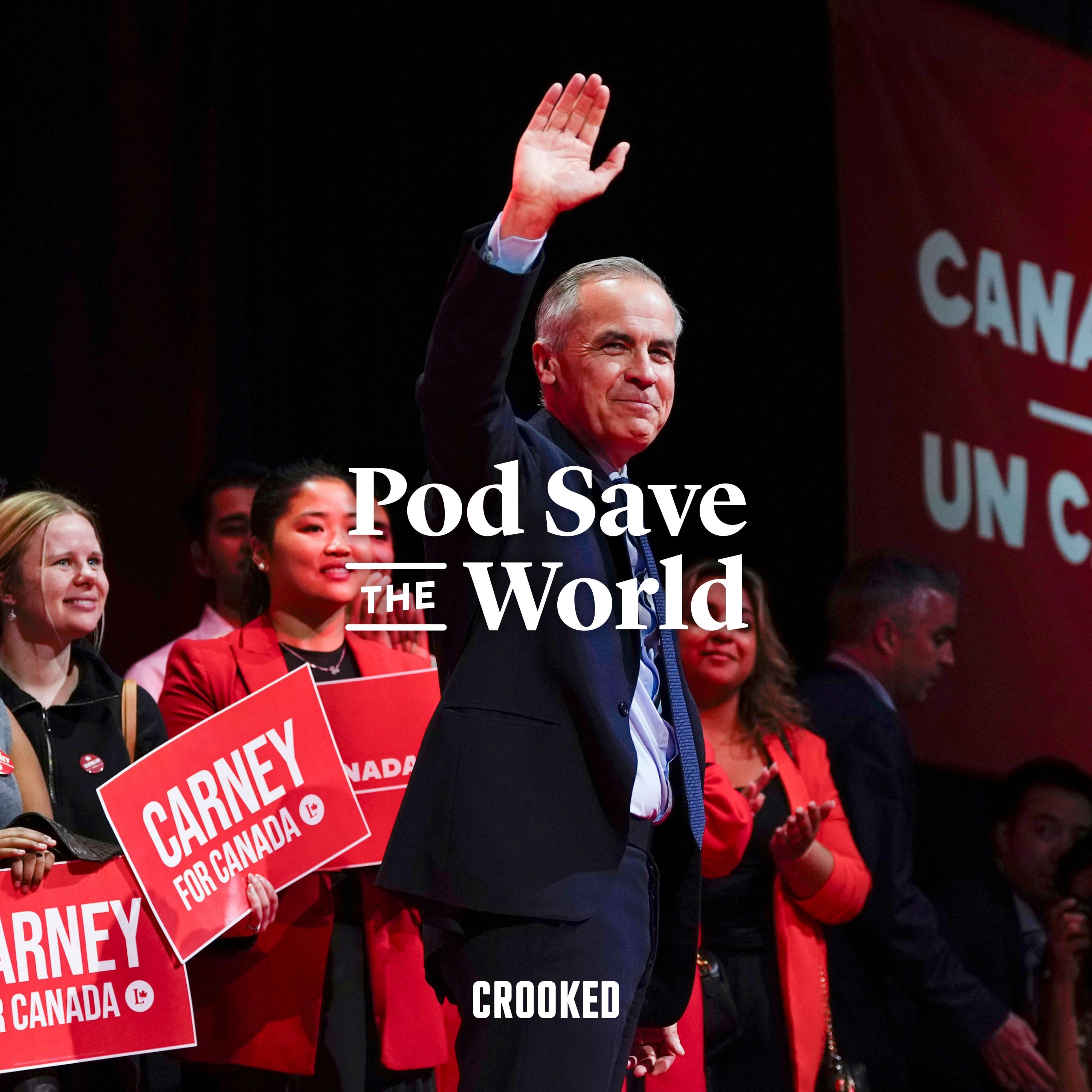
Pod Save the World
Canada Elects the Anti-Trump
01:32:00
Ben and Tommy discuss the Liberal Party’s shocking come-from-behind victory in the Canadian election and why it was a rebuke of Donald Trump, Ukrainian President Volodymyr Zelensky and Trump’s meeting at the Vatican and why Trump’s peace talks with Russia have failed, and the never-ending chaos swirling around Defense Secretary Pete Hegseth. They also talk about the escalation in tensions between India and Pakistan after a terrorist attack in the Kashmir region, the horrifying, deteriorating situation on the ground in Gaza, and a new investigation from Channel 13 news in Israel about the Biden administration’s disastrous approach to the war in Gaza. Then Ben speaks to Oleksandra Matviichuk, a Ukrainian human rights lawyer and Nobel Peace Prize Laureate about the devastating humanitarian impact of the ongoing war in Ukraine.
Loading summary
Transcript237 lines
- [00:00]
Tommy Vittor
This podcast is sponsored by Squarespace. Squarespace is the all in one website platform designed to elevate your online presence and drive your success. Squarespace provides all the necessary tools to claim your domain, build a professional website, expand your brand and facilitate payments, making it the ideal solution for businesses of all sizes. Squarespace gives you everything you need to offer services and get paid all in one place, from consultations to events and experiences. Showcase your offerings with a customizable website designed to attract clients and grow your business. Start with Blueprint AI, Squarespace's AI Enhanced Website Builder to get a fully custom website in just a few steps, using basic information about your industry goals and personality to generate premium quality content and personalized design recommendations. Every dream needs a domain. Squarespace Domains makes it easy to find the best name for your business at one fair, all inclusive price. No hidden fees or add ons required. Plus, Squarespace provides everything you need to bring more of your dream to life. Whether that means building a website or or adding a professional email service, don't wait to claim your name. Invest in your dream domain today. Head to squarespace.com for a free trial and when you're ready to Launch, go to squarespace.comworld to save 10% off your first purchase of a website or domain. That's squarespace.com world if you worldos are looking for another great podcast to add to your queue, consider Malcolm Gladwell's Revisionist History. This season, Gladwell and his team are investigating everything from the secret behind Thomas's English muffins, perfect nooks and crannies to why American sirens are so unbearably loud to the merits of Paw Patrol. Yes, that's right. Malcolm Gladwell defends the hit children's TV show against its harshest critics. I'm a big Revisionist History fan. I will be benching this entire series. I recommend you do too. Listen to Revisionist History wherever you get your podcast. Welcome back to Pod Save the World. I'm Tommy Vittor.
- [01:55]
Ben Rhodes
I'm Ben Rhodes.
- [01:56]
Tommy Vittor
Speaking of elbows up, are we gonna get a Celtics Knicks playoff series?
- [01:59]
Ben Rhodes
We are gonna get a Celtics Knicks playoff series. It's gonna be very. It's not gonna get chippy. It's gonna get very chippy at the.
- [02:04]
Tommy Vittor
We'Re gonna be throwing buzz.
- [02:05]
Ben Rhodes
World headquarters.
- [02:07]
Tommy Vittor
We're both getting ahead of ourselves. We have game fives tonight, right?
- [02:10]
Ben Rhodes
Yeah, yeah. But I think we got this Orlando, and I especially think you've got this.
- [02:14]
Tommy Vittor
Orlando Magic's not the best team, but good for you guys. I'm happy for New York. Kind of.
- [02:19]
Ben Rhodes
Yeah. Because you like a pack pretty. Certainly you're going to win in five or six games against us, you know, which I would probably bet on.
- [02:26]
Tommy Vittor
I love everything about living on the west coast, especially NFL game times and starts. But unfortunately a lot of these basketball games are like right in the middle of the hardest sort of bedtime periods with small kids.
- [02:39]
Ben Rhodes
Today, game five, it's like 5:30 our time. It's 4:30. The Knicks game is at 4:30. I think you're at 5:30 and which is like right in the middle of pickups. And so it's gonna be a lot of Hulu on my phone in pockets.
- [02:53]
Tommy Vittor
Yeah. When I'm like, hey Hannah, can you just do a 2 year old and an 11 month old at the same time by yourself so I can watch Jason Tatum.
- [03:00]
Ben Rhodes
Yeah.
- [03:02]
Tommy Vittor
Anyway, we got a great show for you guys today. Elbows up is of course a shout out to our Canadian friends who just had a big election Monday that is being perceived as a global fuck you to Donald Trump. Fingers up, Middle fingers up. Then we're gonna turn to the latest in the war in Ukraine, including Trump's meeting with Volodymyr Zelenskyy in the Vatican, latest cynical ceasefire proposal. Somehow, Ben, the news cycle around the disaster that is Secretary of Defense Pete Hegseth is still going. It's shocking to me that we're still talking about this, but we'll get you guys up to speed on that and we'll explain why tensions between India and Pakistan are as tense as they've been in decades. The latest grim news from Gaza and an infuriating report out of Israel about the Biden administration's handling of the war. Gonna have to do some deep breathing.
- [03:47]
Ben Rhodes
Before we get to that part. Yeah.
- [03:49]
Tommy Vittor
And then you did our interview today. What do we got?
- [03:51]
Ben Rhodes
Yes, people should. I know we always say this, but we always do this Extra. Please stick around for this one with Aleksandra Mutvichuk, who's a human rights lawyer, the head of the center for Civil Liberties in Ukraine and the 2022 Nobel Peace Prize winner. So she's got that some good credentials right there. Yes. But she gives a very raw perspective. I mean, we talk a lot about the politics and what politicians are saying, but this is someone who literally documents war crimes on a regular basis. Someone who's been a justice advocate. And so we talk about what's the perspective of being in Ukraine right now where there have been increasing bombardments in Kyiv, where Alexandra is, to have this kind of absurd conversation about the politics of things when you're still living through a war. And so it's a perspective that we need to bring to bear. How are Ukrainians thinking about what justice means for what's happened to them? What's the capacity for justice in the broken international system that we're living through right now? Kind of what sustains her and keeps her going, what her vision for the future of Ukraine, what it should be. So it's very, very powerful perspective that we don't hear enough from in terms of Ukrainians on the front lines. So check it out.
- [05:04]
Tommy Vittor
Did you ask her to say thank you and was she wearing a suit?
- [05:07]
Ben Rhodes
Yeah, well, you know, to be honest, like, listen to this interview. I know I said this to you. I came to your office. Listen to this interview, and then imagine J.D. vance saying, did you thank us while you're listening to it. And you'll know what I'm getting at when you hear the interview.
- [05:24]
Tommy Vittor
Yeah. Ben was describing to me some of the details, and all I could think of was that Oval Office meeting and how embarrassing our leaders are and how embarrassing a lot of our press corps is, too.
- [05:34]
Ben Rhodes
And by the way, you know what was kind of heartbreaking is she did say thank you without me even asking her for what Americans have done for Ukraine, which she did not need to do.
- [05:43]
Tommy Vittor
Someone tell J.D.
- [05:45]
Ben Rhodes
Yeah.
- [05:45]
Tommy Vittor
All right, Ben. So let's start with our buddies in Canada, and everyone should check out that interview. President Trump has had a big 100 days, and he can now add to the list losing a Canadian election to his list of accomplishments. So golf clap to him. Former central banker Mark Carney won the Liberal Party its fourth consecutive term in office. This outcome was almost impossible to imagine back in December or January, when Prime Minister Justin Trudeau started getting into serious political trouble and then resigned. At the time, the Conservative Party was ahead by as many as 25 points in some polls. But then Donald Trump decided to open his big, stupid mouth. He was threatening to destroy the Canadian economy with tariffs put in place a lot of those since. And he's been threatening to make Canada the 51st state. And suddenly, within Canada, a debate erupted over who can best stand up to Trump. And that became the defining issue of this election. And the results are in. And Canadian voters have decided that not only was Conservative Party leader Pierre Poliev not the right guy to defend Canada from Trump, POV even lost his own seat in Parliament. So tough night for them. It's also not clear whether he's going to reign the leader of the party itself. So head spinning stuff here, Ben. This is a clip from Prime Minister Mark Carney's victory speech Monday night.
- [06:57]
Ben Rhodes
As I've been warning for months, America wants our land, our resources, our water, our country. Never. But these are not, these are not idle threats. President Trump is trying to break us so that America can own us. That will never. That will never, ever happen. When I sit down with President Trump, it will be to discuss the future economic and security relationship between two sovereign nations. And it will be with our full knowledge that we have many, many other options than the United States to build prosperity for all Canadians.
- [07:49]
Tommy Vittor
I love the dude kind of like calmly yelling, shame.
- [07:52]
Ben Rhodes
Yeah, yeah, yeah. Very Canadian. Yeah.
- [07:55]
Tommy Vittor
So just a couple thoughts, Ben. First of all, I mean, it is impossible to overstate how massive this comeback was for the Liberal Party and what an own goal it was for Trump. Trump could have had an ideologically compatible leader in Canada that he could work with. Instead, he has a guy who was literally elected with a mandate to fight him. So that's his new political reality, and not a weak one like Justin Trudeau, like a freshly installed Mark Carney. Also, you and I were laughing about how, you know, you don't see a lot of pundits or pollsters talking about how the angry electorate and the kind of, like, populist, curious countries all over the world that people are looking for, some like, globalist central banker with degrees from Harvard and Oxford. But that is what Canadians just voted for. Like they wanted competence and stability and they didn't care that Mark Carney is Steve Bannon's worst nightmare.
- [08:46]
Ben Rhodes
Yes, this is a huge upset result in the context of where this race stood a couple of months ago. And I mean, to unpack a couple pieces of this, the first obvious point as you made is that Trump has essentially accelerated a backlash to Trumpism globally in ways that we need to continue to watch. Canada is the obvious first place where his threats, his disrespect, his disregard for the U.S. canada relationship and for Canadian sovereignty clearly led to this massive pendulum swing to Mark Carney. But it's not the last place. We've talked about the fact that Australia has an election coming up where the center left Labour Prime Minister Albanese, had been losing in polls and is now, at least even if not in the lead, by the way, very smart of Canadians and hopefully Australians. Because if you want to learn something from us, don't take this risk. You may not get your country back if it goes down this road. And that leads to a second point, which is that Poliev really did try to tread in this Trump light space where they were increasingly bombastic, xenophobic. You had him trying to kind of capture the energy we saw in that kind of weird trucker, anti shutdown protest in Ottawa. You saw an increasingly right wing media ecosystem growing up in Canada. And so I think voters are not dumb. They saw, wait a second. This might feel good to some of us because we're tired of globalism or we're tired of, you know, the elites, or we think Justin Trudeau was in there for too long, but it's really dangerous to go down this road, both because it could weaken us to Trump, but also because it could turn us into kind of a weaker version of Trump. You know, and so if Trump actually doing the things that he said he wanted to do in the second term the way that he did in the first, it could be the breaking point for the momentum for this kind of politics and democracies. We have to watch that. We'll see. You know.
- [10:45]
Tommy Vittor
Yeah, and you're right. I mean, Mark Carney, I mean, Mark Carney did his best to tie Pierre Polyev to Trump in every way. I think they were calling him Trump Lite. They were kind of like making videos of them morphing into each other. So it really did become the defining issue.
- [10:57]
Ben Rhodes
Yeah. And now the second thing, David Axelrod, our former guru on the Obama campaign, used to say that Americans look for the opposite person of the previous person. And so the first time he said this was in 2008, when Obama was very much an opposite of Bush. But actually, if you stretch it forward, Trump is kind of an opposite of Obama. Biden's got an opposite. It's a pretty coherent way of looking at things. And look, Carney is not only someone who stands up to Trump, he's the opposite of Trump. A man with deep experience in international finance at the bank of Canada and at the bank of England, a man with experience managing crises instead of creating crises, dealing with the financial crisis in 08 in Canada, dealing with Brexit in 2015. And what we've seen is he's already kind of brushed back Trump. One of the more interesting reports I saw, Tommy, is that in the one phone call they had in which Trump came out and actually didn't disparage Carney in the same way they did Trudeau, there's a rumor that Carney threatened to dump all of America's bonds. And he knows what he's doing. He's a former Senate bank.
- [12:09]
Tommy Vittor
He has leveraged.
- [12:10]
Ben Rhodes
He knows where he's got leverage points. And we've already seen Canada, you know, signed LNG deals with China. Like, this is a man who isn't just talking the talk. Like, he actually knows how to kind of run circles around Trump, even with Canada being a much smaller and more vulnerable economy, even as Canada may have to absorb an enormous hit from tariffs and things that Trump's doing. This is a guy that knows how to work the system that America created that Trump doesn't understand.
- [12:39]
Tommy Vittor
Yeah. This is becoming Trump's Achilles heel. You're also seeing this with the Chinese. They know the weaknesses and pressure points. Carney also took some steps to distance himself, not just in words, but in policy, from Trudeau. He got rid of their carbon tax. He basically cut the rate down to zero. Carney also pledged to get rid of Trudeau's cap gains increases. And I think Trudeau just being off the stage was absolutely critical for Carney because he could project himself as a firm break from the previous iteration of the Liberal Party, even if it's a fourth consecutive Liberal Party term. Carney's fav. Unfaved numbers actually improved during the election, which is very surprising for someone who was kind of incumbent. But, I mean, you just don't often see that. Usually you just get worn down. Pierre. Polly. I've ended it. 40 fave, 45 unfave. Ben. I saw this in one story that at an April rally, a woman yelled, lead us Big Daddy at Mark Carney. So that surprised me.
- [13:31]
Ben Rhodes
I mean, he does kind of exude a certain paternal big daddy like father. Yeah, yeah, yeah. But look, in terms of what to expect, I mean, in normal times, you know, Mark Carney is your kind of hyper qualified globalist. Right. He's a man that, despite what he did with the carbon tax, has been focused on climate change and climate finance for a long time. He's someone who's tried to navigate ways to minimize the negative impacts of globalization while not junking the whole system. But I think what's interesting that we'll also have to watch beyond just the backlash to Trumpism is, you know, did he actually stumble into a formula here that is different and kind of interesting where, you know, he's combining like a. A certain form of competence and nationalism. I mean, because there's a lot of nationalism when he says very much and a kind of the authenticity of a technocrat, you know, like, he comes across as a very authentic guy. Yeah, I actually watched a lot of these videos with him and. But he's not authentically pretending to be Someone else. He's not, like, going on you, Theo Vaughn, and trying to talk about pop culture. He's authentic by talking about, like, banking and hockey, which he clearly likes. And so, I don't know, maybe this is a different formula than we've seen. He is who he is. It's appealing to people and it doesn't fit naturally into any. It's hard to think of, what campaign would you compare him to that we've seen in recent years? It doesn't. It's. It's different than Keir Starmer, who's just kind of like, we're going to make things normal again. Like, there's a. There's a fight to Carney, and obviously Trump gives him the foil. But that. Look, I'm not trying to raise expectations too high. He's not like some uber charismatic guy.
- [15:20]
Tommy Vittor
And what you're getting at is he was like the right political kind of the moment.
- [15:24]
Ben Rhodes
Right.
- [15:24]
Tommy Vittor
It's not just that Trump is starting to fucking annex them. It was that we're threatening to destroy their economy and create a financial crisis via tariff. And this guy's like, hey, hand up. I was a central banker.
- [15:35]
Ben Rhodes
I'm the guy in London and Canada. Huckleberry, I'm your guy.
- [15:38]
Tommy Vittor
Friend of the pod. And new Democratic Party leader Jagmeet Singh also lost his seat in a brutal night for the ndp. His party. Jagmeet Singh came on a couple of years ago, think of them as like, kind of the Bernie Sanders wing of the Democratic Party, but they went from winning 25 seats in 2021 to a projected seven seats Monday night, which I think, like, lowers them below a certain threshold to be officially represented in Parliament. And I think what, ultimately what happened is the race just became this binary question over who can best stand up to Trump. And smaller parties like the NDP got squeezed out. I also some of the coverage that former Congressman Pete Hoekstra is just arrived Yesterday to be U.S. ambassador to Canada, which is just very funny because that went from, like, kind of a cushy.
- [16:24]
Ben Rhodes
You know, donor gig, kind of a plum job for a donor to a.
- [16:27]
Tommy Vittor
Real, you know, kind of a. You're going to be fighting.
- [16:29]
Ben Rhodes
Yeah, yeah. Every day in Ottawa.
- [16:30]
Tommy Vittor
Elbows up, Pete.
- [16:31]
Ben Rhodes
You're in hostile territory. Yeah, Peter, actually, get those elbows up. Yeah, well, we wish them the best. We should just say we love our Canadian listeners and we're very glad that you have absolutely insane, smart, tough prime minister. Again, not perfect, but better than the alternatives.
- [16:44]
Tommy Vittor
Yeah, better than the alternative. Last thing I saw, Ben, that I thought would interest you in particular, the New York Times had an interesting piece a few weeks back about how Meta had blocked actual news on the Facebook and Instagram feeds in Canada because they did this back in 2023 because those assholes don't want to pay publishers for news. It would have cost them an estimated 44 million a year out of their $164 billion per year in revenue. So there has been this huge proliferation of right wing accounts that post kind of either agitprop or fake news all day long. And I read about that. It made me very nervous for what the impact might be on the election. Obviously it ended okay, but it will likely be an issue going forward and it'll get worse.
- [17:28]
Ben Rhodes
I mean, the thing is, you know, usually you're kind of at your high water political mark after you get elected.
- [17:33]
Tommy Vittor
Right.
- [17:34]
Ben Rhodes
Those accounts, that right wing machine, in part because they sense. Yeah. That this was a blow to the momentum of Trumpism. I think you're unfortunately going to see an uptick in kind of right wing garbage in Canada and other places as well, certainly Australia. And look, it'll be interesting to see what the conservatives do in Canada because do they, out of fear that they're going to be out of step with. If their prime minister is standing up to Trump, do they want to be seen as attacking their prime minister. Right. Or do they follow the lead of the Republican Party in this country and they don't care and they just become nihilists and they're trashing him and they're lying about things and maybe they're not siding with Trump, but they're just trying to tear Carney down. That's an interesting political choice of the conservatives because there's political danger in attacking your prime minister when your country's under attack, but they kind of have some of that right wing DNA that leads you in those directions.
- [18:31]
Tommy Vittor
Yeah. Big, big choice for the Conservative Party about how to forge a path forward. Positive the world is brought to you by Aura Frames. The number one thing, Levitt, that your mom wants is for you to give her a call. That's what she told me.
- [18:49]
Ben Rhodes
Yeah, she does.
- [18:51]
Tommy Vittor
But number two. But I have a Sunday call. I have a Sunday call with you. You have a standing call. It's not standing, but it just. Basically it's over the weekend and Sunday after afternoon, it's usually if it's. I'll. If. If she calls me something, it's bad.
- [19:02]
Ben Rhodes
I failed.
- [19:02]
Tommy Vittor
Yeah. Yeah, that's good. Well, you can give her that call on Sunday. You can also give her An Aura Digital picture frame. I will give her an Aura Digital. They're really cool. You can add unlimited photos and videos and invite as many people as you want to a frame. There's absolutely no hidden fees or subscriptions. Every frame comes packaged in a premium gift box with no price tag. It only takes about two minutes to set up a frame. Using the Aura app, you can upload videos up to 30 seconds long. And your favorite live iPhone videos will play right on the frame. The embedded speaker can also play audio on demand. You have complete control over who has access to your frame, and the Aura app lets you share photos more securely than with email, which many other digital frames require. I love living in la, but my mom's all the way across the country. My sister is down in Virginia, so we're all a little too far away. I think an Aura frame is a great way to stay in touch to upload the newest photos of a pet or your kids or whatever's going on in your life. Cool photos from a trip and my mom loves hers and it's a great gift. So Aura Frames was named the best digital photo frame by Wirecutter and was featured in 495 gift guides last year. So the next time you need to call your mom, you can also send her a new pic of you from that trip you're telling her all about right from your phone. Aura has a great deal for Mother's Day. For a limited time, listeners can save on the perfect gift by visiting auraframes.com to get $35 off plus free shipping on their best selling carver mat fr. That's auraframes.com promo code. World support the show by mentioning us at checkout. Terms and conditions apply. Three distinct all electric Cadillacs. Some drive them for the performance, others drive them for the range, and some drive them because it's the only way to make an entrance. Three different ways to turn every drive into an occasion. Whatever your reason, there's never been a better time to say let's take the Cadillac. The all electric Cadillac family of vehicles. Escalade, IQ Optic and Lyriq. All right, Ben. So a lot has happened since we last covered the war in Ukraine, but it's still not clear if any progress was actually made. You know, like a lot of events.
- [21:13]
Ben Rhodes
A lot of Marco Rubio threats. We'll get to those and pick up his toys and go in the other toy room.
- [21:18]
Tommy Vittor
He's very sad. So Trump and Ukrainian President Volodymyr Zelensky met in the Vatican this past weekend where they were attending the Pope's funeral because of JD Vance, as we mentioned last week. Here's a clip of Trump talking about that conversation with Zelensky, their first conversation since that disastrous Oval Office meeting back in February. And then also Trump comments on the peace talks generally.
- [21:39]
Ben Rhodes
We had a good meeting. It was a nice meeting. It was a beautiful meeting. I'll tell you, it's the nicest, the nicest office I've ever seen.
- [21:46]
Tommy Vittor
You trust President Putin.
- [21:48]
Ben Rhodes
You know, in about two weeks we're going to see what happens. I want to see what happens with respect to Russia because Russia had been surprised and disappointed, very disappointed that they did the bombing of those places.
- [22:02]
Tommy Vittor
After discussions, President Zelensky talk to you about Crimea?
- [22:06]
Ben Rhodes
Well, he did, very briefly. But Crimea was given away by Barack Hussein Obama and by Biden. That's 11 or 12 years ago.
- [22:15]
Tommy Vittor
That's a long time ago.
- [22:16]
Ben Rhodes
I don't know how you could bring up Crimea. Go back to Obama, ask him why they gave it up. They gave it up without a shot being fired. By the way, what do you want Vladimir Putin to do? Well, I want him to stop shooting, sit down and sign a deal.
- [22:31]
Tommy Vittor
Very sober, forward looking policy there from Trump. So at the very end there, he's referring to Russia's airstrikes on Kyiv last week that killed 12 people and wounded over 90. That Russian attack came just after the US had proposed a deal that would recognize Crimea as Russian territory, freeze the war on current lines and de facto recognize Russian control over major portions of the four provinces in eastern Ukraine. About 20% of their territory, give a commitment that Ukraine will never join NATO and lift sanctions on Russia. So basically Putin's entire wish list was offered up and he is still firing shots.
- [23:03]
Ben Rhodes
Yeah.
- [23:03]
Tommy Vittor
Even though Trump's real estate buddy turned emissary, Steve Witkoff has been doing the actual meetings with Putin. I think we're up to four at this point. I think usually one on one, usually with no actual professional staff. Secretary of Sunday shows Marco Rubio went on Meet the Press this weekend to announce that this is a critical week for the talks. Here's a clip of Rubio.
- [23:22]
Ben Rhodes
This week is going to be a.
- [23:23]
Tommy Vittor
Really important week in which we have.
- [23:25]
Ben Rhodes
To make a determination about whether this is an endeavor that we want to continue to be involved in or if it's time to sort of focus on.
- [23:31]
Tommy Vittor
Some other issues that are equally, if.
- [23:34]
Ben Rhodes
Not more important in some cases.
- [23:35]
Tommy Vittor
But we want to see it happen. There are reasons to be optimistic, but there are reasons to be realistic, of course, as well. We're close, but we're not close enough. Inspiring. Putin's latest Demand is a three day ceasefire from May 8th to the 11th, so that this pesky little war he started doesn't interrupt Russia's World War II Victory Day celebrations. So, Ben, this is obviously a terrible deal for Ukraine, what Trump has proposed. German Defense Minister Boris Pistorius described it as one that, quote, Ukraine on its own could have gotten a year ago. It is akin to a capitulation. I cannot discern any added value. There was some recent reporting by Christopher Miller, friend of the pod, about how Ukrainians are very worried that Trump is going to walk away from these talks. But I guess I remain confused at how that would be much worse for Zelensky if the Europeans actually stepped up to support him. But I don't know. What did you make of just this latest round of back and forth Secretary.
- [24:27]
Ben Rhodes
Of Shame, Marco Rubio? You know, first of all, these incessant threats, because he said the same thing like two or three weeks ago. Right. Like, I mean, we're making fun of him, but it really is that bad for your credibility, you know, seriously, to just like keep threatening to walk away from a table that you keep sitting at, you know, because then people that.
- [24:47]
Tommy Vittor
Your boss sits at.
- [24:48]
Ben Rhodes
Yeah, yeah, Steve Wyckoff. Yeah, exactly. I mean, fair point. Maybe he doesn't know, but I mean this seriously. Like, you can't. This is, this performative nonsense speaks to the bigger problem with their policy, which is that the reality doesn't exist like it exists for them on Fox News. In reality, you can't just make the war in Ukraine stop so that you can look good on television, which is what Trump seems to be interested in. Putin. If you're giving him everything he wants at the negotiating table, of course he's gonna keep pushing farther and waiting to see if he'll give him more. You know, that's not a mystery to anyone. When Trump says he's surprised that Russia is still bombing Ukraine, why is he surprised anybody knows anything about Putin? So that's the first point. The second point, I found it interesting, Tommy, that Trump felt the need to have this visible meeting with Zelensky. They released those photos, the White House did. They wanted people to see him sitting with Zelensky in serious conversation. And then he came out and said, you know, the nicest things he possibly could. He still doesn't really compliment Zelenskyy the Ukrainians, but he kind of indicated it was a good meeting. To me, it showed that both Trump and Zelenskyy needed the appearance of that meeting for their own politics. Now, Zelenskyy, it's obvious why. Like they're worried not just about the American negotiating position, they're worried that America will walk away from the table and that America will pull military and intelligence support. And so Zelenskyy needs to be seen to at least be trying to maintain that American relationship. I think it showed real vulnerability for Trump that he felt the need to have that meeting and say those things, because I don't think he's just doing that cuz he decided to wake up one day and be pissed at Putin. He's known who Putin was all along. I think he's getting shit from. Look, the polls is an 8020 issue in this country. I think Republicans in Congress, this is the first issue where they've been willing to really criticize himself.
- [26:43]
Tommy Vittor
You're seeing a lot of them actually start to come out and criticize the policy.
- [26:46]
Ben Rhodes
He's gonna need their vot stuff. Other world leaders, Europeans are not like the Germans are not budging. They're saying this is bullshit, this is a shitty deal. And that's part of what's frustrating Secretary of Shane Rubio is because he goes to meeting with the Europeans and they tell him that. And so even Trump, to me it's a sign. Don't let up. Stand up to this guy. Keep standing up to the bully and the bully will have to move in your direction. Now, in terms of the chances for ending the war, we're no closer today than we were a week ago because the Russians are intransigent, Putin's intransigent. And unless Trump is actually willing to go beyond just like truthing about it to like applying some additional pressure or taking some Ukrainian, I mean, the Crimea point is perfect. I mean, first of all, obviously we didn't give Barack Obama didn't own Crimea and give it to somebody, but frankly, we never recognize the annexation of Crimea. Not Obama, not Trump in his first term, not Biden.
- [27:44]
Tommy Vittor
And so he forgets he was president one time.
- [27:46]
Ben Rhodes
Trump recognizing the annexation of Crimea, which is what's being discussed, is a huge shift in US policy that he doesn't need to give. You know what, if you're frustrated with what Putin's doing, rescind that effort at the negotiating diplomacy. You know what Putin, like, you know, you had your chance, you fucked it up and now we're taking this back off the table. Yeah, yeah, like you have to do things that incentivize Russia to change behavior.
- [28:06]
Tommy Vittor
Trump views this through such a petty personal Lens. He did this long interview with Time magazine. They asked him, is there anything that Putin could do that would cause you to say, you know what? I'm on Zelensky's side now. And his response was not necessarily on Zelensky side, but on Ukraine's side. Yes, yeah, but not necessarily on Zelensky side. I've had a hard time with Zelensky. It's like, get over it, you whiny bitch. The man is defending his country. Also, in that same interview, he was asked, you said you did the war in Ukraine on Day One. Trump goes, well, I said that figuratively. I said that as an exaggeration. Obviously, people know when I said that, it was said in jest, because, of course, we all joke about a conflict that you yourself said could lead to World War Three or was World War iii. But to your point, about, like, how pathetic Trump looks, I mean, Trump's initial response to the horrific airstrikes on Kiev was to truth social. Vladimir, comma, stop, exclamation point. Shocked that one didn't work.
- [28:58]
Ben Rhodes
Yeah, yeah. I mean, that. That's the thing. It's a man that. That there's something dangerous. And if you study, like these autocrats, too, about someone whose feedback loop is constantly sycophantic and positive, because the feedback loop from the world is not like that. And you can truth that, and people in the Republican Party say, yes, sir. Yes, sir, but Vladimir Putin's not gonna do that. And to just bring some more into it and listen to the interview with Alexandra, There are other things that the US could be bringing in this negotiation. International justice. Are there going to be efforts to hold Russia accountable for the rest of these people's lives for what they've done to Ukrainians? What about the 20,000 children?
- [29:37]
Tommy Vittor
What about the stolen kids? Like, that's the part that it's just.
- [29:40]
Ben Rhodes
What are we doing to insist on those children being returned? Right? There are different. Sometimes when a negotiation is tilted in one side's favor, part of what you have to do is enlarge the universe of things being discussed. Trump is only discussing things that Putin wants to talk about. Annexation of that 20% of Ukraine's territory, Ukraine's membership in NATO. You know, these are Putin's list. There's a Ukrainian list that has things like the 20,000 children, has things like war crimes, that has things like what happens to sanctions, what happens to the frozen reserves. There's, like, hundreds of billions of dollars in frozen Russian reserves that they want back, that the Europeans might want to use to Support Ukraine. Right. America could say, you know, we're going to work with Europeans to get this money to the Ukrainians if you don't deal. So there are, there are.
- [30:23]
Tommy Vittor
He's using no leverage. He's making vague threats of slapping the same sanctions back on Putin.
- [30:27]
Ben Rhodes
That's right.
- [30:28]
Tommy Vittor
Putin is not worried about.
- [30:29]
Ben Rhodes
Listen to JD Vance saying that somehow we have no levers to pull here other than like somehow going to war ourselves. There are other things we could do.
- [30:35]
Tommy Vittor
Yeah, a couple other quick things, Ben. So North Korea publicly acknowledged for the first time that they had sent troops to Russia to fight against Ukraine. Kim Jong un announced that they would build a monument to their heroism. So I'm sure that the families of the estimated 4,000 North Korean troops who have been killed or wounded feel great about that. Western intelligence officials believe that North Korea sent about 14,000 troops total to fight in the Kursk region of Russia. That was that part of Russia that the, the Ukrainians invaded and briefly occupied. It does sound like the combined Russian North Korean forces have driven Ukrainian troops out of Russian territory. So they've lost that as a bargaining chip. But you know, 4, 000 casualties out of 14, 000 guys is a pretty high rate. And that's some pretty intense combat, apparently. Also there was this report of a high ranking Russian general who was killed in an explosion outside of Moscow last week. Right. When Wyckoff was about to land actually in Russia for his meeting with Putin. I guess he walked by a car that had been rigged with an ied. Russia called it a terrorist attack that was conducted by the Ukrainians. The Ukrainians refused to comment on these things as sort of a general policy, but it would match up with past actions by their special services. So the war very much still going.
- [31:48]
Ben Rhodes
Yeah, no, and I was just like the 4,000 number, to put that in context, that's more than the number of Americans that died in Afghanistan.
- [31:55]
Tommy Vittor
Well, that was, I think that was killed and wounded.
- [31:56]
Ben Rhodes
Just. Oh, killed and wounded. Okay. Well, but either way, I mean, it suggests that the Russians are treating the North Koreans like cannon fodder, which is how they often treat their own troops, you know, and, and you know, we'll see whether, you know, over time this is a military alliance that sustains itself or whether this was kind of a one off in Kursk. But I mean, this is this kind of globalization of the war in Ukraine is something we have to continue to watch because we've seen these Chinese, you know, reports of Chinese, you know, personnel of some sort being in Ukraine.
- [32:28]
Tommy Vittor
Yeah. What did you make of those? I don't think we ever talked about that on the show. I mean, there are some reports or some suggestions in some of the reporting that maybe they were more like intel officers.
- [32:35]
Ben Rhodes
Yeah. So, you know, there were a handful of Chinese, including some that were captured by the Ukrainians. So we know this. This happened. The Chinese kind of denied the Chinese government that they were somehow involved. I don't believe that you have Chinese people ending up on the front lines in Ukraine without the Chinese Communist Party that has kind of total control over things, at least being aware of it. I don't know. I mean, one speculation that I've heard that's interesting is that they are like intel officers, that they're learning things. That they're learning. They want to learn from what's happening in this conflict. They want to learn about the ways that things are, the way it's being fought. They want to learn about different weapon systems, and that's certainly possible, too. And we've seen this. I mean, not to, you know, not to use a historical analogy, it's a little troubling, but, like, Spanish Civil War vibes, right? Where, like, different parties start to creep in to see what it's like, modern warfare, anticipating some future war, you know, now let's hope that doesn't happen. But the war in Ukraine, the longer it goes on, we've seen different actors. You know, we. Look, there have been Americans there, too.
- [33:34]
Tommy Vittor
Including this really weird story about the son of a deputy director at the CIA killed in eastern Ukraine in 2024, fighting under contract for the Russian military. Very strange story. I don't know what to make of it.
- [33:48]
Ben Rhodes
It's an incredible story. People should check it out. Essentially, this kid went on a journey of sorts, and Michael Alexander Gloss, totally by his own choice, when and fought and died for the Russians. I've never seen anything like that. I mean, very senior CIA official, so I don't know.
- [34:04]
Tommy Vittor
Deputy director for digital innovation at the CIA. That's a very important job, I would wager.
- [34:10]
Ben Rhodes
Yeah, yeah. And one that the Russians would be interested in. So I don't, you know. But, yeah. Tragic, obviously.
- [34:16]
Tommy Vittor
Horrible. Tragic. Baffling.
- [34:19]
Ben Rhodes
But raises the bunch of questions.
- [34:21]
Tommy Vittor
Yeah, a lot of questions. Okay, Ben. So like we said at the top, somehow this story about Pete Hegseth, our leader at the Department of Defense, is still going.
- [34:29]
Ben Rhodes
Dear leader.
- [34:29]
Tommy Vittor
Yeah, dear leader. Last week we dug into all these details about top 8 to Hegseth, who are accused of leaking and fired. This week we're talking about it again because Half of these dudes keep doing interviews. So the first one was Joe Casper, who was Hegseth's chief of staff. He did an interview with Ryan Grimm at Dropsite News.
- [34:47]
Ben Rhodes
Interesting choice.
- [34:48]
Tommy Vittor
Yeah, like that's not a criticism.
- [34:50]
Ben Rhodes
Done an interview with Ryan Grimm.
- [34:52]
Tommy Vittor
No, but Ryan and Dropsite, they are hardly fans of the Trump administration. Like it's hard to think of people less ideologically aligned with Pete Hegseth than Ryan. So just bizarre. In this interview, Casper talks about like a possible investigation into whether he was doing drugs. He floats this crazy theory about the leaks and that it was all a set up. Like it's very paranoid, very weird. And then Colin Carroll, who was chief of staff to the Deputy Secretary of Defense, Steve Feinberg, did an interview with Megyn Kelly on her podcast. Let's listen to a clip of that.
- [35:23]
Ben Rhodes
Like if you look at a pie chart of, of the secretary's day at.
- [35:26]
Tommy Vittor
This point, 50% of it's probably leak, investigation, press. Like it's that and like that can't be.
- [35:32]
Ben Rhodes
That is a bad thing for America.
- [35:34]
Tommy Vittor
It's bad thing for the President's objectives.
- [35:37]
Ben Rhodes
And then in order to kind of.
- [35:38]
Tommy Vittor
Combat an image, it's hey, we're gonna.
- [35:41]
Ben Rhodes
Go do work out with the troops.
- [35:43]
Tommy Vittor
While that is important and it's a thing to do and get out there.
- [35:46]
Ben Rhodes
Because it helps with recruiting.
- [35:47]
Tommy Vittor
It just helps like with morale.
- [35:50]
Ben Rhodes
You know, if you're taking a half.
- [35:51]
Tommy Vittor
Day trip to naval academy at the.
- [35:52]
Ben Rhodes
Same time the budget is due and.
- [35:54]
Tommy Vittor
We really need some support here.
- [35:55]
Ben Rhodes
Like, come on, you gotta weigh priorities. My observation from the first 90 days, and this is gonna sound weird, is that we had less of a problem.
- [36:04]
Tommy Vittor
From like the deep state bureaucrats in the department than we did from maybe some people on our own team. They're polygraphing people actively right now in the department. There's just like a culture fear. It's people that are like political people, you know, that are on the team and no one's gonna wanna come into that environment. So if you've created that environment, you're basically, it's like a self fulfilling prophecy now where people are just going to.
- [36:28]
Ben Rhodes
Leave because no one wants to deal with that.
- [36:29]
Tommy Vittor
And then your, your team gets smaller.
- [36:31]
Ben Rhodes
And smaller and smaller.
- [36:32]
Tommy Vittor
You can't run a 3 million person.
- [36:33]
Ben Rhodes
Organization by kind of like having a cabal of five people and making decisions.
- [36:38]
Tommy Vittor
It's like shotgunning memos out.
- [36:39]
Ben Rhodes
That's not how, that's not how change actually happens.
- [36:43]
Tommy Vittor
And so I don't think that we ever, we struggled as an administration to really put a functioning team together. Damning stuff. First of all, no shit. It wasn't the career professional people leaking, it was the political. We all watched Trump 1.0, bud. Like we know it's your friends who are doing all the leaking. Also, Ben, if it's true that the Secretary of Defense is spending half of his day on leak investigations, that is scary. That's a huge problem. That's a horrible use of his time. And it's worth noting that in addition to the signal gate stories that we've covered about Hegseth sharing all this classified information in a commercially available app to people without a clearance, this German site or Spiegel did an investigation into how easy it was to find personal contact info for Hegseth. His email, a password for one of his email accounts, unlike hacked leaked forums. And it was him. It was Tulsi Gabbard as a bunch of other top administration officials. So like, this problem of their information security is far more serious than just texting Jeffrey Goldberg by accident.
- [37:41]
Ben Rhodes
Yeah, first of all, shout out to our team for that Supercut. It just captures things so beautifully, the essence of that. And it is like a guy wakes in the middle of night, he's like, you know, I woke up in the middle of night and I opened the window and it was, it was, it was dark outside. You know, like these are so obvious. These things are so obvious. But the thing that is striking to me, Tommy, is I've wondered something ever since this particular nutty nihilistic brand of the Republican party really started mushroom in the Obama years. I would always wonder like, do these people actually believe these things or are they pretending to believe these things? Right? And part of what you hear in that interview is that like someone who believes these things, genuine surprise being like, I showed up at the Pentagon and it wasn't full of a bunch of deep state, you know, operatives out to get us and then similarly shocked to be like this fundamentally unserious person who was put in charge of the Pentagon wasn't prepared to do anything other than manage his own image and go work out with the push ups like, well.
- [38:35]
Tommy Vittor
Of course, no shit, buddy.
- [38:36]
Ben Rhodes
That's who he is. What about Pete Hecks that has ever suggested to you that he wanted to dig into the details of the Pentagon budget or think about how to deal with strategy in a disintegrating world order? This is a man who, as long as he's at the Pentagon, is gonna spend half of his staring in the fucking mirror. Cuz like that's all he's really interested in doing in the first place.
- [38:57]
Tommy Vittor
He did put it in a makeup studio. It sounds like. Yeah, he usually likes to be drunk.
- [39:01]
Ben Rhodes
And here's the thing. There's such a trivialization of American politics and frankly, like, I think there's a sense out in the normie world that some of the resistance people are kind of cried wolf people. But actually these things, some of these things are very real.
- [39:19]
Tommy Vittor
No, this matters.
- [39:20]
Ben Rhodes
The fact that Pete Hegseth does shit on his private phone and his phone number could be fine by Der Spiegel is like a sign that the Chinese and the Russians and other people are in his phone and are seeing all this crap.
- [39:31]
Tommy Vittor
It's not hard.
- [39:31]
Ben Rhodes
This is not something that people are only saying on msnbc, resistance, Twitter. This is something that is happening again in the real world. And the entire Trump presidency is going to be this kind of dynamic of people who are living in an alternative reality being forced to exist in actual reality.
- [39:49]
Tommy Vittor
Yeah, I mean, being an opposition is easy. Governing is very hard. Colin Carroll in this interview also says that what Hegseth shared in that signal chat that was classified, he makes the point that Pete could have just been like, I have declassification authority, therefore it's okay to share it. But it's a bit of an end run around the process is supposed to work. But he's not wrong. Although Trump was asked about all this. Here's his quote. How about this for a vote of confidence? I think he's going to get it together. I had a talk with him, a positive talk, but I had to talk with him also. Ben, like one of the leaks that apparently flipped Pete out was this time story about this plan to brief Elon Musk on these top secrets US war plans with China. So there's been a lot more reporting on what was in the memo that was going to get shared with Elon, but luckily wasn't. According to the Wall Street Journal, the briefing was supposed to include information on 29 China related special access programs. So the most sensitive stuff the Pentagon does, like we're probably talking about unknown, at least to the general population, like sensitive technologies and weapons that are specifically designed for war with China, which is one insane. And also like more evidence that Trump and Hegseth's denials that this briefing was ever going to happen were a lie. We also learned, by the way that Elon sat in on Trump's interview with an Air Force secretary nominee. Pretty weird for a defense contractor.
- [41:06]
Ben Rhodes
Yeah. I mean here's like what's weird to me about this, first of all, you know, for most of eight years I was Deputy National Security Advisor level, got the Presidential daily briefing, was in the morning briefing with Obama the whole second term. I was never read into those types of things. Not cuz I was like, well you.
- [41:27]
Tommy Vittor
Weren'T gonna be like a 180 day employee charged with.
- [41:31]
Ben Rhodes
The point is'cause I didn't, I didn't need to know.
- [41:33]
Tommy Vittor
I'm making a joke that he doesn't know.
- [41:34]
Ben Rhodes
No, I know, I know, I know, I know you're making that joke. But I'm saying is like I had no need to know about some super secret technology that we might use in a war with China to carry out my duties. Right. Like why on earth, I mean. Yeah, no, this is your point. Like why on earth this contractor needed to know these things is really fucking suspicious and scary because all I can think of is one, you know, I don't know, gives him a leg up. And his contracting business with the Pentagon, that's the most likely scenario. Anything, anything he can learn that could help his SpaceX business or whatever.
- [42:09]
Tommy Vittor
Satellite procurement thing. Yeah.
- [42:10]
Ben Rhodes
Two, I don't know, maybe he wants to tell somebody about it. That's even scarier.
- [42:15]
Tommy Vittor
I wonder if he requested it or if this was Pete's. Where did this idea come from?
- [42:18]
Ben Rhodes
Well, it also shows how much they're in this kind of psychic grip of Elon that Pete Hex had been sitting there thinking about. What is this person? This is not a person that should exist in the U.S. government structure and the Air Force general, same thing. This person presumably might have some say over acquisitions. Absolutely. Acquisitions for systems that include Elon. Like the scale of corruption here is just mind boggling.
- [42:44]
Tommy Vittor
That Air Force Secretary at some point will likely have to decide okay, do we go with Boeing or SpaceX for this contract?
- [42:50]
Ben Rhodes
Exactly.
- [42:51]
Tommy Vittor
And that's what I think sitting in on your fucking job interview.
- [42:54]
Ben Rhodes
Yeah, Crazy. And that's what I think is about. And I should say by the way, like this is by no means the biggest fucking whole waft to dig out of but you know the next President is going to inherit a Pentagon that is probably going to be wired on Grok and SpaceX and all this crap.
- [43:08]
Tommy Vittor
And by the Chinese.
- [43:09]
Ben Rhodes
And we have to like be going through like the, the hal computer in 2001, just unplugging this shit, you know.
- [43:15]
Tommy Vittor
Also did you see that an aircraft carrier in the Red Sea accidentally dumped a $67 million FA18 Super Hornet fighter jet into the ocean?
- [43:25]
Ben Rhodes
I guess I did.
- [43:26]
Tommy Vittor
They were towing it from the hangar bay. It sounds like the boat was turning to reposition itself to deal with Houthi missile.
- [43:32]
Ben Rhodes
Well, I was going to say there were some questions about whether or not the reason it was turning like that might have been because of the way the Houthis were firing stuff at them. Which shows that the longer you're at war with the Houthis, like you start to lose planes, like you start to have accidents. I mean, the idea that you can have a cost free forever war, which is what they seem to think, cuts against all the experience of the forever wars.
- [43:52]
Tommy Vittor
Yeah, one person was injured. No one was killed, thank God. But it's not good to dump a 67 million dollar plane into the ocean. Also, that same ship, the USS Harry Truman collided with a merchant ship back in February. The commander at the time was relieved. But to your point, I mean, these things are out there, very dangerous. Okay, we're going to take a quick break, but before we do, we want to tell you about Shadow Kingdom Ben listeners to join the over 1 million listeners around the world who are listening to Shadow Kingdom, God's Banker. It's our newest true crime podcast. All the episodes are out now, so you can binge the story from start to finish. ICE host Nicolo Mangioni investigates the mysterious death of the Vatican banker. Uncovering a web of mafia ties, a fascist secret society, covert Vatican ops, and a missing $1.2 billion. He interviews spies, prosecutors, the last person to see Calvi the banker alive, all to answer one question, who killed God's banker? Maybe they'll figure that out at the conclave. It's coming up soon. I mean, what if God's Banker get into that?
- [44:49]
Ben Rhodes
Yeah, get some extra. Even more intrigue at the conclave.
- [44:52]
Tommy Vittor
Get a good seat. Also, Ben, you just stopped by to talk with Stacey Abrams on her show Assembly Required with Stacey Abrams.
- [44:58]
Ben Rhodes
Yes. People should check this out. I, I loved talking to Stacey Abrams for Assembly Required. We basically talked about the nuts and bolts of what it means for the United States to be essentially absenting its position at the center of the world order. What are the implications for everyday Americans? What are the implications for the American economy? What are the implications for American security? So it's a real step back. Conversation very much supplements what we talk about, but it kind of, let's step back and look at the big picture. Stacey's very good at making us think about what does this mean for all of us, what should we do about it? It. So people should definitely check that out.
- [45:36]
Tommy Vittor
Cool. Will do. This podcast is supported by the International Rescue Committee. At the irc, we believe solidarity has no expiration date. As crisis continue in Gaza, Ukraine, Sudan and around the world, the IRC is committed to ensuring families can survive, recover and rebuild their lives. Your gift today will help rush health care, emergency supplies and other critical support to children and families in crisis zones around the world. The IRC is an incredible organization. They are doing amazing life saving work all around the world. They would absolutely need your support more than ever thanks to the Doge cuts to all USAID's work. Consider giving them a donation if you can as soon as possible because they need your money now. For a limited time, all donations are doubled to help the IRC meet this moment of unprecedented need. Make a difference. Match your gift@rescue.org rebuild that's rescue.org rebuild good news. We've just made Friends of the POD subscription. Even better by adding more ad free shows. If you enjoy Crooked Media's content and want to support our work, subscribing to Friends of the POD is the best way to do it. Now you can enjoy offline with Jon Favreau and love it or leave it completely ad free. Wow. And for the month of April we're offering a 30 day free trial. No commitment, just pure ad free joy. When you subscribe, you'll also unlock ad free POD Save America and POD Save the World exclusive content like Polar Coaster with Dan Pfeiffer and gain access to our Discord community where you can connect with other anxious yet civically minded people who believe a better world is possible. Your subscription helps power everything we do here at Qriket. Sign up today@qriket.com friends or through Apple Podcasts to start your 30 day free trial aisle. All right Ben. So last Tuesday there was a horrific terrorist attack in the India controlled part of the Kashmir that is drastically ratcheted up tensions between India and Pakistan that we wanted to talk about. That attack by the way, happened right as JD Vance was visiting India, giving foreign leaders yet another reason to want him to just kind of stay away for a little while. Because you don't want that guy around.
- [47:56]
Ben Rhodes
No, you don't want that.
- [47:57]
Tommy Vittor
He's bad news. So the gunman killed 26 people. All but one of them was an Indian tourist. They reportedly I saw a report, I don't know if this has been confirmed that they were separating out the terrorists, were separating out non Muslims and then executing them. This happened in a mountain valley area that's a tourist destination because it's very beautiful. Initially there were reports that an obscure group called the Kashmir Resistance Front was responsible for the attacks. India says they have ties to a Pakistani terrorist organization. The resistance front is now denying responsibility, saying its social media was hacked. So this is all very weird. Regardless, the Indian government is pointing the finger at Pakistan and pledging brutal retaliation. Prime Minister Modi said, quote, india will identify, track and punish every terrorist and their backers. We will pursue them to the ends of the earth. So that's pretty intense. Pakistan has denied responsibility. So, Ben, we can dig more into the history in a bit, but listeners should know that potential war between nuclear armed India and nuclear armed Pakistan has been at the top of the world war watch list for a very long time. And now there's this escalating kind of diplomatic back and forth. So after this attack, India revoked visas for Pakistani nationals, they reduced diplomatic staff in Pakistan, they suspended a very important water sharing agreement between the two countries that has been in place since 1960. And in response, Pakistan kicked India out of its airspace. They suspended trade with India. Pakistan's Defense minister told Reuters this week that he expects a military incursion from India at some point. So, you know, very scary stuff. What's your level of anxiety about the escalation ladder happening here?
- [49:30]
Ben Rhodes
I mean it's, it's high because you feel like there's going to be an Indian response. And you also feel like the international environment around this conflict is not one of mediation and de escalation. This is kind of the normalization of escalation, whether it's in Ukraine, whether it's in the Middle East. I worry about how that mentality enters into this conflict. In the past, what you've had is kind of calibrated responses like India takes some shot in Pakistan, Pakistan does something back that it's is they shoot at something and intentionally miss it kind of thing and then everybody calms down. That may happen. But the risk here is if things are escalating and neither side blinks and it keeps escalating. Yes, these are two nuclear armed nations that have fought multiple wars over this territory. There's an absence of an UN system or a United States or any other kind of mediator that could come in to try to calm things down. And so I think we have to be quite concerned about it because we already have flashpoints in Ukraine, in Iran and the Middle east right now. And then Taiwan's looming there and now this enters into that picture too. It's not the best time for this to be happening.
- [50:39]
Tommy Vittor
No, it's a pretty scary time. Yeah, I Mean, just to get to some of the histories, this dates back. The modern sort of dispute over this territory dates back to the partition of the Indian subcontinent by the British in 1947, not a thousand years ago. Well, let's listen to President Trump's history lesson. Cause I think that's all we really need is just to hear him.
- [50:57]
Ben Rhodes
Well, I'm very close to India and I'm very close to Pakistan. As you know, they've had that fight for a thousand years in Kashmir. Kashmir has been going on for a thousand years, probably longer than that again.
- [51:10]
Tommy Vittor
So that's not true. Partition was in 1947. Since 1972, the Pakistani and Indian control parts of Kashmir have been separated by what's called the Line of control. The India administration portion has been dealing with a separatist insurgency for decades. To make things even more complicated, China also claims and controls a portion of Kashmir. For most of this period, the Indian Administered Kashmir had a special autonomous status, but Modi revoked that status in 2019, bringing the region directly under his control. Since then, the Indian government has cracked down on free speech, on journalism. They've arrested thousands of people while at the same time encouraging people to go to the region for vacations, for tourism. So Trump was just like 950 years off there, I think, in his sort of knowledge.
- [52:02]
Ben Rhodes
And he also repeated it too, so it wasn't like a slip, like he thought he'd made a really smart point. Nailed him. Really nailed it. Yeah. I mean, look this. You've seen Modi kind of steadily change the status. The status quo in Kashmir have been disputed territory and kind of frozen conflict. And there's supposed to be like an international basis for there to be self determination there. But Modi short circuited that, that by essentially trying to absorb Kashmir. It's a tragic inevitability that like other places we've talked about around the world, including when we're about to talk about it. But if you repress people and all reports are, and there's not a lot of reporting out of Kashmir too, by the way, because they don't let a lot of independent journalism happen. There is, it's a pretty, can be a pretty brutal environment. You get occasional acts of violent resistance and there's this cycle of that happening and India responding by attacking Pakistan. And look, I think the Pakistani government has tolerated, in some cases supported groups that have agendas in Kashmir. I find it hard to believe that the Pakistani government directed this attack. So I'm not sure it's constructive for India. That has been the one moving. And look, I understand how Indians feel and the anger they feel they want a response. I'm just not sure that attacking kind of the country of Pakistan is the most constructive way of doing that. You're the stronger party. India is indisputably the stronger party. The bigger, stronger country with the bigger economy and the bigger military. And actually, I think showing some restraint might actually be in India's interest in the medium and long term here. Even if a lot of the short term kind of vengeance is leading them to military action.
- [53:47]
Tommy Vittor
Yeah, that's exactly right. I mean, there's, I think, almost certainly a desire at least in the region for some sort of vengeance, especially given that. So like, you know, 26 purely civilian targets who are, who are executed. Yeah, Modi, Prime Minister Modi is kind of like Netanyahu and then he portrays himself as like Mr. Security. So clearly the tough talk that I read out earlier is, you know, part of him trying to, you know, respond to a black eye over this incident on his watch.
- [54:14]
Ben Rhodes
And actually the other thing you worry about is sometimes Modi directs that internally at Muslim population, minority population within India. And so you hope you don't see that. That either.
- [54:22]
Tommy Vittor
Yeah. Well, actually, let's turn to Netanyahu. So we had a couple Gaza updates we want to do. The first one is just according to like everybody on the ground, things are really bad in Gaza, maybe as bad as they've ever been right now. The ceasefire, you know, ended on the 18th and March 18th when the Israelis started bombing again. Gaza has now been under a total Israeli blockade for about two months. The World Food Program said they are out of food stocks. Gaza's few remaining medical facilities are nearly out of supplies. And at the same time, IDF airstrikes are back to being like daily occurrence. The casualties are way up, in some cases like dozens of people per day. There's reports that 1600 people have been killed by Israeli airstrikes since the ceasefire ended. The strikes are often on tents or other temporary structures for displaced people. So there's tons of collateral damage. The Israeli forces there have issued dozens of of conflicting evacuation orders. So people are just getting pushed all over the country. According to Reuters, Hamas has offered to release all remaining Israeli hostages in exchange for an end to the war, reconstruction of Gaza and the release of Palestinian prisoners being held by Israel. But Hamas, the counter offer from the Israelis is reportedly a demand that they fully disarm as part of any deal, which has ended up being a non starter for them. So Ben, I feel like things have been so insane in the Trump era that we have not covered Gaza as frequently as we did during the first year and a half of the war. But it did seem important to highlight just how bad conditions are on the ground and the fact that the parties just seemed like they're nowhere close to any kind of ceasefire deal.
- [55:54]
Ben Rhodes
Yeah, but let's look. I just think that this is because Israel doesn't want to end the war, and Netanyahu does not want to end the war, to be specific, because if they were willing to end the war, they would get the hostages out. And the idea that they somehow need to continue to fight a war against Hamas in Gaza. I'm sorry, there's no security. There's no security need to do it. It's a literal impossibility that October 7th or anything remotely approaching that or anything really, in terms of a ground attack on Israelis could happen if the war ended tomorrow, given the damage that's been done to Hamas, given how militarized that border is between Gaza and Israel. So there's no military necessity to carry out this war Netanyahu is carrying out for his political purposes. And there are people in his coalition, including maybe Netanyahu himself, who want to carry out, to just continue to punish and destroy the Palestinian people, if not ethnically cleanse them from Gaza, which is what a lot of people.
- [56:49]
Tommy Vittor
It's a Trump plan.
- [56:51]
Ben Rhodes
This is something Donald Trump says. It's something the ministers in the Israeli government say the humanitarian situation can't be. We're not overstating it. Nothing has gotten in since mid March.
- [57:00]
Tommy Vittor
0.
- [57:01]
Ben Rhodes
We're talking no food, no medicine in a place where there already was no infrastructure left. They destroyed all the hospitals, they destroyed all the schools, destroyed basically all the buildings. And so you're just talking about a place in which an already traumatized, bombarded people, including a lot of injured people, like badly injured people, are being bombed in tents with no food and medicine. That's what's happening.
- [57:25]
Tommy Vittor
I was scrolling through Twitter yesterday, and I saw a video of kind of the after results of an airstrike. And there was a little girl sitting on the ground, and all of a sudden, her head just started gushing blood. Like, I've never seen anyone bleed in my life. And I realized I was watching the last moments of this little girl's life, and this is happening every single day.
- [57:46]
Ben Rhodes
And what makes that okay? What makes that worth doing? Like what? Like, don't tell me that that's what hostage is being brought home by that, you know, so. So there's Just this is an immoral abomination that will be a stain on this country and on Israel for the rest of our lives.
- [58:04]
Tommy Vittor
A moral stain, a strategic disaster. Everything about it is wrong and cruel and it's indefensible. And just now that we're all furious about this, again, it's worth highlighting this report on Channel 13 News in Israel about the Biden administration's handling of the war in Gaza, the policy generally. So Channel 13 talked to a bunch of top former Biden people. It was like nine administration officials. They talked to a bunch of the Netanyahu government. It's all in Hebrew, but a couple sites dropped site news again. And then the Times of Israel did write ups of the main reporting. And it is both infuriating, not surprising, and confirms a lot of the assumptions we had from the very beginning about kind of what was happening behind the scenes. So one of the most damning quotes came from the Israeli ambassador to the US at the time who said that, quote, God did the state of Israel a favor, that Biden was the president during this period, because it could have been much worse. We fought in Gaza for over a year and the administration never came to us and said cease fire. Now it never did. And that's not to be taken for granted. So he's obviously trying to give Joe Biden credit there and in so doing, offering the most damning thing, observation you could about the administration. A couple more things that jumped out on me, Ben. The administration reportedly debated having Biden give a speech that presented the Israeli people two paths in the hopes of forcing an election. One path was get a hostage deal, get a ceasefire, get a normalization agreement with the Saudis. The other path was what we're seeing now, endless war, diplomatic isolation. But ultimately Biden just chickened out and didn't want to push Bibi politically and instead did that speech where he laid out the framework for a ceasefire deal that I guess Netanyahu had told him he agreed to, but later walked away from. There was some stuff in the story about how Biden's team was particularly angry with Netanyahu when he released that video accusing them of implementing a broad freeze on weapon shipments, when in reality Biden had only held a single shipment of 2,000 pound bombs. And that freeze was about to be resolved. So I guess the Netanyahu response, you know, destroyed the deal they were about to cut to ship the bombs. And so reading that, I was like, I get the frustration of these Biden staffers here because they're mad that Netanyahu lied about them. But it's also very telling that the like, biggest point of frustration was Biden, like not getting credit for.
- [60:22]
Ben Rhodes
They're mad enough arms, they're mad about that and not about the 2000 pound bombs being dropped on kids. We'll come back to that.
- [60:28]
Tommy Vittor
Yeah. So I just, you know, it's a lot about the Saudi normalization deal. There's people admitting what was obvious all along, that NINJA was blocking a ceasefire for political purpose. So again, like I said at the top, like, like this was obvious at the time we talked about at the time, rereading it was absolutely enraging. It was a reminder all over again of what a total disgrace the Biden administration's policy on Gaza was. The just unrequited obsessive loyalty to Netanyahu blinded him to the, the carnage in like total immorality of the policy and the U.S. complicity in that policy. And it's just, it's outrageous.
- [61:10]
Ben Rhodes
Yeah. What's really enraging about this? Well, there are different layers of it. But first of all, and you summed it up well, to try to add to that, look, we, it was obvious at the time that they were not really pressing them for this ceasefire. This just kind of confirms what we knew, and that's what a lot of us are angry about, that they were not implying any leverage. They weren't doing anything to try to really push a ceasefire. They were saying. So this is the second thing is they were saying at the time were working like relentlessly. They were not. They were not working relentlessly for a ceasefire. They were talking about it publicly so that they had something to say. And then privately they're just shoveling weapons at Netanyahu and mainly complaining that Netanyahu wasn't giving them enough credit for shoveling the weapons to him. You know, I mean, it's very revealing that they were upset by Netanyahu making that video, because that's about the politics of it. They were so inside the politics of it it that they weren't looking at the conduct of what was being done in Gaza in the same way. The other things I'd like to say about this, the first thing is that I think that they might believe that they were doing more than they were. And I'm not saying this to absolve them anything, but I think they don't. The Israeli ambassador's words are so damning because he's making clear it was a choice for the United States to unreservedly back what Israel did for that whole year. That was a choice. It wasn't something that happened because of gravity. It wasn't something that happened because politics inevitably means you support Israel unconditionally. Joe Biden made a choice to provide unconditional military support to this Israeli government and this military operation. And just mouthing words of concern about the scale of loss of life doesn't matter. You made that choice. Another thing, this Saudi normalization thing kept coming up. Like, I don't understand why they missed this opportunity. Because you fundamentally. And what is amazing to me is some of these people are people that kind of put themselves forward as, like, experts on Israel. They're fundamentally misunderstanding this Israeli government. Given the choice between having, like, commercial flights between Riyadh and Jerusalem and ethnically cleansing Gaza, of course they're gonna choose to ethnically cleanse Gaza. Why do we understand this Israeli government better than you do?
- [63:27]
Tommy Vittor
Like, or even just like, even more pathetic and selfish, the choice between direct flights to Riyadh or Netanyahu staying in power.
- [63:35]
Ben Rhodes
Exactly.
- [63:36]
Tommy Vittor
Yeah, there you go.
- [63:37]
Ben Rhodes
Yeah, that's right. Because with Netanyahu staying in power with like, Ben GVIR and Smotrich, it's the west bank and Gaza. West bank and Gaza are much more important than a Saudi normalization deal. And so we're still like, talking about Israel as if it's our version of what our version of Israel or Democratic Party foreign policy version of Israel is like. Well, of course they'll want normalization of Saudi Arabia more than they'll want to kill the two state solution and try to take back west bank and Gaza. That's misreading this government. The last thing I want to say, Tommy, is, and we can have a conversation about this. I try to hold some space here because if you've listened to this podcast for six, seven years, I'll speak for myself. I don't want to speak for you, but I think you've probably gone through a similar process. But I've had to deprogram a bit totally. I was much more defensive in 2017 about drone strikes or things that we did that we were part of. Some things that were wrong, we were part of actually, because some things that are just baked into US national security are wrong. And it's been nice to have this forum and to interact obviously, with so many people around the world and force us to not do that, to be more honest about. And I'm not suggesting we're all the way there yet. My advice to these people, some of whom we know well, some of whom are our friends, is don't do that, don't rationalize, don't explain the best spin. Don't try to pick the one time that Biden said something that makes it look like you pressured Israel. Like, like, in fact, don't talk about it at all right now. I actually wondered why nine people talk to Channel 13 in Israel, sit with this, think about it, like, absorb it, listen to people in Gaza, consume those images. And I'm not, I don't want this to come across preachy. I really don't. I say this as someone who did that thing of like defending everything we did and tying myself in knots. It's not healthy, you know, like, so this is not me. I swear to God, this is not. I'm not trying to come at this from some highfalutin place. I'm saying, actually, as someone who's. That's the wrong path. There's another path of cause, actually it'd be good for American foreign policy and Democratic Party national foreign policy for people to truly evolve and be like, you know what? That's wrong.
- [66:06]
Tommy Vittor
And give courage to the next generation of foreign policy staffers who are scared that they are going to get destroyed by AIPAC or these groups that are attacking, you know, YouTubers like Ms. Rachel, if she, you know, speaks about the humanity of the Palestinian people, like, like break that cycle. I'm totally with you on the broader point that it took me forever to do a better job of thinking for myself, gaining perspective, reading more, learning more, like, you just grow as a human being. You understand more. But also just on this narrow policy, I guess what I'd ask people is, I don't care how hard Joe Biden worked a problem.
- [66:45]
Ben Rhodes
Nobody cares.
- [66:45]
Tommy Vittor
What I care is about the outcome.
- [66:47]
Ben Rhodes
Yeah.
- [66:47]
Tommy Vittor
You know what I mean? And look at what's happening on the ground like it is a fucking disaster. More people are dead, 1600 people are dead since the ceasefire ended, that you guys couldn't get over the finish line, that Trump somehow got over the finish line. And I know these are not easy problems. They're brutally hard. Every option after October 7th was a bad option. But blind loyalty to Bibi Netanyahu, a right wing autocrat, was a massive mistake. And like, we just have to acknowledge that because of the damage it did to the people in Gaza, but also the damage it did to the Democratic Party.
- [67:20]
Ben Rhodes
Yeah. And it's indefensible. And the thing is, sometimes again, you're programmed to think about. Cuz you actually don't come to work thinking you want to do that. You come to work Thinking you want a ceasefire, you come to work thinking we just need to get through this and maybe the next phone call with Bibi, it'll work out. But part of what you have to wrestle with is to your point, just the fact that you were in a lot of meetings and you stayed up late and that a lot of phone calls were made and trips were made. The world experiences the outputs. It's kind of like what we're seeing with Trump in reality. And the reality is that the system that was built is part of the problem. The system that was built to just shovel those weapons to the Israeli government, that's part of the problem. And you're never gonna change that system if you're just defending how you manage the system at the time.
- [68:08]
Tommy Vittor
And by the way, hands up, right, Like Barack Obama signed a 10 year MOU that provided $3 billion. That was wrong.
- [68:14]
Ben Rhodes
And we did that in part cuz we were defensive about the Iran deal. Wrong. We shouldn't have done that. We knew who Bibi was. We should not have signed a 10 year memory. I'm sure I, I defended it at the time. That was wrong. Like you, that system that, that was a part of was the wrong system. And, and, and you'll never really change the system if you're kind of constantly defending your management of it, you know.
- [68:36]
Tommy Vittor
Yeah. And just one last point on this. I mean, of the nine people like officials quoted in that story, and I don't, I honestly don't even know who them, who all of them are because I didn't watch the video, I just read the reports. I mean, I think probably a couple were actually in, in high level meetings with Joe Biden all the time. Like I'm not, this is not a staff problem. There were clearly some staffers who I think were in a bad place and providing very, very bad advice to Joe Biden. But this begins and ends with him. Like this was clearly a problem 100 he owned to the great detriment of the policy outcome, but also to himself politically because again, I've been reading this Jake Tapper book. I can't get into all the details of it, but it's clear, like at some point, point Biden just started spending all of his time doing Ukraine and Gaza stuff and like didn't get either of those problems solved and forgot everything else he needed to do for a reelection.
- [69:30]
Ben Rhodes
Yeah. And it's 100% right that we have to. It begins and ends with Joe Biden. It was his policy choice. And you're right. Like the vast majority of the staff, like totally different people could have been there and the result would have been exactly the same. The reason I think it's important though for staff to wrestle with these things when they're out of government is that's the only way that things change when you come back in. Yes.
- [69:48]
Tommy Vittor
Oh, absolutely. No, I totally agree.
- [69:49]
Ben Rhodes
Or you want the next Democratic presidential candidates to have staff or advisors who've learned some things, you know, and digested these things. So that's the evolution I would encourage.
- [69:59]
Tommy Vittor
If the next person who works on foreign policy for a Democrat says hug Bibi, they need to be walked out of the building. Pete hegseth them out of the building that minute.
- [70:09]
Ben Rhodes
And we know who gives that advice. And you don't need to to those people.
- [70:11]
Tommy Vittor
Don't listen to those people. Okay, we are going to take a quick break. When we come back, you're going to hear Ben's interview with Oleksandr Meduk. So stick around for that. Pot of the World is brought to you by Quint. I used to have no idea what to get my mom for Mother's Day, especially when she hits me with the classic don't get me anything. H. I know that one. But I still want to give her something that feels special. Quince totally solved it for me. Everything is high quality, feels super thoughtful and is actually affordable. Now I don't overthink it. I just go straight to Quince. I thought they're going to say I don't overthink it. I just Quince. It almost works. Like cashmere sweaters from 50 bucks, 14k gold jewelry, Italian leather bags, fragrances and more. The best part? All Quince Items are priced 50 to 80% less than similar brands. By partnering directly with top factories, Quince cuts out the cost of the middleman and passes the savings on to us. And Quince only works with factories that use safe, ethical and responsible manufacturing practices and premium fabrics and finishes. Everyone loves that. I got a bunch of stuff from Quince. I've gotten socks. I've gotten workout gear. I've gotten shirts. I'm looking at some more stuff. Maybe I'll do a little Mother's Day gift from Quince. I don't know. I think they got a lot of luxury things and some stylish items that don't break the bank. Thoughtful, Timeless. Totally her shop Mother's Day at quince. Go to quince.comworld for free shipping on your order and 365 day returns. That's Q-U-I-N-C-E.com world to get free shipping and 365 day returns. Quints.com world three distinct all electric Cadillacs. Some drive them for the performance, others drive them for the range, and some drive them because it's the only way to make an entrance. Three different ways to turn every drive into an occasion. Whatever your reason, there's never been a better time to say let's take the Cadillac. The all electric Cadillac family of vehicles, Escalade, iq, Optic and Lyriq.
- [72:20]
Ben Rhodes
All right. I'm very pleased to be joined by Alexandra Mudvichuk, who is a human rights lawyer and activist, the head of the center for Civil Liberties in Ukraine and a 2022 Nobel Peace Prize laureate. Alexandra, thanks so much for joining us.
- [72:35]
Oleksandra Mudvichuk
Thank you for invitation.
- [72:39]
Ben Rhodes
So I want to start with the current situation in Ukraine where we've seen an increase in Russian strikes recently, including an attack on Kyiv last week which killed over a dozen people and injured around 100 people. Aleksandra, I know you're based in Kyiv. What has been the situation there? How could you describe these strikes and the impact that they've had?
- [73:04]
Oleksandra Mudvichuk
Putin openly demonstrate that he doesn't want peace. And it's obvious Putin started this large scale war not because he want to occupy just one part more of Ukrainian land. Putin started this large scale war because he wanted to occupy and destroy the whole country and go further. His logic is historical. He dreams about his legacy. He want to forcibly restore Russian empire. And with this airstrike in Sumy, in Krivyre, in Odessa and in Kiev recently, with all these dozens of killed civilians and children and destroyed residential buildings, Putin openly demonstrate his disregard to President Donald Trump.
- [73:53]
Ben Rhodes
Yeah, I want to ask you a bit more about your work, but just on the negotiations that are taking place, what is it like to live through the reality where there is this conversation happening internationally outside of Ukraine, largely between the the American administration and the Russians and at times with the Ukrainian government at the same time that there's a war ongoing inside of Ukraine. I mean, what is it like to live in a reality where these issues are being discussed in international capitals and yet your reality is still the same? It's a reality of war.
- [74:38]
Oleksandra Mudvichuk
Recent weeks we heard a lot about natural minerals, about Russia's territorial claims, about geopolitical interest, but we didn't hear about people. And I think that is not okay because this war has a very vivid human dimension and we still want to get an answer to very important questions. What will be with more than 20,000 Ukrainian children illegally deported to Russia, separated with their families and supposed to be adopted by Russian families. Who will bring them up as Russians? What will be with thousands and thousands illegally detained civilians, men and women subjected to horrible torture and sexual abuse daily. I personally interviewed hundreds of them and they told me how they were beaten, raped, smashed into wooden boxes. Their fingers were cut, their nails were torn away, their nails were drilled, there were electrical shocks through the genitalia. One woman told me how her eye was duck out with a spoon. Knowing this, it's very understandable that at least part of these people have a very less chance to be alive until the end of this political process. And finally, what will be with millions of Ukrainians who live under Russian occupation? They live in gray zone. They have no tools how to defend their rights, their freedom, their property, their lives, their children, their beloved ones. And Russian occupation is not just changing one state flag to another. Russian occupation means enforced disappearances, torture, rapes, denial of your identity, forcible adoption of your own children, filtration camps and mass graves. So I feel bad. I think we have to return human dimension into political process. Only in that way we can find a path to sustainable peace.
- [76:41]
Ben Rhodes
All that documentation that you've done through your work and your organization connects to something that you've been outspoken about, which is the need for there to be accountability for these crimes of aggression, these crimes against humanity. How do you approach that, knowing that in terms of, if you're the Ukrainian government, you know that Putin is not going to obviously want to agree to any process of accountability? How do you think about. There's so much discussion of territory and security guarantees, and these are very important things. But how do you think about this question of accountability? How do you think the world should approach accountability in the context of these negotiations and any future end to the.
- [77:26]
Oleksandra Mudvichuk
War, all this hell which you now faced in Ukraine, it's a result of total impunity which Russia enjoyed for decades because Russian troops committed horrible crimes in Chechnya, in Moldova, in Georgia, in Mali, in Libya, in Syria, in other countries of the world. And they have never been punished. They believe that they can do whatever they want. And for 11 years, we have been documented how Russian troops physically exterminate active local people on the ground. Mayors, journalists, children, writers, musicians, teachers, environmentalists, priests, how they banned Ukrainian language and culture, how they destroyed and roped Ukrainian cultural heritage, how they abducted Ukrainian children and sent them to Russia to bring them up as Russians. So for me, it's obvious that justice is precondition to peace because we have to change this long lasting tradition of impunity. We must break this circle of impunity, not just for Ukrainians, but in order to prevent a next Russian attack to the next nation. And I'm doing this work with responsibility and with hope, because hope it's not a confidence that everything will be fine, but hope it's a deep understanding that all our efforts have a huge meaning.
- [79:03]
Ben Rhodes
And how do you, as an activist, as someone in civil society, as someone who's been documenting all of this injustice, you also have a situation where your government is in this very difficult position where it's fighting a relentless aggressor in Putin and it now has an American government that seems more intent on putting pressure on the Ukrainian government than on the Russian government. How would you like to see your government operate in these negotiations? What is the mood in terms of how civil society is relating to the Ukrainian government right now?
- [79:44]
Oleksandra Mudvichuk
It's not easy situation. And probably it's not just Ukrainian problem that in 21st century a state decided that when you have a strong military potential, a nuclear weapon, you can break international order, you can dictate your rules to entire international community and you can even forcibly change internationally recognized borders. I think it's not just problem for Ukraine because look at my work. I'm a human rights lawyer and for years I am applying the law to defend people and human dignity. For current moment, I have no tools how to stop Russian atrocities. It shows the vulnerability of the whole international architecture.
- [80:35]
Ben Rhodes
Yeah, I was going to ask you, I mean, where do you think those tools could come from? Right. Because there's the power of what you're doing, which is kind of bearing witness, documentation, organization on the ground. But it seems like the tools of international justice lack capacity. Right. So Putin can be charged with war crimes by the National Criminal Court, but he can evade responsibility for that. There are allies who provide weapons and other kinds of support to Ukraine, but it's not quite enough to overcome Russia. I mean, I'm not asking you to kind of solve the puzzle of international justice here, but what have you learned through this experience of the work you've done, the experience of being in Ukraine these years about the need for greater solidarity or prioritization of these issues internationally.
- [81:26]
Oleksandra Mudvichuk
Several things to comment. First, you are totally right. The international order, which is based on UN charter and international law, is collapsing before our eyes. And there are reasons for this. This international architecture was established past century. It's provide for several countries irrational privileges and now it just stolen, it's reproducing ritualistic movements the work of Security Council is paralyzed. And now it's easy to predict that such fires, like wars, can emerge more and more often in different parts of the globe, because this international wiring is faulty and sparks are everywhere. But still, even in such circumstances, there are room for decisive legal actions to establish law and justice. We can create a special tribunal on aggression to hold Putin, Lukashenko and non political leadership and high military command of Russian state accountable. And more than 40 countries are discussing the modalities of the special tribunal to fill this gap of accountability when there is no international court which can prosecute Putin for the crime of aggression. But everything which we are documented is result of his leadership decision to start such war. So it's just one example and not to end to the negative note, let me tell you the main lesson learned which I have from this years of war. People have power. We get used to thinking through the categories of states and interstate organizations. But ordinary people have a much greater power than they can even imagine. Ordinary people can change history. And Ukrainians are one of example. Because three years ago nobody believed that we can provide resistance for more than three or four days to such enormous opposing power as Russia is. Even our international partners were confident that we have no potential to resist. I was in Kyiv when all international organizations evacuated their personnel. They left us alone. But ordinary people remained. Ordinary people started to do extraordinary things. And suddenly it became obvious that ordinary people fighting for their freedom and human dignity are stronger than even the second army in the world.
- [83:49]
Ben Rhodes
Yeah, I mean, I want to ask you about Ukraine and the longer journey, because this all began. Well, it's hard to trace an exact beginning, but it's also the case that ordinary people stood up on the Maidan over a decade ago and began this journey of trying to throw off corruption, throw off Russian influence, assert Ukrainian sovereignty and identity. And here we are over 10 years later and Ukrainians are still fighting for those things. Do you think Ukraine has changed over the last 10 years? I mean, how do you feel like the identity of the Ukrainian people has changed based on ordinary people trying to reclaim their power in the face of Putin, who kind of is the most core representation of authoritarian power in the world. How has Ukraine's struggle against that changed the country and the people?
- [84:48]
Oleksandra Mudvichuk
Eleven years ago, millions of people in Ukraine stood up their ways against, against pro Russian, corrupt authoritarian government. And they peacefully demonstrated, just for a chance to build a country where the rights of everybody are protected, government is accountable, judiciary is independent, and police do not beat students who are peacefully demonstrated. And we are paying the highest price just for this chance. I know what I'm talking about because I was coordinator of Civil Initiative Yevremaidan sos. During Revolution of dignity we brought up several thousands of people. We worked 24 hours per day to provide legal assistance to persecuted protesters. Every day, hundreds, hundreds of people who were beaten, arrested, tortured, accused and fabricated criminal cases pass through over here. And when authoritarian regime collapsed and we got our chance to start this democratic transition, in order to stop us on this way, Putin invaded. Putin occupied Crimea, part of Luhansk and Donetsk regions and three years ago extended this war to the large scale invasion. Because Putin is not afraid of NATO. Putin is afraid of idea of freedom, which came closer to Russian borders. So we have the possibility to reform our country just for 11 years. We pay the highest price for this possibility and we have to do it during the war. Can you imagine the burden? It's very difficult to make a democratic transition even during peaceful time. The countries from European Union, United States, they spent decades, sometimes centuries to build sustainable democratic institutions. We have just 11 years and we have to do it during the war. But believe me, the country is rapidly changed because it's about responsibility. We want to do our job. We want to have a country which we dream about. We want to our children have never been situation like us having to pay the blood for freedom and for human dignity.
- [87:10]
Ben Rhodes
And when you look to the future, what kind of Ukraine would you like to see emerge from this war? I mean, there's the immediate questions about how much territory Ukraine can maintain, but there are also questions of security guarantees. There are questions of when Ukraine can join the European Union. But just in terms of what kind of Ukraine you would like to see after the war, what do you envision, what do you believe in, in terms of the future for Ukraine?
- [87:41]
Oleksandra Mudvichuk
If I can say of a language of dream, I want to see my country in a way that such organization like us, like center for Civil Liberties in our current functions are not needed. So this will be Ukraine, which we want that the rule of law is dominated, people are protected, their rights are protected. We can just grow our children in peace and have a freedom to live without fear of violence, have a freedom to have a long term perspective. And it's simple things, but it's not given for granted. Especially taking into account that we have also to develop the long lasting strategy towards Russia. Because Russia is empire. And empire has a center, but has no borders. Empire always tries to expand. It's like Putin told that borders of Russia will never end. And I saw it Even in my human rights work, when I interviewed people who survived Russian captivity, they told me that Russians, Russians see their future like this. First we'll occupy Ukraine, and then together with you, we will go to conquer in other countries.
- [89:05]
Ben Rhodes
And if those are the stakes, what would you say to Americans who are being told by Trump that it's time to move on from this, that this is not important to the United States, that we just need to get out of this war, that it cost too much money? You know, we have an audience that includes not just Americans, but American policymakers. What would you say to them about why this matters to the rest of the world, including to the United States?
- [89:35]
Oleksandra Mudvichuk
I'm not politicians. Probably I will not find proper words to say. I just only want to express my sincere gratitude to people in United States. Thank you that you are with us in this dramatic time of our history. I saw social survey in the United States. Majority of people in United States supported our struggle for freedom. And for me, as for human, it's obvious because we are fighting for something that has no limitation in national borders. It's freedom. And human solidarity is also one of such things, which have no limitation in national borders. And we all know from the world history that only spread of freedom make our world safer.
- [90:22]
Ben Rhodes
And one last question I just wanted to ask you. I mean, you've been doing this work for so long. It's not. It's obviously very difficult work, and you're doing it in the context of war. I mean, what keeps you motivated? What keeps you doing the work of documenting crimes, of working for civil liberties? What sustains you? And how might people show solidarity to what you're doing?
- [90:45]
Oleksandra Mudvichuk
Let me tell you with a story. This is story of Artem. He lost his father and mother in a deliberate Russian strike on his residential buildings. Artem dreamed to be a football player. And after rehabilitation, he play and he continued his training. And he told that he. We dream that father and mother are sitting in a stadium and look at him, how he is going to his dream. I document such kind of stories. We have in our database 84,000 episodes of war crimes. It's enormous amount. It's not just violations of Geneva and Hag Conventions. We document human pain and. And it's a huge responsibility. When you spoke with people who went through hell, like this child Artem, you have a clear impression that these people need to restore not just their broken life, broken future vision, broken families, but their broken belief that justice is possible, even though delayed in time. And I also know that our future is not not just unclear, but also not pre written. It means that we still have a chance to fight for future which we want for us and for our children.
- [92:16]
Ben Rhodes
Alexandra, thank you so much for the work you're doing. Thanks for sharing your perspective with us here today. People should follow your work and the work of the center for Civil Liberties in Ukraine and we really wish you all the best. Thanks for talking to us.
- [92:29]
Oleksandra Mudvichuk
Thank you very much.
- [92:30]
Ben Rhodes
You.
- [92:34]
Tommy Vittor
Thanks again Oleksandra for doing the show and thank you Ben. Thank you.
- [92:40]
Ben Rhodes
Well, actually I'm really looking forward to this even though the Knicks will probably lose because Boston, New York, man.
- [92:47]
Tommy Vittor
Love it.
- [92:48]
Ben Rhodes
Nothing better.
- [92:49]
Tommy Vittor
Old school.
- [92:49]
Ben Rhodes
Yeah.
- [92:51]
Tommy Vittor
PO World is a crooked media production. Our senior producer is Ilona Minkowski. Our associate producer is Michael Goldsmith. Our executive producers are me, Tommy Vitor and Ben Rhodes. Say hi, Ben.
- [93:02]
Ben Rhodes
Hi.
- [93:03]
Tommy Vittor
The show is mixed and edited by Andrew Chadwick. Jordan Kanner is our audio engineer. Audio support by Kyle Seglin and Charlotte Landis. Thanks to our digital team, Ben Hethcote, Mia Kelman, William Jones, David Toles and Molly Lobel. Madeline Herringer is our head of news and programming. Matt de Groat is our head of production. If you want to get ad free episodes, exclusive content and more, consider joining us, our Friends of the Pod subscription community@crooked.com friends. Don't forget to follow us at Crooked Media on Instagram, TikTok and Twitter for more original content, host takeovers and other community events. Plus find Pod Save the World on YouTube for access to full episodes, bonus content and more. If you're as opinionated as we are, please consider dropping us a review. Our production staff is proudly unionized with the Writers Guild of America East. Three distinct all electric Cadillacs. Some drive them for the performance, others drive them for the range, and some drive them because it's the only way to make an entrance. Three different ways to turn every drive into an occasion. Whatever your reason, there's never been a better time to say let's take the Cadillac. The all electric Cadillac family of vehicles, Escalade, IQ Optic and Lyriq.