Loading summary
Transcript170 lines
- [00:00]
Tommy Vietor
Pod Save the World is brought to you by Zbiotics. I just bought a bunch of Zbiotics because I had run out and I needed more. Because I will not have a drink without a Zebiotics because it is a game changing product for me that I use before any night I have a drink, even a single drink. It's called pre alcohol Zebiotics. Pre alcohol probiotic drink is the world's first genetically engineered probiotic. It was invented by PhD scientists to tackle rough mornings after drinking. Here's how it works. When you drink, alcohol gets converted into a toxic byproduct in the gut. It's a buildup of this byproduct, not dehydration that's to blame for rough days after drinking. Pre alcohol produces an enzyme to break the byproduct down. Just remember to make pre alcohol your first drink of the night. Drink responsibly and you'll feel your best tomorrow. You guys have heard me talk about Zebiotics. I'm evangelist for the product. I literally will not have a drink without it. If I were you, I'd just go to zebiotics.com PSTW and buy six of them. Try it once, see if it works for you. Try it on a night where you have one or two drinks or you have a work dinner or something. It is a game changer for me. You will not regret it. Mondays don't move for anyone. Pre alcohol works overnight so you can have a real weekend and still show up sharp. Zbiotics.com PSTW code PSTW for 15% off. Welcome back to Pod Save the World. I'm Tommy Vitor.
- [01:26]
Ben Rhodes
I'm Ben Rhodes.
- [01:27]
Tommy Vietor
Ben, you're in New York City. Are there Mamdani sponsored gangs roving the streets? Or how is it these days? Is it livable? Is Bill Ackman still even there?
- [01:36]
Ben Rhodes
I think there's, you know, a noticeable absence on the Upper east side of people who fled to Florida for the sake of their second homes. But no, it's a fairly friendly place. There's Knicks gear everywhere. It's like. Still feels like it's basketball season. It's nice.
- [01:52]
Tommy Vietor
Congrats.
- [01:52]
Ben Rhodes
People are happy. People are being kind to each other. I think the Mamdani ethos has prevailed here.
- [01:58]
Tommy Vietor
I'm not as mad at the Knicks as I am at the Sixers right now. Cause you stole Jaylen Brown from my Celtics. And you gave us Paul George, who has a terrible contract and he sucks. But no one wants to hear us talk about this. So we'll move on before we have to explore my pain. We got a great show for you today, though. We're gonna talk about the migration crisis that both Spain and Morocco have been dealing with over the past week or so, and how it has exploded through Europe and is being weaponized by conservative politicians and in conservative media. We'll update you on all the latest with Iran, where there's threats of war crimes, cyber attacks, much more. The more things change, the more they stay the same. Ben, we're gonna talk about some announcements about a deal in Gaza. Consider us skeptical that those are gonna come to be. It's very easy to put something out on truth Social. It's harder to execute. We're gonna explain why the US Bought billions of dollars worth of Japanese yen and why that's pretty worrisome, actually. We'll talk about the massive scandal engulfing FIFA. Yet another scandal engulfing FIFA. The good people who put on the World cup soccer tournament. And then you're gonna hear my interview with Casey Michelle about his new book, United States of How America's Wealthiest Ally With Dictators Weaken the US And Destroy democracy. I think the title probably gives you a good sense of what the book is about.
- [03:11]
Casey Michel
Ben.
- [03:12]
Ben Rhodes
I was gonna say, like, I thought I had a subtitle like that one. It's good. People need to know what the book's about.
- [03:17]
Tommy Vietor
That's right. That's right. We talk about some real close friends of the show. Your Kushners, Jared, your Witkoff, Steve. We get into the way autocrats and dictators are bribing their way to policy success. It's a very important subject, I think. I know you do, too, Ben. It's not just corruption is bad because it's illegal. It's like corruption is actually weakening the foundation of our democracy in some fundamental ways that Casey studies deeply. And I think it's a great book and worth reading because there's actually a roadmap in there for how Democrats should respond if we win back the House and, inshallah, the Senate.
- [03:52]
Ben Rhodes
Yeah, I mean, I think corruption is now like the system under which America and the world operates. It's not like a corruption of the system. It is actually how things are working. Case in point, Jared and Witkoff are negotiating the Iran thing that we'll talk about. FIFA, we'll talk about. You can't understand what's happening in the world right now if you don't understand corruption. Oligarchy. So well worth people's time.
- [04:15]
Tommy Vietor
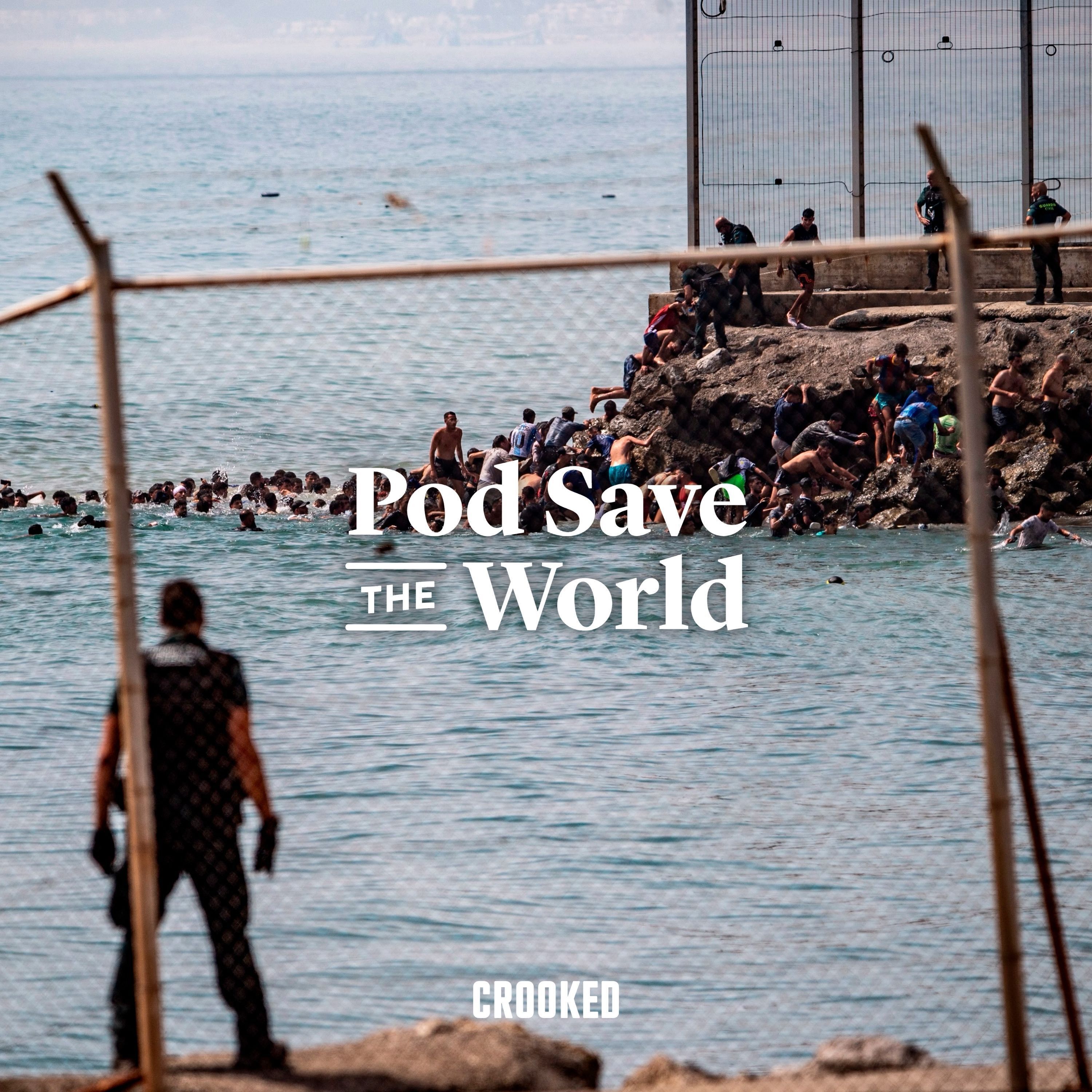
Absolutely. Stay tuned. All right, well, let's turn to Spain, because if you've consumed even a few minutes of Fox News or other conservative media over the past week, you've almost certainly seen images of migrants flooding into the Spanish enclave of Ceuta. I'm also willing to bet that the coverage you watched on conservative media did not mention that Ceuta is not on the European continent. It's actually in northern Africa. But I digress. So like I said, it's. Ceuta is a small city. It's about 84,000 people in Northern Africa. Spain has governed it since 1580. It's one of these two remaining small Spanish cities on the African continent, which means that the European Union actually has two land borders with Morocco. But the thing to know is that to actually get to Europe, proper migrants have to go through passport controls. You have to cross the Mediterranean. So it's not like crossing our southern border where you're just sort of like in the Shenzhen zone and able to move around like you're still on the continent of Africa. Starting on July 30, an estimated 60 to, I think 72,000 and migrants crossed from Morocco into Ceuta. They either cut holes in the border fence or many of them swam around the border fence in the ocean from like a Moroccan beach to a Spanish beach. The majority of migrants were Moroccan men. There were some families and children. Spain says that nearly all of those who crossed had not been returned, with the exception of a few thousand individuals, ADA fatalities, most by drowning. There's been some debate as to what happened. Why was there this flood of migrants all at once? We're going to explain some likely causes. Then we'll get down to the kind of like more likely to be disinformation causes that you're seeing on the Internet. The first is economic conditions generally. So the youth unemployment in Morocco is at 37%. Per capita income in Morocco is $4,600 compared to Spain's $38,000. People are pissed at the government. The government's spending all this money on the next World cup tournament stadiums while their lives aren't improving. But if you protest like the Gen Z protesters did in Morocco, you get the shit kicked out of you. Then there's another bucket of Spain's immigration policy under Prime Minister Pedro Sanchez, who's from the left. Back in April, Sanchez announced an amnesty program for undocumented migrants to allow certain migrants to apply for a one year work visa and residence permit. This is mostly actually for migrants from Latin America or South and Central America who know Spanish and who got to Spain legally but just overstayed work visas. They expected about half a million applicants. They got 1.2 million. And it pissed off a lot of other countries in the EU that are worried about immigration and far right parts parties weaponizing it. And then there was a ruling by the Spanish Supreme Court that was misinterpreted to mean that migrants arriving in Spain by sea could not be deported.
- [06:51]
Ben Rhodes
Right.
- [06:51]
Tommy Vietor
And then finally there's the role of the Moroccan government. There have been reports that the Moroccan military was waving migrants through or that there just weren't border patrol guards at the fence that separates the two areas. Then it was just very easy to kind of like walk up to the fence, climb out onto rocks, swim around the fence and then get to Spain. There's been a history of Morocco using immigration as a tool to punish Spain. In 2021, Moroccans were pissed that Spain allowed of a rebel group into the country for medical treatment and then were accused of letting 10,000 migrants into Ceuta in retaliation. So that all brings us to the kind of fringy Israel did it theory. Now there's some context here that makes this relevant. Well, first of all, Morocco and Algeria, they don't get along. Morocco claims sovereignty over the Western Sahara while Algeria supports a rebel group called the Polisario as part of the Abraham Accords. The Israel's deal with with Morocco. The US recognized Moroccan sovereignty over the Western Safara Western Sahara. Algeria did not like that. Also, Spain has been a pretty vocal critic of Israel's conduct in Gaza and of the war in Iran. I've seen Israeli media and commentators have suggested that one way Israel could punish Spain is via Ceuta in migration. But you know, this theory exploded on social media. But frankly, it's probably that has more to do with just a lot of commentators disliking the Israeli government than anything Israel actually did here. Regardless, Ben, right wing politicians leapt to politicize this issue. Here's a clip of President Trump and far right Reform UK leader Nigel Farage both talking about it.
- [08:20]
Casey Michel
You know, I saw Spain yesterday and
- [08:23]
Ben Rhodes
I watched the catastrophe that took place.
- [08:26]
Casey Michel
It was a, it looks like an invasion of a country by hundreds of thousands of people. And that same thing is going to happen to us if the Republicans don't get elected. If we're not in office, our country will be invaded at levels that made Spain look small tie. That's going to be a talking point
- [08:47]
Tommy Vietor
for the midterms, believe me, unless we get a reform government. Those scenes you're seeing in Spain today, many of those young men, lots of them Dangerous. Will be heading towards Calais and coming to our country, too. Nice Farage always in the woods for no reason. Ben, sorry for.
- [09:04]
Ben Rhodes
Where's he in the shire? Like, what's going on?
- [09:07]
Tommy Vietor
Sorry for the long wind up there. I want to get your sense of how potent the political issue is. I mean, it's hard not to think back to 2015 in Germany and the Syrian migrant crisis and then the reaction you've seen by EU countries and how they're handling this.
- [09:22]
Ben Rhodes
I don't know about the. This kind of, you know, it reminded me, Tommy. It reminded me of like the caravan, you know, playing the hits from the first Trump presidency. Before the 2018 midterms, we saw all this Fox coverage of some massive caravan that was making its way. I think that, look, there's a potency to anti immigrant politics. There's a potency on the far right to images of migrants trying to make it into Europe. I don't doubt. And we should talk about the way in which we've already seen far right parties beyond just Trump and Farage, try to take advantage of it. That said, there is a big difference from 2015, which is whatever you think about what happened in 2015, there actually were a huge influx of migrants and refugees into Europe. These people did not make it to mainland Spain. And so there's not like a real shift in the demographics of Europe or any countries. Right. So to me, this feels much more like the caravan, where it's like, this is scary. These people are coming. We have to stop them. If you don't vote for us, they'll make it here and it'll be terrible. But it's not like there actually are these people now in mainland Spain or in the Schengen Zone of Europe where they can move around. So I kind of feel like it's more in the political stunt category of things. Now, that said, I thought what was interesting is the AfD, for instance, the German far right party that we've talked about. This was kind of tailor made in a laboratory for them because they got to say this is the influx of migrants that is coming. Israel's behind it. So there's this kind of hidden hand of great replacement theory, kind of to a T. Right. I'm sure Tucker Carlson will make some head of this. Like, somehow Israel is facilitating a migrant invasion. The Jews want to replace us with the brown people. So I do worry that this is going to kind of live on in the darker recesses of far right politics in Europe. But the facts are just not what anybody's saying like Trump said, hundreds of thousands. That's not true. They're suggesting these people are like walking around Madrid when they're actually in like a Spanish, Spanish enclave of North Africa. And most of them have been returned to Morocco already. I do think that, you know, look, I don't know that the Israeli government had anything to do with this. It probably didn't. It is the case that Spain is this kind of whipping boy for Trump and Netanyahu and conservatives, other right wing politicians. Yeah, yeah. Because the positions they've taken on Palestine, because of the positions they've taken on immigration. So I think it's also like the juiciest target imaginable because it's Spain. You know, if it was Italy, they probably wouldn't be making as much noise. But yeah, I think that the facts actually matter in the sense that part of what led to some backlash after 2015 is there actually were millions of Syrian refugees and other refugees from Africa and Asia coming into Europe. Like that's, that's not happening here.
- [12:29]
Tommy Vietor
Yeah.
- [12:29]
Ben Rhodes
So their ability to continue to freak people out, they'll be able to motivate their own people. But I don't think that this is going to be like a, you know, a swing issue for people in the middle because there's no new people there.
- [12:41]
Tommy Vietor
Yeah, no, I meant more like kind of immediate political reaction for a felt like 2015. But you're right on the merits. I mean, from January to June, illegal immigration to Spain is down over 32% from that same period the previous year. And we're talking about like small totals. That's like a total of 12,000 people in six months. Which I think shows you how much of an outlier actually the Ceuta situation was where you had, you know, 60,000, 70,000 people flooding across a border in, you know, like a week. What's really happening is Spain and Italy are mostly dealing with the arrivals of boats from Africa. And it's sort of a continent wide problem. And again, you know, I think a lot of these European countries were mad about this amnesty program because they thought it might draw more people to Europe generally because they're trying to get to Spain. But again, it was supposed to be for like overstays of visas for workers from Latin America. You are seeing a reaction though. I mean, you know, the Italians were pretty hard out of the gate, like essentially saying they're going to cut off, you know, certain ties with Spain. France started increasing checks on the Spanish border. I mean, it was just interesting. Like in Italy you have giorgia Meloni, who's a far right leader who's worried about an even further far right party challenging her. And then the rest of the year, both, like the Social Democratic parties, to the extent they exist anymore, or like Macron, the kind of squishy middle parties, are all flipped out about the far right winning future elections. So they all reacted pretty strongly. Although over time, I think the kind of political response from Europe evolved to praising Sanchez for his kind of swift handling and expulsion of all these migrants. And it's just worth saying, like, when these people got to Ceuta, they were greeted with nothing. They didn't have food, they didn't have water. Again, like, nearly 100 people died. They were exhausted. Right. You know, they're swimming in the ocean, trying to get a better life for themselves. And basically they were met with a military response and kicked out of the country as fast as Spain could get them out of there. So it's hardly a story that I think others will want to replicate. If you're thinking about migrating.
- [14:44]
Casey Michel
Yeah.
- [14:44]
Ben Rhodes
And look, the human tragedies, like the people who drowned, the people that probably lost things along the way, these people that were just seeking a better life and didn't get it. I will say, Tommy, like, I don't. I mean, I spent a lot of time with this story, just like you, because it was everywhere online. And I'm not here to, like, you know, validate a conspiracy theory. There are videos of the Moroccans kind of waving these people. It seemed like there was some beef with Sanchez from Morocco somewhere involved in this scale.
- [15:16]
Tommy Vietor
Yeah, I think Morocco definitely facilitated this.
- [15:19]
Ben Rhodes
Yeah. You could not have this scale of people just all of a sudden getting through like this if Morocco wasn't facilitating that. And I do think it's pretty dark when countries weaponize migration like this. And I do think it's important to kind of frankly get Pedro Sanchez back here. Like, his amnesty policy had nothing to do with this. And in fact, as you point out, his amnesty policy has been good for the people that have been able to work. It's been good for the Spanish economy, which needs those workers. And it has not done anything to drive up the levels of immigration. Quite the opposite. They've actually come down. And so I think part of what is happening here, too, that should be called out is that people are seeking to delegitimize alternative approaches to immigration. Sanchez has a more humane approach, that it has an amnesty component that is not dissimilar from a pathway to citizenship in the United States, which I think should be a part of any solution to the immigration issues that the United States has. And people like Trump and people like Farage and people like the AfD and people like Maloney relentlessly want to delegitimize anything other than the most hardline approach. And so I think it's important to speak up in defense of Spain and how they've handled not just this, but how they've handled immigration generally. And I think it's pretty dark. I don't know what Morocco is doing. The Israel nexus, like, we have to be careful, obviously. Like, this is immediately gonna be turned in the darkest version of the great replacement theory.
- [16:42]
Tommy Vietor
Yes, that's what happens. There's also a lot of Russian disinformation, I think were pushing kind of narratives around this issue, and I think that freaked out some people in Europe, some European leaders.
- [16:51]
Ben Rhodes
It did, because it can get out of control really fast. But it's also a reason why you shouldn't have Israeli political figures musing on television that they're gonna punish Spain via Mariah. I mean, that's something that happened. Right? So people can find these clips of these commentators in Israel talking about how they need to punish Sanchez Spain for its recognition of Palestine.
- [17:11]
Tommy Vietor
Netanyahu's son was talking about it like. Yeah, it's not a. Yeah, it was not, like, a totally fringe thing. Like, there were some. There was.
- [17:17]
Casey Michel
It was.
- [17:17]
Ben Rhodes
It wasn't without, like, some basis in, like, I don't know, videos people can watch.
- [17:21]
Tommy Vietor
Yes.
- [17:22]
Ben Rhodes
Doesn't mean that it happened that way, though, you know, And. But I think that, like, punishing Spain for being progressive is clearly a part of some of the motivation of some of the people involved in this. Like Trump. Right. Like, I don't think he'd be doing this if it was Italy.
- [17:37]
Tommy Vietor
Well, it was because Spain opposed the war in Iran. It's more than anything for him.
- [17:39]
Ben Rhodes
Yeah, they opposed the war in Iran. They wouldn't let the US Use bases. Neither, by the way, would Italy. You know, they've obviously been outspoken on Palestine. You know, I guess they won the World Cup. That seemed to speak of the World
- [17:53]
Tommy Vietor
cup, like, it was not long ago that all of Spain was cheering on a player named Nico Williams whose parents walked 3,000 km across the Sahara to a similar but different city, where they climbed a border fence, lied, and said they were a Liberian to seek asylum. And then, you know, decades later, they have two kids, actually, who are playing professional soccer in Spain, one of whom was a star on the Spanish national team that just won the World Cup. So you know, a reminder that we like immigration in certain contexts, Spain and everybody else. But one reason, Ben, you know, I think all of us are. We watch Trump's comments there. We're not. I don't feel great about the way he or the State Department is going to handle this. One other reason, to give you pause. So there was a recent conference in Rio. It was called the AIDS 2026 conference. There's a guy named Jeff Graham who's the head of pepfar. The President's Emergency Plan for AIDS Relief Program displayed a map of Africa highlighting six countries, all of which were misplaced on the continent. Nigeria was landlocked. The Ivory coast was on Africa's east coast. Mozambique was in the Horn of Africa for some reason. So just, you know, shout out to OpenAI, which clearly generated this map, but also shout out to Marco Rubio, State Department, for like, you know, really being. The attention to detail is there. Good work.
- [19:06]
Ben Rhodes
The thing about this is this was like a stupid era. And these aren't hard countries to identify. Even, like, even if you couldn't identify every single country in Africa, like, you know, Nigeria, because, like, these are not difficult. But the reason it hits harder is there's a history here of Trump calling Africa, you know, shithole countries, of Trump letting in white South Africans and saying there's a white genocide happening in South Africa, of Trump Boycotting the G20 in South Africa because of the alleged white genocide. That's not happening. Of zeroing out usaid, of basically just relentlessly indicating you don't give a shit about Africa while demonizing any migrants that come from there. So these things land harder. Like, in a normal administration, be like, what a dumb fucking thing in this one. It's like one proof point that these people are racist assholes.
- [19:58]
Tommy Vietor
Yeah. And it's like, oh, yeah, these dumb racist idiots literally don't care about us. And yeah, it is, in fact, true. Podcast World is brought to you by hims. ED is more common than guys talk about. The good news is that getting real treatment is simple through HIMS. It's 100% online. HIMS connects you with licensed healthcare providers online, giving you simple access to legitimate ED treatment options from home. No awkward appointments, no pharmacy lines. Just complete a simple online intake and a provider will review your information to determine if treatment is right for you. If prescribed, your treatment ships directly to your door. That includes sildenafil, which is a generic for Viagra. It's available through HIMS at up to 95% less than the brand name version. And if that option is not right for you. There's additional treatment options available so you can find what works best for your body or straightforward, transparent and designed to make getting care feel easy. To get simple online access to personalized, affordable care for ED, hair loss and more, visit hims.comworld that's H I M s.comworld hims.com world not available in all 50 states. Prescription required. See website for details, restrictions and important safety information. Sildenafil is the generic version of Viagra. Viagra is a registered trademark of Viatris Specialty, llc. HIMS is not affiliated with or endorsed
- [21:12]
Casey Michel
by
- [21:15]
Tommy Vietor
Positive World is brought to you by Sundaes Is your dog a picky eater? It's surprisingly stressful. You wish they would tell you the problem. Maybe if they could, your dog would say they know the difference between processed brown pellets and real food. Sunday starts with 80% plus all natural meats and then adds superfoods like kale, ginger and blueberries. There's no fillers, no nutritional blends, no chemicals, just simple, complete nutrition. And Sunday's just launched a brand new fish recipe. It's made with 80% whole and minced fish, including eco friendly invasive carp sourced from American rivers for a naturally rich flavor. In fact, did you know that many dogs prefer fish flavors? So Sunday's fish recipe is especially great for picky eaters. Plus it's packed with omega 3 fatty acids to help support healthy skin, shiny coats, joints and brain function. It's complete, balanced nutrition for all of life's stages. I can confirm that dogs love sundaes. Here at the office. We've had a couple incidents where the sundaes has gotten poured out for Leo or one of the other pups and every other dog in the office rushes over to try to steal their sundaes because it is so delicious and the dogs just love it. And the results are great. They have more energy, they're in a better mood, softer coats, less itching, and they're just happy pups. Make the switch to Sundays. Go right now to sundays4dogs.com world and get 50% off your first order. Or you can use the Code world at checkout. That's 50% off your first order at sundays4dogs.com world sundays4dogs.com world or use the Code world at checkout. All right, Ben, let's do a quick update on Iran where it's, you know, war crimes, Groundhog Day. So last week Trump basically threatened to wipe Iran off the map. Again. The New York Post counted and said this was his 13th such ultimatum. It's good, good reporting there. Then he backed down, which is obviously a good thing. It probably, it's likely that Trump backed down because he got a call from Mohammed bin Salman, the crown prince of Saudi Arabia, or other Gulf autocrats that have given him bribes. Trump also tried to claim that the US And Iran were close to cutting a deal to reopen the Strait. And then on the nuclear program, I don't believe that for a second. And then he whined when the Iranians contradicted him. Again, we're not going to go into all the details of this back and forth because it's just so tedious and repetitive and this is like the cycle we're stuck in. But a few things that are important that we want to update you on. So first, there was a Reuters report that the U.S. has used, quote, virtually all of its precision strike missiles during the war with Iran. So we're almost out of attack missiles. Remember, those were a big topic of discussion around Ukraine. We're almost out of precision strike missiles. And the US has used about half of the US Stockpile of Tomahawk missiles, which, you know, there's war game estimates of what would happen in the U.S. china war. And I think under, like when we're fully, when the stockpile is full, we're out of Tomahawk missiles in a week. So being down to half of that stockpile means we're pretty screwed if we get into a fight with China. Iran and Oman are reportedly working on a deal to oversee control of the Strait of Hormuz going forward. The gist is that ships entering the strait will have to use this route controlled by the Iranians that are close, close to Iran's shore. Ships exiting the strait will pass closer to this US Preferred route on Oman's coast. And then Oman in Iran would split revenues from a service fe, which Trump will try to claim is not the same thing as a toll, but is obviously the same thing as a toll. Just for fun, Ben, here is Marco Rubio, Secretary of State. Is he still the archivist? I think he lost that job. Right. He got fired as archivist. Yeah.
- [24:36]
Ben Rhodes
And national Security Advisor.
- [24:36]
Tommy Vietor
National Security. Oh, yeah, that one. He's talking about the importance of freedom of navigation at an event just last month.
- [24:42]
Ben Rhodes
If we create a precedent in the Middle east where a nation state can decide that they are gonna control an international waterway, charge a toll, and if you don't pay them, blow up your ships, we have created a very dangerous precedent which will repeat itself in other parts of the world, including in this region. So what is at stake here is not simply the issue of what's happening in the Straits of Hormuz. There's a very fundamental principle about freedom of navigation. And if that is threatened, then I think the global economy is threatened. And the rules which have underpinned 150 years of international trade and commerce are also threatened. And that cannot be allowed to happen.
- [25:18]
Tommy Vietor
Remember that one going forward. Remember those comments? And then finally, Ben, there's these reports that Iranian hackers or Iranian linked hackers have infiltrated municipal water systems in at least seven states. The first state to sound the alarm was Minnesota, where hackers got into about three dozen municipal water systems. Minnesota then went public with this. That clearly helped other states kind of look into what was happening there and identify that they too had been hacked. And here is how President Trump thanked Minnesota for this good work at a press event recently. Let's watch. Can you rule out that Iran is behind that cyber attack?
- [25:55]
Casey Michel
No, I think Minnesota is behind it. You know who's behind it? Minnesota, because they're grossly incompetent.
- [26:02]
Tommy Vietor
I think the governor's behind it.
- [26:03]
Casey Michel
I don't think there was an Iranian cyber attack. I think that Minnesota ought to get its act together.
- [26:10]
Tommy Vietor
So US Intelligence thinks that Iran was hacking municipal water systems in the US Donald Trump thinks it was Tim Walls, who looks to me like, you know, he knows his way around a computer. So, Ben, there's reports that CENTCOM has on the shelf that intensive two week military campaign if things go south in these negotiations. CNN reported that centcom sent out a blast email to its team saying it was, quote, looking for creative and unconventional ways to pressure and punish Iran. Just a big old brainstorm here on the war. At this point, I don't really know what's left to say about this conflict other than that Trump has lost it and it's time to move on. But how concerned are you about the cyber attack element? That seems new and kind of scary.
- [26:53]
Ben Rhodes
Yeah, I'd be concerned. I mean, there's a few different things to say here. First of all, I do want to say one thing about Marco Rubio. He laments the precedent being set by a power trying to control waterways at the same time that he, Marc A. Rubio, is supervising a total blockade of any ships reaching Cuba with oil.
- [27:15]
Tommy Vietor
Good point.
- [27:16]
Ben Rhodes
So Marco Rubio is actually, in addition to being an idiot who's made to look like a fool day by day because Donald Trump contradicts him on the Iran talks, he also is like Wildly violating his own rule. When it comes to the free flow shipping, when it comes to Cuba, the atacms, the idea of the US being almost out of these precision, I mean, this is again like because Congress is so ineffectual and the Pentagon doesn't tell us anything. I know we say this every week. The cost of this war is staggering and it's hundreds of billions of dollars. And it's replacing all these weapons systems and it's fixing all these bases and it's caring for all these wounded service members. We don't know how badly wounded they are. It's all these things. And so this kind of reinforces the price tag of this thing is just much higher than they're telling us. And it's frankly, you know, I'm not like Mr. Readiness over here, but it's never good when you run out of weapons, particularly defensive ones. It's just another stupid. And they'll try to blame like Ukraine. I've seen them try to blame Biden for giving assistance to Ukraine. Look, if you didn't launch a stupid war, we wouldn't be running out of these things. So if I was, you know, a Democrat, I wouldn't have a problem taking that fight on. Now on what's happening, I think the basic, simple thing that people need to keep in mind is that because the United States has far more to lose from chaos, from global economic shortages than Iran, we lose any escalation battle. And if you look at what the Iranians have done recently, they've shown that they have different ways to escalate. So after this kind of latest round began, you saw them attack Jordan and Kuwait and expose the fact that there are less defenses, that if they expand the map of the countries that they're willing to attack to basically be anybody that hosts any U.S. military facility in the Middle east, there's just not enough defensive weapons in the world to protect all those places. So that inevitably, if the US does its big two week show of force here, there's going to be a lot of damage and a lot of destruction. A lot of depth.
- [29:22]
Tommy Vietor
Yeah.
- [29:23]
Ben Rhodes
And a lot of death tragically in these other countries. And so these leaders are surely calling Trump and being like, don't escalate. They're gonna like rain down havoc on us. And never mind the fact that the continued shortages to the Strait of Hormuz and disruptions in all these different markets is gonna hurt the American economy. And the Iranian economy's been ground to a halt by a blockade and sanctions for a long time. They can weather that. The Iranians have a pretty sophisticated cyber capability. So the idea. And the Iranians are very reciprocal. So the idea that if you bomb our water supply in Iran, we're gonna launch cyber attacks to disrupt your water supply in the United States, I believe that. And so what the Iranians keep demonstrating is like, escalation. There's not some level of escalation that the United States can reach that isn't gonna end up hurting the United States more than the Iranians, because we just have more to lose than they do. And our friends and partners and allies, whatever you wanna call them in the Middle east have more to lose than the Iranians do. So every time this thing ratchets back up, it's worse for us than it is for the Iranians. And there's just not some magic list of targets here. There's not something we can hit in Iran that we haven't like. I mean, we hit everything on the target list in the first.
- [30:33]
Tommy Vietor
If there was a list, we would have hit it. I mean, that's.
- [30:35]
Ben Rhodes
Yeah, we hit it. So what are we doing now? The only thing left is war crimes or hitting the same ship we've already hit, which I think is a lot of what we've been doing with these airstrikes. And I do want to say, like. And I've said this before, but, like, there's this kind of reflexive thing where we're like, well, the military is doing a great job. It's just. I don't know that. I'm sure that the men and women that are, like, told to do difficult things are doing a great job executing orders, but, like, I don't know what the fuck centcom's strategy is in this war.
- [31:05]
Tommy Vietor
There's a thing called the Joint Chiefs of Staff. Their job is war planning. I'm sure CENTCOM is very much in on that game too. When it comes to Iran, if you're doing a no bad ideas in a brainstorm all staff email for like, yo, how do we win the Iran war? It does suggest that the planning wasn't quite as good as it might have been or you would have wanted it to be.
- [31:23]
Casey Michel
Yeah, you.
- [31:24]
Ben Rhodes
You should have done that before. And to be now to be sympathetic if they don't know what their mission is, Tommy, like, they're told, hey, destroy as much of the Iranian nuclear program from the air as you can. Well, they've done that. Yeah, they bombed all the targets. Maybe even bomb this mountain where they maybe predictably moved all this stuff. But, I mean, they've emptied the kit on the nuclear program. They were told to topple the Iranian government. Well, you can't do that with airstrikes. Now they're being told, well, like, reopen the Strait of Hormuz when Iran is right next to the Strait of Hormuz. And so there's just not some military option that we're gonna pull out of a hat, like, six months into the war that's gonna make Iran come out and capitulate. Everybody knows that. And that's why when Trump says the Iranians are desperate to talk, that means Trump is desperate to talk. When Trump says we're only talking to the Omanis, well, that means he's talking to the Omanis who are talking to the Iranians. He's just gaslighting and lying his way through this thing and hoping that enough people who watch Fox News believe that the Iranians are begging for talks. That's clearly not what's happening. And I think one of the things we have to get acclimated to is that there may never be a deal, because the Iranians may just decide we don't need a deal. I mean, maybe there'll be some deal, like where they essentially are making a toll on the Strait of Hormuz. But even if that doesn't happen, I think the Iranians are like, well, we're gonna find a way to extract some revenue from that strait, and the Americans will move on and maybe invade some other country, and that's it. Americans lost this war. Trump has lost this war.
- [32:55]
Tommy Vietor
It is not going well. Speaking of war, it's not going well. Let's turn to Gaza. Last week, Trump posted the following quote. Today, the Board of Peace reached a historic agreement for the complete disarmament of Hamas and and other armed groups in Gaza. This is a monumental step towards lasting peace and security. The agreement will be carried out in the carefully structured phases. As disarmament is completed, Israeli forces will withdraw, and the International Stabilization Force will work with a new Palestinian police force to take responsibility for Gaza being safe for its residents and its neighbors. End quote. So, as with all Trump announcements or claims generally of progress in Gaza, we are quite skeptical. Here's a couple reasons for that skepticism. First, a member of the Hamas negotiating team told the Wall Street Journal the following quote, we didn't say disarmament. We didn't say handing over the weapons, and we didn't agree on any Israeli involvement. So other than that, Mr. Trump, the accurate statement, that same negotiator told CNN that the weapons would not be decommissioned. Or destroyed. Rather, the plan is to put them in storage, supervised by this technocratic National Committee for the Administration of Gaza. However, that committee has been blocked from entering Gaza by Israel and remains just like they're sitting in Cairo or somewhere in Egypt. There's also this dynamic where the Israelis want Hamas to go first. Hamas wants the Israelis to go first. So Hamas wants Israel to withdraw from parts of Gaza that it is currently occupying and then let more aid into Gaza before they will disarm. But no one expects Netanyahu to do any of that before his October election. So the most likely outcome is just kind of the status quo. Then you have, you know, Netanyahu being pretty silent about this deal while the far right attacks it. We know that historically Netanyahu always tax right when he is in political distress. And then we should say like the IDF has been pounding Gaza. I mean, there's been like thousand plus people killed since the quote unquote ceasefire that everyone celebrated. There are 30 people have been killed since this just new deal was announced. So like it doesn't, you know, not a very, not a lot of ceasing to fire. There's a lot of firing happening by the idf. So Ben, big picture, like life is hell for people in Gaza. You have millions of people living in tents. Israel restricts the entry of the most basic things you would need to do reconstruction. The water systems are broken. You know, people are getting sick from drinking just basic water. Medical infrastructure is decimated and in short supply and still getting bombed. There are disease outbreaks. You know, I'm sure you've seen the photos I have of just babies with like chickenpox, just like horrendous stuff. And so you're in this weird place where obviously we want this ceasefire to work, we want things to improve for people living in Gaza and for Hamas threat from Hamas to not exist for Israelis. But it just feels like this entire kind of Board of Peace process is distracting everyone from doing the actual work that is needed to make life better for people or push the process forward. And instead we're just kind of stuck.
- [35:51]
Ben Rhodes
I mean, this announcement kind of came out of nowhere. And look, it's just a factual point that I would not stake anything on this happening. I mean, immediately you have Hamas and Israel backtracking from this announcement that they didn't really make. Like Trump announced it on Truth Social and the Board of Peace put out a statement. And so if neither party that actually has to take action, says that they're willing to take that action, then what the fuck Are we actually announcing here? And, like, what's the point of doing it now other than the fact that the Board of Peace has done precisely nothing since it was inaugurated? So I'd be very unfortunately skeptical that this is going to happen, because Hamas is not going to disarm if Israel doesn't withdraw. And Israel's not going to withdraw. And so I don't really know what we're talking about here. I will say something interesting, Tommy, which is people are onto this now. If you think about it, the first time there was an announcement of a Gaza ceasefire, everybody in the world showed up for the photo op with Trump in Egypt, remember? And you add all these European leaders there sucking up the Trump for some reason. I think you add infantino, that Hafifa was there.
- [37:04]
Tommy Vietor
I think he was actually.
- [37:06]
Ben Rhodes
And credulous press coverage. Remember the 60 Minutes, you know, puff piece on Jared and Witkoff's diplomatic breakthrough? Well, what have people seen? They've seen that there have been, like, thousands of Israeli airstrikes on Gaza. There's been no disarmament of Hamas. There's been not the amount of aid getting in that was supposed to get in.
- [37:26]
Tommy Vietor
We've all seen Netanyahu tell the IDF to take more territory in Gaza to take over 70%.
- [37:32]
Ben Rhodes
So I do think there's something interesting about the fact that nobody took this seriously. I mean, except I saw AIPAC put out a statement demanding that we all welcome it. But, I mean, there's not, like, a credulous media or international diplomatic response to this. And I do think that shows that Trump's kind of smoke and mirrors. True social. Announce something before anything is agreed and get all the credit. Doesn't work anymore. Like, we were one place in. Because I think that Gaza ceasefire was about one year ago.
- [38:06]
Tommy Vietor
It was like his political standing has plummeted.
- [38:08]
Ben Rhodes
Yeah, his political standing in the world is plummeted, and that's important. Like, this game doesn't work. Maybe it works on Fox News, maybe it works with Jesse Waters and the Five or whatever, but, like, it no longer travels in the world. And as much as I wish that what he's posting was true, I think that's healthy. That, like, he can no longer be this kind of wizard of Oz, like, conducting how everybody acts and everybody's pretending like he solved problems that he hasn't.
- [38:37]
Tommy Vietor
Yep. This podcast is sponsored by Squarespace. Squarespace is the all in one website platform designed to elevate your online presence and drive your success. Squarespace gives you the tools to claim your domain, build a professional website, expand your brand and facilitate payments all in one place. With Squarespace's collection of cutting edge design tools, anyone can build a bespoke online presence that perfectly fits their business. Start with Blueprint AI, Squarespace's AI Enhanced website Builder to get a fully custom website in just a few steps, using basic information about your industry, your goals and personality to generate premium quality content and personalized design recommendations. Every dream needs a domain. Squarespace domains make it easy to find the best name for your business at one fair, all inclusive price. No hidden fees or add ons required. Squarespace provides everything you need to bring more of your dream to life. Whether that means building a website or adding a professional email service, don't wait to claim your name. Invest in your dream domain today. Head to squarespace.com for a free trial and when you're ready to Launch, go to squarespace.comworld to save 10% off your first purchase of a website or domain. That's squarespace.com world this episode is sponsored by BetterHelp. BetterHelp has an average live therapy session rating of 4.9 out of 5 based on over 1.7 million client session reviews. The feedback from real people who have actually used the service speak for itself. More than 6 million people have used BetterHelp globally. BetterHelp therapists have at least 3 years and 1000 hours of hands on experience. They also hold all required education, training and certifications across a range of mental health specialties, meaning the perfect therapist for you could be a few clicks away. BetterHelp makes it easy to get started. You just answer a few questions that you get matched with a therapist based on your needs and switch therapists at any time if it's not the right fit for you. Look, everybody's going through something, whether it's work, whether it's family, whether it's just the world. You need someone to talk to. You need to get some things off your chest. You will feel better. You'll feel a sense of relief. You'll make some progress towards a goal. It'll improve your relationship at home. Give it a shot. See the reviews, see what stands out and see if BetterHelp is right for you. Visit betterhelp.com crookedworld that's betterhelp.com crookedworld. Let's talk about Japan and the Japanese yen for a bit. We can talk about a fallout from the Iran war here. You guys might have seen a Reuters photo from last week of Treasury Secretary Scott Bessant's unusual to do list. This is from Friday it said to do buy Japanese yen 5 to 10 bill billion. Different than my to do list, Ben. It turns out that what this was referencing is the US And Tokyo worked together to buy tens of billions of dollars worth of Japanese currency, the yen, which recently hit its weakest level against the dollar since the mid-1980s. Now, you might be wondering, why on earth would the United States do that? A couple reasons. First of all, Japan owns nearly $1.2 trillion worth of U.S. treasury bills. They also own, like, billions of stocks and other U.S. assets. If Japan starts dumping U.S. treasury bills to raise money to buy yen, then it would increase the yield on US Treasuries and make it more expensive for the US Government to borrow money. So that's one reason. There'd be other ripple effects, too. Japan recently had to increase its interest rates because they were worried about inflation. Thanks to the war in Iran, Japan increased rates to 1%, which is very low, but is still the highest they've been at in 31 years. Japan has had near zero interest rates for decades now because it has been stuck in this deflationary cycle where prices just won't go up, which, ironically, is actually a very bad thing because it can lead to a spiral where people stop spending because you're like, well, the price might go down, so why buy now? You'll have businesses cutting back and stopping to grow, and you'll have debts become harder to pay off because of deflation. So one side effect of Japan's low interest rates were it also popularized an investment strategy called the yen carry trade. That was when investors were borrowing money in yen because it's cheap, right? Interest rate is really low, and then you use that money to invest in something else with a better return. So, you know, the kind of the safest version is you borrow in yen, you buy treasury bills, and you pocket the difference in the yield. But you could also buy something riskier, like stocks. But when yen prices go up or the interest rates in Japan go up, Japanese banks ask for more collateral, which can force those investors to dump assets to buy more yen, and it can trigger this vicious economic crisis that can spiral. So, long story short, it is very much in the US Interest for Japan's economy to stabilize, which is why you saw this weird thing where the Federal Reserve bank of New York sold a bunch of its holdings of euros to buy yen on behalf of the Treasury Department. So this intervention seems to have worked for now. It sort of stabilized things for now. But some smart kind of Wall street folks I know said to me the Fact that the treasury is involved in the first place and is this worried should make you very worried. Right? Because they know, I mean, the systemic risk here. This isn't like America doing this out of the goodness of our hearts. This is America intervening to prevent the fourth biggest economy in the world and the largest holder of U.S. treasury bills from going into some sort of like financial doom spiral and pulling the world down with it. The other thing to worry about is that high oil prices or energy prices have been really hurting Japanese consumers lately and kind of creating all this friction in the Japanese economy and leading to inflation and leading to their banks to raise interest rates, their central bank to raise interest rates. And obviously, as we discussed earlier, there is no end in sight to the war. So they're all kind of spinning plates trying to manage the economy in Japan and the global fallout from interest rates and the war and everything else. But like, you know, every action you take has other consequences and you just sort of don't know where we're going to end up. So. Ben, very interesting story. Pretty worrisome story. I kind of feel like it's not the end of this one, but what did you make of this? And you know, fucking Besant's to do list. I feel like you could have been a little more vague on that thing, buddy. Unless maybe the goal was for everyone to see that to do list and that to become the story because really the Treasury Department didn't really buy that much in aggregate of yen, but like the symbol of us doing it with Japan was, was a big deal. It was a big message to the markets.
- [44:54]
Ben Rhodes
Yeah, I'll do this callback to another Trump first term thing. It's like when John Bolton had like that briefing.
- [44:59]
Casey Michel
Yes.
- [44:59]
Ben Rhodes
When he was Trump's national security advisor and he had like 5,000 troops to Colombia on like a to do list that he was like showing. Well, it was very strange. Anyway, a couple. This is a really important story. I implore worldos to pay attention to this because going to matter to you. And there are a couple of things that jumped out to me first on the impact of the war to put this in perspective for people. Japan does not have domestic sources of oil and gas. They import almost 100% of their fossil fuel energy, almost all of that from the Middle East. And to be specific, there are some estimates when I was looking into this that they get up to like 90% of their crude oil through the Strait of Hormuz. And so you can imagine what the disruptions of the Iran war doing to an already strained Japanese economy that has depended on these low interest rates, but is now obviously dealing with inflation because of the diminished supply. And so, one, it's just a case in point. We've heard about how this is impacting poorer economies that are having to ration energy. Well, this is like a rich country that is, like, on teetering on the edge of a financial crisis, in part because of the war in Iran. I think the second thing that is even more worrying is the reason the US did this, as you pointed out, Tommy, is because they own over a trillion dollars in US Treasuries. And again, people may not follow this, but the basic reason that you're allowed to have the standard of living that you do if you're American is that we can just borrow infinite amounts of money set against the value of US Treasuries, that essentially our debt, our Treasuries, are worth it for people to go to a stable financial instrument by allowing us to spend far more money than we have here in the United States. And if the bottom starts to fall out of that, if there starts to be instability in Treasuries, the whole system under which our economy operates and the global economy operates could be pretty fucked. And the thing that worries me about this, Tommy, and why I think it's important we cover stuff like this, is that there's like a lot of. You know, I remember when I was on the Obama campaign in 2007, I drew the short straw in, like, I don't know when it was. It was like the spring of. Actually, it was 08. It was the beginning of 08. I had to write this speech about financial regulation.
- [47:23]
Tommy Vietor
That's a real fun one.
- [47:24]
Ben Rhodes
I had to talk to all these nerds like Austan Goolsbee, who's advising.
- [47:27]
Tommy Vietor
He's a great nerd. You gotta talk to a nerd.
- [47:29]
Ben Rhodes
There were all these warning signs.
- [47:30]
Tommy Vietor
He's a funny nerd.
- [47:30]
Ben Rhodes
Yeah, and very funny nerd. Great guy. And they're like, well, yeah, there are all these warning signs like the housing market's showing some bubble and the numbers kind of don't add up and nobody's minding the store. And it kind of stuck in my head because I didn't pay much attention to those things. And a few months later, we had the financial crisis where the bottom fell out. Well, between bailing out the Japanese yen, this kind of AI bubble that the stock market exists on, where essentially a few companies are spending extraordinary amounts of capital building data centers, and that's propping up the economy. But who's really getting enriched. It's kind of like the few people who run those companies and maybe some shareholders. But none of that wealth is actually reaching people. It feels pyramid, schemy, ish. We're betting that this technology is going to make all this growth without knowing how it's going to do that. That seems kind of worrisome to me. Like inflation, the need to use interest rates to tame inflation set against the imperative of maintaining growth. The numbers, I'm not like some financial wizard here. As a relative novice at this stuff, I can tell you that there's a lot of numbers that aren't adding up and there are a lot of warning signs out there.
- [48:52]
Tommy Vietor
Yeah, look, the 10 year yield is now at 4.64% which is pretty high for the 10 year. Like the Fed can try to control rates but ultimately they don't control interest rates, they control treasury bills. But then the markets take over and they control the price and the yield on these things. And so yeah, you're right, there's like a lot of warning signs. There's this, there's what's happening in Japan and Japan is coming at the end of like a 30 year experiment, experiment in financial engineering and zero interest rates to deal with, you know, the fact that they're population is shrinking and all these sort of systemic issues. You have this AI bubble that kind of keeps partly popping but then getting reinflated because of all this enthusiasm around a couple of companies. You have just the instability of the war. And I'm with you, like who knows, maybe we'll bump along for another five, six years and you know, America doesn't care about bubbles anymore and it is what it is. But there's just, you know, we've seen, you know, real small things like remember Silicon Valley bank, remember, you know, this bank, like one bank in Silicon Valley starts to unwind and it presents a systemic risk to the entire economy to the point where the Biden administration had to step in and rescue it. And so God knows what will happen as a result of these pretty remarkable steps to step in by the New York Fed and the treasury to rescue Japan. There is going to be some sort of second order, third order, fourth order reaction to this step and it's going to be unpredictable and hopefully nothing bad, but we just don't know.
- [50:17]
Ben Rhodes
Yeah, and last thing I'll say about this is first of all the war's role. If there ends up being a financial crisis, file away. The war is one of the things that was that last piece of strain on A global economy that was already running on a bunch of fumes. But then the other thing I just tell people is that if you've watched since the beginning, I remember when Trump did Liberation Day, the markets kind of dealt with it, it crashed and then came back. It's the people dealing with Treasuries, it's the long term yields people that have been more the reality check on some of the Trump economic moves or some of the seeming contradictions in the global economy. So the people in the markets or the futures, they're the people at the casino, they're the people just trying to win one more hand. I'm on a roll at the tables and I'm going to keep playing until I lose. Keep your eye on these more structural pieces of the global economy, including Treasuries.
- [51:17]
Tommy Vietor
Yeah, Watch the bond markets, interest rates, sometimes they're kind of the canary in the coal mine for this stuff. While everyone over on Wall street is punch drunk and also worrisomely, a lot of them are buying with leveraged, they're working with leverage, they're taking out loans,
- [51:33]
Ben Rhodes
they're buying with money they don't have.
- [51:34]
Tommy Vietor
That's pretty scary.
- [51:35]
Ben Rhodes
There's a lot of that going on.
- [51:36]
Tommy Vietor
A couple one other things on our corruption watch. Ben. So you and I celebrated the hell out of kind of the great side of international soccer and the World cup tournament, the FIFA World Cup. Now we're going to talk about the dark side of FIFA, the corruption and the brazen self dealing. So fans, players, international football associations were all outraged last week when FIFA president Gianni Infantino announced a plan to privatize spinoff and sell to private investors a piece of the kind of the most lucrative financial parts of its tournament. Specifically, he wanted to create a subsidiary called FIFA Forward Enterprise, or ffe, that would handle the, the broadcast rights, the sponsorships, the licensing and the ticket operations, all the big money stuff, and then sell shares of it. Kind of like a startup raising an investment round. And the kicker was that the lead investor for this scheme was called Thrive Eternal, which is a big investment company run by, wait for it, Jared Kushner's brother, Josh Kushner. I wonder how we got access to this deal. Ben. So Thrive's plan was to buy 20%, a 20% stake. It was like 4.1 or 2 billion at a $20 billion valuation. Now this became public and most of these, like 211 FIFA member nations and like all the football associations that govern them, learned about the deal in the press and they were fucking pissed. UEFA, which is the association that represents the 55 European clubs, said they would boycott the next World Cup. So you would have had the winners of the World Cup, Spain, boycotting the World Cup. The North American and Asian associations also voiced opposition. I think only the African Football association was sort of, like, silent on it because, I don't know, they were. They're trying to get more player development money out of Infantino.
- [53:19]
Ben Rhodes
Infantino also spreads money around.
- [53:21]
Tommy Vietor
Yes, yes. That's how we got the job. So it also was clear that, like, this was just Infantino's pet project. He had not really read anybody into it. There was no buy in on it. It was just like a thing he cooked up on his own and just announced. And the Times, the newspaper in the UK the Times reported that Infantino wanted a $30 million salary and bonuses to run this new entity. So this was just a cash grab for him. So within days, this thing is getting pilloried. Infantino retreats, he kills this plan, but now his blood is in the water. And Wales, England, Serbia and Sweden say they no longer support Infantino's reelection for a new term as president of FIFA. So this guy just went from riding high. Like, everyone's saying this is the best World cup of all time. I think it made $9 billion, some crazy amount like that to a bunch of really important member states saying, we want you out of here. The New York Post reported that Infantino had tried to call Trump and Marco Rubio to get some sort of public backing. I get why he would do that. Those are his, you know, probably the highest profile people in his call log or his contact book. But also, like Infantino's relationship with Trump and the Flo Baligan red card situation is probably part of what got Infantino in such hot water with these European clubs. So the next election to be head of FIFA is until 2027. Currently, Infantino doesn't have any real competition, but I think the hope is to use this moment, the backlash, the outrage to get new candidates to enter and declare their candidacy before the November 18 deadline. It's just crazy, Ben, that FIFA is a nonprofit. Why would you need to get investment capital after you just had the most profitable World cup of all time? It's just like. It's so brazen and shameless. The level of grift and the fact that, you know, there was literally a Kushner involved on the other side of the transaction is just like. It just shows you these people have no shame.
- [55:08]
Ben Rhodes
Yeah, this is a really important story, I think, because it ties into, like, your interview too, in the sense that, like, Infantino is like a walking advertisement for the corruption in the world today, right? Like, he doesn't try to hide it. You know, everything that guy does is about him trying to self aggrandize, self enrichment as like a Kushner. He's most comfortable with, like, Trump and Gulf monarchs and people like that and has no time for democratically elected leaders other than Donald Trump. And you could just sense the corruption, like, it just oozes off the guy. And if you look at what's happened here, this is clearly pissed off the Europeans for some time now. If you're the Europeans, if you're UEFA, the European Football association, you're also probably thinking, well, wait a second, so we saw this guy in the middle of the World cup potentially affect the play. And I'm going to go there by like, reinstating Balagun, the US Striker who had a red card because Trump asked him to. And then on the back end of that, he's giving Jared Kushner's brother the stake in this investment where he's monetizing the global game for his own personal benefit. Those things connect if you're European, that we're being cut out of this for this own guy's self aggrandizement. And who knows, this may end up impacting the play.
- [56:41]
Tommy Vietor
You don't need Inspector Kaluso to do the connection either. It's literally a Kushner getting paid here. You know, Jared's getting fee off.
- [56:48]
Ben Rhodes
And so how can we trust that our teams are going to, you know, be on a level playing field? You know, he's going to be putting his thumb on the scale for different teams. Like, that's how corrupt this guy is. And so they're pretty. I think they're like, this is the blood in the water. We got to get rid of this guy now. And the way in which Infantino operates, it's like a page out of the Ken Martin DNC book where, like, he spreads money around. Can I bring together the PSA and pstw?
- [57:16]
Tommy Vietor
You can. Although the only way I'd poke holes in this is Mr. Infantino can raise money, Mr. Martin cannot.
- [57:23]
Ben Rhodes
But, like, in the same way that it was kind of weird that, like, Ken Martin was like, as someone who's just a passive observer of that, I'm not as deep in it as you guys. I saw he was, like, giving, like, far more money, like, per capita to, like, Guam and places. Like, no offense to the territories, but it felt like he was making people patronage.
- [57:40]
Tommy Vietor
Yeah.
- [57:41]
Ben Rhodes
Who could vote for him? Happy. Well, Infantino's done that with some of these smaller countries and some of these smaller football federations at the same time that he has a lot of goodwill with, like Qatar, who got his back. They're one of the few people that got his back. Because, you know, when people were doing podcasts with names like world corrupt around the World cup in Qatar, remember he gave that speech, like, today, I'm a Qatari and all that stuff.
- [58:03]
Tommy Vietor
Oh, my God.
- [58:03]
Ben Rhodes
So, like, he has, like, his. His base, but his base is shrinking. It's like the small. The. The federations of smaller countries where he's tried to spread some money around. It's the Gulf that he's rewarded with the Qatari World cup. And the Saudis have one coming. But the Europeans realized, in a way, this is what's interesting, is this gonna be a predicate for geopolitics too? Because the Europeans realize, well, if we all get together and we act as one and we say we're not playing in the World Cup. There is no World Cup. You can't have a World cup without European football teams. So I think that question one is, do they succeed in essentially throwing him overboard? Feels like that's possible. And I really mean this. Are they going to draw a lesson from this? Maybe we should apply this theory to other realms of geopolitics. If all of Europe acts together, wow, we actually have some power.
- [58:57]
Tommy Vietor
Yeah, one would hope. I mean, FIFA is just a hopelessly corrupt organization. I mean, the last president was prosecuted, banned from football for, you know, another however many years. Infantino is the guy brought in that's supposed to clean up the place. Obviously he is not, but God. Well, there's just this much money sloshing around. I think it attracts some terrible people, and it really does. It just sucks. There's all these fans, there's all these players to have to watch. This terrible parent organization that no one should have to know about or give a shit about, kind of ruin the reputation of the sport is so maddening. I mean, you're watching these World cup games and they, like, contractually obligated to cut to Gianni Infantino's ugly face with some, you know, annoying VIP three times a game. You know, it's like, what are we doing here? This is stupid.
- [59:41]
Ben Rhodes
Imagine, can we just have, like, better run institutions? I mean, imagine there's, like, just some good person running FIFA that you felt good about. I mean, like, please, like, just anywhere, can we just put someone good in charge of an institution somewhere.
- [59:54]
Tommy Vietor
Yeah, that would be nice. Like Rick Cornell at the Kennedy center, you know, like that, I think is the model for good government.
- [60:00]
Ben Rhodes
Exactly. That'd be a good model.
- [60:01]
Tommy Vietor
Finally, Ben, not sure how this one got on the rundown. A Spider man screening in Cartagena, Colombia. It ended abruptly after what the New York Post described as an uncontrollable bout of rotten flatulence. Have you heard about this story?
- [60:16]
Ben Rhodes
No.
- [60:17]
Tommy Vietor
Are you a Spider man guy? Are you a fan of Marvel films?
- [60:21]
Ben Rhodes
Interesting thing, Tommy, about me is that as a kid, as a huge Spider Man, I collected the comic books, but I kind of never got that deep into the. I was there for the Tobey Maguire. The Tom Holland era. I like. It's not a knock on Tom Holland. I just kind of. I lost interest in the Marvel verse at a certain point. It's a big summer for Tom Holland that we say. Maybe it ended in Cartagena. I don't know.
- [60:44]
Tommy Vietor
Yeah, well, we'll see. I mean, this is your classic New York Post story. It has great captions on the photos. Like an aghast audience member covers her mouth and nose. Another one I liked was filmgoers, including a Spider man cosplayer stand in the lobby following the mid film fart attack. So what happened was all these fans had to flee the theater into the hallway. Check out this footage that someone took of an absolutely jacked Spider man or man dressed in a Spider man costume who himself had to flee from the odor. The idea of wearing a Spider man outfit to a movie is an odd thing as an adult. Now there's some debate, Ben, over whether this was a stink bomb or someone in some, you know, dire gastrointestinal states. Many couldn't take the stench and left. Some true Marvel heads headed back into the film to the theater to finish out the movie. The real hero here is journalist Ben Cost, the New York Post, who managed to make this into a 350 word article about a story about a fart that smelled bad and got us to cover it. To paraphrase Michelle Obama, when we go high, we also go low. And usually it's the last story of the segment, which I guess we fit in because it happened abroad. Just to someone farted abroad and it
- [61:53]
Ben Rhodes
got on our brain. I can't see this on the outline.
- [61:54]
Tommy Vietor
No, it wasn't on there.
- [61:56]
Ben Rhodes
But just to once again try to cross stories, is Bobby Kennedy now in charge of the food management lettuce management in Colombia?
- [62:07]
Tommy Vietor
Are you talking about his only kimchi diet? Oh, no, you're talking about the explosive.
- [62:11]
Ben Rhodes
Apparently he's not talking about the explosive. Diarrhea that's infected our country, maybe that's become contagious. I don't know.
- [62:16]
Tommy Vietor
Yeah, maybe they're serving lettuce at this film. Anyway, that's all we have to say about that, I guess. Go see. I don't really care if you see Spider Man.
- [62:24]
Ben Rhodes
I guess Michael got us to talk about it. So that's.
- [62:26]
Tommy Vietor
He wins, we lose. We are gonna take a quick break and when you come back, you're gonna hear my interview with Casey Michelle about his new book, United States of Oligarchy. Stick around for that. It's a very important conversation about, like, all the American oligarchs, the way they're perverting our democracy, and then what the hell Democrats in Congress could actually do about it. So check it out. POD Save the World is brought to you by Selectquote. With endless information at our fingertips 24 hours a day, it's easy to go down a research rabbit hole on literally anything. Restaurants, hotels, home appliances, and even something as boring as your bath towels. You can spend days poring over reviews if you're not careful. Luckily, there's no need to add another item to your research list. Selectquote is a life insurance broker that does the homework for you. Their license agents shop over 100 policies and find you a better rate for free. With Select Quote getting life insurance is fast, free and easy. The whole process takes about 15 minutes. Simply answer a few questions, then their agents shop the carriers to find you the best quote tailored to your specific situation. Even if you have a pre existing condition like high blood pressure or diabetes, Select Quote customers save an average of 30% of their policies. That's a good chunk of change back in your pocket every single month. Over decades of a policy term, that really adds up. Select Quote has been doing this for over 40 years with 11,000 reviews on Trustpilot rated Excellent. Putting off life insurance can cost you in more ways than one. Get the peace of mind that comes with knowing you and your family are covered, plus more money in your pocket each month. Get your free quote@selectquote.com world that's selectquote.com world selectquote.com world they shop, you save.
- [64:05]
Casey Michel
Hi, my name is Mitch Landrieu.
- [64:07]
Jennifer Palmieri
My name is Erin Haynes. My name is Jennifer Palmieri and we're hosting a new series called Long Play. The south is the new political epicenter of the country. Democrats are way on their heels in this region, but Republicans are going through their own reckoning in the south, too. I mean, the south has always shaped American politics. We know that the stakes could not be higher. But to win the south, you have to understand it.
- [64:30]
Casey Michel
People in the south feel really misunderstood,
- [64:32]
Tommy Vietor
left behind, put down on, and they
- [64:34]
Casey Michel
want to explain the whole to somebody.
- [64:36]
Jennifer Palmieri
We're traveling across six Southern states to explore the people, the issues, the assumptions that no longer hold and what the rest of us are missing about a region that will shape the future of our politics and our country. From left, Right and crooked media starting July 27th. Watch long play series on YouTube@YouTube.com cricket long play series or listen wherever you get your podcasts.
- [65:09]
Tommy Vietor
My guest today is the author of the excellent new book United States of Oligarchy. How America's Wealthiest Ally With Dictators Weaken the US And Destroy Democracy. It seems like you have a take on this oligarchy thing. Casey, Michelle, welcome to the show. Welcome back to the show.
- [65:23]
Casey Michel
I should say, Tommy, thank you so much for having me.
- [65:26]
Tommy Vietor
It is great to see you. This is a subject near and dear to my heart, to the show's heart. And I think, honestly, one of the most important things that we should be talking about because corruption is so endemic to this administration and harming our government and harming our democracy that we need to put more focus on it. So I'm glad you wrote the book. I want to start with a hobby horse of mine, a person in the Trump administration sort of who annoys me the most. Jared Kushner. You might have heard of him. Jared, as folks know, in the first term, fancied himself the shadow secretary of state. He used that position to build relationships in the Middle east and then left and cashed out hard, getting billions from the Saudis and others in the Gulf. Now he's back as sort of this outside advisor, unofficial advisor, ostensibly working on Gaza, but also Iran, but also the war in Ukraine. He's solving a lot of conflicts, things that are going really well, like Iran and Ukraine. Can you talk about how the Gulf states cultivated their relationships with Kushner and how you believe they now have leverage over him?
- [66:22]
Casey Michel
Yeah, look, I mean, Tommy, I. I mean, I'll begin by saying I frankly can't imagine what it's been like for you watching the rise of Kushner. It's one thing to watch this from the outside. It's one thing to watch this from, you know, certainly my vantage about concerns about corruption, its impact on foreign policy, et cetera, et cetera. But for someone like you who was, you know, right there in the thick of it. To see someone like Kushner then come in and be at the center of everything from Israel and Gaza to Ukraine and Russia to Iran. I'm sure you have some thoughts probably very similar to how he's earned it.
- [66:47]
Tommy Vietor
You know, that's what I think, meritocracy at its best.
- [66:50]
Casey Michel
That's why I've written so extensively about him in the new book, to applaud all of these well earned positions and now billions of dollars that he has attached to his name. I mean, look, the cultivation of Kushner goes back to the first term, goes back to Donald Trump's first term. Kushner was brought in again with no regional expertise, no familiarity with local histories or dynamics, certainly didn't speak any of the local languages, and yet was nonetheless appointed to oversee Donald Trump's Middle Eastern portfolio in Trump's very first term, which of course now seems like a thousand years ago. And it was almost there from the very beginning that regimes in places like Saudi Arabia, the UAE and Qatar were at least interested in seeing what they could do to bring Kushner over to their side. And they did not have to wait long there in Trump's very first term as well. First year as President, back in 2017, you already had Jared building up relationships with Mohammed bin Salman MBS over in Saudi Arabia. Frankly, it even goes to right after the election in late 2024, even before he was in the White House, you had figures like nbz, the still ruler of the United Arab Emirates, canceling lunch plans with President Obama to secretly meet with Jared Kushner again because he, MBS and a number of other figures in the region and later, eventually around the world, realized that just how easy it would be to buy favors effectively from Jared Kushner to invest in either his properties or pledge things down the road. And of course, when Jared Kushner left the White house in early 2021, it was in a matter of days that he was not only setting up his new investment organization, Affinity Partners, but of course, going around kind of hat in hand to the Saudis, to the Emiratis, to the Qataris and others, and saying, hey, I'd love to see what kind of arrangements we can set up if you help finance new affinity Partners. And, you know, some people looked at it and said, maybe not. Now there are some Saudi officials who actually declined to invest, but MBS came and overruled them, saying, we need to maintain this relationship. You never know where it's going to go. And of course, here we are watching where it's going.
- [68:48]
Tommy Vietor
In the first term, Jared had to disclose his finances. Right? There's financial documents, there's ethical restrictions on him. Now that he's an outsider, advisor without an official role, does he have to disclose anything? What do we know about his business relationships, his finances, et cetera.
- [69:05]
Casey Michel
So, as he would say, no, he doesn't have to disclose any of it. As he has said, he's just doing his patriotic duty representing the United States of America again in what just so happened to be the most inflamed geopolitical hotspots around the world. Israel, Gaza, Ukraine, Russia, and, of course, Iran. That's what he says. So he has not disclosed how much money he or his firm are taking in, what they're doing with that money, what is bringing them the greatest amounts of profit? There were some figures like Senator Ron Wyden, Jamie Raskin in the House, who tried to get some insights into Kushner's finances even before Trump's reelection in 2024. And they got some information, but not all. We know that there's a whole world of details and financial arrangements that we still do not have insight into. Now, the trick is, though, Trump has still declared him as a special envoy, I believe, envoy for peace, if I remember correctly, which should theoretically require him to make those disclosures within either a 30 or a 60 day window. And we're long past that. So, again, this is, I think, a ripe question for, let's say, congressional Democrats. If they take the House and potentially the Senate, Jared Kushner is sitting there front and center for some potential hearings down the line to get more insight.
- [70:20]
Tommy Vietor
Yeah, I mean, I can't overstate how important that is to me in this show, and I will scream at anyone who does not prioritize it as well. So let's say Democrats take the House. God willing, we take the Senate, too. But they could what? They could subpoena documents directly from Jared. They could get them from banks. Could they subpoena from affinity? Like, we need to get on this fast. Right.
- [70:38]
Casey Michel
As long as they are the ranking member of the or the ranking members of a committee, then yes, they have subpoena power. Of course, if you're in the minority, you can still try to subpoena, but don't. No one really has to comply with that. But, yes, if they get the House and potentially the Senate, we're talking about what could look at either high level or maybe even select committee hearings into Jared Kushner.
- [70:56]
Tommy Vietor
I want that to be the first thing. Some of these committees Do I hope staffers for members of Congress are listening. I also want to ask you about Steve Witkoff, who's Jared's kind of dumb partner in crime. He's the Wyckoff is the golf buddy turned envoy for everything. Witkoff is now this roving diplomat. He meets with Putin all the time. Sometimes he goes by himself. He doesn't even bring a note taker. He doesn't bring anyone from State Department. He doesn't get briefings from the CIA, just kind of wings it. He's doing stuff in Gaza. He's just sort of everywhere. Witkoff's son is running the Trump family crypto business. What do you make of Witkoff's role in the kind of Trump family kleptocracy? And can you give us your sense of how crypto fits into all of this?
- [71:45]
Casey Michel
Well, look, Witkoff, his only credentials, again, for any of this, whether it's in the Middle east, whether it's in Ukraine and Russia, the only credential he has is because of his close ties to Donald Trump. Of course, they go back years and years in the New York real estate scene. He doesn't have any expertise. He doesn't have any other kind of credentials for this. And by all appearances, he is perhaps the single most gullible figure American diplomacy or an American president has ever produced. I just imagine him going into these meetings with Putin and some of these with wide eyes, and he's kind of this puppy dog look and willing to lap up anything and everything Putin is saying because that's, by all appearances, everything that has happened. And look, there's plenty to criticize Witkoff for, and there's certainly plenty that I've criticized him for. But it is, I'm very happy he brought up the role of his son, Zach, who is in many ways very similar to the Trump children, riding on the coattails of his father, and by all appearances, more than happy to monetize as many of these relationships as he possibly can. Zach Witkoff, he was a relative unknown, even more than Steve coming into Trump's second administration. But because of the crypto industry, the younger Witkoff was able to catapult himself to significant wealth. And again, this is a broader story about how crypto has enmeshed itself with the Trump family. With the Trump administration. On the one hand, it's kind of a story as old as industry versus regulation, and the industry wants to see any and all regulation demolished. But of course, with crypto, you have what we're talking about is the ease of financial maneuvering and financial movement with a click of a button, without any kind of regulation, any kind of transparency, which is in many ways a money launderer's dream, or maybe even the dream of a foreign regime that is looking to directly bankroll a sitting American president and his family. We have never seen a tool like this in terms of the ease of access, the speed, and of course, just how high up it goes in the administration. Which is, again, why the crypto industry has been so happy with President Trump and those he's appointed around him.
- [73:40]
Tommy Vietor
Yeah, I mean, it goes a couple different ways. I mean, there's the money they're making off of the crypto industry and the products and the way they're kind of bilking investors. There's a great piece in New York magazine last week about Justin Sun. Is this kind of like sketchy crypto billionaire who bought into World Liberty Financial and got screwed by them and is now taking them to court. It's worth reading. It's interesting. But then there's also the fact that half of the Trump family crypto business was secretly purchased by this Emirati backed firm, investment firm, I think. Was it before the Trump administration even started?
- [74:15]
Casey Michel
It was either right before or right at the beginning. And again, as you said, it was secret. No one knew about this for months and months afterward.
- [74:21]
Tommy Vietor
Unbelievable.
- [74:22]
Casey Michel
And look, I mean, this is again, a case study, not only in terms of how easy it was to set up something like this, but now we're talking about real national security concerns. Because all this was happening simultaneous to Trump overruling all of his national security experts, that he still does have a few of them at least around, and saying while we are receiving millions, tens of millions, hundreds of millions, if not billions of dollars from Emirati sources via crypto, we're also gonna be sending them all of these high end chips that only the closest American allies have access to, despite all of the concerns about the Emiratis, then doing whatever they want with those chips, whether it's domestic, using it with their own Chinese partners, the list goes on and on. I mean, look, this is. What's the phrase?
- [75:02]
Jennifer Palmieri
Right.
- [75:03]
Casey Michel
There's so much smoke around this, you could choke on it. This is, in any other administration, the single biggest scandal that we're talking about. And you and I, Tommy, we've talked about whether it's the Qatari jet, this case with the Emiratis, it's this kind of outbidding of regimes for Trump's affection, one after another after another. And I have no idea where it's going to end because it's already been a disaster. Where we are right now, God only
- [75:23]
Tommy Vietor
knows what we don't know. Before we go on to some other American oligarchs, can you give us your definition of what an oligarch is and talk about sort of oligarchs through history? Because a lot of listeners might be aware of Russian oligarchs because they, they have been talked about a lot in the media, but not aware of others in other countries either today and historically speaking.
- [75:42]
Casey Michel
So look, one of the reasons that I wrote the book is because as I discovered the term oligarchy, it's a pretty contested term, it's a little slippery. We have Aristotle to thank for that. He was the first one that popularized the term thousands of years ago. So shout out to Aristotle for that. As he said, I mean, look, the root of the term literally means the rule of the few. And he said, yes, that's all fine and true. It is the rule of the few. It's when just a few number of individuals are overseeing a, you know, a country or a state or an empire. But again, it's not just as he said about the number of people, Tommy, if it was you and the rest of the pod save crew running the United States of America someday, that is not necessarily an oligarchy.
- [76:21]
Tommy Vietor
Your lip to God's ears, my friend.
- [76:23]
Casey Michel
At some point 2028 is right around the corner. But as Aristotle pointed out, you also had to have those few be the wealthiest of any given nation and any given state, any given empire. So again, what Aristotle laid out, it's not just the literal definition, rule of the few. You also have to have the wealthiest there, which I think certainly on my end helped clarify things because again, you know, oligarchy think, oh, is it just a couple people here and there running something? No, they have to be the wealthiest. So in the American context, the thing that comes to mind most clearly is going back to the Gilded Age when you had all these so called tycoons or robber barons who were by any other name oligarchs themselves, the Vanderbilts and the, the Carnegies and the Rockefellers and so on. And that was perfectly true. They used their wealth to again, they weren't presidents themselves, but steer presidencies, steer American politics for their own personal benefit. And of course that is the era that most resembles what we are going through right now. The thing that really came through in putting this book together is yes, even though it is the Gilded Age and the Rockefellers, Carnegie's Vanderbilts that most Resemble the Musk's, the Zuckerbergs, the Bezos, the Trumps of. Now we're really talking about magnitudes difference in terms of total wealth for those oligarchs in the 21st century compared to what those oligarchs in the late 19th century had and the total amount of wealth inequality. So yes, there was an oligarchy in the Gilded Age, but right now it makes it look like pocket change. Right? Rockefeller died with the equivalent of $30 billion to his name, which is. I mean, look, that's plenty of money. I'm not gonna sell enough books to make that money. Not yet, at least. But. But we're talking about Musk just a few weeks ago, the world's first trillionaire, which is again, magnitudes more. So, yes, we've seen oligarchies in the past, including the United States of America, but right now there has been nothing like what we're going through in the 2020s.
- [78:10]
Tommy Vietor
Yeah, from the Gilded Age to the Gilded Age with Jared Kushner. Let's talk about Elon Musk, who you mentioned a minute ago. He seems like the textbook definition of an oligarch. He controls major industries, he has enormous influence in government. He gleefully tries to buy elections. Can you talk us through your reporting on Musk and how reliant he is on Chinese manufacturing and how that might color his decision making?
- [78:37]
Casey Michel
So look, you're exactly right. He's kind of the. He's typifying what oligarchy looks like right now. And because of his wealth, he's kind of standing head and shoulders above the rest of them. And there's been some absolutely fantastic reporting on Musk. There's that recent Muskism book that came out a few weeks ago, and of course, phenomenal work from reporters and scholars on wealth inequality. So I didn't really want to necessarily reinvent the wheel there. What I tried to do with this book is look at the intersection of American oligarchy and national security. Because it's not just that these oligarchs and wealth inequality is a threat to American democracy right now. It's now increasingly a threat to wealth, or now it's increasingly a threat to national security itself. And Musk enters the picture because of one thing that has been underreported in his career and how he has built out a reliance on not just domestic sources of his wealth, but even foreign sources of his wealth, most especially in China. His relationship with Beijing, and most especially with his company, Tesla, is something that I don't think either then or even now, has seen enough scrutiny and has seen enough concern. And there's plenty more details in the book itself about how he set up this joint venture with the Chinese Communist Party, how he built out the world's biggest Tesla production plants in China itself, and of course, what that meant for his relationship and the kind of leverage that Beijing was able to build over him. And how they saw. There was some reporting about this in 2025, how they saw him and that leverage in the White House after Donald Trump returned to the presidency. And look, this isn't even talking about all the truly horrible things he said about what Beijing is doing to Uyghurs in Xinjiang and trying to play down the ongoing human rights abuses and even genocide that's happening there. But it really is all about the kind of economic leverage that foreign countries, whether it's the Saudis and the Emiratis with Kushner, whether it's a number of others with Trump or in this case, China with Musk, what that means for those foreign regimes that see these oligarchs as their way into implementing and affecting American policy, including American foreign policy.
- [80:39]
Tommy Vietor
And this leverage China had was really hammered home when there was this moment early in, it was the beginning of the Trump second term when all of a sudden there was this breaking news report that the Pentagon was preparing to, for some reason, read Elon Musk into the secret war plan against China. And I think Trump actually himself freaked out and was like, what the fuck are we doing here? And put a stop to it. But Pete Hagseth was just preparing to do this for some reason, despite all this anxiety that was well known within the intelligence community, in government, from people like you who focus on this stuff, that China controls Elon Musk's future in a lot of ways because of their ability to mess with his manufacturing.
- [81:21]
Casey Michel
Yeah. And this is already after the reporting that we saw of Musk having these back channel conversations with Putin as well. Right. Putin doesn't have as much economic leverage over Musk, but Musk was granting Russians access to Starlink for years. It was only in the last few months that he finally cut that off. Right. It's not like these relationships that Musk had with foreign dictators, including American adversaries, weren't known. And no, I mean, I don't want to ever give Trump any more credit than I ever have to. But yes, even Trump looked at this and said, absolutely not. Why would we give a businessman with these kinds of ties to China access to these secrets? So as far as we know he didn't gain access to this, but he still did. Of course, the book goes into more detail about this. Still did plenty that aided Beijing, not least through Doge, and cutting off all of these, the pro democracy work that the United States was supporting in and around China as well.
- [82:06]
Tommy Vietor
Bonkers. The Wall Street Journal recently ran a report on Trump's fundraising operation. And really, it's just like old school bribery. It's kind of like a mob shakedown. I want to read you a couple of details. So. So SoftBank donated $50 million to the Trump Presidential Library. Apple gave $25 million to the ballroom. Microsoft gave $10 million to the ballroom. Amazon gave $5 million to the ballroom. Meta gave $10 million to a Trump aligned PAC. A multimillion dollar ballroom donation. And then there was a $22 million payment to the Trump Presidential Library. Which of those tech oligarchs have most thoroughly bent the knee in Europe?
- [82:45]
Casey Michel
I mean, Tommy, how can I choose? How can I select just one? And look, let me hop off my little moral high horse for a second and say, if I was in their shoes and looking at the incentive structure, the way that this administration has set things up, it's so clear, it's clear as day that it is an open air bribery racket. It's an open air auction for American policy. And if you're not willing to pay, that's fine, that's okay. Maybe there'll be an investigation, maybe there'll be prosecution. Who's to say what the future holds? You can make that choice, but you should know doing that, that your competitor down the street is gonna make a different choice. They're gonna be the ones funding $10 million for the library or for the inauguration, whatever it might be. So, yes, you can choose to not play the game, but you are only in the long run losing out because of the way that Trump, and of course, the kind of legal architecture of American campaign finance in this country is set up. Right? The phrase that keeps coming to mind is legalized bribery. Because again, the question is, are any of these companies actually committing any crimes? And if so, of course, who's gonna be enforcing it, gonna be prosecuting it? No one in this current administration. But I think the beauty and the curse of the Trump administration and Donald Trump himself, is that he just makes all of this inescapable, right? He puts it all. You've talked about this. He puts it all front and center and forces you to look at it and stare at it day in and day out. And look, the opportunity is there for Democrats to also put this front and center, all this anti corruption and of course anti oligarchy as well for the midterms and ideally for the presidency in 2028. The opportunity's there. They just have to take it.
- [84:18]
Tommy Vietor
He literally has a model of the Qatari jet bribe sitting on the coffee table next to the couch in the Oval Office. You're right, like quite literally front and center. Casey, let's talk about solutions. You write in the book about some good things the Biden administration did to deal with oligarchy, to deal with corruption. Can you give us kind of like the gist of what they did and then what has been rolled back by the Trump administration?
- [84:44]
Casey Michel
So look, they did some great things. I wanted to make sure to give them their plaudits here. One of the things, again, rhetorically is they placed anti corruption efforts and corruption itself clearly as a national security prerogative. They declared corruption was now just like communism during the Cold War. This is a key national security threat. We have to do something about it. So they unveiled this 38, 40 page strategy on combating corruption, which was fantastic. Had a lot of very good stuff in there. They also set up all these task forces at DOJ and elsewhere specifically to go after these foreign kleptocrats abroad that we know were trying to use their wealth to interfere in American politics and at the irs. Cuz again, we haven't really talked about it in this conversation, but there is a domestic taxation component to this, right? Republicans have been trying to gut the IRS for years and years. And the Biden administration said we're gonna rectify that, we're gonna reverse that. It's gonna be a lot of funding going toward the IRS and specifically this anti oligarchy task force we're gonna put there to investigate ultra high net worth individuals in the US it was forward after step forward and it was, look, I had a lot of issues with President Biden and certainly the way things ended, but I wanted to also write, and in his closing address, he was the very first one to use the term oligarchy as a president. His closing message talked about the threat of these oligarchic forces in the US it's no surprise to you or to any listeners that Trump came in and undid all of that. Those task forces have been demolished. The IRS funding has been demolished. All of the enforcement of actual laws on the books, anti bribery, anti corruption statutes, those are just not even being enforced anymore. They haven't been formally repealed. But Trump says we're Just not going to enforce these. Who cares what a law says? If I say it's a bad law, then I'm not going to prosecute anyone.
- [86:30]
Tommy Vietor
Well, Todd, Blanche is a straight shooter. They'll take care of that, I'm sure.
- [86:34]
Ben Rhodes
Right?
- [86:34]
Jennifer Palmieri
Yes.
- [86:34]
Casey Michel
That's our beloved future attorney general. Yes, I'm sure that slush fund, as he says, is definitely dead in the water.
- [86:42]
Tommy Vietor
I don't know if you saw Trump on Friday was like, I mean, I don't want it to be dead. He sent me like, sir, go along with a lie until we get him confirmed. That's what we're going for.
- [86:49]
Casey Michel
Sure. Just don't put it in writing. That's what we've learned from Blanche.
- [86:52]
Tommy Vietor
Yes. It's just verbal. If it's a verbal.
- [86:54]
Casey Michel
I mean, look, Trump has been far and away the most corrupt, I'm not saying anything new. The most corrupt president we've ever seen in American history and the most corrupt administration we've ever seen. And he hasn't been shy about it. Right. He is not hiding any of this. He is not putting any of this on the, you know, the back burner. He is putting all of this front and center for the kind of the legislative stuff he's not enforcing. And of course, just opening him and his family and their pocketbooks up to now make, I don't know what the latest estimate was 3 billion, $4 billion that he and his family have made over the last year and a half. It just continues climbing, mind boggling and finding new ways to monetize all of
- [87:25]
Tommy Vietor
this mind boggling sums. Okay, last question for you. So let's say 20, 28 hopeful is listening to this. They come to you and they say, help us, help us write our policy platform and help us think about how to talk about it. It not only in terms of what will be effective and really like root out the problem, but also what will be politically persuasive. Right. Because we have to convince people that this stuff really matters.
- [87:50]
Casey Michel
I mean, look, there's all kind of technical things you can do. Of course, the final chapter, like any good book, has all these policy run throughs. You know, you got to go back and reinstate everything the Biden administration have. You have to go back and reinstate and reinforce and fund all of the investigators and enforcement mechanisms that we have on the anti bribery and anti corruption landscape. We have a lot of great stuff that was still there that took decades to build out that Trump has tried to demolish but is still there. And this is including things like the new shell company registry that the US finally began implementing in the last year or two. One of the things though, that you have to do is you can't just go back and hope to have the same tools prevent another future Trump administration or Vance administration, whatever it might be. You have to expand. You have to think creatively. And that includes things like creating a brand new bureau or a brand new agency specifically dedicated toward coordinating anti anti corruption efforts. And even beyond that, and again, it's not just doj, it's not just treasury, it's not just IRS or sec. You also have to link it to campaign finance reform because you can't tackle corruption in this country without also tackling campaign finance reform. And that's things like Citizens United, that's things like beefing up the FEC and again, making sure to have this kind of overarching coordinating body to make sure that everyone's on the same page and they're all moving in the same direction. Because at the end of the day, some of these things have been very scattered in the past. The right hand doesn't know what the left hand is doing. The opportunity again is there and you have to have high level investigations. And if the evidence points in that direction, you gotta have high level prosecutions. I would say starting with the children, right? KUSHNER and Trump Jr. And Eric, they haven't been shy about some of these things. And I don't think maybe I'm wrong. I don't think there are a lot of Americans who are supportive of the kids making all of these billions of dollars off of the backs of the, of their parents, which gets to the messaging. The thing that I have had other conversations with others about and that I've found, at least on my end, most persuasive is that when we're talking about corruption, it's not just these technical elements of what is a bribe, who is an actor, blah, blah, blah. It's about fairness. It is simply unfair that the Trump family, that the Kushners, that the Bezos and Zuckerbergs and Musk's of the world, as well as all of these other oligarchic and deep pocketed figures, have access to all of this wealth and all of this power simply because of all of their wealth. It is not fair to you or me or anyone else who has to work for a living, that this small number of individuals, and especially that second generation, the kind of aristocracy in the making is able to use all of their money to gain all of that power to overtake this democracy, this democratic experiment that we're now 250 years in that is trying to recreate the kind of aristocracy that we thought we threw off 250 years ago. Right. It's about fairness and making sure the American people have a fair deal. That is what anti corruption efforts are about.
- [90:36]
Tommy Vietor
Really, really well said. Again, the book is United States of how America's wealthiest ally with dictators and weaken the US and destroy democracy. Casey, Michelle, everyone buy the book. Because what would piss Donald Trump off more than this book being on the bestseller list? Right. Feels like that would really send a strong message.
- [90:54]
Ben Rhodes
That's right.
- [90:54]
Casey Michel
That's right.
- [90:55]
Ben Rhodes
Great.
- [90:56]
Tommy Vietor
Buy the book. Thank you for your work on this. It's so, so, so important. And I know there's a lot of very rich people trying to stop you from being successful. So thank you, Casey.
- [91:05]
Casey Michel
Thanks so much, Tommy.
- [91:06]
Tommy Vietor
Thanks again to Casey, Michelle for joining the show and thanks to everyone who's not farting in crowded theaters. We salute you. Pod Save the World is a crooked media production. Our show is produced by Ilona Minkowski, Michael Goldsmith, and Ninisha Banerjee. Our team includes Matt de Groat, Ben Hethcote, Jordan Kanter, Kenny Moffett, David Tolles, and Ryan Young. Our staff is proudly unionized with the Writers Guild of America East.
- [91:34]
Casey Michel
Hi, my name is Mitch Landry.
- [91:35]
Jennifer Palmieri
My name is Aaron Haynes. My name is Jennifer Palmieri. And we're hosting a new series called Long Play. The south is the new political epicenter of the country. Democrats are way on their heels in this region, but Republicans are going through their own reckoning in the south, too. I mean, the south has always shaped American politics. We know that the stakes could not be higher. But to win the south, you have to understand it.
- [91:59]
Casey Michel
People in the south feel really misunderstood, left behind, put down on, and they want to explain that to somebody.
- [92:05]
Jennifer Palmieri
We're traveling across six Southern states to explore the people, the issues, the assumptions that no longer hold and what the rest of us are missing about a region that will shape the future of our politics and our country. From left, right and crooked media starting July 27, watch long play series on YouTube at YouTube.com longplayseries or listen wherever you get your podcasts.