← Pod Save the World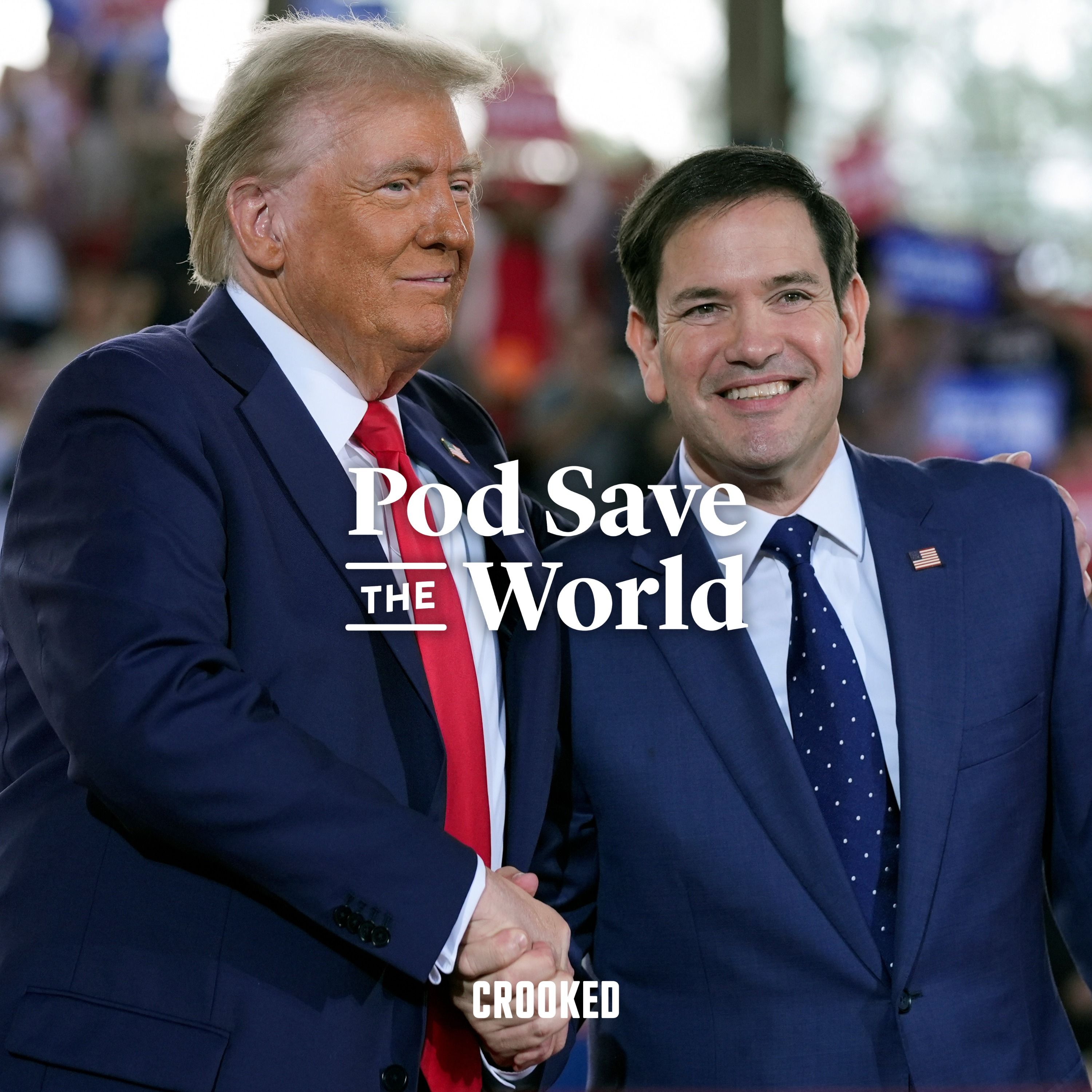
Pod Save the World
Trump’s National Security Team Takes Shape
01:27:46
Tommy and Ben process Trump’s reelection and the role foreign policy played in the outcome, highlight some awkward reactions from global leaders, and walk through what we know about Trump’s choices for top positions like Secretary of State, National Security Advisor and CIA director. They also dig into what a second Trump term will mean for Russia and Ukraine, Trump’s alleged calls with Vladimir Putin and Volodymyr Zelensky, Elon Musk’s new role as an American oligarch, and the latest developments out of Israel and Gaza, including the expiration of a 30 day ultimatum the Biden administration gave to Netanyahu’s government about increasing aid access. Then Ben speaks with Senator Chris Murphy about where Democrats went wrong and how they can adjust their foreign policy moving forward.
Loading summary
Transcript136 lines
- [00:01]
Tommy Vitor
The kind of burgers you get today tells you a lot about yourself. You're either someone who settles for sad, same old, same old burgers, or you're Edit Carl's Jr. Obsessed with a tangy OG Western bacon cheeseburger demanding a house made guacamole, loaded guac bacon fired up for the insanely hot El Diablo or craving a classic Charbold Famous star. Give in to your flavored cravings. Do your mouth to Carl's junior Big Burger, Good Burger.
- [00:32]
Ben Rhodes
Have you met All Modern? All Modern brings you the best of modern furniture and decor.
- [00:36]
Tommy Vitor
And right now through November 20th, you'll.
- [00:38]
Ben Rhodes
Score up to 50% off during their.
- [00:41]
Tommy Vitor
Early Access to Black Friday sale. Simplify your holiday entertaining with deals on.
- [00:45]
Ben Rhodes
Plush sofas, modern tabletop essentials, and more. All on sale at All Modern.
- [00:50]
Tommy Vitor
Then get them delivered for free in days.
- [00:52]
Ben Rhodes
You heard that right. Days. That's modern made simple.
- [00:55]
Tommy Vitor
Shop All Modern's early Access to Black.
- [00:58]
Ben Rhodes
Friday sale now through November 20th@allmodern.com.
- [01:13]
Tommy Vitor
Welcome back to Pod Save the World. I'm Tommy Vitor.
- [01:15]
Ben Rhodes
I'm Ben Rhodes.
- [01:17]
Tommy Vitor
So that sucked, huh?
- [01:20]
Ben Rhodes
Yeah. Yeah. And I'm sorry I'm not there to mourn with you. I'm here in Washington, D.C. with a lot of sad Democrats.
- [01:28]
Tommy Vitor
Dude, I don't know how. Like, that must be a grim scene right now.
- [01:32]
Ben Rhodes
It's a grim scene. It's 2004 vibes. But worse is how I'd frame it. But yeah, it was rough, man. It was a rough election night. I mean, I remember I was at the office with you guys and on the drive home, by the time I got home, the vibes had shifted 180 degrees in a bad direction. And it was tough watching with my kids, especially two daughters who were all excited about a woman president. That was not a pleasant experience to explain to them why this was happening.
- [02:10]
Tommy Vitor
Yeah, I went into the sadness place, but I quickly left and have arrived at anger. And I'm just kind of hanging out here for a while. I'm excited to be angry for a while. I'm picking fights on Twitter, shouting at people, telling random, you know, assholes to fuck off that I've disliked for a long time. So that part's fun.
- [02:29]
Ben Rhodes
Anger is good. My first cycle was to understand it. You know, I wrote this piece for the New York Times.
- [02:35]
Tommy Vitor
Great piece.
- [02:36]
Ben Rhodes
So I kind of channeled my feelings into that for a couple of days. But then when that was done, I just felt the anger. So. So I think I'm where you are now, which is probably a Good frame of mind for podcasts.
- [02:48]
Tommy Vitor
I actually think it's a great frame for podcast. So we're going to cover the results of the election from a foreign policy perspective. Both how the issues that we cover on the show impacted what happened on Tuesday, how the results will impact Trump's policy generally and how they're being received around the world. We're also going to cover the latest news about Trump's national security team and who he selected to be as part of the Cabinet, including picks to be Secretary of State, Homeland Security, Ambassador to the UN National Security Advisor, and US Ambassador to Israel, and what those picks say about the broader direction that Trump is going in with this foreign policy. We will also dig a little bit deeper on the impact this will have, this election result will have on Russia and Ukraine and the US Israel relationship. We know we've covered those areas a lot lately. We promise we'll get back to the more like scan the globe structure of the show soon. But, you know, it was just hard to imagine talking about anything but the election. And it will obviously have huge implications for both Gaza and Ukraine. So it's worth talking about. And then, Ben, you spoke with Senator Chris Murphy earlier today, I believe, right?
- [03:55]
Ben Rhodes
Yeah. So I talked to Chris Murphy. We kind of covered the what does this mean for the Democrats? He's been one of the more thoughtful people in talking about the need to move beyond kind of what I wrote about in my New York Times piece, moving beyond neoliberalism, moving beyond defending establishments that people don't like. We talked about what that means for foreign policy. A lot of times people focus on kind of working class economics. We focused also on what it means for the world. And then we got his first reaction to Trump's national security appointments, what it's like to be heading into opposition to Trump, what he thinks about Elon Musk playing this oligarch secretary of state figure. So a lot there. People should check it out.
- [04:37]
Tommy Vitor
That's cool. I sincerely no longer know what neoliberalism means. Mostly on Twitter just means like people I don't like. You know, depending on who's saying it to you. But I'm here to excited to hear Murphy's views.
- [04:47]
Ben Rhodes
Also, trusting markets, trusting establishments are broken.
- [04:51]
Tommy Vitor
Basically public private partnerships. Also imagine being Chris Murphy. You're sitting there thinking somewhere deep down inside, maybe I could be the next Secretary of State. And then you see Marco Rubio get named. Like, that's gotta suck.
- [05:03]
Ben Rhodes
Yeah. Guy who you've been on the Farm Relations Committee with too, and seen changes colors I mean, Murphy didn't mince words about all these neocons who are trying to re reestablish themselves as America Firsters. And Marco Rubio definitely fits that category, which we'll talk about. So you could sense his annoyance with that.
- [05:20]
Tommy Vitor
Marco Rubio sold Never Trump merch in 2016. But I digress. All right, Ben, let's do a little just kind of general reaction and analysis to this election. So, you know, listeners to this show are probably well aware that incumbents have been getting crushed in elections all around the world recently because you and I have been covering those elections. But for the first time Since World War II, every governing party up for election in a developed country lost vote share. So I do think you need to look at election results in that global context. And I suspect a lot of what we saw was anger from the pandemic and inflation and then raged elites that, you know, I think as you wrote in your piece, really does date back to the financial crisis and the economic inequality that has ballooned since then. Lots to criticize about the kind of domestic messaging and the economic message. But you and I are world though, so we're going to look at it from that perspective. A little bit of data for you be so according to an analysis by the New York Times, Trump's win in Michigan, which is a key swing state, was mainly the result of a drop off in vote in Wayne County. Wayne county includes Detroit and then suburbs like Dearborn and Hamtramck that have large Arab American populations. So KAMALA Harris got 61,000 fewer votes in Wayne county than Biden did in 2020. That's a 10% decrease, while Trump added 24,000 votes, a 9% increase. Dearborn is 55% people of Middle Eastern descent. Trump won Dearborn with 42% of the vote, roughly. Harris got about 36%. Jill Stein got about 18%. But in 2020, Biden got 68% in Dearborn, while Trump got nearly 30%. And there's precincts in Dearborn where Harris lost to Trump and lost to Jill Stein. Trump also won in Dearborn Heights. So we should say, like Harris's decline in Wayne county is clearly part of this broader trend we saw all across the country in places like New York and New Jersey and swing states everywhere. And there's almost certainly voters in those precincts that voted for Trump because, you know, they liked him on the economy. They maybe they're more conservative and they didn't like, you know, sort of the liberalism of the Harris Biden administration, whatever. But Gaza was clearly a huge part of the shift in Michigan. And right now it looks like Kamal Harris lost Michigan by about 80,000 votes. So it's just. I want to give you a chance to sound off on this because it's just been so agonizing to watch this train coming down the tracks at Joe Biden and then Kamala Harris for over a year and then see them just get plowed over by the thing electorally, as was predicted.
- [07:54]
Ben Rhodes
Yeah, there are two things about what you said, Tommy, that are actually connected. So the first is the anti incumbency thing. And there it is really important for people to understand one way that it can make sense what's happening in America, which seems to not make sense probably to most of our listeners, is to see it in the global context, which is this anti incumbency mood that you've had post financial crisis and post pandemic that has been a negative for any governing party. But that is bigger than that because the flaw of Joe Biden and the entire administration, despite a lot of good things they did, is he ran a restoration. So just to take foreign policy, his slogan his first year was America's back. And that kind of suggested that what we were doing in the past is what we should be doing in the future. That this American primacy, this America running the rules based order, America having all these overseas commitments was a good thing and we're glad that we're back. And so I think they walked into an incumbency trap, obviously with Joe Biden running for reelection and then Kamal Harris having to run as his vice president. But more broadly than that, just defending democracy, defending institutions, defending global alliances, some of that stuff is good, some of that stuff is problematic, but it wasn't even defending a different kind of democracy. It was as if democracy is an end in itself and not a means of dealing with inequality, dealing with the stuff that people are pissed about, dealing with forever wars. And this leads me to Gaza, which is apart from it being a moral abomination and something that was clearly going to alienate Arab and Muslim voters and some young voters. And that writing has been on the wall for a long time. And the fact that the campaign, even after Kamal Harris took over, couldn't even have a Palestinian American speaker, what it spoke to is also just a inherent defensiveness about do these people believe anything different than the other guys? Because if I'm looking for the person that's going to give the biggest blank check to Bibi Netanyahu, that's Donald Trump. So there's probably some defensiveness that led them to not impose any conditions on Bibi Netanyahu. But it also just kind of made Democrats look like hypocrites. You know, we talk about rules based order and all these things, and then we don't care if these people break the rules over here. It made Democrats look like they didn't care about a brown population, Palestinians, which speaks to things that a lot of voters in the United States care about. But it also just made us look like we don't really stand for anything because, you know, if you want the people that are going to support Bibi Netanyahu full tilt, why wouldn't you throw in your lap with Trump? Anyway? So there's a lot of lessons to.
- [10:30]
Tommy Vitor
Unpack there, infuriating lessons to pound back there. And it made us look pro war when it allowed.
- [10:35]
Ben Rhodes
Murphy made this point, too. It's Americans have seen forever wars in the Middle east and they're tired of losing them. And when they saw the Israeli government ignoring everything that we were telling them and escalating the war, it kind of played into that fear that how did Democrats become the forever war party when the Republicans started all these wars? But Trump, you know what he did that was smart is when he humiliated his own party, when he purged people. I didn't like how he did it, but it suggested that he was something different. And when the Democrats are trotting out Dick and Liz Cheney, it's not just that we don't like Dick Cheney, it's that that's the establishment that people don't like. And we have to get past that.
- [11:18]
Tommy Vitor
There's probably some truth to that. I'm struggling to get any real data to sort out whether how much of an impact that might have had. I saw some. I saw someone report that counties that were like big college towns underperformed by about a point, which suggests that college kids generally maybe didn't turn out. You know, so that could just be like a Gaza fatigue thing manifesting with just sort of like younger progressive college kids. But I do think we should do more to sort of explore this. Whether the appeal to sort of moderates turned off the base. I'm not sure that I buy it yet, but I'd like to understand it.
- [11:56]
Ben Rhodes
Yeah, I think the only thing I'd say is that we've talked a long time on foreign policy, that despite all the mistakes that have been made, there's a sense that you're credentialed in some way. If, like Liz Cheney's endorsing you or if you've got some generals, including generals like John Kelly, who I don't agree with about a lot of things, or the foreign policy establishment, the people that were seen as the, the validators are actually part of the establishment that people don't like. So I don't know that Liz Cheney herself made some big electoral difference. But I do think what did make an electoral difference is this deference to an establishment that Trump wants to burn down and that we see as a kind of validation of responsible leadership. We need to be in a post that era, whatever comes next to the Democratic Party.
- [12:40]
Tommy Vitor
Yeah. And so the flip side of this, there was some concern going into the election that, you know, the post October 7th rise in antisemitism or anti Israel protests, especially on college campuses, might hurt Biden and Harris because Democrats would get blamed for, you know, protests seem to be by progressives. According to NBC's exit polls, Harris won 78% of the Jewish vote. Trump got 22%. Fox News had a little bit different numbers. They found 66% of Jews voted for Harris versus 32% for Trump. Either is fairly pretty close to past margins. In 2020, the AP found that 69% of Jews voted for Biden, 30% voted for Trump. In 2016, Hillary Clinton won 71% of Jewish voters. So everyone should take exit poll subsample data like this with a huge grain of salt because it tends to have a massive margin of error and always gets revised later when there's better data. But there was also some county specific evidence of counties with large Orthodox Jewish populations shifting to Trump. That doesn't really surprise me. But Ben, I would just say that, like, okay, if the policy leads to you losing massive numbers of Arab American voters and Jewish voters, it seems like that's an even bigger indictment of the administration's policy and not really, I think, proving what some, you know, might want to argue by looking at the dip among Jewish voters.
- [14:02]
Ben Rhodes
Yeah, I think you and I have been through a lot of presidential cycles and the reality is what is true every time is that Democrats get roughly the same share. And we'll have to unpack the exit poll data as it gets more, you know, more specific. But Jews in this country are not single issue voters. We make a huge mistake when we categorize all American Jews as somehow voting only as it relates to Israel. And there are voters that are a key part of the Democratic coalition. And frankly, whatever the number is, it's a very high number relative to other demographics. One of the problems the Democratic Party has is that the organized American Jewish community, aipac, a lot of the donor networks tend to be far more right wing than most voters. And sometimes the mistake is you listen to those people as the spokespeople for this entire category of people that run the gamut from secular to orthodox, from super left to more conservative. We just have to being in a defensive crouch about your policy on something as fundamental as Gaza because of some noise that you're hearing from people in that kind of organized community or the donor networks. That was a losing stretch.
- [15:18]
Tommy Vitor
So, Ben, lastly on exit polls, 4% of voters said foreign policy was their top issue in deciding how to vote. Very humbling for you and me. But it is worth pointing out that Trump won those voters 55% to Harris's 39%. We don't know if that's because of Gaza, if it's because of Ukraine, if it's because of just like a general strong, weak thing. But I don't know, it doesn't feel great to lose that, that broader metric.
- [15:45]
Ben Rhodes
No. And it's probably all the above. And it's a particularly damning indictment for a party that's gone out of its way to position itself as the responsible stewards of American leadership and commerce, talking about a lethal military and all these things, whether it was the money to Ukraine, whether it was the support to Gaza, whether it was strong week. The other thing that's clear is that there's a generalized sense that this America first foreign policy message is of a piece with a America first economic message. I'm fighting for you and not these other people. And Democrats kind of carve out foreign policy as this test to pass this commander in chief test. So we've got some economic policies over here that will serve up to you in some middle class poll tested language. And then we have this whole separate message on foreign policy that's like a section in a convention speech. And it's not one message. You know, they tried to make it one message around democracy, but that ended up being a bit of a trap because people don't think democracy is working particularly well in this country and people consistently don't want to be fighting wars on behalf of democracy abroad. Even, you know, as I support Ukraine, we have to reckon with that. So I think that's a lesson that we need to have one message from our party that speaks to domestic and foreign policy concerns as a whole and to not kind of carve out these different lanes, which is how Democratic campaigns are often run. Yeah.
- [17:14]
Tommy Vitor
And also when a lot of people sort of Vote on strong versus weak. If you're going to run, you know, kind of a 82 year old, hobbled looking candidate versus a guy who is, you know, looks like a classic authoritarian strongman, there's going to be some challenges there. Obviously that dynamic change with Kamala Harris came in, but I think a lot of the die was cast.
- [17:33]
Ben Rhodes
Yeah.
- [17:33]
Tommy Vitor
So, Ben, you get leaders around the world. I think they're, they're not as shocked as they were in 2016. I mean, we aren't either. Right. I think a lot of people are preparing for this to some extent, but they're still scrambling to react. I saw that friend of the pod and current Australian ambassador to the US Kevin Rudd deleted all of his old tweets criticizing Trump, saying it was out of respect for the office of the presidency and made previously in his person capacity. But, you know, Kevin Rudd was speaking truth to power back in the day. He said Trump was the most destructive president in history and said, quote, he drags America and democracy through the mud again. Spot on. But now there's calls from conservatives in Australia to withdraw him from the U.S. we'll see if the Trump people make a stink out of this and actually push for that. You had a lot of leaders from over Europe who we know hate Trump, were putting out statements congratulating him, expressing excitement to work together. And here's friend of the podcast and current British Foreign Secretary David Lammy getting pressed on some of his past statements about Trump. So April 2019, you said deluded, dishonest, xenophobic, narcissistic. Donald Trump is no friend of Britain. Have you changed your mind or is.
- [18:43]
Ben Rhodes
That still your view here? Chris, I'm sitting here as Foreign Secretary. I've had a meal with Donald Trump.
- [18:49]
Tommy Vitor
I've met Donald Trump.
- [18:51]
Ben Rhodes
Did you talk about this stuff?
- [18:52]
Tommy Vitor
Did you apologize? Did he bring it up? Not even vaguely. I've got to say I found him to be a very gracious host.
- [19:00]
Ben Rhodes
Did he offer you a second portion of chicken or something out here?
- [19:03]
Tommy Vitor
He did offer me a second portion of chicken. He was very generous, very gracious, very keen to make sure that we felt relaxed and comfortable in his surroundings. He was funny. He was warm about the uk, very warm about the Royal family, I've got to tell you. So that's not fun for Lammy. I don't know. What do you think? You think any of this matters? Like Trump, we obviously holds grudges, but.
- [19:30]
Ben Rhodes
I can't, I don't think it matters. I think I've had my antenna for things to be Angry about Tommy. And one of the things I'm angry about is everything is 2017 all over again. And so there are these stories, these kind of think pieces about what countries are doing to prepare to charm Trump. You know, what the Europeans are doing. Two things I'd say about this are, number one, I travel a lot in Europe and somewhere in Asia. They've all thought Trump was going to win this election all along, so they are not surprised. They got some hope when Comlaris came in. The polls tightened, but I think that most of them, more than us, thought that this was going to happen. But the second thing is, we went through this the first time. The charm offensive doesn't work. Look, Trump, David Lammy may have tweeted that, but Trump thinks that all the Europeans think that about him. He's not fooled by the fact that some of them have a record of saying it on social media and some don't. He assumes that leaders of democracies are not his friends. That was the case the first term when he had nothing nice to say about whether Macron tried charming him, ended up in a huge fight with him. Theresa May tried charming him, ended up being pretty much ignored. Angela Merkel stood up to him, ended up in a fight with him. This is where it ends for these people. These are not the people he likes. He looks at the world and he has an affinity to the strong men, to Putin, to Orban, to Modi, to Netanyahu. Those are always going to be his friends. These people can try to be charming for a while, but ultimately, Trump is transactional and doesn't really care about them and doesn't like them as much as these other people. So this is kind of wasted energy going back and looking at who said what. And I'm not saying this to defend Lammy, it's just, it is what it is. I don't think, you know, maybe there's some people around Trump that have vendettas for people who said things, but I don't think, you know, just because Justin Trudeau didn't say that, that he likes Justin Trudeau more than those people. You know, that's exactly right.
- [21:29]
Tommy Vitor
And yeah, we know who he likes. We know who he doesn't. I'm sure it'll all play out as expected. But, Ben, you know, the biggest news this week on this stuff is the foreign policy staffing that's starting to happen. So as of Tuesday afternoon, here's who has been leaked as filling up positions in a way that seems, you know, all but confirmed in Most cases. So Congresswoman Elise Stefanik will be the U.S. ambassador to the United Nations. Florida Congressman and former Green Beret Mike Waltz will be National Security Adviser. Florida Senator and current Senate Intelligence Committee Chairman Marco Rubio will likely be tapped to become Secretary of State. That's the one that's the most kind of hedged in the reporting so far. And then South Dakota Governor Christy Noem is going to be Secretary of Homeland Security. RIP to any dogs that tried to cross the southern border. We don't know who will be Secretary of Defense, but we know it will not be Mike Pompeo who got spiked via Trump's social media post, as did Nikki Haley for any job in the administration, period. And we know it won't be Senator Tom Cotton because Cotton pulled himself out of the running. So let's start with the big picture and then we can go to go through these individuals one by one. I think the key through line here is loyalists and sycophants. Rubio is the one pick that surprised me the most. He is a neocon, he's a hawk. He's exactly the kind of person that the MAGA world says they hate. And you're seeing some of this play out on social media. There's some MAGA types that are very pissed about the Rubio pick. But Rubio also spent the last few years kissing Trump's ass at every occasion, including after he was passed over for the Vice presidential nominee, which apparently Trump noticed. So here we are. I'm a little bit relieved that some of the worst of the worst haven't been named to jobs yet. People like Cash Patel, Rick Grinnell, Mike Flynn who are like MAGA crazies, for lack of a better word. But I'm sure you know that punch in the face will be coming. Waltz is not who I expected to be National Security Advisor. There seems to be some Florida favoritism happening, maybe. Maybe that's like the Susie Wiles impact, the new Chief of staff. But apparently Waltz has been close to Trump for a long time and was considered like a Trump whisperer in the first administration. As a whole, though, I mean, this group is. It tilts a little more hawkish and establishment Republican than I had expected. I would say it's bad news for Ukraine, bad news for anyone who wants a humane immigration policy. Bad news for Iran, because you have to think that given the assassination plot, reporting and then the arrest that just happened, that Trump is going to want to fucking destroy them. And then Rubio and Waltz are really hawkish on China. Maybe that's good for Taiwan. This crew is terrible for the Palestinians. They will back whatever Israel wants. And then it just weirdly, I mean, you keep seeing these reports that Elon Musk, Donald Trump Jr. Tucker Carlson and Rick Grinnell and kind of like Naga media types are playing an outsized role in personnel selections. So I don't know, maybe that means we'll see some real curveballs. But any kind of thematic takeaways from this crew so far for you?
- [24:31]
Ben Rhodes
I think the thematic takeaway, the main one is you have to compare these people to who was there in 2017 and put aside the like two weeks that Mike Flynn was National Security Advisor before he got in trouble with the FBI. It was H.R. mcMaster as national security Advisor, Rex Tillerson as Secretary of State and Jim Mattis as Secretary of Defense and Nikki Haley at the UN that was an incredibly conventional collection of traditional neocon like Republicans. There were not people that were particularly close to Trump. He barely knew some of those people. I think didn't know some of those people at all before he pointed them. All of these people are Trump loyalists, even Rubio. And by the way, we should say there's like a non zero chance that he's going to humiliate Rubio by I.
- [25:13]
Tommy Vitor
Don'T want it to happen. It would be so funny.
- [25:16]
Ben Rhodes
I think we have to assume it's Rubio. Yeah. All of these people have repositioned themselves as first and foremost Trump loyalists. They're going to do what he says. They know going into the jobs more than was the case in 2017. That's why they're there. They know that they'll be fired within a period of weeks or months if they are crossing Trump on key things that he wants to do. So these are all people who've sold their souls and that's why they're getting these appointments. I have the same takeaways as you and to put it into policy, annexation of the west bank very much on the table. None of these people have any problem with depopulating Gaza, annexing the West Bank. Confrontation with Iran could escalate. The only question is whether Trump's anti war instincts. Moderate military action against Iran by either the US or Israel. Then Russia. Deep concern. I mean Rubio was against the last aid package to the Ukrainians. So he's totally reinvented himself into someone who is America firster on the Ukraine war. This is all bad news to the Ukrainians. This suggests that he's meeting what he said about cutting them off and getting to a peace deal and we can talk about what that might actually mean. The China piece is interesting, though, because it's the one area where you're still kind of allowed to be a neocon.
- [26:29]
C
Right.
- [26:30]
Ben Rhodes
And so Waltz and Rubio have these incredibly hawkish views on China.
- [26:35]
Tommy Vitor
So, so, so hawkish. I mean, yes, like we'll get into it more, but yes.
- [26:39]
Ben Rhodes
Well, yeah, and it suggests that we, you know, prepare for a bumpy ride here. The tariffs are coming, the kind of confrontation with China is coming. This is the one place where these guys can be ideolog. And so that's what I see is a ratcheting up of tensions with China, along with all the other bad things that we've talked about. And yeah, you're right, it could be worse. I'm interested. You named the big three. Cash Patel, Rick Grenell, Mike Flynn. Those are the scary guys. CIA is still open. FBI is still open. DNI is still open. So all the intelligence jobs are still open. And while I'm glad that Cash Patel's not National Security Advisor and Rick Grenell is not the Secretary of State, if those guys are in charge of the intelligence community, that's scary.
- [27:21]
Tommy Vitor
I think it's scarier. I think it's scarier in terms of when it comes to abuse. Like if you're Secretary of State and you're just a prick and an asshole and not qualified for the job, that's not good for U.S. interests abroad. But if you have control over the national security apparatus or intelligence collection, or could somehow abuse that through the process, that's scary to me for getting back to some of the old school abuses of the FBI, you know, collecting on Americans, etc. Etc.
- [27:50]
Ben Rhodes
Covert operations too. So the CIA has a huge bandwidth, right? I mean, it's not something we can talk about. But the reality is people know the CIA can do things totally out of sight through covert operations. And so imagining somebody like Cash Patel being able to, or Rick Renell or Mike Flynn or anybody like that being able to do things totally in the shadows, which will also be the area that is most attractive to Elon Musk, that's deeply worrying. So it may be that people like Rubio are the front men for this operation, but that a lot of the dirty work could end up running through the intelligence community. That's certainly the pattern in American history. And so watching those appointments is important for sure.
- [28:34]
Tommy Vitor
So let's tick through these one by one. We'll go a little faster with some of them. Others. So Elise Stefanik, just manifestly unqualified for the job, but she's a Trump loyalist. She's a congresswoman from New York. I think she's 40 years old, was a very normie moderate Republican until she reinvented herself as a MAGA fire breather. I think the question, I mean, I'm 100% sure she'll use this position to grandstand on behalf of Israel like she did at the hearings with the college president. The question I have is how aggressive Trump will be about going after various parts of the UN Budget. The US Provides a ton of money to the un, the UNRWA money for, you know, Gaza relief efforts. That's probably going to be zeroed out right away. I wonder what will happen to the World Food Program, the World Health Organization. There's a lot of pieces of this and it just depends on how aggressive Trump decides to be.
- [29:27]
Ben Rhodes
Yeah, you're right there to. She's. The platform she's going to use is going to be about Israel. You know, she made her name in some circles with these antisemitism hearings attacking college presidents. She'll basically attack the UN the same way she attacked the college presidents. You know, everybody's anti Semite and, but, but you're. I also worry about getting under the hood and kind of crippling the US Contributions to the UN system. I think we can expect that. But I don't think that this is a person Listefonik who's going to be a big player. It's frankly interesting to me that Republican UN nominees tend to get more attention. Nobody was a tea leaf reading Linda Thomas Greenfield. And that's not a knock on her. It's just this is someone who's kind of at the far end of American foreign policy, largely a spokesperson. And so she's a Trumpy spokesperson who will call them all anti Semites and probably cut funds to things that are really important to people's lives. And that's what we shouldn't lose sight of. I mean, the question for the UN system is can they make up some of that money in Europe and other places?
- [30:30]
Tommy Vitor
Yeah. We're gonna take a quick break, but if you wanna learn more about what this election will mean for the courts, check out Strict Scrutiny, where the hosts are breaking down what the election means for the future of the Supreme Court and state courts. If you don't know strict scrutiny, you should check it out. It's one of the smartest, funniest shows I listen to every week. You can learn a ton about the legal system without needing a law degree. And you also just get a lot of gossip about these bitchy, bitchy people who make judicial rulings. And you'll learn about the courts in 2025. So check out strict scrutiny wherever you get your podcasts and it's on YouTube. Pod Save the World is brought to you by Rocket Money. Can you name every subscription you have? No, because I have too many. No, not even close. Need Rocket Money for them. Did you know that over 74% of people have subscriptions they've forgotten about? With Rocket Money, you don't have to remember every subscription or worry about forgetting any because you can see them all laid out in the same place. Rocket Money is a personal finance app that helps find and cancel your unwanted subscriptions. It monitors your spending and helps lower your bills so you can grow your savings. See all of your subscriptions in one place and know exactly where your money is going. Rocket Money will even try to negotiate lower bills for you, sometimes by up to 20%. They automatically scan your bills to find opportunities to save. Then you can ask them to negotiate for you. They'll deal with customer service. Rocket Money is over 5 million users and has saved a total of $500 million in canceled subscriptions, saving members up to $740 a year when using all of the app's features. Rocket Money is great. A bunch of us here at Crooked Media have used it. We've saved money on unwanted subscriptions. It's super easy to use. It's a great idea. Everyone should give it a shot. You're just going to save money. Yeah, it's going to pay for itself. Stop wasting money on things you don't use. Cancel your unwanted subscriptions by going to rocketmoney.com world that's rocketmoney.com world rocketmoney.com world pod save the World is brought to you by Quince. It's getting a little colder here. I think I actually do need some. Maybe a new sweater or something. Yeah, I can use this sweater something for those Sweater Weather has come to LA Sweater. It has actually, it was morning dog walks. Quince offers affordable, high quality essentials for any wardrobe. That includes seasonal must haves like Mongolian cashmere sweaters from $60 and comfortable pants for any occasion. Quint only works with factories that are safe, ethical and responsible manufacturing practices along with premium fabrics and finishes and they partner with them directly, cutting out the cost of the middleman and passing on the savings to you. That means Quint's Items are priced 50 to 80% less than similar brands so you can update your look without breaking the Bank. I had a great experience shopping on Quint's. I bought a bunch of workout stuff. It was cheap and came really fast and it's holding up well and it looks good and I don't know, probably half the cost of some of the name brands. Yeah, that you can probably think of. But I don't have to tell you upgrade your wardrobe with pieces made to last at quints. Go to quince.comworld for free shipping on your order and 365 day returns. That's Q U I N C E dot com world to get free shipping and 365 day returns. Quince.com world podcast of the world is brought to you by USA for UNHCR UNHCR, the UN Refugee Agency, responds to emergencies and provides long term solutions for refugees in more than 130 countries, including Ukraine, Syria and Afghanistan. UNHCR supports people forced to flee from war, violence and persecution at their greatest moment of need. During the winter, people forced to flee are faced with increased hardships and costs. As temperatures drop, families struggle to meet basic needs like heating their shelters, buying warm clothes and cooking hot meals. Refugees and displaced people are struggling to survive like never before. Funding shortfalls and rising food prices force UNHCR to dial back its life saving aid to vulnerable families around the world. Donor support is crucial to address the need for essentials for millions of families. Without sufficient funding, life saving assistance will be threatened, cutting off a vital lifeline for refugees and displaced people. This is a tremendous challenge for people forced to Flee. Donate to USA for UNHCR by visiting unrefugees.org Winter all gifts before December 31st are automatically matched so Waltz is a 50 year old retired Green Beret. He's a combat vet turned Republican Rep from Florida. As we mentioned, he's a longtime China Hawk. He also has had policy jobs at the Department of Defense in the White House, so he's had a lot of experience. He was described to Politico as a Trump defense policy whisperer on specific sort of areas. He is opposed to sending more money to Ukraine. He wrote, quote, the era of Ukraine's blank check from Congress is over. He had a tweet about Taiwan where he said we must learn from Ukraine by addressing the threat of the CCP and arming Taiwan now before it's too late. That's why I asked state and DOD officials for a timeline and specifics on how we plan to bolster Taiwan's self defense capabilities. So again, he's very focused on Taiwan and all things China. He one time said that he wants to let Israel finish the job in defeating Hamas. He supports maximum pressure on Iran. At one point, he suggested that the US Military should have a bigger role in battling Mexican cartels. Ben, we were joking around about Aukus a couple weeks ago, which is that, you know, U.S. australia, submarine deal. In an op ed he wrote, he said Mr. Biden and Ms. Harris have taken some positive steps on China, such as strengthening export controls and establishing Aukus. He's apparently an Aukus fan. Shout out Australia. So the last thing on this. So Ben on npr, Waltz talked about how he thinks Trump could bring Putin to the negotiating table with Ukraine. Here's an excerpt from that.
- [36:12]
Ben Rhodes
I think it's perfectly reasonable that this.
- [36:14]
Tommy Vitor
Is going to come to some type of diplomatic resolution. And first and foremost, you would enforce the actual energy sanctions on Russia. Russia is essentially a gas station with nukes.
- [36:27]
Ben Rhodes
Putin is selling more oil and gas.
- [36:29]
Tommy Vitor
Now than he did pre war through China and Russia.
- [36:33]
Ben Rhodes
And you couple that with unleashing our.
- [36:35]
Tommy Vitor
Energy, lifting our LNG ban, and his economy and his war machine will dry up very quickly.
- [36:43]
C
I just spoke with the speaker of.
- [36:45]
Tommy Vitor
The Parliament of Lithuania. She buys 85% of their oil and gas from Texas and Louisiana. She said, what do you want me to do? Go back to buying from Russia because we've constrained our energy supplies?
- [36:57]
Ben Rhodes
So I think that will get Putin to the table.
- [36:59]
Tommy Vitor
Now, we're the magical thinking part of the administration where there's just an easy answer sitting there on the table for how to get Putin to the table. I don't know, big picture, what do you think about Waltz and what do you expect from him?
- [37:11]
Ben Rhodes
You covered it well. I think there's a lot of magical thinking in that. Let's just take what he said. Israel should finish the job fast. Well, BB Netanyahu might not be interested in finishing the job fast. And by the way, what does it mean to finish the job? Who's in charge of Gaza? What happens to the people there? What happens in the West Bank? He talks about using energy sanctions to cripple Russia. My God, we've heard this for years. The Russians have figured out how to avoid our sanctions. There's not some magic wand that the Trump people can wave that's going to make these sanctions somehow bring the war to the end. And I think what they're in for is the reality that Putin and Netanyahu may be more Trump friendly and happy that he's in there. But why wouldn't they press on? Why wouldn't Putin try to keep taking more Ukrainian territory. Why would he stop now when he has the likelihood of the US Administration cutting the Ukrainians off and not backing them up and the kind of vibe that he's on offense? So I think their talking points about ending all these things quickly are going to run into a harsh reality that the Middle east and Ukraine are unlikely to end anytime soon. And they're likely to get worse for the Ukrainians because that's one thing where Waltz has been very clear. He's kind of J.D. vance pilled on cutting off assistance there and trying to kind of figure out a tough guy talking point on sanctions. That's not going to work. This China piece is consistently interesting, though, because again, it suggests that the US Is America first kind of everywhere except in the competition with China. We're super hawkish. And so we're withdrawing from Europe, we're drawing from European allies, we're drawing from supporting the Ukrainians. We're giving the Middle east over to whatever BB Netanyahu wants to do. But we do have this kind of very hawkish agenda with China. The thing I would watch is, does he mean what he says on arming Taiwan? What's the first arms package that goes to Taiwan? And I'm not even suggesting it's the right thing to just start pouring arms in there. But Trump, I would imagine, doesn't want to do that. And so the area where Trump may be out of step with his advisers is Trump certainly wants to trade war and the tariffs. I don't think Trump wants to take it in this direction on Taiwan. So I'm quite curious how the Waltz Rubio thing might interact with Trump's instincts on China, because I don't think they're the same.
- [39:14]
Tommy Vitor
Yeah, I agree with you. I mean, China's the biggest question mark. It's also the biggest issue, period, for the U.S. i mean, Trump and Xi Jinping apparently talked on Wednesday. That's no surprise. It's sort of your typical congratulations call. But the question is, do we follow through on these proposed tariffs? Apparently, Trump has said that if the Chinese invade Taiwan, you double the tariffs to 200%. I mean, imagine what that would do to the global economy. And you're right. I mean, there's all these China hawks in this cabinet. Do they win the day in the arguments over Taiwan, or does the America first crowd? I guess we'll. We'll find out. That brings us to Rubio, Ben. I mean, to be honest, like, I think Marco Rubio is not a very smart person and a political coward, but he does have Lots of relevant experience. Right. He's on the Senate Foreign Relations Committee. He chairs the Senate Intelligence Committee. So he's got a lot of background in these issues. He did was once a big supporter of Ukraine. He was the guy who blamed the war on Biden. But more recently, he is called to end the war because he says the US Is funding a stalemate. Rubio is also very hard line on China and Iran. He will continue some of the hardline and dumb policies in Latin America, like brutal sanctions on Cuba, Nicaragua and Venezuela. I was reading something the other day, Ben, that reminded me that if the US Goes through with mass deportations at millions of people scale, that will absolutely ravage countries in Latin America like El Salvador, Guatemala and Honduras, because remittances make up like 25% of GDP in a lot of these places. And if you're sending back thousands of people, that overloads their systems and also cuts off a huge source of funds. So something to look forward to there. Interestingly then, someone today retweeted a clip of Rubio back in 2017 at the confirmation hearing for Rex Tillerson, where he was trying to bait him into calling Vladimir Putin a war criminal because of what the Russians had done in Syria. I wonder if he still thinks that or if he'll get that same question at his confirmation hearing, But I don't know. What are you expecting from Rubio? How independent do you think he's going to try to be in this job?
- [41:20]
Ben Rhodes
I think he'll be an incredibly weak Secretary of State, which suits his personality. And the reality is that Trump wants to control these key relationships. So policy on Ukraine, the relationship with Putin, the relationship with Xi Jinping, that's going to run through the White House. And who knows, an Elon Musk is probably going to be more influential than Marco Rubio. I look at Rubio and I think they may allow him some running room on, say, Latin America, where he's been the leading hardliner on Cuba and Venezuela. And so maybe he'll be ginning up the old talking points and the old policies in terms of trying to strangle Venezuela and Cuba. We know how well that's worked out. And so that could just be further precipitating a collapse in Cuba, a humanitarian catastrophe. Same thing in Venezuela, where that could spread instability, it could obviously create humanitarian catastrophes. And it's unlikely to dislodge like a Maduro, who's been able to weather a lot of this stuff. And so I just see him breaking more things down there without any plan. For how to transition to something different. And then I think even on China, he'll probably posture a lot, but I don't think he's calling the shots. And I don't think he's going to have a big say on what the tariffs are. So I kind of think he's a front man. Maybe that's what Trump thinks. Take a center. People know him. He knows some people around the world. He can fly around. He can help us with our politics in Florida on the Cubans and Venezuelans, but I just don't think he's going to be an important player.
- [42:52]
Tommy Vitor
Breaking news, Ben, as we've been recording, apparently Trump just named John Ratcliffe to head the CIA. Folks might remember Ratcliffe from the first Trump administration. He was briefly, I think he was acting and then nominated to be the Director of National Intelligence, but he withdrew after even Republican senators started raising concerns about him, because I think some former intel officials said he was politicizing intelligence or he had lied about his resume. There's a few things in there. But before that, he's in Congress for a while. He doesn't seem great. You know, it's not. It's not like the three horsemen of the apocalypse that we named earlier. But it's super interesting.
- [43:32]
Ben Rhodes
Tommy, though the trend is basically Trump is finding people who are at the edges of the mainstream, maybe not even mainstream, but they're kind of established. Some people, they've been in Congress. So it's not all the way to Cash Patel. And maybe this is a Susie Wile thing, but these are Trumpers. These are people that have totally bought into maga, whether they believe it or that's how they're going to get ahead. It's interesting. A Pompeo is somebody that pretended like he was fully on board with maga, but I think Trump knew. Pompeo probably disagrees with him on some of this stuff. Certainly on Ukraine, he disagrees with him, and he didn't want that around. So these aren't fully mainstream people who might have different views than Trump, but they're also not the Cash Patels of the world. And he seems to be threading that needle so far with his team. Defense will be interesting. A guy we haven't heard from is Robert O'Brien, who is a national security advisor for Trump, who similarly was a more conventional guy who's kind of reinvented himself as a Trump America Firster. This is the team. This is basically the new Republican Party. The people that have totally bought into MAGA but are kind of have A resume that suggests that they're not cash. Patel's resume is. He wrote a children's book about a wizard named Trump.
- [44:45]
Tommy Vitor
He was a staffer.
- [44:46]
Ben Rhodes
Yeah. So he's not elevating the staffers yet to run the agencies again. We'll still see what happens in a couple of these places, but. So I wouldn't take too much comfort in these guys because I think they've all sold their souls.
- [44:57]
Tommy Vitor
Yeah. And they'll have staffers who will do the dirty work. The sort of next one on this list is Kristi Noem. She's the governor of South Dakota. We don't know a lot about what she thinks about foreign policy because when you're governor of South Dakota, you don't have to worry about it too much. Alona reminded me that in her book where, the one where she bragged about being a dog murderer, she also made up a claim about meeting with Kim Jong Un that she's never really clarified or walked back or apologized for. She also made up a story about canceling a meeting with French President Emmanuel Macron. But, you know, she's pretty odious, MAGA type. She supported the Muslim ban when she was in Congress. And Noem offered to personally drop off razor wire to Texas Governor Greg Abbott to use at the border. So those looking for a humane immigration policy will not be pleased with this one. DHS does a lot of big stuff. They do natural disasters, cybersecurity, transportation security, immigration enforcement. So it's a big job. It's a dumb, poorly constructed agency, but it's got a lot of component parts. And one kind of open question on the China peace ban is TikTok. Remember, Trump wanted to ban TikTok. Then he seems to have gotten bought off by a donor and changed his position. Kristi Noem and all these goobers were anti TikTok, anti CCP. South Dakota banned TikTok on state owned or devices in 2022. But we'll see. You know, how. What if she cares about this at all anymore? But again, the kind of immigration team is going to be Kristi Noem, Tom Homan, the former head of ICE turned border czar, who was a big driver of the family separation policy back in the previous Trump administration. And then you have Stephen Miller at deputy chief of staff at the White House. So the immigration picture is. Is very grim.
- [46:42]
Ben Rhodes
Yeah, the immigration picture is going to be controlled by the White House. I mean, the appointment of Kristi Noem suggests this is not a great intellect. This is not someone that they even see is Running this policy. They're going to run this policy from their borders are and from Stephen Miller. And again, a common thread here is some of these big things Trump said he's going to do. Mass deportations, tariffs on China. All these confirmations confirm that that's the direction that this is going. The other thing is that DHS is a shitty job that usually ends up being a cabinet secretary that nobody likes. And so it's kind of a poison chalice to give to Kristi Noem, because people get pissed after natural disasters. People get pissed about all of these Alphabet soup of agencies that don't work as well as people would like FEMA and others. And so I don't know. She's there to. To be somewhere. And actually it's not really a reward for her. It's probably a sign that they just want someone who's willing to go on television when Stephen Miller is doing odious things and defend it.
- [47:46]
Tommy Vitor
Jesus Christ, man. The news keeps coming as we're recording. Apparently Trump named a guy named Steve Witkoff to be special envoy to the Middle East. His qualifications seem to be being Trump's golf buddy. So that's cool. He's just a real estate investor. All right. On top of that, Ben, Mike Huckabee has been named US Ambassador to Israel, per your point earlier in the show about annexation of the West Bank. Here's a clip of Huckabee talking about the west bank in an interview about seven years ago.
- [48:17]
C
I think Israel has title deed to Judea and Samaria. There are certain words I refuse used to use. There is no such thing as a West Bank. It's Judea and Samaria. There's no such thing as a settlement. Their communities, their neighborhoods, their cities. There's no such thing as an occupation.
- [48:36]
Tommy Vitor
So that does not bode well for anyone in Gaza, anyone in the west bank, anyone who wants to see a Palestinian state.
- [48:42]
Ben Rhodes
This is what's coming. And he represents this evangelical Christian embrace of Israel that is rooted in believing that the Jews need to be there so that the rapture can come and they can be converted. So it's not exactly the best end of the story. But look, I mean, this is coming, the annexation of the west bank, and we add that to the list with tariffs and mass deportations, and that's where Middle east policy is going. The thing about the golfing buddy Murphy made this point. We shouldn't forget that Trump is term limited. And there's also going to be a huge element of his foreign policy that is about profit. It's just pure corruption. And there's a lot of money to be made in the Middle east in Gulf countries. And so there's going to be a couple stories happening. There's going to be what Trump is doing ideologically to America and to American foreign policy, but then it's also going to be what are Trump and his buddies and Elon doing to essentially loot the power of the United States for their own purposes. So I don't know much about this Middle east envoy, but it's something to watch because we know Jared Kushner walked away from the first Trump term with a couple billion dollars from the Saudis. I wonder what kind of deals will be made in the next four years. I have a pretty good idea.
- [49:54]
Tommy Vitor
Yeah. One out, a couple trillion. Two final little pieces of this. Christopher Wray is the current FBI director. He's supposed to be in place until 2027. Lots of reports that he thinks he might get fired and that Trump might force him out. Cash Patel has been floated as a replacement. So that sucks. Then the Wall Street Journal reported that Trump is thinking of establishing a board of retired military personnel who will be given the power to review and then remove three and four star flag officers. So generals, admirals, etc. This seems to be the follow through being an executive order that would follow through on the pledge to fire woke generals or you know, what that translates to is anyone who disagrees with me as president. Trump has the right to fire any military officer that he wants. But setting up this board and this process suggests that there could be a loyalty purge of sorts, which should surprise no one. That was what Project 2025 was about. But this is the implementation in the US military.
- [50:49]
Ben Rhodes
Yes, this is the full Project 2025 piece of this, which is that in addition to these cabinet appointments and political appointments, we're going to reach down and start to transform the leadership of the US Military, the intelligence community. I'm sure this is coming for the State Department. And look, people should understand that this is absolutely not how this happens. Usually the US Military pretty much handles promotions, right? Who becomes a three star general, four star general. I remember in the Obama years, the only military appointments that Obama himself would get involved in were essentially the chairman and vice chairman of the Joint Chiefs of Staff, the combatant commanders. So the people who run Central Command, that's the Middle east or Southern Command, that's the Western Hemisphere. But even that there would basically be military recommendations that came from the chairman, the Joint Chiefs of Staff or something. And then Obama would kind of interview those people. And I don't remember a time when he overruled them. And so if Trump starts social engineering the military to have a bunch of maga three and four star generals, that is a huge cultural shift. And I think what you're going to see them try to do is kind of magify the US Military. And that's, that's kind of frightening. I mean, we should just name that. This is Project 24. They said they were going to do this and they're doing it.
- [52:02]
Tommy Vitor
Yeah, not great. Finally, Ben, there was this article in Politico about people in the Biden world talking about Trump proofing foreign policy. And I'll be honest, I skipped past it five times because you can't do that. The only way to Trump proof your policy is to win.
- [52:19]
Ben Rhodes
Maybe Biden should have thought about that after the midterms and not run.
- [52:23]
Tommy Vitor
Yeah, I mean, I guess you could try to appropriate money as fast as possible, but that's not really feasible. Like the ira, all the climate funding, Trump could peel back. I think the majority of that, you can try to race money and stuff to Ukraine, but those weapons systems take a long time to ship and Trump could cancel them when he takes office if he wants. So I know, I appreciate the sentiment and that people are trying, but there's no fix here. It's over.
- [52:51]
Ben Rhodes
Yeah, I think they'll, you know, they can try to shove as much out the door to the Ukrainians and that's worth doing, but it's not going to make up for the fact that if Trump comes in and there's a sense that's being cut off, it's not just what's flowing to the Ukrainians, it's the expectation about what, what might come. Is the US Going to be there in one year or two years? These questions, remember, about whether the Ukrainians can use American weapons deep into Russia, that's off the table. The Russians are preparing for an offensive with the North Koreans in the Kursk region of Russia. The US Is not.
- [53:22]
Tommy Vitor
We'll get care about that.
- [53:24]
Ben Rhodes
So I just think the only way to Trump prove I've lived through this. The only way to Trump prove it is to win. I hope. One thing we haven't talked much about is just the Paris Agreement, for instance. But he can withdraw from that. There's nothing we can do to make Donald Trump stay in the Paris Agreement.
- [53:39]
Tommy Vitor
No. And the cops happening right now, boy, that's got to be depressing. All right, a couple more things. We'll try to get these a little Quicker. So, first on Russia, I mean, I don't want to go all Mueller time on you, but things are already a little weird between Trump and Putin because the Washington Post reported that Trump and Putin spoke on the phone. Trump told Putin not to escalate the war in Ukraine. That was according to sources in the Trump world. But Putin's people denied it, calling the report pure fiction, while the Trump folks are declining to comment on the record. Trump also called Volodymyr Zelensky, president of Ukraine. For some reason, Elon Musk hopped on that call. Again, there's lots of reports that Elon is just like, won't leave Mar A Lago and is weighing in on all kinds of staffing things. Axio said that Zelensky was, quote, somewhat reassured by what he heard from Trump. I find that a little hard to believe, but okay, I guess. Elon said he would continue to give them access to Starlink satellites, which are a huge communications tool for the Ukrainian military. Meanwhile, as you just mentioned, I mean, the Russian military has reportedly assembled 50,000 troops, including the North Korean soldiers that we've talked about a few times on previous episodes, to prepare for an assault on the Kursk region and take back that territory that the Ukrainian military took from them a few months back. Over the weekend, Ukraine launched its biggest ever drone attack on Moscow, injuring several people and shutting down airports for a while. The head of the UK's armed forces said October was Russia's worst ever month when it comes to casualties. They suffered an average of 1500 dead and injured every single day in October. So it's just kind of a reminder of the scale of this conflict that brings their casualty count, the Russian side, to 700,000. So, Ben, as you mentioned, I mean, this is about Ukraine, but it's also about what Putin might do next, whether he might go further into Georgia or Moldova or a NATO country like Estonia. And it's not just US politics that are swinging away from support for Ukraine. You're seeing this kind of anti Ukraine sentiment increasing all over Europe in places like France and Germany and other countries that are critical parts of NATO. That said, there's a part of this where I hear someone like Rubio say the current policy is funding a stalemate and a stalemate for Ukraine against a much bigger and better resourced partner. There is some truth to that. So, like, I'm torn, right? Like, Trump's bigger goal of ending the bloodshed, ending the war, it's not bad in and of itself, but I think there's sort of like, implications and ramifications of unilaterally cutting off the Ukrainians is is the big question. And then what Putin does next. I mean, I guess the question I had for you is, what do you think the odds are that Putin will actually work with Trump versus just kind of being his usual trolley self to demonstrate that he's not controlled by the west or anybody else?
- [56:35]
Ben Rhodes
I think he'll try to thread the needle like he has already, where he praised Trump a bit. But then he's playing hard to get in the sense that he's going to want to press as hard as he can, as fast as he can, to take as much territory as he can, and to kind of put Russia in the best position while saying to Trump, my goal is to end this war and I want a negotiation. And he's just going to be trying to change the facts on the ground, because ultimately the negotiation that Trump wants to have is not a negotiation. It's that the war kind of stops where it is. And the Ukrainians have to accept that, and they're not going to be in NATO and they're not going to have US Support for things like getting into the eu. And so all of a sudden, Putin's in a much stronger position there and he can, you know, this body count stuff, it's like Vietnam, like that. The number of people that have died in Russia is not the. You don't win based on who killed more people. Now, that's going to cause some serious problems for Russia in the medium and long term. But this is the dynamic, I think. And as someone who would like to see the war end, the sense that the US Is withdrawing assistance is the worst possible way to make that negotiation work out in a way that protects Ukrainian interests at all. I mean, if you wanted to have a negotiation with the US Saying, we're going to continue to support these people full tilt, unless there's this concession by Russia in addition to this by Ukraine, that's a different matter. But that's not what this is. The other thing to Georgia we just talked about that there's a ruling party that's really pushing a pro Russian agenda. Can you imagine how emboldened they are today? They're not going to listen to protesters and Tbilisi, you know, they're going to feel like they have the wind of geopolitics at their back. The pro Russian factions in Moldova as well. So if you look at Georgia, a Moldova or a place like Serbia, where there's a kind of pro Russian nationalist there, all those leaders are going to Be emboldened. What's that going to look like? And how does Europe fracture and deal with that when there are people like Orban and other leaders?
- [58:21]
Tommy Vitor
What does it look like in 2027 if Marine Le Pen runs in France and is finally successful?
- [58:26]
Ben Rhodes
Yeah. Or the AFD is making advances in Germany. And I just want to say one thing, but the Elon Musk thing is so interesting, Tommy, because we've never had an oligarch like this in the US this is actually very familiar in the history of places like Russia and Ukraine to have someone who's the richest man and controls vast resources, who's also involved in foreign policy. Minister without portfolio.
- [58:46]
Tommy Vitor
Personnel.
- [58:47]
Ben Rhodes
Yeah, him getting on the phone, him being involved in personnel while he has these vast business interests, including in China. So Elon Musk actually doesn't want to see a complete collapse in US Chinese relationship. It'll be interesting to see if Elon can stay on side with Trump or whether he's like the pro Putin oligarchs who end up getting thrown overboard at some point.
- [59:04]
Tommy Vitor
Yeah, right. Give me half, Elon, just to turn to Israel real quick. I mean, it sounds like Netanyahu and Trump have talked three times in recent days. We don't know exactly when those calls happened, but they've talked a lot. I think all these calls are going directly or ad hoc. They're not going through the State Department, which used to be the custom. Netanyahu named Yahya Leiter to be his ambassador to the US he is this far right figure. He's a vocal defender of the Gaza war. He is so supportive of settlements that I think he lives on one in the West Bank. And he was once part of a radical Jewish nationalist organization called the Jewish Defense League, which was designated a terrorist organization by the US So great sign there. Trump also spoke with Palestinian President Mahmoud Abbas for the first time since 2017. Abbas reportedly wants to kind of patch things up and try to get on sides. But again, feels like probably too little too late and ominous for anyone worried about Israeli annexation of the West Bank. Then tomorrow, when this comes out, November 13th was supposed to be the deadline for this US imposed ultimatum on the Israelis to either increase aid to Gaza or potentially face some sort of consequences, maybe even cutting off of arms. According to a report in the Guardian that was based on the Israeli government's own figures, aid flows into Gaza have dropped to the lowest level since December of last year. In October, an average of 57A trucks per day were allowed into Gaza. The US had demanded 350 per day. So way, way, way below what we'd asked for. And, like, 200 a day was kind of seen as the bare minimum. The numbers are even worse. In early November, eight aid organizations released reports saying that Israel was not complying with the US Demands outlined in this letter. And they said that northern Gaza was at risk of imminent and substantial likelihood of extreme famine. But on Tuesday, the Biden administration said the Israeli government is still not in violation of US Law and will not be penalized. So a fitting end to a feckless policy.
- [61:00]
Ben Rhodes
There's very little out here. Once again, there's an empty threat. Once again, there's no consequences. I don't expect there to be any consequences. This is a huge stainless on Joe Biden and his legacy. It's almost hard to get your mind around what a catastrophic failure of policy this kind of hug Netanyahu approach was. You hug Netanyahu all the way into the arms of Trump is essentially what's happened. And they're clearly what they're doing in northern Gaza is different than anything they've done before. They're pursuing a policy that's depopulation. And all these contacts between Netanyahu and Trump are probably like, what are things that Netanyahu can do while Biden's still there before Trump comes in? They may try to maximize the humiliation of Joe Biden by escalating some of these tactics. And then, you know, when Trump comes in, Netanyahu can say, you know, because Trump's here, we're, you know, de escalating, but they're de escalating after they've already, you know, done their. Their damage in some of these places. I do think there's still these questions about, like, what's the future of Gaza, you know, but. But none of this is good. None of this is good.
- [62:04]
Tommy Vitor
No, it's. It's a moral, strategic. And now we know, a political catastrophe. So all terrible. You know, the Europeans, I mean, the outgoing foreign policy chief, Joseph Burrell said it was a. He's used the word ethnic cleansing in a tweet about northern Gaza. Also, Ben, you know, more bad news. The. Over the weekend, Qatar announced that they are going to step back from their role of trying to broker a ceasefire between Israel and Hamas. The Foreign Ministry basically said, like, we'll check back in when the parties show a willingness to end the war or be serious about these talks. And last week, we talked about Netanyahu firing the Defense minister, Yoav Gallant, who is seen as a relative moderate in Bibi's cabinet. Of right wing nuts. Gallant has since said to the media that the IDF has achieved all its goals in Gaza, that Netanyahu alone decides whether Israel will cut a hostage deal. And he repeated that controlling that border region between Gaza and Egypt was not a military necessity. So he continues to undercut the Netanyahu narrative. Part of me, Ben Hope, thinks that, like, the only hope for a hostage release deal might be Netanyahu deciding to deliver one to Trump on, like, his first day in office. As, you know, penance for congratulating Joe Biden on winning the 2020 election or whatever. I would also be not even a little bit surprised if we someday learn that Trump was pushing Bibi not to end the war, not to cut a ceasefire deal, not to give Biden any kind of win, or even to escalate in Lebanon in these closing months of the election to help aid him in, you know, defeating Kamal Harris. But that's pure speculation.
- [63:37]
Ben Rhodes
Yeah, but pretty, you know, pretty good educated guess, I will say. The one thing about Gallant is, you know, the kind of people that sometimes complain to us that we're too hard on the Israeli government or we don't understand the threat Hamas poses. Gallant is no dove. This guy is way to my right, and he says that there's no reason for them to be in Gaza anymore. You know, I don't know what other. If you are, if you're still trying to rationalize that what they're doing in Gaza is about Hamas and not about something else, I direct you to his comments because they speak for themselves, the.
- [64:08]
Tommy Vitor
People who still reply to every tweet about Gaza. This could be over tomorrow if Hamas would release all the hostages. It's been a year. You are just a ghoul if you think that that is still an appropriate message.
- [64:19]
Ben Rhodes
You're stuck on this. You're stuck in a rationalization, not an argument.
- [64:22]
Tommy Vitor
Also, I don't know if you saw this pen. Biden met with the Israeli president today in the Oval Office. A reporter asked him if he thinks he can get a hostage deal done before his administration's over. And Biden's response was, quote, do you think you can get hit in the head by the camera? Like, I don't know if he's trying to make a joke with the cameraman behind this reporter. Like, what are we doing here?
- [64:44]
Ben Rhodes
I don't know what we're doing, man. I don't know what we've been doing for the last two years. Wild. Yeah, there you go.
- [64:49]
Tommy Vitor
Finally.
- [64:49]
Ben Rhodes
There's a lot right there.
- [64:50]
Tommy Vitor
Finally. This has been a dark, grim episode. This election sucks for countless reasons. One very, very petty one is seeing so many of the worst people in politics get rewarded. Elon Musk's net worth is reportedly up $70 billion with a B since the election. All the, like, crypto VC guys saw their investments pay off. The politicians who shredded their dignity and sucked up to Trump are all getting rewarded. So it's very, very bleak stuff. That doesn't mean we cannot call them out. Our friend Mehdi Hassan led the charge against Piers Morgan, posting two of his tweets. So the first tweet Mehdi posted was from from Pierce Morgan on January 7, 2021. It read, quote, if Trump can't be trusted to tweet, he can't be trusted with the nuclear codes. He's lost his mind. And America needs to get this dangerous, deluded, despicable lunatic out of the White House now. Well said, Pierce. The second was from November 6th. So a couple days ago, it read, just spoke to President Trump and congratulated him on the greatest comeback in political history. He sounded understandably weary, but also utterly elated by the massive scale of his victory. End quote. Thank you, Piers Morgan, for always speaking truth to power. You're my hero.
- [66:07]
Ben Rhodes
Yeah, a lot of dignity on display there across the board. You know, you can tell these people with the congratulations rolling in, you're not taking a long view of things here. They're just in it for the sugar high. Okay, I'd say the one thing, Tommy, I just want to make one comment, which is that some of this is dark. But I do want to just say to our listeners, and we'll talk more about this in the weeks to come as the full scope of this is sinking in. It's important to describe what is happening and to understand what is happening. There's some comfort in that. And it's certainly a precursor to doing anything to build back a different kind of foreign policy, a different kind of role for the United States. And so see it as empowering to see and understand what these people are doing, and not just in a kind of resistance way where we're making fun of things Trump says, but what he's doing, because they're going to want you to tune out and check out and not see how these things all connect and not see how the dots connect. And so I'm grateful for our audience for joining us for this nerdy podcast, but I actually think it's more important than, you know, we've had two iterations. Trump. One BIDEN two I think Given what's happening in the world, this space is one that we all need to watch and understand. And I don't want to say I'm looking forward to that because it's a weird thing to say, but I'm committed to doing that with you and all the world is out there.
- [67:31]
Tommy Vitor
Yeah, me too. First of all, well said and I don't want to sound too gloomy. I do think you're right though, when it comes to foreign policy. I know everyone's exhausted, but it is more important to keep an eye on what's happening in the Trump world this time. Because in 2016 he was in aberration, but now he's the latest piece of a broader trend of right wing populist authoritarians doing well around the world. And we kind of scoff at references to the liberal international order given how broken and frayed and flawed it has been when you compare, you know, the reaction to Russia compared to Gaza, et cetera, et cetera. But we will miss it when it's gone, as cliche as that sounds. And I also think, you know, maybe next time we spend some time on this. I imagine you talk to Murphy about this, about what a better approach on foreign policy might be now that we have, we're wiped out and we have a clean slate. For example, Florida is fucking gone, people. So, okay, so let's all Democrats get behind not destroying the economies of Venezuela and Cuba and other, you know, left wing authoritarian countries by trying to depose leaders that are not going anywhere and we're just harming people and we're causing mass migration to the United States, which Republicans then use and weaponize against us to defeat us in elections. There's a thought. I'm not saying you would fix it, but. But our friend Dan Restrepo sent me some data that showed I think a quarter of Venezuelans are considering leaving in the near future. And this time they're not going to go to neighboring countries. They're far more likely to come to the United States, which is going to exacerbate the border crisis and lead Trump to do even harsher things. So, like maybe we get ahead of some of these problems.
- [69:12]
Ben Rhodes
Yeah, that's right. They are the new establishment. MAGA is the new establishment in this country and this kind of populism is the establishment globally. And the only opportunity in that is we can come back with something totally different.
- [69:24]
Tommy Vitor
Amen. Okay, we're going to take a quick break. And we come back, you'll hear Ben's interview with one of those next Generation leaders, Senator Chris Murphy of Connecticut to talk about this election result and how Democrats can start fixing it. Stick around for that. The credit card companies are ripping you off and you don't even know it. Every time you use your credit card, they charge a hidden swipe fee. It costs the average family more than eleven hundred dollars per year. Really? $1,100. That's because the credit card companies organize banks into pricing cartels. It's like OPEC for credit cards. That's terrible.
- [70:00]
Ben Rhodes
Yeah.
- [70:01]
Tommy Vitor
Awful organization with no competition. We have the highest credit card swipe fees in the world, and that is just wrong. Thankfully, the House and Senate have a bipartisan bill to fix this problem. It's called the Credit Card Competition Act. It would finally make credit card companies compete like every business across the country is supposed to. So call your senators and representatives and tell them to pass the Credit Card competition act. Carl's Jr. S Big Carl fans know nothing beats the layers and layers of flavor of a Big Carl. Nothing beats that char, boiled beef, American cheese, and tangy Carl's classic sauce. Nothing except getting a second big carl for just $1. Big carl, just one ups itself for just one buck. Then buy one Big Carl, get one for a buck. Deal only at Carl's Jr Big Burger. Good Burger, available for a limited time at participating restaurants. Tax not included. Price may vary. Not valid with any other offer, discount or combo. FX presents say Nothing. Based on the gripping true story and New York times bestseller. In 1970s Belfast, two young and idealistic sisters joined the IRA to fight for a united Ireland, graduating from rioting in the streets to robbing banks and planting bombs. Thirty years later, one of them agrees to a tell all interview about her ferocious and fascinating past under the condition it would only be released after her death. FX's say nothing. All episodes now streaming on Hulu.
- [71:30]
Ben Rhodes
Okay, I'm very pleased to be joined by the recently reelected senator from Connecticut, Chris Murphy. I should note we should congratulate you on your reelection result in which you performed very well. So that's one thing to feel good about in this election day.
- [71:46]
C
I still feel good about that. I like this job.
- [71:50]
Ben Rhodes
Well, clearly the people of Connecticut feel the same way. So I'll ask you a question or two about some of the things we're seeing out of the Trump transition. But before that, I really wanted to take this time with you to. To step back a little bit and consider how we got here and where we go from here. And we'll get into the foreign policy dynamic, which I think is an Important one that doesn't often get as much attention, but just to set up for people. You've been pretty outspoken for a period of years now about the Democratic Party's failure to kind of grapple with the failures of neoliberalism over decades in terms of alienating communities, turning them against establishments. It's certainly a view I share. And some of this is unfair. We should pause it because a lot of these policies were Ronald Reagan policies and George W. Bush policies. But we are where we are. And so I just wanted to give you an opportunity to offer kind of your framework for the work that the Democratic Party has to do, to kind of reckon with the failure of the systems that have driven people that otherwise should find policies more attractive in the Democratic Party that has driven them to Trump.
- [72:58]
C
Yeah, well, I think you and I think alike on much of this. Yeah, listen, the neoliberal project was a bipartisan project, and it's sort of broadly described as an enthusiastic embrace of markets as the primary means by which we deliver happiness and meaning to purpose to people's lives. Certainly a belief in a global market that eventually would lift all boats, a faith in technology as a net positive, and then a real belief in the hero in the individual as a hero at a cost to the community and the common good. I think neoliberalism has worked out really badly for the American people. Folks saw jobs leave, but the good ones didn't show up. Local communities got gutted as all that mattered was capital and profit. People were left with a real hollowness and emptiness when all that mattered was profits. And caring about the common good was for suckers. Technology didn't end up helping most of us. It just further consolidated power and wealth in the hands of elites. And being a global citizen just became really unsatisfactory. People actually want unique local identity. They don't all want to be part of the same thing as everybody else. And so what? This is all left is a mess. People feeling out of control of their lives, sort of subject to these big forces that are extra territorial and transnational. People feeling lonely and isolated and. And it's just true, we're spending a lot more time with ourselves and less time with others, and feeling deeply frustrated with the replacement of citizenship by consumerism. Sort of the emptiness that comes with just being viewed as a pawn for other people's profit. I think that the Republican Party in some ways has done a much better job of speaking to that loss of meaning and purpose and identity. Republicans sort of talk about returning control to people's lives and to our common experience. That's the whole parental rights movement that Democrats kind of, you know, scoffed at. That is their fascination with the border. I mean, people can just say it's all about sort of racism and nationalism, but it's, it's an effort to show people that we actually can control some things that others might tell us are outside of our control, like the increased pace of global migration. People like the idea that we can control our border. That gives them a sense that these big global forces are not outside of our influence. And I think Democrats decided what was good for people without actually listening to them. We engaged in pretty small ball ideas that didn't fundamentally remove power from the marketplace. You know, we just changed the way that we negotiate for prescription drugs inside the marketplace. We gave people a slightly bigger tax credit if you have kids. We, you know, built some more roads and bridges. All that was good stuff, but it didn't fundamentally speak to this narrative that people have of control, power, agency and isolation and loneliness. I think Republicans did a much better job of that. And I think we have to, we have to reconcile that might. Listen, my, my recommendation is that we have to sort of pick fights. You know, folks have accrued enormous amounts of power, and power is a zero sum game. And so you have to name who has power and who you're going to take it from as a means to convince people that you're serious about giving it back to them. And second, we just have to become a bigger tent party. I would argue that economic populism and that effort to try to redistribute power should be the tent pole. But we have become far too impermissive, far too judgmental of people who may actually line up with us on these sort of big picture economic issues, but don't agree with us on guns or climate or choice. And they just right now have no part in our coalition. That's a losing strategy. So it's building a bigger tent. It's using economic populism as the tent pole, and it's actually thinking about the ways that people are feeling and tailoring solutions to the way that they're feeling instead of letting these think tanks and interest groups tell us what will help people.
- [77:32]
Ben Rhodes
Yeah, I mean, one more question on this. Your state's kind of interesting because on the one hand you have some people who've done quite well in the neoliberal system in certain communities, but then you've got places like Hartford in rural areas that are more representative, people that probably feel alienated when you talk about reconnecting with those people who you've done well with. How much of this is a policy that is more populist, a message that kind of meets people more where they are or just a general sense that we're fighting for you and picking fights against corporate malfeasance and against people who are rigging the system? What do you see? Because part of what we've seen failed, I think is the kind of poll tested. Here's three policies that, you know, focus grouped really well and we're going to just talk to you about those. But it doesn't kind of add up to a story. What do you think the thing is that you found resonated when you're out talking to people?
- [78:30]
C
Well, I mean, let me say this at the outset. You know, listen, obviously I did well in Connecticut. Democrats broadly got 55 to 60% of the vote in Connecticut, but we lost, you know, share in those cities in those lower income places. And of course, the story of this election in many ways is that in the 20 highest median income states, Democrats won 18 of them. And in the 20 lowest median income states, we won three. And so we claim to be the party of poor people and yet poor people are leaving us in droves. And I think it is because we don't talk about power, right. We don't talk about who has it and who doesn't have it. We sort of get sucked into these very granular discussions about tax credits and, you know, slightly innovative ways to reprice prescription drugs. And we don't talk about who is screwing you and how we are going to address that fundamental, that fundamental unfairness. We're just sort of not talking in the terms that people are living with today. And then I think this is something you've said very well. It's another harsh truth. Democrats are still viewed as the status quo party in part because as we've seen this threat coming to democracy from Donald Trump, instead of being a different kind of critic of democracy, we have become the defenders of a democratic system that is definitely not working for the people who live in my neighborhood of the South End of Hartford. There's nothing happening in the South End as kids are being shot at as the jobs leave that says, boy, this system of government is the one that really works for me. And we used to be the critics of democracy. Right. We were the ones that were on the cutting edge of reform and critique. We are not any longer and that makes us illegitimate in the eyes of many low income voters.
- [80:29]
Ben Rhodes
Yeah, well, I want to bring this to foreign policy. And you've been a leading voice for, I think, more progressive of approaches to foreign policy. The way I want to frame the question, Senator, is that I remember when Joe Biden was elected, his kind of catchphrase for the first year was, america's back. And while I understood the impulse, we're normal again, we're rejoining agreements like the Paris Agreement, it's people, you know, who've been around, like Tony Blinken, I also felt like there was something wrong in that message, because I'm not sure Americans wanted to go back to kind of the traditional establishment. And I say this, we all know the individuals, so this is not meant to kind of indict any single individual, but how much we seem to have carved out. In the same way that we became the establishment on other things, we very much became the establishment on foreign policy as Trump kind of gathered this motley crew of people that want to tear things down but that have a vision. America first is a vision. It's a transactionalism. It's a reduction in commitments to allies, international institutions. How much of a reckoning? Because sometimes I think foreign policy, unfortunately, gets shunted aside as some elite issue. How do we take the populism you describe and the reform of neoliberalism you describe and apply that to our foreign policy?
- [81:55]
C
Listen, I think the Biden administration had really good instincts, and you saw it in their initial rollout of foreign policy for the middle class. Kind of a wild way to think about foreign policy, but it was this recognition that we're just not doing a good enough job of selling why America being president of the world actually matters to your life. If you're living in Gary, Indiana, Jake Sullivan's speech at the Brookings Institute, where he sort of did this broad critique of neoliberalism and defended a kind of more responsible version of economic nationalism, I think was right on point. But events take over, and then all of a sudden, you are back in a very familiar pattern of a getting mired in a part of the world that we seem to never be able to win in. And that just really upsets Americans every time that they hear us lose over and over and over again in the Middle East. It reminds them of why they don't like being engaged in the world. And then a conflict in Ukraine that, well, you know, it was different from other conflicts. It's familiar to defend Europe. You know, there's still all of this hangover from being told that we have essential conflicts to be involved in overseas, from Iraq to Afghanistan to Syria and it never being true, Almost never being true. So I just think you, if they had stuck with. Right. Everything we're going to talk about in foreign policy is about how it is going to translate to better quality of life for people who live in the middle of America.
- [83:27]
Tommy Vitor
Right.
- [83:27]
C
Our China policy is not about contesting China's influence in Southeast Asia. Like nobody gives a shit about that in Hartford, Connecticut. But what they do care about is how we are going to make sure that China doesn't capture all the high tech jobs that we get, those jobs in the United States. They care about China cheating economically on global platforms such that the kind of innovation that we used to rely on disappears. So it's a hard message to stick to because events ultimately control. But I think you've just got to be disciplined about explaining why our China strategy, why even our strategy to defend Ukraine is ultimately always about your job, always about your safety.
- [84:18]
Ben Rhodes
Do you have a sense though that there's a way to kind of re. I hate the word brand, but recalibrate the party's position on these issues so that there's at least more of a sense of a break from the past, more of a sense that we understand that this certain kind of foreign policy, it was kind of a little overly ambitious in shaping outcomes around the world, overly engaged in the Middle east, overly drawn into forever conflicts, including Ukraine in some ways. Even though you and I share support for Ukrainians. Is there a way to use this period in opposition to hit a reset button so it's not just wholesale reform in other areas, but this incrementalism on foreign policy?
- [84:59]
C
Well, I wrote a piece very late in the election and it sort of made the case that, you know, we should be talking about foreign policy through the prism of breaking up concentrated power and that our. And that our foreign policy should be about making decisions that contest the rise of these giant multinational corporations that are controlling our lives, that are running up costs, that are shipping jobs overseas and contesting consolidated state power, and that it's not good for any of us if China and Russia continue to develop these state run, state controlled economies that ultimately hurt American companies and American jobs. And so listen, there are probably a bunch of different ways that you can try to reframe American foreign policy. But right now I do think, folks, I wish the Biden administration had run more on the domestic efforts they were making to break up these big corporations, their revitalization of antitrust policies. I actually think people get that. They like it. It's an us versus them message. It's good versus evil. It speaks to their sensibilities about how off kilter this economy has become. But you could also talk about our work in foreign policy through that same prism, and it would nicely link together testing consolidated power domestically. Republicans are insincere about it, Democrats are sincere about it, and using foreign policy as a mechanism to do the same.
- [86:27]
Ben Rhodes
No, that's a really good frame, and that's one I think people should take very seriously. Well, just before we wrap here, I mean, there are these initial indications of personnel on the Trump side, including your colleague Marco Rubio's potentially Secretary of State Elise Stefanik at the UN it's kind of interesting because these are all people who've taken the America first pillow. But there are also people that have kind of neocon tendencies. So as usual, it's kind of strange hybrid. What is your first impression of what you've seen? What have we learned about a second Trump presidency through these initial, at least rumored appointments?
- [87:04]
C
Yeah, I mean, I think you've hit it on the head. These are folks who have broadly supported sort of blind, thoughtless American military interventions abroad, who continue to view America's strength in the world solely through the prism of American military power. And, you know, it doesn't feel like much of a change from the kind of foreign policy that Americans came to hate. So, you know, it remains to be seen, you know, whether the previously held views of somebody like Marco Rubio will have any influence over Trump. I think they all know what they're in store for, which is to, you know, in the Middle east essentially, you know, outsource policy making to Netanyahu in the short run and in the long run, just do whatever is best for Trump's long term financial interests and to cut a deal on Ukraine that ultimately hands Ukraine to Russia. I think Trump's been very clear about that. And you can listen to Marco Rubio make appearances on cable TV in which he sounds like he wants to defend Ukraine, but you wouldn't take that job unless you understood what Trump's all about. And Trump has made it very clear that he might not even wait until Inauguration Day to call up Putin and figure out a way to end that conflict in a way that makes Putin very happy. I do also think it is really important to understand what the Gotti principle, Trump's foreign policy is going be. And it's going to be Trump's pocketbook. Right? I mean, this is he, he and his family are more deeply involved with adversaries and allies. His right hand in the White House is Elon Musk, who is, who has deep business interests with our most serious adversaries. And I think you just have to understand that Musk and Trump are likely going to make decisions every day on foreign policy and ask this team to implement those decisions based upon what makes the two of them the most amount of money as humanly possible?
- [89:11]
Ben Rhodes
Well, yeah, just to wind up here, because this gets a bit into your role, which is more of an oversight role. Democrats don't have the majority. We've never seen an oligarch quite like Elon Musk, but it's very familiar if you're in certain Eastern European countries or Turkey or the idea of having the richest guy in the country get on the phone with foreign leaders and is not new globally, but it is pretty new here. I mean, and nobody seems to be raising these questions of conflict of interest. You know, he controls starlink. He obviously has massive interest in China and other places. Is there anything Congress can do to if there's someone who's not confirmed by the Senate, someone who's kind of outside the org chart, but clearly has massive influence in kind of an oligarch type ways that we've seen in places like Russia. What is your approach as a member of the Democratic Caucus to address that?
- [90:05]
C
Yeah, I mean, this gets back to the critique I was making before. I mean, I think our party has, you know, with some exceptions like Sheldon Whitehouse, we've gotten away from, you know, really being regular opponents and enemies of corruption. And, you know, just because, you know, a lot of Americans who voted for Trump kind of know he's corrupt, that doesn't mean that people don't care about it, especially at scale. So, yes, I think we have an enormous oversight role. I think 99% of Americans have no idea about Elon Musk's integration into the both Chinese and Russian industrial power structure. And that's a story that we haven't told, that we are going to have to tell. People won't like it when they hear it.
- [90:51]
Ben Rhodes
And do you think on support to Ukraine, is this, is this something where you're at all hopeful that there's in the first term, bipartisan majorities were kind of able to protect support to Ukraine? Trump is obviously coming back with much clearer agenda this time and much greater stakes. What's your outlook there?
- [91:08]
C
I mean, listen, I just believe what Trump said. I don't always believe him, but he was pretty consistent about his unwillingness to even say at the debate that he wanted Ukraine to win the war. I see. And of course, he was the chief opponent of the bill to fund Ukraine last time around. We got it done despite him. So, you know, obviously there are a couple things going on here. We are going to try to get as much aid to Ukraine flowing as we can right now. The Europeans have been for the last year very busy trying to stand up production and industrial capacity so that they could potentially fill some of, if not most of the void left by an American abandonment of Ukraine. So, you know, all is not lost. But I will believe it when I see it. Right now, it seems to me that Trump is going to make good on his promise, which is to pull the United States out of this war and probably do it sooner rather than later. That has disastrous consequences for the world and for our national security. But he just seems pretty sincere about that.
- [92:14]
Ben Rhodes
Yeah, well, that's a pessimistic note, but a realist note. And actually, I think our goal this time around is to be realistic and clear eyed and focused on ourselves and how we can get this right. And so people should follow you, follow your writing, your social media on this because it's among the most thoughtful in the party. So thanks for joining us today.
- [92:37]
C
All right. Thanks, Ben. Appreciate it.
- [92:43]
Tommy Vitor
Thank you, Senator Murphy, for joining the show. And I don't know, have a drink.
- [92:48]
Ben Rhodes
Yeah, have a drink. We'll all have drinks and we'll see you next week.
- [92:51]
Tommy Vitor
Sounds good. If you want to get ad free episodes, exclusive content and more, consider joining our Friends of the Pod subscription community@crooked.com Friends don't forget to follow us at Crooked Media on Instagram, TikTok and Twitter for more original content, host takeovers and other community events. Plus, find Pod Save the World on YouTube for access to full episodes, bonus content and more. If you're as opinionated as we are, consider dropping a review. Pod Save the World is a Crooked Media production. Our producer is Ilona Minkowski. Our associate producer is Michael Goldsmith. Our executive producers are me, Tommy Vitor and Ben Rhodes. The show is mixed and edited by Andrew Chadwick and engineered by Vasilis Vitopoulos. Audio support by Kyle Seglin and Charlotte Landis. Madeline Herringer is our head of news and programming. Matt DeGroote is our head of production. Andy Taft is our executive assistant. Thanks to our digital team, Phoebe Bradford, William Jones, Kirill Palaviev and Molly Lobel who upload our episodes and videos to YouTube.com podsavetheworld skip the waiting room. Tirerack.com now offers convenient mobile tire installation. Installation in select areas. Simply shop tirerack.com for your next set of tires, and at checkout, choose Tire Rack Mobile Tire Installation. An expertly trained technician will arrive with your tires and install them on site, at home, at the office, wherever you are. You'll spend less time waiting and more time doing the things you enjoy. Tirerack.com the way tire BUYING SHOULD be the kind of burgers you get today tells you a lot about yourself. You're either someone who settles for sad, same old, same old burgers, or you're at a Carl's Jr obsessed with a tangy OG Western bacon cheeseburger demanding a housemade guacamole, loaded guac bacon fired up for the insanely hot El Diablo or craving a classic Char World famous star. Give into your flavor cravings. Get your mouth to Carl's Jr. Good Burger.