← PodBiz | Where's The Money In Podcasting? 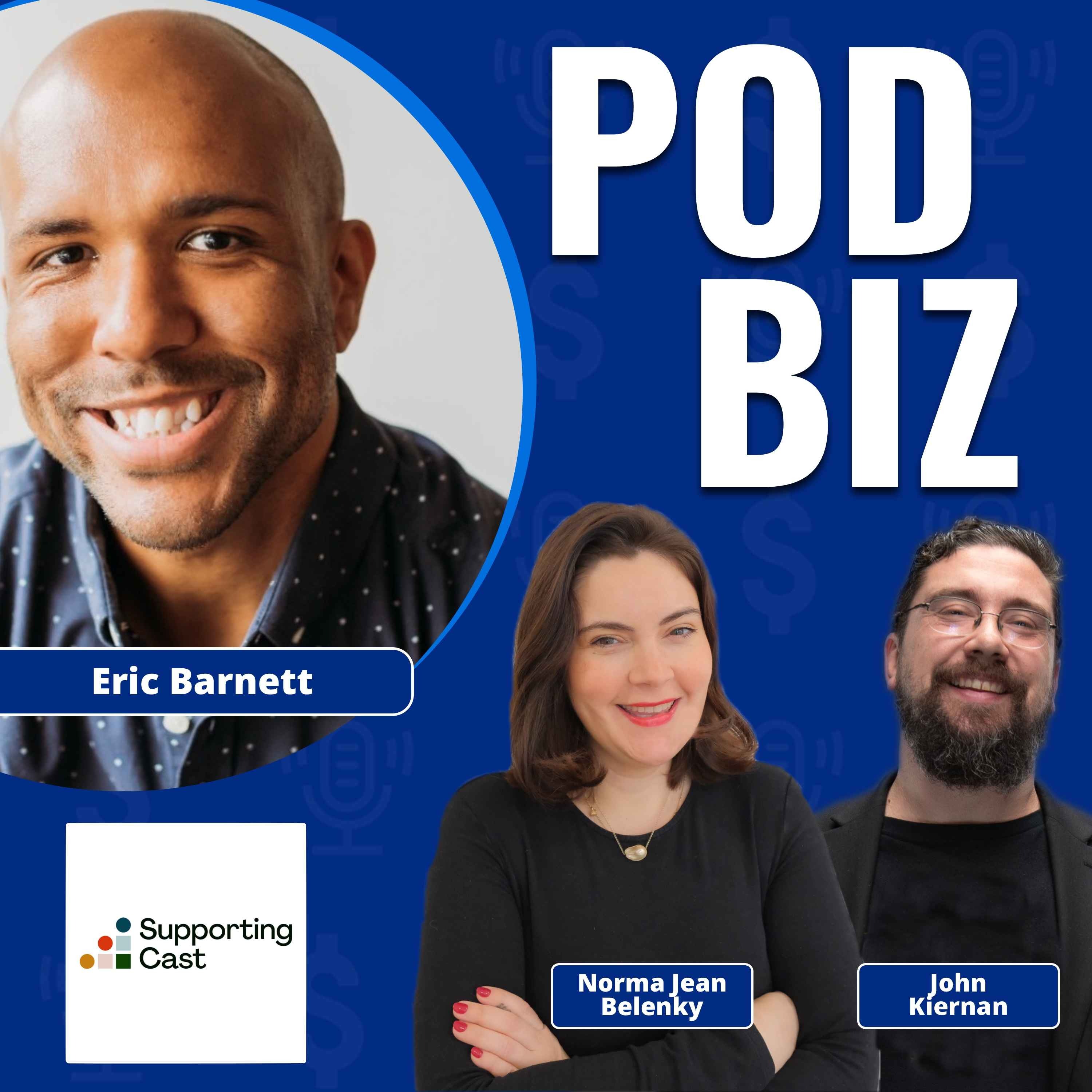
PodBiz | Where's The Money In Podcasting?
Leveraging Bonus Content and Subscriptions for Monetization with Eric Barnett of Supporting Cast
00:48:53
Loading summary
Transcript182 lines
- [00:00]
A
The way that we'll describe it, we'll say is like, if you think of a subscription as like an ice cream sundae, right? You have that out there. You have this ice cream sundae, the ice cream in the sundae, that is your bonus content. That is the main star, the thing that people are coming to the subscription for. And then if you add the whipped cream, the toppings, the cherry, all that other stuff, those are the other things, the merchandise discounts, the community, the other events like, things like that, that will come on top of it. It makes the whole experience better. But if you don't have that center ice cream, there is no Sunday or subscription to sort of be had.
- [00:28]
B
Hello and welcome to Pod Biz. The Money behind the Mic A PODC about the business of podcasting. I'm Norma Jean Belenke of NJB Media, a podcast audience development strategist.
- [00:39]
C
And I'm John Kiernan of podhouse Productions, an all in one podcast consultation and editing platform. We're co hosts on this journey into the world of podcasting as a monetization tool.
- [00:49]
B
Whether you are building branded content, scaling a podcast network, or you're just getting into the podcasting industry, podviz breaks down the strategies, tech and mindset behind podcast success.
- [01:00]
C
We're bringing you insider tips, real talk with industry professionals, strategies that actually work, and talking all about the things that we've seen in the trenches.
- [01:09]
B
So if you're ready to go beyond the downloads and build real impact with
- [01:13]
C
your podcast, then hit subscribe and let's get down to Pod Biz.
- [01:17]
B
Welcome to Pod Biz. Today we're joined by Eric Barnett, vice president of revenue at Supporting Cast. We'll be speaking all about subscriptions today, whether it's an indie podcast that's launching their first subscription or how publishers and larger networks are implementing subscription into their monetization strategy. We'll also totally geek out on corporate podcasting and how a lot of large companies are deploying podcasting for their employee populations. Let's get down to podviz. Eric, thanks so much for joining us.
- [01:46]
A
No, my pleasure. Thank you very much for having me, Norma Jean. I appreciate it.
- [01:49]
B
We are so excited to have you here on podviz. So let's get straight into it. Eric, where's the money in podcasting?
- [01:57]
A
It's always a good question, right? Where is the money at? I mean, obviously historically the money has been in advertising and podcasting. That is sort of the natural way in which most of the monetization has occurred. But I would be remiss if I wouldn't say that, I believe the real money and the money that you truly own is with podcast subscriptions. So that's something where you have your full owned audience. They are paying you on a monthly basis or annual basis, and that's, you know, revenue and money that you fully own yourself, which I think is really important for the health of, you know, any podcast or media business, for sure.
- [02:29]
C
Yeah.
- [02:30]
B
And we're seeing that trend across the board. Right. I mean, I love our ad folks, I love nerding out on ad technology, and that's a very large part of pod biz and the show and the industry in general. But subscriptions and creator own monetization is coming up fast. So tell us a little bit about, you know, Supporting Cast, because I know that you guys do a lot of different stuff, but it's really one of the first companies that came out and said, we're going to help you create a subscription tier where your audience can just directly pay you.
- [02:58]
A
Yeah, yeah, exactly. So it's interesting too, because like, you know, we're not necessarily a household name. And for what it's worth, that's fully by design for what Supporting Cast is and sort of the business model that we operate in. But I sort of give you like, the background and like the historical fact. So, you know, Supporting Cast got its start essentially the technology behind it as the monetization platform for Slate Plus. So when people were lining up, if you're familiar with Slate.com, the news company and podcaster, so the tech behind it was originally developed to deliver podcasts, has benefits to people who become Slate plus subscribers. And I think what's sort of unique about that and sort of different compared to perhaps some other monetization platforms in the industry is that, you know, we never necessarily intended to become like a full subscription platform. It was one of those things that was sort of drawn into the market because other people asked and they're like, wow, this is a great experience. We'd love to replicate this because there's something else we can do. And it's like, okay, you know, we created something special. And so, you know, that decision was made to spin off Supporting Cast and have it become its own entity. And sort of what's different is the fact that, you know, we very specifically asked ourselves, like, you know, if we were to have partnered with somebody rather than develop this in house, what aspects would be most important in order to make this a smart partnership for us as a podcasting company and as a media organization, and that Sort of runs through the DNA of everything that supporting cast does. So, you know, since then, we've grown to become the largest independent podcast subscription platform. We work with over half the top podcasters, you know, and really we're known as sort of being like the enterprise and sort of flexible and white label solution. And we work with everybody in a little bit of a different way, depending on what their specific need is and very much like sit in the background. That's why I was saying we're not really a household name, but that's because we let our partners shine more than anything else.
- [04:37]
B
Yeah, absolutely. And I think for everybody out there who maybe isn't as familiar with the platform side of monetization and podcasting, it's a big one. Right. And it's definitely. Yeah, and it's definitely laid the groundwork for a lot of other platforms that maybe are on the hosting side or have different products to incorporate paid subscription. And so it, it really is, in my mind, one of the first companies that came out, you know, obviously, and that was from the need and the, and the feature that was built through Slate. But it is something where it really kind of started a trend in a way. Right. Like that once a company builds a technology and it's successful enough, like, that's also how slack happened. Right. Like, if you're thinking about how tech evolves and, and you know, sometimes a product is really just like a way to get from A to B and then like that actually becomes the entire service. Absolutely. And I, I do want to talk in terms of monetization and that subscription tier, because a lot of creators we're seeing move into ownership of their own audiences and it's just such a big trend. And so obviously you guys are working more on the network side of things in terms of that subscription monetization. So what are the trends that you're seeing in terms of a lot of networks or publishers and their subscription strategies?
- [05:50]
A
You know, it does vary depending if we're talking to a network or sort of an independent single show and sort of the strategies that they utilize and they both have different hurdles that they sort of have to overcome. But ultimately, like, you know, the goal is sort of the same thing. Like, you know, you want to put together a subscription strategy, most likely, or what we would typically recommend is sort of with a nice bonus content strategy associated with it. Like you're providing people some, you know, actual real benefits for becoming subscribers. But the difference that you sort of have to look at between networks and independent shows is really around like the promotion and the like number of stakeholders that you have to get on board. Right. So ultimately, like, we'll say a subscription will get, like, for a bonus content, we'll get anywhere from like 3 to 5% of your audience in the first year up to like 15, 20% of your audience over three to five years. And things like that. If you're sort of, you know, going about it aggressively, but the pace at which you do it is very different. Right. Like, an independent show will come out much quicker versus a network has a bit of a slower rise to get to that same level, but they'll ultimately get to that same conversion rate.
- [06:49]
B
Yeah, but I mean, on the individual level, people are like, following the creator. Right. They're bought in. Right. They're like, yeah, I love this.
- [06:56]
A
Sorry. Yeah, that's what I was getting ready to say.
- [06:57]
B
I was like, yeah, yeah, yeah, yeah.
- [06:58]
A
As I was going through the numbers, I lost my train of thought there.
- [07:00]
B
But no, no, absolutely. And I think it's also that, like, with podcasting, people feel just such an affinity for the host individually. Right. They feel so personally connected. And we've talked about this on the show a lot. Right. Anybody that you are listening to on a podcast, that's the same device you talk to your mom on, you talk to your kids on. So there is that personal relational aspect of it. And on a network side, it's like, oh, hey, I identify with the values of the kind of content they're creating. Right. That's more of like a New York Times kind of model.
- [07:27]
A
Yeah, it's more transactional in nature. Right. Like, it's not like, you know, we work with Sirius XM. SiriusXM is not going to come out like, hey, please support the show. It's really important. Like, you know, that just falls hollow if something a company like Sirius xm, but versus saying like, hey, we have this great podcast subscription that you should come for. You get more episodes of Call Her Daddy, more episodes of Conan and Brian and all of these creators that you love by, you know, being a part of the Sirius XM podcast subscription. And, like, it's very much clear about what that value proposition is and what people get for becoming a part of it versus someone like, we'll say, like Alex Goldman, Hyperfix will use something where it's like, hey, support the show. We're growing it. Please be a part of this. And that, like, really drives home. You're right. Because it's more of a personal relationship with a creator versus, like, transactional with a network.
- [08:07]
B
Yeah, and I, I mean, I absolutely agree, number one, just, you know, off the last thing you said, people love Alex Goldman. Right? It, like that's, that's podcast. That's peak podcast cult following. Right. People are going to be like, what's he doing? Here's my $5 a month, say less. Right. Whereas I absolutely agree on the network side, it is about the unique value proposition and the additional value add. So there's less of that almost fangirling and more of a additional value. I want to pivot next and talk a little bit about what, what that additional value looks like and, and kind of what the most unique offerings you guys are seeing and what the most popular offerings you guys are seeing and where, where the tiers are for those.
- [08:43]
A
Yeah, for sure. Like the content strategy behind it. There's a lot of unique ones, for sure. And it's, it's interesting because that's probably one of the top questions that we get is like, okay, I'm interested in a subscription. Like, what, what type of content should I create? And we honestly don't try to be too prescriptive with it because we have seen success with types of bonus content that, you know, there's a wide variety of options that are available. What I will typically say is that most people's sort of intuition immediately is that like, you know, we have this high quality production show that we're putting out every single week. And like, your gut feeling is to create bonus content that is just as like, amazingly produced and has all the love and everything that comes to what you do for the normal show. And that's, that's great. And I think that's sort of a good, you know, sort of altruistic sort of mission to have. But it's something that becomes. It can feel overwhelming to creators as well, too. And I'm like, you know, step it back.
- [09:34]
B
Yeah, I mean, but also like, you can't employ the sound engineers for the bonus content like that all the time. And people who are subscribing a lot of the time want that casual behind the curtain. Pull that curtain back. You know, I want to talk to the wizard directly.
- [09:46]
A
Yeah, no, that is it. And I'm saying it's like, you know, it's, you know, you look at things like extended interviews, mailbag episodes, ones that are like smaller stories that maybe didn't make it into the larger show. There's a lot of things that you can do that the goal thing that you're trying to hit is something that is easy and fun to produce. For the hosts and producers. And that is meaningful and valuable for people who are subscribers. And it does not have to be the same thing that the show is like you were sort of saying it is stuff that is behind the scenes, it's additive, it's different, and it makes a sort of a more complete experience. You want people to sort of feel like they're in that club. Right. And that's like how you can do that.
- [10:21]
B
Yeah, absolutely. It's so interesting. We had Joe Fu Signa on the show as well, who is a membership consultant.
- [10:26]
C
Yeah.
- [10:26]
B
And, you know, we played a little game. Right. What do you think are the. Are the top things that people will pay extra for in a subscription? It's bonus episodes. Ding, ding. I'm gonna spoil it for you. It's. Boy, it's bonus episodes. Right. I guessed. I was like, is it bonus episodes? Is it merch? And he's like, it's. It's sometimes merch, but it's not really merch. It's bonus episodes.
- [10:46]
A
Yeah. No, Joe is right. And I know Joe is an awesome guy. And you know, the way that we would sort of the analogy that we'll use at supporting cast when it comes to this because, like the. The hot button this year. And it was funny, you know, I predicted it as well as Limonada as well, too. Just from Limit, I was talking about, like, you know, you hear a lot about community, like, oh, we want to build this community. We want this community. We want to have this on. And like, we have full community suite of products. Like, we have the ability to do comments, you know, user forms, things like that. And it's very important. Right. It's wonderful to have that relationship with your audience, but it's a much more active thing. Right. Like, bonus content is something you can put out there. A community is something you have to nurture and you have to be a part of it in order to get people to feel value from it. And it's not necessarily the main driver of your subscription. Only a subset of your subscribers are going to take part of the community versus everybody is going to listen to the bonus content. Right. So it's something you have to sort of just prioritize your time. And the way that we'll describe it, we'll say is like, if you think of a subscription as like an ice cream sundae, right? You have that out there. You have this ice cream sundae, the ice cream in the sundae. That is your bonus content. That is the main star, the thing that people are coming to the subscription for. And then if you add the whipped cream, the toppings, the cherry, all that other stuff, those are the other things. The merchandise discounts, the community, the other events like, things like that, that will come on top of it. It makes the whole experience better. But if you don't have that center ice cream, there is no Sunday or subscription to sort of be had.
- [12:04]
B
Pod Biz is brought to you by Lean and Loaf, our video podcast partner. Because running a podcast is so much work outside of just recording a podcast,
- [12:12]
C
Lean and Loaf handles our entire post production pipeline, getting everything platform ready. That way we're not chasing files or editing timelines every week.
- [12:21]
B
We really recommend Lean and Loaf. It's been phenomenal. We're a two man team and so for us, it's been fantastic to have the additional support to focus on the content of the show and the incredible guests we've had on and really get
- [12:33]
C
down to answering the question that you want to know the answer to. Where is the money in podcasting?
- [12:38]
B
Lean and Loaf is trusted by some of the biggest names in the podcasting industry. So we're in really good company with folks like iHeart, HBO and Netflix.
- [12:45]
C
If you want to take a load off and take your podcast to the next level, head on over tolean and loaf.com.
- [12:54]
B
so bonus episodes for everybody out there listening who's like, oh, I'm thinking about starting a subscription. It's bonus episodes. That's the secret. That's the offering that people want.
- [13:03]
A
That is it. Yep. And if you feel comfortable with that, build on it. Don't, Don't.
- [13:07]
B
Yeah, yeah, it's interesting. And also, you know, I'd love to hear also in terms of what have been maybe the most popular in terms of cadence we've heard, two twice a month is pretty popular.
- [13:20]
A
Yep. If you're a weekly show, twice per month is. Is perfect. Right. Like, a lot of the cadence is you want to look at like a relative percentage of how much free content you're putting out there and you want to get anywhere between like 25 to 40% bonus content per month and you'll be in a pretty good spot in terms of like the, you know, relative amount of content that you're providing as a value for your subscription. You know, and people have different areas that they play with that, you know, we've seen different levels of success. What we will often say is like, you know, the next question that typically comes after cadence of bonus content is like the price of a subscription.
- [13:52]
B
Yeah, that's. I mean, people want to know what the sweet spot is. They don't want to alienate, but they want the dollars from their audience.
- [13:59]
A
Yeah, yeah. And we'll say, like, we always use like, $5 per month as, like, your North Star. Use that as sort of like, in general, a podcast subscription is $5 per month. And then what we will help you do, like, our team will work with you. It's like, once we sort of finalize what your subscription strategy is going to be and what it looks like, it's like, okay. Relative to the market, like you're doing, we would say, like, you know, 30 or 40% more than what most subscriptions are. So we would recommend raising that to $7 per month.
- [14:23]
B
Raising it or adding another tier.
- [14:26]
A
It's. Well, I. The tiers are interesting. I do like multiple tiers. I don't. I'm not.
- [14:33]
B
We all like options. Yeah.
- [14:35]
A
Like, options. There can also be, like, you know, analysis paralysis or, like, information paralysis, too, or.
- [14:40]
B
I think that's true. What do you find is the number one. Is it better to just have one tier, or is it better to have three or two, depending on. As you build that up? Maybe.
- [14:50]
A
Yeah. I mean, we would generally recommend one tier out of the gate for people
- [14:53]
B
as a. Yeah, out of the gate. I would say one out of the gate. I would.
- [14:57]
A
Because the thing is, you want to build, like, that muscle memory, right, when you start a subscription. Like, the main way that we have seen subscriptions fail is when people come and they, like, way over promise with what their subscription is going to be. They come out with, like, five tiers, all these different options, and blah, blah,
- [15:13]
B
blah, and, like, full.
- [15:14]
A
It's very stressful. Yeah. And you don't want to do that. You want to start, like, more conservatively.
- [15:19]
B
That sounds like a failed Kickstarter to me.
- [15:22]
A
It's similar. Yeah, it can be.
- [15:23]
B
Yeah, it is. It's very similar to a failed Kickstarter. And I think a lot of creators out there feel so much pressure, right. To be everywhere and do everything all at once. And I do think this is another great example of, like, start where you're at, you know?
- [15:38]
A
Yeah. And, you know, it's not. It's like. Yeah, you're right. That drive. It's like, there's so much excitement, though, right? Like, when a creator comes out, like, they're just so excited to have the subscription and they want to give everything to all their subscribers. And, like, we'll just often caution against that one. Two tiers start there and then, like, you can have some fun with it, too. Like, you know, you were talking about unique examples earlier. Like, the tennis podcast is a great example of somebody who has like ton of tiers, right. They have like five to six tiers that they're running. They'll do even more during Christmas time, but started smaller. But in their case, they built to this like, really amazing thing where, you know, they had a subscription, they would do bonus content with it. They found people are. Most of their listeners are pet owners, so they started selling like pet sponsorships so you can buy like, you know, Today's episode is brought to you by Fluffy from Birmingham, and she's a great girl. Thank you for listening, Fluffy. And being a part of, you know, the tennis podcast family.
- [16:25]
B
That's amazing.
- [16:25]
A
Sell those like, they sell those, like sponsorships. Like that's fun. Like, it's. There's crazy things you can do that do like magic for, for your audience, but it takes some time to learn, like, what your audience is and what they want.
- [16:36]
B
Yeah, absolutely. I mean, I, I love a unique offering. I always want to hear about those, like, anecdotal offerings that people just go nuts for. I think that that's really fun and, and also get so much buy in from the audience. Right. People really feel like they're a part of something. And, you know, podcasting, we both know, has this very unique feature where people really feel like the podcast that they listen to, it's like the books that they read, it's like this is who they are intellectually. Right?
- [17:01]
A
Right.
- [17:01]
B
Yeah.
- [17:01]
A
No, it's like it says something about your personality, about what you're doing.
- [17:04]
B
Exactly. These are my values. And sometimes it's entertainment. Right. And sometimes it's like, you know, I support public media. You know, it's, it's definitely something where people have a moral attachment to the, the content that they consume with podcasts, which is super interesting. I want to talk next about when creators feel it is a good time to start launching a subscription. What is the prime time or moment where you, you look around and you think, okay, I may be primed for a subscription because you don't want to alienate audience if it's growing, but also you want to strike while the iron is hot.
- [17:43]
A
Yeah, agreed. Agreed. We. So the general rule of thumb is like, what we will say on our end is like, you want to get to at least about 10,000 downloads per episode just before you start considering a subscription. That's like our general recommendation. Now, we've seen people be successful at numbers smaller than that, but, you know,
- [18:01]
B
those are probably super niche Right. I'm guessing those are like, those are die hard, super niche people.
- [18:06]
A
Yes. If you have a super niche podcast, you can start smaller because you're going to immediately convert a higher percentage. Right. Like our, our people who pay while the majority of their content or do like, very niche topics, they'll convert 25, 30%, 35% of their audience to pay subscribers.
- [18:19]
B
That's actually huge. That's huge. That's, that's 25 to 35% is pretty big.
- [18:24]
A
Yeah, yeah. And have a couple of good examples. We can, we can talk about too, on that. But so if you look at, because you just want to say in general, you're getting probably about, you know, anywhere from 3 to 10% of your audience for like a normal bonus content subscription to convert. And if you have 10,000 downloads per episode, that's when those number of subscribers start to be, you know, meaningful for you to provide some extra income or, you know, additional income to make your, your show successful.
- [18:47]
B
It's when the juice is worth the squeeze. Right? I mean, when we're talking about 10,000 downloads per episode and you're talking about 3%, maybe you launched between 1 and 3%, that's 100 to 300 people. That's 500 to $1500 per month if we're looking at a $5 entry level subscription. So for somebody out there who's making their own content, I just want to like break down those numbers. Real. For somebody out there making their own content. Right. It might be worth it for an extra 1500 bucks a month, but it might not be worth it for an extra 700 bucks a month.
- [19:15]
A
Yeah, exactly. You have to like, you have to look at your time for that. And that's why we say, you know, you want to be smart. And we're always very transparent about conversion rates and expected because we want it to be worth your time. You know, on our side of things too, like, you know, we're a white label sort of high touch and boutique podcast subscription platform. So, you know, we typically don't work with shows that have a smaller download number than that as well because, you know, we're very relationship driven when it comes to our subscription partners.
- [19:38]
B
Yeah, that makes a lot of sense. So I mean, for creators coming out of the gate, you're looking at 10,000 downloads an episode. If that's a weekly show, that's around 40,000, 50,000 downloads a month. So let's be clear, you know, about that. And then, you know, I do think it's something where it's so intimidating. Right. For people that are launching a subscription, what are some best practices? Right. I know that, you know, like I mentioned, we had Joe come on and talk all about, you know, launching a subscription and polling the audience was such an important feature. Right. Before you do anything, ask people what they actually want and what they're actually going to pay for and how much they. They're willing to pay for it.
- [20:15]
A
Yeah, that's always good advice. I will say, like, I don't know if people always have necessarily the resources to do that, but yeah, it's polling the audience is always important. But really, the best practices, like I was touching on that earlier, you want to start more straightforward. Like, you know, look at the subscription. You know, when you have it, like, create a simple, straightforward bonus content structure that is easy for you to create and fun, ideally for the same time to be able to do that and, you know, have that as anywhere from like 30 to 50% of your content being bonus content in a monthly basis. The key, though, is really about that promotion of your subscription. Right. When it comes to it, you know, you have to be consistent and you have to be genuine in your subscription promotion. So that is an audio call to action in every episode, ideally within the first third of the episode, making sure that people know there is a way to support or become a subscriber of the show. You have to talk about, like, the what and what they're getting it, how they need to subscribe or what URL they need to go to and why it's important for them to subscribe. And if you can hit on those three things, you'll have like a really sort of genuine call to action for people and people will respond to that. You want to link in the episode notes, link in the show notes, Set up the Spotify open access integration where you can have the lock icons, the banners, things like that in order for people to get to the.
- [21:30]
B
Yeah, I've definitely subscribed to podcasts where I thought they were free or I thought so all the episodes are free. And then I saw that lock icon, I thought, gosh, I got a pony up. Got a pony at my $5.
- [21:42]
A
Yeah. No, and that's. It's right. Like, it is.
- [21:44]
B
It's something driving that demand is real.
- [21:47]
A
It's real. It's very, very real. Yeah. And you have to drive that demand. That's sort of your best practice, like, outside of there. Like, again, it's about that muscle memory of making sure that you have the workflow set up on your side that this is built into the structure of your show. Moving.
- [22:00]
B
Yeah, right.
- [22:01]
A
Like, it's not necessarily. That's additive to the show. It is something that is a part of your show.
- [22:06]
B
Oh, that's a great way of phrasing that. Let's just say that one more time. It's not something that you're adding to your show. It's something that's a part of your show. I think that that's exactly so important because so many creators feel that they don't want to grift their audience. Right. And they. And there's. There is that kind of aspect of it. But at the same time, you're offering free content, right. You're not a charity unless you are, and then you're a nonprofit and you're funded, so.
- [22:30]
A
Yeah, well, then you ask for donations. It's all good.
- [22:32]
C
Exactly.
- [22:33]
B
Absolutely. I. I definitely. Yeah, it's definitely so interesting to hear kind of that backend platform side of it. And on the network side. Right. Obviously there is that cross promotion. Right. There is that, hey, you're getting extra value. And I think a lot of independent creators don't always necessarily think like a network. Right. Think like a large publisher. And the ones that do become really successful.
- [22:55]
A
They do. Yeah. And it's always interesting. Like, you know, we're setting up people with their subscriptions, like, if they're an independent creator, but they're, like, on a really big growth trajectory. Like, you know, be very intentional about, like, the URL that you're picking. Like, is this a URL that you can grow into something that you can add additional shows to? If this is something that's going to expand for you versus saying, like, you know, the subscription URL is showname.com. it could be shownamedia.com. it could be something that could be bigger, that could be a part of, you know, something that you grow into as a creator?
- [23:22]
B
Yeah, no, I think that that's something that's. That's huge. Well, Eric, how did you get into podcasting? Because prior to Supporting Cast, you worked with Findaway. You have a marketing background. Tell us a little bit about how you got into the podcasting industry.
- [23:36]
A
Yeah, for sure. So, like, yeah, you nailed there. I was. I've been in the audio industry too, you know, for. Yeah, for better, for worse here. For God, I guess close to 15 years now. Like, the majority of my career has been in the audio industry. But, you know, that was with. Started with audiobooks, and that was through Findaway, which is, you know, based out of here. Well, was based out of here in Cleveland, is now part of Spotify. But, yeah, so I, you know, I had got to that job through sort of a mutual friend that sort of got me into the industry. Started at Findaway, sort of working in business development and their physical product side of the business, and then transitioned to their digital side of the business.
- [24:08]
B
So you were there for that transition, but between, like, books on tape and CDs on tape to, like, an app?
- [24:15]
A
Yeah, well, yes, I was there for that. For what it's worth, Books on tape, or they call, like, a Playway device, still sold today. Still. Big deal.
- [24:21]
C
Oh, yeah.
- [24:22]
A
Lots of libraries will carry them.
- [24:23]
B
That's what I was gonna say. You can go to your local library and you can get a lot of audiobooks. It's nice.
- [24:28]
A
Yeah. 100 recommended. Go see your playway still.
- [24:30]
B
And we love libraries. Support your local libraries, even if you don't go get a library card, because it increases their membership and they get more funding from the government.
- [24:38]
A
Yes.
- [24:38]
B
Your local library. Yeah.
- [24:40]
C
Yeah.
- [24:40]
A
100%. 100%. So on the digital, like, on the physical product side of things, find a way. Play away. They sold into libraries and physical products. On the digital side of things, they. We did audiobook distribution. So that's one of the biggest differences between, like, audiobooks and podcasting is, like, the vehicles of which they go to the audience. Right. Like, all audiobooks go through audiobook apps, and then those audiobook apps, like the companies like Audible or Libero, things like that, they have to receive those audiobooks from publishers. And Findaway essentially was like a middleman that helped take all the audiobook from the publishers and normalize that data to give it to audiobook platforms, which is something just. It's way more complicated than what we have to deal with on the side of podcasting, which is.
- [25:20]
B
It doesn't have an rss.
- [25:23]
A
It does not. No, no, it does not have rss. Hundreds of times more metadata is available on it.
- [25:29]
B
There's a lot. It's so interesting. I mean, also, folks who have a music background, it's the same. Just the metadata is so different. And I. It's. It's so interesting coming from a platform background, because rss, for as much discourse as there is on RSS these days, it truly is phenomenal technology. And not all audio operates on rss. And so it's really cool to have that experience.
- [25:53]
A
Yeah, it is. It is. And, you know, I. I'm actually a big proponent of. I think. I do believe publishers and the audiobook industry is a bit too Precious with their content. Like, I get the idea of wanting to protect it and the value of a book, which is great. But I, you know, how I got into podcasting specifically is that, you know, I was talking to David Stern, our CEO of Supporting Cast, who was working for Slate at the time. But it was like, you know, doing audiobooks in the Slate book, like, sort of thing that they were working on, like taking audiobooks and making them available RSS feed. And so it sort of became like a natural evolution for that. But, I mean, I would love to see a world in which, like, an audiobook, you can purchase it, you know, or listen to it at a library, and then eventually it goes into quote, unquote, like syndication. And you put the audiobook out there via the podcasting pipeline and just make it ad supported. Right. It gives, like, a lot of life to an audiobook that I think they can be so very hard to find today because you have to listen to them in an audiobook app.
- [26:45]
B
Yeah, that's interesting. We're starting to see audiobooks on Spotify's app, for sure. And some other podcasting apps have audiobooks that are in the public domain, you know, that have kind of aged out. And so it is something where it's not quite there, but it's starting to be, I feel, a little bit more than it was two years ago.
- [27:04]
A
Yeah, we were, you know, talking at the top about some of the different verticals that Supporting Cast works in. Like, we do. We're big proponents of audiobooks and making them, you know, more available to people. Like, we do direct audiobook sales now. We use Supporting Cast sort of technology to deliver those via RSS feed more securely. But, you know, if you'd look at, like, Pushkin, all their direct audiobook sales are through Supporting Cast. We help Hachette with their direct audiobook sales. 831Books uses supporting cast to do their audiobook subscription. So there's a lot of stuff that we do in that market as well,
- [27:32]
B
you know, on the platform side. Explain a little bit how that technology works, because for everybody out there, right, RSS is definitely pulled via the platform. Right. Or the hosting company into the directory. But for some of the technology that's gate kept right through a paywall, how does that work?
- [27:51]
A
Yeah, so I'll be. I don't want to give away the full secret sauce. Right. But I.
- [27:56]
B
No, no, but just for everybody out there who doesn't have a platform background, explain a little bit.
- [28:00]
A
So if you're familiar, like, and it's funny Too. Like, you know, there is.
- [28:03]
B
Yeah. No, no proprietary ip, please.
- [28:05]
A
No, you're all good. You're all good. It is RSS based. Right. But, like, in general, like, every show has, like, a singular RSS feed that subscribers listen to, so everybody is listening to the same RSS feed. And our side of things, like, when we deliver a subscription, those fees are individualized to the specific person that is receiving that subscription. Now, there's some additional things that we do around it, you know, increase security and things along those lines. But you can just basically think rather than everybody listening to the same podcast, everybody is listening to thousands of versions of the same podcast that's being delivered to them.
- [28:35]
B
Yeah, that makes a lot of sense. And it's something where, you know, on that monetization side, that customization allows so that if the link is shared, it's not something where it's out there publicly. It's not just the link to the show. Exactly.
- [28:49]
A
To that show. Right. And we can remove access for, like, an individual, like, you know, bad actor versus, like, affecting everybody's experience.
- [28:56]
B
Absolutely. And, you know, it is one of those things where I think, I would imagine there's not that many bad actors.
- [29:01]
A
There really isn't. No, it is, like, it's even, you
- [29:03]
B
know, we're all pretty wholesome over here. Right.
- [29:05]
A
Like, surprisingly, like, people, when they pay for content, support it, they generally try to do right by what they're doing. Like, it comes up every once in a while, believe it or not. Like, most of the, like, positives that we get for people who might be, you know, being a bad actor or someone who's like, a traveling salesperson and just has had, you know, too many, like, various, like, places that they've logged in that have, like, set off, like, our security parameters type of deal. So even then, it's, like, unintentional.
- [29:27]
C
Yeah.
- [29:28]
A
But, you know, and even, like, in the community features too, like. Like when we have set up, like, a new user form or turn on comments, people get very worried about, like, oh, my gosh, we're gonna have to moderate these comments. I'm like, yes, you do want to have a moderator, for sure. Like, it's always important to sort of have that and keep track of it. But you'd be shocked, like, at the number of bad comments is next to zero that people receive within their. Their communities, because this is a place that they're paying to be a part of. It's people that genuinely typically care about your show and are generally respectful to each other.
- [29:56]
B
Yeah. And I think Most of the time, you know, when people even do have feedback, it's like, hey, I have an idea for an episode, or, yeah, I really like this. I'd like to hear more. Sometimes you get feedback, but it's not necessarily critical. It's more constructive, I find.
- [30:09]
A
Yeah, yeah, for sure.
- [30:11]
C
Yeah.
- [30:11]
B
And I. I did really like what you said a lot earlier when we were talking more about subscriptions, because having a community, you do still have to have somebody monitor that. And, you know, on the audience development side, one of the top things I tell people is like, please reply to the comments and the feedback that you get publicly on your podcast through the different directories. Please reply to that, because I think it, number one, it's important. But for every comment, you know, there's probably like a thousand downloads or somebody didn't say anything. And so I do think it's something where it's. It's a very small avenue where you have an opportunity to directly interact, which is so important. And like you said, a lot of shows, they might not have bandwidth for that. Not everybody's going to create a discord for their podcast, right?
- [30:52]
A
Yeah. So it's something you have to think of, like, community is. It is a wonderful thing and it adds a lot of value. But it is something like. Like you said, you have to nurture it. Like you do.
- [30:59]
B
You have to nurture it.
- [31:00]
A
Replying to people and making sure that they want to feel like they're actually reaching you versus just like, talking to the void.
- [31:06]
B
Yeah, absolutely. Eric, what would you say is one key move or metric or even a mindset that's made the biggest impact on your career or even the success that a lot of the creators that you guys have at supporting cast now when
- [31:20]
A
it comes to a subscription. But I'm speaking on behalf of our creators and things like that. Like, the mindset that I like to say is, like, you just want to be intentional with what you're doing with your subscription, right? Like, it is not something that you just turn on and expect sort of instant success with. Like, you have to be. Be smart about how you approach it, making sure that you have a plan in place and you sort of execute against it. Now, I want you to have fun doing that and everything along those lines. Like, that will lead to success. Like, and you want it to feel like something that is genuinely enjoyable to do versus, like, a lot of sort of extra work for the show, but at the same time, like, a clear plan with how to get your subscription out the door and what you're going to do sort of long term that's going to make this sustainable for you and that's what's going to grow it and allow you to sort of, you know, become the shows that are getting, you know, half or the majority of the revenue from their subscription. And when you own that revenue, it's. It's life changing for these podcasts. Like, it changes the trajectory of the whole show and how much control you have or the network has of what they'll be able to do with their subscriptions.
- [32:20]
B
Yeah, absolutely. And I do think it is something where you really do have to nurture that subscription base. It's something where, you know, even with podcasting, people think, oh, I'll just start a podcast. It can't be that hard and it's not. But you have to pay a lot of attention. Right? It goes in the bucket of. It's not urgent, but it is important. Right. And you have to be organized.
- [32:38]
A
Yeah, yeah, yeah, you really do. But. Yeah, but have fun with it too. Like I said, don't overthink it. Just be smart about what you're doing out the dorm.
- [32:46]
B
Yeah, absolutely. Well, Eric, I want to talk next about some of the other products that Supporting Cast has, because you guys have some really interesting aspects of the platform on the B2B side as well. And I love talking about B2B. So let's dive in.
- [33:01]
A
Yes, for sure.
- [33:02]
B
I love B2B. So, you know, there are companies that have podcasts that are only for their employees, Right. I have a platform background in this kind of technology as well. So let's talk about why, you know, necessarily some companies would want that, how the technology works and some examples that you guys are seeing.
- [33:20]
A
The reason that you would want an internal company podcast is like, really there is a lot of noise that comes through for company communications to people, right? Like where they'll receive different types of training requests, they'll receive, you know, various types of newsletters, emails from their bosses, emails from so and so. Like, there's just a ton of things that come. Email fatigue. Yes, email fatigue. Where it becomes overwhelming and like a podcast is a really great way to sort of cut through that noise and sort of, in our opinion, like, the reason we have been successful on this front is that we're trying to meet people where they're already consuming, you know, their audio or video on a regular basis. Right. So if you meet them in their podcast app, like this isn't them logging into, like their company intranet and having to sit down at a desktop and listen to a podcast, you know, while staring at a screen which feels very prescriptive and very like training, like versus like I can, you know, start have my morning coffee and listen to the latest up, you know, 10 minute update from my company before I get going, doing something like that. And like, it's, it's with you versus like, you know, having to sit down and intentionally do something as part of like a structured thing.
- [34:23]
B
Yeah, absolutely. I mean, I've seen case studies everything from, you know, employee stories of success to things that boost morale to, you know, learning and development, training, onboarding and just reducing screen time. Right. I think a lot of companies, especially like salesforces that are, what do they call it? Windscreen time. Right. So salesforces that are out in the field, you can have supplemental product information in terms of sales, training, that kind of thing. Just to, hey, refresh before you go in for this meeting. Here's, you know, some of the products that we have and just some of those features and benefits, that kind of thing. And it's, it's been really amazing. Especially in the pandemic, I think, you know, we saw a real need for people to reduce screen time. So for everyone out there, maybe who listens to pod biz and you know, also works in super corporate, it's a great thing. You know, we've actually had a lot of folks on the show who. Well, specifically we've had Stevie Manns who came originally from a finance background and now works with BlackRock and produces their show because they loved podcasting so much and they were like, okay, how do I create podcasting for BlackRock? Theirs is an internal. But, you know, there are so many opportunities to bring your love of podcasting into your corporate job. And it just, it really improves everybody's quality of life, to be honest.
- [35:40]
A
Yeah, it does, it does. And it's like, it's. I don't know, it's. It's more fun than other communication. Right?
- [35:46]
B
It really is.
- [35:46]
A
It's a quality of life thing. It builds culture, like internally so people have an idea of like, you know, what the company stands for. There's genuine excitement to sort of hear that. The funny thing is like, we'll often like, on the internal side of things as well too. Like, we were talking about, like, the main problem that podcasters have on the subscription side of things is like overthinking the bonus content and like overthinking the amount of work that needs to be done. And then like the almost the contrast is true for internal companies. We're like we're like, oh, we'll just put something out there, you know, make it blah, blah, blah. Like, it's good. Like, the employees will love it and like, no, they won't, man. Like, you got to put a little bit of effort into the show to make it sound good for people to want to listen to it. It can't be just somebody sitting there reading an email, not really caring, like, just trying to put it in audio.
- [36:30]
B
My opinion, my hot take is that a lot of companies treat podcasting like how social was treated by Corporate in 2010, 2012. Oh, we'll have the intern run all our social channels.
- [36:45]
A
Do the social.
- [36:45]
B
Yeah, all right. Oh, we'll have somebody from comms just put together a podcast real quick. Yeah, it's definitely something where, as you know, the industry is developing and people's awareness of how much it takes to make great content just in general and specifically within podcasting. As that awareness grows in the world, I'm hoping there's going to be a little more resources allocated to podcasting.
- [37:07]
A
So, yeah, yeah, once people see the value of it. Right. Like, you know, one of our bigger clients, like Procter and Gamble is a great example. They have their show called More Than Soap, and this is one that's been around for a long time, but they do a really good job and have like, internal company, like, you know, they'll interview the CEO or interview like, whatever VP from like, a different country, and they'll like, share stories. They'll have actually had like, Matthew McConaughey come in on one of the episodes and do an interview. So you can do some really incredible things. Granted, I know I have the resources that P and G does, but, like, you can do some really fun sort of, you know, back and forth and interview style shows and things like that to really liven it up.
- [37:45]
B
Yeah, absolutely. And I think that's a really fun aspect of podcasting. It's not the most glamorous, but it is, I think, a really fun aspect of podcasting that most people in the industry, you know, maybe on the ad side or on the platform side, aren't directly exposed to. But when you're talking about people who work in corporate and you get to talk to them about podcasting, it is a really fun aspect of our industry, I think.
- [38:05]
A
Yep, absolutely. And for what sport too? The other type of company that sees a lot of success with this, like, Uber is one of our bigger clients too, but, like, you know, they'll like, anytime you have like a diverse and sort of like, spread out Workforce that is not necessarily all condensed in a center building, like, that's a really, like a podcast is a perfect way to deliver that content to people. Right. Because they're not necessarily reading the email or doing things all day. Like, they're doing other items and other things. And if they could listen to what you're trying to communicate to them, it works great. So, you know, think construction companies, think, you know, transportation companies. Anyone doing that?
- [38:40]
C
Yep.
- [38:40]
B
I've seen everything from construction, transportation, large multinational conglomerates, remote nurses working in the field, people working in rural areas, sales forces, training, learning and development, keeping people's skills up, engaging in corporate culture when people need time off a screen. I mean, it's. It's so cool. And for anybody on the production side who wants steady work, a lot of these companies, once they realize that the intern can't do it, they do have budget, so.
- [39:09]
A
Yeah, right, of course.
- [39:10]
B
Yeah, yeah. And then you can get, you know, their. There's an opportunity there on the production side as well for really stable work that, you know, really adds value to a lot of people's lives. I'm. I'm just such a fan of corporate podcasting. Yeah, absolutely. Well, Eric, what's something that people don't know about what you do?
- [39:28]
A
I think people would probably be shocked by maybe the amount of like, how much podcasting or sort of like what I do and specifically is still relationship driven more than anything else. Like, people really, you know, when they see someone who you know for better. Like I do business development and sort of partnerships and things like that, like to an extent, like sales roles. Right. But it's like, it is very important to develop like a strong, meaningful relationship with the people that you are working with, those partners. So not necessarily employees and other people like within our organization, but people externally. And that's something that I think is one of the most valuable aspects of being successful in this. In this type of work or like, honestly in business in general. Like, I think like people who aren't in, necessarily in business day to day don't realize like, how. How important relationships really are for things.
- [40:15]
B
Yeah, absolutely. I think podcasting is still such a young industry that we're all still coming up together. And no matter what company you know, you end up in or even if you own the company, you sell it, you start another. We're all still such a small club. We all still really know each other. It's a small enough industry where if I don't know someone, I know 30, 40, 50 people that.
- [40:36]
A
Do you know someone who Knows them.
- [40:38]
B
Yeah, exactly. Absolutely. And I. I do think we're still in that relational aspect of the industry. And. Yeah, and I do think that's also a testament to kind of any industry that you're in, right. To just do your best, but also know that you never know what's going to happen. I mean, you know, we've seen crazy things happen with budgets getting slashed and, you know, people's careers pivoting in the last year, 18 months. And so, you know, when we're talking about the industry as a whole, lot of those people are going out and starting production companies. Obviously, that's more on the production side, but they're hir each other. Right. You know, they're right. Yeah. And so you never really know. And, I mean, Dane Cardill from Good Tape came on the show. They launched a new podcast. This is TV now obsessed. But he quoted Yowei Shaw from Proxy, who said, we're all just growing old together. Right. Which is so true. And when you talk to people, right. Like, very few people's careers have been exclusively in podcasting. On Pod Biz here, we've had maybe one or two, but everybody else, it was, you know, legacy media, audiobooks in your case. There's so many different types of jobs and experience that people have had that they're bringing into podcasting. So as a result, the industry is richer because we all have this diverse experience, but also, none of us have an entire career in podcasting, and we never will.
- [41:47]
A
Right, that's. That's a really good point. You're right. Nobody, everybody, at least for now, has not, you know.
- [41:53]
B
Yeah, we're. We're all still currently a religion of converts. Yeah.
- [41:57]
A
Yes. Religion of converts. That's. Oh, God. That's a really good way to put that. That's amazing.
- [42:02]
B
Yeah, absolutely. Well, Eric, you know, obviously you've given some great examples in terms of, like, PNG and also some creators that have really, you know, utilized subscriptions. But what's something that you've seen in terms of subscriptions? Maybe a specific creator, maybe not, but just that didn't go to plan. And how do people pivot and really learn from that?
- [42:19]
A
Yeah, yeah. I don't know if I want to put, like, a individual creator on blast, but.
- [42:23]
B
Yeah, let's not do that.
- [42:26]
A
It's things that I've seen. Right.
- [42:27]
B
Like, we don't have merch yet to send them. If we had merch.
- [42:31]
A
Yeah, yeah. No, it's all good. Like, here's a good example. Like, one of the more frustrating things that I will see from creators is like, we were touching on this earlier, right? Like, where they felt like they need to start a subscription because it's kind of the cool thing to do, and then they don't necessarily give the subscription the love that it needs to have. And they're inconsistent in their delivery of bonus content. And I, to me, like, there's one creator that I'm thinking of specifically. Maybe people can figure it out, but it's like, they have an immensely devoted audience and people that will follow them everywhere and, like, do live shows and this and that, and they have a subscription and it just. And it's fine, but it could be great. And, like, it's really tough to see someone who could have, like, an amazingly great subscription, but because they don't deliver the bonus content consistently, they don't, like, talk about the subscription and what people are getting. They've created this part of their audience that, like, is really excited to support them, but at the same time kind of alienated and feels. Can feel somewhat resentful that they've been forgotten about because.
- [43:30]
B
And they're paying for it. Yeah. And they're paying for the privilege to be, you know, to not feel like a cool kid.
- [43:37]
A
Yeah. And that. And that has happened, you know, multiple times where it's just like, you know, if somebody, like, just starts that subscription because they wanted to have this extra stream of income, but they don't have the actual desire to have it. Yeah.
- [43:50]
B
To do it.
- [43:50]
A
And then. Yeah, it can be, you know, it can be sad. It could be something that can almost actively work against you, which is sad to see.
- [43:57]
B
Yeah, absolutely. And, you know, we didn't talk so much about networks, but, you know, in terms of. Of some of those larger networks and publishers, obviously, you know, they have bigger teams who are managing this. Right. And so that really helps in terms of consistency and in terms of just even having somebody, I don't want to say babysit, but keep track of and monitor a lot of these memberships. But, you know, what have you seen in terms of some larger publishers and just the way that they work that people might not know?
- [44:27]
A
Yeah, no, that's. That's a good question. Yeah, we have been talking more independent creators, but yeah, on the larger network side, like, it is a little bit of a different structure. Right. Because that's the biggest thing that you see there is just there the number of people that are involved with the subscription can be anywhere from like five to literally hundreds of people that will be touching, you know, a subscription or a part of it within, within a given week. And you always want to have sort of like an internal champion. You need somebody who is like able to oversee the subscription from the 10,000 Foot View to help sort of organize and curate everything moving forward. Like the biggest challenge that the big publishers will run into is like they'll have this audience and they say like our audience is 45 million people per month, blah, blah, blah. Like we should be able to see this type of subscription. And granted they can, they absolutely get there. But the trials and tribulations that they face to get there are much bigger, right? Because it's like if you have 50 shows on your podcast network, you have to have 50 producers and 50 hosts that are all delivering messages about a subscription consistently and talking about the value add that they're going to get. You have to have all the producers uploading the bonus content on a regular basis. You have to make sure like there's so many different things that are involved with that that you just need to be very clear.
- [45:37]
B
And some of those subscriptions, you're getting bonus episodes from many shows, right? It's not like. Yeah, and so for some of those, it's almost like, you know, I want to say like a onedry plus subscription, right? It's, it's really one of those things where you're getting an entire network of bonus content, which is great, but that's a lot of work.
- [45:56]
A
It's a lot of work. It's a lot of work. And Wondry was a good example of somebody, you know, who did it well. Like obviously they're transitioning and going to, you know, other places within Amazon right now. But you know, they, they knew how to do it. They did it well.
- [46:07]
B
Yeah, absolutely. Well, Eric, if you had to start over today, what would you do differently to grow faster or smarter?
- [46:13]
A
Personally or for the company?
- [46:15]
B
Both. Both.
- [46:18]
A
Good question. I think for say for supporting Cas, if we could redo it, Magic Wand, I think we'd probably be more aggressive about like our personal branding as a company, right? Like we're, we're white label and it's one of our main strengths of an organization. But it can almost be to, to our detriment sometimes where people, like, people
- [46:38]
B
don't know how to hire you.
- [46:39]
A
Yeah, yeah, yeah, yeah, right. Like they know Sirius xm, they know Vox, they know npr, they know all these people that we work with, you know, just podcasts in the world, but they don't necessarily know that supporting cast is in the background powering that. So I think, yeah, we'd be more intentional about, like, our PR strategy and things along those lines in order to make supporting cast more of a household name. Like, it's not obviously not against the growth the company. We're doing wonderful, like, growing, like, exponentially over every year. But, like, we could be. It could be, you know, it could be different if we had that type of stuff. And then, yeah, personally, maybe it'd be something. It's similar too, as well. Right. Like, I think there's always world. Like, I'm always too conservative about, like, tooting my own horn. Maybe that is something. Doing more of these types of interviews and things like that would have been probably something benefit.
- [47:21]
B
Yeah, absolutely. I also think we're in such a small industry. Right. It's like when you're at a conference and I've talked about this extensively. Right. Especially with some of the ad folks. I'm like, you guys are all wearing suits, so you're surrounded by a bunch of creative people. They're intimidated.
- [47:33]
C
Right.
- [47:33]
B
So.
- [47:34]
A
Right.
- [47:35]
B
I do think it's something where, you know, we're still a young enough industry where I feel like I can always just go up to people and say, hi, I'm, you know, I'm Norma Jean. I do this, I do that, I pod this. But it's starting to feel a little bit like, oh, you know, and some people are shy. Yeah, absolutely.
- [47:51]
A
They're shy. Yeah. Talking to shy people, though, personally, like, I've had conversations with the introverts of
- [47:56]
B
my life, so it's true. They're very observant. Absolutely. Absolutely. Well, Eric, last question. Here on podviz, what are you most excited about coming up within podcasting about?
- [48:05]
A
Just, I don't know, it's just like, the number of shows that are out there. Right. Like, I'm so happy that podcasting is still kind of weird. And that's. And I mean that in a very good way, where there is just a wide variety of shows that are being released on a consistent basis. And I know, obviously, like, the big thing, the big push is video right now, and we do a lot with video and audio and things along those lines, but I'm happy to see that it hasn't necessarily slowed down the creativity. Right. Like, that desire to have audio and video. And I want to see that continue to be a thing and for people to try different stuff and to see sort of what sticks. And I don't know, it's a very democratized media business, and I would love to sort of keep it that way.
- [48:42]
B
Yeah, absolutely. Well, Eric Barnett, Vice president of revenue at Supporting Cast. Thank you so much for joining us here on Pod Biz.
- [48:51]
A
My pleasure, Norma Jean. Thank you so much for having me.