← PodBiz | Where's The Money In Podcasting? 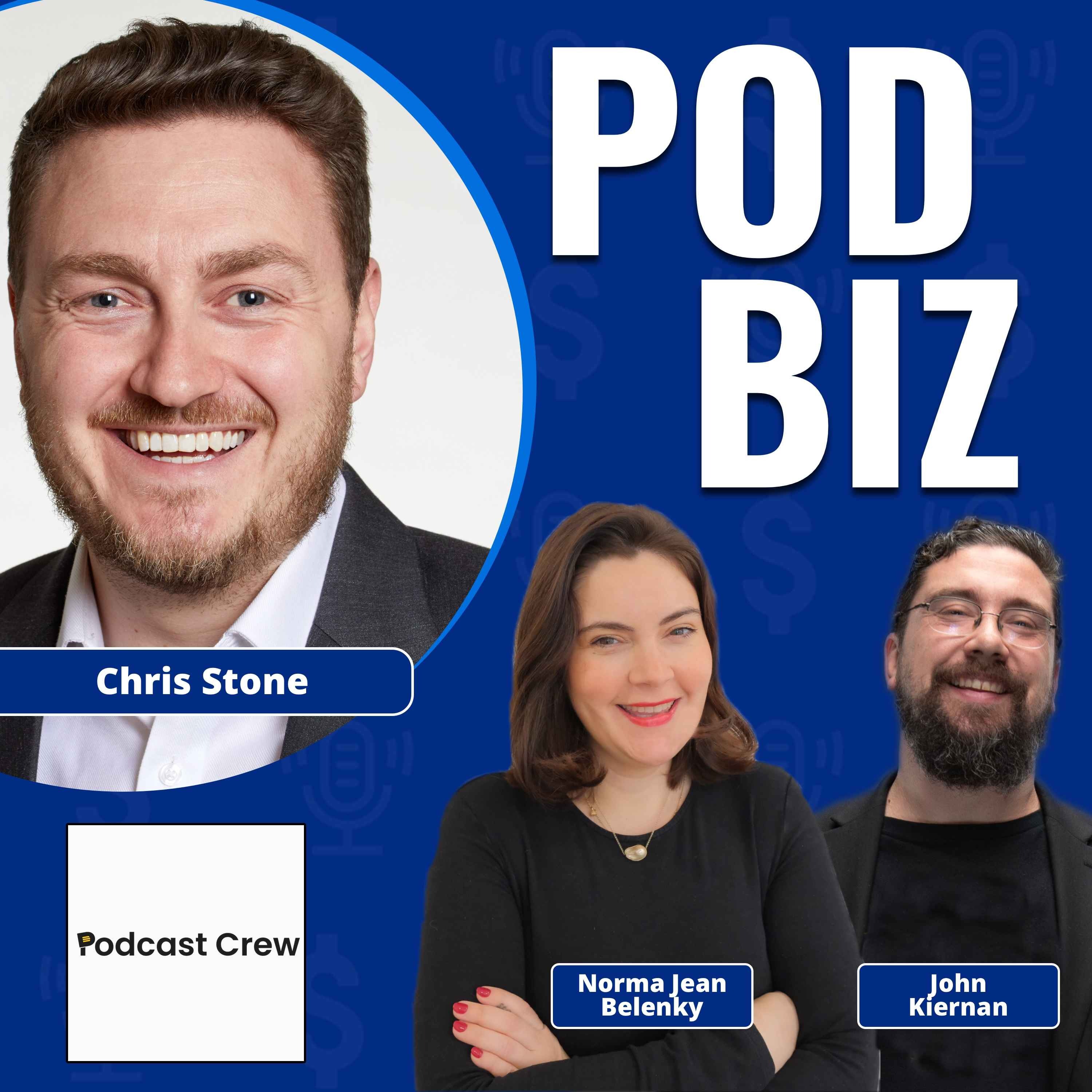
PodBiz | Where's The Money In Podcasting?
The Content Funnel That Actually Converts with Chris Stone
00:52:37
Founder of Podcast Strategy Weekly and Podcast Crew and Executive Producer at the New Statesman on content funnels, audience growth, and podcast monetization
Loading summary
Transcript121 lines
- [00:00]
A
I studied television production at university and when I was at university we were having debates about convergence. You know, would we one day be able to watch television through broadband or through through the Internet? Broadband didn't exist. My job now didn't exist then.
- [00:17]
B
Yeah.
- [00:18]
A
And there are going to be, for anybody that's listening to this, looking at a career in podcasting or content production or, you know, content strategy or whatever, the things that you will end up doing exist right now.
- [00:29]
B
Hello and welcome to Pod Biz, the Money behind the Mic, a podcast about the business of podcasting. I'm Norma Jean Balenke of NJB Media, podcast and media strategy, marketing and audience development.
- [00:41]
C
And I'm John Kiernan of podhouse Productions, your one stop shop for everything. Podcast production, from ideation to editing and recording and so much more. We're your co hosts on this journey into this world of podcasting as a business tool.
- [00:55]
B
Whether you're launching your first show, scaling a podcast network, or building branded content for your company, Pod Biz breaks down the strategies, tech and mindset behind podcasting success.
- [01:04]
C
We're bringing you insider tips, real talk with industry professionals, marketing tactics that actually work, and all the lessons that we've learned in the trenches.
- [01:13]
B
Plus we'll tackle the big questions like where's the money in podcasting, monetization, growth, SEO and of course, how to stay human in a data driven world. So if you're ready to go beyond the downloads and build real impact with
- [01:26]
C
your podcast, then hit subscribe and let's get down to Pod Biz.
- [01:31]
B
Hello and welcome to Pod Biz. Today we're joined by Chris Stone, founder of Podcast Crew and Podcast Strategy Weekly, as well as the executive producer of the New Statesman. Thanks for joining us, Chris.
- [01:42]
A
Hello.
- [01:43]
B
I'm so glad that you've joined us here on Pod Biz. We're going to get straight into it. Chris Stone, we Where's the money in podcasting?
- [01:51]
A
The money in podcasting, I think is it depends on where you are in podcasting. If you have massive reach, then advertising and sponsorships I think are still good. But I think for most people the money in podcasting is in using podcasting as a layer, a trust building layer within your content ecosystem and then using that trust to then go on and move people through your funnel to become either paying subscribers to a wider product or to your high ticket offer.
- [02:29]
B
Absolutely, that's an answer we've heard quite a lot recently on Pod Biz. It's, you know, it's something where you're a trust layer. I Mean, you make it sound like content is really like almost like a tiramisu or like a trifle. There's layers. Right. I like to, I like to relate things to dessert. But that being said, I do think, you know, in terms of consumption rates, right. Like, long form audio is where you're going to build trust and it's where people are going to stay the long longest. Right. I mean, even now on newsletters, which we're gonna dig into because I'm obsessed with your newsletter. But I do also think that, like, you know, even on newsletters, it's like, this is a three minute read, this is a five minute read. People don't have time. But a long form audio, it's like, hey, I'm doing the dishes, hey, I'm going for a walk. Hey, I'm in the car. Hey, I'm commuting. And so there's really that secondary medium of being able to connect with somebody in a way that number one builds that trust, like you said, but it's also peripheral to their day in the attention economy. It's not a primary med as a secondary medium as well.
- [03:24]
A
Yeah, I think that's right. I think so. I mean, I've just been doing some stats for. I run, I run a podcast or a set of podcasts at the New Statesman, which is a political magazine here in the uk And I've just been running some of our numbers. And you know, there is a spread, but broadly, people are spending, you know, up to 80% of the episode with us. And if our episodes are 44 minutes long, as one of them is, that's a whole chunk of time that people are spending with the brand.
- [03:55]
B
Absolutely. I mean, consumption rates are the name of the game. Right. This is what I talk to in terms of, you know, my branded clients. It's how long people stay on your episode is how long that conversation lasts. So that's a really important statistic. Absolutely. And what we're seeing as well in terms of media is that it is part of a greater strategy, like you were saying. Right. And you've become known through your newsletter, amongst other things, for building out that strategy in terms of like an entire content funnel, an entire content library and providing value. Right. The average podcaster, of course, you know, we've got those podcasters out there who are anecdotal and we, we talk about them here on the show. We have big ad here on the show, which is really exciting. You know, we talk about programmatic, we talk about fill rates, we talk about CPMs that's a different conversation, but it is a very large conversation within podcast monetization. And on the other side of that, there are people who are utilizing podcasting to build brand trust. That's for independent creators and it's for big brands as well.
- [05:00]
A
Absolutely. Yeah. I think you can monetize each layer of your cake, but some of them are more foundational to your business model than others. You know, some are just nice to have and some are where the real money is. And I'm sure we'll dig into kind of the difference between those.
- [05:18]
B
Let's dig in now. Grab a spoon. Grab a spoon.
- [05:21]
A
I love this metaphor. I love this metaphor. Grab a spoon.
- [05:24]
B
We're getting to the bottom of the tiramisu here, Chris. I went all the way to the bottom. What are the top, you know, content layers or, or pieces or types of content within content strategy that you're creating that you've seen that really are important in terms of monetization? Right. What are the ones that are free that are going to bring people in that are going to be those big lead gens? And then what's the content that people are paying for? Because, you know, we'll get into this later, but I actually pay for your substack.
- [05:48]
A
Yes, yes. Thank you very much. Okay, so continuing the dessert metaphor, let's expand it out slightly and think of ourselves like a party planner, right? So we're planning a party and people are going to come and eat our cake. I'm sure metaphor is going to make sense. So we talk about funnels, we talk about flywheels. My personal kind of framework for how I think about it is like hospitality, Right? So we are welcoming people in to our ecosystem. And I see it as having this sort of framework that I think of it as is, imagine your content ecosystem is your party that you're inviting people to. You have to do four things when you're planning a party. First of all, you have to invite people. You have to make it clear that there is something happening that people should come to. So, you know, in the real world, that's invitations or telling people or putting a thing up on Facebook or sending people a WhatsApp. In terms of your content ecosystem, that is your free to air discovery content. So that's your social posts, that's your word of mouth, that is your paid ads. If you're using it like all of those kind of marketing activities that you're doing at the top, those generally are how you get people in. But if you can monetize them Then that is a bonus. But it's very unlikely to bring you any decent revenue. The next layer, or the layer of a cake process of a framework. I'm not sure what this is, but anyway, so first you invite people, then you have to welcome them once they come in the door, right? So you're building trust from that first moment. When we started this podcast, you turned it on, you were smiling, you were welcoming, you were happy. Immediately. I, as a guest, know that I'm in the right place and I'm in safe hands, but also the listener does too, right? So that's when you start to build that trust from the very first 30 seconds. The next stage of the party invite is when you start to serve people's needs. You provide value from the outset. And you, in terms of a party, that means you're. You're giving people a drink, you're taking their coat, you're showing them where the bar is. You know, in terms of your content ecosystem, that's when you start to provide value upfront. You know, your question, where's the money in podcasting immediately? There's a little bit, a little nugget of value there that teases people, that helps them know that they're in the right place and that they're going to have a good time listening to this podcast, hopefully.
- [08:40]
B
We hope so. Yeah.
- [08:43]
A
And then the, the fourth kind of stage of the framework is that you include people, right? So that is in your content ecosystem. That is when you start to build community. So that might be through a newsletter, that might be through a community, that might be through an event or whatever, that might be through a private WhatsApp group in your party. That's when you introduce people to other people, right? And then once you've done that with, once a party guest or a listener has been through those stages, they're more likely to then go out and tell other people, hey, there's this great party. Come to this party next time with me. So that's my sort of. My sort of layer, my layer cake, my listener framework, my party invite framework for growing an audience. But at each of those layers, there are opportunities for monetization, right? So with the invites, you're talking social media. You may possibly be able to get some ad revenue from the social media platforms. If you have enough scale, don't treat it as a given. It's just a bonus. If you can get it, the second layer, the welcome, then you're starting to get into proving that people are in the right place and providing them with a Little bit of trust in you as the individual. That is when they're starting to listen to your show. And again, and you might get a little bit of kind of ad revenue from that. But the aim of that really is to drive people to the next layer, which is where they start to feel served. And that is where you can start to really start charging some money for what you're providing. Now, that might be a subscription model. They might start paying for your newsletter, for example, and then the fourth layer, feeling included, that is where you're building the community, you're providing ongoing value, and that is where your kind of your high ticket office sits. So I feel like I've mixed up a cake, a party. Content ecosystems, we've got layers, a lot
- [10:49]
B
of sense, but I hope that.
- [10:50]
A
I hope that makes sense.
- [10:51]
B
Telling people about it, one is welcoming them, one is providing continual value, and one is creating a community that they in turn want to share. I think that makes heaps of sense. Right. When you're sticking your spoon all the way down to the bottom of the tiramisu, as I'm in Italy saying that. I do want to say, though, I think what you've built with Podcast Strategy Weekly is super interesting. So tell us in terms building that funnel and that community, because you have a background, which we'll talk about in a second. Right. You have a background of working in media, of working, you know, Telegraph, a lot of traditional UK legacy media, and you've utilized that expertise within podcasting to share with the greater podcasting community. I mean, tell us about your subsec, because you've got like, what, over 3,000 subs.
- [11:34]
A
Yes. So we've got three and a half thousand free subscribers to it at the moment, and about 120 of those are paying, which is great. And of. Of which you are one so infinitely grateful. Thank you very much. The. So. So the reason I started the substack was because I frankly, I thought, you know, if I ever launch a larger paid offer, I'm going to need a mailing list. Yeah, partly it was a foundation for other things. So it's a strategic move to build a foundation that I could build something else on, but I wanted to make sure that it provided value in and of itself. I have learned over the past sort of 20 years or so of making content for other people a number of techniques to grow an audience, and I wanted to employ those for my own purposes as well. And partly honestly, because the audiences that I've grown for other companies have been in the context of large Brands with an existing known name.
- [12:39]
B
Yeah, for sure.
- [12:40]
A
And I wanted to see, do I actually know how to do this or am I just leveraging a well known name?
- [12:48]
B
Right, right. A well known brand and. Or paid promotion. Absolutely. I think, you know, it's something I talk about with a lot of my clients. Right. Like we can move the needle with paid. But I also know that organic has its own importance and if your content's not good on its own, you're gonna hit those issues later. Right. I, I do think it's a, it's a very interesting thing. And I mean, you have a legacy media career. So let's talk about that a little. You've been with the Telegraph, you're with the New Statesman. Like you really have your foot in the door of, you know, well known and well respected legacy media.
- [13:20]
A
Yeah. So I worked at the Telegraph from 2012. I was then at the Evening Standard where I led the, led the audio and video teams. And then, yeah, I've been at the New Statesman now for about six years. All of those are, you know, large legacy media brands, news brands specifically. And I've learned an awful lot. I mean, my background was in, in broadcast prior to that. So I used to, I had a, I had a brief and somewhat abortive TV career
- [13:54]
B
and maybe we can find old clips on YouTube. Get ready.
- [13:59]
A
Thankfully, I was always behind the camera, so.
- [14:01]
B
Yeah, but that's the great thing about podcasting. Right. I mean, everybody has had a different career. The industry is too young. Just now we're starting see people come up who've only had careers in podcasting. But you know, even when we look at people who've had careers for 20 years, they started out in radio. Right. So things have definitely shifted. And nobody has had a career, you know, that has spanned 20 years that's been exclusively in podcasting. Or if they have, you know, they're like the 1% of the 1%. It's something where we're such a new medium. Everybody's coming in with different experience and different value. And I love what you said also about hospitality. That was one of my majors in university. Right. And so a lot of those principles and tenets of making people feel welcome, I apply across the board. Right. To everything I do because that spirit of making people feel welcome translates into business, translates into media, translates into building community, translates into nonprofit. Right. So I, I do think that the experience that we've all had outside of specifically the lane of podcasting adds value to, to the whole industry for everyone.
- [15:01]
A
Yeah. 100. I mean, I, so I, I, I started in video production specifically and as a video producer. So I came, so like I said, came from a TV background, didn't see any data or any metrics. The only sort of reward signal I got was whether I got paid at the end of the month. That was it. When I moved into online video, I started to be able to see how people were consuming the content, right. And so that I used that data to start making creative decisions. And that was my introduction to, you know, data led decision making. Then when I moved to the Evening Standard, I was able to leverage that same kind of data led approach to running a team, to the content that we were producing, to setting a strategy. Then I was able to leverage that brand to create a partnership deal with Google, who paid us some money. And then we could create more content and then we got more data and then we could build out more podcasts as a result of that. So then I'm starting to learn about not just data led decision making, but leveraging wider partnerships. And then when I get to the New Statesman, I'm bringing all of that together to set a strategy for audience growth, develop commercial partnerships, build a funnel that involves introducing your content to people like I just described and then welcoming them in and then taking them deeper into an ecosystem. And I'm starting to learn about paid subscription. So it's all, again, it's layers on layers on layers. And the career is, you know, I studied television production at university and when I was at university we were having debates about convergence. Would, you know, would we one day be able to watch television through broadband or through the Internet? Broadband didn't exist. My job now didn't exist then. And there are going to be, for anybody that's listening to this, looking at a career in podcasting or content production or, you know, content strategy or whatever. The things that are happening, the things that you will end up doing don't exist right now. So it's all about like getting that foundational experience that you can then build on and learning as you go.
- [17:22]
B
Yeah, absolutely. I mean, I think, you know, we don't know what the future looks like. Growing up, if someone had told me I would have a career in podcasting, like it didn't exist. And so I do think it's important to just know that we're all learning as we go. And what I really like about what you share in a lot of your content is that you're really learning as you go. Right? You're like, okay, here's how I've Figured out how to remotely record multicam high def, right? Like, here's the software I used, here's the camera angles I used, here's the equipment I use. Like, here's what I'm doing, and I'm sharing it because I'm learning as I go. We're all figuring this out together, and I think that that's a really important distinction. And, you know, I do think that in terms of the value that you provide in your newsletter, I mean, for anybod who's listening, at least subscribe for free, because Chris is just, like, totally nerding out on all podcast things, right? Growth, production, all of it. And I think, you know, nowadays there's a few inputs we all have, but I really enjoy, you know, what you create because you're bringing everybody along for the ride. You have a legacy media career. You're working with budget, which is important, right. I think a lot of the time when we're talking about the indie side, there's a lot of stuff we can't do because we just don't have budget, right? And then once we have budget, it's like, okay, we're cooking with gas, right? It's a little bit, like, more exciting. You have. You have more options, and a lot of podcasters are growing and networks even are growing and expanding, you know, in real time as they do this. So I think that that's really fun in terms of some of the learnings that you've gotten. You know, I'd love for you to share maybe in terms of what you're seeing on the branded side, in terms of trends, and then also for some indie podcasters, what they can do to really make sure that they're creating a community that people can join.
- [19:04]
A
Okay? So on the branded side, I think there are lots of brands who are cottoning onto the fact that podcasting is a really useful way of, like I said, building trust with people and introducing people to your brand in a way that isn't just advertising on the tube or on the side of a bus or, you know, on TV adverts or whatever, you know, I mean, you go back as far as. Well, I mean, brands have been doing this forever, right? But I mean, so look at Red Bull. They built an entire content studio that's nothing to do with soft drinks, but it gets their brand association in the right place. I mean, that was years ago, but,
- [19:43]
B
like, adrenaline, that's the brand.
- [19:44]
A
Yeah, yeah, yeah, exactly. But like, with. With podcasting, you know, there is. I think there is a rise in either Large brands leveraging podcasts as that way of kind of building trust and then getting people to engage with the brand. So there's a podcast. So there's a supermarket here in the UK called Waitrose and they produce a podcast called Dish.
- [20:13]
B
With Dish.
- [20:15]
A
You love dish. Famous Radio 1 DJ. It's a show that involves food, which Waitrose sells, but also involves, you know, podcasty things, you know, celebrity chat and all the rest of it. And it's a really good.
- [20:28]
B
And they're eating, they're eating while the show's going on. So for everybody who hasn't checked it out, it's a really great brand case study. I mean, I've referenced it several times with clients. I think it's something that, it's just so well done. Right. Because you're, you're in the environment of food. They're eating food that Waitrose has. You can cook that food. And they're talking to Dua Lipa. Right, Like.
- [20:47]
A
Yeah, yeah, yeah, exactly.
- [20:48]
B
I, I do think that, yeah, it, I think that brands have an opportunity to share the ethos of their brand, but also within the context of how it's actually being used and the lifestyle of it as well.
- [20:59]
A
Absolutely, yeah. And then the other side of it is the like, founder led founder. Creators. Right. So there's a growing awareness among entrepreneurs and founders that organic audience growth through your own content is a really high leverage activity.
- [21:21]
B
Oh, yeah.
- [21:22]
A
And so there's a lot of founders now who are recognizing what people like Stephen Bartlett and Gary Vee and whoever have been doing for years that they can apply to their own businesses.
- [21:34]
B
Absolutely, absolutely. I think that that founder brand is huge. Right. And we're, we're seeing it, it's very interesting in terms of some of the nuance of it, which we're not going to get into. But I, I do think in terms of, you know, showing how it's built and bringing people along for that journey and that thought leadership has so much value.
- [21:52]
A
Yeah, yeah, exactly. I mean, you know, you look at what Gimlet did in the early days with startup, right. They basically, they basically built their whole content studio off the back of their podcast. About them building a content studio. Yeah, which is super meta, but, you know, shows the power of that. And they ended up selling to Spotify over $200 million or whatever it was. So, yeah, I mean, so in terms of branded, I think those are the, those are the two big trends that I see.
- [22:18]
B
And then for indie creators, you know, I think it's something where we're seeing Value first. Right. Because people aren't going to know you versus a brand. Right? A brand. People are going to know the brand, hopefully. Or, you know, you're going to be able to go forward and display brand values, have budget, you know, introduce paid. I think there's more you can do on the branded side in that regard. But for indie creators, it's about building trust. Right. Because people don't know you. So it's about that introduction. Right. So in terms of some of the indie podcasters that you've seen, or even what you're building with Podcast Strategy Weekly, like, what have you seen in terms of what works?
- [22:54]
A
What I have seen in terms of what works is value for free to begin with. That's like the main thing. So I can talk about my own stuff and then I can also talk about, like, people that I've seen that do this really well.
- [23:08]
B
Yeah, please.
- [23:08]
A
So in. Because basically I'm learning from people who've. Who've gone before. Right. As well as you're building the ship
- [23:13]
B
as you sail it, you're pulling a gimlet.
- [23:15]
A
I love it. Exactly, exactly. But as. But this is it. So like I said earlier, part of the reason I wanted to do my own newsletter and my own content ecosystem was because I've been doing it in legacy brands. I've been doing it for other people. Do I actually know how to do it, or am I just leveraging an existing brand?
- [23:32]
B
What is this a seller for ants? Yeah, it's one of those things sometimes where you're like, I know that I've been paid to do this and I'm a professional, but can I actually, actually do this? And I. I do think that a lot of people who work, you know, who've had a career that has been really corporate or really legacy, when they move into a space that's new media, or when they move into a space that's independent, they're like, wait, am I good at this? And I think that it. That is a really important question, number one, to ask yourself. But also I think that there is a level of, like, imposter syndrome that we all go through of like, oh, I'm not getting a paycheck, I'm the boss here.
- [24:05]
A
Yes. And so the. The thing that I've been doing is learning from a lot of other founder creators. Right. So I've been watching what they do and basically just kind of copying them. So what I found that works. So I have two things. I have a substack and LinkedIn flywheel. So I'll write content for the substack. I'll then repurpose that as short form content for LinkedIn and then use that content to drive people to the substack. Right. So there's that little flywheel going there that seems to work. I have also found that providing as much value up top and for free as possible is really beneficial. So people need to know that your content is going to be worth their time. I sign up to so many newsletters that promise a lot and sound like they're going to be really good, but then are effectively just marketing emails. You know, there's a bunch of creators who I sign up to, who I know they have great content and I know that I want to learn from them, but all of their emails are like, hook thing you should listen to and hey, buy my course, right?
- [25:15]
B
And do you ever buy the course? Like, is it worth it?
- [25:17]
A
I have bought one course and it was a package of like five different courses all in one. And it was a special offer and the marketing email was really good and I thought, yeah, that's, yes, I do need that. Yes, yes, you're right, I do. And then I bought it and I like listened to half of it and then got distracted and then I never finished it. And I think this is a, you know, that's fine, that works for the creator, but it's not necessarily providing loads of.
- [25:44]
B
No. And I think in today's, you know, attention economy, even on the professional side, nobody has an attention span, right? And so when a lot of these marketing emails come in, it's really just like clutter. It's clutter. It's like another thing coming in, another, another one, another one. You know, it's like doom scrolling social media. And so I do also agree that the creators and even brands that are doing the are saying like, value forward. Yeah, you can pay for the thing and the thing's great. But also that's not what this is about. This is an offering. And I, I do think that it's challenging to continually provide value, right? Like that's the work. It's like in this like constant engine of content that we all need to be creating, right? All the time. The work is to have value and to be value forward at all times. And sometimes that's saying like, hey, this is just where I am, right? I'm building the ship as I sail it.
- [26:33]
A
Yeah, exactly. And I mean, you know, like, I do reach a point sometimes where I'm like, have I, have I, I think I've written this before. Have I done this before. Well, may, maybe, maybe some of the audience haven't heard this before. So I'll say it again anyway.
- [26:49]
B
I do, I do also think that, like, anytime there's doubt there, like, people are gonna tell you if you do the same thing twice in a row. But also you're always getting new subscribers. The times are always changing the way you phrase things. And I do have to say, I think from a content perspective and even from a, you know, a branding perspective, but a creator perspective, you sometimes have to say the same thing 10 times. Maybe it's a little different every time, but like, we all feel like, oh, we know this. Oh, hey, I've said this eight times actually. Maybe someone's not gonna actually hear it until the 10th.
- [27:19]
A
Yeah, yeah, exactly. And so, you know, I tell you what has been really interesting is because I'm still in a salary job, when I was thinking about things that I could do as a side hustle, I needed to deliberately think of things that were non competitive with the main job.
- [27:37]
B
Yeah.
- [27:37]
A
So that, that kind of narrows the possibilities quite a lot, but in a really helpful way. So the constraint has actually been really helpful because I can't really do the creator funnel where you're creating content and then you're teaching other people how to create content and then you've got a consulting offer, you know, and then you're fractional and whatever, because that if I'm, if I'm consulting on other people's podcasts, particularly in the same area, that would be competitive with my main job. So what that means is I've chosen to set up a side business that is non competitive, can be done outside of working hours. So it has to be, you know, time compressed. But also that means that it stops me going into, I hope it stops me going into that sort of meta cycle where I'm making content and then teaching other people how to make content. And actually the business that I'm setting up, Podcast Crew, is, I think, a genuinely useful kind of infrastructure layer for the entire podcast industry. So it's a hiring and it's a professional hiring network for the podcast industry that helps podcast professionals find work with clients that they will be proud to work with, and it helps clients hiring clients find vetted and verified podcast professionals who can hit the ground running. So I think it works for both. It's unique in the marketplace as far as I can tell, so it fills a gap. And what I'm trying to then do with the newsletter is use. So the LinkedIn is the discovery platform, the Newsletter is the trust building platform. If I had time, I would do a podcast in a YouTube channel right now. I don't. So the newsletter is the trust building layer and then the paid layer is actually something a little bit different. But what it does is, what I'm trying to do is by setting out podcast strategy that's useful for a lot of people, but within that group of people, my icp. So podcast professionals and people who hire podcast professionals are going to be within that group. And then for those people, there's elements within the newsletter that will move them into the podcast crew world. Right? So it's not as direct as, you know, broad teaching, narrow teaching, super narrow teaching for niche people. It's like it's more about building trust so that when those people are ready to use the high ticket paid service, hopefully they trust me for who I as somebody that they recognize and know and has given them value and then have a higher propensity to then use that paid service as a result. That's my thinking anyway.
- [30:22]
B
Yeah, no, that makes a lot of sense. And I think podcast crew is a really fantastic idea, right? Because in an industry that has very low barriers to entry, where everyone is kind of self certified or can be, I think people's work stands on its own. Right. And that work can look very different for many different people. Right. Because maybe people are coming from legacy media, maybe people are coming from radio, maybe people are coming from an agency side in terms of monetization or sales or growth. And so I think that, you know, having people present themselves and almost be. I mean, when I think about podcast crew, it's also. So, yes, there's a fee, but it's also that it's almost the people are like vetted. Right. And so I think that, I think that that really speaks for itself in terms of finding a professional. Right. So you're building this trust of saying like, hey, you know, I know what I'm talking about, and here's the expertise. And if you are also someone whose work is of caliber, you can join. And so it's almost creating that community as well on so many levels. Right? LinkedIn community, substack community, podcast crew community.
- [31:28]
A
That's the idea. Thank you for explaining it so succinctly. Would you like to write my marketing copy? Exactly. The idea is exactly that. Build trust at all layers. And what I would love is for podcast crew to be more than just a jobs board. Right. So come for the jobs, but stay for the community. That's where I want to head it to yeah, absolutely.
- [31:55]
B
And what we've seen, you know, so far throughout the industry with pod biz, with the work I do in audience development, is that community really is everything, right? We're a small industry. When I talk about audience development, right? And I say, hey, you know, I'm going to go deep into your numbers and I'm going to do a full audit, there's only maybe 10 people I know and companies and agencies who do that work, right? And so I'm like, okay, you know, when I talk to a prospective client, I'm like, who have you talked to? Okay, I know this person. I know this person. I know this niche, you know, I know know why maybe they weren't the right fit for you. I know why I'm the right fit for you. I know why I'm not the right fit for you. I know someone who is, you know, we're a small industry and we're all growing old together. Dane Cardio said that here on the show, and I think it really rings true, right? I've definitely had that experience where people have referred me clients that said, hey, you know, this isn't a fit for us, but we think it'd be great for you. And then I have those clients or I've met with people where I'm like, okay, I could see why this other agency that does audience growth or this other provider maybe wasn't the right fit. I can work with you. I could also recommend other people who maybe are better at this specific thing or who. Well, maybe not better, but, yeah, I think, you know what I mean, a better fit sometimes. But I. I do think that as an industry, we are all kind of growing old together, right? And so there is this feeling of camaraderie, especially because podcasting is such a small club of people who are able to professionally do this work, right? It's. Yeah, it's small because it's new, right. And so as we grow, everyone is growing with us. New people, new skills, it's kind of coming together. So. Absolutely. Well, Chris, what would you say is one key move or metric or even a mindset that's made the biggest difference, an impact on the work you do, you know, at the New Statesman, but also in what you're building with podcast strategy weekly and podcast crew.
- [33:42]
A
I mean, the biggest audience lever that we've pulled is video, for sure. So the New Statesman. When I started at the New Statesman, we had an audio only show that had a fairly large and loyal audience, and they loved the show and they loved the hosts and There were quite a lot of them. And that's great. It was brilliant. But I came in and my job was to two things. One was to professionalize the production processes and the other was to grow the audience. And third, because of my video background, I was asked to introduce a video element to the New Statesman generally. And for a while, we ran the two things separately. We had the podcast running in audio, and then we had video being produced separately. So we would go out and make, you know, little documentaries on location, or we would go out and do interviews with, you know, people of note. And we realized a. I mean, so I come from a. Like I said, I come from a TV background. Like, high production value documentaries was really appealing to me. And I thought the New Statesman is a premium brand known for its kind of intellectual rigor and it's the quality of its journalism. So obviously people are gonna desperately want that in video form in terms of high production value features. Now, the reality was that didn't work.
- [35:12]
B
Yeah, I knew that was coming.
- [35:16]
A
Yes, I was wrong.
- [35:19]
B
No, but you know what? I think that's also, like, I gotta say, in terms of content creation, and we'll get back to this in a second. But just like, for everybody out there who's, like, everyone's succeeding, everyone knows what they're doing. No, you just have to be able to take a hit and keep moving.
- [35:33]
A
Exactly.
- [35:33]
B
And it's devastating to be like, I was wrong, I didn't get this right, or the market didn't respond and the audience didn't respond in the way we thought. Like, we're all figuring it out.
- [35:42]
A
Yeah, I've been wrong so many times. So many times.
- [35:48]
B
Same. We're all human. Yeah, we're. I mean, you know, we're all human. I think this idea that, like, you know, if you're successful and you have a successful career, that you don't make mistakes or that you, you don't experiment. This is an emerging market. It is mo. We are working within a moving target here.
- [36:04]
A
Yeah, yeah, yeah, yeah, yeah. Oh, and, and also so at that same. I'll tell you another thing I was wrong about as well. Like, I had been at the Evening Standard before and I had grown the YouTube channel from nothing to a hundred thousand subscribers about nine months. So I thought, I've got it. I know how to do YouTube. I know how it works. And so I come into the New Statesman and I'm like, it's okay, guys, I've got this. I know exactly what I'm doing. And. Yeah, and that didn't work either. The reason the documentary stuff didn't work was because the audience wasn't ready for it. So we didn't have an audience on YouTube for that content. The content was very expensive to produce. And so it was just a really good way of burning money. That was. That was all.
- [36:52]
B
I mean, isn't that just, like, such a heartbreak sometimes where. I mean, on one hand I've been in situations like this, right. Where you just feel so lucky you get to make work of this caliber. And on the other hand, you're like. And they're just not ready for it. Ugh. It's like the most beautiful heartbreak. Yeah.
- [37:10]
A
And the reason they weren't ready for it is because there was no they. Right. Because the YouTube channel didn't have an audience. And so the second part of that is that what I had done at the Evening Standard to grow the YouTube channel, it was a news organization, and everything we did was news clips. Right. So we built a channel based on news clips. And the way that you do that is you. You find the best clip fast and you publish it first, and you use the right keywords, and it shows up in the news block, on the homepage, or in the algorithm or in suggested videos around that story, and then you get your audience for that clip. Right. There's no real audience loyalty to that, though. So, you know, if you're publishing news clips on. I mean, like right now, if you're publishing a news clip on what's going on in Iran, like, you can go anywhere for that.
- [38:06]
B
Yeah. I mean, that's, I think, like, trust and urgency. When I think about news, I think of, you know, who do I trust and who can get it out the quickest? Right. Is it going to be New York Times? Is it going to be BBC? Like, you know, it's trust, but it's urgency. And, you know, if I'm listening to a podcast and I'm seeing headlines and then another agency is doing something on it, but it's three hours later, I've already listened, right. I've already got global news.
- [38:29]
A
That's it. And you're not necessarily. Apart from those big ones that you just named, like, you're not necessarily going to be particularly loyal to a given source. You're just going for that story. And so when I tried to do a similar sort of thing with news clips and then documentaries at the new statement, it just didn't work. And the reason the news clips didn't work is because there were other channels that already had way more authority in that area than us? So anyway, so we've got the podcast, I've got a mission to kind of grow video. And it turned out that our interviews that we were doing in video were the things that were generating the longest view through the most watch time and the largest audience growth. And so I thought, well, and I was kind of begrudging about this, right? I didn't really want. I was like, who's gonna sit and watch two people blabbing on for an hour?
- [39:29]
B
I'm a video gamer. Who wants to watch this?
- [39:33]
A
Why would anybody want to watch that when they could look at my beautiful shiny project over here, you know? But the reality is that that's what the audience, that's what resonated. That's what the audience wanted for sure. And so we brought the two together and so we met, we turned the podcast into a video product and we grew, we've grown the YouTube channel. So you find a groove, you repeat the groove. That's UK politics for us. You find what's working, you title and thumbnail it appropriately. You deliver a format that people like, which apparently is people, two people talking to each other. And you just do that. Right? And that is what's grown the audience for us. And so now our YouTube channel accounts for, depending on the month, maybe four times as many views as our podcast is getting in downloads. And although the podcast downloads are generally much higher, listen through. So consumption 90%.
- [40:26]
B
And that would be my guess without, even. Without you even telling me. Yeah, I would have guessed that consumption is higher on podcasts, but. But the average number of listeners is higher on YouTube for sure.
- [40:37]
A
Yeah. But total watch time is higher on YouTube than total listen time on podcasts.
- [40:43]
B
Absolutely. So I have some questions, some follow up. I mean, do you guys, because of that, does it change your content strategies? Do you frontload a lot of stuff for video? Do you have different cuts for audio and video?
- [40:55]
A
Yes, we do. Yeah. So when you package a podcast, your packaging is basically episode title, episode art, and maybe the description, preferably the first two lines of your description. Very useful. That's what appears, appears on the front page of your podcast. That's all you get in YouTube. The packaging is title and thumbnail. And those two things together are a really powerful driver to drive a click. So.
- [41:25]
B
And a B testing. And I mean all of that. Yeah, yeah, yeah.
- [41:30]
A
And so you get those. Right. But the thing is, once somebody is listening to a podcast, they will tend to stay listening to that podcast for longer with you. And you do have to earn their engagement it has to be good. But, you know, you can have a magazine show, for example, in a podcast, like, we could be doing a show that talks about three different stories, but people will come to us for that kind of progression through those stories. If I publish that in its entirety on YouTube, then all I've got to sell that video is one title and one thumbnail. If I'm covering three different stories within that episode, by the time somebody has listened to the bit that they came for, hopefully it's the first bit that they came for. They're done. Right. Because the title and the thumbnail make a promise. The first segment fulfills that promise, then they're ready to go somewhere else. They don't want the second and the third story because that's not where they came for. So on YouTube, what we do is if we have an episode that touches on more than one topic at a time, we'll take that audio episode and break it into two video episodes or more. So what you see on YouTube.
- [42:45]
B
So you're creating short episodes out of your Instagram.
- [42:50]
A
So what you'll see on YouTube is individual segments become their own 8 to 12 minutes, they become their own episodes. So from one audio recording, we might get three videos.
- [43:03]
B
That's very interesting. That's a really interesting use case. In terms of video, those were the two things that, you know, I really wanted to hear from you in terms of, you know, that aspect of what you do. It's video and news. Right. So in terms of news also, you know, I do think it's interesting in terms of creating that trust and also finding the gap and getting in there. And then also what you said in terms of urgency, I think that that makes a lot of sense. Right. With news. You know, I've noticed that within my own behavior in terms of how I consume news. And then, you know, I have some clients that are news adjacent, but I'm not in. I'm not in it like you are in that regard. And so I do think it's really interesting to. To be playing that game of, like, you know, best in first dress, best in first dress. Story, story, story, story, story. And then in that. Right. How do we build long form? How do we build trust? How do we build interviews? News. Super fascinating.
- [43:53]
A
Yeah, you've got to. There's. There's three. There's three ways, I think, that you can build an audience with news, and they have different timescales. You either have to be first and best.
- [44:04]
B
Yep.
- [44:05]
A
Or you can be later if your analysis brings something new.
- [44:14]
B
Yeah. And there are several. There are, I do have to say also there are several podcasts that I really love that are that secondhand analysis. And I, I do also think that the New York Times has done this really well with the Daily. Right. Like, it may not be the breaking story that day, but it's pretty, you know, it, it's pretty close. It's that week. It's a day or two off, but it's in depth. Right. There's also, I mean, obviously they've got Ezra Klein. There's also Pod Save America and Crooked what they're doing. There's also a podcast that I love called the Lead. There's so many good podcasts that do this and they bring in experts. So it's, you know, if it's something that's ongoing, you're hearing like, you know, someone who's done three postdocs, right. In this particular subject, and you're like, yes, I do want to hear what this person, you know, who spent their entire career learning about this one niche news thing that happens to be the hot topic of the week. I do want to hear what they have to say about it, for sure.
- [45:07]
A
Yeah. Yeah, exactly. So we were in Riga together at Radio Days, and one of the speakers there was Rachel Quester, who was the supervising producer of the New York Times Daily. And I thought her framework for how they structure their stories was really interesting. So they make every episode follow the same framework, which is, what happened, how did we get here and why does it matter? So it's immediately, what's the new story, looking back, what's the kind of, the lead up to it? And then why does it matter? Why do we care what happens next? That sort of thing. And I thought that was a really useful framework for putting together a news podcast that tells a longer story than just the. Because, because a lot of, a lot of the time what you get from the news is what happened, this happened, this happened, this happened. But you don't get.
- [45:54]
B
Right. And there's not a lot of context for why or why it matters. Absolutely. And how we got there. I think that that's, I think, you know, in the news cycle, the 24 hour news cycle that we're in, right. The endless, you know, confrontation of information that we all are exposed to. There's not a lot of, of thought in terms of reflection, right. Like, wait, why is this important? I think a lot of it is very adrenaline. And, you know, when you think of journalists and you think of, you know, their job in the 24 hour news cycle. And I'm sure, you know, you're much more close to this than I am. There is this kind of like adrenaline fueled sense of urgency to everything. And then when we think about the consumer and the audience and the greater public, there is a really big importance on why it matters. And I love that they did that. I thought Rachel Quester session was amazing. I left the day before. I was so bummed.
- [46:47]
A
But I've been a fan of the
- [46:48]
B
Daily since day one. I mean, everything about the New York Times podcast strategy is phenomenal. Their app, everything. I mean, I can nerd out on it for a whole episode at least. But I do love the format of the show and bringing in more context. Absolutely.
- [47:03]
A
Yeah. I mean, I think there's, you know, in the UK we have. The rest is Politics, which is, yeah, by far and away one of the biggest podcasts.
- [47:13]
B
And oh yeah, those goal hanger folks, they know what they're doing.
- [47:16]
A
They know what they're doing. They've got a model and by golly, they're going to use it, you know?
- [47:21]
B
Yeah, exactly. Hey, when you, when you strike gold, right? When you find the winning formula, just keep doing it. Exactly.
- [47:27]
A
Do it again and again and again.
- [47:28]
B
Exactly. Okay, so you've named two, right. You've named urgency, you've named a little bit more of a long form expert, right? Why it matters. How do we get here? And then what would you say is that the.
- [47:37]
A
So the third is the pro tier. When you're able to do that level of analysis and you build up enough trust and authority that people will come to you for that, but you can also do it reactively. So the rest is Politics is a great example of this with their emergency podcast. So they will get online as soon as something has happened and they will blather on for an hour about it. But their version of blathering on is generally well informed, engaging, and adds value immediately.
- [48:08]
B
It's so interesting, right. It's almost like that very small bridge between physics and art, right? It's very interesting, Right. So it's very full circle because it very much, from my perspective, mimics a traditional legacy media model, right. Of, you know, hey, we're live, this is happening. I'm your trusted news anchor. I have this experience and I'm telling you play by play what's happening. It's very interesting. Absolutely. And I, and I 100% agree. Right. I think once you have that trust and you have the expertise and experience and knowledge, so it's, it's, it's all of that together, then you can respond in real time. Absolutely, yeah. 100%. 100%. Well, Chris, what's something that people don't know about what you do?
- [48:49]
A
I mean, I'm sure there's a lot that people don't know about me, which is fine. That's the way I like it. I like to be mysterious. What people might not know about what I do is what motivates me to do it. So I work in news media, political media, in my own time. I run the newsletter. I have the podcast crew, the company that I'm running. But really, everything that drives all of those activities for me is about building community and practicing hospitality. And so we talked about that right at the beginning of the episode. That's the reason I was going on about the party framework and stuff is because there is nothing that gives me a greater sense of satisfaction than helping people to feel a sense of belonging. And so the audience that we reach with the New Statesman is not necessarily. They're not necessarily my people. Like, if I go to party conferences, I don't feel like I'm massively at home. But by doing the work that I have done, I have come to know and respect and appreciate the people that really love that particular thing. Right. And serving them and helping them to feel a sense of belonging, being known, being appreciated, even being loved. Like, that is something that kind of motivates me and keeps me going.
- [50:28]
B
It's true. I do have to say, Chris, you are a very welcoming and inclusive person. I was a little bit intimidated when I met you. I was like, oh, my gosh, I follow your substack, and I've subscribed. And you were like, really? Me? What? You follow me and I do, but I'm the same, right? When people are like, yeah, pod biz, I'm like, oh, oh, okay, great. You know the show. I do think, also, because we all work in a silo, right? It's definitely one of those things where when you meet people in person, we finally get to connect about the stuff that we all love and are together in a community about. Right. In terms of our work and our ethos and all of that. So if you do see Chris in person at a conference or in the uk, go up and say, hi, He's a very friendly guy. Hello.
- [51:10]
A
Hi, everybody. I just want everybody to have a nice time.
- [51:14]
B
Yeah, exactly. I just. It's like, I just want everybody to get home safe and have a good time. Exactly. Well, Chris, if you had to start over today, what would you do differently to grow faster or smarter, I would
- [51:26]
A
fail fast and iterate. That's the main thing. The first step is always experimentation, and that means getting in. I think, you know, some of the, like, pod bros call it, like getting in your reps, right?
- [51:40]
B
Oh, yeah. Like The Malcolm Gladwell 10,000 hours, for sure, right? Yeah, yeah, yeah.
- [51:45]
A
For outlier, you've just got to try it and you sort of start with a general hypothesis. I think this sort of thing will work, and it might, it might not. But by posting, by publishing, by podcasting, you will get feedback that will tell you which direction to go in. And that's really the only way that you find your way.
- [52:07]
B
Well, Chris, what are you excited about coming up within the podcasting industry?
- [52:10]
A
The podcast show, which is the big gathering in London in May. I have nothing. I have no skin in the game. Apart from. So this is a free plug for them. I just really like it.
- [52:22]
B
I love the podcast show. I'll be there. So for everybody who's also going to be there, come say hi. Yep. I'll be running around.
- [52:28]
A
What am I excited about in podcasting? Having a coffee with Norma Jean at the podcast show. That's what I'm excited about.
- [52:33]
B
Done. Well, Chris, thanks so much for joining us.
- [52:35]
A
Thank you for having me. It's been a real pleasure.