
Podcast
Podcast Notes Playlist: Startup
Hosted by Podcast Notes · EN
We take notes on the best podcasts so you don't have to. Subscribe to this playlist in your podcast app to automatically get all the episodes we've taken notes for along with the notes themselves! The latest for the tag STARTUP
27episodes
Episodes
Newest firstAll episodes
Unicorn Founder on Unseen Arbitrages, the Paradox of Wealth + Charlie Munger Wisdom ft. Ryan Petersen
Nov 21, 202401:01:01Tap to summarizeMy First Million Key Takeaways Instead of focusing on how something might fail, consider how big the idea could be if everything worked out You don’t always want to sit behind a defensive moat; sometimes, a high-velocity attack is the best way to win Mental models from one discipline are often applicable in another discipline; cross-pollinate ideas and concepts across disciplines and you may discover something novel The key to success is dumb competition; competing against knuckleheads increases your chances of successFocusing on making money will cause you to make less money; nobody wants to give money to people who are too focused on making money It is fine to want money, but wealth is a paradox; the more of it you want, the less of it you get It is better to focus on things that are upstream of making money, such as solving problems and developing skills that are valuable to other people The greatest returns in investing come from allowing the compounding machine to run; do not make decisions or engage in behavior that interrupts the compounding machine You have a massive arbitrage opportunity if you can avoid mimetic desire in venture capital investing In life and business, you can just do things! You don’t always need permission Read the full notes @ podcastnotes.orgEpisode 648: Shaan Puri ( https://x.com/ShaanVP ) talks to Flexport founder Ryan Petersen ( https://x.com/typesfast ) about playing both games: bootstrapping a startup to millions and raising venture capital to build a multi-billion dollar company. — Show Notes: (0:00) Import Genius (5:36) Paul Graham's superpower (9:34) Data-as-a-service framework (13:51) Charlie Munger's worldly wisdom (19:45) Prioritizing adventure (24:09) The paradox of wealth (28:51) Charlie Munger's student experiment (31:00) Negotiation masterclass (37:23) Inside Founders Fund (43:16) Being in a crowd v following a crowd (46:29) Highs and lows (48:52) "You can just do things" (50:16) Unseen arbitrages (53:00) $50M Phone booths — Links: • Flexport - https://www.flexport.com/ • Flexport on X - https://x.com/flexport • ImportGenius - https://www.importgenius.com/ • Schlep Blindness - https://paulgraham.com/schlep.html • Poor Charlie’s Almanack - https://www.stripe.press/poor-charlies-almanack • Founders Fund - https://foundersfund.com/ — Check Out Shaan's Stuff: Need to hire? You should use the same service Shaan uses to hire developers, designers, & Virtual Assistants → it’s called Shepherd (tell ‘em Shaan sent you): https://bit.ly/SupportShepherd — Check Out Sam's Stuff: • Hampton - https://www.joinhampton.com/ • Ideation Bootcamp - https://www.ideationbootcamp.co/ • Copy That - https://copythat.com • Hampton Wealth Survey - https://joinhampton.com/wealth • Sam’s List - http://samslist.co/ My First Million is a HubSpot Original Podcast // Brought to you by The HubSpot Podcast Network // Production by Arie Desormeaux // Editing by Ezra Bakker Trupiano
Transcribe →Peter Thiel on Trump, Elon, and the Triumph of the Counter-Elites
Nov 17, 202401:56:11Tap to summarizeHonestly with Bari Weiss ✓ Claim Key Takeaways Prominent people are shifting to the right because they never signed up for the left’s intellectual straight-jacketThe 2024 presidential election marked a collapse of liberalism and the Democratic Party; it is too narrow of thinking to blame it on a senile Biden or a goofy Kamala If the machine always wins, then you no longer have a democracy nor a democratic process: If Trump would have lost to the machine in 2024, who would have ever been able to defeat it? If we are going to avoid World War III, we must learn the lessons of WWI and WWII; we cannot have excessive appeasement to dictators, but also, we cannot sleepwalk into armageddon On the elite Ivy League institutions: “Maybe they’re good places for training conservatives. If you go to Yale Law School and you’re one of five people in the class who are still conservative at the end, you’ll be pretty good at understanding what’s wrong with liberalism.” Populism and democracy may be a Russell conjugate: It is democracy when people vote the right way and it is populism when they vote the wrong wayBoth extreme dogmatism and extreme skepticism are incompatible with science If you make something into God, you make it into a scapegoat for all the problems too If you’re addicted to the 140 characters on your shiny iPhone screen, you may not realize that the New York Subway and your decrepit apartment building are collapsing around you It matters what people do; there is room for human agency and human thought in the trajectory of the future Read the full notes @ podcastnotes.orgOn Tuesday night, president-elect Donald Trump announced that the richest man in the world, Elon Musk, along with entrepreneur Vivek Ramaswamy will head a new department in the Trump administration: the Department of Government Efficiency, or “DOGE.” Aside from the very strange fact that internet meme culture has now landed in the White House—Dogecoin is a memecoin—more importantly, what the announcement solidifies is the triumph of the counter-elite. A bunch of oddball outsiders ran against an insular band of out-of-touch elites supported by every celebrity in Hollywood—and they won. And they are about to reshape not just the government but also the culture in ways we can’t imagine. And there was one person I wanted to discuss it with. He is the vanguard of those antiestablishment counter-elites: Peter Thiel. People describe the billionaire venture capitalist in very colorful terms. He’s been called the most successful tech investor in the world. A political kingmaker. The bogeyman of the left. The center of gravity in Silicon Valley. There’s the “Thielverse,” “Thielbucks,” and “Thielists.” To say he has an obsessive cult following would be an understatement. If you listened to my last conversation with Thiel a year and a half ago on Honestly, you’ll remember that Peter was the first guy in Silicon Valley to publicly embrace Trump in 2016. That year, he gave a memorable speech at the RNC, and many in his orbit thought it was simply a step too far. He lost business at Y Combinator, the start-up incubator where he was a partner. Many prominent tech leaders criticized him publicly, like VC and Twitter investor Chris Sacca, who called Thiel’s endorsement of Trump “one of the most dangerous things” he had ever seen. Well, a lot has changed since then. For one, Thiel has taken a step back from politics—at least publicly. He didn’t donate to Trump’s 2024 campaign. There was no big RNC speech this year. But the bigger change is a cultural one. He’s no longer the pariah of Silicon Valley for supporting Trump. On the surface, Thiel is someone who seems full of contradictions. He is a libertarian who has found common cause with nationalists and populists. He likes investing in companies that have the ability to become monopolies, and yet Trump’s White House wants to break up Big Tech. He is a gay American immigrant, but he hates identity politics and the culture wars. He pays people to drop out of college, but, in this conversation at least, still seems to venerate the way that the Ivy Leagues are an indicator of intelligence. But perhaps that’s the secret to his success: He’s beholden to no tribe but himself, no ideology but his own. And why wouldn’t you be when you make so many winning bets? From co-founding the e-payment behemoth PayPal and the data analytics firm Palantir (which was used to find Osama bin Laden) to being the first outside investor in Facebook, Thiel’s investments—in companies like LinkedIn, Palantir, and SpaceX, to name a few—have paid off big time. His most recent bet—helping his mentee J.D. Vance get elected as senator and then on the Trump ticket as vice president—seems also to have paid off. The next four years will determine just how high Thiel’s profit margin will be. Today: Thiel explains why so many of his peers have finally come around to Trump; why he thinks Kamala—and liberalism more broadly—lost the election; and why the Trump 2.0 team will be better than last time, with antiestablishment figures who are willing to rethink the system. We talk about the border, trade deals, student debt, Israel and foreign policy, the rise of historical revisionism, the blurry line between skepticism and conspiracy, and his contrarian ideas about what we might face in a dreaded World War III. If you liked what you heard from Honestly, the best way to support us is to go to TheFP.com and become a Free Press subscriber today. Learn more about your ad choices. Visit megaphone.fm/adchoices
Transcribe →605: Seth Godin - How To Be Remarkable, Create a Strategy, Build a Tribe, Develop Taste, Lead Others, & Leave a Dent in The World
Oct 26, 202400:53:35Tap to summarizeLearning Leader Show Key Takeaways Check out the episode pageRead the full notes @ podcastnotes.orgThe Learning Leader Show With Ryan Hawk Full show notes at www.LearningLeader.com My books: Welcome to Management - https://amzn.to/3XWyZAH The Pursuit of Excellence - https://amzn.to/4eX9vtP The Score That Matters - https://amzn.to/3zPub7Z Seth Godin is the author of 21 international bestsellers that have changed the way people think about work and art. They have been translated into 38 languages. His breakthrough books include Purple Cow, Tribes, The Dip, Linchpin, and his latest book is called This is Strategy. He writes one of the most popular daily blogs in the world and has given 5 TED talks. He is the founder of the altMBA, and the former VP of Direct Marketing at Yahoo! Notes: "If you want word of mouth, you have to create something remarkable, and that means it’s worthy of remark." The elegant path is the most useful way forward. “My neighbor is a barefoot runner. He glides without apparent effort.” Elegance is simplicity, efficiency, and effectiveness. Dorothy and Her Crew. How did Dorothy persuade the Lion, Tin Man, and Scarecrow to join her on the trip to see the Wizard? Did she make a case about how much she missed home? No. She created the conditions where the others could get what they wanted by joining her. Seeing Strategy Clearly. Strategy is a flexible plan that guides us as we seek to create a change. It helps us make decisions over time while working within a system. Low-Hanging Fruit Isn’t. It’s all been picked. The easy, direct, obvious paths are unlikely to get you the results you’re working so hard to obtain. In fact, these paths are probably a trap. Seth, at one point, got 800 rejection letters. Have to keep going... "I wouldn't call Steve Ballmer a good leader." An example of Seth making a difference... He went to Kenya and talked with 60 people who started a book club based on his book Linchpin. "They decided to be leaders." Make decisions in the moment: Examine the issue Get feedback Look for patterns "Taste is knowing what the market wants before it knows it." Rick Rubin Reality distortion field Johnny Cash "What do you think?" "Objections are your friends." What are the commonalities among leaders with whom Seth has worked and who have sustained excellence? They are all different, but the one thing they have in common is they all have chosen to be leaders. And that means that they are here to make a change happen. Management doesn’t just exist. It was invented. When you race to the bottom, You see people as resources, not as people. Questions That Lead To Strategies. 84 questions. They’ll force you to think through your strategy. By answering them, you’ll be better prepared to make a difference… And make a ruckus. Some of them: Who is this project for? What is my timeline? What systems would need to change for my project to succeed? Where will I cause tension? What resistance should I anticipate? Where is the empathy? What asset would transform my project? What can I learn from comparable projects? Is the change I’m making contagious? Can I make it easier for others to decide? How can I design for network effects? What are common objections I expect to encounter?
Transcribe →Edwin Land and Steve Jobs
Oct 26, 202401:02:18Tap to summarizeFounders ✓ Claim Key Takeaways “If Steve Jobs studied Edwin Land, I think every other founder should as well.” – David Senra Optimize for breadth as well as depth; hire the chemist who does photography on the side! Something magical exists at the intersection of the humanities and the sciences “Missionaries make better products.” – Jeff Bezos Missionaries and mercenaries are the two types of people that will be attracted to a companyWhile the mercenaries are there for the perks, status, and money, the missionaries are there to make better products because they believe in what the company is doingLeverage the power of demonstration: No argument in the world can compare with one dramatic demonstrationA first-class product needs first-class packaging and marketing! The founder is the guardian of the company’s soul If you are lucky enough to find your life’s work, why would you quit? You should take yourself seriously, but don’t make yourself miserable; none of us get out of this alive Read the full notes @ podcastnotes.orgWhat I learned from rereading Instant: The Story of Polaroid by Christopher Bonanos. ----Ramp gives you everything you need to control spend, watch your costs, and optimize your financial operations —all on a single platform. Make history's greatest entrepreneurs proud by going to Ramp and learning how they can help your business control your costs and save more. ----Founders Notes gives you the superpower to learn from history's greatest entrepreneurs on demand. You can search all my notes and highlights from every book I've ever read for the podcast. Get access to Founders Notes here. ----Join my free email newsletter to get my top 10 highlights from every book----Episode Outline: — The most obvious parallel is to Apple Computer. Both companies specialized in relentless, obsessive refinement of their technologies. Both were established close to great research universities to attract talent. Both fetishized superior, elegant, covetable product design. And both companies exploded in size and wealth under an in-house visionary-godhead-inventor-genius. At Apple, that man was Steve Jobs. At Polaroid, the genius was Edwin Land. Just as Apple stories almost all lead back to Jobs, Polaroid lore always seems to focus on Land.— Both men were college dropouts; both became as rich as anyone could ever wish to be; and both insisted that their inventions would change the fundamental nature of human interaction.— Jobs expressed his deep admiration for Edwin Land. He called him a national treasure.— Books on Edwin Land:Land's Polaroid: A Company and the Man Who Invented It by Peter C. Wensberg (Founders #263)A Triumph of Genius: Edwin Land, Polaroid, and the Kodak Patent War by Ronald Fierstein (Founders #134)Land's Polaroid: A Company and the Man Who Invented It by Peter C. Wensberg (Founders #133)The Instant Image: Edwin Land and the Polaroid Experience by Mark Olshaker (Founders #132)Insisting On The Impossible: The Life of Edwin Land and Instant: The Story of Polaroid(Founders #40)— Biography about Steve Jobs: Becoming Steve Jobs: The Evolution of a Reckless Upstart into a Visionary Leader by Brent Schlender and Rick Tetzeli— Edwin Land of Polaroid talked about the intersection of the humanities and science. I like that intersection. There's something magical about that place. There are a lot of people innovating, and that's not the main distinction of my career. The reason Apple resonates with people is that there's a deep current of humanity in our innovation. I think great artists and great engineers are similar, in that they both have a desire to express themselves. In fact some of the best people working on the original Mac were poets and musicians on the side. In the seventies computers became a way for people to express their creativity. Great artists like Leonardo da Vinci and Michelangelo were also great at science. Michelangelo knew a lot about how to quarry stone, not just how to be a sculptor. — Steve Jobs: The Exclusive Biography by Walter Isaacson (Founders #214)— Book on Henry Ford:I Invented the Modern Age: The Rise of Henry Ford by Richard Snow (Founders #9)The Autobiography of Henry Ford by Henry Ford (Founders #26) Today and Tomorrow Henry Ford (Founders #80) My Forty Years With Ford by Charles Sorensen (Founders #118)The Story of Henry Ford and Thomas Edison's Ten Year Road Trip by Jeff Guinn (Founders #190) — Another parallel to Jobs: Land's control over his company was nearly absolute, and he exercised it to a degree that was compelling and sometimes exhausting.— When you read a biography of Edwin land you see an incredibly smart, gifted, driven, focused person endure decade after decade of struggle. And more importantly —finally work his way through.— Another parallel to Jobs: You may be noticing that none of this has anything to do with instant photography. Polarizers rather than pictures would define the first two decades of lands intellectual life and would establish his company. Instant photos were an idea that came later on, a secondary business around which his company was completely recreated.— “Missionaries make better products.” —Jeff Bezos— His letter to shareholders gradually became a particularly dramatic showcase for his language and his thinking. These letters-really more like personal mission statements-are thoughtful and compact, and just eccentric enough to be completely engaging. Instead of discussing earnings and growth they laid out Land's World inviting everyone to join.— Land gave him a four-word job description: "Keeper of the language.”— No argument in the world can ever compare with one dramatic demonstration. — My Life in Advertising by Claude Hopkins (Founders #170)— The leap to Polaroid was like replacing a messenger on horseback with your first telephone.— Hire a paid critic:Norio Ohga, who had been a vocal arts student at the Tokyo University of Arts when he saw our first audio tape recorder back in 1950. I had had my eye on him for all those years because of his bold criticism of our first machine.He was a great champion of the tape recorder, but he was severe with us because he didn't think our early machine was good enough. It had too much wow and flutter, he said. He was right, of course; our first machine was rather primitive. We invited him to be a paid critic even while he was still in school. His ideas were very challenging. He said then, "A ballet dancer needs a mirror to perfect her style, her technique.— Made in Japan: Akio Morita and Sony by Akio Morita.— Another parallel to Jobs: Don't kid yourself. Polaroid is a one man company.— He argued there was no reason that well-designed, wellmade computers couldn't command the same market share and margins as a luxury automobile.A BMW might get you to where you are going in the same way as a Chevy that costs half the price, but there will always be those who will pay for the better ride in the sexier car. Rather than competing with commodity PC makers like Dell, Compaq and Gateway, why not make only first-class products with high margins so that Apple could continue to develop even better first-class products?The company could make much bigger profits from selling a $3,000 machine rather than a $500 machine, even if they sold fewer of them.Why not, then, just concentrate on making the best $3,000 machines around? — Jony Ive: The Genius Behind Apple's Greatest Products by Leander Kahney.— How To Turn Down A Billion Dollars: The Snapchat Story by Billy Gallagher — Books on Enzo FerrariGo Like Hell: Ford, Ferrari, and Their Battle for Speed and Glory at Le Mans by A.J. Baime. (Founders #97) Enzo Ferrari: Power, Politics, and The Making of an Automotive Empire by Luca Dal Monte (Founders #98) Enzo Ferrari: The Man and The Machine by Brock Yates (Founders #220) — Soul in the game. Listen to how Edwin Land describes his product:We would not have known and have only just learned that a new kind of relationship between people in groups is brought into being by SX-70 when the member...
Transcribe →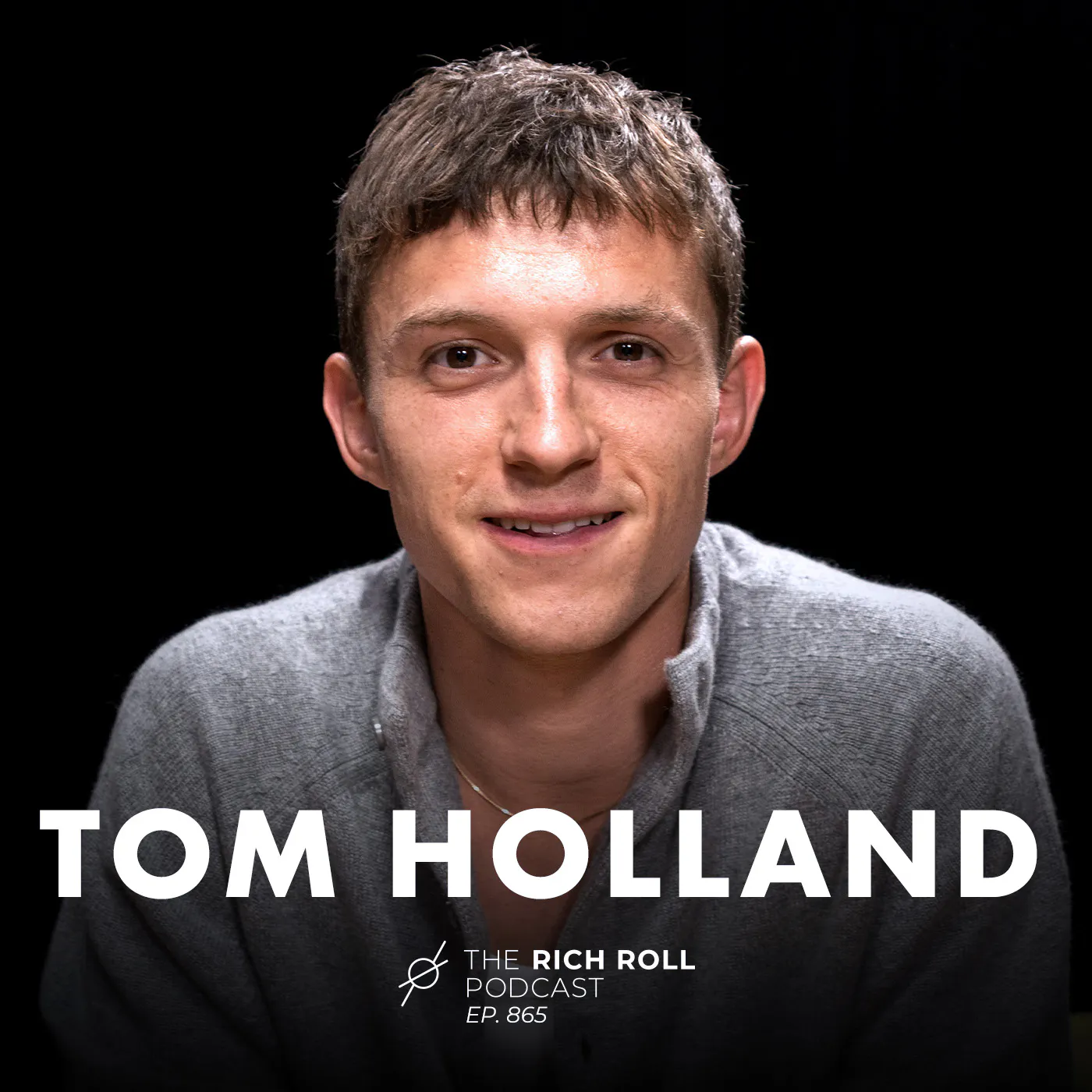
Tom Holland Is More Than Spider-Man: On Living Alcohol-Free, Acting With Authenticity, & Launching A Second Career
Oct 21, 202401:48:47Tap to summarizeRich Roll Podcast Key Takeaways Check out the episode pageRead the full notes @ podcastnotes.orgTom Holland is the star of Spider-Man, a nascent entrepreneur, and one of Hollywood’s most grounded young actors. This conversation traverses the nexus of fame, personal growth, and Tom’s journey toward sobriety, which catalyzed his foray into the non-alcoholic beverage industry. We explore his evolution from child actor to global superstar, his therapeutic relationship with golf, and how he’s remained attuned to his authentic self amidst Hollywood’s gilded chaos. Tom candidly reflects on navigating the intricacies of the Marvel Cinematic Universe and his recent return to the verité of Shakespearean theatre. Tom’s infectious enthusiasm is palpable. Enjoy! Show notes + MORE Watch on YouTube Newsletter Sign-Up Today’s Sponsors: Bon Charge: Use code RICHROLL to save 15% OFF 👉boncharge.com AG1: Get a FREE bottle of Vitamin D3+K2 AND 5 free AG1 Travel Packs 👉drinkAG1.com/richroll Momentous: 20% OFF all of my favorite products 👉livemomentous.com/richroll Birch: For 25% off ALL mattresses and 2 free eco-rest pillows 👉BirchLiving.com/richroll On: High-performance shoes & apparel crafted for comfort and style 👉on.com/richroll Peak Design: Get 20% OFF thoughtfully crafted carry solutions 👉PeakDesign.com/RICHROLL. Check out all of the amazing discounts from our Sponsors 👉 richroll.com/sponsors Find out more about Voicing Change Media at voicingchange.media and follow us @voicingchange
Transcribe →Lulu Meservey - Transforming Company Narrative - [Invest Like the Best, EP.389]
Sep 29, 202401:07:00Tap to summarizeInvest Like the Best Key Takeaways “The founder has to be accountable for the story. The founder holds this secret knowledge and vision that other people do not.” – Lulu Meservey Go Direct: If the founder’s secret has to go through seven layers of filtering before it is shared with the world, then it will become something that is already familiar to people and that already existsThe Core Ingredients of Founder Communications:1. Have a willingness and eagerness to take on the company’s comms 2. Have a clear vision of the company’s goals 3. Know your audience4. Reach people where they intellectually hang out“Communication is a vector, not a scalar. It only matters if there is a direction attached to it.” – Lulu Meservey Know your audience; if you are talking to the wrong people, then you would be better off talking to nobody because you may be making new enemies or unwanted friends Do not worry about converting your haters into believers; doing so successfully is so rare that it is probably not worth your scare timeKnow where your target audience intellectually hangs out so that your message can reach them in that medium Do not worry about converting your haters into believers; doing so successfully is so rare that it is probably not worth your scare time Craft your hook and know the erogenous zone of your target audience, then present them with a “gateway drug” that bridges them into the new world that you are creatingRead the full notes @ podcastnotes.orgMy guest today is Lulu Meservey. Lulu is the Founder and CEO of Rostra, a company that partners with founders to level up their communications around all strategic initiatives, from hiring to fundraising. She is also on the board at Shopify. I have been recently fascinated by the challenge of founders telling their story and Lulu is an expert in comms and a believer in creative problem-solving through effective communication and compelling storytelling. We discuss the evolution of media and its pitfalls, innovative methods for managing crises, and the power of going direct with your communication. Please enjoy my conversation with Lulu Meservey. I’m excited to announce that we are hiring an Editor in Chief at Colossus. This will be a critical and central role in our growing media platform and in our quest to find and showcase the best people, businesses, and ideas in the world. This person will work on existing shows like Invest Like the Best and Founders, our soon-to-be-announced print publication, and more. We aim to be the dominant media company exploring business and investing frontiers, so this person needs to be obsessed with these topics and bring serious operational chops. I firmly believe this role can help define someone’s career. Go to joincolossus.com/eic to apply. Subscribe to Glue Guys! For the full show notes, transcript, and links to mentioned content, check out the episode page here. ----- This episode is brought to you by Ridgeline. Ridgeline has built a complete, real-time, modern operating system for investment managers. It handles trading, portfolio management, compliance, customer reporting, and much more through an all-in-one real-time cloud platform. I think this platform will become the standard for investment managers, and if you run an investing firm, I highly recommend you find time to speak with them. Head to ridgelineapps.com to learn more about the platform. — This episode is brought to you by Alphasense. AlphaSense has completely transformed the research process with cutting-edge AI technology and a vast collection of top-tier, reliable business content. Imagine completing your research five to ten times faster with search that delivers the most relevant results, helping you make high-conviction decisions with confidence. AlphaSense provides access to over 300 million premium documents, including company filings, earnings reports, press releases, and more from public and private companies. Invest Like the Best listeners can get a free trial now at Alpha-Sense.com/Invest and experience firsthand how AlphaSense and Tegas help you make smarter decisions faster. ----- Invest Like the Best is a property of Colossus, LLC. For more episodes of Invest Like the Best, visit joincolossus.com/episodes. Stay up to date on all our podcasts by signing up to Colossus Weekly, our quick dive every Sunday highlighting the top business and investing concepts from our podcasts and the best of what we read that week. Sign up here. Follow us on Twitter: @patrick_oshag | @JoinColossus Editing and post-production work for this episode was provided by The Podcast Consultant (https://thepodcastconsultant.com). Show Notes: (00:00:00) Welcome to Invest Like the Best (00:06:48) The Evolution of Media and Communication (00:11:25) The Importance of Direct Communication for Founders (00:20:20) Choosing the Right Partners and Clients (00:25:20) The Art of Launching a Product (00:34:01) Fundraising Tips for Entrepreneurs and Investors (00:35:32) The Pitfalls of Inauthentic Fundraising (00:36:05) Crafting a Compelling Macro Narrative (00:37:54) Crisis Management Strategies for Founders (00:42:41) Lessons from Counterinsurgency (00:44:24) The Rugby Analogy for Founders (00:49:34) The Power of K-Pop Marketing (00:56:30) Vision and Future of Rostra (01:01:17) The Importance of Direct Communication (01:10:36) The Kindest Thing Anyone Has Done For Lulu
Transcribe →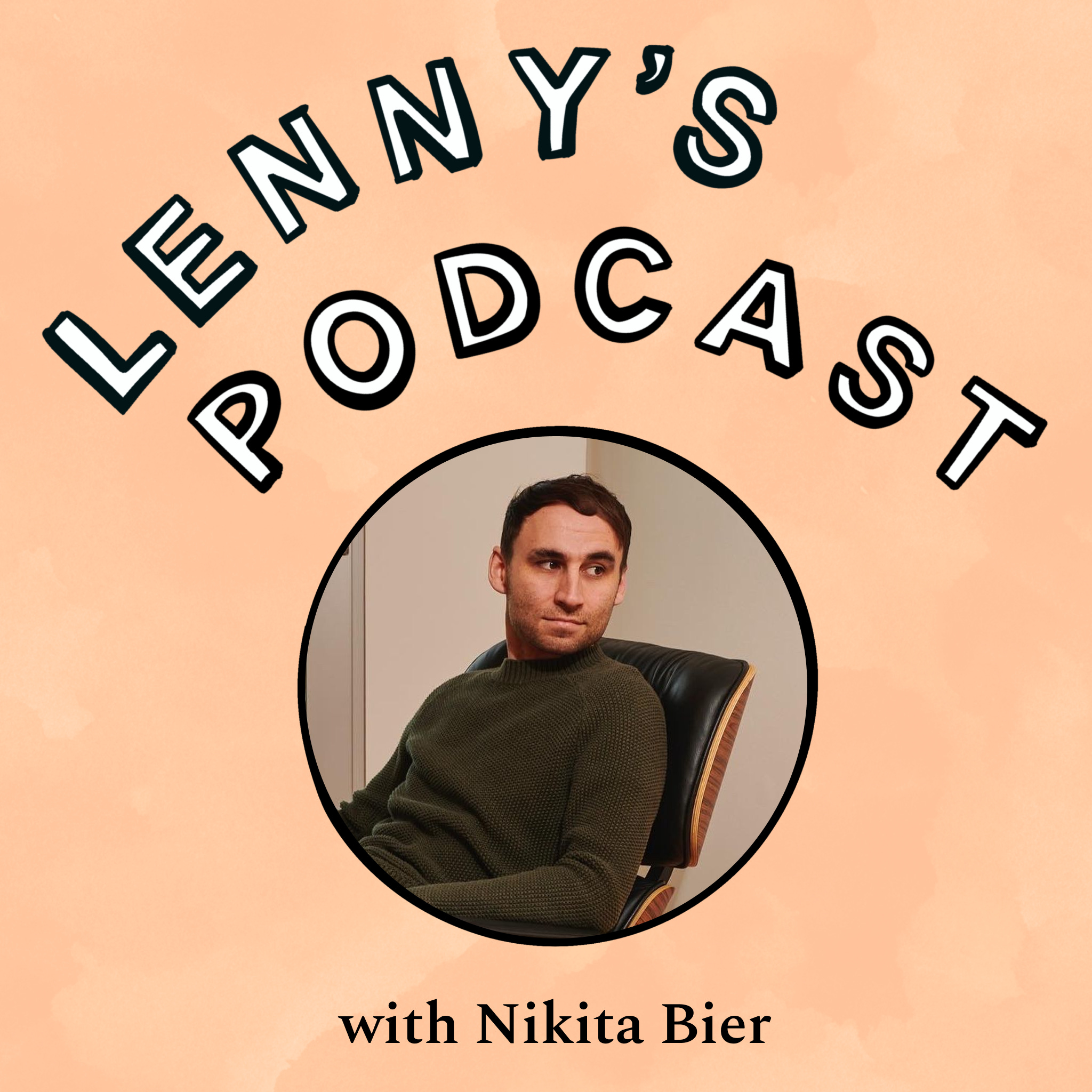
How to consistently go viral: Nikita Bier’s playbook for winning at consumer apps (co-founder of TBH, Gas, advisor, investor)
Sep 1, 202401:38:21Tap to summarizeLenny's Podcast: Product | Growth | Career ✓ Claim Key Takeaways “Every tap on a mobile app is a miracle for you as a product developer.” – Nikita Bier Teens see each other everyday; this is one of the most important factors for why teen consumer apps have a higher probability of going viral If you are building a product with network effects and that is a communication tool, then you want to be positioned on that upward curve of adding connections to your social graph, because there is a higher urgency to connect Search for product ideas by using the concept “latent demand”: Identify the user’s motivation, clear up what they are actually trying to do, and then crystalize the process for them; this leads to intense adoptionThe most important thing to increase your probability of success: Develop a reproducible testing process You will know when your product is working; if there is any uncertainty, then your product is not working People download apps to make or save money, find a mate, or unplug from reality How to take a product from Zero to One: Execute at 100% for the thing you are trying to validate at that specific stage of the product development cycleAlways do right by users; if you do wrong to users, the internet will eventually find a way to seek its revenge on you While discovering a new communication product is a once-in-a-decade black swan event, growing a product can be more of a science Your app must demonstrate value in the first three seconds or it is not going to work “Consumer products live and die in the pixels.” – Nikita Bier Read the full notes @ podcastnotes.orgNikita Bier is one of the most in-demand consumer, social, and growth experts in the world. He’s the co-founder of TBH (sold to Meta for more than $30 million) and Gas (sold to Discord for millions more) and has helped more consumer apps that have hit #1 in the app stores than any other person I’ve come across. He currently spends his time advising founders on growth, product, and design and is an investor and advisor to some of the best consumer tech companies, including Flo, Locket, Eight Sleep, Citizen, BeReal, Captions, and more. In our conversation, we discuss:• The inside story of how TBH and Gas achieved explosive growth• Strategies for building viral consumer apps• Why teens are such a great audience• Fighting the human trafficking hoax at Gas• The challenge of creating durable social products• His experience working as a PM at Facebook• Advice for founders on building consumer apps• Much more—Brought to you by:• Webflow—The web experience platform• Vanta—Automate compliance. Simplify security• Explo—Embed customer-facing analytics in your product—Book Nikita for 1:1 consultation/mentoring: https://intro.co/NikitaBier—Find the transcript and show notes at: https://www.lennysnewsletter.com/p/how-to-consistently-go-viral-nikita-bier—Where to find Nikita Bier:• X: https://x.com/nikitabier • Threads: https://www.threads.net/@nikitabier• Website: https://intro.co/NikitaBier—Where to find Lenny:• Newsletter: https://www.lennysnewsletter.com• X: https://twitter.com/lennysan• LinkedIn: https://www.linkedin.com/in/lennyrachitsky/—In this episode, we cover:(00:00) Nikita’s background (06:08) Nikita’s early ventures: Politify and Outline(08:42) Transition to consumer apps(13:45) The birth of TBH(16:43) Building for teens vs. adults(20:00) TBH’s viral success(32:18) Leveraging live chat(34:08) Lasting lessons from TBH(37:00) Selling TBH to Facebook(42:19) Big-tech product management(48:46) Nikita on why “product management is not real”(51:49) The Tim Cook painting story(53:53) Leaving Facebook and starting a new venture(58:02) Rebuilding TBH and overcoming challenges(59:46) Addressing criticism(01:04:24) The human trafficking hoax(01:09:51) Selling to Discord and lessons learned(01:11:36) Lasting lessons from Gas(01:13:14) Building durable consumer apps(01:22:35) The VC route(01:23:27) Contact permissions in iOS 18(01:26:53) The success of Dupe(01:31:53) Advice for startup founders(01:34:14) Work with Nikita—Production and marketing by https://penname.co/. For inquiries about sponsoring the podcast, email podcast@lennyrachitsky.com.—Lenny may be an investor in the companies discussed. Get full access to Lenny's Newsletter at www.lennysnewsletter.com/subscribe
Transcribe →