← Podcast UFO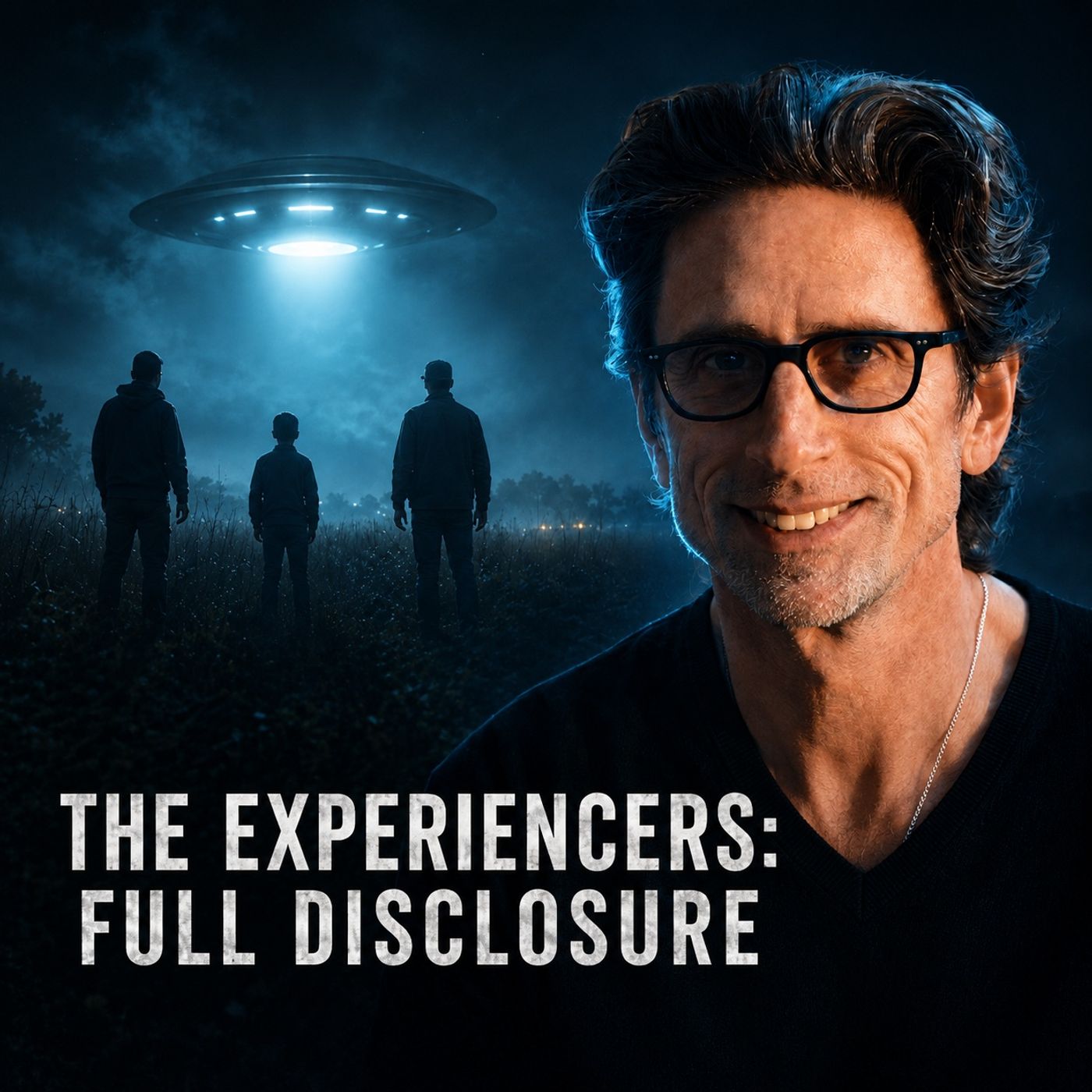
Podcast UFO
767. Dean Alioto & Samantha Graves
00:54:43
Historian Samantha Graves briefly shares a new rhttps://phenomena-record-vault.base44.app/ collecting close-encounter reports from Western Massachusetts and the Berkshires. Then filmmaker Dean Alioto joins Martin Willis to discuss The Experiencers:...
Loading summary
Transcript117 lines
- [00:00]
A
Foreign.
- [00:20]
B
Hello and welcome to the show. I'm Martin Willis, your host and we have my old buddy Dean Elioto on tonight. He's always fun to have on. He's going to be talking about his film. And before that, I have Samantha Graves coming on and she has a project in the Berkshires. And if you have not seen the Netflix the Berkshires UFO segment, it's featured, I think it's episode five, volume one, Unsolved Mysteries on the reboot. You got to check that out. If you have not seen it. She is working with people in that area. Now our blog this Week by Charles Lear is a boy hit with a paralyzing beam of light. Now that happened down in Massachusetts where there's a famous it's a concert area there. Great woods used to be there in that area. That happened in 1980. It's quite a bizarre case and worth checking out on our blog podcast, ufo.com and anyone can support the show for $2 or more a month if you want an ad free audio experience. And if you want an ad free experience here on YouTube, all you have to do is show up live or there's Facebook, Twitter, places like that. We do a live show also. We have a show coming up. Mark Dio, Mark D' Antonio and I are back here Thursday evening at 8:00pm Eastern. And we're going to be talking about the latest UFO file release that happened on July 10th. And we're going to go through that, just the highlights and some of the weirder things that people are talking about. And yeah, it's been interesting times, I think, and we'll see how all these things go in the future. But for now, I'm bringing in my guest, Samantha. Welcome.
- [02:02]
A
Hi. Thank you, Martin. It's good to be here.
- [02:05]
B
So good to have you back again. So do you want to talk a little bit about the project that you're doing? I did put the I know you gave me a graphic here. It's here is basically the the graphic. Go ahead. And if you would explain what you have been working on.
- [02:18]
A
Yes. Right now we have a questionnaire that's live. And I know that you and I have talked in the past about the Berkshire UFO event. The event itself that's most notably talked about is the September 1, 1969 event in which people from multiple states, but largely in southern Massachusetts or western Massachusetts rather, spotted a craft in the air. There were multiple abductions reported that evening, including abductions of entire families. So it's a very unique event. But in talking with some of the People, I found out that there's a lot more to the story and a lot more that happened both before 1969 and following. We've talked in the past about the five crop formations that have been found where the highest number of abductions occurred. Those abductions generally were concentrated in the Sheffield, Great Barrington and Egremont areas. Because the scope of these stories is larger than what can be represented in a podcast or on a documentary. A few of the abductees and myself got together and we decided let's come up with a series of quantitative and qualitative questions that can get at the heart of what's maybe happening. So we wanted to tease out, via a large data set, some details that might be compelling. The thing with ufology and again, I'm not from this world, I'm a historian. So the thing with ufology that I find is that there are a lot of stories that are told and stories are very useful and important. But what I think needs to happen more often, and there are great data sets out there, but I think what needs to happen more often is when you have a high concentration of these reports in an area, collecting that data and collecting all of it from the blood type of the individuals that are involved. What happened 12 hours prior to the event? What happens 12 hours after the event? Is there any kind of noticeable weather happening at the time? Aspects to the story that maybe are overlooked when someone's interviewed for a podcast or a documentary. So that's. But I'm working with Melanie Kirchendorf who was featured in the Netflix documentary.
- [04:30]
B
Yes, Very nice lady. Very Nice lady, yeah.
- [04:33]
A
Along with Wendy Ann Merrill, also helping out. She had a sighting as well.
- [04:38]
B
So let me just ask you before you go here, I have talked to other people that have done surveys and a lot of times there's commonalities. Are you finding that already?
- [04:48]
A
Yes. So one of the big things, something that I'm noticing, but I want to caution against putting anything, any meaning to it yet because again, we have a very small data set, but we're already seeing a correlation between. I shouldn't use that word, but we're seeing a connection possibly between siblings. So when one sibling is abducted and another sibling is also taken, they're generally within a 24 month age difference. Sorry about my dog. I hope you can't hear that.
- [05:16]
B
That's all right.
- [05:17]
A
So that. And they share a blood type. They're also the same gender. Now again, I have a very small sampling right now. So what I'm hoping to do through the questionnaire is to gather information from individuals in the Berkshire area, in the western Massachusetts area who have either had a CE2 or a CE3 Close Encounter event. And that's the JL and HyNet classification that looks at, in cases of CE2, whether an individual has seen and had seen an object. And maybe there's an artifact left behind, something, an indentation in the soil or maybe a burn mark on the individual, but they don't see a being. And then the close encounter of the third kind is where they actually interact or see a being, a robotic figure, some kind of entity. And so those are the individuals we're hoping to find. And again, it doesn't have to be related to the 1969 event. We're also researching some events that took place in the 1980s. So it was really curious to me that your blog is featuring that this week there's an individual who was abducted in the early 1980s in Egremont. And so we're following some physical evidence of that case. And it's very exciting. But yes, there is, there's a lot out there. There are a lot of people who've had experiences, as you and I both know, talking with authorities in that area. They don't discourage it, they believe it. They have had experiences themselves. So I think it's definitely an area of high concentration that we want to pay attention to. But to do it scientifically, we have to do it correctly. And that means we have to correct or we have to connect, connect the data and make sure that the data set is large enough so that we can correlate and make possibly tease out some kind of explanation.
- [07:03]
B
I know they're not going to abduct that dog. He's behaving. Yeah, no. One of the things that they talked about in commonalities or someone was trying to, I don't know, maybe push the agenda of the possibility of RH negative blood type. And I'm just wondering, has that come up at all in any research? Can you even mention that?
- [07:25]
A
If it did articles about it, but no, not in my research. The only reason I even found out about the RH negative blood type was that I saw that the siblings were sharing blood types that seem to be in common so far. But yeah, not specifically RH negative.
- [07:40]
B
Okay, so just if you would. How can someone, if someone is listening to this and watching it later, or listening later, how can they get a hold of you and participate?
- [07:50]
A
Absolutely. I'm hoping you put a link in the description.
- [07:54]
B
I will.
- [07:55]
A
Okay, fantastic. And so if they click that link, it'll open to the form. They can submit their experience on the form and they can do so anonymously if they wish. The first five questions are basically trying to figure out how they want their information presented. In the end, this information is not going. I'm not writing a book, I'm not making a documentary. I just want to collect the information so that researchers have access to it. So if they're. If they want their name to appear at ken. If they don't, it'll be assigned a number. But yeah, so click the link, fill out the form, and then my email is at the bottom. If there are photographs, drawings, anything they want to include as well, we can collect it and include it in the data set.
- [08:36]
B
Okay, sounds wonderful. So thanks so much. And yes, if anyone listening to the show or watching the show, all you have to do is go to the show notes and that link will be there. Thanks so much, Samantha. Always nice to talk to you.
- [08:48]
A
You as well. Take care, Martin.
- [08:50]
B
All right, you too. Take care. And Dean, welcome. Dean. Hey.
- [08:55]
C
I'm a little disappointed. I want to hear more of Samantha and I definitely want to hear more from her dog.
- [09:01]
B
Something being imparted.
- [09:02]
C
I'm running it through a filter right now, but I think that the dog was trying to say something.
- [09:06]
B
There was some type of. Yeah, we'll check the algorithms and the vibrations and stuff. There's something being said there. I think you're right. Yeah. As you can tell everyone, if you haven't seen Dean before, he's a lot of fun. Always fun to have you here. And. And I think it was just, what, three, four weeks ago, we were out in California. Was it? I don't know. Time's flying.
- [09:27]
C
You have missing time, my friend.
- [09:29]
B
I think I do. Yeah.
- [09:31]
C
May 28th through the 30th.
- [09:35]
B
But fun times. I always love doing that. It's a lot of fun. Yeah. Great. And I would have to say a lot of people that I talk to just in the hallways and everywhere else, loved your movie and myself too. I thought you did a wonderful job. This is a long time listener. Mary Grace Kirby, thank you for saying hi to both of us and thank you all over in the chat for being here and participating. I appreciate it. And also, if anyone wants to ask questions as we go along here, if you just put it in caps, that would be good. So, Dean, we're going to play your trailer here in just a second, but I'd like to ask you, when you first started looking at this topic, you and I have known each other For a long time. But when you first started looking at this topic, was the experiencer part a little tricky for you to, ooh, maybe that's a bridge too far or something like that? Or did you right away embrace that it had to be part of.
- [10:27]
C
Was going to be part of it. But it ultimately, here's the thing. I'm. I often refer to these documentaries. I aspire to make these science documentaries, which I've done beforehand. And tv, by science documentaries, I mean I want to look at this as a science based thing and be agnostic and present it as a menu to the audience so they can decide, oh, this resonates with me, the extraterrestrial theory, or that they're from another dimension, or a matrix, if you will. And the challenge was to put it all in one doc. And I failed at that because there was too much meat leading up to it. And to take not just the UFO community who could handle it, but to take the general public, that needs to understand this.
- [11:12]
B
Right.
- [11:12]
C
We want to get the UFO curious on board here. I needed to have the first two documentaries, Alien Perspective Part 1 and 2. I needed to have those be where we go from NASA, very grounded and. And Kevin Knuth and looking at material as well. But looking at the first documentary was looking at where are they coming from? And so it was all about that, where are these beings coming from? And then the second one was why would they be coming here? And so it teed it up nicely for another doc, which was the new one, the Experiencers Full disclosure. And the reason that one didn't become a part three was that it was so expansive when these two sisters showed up. Yeah. And there are new experiencers. And so the idea that the experiencers that it isn't happening or as much is, is wrong. There's certain aspects of it that have shifted and pivoted, for sure. But it's still going on. And these two sisters are in their 20s. So I took the approach that James Fox did with the phenomenon and I had a chance to see an early cut of that when I was consulting on the phenomenon and see how what he had done, which was terrific, James Fox had done, which is he was kind of doing the Encyclopedia Britannica of the highlights of UFO cases. So anytime I want to say to someone, hey, you want to get into the nuts and bolts, start here. And so I wanted to do the same thing. And it took me eight years to get there, to do it with experiencers, and to be able to say, all right, we are going to Walk you into this, and we're going to look at the classic cases, so starting with Betty and Barney Hill. But we're going to animate as an example of where we try to update things. We're going to give you some new information on it, but we're also going to take the regression tapes, play it for you, and have animation over it. That's exactly what the car looked like, exactly what the beans were, et cetera. And so we walk through a lot of these cases, Travis Walton, et cetera. And then we get into these guys, and interwoven are these sisters. And so it just became a so much more beefier thing that. That it opened up a whole other thing.
- [13:24]
B
So that's how that I was actually with you all along the way here, and we were talking about different things. And I remember your struggles and whether you're going to break this off at one point. I remember the whole thing all the way through. And I have to tell you this. This praise that I have actually given you that you never knew of, but the number of times I have talked about on this very show about how impressed I was. We just mentioned Kevin Knuth and the materials and how we followed that all the way through that movie. And at the very end, he finds out they're just earthly materials. And he says, that's science. And I thought, bravo, bravo for not trying to make it some big splash and. Or not even putting in or editing it out or making it sound like it's something. Anyway, that's. That's kudos to you for doing it in that way, because that.
- [14:17]
C
Thank you.
- [14:17]
B
That's very respectful. And I think a lot of filmmakers would have a hard time putting the hard answer to something like that in a film, because everyone wants sensationalism. Mostly.
- [14:27]
C
Yeah. No, I was agnostic about it. My feeling was I want to follow the protocols that would be done. And instead of having someone who might be at a nice college, a reputable college, but doesn't specifically work, and extraterrestrial metals, which is someone who studies meteorites and comets, I'm going to go and get that person who does that, and I'm going to go direct to that person and say, all right, you're the pioneer in this field. And that happened to be Francois, who was over at. In Caltech, which is the mothership of the material analysis. And so whatever happened was going to be what it was. And when I talked to Kevin Knuth, kudos to him.
- [15:06]
A
He.
- [15:07]
C
He said he would accept whatever the results were gonna be.
- [15:09]
B
Now, that's real science. That's real science.
- [15:11]
C
That's real science. And he says that. And for me it was, that's okay. Now we can take that off our plate and we can move on. But I wanted to show in real time us doing this. And I had no idea. 0 when the results were given to me, it was the same time that Kevin got it all on camera. So that's a genuine moment. There is one little caveat, which is if Dr. Michael Masters extraterrestrial theory is correct, that they're us from the future, then one could argue that this is. It makes total sense that the material would be terrestrial, but it didn't show any signs of design that were futuristic design. But again, it's. At the end of the day, the bigger message is that we keep looking, we keep analyzing this stuff and we sharpen our tools.
- [15:58]
B
And I've ran this by my before that what if we completely wipe ourselves out, which is very possible, and something else comes up and that is what is coming back to see us. I mean. Yeah. But anyway, that's just a thought and I want to put up. We have our first question here from Bob Lazar. Yes. Do you actually think the Hollywood Disclosure alliance is pushing us closer to disclosure, or do the viewing public largely ignore anything coming out of Hollywood? Huh?
- [16:34]
C
I don't think so. I don't. Not that I don't think that the Hollywood Disclosure alliance group is ineffective. It's just ultimately it's going to be a combination of all the above. It's going to be the politicians getting behind it. Ultimately, they're the ones that are the gatekeepers. So the alliance group is just to. In my understanding, I'm not a member, but my understanding of it is that they're just trying to create awareness and get this going, which is great. It's another stake in the fire, if you will. I think that the politicians, I think they're the ones that are now in charge and pushing it and getting the disclosure like we haven't seen before.
- [17:13]
B
So true.
- [17:13]
C
Yeah, right.
- [17:15]
B
I'm a little bit excited about it because I think you and I have had a discussion along the way. This is just going to die out. This is back in 2023 after David Grush had his hearing there. And I think you and I had a discussion. We've seen this before. It's that people are going to lose interest and they're going to just tickle it along until everyone kind of falls asleep and looks out for something else. But I feel it's different. I Do feel it's different?
- [17:40]
C
No, it is different. And it's. You'll see in the trailer that. Where we've seen the nuts and bolts and we can continue with that. But what I've been saying since 2018 is, can we talk about what's down the hall? And the. Someone could do a super cuts of what I've been saying. But the hearings have been the elephant's tail, but no one wants to talk about the elephant in the room. And now we're going there. The Hollywood Forum, or excuse me, the disclosure forum. That, that happened a few weeks ago. That was monumental because you had Matthew Brown coming out and talking about the experiencers and you have Willy Strieber who spoke briefly but eloquently about the experiencers and it's time for them to have their day in the sun. And so the timing of all that with the new film was. And I think things happen for a reason. I think timing. I've seen some of the comments where they say, huh, you have disclosure day and they have the experiencers, full disclosure. How'd that come about? And I'm like, yeah, it doesn't quite work that way. The universe might work that way, but as a filmmaker, I wanted to be done with this four years ago. And so literally it just ended up being there. But the good news is that as far as what it's done for us is we've been called the real life disclosure day. And some of the things that people wanted in disclosure day are in our film, just by the nature of the word experiencers, which for the first time in a Hollywood film in Spielberg's Disclosure day was mentioned 20 minutes in and then 63 minutes in. That's amazing. That's now part of the vernacular. And things happen for a reason, I think.
- [19:15]
B
Yeah, let's get this trailer up and going right here. You will not be anxious or distressed, but you will remember everything and you will tell me everything.
- [19:31]
A
I just thought it was a dream. Didn't really think anything of it, but apparently it's not common to have identical dreams with siblings.
- [19:38]
C
They took us and they hurt us. It's not easy to talk about.
- [19:45]
B
That was the greatest fear I've ever experienced. What do you remember from that moment on?
- [19:55]
C
When I regained consciousness, I didn't know where I was. I felt like I was dying. There's something profoundly important going on here. I've never seen anything like this before. I find them compelling and I find them believable. They seem to pick people who are particularly strong, stable, open minded, I'm an experiencer.
- [20:19]
B
I'm an experiencer.
- [20:21]
A
I had experiences.
- [20:24]
C
What has happened to these people is what they say has happened to them. Even though I fully recognize that's not possible in the worldview in which they and I were raised. For a long time, I was very dismissive of abductees, which is a weird thing to not believe. When I believe UFOs are real. We don't know what happened to us.
- [20:47]
B
It goes beyond what we know or
- [20:49]
C
don't know about them.
- [20:50]
A
Yeah. I think we haven't even scratched the surface in all science fiction of what
- [20:54]
C
aliens could be like.
- [20:57]
B
Theater. Why do they need blinking lights? That's the show. That's the show.
- [21:05]
C
Why are these alien beings abducting people?
- [21:09]
B
It wants to be seen. It wants us to be aware of it. UFOs and aliens said they maybe be us in the future.
- [21:18]
C
Time traveler or interdimensional watch, lurking, stalking.
- [21:26]
B
Be very simple to eliminate us.
- [21:29]
C
The entire universe has some kind of intelligence to it.
- [21:32]
B
What can we learn through the lens of science and all the mysteries that surround it? He says, you don't have any reason to be afraid.
- [21:46]
A
We're not going to have you.
- [21:55]
B
Wow. That's what I have to say about that. Wow. Very powerful.
- [22:01]
C
Thank you.
- [22:02]
B
Yeah. So I know you put your heart and soul. I've been. We've hung out at your place and your beautiful equipment that you have to work with. How many hours would you want to guess that particular film had? Could you even clock that?
- [22:16]
C
Oh, man. More than the others. I will tell you that I. There's something about these documentaries that are different than the independent films that I do. What I mean by that is there's a discovery that happens in the editing that's separate because you go out and you shoot these interviews. And we did 67 interviews, five countries. And you got your basic questions that you want to try to answer. But when you start to put it all together, you have to do a beginning, middle and an end. Right. But if you do that, then it becomes very linear and you're focusing on action beats. You're not focusing on the spiritual journey that this phenomenon takes one on. And the. An example of that. A weird high strangeness that happened for me while I was doing this. And I. Again, let me just preface this by saying I'm not an experiencer. I don't think I've ever seen a ufo. And. But there is something that's been driving me that gets my ass up at 3am sometimes to work on this project. But the weirdest thing is I had issues with eyelid fluttering. And my girlfriend Allie could see it on the other side of the room. She could see it back here and my office is over there. And she could see me, my eyelids fluttering every time I sat down to edit the movie. And so it was this weird thing that I've never experienced on any of the other scripted fiction films. So there was some energy that was coming. And at some point I did talk to T. Von Smith about it and I said, look, I don't know what's going on here, but I, at some point I got to get back to doing my indie films, science fiction, horror, supernatural, etc. And I said, I just don't know what's going on because I'm not an experience that I'm aware of. And she said, dean, they don't have to knock on your door to get to you. And so that was very sobering. And so I just basically learned to climb in the back seat and shut the hell up and let the muses take this project. And it took him a long time to, or maybe I wasn't as quick on the draw to, to do it a year, but it took a long time gestation trying things, breaking it down, going again. At one point I brought in, when I thought I had everything locked, I brought in Davis Coombe. So Davis is a badass editor. He won the Emmy for co writing and editing Netflix's Social Dilemma. He's got a new out that he edited called the AI Doc, which is phenomenal.
- [24:44]
B
That's a great one. I saw that.
- [24:46]
C
Yes, amazing. And, and so he came and he went through and helped me make sure that it wasn't too much in, in the UFO stuff, that it was supporting evidence. So it felt like I wasn't, I didn't have an agenda. I wanted it to be agenda less. And so you would. That's not even a word. But sure, let's go with it and have it be something where the audience can go, oh my God, I didn't know about this and I didn't know these things. And there'd be mic drops for people who are in the UFO community, but also for the public at large where they could take this in and go, oh my God, this is what this is about. And this is why they might be swinging by here. We might have video of these craft. They're not just swinging by to hit in and out. They're swinging by for some operations, some purpose that is either to help them or it's to help us. And we get into that in the documentary as well.
- [25:41]
B
Here's just a comment here for you. Great documentary. Watched with some friends that weren't really into the subject, but in the. By the end they were all believers. You'd like to hear stuff like that. And it's. I don't. Yeah, it's good that you can have an open mind. That's. When I very first started doing this show in 2011, I just thought I just couldn't go that way. I was saying I was going to be a strict nuts and bolts type of guy when. Because I think I know what I saw. I know what I saw was not something that you would see us flying at that time. Not now either, but still. I just didn't think I would just. I couldn't do it. I tried. I went to a thing that was called Experiences Speak in Maine. I think it was in 2012 and I still wasn't. I was trying. And then I went the next year when they had it, and I sat and talked to Travis Walton. And that was in 2013 when I met him the first time. And we sat just chit chatting about. He let me interview him, but also chit chatting about other things. And I'm thinking, wow, he's very bright guy and nice guy. And I just felt like he was authentic. And that's. It took a little while is what I'm getting at before. And then really look at it logically. They wouldn't just be zooming over and taking pictures. And you would think there would be animals being brought in and studied and not just people. So anyway, I think it just took me a while to open my mind up. It's still a little hard for me because what's difficult for me is that I just. I don't know how these people can even function in a daily life. If. If that was in my world, I just. I would want to be in fetal position under a bunch of blankets somewhere in a corner.
- [27:42]
C
Yeah, it's. I've been to several experiencer support groups, group meetings. In fact, I'm going to one in a week or two again. And. Because I always want to check in and make sure that I'm representing the experiencers and making sure they're heard in the correct way and. And focusing on the correct things because they're the ones that are going through this and have been going through it. And in some ways I think they're the ones that are taking it for the team, if you will. And it's really funny because we end up Talking to people like government officials and ex military. But it's kind of like asking the generals of D day, so what was it like? Storm in Normandy. I'm no wrong. I'm going to go to the boots on the ground troops who were there, who were maybe wounded but survived. I want to know what it was like for those guys. And so that's the whole purpose of this documentary, is to take these people and say, okay, what's going on? What is this about and what is it about for you? And I always use the analogy that people go, I'd like to see an alien. Really? You want to see an alien? Okay, let's walk through what that would be like. And I use the analogy and you've heard me say sorry for if people have heard this before. So I'll make it fast. Let's make it a comfortable situation where you're on your deck and you're reading a book and it's in the middle of the day and you got your umbrella overhead so you're not getting sunburned because the ozone isn't what it used to be. And then you hear a noise and you look over at the end of the deck and you see this chimpanzee poke its head out and it looks at you for a little bit and then it ducks back and you're in shock. But you get up and you walk over and you take a look and nothing's there around the corner. How much is that going to jack you up for the rest of your life? Where you're going to be going, I think I saw this thing. No, no. And you're going to totally rewrite it and try to create new grooves in your brain that didn't exist because it's just too much to deal with. Now imagine looking over, not seeing a chimpanzee, but seeing an nhi, a gray beam as an example. And then it ducks its head back around. It's as John Mack says, it's an ontological shock that is earth shattering, that causes for many ptsd. And I never make light of it. I look at that and I say, and you'll see towards the end of the doc, the main theme of the doc, one of the main themes is empathy for these experiencers because you wouldn't make fun of someone that had been abducted and taken in a van, if you will, by a human and say, oh really, when you were in there where they were wearing ski masks, were they doing this and that. But we have no problem doing that or have had no problem Doing that in the past and cueing the X Files music. So that's changing. And you've got Goldie Hawn who came out, I think it was Jimmy Kimmel, one of the Jimmy Fallon's came out and said she was an experiencer and mentioned that she's had interactions with them. And the Roper people forget about this. But there was a Roper report that was done in 1992 and they asked five questions and they took the numbers and got the answers and saw that several of the people they interviewed, 1 in 50, had several of the items, whether it was sleep paralysis, that came with a presence, feeling a presence in the room, or with scars, missing time, etc. 1 in 50. So if you take that and you multiply it, that means that 3.7 million people potentially could be experiencers on this planet. So that's staggering. And I just feel like whatever's happening and whether you're chosen or whether it's because of, as John Mack says, dual alien identity, that this might have been something that you agreed to do before you incarnated is unknown. But this is happening for a reason and it has been happening for a very long time.
- [31:44]
B
One of the things I always think of is if there's so much life out there, which we think there is, but we don't, we don't have proof, but it just seems would make sense that the universe would be just teeming with life. And is this done at every stop along the way? We can't be. Are we just special in some type of way? Why would they be bothering with us if the universe is teeming with life?
- [32:12]
C
Why would ants, yeah, why would we bother studying ants? There's a profession that's called entomology, they study ants. So someone's going to find it interesting. The one thing that we all share in common, and Dave Foley and I talk about this a lot, we're in direct agreement with this, which is intelligent life comes with curiosity. So why wouldn't they be curious to see where we are in our development and not to make it about our perspective or how we would do this? Because we ultimately are going to do that. Wouldn't we do that if there was another species? Wouldn't we go out and check it out? And we're a dangerous species still because we're very animalistic. And so the way that these beings, the nhis, have conducted some of their experiments and stuff and research they've been doing with us is to immobilize us like we would do with a bear. And to tag us, which we talk about the implants. And so that would be something that you can see. This is an extended version of that. And look at Travis Walton when he was on the craft, right? He wasn't. They couldn't put him under. Through effectuating some form of mind control. And so he got up and he grabbed a utensil that was on a tray next to him, was swinging around. They were terrified of him. That's our natural reaction. But one thing I want to. I do want to underscore is that not everyone is taken and having experiments. And the hybrid program, that doesn't happen to everyone an equal amount or more. It is this spiritual experience, this communion, if you will. And many times it might start out that way, meaning more operational. And then it becomes this thing. At least Strieber talks about that, that has ongoing relationships with them.
- [34:02]
B
Someone just corrected you. Entomology is the study of insects. Really? Not just the ants, but. Yeah, you know, you.
- [34:10]
C
I was also talking about the entomology that not many people know about. It's an offshoot of entomology no one's heard about. No.
- [34:18]
B
Okay. Well, no, we can make sure.
- [34:21]
C
I'm talking about the alternate universe. Guys, come on. Keep on. Thank you for the correction. My dyslexia sometimes sneaks out and that's fine.
- [34:31]
B
That's fine. So, yeah, I was. When I watched your trailer just now, I was thinking. When Dave Foley was talking about how he thought about the. I said, that's exactly how I approached it. Just those words came out of my mouth when I first started the show and. And he too, mentions in the trailer. That or in your movie. It's worth a look. And I love those clips of John Mack. I just. He was gone before I even started my show. But when I look back at the work that he did and how much he brought to this. It sure would be nice if someone like him would come along and pick up the mantle and try to move forward with the work he did, with the credentials that he has. We have alviloe, but as a whole different thing. But I'm talking about someone in the psychiatry world. It would just be so important for someone to give more credibility to these people that are suffering. I love the phrase that he makes that these people. I don't. I'm just paraphrasing. But these people are not delusional. They're not crazy in any type of way. And they are. They. I forget exactly what he says. You probably know, because you. But it's something along those along that
- [35:43]
C
line, he's basically saying that these are people who are usually above average, open people who are experiencing these things. And the toughest pill to swallow for us is that just because it bucks convention with the reality that we deal with on our usual basis to not have room for this high strangeness when you have data to back it up and you have testimony and you have the things that nailed it for me was when there's a partner who's there in the bed next to you and also is experiencing paralysis and sees many times the scenario is that there's this white light that appears in the room and then you see your spouse or your partner levitated brought out. Either sometimes it's with the beans or sometimes it's just separate through a wall or through a window. And they're witnessing all this and they just have that fragment of that memory. But there is a witness. It's cooperating evidence, if you will. And so getting back to John Mack came at the time he needed to. And he needed to do the heavy lifting. He needed to come out in the mid-90s and do this in order to shake things up. He was an earthquake in the reality that we know. And so sometimes you want the biggest guns. If you all hate to use weapons, guns blowing through the gates first, it makes it easier for everyone else. And so John did that. Yeah. And the thing that's sad is John didn't live long enough to see him be exonerated with the government coming out and saying, yes, this is real. I mean, could you imagine that today? But I feel like he did the heavy lifting for us. And so people like myself and other documentary filmmakers that are out there and certainly experiencers like Karan Austin and, and and others are keeping it, keeping the torch alive.
- [37:43]
B
Who Karn is going to be supposedly on this show within a few months. Hopefully that'll happen. So here is a another question posed for you here, Dean. Do you know a screenwriter? Danny Alex, are you familiar with that person? An experienced screenwriter? May someone to. Oh, I've just to know. Does you. Do you happen to know who he's talking about? That person?
- [38:07]
C
No. If I open my window right now and I grab this mug and I throw it, I'm going to hit. I'm going to hit three screenwriters. There's a lot of screenwriters here. I also have 42 screenplays that I've written and a slate of films that I'm hoping to do when I finish these documentaries that I'm doing and that are sci fi related and genre related, etc. But, yeah, I have more than enough to keep me busy for this lifetime. But I'm glad there's other filmmakers out there doing this.
- [38:38]
B
Yeah. So this is just a comment about Terry Lovelace is credible. Remember, he was an Attorney General. I reached out to Terry. I know that he. His health is not all that good, but he. He does have quite an interesting story. I'm glad you got him in your film.
- [38:53]
C
Yeah. Good.
- [38:55]
B
Man, that whole situation, so bizarre. I don't know if we could just give a little bit of a teaser of Devil's Den. Do you. Can you just give for. For the listener who is unaware of.
- [39:04]
C
No, and I wish you wouldn't bring that up, Martin.
- [39:08]
B
Okay.
- [39:10]
C
Devil's Den is a great case. Devil's Den is, again, someone in the military. Sound familiar? Who's out there with his buddy, camping in Devil's Den, and he. He wakes up in the middle of the night and sees this light above. And before that, they had seen a craft and sees what he thinks are children playing out in a meadow in front of them. And the person he's with, as he calls Toby, says, those aren't children, and you know what they did to us. And then the military goes ahead and interviews him after he wakes up from all that, and the military question the hell out of him, but what he sees. And they try to wipe out his memory and through hypnosis, but also through partial memory, because not everyone has to go under hypnosis. We should talk about that as well. He recalls being on a craft. Not only that, he recalls being on a craft with military. Young military soldiers that are officers, that are on. Not officers, but who knows what their ranking is, but they're on the craft, the same craft, working in concert with these gray beans. Two sizes of the gray beans. And it's interesting. And he has his own theories on it. And we get into that, that they might not be sentient beings. And so we bring in this expert from Carnegie Mellon that's never spoken in this field before, and he's got his take on it. And, yeah, it's a fantastic case. And Tony's got a little bit of evidence that we also show in the
- [40:46]
B
documentary and that case in there. But one of the things I thought of is, how did these two sisters find you? Or did you find them? How did that all come about?
- [40:59]
C
So my assistant editor, Craig Jackson, who is also a music producer, he was working on some tracks for this young female artist. And she said, hey, Craig, what's been going on at the beginning of their first. Their first one of the sessions that they were doing. And he said, oh, I'm doing this documentary about foes and stuff and experiencers. And she goes, oh, that's weird. What do you mean? When I was young, my sister and I shared the same dream twice. And we always thought that maybe it could be affiliated, but we don't know. We just know that we woke up and we talked to each other and we had shared identical dreams twice. And so he calls me and he says, hey, dude, I just heard this. What do you think of this? And I go, hey, hold on. So I call Yvonne Smith and I go, yvonne, I just heard this. And she says, hey, that's a flag. And I went, wow, okay, hold on. Went back, called Craig and said, I want to talk to her. So Skyler, she's the musician, spoke with her and said, hey, would you be willing to go on camera and would you be willing to. To do a regression hypnosis session? And I would want to do your sister as well. Put her under. And her sister's in Chicago. Skyler is here, local, in Los Angeles. And. And her sister is a business exec. We joke that they're the mullet. She's business up front and her younger sister's party in the back. So we did two separate sessions and they were forbidden to communicate with each other, otherwise then the whole thing would have been contaminated and you never would have seen it in the show. And so we had certain safeguards to make sure that happened. Anyway, they come out. And so each of them went to the two different dreams. Skylar went to the first dream and her sister went to the second dream. And the overlap was insane. And so without, you know, giving too much away, it was not what we expected. And the thing. I want to talk about hypnosis because I know that I'll see comments sometimes where people go, oh, that's just people influencing people. And some mild form of mind control. There's two types of hypnosis. And I was talking to Chris Ramsey about this. Chris is done. Engaged in. And we as well, we've talked about the stage show hypnosis, where you say to someone, hey, Forget the number four, now count to five. And they go, 1, 2, 3, 4, 5. Is that right? And they're able to do that. And it's like with someone's clucking like a chicken, something like that. And there's a version of that. That's not what we do. We do basically meditation. We do a relaxation exercise where it's Imagine somewhere that you like, that makes you feel calm. Imagine walking down into that place. And so it's a relaxation technique. And then when you get there, then the only thing she says is, she says, let's go to that place that you want to go to that time, rather, when you were seven years old and you're in your bedroom in Elgin, Illinois, let's go there. What do you see? And then it's up to her. If she sees the light shining, a light shining through, she doesn't say, oh, can you see the craft? She says, oh, do you know what's causing the light? So all the questions are neutral in order to hear what would come from her. So it's the person that is. I hate to say the word under, but I don't know what else to say. The person who's in that relaxed state. It's up to them. They're the ones that are narrating this. And so, done properly, this is completely a useful way to get someone to be able to access the subconscious. Not some fantasy world, but the subconscious. And. And this is a technique that also that the police use when they're sometimes wanting to clear up things. They'll say, would you be open to that? And can you go back and can you see the license plate? So it's very benign. It's very benign. So, but anyway, what came out of just that with both sisters, that same technique was. Was amazing, and it's the reason why it became not another episode of the Alien Perspective, but became its own. So that in concert or in connection with looking at the classic abduction cases and what we learned from those, that became this meaty thing that was. It needed its own documentary and then some.
- [45:29]
B
When you completed the film, did you change any thinking after you got through this? Do you think that we really are being. Having an interaction with something we can't explain at this point? Are you convinced that's happening? Did it change your perspective?
- [45:50]
C
I always say, and this goes for UFOs as well, I always say that I believe that UFOs, UAPs, however you want to classify them, that those are real and that people are seeing them. I believe. I don't know because I haven't seen it. I hold up the same belief system for experiencers. You cannot fake ptsd. I saw someone on some podcast I do made a comment that said, if you have a nightmare that can cause ptsd, that's not accurate, that's not real. A nightmare isn't going to keep you up for weeks on end, terrorize you at night isn't going to be something that profoundly changes you and your relationships with those around you, your loved ones. The level of PTSD is equal here. Let me give you an example. John Mack, he did a test and Karen was part of that test. And what they did is they had two groups. One were, I believe they were Vietnam vets and the other group were experiencers. And individually within those groups he conducted with a, I believe it was a CAT scan. He scanned their brains to see the level of PTSD with the ex military, the veterans, and then did the same thing with experiencers individually. And it came out the same level of intensity.
- [47:17]
B
Yeah, I think I saw that or I read something about that. Yes. Yeah. So makes sense. Yeah.
- [47:26]
C
So I believe that these are absolutely experiencing something. The only thing that is unknown is whether this is happening just in the physical world or is it happening in a celestial, mental world, dimensional world. Are these crafts, are these beings somehow traveling in the astral plane? We don't know exactly what these things are. All we know is that whether it's a mental thing or not, they are experiencing these things because something is happening to them. And it seems like these beings have the ability in some cases to stop time. It's the strangest thing. In fact, it always makes sense of these crafts, the way that they move from here to here and then they'll make right hand turns. I think that they're relocating themselves, that they're moving at a set speed. It seems that they're able to move at the speed and then they just change space time. And if you talk to the students at Aerial School, lastly you talk to them, they'll say that the beans, when they came out, some of them said it was like they were skipping.
- [48:34]
B
Yeah, skipping ahead of themselves.
- [48:36]
C
Skipping ahead of themselves. Not literally skipping, but here, then here.
- [48:39]
B
And I agree with that totally. I think there's definitely a time element and some type of manipulation. It just seems to make sense in so many ways. And I think there's a lot of people that share that view. So the experiences themselves, do they struggle to interpret what is happening to them? Whether it's physical, psychological, spiritual, or something else that crosses other types of boundaries. How is there, what are, what do they perceive is happening to themselves?
- [49:12]
C
It's the five stages of grief that they appear to go through. I don't know anyone that has an interaction, especially later on, because a lot of these people are having these experiences as children and a lot of this is generational. But no one has said as an adult, like when Whitley Strieber, as an example, experiences something later on in life, in his 40s, 30s and 40s. It isn't this thing that, that he can fold into his life right away. It is a major psychological reality adjustment that happens. And so first there's the disbelief, which again is five degrees of grief. No, no, that didn't happen. That person didn't die or this thing didn't happen. And then it's a slow realization. And so everyone's journey is different. Everyone's journey takes its own, has its own pace. And so I really feel that, that these people, I will never lump them all in because I've learned being at these experience or support group meetings, that they're not all the same and that each of their experiences are individual and, and there's high strangeness, things that are different, that relate to them, that are brought out when sometimes people talk about seeing deceased loved ones on craft. Not everyone's going to see that. And Jacques Vallee believes in that. John Keel, Greg Bishop talks about that, how each of these cases, and the great Earl Grey Anderson, who the film is dedicated to, he, he said, I didn't, I don't trust cases, abduction cases, experimental cases, unless it comes with some level of strangeness that is an individual thing that's, you know, that makes it unique.
- [50:55]
B
Right.
- [50:56]
C
And so I, Yeah, in fact, when I went to my first experience of support group, I asked them, I said, I said, how many people of you here, if you could go back in time and you could uncheck the alien abduction subscribe button box, would do that? And I said, just raise your hand. And I waited 10 seconds, 15 seconds, not a single hand went up.
- [51:21]
B
Unreal. Really unreal. That's something else.
- [51:24]
C
What does that say?
- [51:25]
B
Yeah, ends up being. But I'm wondering if everyone was feeling comfortable, if someone would answer honestly. I guess in a group like that, they would.
- [51:36]
C
No, there was one person who, who disagreed with that. And it was the first time he'd ever been there. And he was a major in the army and he was about 6, 4, big guy, 35 years old. And he said, no offense, but I think you guys are all effing crazy. And this was his first time he came there. And so he was way at the beginning of the first stage of grief.
- [51:59]
B
Yes.
- [51:59]
C
The rest of the room was filled with people that had been there for, had these experiences for years, and so they come to terms with it. His big gripe was that it appeared that his kids were also becoming experiencers. His two little daughters, they had drawn A picture and showed it to him one Saturday morning, crawled in the bed and said, hey, look at this. And he says, what are these? And the kid said, oh, these are the little skeleton people that sometime come to visit us at night.
- [52:26]
B
Oh, God. You just hit on something that someone I know is listening is going to talk to me about afterwards. She talks about the skeleton people around her bed.
- [52:35]
C
Yeah, she was a little girl.
- [52:36]
B
Yeah.
- [52:36]
C
And, and so he wanted, he said, they can do whatever they want to with me, but they don't touch my kids. And so he was there for hardcore answers, but he was again in the first degree of grief, the first level.
- [52:52]
B
Wow. Wow. Awesome, Dean, thank you so much. It's always a real pleasure. It's been such a wonderful time hanging with you all these years and likewise watching what you do and you do such a great job on your films and you put so much into them and I really appreciate it. And I know you have to move on to other things and it's going to be kind of sad not to be looking forward to the next Dean Aliotto UFO movie, but hopefully there will be one down the road someday.
- [53:21]
C
Never say never, right?
- [53:23]
B
That's right. That's right. All right. And if you don't want to do it, just throw your coffee cup out at the next screenwriter next door neighbor. Yeah, yeah.
- [53:33]
C
Always a pleasure, Martin.
- [53:35]
B
Yes. Yes, indeed. All right, everyone, so make sure you check out the show notes for both the Berkshire's thing that Samantha Graves had talked about, the form that will be in the show notes and as well as right now you can see where to watch Dean Elioto's movie and it's called the Experiencers Colon Full disclosure. Check that out on Apple and Amazon. Thank you all so much. Remember to come back here on we have Mark D' Antonio on Thursday night at 8pm and we're going to be talking about the latest file dump release films, whatever. We're just going to be hitting highlights. But we'll have a good time here Thursday night at 8pm and thanks so much and remember to keep your eyes to the sky.
- [54:33]
A
Sa.