
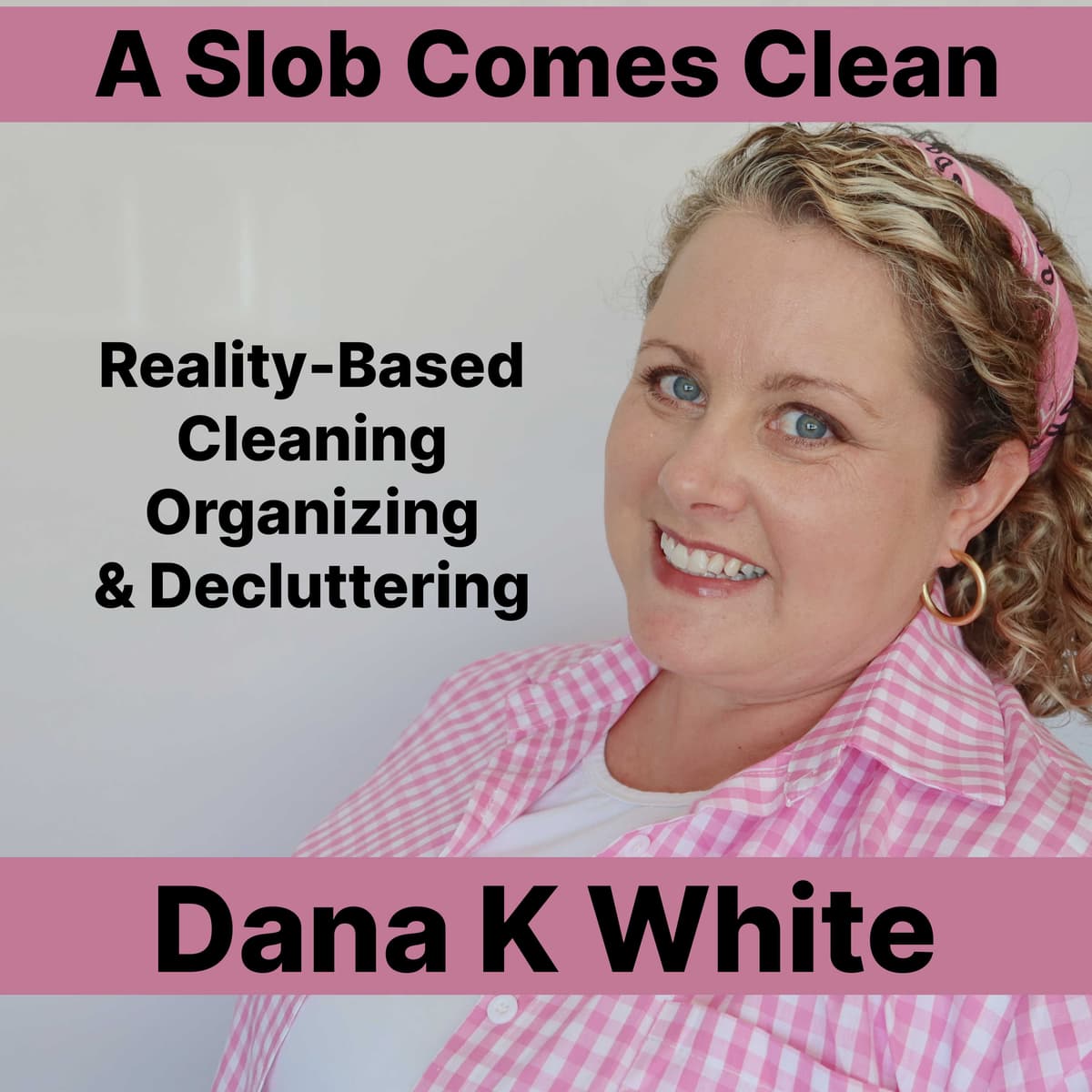

Podcast Summary: Dana K. White's "A Slob Comes Clean" Episode 453
Title: Rhythms, Meals, Guilt, and Other Questions Answered
Host: Dana K. White
Release Date: April 10, 2025
Description: Reality-Based Cleaning, Organizing, and Decluttering
Introduction
In Episode 453 of "A Slob Comes Clean," Dana K. White delves into practical strategies for managing clutter, establishing routines, meal planning, and handling the emotional aspects of decluttering. This episode addresses listener-submitted questions, providing actionable insights to help individuals and families maintain organized and stress-free living spaces.
1. Managing Clutter When 'Take It There Now' Space Is Overwhelmed
Timestamp: [10:05]
Question: "What do you do when the 'take it there now' space is cluttered? For example, attempting to declutter visible space first."
Dana's Response: Dana emphasizes the importance of the "take it there now" strategy—handling one item at a time without creating additional piles or boxes. When the designated space for an item is cluttered, she advises removing an equivalent amount of items, preferably starting with obvious trash or donation items. This approach ensures that while you may not achieve perfection immediately, you're consistently moving forward by creating space and reducing overall clutter.
"By acknowledging and embracing the reality of that space, you're not making it any worse, and your whole house becomes a little bit better." (10:30)
Key Takeaways:
- One Item at a Time: Focus on moving one item without creating secondary clutter.
- Space for Space: Remove items equal in size or importance to make room.
- Consistent Progress: Small, consistent actions lead to overall improvement.
2. Establishing Rhythms and Routines Without a Fixed Schedule
Timestamp: [22:45]
Question: "Advice to work on rhythms, groups of tasks assigned to time of day or room when your life has no routine schedule."
Dana's Response: Dana shares her experience of developing routines by assigning tasks to specific days rather than fixed times. For example, designating "Mondays for laundry" or "Thursdays for dusting and vacuuming." This method provides flexibility, allowing tasks to be completed within a general timeframe without the rigidity of specific hours. She contrasts this with her past approach of scheduling tasks at exact times, which led to inconsistency.
"Instead of having set times, I just know I need to do one every day. When I think of it, I'll do it right then." (23:15)
Key Takeaways:
- Day-Based Scheduling: Assign tasks to specific days rather than fixed times.
- Flexible Routines: Adapt routines to fit unpredictable schedules.
- Focus on Essentials: Prioritize basic tasks like dishes and five-minute pickups.
3. Meal Planning Without a Routine Schedule
Timestamp: [35:20]
Question: "Meal planning suggestions when your life has no routine schedule?"
Dana's Response: Dana advocates for simple meal prep strategies, such as pre-cooking proteins and storing them in the freezer. By cooking extra portions of proteins like ground beef or chicken, and freezing them, meal preparation becomes quicker and less dependent on having ample time. This method allows for flexibility, enabling the preparation of diverse meals without the pressure of cooking from scratch every time.
"When it crosses my mind, I'm home right now. I can do this thing. I'm gonna do it right now." (35:50)
Key Takeaways:
- Pre-Cook Proteins: Prepare and freeze proteins in advance to save time.
- Flexible Meal Options: Use pre-cooked ingredients to create various meals swiftly.
- Adaptable Planning: Allows for spontaneity while ensuring meals are manageable.
4. Managing Decluttering Guilt and Overwhelm in Other Families' Homes
Timestamp: [48:10]
Question: "Managing decluttering guilt and overwhelm for other families' homes."
Dana's Response: Dana acknowledges the emotional difficulty of helping others declutter. She recommends assisting by taking donations and trash when visiting, which reduces the immediate burden. Additionally, she suggests helping catch up on neglected tasks like dishes and laundry, which can create a more manageable environment for further decluttering. Patience and understanding are crucial, as resistance is common.
"If you're able to spend time on these tasks, those are some things to really focus on." (48:35)
Key Takeaways:
- Offer Practical Help: Assist with donations and trash removal during visits.
- Support Essential Tasks: Help with basic chores to create a foundation for decluttering.
- Exercise Patience: Understand and respect the emotional challenges involved.
5. Organizing Flat Surfaces Without Overcrowding
Timestamp: [58:45]
Question: "Trouble finding homes for items on cluttered flat surfaces like a bedroom dresser."
Dana's Response: Dana advises evaluating the functionality of items on flat surfaces. If items impede the use of others (e.g., making it hard to access a lamp switch), it's essential to remove the least important items. She introduces the concept of "clutter threshold," which refers to the amount of clutter one can manage comfortably. Dana emphasizes that clutter thresholds are personal and not based on aesthetics, encouraging individuals to declutter until their space feels functional and under control.
"Your clutter threshold is what you can handle, and it's different for everybody." (59:30)
Key Takeaways:
- Functional Assessment: Ensure items on surfaces do not hinder functionality.
- Personal Clutter Threshold: Recognize and respect your own limit for manageable clutter.
- Selective Removal: Keep items that serve a purpose and remove excess.
6. Storing Wedding Memories Without Cluttering Daily Life
Timestamp: [1:10:15]
Question: "How and where do you store your wedding memories without them cluttering day-to-day life?"
Dana's Response: Dana recommends designating a specific area, such as a photo cabinet, for storing memories. By containing wedding memorabilia within a predefined space, it prevents these items from intruding into daily living areas. She suggests using a wedding memory box within the photo cabinet to organize photos, clippings, and other keepsakes, ensuring that cherished memories are preserved without contributing to clutter.
"When you have a defined space, it helps to sort out what truly needs to stay." (1:10:45)
Key Takeaways:
- Dedicated Storage Area: Use specific cabinets or boxes for memorabilia.
- Organized Keepsakes: Group related items together to maintain order.
- Prevent Daily Clutter: Ensure that memory storage does not interfere with regular living spaces.
Conclusion and Call to Action
In this episode, Dana K. White provides valuable advice for tackling common decluttering challenges, emphasizing flexibility, consistency, and personal thresholds. She encourages listeners to implement her strategies gradually and seek support when needed, whether through her books, website, or professional coaching services.
Notable Quotes:
- "The goal is not just to clear out spaces so I can put all that junk inside something. It's for things to be in the place where I would look for it first." (12:50)
- "Your well-being is worth it." (28:30)
Further Engagement: Dana invites listeners to share their experiences using her decluttering strategies in various aspects of life. She encourages participation through her website survey at aslabcomesclean.com/survey, aiming to incorporate these stories into her upcoming book.
Note: Portions of the episode containing advertisements and promotions for products and services have been omitted to focus on the core content and actionable insights provided by Dana K. White.