← podcasts Archives - Dana K. White: A Slob Comes Clean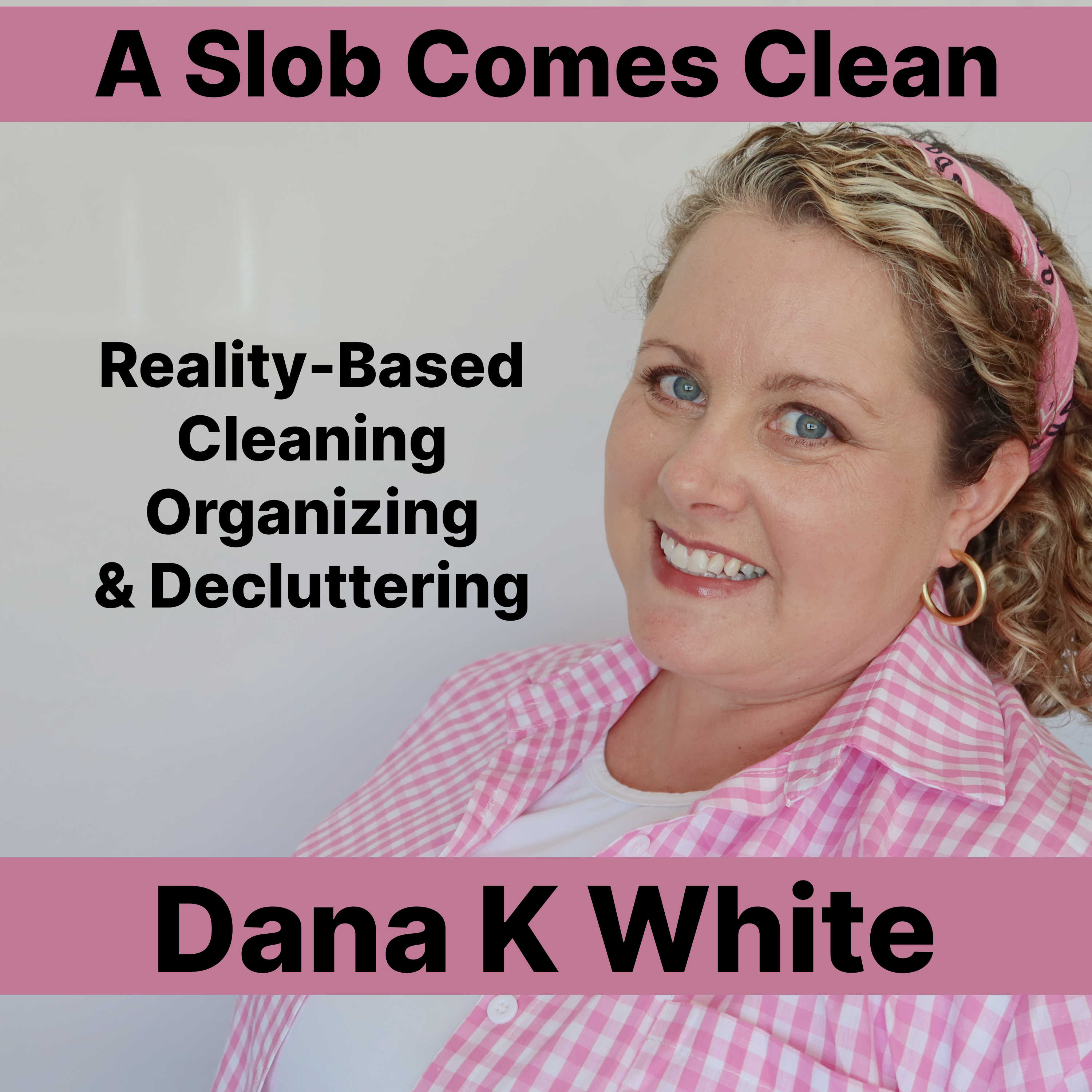
podcasts Archives - Dana K. White: A Slob Comes Clean
489: Decluttering Successfully with Autism and/or ADHD
00:49:35
Loading summary
Transcript115 lines
- [00:00]
Dana K. White
Y', all, the Take youe House Back course is on sale right now.
- [00:04]
If you want to make major changes in your home in the new year.
- [00:07]
Grab this course now. So I teach this course with dawn from the Minimal mom and Cass from Clutterbug.
- [00:13]
We have a lot of fun there.
- [00:14]
But most importantly, people take their houses back even after years of struggling. Tens of thousands of people have gone through this course and absolutely love it. To learn more and grab it while it's on sale, go to aslob comes clean.com take that's aslobcomesclean.com to get it while it's on sale for $94. Welcome to a Slob Comes Clean, the Podcast. I am Dana K. White. I share my personal desobification process as I figure out ways to keep my own home under control. I share the truth about cleaning and organizing strategies that actually work in real life for real people. People who don't love cleaning and organizing. Thanks for joining me today. This is podcast number 489. I am excited to share with you this conversation that I had with Matia from ADHD Flourishing. That is a podcast about autism and adhd and Matia is an expert in those areas and has found success with my no Mess Decluttering process and had reached out and so we talked about it.
- [01:26]
I had some questions for Matia about.
- [01:28]
What worked and why it worked and how it worked and Matia had some questions for me as well. So I think you're going to really enjoy this conversation. Thanks Matia.
- [01:38]
Thanks so much for coming onto the podcast. I've been on your podcast and I'm excited to have you here because I feel like what you share is going to be helpful to our audience here. So tell me a little bit about yourself.
- [01:54]
Matia
Yeah, so I'm autistic and adhd. I am officially diagnosed. A lot of folks in the community are not, but I did go through that process. I'm a composer. That's kind of my main thing in terms of my loves and my degrees and that's not a really high paying career. So I also have a podcast. I'm an Audihd coach and yeah, I just do a variety of. I've done a variety of things over time to kind of make the ends meet while I can get the creative stuff in on the side. And, and yeah, part of what I help people with literally is daily tasks, you know, making life work, making like the daily life stuff that feels like it gets in the way of being a creative of doing what you want to do. And cleanliness in the house is a big part of that. So when I found your stuff pretty recently through a client, I was just like, oh my goodness, this is so on point and just speaks to my brain. It's just the way I need it. Yeah. So that's why I reached out to you.
- [02:46]
Dana K. White
I love it. That makes me really happy to hear. Thank you. Thank you for sharing. Okay, so let's talk about. You know, you've mentioned that you've now read my books like twice each in.
- [02:59]
Matia
Like the last couple weeks.
- [02:59]
Dana K. White
Yeah, I love it so much. Well, but I think, do you read or do you listen? I mean, which they both count as.
- [03:06]
Matia
Reading, but yeah, audiobooks mostly. Okay.
- [03:09]
Dana K. White
Yeah. Because I do feel like that is for me, especially with a topic that's overwhelming to me or that maybe is. Feels like I'm trying to kind of grab it with my brain. It's so helpful to just kind of let it play and get what I can and then keep letting it play and get a little bit more here and there. But let's start with I want to hear what it is that specifically works well of my strategies and then we'll get into your. Some of your questions for me to clarify some things. But I know that you know, we talked on your show. I have not been officially diagnosed other than by people on the Internet.
- [03:53]
Matia
Peer review.
- [03:54]
Dana K. White
Yeah, yeah, peer review. Thank you for. That's the official way to say it as an ADHDer. But specifically, I know so many of my listeners have either been diagnosed or have self diagnosed. Usually when their kids were diagnosed at some point also have autism. They also have family members with autism. And it can feel from the emails that I get from people like an insurmountable problem like this decluttering being a struggle anyway. And then the way of seeing the world differently makes it even a bigger challenge.
- [04:35]
If you've been procrastinating. Still shopping for that certain someone who has everything, consider gifting a masterclass membership. For as low as $10 a month. They can get unlimited access to over 200 classes taught by business leaders, chefs, writers, entertainers and more. They will learn from the best. See y', all, I have a lot of funny people in my family. The standup comedy class by Steve Martin is perfect for our resident family comedian. Aspiring chef can make roasted eggplant with Gordon Ramsay. With masterclass you get thousands of bite sized lessons in 13 different categories that fit into even the busiest of schedules. You can learn wherever you are on your phone, your laptop, or even your tv. Masterclass goes with you and there's no risk. Every new membership comes with a 30 day money back guarantee. Masterclass always has great offers during the holidays, sometimes up to as much as 50% off. Head over to masterclass.com SL for the current offer. That's up to 50% off@masterclass.com slob masterclass.com.
- [05:42]
Slob so tell me, like, what are some of the strategies that work that you have found specifically work really well?
- [05:50]
Matia
Yeah. So part of why your writing just spoke to me really directly is because you explain a lot of things that people don't explain. So like you said, you know, this is apparently common knowledge for people who know how to keep their house clean. But I don't, so I didn't know these things. So there's a lot of stuff like that, like too many to list. It's, you know, it's just about all of it that I was just like, oh, this is like the best way of putting this or like a clearer way of putting it. And one of the ways I describe the Audi HD experience in particular is that most advice doesn't work for us because advice that's meant for, even for ADHDers who seek novelty and, you know, they have their own set of things going on that doesn't work for us because we need more routine and we need to really understand, like, I don't want to move forward until I understand why I'm doing the thing. And then maybe my more like autistic side that needs, you know, structure, routine, et cetera, my ADHD part might just want to throw that out the window. And that's maybe not the best way of, you know, describing exactly what's going on. Like, I have one brain and it's all integrated, but that's kind of how it feels is like two sides of me are pulling. And part of what I've really noticed is that when there's a really, what feels like an insurmountable problem, usually what's happening is it's complex and we're picking up on the reality of that complexity. So other people are able to just kind of smush over and ignore, kind of like treat something like a mushy thing and just move on. And I'm like, no, I have to understand it. Like this picture is not clear to me. So I don't want to move on. And it feels really uncomfortable to do so. And so part of what worked for me to get to some specific things was your descriptions of like dishes, math, laundry math, because again, I would have Been the same, I would have been like, well, I can't do dishes every day, I don't have time. But actually, yeah, staying on top of it, running the dishwasher pretty much every day, like, makes a huge difference. And then there's these downstream effects of, okay, I've gotten some clutter out of the house. I'm keeping it a little bit cleaner. And so now when I see something that's out of place, it feels like a meaningful thing to do. A five minute pickup or even a one minute pickup. Right. Another one that really works for me is your order of decluttering, like taking trash first. Another thing people say about ADHD time, I don't remember who said this, is that ADHD time is just now and not now. So it is whatever is happening right now. And the past and future are just sort of like doo, doo, doo. Like, who knows, you know, I have no control over that. So knowing that I can complete something and just be done, I can just do the trash. And again, it might literally take a minute, you know, in my little office. Right. And it counts. Yeah. And then also that concept of like, better and less, which hilariously is actually almost relates to two concepts I talk about in my work, which is feel better first. And then I'm literally working on a year long program next year called do Less. So I was just kind of laughing at that. I was like, these really touch for me on like, concepts that are very close to my heart and my work.
- [08:41]
Dana K. White
Yeah, that, that power of counting something very small as real and legitimate success is for me very helpful. And I think it's helpful for a lot of people because, like, in that communication gap, so often what happens is the person who does understand the high level. And like you, I like the way you say, just kind of smushes past some, some of the details. I feel like in my own experience doing something small, then that person who doesn't see either the difficulty of the small thing or the power of the small thing, then wants to go back to focusing on the overall big thing that I haven't done yet. Right. So wants to focus on the lack of finishing as opposed to the teeny bit of success. And I need to focus on the teeny bit of success.
- [09:39]
Matia
Yeah. And we really have trouble. We, meaning just like a lot of the neurodivergent community really have trouble celebrating wins, especially small wins, in part because our bodies and nervous systems and neurotypes have not fit into the norm for our entire life. So we may have been trying our absolute Hardest. Doing the absolute best we could do and being told this isn't good enough and getting an F, you know, in school or being sent out into the hall or, you know, there's like all these things that are in relationships. Being told, you know, you're not even trying, you're just laying there. And it's like, yeah, I'm laying here spinning and ruminating and, you know, freaking out and having anxiety. Like, I don't feel good. I'm not resting. This is not rest. But it looks like rest potentially to people outside us who think we're not trying. So I think having that experience and then also having this like completionist urge that can come along with, I think, ADHD in particular, this real desire. And there's another term called monotropism which explains a lot of ADHD and autism. So go, go look that up if you're interested in that.
- [10:36]
Dana K. White
Say it again.
- [10:37]
Matia
Monotropism. M O, N O. Spell that. T, R, O, P, I, S, M. I'm not good at spelling, so that tells you how much I've sat with this word. Yeah. And it's basically just the way that our attention works is more narrow. So it doesn't mean that we actually have fewer interests. But if you think of attention as a spotlight or a flashlight, ours will be really bright and more focused. So whatever we're. And again, it goes with that now and not now. It's like whatever I'm looking at right now, whatever my special interest or my hyper focus is right now, that's all my brain wants to do. And also goes with the term interest based nervous system, which means we only are motivated by what's interesting and everything else is just really hard to get ourselves to do. Which is also why I think for your stuff, having just like little routines that just they work and I understand them and I can do them, that feels more doable, that feels like more of a choice because it's not interesting and it doesn't really give me any dopamine. And, you know, it's not really related to the things I love or want to do with my life. And so it can be easy to get that sort of like existential dread or angst about them. But to be able to say, okay, this is a routine, I understand why I need to do this, I can do this. This is doable, this is possible, which it didn't feel like before. And when I do this, then it's easier to be creative. It's easier to, you know, have my relationships feel relaxed and Easy. It's easier to have people over. You know, there's like all these great downstream effects, but if I'm not ever getting the effects and I feel like I'm only in the cleaning kind of fight all the time and it never ends and I never get any benefit from it, it feels really like something I shouldn't be doing.
- [12:14]
Dana K. White
Well, it's that pre made decision based on the work that I've already done in the past to understand I've put that time in either through reading about it or through the experience of it, or through both of seeing the impact of both doing it and not doing it. So that now I know and even though it's still not fun, I know what to do. I've removed that analysis from every single time, which would, for me at least used to remember, result in me not doing it because I would analyze myself out of it every time.
- [12:53]
Matia
Yeah. Another phrase I wanted to share with folks that I came across recently was it was something like, if you've never experienced executive dysfunction, then you've only experienced procrastination and you think folks with ADHD are just procrastinating, which they're not. If you've only experienced executive dysfunction, you think you're procrastinating because you don't know what that is. Procrastinating is I can do it, but I don't want to. And executive dysfunction is I desperately want to do it and I feel like my body can't do it. Like it feels actually impossible. And executive dysfunction affects so many areas of our lives because it affects decision making, which is like, you know, everything and decluttering and clean. Everything's a decision. Which is another thing I think that works for me with your work is just reducing the total number of decisions. So I'm not hitting decision fatigue as fast as that really helps.
- [13:41]
Dana K. White
Yeah, yeah, that decision fatigue is very, very real. Okay, so let's talk, let's keep talking about the process itself. So you said trash having that very small thing that makes a legitimate impact that we can count on success. Talk more about the process.
- [14:02]
Matia
Yeah. So like I said. And again, it's, you know, maybe it's just two things, right? Like I literally look around, I'm like, okay, there's two little, you know, things I threw tore my trash can and didn't make it right. But those in that helps. Or even, you know, things I'm just not noticing on my desktop that I'm looking at right now, which is messy right now. What's the next step after it's like obvious things, right?
- [14:22]
Dana K. White
Yeah. Trash. And then easy stuff. Stuff that I do already know what to do.
- [14:25]
Matia
Yeah, that's, that's easy. That again, feeds into that. Like, it's routine. I understand this. There's no, there's, I don't want to say there's no executive function in that, but it's a lot less. It's like a lower pole for our brain. Um, so again, that, that the easy stuff means what's easy for me. At least that's how it makes sense to me. It's not what theoretically is easy. And that's like another really common, frustrating thing. And I think a thing a lot of us have shame around is everybody else is like, well, this is easy. And then on the flip side, I have a lot of skills that other people don't have. And there's things I'm really good at, but, you know, they're that other people that would be hard for other people. But I feel like a lot of the basic easy life stuff is hard for me or just takes a lot of effort. It's like, I can do it, but I know I have to make time around it. And the easier I can make it, the more routine ized I can make it, typically the easier it is on my whole body and system. And one thing I think I wrote down at one point was that I feel like dealing with a thing right in the moment. It takes like 10 times less energy than making a pile. I've been noticing because I told you I have got like little shoe boxes. Cause I've got all these stairs, and so I've got like little places where I put stuff. Even just doing that, I've just been paying attention, like, how does this feel? Taking one thing up two flights of stairs feels better than taking the whole box and doing 10 things at once. I've been noticing. So anyway, that's just a little more evidence for Anecdote for your.
- [15:54]
Dana K. White
I love that method. No, I, I. All the things that you're saying, I'm like, yes, this is why it works for me as well. Because even, even the decision of what to do next is to follow the process. It's not okay. Now that I've done this, I've got to figure out what to do next for me, you know, and, and sometimes that can be a struggle for some people because I don't want to be told what to do. But I have to look at it as, this is a gift. And then there's so much freedom within each thing to define it. The way that it actually works and functions for me.
- [16:29]
Matia
Well, yeah, and that's a really important point. This is something I say over and over and over and I, I can't say it enough is, you know, the whole take what works, leave the rest, but also modify, right? If you're like, hey, I feel. And again with the, you know, Audi HD is specifically advice not working for us. A lot of times what happens is we hear advice, we're like, I know that won't work for me, but it makes me think of something else that might work for me. I'm going to try this. And another really common thing for us, it's probably just the whole, you know, neurochemicals in the brain, et cetera. But I've noticed that pretty consistently a lot of us, we can make a system, make a rule, et cetera, and it will work for about three to six weeks. If it's really amazing, it might work for longer than that. But what I like about your stuff is that it's not that kind of system. It's not a, like, it's kind of, it's kind of the difference between, as you've talked about, like organizing tools or boxes or what, like, I'm going to buy this organization system and it's going to fix my life. That's what I mean by that kind of thing that just my brain will throw out the window. It's like, well, I don't feel like using the system anymore. But a really simple set of just kind of flexible rules that I can apply in any given moment feels different than that to me, if that makes sense. I don't know why. I don't have a reason for that. It just works.
- [17:40]
Dana K. White
Well, I think it's, you know, I sense this a lot when I'm getting, when I do my Q&As, you know, somebody who hasn't really tried it yet and is still reacting as if it is a bossy system as a, you know, and thinking, well, but that can't work for this and that can't work for this and that can't work for this. You know, it can't work for sentimental stuff. And I'm like, let's take whatever it is and let's take this process and let's like lay it down and work it in to that unique situation. Like, let's take this sentimental thing that is different for you, that is legitimately something that's valuable to you, that might not be valuable to your sister or someone else. So we take it and we take this and working the system doesn't change. Like, the process doesn't change, but the application of it looks completely different for different people.
- [18:38]
Matia
Yeah, it does. And I think people feel, even if I don't know, I think our bodies hate shame so much that we're really good at hiding it and not noticing it and calling it something else. But I think we have shame around. This doesn't work for me, and I need to do something else because we weren't given the accommodations we needed. We weren't told how to work with our brains that we have. And the way I think about brains and bodies is a lot like how you say your house is the size that it is. Like, this is the brain I have. This is it. You know, have I been affected by trauma? Absolutely. Has it probably changed my neurochemistry? Yes. Are there things I can do to heal? Yes. And support myself. And whatever I'm working with right now is whatever I'm working with right now. And fighting it just wastes so much energy, generates more shame, makes us feel worse, puts us in that downward spiral. And I think when we're in that, it feels so bad that then it's like, okay, well, what's the point of taking care of my body or taking care of my house or making good food for myself? Like, why would I. Why would I bother to do these things if I feel so terrible anyway? And then on the other side, what I see with, like, an upward spiral is, oh, okay, yeah, putting, you know, like, Today I did 20 minutes on my exercise bike. Like, I didn't push myself that hard, but I was a little bit nervous coming up to this interview, and I was just like, you know what? I'm just going to get some of this energy out of my body. I feel, like, so much better. I feel so much better. My partner brought me lunch. I ate an actual lunch instead of just eating Mandarins. Like, I was like, yay. I, you know, got, you know, so doing these little things, they. On a given day, the way I think of it is they might only move. You know, on a scale of 1 to 10, they might only move us half a point or a quarter of a point, but 10 of those things moves us quite a bit and feels a lot better. And I think that's also how the clutter process is feeling for me is like, the more I do this, especially in the most visible areas, the more I'm like, hey, I kind of am on top of stuff. Again, that feeling of possibility, like, this is possible. I can do this. I personally can do this. That's not a feeling that I always have with practical daily life stuff, so it's really meaningful.
- [20:40]
Dana K. White
No, I appreciate that. So let's talk about that visibility rule. Did you resist that at all? I know that is one of the things people resist.
- [20:48]
Matia
Yeah, I absolutely did. So, funnily enough. So this is my office. As you can see, it's just a little box, basically, in my house, it's a small room, and then the downstairs is the living room and kitchen. That's, like, what you walk into. And my partner does most of the cooking, does a lot of the dishes as well, so, like, does a lot of the kitchen stuff. And it's not that it's all their responsibility, but it's really easy for me to just kind of be like, oh, well, I'll just, like, wait and, like, let them do the kitchen stuff. And then the living room's usually not that messy. Like, it's. We keep it kind of tidy. So it is. It's not 100% clean, but it's, like, 80% clean. So it's, like, fine. And at the same time, there are things around that I will see and they will annoy me. So that's that clutter threshold thing is it's like, okay, this is not how I want it, and I'm struggling to keep it under control. But, yeah, I really did resist that because I was like, well, to me, having my office and the bedroom be clean is what makes me feel really good. But we do have people. Like, we've got friends staying here right now. Like, we have. And we have friends staying here next week. Like, and family coming into town. Like, there's so many reasons to do the visibility thing. And, yeah, my brain absolutely has been resisting it. And I'm like, I'll just try it. And when I do it, it feels really good. So that's the sign for me. It's just like, how does this feel? How does it make me feel? And how does it kind of fit into my other, like, systems and matrices that I'm juggling, I guess.
- [22:11]
Dana K. White
So you tried.
- [22:13]
Matia
Did I liked it? Yeah.
- [22:15]
Dana K. White
Okay.
- [22:16]
Matia
But I still. My brain is still like, yeah, but. Right.
- [22:19]
Dana K. White
Oh, no, I get it. I. Same thing. And I. I often tell myself the biggest value for me of the visibility rule is that I don't have to decide where to start every time, because that is. That's the hardest. I get so naturally overwhelmed easily that I default back into the spinning back to, I could do this, and I could do this, and I could do this because I need to do this and I need to do that and instead it's like if nothing else, there's so many other values to it. But if nothing else, it's just that decision being gone and I'm just gonna.
- [22:59]
Start there My weekly schedule fills up fast at this time of year, so having a plan for our meals and food shopping is essential. With Hungryroot, my meals are planned for the week, my grocery shopping is done and it's delivered to my door. That makes it easy to get healthy meals on the table that we love and that fit in our budget. After taking a quick quiz, Hungryroot's smart Cart technology recommends groceries and recipes tailored to my family's tastes and needs. I love that I can remove ingredients, ingredients we don't like, and then it remembers the next time that we don't like those ingredients. We can have everything we need for meals, snacks, smoothies and even supplements. At this busy time of year, I find there's even less time and available brain power for meal planning or grocery shopping. Hungry Root helps save time, energy and money, which is great for my gift giving budget. Our first Christmas party for the year was on December 1st, so I love having delicious, healthy, simple meals from Hungry Root to stay on track on the nights when we're home, take advantage of this exclusive offer for a limited time get 40% off your first box plus get a free item in every box for life. Go to hungryroot.com slob and use code slob that's hungryroot.com slob code slob to get 40% off your first box and a free item of your choice for life. Every year I tell myself I will shop early and choose personal gifts for everyone on my list. Then last minute I find myself panicking on those last few gifts. This year, avoid the panic and give an Aura Frame. Aura's digital frames are one of my favorite gifts I have ever given. I can download unlimited photos and videos to my mom's frame straight from my phone. You can even preload photos of this year's highlights before your loved one's frame ships. And the app for uploading photos to an aura frame is so easy to use and every frame comes packaged in a gift box so the wrapping is done for you. All set and ready. My parents are thrilled with the Aura frame that I get gave my mom. I send photos directly to it that just show up on their frames. I took the cutest photo of my daughter with my mom at Thanksgiving and when I sent it to her Frame this morning I felt giddy thinking how.
- [25:11]
Happy they will be when they see.
- [25:13]
It appear on their frame. For a limited time. Save on the perfect gift by visiting auraframes.com to get 35 off Aura's best selling Carver mat frames named number one by Wirecutter by using promo code clean at checkout. That's a U R A frames.com promo code clean. This deal is exclusive to listeners and frames sell out fast, so order yours now to get it in time for the holidays. Support the show by mentioning us at checkout. Terms and conditions apply.
- [25:45]
Capital One Bank Guy
With no fees or minimums on checking accounts. It's no wonder the Capital One bank guy is so passionate about banking. With Capital One, if he were here, he wouldn't just tell you about no fees or minimums. He'd also talk about how most Capital One cafes are open seven days a week to assist with your banking needs.
- [26:02]
Matia
Yep.
- [26:03]
Capital One Bank Guy
Even on weekends it's pretty much all he talks about in a good way. What's in your wallet? Terms apply. See capitalone.com bank capital1NA member FDIC.
- [26:19]
Matia
And this brings me probably to a good like question or kind of digging in point because, okay, so for example, in between the living room and kitchen, there's a little. It's a small, you know, row house in Philly. There's a little thing against the wall, a little set of shelves that just has like catch all nonsense in it. And it's mostly not my stuff, just saying, it's mostly stuff my partners put there. And we've been kind of going through spaces in that living room kitchen area, getting rid of stuff. Like I told you before, we took like a whole carload of stuff to the thrift store, which is awesome. So we've gotten a lot of stuff out. And partly as I'm looking at things like that, I'm like, to me for my completionist urge, I would love for that to be the very next thing. And they've already said like they don't want to do that yet, which is fine. And I can't do it myself. So part of what I'm working with in my own brain is like, okay, just because I'm starting here doesn't mean I have to get literally every single thing here 100% perfect. Right. The floor is pretty picked up. We've moved some stuff out. There's more space, it looks better, that's good enough. And then I can again, if I have that energy, focus it in my own spaces or other spaces in the house.
- [27:28]
Dana K. White
Right. And I think that when you say that, one of, one of the things that I had to decide is a strategy is to skip things that would otherwise stop me in my tracks. Like, yes, the ideal is to start at the visible space and to move from there to the next thing, to the next thing, to the next thing until the whole house is done. The reality of having someone else who lives in your home and has their own stuff means it is okay to skip something. I also, if it is something that makes me want to give up or makes me think I'm going to be stuck here looking at this item or this category of items for the next two hours because I just, I know all the strategies and I still can't do it. It is a strategy to skip it and move to the next thing because that progress is more valuable than that hard decision. And then doing that as you've experienced, skipping that area that you have done what you can do and yet you can't do anything else. And it's not time, it's not something you can do on your own, then skipping that you're seeing, oh, well, the house is still getting better and then that, that improves that. The other thing I would say there too is, yes, skip it. See that as a strategy, but also look and see if there's anything of yours, which I'm assuming you've done. But I know for me, in my experience with my husband's things, his stuff, like he might have a pile that gets on my nerves. And then I think I'm just going to see if there's anything of mine in this pile or anything that I do have jurisdiction over in this pile. And I always, always find something.
- [29:23]
Matia
Always. Yes, yeah, yeah, very true. Yeah. And it's funny too, because I found I've had a couple things like that where I'm like, oh, this little, you know, it's almost like a doom box, like little box where I'm like, oh, none of this is mine. And then I look and I've got two things in there that I've been looking for. Yeah, that makes sense. That's why I haven't found them.
- [29:40]
Dana K. White
Yeah, yeah.
- [29:42]
And I think that the calling it a strategy gives me permission and also helps me frame it as this is helping me make progress to keep moving. And then also, like you mentioned before, when things are primarily clear, then the things in front of you that are out of place become more obvious or easier to. It's like the overall situation has been clarified and now they're only looking at this pile which over time Their brain may adjust as well to what's in there, and they'll be ready to tackle it in a different way than they might have been when it was that pile and a bunch of other things that that pile didn't necessarily stick out.
- [30:35]
Matia
Yeah. I also really love the. This relates what we were just talking about, like, the brain exploding rule. This is going to make my brain explode. I'm moving on. I'm not doing this yet. And that's so meaningful for me because my brain is so good at finding a loophole, finding complexity, getting intensity out of an object. You know, like, I can get really. I can get really in my head about, like. No, but I really do have the. The time and. Or, you know, and for me, another piece maybe to bring in is I grew up poor, and that changes the way that you see objects. I feel like. And, you know, the val. It's like, I might. I really might need this. And now that I am no longer in poverty, I'm like, oh, I was waiting to use this because I needed to spend some money in order to, like, fix this up or actually use it. And now I'm realizing, oh, I don't want to spend that money.
- [31:23]
Dana K. White
Very interesting.
- [31:24]
Matia
And so that was kind of another almost like. Like, you. I hear people talk about, like, time scarcity and then obviously, like, money. And it's been really interesting to have more time and more money and be like, oh, this. I actually don't want to do this hobby anymore. Like you said, like, am I actually doing this hobby, or am I just gathering objects? Because I've kept some things because I was like, well, these are expensive, nice things, and I might want them someday. And now I'm realizing, like, honestly, I. I'm not gonna buy the extra accessories to use this. I'm not gonna fix this up or I'm just not gonna do this activity in the next five years. And in five years, I can buy another one.
- [31:59]
Dana K. White
I think that's absolutely. That's very interesting to think of that. Your values, what you place value on, what you do want to spend money on is often different when you have a little bit more money than you thought it would be when you didn't have that many.
- [32:16]
Matia
Yeah. Because I've, you know, spent chunks of my life assuming, okay, when I get to this next milestone of whatever, you know, degree, money, house, whatever. Like, when I get to this milestone, this is what I'm going to want. This is who I'm going to be. This is how I'll spend my time. And then I get there and I'm a different person because it's been time and I'm changing. Yeah.
- [32:34]
Dana K. White
Interesting.
- [32:35]
Matia
I love it. I love it.
- [32:36]
Dana K. White
So how do the two decluttering questions work for you?
- [32:41]
Matia
I love. So, okay, the. The one. And I know you've. I started listening to your. More of your YouTube, like, videos since we last talked. The one, like, take it there right away. One little sticking point that I've noticed is I do have that urge to like, then clean that space and like start that thing as a new thing. That's that ADHD brain. Right. It's just like, oh, I'm here. This is right in front of me. I know what, this is also easy. This is also trash. You know what I mean? And I've really liked that sort of. I think of it as like a little rubber band pulling me back to the first spot. It's like, yes, I can grab something to bring with me. Yes, I can throw trash away on my way back. But like, ultimately the point is for me to get back to where I was. And especially if it's like a five minute pickup, I can do a five minute pickup that chains into five minutes in 20 different little spots because I'm just bouncing around and that doesn't feel good to me, even though I am kind of following my urges. So anyway, that's just a little thing I've noticed. But I know you've talked about the point is not to go and then fix the new space. It's just, does this fit here or not? Right.
- [33:44]
Dana K. White
And that really it's an opportunity to take what you know from the container concept and apply it in this one very specific moment. Meaning I am putting something in here. Yes. It could be that this space needs to be decluttered as well, which was my story. Every space you need to be decluttered. But if I'm thinking space being the most important defining factor for everything as opposed to the stuff, then I think if I'm putting something in that's going to take up space, what can I remove that frees up that amount of space that then can go in trash or the donation box? Because that's back where I was originally decluttering.
- [34:31]
Matia
Yeah, yeah. And so that's also. That's maybe another kind of, hey, autistic brains specific thing to say is like, if that means I need to just go drop this thing off and now that space is over full or I left it in front of where it's going to go because it just doesn't fit and I I know that it's going to be brain exploding to try to make it fit. I'll just leave it, you know, and go back to the original space. So that's like. But again, that's just my brain's particular way of, like, making that rule fit for me.
- [34:58]
Dana K. White
Yes, yeah, yeah, because.
- [35:01]
Because you're making forward progress. You are. And you're coming back to that space where you originally decluttering and you're. Whatever works, right?
- [35:10]
Like, whatever works.
- [35:12]
Matia
Yeah. The second one is. We talked about this a little bit. When you're on my podcast with, like, the, you know, object permanence issues, potentially, a lot of times I just don't know. I have stuff, right? So I may not know that I have it, but I often do have a sense of, if I thought I might have this, where would I be looking? And what's been really interesting with that is that some of my go to looking places, it's in part because I just. They're like a dumping ground. And so there is an element where, okay, I'm putting this here for now because this literally is where I would look for it. But when this space is full, okay, if this drawer is full and the drawer next to it is literally completely empty, I might actually need to make some choices about how I'm organizing. And that comes down to the organizing, which I know is different, but that's been really interesting to notice too, that my brain wants to solve every problem the moment it comes across it. And so that's the hardest thing I think of just continuing moving and keeping momentum, keeping that inertia going, like in motion inertia. Because my brain wants to be like, ooh, I'm here now. Now I will solve all of these problems. And that is impossible and going to make me feel terrible. So.
- [36:22]
Dana K. White
And that's where that trash being the easiest of the easy stuff, because if this drawer is full, then there is trash there. There just always is. So saying, okay, is there any piece of trash that I can remove so that now this thing does fit in there? And as far as the going to the dumping ground, like, okay, for now, what I try to tell myself is, okay, if my house was under control and this coffee table was not covered in stuff, or this, you know, whatever you were saying, like, a ledge isn't covered in a pile. If that was. If that pile was not there and the ledge was the way that I want it, where would I look for it first? And that helps me. I'm not sure if that would help with that. But it's that reminding myself that putting something in a place where, yes, I've always looked for it there first, but I also don't want that thing to be covered in a pile. So I remove that from the equation.
- [37:29]
Matia
Yeah, that's very helpful. And yeah, I mean it's, it's just so easy for my brain to get into a ruminative like I want to figure this out right now. It's again, that attentional. It's like, okay, my attention is focused here and now I want to solve this problem. And so it's actually really helpful for me to, I mean, almost to have anything that keeps me on track and just be like, nope, that is not what I'm doing right now. I almost, I sometimes am talking to myself almost like I'm a toddler with the like demand avoidance and everything is just like, okay, that's great. But this is not what we're doing right now. We're actually doing this other thing. And one thing I've noticed in the, when I was saying like, you know, dropping something off in the other place is that I've been getting these and I follow my intuition very heavily. I trust it very heavily. So if I see something that I've been assuming, I'm going to keep when I'm in that space and I've just been like, oh no, I'm keeping that. That thing is fine. And then I get there and I'm like, I'm just going to stick that in the bin. I don't actually want that. I have a kind of a silly example which is I have one pair of black jeans. They were hand me downs from someone who I don't like as a person and I've worn them and that's the thing, but every time I wear them, I feel a little weird. So I was like, well, I'll just wait until I get a new pair of black jeans. But the other day I was like, you know what? Again, it was just that I was in my closet and I was just like, these don't feel good. So I'm just going to donate them and then I'll just keep my eye out for, you know, a good pair of black jeans on sale or whatever. And then that'll be fun when I get those.
- [38:53]
Dana K. White
Yes, yeah, well, and, and that, that focusing on less as my goal means that everything that leaves my house, even if it's, if it's in a purposeful moment of decluttering or it's in a moment like what you just experienced of. I don't like the feeling I have when I put these jeans on. So therefore I'm going to let them go. That I believe for many people shifts the relationship with Steph. Right. Like this idea that, that I have to hold on. It's like, oh, there's actually a lot of emotional value that happens when I let it go.
- [39:32]
Matia
Yeah. And it does feel really good. Like there was something really meaningful in that little moment of just like, you know what I mean? First of all, I can buy a pair of jeans. It's not a big deal. Like I can do that. And I don't know.
- [39:44]
Dana K. White
There's.
- [39:44]
Matia
Okay. This is another example. We have a CSA community supported agriculture share that we have for most of the year and a lot of the year we'll have. We'll get a, a tub of yogurt every week. So it's really good, like full fat, you know, really good yogurt with cream on top. Amazing. And I get tired of eating yogurt eventually. So then like the next season we just don't get the yogurt. And then when we get it again, it's exciting again. So that's again that like novelty seeking. Like my brain wants something that's different and interesting. And actually one other little thing that this might be helpful to especially ADHDers. So I've got like a little space with, you know, candles and cute little things on it in my office and I have a little box that has everything else that goes in that space, but I swap it out and it feels like I'm shopping for my own stuff. So I don't want a huge amount of things like that. But I have a couple little things like that where I'm like, this is the stuff that goes in this like decorative area. But I don't want all my decorations out at once because it's too cluttered looking. So I keep the rest of them in a small box. And it really is literally just a shoe box. So it's not a lot of stuff. But it feels so good to me to roughly in the seasonal change kind of pull out the new little seasonal items. I know what's in there. If I think about it really hard, I can probably remember what I have, but out of sight, out of mind. So it feels like shopping, but it's not. It's my stuff. And that's also how like getting my clothes out in the seasonal changes feels because I just forget.
- [41:05]
Dana K. White
Yeah. But I think too what, what I'm hearing there when you're saying that is the shoebox or shoebox size container is a container. And so that is the thing that I know I need, and many of us need, is to have a limit on that because otherwise I can get into the, oh, I switch things out. So, oh, this would be something. I don't need it now, but I could switch it out at some point. I don't need it now. And then if there's not a limit on that, then that becomes the thing that's out of control or my whole space is out of control and you know exactly where to look for those things. So that becomes, you know, an issue of, okay, I'm getting a little bit tired of this. Oh, I know exactly where to go and switch those things out.
- [41:52]
Matia
Yeah.
- [41:57]
Capital One Ad Narrator
New products to launch, new people to develop, new goals to crush. Workday Go is designed for small and mid sized businesses. By bringing HR and finance together on one AI platform, you'll have everything you need to think big, go big and grow big. And activation is fast. It takes just 30 to 60 business days to get you up and running. Simplify your SMB on an AI platform, you'll never outgrow Workday Go. This holiday season, Capital One reminds you to give yourself the gift of 1.5% cash back with the Capital One Quicksilver Card. Can I earn 1.5% cash back on birds?
- [42:37]
Matia
Birds?
- [42:38]
Capital One Ad Narrator
What if you sent your true love to Turtledove plus a partridge in a pear tree? Sure, but why would anyone want that? The song was very convincing. Earn 1.5% cash back on all your holiday purchases with the Capital One Quicksilver card.
- [42:52]
Dana K. White
What's in your wallet?
- [42:54]
Matia
Terms apply. See capital1.com for details. I have a question. I probably know how you're going to answer already. So I have a bunch of siblings and sometimes they give me stuff like we all do this. We'll kind of be at each other's house and we'll be like, oh, that's cool. And they'll be like, you can have it but don't get rid of it. Give it back to me if you don't want it. Great face.
- [43:18]
Dana K. White
You can tell from my face.
- [43:21]
Matia
So I'll have things like this. And sometimes they're decorative items, which is what made me think of it is I was like, oh yeah, that Christmas thing that my sister gave me. And it's just funny how I will sometimes want to get. And I'm like, they're not going to visit me for nine months, right? Like this could be indefinitely. Anyway, I've been thinking about because I, I think I heard a Q A thing you posted where it was like, thing with like, the lamp maybe from Italy or something, like a fancy lamp, and the son maybe wanted the lamp, and they were like, well, do you. Does he want to go and pay for it to get shipped, like, right now while he's visiting? And I was like, oh, yeah. Like, if I ask my siblings if they want to pay for shipping to ship it back to them anyway, there's not a huge amount of items like this. But I was just realizing, like, oh, if this ever happens again, I'm probably just gonna say no. Like, I don't want it if I have to.
- [44:08]
Dana K. White
Right there.
- [44:08]
Matia
Go through this whole process and think through it and do all this later like, it's not worth it.
- [44:12]
Dana K. White
Yes, well. And that is the value of going through the process because you made a commitment at some point when you said, oh, okay, sure. And then now you're living in the reality of that. Of, this is annoying. I don't want to do this. Who wants to actually ship this and, you know, go pack it or whatever? But it does. It changes the going forward where as long as I would just ignore those things or think, oh, this is so maddening. I can't think about that right now and move on to other things. Meanwhile they're sitting there in a pile. Then I didn't have that reaction when the same situation happened in the future because I hadn't dealt with that. But going through that pain of sending the awkward text and saying, I don't want this in my house anymore. Do you want it enough to send me the money and I'll ship it to you? Or not going through that awkward thing is the thing that then the next time I feel that in my body, you know, when. When we have that same conversation and I have this moment of remembering having this conversation before and how it all played out, it helps so much in the future. So, yeah, I mean, the. The real. The going forward answer is to not take the item, but that's not realistic. If you're living with the item and you're, you know, going back in time is not a strategy. So, you know, dealing with the thing right now in order to, you know, knowing that it's going to change how you react in the future in a similar situation is helpful.
- [45:47]
Matia
Yeah. And I think that's probably been one of the most impactful things, as I've been reading and taking in more of your work is just this. Oh, right. And also just having grace and love for my past self that didn't know these things. Right. One interesting thing I heard recently is that we can feel shame for not knowing things. That's like, a particular thing that can come with cptsd, but I think it can also just happen with ADHD or anything where you've been shamed for not knowing something that other people know or not remembering something that everybody around you seems to know. And I think sometimes I look back at my past self and I'm like, how didn't you know this? Because it was. It's so obvious now that I've heard it, but I just didn't know it. And I made a lot of choices from that place.
- [46:32]
Dana K. White
Yes.
- [46:33]
I often say that I'm so thankful that I did this the way that I did it and that I was writing as I was learning, because so much of what I figured out was so obvious once I figured it out that I don't think I would have taught it to anyone except that I was writing about it, not teaching, but just writing what I was learning. And other people were saying that's what I needed to know, too. So then I. I'm emboldened by that understanding of how many of us are out there that just didn't naturally know this. You said ctps, complex ptsd.
- [47:13]
Matia
Yeah. From, like, repeated things in childhood as opposed to, like, a single big T trauma event.
- [47:19]
Dana K. White
Okay. Okay.
- [47:20]
Matia
I know what that was. Okay.
- [47:22]
Dana K. White
Is there anything else that you want to talk about?
- [47:25]
Matia
Or.
- [47:26]
Dana K. White
How about the container concept? Has that been. Does that.
- [47:30]
Matia
Is that.
- [47:30]
Dana K. White
Do you find that helpful?
- [47:32]
Matia
Yeah. So I was already kind of using that in the sense of, like, okay, this is how many hangers I have, or this is what fits in my closet. I'm not trying to like or like shoving. I don't like shoving books in either. Piling books on top. Like, I already kind of had that sense. But what I really appreciated about your. The clarity of your definition is that additional piece about. So it doesn't matter what the stuff is like, it's not about the stuff. It's about the container and that. Yes. I can choose to. You know, for example, we've got tall ceilings downstairs. We could have huge bookshelves. We don't. We've got a small bookshelf. Like, I could get a gigantic bookshelf. I could put shelves up along the ceiling. I have not chosen to do that. So there's places where I could create more storage space, but I haven't done that, and I don't particularly want to at the moment. Like, that doesn't feel like the Best solution to me, I would just rather have the books that fit on the bookshelf. And that just kind of makes sense to me. And yeah, that. That taking the attention away from. Is this. Does this individual object have value and worth or not help and is it right or wrong? Yeah, exactly.
- [48:36]
Dana K. White
So with the container concept, then you're able to identify which ones are favorites over others.
- [48:44]
Matia
Exactly. Yeah. And especially that whole. Because I did kind of reorder how I'm putting things in my closet, and I got some new hangers. I actually got a whole set of new hangers that I'll match. So I was just like, this is it. These are the hanging items or these hangers. And when I went through and put in my favorites, there were quite a few things that I was like, this fits me. It looks fine. I like the way it looks, but it's not my favorite. And honestly, I never wear it. And that becomes much more obvious when you're doing laundry on a regular basis. Because I will just wear my face, especially, you know, like, the autistic. Like, I want to wear the things that are the most comfortable. Yes. And that meet the need for the moment, you know, that meet the need and are comfortable. And if anything's, like, just a tiny bit less comfortable, I'm just not going to wear it because I've got 15 comfortable shirts, and if I'm doing laundry every week, they're clean.
- [49:34]
Dana K. White
So is laundry day something you've started doing?
- [49:37]
Matia
So I haven't been doing just one laundry. I did one to, like, get through it, which was, I think, six loads of laundry for all the. Everything in the house, basically. And now I've just kind of been. When my laundry bin thing fills up, then I just go do it, because that's usually one or two loads, depending on how much is in there or if I want to wash, like, a favorite thing, which is what I was noticing is I was like, ooh, my favorite thing is dirty. I'm gonna go wash it and wear it again. And so that's another thing, too. Like, this is, you know, tiny thing, but I just bought a couple pairs of socks that I really like because they're kind of expensive, and I don't usually. I was like, I don't need those socks. I have other socks, but these are my favorite. And if I'm doing laundry all the time or, like, on a regular basis, then they'll be clean and I.
- [50:21]
Dana K. White
And I'll get my money's worth out of them.
- [50:23]
Matia
Yep, exactly.
- [50:24]
Dana K. White
Yeah. Is there anything else you Wanted to talk about anything else you wanted to ask or share.
- [50:30]
Matia
One thing that I was thinking about in thinking about this episode is I've heard it said in a number of ways that basically neurotypical, whatever that means in like actual real life. But, you know, whatever. Neurotypical advice or sort of standard social advice does not tend to work for neurodivergent people. But neurodivergent advice is often helpful for everybody. So I'm personally really looking forward to, I mean, a just like more neurodivergent creators putting stuff out there, helping folks, because it's not just helping our own community or people of our neurotype. It can help everyone. And I'm, I'm just really looking forward to a world where accommodations and access needs are just part of the conversation instead of like a super special thing that a super tiny minority of people need.
- [51:16]
Dana K. White
Yeah, I, I still find it amazing. And it was something that I really resisted for a long time, that people who are significantly more naturally organized than I am learn from me. It used to just not make any sense. But I, I. What you're saying is that. Right, like that is that I'm, I'm not making something up. I'm literally just looking at it differently and breaking it down to explain it differently. And so the same principles work for anybody. I talk a lot about, like, accepting how my brain works was key to changing.
- [51:57]
Matia
Yeah.
- [51:58]
Dana K. White
But a lot of times people get stuck on. But if I accept the way my brain works, then that means accepting the situation and the circumstances. And I'm trying to say accepting. I never liked the circumstance. Okay. I blamed myself. I thought I had to change my brain. When I accepted how my brain worked then I was able to do the things I'd wanted to do all along. Like, that was actually the thing that allowed me to make the changes because I was going with how my brain works where as long as I was trying to deny that my brain works differently or just ignore that or not pay attention or not realize that that was when I was fighting the hopeless battle that I couldn't. And so it's like there's this phase of. And you're the expert in this, not me, but like, it feels like that phase of acceptance of like, how important it is to accept how your brain works and to know that ultimately that brings the hope as opposed to fighting how your brain works, which is not going to bring the hope.
- [53:20]
Matia
Yeah. And part of that hope is it really does get better knowing yourself better understanding why you're feeling anxious in A social setting, you know, even if it's just the lights are too bright, you know, like, it's not even necessarily that every single element of what actual autism in real life might be outside of the dsm, like, our actual lived experience might not apply, you know, to even someone who identifies as autistic. We're all different. We all have a spiky profile, meaning, you know, strengths and weaknesses. And as everyone does, ours just might be spikier, you know, really big gifts and really, really tough things for us. And being real with myself about what I can and cannot handle on any given day. Also an impossible thing before, because it was like, well, my needs aren't meetable. I have so many needs and my needs are so extreme. Okay, yeah, my needs are more extreme than a lot of people's and more particular and they're harder to meet, but it doesn't mean it's impossible. And meeting, you know, going back to that, like, better, meeting 80% of my sensory needs makes my life a thousand times better. It's not just diagnosis and then downhill, it's like figuring yourself out, loving yourself, being kind to yourself, maybe making some changes, maybe support, getting some supports that you need. But it is possible to feel a lot better than you feel right now.
- [54:42]
Dana K. White
Thank you so much for being willing to come on. I think we've had a great conversation. I think that. I think everything we've talked about, like you said, will be valuable for everybody. And also I hope that those who are listening who have either been diagnosed or have thought, I wonder, you know, or have family members who they are seeking to work successfully with and live successfully with, I think that. That everybody will find this very helpful. So I appreciate that. Tell us again where to find you online.
- [55:19]
Matia
ADHD flourishing.com same name as the podcast. And yeah, that's. That's the best place. Oh, and ADHD flourishing dot com, Hello. Will also give you a good starter resource for folks.
- [55:30]
Dana K. White
Okay. And it's a U, D, H, D. Yes.
- [55:33]
Matia
Yeah, Flourishing, Which I'm not going to attempt to spell.
- [55:37]
Dana K. White
Yeah, I think. I think spell check will help you with that one, so.
- [55:39]
Matia
Great.
- [55:40]
Dana K. White
All right, well, this has been really fun.