← Political Thinking with Nick Robinson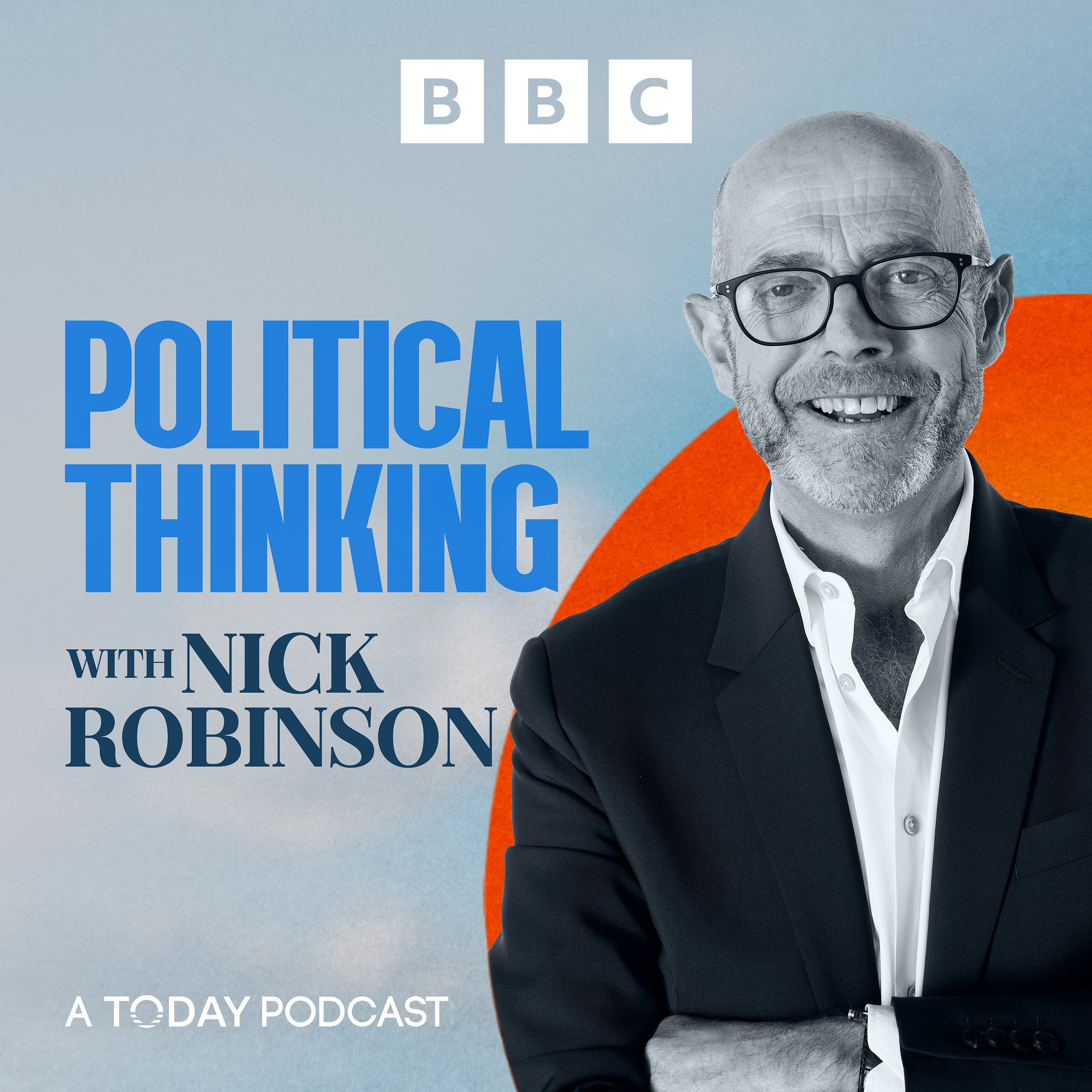
Political Thinking with Nick Robinson
David Lammy: The old world order isn't coming back
00:50:39
What happened when Vance, Rayner and Lammy went drinking in Rome?
Loading summary
Transcript122 lines
- [00:00]
BBC Podcast Announcer
This BBC podcast is supported by ads outside the uk. This message comes from Schwab at Schwab. How you invest is your choice, not theirs. That's why when it comes to managing your wealth, Schwab gives you more choices. You can invest and trade on your own. Plus get advice and more comprehensive wealth solutions to help meet your unique needs. With award winning service, low costs and transparent advice, you can manage your wealth your way at Schwab. Visit schwab.com to learn more.
- [00:34]
RK Zero Proof Advertiser
Spring is calling weddings, patio sessions, barbecues and you want that drink vibe without sacrificing tomorrow. That's RK zero proof. As the world's first zero proof spirits brand, RK created the warm molecule giving you the smooth kick of whiskey or tequila with zero alcohol, zero calories, zero sugar and all the peace of mind you need to enjoy every moment. Step in to the zero proof season at rk0proof.com
- [01:07]
David Lammy
the old order isn't coming back. The tectonic plates have shifted. There is profound change.
- [01:12]
Nick Robinson
No one around the Cabinet table knows America quite as well as my guest on Political Thinking this week, David Lammy, the Deputy Prime Minister. The former Foreign Secretary who studied in the United States, is a friend of Barack Obama and has forged a close relationship with Vice President J.D. vance. Over the next 30, 40 minutes or so, we discuss the nature of that relationship, whether the world order has ruptured and whether you can form a friendship with someone who believes that you're the problem. The you and your politics are the reason that there is, in the words of a recent US national security strategy, a risk of civilisational erasure in Europe. We talk about that, we talk about his upbringing and we talk about the big domestic policy battle he's engaged in now, the battle over the future of the jury trials, which some predict could be the next big Keir Starmer U turn. Not least because the leading opponent of the changes that David Lammy wants to make is threatening to quit his seat and force a by election. David Lammy, Deputy Prime Minister, welcome back to political thinking.
- [02:35]
David Lammy
Thank you. Great to be back.
- [02:37]
Nick Robinson
At the end of this incredibly turbulent week, people will want to step back and sort of ask a question. What just happened? Have we just seen a desperately uncomfortable public row in the NATO family or have we seen a long term rupture of the transatlantic relationship?
- [02:59]
David Lammy
I don't think we've seen a rupture, but we are amidst changed. Why is it changing? It is changing, I think for two subset regions. The central reason is that the United States is no longer the sole superpower, China, sits alongside them. And as a consequence of that, the Indo Pacific is the other half of the US Brain. And that has consequences for the transatlantic, and it has consequences for Europe. It means that over this next century, US Europe will be playing a much bigger role, leading within NATO, I suspect. And of course, there are going to be bumps along the way in relation to that. And it also means that the United States is having to negotiate and navigate this new world in which it is not the sole superpower. And different administrations will have different perceptions of that. But actually, if you think back in time in the 1980s, when Thatcher fell out with Ronald Reagan over the invasion of Grenada, in which he didn't even let us know, that was a period where Reagan was jutting forward with sort of a new capitalism, laissez faire. America was in its stride in the 1970s when Britain wasn't in a fantastic place and America was in Vietnam. And Wilson said, no, thank you. I'm not getting involved. There were differences. And actually, in the 1940s, there were big tensions between Churchill and Roosevelt, not just about getting into the Second World War, but about Britain stepping out of its imperialism and its huge empire and our attitude to the eastern flank. So all of these moments where the world is changing, there are tensions.
- [05:08]
Nick Robinson
Tensions, yes. But you say not a rupture, which is interesting because I'm sure you've watched or read the speech by someone who was governor of the bank of England not that long ago. Mark Carney, now Prime Minister of Canada, very good speech. And he called it a rupture, not a transition. He said, the old order is not coming back. Are you saying you think he's wrong?
- [05:31]
David Lammy
No, no, I think he's right about that. The old order isn't coming back.
- [05:35]
Nick Robinson
But why not rupture?
- [05:36]
David Lammy
I would not say it's rupture. Cause I don't think it says, I'm not fatalistic about it. I don't think change necessarily means that you should be fatal. So I don't think I would use the word rupture. But he's absolutely right. The tectonic plates have shifted. There is profound change. And one of those changes is that countries like the United States and others can use in this new environment, coercion instead of the courts to settle disputes, but the truth of their allies.
- [06:11]
Nick Robinson
I mean, I think that's why Mark Carney, who has to sit there as the President of the United States, says Canada should be in the United States, has to sit there looking at tweets that show the Stars and Stripes, not just over Greenland, but over Canada, says, look, this isn't, to use your language when you were in the US Just a few days ago, a partnership built on common values and mutual respect. Where are the common values? Where's the respect, they ask.
- [06:40]
David Lammy
Well, I think it's still a special relationship. And it's a special relationship. And I say this as obviously as having been Foreign Secretary and now Deputy Prime Minister. It's a special relationship because of. Of our nuclear capability and our relationship with the United States as a result of that, our intelligence capability. Five eyes best in the world. And we share a lot of intelligence with each other. And because of our military cooperation, there are American troops based here and vice versa in the United States. But what I would say is that let's remember what's actually happened. Donald Trump stepped back from any suggestion of force, and he stepped back from the use of tariffs. Why? Because his close friend, the United Kingdom and European partners, expressed their displeasure, and he has stepped back.
- [07:34]
Nick Robinson
You think about victory, then.
- [07:36]
David Lammy
Well, I don't want to make it that binary, but the point is, yes, it's noisy. And look, having been in politics 26 years now, Nick, it is a damn sight more noisier than it used to be. It really is. But in the end, step back and see what's really gone on. And what's really gone on is actually our great ally, the United States, despite the noise, has responded to our concerns, and we're now back where we wanted to be, which is a negotiation, effectively.
- [08:07]
Nick Robinson
We're recording this interview on Thursday morning, the morning after the night before, when some people said it was a case of taco. Trump always chickens out. He backed down. And you seem to be saying, yeah, that's what you think happened.
- [08:23]
David Lammy
He's still determined to change the context in the Arctic and for the US to play a bigger role in relation to Greenland. Clearly, I was up in the Arctic last year with our Norwegian friends. I was right up very close to the North Pole and Svalbard, London. Looking at the changing context, the ice caps melting and therefore many more possibilities in the Arctic. Looking at Russian activity, which has increased in the Arctic and the threats to us as the UK we are an important Arctic player and partner, and it's that that will have to change over this next period. And the US Are being pretty robust about their views on that.
- [09:03]
Nick Robinson
Bloody chicken.
- [09:04]
David Lammy
Now, he stepped back from any suggestion of force, which was always gonna be. I said years ago, that was never, ever gonna happen. And tariffs as a means of coercion clearly he stepped back from.
- [09:19]
Nick Robinson
So not so much tacko as he put the weapons back in the locker.
- [09:23]
David Lammy
He uses rhetoric with great aplomb, but sometimes it's the direction of travel, not the actual words he's using. That's what I've learned about Trump.
- [09:35]
Nick Robinson
And did you as a government, did Keir Starmer as Prime Minister, decide it was time to sort of modify the approach? Because we saw Keir Starmer in Prime Minister's questions before the President pulled back from tariffs, made clear he wasn't considering military action. Talk about the fact that he wouldn't tolerate a breach of Greenland's sovereignty or of Denmark's sovereignty. And there were people, you'll know who said about time. You know, we saw, for example, Gavin Newsom is the favourite to become the Democrat candidate at the next presidential election. Current Governor of California saying, I should have bought a bunch of knee pads for world leaders. It's pathetic. Get off your knees and fight.
- [10:25]
David Lammy
Look, Gavin Newsom is, I suspect, hoping to become U.S. president. And he's. I can see from his posts that he's in the business of opposition to Trump. We're in the business, business of protecting UK interests, tariffs, a disaster for cost of living in the uk and certainly a tariff war that involves Europe, very bad for our economy. So that bottom line was very clear.
- [10:56]
Nick Robinson
But did it require, forgive me, did it require a conversation at Cabinet, perhaps with you and the Prime Minister saying, look, there are times to kind of hide, frankly, just hope you don't catch the bully's eye. And there are other times when you have to stand tall, look big and say, up with this. I will not put.
- [11:14]
David Lammy
Well, always with allies, you're generally using diplomatic language. That's what you're in the business of. If you're PM or Foreign Secretary, you're being as careful with your language as possible. But the principles and values have to be ironclad. And so if there are disagreements, the disagreements are crystal clear. And our position on international law in this context and in relation to Greenland and NATO was absolutely crystal clear. And as I say, as a consequence of that, we've seen a change of position from the us.
- [11:51]
Nick Robinson
You're in a new job as Deputy Prime Minister. You were the Foreign Secretary. You sound still like the Foreign Secretary, choosing your words carefully. You must be from time to time tempted to call the man a tyrant, to call him a woman hating, neo Nazi sympathising sociopath. You're not a bit tempted just to say what you really think.
- [12:12]
David Lammy
You know, Nick, that I obviously in terms of the responsibilities I have supporting the Prime Minister as deputy, having been immersed now in foreign policy for many years, in the end, I want to make things better for the people of this country. That's the number one deal.
- [12:35]
Nick Robinson
Let's be clear. You know, I know I'm teasing you because those were your words about Donald Trump, a tyrant and a woman hating neo Nazi sympathizing sociopath. That was a while back. I take your point. You know, you're in the business of getting things done. You're in the business of protecting Britain's interest. But let me pursue the rupture thought then a little bit. The Board of Peace that Donald Trump has just unveiled. I mean, if Orwell had written the story of a board of peace on which the one country that has invaded its neighbour Russia was invited to sit there with its ally Belarus, and we would have said this is preposterous, it's implausible, it has just happened. Are we going to have anything to do with that border peace?
- [13:19]
David Lammy
Well, at Davos today there's a signing ceremony and we are not signing at this stage. And we are uncomfortable with Putin. We're uncomfortable with Putin being close to anything attached to peace because that is not what we're seeing in Europe. And last week I was in Ukraine, it was minus 20. I visited a bombed out block of tower block in which 30 people had lost their lives. I was discussing with just ordinary folk in Ukraine the business of being without electricity for 17 hours a day. This is serious stuff. And that's Putin that's doing that. And so I don't recognize a context in which Putin is a man of peace really.
- [14:13]
Nick Robinson
So as we speak, and we're recording this just minutes after the Board of Peace was unveiled at Davos, as we speak, the Starmer government will not join the Board of Peace.
- [14:26]
David Lammy
That's the determination. I think there's other detail in relation to Board of Peace, but I think we've been pretty clear that we do not see Putin being on the board. I don't think the Russians have signed. They've been invited. Being on the Board of Peace as legitimate.
- [14:41]
Nick Robinson
One last thought before we, we move on. It must be desperately hard for you. You're a passionate man. You're a man of strong words. Often, it's often said in many ways you're a man who at home in the pulpit declaring your faith political and religious, to sit there and bite your lip when a president accuses your government of an act of great stupidity. Stupidity and weakness attacks the mayor, a Friend of yours, Sadiq Khan, in the capital city of being a bad man, of a city being like a war zone, saying, everything's going wrong in our country. I mean, are there. Do you just have to shout at the wall when you're at home? Does your poor wife and children have to hear what you really think about Donald Trump?
- [15:29]
David Lammy
I coined this phrase, which I think has served us well, of progressive realism. I'm a progressive politician. I actually think there are big aspects of the United Kingdom in its modern guise that's progressive, whoever's in government, in terms of values. But I'm also a realist. And that means you've got to meet the world as it is, not as you would wish it to be. I'm not in fairyland. And therefore, yeah, I don't recognize these caricatures of London that I hear from some parts of the Republican Party, by the way. I also recognize that Russian bots are pushing a narrative about London deliberately. They're trying to encourage investors to not invest in our city. They want to depress our economy. That's what's going on. That's the world we live in. We gotta articulate that. We've gotta push back against that and the social media consequences in which we live the world. The echo chambers is a big theme of politics, not just in the uk, but around much of the world at the moment.
- [16:35]
Nick Robinson
You're not living in fairyland, you say. I wonder, though, if the young David Lammy looked at you, Deputy Prime Minister standing for the Prime Minister at PMQs, would that all those years ago, the boy from Tottenham, the boy with a very tough upbringing, would that have felt like fairyland? Would that have felt like a moment you thought, wow, I can't believe that's ever gonna happen.
- [17:01]
David Lammy
Nick the boy from Tottenham Growing up in Tottenham, the biggest thing I remember, my sort of dreams often were about ending up in prison, because it was a big theme for black youth in the 1970s. I've said this before, but it was very parochial. I barely left the N17 postcode in London, let alone imagining being Deputy Prime Minister. Get real. I mean, what have you smoked? Would have been the answer. So we are light years away from where I grew up and how I've got here.
- [17:47]
Nick Robinson
When we first talked on political thinking, I remember it was very moving, you telling this story of getting the train because you got a choral scholarship, didn't you, to school in Peterborough and looking out the window and just seeing a world you sort of really didn't know existed.
- [18:02]
David Lammy
Yeah, because I'd Never. I didn't realize that I could just have gone up the road to Enfield to hit the suburbs, let alone getting on a train and going to Peterborough. It was just a different world. But, you know, after we won the election and I got the call to go into number 10, I put a photo of my parents in my pocket of the day they got married because they're not alive and I knew they wouldn't see this. And I walked up number 10. I walked in. Sue Gray was still the Prime Minister's Chief of Staff. Sue Gray grew up yards away from me at the bottom of the road. I grew up in, in Tottenham. We both knew how far we had travelled to this huge moment and it was incredibly emotional. And then at the end of that day, I went and visited my godmother in Stepney in her little place because I wanted to keep my feet firmly on the ground. So I think keeping in your back pocket where it all began is hugely important to ground your views.
- [19:21]
Nick Robinson
It wasn't your greatest day doing that. PM QS people said you lost your temper a bit. I just wonder, did you feel, as you describe very powerfully, that photograph being in your pocket, that when people mocked you, you'd bought a new suit? Was there a bit that wanted to shout to them and say, this was a huge moment for me and without being too grand about it, probably for other people of your color. There you were at the dispatch box and people are sneering about you because you bought a new suit.
- [19:54]
David Lammy
I've had to develop a very thick hind to be in this business these days. I'm off social media because it's not good for your mental health. I'm on it, but, you know, others do it on my behalf. I've learned not to read the newspapers and get too caught up in the day to day. So that's how I approach the job, making serious decisions and just not getting too caught up in the weeds of the noise at the moment. There's a lot of noise and most of it's hokey, really. It really is.
- [20:26]
Nick Robinson
We're gonna come to the serious decisions in a while because you've got this rather big decision facing on jury trials and the argument about that. We'll come to that in a second. But I want to carry on with your story because America is another part of that, isn't there? Tottenham, Peterborough, going to a decent university, but then going to Harvard Law School in the United States. So when I said in the introduction, America is a country that you probably have more knowledge of than almost anybody around the cabinet table, perhaps anybody. That's because it's part of you and your story.
- [21:02]
David Lammy
So I've been to the United States more times than I've been to France. My family and a lot of Britain's African Caribbean families are deeply transatlantic. What do I mean by that? I've got a lot of cousins, of course, in the uk, a lot of cousins, of course, back in the Caribbean, in Guyana, Barbados, Antigua, St Lucia, but actually just as many in Canada and in different cities in North America. And so I used to do this trip which would take the Piccadilly line all the way down to Heathrow, get on a plane, travel to New York, and then get the 1 and 9 train across to Harlem or Queens and visit relatives. I ended up, of course, at Harvard. I ended up working in the States. My dad left our family when I was 12 and went to Texas. Goes to start again in the United States. And so for lots of reasons, when Keir started, he actually specifically said this when he said to me, look, David, I want you to take on the foreign brief. This is when we were in opposition. His hunch was that America would be important. He could see an election coming up in the United States, help the Labour Party navigate its relationship with the United States.
- [22:32]
Pacific Source Health Plan Narrator
Jack Harndale was helping his daughter Emily lift an awkward dresser up a staircase when he slipped and fell backwards. A week later, Emily asked him how he was doing.
- [22:40]
David Lammy
I'm good.
- [22:42]
Pacific Source Health Plan Narrator
Truth was, he wasn't good. Jack needed help. Then the darndest thing happened. Emily called Pacific Source.
- [22:50]
Nick Robinson
My health plan.
- [22:50]
Pacific Source Health Plan Narrator
Jack learned that Pacific Source provides members with support beyond healthcare. In Jack's case, we got him in touch with the local food bank.
- [22:58]
RK Zero Proof Advertiser (Alternate)
You guys do that?
- [22:59]
Pacific Source Health Plan Narrator
Yes, we do, Jack. Pacific Source Health Plan.
- [23:05]
RK Zero Proof Advertiser (Alternate)
Spring is packed. Patios, parties, wedding weekends. And RK0 proof keeps you in the mix without the morning after regret. As the original Zero Proof Spirits brand, RK's warm molecule gives you that real deal burn of whiskey or tequila with none of the alcohol, zero calories, zero sugar, and a whole lot of freedom to enjoy the moment. Sip smarter. This season at RK 0 Proof Calm.
- [23:35]
Nick Robinson
And one part of that was that you were a friend with Barack Obama before he was Barack Obama in the sense of anybody knowing who he was. You've described him, I think, as your greatest political friend.
- [23:47]
David Lammy
Remember those days?
- [23:48]
Nick Robinson
Well, you anticipate my question. That moment that Obama represented, that sense of, maybe you never believed this, but a sense that many people had, which is okay. America has dealt with the racial divide of the past because they've elected a black man to be president. And now they hear a US President saying that civil rights protections mean that white people have been very badly treated. It's as if we're going in reverse.
- [24:21]
David Lammy
I'd say two things. There are two big engines in the world. The kind of black and brown engine of the Global south makes most of the things we rely on. Clothes, footballs, lots of technology and kit. And in many of the countries of the global south, when there's grief in those countries, there are coups, there's extremism, that there are consequences, and then there's the big engine of the West. Countries like the uk, Europe, the United States. And basically the people in those countries, the working people in those countries, have been pretty frustrated, angry, fed up with politics since 2008 now.
- [25:08]
Nick Robinson
So it's not about race you think
- [25:11]
David Lammy
raises Barack Obama was this moment in the wake of that, this moment of hope. But it had echoes in truth, back to the Clinton era, back to Tony Blair. We are fundamentally in a different period now. What do I mean by that? Political parties, even if you win elections, you don't get a honeymoon anymore. You might get a honeymoon for 25 minutes on day one, but that's about it. Because mostly with terms of cost of living, with 2008, with the pandemic, with Ukraine, populations are choppy. Politics is volatile. It's a completely different era turning up, a different politics, different ways for parties like mine to govern, and certainly differences on the right of politics, but specifically
- [25:58]
Nick Robinson
on race, does it make you anxious? I have a conversation with my kids. My kids are a bit older than yours, right? Their 20s and 30s. And I sometimes say to them, look at the transformation. A black man is deputy prime minister. An Asian man was recently prime minister. The leader of the opposition is from originally Nigeria. We have a Muslim home Secretary. This is a transformation from the world I grew up in. And I don't think they'd mind me saying they go, come on, dad, look at what's happening. It's getting worse, not better. Is that your view at the moment, that the world is getting worse in terms of respect for ethnic minorities, integration, racial harmony?
- [26:46]
David Lammy
I think there are big aspects of race that's contested. I think that there's a populism, particularly on the right of politics, that makes minorities across the Western world in different ways fearful, for sure, and genuinely fearful. But I also think that there's a truth, for example, about a country like ours. The largest growing ethnic minority group are people like my kids, people who are from mixed heritage, biracial, basically black, brown and white people are falling in love and having babies. So you've got the paradox of what's actually going on. And then you've also got the rhetoric. All of that's happening at the same time now because of social media and the noise. Of course, you can focus on the negative stuff which does your head in, but you've got to somehow hold onto the positive stuff that's going on right around us. And it's why sometimes in Westminster, it can appear so detached from people's everyday lives. It's an irony and a paradox.
- [28:00]
Nick Robinson
It's interesting, you talking about the fact you're married to a white woman, because it's also true that another American politician you've got close to calls you a friend. Is the vice president, J.D. vance, married to an American Indian woman. Is there some connection? Because people are puzzled by this relationship. Here you are, man of the lair, friend of Obama's. They look at you going fishing recently, having dinner, he calls you the friend. They look at this guy who some people think is more right wing than Donald Trump and think, how does that work? Is that family relationship part of it?
- [28:36]
David Lammy
That is so barking mad when people put that question to me, you do not get nick from where I came from in Tottenham and the background I grew up with to be sitting here as Deputy Prime Minister, if you cannot forge friendships, relationships of depth with people vastly different to you. That journey began the moment I got on that inner city train to Peterborough. See, let's get real. And the truth is about this.
- [29:07]
Nick Robinson
But it begs your question, doesn't it, which is, is it a friendship or is it a working relationship that you have to forge?
- [29:14]
David Lammy
I'm not one of those sort of flimsy politicians. In my party, it would be on the extreme left that caricatures the right, that doesn't understand that there can be value, there can be common ground in people's politics. So let me just break down J.D. vance. He's extremely intellectually curious. And actually, in my experience in politics, there are a lot of politicians of all political persuasions who aren't intellectually curious. He's a very bright guy. He went to Yale, I went to Harvard. We both were interested in ideas. We've both written books on similar ground from different perspectives. He is religious, he has a faith like I do. He's Catholic, I'm Anglo Catholic. And so, of course, we've been able to forge common ground and our kids broadly look the same. So there's stuff on which we can camp and then we can have a good old row. And we do have good old rows as well.
- [30:14]
Nick Robinson
The other day though, I heard a fascinating story about you bonding over your background. You're at the Pope's funeral, is this right? You, J.D. vance and Angela Rayner. And it suggested there's a bit of a drinking session that goes on in the, in the margins. I'm not suggesting during the funeral itself, by the way, where you're discussing the fact you've all come from pretty tough backgrounds is.
- [30:39]
David Lammy
So what I need to be honest about is I went to this meeting slightly anxious. I knew J.D. vance. Angela Rayner, dear friend, was meeting J.D. vance for the first time, if you like. In terms of my temperament. It was a sort of. In this context, it was a bit of a sort of second generation immigrant temperament. I want it to go well. I want it to be perfect. I'm not about to cause any diplomatic moments. Angela Rayner's temperament, she's just who she is, you know. So the flowing. I'm barely drinking is the truth. And you know, most people who know me well know I don't really drink that much. JD's knocking back a few, Angela's knocking back a few. And actually what becomes clear to me, we're all from very working class, improbable backgrounds in terms of where we're sitting today. JD gets on famously with Angela Rayner. He has been dealing. It's like he's thrown back to his middle American. Think of, he'll be elegy, think of his mum, think of his granny. Think of, think of he was at home and I had nothing to worry about. It was a great session. Yeah.
- [31:58]
Nick Robinson
Was this one of those. And I hesitate to say this cause it would only make sense to people of a certain age, really. Is this one of Those Monty Python 4 Yorkshireman moments? I grew up in a paper bag. I had to lick the road clean.
- [32:13]
David Lammy
It was just a certain ease and it was an ease with these very working class politicians. Different perspectives, but kind of having a familiarity. I can't really put words to it
- [32:27]
Nick Robinson
here, and forgive me, because you've been very open about the relationship and the importance of formula. But here's the problem, isn't it? There'll be some people listening to this who say, hold on. J.D. vance is the guy who has warned of, in the famous words of that national security strategy, civilizational erasure. This is a man who's talked about the threat from within in Europe and in a way means you. I don't mean you personally, David Lamick, but he means the forces of liberal progressivism. He believes you guys are presiding over civilization or Asia. When you say you have Rouse, Jeff Rouse about that.
- [33:03]
David Lammy
Yeah. He is married, obviously to a woman of Indian origin. But let's be clear. There is a nativist politics that has entered the arena for the mainstream right. We see it in the Conservative Party in the uk, we certainly see it in reform. We see it in the Republican Party. We see it in parts of the MAGA tradition. I'm opposed to it. I don't like the nativism. I think it's a cul de sac. I think it bears grievance. I disagree with it and I'm really clear about that and I've been at the forefront of that for many, many years. Of course, my role today is a role of diplomacy. So I'm not in the weeds of US domestic policy and neither should I be. And I don't thank US politicians.
- [33:54]
Nick Robinson
He is in the weeds of UK domestic policy because he goes to the Munich Security Conference, he issues that documents and he says, we're backing patriotic parties. Now. What does he mean? He means the AfD in Germany. He means the National Front, as it used to be the National Rally in France and here he means reform uk. He means I want Lammy out.
- [34:13]
David Lammy
I think that Labour in office has been a very patriotic party. I think we saw the PM over Greenland, over the Arctic, over NATO being extremely. Over defence spending being a very patriotic party. We aren't shy of the flag and I'm not shy of the British flag. I recognise there are some on the left of the Labour tradition and beyond that are shy of being proud to be British. I've had. I've. I'm proud to be English. I've had rows about my Englishness. So we are a deeply patriotic party and we can have differences of opinion with our political opponents about what the ingredients of that patriotism. Patriotism is. Is it patriotism or is it nativism?
- [35:02]
Nick Robinson
Now, because of the threat of these so called patriotic parties, because of the rise of Nigel Farage and Reform uk, people in your party are getting a bit itchy, aren't they? They're getting a bit nervy about Keir Starmer, whose leadership you praised a couple of times in this interview, whose campaign you helped run to become leader. And just before we sat down for this interview, we heard that a Labour backbencher, Andrew Gwynne, has resigned his seat in Manchester. Gordon, you don't need to be a genius to work out who might possibly Want to run in that by election. If Andy Burnham's listening, what do you say to him?
- [35:40]
David Lammy
Oh, look, I'm not going to give Andy advice. Andy has been a dear friend for many, many years. We actually spoke last week about a political matter in relation to the Hillsborough Law, which, as you know, has been really important to him and the people of Manchester and Liverpool particularly. So I'm not going to give him any advice in relation to that.
- [36:03]
Nick Robinson
Would the Labor Party be stronger for him back in Parliament?
- [36:06]
David Lammy
What I would say is this, and I do feel this very strongly. All of us are in the business of labor politics and all of us have got to be seen to be getting on with serving working people and parties that air their dirty linen in public, that fight and bitch and moan usually are a huge turnoff to the electorate. We are in the midterms. That's what effectively the elections in May represent. The midterms are always challenging for incumbent governments. In the end, we will be judged at the four, four and a half, five year point, which is some way off. And we'll have to demonstrate to the British people an improvement of that. Please let us not rock the boat and blow it, which Labour governments have done throughout their history. That was why Labour was only in power in the 20th century for 22 years. Let's not make that mistake again. That's what I'd say.
- [37:08]
Nick Robinson
That sounds like a message to Andy Burnham. Stick to the day job. You're a very good mayor of Greater Manchester.
- [37:15]
David Lammy
Look, I don't know if Andy really wants to get back into Westminster politics. He may do, and there's much merit to him. But I would caution those often around folk that start to destabilize the ship and say that we can have a new leader. No, we can't, because immediately you'd be forced to have an election premature, probably. And Kiyr is. I see the work rate of the Prime Minister we've got. I see the seriousness of what the Prime Minister has got to do and the way he approaches it. And I chaired his campaign for a reason. It's because I believe in him.
- [37:57]
Nick Robinson
Now, talking of rocking the boat, there are a few people who are rocking the boat about your other job. Not Deputy Prime Minister, but Justice Secretary. And this is because you've unveiled a big package of reforms to try and speed up the criminal justice system. The most controversial bit of which is saying that some people who have a jury trial now will not get a jury trial in future. They will be tried by a single judge alone. And there's One thing, you know what they ask? What happened to the old David Lammy? David Lammy used to say, and I quote, jury trials are a fundamental part of our democratic settlement. Criminal trials without juries are a bad idea.
- [38:42]
David Lammy
So there's a sort of headline on this. Lamy or Labour are scrapping juries. We're not scrapping juries. What we are totally focused on is this rising backlog, waiting lists for trials coming on. There are women tonight, sadly, who might be raped in Britain who could be waiting 3, 4 years for their trial. And what that means is victims are falling out. So this is a threshold decision. It's a decision about whether a shoplifter should get a whole trial in a jury, whether someone who's just been in possession of a Class C drug should get a whole trial in the jury, or whether it should really be for those more serious crimes. I recognise all crime is serious for the victim.
- [39:26]
Nick Robinson
Just to spell out what you mean by a threshold decision. You mean, in other words, that, look, even now, some people do, some people don't. What you're doing is altering that a bit.
- [39:35]
David Lammy
So Sometimes in the UK, we have an American perception of our justice system. 90% of crimes are dealt with by magistrates sitting in the magistrates Court, nowhere near a jury. Then you get 10% that go to the crown court. 7% of those trials fall away because someone pleads guilty. They don't go to the jury, effectively. And then you've got 3% who get a full jury trial. We're changing the threshold, raising it to three years. So for crimes that where you might get a sentence of up to three years in prisons, that's things like shoplifting, possession of a plastic drug will be dealt with by a single judge. And that is to speed up the system for victims of crime. And in the end, I say to people, the criminal justice system cannot just be there for defendants, please. It's got to be there for the victims of crime. And you cannot wait years and years for just justice delayed is justice denied.
- [40:34]
Nick Robinson
And they say to you, the critics don't know. Look, there are all sorts of other ways you could do it. Open more courts, have more judges. All of that is more money.
- [40:41]
David Lammy
We are spending more money on courts than we'll do. Courts will sit for more sitting days. Brian Levison, who looked into this, has made a lot of recommendations which will come forward with shortly on how we make our courts more efficient, all of that happening. But he's really clear and I'm really clear. There is no silver bullet. We've Got to do all of it. And by the way, if you, if you've been asked to be on a jury, you want to be on a jury for the most serious crimes. You want your time spent appropriately. And it's for governments to decide overall, on the balance, where should the threshold be for what is serious and gets a jury and what can be dealt with quicker by a single judge. And that's the decision we're making.
- [41:23]
Nick Robinson
Here's. I'm gonna pick out one worry rather than do the whole argument, okay? One worry that people have, and in particular your leading opponent on the back benches, a Labour MP called Carl Turner. They worry about the bias of judges, establishment figures, often older white men. That's what they worry about. And he told you his story, didn't he? He told a story about how when he was an antiques dealer, he was arrested, falsely accused of handling stolen goods. It was eventually thrown out this case, but he feared that if he couldn't appeal to 12 good men and true in the old cliche phrase, that he might go down and that would be it for his reputation, for his livelihood, for the rest of his life. He says you cried at his story. I mean, were you moved by his story?
- [42:19]
David Lammy
I was moved by his story. I think his case today would still get a jury, if I'm not wrong, on the proposals that we're planning.
- [42:31]
Nick Robinson
But he says he's gonna resign his seat and have a by election in order to stop you going ahead.
- [42:35]
David Lammy
The point is this. Look, Carl has got a principal objection. He was a barrister. He's got this personal story. It's always sad when you see friends go through the lobbies and he went through the lobby with Robert Jenrick and, you know, he's being, being friendly to Robert Jenrick and that, that, that, that frustrates and depresses me. But on the substance, what?
- [42:58]
Nick Robinson
Cause they're allies in this battle.
- [42:59]
David Lammy
Yeah. But on the substance, this is a deeply conservative position and that can unite sometimes the left and the right. 1, 2. 90% of cases are dealt with by magistrates. Under Margaret Thatcher, criminal damage was moved into the magistrates court. Driving dangerously was moved into the magistrates court. Where was the who and cry that you should have a jury crime for those crimes? So I come back to the fact that this, in the end, is about threshold. And by the way, following my review into the criminal justice system, which I was asked to do by David Cameron, the training our judges are getting on bias better than ever before. The figures are going in the right direction in terms of the backgrounds of our Judges, both the ethnic background and the social class background of our judges are going in the right direction because we now have the Judicial Appointments Commission with lay members on it, leading the judges in a different direction in relation to these issues. And the other thing is transparency. In the end, sunlight is the best disinfectant. Now, the single judge will have to give their opinions. The jury doesn't give their opinion. You don't know why they've reached the decision they've reached.
- [44:07]
Nick Robinson
You could reassure people if you did what Brian Levison recommended, which is have two magistrates alongside the judge. Judge. But you're saying judge only. Are you open to that sort of conversation?
- [44:17]
David Lammy
Let's have the conversation. But I'm pretty clear that, what. In the end, I want the backlog coming down. Single judge will be more efficient at this level. We still have the Magistrates Court, which under my proposals will do more. But.
- [44:31]
Nick Robinson
Yeah, but you're listening because Carl Turner, I mean, you've obviously fallen out because he wrote what could only be described as a rather patronizing text on social media yesterday. My message to Dave. Don't know if you like being called Dave.
- [44:45]
David Lammy
I do like being called Dave, actually. So my friends call me Dave. That's fine.
- [44:48]
Nick Robinson
Is he a friend?
- [44:49]
David Lammy
He is a friend.
- [44:49]
Nick Robinson
All right.
- [44:50]
David Lammy
My message, because I don't fall out with people, Nick, you know that I don't actually.
- [44:54]
Nick Robinson
My message to Dave is this. He says his offer to the Parliamentary Labour Party, the plp, that it'll include a review clause. The idea being that you're letting it be known that you're willing to have a trial period for this will not wash. He says the answer, Dave, is no, no, no. And he says he's going to have a by election. Now, if the whips go to see the Prime Minister and say, right, we're going to have a by election, we're going to lose to reform and we might lose a vote in the House of Commons and we'll probably be bogged down in the House of Lords. Can you really be confident that Keir Starmer won't make another U turn?
- [45:29]
David Lammy
Oh, look, I. I hope that Karl won't force a by election on this issue. I think that that would be. I think the vast majority of people recognize that if you've been raped, if you've been murdered, let's have a jury. That's what the system is. And they certainly want. We don't want to go into the next election with the waiting list getting worse and in the end, if we do nothing, if we just put Money in if we deal with a bit of the efficiencies. I'm afraid I cannot sit here as Secretary of State and no Secretary of State can sit here and tell you that it won't get worse and that in the end will be the test in 2029.
- [46:11]
Nick Robinson
A last question on politics. I mentioned U turns. Let's not get into the argument that, you know, it's a pejorative phrase and all governments reconsider. The difficulty you face is you can never get hold of the narrative as a party and as a government, isn't it? I've just recorded an interview with a playwright, James Graham, which we'll hear in a week or two's time, who's frustrated. He's willing you on. He wants you to have a story to tell. He thinks he can't detect the story. For those who are critics of Keir Starmer, they often say, look, we agree with quite a lot of things he's done, but we just don't think he's capable of telling the country a story. Can that change?
- [46:54]
David Lammy
Look, what I saw as Foreign Secretary was a PM who told a fabulous story. I'm thinking of the moment where Zelenskyy and Trump are sitting in the White House, the whole world looking on in horror at that initial meeting. And then the next day, Zelenskyy walks up, number 10, gets a warm embrace from Kier, and the whole world breathes a sigh of relief. They said that we couldn't get closer to Europe. We did. They said we couldn't sign the trade deals with India, new arrangements with the eu. We did. And then in terms of Delivery in just 18 months on waiting lists on neighborhood policing. So there's so much that we've achieved. But yes, the truth is, like a lot of progressive parties in the midterms in office, with social media, with the finances, with the media landscape that we have, of course, the communication of what we're doing and of course the deepening of our storytelling has to get better and has to improve, particularly as we head into 2028-2029. And I'm sure the Prime Minister would say the same thing.
- [48:09]
Nick Robinson
And I just want to end with, with you and how you deal with this new world. You've said you don't really read the papers if you can avoid it. You don't pay too much attention to social media. Have you ever listened to Dead ringers on Radio 4?
- [48:24]
David Lammy
I don't listen to Dead Ringers, but I do get friends text me from time to time. So tell Me what they do do
- [48:30]
Nick Robinson
this sketch about doing a Lammy, there's a kind of voice in your head, did he tell you not to do a lobby? As if you're going to put your foot in it or something? Are you in on the joke or do you just think, oh, do me a favor, would you?
- [48:48]
David Lammy
I don't think it's unusual to be Deputy Prime Minister, whether it's Angela, whether it's Prescott or whether. And because you've got to do the heavy lifting on behalf of the party in the country, you've got to expect a few kicks. I mean, that's just what comes with the job, to be honest. And you're just going to be robust and go with it. And I also, by the way, I collect political cartoons. The satirical side of what makes Britain Britain is something that amuses me. And in a way, it's a huge honor to be sent up as a politician, however painful that moment will be. I'm sure I will look back on those political cartoons when it's all over and just roar with laughter and delight that I ever made it the Times or the Cardiac or whatever.
- [49:37]
Nick Robinson
Or onto dead riggers.
- [49:39]
David Lammy
Or onto dead riggers.
- [49:40]
Nick Robinson
We're gonna send you a tape and it's a bit old fashioned. We might even send you an MP4 and we'll get you a ticket to their next live show.
- [49:48]
David Lammy
Thank you. That'd be great.
- [49:49]
Nick Robinson
David Lammy, Deputy Prime Minister, Justice Secretary, thank you so much for joining me on Political Thinking.
- [49:54]
David Lammy
Thank you.
- [49:55]
Nick Robinson
Before I do these interviews for Political Thinking, I often muse, I often chat with my producers about whether the politician I'm talking to will really engage. There's every reason that when it comes to Donald Trump, ministers choose not to engage. They fear saying anything that will wind up the US President that may cause him to take retaliatory action, whether on social media or through those tariffs. What I thought was interesting about an interview with a man who's just stopped being Foreign secretary and knows America so well is he began the process of thinking again about the relationship between this country, Europe and the United States. It's only the beginning. It's got a long way to go, but it is going to be one of the great themes of the next few years. Thanks for listening to Political Thinking. The producers are Dan Kramer and Flora Murray. The editor is Giles Edwards and the studio manager this week was Hal Haynes. If you want to hear previous interviews on political thinking, including the first time I spoke to David Lammy and explored at much greater length his upbringing and his beliefs. You can find that and a couple of hundred other interviews by looking on BBC Sounds. And my friend and colleague Amal Rajan's podcast Radical is also on BBC Sounds this week as the government prepares to introduce new reforms for fostering in England, he speaks to foster carer and author Louise Allen about the crisis in the system and what it will take to fix it after a traumatic childhood growing up in care, Louise now fosters children and is using her experience to campaign for real reform. She explains why we need to be more honest about the realities of caring for often vulnerable kids and focus on retaining foster carers rather than recruiting new ones. You can listen on BBC Sounds or watch an iplayer Search for Radical with Amma Rajan and of course, political Thinking.
- [52:04]
Paul Kenyon
I'm Paul Kenyon and for Radio 4 and the History Podcast this is two Nottingham lads.
- [52:11]
David Lammy
When the invasion happened, it was completely hell on earth with the Sounds.
- [52:15]
Nick Robinson
The sad thing about war is people
- [52:16]
David Lammy
lose their empathy and their humanity.
- [52:19]
Paul Kenyon
I want to know how two men from Nottingham ended up on opposite sides in the war in Ukraine and what became of them after a chilling encounter in a prison in Donetsk.
- [52:31]
David Lammy
Out of all the places in the world where I meet someone from Nottingham, it's in captivity on two sides of the conflict.
- [52:37]
Paul Kenyon
It's a story about how and why you pick a side in a war that's not your own. You can listen to two Nottingham Lads first on BBC Sounds.
- [52:54]
Nick Robinson
With Verbo care.
- [52:55]
David Lammy
Help is always ready before, during and after your stay.
- [53:00]
RK Zero Proof Advertiser
We've planned for the plot twists so
- [53:03]
David Lammy
support is always available because a great trip starts with peace of mind.
- [53:09]
RK Zero Proof Advertiser
Spring is calling weddings, patio sessions, barbecues, and you want that drink vibe without sacrificing tomorrow. That's RK zero Proof. As the world's first zero proof spirits brand, RK created the warm molecule, giving you the smooth kick of whiskey or tequila with zero alcohol, zero calories, zero sugar and all the peace of mind you need to enjoy every moment. Step into the zero proof season at rk0proof.com.