← Political Thinking with Nick Robinson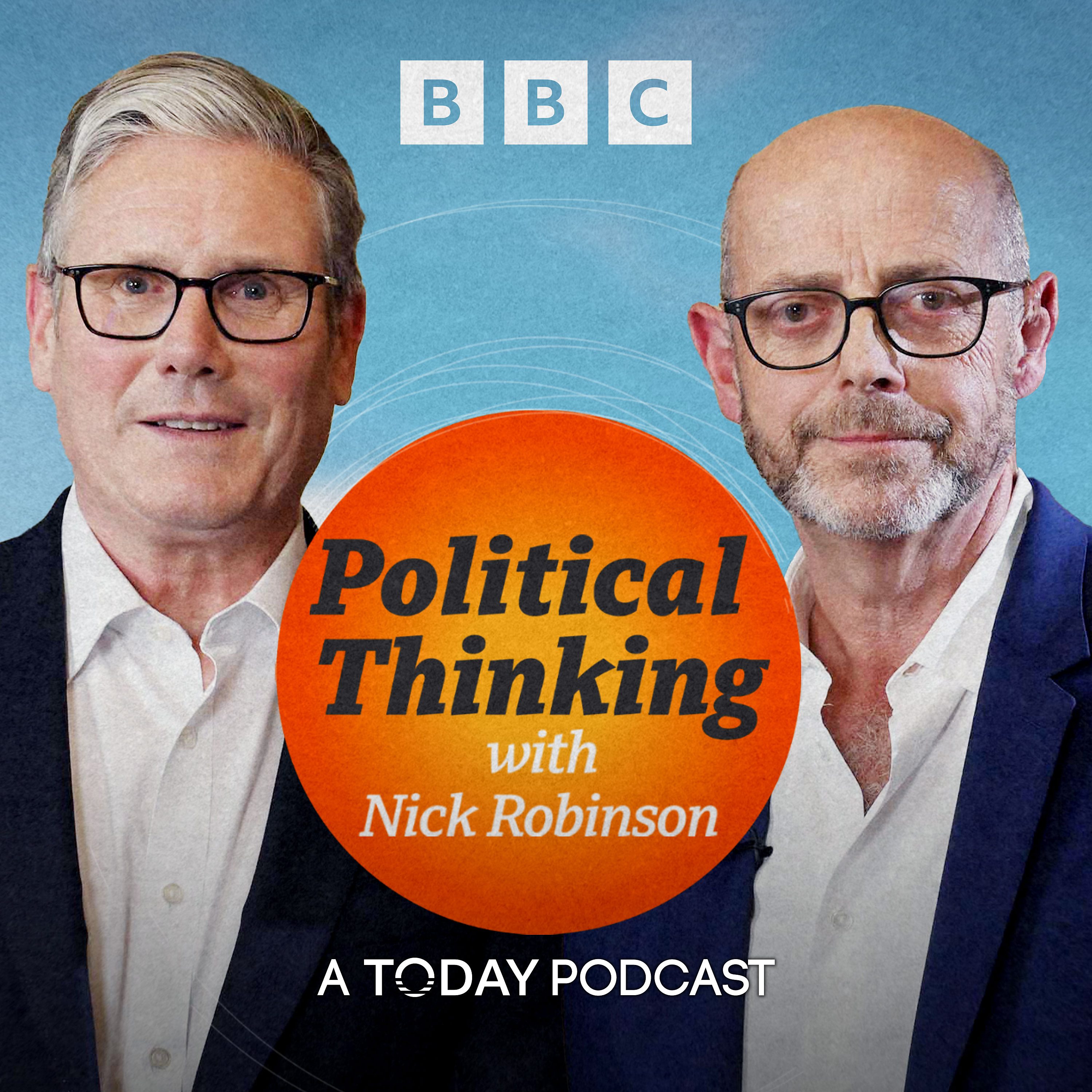
Political Thinking with Nick Robinson
The Keir Starmer Prime Minister One
00:46:31
The Prime Minister sits down with Nick in Downing Street to mark a year in power.
Loading summary
Transcript121 lines
- [00:00]
A
This BBC podcast is supported by ads outside the uk.
- [00:06]
B
Tired of juggling sales tools or spending hours on prospecting just to book a few meetings? Meet Apollo, the go to market platform for finding leads, connecting with buyers and closing deals all in one place. Apollo gives you access to over 210 million contacts and AI that handles all your busy work finding leads, drafting emails and even prioritizing your day. So stop paying for five different sales tools when one does it all. Visit Apollo IO and sign up free today.
- [00:38]
A
BBC Sounds Music Radio podcasts I've just been talking to the Prime Minister for political thinking at the end of his first year in office. It began so well for Sakhir, that landslide election, win a huge parliamentary majority, but it's ended with that majority evaporating. So our agenda for this conversation. What's gone right, what's gone wrong? Zakiyyah, thank you very much for having us here into Downing Street.
- [01:08]
B
Thank you for coming in. I know you know it well, but it's good to have you in here, particularly for our anniversary. Indeed.
- [01:13]
A
And it's been quite a year, hasn't it? It began with an election, Lands died, a huge parliamentary majority, a promise of change and hope, and it's drawing to a close with a majority vanishing. And has Labour MPs refused to back your proposals to cut the ballooning benefit bill in a series of awkward u turns? When we planned this interview, which, let's be clear, was weeks ago, my first question was going to be congratulations. I'm not sure that feels quite right anymore, does it?
- [01:38]
B
Well, the first thing I'd say, Nick, in reflection, is I obviously came into politics late in life, did other things beforehand, and I came in to change lives. Having had nine long years in opposition, frustrated that we weren't in opposition, able to change lives, I wouldn't swap a single day of the last year with opposition. And we've done some fantastic things, you know, really driven down the waiting lists in the nhs, really done loads of improvements in schools and the stuff that we can do for children, whether that's rolling out school uniform projects, whether it's school meals, breakfast clubs, you name it, and got huge amount of investment into the country. And of course, we've been busy getting three trade deals, which I can remind people through you, these were trade deals where other governments weren't able to get. And so there's a lot that we can look back on. I won't do a long list. We'd probably use up the whole 40 minutes if we did, of the various things we've done. But I'm really proud of what we've achieved because we've changed the lives of people and that's in the end, that's why I came into politics and being in a position to do it. There are tough days and there are less tough days, of course, but having the opportunity to change the lives of people for the better, that's why I came into it. And I wouldn't swap that for going into a position any day of the week.
- [03:03]
A
So it's clear you're going to allow yourself a little celebration, a razor glass or something. But is it also a look in the mirror moment? Is it one of those moments where you've got to pause and say, maybe something has got to change now, given what's happened in the last few days?
- [03:19]
B
Look, I'm not going to pretend the last few days have been easy, they've been tough. And there are always tough days in politics, there are tough days in opposition, but yes, it's been tough. And I'm the sort of person that then wants to reflect on that, to ask myself, what do we need to ensure we don't get into a situation like that again? And we'll go through that process, but I also know what we will do, and that is we will come through it stronger. And that's what I've always done. People have said to me along the journey so many times, you're not going to be able to do this, you're not going to be able to do that. They said we couldn't really change the Labour Party and we did. They said you wouldn't win the election and we did. And almost as soon as we got into power, people said, you won't be able to change the country. We are and we will. But the important thing for me is, yes, a bit of self reflection and accepting it's tough and being clear we'll come through this stronger.
- [04:19]
A
And in the lead up to this interview, you have been reflecting in public as well as in private. You've said hiring Sugre was wrong. You've said ending winter fuel payments was wrong. You've said rejecting a national grooming gang inquiry was wrong. You said things will get worse before they get better. Wasn't ideal, it was wrong. You warned that immigration was turning into an island of strangers and you said you regret saying that. And cutting benefit for the disabled was wrong. It's quite a long list of things that you're admitting to being a mistake.
- [04:50]
B
Well, I think you've characterised that as me admitting they were all Wrong. Which isn't quite true. And I've reflected on some of them. And at heart, Nick, I think you know this from getting to know me. I'm not one of these sort of ideological thinkers where ideology dictates what I do. I'm a pragmatist. So just to very briefly take the example of grooming gangs, you know, way back 15 years ago, I prosecuted the first of these cases, of the grooming cases. So I know firsthand what it means for victims. I've been calling for things like mandatory reporting in these cases for a very, very long time. And it matters to me that we get it right. Having had lots of inquiries, I thought we should get on with implementing the recommendations that we had. But I did ask Louise Casey to make. Do an audit check for me that. Hear me out.
- [05:47]
A
No, I was going to do. But what you're. I think your story is. Just let me check this. I think what you're saying to people is calling that a U turn, saying you changed your mind is daft. What you're saying is, I took a view, I've set up a process, it came to a recommendation. It's a sensible, grown up, pragmatic thing to do. Is that your.
- [06:08]
B
Yeah. I mean, I asked Louise, I said, I need to be doubly sure that we're in the right place on this. Louise Casey has got a reputation for getting to the bottom of matters. She did an audit, she produced a great long report. I sat down, she handed it to me privately before we made it public. I read it through from end to end. And she herself had actually gone into the audit, into that review, thinking we didn't need a national inquiry. She then uncovered things which changed her mind. I went through that and I decided the right thing to do was to follow her recommendation to me. I mean, you can badge these things as U turn. It's common sense to me. If someone says to me, here's some more information, and I really think it's the right thing to do, I'm the kind of person that says, well, then, in which case, let's do it. I've seen so many examples of people circling the wagons around decisions saying, we can't ever look at this again if something new emerges and Louise Casey put stuff before me which was new, changed her mind, changed my mind, then it made perfect sense to get on with a national inquiry. And in a sense, that's what I mean by pragmatism. I actually just call it common sense.
- [07:18]
A
This whole language of U turns, I sense just Irritates you. You're thinking, look, come look at the evidence. I'm working it out. Because people say to you, not just commentators like me, they say, look, it's embarrassing, it's humiliating. He keeps changing his mind.
- [07:31]
B
The best decisions I've made, Nick, are the ones that have been held up to the light and withstood scrutiny. And the worst decisions are the ones which have never been properly tested. And in. I obviously did many things before I came into politics. In the world, that isn't politics. It is commonplace for people to look again at a situation, judge it by the circumstances they now are, and make a decision accordingly. And that is common sense. It's pragmatic and it's a reflection of who I am.
- [08:03]
A
Well, look, it brings us to the week you've had. It brings us to the crisis that you're facing as we talk here on Wednesday evening, that revolt over benefit reforms because you said to the country that there was a moral imperative for welfare reform. You said tough choices had to be taken to get the benefit bill under control. And because you can't keep borrowing and taxing away out of problems. But then you scrapped it, you gave in, you bent to your own parliamentary party.
- [08:37]
B
Well, it was important that we took our party with us, that we got it right. And Labour politicians come into public life because they care deeply about these issues. Sometimes that's constituency based, sometimes it's personal, and it's always values driven. And we needed to get that right. And getting it right matters to me. There are really important changes in the bill that has come through in terms of rebalancing universal credit, in terms of the support that we are putting in, particularly the no reassessments for those with very severe disabilities. And, of course, setting in place the review that Stephen Timms will do. And he's a man of great integrity and people have real faith in the exercise he will do. But I'm not going to sit here and pretend to you that that wasn't a tough day.
- [09:25]
A
Do you take responsibility for it? Of course. Your fault.
- [09:28]
B
Look, Nick, I mean, you list to me all the things I've said we didn't get quite right. I will always take responsibility. My strong view of leadership is, and I held this when I was leading the Crown Prosecution Service as Chief prosecutor, which is when things go well, and it's usually, you know, you and the team that have done that, the leader gets the plaudits. But then when things don't go well, it is really important that the leader carries the can and and that's what I will always do. And so anytime you or anybody asks me any questions, I will always take responsibility. And I think it's really important what.
- [10:05]
A
Went wrong, because you got a huge parliamentary majority, bigger than Boris Johnson's, and you blew it in a year and you couldn't convince your own MPs. I was listening to that debate. One Labour MP called them Dickensian cuts. Another called it a dog's breakfast of a bill. Another said it was shambolic and incoherent. A another MP said it's crazy and outrageous. I mean, this wasn't a polite discussion about getting the details right. You had proposals, they ripped them up.
- [10:34]
B
Look, we didn't get the process right, Nick. And as I say, Labour MPs are absolutely vested in this. It matters to them to get things like this right. And we didn't get that process right. We didn't engage in the way that we should have done. I would say this. There is a very, very strong agreement in the Labour Party that we do need to reform the system, because it's a system that traps a million young people who are neither earning nor learning. And all the evidence is that that means they'll struggle from here on in. I think that is wrong. There's nothing sort of moral about suggesting that that's a system that doesn't need changing. Or, of course, 3 million people who are not working through ill health.
- [11:22]
A
The problem is you haven't currently got a plan to cut that bill, have you? How much will your welfare reforms now save?
- [11:28]
B
Well, in terms of getting people back into work, of course that will be good for the economy because more people coming back into work and being supported back into work is good for them financially.
- [11:39]
A
But the benefit cuts you back, but.
- [11:40]
B
It'S good for the bill.
- [11:41]
A
How long much is that saved?
- [11:42]
B
Well, in the end, that'll be determined. Determined when we finished the Stephen Tims review.
- [11:48]
A
But the answer at the moment is nothing. It actually costs money. You've scrapped all the bits that save the money.
- [11:53]
B
We need to finish the Stephen Timms review in order to properly answer that question. But it is about helping people into work. The current system makes it really hard for people. And I've seen this firsthand where somebody who wants to get it back into work feels that they can't take the risk. And that's why things like the right to try really matter. But look, we didn't get the process right. It's for me to reflect on that and make sure we're not in that position again. But Also make sure, and it's my absolute determination to do it, and I've done it many times before, that we pull through this stronger and we will.
- [12:32]
A
Let me ask you about something I've been asking you for seven years. I think, as you have very kindly appeared on Political Thinking.
- [12:39]
B
I think it's my fourth time.
- [12:40]
A
It is your fourth time. And I think I often ask you a rather similar question, which is that people say to me, what does Keir Starmer really believe in? What does government really stand for? What's his story, if you like. And I think on this issue, I think it is particularly acute. They thought you thought the benefit bill's soaring, it's out of control, we've got to cut it and we have to do the tough decisions, even if there's a great row. You now seem to be saying all that's true, but we're not going to have the row. We're giving up. We're not going to cut the bill. It can't be done. And people, as a result, don't know what the story of your government is.
- [13:20]
B
Well, we didn't get the process right there. But let me just answer the question directly, because the story of the government is a story of fairness. You've got to unpick that men and women, working people who every day are putting in and are entitled to the fairness of getting back what they deserve from what they're putting in. So that fairness drives me. And if you look at what we've done, it's that improving the lives of working people, giving them respect, giving them security, giving them the opportunity to live their lives in the way that they want to live them, that you can see through all of the decisions I've taken, whether that's the work we've done on the minimum wage for the lowest paid in our society, whether it's the work that we did in the trade deal with the U.S. if I may.
- [14:14]
A
Because you and I have talked about your family and the influence that they have on you a lot, and I was struck by when this row began on benefits. You talked about your mother.
- [14:24]
B
Yeah.
- [14:24]
A
You talked about her in the House of Commons many weeks ago to defend the policies that you were coming up with. Now, for those who don't know, your mother was very unwell for much of her life. She had to have a leg amputated towards the end of her life. And you said, we'll protect those who need protecting. Yes, that's what you said back in March. Your problem was, and this is why I say the story is a problem is your own MPs didn't believe you were going to protect people like your mum and they thought you were on the side of people who want to take benefits away from people like your mum and they loathed it.
- [14:57]
B
Yeah, I mean, I've said throughout the process there are three principles that drive me and drive what we're trying to do with the reform of welfare. The first is the principle that if you can work, you should work. And I think that's really important to say that if you need help into work, you should get that help into work. And at the moment the system works against you, not for you. That is not defensible. But thirdly and importantly, if you can't work because you're got a serious severe disability, then you need to be protected and supported. They're the driving principles of this. You hear me?
- [15:35]
A
I'm quoting your own words back at you because you once said to me on this podcast, the most important question is whose side you're on. And the other day in a speech you said that what matters is who's in your mind. I, and forgive me, I'm being a bit cruder than asking about policy. I'm asking whose side you're on and why this went wrong. It seems to me is that people thought Keir Starmer's not even on his old mum's side. He's not on the side of disabled people, he's against them. And they didn't like that.
- [16:04]
B
Well, Nick, let me meet that challenge rightly put to me. I have in my mind's eye the very many people in this country who put in, in whatever way to this country, day in, day out, and don't get back what they deserve. And I have them in my mind. I spend a lot of time going out of Westminster and Whitehall across the country to see people in their place of work, in their home, wherever they may be, and to see for myself what they, they're doing, what their lives are revolving around. And many of them actually we had a one year reception here in the garden just the other day for what I call, broadly speaking, public sector workers. But these were. As I looked around the reception, I saw at least half of the people here. There were a couple of hundred that I had met personally on the journey of the last few years. Whether that was John and Penny Clough who tragically lost their daughter in a terrible domestic violence and rape murder case, whether it was the woman whose house I was in just a few weeks ago doing an interview and she was telling me about free school meals and the impact on her child, whether it's some of the families that are now getting the houses that they deserve and they're the people, working people, who are putting in.
- [17:28]
A
But you could say not to do that about working people. You could say, that's why I want to cut the benefit bill, because working people will pay the price. And you told me once that your mum just never gave up to her disability. She was told she was never going to be able to walk again. And she said, you told me, I am going to walk again. I'm defiant in the face of this cause. And there are people watching, listening, who will say, that's the right attitude to this soaring benefit bill. It'll sound tough, but you've got to say to people, it's out of control. There are too many people claiming it. We're going to have to be tough. And I thought that was your story, but your story now is, well, no, the Labour Party doesn't like it. I'm not going to do it.
- [18:11]
B
No, Nick, we've got to bring colleagues with us and we've got to get it right. And I accept that. But I don't move away from the principle that the system isn't working for the people that matter to me. To have young people, I mean, that's, you know, it is not right. A government ought to be ambitious and to say that is not the life we want for our young people. Our job is to make sure they get the best opportunities in life and to drive through. There are different ways of driving through. We have driven through so much change in the last year on, you know, whether what we've done in schools, in hospitals, transport, infrastructure.
- [18:56]
A
And I want to come to some of the things that you're frustrated you don't get to talk about. But before I do, I have to ask you about the Chancellor. I have to ask you how Rachel Reeves is, because were you aware in Prime Minister's questions that she was looking deeply distressed next year? She was in tears.
- [19:15]
B
Well, Nick, forgive me, that's a. You know, she's made it clear it's a personal matter, and I'm not going to go into the personal matter of a colleague. What I will say is that she's done an excellent job as Chancellor. We have delivered inward investments to this country in record numbers. £120 billion that's been measured in jobs. We've created conditions for wages to go up, and we've jointly worked on the spot spending review, which is very Broadly popular. She's done a fantastic job. She and I work together, we think together. And in the past there have been examples, I won't give any specific, of Chancellors and Prime Ministers who weren't sort of in lockstep. We're in lockstep.
- [20:02]
A
People assumed it was because of politics. She decided to quit. Or you'd said to Rachel, I'm sorry.
- [20:08]
B
Look, firstly, Nick, is that it's wrong. I can just tell you that that's absolutely wrong. Got nothing to do with politics, nothing to do with what's happened this week. It was a personal matter for her. I'm not going to intrude on her privacy by talking to you about that. It's a personal matter, but I can.
- [20:28]
A
The Leader of the Opposition says you should, and I'm not going to probe into it, but she says the public have a right to know and I think the argument would be made. Look, the state of a Chancellor, and this is brutal fact about politics, isn't just about the person, it's about UK plc, it's about the price that the bond markets demand for government borrowing. It's about business confidence, brutal though it is. People need to know.
- [20:54]
B
Well, look, it was a personal matter for the Chancellor and I've been absolutely clear with you. Nothing to do with politics, nothing to do with any discussion between me and Rachel, nothing to do with. With the matters of this week.
- [21:09]
A
So she'll still be Chancellor by the time this interview is broadcast in full.
- [21:12]
B
In a few days time, she'll be Chancellor. By the time this is broadcast, she'll be Chancellor for a very long time to come. Because this project that we've been working on to change the Labour Party to win the election, change the country, that is a project which the Chancellor have been working on together. So, yes, and anybody who's seen us together, and I think you probably have on a number of occasions, know that that's not just me saying that, that's the strong relationship we have between each other. So she is going to be Chancellor into the next election and for many years afterwards, together.
- [21:42]
A
You've got to decide how to fill this big black hole you've got now in your budget plans. Now, you're not going to tell me now and you'll say, wait for the budget, which is fine, but you accept, do you, that the consequence of that rebellion over welfare reform and the fact that you then gave in to that, is there's a bill to be paid and someone's going to have to pay it.
- [22:00]
B
Well, Nick, you've done many, many interviews, you will know there's never been a Prime Minister or Chancellor set out the details of a budget in advance. There's never have been, never will be. But as you would expect, we will deal with all these matters at the Budget and we will set out what we're spending money on and how we're going to spend it. That's what we've done and that's the big difference between what we're doing and what the previous government said. And I would just say this, they'll.
- [22:26]
A
Say to you, they'll say, hold on. This care. He told you in your broadcast in 2023 and you told me in a Panorama election interview during the election, I'm not going to put your taxes up. And then taxes went up.
- [22:38]
B
No, Nick, be fair. We had a manifested commitment that we wouldn't increase income tax, national insurance and VAT for working people. That was a manifesto commitment. That is what I said to you last time and that is what we've kept to. So the one thing we didn't do in the last budget was we didn't breach that manifesto commitment. We're not going to breach that manifesto commitment. But there is a reflect on the.
- [23:02]
A
Pressures you're under now more generally.
- [23:04]
B
Well, I just. Let me make this point because we did inherit a really broken system. I won't go through all of that. But the economy was broken, the health service broken, prisons were broken, you name it, everything was broken. We needed to deal with that. We took pretty tough but the right decisions in the budget. But because we did that, we built the platform, if you like, the foundation for the work that we've done on free school meals, on childcare, on breakfast clubs, on transport infrastructure across all parts of the country, on ensuring that we got 4 million extra NHS appointments, waiting lists coming down during the winter. This is extremely hard to achieve an NHS plan. These are the choices that we've made and they are choices which other governments wouldn't have taken. Goes back to where we started, Nick, which is, as I reflect on this year, I think about the peoples whose lives we've been able to improve and change through the differences that we have made. And that is why I think it's important, I find it important to go out across the country, country talking to, engaging with, listening to the very people whose lives have been affected and need to be affected and impacted and improved by what we're doing. But those, those we. You know, politics is about the choices you make. We have chosen to improve the health service we've Chosen to make sure that every child actually gets the best start in life. It's not just a slogan.
- [24:37]
A
And you've got this new plan now we're on. You've got this 10 year plan. Let's go for the big idea in the Ten Year plan, if you can, because it's got a slogan, but you unpack it for people. The slogan in this 10 year plan is a neighbourhood health service for people listening. What does that mean?
- [24:55]
B
It means that you don't have to go to hospital the whole time to get what you need. At the moment, hospital is default. We need to make sure that community is the place where you can get the treatment you need. But the reformation. Let me put it in a slightly bigger context, because in the here and now, obviously we've been driving down those waiting lists. That was a manifested commitment, really important to people and we're making real progress. I'm really pleased about that. I'm proud of what we've done. We said we'd do 2 million in the first year of a Labour government. 2 million extra appointments. We've done 4 million. That is a huge achievement. But I know that if the health service is to survive, it's got to change, it's got to reform. And you've gone further.
- [25:36]
A
You say it's reform or die. You really think there's a chance we.
- [25:40]
B
Have to reform, Nick? And I'll tell you for why.
- [25:42]
A
But what do you mean by die? Why do you think the health of the.
- [25:45]
B
If you don't reform, it is very hard to see how the NHS survives in its current form. I'll tell you for why. Because on the one hand, as the Darcy Report laid bare, the NHS was left in a terrible state by the last government, a terrible state. They don't even defend what they did with the NHS anymore. But even if that had not been the case, the nature of illness and the presentation of the public in terms of we all live longer but with more conditions. What the health service has to deal with is so different to what it was 77 years ago when the NHS was set up, that we have to change. And I know that simply putting more money into the old system, as it were, isn't going to produce what. What we need.
- [26:33]
A
So we've got. Of course, you did give doctors quite a good pay rise. They don't think it's a good enough pay rise. They're threatening to go on strike again. But people say, hold. If you wanted reform, then you've got to say, if you want more money, you've got to change the way you work.
- [26:46]
B
Yeah.
- [26:46]
A
And you haven't done that.
- [26:48]
B
We gave a pay rise to doctors last year and that meant that instead of being on the picket line, they're on the front line. It meant that for now, they've got.
- [26:56]
A
A ballot for a strike next week.
- [26:57]
B
It means that we have done very many more appointments, driven the waiting list down and that we're working with the NHS on this. But there is. I mean, it is very important. I mean, every Labour politician, every Labour Party member is extremely proud of the fact that it was Labour that created the NHS in the first place. I want to be the Labour government, the government of 2024 that reformed and made the health service fit for the future, so that in decades to come, people will look back and say that was the government that picked up the legacy of Atlee and gave us a health service that will last for many, many years to come.
- [27:34]
A
We talk quite a lot about policy. One of the things we do in these interviews, you and I, on political thinking, is we also talk about the human side of politics, the pressures that politicians face. You've talked to me as opposition leader. This is our first chance to talk since you became Prime Minister. You reflected a little bit the other day on the pressures you face from an extraordinarily dangerous world, a changing world, when you said, you're being honest, maybe I didn't focus enough. Maybe I didn't kind of get to grips with this welfare thing because I was busy worrying about NATO and the Middle East. How much of your time do you think is now taken up with foreign affairs? I would imagine a huge proportion of your time.
- [28:19]
B
Well, yes, and the reason for that is we live in a more volatile world than we've lived in for many years. I think everybody can see that of every type. And the impact of what happens internationally on what happens in our country and on the people of this country is much more direct. So, to take the obvious example, in Ukraine, there's been a conflict going on now for just. Just over three years, and that's had a huge impact on energy prices. And that's meant that it's gone straight into the homes of families across the country, as we saw with the Middle east just a few days ago. In the last few weeks, the moment it looked like there was going to be an escalation of the Middle east crisis, particularly around Iran, then oil prices started going up. So a direct impact into the lives of people in this country. And I do believe strongly that it is the first duty of The Prime Minister to keep the country safe. And I take that really seriously.
- [29:24]
A
People say it to you. Alan Johnson, the former Home Secretary, said the other day, you know, maybe he's taking the eye off the ball a bit. Maybe you should spend more time. Do you. That idea that you spend, if you like, too much time with your friends Donald and Emmanuel and Vladimir, and not enough time with Chris, Sarah and Alex, who are Labour MPs, and all the others, does that frustrate you? Just think, oh, don't be ridiculous. About the world.
- [29:45]
B
It doesn't frustrate me. Let me rise the challenge. It is important to have a good relationship with President Trump, and it's in the national interest. But it also helped us when we were negotiating a trade deal, which was important. So when I.
- [29:58]
A
How did you do it?
- [29:59]
B
No, no, just.
- [30:00]
A
I just wanted to know, how did you get that to work? Because people. Look, you're very different people, let alone different politics. Politics.
- [30:06]
B
We are different people, and we've got different political backgrounds and leanings, but we do have a good relationship. And that comes from a number of places. I think I do understand what anchors the president, what he really cares about, but also there's a, you know, we have a good personal relationship. The first time I ever spoke to him was when I picked up the phone to him after he had been shot, when he was at a rally before he became president. And that was a phone call, really, to ask him how it was. And in particular, I wanted to know how it impacted on his family. And so that was the beginning of our relationship.
- [30:45]
A
Was he surprised you'd called him? Was he?
- [30:47]
B
I think he was. I think he was. And he took the call straight away. It was the day after. But then equally, you know, spin forward several months. I lost my brother on Boxing Day, and President Trump called me a few days later, and we talked about my brother, and he was asking about my brother. And so, yes, quite a lot of our discussions are sort of important matters of state. Having a good relationship is in the national interest.
- [31:13]
A
You're saying there's a human being behind, if you forgive me being crude, behind the kind of orange tan and the funny hairdo and the baseball caps. You're saying there's a human being that you've made a connection with.
- [31:26]
B
I think for both of us, we really care about family, and there's a point of connection there in terms of how we care about our families. But just. I do want to come back to your first point, because in having a good relationship with President Trump, we were able to do a trade deal. And I'll tell you how in my mind's eye, when doing the trade deal, because this wasn't some abstract thing for me, not some international affair. The car manufacturing industry was likely to be hit with a hefty tariff if we didn't get a trade deal. 27 and a half percent. I went to JLR. It's in Solihull. I've been a number of times, one of our great brands selling into the North American market. I went before the deal was done and I spoke to the workforce. And this is why I love being at. I'd much rather be in that environment without workforce, listening to them, hearing from them. But I could see their faces, I could see the anxiety writ large on their faces because they knew that whether there was a trade deal impacted on them, their jobs, their families, their communities. And so I went before the deal and I went up after the deal and the relief was palpable.
- [32:39]
A
So, just to be clear, we made a list of all your foreign trips. America, Germany, France. Germany, France, Ireland, USA is Italy. I've only got to eight. We got to 32 trips. If people say, stay at home, pay attention, don't say, look, I'm sorry, I was a bit distracted, so I couldn't focus on the row about benefits. You're saying, no, those trips, they're for you as well. They're in the national interest always, and.
- [33:08]
B
That'S the only reason that I do them. But, Bill, I think that building those relationships with international leaders is hugely important. Getting to know people, what their instincts are, and that is in the national interest. I'm really pleased we got a deal because I phoned the CEO of JLR up after the US deal was finally signed off and he reminded me and thanked me on behalf of 44,000 people whose jobs depend on us getting that sort of deal. Or take the French president, we're an ally of France. There's a period now where Europe really needs to pull together, particularly on defence and security. And I've a good relationship with President Macron. And that means that amongst other things, as we. The last trip we did into Kyiv together, we were coming out on the train, it's an overnight train. And there was the UK part of the train, there was the German part of the train, because Chancellor Mertz came with us and then there was the French. And as we came back, I went down to see Emmanuel Macron and we talked about Kyiv, but we also talked about the eu, UK reset over a glass of wine. And that Then helped when we got to the reset of. What did that deliver for us? An SBS agreement, which means that the prices will come down in a supermarket near you.
- [34:31]
A
It's.
- [34:34]
B
It is really important linking this back, because it is really important that I am totally focused on what's happening here in the United Kingdom, keeping people safe, but also improving their lives. So lower prices for food in the supermarket, because we've got the deal with the eu that is a good thing for millions of people across the country. Getting a trade deal with the US is a really good thing for everybody involved in car manufacturing, particularly jlr.
- [34:59]
A
Really interesting hearing you make that case and it fits in with something you told me four years ago when you were on political thinking, which is when I ask you, where's the passion? Because people often say that to you. You told me, I think there's a different kind of passion, a sort of gritty determination to say, well, that's the problem. I understand you're a problem solver, but can I put to you what people are telling you is we don't just want a national problem solver, we don't want a chief executive UK plc, we want a leader with a story to tell. Can you, for the country, tell them what that story is. What's it all for? Why is Keir Starmer here? What's it all about?
- [35:43]
B
It is about a passion, if that's the right word, but certainly a determination to change the lives of millions of working people and in particular to tackle this question of fairness and ensuring that it's almost like a social contract that people are getting back what they're putting in, that there is a fairer environment for them, that supports them, respects them. These things matter to me hugely.
- [36:10]
A
Then let me raise another issue, if I may, because we're short of time now, which is that confuses people and where people allege you made a U turn. It's immigration. You know how important it is for some people. You made a speech which was advertised as, look here, Starmer really gets it. He gets how worried you are about immigration. You said, we risk becoming an island of strangers, not a nation that walks forward together. And then this week you said, well, I deeply regret saying that.
- [36:40]
B
Well, Nick, let's just pull apart what you just said. I'm not walking back on the content of what I said, the change that we need to bring about. It was the phrase that I said I regretted because unbeknownst to me, it had links with Enoch Pal. I would never have done that had I known. But the Phrase you had.
- [37:03]
A
Immigration had done incalculable damage to the country, you said, and you said you regretted me out.
- [37:08]
B
I was making an argument about why immigration matters and why a matter of trust with the British public. While we do need to get the numbers down and there's been a real sense of loss of control under the last government and we need to address it, that is a really important argument. And it's not a new argument for me, Nick, because I think way back, probably the first podcast we did, I told you about the work I did in 2015, 2016, when I was then Shadow Immigration Minister and I was going to various places, Dudley and others, to talk to people about immigration. I went to Oldham, I think I recall, recounted to you the woman who talked about immigration.
- [37:48]
A
You have this slogan about smashing the boats, but they've not been smashed. It made no more sense than stopping the boats. It's not happening.
- [37:55]
B
Well, look, there's two different strands here, Nick. The first is in relation to ensuring that we have immigration under control, there are rules, and that we decide who comes here and on what basis. That is fundamentally important to working people in this country. And I've been saying that for a long time. Four podcasts worth of your series. So there's nothing new in that in relation to the Channel crossings. It is a really serious problem, and we've got to rise that with serious propositions. And this goes back to working with other international leaders, because if we're going to track this, and we must, we need to cooperate with other countries in relation to law enforcement, and that means we need agreements in place. And so I raise this regularly with President Macron, with Chancellor Mertz, with the Prime Minister of Italy, and we've signed agreements and we're working much better together. We need to do more.
- [38:51]
A
But I also want this interview up.
- [38:55]
B
But also we do need, I think we need to give more powers to law enforcement, and we will. But if we are to intervene more effectively, that is going by its nature to be something we have to do with other countries, that is more likely to happen. And we've moved this on because I've developed those relationships with other leaders. And that is why investing in ensuring I know, understand and have respect for and are respected by other leaders is in our national interest.
- [39:27]
A
You said that one of the reasons you gave that speech, and you weren't quite happy with the phrasing, as you've explained, was because you were distracted. And you weren't just distracted by foreign affairs, but you were distracted by the tragedy that You've mentioned the loss of your brother and I just want to ask you to end this interview about these family pressures that you have under, because it was an extraordinary personal tragedy for you to live through. And to have to go, as I understand it, secretly to Leeds Hospital to visit your brother. I mean, to deal with that as well as everything else must have been incredibly traumatic.
- [40:04]
B
Look, it's really hard to lose your brother to cancer. He was a very vulnerable man. He had difficulties when he was growing up and never really had security in his life. That's why I do understand firsthand what it means to have respect and security. That's why it's hardwired into my politics. And he was then diagnosed with stage four lung cancer. I wasn't sure how he would cope with that. I made it my business to be there in the hospital when he was told so that I could begin to help look after him. I don't think he would have wanted or withstood any public knowledge of where he was at. And I wanted fiercely to protect him. And that's why, both before the election and after the election, I went secretly to see him at home, secretly to see him in hospital. He was in intensive care for a.
- [41:06]
A
Long time, travelling, what, in the porter's lift?
- [41:08]
B
Going up in the porter's lift into the back of the. The intensive care unit and then. And the staff there were absolutely brilliant, as they always are. But it was important for me to do that, to support him, and very important for me not to share that with the world, because this was my brother that deeply cared about him and I wanted to, and would always have protected him and his privacy. These things are hard to do because you're in front of the cameras doing a speech and then the next thing you know, you're in a porter's lift in the back of a hospital, talking to a brother who is very seriously.
- [41:50]
A
Ill. You've talked often about wanting to protect your family in general, your wider family, and you and I have talked about this on Political Thinking once or twice. I remember you saying you were most worried about your children being here and that your daughter joked that she didn't want to come, she'd live somewhere else if that happened. I mean, once this interview's over, we're talking six o'.
- [42:14]
B
Clock.
- [42:14]
A
Is there some upside? Can you pop upstairs and say hi?
- [42:18]
B
There is an upside, because the flat is 22 seconds from my office.
- [42:24]
A
Oh, you've timed.
- [42:25]
B
I've timed it. And it means I can see the children. I can pop up when they're around and I do because it is really important because, look, my family really means a huge amount to me. My wife Vic is an absolute rock by my side and my kids are my pride and joy and I want to make the most of that. And so of course I make time for them and I protect them. And it's really tough being now 14 and our son's just turned 17. That is a really sort of significant period in their life. And I'm conscious if they were under 10 or probably over 20, it probably wouldn't impact, but it impacts on them and I want them to be themselves, live their lives. And that's why if I were to pop up to see them, I would go through the front door of our flat and as I get to the door, I stop being Prime Minister and when I get the other side of the door, I'm Dad. And we don't have work events in the flat, we don't have people up, you know, have friends and things. But it's, it's our home and it's really important we keep it that way.
- [43:32]
A
One of the place I think you feel very comfortable and have always talked about, which is on the football pitch, still playing when you can in that five aside team you played for many, many years. You're pretty ruthless on the pitch, aren't you?
- [43:46]
B
Yes, I want to win.
- [43:49]
A
You hate losing. You.
- [43:50]
B
I hate losing. I hate losing.
- [43:52]
A
Do you hate the fact that people think you're losing now?
- [43:55]
B
Look, Nick, given what we've achieved in this last year, they think you'll lose it.
- [43:58]
A
They say you're the most unpopular Prime Minister in Rick when records began.
- [44:03]
B
We have done so much in the last year and you and others challenged me a number of years ago that we were behind in the polls, we'd never catch up, we'd never win the 2024 election. I said, yes, we will. And now people challenge and say, you're never going to change the country, say yes, we will. And we already are. Every challenge that's been put in front of me, I've risen to met it. And we're going to continue in the same vein.
- [44:28]
A
You know what they say about football managers. They say, he's lost the dressing room. Have you lost the Labour Party dressing room?
- [44:35]
B
Absolutely not, Nick. I mean, there's such a. As soon as we go through the long list of things that we've achieved this year, the Labour dressing room, the PLP is pushing, proud as hell of what we've done and their frustration, my frustration is that sometimes the other stuff, welfare would be an example, can obscure us being able to get that out there. But you'll be hearing a lot from me about that. But I can't tell you how proud we are as a party, as a parliamentary party, as a group of MPs together of all that we've managed to do this year year and the lives of people that we have changed and improved and will continue. And we're only just starting. This, in a sense, is the toughest year. So we're only just beginning.
- [45:27]
A
So my final question, one of your friends who plays football with you, he says his words, you're a hard bastard. Are you a hard enough bastard now, being this far behind in the polls with a chancellor who people lack confidence in, with a Labour Party that's denied you a parliamentary majority of something you believe in? Are you a hard enough bastard to look in the mirror and say, I've got to change, the party's got to change. Something serious has to change in year two for Keir Starmer.
- [46:01]
B
Look, we need to reflect on where things haven't gone according to plan. The welfare bill will be one of them. But we also need to emphasize the very many good things we have done. Yes, that's been because we've pushed through on them, but they've made a material difference. I'm really proud of that. And we'll keep on punching through. I'm a hard enough bastard firing doubt who it was who said that so I can have a discussion with him.
- [46:27]
A
And give him a kick on the five of science Fish.
- [46:30]
B
Sir.
- [46:30]
A
Keir Starmer, Prime Minister, thank you very much for joining me again here on Political Thinking.
- [46:34]
B
Thank you.
- [46:37]
A
From BBC Radio 4, the Russians will be launching a satellite sometime in the next three weeks. I'm Kim Cattrall, back with a new series of Central Intelligence. This is a CIA covert op, Top Secret, the drama podcast that tells the history of the CIA from the inside out. Starring Ed Harris, Johnny Flynn and me, Kim Cattrall.
- [46:58]
B
Ms. Page, such a pleasure to meet a real American.
- [47:02]
A
Listen to Central Intelligence Series two, first on BBC. Sounds.