Loading summary
Transcript91 lines
- [00:00]
A
This message comes from Jackson Seek clarity in retirement planning@jackson.com Jackson is short for Jackson Financial, Inc. Jackson National Life Insurance Co. Lansing, Michigan and Jackson National Life Insurance Co. Of New York, Purchase, New York.
- [00:20]
B
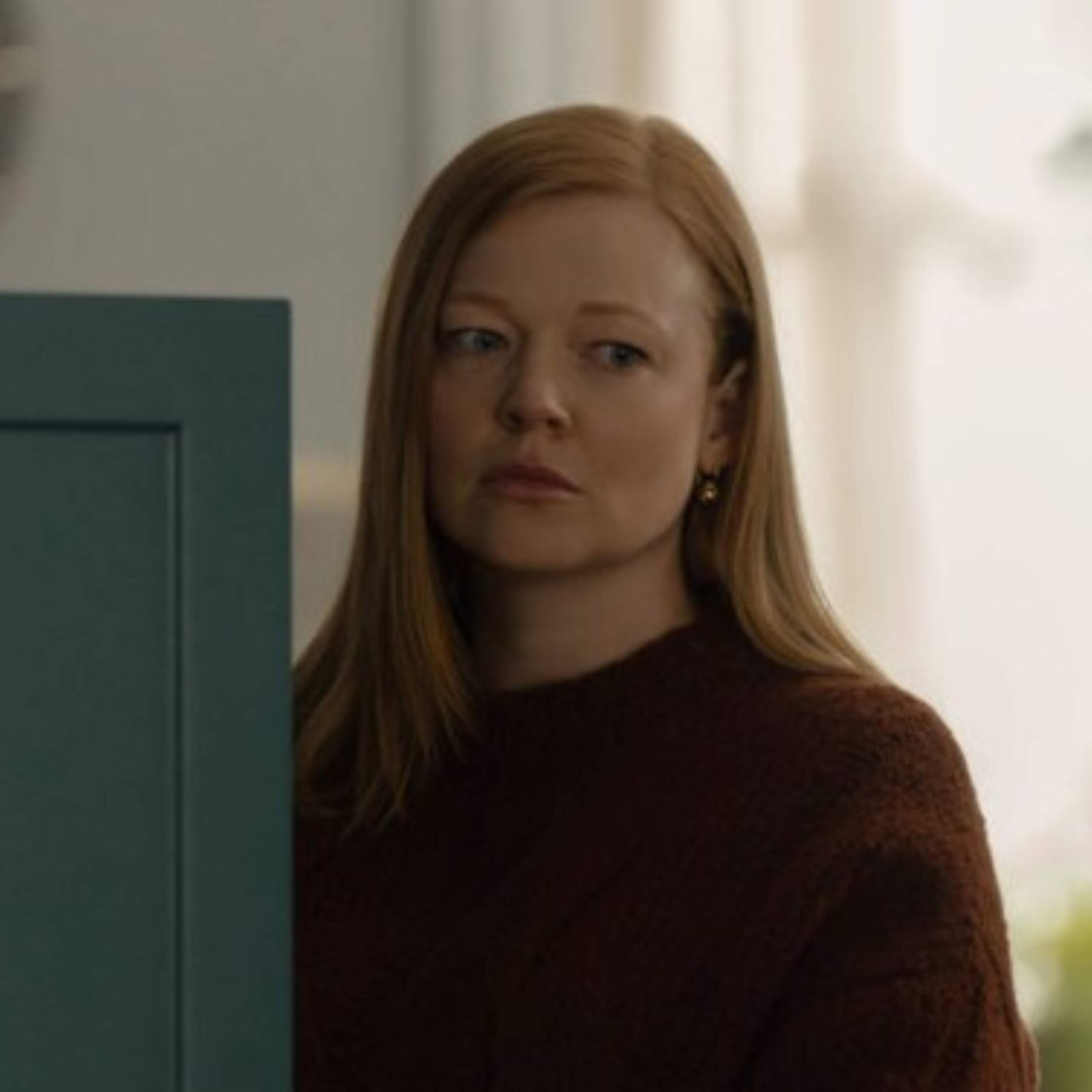
The entertaining Peacock series All Her Fault begins with a cute kid, an Emmy winner and a mystery. A mom played by Succession's Sarah Snook goes to pick up her young son from a playdate and is told that he's not there. In fact, the woman who answers the door has never heard of him. And while the agony of a missing child is bad enough, the show ultimately interrogates not only Marissa's marriage, but also the way multiple women in the story are forced to accommodate the behavior and misbehavior of men in their lives. I'm Linda Holmes and we're talking about All Her Fault today on NPR's Pop Culture Happy Hour.
- [01:01]
A
This message comes from Schwab at Schwab. How you invest is your choice, not theirs. That's why when it comes to managing your wealth, Schwab gives you more choices. You can invest and trade on your own. Plus get advice and more comprehensive wealth solutions to help meet your unique needs. With award winning service, low costs and transparent advice, you can manage your wealth your way at Schwab. Visit schwab.com to learn more.
- [01:29]
C
This message comes from the Council for Interior Design Qualification. Interior designer and CIDQ President Siyavash Madani explains the value of having an NCIDQ certification.
- [01:41]
D
An NCIDQ certified interior designer must complete a minimum of six years of specialized education and work experience and pass the three part NCIDQ exam. All three exams emphasize and focus on health, safety and welfare of the occupants. It's really about the implementation of design. Good design is never just about aesthetics. It's about intention, safety and impact. We take the responsibility of protecting the public seriously. The space needs to be functional, safe and accessible.
- [02:15]
C
To learn more about NCIDQ certification or to hire a Certified Designer, visit CIDQ.org NPR this message comes from the Council for Interior Design Qualification. Interior designer and CIDQ President Siyavash Madani explains why good design is so much more than looks.
- [02:35]
D
Good design is never just about aesthetics. It's about intention, safety and impact. Being NCIDQ certified means you've qualified to protect the health, safety and welfare of the public.
- [02:48]
C
Learn more@cidq.org NPR this message is sponsored.
- [02:53]
A
By DSW, the birthplace of the humble brag, full of all kinds of shoes that get you at prices, that get your budget and when there are never ending options for every style, mood, occasion, and budget, there is unlimited freedom to play. And that's something to brag about. So go ahead. Stock up on fresh sneakers from your favorite brands or try those boots you always secretly knew you could pull off. Find the shoes that get you at prices that get your budget. Dsw. Let them surprise you.
- [03:25]
B
Joining me today is Vulture TV critic Roxanna Hadadi. Hey, Roxanna.
- [03:30]
E
Hey, Linda.
- [03:32]
B
So good to see you. Okay, so All Her Fault is based on a novel by Andrea Mara. It tells the story of a wealth manager named Marissa, played by Sarah Snook, who lives a very cushy life with her husband Peter, played by Jake Lacey, and her adorable son Milo. One day, when she goes to pick up Milo from a playdate at the home of a family she knows only casually, the woman who answers the door has no idea who she is, and there is no child to pick up. Hi, I'm Marissa. I'm here to pick up my son Milo.
- [04:05]
E
I think you got the wrong house.
- [04:07]
B
There's no Milo here. There are a lot of twists and turns, a lot of them. Particularly as Marissa gets to know Jenny, another mom at Milo's school, played by Dakota Fanning. Jenny's status as friend or foe is initially hard to sort out, but the two women forge an uneasy bond. All eight episodes are streaming now. Roxanna, I'm gonna cut to the chase here. The headline of your review called this show a masterpiece. Tell me about that.
- [04:33]
E
It did. Well, I have to qualify that it called it a misandrist masterpiece.
- [04:38]
B
Yes, correct.
- [04:39]
E
So I really did. I really wanted to make sure that I was articulating the fact that this show does a very good job being, like, certain men of a certain class and a certain level of prestige are absolutely the worst. Right. And, like, we sort of have this formula in these sort of domestic shows, right? Like, we trace pretty much all of them back to, like, Big Little Lies. But at this point, there have been, like, dozens of these, right?
- [05:08]
B
There are a lot.
- [05:09]
E
Yeah, there are a lot because they're pulling from a thriller like literature tradition where there are a lot. But what I really liked about this is I really thought that Sarah Snook and Dakota Fanning were great together. Like, that was the biggest surprise of the show for me, that we were really getting this, like, meaningful, growing friendship between these women who are thrown together in, like, the unlikeliest, wildest of circumstances. Yes, yes. But they form this, like, really tangible human bond. Sitting here laughing while my son is.
- [05:51]
B
Missing and a up mother who's human.
- [05:55]
E
You're human. Stop.
- [05:58]
B
Look at me.
- [06:00]
E
I loved that, truly. Like, I thought that it was a very well depicted friendship and that they felt like real people. And I really thought that the conversations between the two of them. And of course, you're getting flashbacks because this type of show loves flashbacks. I agree. We can get to that. I really thought that, like, the frame of these two women together bonding over this mystery, bonding over how terrible their husbands are, bonding over the very difficult experience of being, like a mother and wife alive in the 2000s, all that really worked for me.
- [06:36]
B
Yeah. You know, when I first. When I read the logline, and it was like, she goes to pick up her son and people are there like, I've never heard of him. And I thought at the beginning, I was like, oh, did she, like, step into a wormhole or something like that?
- [06:47]
E
Right? Yeah.
- [06:48]
B
When I discovered it was an abduction story, then it kind of came into focus for me that it was a big little lies y kind of thing. These rich white moms. But what I liked about it was the women, particularly Marissa, ultimately, like, get to make some decisions that the women in these stories don't always get to make. Sometimes they are sort of at the mercy of their husbands or other people do things and then they react and everything just kind of like, turns out, if I can put it that way. And they're bold enough to say, this woman, as a result of all these things, makes some decisions about what she needs to do for self preservation and the good of her kid that maybe not every show like this would allow her to do. So this show's been out for a while. If you haven't already seen it, we are about to spoil a bunch of these twisty things that happen. So everybody ready? Okay. What I think is fascinating is that Marissa's husband turns out to be sort of more spectacularly bad. Because the resolution of the child abduction is that he was abducted by his biological mother who was in a car accident with Marissa and her husband. And while Marissa was unconscious, he switched the baby. Cause they had a little baby who had died in the accident.
- [08:12]
E
You stole. You stole her child.
- [08:15]
A
No, I did. I did what I thought was right for everyone.
- [08:19]
E
You stole a child, Peter. What the.
- [08:21]
A
I saved that baby. I saved that baby and I saved you the pain of losing a son. I saved all of us.
- [08:28]
E
Oh, my God.
- [08:29]
B
Peter's sort of the more spectacularly wicked, but Jenny's husband. Jenny's husband is just the most trifling, just unhelpful, whiny.
- [08:43]
E
He is 20, 25's version of no Scrubs, like, it is really bad.
- [08:47]
B
And there is this moment where Jenny, he's supposed to be off doing something very important that, as a result of which she has to take care of everything at home and take care of their son and everything like that. You think she's gonna find him having an affair? That is the kind of cliched end to this. She finds him sitting in a parking lot watching, like, stuff on YouTube, on his phone, drinking, like a Big Gulp and just, like hanging out. And when he sort of makes the argument like, I just need a break. I need some time to myself sometimes. I need a bit of space and.
- [09:18]
A
Time and a little self care too.
- [09:19]
D
All right?
- [09:20]
A
Oh, God. I know.
- [09:21]
B
You know?
- [09:22]
E
Boy, do I know, right? So this doesn't have to be, like a big deal. I know. Because I dream of it.
- [09:27]
B
On the one hand, sure. On the other hand, she doesn't get that. And he, by lying, has appropriated essentially all of the available energy in the family to himself for his own needs. And in some ways, his pedestrian evil was more, like infuriating to me than Peter, the genuine villain.
- [09:54]
E
I think that what I really enjoyed is exactly what you just laid out, which is that we get two very different versions of how you can screw up a relationship in that you're just like a normal amount of selfish. Right. Like making up, like, a little lie to get some time to yourself that then spins into this big thing. It's super pathetic that he's just in his car, like, watching TikTok.
- [10:21]
B
I mean, who doesn't love doing that, right?
- [10:23]
E
Like, of course.
- [10:23]
B
No shade to that activity.
- [10:25]
E
Sure. Time to yourself is, like, totally valid. Time to yourself by making up an entire after school club that you are leading. Oh, my God. There are some qualities that transcend class and that are, like, taught socially to men, which I think is also, like, very interesting. Dakota Fanning's character is like, the one who is pulling all the weight and the primary breadwinner in their marriage. And yet he is able to do these things because culturally and socially, it's okay for men to need time away from their families. Right?
- [10:56]
B
Right.
- [10:57]
E
So, yeah, I almost agree with you that his level of terribleness is more insidious, perhaps, than Jake Lacey's.
- [11:07]
B
I think it feels more familiar. I think it feels more accessible. You're not gonna get a ton of baby switch stories. Do you know a lot of people who have been sort of hoodwinked into taking all of the responsibility for everything?
- [11:21]
E
Absolutely.
- [11:21]
B
But when they do deal with Jake Lacey I like the fact that, yes, he has this spectacular evil deed, Right. And that sets off, you know, other evil deeds. But you also find out over the course of the show, they uncover all these other things that he has done, and you start to see how he is undermining and sabotaging for his own ego when it comes to lying about the injury that caused his brother to use a wheelchair. When it comes to lying about that injury, that's, again, pretty dramatic. But there's a lot of other stuff that's just like needling. They don't make these bigger evil deeds happen in a vacuum. They happen in the context of him pretty much giving himself permission to decide everything.
- [12:11]
E
The first thing to say about that is that, like, Jake Lacey has just been sort of, like, doing this now right after the White Lotus, he sort of, like, settled into this niche, and he's very good at it. But at the same time, once you cast Jake Lacy, I'm like, I'm gonna keep an eye on this guy because something is gonna happen here.
- [12:28]
B
Absolutely, absolutely.
- [12:29]
E
That is gonna be bad. But there are also these very subtle, sharply written exchanges where it's sort of like, this is the emotional labor of, like, a marriage and what we just assume that women do. Right. But, like, you as a man can.
- [12:49]
A
Did you sense anything, Mr. Kaminsky?
- [12:51]
E
What?
- [12:52]
A
When you spoke to the nanny's references, did you sense anything unusual? Oh, I didn't talk to anyone. I mean, that's really more Jenny's department. I see.
- [13:00]
B
And I think the title, All Her Fault turns out to be very, very much what the show is about. Right?
- [13:06]
E
Yeah.
- [13:06]
B
Because it is about both in terms of Jenny's life and in terms of Marissa's life and to a lesser extent, to Peter's sister's life and Milo's biological mom. It is about the way that guilt is used on all these women to kind of shrink their worlds and shrink their options and make them feel terrible and make them doubt themselves and cause them to become, in a way, compliant because they are so filled with self doubt. But one of the ways in which this all plays out, and this is sort of getting into end, end, endgame, spoilers. But what happens at the very end is that after this is all revealed, Marissa realizes if I tell the truth about what happened. Cause by this point, the biological mother has died.
- [13:52]
E
Yeah.
- [13:52]
B
If I tell the truth about what happened, they will take Milo away from me. If I don't tell the truth about what happened, I have to stay with Peter because he will never let me leave. And so she decides death is her only option. His, not hers. And the way that she goes about that is by sabotaging his EpiPen for his allergy and essentially inducing an allergy attack.
- [14:17]
E
Yeah.
- [14:17]
B
And there's a moment when he is realizing that he's in big trouble, and he's trying to tell her that it can't be, that the EpiPen isn't where it's supposed to be.
- [14:28]
A
You always have the emergency kit.
- [14:33]
B
That's true.
- [14:34]
E
I manage your allergy for you.
- [14:36]
B
I manage your allergy for you. And so the show allows him to essentially die at the hand of his own weaponized incompetence. In that sense, really satisfying. Like, if he had just been willing to take care of his own stuff, he might have remained alive to continue to be a menacing jerk.
- [15:00]
E
It is excellent femme fatale positioning. Right. Like, it is what we used to do in noir where we would have a woman who very actively made a decision to, like, free herself from a certain kind of, like, influence or oppression. And I feel like we used to be really okay with that in stories and then in this sort of, like, subgenre which I have, like, called the Mother Thriller. Like, we're not as okay with it. Like, we make it an accident or something tragically happens, and then everyone. Everyone's living with the downfall. So, no, like, we're not advocating.
- [15:36]
B
No.
- [15:36]
E
But we are saying there is something very plot wise satisfying with how this plays out. Very satisfying to see Sarah Snook play this moment because it's like a whole intentional plan. She specifically eats soy based food because that's what he is allergic to do. And then she has this, like, very deliberate kiss that she gives him because she's like, no, no, I'm back to being your obedient wife.
- [16:07]
B
Yep. Kiss of death.
- [16:08]
E
Yeah, kiss of death. Exactly. And so I think that it also gives Sarah Snook, who we know is such a capable actor between Succession and Dorian Gray. It gives her a real emotional range of things to play in the last few episodes after. It's very front loaded with her concern, her confusion, her anxiety. You get a different motivation toward the end. It gives the episodes a different feel, which is not something you get all the time in streaming tv. So it's also a relief in that way.
- [16:42]
B
I would also say a kind word about both of the actors who play Peter's brother and sister, Daniel Monks and Abby Elliot. I alluded a little bit to the story about the brother who uses a wheelchair. And there was a childhood accident that it turns out They've been blaming the sister for the entire time. And of course, it was Peter. Cause Peter's terrible. I think the sister. I think the Abbey Elliott character. And I'm so interested in the fact that she's the sister on the bear and she's the sister in this. And they're really different. She occupies almost opposite spaces. Right. The most nurturing person versus the most perceived as needy person. She's kind of cast in the family as this grew up.
- [17:21]
A
You had just gotten out of rehab.
- [17:23]
B
There it is.
- [17:24]
A
And it wouldn't be the first time you had relapsed. That's right, Leah.
- [17:27]
B
And I think the show really comes around to acknowledging how much of that can be manufactured, basically, by our understanding of history and by how people constantly comment and sort of say things that build the narrative of the family that they accept and that they want other people to accept. And after Peter dies, I so appreciated the way that they basically let her character sit in this ambivalence almost. He was her brother. I don't think she would have killed him. But she's come by then to understand the really destructive effects that he's had on her life. Anticipating someone being punished. That makes us feel good. We get to focus on their pain instead of our own.
- [18:25]
E
She turns in a really strong performance. And I keep thinking about certain facial expressions that she makes in that final episode. When she puts together what has happened, when she puts together what is now going to be of her life without Peter, sort of over her shoulder, manipulating things. I think that's really well done. I also think that we're talking a lot about how absurd, satisfyingly absurd, some of this stuff is. But there is this frame that I keep thinking about, which is when Dakota Fanning's character, Jenny, finds her husband, who is in this parking lot screwing around on his phone or doing whatever. And the frame is just the two cars directly facing each other. And there's something also, just about. Sometimes these shows can feel not super well directed. Whereas I think, like, a lot of different elements here, from the performances to, like, the twistiness of the narrative to just how, like, clean and effectively directed it is. I think it's just. It feels different from what we've come to expect in this genre. And I appreciated all of those differences.
- [19:33]
B
I do think that good direction brings a little bit more visual interest in exactly the way that you're saying. I think there are a number of shots that show one person in the foreground, another person in the background. Obviously something that's frequently done, but I think. I think they have a very nice sense of it. Now. I do feel like I cannot stop talking about this show without mentioning my one beef, my one pretty significant beef with this show. Your colleague and our friend Katherine Van Arendonk, as we record this, recently had a piece published in Vulture about the penultimate episode flashback, where right before you're about to get to the big moments and wrap up your story, they say, well, let's jump all the way back and talk about how this all happened in the first place. And it's like, it's such a buzzkill, it's such a bad decision, and let's just tell things in order. That's my proposal.
- [20:33]
E
Yeah, I don't disagree. It feels exacerbated in the time of streaming where you're really trying to capture someone to binge your show. All her fault was a binge, right? So they wand us to watch all eight of them or whatever in a consolidated time frame. So, yeah, we're absolutely getting these dead body to start the show and then flashback or penultimate episode? Flashback. And structurally, it's just like, you cannot do this, or you can just move the flashback around. It doesn't need to be the penultimate. If you really feel like this is something that you have to tell us, seed it in the third episode, I don't know, the fifth episode, so that.
- [21:16]
B
It doesn't interrupt the momentum in the same way as it does if you put it right before the conclusion. And I will say, in this show, they reveal a lot of information that is from the past, and they do a lot of it without flashbacks. Right. There's flashbacks to some of it, but some of it just comes out in fights that people are having. You can do that. That's part of writing to have information come to light. On balance, though, I think this is a really good show, and I think it's a better show than I when I first watched it, and I was like, oh, this is Big Little Lies. This is blah, blah, blah. The more I thought about it, and as soon as I saw your headline about the Misandris masterpiece, I was like, that is true.
- [21:54]
E
Yeah.
- [21:54]
B
For all that, I felt that it was a little bit familiar. It is really incisive when it comes to these terrible husbands.
- [22:03]
E
I think it is really thoughtful within sort of, like, familiar themes and finding different ways to explore some things that we say, like, flippantly. Right? Like husbands, like, take advantage of their wives or whatever. Like these sort of, like, cultural sort of, like, truisms that we make jokes about. I think the show found a new way to explore that and to, like, read it for filth. Right. And it was just very entertaining. I want to be entertained, man. That's the point of television. So, yeah, I also was pleasantly surprised, I would say.
- [22:40]
B
I absolutely was. And I love Sarah Snook. So good acting and terrible husbands. All right, well, we want to know what you think about All Her Fault. Find us@facebook.com PCHHH that brings us to the end the of of our show. Roxanna Hadati, it is always a pleasure. Thank you for being here.
- [22:55]
E
Thank you so much for having me.
- [22:57]
B
And just a reminder that signing up for Pop Culture Happy Hour plus is a great way to support our show and public radio. And you get to listen to all of our episodes sponsor free. So please go find out more at plus.NPR.org happyar or visit the link in our show Notes. This episode is produced by Liz Metzger, Kayla Lattimore and Mike Kassif, and it was edited by our show runner, Jessica Reedy. Hello. Come in. Provides our theme music. Thank you for listening to Pop Culture Happy Hour from npr. I'm Linda Holmes, and we will see you all next time.
- [23:31]
A
This message comes from NPR sponsor Rosetta Stone, an expert in language learning for 30 years. Right now, NPR listeners can get Rosetta Stone's lifetime membership to 25 different languages for 50% off. Learn more at RosettaStone.com NPR support for.
- [23:50]
C
NPR and the following message come from HomeServe. It never happens at a good time. The pipe bursts at midnight. The heater quits on the coldest night.
- [24:00]
B
Good thing.
- [24:01]
C
HomeServe's hotline is available 247 call to schedule a repair and a local pro will be on their way. Trusted by millions. For plans starting at $4.99 a month, go to HomeServe.com, not available everywhere. Most plans range between $4.99 to $11.99 a month. Your first year terms apply on covered repairs. This message comes from Mint mobile. Starting at $15 a month, make the switch@mintmobile.com Switch $45 upfront payment for three months. 5 gigabyte plan equivalent to $15 a month. Taxes and fees extra first three months only. See terms.