Loading summary
Transcript83 lines
- [00:01]
Sponsor/Announcer
This message comes from Capella University. That spark you feel? That's your drive. For more Capella University's flexpath learning format lets you earn your degree at your pace without putting life on pause. Learn more@capella.edu.
- [00:19]
Linda Holmes
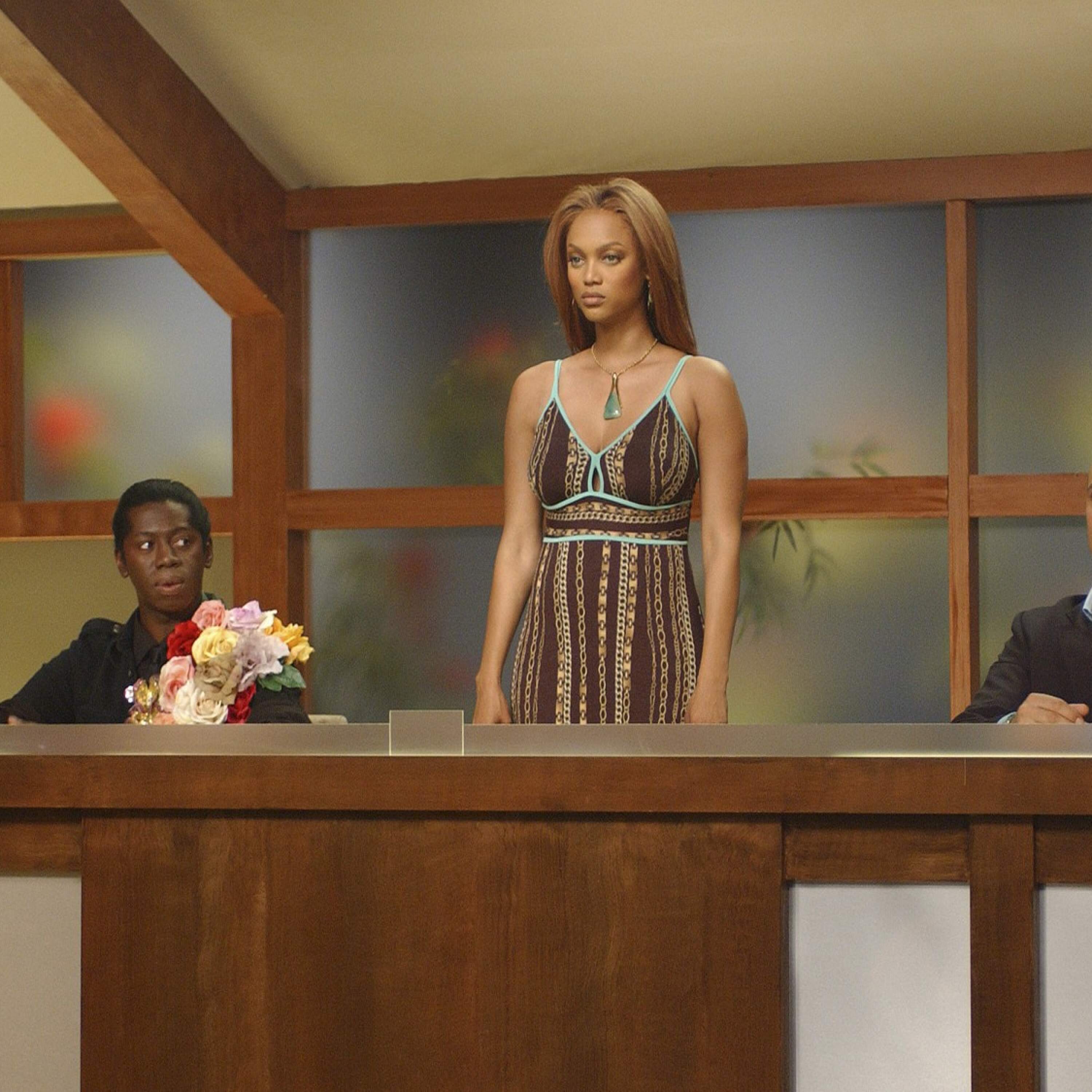
For 24 seasons, America's Next Top Model asked the question, you want to be on top? And host and creator Tyra Banks told the aspiring model contestants that she could.
- [00:30]
Aisha Harris
Make it happen years later, as the show is rewatched over and over on streaming, Top Metal's handling of race, body image and other issues has been loudly and heavily criticized. And a new Netflix docuseries talks to a lot of the major players, Tyra included. And it doesn't let Tyra off easy. I'm Aisha Harris.
- [00:49]
Linda Holmes
And I'm Linda Holmes. And today we're looking back at America's Next Top Model on Pop Culture Happy Hour from npr.
- [01:00]
Sponsor/Announcer
This message comes from BetterHelp. February is full of flowers, candy and lots of relationship talk. It can feel like everyone has it all together in their love lives, but the truth is they're still figuring it out. And whether you're married, dating or prioritizing being single, just remember you're right on time. Therapy can take the pressure off and help you feel lighter. Just a little outside perspective from a professional can lead to new understanding and a lot of progress. Visit betterhelp.com NPR for 10% off.
- [01:32]
This message comes from Great Wolf Lodge, where there's adventure for the whole family. You and your pack can splash away in the indoor water park where it's always 84 degrees with massive water slides, a lazy river and so much more. Plus action packed attractions outside the water park, delicious dining options and comfortable suites. With 22 lodges across the country, you're always only a short drive away. It's a world of adventure all under one roof, so bring your pack together at a lodge near you. Learn more@greatwolf.com this message comes from NPR sponsor 1Password. Anyone else feel like 99% of your emails and texts are password reset codes trusted by millions of users and over 175,000 businesses? 1Password lets you skip the resets and sign in securely. With strong, unique passwords that auto across all your devices, you can safely share logins, store cards and files, and finally, stop using your pet's name as a password? Try it free for two weeks at 1Password.com NPR this message comes from Bombas.
- [02:43]
Your feet hit the ground an average of 2,000 times in a mile. Bombas sports socks are designed to support you every step sprint to bombus.com NPR and use code NPR for 20% off.
- [02:57]
Linda Holmes
Joining us today is culture writer and critic Shamira Ibrahim. Hello, Shamira.
- [03:02]
Shamira Ibrahim
Hey, Linda. Happy to be back.
- [03:03]
Linda Holmes
Absolutely. Happy to have you. Also with us is Sydney Madden. She's a music and culture critic. Welcome back, Sydney.
- [03:09]
Sydney Madden
Hi, Linda. Hi, Aisha. I'm excited.
- [03:12]
Linda Holmes
Yeah, yeah, yeah, yeah. I think we're all excited. So. America's Next Top Model premiered in the spring of 2003. It was the brainchild of supermodel Tyra Banks, with executive producers Ken Mock and Kenya Barris. Most seasons were hosted by Banks herself until it end in 2018. The format was simple. A group of contestants, all young women, until a couple of late cycles that also featured Ben would live in a house together, be taught about modeling, and participate in photo shoots each week. Based on those photo shoots, somebody was eliminated. The Netflix docu series Reality Check, Inside America's Next Top Model, which is streaming now, is part of the ongoing reevaluation of the show we've seen in recent years. E will also have its own special in a few weeks. The Netflix docu series features interviews with Banks, a collection of contestants, and the trio of creative director Jay manuel, Runway coach Ms. J. Alexander, and photographer Nigel Barker, all of whom were major on screen presences on the show and all of whom were fired in 2012 when the ratings went down. Although Ms. J did return for a few later seasons, all three of those, by the way, served as consultants on the documentary. I'm going to start with you, Aisha. You have a piece about this that people can read at.
- [04:34]
Aisha Harris
You, and I.
- [04:34]
Linda Holmes
Come to Top Model with slightly different. I was a little older when I was watching it than you were, but I know we both watched a lot of it. Where do you come down on sort of the legacy of Top Model as seen through the lens of this docuseries?
- [04:48]
Aisha Harris
Yeah, I was, you know, a teenager when this show came out, so I would also say I was quite impressionable at that time. And I had not revisited the show since I stopped watching somewhere around cycle 9 or 10. I watched a lot of cycles. So the fact that they call them cycles, it's just so, yeah, just call them seasons.
- [05:08]
Shamira Ibrahim
Supposed to be chic, you know.
- [05:09]
Aisha Harris
Yes. It's the couture way of saying season. No, I think what's interesting about this docuseries is the fact that as I note in my piece, like, Tyra Banks isn't credited as an executive producer or a producer on this. And so I'm kind of interested in the way that this show is attempting to provide a platform for her to take something like accountability. And I guess we can all decide accountability feels like the type of word that we throw around a lot, but, like, no one has the same definition of accountability or like, what they expect from that. And so I think a lot of people are gonna get different reactions to this docu series. But for me, where the accountability came through is not in what Tyra said, but in the fact that we got to hear so many people kind of rebut her apologies or her abdication of responsibility. And hearing these voices in one forum, I think is very powerful, even if there are limitations to what a docu series like this could ever achieve, no matter how much is said here. So, yeah, there's a lot going on and your mileage will vary with this, I think.
- [06:13]
Linda Holmes
Yeah, I think that's true. Syd, how about you? What do you think?
- [06:16]
Sydney Madden
Well, jumping off, Aisha, Accountability is the million dollar question going into this. The fact that there's been so much hindsight outrage with the pandemic era rewatch of the show and the documentary definitely heavily relies on the social media outrage as almost a proxy for accountability. So the big get in this documentary is the fact that you get Tyra in the hot seat, you get the J's and you get Nigel, you get Ken Mock, you get the former executive from UPN who greenlit the show. But I will say, for me, it is a moving target, accountability. And from my point of view, the accountability was not really taken on the show for a few key reasons. She talks about how originally the show was meant to be a mashup of the real world and American Idol, but set in the modeling industry. But then she contradicts herself by comparing it to other reality shows that were big at the time. Fear Factor, Fear Factor, Survivor. And she said all of these things were so big and the viewers wanted more and more and more.
- [07:22]
Shamira Ibrahim
You guys were demanding it.
- [07:25]
Sydney Madden
The viewers wanted more and more and more. That was the record scratch for me because I was a viewer back then. This show started when I was 12 years old. Again, I was also highly impressionable. And some things, some of the challenges in the first, I'll say three cycles were very realistic. The challenges getting more and more absurd and honestly, more gross. That's why that idea that the audience wanted, it felt like a cop out because to me, I was 12, 13, 14, 15. I wanted to know what it meant to go on a go see. I wanted to know what it meant to think of yourself as a Blank canvas and learn how to walk. As a model, I wasn't interested in watching people, you know, have to consume raw meat or put raw meat on their body. That was just the shock value. It didn't feel like the shock value started to trump the on the job training that the show originally promised. And that was kind of the most frustrating part to me. The way they put it. They set out to change the modeling industry. And as the documentary shows, it kind of became more about storytelling and the limits that could be pushed rather than training someone to really be a model in this world. And over the years, or, sorry, over the cycles, when things got more and more absurd, they do end up perpetuating a lot of the same dangers that Tyra herself was victim to, like the body shaming. But you see time and time again that all of these dangers are reinforced even by Tyra herself and the judges who are in the hot seat. Accountability would have been more of a face to face sit down with all of the former contestants who do show up in this show. Because I think that's where the documentary shines the most. When they talk to the contestants and you know, they can answer back and forth. But if it was actually a face to face sit down because they got everybody in the room just all at separate times, if it was something more of a communal conversation, that would have been a bigger for accountability to me.
- [09:24]
Linda Holmes
Yeah, I think that's probably true. And because you mentioned, one of the pieces of background on that is that there's a woman named Kenya who was a contestant on Cycle four. A big part of her narrative centered on her weight. She was criticized for her weight. She portrayed gluttony when they did Seven Deadly Sins. She was an elephant in the animal photo shoot. But then also during a photo shoot with some male models, which was something they did over and over again, that often had like really like strange or awkward or bad results. I feel like in her version of it, she stopped production. Cause she was very uncomfortable with the way one of the men, they were sort of dancing and he was touching her. And during the judging panel, Tyra and the other judges gave her advice about how to handle it. I feel personally that their advice came down to sort of, you need to handle it. In the documentary, Tyra says that she's sorry. Says, I did the best I could at the time. So just for background, that's sort of what we're talking about when we get into those two things. That's part of it. Particularly the body shaming. There's a Lot of other stuff too. Sorry, Shamira, I do want to get directly to you, tell me where you came down on this whole thing.
- [10:35]
Shamira Ibrahim
I think, you know, for me, what kind of comes out is not just accountability, but like the concept of storytelling. Right. I think a big part of this documentary was the stories that we tell ourselves and how we square that with the narratives that other people have of us. Right. So, like, the story of America's Next Top Model is like a phenomenon around what was supposed to be an inside look as to all of the trials and tribulations it takes to become a successful model. But then it ends up becoming a saga of how can we make a good reality television show? How can we sell a good narrative? And they say that at different points, like, they point out that to keep, you know, certain cast members on for longer, they'd have to pick good shots or bad shots of others to justify preserving a story. Because now it was about selling the narrative and putting people in archetypes. Similarly, the documentary itself is about confronting each of the participants stories around themselves and what they've told themselves and whether or not that squares with some version of objective truth. So a lot of what you see with Tyra is a lot of the abdication of like, well, I did the best I could with what I had. At the time. I was trying to show tough love. I was trying to meet, you know, producers needs. It was above me. Right. But does that square with the story she tells of, this is my chance to be a boss. This is my chance to do something on my own terms. This is my chance to be able to have authority and change the industry? Not really. Right. You know, similarly, even, you know, with the Js, who are probably, I would say, arguably a little bit more upfront around some of the failings of the show, at different points, you know, they would go from saying, I'm a creative director to, oh, I had, you know, no ability that was up to production. So was there really no possibility for you to have a voice and even just the fact that all those things are happening simultaneously? I think what really came out to me is that, yes, this is, of course, a story about exploitation, a story about the dangers of reality television and how things can become, you know, the animal that you claim to want to avoid. But also, I think in part, it's about the things we tell ourselves about our complicity in harmful systems. Right. I don't think anybody could reasonably expect that Tyra and J, Manuel and Ms. J would unilaterally take down, you Know, fatphobia, colorism in the industry.
- [12:42]
Sponsor/Announcer
Right.
- [12:42]
Shamira Ibrahim
But absent being able to unilaterally take that down, does that mean that your complicity is acceptable? And I think that was the big question.
- [12:49]
Aisha Harris
Yeah.
- [12:50]
Linda Holmes
It's interesting because I think you're all exactly right. That accountability through this documentary was not really in reach for them as much because Tyra was never going to take it because they weren't trying to kind of explain the things that she did. And I think for me, one of the things that was the most interesting about the docuseries is that Tyra Banks, she doesn't always understand how she comes across. And there's a moment late in the series where she kind of gives one of. I mean, I think of it as like a classic Tyra speech about growth. And, you know, I hope that everybody has a chance to grow from this like I did.
- [13:35]
Sydney Madden
It even sounded like a judging panel the way she spoke.
- [13:40]
Linda Holmes
And she sort of does this whole. You're absolutely right, Sid. It's kind of a classic judging panel. Tyra, you know, I want to talk about growth as a person. And then it's sort of punctured immediately with a comment from one of the contestants.
- [13:55]
Shamira Ibrahim
I want you guys to be just as open as I am now about getting called on my for when somebody calls you out on yours because that day will come and continue, continue to evolve because that's what we're all doing.
- [14:09]
Linda Holmes
Cornett is absolutely ridiculous and she doesn't understand. The reason you were able to control the narrative in that situation is that it was your show. It is not how good you are at explaining yourself and it's not how wise the things you say are. If you took the same thing she said on the show and you punctuated them with a person making a WTF face, it would look completely different. It's because she controlled the show that she was able to sort of come away with this idea that she seems like a nice person. Another instance where I don't think she comes off too self aware is when she's talking about the quote unquote, race swapping photo shoots that they did a few times which essentially put models in black and brown face.
- [14:57]
Shamira Ibrahim
The fact that it was plural was just plural.
- [14:59]
Aisha Harris
Yes.
- [14:59]
Shamira Ibrahim
Egregious.
- [15:00]
Aisha Harris
Yeah.
- [15:00]
Linda Holmes
Tyra says that looking at the show now through a 2020 lens, she sees why it's an issue.
- [15:08]
Sydney Madden
And that's the thing. It's like a revisionist lens on it. No, I remember watching it as it happened. And similar to Zakiyah Gibbons, who's one of the experts. One of the few experts we do get to hear from in this doc.
- [15:19]
Aisha Harris
She might be the only one, I think.
- [15:20]
Sydney Madden
Yeah, I'm gonna get to that. But I remember the show back in the day going on commercial break, and it was me and my sister watching. It was like, was that blackface? So it's not that everyone was upset with it now. It's just we didn't have camera phones and our own mics. Everybody didn't have a voice to share their disdain or their confusion or their disgust about it. Because exactly to your point, Linda, all the chips were in Tyra's hand, like she was becoming more and more powerful with every season. And she even says in the doc, oh, I thought this was my way of showing the world that black is beautiful. And then they cut to a judging panel where they put the white girl in blackface. She was like, I was loving it. Okay, girl, I'm sure you were. You know, it was just completely devoid of any sense of reality because she was getting so powerful. But I do want to go back to the point we just made before about Zakiyah Gibbons being the only outside voice who's considered an expert on the show. One place where this doc falls flat for me is adding that context. They're acting as if the social media outrage is the only proxy for how we're looking at this. When if we're talking about disordered eating, why not have someone from NEDA come on as an expert and talk about the psychology and the psychosis of that illness? Or if we're talking about how social media outrage can be amplified of something that happened years and years ago, why not have a sociologist to speak to that? You know, and this is not a stroke of shade to Zakiya Gibbons, because I think she's a stand in for a lot of us who grew up with it and who were affected by the show. But I do think there was more expert context that could have been added to this.
- [17:00]
Linda Holmes
Yeah, yeah.
- [17:01]
Shamira Ibrahim
And to that point, you know, if we're gonna talk about assault, you know, we need someone on camera that can talk about it. Exactly. To be frank, you know, we have Shani give a very harrowing story around one she went through and really confront what is clearly traumatic to her over and over again, not just in the process of making the documentary, but also just throughout her career as a public figure. But what I think becomes ultimately striking is in confronting, you know, the other participants, the producers, Tyra, so on and so forth. No one says the word assault. It's not used. Not as a question or as a response.
- [17:38]
Linda Holmes
Right, Right. So she, shandy, if you don't know this story, was a contestant in Cycle two. They went on a trip during the season to Milan. The models met up with a bunch of guys. They started drinking. She says in the documentary that she blacked out after the amount of drinking that they did. Production filmed her having sex in the shower, and she says nobody put a stop to it, despite the fact that she was blacked out. As Shamira pointed out, she does not say assault. The documentary does not say assault. It was framed as a story about cheating on her boyfriend and what it means for her to have cheated on her boyfriend. Both Ken Mock and Tyra say they did not put everything that happened on camera on television. To me, the part that was so devastating about watching that was seeing her the next day just sobbing and sobbing. And the presentation of the show is she's sobbing because she cheated on her boyfriend, and she's so upset with herself for doing that. And I'm sure that that may have been part of it. Right. I'm sure her feelings, you know, may have been very confused, as many people's feelings are after an experience like that. But she's not just sobbing because she cheated on her boyfriend. There's so much more going on when she looks so devastated and traumatized.
- [18:50]
Aisha Harris
Yeah. I mean, I went back and rewatched that episode in full after watching this series, and it is just sort of diabolical the way they really hammer home that she cheated. And even just filming her telling her boyfriend back home what happened and then him yelling at her and berating her over the phone. And. Look, I understand, especially back then in the early 2000s when this was filmed and aired, like, so many people did not have the language to call these things assault. I mean, people still have that issue. But I think, generally speaking, there has been more in the culture now that, like, more people can label things in the way that they are. So I can understand why she wouldn't necessarily have been maybe thinking that at the time. But what the series really showed to me was, yes, there was a lack of context. There was a lack of more expert opinion. But I think if you watch it closely, there is still something you can get from it, which is not just the story of, like, how awful this show was in many ways, but also just the way that reality TV at that time was such the wild, wild west. And, like, people were trying everything and anything to get people to tune in and watch. But I do think they do A good job, intentionally or no, of explaining just how like the gutter reality TV was back then and still can be.
- [20:08]
Shamira Ibrahim
I think a couple things stuck out to me about that specific storyline. I think one thing that stood out to me was the outright, not just implication, but outright statement that the main reason why anything was really edited around was not because of real propriety reasons out of any sort of moral concern as much as it was on the heels of Janet Jackson's halftime show and the fracas that had happened around that. And so they felt pressured to go into the editing bay to still give this salacious story but try to meet these rapidly accelerating FCC regulations. And so the vision of going through that footage over and over again to try to make some version of it that is still titillating enough for television. I remember as a teen watching it, and I do remember it was framed as like, oh, my God, she's such a. Insert any slur you want here. You know, she cheated, did all these things.
- [21:00]
Sponsor/Announcer
Yes.
- [21:01]
Shamira Ibrahim
And now being someone who actually writes about people who have survived sexual assault and actually, you know, opines publicly about it in the industry, it is remarkably striking that, like, the implications of what we see on social media now when these things happen were happening very acutely to, you know, shandy person, because social media wasn't as big then. So to hear her talking about how she was being approached in public, repeatedly being slut shamed to her face with her partner next to her, you know, those two.
- [21:28]
Linda Holmes
This is one of the reasons their relationship collapsed.
- [21:31]
Shamira Ibrahim
Yeah, exactly. You know, that sort of impact. I feel like one of the frustrations I have with the docu series is that if you're going to have these people in front who were involved, we should force them to be more explicit about the failure there. And I do think the documentary gave a little bit too much free rein as to what, you know, the J's, what Nigel, what Tyra were willing to talk about or not willing to talk about. And I think it ultimately allows for, like, a little bit of slipperiness. Right. You know, where they can say, like, we feel bad about this, but this was really out of our hands. I don't want to make this sound like I'm cutting Tyra Grace because it's not true. But I do think that there are moments where it's quite obvious that in Tyra's head, she felt like she was helping. Right. Whether that's the case is not true for sure. Right. You know, I equate it to, like, if you've ever had to be in a workplace with someone of an elder generation. And they're giving you tough love tips, right? And so they're telling you you just have to kind of get with the program. But you're like, but the program is wrong. Why would I not want to change the program? And you feel that generational tension, right? With Tyra, where I think in her had a lot of the lessons that she felt like she was imparting was about how to make it work. And what she still struggles to acknowledge or realize is that that is not what those women receive. What those women receive is how to make yourself smaller. Right. Both metaphorically and l. I think a.
- [22:48]
Sydney Madden
Great example of what you're talking about, Shamira, is the Tiffany moment when she goes off at Tiffany. But it created one of the most viral moments of the show when she berates Tiffany after she's eliminated because Tiffany is not giving the type of devastation in her response that she maybe expected she would for the cameras.
- [23:09]
Shamira Ibrahim
I have never in my life yelled at a girl like this. When my mother yells at this, it's because she loves me. I was rooting for you.
- [23:15]
Linda Holmes
We were all rooting for you. How dare you?
- [23:18]
Sydney Madden
But she does talk about it in the documentary. She's like, that is some deep black girl stuff. And I really wish the documentary would have gone in on that more because it's such a fleeting moment that people have memed to death and they've made skits out of. But when you talk about Jameer, what you're saying, like, Tyra was moving in an industry that was very much against her. She made herself a success despite a lot of this stuff. And what she was imparting on the next gen was, this is how to survive. This is how to maneuver. Right. Maybe you could have taken a step back and see, like, where was the harm done to me that I don't want to perpetuate, because otherwise, like, you're just continuing the cycle through all these cycles. You know, that's the part of the documentary I really wish they would have gotten, like, more in on.
- [24:04]
Aisha Harris
Right.
- [24:05]
Shamira Ibrahim
Tyra was, you know, she's a young woman from the inner city. She's from Inglewood. You know, she doesn't hide these parts of herself. Right. I do think she tries to play it into, like, a more kooky Persona, but you can see that kind of sense of hyper individualism that comes out when she scolds someone like Tiffany of, like, I had all these roadblocks in front of me, and I sucked it up and I made a way. How dare you not fight for the same thing? Does that make what you said acceptable? Absolutely not. Right. It also defies logic of how systems work. But you do understand where it comes from. I think what really struck me as well is that multiple people said that the rant was actually way worse than what we saw and that it actually involved legal interference. And I think their reluctance to even acknowledge what was said absent an NDA also really put me off a little bit. Because if we're going to allude to the. That it was more harmful than we even know, and Tiffany has gone on record in interviews since saying that that was, you know, something that really decimated her at the time. Right. I think it's worth it to at least allude to what was actually the themes that we were omitting.
- [25:06]
Aisha Harris
Right. It's notable that Janice Dickinson, who was another panelist, is not in the hot seat here at all. I don't know what she's doing these days, but, like, she gets a lot of heat from other people talking about her. And yes, she was awful. Like, it was bad.
- [25:19]
Sydney Madden
Yeah. She was kind of like the Simon Cowell of, like, she was a designated mean one. Say it as harsh as possible.
- [25:26]
Aisha Harris
Yeah, the mean one in a panel of mean. Like, they're all kind of mean. Let's be real.
- [25:31]
Shamira Ibrahim
I think that's my ultimate question. Right. It's like, yeah, like, they framed Janis as so, you know, callous and cruel, which she was, don't get me wrong.
- [25:39]
Sponsor/Announcer
Right.
- [25:39]
Shamira Ibrahim
You know, like telling models that need to lose £150. All the things that she said were beyond the pale.
- [25:45]
Aisha Harris
Right.
- [25:45]
Shamira Ibrahim
But I think what really continued to strike me was, you know, is the idea that because she said it so caustically, make it inherently worse than you quietly and tacitly agreeing with her. Because what happened is that they would banter and Tyrone would say, that's wrong to say. That's cruel to say and say, well, maybe she could lose a little weight.
- [26:02]
Sydney Madden
Right.
- [26:03]
Shamira Ibrahim
So it's like you're actually not fundamentally disagreeing with her. You're disagreeing with the delivery. And I think if the issue is a delivery, then you're not confronting the reality that the actual issue is the message that you're communicating to these women. Right.
- [26:17]
Linda Holmes
Yeah. I will say, you know, as a plus size lady myself, it is always worse when it comes from when you're not expecting it. So to me, to stand in front of a judging panel where, you know, you're looking at Janice Dickinson, she's gonna Say something rude to you would not be as bad for me personally, as, we're gonna send you off to this photo shoot. It's gonna be great. You're gonna be so glamorous and beautiful. And then you get there and they're like, we don't have any clothes that fit you. Oh, my God.
- [26:44]
Shamira Ibrahim
Or.
- [26:45]
Linda Holmes
Or you get there and they want to cover you up.
- [26:47]
Aisha Harris
Right.
- [26:48]
Linda Holmes
Because it's so clear that they just think you're unacceptable.
- [26:51]
Aisha Harris
Right.
- [26:52]
Linda Holmes
And those are all things that the show set up. That's not necessary. Like, I am no fan of Janice Dickinson, but when I think about the most humiliating things that they did to the plus size models on that show, it is not that. It is the other stuff.
- [27:09]
Shamira Ibrahim
It's bringing someone in front of, you know, showing them a nice photo and then chastising them for how much it costs to retouch.
- [27:16]
Sydney Madden
Right. You know, or even Whitney, who was the first plus size model to win the whole thing during cycle 10 and then her contract with the modeling agency. They didn't even have a plus size division.
- [27:26]
Aisha Harris
Yeah, right.
- [27:27]
Sydney Madden
There's a lot of questions right now because again, we're talking about hindsight being 20 20. Aisha, you said reality TV back then was a wild, wild west, and it very much was. And it gave us so many chaotic moments because of that, because there were no rules, there were no guardrails. But even think about the world we're moving in now. We're where streaming is the new economy, the creator economy is just booming. That's still the wild, wild west. And a lot of these transgressions still go on the.
- [27:50]
Linda Holmes
Absolutely.
- [27:50]
Sydney Madden
We're absolutely in a new era of body shaming and thin culture. And thin is in and packing everything with protein and just incentivizing, taking weight loss. GLP1s in a new era. And if you look at even the modeling space, I think the creator economy has opened up a whole new lane for who could be potentially a model. I know a lot of working models who are not stick skinny, but if we're talking about supermodels, top models, beyond top, a lot of them are still very, very thin. And so much of what was promoted back then is still very much the mo. I know there was a time when the Victoria's Secret fashion show went off air and Savage x Fenty by Rihanna started to push a lot more representation and diversity. But I feel like that pendulum is swinging right back to where it was of the early 2000s. You know, the, like, where we're moving right now is The Wild, Wild west, except it's just in an online forum.
- [28:47]
Linda Holmes
Yeah, I think that's right. Well, we want to know what you think about Reality Check Inside America's Next Top Model. Find us@facebook.com PCHH and that brings us to the end of our show. Shamira Ibrahim, Sydney Madden, Aisha Harris, thank you so much for being here. I absolutely loved this.
- [29:05]
Sydney Madden
Thank you, thank you, thank you.
- [29:07]
Linda Holmes
This is this episode was produced by Carly Rubin and Mike Katsiff and edited by our showrunner, Jessica Reedy. Hello. Come in. Provides our theme music. Thank you for listening to Pop Culture Happy Hour from npr. I'm Linda Holmes and we'll see you all next time.
- [29:24]
Sponsor/Announcer
This message comes from Capella University. That spark you feel that's your drive for more. Capella University's flexpath learning format lets you earn your degree at your pace without putting life on pause. Learn more@capella.edu this message comes from Vanta.
- [29:40]
What's your 2am security worry? Is it do I have the right controls in place or are my vendors secure? Enter Vanta. Vanta automates manual work so you can stop sweating over spreadsheets, chasing audit evidence and filling out endless questionnaires. Their trust management platform continuously monitors your systems, centralizes your data, and simplifies your security at scale. Get started@vanta.com that's V A N T.
- [30:08]
A dot com this message comes from Greenlight. Ready to start talking to your kids about financial literacy? Meet Greenlight, the debit card and money app that teaches kids and teens how to earn, save, spend wisely and invest. Start your risk free trial@greenlight.com NPR.