Loading summary
Transcript195 lines
- [00:00]
A
This message comes from Great Wolf Lodge, where there's family fun all under one roof, including an indoor water park, attractions, dining and more. With 22 lodges across the country, you're only a short drive away from adventure. Learn more@greatwolf.com.
- [00:22]
B
What's your favorite movie that started life as a book? And what makes for a great book to film adaptation anyway? Do you want filmmakers to stay as rigorously true to the book as possible, or are you okay with bold departures, big swings out of left field, choices that maybe evoke the essence of the book, if not every last detail? We've got four examples of beloved books that made the transition to the big screen, and we're prepared to discuss and debate why each of them works and why we believe they're the best of all time. So gird your loins. Wuthering Heights is about to hit theaters, so we thought it would be the perfect time to discuss and debate the best book to film adaptations of all time. I'm Glenn Weldon, and you're listening to NPR's Pop Culture Happy Hour.
- [01:10]
C
This message comes from BetterHelp. February is full of flowers, candy and lots of relationship talk. It can feel like everyone has it all together in their love lives, but the truth is they're still figuring it out. And whether you're married, dating or prioritizing being single, just remember you're right on time. Therapy can take the pressure off and help you feel lighter. Just a little outside perspective from a professional can lead to new understanding and a lot of progress. Visit betterhelp.com NPR for 10% off support for this podcast and the following message come from Strawberry Me. If you could go back and talk to your younger self, would you tell yourself that you have a job that truly makes you happy? Many people are stuck in jobs they've outgrown or never really wanted. A career coach from Strawberry Me can help you move on to something you actually love. Benefit from having a dedicated coach in your Corner, and get 50% off your first coaching session at Strawberry Me. NPR this message comes from NPR sponsor FX's Love Story John F. Kennedy Jr. And Carolyn Bessette the new limited series from executive producer Ryan Murphy. It explores the complex courtship of the iconic couple considered to be American royalty, whose love story captured the attention of the nation. Their fairytale romance would unfold in front of the public eye and become a national obsession. FX's love story, John F. Kennedy Jr. And Carolyn Bissette premieres tonight on FX, Hulu and Hulu on Disney for bundle subscribers this message comes from Bombus. When you're playing sports, you're focused. Your socks should be too. Bombas engineers socks to fight sweat and cushion impact for every sport. Visit bombus.com NPR and use code NPR for 20% off your first purchase.
- [03:04]
B
Joining me today is Barry Hardyman. She's a senior editor for NPR's investigations team. Welcome back, Barry.
- [03:10]
D
Hiya.
- [03:11]
B
Also with us is Ba Parker. She's one of the hosts of NPR's Code Switch podcast. Hey, Parker.
- [03:15]
E
Hello.
- [03:16]
B
Welcome in. And rounding out the panel is Andrew Limbong. He's the host of NPR's Book of the Day podcast and a reporter for the Cultured Desk. Hey, Andrew.
- [03:24]
F
Yo, what's up? My loins are girded. I am.
- [03:27]
B
This is the thing.
- [03:28]
F
I am girding these loins.
- [03:30]
B
I was telling producers, this is the dream team. This is a bunch of folks who, as Homer Simpson would say, these are eggheads who love their bookie wooks. And I'm excited about this particular thing. So let's get to it. Parker.
- [03:41]
E
Yes, sir.
- [03:42]
B
Tell me your favorite book to film adaptation of all time and why it works.
- [03:45]
E
Okay, so any other day when we did books we've loved, Andrew would have already heard me talk about the brilliance of Gone Girl. So we're just gonna skip that and talk about something that really, really speaks to me, and it is the 2019 adaptation of Little Women.
- [04:00]
B
Ah, okay. Great pick.
- [04:01]
E
All right. Which is a famed book by Louisa may Alcott from 1868 about the four March sisters in Massachusetts during the Civil War. This coming of age story, and this one is adapted and directed by Greta Gerwig. And she does this really impossible thing of like, contemporizing the story and being so faithful to the book but for modern times. And it does, like, two fairly impossible things that has never worked in any Little Women adaptation. She makes me tolerate the love story between Laurie and amy. I get PTSD from a child. From the 1994 version of like, I hear you. The fact that Greta Gerwig made me root for Amy and Laurie skills. And with the character of Jo March, our protagonist, who's like this liberated author who was like writing the story along the way, she allows for Jo and the audience to have their cake and eat it too, which, I mean, this is gonna 150 year. Spoilers. There is this man named Bear who's like a scholar and in like the 19th century approach, which is like, you know, the woman has to have a man at the end. Like, that's just like a given for these kind of books and for these kind of adaptations. And Greta Gerwig makes this decision that the writing of the book is essential to the plotline and that within the book, Jo's character ends up with Bear. But in reality, the book is the man. Getting her first book published is, like, the win, and that is, like, her love. And the fact that she is able to, like, have her cake and eat it, too is like. It's so rich and smart, and I just. I love it. And I say this fully, okay? Like, this is how good of an adaptation it is. Like, my head knows that this is a perfect adaptation, and yet my heart still belongs to the 1994 version. The fact that I know that the 2019 version is a perfect adaptation, and I'm still fighting for it. Like, this is how good of an.
- [05:58]
F
Adaptation it is in the actual book. I've never read it. Sorry. Is, like, her writing the book not that big of a deal, because I remember that being an integral part of the movie. Does it sort of just get tossed aside?
- [06:07]
D
It is not the motif.
- [06:08]
E
Yeah, it's not like the motif of it, but it is, like, it's.
- [06:11]
F
Oh, interesting.
- [06:11]
E
It's there.
- [06:12]
B
Okay, now, Parker, in this adaptation, in this film, Bob Odenkirk plays the dad. You know what I'm gonna say? You know what I'm gonna say? At one point, Mr. March comes home. He walks in the door, and he says, my Little Women.
- [06:27]
E
You know what? Calm down.
- [06:29]
B
Okay, but here's the thing about adaptations, right? Odenkirk is Odenkirk. He's a great actor. But we have all seen Mr. Show sketches. That's kind of. My family hasn't.
- [06:40]
E
No, this is the thing. My mom and my aunt and I, we went to see Little Women, and everyone was like, oh, Bob Odenkirk. And my family's like, who the heck is that?
- [06:49]
B
Okay. All right.
- [06:50]
E
So there wasn't like, oh, Bob Odenkirk. There was like, who's this white man? Like, why is this such, like, a big moment? Like, well, the dad's here. That's great. But, like, for nerds like yourself that know who Bob Odenkirk is, it was.
- [07:02]
D
Like, it's great Civil War hat.
- [07:04]
E
Okay, this is a personal quibble. Just with all of the Little Women adaptation in general, there's the mom in the book and in the movies is. It's called Marmee, which is M A R, M, E, E. But Louisa May Alcott is this clearly a woman who grew up in Boston and was writing out, mommy, Mommy, It's a very practica in the Harvard yard situation, but in all of the adaptations, everyone's saying Marmee. Like, no, it says mommy. So that's my one quibble. I'm like, just say mommy. It's okay. All right. Wow.
- [07:35]
D
Parker, I never have thought I've, like, grew up on this book. I'm from Boston.
- [07:40]
E
Yeah.
- [07:41]
D
Never occurred to me.
- [07:42]
E
It's just like girls in Massachusetts.
- [07:44]
D
Oh, my God.
- [07:45]
E
My God.
- [07:46]
B
Arthur, you've unlocked this book for Barrett. You've unlocked it. That's awesome. That's awesome.
- [07:50]
D
My heart is beating so hard. My heart is beating so hard.
- [07:53]
E
Wow.
- [07:54]
F
How are we feeling about Greta doing CS Lewis going over to Narnia? What's our temperature? Read on that.
- [08:00]
E
Let her do what she wants with that white witch.
- [08:02]
B
She can do whatever she wants. Yep. Let her cook.
- [08:04]
E
Aslan.
- [08:05]
D
What she did with Barbie. I mean, she can do it.
- [08:08]
C
Absolutely.
- [08:09]
E
I mean, do we want it?
- [08:10]
F
Do we want it?
- [08:11]
D
Another one from her. I didn't think I wanted another Little Women.
- [08:14]
E
I feel like she's a good adapter. Like, even with like Barbie, which is like IP or whatever, she is able to create something unique. There's like a feminist slant. Like, she's able to make it her.
- [08:26]
D
Own meta narrative, usually meta narrative, and.
- [08:29]
E
Like, contemporize it for these times.
- [08:31]
B
There will be takes and.
- [08:33]
D
Narnia. Narnia. Oh, God, you really got the accent stuck in my tongue. Narnia.
- [08:39]
C
Sorry.
- [08:39]
B
All right, Parker, that's a great pick. That's Little Women. Barry Hardiman. What's your pick?
- [08:43]
D
This is so difficult for me because my entire life I would have said the Age of Innocence, the Martin Scorsese adaptation. And then I saw the adaptation of the Nickel Boys, which is Colson Whitehead's book, which is about this boy who was wrongly sent to this abusive boys school in Florida during the Jim Crow era. And really about this friendship between these two boys. And it is exactly the kind of book where the IP would and put on the big screen. But I'm telling you, I sat down in my seat and within five minutes, I was so hooked. And I thought, oh, my God, I'm seeing something really new. And not just new, different from the book, which I really respect. I like a cover band. You know, like the Harry Potter movies are fine. Like da ba ba ba ba ba ba ba. I like a cover band, but I do prefer somebody to have their own idea about it.
- [09:36]
B
And.
- [09:37]
D
And because the whole thing is told from this immersive POV camera point of view, which is the real thing here, it's a hard story to watch. Right. It's a hard story to read. But because you are in the head, like, really in the head of the person experiencing it, it is somehow more immersive even than the book, which is usually the problem for me.
- [09:59]
C
Right.
- [10:00]
D
You know, like, I'm always out of it. I'm thinking, like, well, that's where my book. Da da da da da da. I never thought about it in this. I felt that because you were inside of it. Sometimes I have a tendency with books that are, you know, I'm thinking about, like, Boys don't cry and 12 Years a Slave and, you know, these narratives that have just these baroque descriptions of truly awful things.
- [10:25]
B
Right.
- [10:25]
D
I find myself covering my eyes. Right. I felt. Because of the point of view with this, I feel that I couldn't. It not only showed me what it was, it showed me what it felt. And what Rommel Ross, the director, has done with this is. And again, this is one of the few times where I thought, oh, he's saying something about the experience of reading about these two boys being so badly abused in Jim Crow, Florida. He's saying something about that. He's also saying something about the way that we view it. He is saying something about the way that anyone who wants to see these things on screen should really, really think about how we have them in our heads, how they are portrayed to us and how we react to that portrayal. I can't say enough about this film. I really was absolutely just jaw dropped about it.
- [11:18]
F
I was shocked that this movie didn't seem to have, like, a bigger sort of, like, cultural impact when it came out. Like, I would have put money on this being, like, the talk of the town for a year and a half. Yeah. And it sort of disappeared. Right.
- [11:30]
E
It's on mgm.
- [11:32]
F
It's on mgm.
- [11:34]
D
Oh, my God, Parker, I love you.
- [11:35]
E
That's amazing. But it's, like, encouraging empathy.
- [11:38]
F
Yes.
- [11:39]
E
In a way that I know when I saw it in theaters, made some people uncomfortable.
- [11:44]
C
Yes.
- [11:45]
E
Also, some people got motion sick because.
- [11:47]
D
Oh, yeah, yeah.
- [11:49]
E
Because of some of the movements.
- [11:50]
B
Yeah.
- [11:50]
D
But then it's just like.
- [11:51]
E
It's such a beautiful film. There's, like, a moment where, like, ingenue Alice Taylor hugs the camera.
- [11:58]
D
Oh, my God.
- [11:58]
E
And it's like. It envelops you. Like it really. It's a mood that envelops you.
- [12:02]
D
It's like a ride almost.
- [12:03]
E
Yeah.
- [12:04]
B
Yeah. You clarified something for me just now. I mean, like, I was wondering why this approach works, because the using the Camera as the eyes of your character. I mean, it's so unusual. It calls so much attention to itself. It can feel show off. People can dismiss it as a gimmick.
- [12:20]
E
Then they should do it, try to do it.
- [12:22]
B
But the weight of this story and this is the other thing you add, when you add an adaptation, the performances of these actors, you're staring into their faces, that carries it. And you know, so much of contemporary fiction is written in first person perspective.
- [12:37]
D
That's right.
- [12:37]
B
And over the years, filmmakers have cheated that with voiceover and diary entries or they create characters that are whole cloth just for the main character to confide in. But it is a cheat and it's been done before. There's a 1947 film called the lady in the Lake. There was an episode of MASH I remember liking a lot that does it. But it is a risk and it doesn't feel like a risk here. It feels like the only way to do it. Which I guess is the trick.
- [12:58]
D
Yeah, actually it feels so much more subjective and the audience is not on edge, but. Well, yeah, the audience is.
- [13:05]
B
So you're in danger.
- [13:07]
C
Yes, right.
- [13:08]
D
It's so connected to it that it's like I saw myself seeing more while seeing less, if that makes sense. You know, I think it's just an astounding film. Although I will say this, I have noticed, you know, Nickel Boys is taught in my kids school now. And I think partly it's because, oh, there are these two ways of looking at the book. And you know, you don't have to read the book to enjoy the movie and vice versa, but the two together give you a full experience that is itself the class. And so, you know, they'll watch it in class too. And I just wonder if maybe through those kind of. Cause it's also for film geeks.
- [13:46]
C
Right.
- [13:46]
D
Like it's so gorgeous. And just these moments where you're staring at the stump of a tree or the little things like that really sort of emphasize, you know, what it is to be a human taking in images. I think it's probably also happening at the college level too. Like, I have to imagine that this is getting a lot of mileage from, you know, egghead science who like their booky wookies.
- [14:08]
B
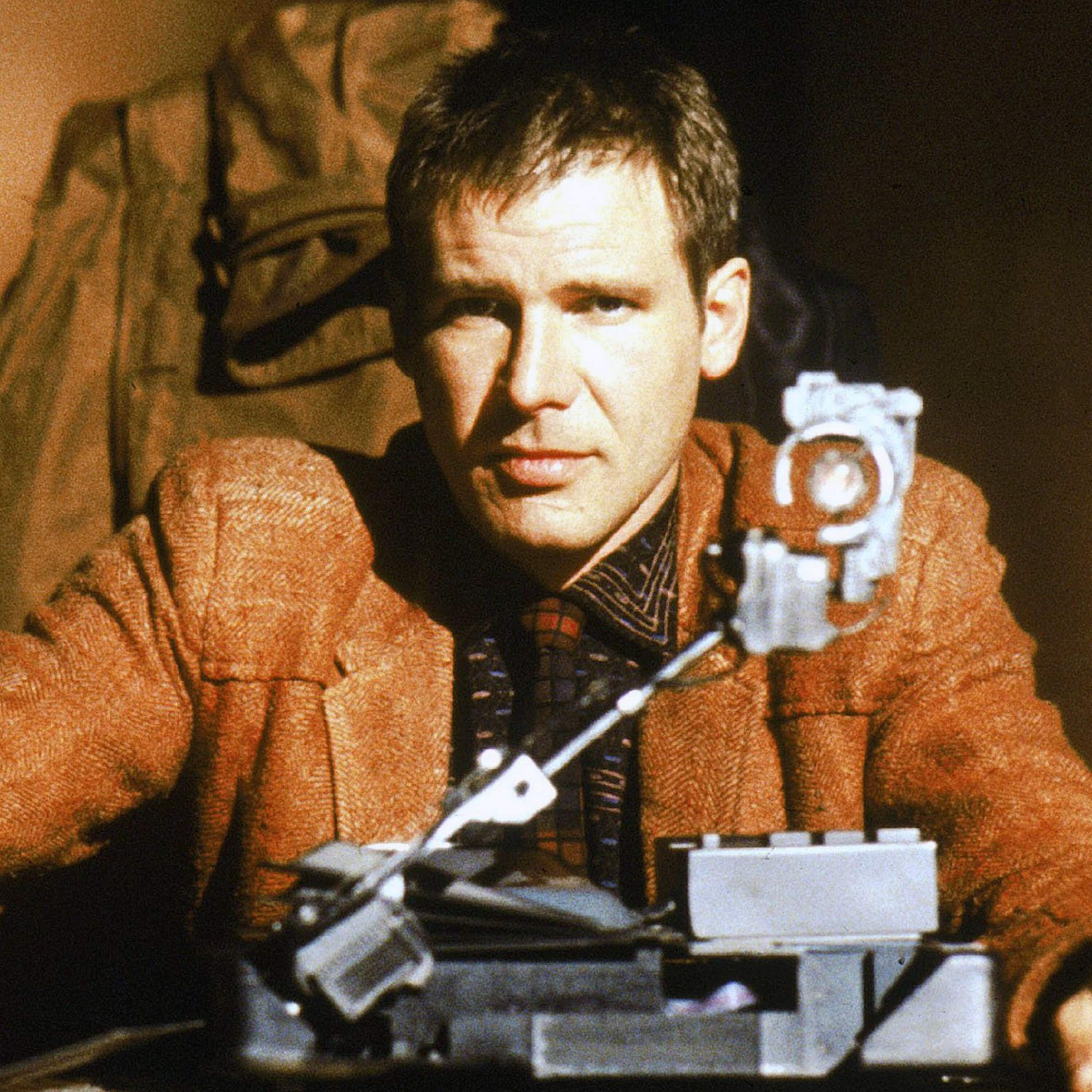
Okay, that's Nickel Boys, another great pick. We should note that Nickel Boys is distributed by Amazon MGM Studios. Amazon supports NPR and pays to distribute some of our content. Okay, here's my pick. It's Philip K. Dick's 1968 novel, Do Androids Dream of Electric Sheep? Which became the 1982 film Blade Runner. Both the movie and the book are about a future where androids are used as slave labor. Six androids of a new model that is hard to tell from humans. Rebel, the kill their masters. And a cop named Rick Deckard, which is just such a great noir name, a hilariously noir name has to hunt down. Now, look, there are book people and there are movie people, and there are Philip PK Dick people. And I've visited the Reddit threads. I know that there's a lot of book people who hate this movie, and some of them for those reasons that you can understand. Like, my copy of this book is called Blade Runner, originally published as Do Androids Dream of Electric Sheep? And it's got art from the movie.
- [15:09]
D
What a copy.
- [15:10]
B
They hate that. Of course they would hate that. Nobody likes to feel like a newbie, right? Nobody likes it when the movie arc becomes the book art. Everybody hates that. But. And also, there's been so many versions.
- [15:18]
D
You're asking for Will, actually.
- [15:20]
B
You are asking for Will.
- [15:21]
E
Wait, this is my will, actually. Is this the director's cut or is it the original version?
- [15:27]
B
See, this is the. My other point. Thank you, Parker. I mean, when you say they hate the movie, which do you hate? The theatrical cut? The director's cut? The final cut? The international cut? The work print? So leaving all that aside, I would argue, and this is what we're talking about here today, the book. What books do well, the film does what films do well. Right? Because when you are reading a book, you enter the world and you're intellectually and you're emotionally invested, you're pot committed because you helped build that world. Like the version of Little Women, the version of Nickel Boys, the version of Blade Runner, the version of to enter a stream of electric sheep inside your head is different from the one in mine because you helped build it and you stay inside it for hours. Or if you're like me and you read slowly, hours and hours and hours and hours. So you kind of live there. And in this book, the author kind of outfits you with absolutely everything you need to know about this world. There is also a tremendous lot about a religion called mercerism, which is founded on the notion of empathy as, like the most human, the highest human attribute. You learn a tremendous lot about how status works in this world. Like, there's a. Many animals have gone extinct. So owning a mechanical sheep, as the main character does, say, is a sign of wealth and status. Everyone carries around this catalog of mechanical animals that are available. It's this Cultural. And certainly the main character, Rick Deckard, never shuts up about his sheep and wanting to get an ostrich. And like, it's a huge thing. I would say though that the world building itself, like how it's executed in the book is, you know, it's not deft, right? It's a lot of characters telling other characters facts that they should already really know if they live in this world.
- [17:04]
D
Exposition, exposition, exposition.
- [17:06]
B
A lot of stuff pushed into dialogue. A lot of Deckard pausing to remember that lore dump, right?
- [17:10]
F
You're saying it's a science fiction book.
- [17:12]
B
I'm saying, thank you, Andrew. But the prose is so, like classic, you know, hard nose pulp. Now, the movie takes the thinnest possible slice of the book, the action, the hunting androids part. But I would disagree with some of the folks who hate this on Reddit. There is deference paid to the book. The whole notion of empathy, it's in the movie. It's not a major theme, but it's like in there, the fake animal stuff gets maybe two or three mentions. It's not this obsession like it is in the book, but you don't need it to be like, it's just there to undergird the world. Because movies, they're not, you know, exhaustive, comprehensive deep dives. Their language is visual. They deal in impressions and imagery and you get the meaning of them through lighting and camera movement and camera placement. So the book's lived in, like it's a lived in experience. Movies are like, you're visiting that world for a couple hours and so you get in the movie, what movies do you get? Tone, mood, atmosphere, spectacle. Books do the same thing, but it takes a while, right? Because like, you can get in a couple pages what the mood's gonna be by, like, how long the sentences are and that kind of thing. But it builds with a movie boom establishing shot. You get it, you feel the world underneath it. But there's no need to dig into it because I would say the book shapes the world and the movie just walks you through it. And also the other thing you get that you don't get in books is performances. So you get this big swing, bat, poop performance of Rutger Hauer as Roy, who is one of the androids. And he is off. He's charismatic, but he's sinister. And then when he meets his maker and finds them disappointing, he goes all the way off the rails. And it's great to see. They made little changes to tweaks to the book. Cosmetic changes that at first you think that doesn't add anything. Why'd they do that? Then you realize, oh, okay, maybe like the book, set in San Francisco, largely, the movie is set in Los Angeles, and Los Angeles is about what's real, you know, what's not. That's kind of like the whole economy, that city. The name of the company that makes the androids in the book is Rosen. In the movie, it's Tyrell. As if somebody sat down at a story meeting early on and said, guys, do we need to make the greedy corporate corporation making these killing machines Jewish? Or could we? Maybe not, maybe we don't. How about that? Good note, good note, good note, good note. The smartest tweak they make was in the slang for these replicants for these androids. In the book, they're called Andes, which, I'm sorry. Is just adorable. I'm sorry.
- [19:40]
D
Oh, cute.
- [19:41]
B
There's an Andy behind you. In the movie they're called Skin Jobs, which sounds racist, which sounds hateful, which speaks volume to.
- [19:52]
D
Sounds a little porny.
- [19:54]
F
A little bit.
- [19:55]
B
There's also that. Just a little. So have you seen this film? What do you guys think? Have you read the book?
- [19:59]
E
I mean, I've seen the movie. I will say I do have a Do Android Sleep Like a T shirt.
- [20:08]
C
I do, too.
- [20:08]
D
From out of print.
- [20:10]
B
Yes, yes, I have the same one.
- [20:12]
D
Because it's such a great old cover.
- [20:14]
E
So I know of which you speak, but have I read the book? No.
- [20:17]
B
Okay.
- [20:17]
E
All right. So sorry, Glenn. No, but the movie, I mean, it still resonates and is like. It's brutal and it's memorable. Just such a compelling viewing. To be fair, I've only seen the director's cut. I have never seen the controversial original.
- [20:39]
B
Release, which has narration, which, again, is what we're talking about, the cheat of narration. That's what makes it bad. Cause it's really cheesy narration.
- [20:46]
E
That's why I was confused. Cause I don't remember that. Andrew, have you seen Blade Runner?
- [20:52]
F
So, no, I've read the book. I was a big sci fi kid growing up, so I read the novel and I actually, I've never seen the movie because I've always been privy to the arguments over the virgins, which has caused a sort of choice paralysis. So then I just end up watching, like, Frasier or something, you know, Like, I have no. Is there a good version, Glenn, to watch?
- [21:11]
E
Is there Director's cut?
- [21:13]
D
What is the best one to watch?
- [21:14]
B
I would go director's cut or final cut, which is also the director saying, no but seriously. No, but for real this time, this is the final.
- [21:21]
F
I know. It's like when I'm mixing my projects, I'm like, use this project.
- [21:24]
B
Yep. Final. Final. Final. Yeah, yeah, yeah. That's the one I'd go with. That's the one I'd go with. For a variety of reasons.
- [21:31]
F
The director's got it.
- [21:32]
E
Okay.
- [21:32]
D
In a weird way, this is sometimes the problem with sci fi adaptations that are really good. And, you know, I really have been so seduced by it that I'm like, eh, I'm good. I have actually done the thing that I am always terrified my children will do, which is not read the book.
- [21:47]
B
Yeah, yeah, yeah, yeah.
- [21:48]
D
You know, that's the danger. But between me and Andrew, you know.
- [21:52]
F
Yeah, we did it. Yeah.
- [21:55]
D
And Parker, too. Sorry, but it's like, no, the three of us are a. We have all the knowledge, so.
- [22:01]
B
Yeah, that's great. All right, that's my pick. Do Androids Dream of Electric Sheep to Blade Runner? All right, Andrew, bring us home. Spoiler alert. This was my second pick.
- [22:11]
F
Okay. All right, so I think a lot of us have been leaning towards movie adaptations that have authorial voice behind them. They're true adaptations. And as Barry said, just covers. My pick is one in which the director straight up hates the source material. Straight up detests and makes fun of the source material entirely. Delicious. And that is the movie Starship Troopers. Yeah. So now Starship Troopers, the book by Robert Heinlein, which I'm almost done rereading, is about space cadets and a guy, Rico, Johnny Rico, going through space cadet school and learning, like, the philosophies of being in the military and why it's cool to live in a society in which only people who fight in the military can vote. And, like, that's the whole argument. The movie is making fun of that idea, is taking that idea and says, this idea kind of fascist. Right, guys?
- [23:08]
B
Yeah.
- [23:08]
E
Anybody see what's going on here?
- [23:10]
F
It's kind of a hilarious parody of Heinlein's book. And yet, if you are like a mouth breather not fully understanding how it's working on a metatextual level, the movie itself kind of rocks as propaganda as a piece of action filmmaking. It feels like I'm watching Top Gun. It feels so cool. And all the.
- [23:32]
E
Does it?
- [23:33]
F
I rewatched it yesterday, two days ago. All of the bugs being shot look so sick. And then all of the people are so beautiful. Everybody's extraordinarily good looking. And I think the movie, it came out in the late 90s, but I first watched it on, like, TNT or whatever. And so I kind of think of it as a sort of post 911 movie, even though obviously it came out before 9 11. But I always thought of it in the context of being in school where people were trying to recruit us to join the military. And I was like, oh, this is an interesting sort of comment on what's going on now. Even though I think as a kid, I didn't realize it was a parody of the book. I just thought it was a cool action movie. And then I remember reading the book, finding it kind of boring and kind of like, wow, there's a lot of just yapping going on.
- [24:23]
B
Philosophizing.
- [24:23]
F
Yeah. And so I don't know. The movie, I think, is one of the brilliant cases in a movie that can have its cake and eat it too, and sort of like making the comments while doing a cool thing that it's commenting on.
- [24:33]
E
Who directed it? Was it Joe Esterha?
- [24:35]
F
Paul Verho?
- [24:36]
B
Paul Verhoe.
- [24:36]
C
Verho.
- [24:37]
E
Paul Verho. Okay.
- [24:38]
F
Yeah. So. And it feels like an extension of RoboCop in a lot of ways, and how everybody's acting kind of like not stiff, but, like, extra. Everybody's got a little, like, asterisk on all of their lines.
- [24:49]
B
All right, Parker, I'm picking up on some ambivalence on your part. Say more.
- [24:52]
E
Look, it's of its time. I respect the craft. It's not for me. Starship Troopers. I don't know, man.
- [25:08]
B
The great Roger Ebert, who loved this book as a kid, in his review, he dismissed it as science fiction for kids. And then he says this. He says, the one redeeming merit for Paul Verhoeven's film is that by remaining faithful to Heinlein's material and period, it adds an element of sly satire, to which I say sly. We have very different definitions of the word sly, my man.
- [25:33]
D
It's doing a lot.
- [25:33]
F
It's so obvious. I don't know.
- [25:35]
E
It's hilarious.
- [25:35]
B
Stumbled into it, right?
- [25:36]
F
That Ebert reviews two stars, by the way, which is insanely loud.
- [25:39]
B
Crazy. Crazy.
- [25:40]
F
He, like, gets it kind of.
- [25:42]
B
Kind of. Yeah.
- [25:43]
E
Well, I also think this is between. He had just done Showgirls, and this was before he does Hollow man, and it's just like. It's just not his time at that point. And that's okay.
- [25:56]
D
I have to say, I feel for Ebert. I had to grow into this movie partly. Cause I'm not familiar with the source material. And I'm also, like, kind of I was like, very serious about my science fiction. And I was like, why can't they make a Left Hand of Darkness? And I remember going with a group of people and just being like, I kind of don't get it. Like, this is dumb. This is stupid. And none of these people are like, I don't like Denise, like, what? I just really didn't get it.
- [26:23]
B
Yeah.
- [26:23]
D
And in some ways, I will say, like, it wasn't until, you know, my husband kept being like, we gotta watch this movie with the kids. And I was like, oh, with the kids? I mean, my kids are close to teenagers now. I know I'm not watching that shower.
- [26:37]
F
Scene with my parents now.
- [26:38]
C
Yeah.
- [26:39]
D
I don't know things. Maybe I should go back and think about that. But in any case, I will say, once I understood the source material and what it was and was able to sort of get more context around it, I think it's terrific. But at the time, I just. It didn't land for me.
- [26:56]
B
Yeah, I get that.
- [26:57]
D
Which may just be because, you know, I was a snooty or, you know, empty headed person. I don't know. But I just. I didn't get. I'd be thrown into.
- [27:06]
E
Don't you dare.
- [27:07]
B
Don't you dare.
- [27:07]
D
My head was full of stuff. Just not that stuff.
- [27:10]
B
Yeah. There is a very, I would say, popular notion at the time that if this is a satire, it's not intended as one. He kind of stumbled into it because he doubled down on the original period.
- [27:20]
E
It's an accidental B movie.
- [27:22]
B
Ebert called the characters interchangeable, which is the.
- [27:25]
D
Yeah, yeah, yeah, yeah. I was like, these actors are bad.
- [27:27]
B
The whole point is that the cast look like they stepped out of a Leni Riefenstahl film. Right. And Caspar Van Dien, who is Johnny Rico in this film, is all just clean, sharp lines. Like he looks like a fascist illustration. He looks like an Aryan youth poster. Exactly. There is a scene where he gets flogged shirtless in front of these regiments of troops. That is there for a reason. That is there for many reasons. And none of them are sly. They're all right there on the surface. So the reason that one works for me is because of this change in tone. Because taking the source material and interpreting it. Right. Which is what we're talking about here.
- [28:01]
F
Yeah.
- [28:02]
E
A good adaptation is a separate animal from the book. I feel like if you want to be a loyalist to the book, just read the book.
- [28:11]
B
Exactly.
- [28:11]
E
Like, there's a movie I love called Little Children.
- [28:14]
D
Oh, yes.
- [28:14]
E
By Tom Peralta.
- [28:16]
B
Yep.
- [28:16]
D
Perotta.
- [28:16]
E
And like, the movie is within the tone of the book, but, like, the ending and other things are different. And it still reaches me like, I'm not gonna be like, well, actually, this is what happened in the end. Like, I don't care about that. I go into the movie not wanting to, like, play the greatest hits. I want a new idea, a new thought.
- [28:42]
D
I think this is why in some ways, I really love when people adapt Shakespeare to the screen. I'm a little bit done with seeing A Million Twelfth Nights on stage, actually. But when I see, you know, Leonardo DiCaprio and Claire Danes, you know, making a mess of the language, which I used to be annoyed by, and now I'm like, good for them, you know, and changing the ending, you know, like, literally, like they see each other. Like, that's amazing.
- [29:08]
E
Like, it's even more tragic.
- [29:10]
C
Exactly.
- [29:11]
D
It's also just like, what, what balls you have to have to be like, you know what? Will, I have an idea. I got a note. You know.
- [29:18]
B
Exactly. I love it. I've got some notes.
- [29:21]
D
If you can tell me something new, then like, that's culture. That's culture. Tell me something new.
- [29:28]
E
That's culture.
- [29:30]
B
Tell me something new. That's great. We want to know what your favorite book to film adaptation is. Tell us what it is and also tell us why. Because my favorite thing about this conversation, we had a lot of different whys. So I want to know about yours. You can find us on Facebook. And we had a lot of book to film adaptations we wanted to talk about, but that we couldn't get to today. So we made a list of more of our favorites at letterboxd. You can find a link to that in our episode description. And that brings us to the end of our show. Barry Hardiman, B.A. parker, Andrew Limbunk, thank you so much for being here. Thank you.
- [29:59]
E
Thank you.
- [29:59]
D
Thanks.
- [30:00]
B
And just a reminder that signing up for Pop Culture Happy Hour plus is a great, great way to support our show on public radio. And you get to listen to all of our episodes sponsor free. So please go find out more at plus.npr.org happyaur or visit the link in our show notes. This episode was produced by Carly Rubin, Liz Metzger, and Mike Katzeff and edited by our showrunner, Jessica Reedy. Audio engineering was performed by Travis Hagan. And hello. Come in provides our theme music. Thank you for listening to Pop Culture Happy Hour from npr. I'm Glen Weldon and we'll see you all next time.
- [30:32]
C
This message comes from Rosetta Stone. They have been the trusted leader in language learning for over 30 years. Their immersive, intuitive method helps you truly pick up your new language naturally. Access lessons from your desktop or mobile app. Whether you have five minutes or an hour. It fits your lifestyle with flexible on the go learning. Receive 50% off a lifetime membership with unlimited access to 25 language courses. For less life, visit rosettastone.com NPR this.
- [31:00]
A
Message comes from NPR sponsor NetSuite. Every business is asking the same question. How did they make AI work for them? With NetSuite by Oracle, you can put AI to work. Today, NetSuite is the number one AI Cloud ERP trusted by over 43,000 businesses. It's the unified suite that brings your financials, inventory, commerce, HR and CRM together. If your revenues are at least in the seven figures, get the free business guide Demystifying AI at netsuite.com story.