Loading summary
Transcript78 lines
- [00:00]
NPR Sponsor Announcer
Support for NPR and the following message come from Indeed Hiring do it the right way with Indeed's sponsored jobs. Claim a $75 sponsored job credit to get your jobs More visibility@ Indeed.com NPR terms and conditions apply.
- [00:21]
Aisha Harris
Mary Shelley's Frankenstein is, of course, the classic gothic horror tale about a misunderstood monster who's abandoned by his creator and shunned by society. So is there any more perfectly suited to reimagine it for a new audience than Guillermo del Toro? Probably not. He's called it the most important book in his life and his years in the making. Adaptation has finally arrived.
- [00:44]
Linda Holmes
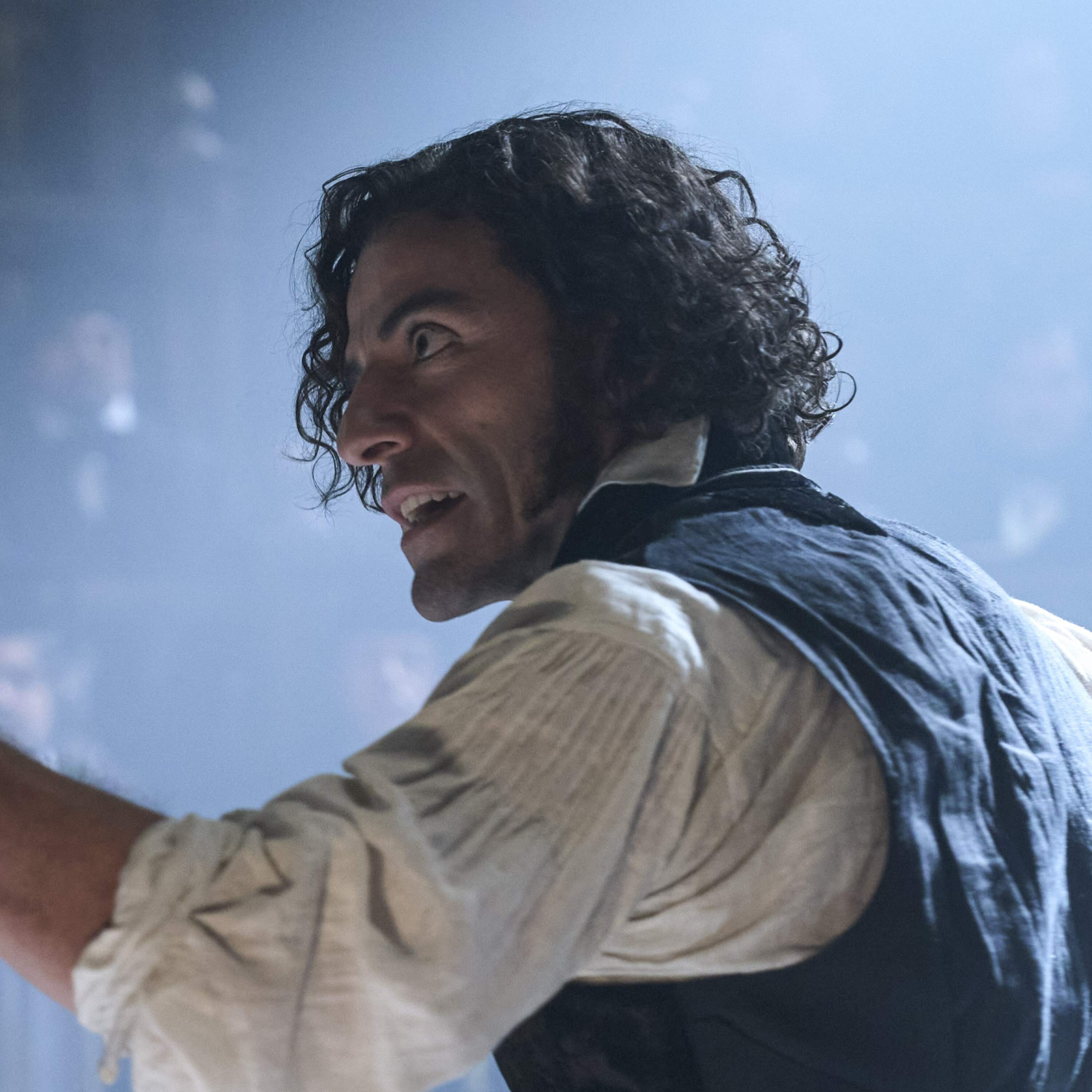
It stars Oscar Isaac as the scientist and in a gargantuan yet humanizing turn, Jacob Elordi as the creature. It's dark, epic and preoccupied with the existential dread of life and death. Was it worth the wait? We think so. I'm Linda Holmes.
- [01:01]
Aisha Harris
And I'm Aisha Harris. And today we're talking about Frankenstein on Pop Culture Happy Hour from npr. Joining us today is our fellow co host, Glenn Weldon. Hello, Glenn.
- [01:11]
Glenn Weldon
Hey, Aisha.
- [01:12]
Aisha Harris
Also with us is Barry Hardyman. She's a senior editor for NPR's investigations team. Welcome back, Barry.
- [01:18]
Barry Hardyman
Hi, nice to see you guys.
- [01:19]
Aisha Harris
Lovely to see you. Well, Frankenstein stars Oscar Isaac as Victor Frankenstein, a narcissistic 19th century doctor obsessed with the prospect of conquering death through science. A series of gruesome and ethically dubious experiments results in the development of the creature played by Jacob Elordi. He's this towering being who's alive, but at least at first can't communicate much beyond some grunts, though crucially, Victor does pull off his stated goal. The creature is virtually unkillable now. Victor becomes increasingly frustrated with the creature's seemingly slow cognitive progression and begins to abuse him. This does not bode well for Victor and the many others who encounter the creature and immediately assume the worst of him. The creature seeks both retribution and a reason to find his eternal life worth living. Frankenstein is streaming on Netflix now, though. My goodness, this movie looks beautiful on a big screen. I'm just gonna say, but I'm giving a little bit away of my thoughts on this. Linda, why don't you kick us off? How do you feel about Frankenstein?
- [02:21]
Linda Holmes
I really loved this. I think thematically it's very interesting. As you said, it really is about the relationship between life and death and the fact that for Victor, the valuing of life is a very self interested thing. It's very much about his accomplishment and his achievement. It takes him a very long time, I will say, to even Begin to understand that if you were to successfully create life, you would owe something to it.
- [02:49]
Barry Hardyman
Sometimes you have to send it to college.
- [02:50]
Linda Holmes
Exactly. But as much as I appreciate it thematically, I think what really blew me away about it is that this is a really, really beautiful movie. Even though it's a very gruesome movie in many respects, there's some really gross stuff that goes on in this movie. But nevertheless, you know, it has a kind of a lonely enormousness. Huge rooms, huge lab, huge landscapes. And it really emphasizes, I think, the isolation of Victor and how that's part of his madness, is that he isolates himself and. And that then he isolates this creature that he creates. I feel weird even saying creature. I'm like, that's so dehumanizing. But that is what I call him in the.
- [03:37]
Barry Hardyman
Especially when the creature's kind of hot.
- [03:39]
Linda Holmes
So, anyway, we can talk a lot about it. I mean, I think the performances are great. I think Jacob Elordi is extraordinary. I think Oscar Isaac is wonderful. But I very much appreciated just, you know, Guillermo del Toro. The first time you're introduced to a woman character, she's gonna have some diaphanous veil, like, floating out, and she's gonna be dressed all in red.
- [03:59]
Promotional Announcer
I mean, it'.
- [04:00]
Linda Holmes
And I appreciated that very much.
- [04:02]
Aisha Harris
Yeah. Yeah. Barry, we were talking offline just before this, and you called it cozy but gruesome, which I think is a great, great description of it. Tell us more about how you feel.
- [04:12]
Barry Hardyman
Well, I like Linda. I agree with, as usual, much of what she said. And I think the cozy part has to do with that kind of. It is so gorgeous. Like, the first diaphanous veil that we're talking about is like a mission statement for the movie.
- [04:25]
Linda Holmes
Oh, and it's so him. It's so.
- [04:28]
Barry Hardyman
And I wanna tell you, Crimson is not the only jewel tone here, but the movie is, you know, as much as it is sort of cozy and wonderful and gorgeous. I found it had a long tail in my head the way that the book does, even though there are some maybe questionable changes in it. And it's very much a movie for these times. And there will be a meme of Oscar Isaacs sitting on those stairs and saying, I didn't think about After Creation. Like, there is no way that anyone who is think about or worried about the progression of technology and in particular, AI right now isn't thinking about this in this movie.
- [05:06]
Linda Holmes
But I also.
- [05:07]
Barry Hardyman
And this is one of the things about this book in particular, is it is written by a woman who had a very Very particular worldview. And it is both large, but it is domestic also. And he really gets both. I mean, Victor Frankenstein is nothing so much as a really annoyed postpartum mom during part of the movie. And I really felt for him. So in any case, I could go on and on, and I think I will, but in pieces.
- [05:34]
Aisha Harris
Thank you, Barry. Glenn. As soon as I saw this at Toronto International Film Festival, I was like, I feel like Glenn is gonna like this. Glen, how did we feel about this, Glen?
- [05:44]
Glenn Weldon
Kind of like this. Yeah. I mean, as you mentioned, if we're gonna get the story again, this is the guy to make it. I mean, he has made films in the past that are swoony and feverish and melodramatic, like Crimson Peak. And he's made movies in the past with a hideous outcast who turns out to be more human than the humans around them, like Shape of Water. So you slap these together. Swoony, melodramatic, stacks the emotional deck in favor of the monster. That is the elevator pitch for the novel Frankenstein. I mean, like, that's the jacket copy in the back. As Barry mentioned, he made several changes to the bones of the story that I'm still trying to figure out what work they're doing, why are they there. But, you know, we were lucky enough to see this in a big screen. The people listening to this episode are gonna be able to see it on their small screens. I wish you could see it on a big screen.
- [06:31]
Aisha Harris
Well, I hope you have. If you're listening to this, maybe you have already.
- [06:35]
Glenn Weldon
Maybe you have in the theater, if you ever. It's two and a half hours long. Yes, admittedly. But if you ever get bored with what's going on in the foreground, you can just get lost in the details of the set dressing. It's such a gorgeous movie to look at. I hope as many people as possible saw it in the theaters, but seeing it at home is just as good.
- [06:51]
Aisha Harris
Yeah, you've already mentioned Crimson Peak and Shape of. But one of his more recent films, Pinocchio, which was obviously another adaptation of a very well known and very often told story. It kind of reminded me a lot of his take on that as well, because that is another story that is dealing with mortality and this idea of, like, what it means to be alive. And I loved this adaptation of Frankenstein. I have not. I'm gonna admit here, I have never read Mary Shelley's Frankenstein. I have seen the 1931 version of Frankenstein, and I've seen Bride of Frankenstein. So I'm. That is My, like, starting point here. But I have to pull on Jacob Elordi here because he is. He has grown so much out of euphoria into, you know, he did Priscilla. He played Elvis in that. And now here, this movie solidified for me that Jacob Elordi, who is very tall, is able to use his height and his stature to turn him into, like, this kind of, like, sexy man, half man sort of man here. And there's moments in this film that are sort of erotic. Like, it's like it's both a father son story between Victor and the creature. But then also there are moments there's a very beautiful scene where they kind of like, almost do a little dance or like, kind of embrace in a way. And I was just like, this is gorgeous. Like, everything about this is beautiful. It's complicated. And I just really dug basically everything about this film. It made me sad. It made me think about my own life and ponder my own existence. And I don't know if you can ask much more from this story. I do want to kind of turn to the changes you alluded to, which is, what about that didn't work? Or what were you questioning in those changes?
- [08:39]
Barry Hardyman
So this is one of these things where I went into it saying there are probably going to be some changes. This is kind of an odd book. It's split up in this odd way, and it is ripe for an English class because that it is set up. And so I thought, I'm gonna go in believing that this is his version of. Not just a cover band.
- [08:58]
Aisha Harris
This is.
- [08:59]
Barry Hardyman
He's going to rewrite it in some ways. And obviously his heart is with the creature. But also he has really made this very much like a father son dynamic. And I felt like he was much more sort of villainous in this. Like, he's very much a tragic figure in.
- [09:16]
Aisha Harris
You mean Victor? Victor.
- [09:17]
Barry Hardyman
Victor. Excuse me, sorry. In Mary Shelley's version. And I really wasn't expecting it, and I was slightly irritable about it until, you know, we sort of got into the thing. Like, I thought we were telling too much and not showing enough.
- [09:32]
Glenn Weldon
One of the changes I wondered about was why add an extra layer of complication to the Elizabeth character played by Mia Goth? Why make Elizabeth Victor's brother's fiance instead of just having her be his fiance as she is in the book? What work is that doing? It turns out that this is exactly what Barry is alluding to because it ties directly into what Del Toro's approach is, which is perfectly in line with his whole body of Work which is always, the monster is the hero. So he sets out to make Victor even more of a jerk than he is the book and, by extension, make the creature more sympathetic. I mean, the creature does some really nasty stuff in the book that gets shunted off to other characters. In this film, Isaac is playing Victor as this preening fop who keeps telling everyone what a genius he is. He abuses the creature. He tries to get with his own brother's fiance. All this is so we never waste any time, like empathizing with Victor. And there's something not subtle about that. At one point in the film, somebody turns to Victor and says, you are the monster. And it's like, I've been watching this film for over two hours. I get it. But some other changes like that, that's what he's doing.
- [10:33]
Linda Holmes
I think it had been a long time since I read this book. I did read it, but long ago. So I went back and I read, of course, the Wikipedia summary, which is what you do when you haven't read the book in a long time or haven't read the book or have a test. I have in this case. But anyway, what struck me about the change, it shifts more toward the wrongs done to the creature. More purely about that, and I think it ties into. And one reason I think it may have happened is that through past interpretations of this story, there has been this idea of the monster creature as this hulking, terrifying, the green square head and all that stuff. You know, the reductive way that this becomes a story about a big, scary Halloween monster is maybe one of the reasons why this interpretation shifts back even more strongly toward. Think about this as not just the wrongs done to this creature, but focusing on the wrongs done to the creature by the creator as opposed to just by society in general. I think you're absolutely right that Del Toro's heart is always with the creature. And I think he thinks that's what the story is about. And I think I tend to agree because there's a fine line between is the moral of the story, it's a mistake to mess around with life and try to create life, or is is a moral error to try to create life, because there's a little bit of a difference between this is a logical thing for somebody to try as a scientist, and then it turns out it has terrible consequences, and he struggles and suffers because, oh, my gosh, it's had terrible consequences. Right. Or is it something that grows out of vanity? And I think, in a way that ties back to What Barry was talking about with some of the parallels to tech development, part of the question that it raises, then, if you think about that parallel is, is the way that some tech advances are being handled, is it just, like, people just don't understand what the potential risks are? Or. And it can be both, right? Or is it the vanity that tells people, whatever the risks are, I'm going to go forward because I have a vision and a mission, right? And it's funny to me that del Toro is sort of talking about the potential folly of fanatically pursuing your vision, because in some ways, he is a pursuing your vision guy, like a director who is about pursuing your own vision. And in fact, when I look at this film, one of the things I love about it is I just look at it and think. I think this is his movie that he wanted to make. And it is, as I said, so incredibly him.
- [13:25]
Aisha Harris
Just because of the times we're living in. I had no issue with, like, seeing Victor as a villain, like a terrible person. Like, it's just, you know, these people exist, and we need to rein them in. What I kept sort of pulling on is what Linda was sort of talking about, which is this idea. I mean, yes, you can apply it to tech and AI, but also you can apply it to actually deciding to have a child or birthing. Absolutely none of us has to be here, but then we're here. And the fact that so much of this journey, the way this movie is structured is the first part of the film is mostly Victor telling his side, and then the monster gets to tell his side. And his side is that, you know, you created me. I can't die. This is terrible. Like, no one accepts me. He does find at least one person who does. He has a horrible, like, awful existence, and he's trying to wrestle with that. And that, to me, was the most profound aspect of it. And it's like, that doesn't mean you necessarily don't want to be here, but it's like, how do I make the most of what I have when the world is so terrible and so terrible to me specifically? And could Guillermo del Toro have been telling that same story 10 years ago, 15 years ago? Like, again, he's been conceiving of this as an idea for a film for probably his entire career. He's loved this book so much, but I don't know. I'm really grateful that we get it in the now because of everything, the way it feels. So in conversation with everything that is happening. It reveals the sturdiness of The. The original Frankenstein.
- [14:56]
Promotional Announcer
Right, right, right.
- [14:56]
Linda Holmes
Yeah.
- [14:57]
Aisha Harris
Even though, again, I have not read it, but, like, the fact that you can adapt it and it can still be relevant, that's what makes it such a great story.
- [15:05]
Barry Hardyman
The bones are sturdy, and I actually think. And again, I really loved this movie, but I actually think where it's sort of, you know, the parts that are weaker for me are the ones that tend to lean away from the bones. So it's like the father son dynamic, which is really banged over your head. Like, there is the dad who hits him, and then he hits the creature in exactly the same way. And there's this thing about inherited trauma and stuff that, to me, was where it really felt like, you know, we sort of lost the sort of robust parts of the thought of what it means to make something right, and actually gets further away from the parts of parenthood that are difficult. And I think maybe more interesting. He's so deep, desperate to rehabilitate everybody in the. Like, he wants to show how much he loves this. You know, he makes Victor this terrible villain, and then Victor gets the line of, you know what you're talking about, which is, go out there and live, man. Go make the most of it. And it's like, come on, like, this guy, son.
- [16:05]
Aisha Harris
Like, please.
- [16:06]
Linda Holmes
You know. Yeah, I get that.
- [16:08]
Aisha Harris
Yeah, that's fair. That's fair.
- [16:09]
Linda Holmes
I agree with Barry that the father son dynamic is a little bit. Maybe a little bit too enunciated. I actually think, because you start the film and it's not a spoiler. Cause it's the beginning of the movie, because you start the film. You know, the way that Victor gets to tell his story is that he's been injured and he's telling it to the people who are trying to save his life. I actually think you start off with a default sympathy for him, because that's what happens when you show somebody injured at the beginning of a movie and being pursued. Right. It's almost like Del Toro is saying, this is how you think we maybe think about a monster story, Right? Here's a guy who's injured, being chased by this very, very devastatingly destructive monster. And then as he tells his story, it begins to invert that. But I think he starts with that place of monster, terrifying person, victim, and then starts to kind of unravel that dynamic and explain how, you know, I mean, there's a reason why the phrase you've created a monster came into being. And as far as I know, it's of this story. And so, heaven knows, there are Plenty of applications of created a monster.
- [17:22]
Glenn Weldon
You know, this is a lot closer in tone and spirit to the novel than most versions of this tale that we get for sure. Certainly the 1931 Boris Karloff version that you mentioned, Aisha. Because the thing about the novel, I would argue the most important thing about the novel is that the creature grows intellectually, philosophically, aesthetically, and he still gets rejected. That is either a critique or an endorsement of the British class system. So no matter how good your education, breeding is all that matters. So the Karloff film kept him a lumbering brute so he could be scary. The book Creature, he reads Plutarch and Goethe and Milton.
- [17:55]
Linda Holmes
Milton.
- [17:56]
Glenn Weldon
And he gains insights on where he fits into creation. So he's out here going, you know, I ought to be thy Adam, but I am rather the fallen angel whom thou drivest from joyful no misdeed, while Karlov was out here going fire bad. Right?
- [18:08]
Aisha Harris
Yeah, yeah.
- [18:09]
Glenn Weldon
And I think that that growth is the important thing here. And I think Elordi is great at both. Like, he's good at launch Creature. He's good at creature 2.0 because, you know, he is so pitiable that you understand his confusion. And this is the other thing that Del Toro is doing. You justify his rage. Like you get it.
- [18:25]
Linda Holmes
Yeah, for sure.
- [18:26]
Aisha Harris
Yeah.
- [18:26]
Linda Holmes
And I will say Glenn's right. If you're right about this critique of the class system thing, then that means that Jacob Elordi is not the only bond between this movie and Saltburn.
- [18:34]
Glenn Weldon
There is that.
- [18:39]
Aisha Harris
Well, you should tell us what you think about Frankenstein. Did you get a chance to see it on the big screen? I hope so, but if not, I hope you enjoy it on Netflix. Either way, it is a cozy, gruesome movie for the fall. Find us on Facebook@facebook.com PCHH and on Letterboxd@letterboxd.com NPRpopculture. We'll have a link in our episode description. Up next, what's making us happy this week?
- [19:05]
Promotional Announcer
This Message comes from Paramount plus, streaming November 16th on Paramount. It's the return of Landman from Taylor Sheridan, co creator of Yellowstone. Academy Award winner Billy Bob Thornton is back, featuring an all star cast including Academy Award nominees Demi Moore, Andy Garcia and Sam Elliott. Tensions come to a head as Thornton's Tommy and Moore's Cammy Miller struggle to maintain control of Emtech's oil Landman. New season streaming November 16th only on Paramount Plus.
- [19:36]
NPR Sponsor Announcer
This message comes from NPR sponsor Capella University. Sometimes it takes a different approach to pursue your goals. Capella is an online university accredited by the Higher Learning Commission. That means you can earn your degree from wherever you are and be confident your education is relevant, recognized and respected. A different future is closer than you think with Capella University. Learn more about earning a relevant degree at Capella.
- [20:02]
Promotional Announcer
Eduardo this message comes from Progressive Insurance Fiscally responsible financial geniuses, monetary magicians. These are things people say about drivers who switch their car insurance to Progressive and save hundreds. Visit progressive.com to see if you could save Progressive Casualty Insurance Company and affiliates. Potential savings will vary. Not available in all states or situations. This message comes from BetterHelp President Fernando Madera describes how BetterHelp online therapy has.
- [20:32]
Aisha Harris
Helped him for me, sometimes I just need to go and talk to somebody that is not gonna judge me right.
- [20:40]
Glenn Weldon
Is gonna be there and they're gonna.
- [20:42]
Aisha Harris
Listen to me and I can't start.
- [20:45]
Promotional Announcer
Just saying, look, I'm not feeling right.
- [20:47]
Aisha Harris
Today and it feels natural. I love it.
- [20:50]
Promotional Announcer
To get matched with a therapist, visit betterhelp.com NPR for 10% off your first month.
- [20:58]
Aisha Harris
And now it's time for our favorite segment of this week and every week. What's making us happy, Mary? What's making you happy?
- [21:04]
Barry Hardyman
This week for my happy, I want to stick with the theme of juicy, delicious science fiction. And so I want to recommend a book by Ian McKeown of Atonement fame called what We Can Know. It has so many different applications. It's for the people that loved Cloud Atlas. It is for the people that loved Possession. It is for the people that love station 11. It has something for everybody. It is a post apocalyptic novel. It also by has elements of romantasy and dark academia.
- [21:31]
Aisha Harris
If that's your thing, it's all over.
- [21:33]
Barry Hardyman
It takes place very far in the future. The climate has come to get us and a researcher is finding the truth behind a lost poem. It is one of those books where every single section ends with something that makes you see everything that came before in a different light. It is something that made me feel. I know this is gonna sound really depressing, but it made me feel very hopeful in the same way that Station 11 did that when the apocalypse comes, love will remain and so will poetry, crucially. And it is one of these things where I thought, oh, I actually could recommend this to everybody who listens to this podcast because it has so many different kinds of things. It is called what We Can Know by Amy Keown. And if you haven't liked anything of his since Atonement, I do want to say you should pick this up.
- [22:20]
Linda Holmes
It is better than Atonement Ringing endorsement.
- [22:22]
Aisha Harris
Thank you, Barry. All right, Linda, what is making you happy this week?
- [22:26]
Linda Holmes
Well, you know, there's a thing that happens when you have a segment called what's Making Me Happy this Week, where sometime you really want to recommend something that is awesome, but it's incredibly sad and depressing. So I just want to set out by saying this is recommendation. Netflix has a new documentary called the Perfect Neighbor.
- [22:44]
Aisha Harris
Oh, God, I saw this. Yeah.
- [22:46]
Linda Holmes
It's made up primarily of police body cam footage, and it follows the story of a feud between neighbors that unfortunately ended in a fatal shooting. It is essentially the story of a white woman who lives in a neighborhood where she is constantly yelling at a group of mostly black kids who play in an area near her house. It's not her yard, but she considers it her yard. I guess I would say it is sort of about how this just escalates and escalates over time. The police are unhelpful because in many ways they are ill equipped to intervene in this kind of situation. I think the plain spoken nature of this documentary is, and the fact that it is made up mostly of body camera footage and later kind of police interview footage and things like that makes it extraordinarily powerful. It is not a happy story. It is a very sad story, but it is, I think, very good at communicating the dangers of conflicts that are racist in a lot of their origins and the difficulty of using police as your only response when you're having this kind of conflict. It is called the Perfect Neighbor. It is a very, very good film. I know Aisha saw it. I do recommend it. It's streaming on Netflix. It's a tough sit, but I think it's another thing that I think will really stick with you, and it is well worth watching.
- [24:21]
Aisha Harris
Thank you, Linda. Recommendation? As Linda said, it won't make you happy, but it's absolutely worth watching. So thank you, Linda. Glenn, what is making you happy or just recommending? What are you recommending?
- [24:32]
Glenn Weldon
Well, the British actress Patricia Routledge passed away. That's not making me happy. She passed away a while back. And if Americans know her, they probably know her from a British sitcom called Keeping Up Appearances. Look, that was broad sitcom humor. She nailed it. But if you want to see her in her element, you gotta go with the monologues by Alan Bennett called Talking Heads, which I've talked about before. But since she died, I have been listening to the complete Talking Heads audiobook because there is an intimacy to these monologues that headphones bring out. With Routledge in particular, you can hear the subtlest shifts in her vocal performances because she finds in these women that she's playing, she finds the pathos, but she never gives into it. She uses it. The women she's playing refuse to acknowledge that they're unhappy in any way. And the energy they put into that denial is what keeps them going. So in these monologues, a character talks directly to us, and they tell us their version of events. And because they're so meticulously written and performed, we get to fill in the actual story around them that they don't have any idea what they're telling us, but they're telling us a truth. And sometimes at the very end of the monologue, you can see them kind of glimpse, like a fleeting glimpse of the truth, but then they bat it away, because, of course they do, because that's what humans do. So the Patricia Routledge monologues in Talking Heads are called A Woman of no Importance, A Lady of letters. And Ms. Fassard finds her feet. So what's making me happy is slapping on a pair of headphones and having a tiny, shattering revelation in my living room. That's on the Complete Talking Heads audiobook.
- [26:07]
Linda Holmes
Thank you, Glenn.
- [26:08]
Aisha Harris
Lovely. Well, what's making me happy this week is a movie that I saw at Toronto, the film festival, last year, not in 2025. And it is Cloud. It is finally here. I'm so glad that people have been able to check this out. This is the action thriller directed by Kiyoshi Kurosawa, the director, of course, behind, you know, the psychological horror movie Cure Pulse. And it stars Masaaki Tsuda as Yoshi, who's this factory worker who has a side hustle, as so many people in our times do. Now he hustles as an online reseller. His business begins booming. You know, he leaves his factory worker job, but he has some sketchy practices that come back to bite him, first via online harassment, and then eventually it spills over into real life. I don't even really want to say too much more about it, because I just think the less, you know, going into it, the better. It is such a movie that I think most people will enjoy in some way because it feels both of the moment, but also it will be timeless, because who doesn't love an action thriller? Who doesn't love one that is really focusing on the human condition in a very modern way? So that is Cloud, the Kiyoshi Kurosawa film. It's streaming on Criterion, but you can also rent it vod. And that is what is making me happy this week. If you want links for what we recommended, plus some more recommendations. Sign up for our newsletter@npr.org pop culture newsletter. That brings us to the end of our show. Barry Hardyman, Glenn Weldon, Linda Holmes, thanks so much for being here and for being alive.
- [27:48]
Linda Holmes
Thank you, thank you.
- [27:51]
Glenn Weldon
Thank you.
- [27:52]
Aisha Harris
Oh, yeah. Sondheim, Guillermo. Who cares? Yeah. Yes. This episode was produced by Mike Cadseff and Janae Morris and edited by our showrunner, Jessica Reedy. Hello. Come in. Provides our theme music. Thanks so much for listening to Pop Culture Happy Hour from npr. I'm Ayesha Harris and we'll see you all next week.
- [28:13]
NPR Sponsor Announcer
This message comes From NPR sponsor 1Password Protect your digital life with 1Password. If you're tired of family members constantly texting you for the passwords to streaming services, 1Password lets you securely share or remove access to logins access from any device anytime. 1Password lets you securely switch between iPhone, Android, Mac and PC with convenient features like autofill for quick sign ins. Right now, get a free two week trial for you and your family at 1Password.com NPR this message comes from Mint Mobile. At Mint Mobile, their favorite word is no. No contracts, no monthly bills, no hidden fees. Plans start at $15 a month. Make the switch@mintmobile.com Switch that's mintmobile.com Switch upfront payment of $45 for 3 month 5GB plan required, equivalent to $15 a month new customer offer for first 3 months only. Then full price plan options available, taxes and fees extra. See Mint Mobile for details. This message is sponsored by dsw, the birthplace of the humble brat, full of all kinds of shoes that get you at prices that get your budget. And when there are never ending options for every style, mood, occasion and budget, there is unlimited freedom to play. And that's something to brag about. So go ahead, stock up on fresh sneakers from your favorite brands or try those boots you always secretly knew you could pull off. Find the shoes that get you at prices that get your budget. Dsw Let them surprise you.