Loading summary
Transcript58 lines
- [00:00]
Sponsor Announcer
This message comes from Great Wolf Lodge, where there's family fun all under one roof, including an indoor water park, attractions, dining and more. With 22 lodges across the country, you're only a short drive away from adventure. Learn more@greatwolf.com.
- [00:22]
Linda Holmes
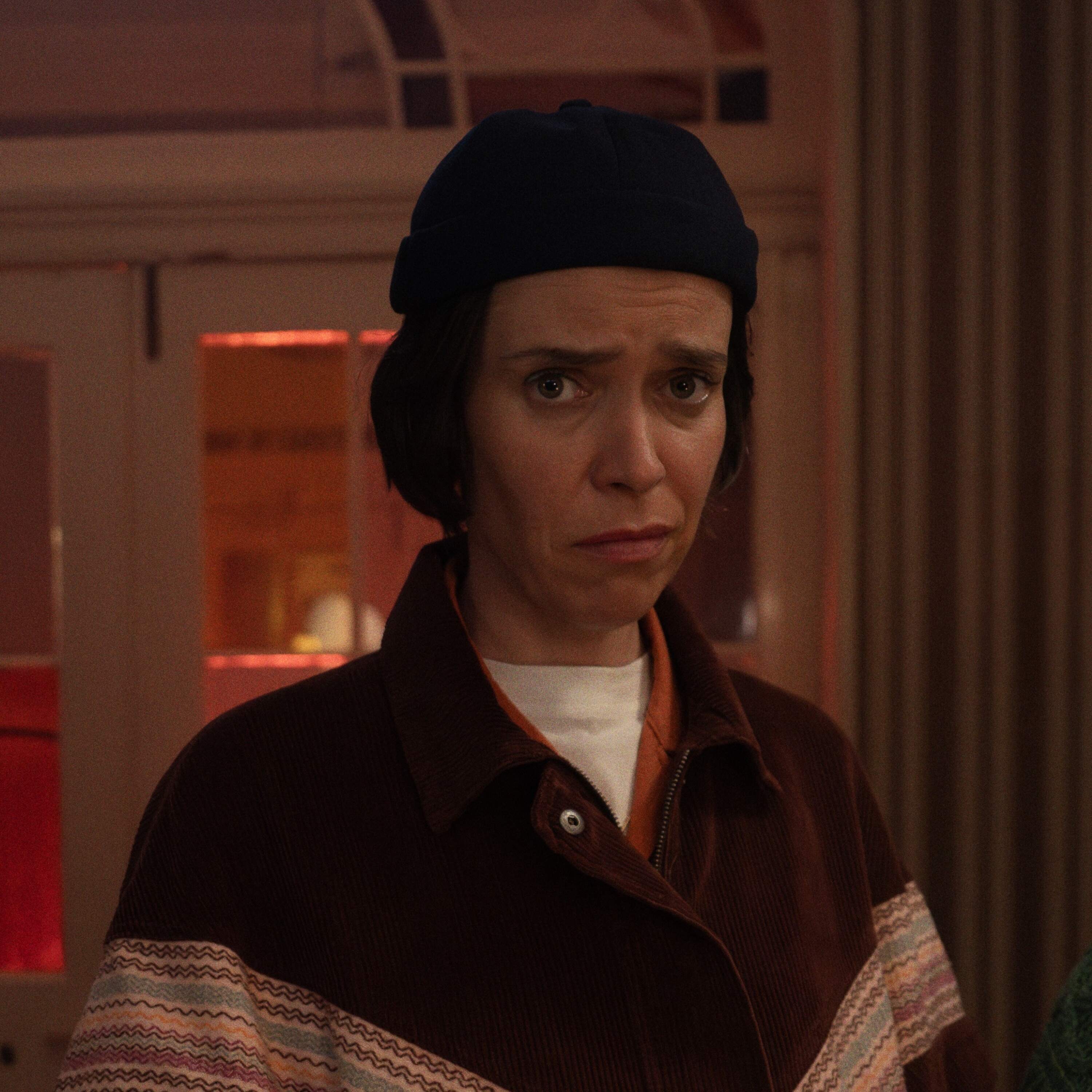
The Netflix series How to get to Heaven From Belfast asks this question, can three very messy longtime friends work together to solve a mystery from their youth? From the creator of the beloved show Derry Girls, the series follows them on a darkly funny adventure through Ireland and elsewhere. They elude various pursuers, they reopen old wounds, and they try to find answers about what has happened to a friend they lost along the way. I'm Linda Holmes, and today on NPR's Pop Culture Happy Hour, we're talking about how to get to heaven from Belfast.
- [01:01]
Sponsor Announcer
This message comes From NPR sponsor 1Password. Anyone else feel like 99% of your emails and texts are password reset codes trusted by millions of users and over 175,000 businesses? 1Password lets you skip the resets and sign in securely. With strong, unique passwords that auto fill across all your devices, you can safely share logins, store cards and files. And finally, stop using your pet's name as a password. Try it free for two weeks@1Password.com NPR.
- [01:35]
Support for this podcast and the following message come from Strawberry Me. If you could go back and talk to your younger self, would you tell yourself that you have a job that truly makes you happy? Many people are stuck in jobs they've outgrown or never really wanted. A career coach from Strawberry Me can help you move on to something you actually love. Benefit from having a dedicated coach in your Corner, and get 50% off your first coaching session at Strawberry Me.
- [02:03]
NPR this message comes from NPR sponsor the Capital One Venture X card. Venture X offers the premium benefits you expect, like a $300 annual Capital One travel credit for less than you expect, plus earn unlimited double miles on every purchase and enjoy access to over 1,000 airport lounges worldwide. Capital One what's in your wallet? Terms apply. Lounge access is subject to change. See capitalone.com for details.
- [02:32]
This message comes from Rosetta Stone, the trusted leader in language learning. Choose from 25 languages, receive 50% off a lifetime membership with unlimited access to 25 language courses for life. Visit rosettastone.com NPR joining me today is.
- [02:49]
Linda Holmes
The host of the podcast Happy to Be Here, Greta Johnson. Hello, Greta.
- [02:54]
Greta Johnson
Hey, Linda.
- [02:54]
Linda Holmes
And also with us is Jeff Yang. He a cultural critic and the author of the golden the Movies that Made Asian America. Welcome back, Jeff.
- [03:02]
Jeff Yang
Hey Linda. Glad to be back.
- [03:04]
Linda Holmes
All right, so how to get to Heaven from Belfast comes from Lisa McGee, the creator of Derry Girls, another show about a group of what you might call unruly women. This time, the focus is on three middle aged friends. Saoirse, played by Roisin Gallaher, is a TV writer. She, Dara, played by Kalyn Dunn, spends a lot of her time taking care of her mother. And Robyn, played by Sinead Keenan, is a mom of three kids. When the women get word that Greta, a friend from school with whom they'd lost touch, has died, they decide to travel to her wake, partly to pay their respects, but partly because the four girls once shared a big and awful secret and they want to make sure nobody finds out. Once they get to the wake, things only get stranger. And figuring out what really happened to Greta seems more pressing than ever. The story unfolds over eight episodes. It's part mystery and part comedy, and it's streaming now on Netflix. Now, with apologies for the fact that you share a name with the murder victim, I'm going to start with you, Greta. R. Greta, how did you like this story of another Greta?
- [04:15]
Greta Johnson
Oh, my gosh. I have to ask, Linda. Did y' all choose me to do this one because of the Greta of.
- [04:20]
Sponsor Announcer
It all, or no?
- [04:21]
Linda Holmes
I don't think so.
- [04:22]
Sponsor Announcer
No.
- [04:22]
Linda Holmes
We just like you.
- [04:24]
Greta Johnson
It was such a pleasant surprise. It's hilarious. I have to say, I feel like I could do, like, a whole thing on pop culture representations of Greta's. But regardless, I thought this show was wonderful. It was just like a total delight. I enjoyed hanging out with these women. I enjoyed the messiness. There's a wackiness to it. And there's also still, like, a fair amount of substance, which I really appreciated, given the fact that I think often, especially with Netflix, the shows always look good. There's always, like, sort of a shininess to them, but substance can vary. And this one is also a reconciliation of trauma and grief. And, yeah, I just thought it was a great ride.
- [05:05]
Linda Holmes
Yeah, there's definitely a mix of, like, heavy stuff and funny stuff that is hard to accomplish. Jeff, how did you feel about how to Get To Heaven from Belfast?
- [05:15]
Jeff Yang
So I kind of doodled a little chart about the show after watching it because it was a ride. And by the way, ride means something different in the world of the show.
- [05:24]
Linda Holmes
Yes, yes.
- [05:25]
Jeff Yang
Initially, I didn't really like it, and I think part of that was because of my expectations from Derry Girls, and I'm a huge Derry Girls fan. It's just straight crack, you know, and this show starts differently. It's much slower in its build and it gets dark a lot faster in ways that aren't leavened with the kind of constant, just innocent Joy of Derry girls. I went into kind of this place where by around the middle, I was like, I really don't like this show. And then I kept on going, just powered ahead because of the great character writing and the fact that Darahand is super hot.
- [06:02]
Linda Holmes
You know who appears as the young police officer.
- [06:06]
Jeff Yang
Yes, the young police officer and dominates the screen whenever he appears.
- [06:09]
Greta Johnson
He is a babe.
- [06:10]
Jeff Yang
He is very much a babe. But the fact is, over time, I not only turned around on it, but I ended up really kind of loving it. And it does take that work because I think there is a bit of a slow pacing and the narrative is very pretzel like and opaque for the basically the first five episodes. But if you stick with it, it definitely pays off. And it's at the end of it. I mean, I just wanted to see more of these girls.
- [06:36]
Linda Holmes
Yeah. When I watch a Netflix eight episode mystery or something like that drama, I often go into it thinking I may very well feel like this should have been six instead of eight episodes. I think I did feel that way a little bit about this one simply because for me it started off really delightful as I got to know the women. Like, I just think all three of these main characters are just wonderful inventions. I think they're so funny and they're all unique and they're all strange in different ways that I very much enjoyed discovering. But then when you get into the actual mystery itself, I felt like it bogged down a little bit. And in the middle I did feel like it developed pretty slowly and there was a little bit of like, okay, you know, you're dropping a lot of foreshadowing about like they're having flashbacks to like some kind of terrible, traumatic night. There clearly was a fire somewhere. And like I need to start uncovering some information at the same time as you go along. So much of it is so much fun to watch, including like any time these women are just like frustrated with each other on this road trip, which happens a lot. I found it completely delightful. And these are not really actresses that, that I knew well. And so just watching them kind of, I don't know, hang out, I thought was so entertaining.
- [08:04]
Greta Johnson
I think that can help so much with a mystery, which is like, as you put it, Jeff Pretzel, like, you know, that opacity is like, well, as long as it's a good hang you can kind of get through some of that. I'm not exactly sure what this backstory is, but we'll figure it out eventually.
- [08:21]
Jeff Yang
I also feel like the world building that Mickey does is always so rich and so vital. Part of the reason I was so captivated by Derry Girls when I first watched it. I'm not going to be ashamed by saying it was a Netflix recommendation, but I totally got hooked, you know. No, of course it's the incredible writing, dead on comic performances, but also it's like this rare opportunity to have this. For me anyway. Exotic fascination with white culture when I was watching that. And it's the same is true with this, I just kind of felt like all of a sudden I understood what it was like to stumble over the pronunciation of names and be confused by the political and ethnic differences between groups of people who look exactly the same. Oh, this is what it feels like. I'm searching the Internet for cultural references and explainers. For me, it was very refreshing that way. And I will also say this. I mean, my parents are from Taiwan, another little green spot on the map. And there is kind of a common vibe there with Northern Ireland. That whole divide between Remainers and independence activists, it's very similar. And there are still beats of that in this. I mean, Dairy girls sat during the Troubles. There's still reference points to like, oh, you've up and joined the IRA in this, right?
- [09:35]
Linda Holmes
The thing that's so funny is that now they talk about, did you join the ira? But that's like a dated reference to them.
- [09:41]
Jeff Yang
Have you joined the ira?
- [09:42]
Linda Holmes
Nobody joins the IRA anymore, Mama. Your cousin Mary did. Only last month, Mary joined isis. Mommy.
- [09:48]
Sponsor Announcer
What?
- [09:48]
Linda Holmes
Oh, no, sorry, not isis. They said something about bupa, right? Which is B U P A. And I was like, I don't even know what that is. And I guess it's health insurance. And I looked it up and I was like, oh, that is funny. I gotta say, like, I just think, as I said before, all three of these lead characters, so often in like a three person group, I will have like a clear favorite and like clear people where I'm like, I wasn't as interested in this person. I was interested in all of them. And, you know, it takes a while to sort of figure out exactly who they are to each other. But I will say in particular, I felt like watching Kalyn Dunn playing Dara. I just never seen a performance quite like this before. She's this really kind of odd duck, you know, queer woman. She's not an odd duck because she's queer, but she is a queer woman and kind of an oddball. But she's also really funny and really smart. And I just found watching her to be completely fascinating. Loved it.
- [10:56]
Greta Johnson
I do think also it's worth noting that later on in this season especially, there are some flashbacks to when all four of them are in high school. And that casting is phenomenal. Like, you can tell so clearly. Cause, you know, sometimes it's like, oh.
- [11:10]
Linda Holmes
I don't know who.
- [11:11]
Greta Johnson
But in this case it was like, nope, there's Dara. That's her.
- [11:14]
Linda Holmes
Oh, absolutely. But I think her especially, you just look at that. You look at that young actress and you're like, oh, yeah, of course.
- [11:19]
Jeff Yang
Quick call back to Derry Girls. Because there is also this flashback episode that takes place in that series that everybody loves for similar reasons. Just McGee is so good at finding these cast members of different generations that still map out to each other very clearly. And yeah, you know, there feels like there's a lot of DNA from that episode, the Derry Mums episode in this series, she's looking at a different time, obviously, but it's a generation of young rebels who've turned into people who they don't quite recognize. And this is like this opportunity for them to recapture that spirit. You gotta love that. It's so fun.
- [11:57]
Linda Holmes
I did appreciate also, you know, you talked about the kind of the sense of an exotic culture. I also just really enjoyed the use of the locations in this. You know, they're sort of going all around different parts of Ireland. They actually pay a visit to Portugal at one point. And I just liked the variety of locations. And I think without spoiling it, I can say there are a couple little treats for people who love Derry Girls that will kind of pop up a couple of times. Cause McGee obviously loves that project and knows that it's kind of what she's known for. And I enjoyed watching that.
- [12:34]
Jeff Yang
I do think that there is something very purposefully Shaggy dog like about the setup for much of the first several episodes. This is part of the reason why I think initially I was like, oh, I don't like where this is going. It feels like some of the worst impulses of the Knives out franchise, where it's like, oh, we're going to set up all these characters, make it very clear that any of them could be bad or good, and you don't know what's going on, and then unravel it at the end. And it's a very tough thing to land. You know, it can become very kind of twee. And purposefully obfuscatory very quickly. But McGee does it, which is funny because there are a lot of meta references inside the show, since the lead character, the center of the trilogy is herself a TV writer, which ends up being kind of a critical element in the storyline. It's not, you know, knives out Rian Johnson, who's being referenced here. It's actually there are all these kind of constant in joke name drops of Jesse Armstrong. That was very funny, which I thought was hilarious.
- [13:39]
Linda Holmes
It's perfect. Yeah. Yeah.
- [13:42]
Greta Johnson
I also think we should talk a little bit about the soundtrack, because I think, at least for me, that really did help with the darkness. They're all like party jams. Yeah. I think it really helps just sort of, like, balance out, especially while you're trying to figure out, you know, something as intense as how did our childhood friend die?
- [14:04]
Linda Holmes
One of the things I think is so interesting about the three of them is that there's not really a straight woman. Straight woman in the comedy sense.
- [14:11]
Jeff Yang
Right.
- [14:11]
Linda Holmes
There's not really a straight woman in that group. They're all funny and they're all silly, and I thought that was cool. Like, I am sort of used to seeing a group like that turnout where, like, one person is a little more of a stick in the mud and, you know, never wants to do anything. These women are all kind of out there with how they approach all this.
- [14:35]
Greta Johnson
That's a nice point. They're all game. They are all grounded in their own ways, too. But, yeah, you don't have, like, the wet blanket, just, like, bummer lady, which is nice. Right.
- [14:45]
Jeff Yang
And you also don't have the one person who's just explaining everything. Right. I think that's also something Magee just proved she could do so effortlessly with. Again, Dairy Girls. It's like, you can actually have a group where everybody's distinct and they don't all have to circle around one anchor. It's kind of a mutual hands in the middle kind of thing. And she does that here really effortlessly. So maybe she's good at it.
- [15:11]
Linda Holmes
Yeah. And I will say, you know, when you watch a show like this and it's coming to the end, you're like, it's a mystery. This is a creator that Netflix likes. Are they gonna end it? Is it gonna be like, you know. Cause I would never want there to be a mystery and have them be like, we're not solving it. Come back next time. But I also, as I think Jeff mentioned, wanted to continue hanging out with these women. So I was like, I would watch them again. And I think they do a good job of landing it where, like, if they don't ever make it again, I feel fine about it. I don't feel cheated. I don't feel like they didn't complete their story. But at the same time, you look at it and you're like, no, maybe, maybe they'll be back. And I would watch them again.
- [15:52]
Jeff Yang
I mean, there's unquestionably a very big plant of a potential continuance at the very end of this thing. And there are also actually a few things that are not fully resolved. I mean, where we end is still, it feels like there could be an epilogue that resolves a lot of the relationships, for instance. Right. But I think that is purposeful. And maybe if, again, Netflix and all of its algorithmic wisdom decides to let this roll on, they definitely have kept that door open for McGee to continue.
- [16:24]
Greta Johnson
They have. And I totally would watch this season two. But I think also given how different Derry Girls and this one are, I'm also just really excited to see, like, hopefully whatever it is she comes up with next, she will be well supported in that. And I'm really excited to see what Lisa does.
- [16:39]
Linda Holmes
Yeah, I absolutely agree. I had sort of a similar trajectory to Jeff where, like, I was more like I liked it at the very beginning and then I dropped off a little bit. But then I came back around to it as I think they kind of like barreled toward the ending.
- [16:55]
Greta Johnson
Barrel is such a perfect word for it.
- [16:58]
Linda Holmes
It's really true. At some point, it just kind of keeps, it keeps flying forward. This is just a pleasurable watch with very, very funny women. Well, we want to know what you think about how to get to heaven from Belfast. Find us@facebook.com PCHH that brings us to the end of our show. Greta Johnson, Jeff Yang, thank you so much for being here.
- [17:20]
Greta Johnson
Thank you.
- [17:20]
Jeff Yang
Thanks, Linda.
- [17:21]
Linda Holmes
And just a reminder that signing up for Pop Culture Happy Hour plus is a great way to support our show and public radio. You get to listen to all of our episodes sponsor free. So please go find out more at plus.npr.org happy hour or visit the link in our show notes. This episode is produced by Hafsa Fathoma, Liz Metzger and Mike Katsif, and edited by our showrunner, Jessica Reedy. Hello. Come in. Provides our theme music. Thank you for listening to Pop Culture Happy Hour from npr. I'm Linda Holmes, and we'll see you all next time.
- [17:59]
Sponsor Announcer
This message comes from Ezcator, the workplace food platform. EZCater helps organizations order food from favorite restaurants, meet dietary needs and stay on budget with employee meal programs, flexible payment options and 247 customer support all on one platform. Learn more@easycater.com this message comes from BetterHelp during February, it can feel like everyone has it all together in their love lives, but the truth is, most people are still figuring it out. Take the pressure off and feel lighter in therapy. Visit betterhelp.com NPR for 10% off.
- [18:36]
This message comes from Lisa from night one, you'll feel the difference. Premium materials that deliver serious comfort and full body Support. Go to Lisa.com for 30% off mattresses. Plus get an extra $50 off with promo code. NPR.