Loading summary
Transcript42 lines
- [00:01]
Sponsor/Advertiser
This message comes from Capella University. That spark you feel, that's your drive for more. Capella University's Flexpath learning format lets you earn your degree at your pace without putting life on pause. Learn more at capella.
- [00:14]
Glenn Weldon
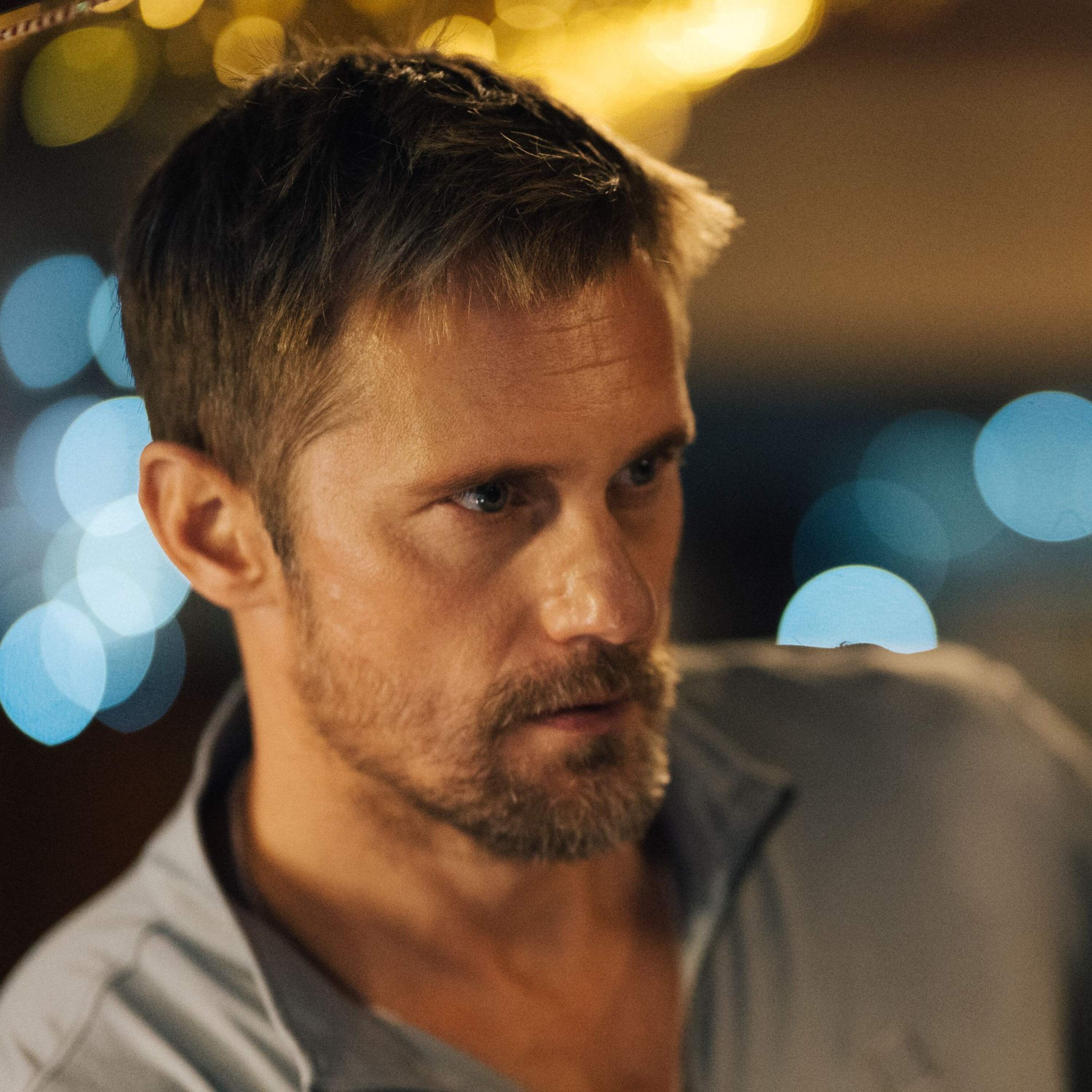
Edu A warning this episode contains discussion of sex and kink. Folks have been talking about the gay BDSM biker movie since it premiered at Cannes last year. Well, it's finally here. In Pillion, a meek young man named Colin meets a handsome, broody biker who brings out his submissive side. The biker is played by Alexander Skarsgrd, so I mean, you get it. They enter into a sub dom relationship, but the biker remains so mysterious and withholding that Colin starts to want more, endangering the bond the two men share. I'm Glen Weldon and today we're talking about pillion on Pop Culture Happy Hour from npr.
- [01:00]
Sponsor/Advertiser
This message comes from LinkedIn ads. One of the hardest parts about B2B marketing is reaching the right audience. That's why you need LinkedIn ads. You can target your buyers by job title, company role, seniority and skills. All the professionals you need to reach in one place. Get a $250 credit on your next campaign so you can try it yourself. Just go to LinkedIn.com nprpod that's LinkedIn.com nprpod Terms and conditions apply only on LinkedIn ads. This message comes from Babbel. Babbel's conversation based language technique teaches you useful words and phrases to get you speaking quickly about the things you actually talk about in the real world with lessons handcrafted by over 200 language experts and voiced by real native speakers. Start speaking with Babbel today. Get up to 55% off your Babel subscription right now at babbel.com NPR spelled B A B-B-E-L.com NPR rules and restrictions may apply.
- [02:04]
This message comes from BetterHelp. February is full of flowers, candy and lots of relationship talk. It can feel like everyone has it all together in their love lives, but the truth is they're still figuring it out. And whether you're married, dating or prioritizing being single, just remember you're right on time. Therapy can take the pressure off and help you feel lighter. Just a little outside perspective from a professional can lead to new understanding and a lot of progress. Visit betterhelp.com NPR for 10% off.
- [02:37]
This message comes from Bombas. You need better socks and slippers and underwear because you should love what you wear every day. One purchased equals one donated. Go to bombus.com NPR and use code NPR for 20% off.
- [02:55]
Glenn Weldon
Joining me today is NPR film critic Bob Mondello. Hey, Bob.
- [02:58]
Bob Mondello
You will call me sir.
- [03:00]
Glenn Weldon
Zipping right past that. Also joining us is freelance music and culture journalist Rihanna Cruz. Hey, Rihanna.
- [03:05]
Rihanna Cruz
Hey, Glenn.
- [03:06]
Glenn Weldon
Thank you for not making me uncomfortable.
- [03:08]
Rihanna Cruz
Of course.
- [03:08]
Glenn Weldon
In pillion, timid, 30 something, Colin still lives with his parents. He's played by Harry Melling. One night in in a pub, he meets Ray, an unnervingly hot biker. That's Alexander Skarsgard, of course. Ray ushers Colin into the world of kink, specifically that of sub dom culture. Colin joins Ray's biker gang, has a few orgies, and introduces Ray to his parents, both of whom love and support their gay son, but reject the nature of the relationship he's found with Rey. Can what Colin shares with Ray survive? Does Ray even want it to? Pillion is in theaters now. And by the way, Pillion, it turns out, means the passenger seat on her motorcycle. I didn't know that. Kept thinking about.
- [03:47]
Bob Mondello
I didn't know that either.
- [03:48]
Glenn Weldon
Their last names. It's like, I don't like not knowing words, specifically words that make a great bingo and scrabble. So now you know. Pillion is the passenger seat on a motorcycle. That bugged me. So let's get to it. Rihanna. This is a conversation that's gonna be tough to keep NPR friendly, but let's.
- [04:04]
Rihanna Cruz
Oh, yeah, let's try.
- [04:05]
Glenn Weldon
What'd you make of Pillion?
- [04:06]
Rihanna Cruz
I just wanna say Pillion was my favorite movie that I watched over the past 12 months. I am a really big fan of it. It's a rom com. It's a coming of age movie, which are things that you wouldn't necessarily pe the BDSM biker story. But I think it works really well tonally. And I think there's two separate elements of Pillian that work incredibly alongside each other. One is the characterization. I think both the actors, Skarsgrd and Meling, do so much work that they show, not tell. I think Skarsgrd does the impossible, which is like, portray someone so stoic as a dom and intentionally standoffish as a, like soft, you know, and there's multiple layers to his character. There's like shells there, you know, like a jawbreaker where it's like hard and then you kind of like break through it slowly and slowly over the course of the movie. And Harry Melling has this beautiful, expressive face with these big, beautiful eyes. And there's a moment where like, I believe it's like a third of the way into the movie where, you know, he shaves his head and like goes full submissive and like, it's a characterization that really took me aback. That and the script, I think, are both incredible. It made me laugh, it made me cry. What more is there to say? I love pillion.
- [05:26]
Glenn Weldon
There you go. Well, I don't know, Bob. What more is there to say about pillion? You tell me.
- [05:29]
Bob Mondello
Well, first of all, it's not a rom com, it's a dom com. And second of all, you're right on all of that. The film is surprising in so many ways. I had no idea where it was going from the very start. I found myself really engaged by the characters. Harry Melling is very appealing. Am I correct that he used to be in Harry Potter?
- [05:52]
Glenn Weldon
Yes, you are.
- [05:53]
Bob Mondello
Yeah, he's a wonderful character, a very endearing character. And then I found myself sort of finding Skarsgard appealing too. And that surprised me because he's a cold character, at least in everything he's trying to be. And I think ends up being more complicated than that, which I thought was almost refreshing. This picture went places I wasn't expecting. I found myself much more engaged than I thought I was going to be. I fought it for about a minute and a half and then stopped.
- [06:20]
Glenn Weldon
I'm gonna be the outlier here. I liked this movie. In retrospect, I liked having watched it. But for most of its running time it felt very basic, very normcore, very subdom 101. And that's not really the movie's fault. That's a function of drama, right? Of this film feeling like we must introduce this world to the audience. And our audience surrogate, the point of view character, is someone who, despite being gay, has grown up in a very basic normcore world with these heteronormative sensibilities. That's the lens we're viewing this world through. And that really colored how the story got told. And also because when you dramatize something, there is a plan, a shape, a schematic we all have to follow. And I don't blame the movies for this. I blame Aeschylus and Euripides and Sophocles. Because at the end of the day, Guy discovers kink, comma, has a great time. That's not a story, right? That's not drama. That is an eight minute video clip that I'm told one can find online. I haven't very good authority. So instead we get this movie, which is Guy discovers kink, sort of enjoys it, but then quickly, very quickly, too quickly becomes convinced that what he really wants is this vanilla relationship stuff his parents have and what his parents want for him. And that is. I get. Again, that's a dramatic story beat. You get what you think you want and then you want more. That's how drama works. But that is not, and this is my issue. That's not how kinks work. Someone doesn't discover a kink and feel unfulfilled by it. By definition, the kink satisfies them in a way vanilla stuff doesn't, or else they wouldn't do it. So it felt like this movie never really committed to showing us Colin, who was happy, who was turned on, who was exactly where he wanted to be. Even in the orgy scenes, which should be fun, I felt this primness, this judgment, this kind of quality of, well, yes, he might be having fun, but of course he's unfulfilled. And that is such a boring, normcore attitude toward this stuff. And it's complicated. I get it. Because that's the character's attitude toward this, right? Because of how he grew up.
- [08:30]
Bob Mondello
I am fighting you on this, and let me tell you why. Colin goes from one domineering relationship to another. His mother is in control of his life in ways that are pretty obvious in the scenes where he's with his family. And this is an alternative to that. So he sort of knows what he's going into. I thought this was a transference from one situation where he's submissive to someone to another situation where he's being submissive. And that he wants the things that he's been used to didn't really surprise me in that respect. But anyway, that would be my take.
- [09:11]
Rihanna Cruz
I also think that, like, part of what makes the movie so good to me is that it doesn't really feel to me like Dom Sub101 or Kink101. Colin's wants and needs are more nuanced than like, he's unfulfilled in the kink world. Because I think the big transition in his character happens when his mom dies. And that kind of like flips his perspective, you know, and he kind of starts reconsidering everything after that happens. Which goes back to Bob's point about the domineering relationships in his life. But I think that, like, it's not necessarily that he is unfulfilled the entire time. I think he has a wide scale shifting of the self and a lot of self doubt that creeps in. I don't know. I don't necessarily think that's a constant throughout the Entire movie. I think it's a distinct character shift.
- [10:03]
Glenn Weldon
Hmm, I didn't pick up on that. I'm open to the fact that you're right. I agree with you both. The tension with his parents was, to me, the newest thing, the most interesting thing in the movie. Yes. It felt a little anachronistic because I think this is a holdover from the book. The book Box Hill by Adam Mars Jones. In the book, it's a guy remembering a relationship he had in the 1970s. In the film, they brought it into modern times. But that feeling, I mean, it is touching on something real. Like that feeling his parents have, which is, we want you happy, but only if we can recognize and approve of this relationship. Because it's something we recognize. If we widen out, that's a real tension within the queer community. Right. Because there is this feeling of what gay men of a certain age. And Bob, you and I are in that box. I'm putting us both in that same box. How gay men of a certain age envision the world for themselves is different from how younger queer folk what they want and expect and demand from the world in spite of the world. Because they should. They should demand more. It should be on their own terms. The film is grappling with that in those scenes with the parents. And I really appreciate that. But I keep going back to this. In the book, the Colin Ray relationship goes on for six years. In the movie, it's several months. Now I can buy a kink. This world starting to pall. Lose its juice over six years, not over a handful of months. The whole world of this film should feel new and exciting to Colin. And if the movie was doing more work of placing us inside his head, I think we'd feel that joy, that feeling of I found this thing more deeply. But the reason we don't is because of this movie's point of view, because it's going through Colin.
- [11:37]
Bob Mondello
Now. Wait, you're saying that over the course of months he wouldn't get bored with something that he's never been involved in before and that he hadn't considered before the relationship started? He's just gonna leap in with both feet and be entirely. I'm sorry, I don't buy your premise here.
- [11:52]
Glenn Weldon
I'm saying the film doesn't show us. Him actually enjoy. The film shows us having qualms because it's dealing in repression. It's dealing with where he comes from. This film is not interested in the release at last. I found this in the joy. It's interested in repression. Because it's British and repression is their national identity. And that's where the comedy of the film comes in.
- [12:11]
Bob Mondello
Okay.
- [12:12]
Glenn Weldon
And. Yeah, that's kind of what I'm saying, Bob.
- [12:14]
Bob Mondello
All right, well, I won't fight you on it again. I think what I found intriguing about the characters, not so much the film itself, but the characters, is that I think they're malleable. And I think you even see that in Rhea. There are moments where you can see doubt in his eyes. And I think that's really instructive. And it speaks to what Colin is trying to achieve in the relationship, too. I think it's an interesting character study of these two guys and also of their relationships with the world. And Collins is the more compelling of the two stories. Colin wants to set boundaries. Colin wants to have a relationship, but he also wants to have a sense of self. And he doesn't realize that at first, and he realizes it as the movie goes on, and he becomes more interesting as a result of that. And I think the thing about the way the film works is that once he asserts himself, it becomes an interesting power dynamic. Right. There's something going on there. He needs to assert himself with his mother as well. He doesn't have to with his father. His father's sort of on his team. And I thought the dynamic of those characters and how he was negotiating the family dynamic and the love dynamic were really interesting and really compelling. And that's what kept me going in the movie.
- [13:42]
Rihanna Cruz
I think they're very lived in, and I think they're very real. And I think the thing that I keep coming back to with this movie is how genuinely and brilliantly queer it feels, like it's a queer movie. And I think there's a lot of content these days that is gay, but not queer. And I think there's defined distinction between the two. Looking at you, heated rivalry. And I think we need things like pillion, because I feel like they're more authentic than the alternative. They're more authentic to the community, to the kink community and things like that. And to your point, Glenn, I don't know. I feel like maybe I'm speaking for myself here, but I've had fiery relationships over the course of three months that have burned and fizzled out. And I think there's something so queer about that, that the fact that it happens only over the course of several months where, you know, he is introduced to this world, it envelops him. And, I don't know, it feels real to me, and it feels like a Real coming of age movie. And maybe it's because, you know, I'm young, I'm in the community, I see people around me go through this. Like, it felt like Colin was a friend of mine that I was watching on this journey. And I think that's part of what makes this movie so special.
- [15:01]
Glenn Weldon
Okay, I'll take that. I know there is a more explicit version of this film. The directors talked about it, and maybe that would have addressed some of my concerns. But the team also said they thought a more explicit cut would make audiences laugh. And that's where I disagree with you, Rana, because they don't mean audiences would have laughed. They mean straight audiences would have laughed. Which made me think, who cares what straight audiences think? And then I thought, oh, no, no, no. It's this film. This film does. And when I read that, I was also taken aback because isn't that what you want, given this subject? People laugh when they're uncomfortable. This is a film about someone stepping outside of the group, his familiar vanilla world, into an uncomfortable place. So let people laugh. And I mean, also, not for nothing, have you seen how these guys dress? It should be fun. It should be funny. I mean, the guys in Tom of Finland drawings aren't scowling and taking themselves super seriously. Those guys are beaming. They're grinning because they're having a great time. And this film wasn't interested in having a great time. This film was interested in what would happen to this guy if he found himself in this place.
- [16:07]
Sponsor/Advertiser
And.
- [16:07]
Glenn Weldon
And that's a journey that you guys were prepared to go on that I, you know, I just felt I was less willing to go on that particular journey.
- [16:14]
Rihanna Cruz
Well, I feel like, Glenn, I want to push back on that, though, as well, because I feel like the idea that they don't want people to laugh at this movie kind of reflects a sensitivity that's at the heart of the movie. Right? Like, I think, like, the sensitivity to these characters, to the story, to the relationship is what makes this movie great. And I think that's why it connects with these audiences, these queer, gay audiences. And I think that couching right, of like, well, we didn't want to show more stuff because people would laugh is more of a protection, I think, for the audience and for the content shown and the sensitivity that's portrayed, then it is like, well, you know, we, I don't know, don't want to get straight.
- [17:01]
Glenn Weldon
Audiences confused or upset or uncomfortable.
- [17:05]
Bob Mondello
Well, what they don't want people to laugh at is not the movie, but the kink. They want not to mock the people that this film is about. I read some interviews with the director where he said that he involved a lot of people from the community, biker community, and that what he discovered riding around with them on the backs of their bikes, on the pillions, I guess, am I using that correctly, was that this was not all about sex, that this was about a sense of community, a group of men having fun, that it wasn't just about when you look at somebody in harnesses and leather and studs, it looks a little dangerous if you're looking from outside. That that is more about performing something that is fun and it is less about sex. And that he didn't want to misdirect an audience in that way so that if the audience had been laughing at the K, that that would be misrepresenting what the community that he was showing was all about.
- [18:08]
Glenn Weldon
No, that's an interesting point. I mean, yes, I do think the film could have found some fun without turning it into let's laugh at these people. And I don't think it did for me. But here's the thing about film. Reasonable people can disagree. I think we're reasonably disagreeing. But now it's your turn. What do you think? We want to know what you think about pillion. Find us on Facebook@facebook.com PCHH on a letterbo steplannerbox.com NPRpopculture we'll have a link in our episode description that brings us to the end of our show. Rihanna, Cruz, Bob Mondello, thank you for being here. Great conversation.
- [18:43]
Bob Mondello
This was great fun.
- [18:44]
Rihanna Cruz
Thanks for having us. I could hear the two of you argue all day.
- [18:49]
Glenn Weldon
And just a reminder that signing up for Pop Culture Happy Hour plus is a great way to support our show and public radio. And you get to listen to all of our episodes sponsor free. So please go find out more at plus.NPR.org happyard or visit the link in our show notes. This episode was produced by Carly Rubin, Liz Metzger and Mike Katsif, and edited by our showrunner, Jessica Reidy. And Aloka Men provides our theme music. Thank you for listening to Pop Culture Happy Hour from npr. I'm Glenn Weldon and we'll see you all next time.
- [19:17]
Sponsor/Advertiser
This message comes From NPR sponsor 1Password. Anyone else feel like 99% of your emails and texts are password reset codes trusted by millions of users and over 175,000 businesses? 1Password lets you skip the resets and sign in securely. With strong, unique passwords that autofill across all your devices. You can safely share logins store cards and files. And finally, stop using your pet's name as a password. Try it free for two weeks@1Password.com NPR this message comes from NPR sponsor NetSuite. Every business is asking the same question. How did they make AI work for them? With NetSuite by Oracle, you can put AI to work. Today, NetSuite is the number one AI Cloud ERP trusted by over 43,000 businesses. It's the unified suite that brings your financials, inventory, commerce, HR and CRM together. If your revenues are at least in the seven figures, get the free business guide Demystifying AI at netsuite.com story.