Loading summary
Transcript50 lines
- [00:00]
A
This message comes from NPR sponsor Capella University. Interested in a quality online education. Capella is accredited by the Higher Learning Commission. A different future is closer than you think with Capella University. Learn more at capella. Edu.
- [00:21]
B
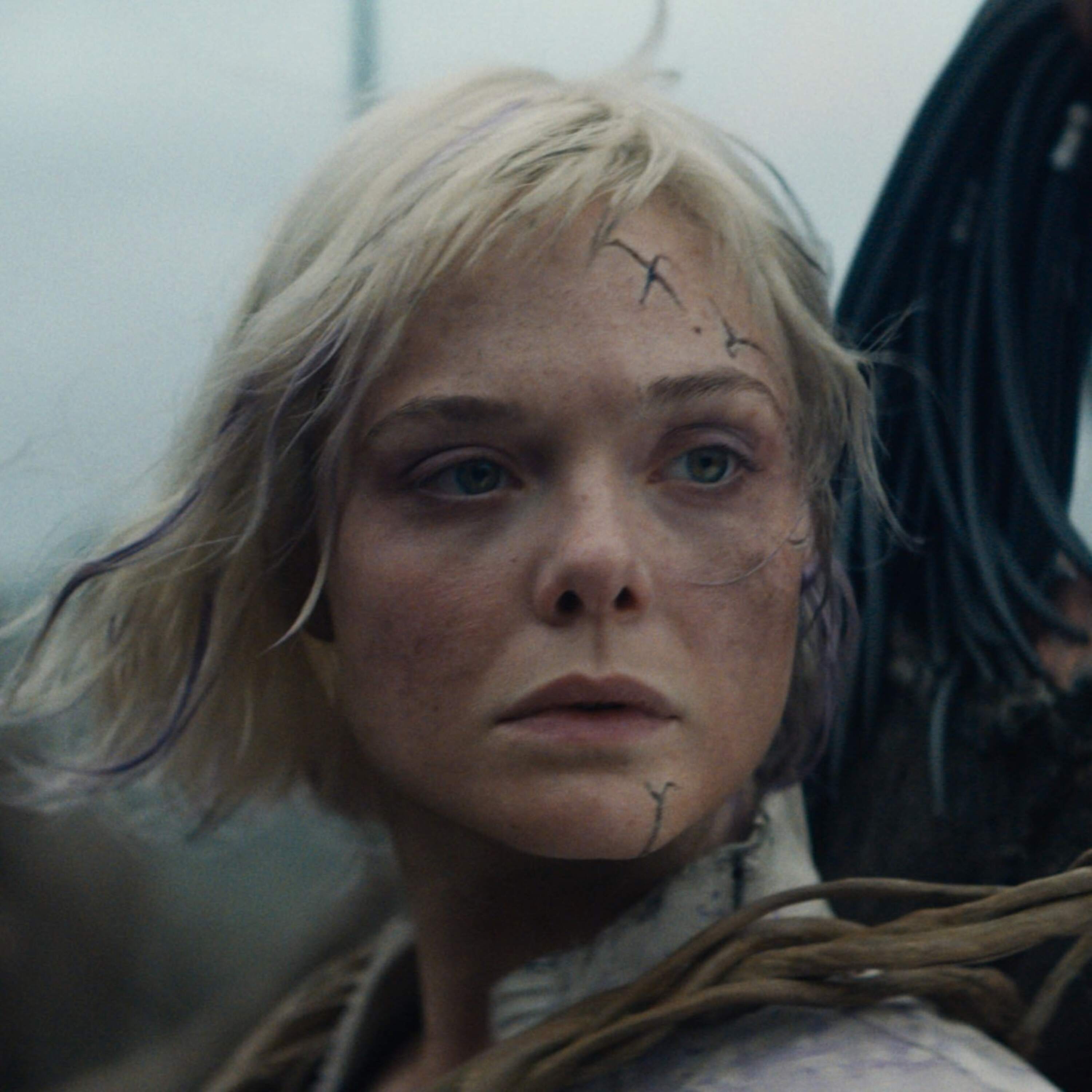
Predator Badlands is the latest iteration of the franchise about an alien race that hunts things using all sorts of space gadgets. It's from the same team that made 2022's prey, which was like this movie, a much better Predator movie than it had any right to be. This time out we're getting the story from the predator's perspective. An outcast sent to a hostile planet to hunt down a deadly monster to prove his worth to his people. Elle Fanning shows up as an unlikely ally. I am Glen Weldon and today we're talking about Predator Badlands on Pop Culture Happy Hour from NPR.
- [00:58]
A
This message comes from AT&T. America's First Network is also its fastest and most Reliable based on RootMetrics United States Root Score Report 1H 2025 tested with best commercially available smartphones on three national mobile networks across all available network types. Your experiences may vary. Rootmetrics rankings are not an endorsement of ATT. When you compare, there's no comparison.
- [01:21]
C
AT&T this message comes from Dell Technologies it's time for Black Friday. Dell Technologies biggest sale of the year for gift worthy accessories and select PCs like the Dell 16 plus featuring Intel Core Ultra processors. Shop now@dell.com deals this message comes from NPR sponsor CNN. Stream. Anthony Bourdain Parts Unknown Prime Cuts now exclusively on the CNN app. These rarely seen, never before streamed episodes. Dig deep into the Parts Unknown archives with personal insights from Anthony Bourdain and rare behind the scenes interviews about each season. Anthony Bourdain Parts Unknown Prime Cuts now streaming exclusively on the CNN app. Subscribe now@cnn.com AllAccess available in the US only.
- [02:12]
A
This message comes from NPR sponsor Capella University. Sometimes it takes a different approach to pursue your goals. Capella is an online university accredited by the Higher Learning Commission. That means you can earn your degree from wherever you are and be confident your education is relevant, recognized and respected. A different future is closer than you think with Capella University. Learn more about earning a relevant degree at capella. Edu.
- [02:39]
B
Joining me today is Ronald Young Jr. He's the host of the film and television review podcast Leaving the Theater. Hello Ronald. Hello gl. Also with us is writer Chris Klimick. Always brings a bit. Hey Chris.
- [02:52]
D
If it bleeds, we can kill it.
- [02:53]
B
Glenn let's do this in Predator Badlands Dec A predator who's kind of the runt of his litter goes to the deadly planet of Genna to hunt down a hideous monster because he's determined to prove to his clan that he's got what it takes to really belong to the species of intergalactic badasses that audiences first met back in a 1987 Schwarzenegger movie. In sequels and novels, comics and video games, various predators have faced off against everything from aliens to Batman to recently, a very resourceful young Comanche woman. In 2022's prey, this predator, played by Demetrius Schuster Colimatangi, is aided by the top half of an abandoned robot named Thea, played by Elle Fanning. All that plus lots of lore about the predators and their whole deal. It's in theaters now. Ronald Young Jr. Kick us off. What'd you think, man?
- [03:46]
E
I really enjoyed this movie and I did not expect to. I was a big fan of 20. I thought it breathed new life into the Predator franchise. Especially after the earlier entry. I can't remember the year of the Predator.
- [04:01]
D
The Predator, the Shane Black one.
- [04:03]
E
You know exactly what I'm talking about. Yes. Especially after that entry, this felt like it took it in a positive direction. I have this theory that there's a vision of the future that was established in the 80s that we keep getting remakes out of your Terminators, your aliens, your predators. And I feel like what I always want to see is a now take on those ideas, which I think was established well in a movie like Romulus and again in movies like Prey and also in this one action adventure. Lots of fun throughout, very simple plot, easy to follow. And I think, again, if you think about the predators from the predators perspective, it would be an action adventure movie for them as opposed to a horror or a thriller in any other sense. When you're looking from the human's perspective.
- [04:51]
B
That's interesting. That's a good. Yeah, So I enjoyed it.
- [04:53]
E
I liked it.
- [04:55]
B
All right, Chris, you are our Predator correspondent. What'd you think?
- [04:58]
D
Yeah. The Predator is always the protagonist in these movies. Right. The other ones are just trying to survive the human characters of which there are none in this film. Predator badlands are entry points for empathy. Are just reactive. I'm pretty much with Ronald. I like this movie a lot, but I wanted to love it. It was the three of us talking about Romulus where this movie fell down for me a little bit. Although I like the script very much. I like the very much is that it did not replicate that practical effects aesthetic that we talked about being so key to Romulus's success, where the, you know, puppets, miniatures, real sets. I'm looking at the production notes of this movie, Badlands, and seeing that it was shot much of it on location in New Zealand. And we don't get that, you know, like we're looking at what seemed to me to be, you know, digital jungles full of hostile creatures, very much like the. The Avatar movies. But I mean, this movie was only shot a year ago. You know, when you don't have a years long post production pipeline to refine all that stuff, it doesn't look as convincing. And one thing I know, we probably have a diversity of opinions about Predator 87, which you and I watched on Ian Buckwalter's roof some years ago, Glenn, that was probably your first time seeing Predator. Misen sen. That movie was shot. Hell yes.
- [06:13]
B
That's not the phrase I expected to hear about 1987. Predator.
- [06:17]
D
I did it. Predator. Mise en scene. John McTiernan at the start of his incredible Predator, Die Hard Red October run. You feel that jungle. You feel the discomfort and the hostility of that environment. You see how uncomfortable every cast and crew member was every minute shooting that movie. And that's what's missing here, you know, like the way that it imagines these super venomous plants that deck our Yautja hero, I guess, you know, repurposes as his own weapons. And one of the sort of cool MacGyvery, you know, bits in this film.
- [06:49]
B
Yautja, the name of the species we learn in this film.
- [06:51]
D
Yep, it's all cool, but it just, it looks like, you know, that smeary, digital, underlit aesthetic.
- [06:58]
E
It was dark. I didn't like that.
- [06:59]
D
It's too dark. Yeah. I mean, I still like this movie. Again, I think the script is really good. I think Elle Fanning is wonderful.
- [07:05]
A
I just.
- [07:05]
D
I don't like the way this movie looks.
- [07:07]
B
Okay. Boy, I am not used to addressing a curmudgeon and being the positive guy on the panel or one of the guys on the panel. I had a great time at this.
- [07:16]
E
Let's go, Glenn.
- [07:17]
B
Yes, to be clear, I care not a whit, not a jot, not a tittle about this ip. And I imagine there's a non zero percentage of folks out there of listeners who are in that cohort with me. I am here to tell them you're gonna have a good time. Action. Set pieces on point. Humor that is based in behavior and attitude. Not quips, not pop culture references. Yes, Elle Fanning is charming. She is fun. Yes, solidly Built plot wise. You both mentioned the plot. Nice efficiency. Here we get the intro of the gadgets. We know the gadgets are gonna come back. We meet the various environmental factors and threats like the razor glass and we meet the beasties and in turn we know they're going to come back. Mostly I like, and this is kind of picking up on what Ronald was saying, that we're not Simply iterating this IP and doing vs Godzilla vs Kong vs Fast and the Furious. We are plopping it down in various times and locations and letting it, you know, run free. I like that this is a franchise as kind of an extended anthology. I like that approach. My only quibble, speaking of franchises, more endings than Return of the King is because of its structure, right? When we spend this movie meeting all the various beasties and various threats in sequence, that is the movie opening up a series of boxes in sequence. And we hit the hour and 30 minute mark and I was like, man, they have shut none of these boxes. There are so many boxes. So the last 17 minutes is just a series of boxes getting shut. Getting shut in fun ways. Getting shut in ways that I liked. But there's a lot of them. And I think one of the reasons I never really responded to this franchise over the years and don't take any offense at this, but it seemed like it was made for the 14 year old straight boy I never was.
- [08:59]
E
How would I take offense to that?
- [09:03]
B
Something I couldn't put my finger on as I was watching it. But then I came home and I read the Richard Lawson review and the Hollywood Reporter, he called this out in his review. This is kind of a found family, chosen family story, right? Also, not for nothing, Predator has very fraught relationships with his dad. He forms instant, very strong, non romantic friendships with badass women. He lives to accessorize, right? I'm not saying Predator is queer now, but I'm not, not saying this director, I have been following his career for going on 20 years now without realizing it. Because between 2007 and 2012, Dan Trachtenberg, this director, was one of the hosts of a video podcast called the Totally Rad, which you can probably glean from the title, was three dudes talking about movies and video games and comics. And I liked the guy. He was a Philly boy, he graduated from temple. He was out in LA at that time directing commercials and short films. And he was a guy who clearly loved science fiction movies. Not simply from like the fans perspective, but from a like a technical and storytelling perspective. He talked about wanting to Direct science fiction movies one day, and then the show ended, and I just kind of lost track of him. And then, you know, in the meantime, he directed 10 Cloverfield Lane a few years back, which I like, but I didn't put it together. It wasn't until 2022's prey, which I also liked. That's. Whenever this clicked, I was like, oh, it's that guy. And I just got this weird feeling of pride. I mean, I was like, way to go, sport. I mean, I knew he was doing what he wanted to do always. And because parasocial relationships are very weird things, I felt like I kind of had a hand on the ball in some way, just because I feel like I like the choices he makes here because there are scenes that clearly have the iconography of the comic book splash page, right? Whenever Dec lifts his sword over his head after he kills something, it's like, oh, there's the comic book influence. Like, way to go, buddy.
- [11:02]
D
Frank Frazetta, baby.
- [11:03]
B
It's very Frank Frazetta. Now, I do have a question here, because let's go back to this premise here. The filmmakers are making a big thing about how this is the first film told from the Predator's perspective. We get a name for this species, the Yautja and their planet, Yautja prime and the Predator deck. We get lots of Predator language that they built out for this movie. We get a kind of rudimentary sense of how the Predator society works. Ronald, this is a question for you. Is that stuff just for the Chrises of this world, or does it add something to the movie?
- [11:34]
E
So it's interesting. As someone who loves Predator and loves Alien and loves how the plots have interacted over time and love the universe generally, I have found that I don't necessarily care about the lore as much. I just care about what's happening in front of me at the time. Like, if Prometheus was a standalone movie, I would probably enjoy that. And so I say all that to say, watching this and seeing everything that they're establishing, I think is fine for this movie, but it was not something I was craving outside of this movie. I've never been sitting by myself being like, man, I really wonder where they came from or what language they spoke or how do they get their cloaking devices. None of those questions are important to me, but they were important to the plot, and I think that they held up well in the movie itself. I was not craving them. I think too often they are making movies where they're like, hey, don't you Want to know where the dinosaurs came from?
- [12:32]
B
It's like, we already know.
- [12:32]
E
You told us. Please don't tell me anything else. Don't give him a personality. I don't need to know Blue's name. All of that's not important to me whatsoever. But in the movie, I think it was good.
- [12:41]
B
Yeah.
- [12:41]
D
Since we do get the name of the species, the Yautja, I'm glad that we now have Yautja so we don't just have to say predators all the time.
- [12:50]
B
Okay. I mean, I guess my question is, what does it add to that they're called the Yautja versus what they're called the predators? I'm going to go on calling them the predators. I'm not about to go calling them the Yautja because predators are what they are. But they're not the only IP in this movie. This is, as we talked about before recording, this is kind of a stealth Aliens movie. It turns out that the elf ending character isn't just a robot. And this is in the trailer, she's a Weyland Yutani synthetic Android. Now, if that were so maybe five, 10 years ago, I'd be thinking about it one way. But this movie arrives on the heels of Alien Earth on fx. It's in the wake of alien Romulus last year. It's safe to say that these synths are achieving right now a kind of cultural ubiquity that is, I think, approaching 2019. James Corden, I think, you know, it's like they got the talk show, they got the carpool karaoke. They're in Cats. Do they also need to host the Tonys?
- [13:42]
D
The Vulture that I published ranking the synths and androids of the alien universe, like, two months ago is already out of date, already obsolete. Real, real short shelf life on that one.
- [13:53]
B
Is there a lot of milk left in this on the like, Is there blood in the stone, like.
- [13:57]
E
I think so. I think it's there. Well, okay, here's why I think it's there. I think synths are the perfect kind of vehicle for us to engage this moment right now. When we think about our engagement with technology and with AI, even in this particular movie, we have DEC continuously calling Thea a tool and using her in that way as he would use a tool, and then eventually their relationship changes. That being said, I think that's a very interesting way to talk about how we are engaging with technology and in particular, AI. And there's a lot of stories that can come of that. And I guess, Glenn, are you asking, are we done with those stories? Do we need to keep telling those? And I feel like if our relationship with technology continues to change, then there's probably gonna be more to mine from these synths in the future.
- [14:41]
B
Yeah, I'm asking a more nerdy industry question, I suppose, which is, does this movie feel like it's in kind conversation with Alien Earth and Alien Romulus or is it off doing its own thing and is that a good thing or a bad thing? Does there need to be a shared universe? I guess is what I'm asking.
- [14:56]
D
This is the first Predator film set in the future. All of the other ones are set in the present of when they were released. Prey was set in the 18th century, you know, so this one is clearly at least a century in the future. Right. Because we have interplanetary capitalism and exploitation happening. The Wayland Yutani folks are on this planet to capture the Kalisk. So this is the first one that fast forwards into the, you know, 22nd century setting of the Alien movies. I think the kinds of films that are more topical about our fears and changing relationship with AI now are more things like her or like after Yang. It's less these genre films because we're already living in that time that all of these, you know, 80s and really like 70s when you know, Alien and you know, Blade Runner was starting to go into production and all that was, you know, we've gotten there and we've sort of surpassed those dire warnings. So I think the films that ask us more to treat these new life forms really as something other than an oppositional force again, like her, like after Yang, where it's like we're going to have an ongoing emotional engagement with these characters and not just sort of a, you know, arena style combat bout with them. I think that's what's more reflective of our relationship with AI Now. I think the subtextual freight, if there is any of Predator 87, is that, you know, these are off the books military contractors doing some shady mission down in Central America, working for the CIA. It's not sanctioned. It's not, you know, so. And I mean that was feeding off of Iran Contra and a lot of stuff that was in the culture at the time, you know, but it was not at all related to our relationship with technology or artificial intelligence or any of that. That was always aliens thing in terms.
- [16:40]
E
Of the shared universe of all of this. I can't believe I'm saying this, but for the first time I don't really care if they're playing together or not. As long as each entry is good because I feel like the MCU spoiled us. If you go back and watch, there was so much planning that took place where each scene was interconnected. There's boxes opening in a movie that doesn't close until 10 movies later, all of that. And it's rewarding upon multiple watches. But what we found is that without that type of coordination, if you're not doing that from the point of inception of these films, then what you end up is kind of this messy kind of connected in the back end universe which isn't working. And I kind of think that's why Marvel hasn't been working in the most recent years. But if we think about now, what they're doing is just making good things that each are good on their own. I think Alien Earth is good on its own. Alien Romulus is good on its own. Predator, Badlands and Prey, all good on their own. They don't have to connect as long as they're good. I think that is fine with me as a nerd. It'd be nice if they connected, but if they're not going to, then please just make it as good as possible is all I ask.
- [17:48]
B
Ronald, I hope there are studio executives listening to your little piece just then because that's exactly what they need to hear. And they need also ironically, they need to stop listening to us nerds. Just make good movies for real.
- [18:00]
D
You know, Glenn and I were talking before the movie about the lore and stuff and I mean there's no lore that you need to know. There is no Predator film, not even Predator 2 that requires you to have seen a prior Predator film to enjoy it. They're all pretty self reliant.
- [18:15]
B
No, you get it. You totally get it. All right, well tell us what you think about Predator Badlands. Would you be up for Predator, Thin Red Line, Predator Days of Heaven or Tree of Life? We are on Facebook and letterboxd. And letterboxd is where some people might possibly get that feeble Terrence Malick joke I just made. And that brings us to the end of our show. Chris klimick, Ronald Young Jr. Thank you so much for being here.
- [18:34]
E
Thanks for having me. This has been great.
- [18:36]
D
I love you guys. This is super fun.
- [18:38]
B
And just a reminder that signing up for Pop Culture Happy Hour plus is a great way to support our show and public radio. And you get to listen to all of our episodes sponsor free. So please go find out more at plus.NPR.org happy hour or visit the link in our show Notes this episode was produced by Mike Katsif and Carly Rubin and edited by our showrunner, Jessica Reedy. And hello, Come in provides our theme music. Thank you for listening to Pop Culture Happy Hour from npr. I'm Glen Weldon and we'll see you all next time.
- [19:08]
A
This message comes From NPR sponsor 1Password. Secure access to your online world, from emails to banking, so you can protect what matters most with 1Password. For a free two week trial, go to 1Password.com NPR.
- [19:25]
C
This message comes from NPR sponsor CNN. Stream Anthony Bourdain Parts Unknown Prime Cuts now exclusively on the CNN app. These rarely seen, never before streamed episodes dig deep into the Parts Unknown archives with personal insights from Anthony Bourdain and rare behind the scenes interviews about each season. Anthony Bourdain, Parts Unknown Prime Cuts now streaming exclusively on the CNN app. Subscribe now@cnn.com AllAccess available in the US only support for NPR and the following message come from Warby Parker, the One stop Shop for all your vision needs. They offer expertly crafted prescription eyewear plus contacts, eye exams and more for everything you need to see. Visit your nearest Warby Parker store or head to warbyparker.com.