Loading summary
Transcript83 lines
- [00:00]
A
This message comes from Alexa. Say hello to Alexa and see how Alexa can do more for you craving your favorite restaurant. Alexa's on it free with prime on your Amazon devices. Learn more@Amazon.com AlexaPlus.
- [00:21]
B
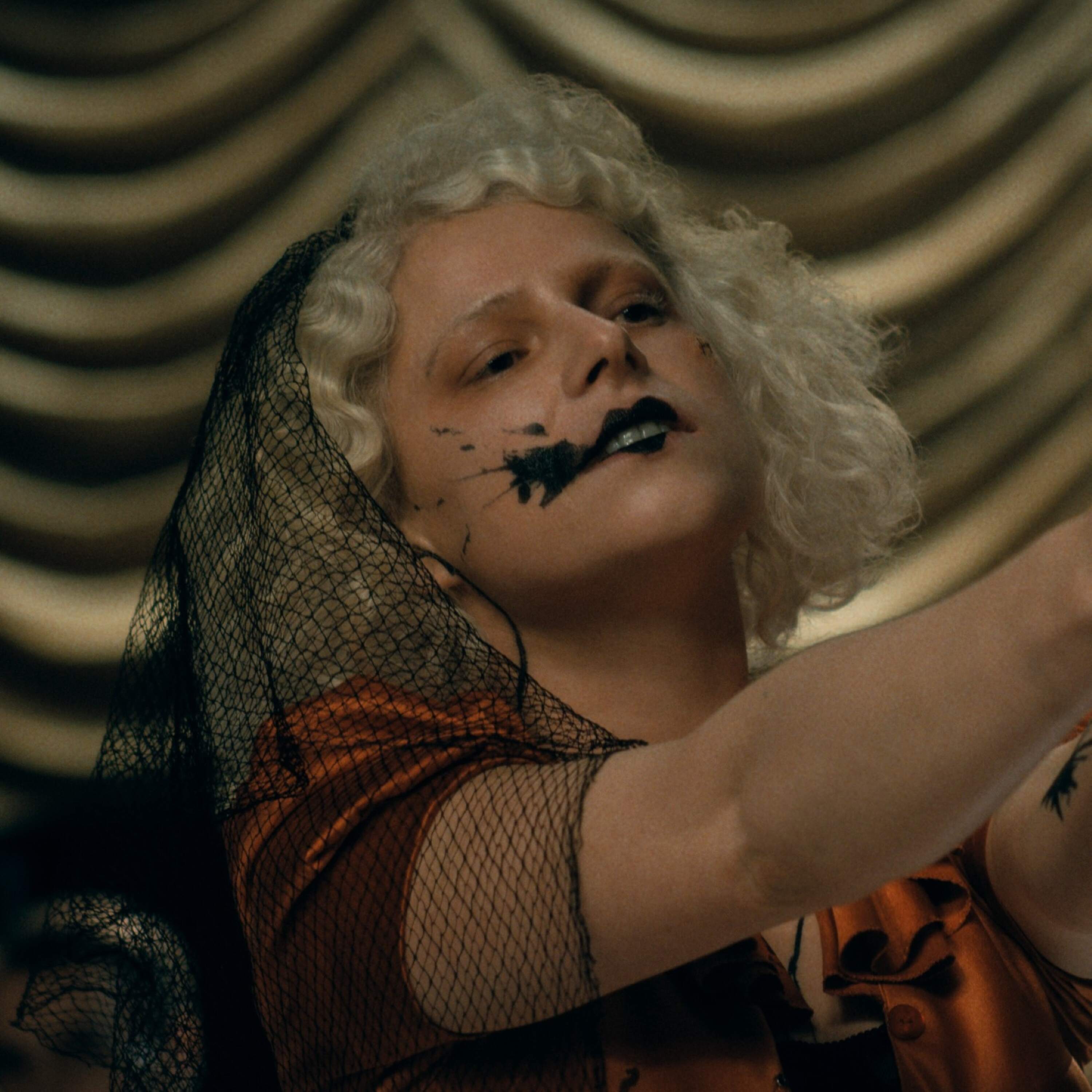
The Bride goes way beyond a simple tale of literature's most famous reanimated corpses. Frankenstein's Monster, the Bride of Frankenstein's monster and Frankenstein author Mary Shelley are all characters in the film.
- [00:35]
C
The Bride stars Jessie Buckley and Christian Bale, both of whom know a little something about committing themselves to juicy roles. And it was written and directed by Maggie Gyllenhaal. I'm Glen Weldon.
- [00:46]
B
And I'm Stephen Thompson. Joining us today on NPR's Pop Culture Happy Hour is Barry Hardyman. She's a senior editor for NPR's investigations team. Hey, Barry.
- [00:55]
A
Hi.
- [00:56]
B
Also here with us is filmmaker, pop culture critic and iHeartRadio producer Joelle Monique. Hey, Joelle.
- [01:01]
D
Hi, Steven.
- [01:02]
B
It is a pleasure to have you all here. So if I say the title of the Bride excitedly, that's because it includes an exclamation point, kind of both literally and figuratively accurate. The film is a wild take on the bride of Frankenstein's monster. Her origin story, her relationship with the big lug himself, and her pursuit of her own distinct identity. The film stars Jessie Buckley as the bride and Christian Bale as the erudite monster. Her vibe is a little like the Joker, and his is a little like zombie Tom Waits. He's seeking a bride, as monsters so often do. So he enlists the scientist Dr. Euphronius, played by Annette Bening, to reanimate a corpse. But it's not simple for monsters attempting to enter into an arranged marriage in the 1930s. They have to get to know each other. They have to fend off an alternately hostile and indifferent world. And they have to contend with not only her past, but also the police, the press, and at least two different types of mobs. It's a gory gothic horror romance with Jesse Buckley actually turning up in three roles, one as a young woman who dies, one as a Corpse Bride, and one as Frankenstein author Mary Shelley, whom we meet in a kind of purgatory. It's in theaters now. Joelle, Monique, I'm going to start with you. What did you think of the Bride?
- [02:24]
D
Steven I've been. I've been, like, racking my brain, like I have to keep it tight. I love so much about this movie. So I tried to pick three things. Okay. You have three incredible actors having so much fun, and it is such an exquisite Joy to watch each of them just like go all out. I was having a blast to. I really, really enjoy the fact that we can get such over the top over feminist tropes in our horror. I think horror is a great place for feminist filmmaking and is not subtle. It's not trying to be. And in that way it allows space for you to kind of like I was telling you guys earlier, my audience was like whooping and hollering like it was a Marvel movie, which is an exquisite experience at the movies. And three, I think this movie is doing a lot for Frankenstein lovers. And I love seeing Frankenstein on film. And they take a lot of opportunities to just celebrate the goofy, weird, fun, exquisite, like over the top performances of Frankenstein's Path. And I was kikiing with my friends as we were watching it. It was just such a joy to watch. I loved watching this movie.
- [03:34]
B
Awesome. How about you, Barry?
- [03:35]
E
I also was absolutely delighted by it. And I don't think I'm its core audience. I'm not a horror person. I kind of wasn't aware of the discourse about it before. I think there's been a lot written about it and it's sort of maybe rocky path to where it is. So I went in with no expectations. And I, as a movie lover, just a person who likes movies, likes to talk about movies, likes to. I was in heaven. The visuals, the references, you know, I came out of there just like wanting to turn Bonnie and Clyde back on, you know, like wanting to see all my fun things again. Just gorgeous. And I am just a huge Jessie Buckley fan. What she's doing with a really odd role, which is over the top, as everyone has said, is so sort of tender. There's so in her face in a way. It's sort of like there's like a hint of like a Claire Dainsey, Jennifer Jason Leigh. I really, really enjoyed it and the things that I found imperfect about it. And I did find some things imperfect certainly did not warm me off of it and were actually kind of silly and fun. So, yeah, no, I'm a huge unexpected fan.
- [04:46]
B
Awesome. How about you, Glenn?
- [04:48]
C
I was saying to folks before we started taping that this movie's a mess, but call me Marie Kondo. Cause I love mess. I spent most of this mov watching it. Like I was a judge on Law and Order. Like over and over again, scene after scene. I'd hear myself thinking, I'll allow it, but you better be going somewhere with this, counselor. And then five minutes later, I'll allow it, but you're on a short leash, counselor. But then this movie doesn't so much go somewhere as it goes everywhere. And I put it on a short leash, and it kept breaking that leash and bolting into traffic. And yet I kept allowing it. There are so many Moulin Rugie riffs in other movies. We mentioned Bonnie and Clyde. There's also King of Comedy in there. And there's a couple Young Frankenstein riffs, one of them which felt pretty cheap to me, but I went with it. I'll allow it.
- [05:33]
D
Divine.
- [05:34]
C
I don't think this movie hangs together. I don't think hanging together in a conventional sense is really the aim. I think the shagginess is the point. There's so many ideas at the screen. They're all kind of equally asserted that I came out of it thinking, well, I know the stuff that I liked that I wish there was more of Jesse Buckley channeling Mary Shelley. I didn't get enough of that, wanted more of it. And I know the stuff I didn't like and wish there was less of. There's some business with Peter Sarsgaard that takes place entirely in exposition at the end of the film that could have lifted out easily. But then everybody gonna have a bespoke experience because you can have, like, here's what I liked, and here's what other people like. But who doesn't love a big swing? You know, who's a sucker for something that feels like it came from, like, a living, idiosyncratic, individual human mind and not a boardroom? This guy. This is a studio film. You don't get this many vintage cars and backlots if you don't, you know, have a studio.
- [06:21]
B
It's just kind of punctuation and it
- [06:23]
C
doesn't connect in a tight callback, Syd Field Robert McKee Manuscript Screenplay Way. This film is shaggy and organic. I gotta be careful here. But here's what I'm trying to say. I think this film is a feminist fable. Obviously, it doesn't feel like its argument, its motivation, is academic or intellectual. It feels a lot more raw and emotional and fun. I like this movie.
- [06:47]
B
Yeah, I came down roughly the same way. And I wasn't distracted by much watching this film. I was definitely locked into this movie the few times I allowed a stray thought to enter my brain that wasn't trying to figure out what the hell was going on. The thought that popped into my head was, Lady Gaga is going to watch this and be so jealous. Glenn, you're a Batman guy. Did you see? I mean, you were listing things that this film was referencing. But one that I kept coming back to was the story of the Joker and how much the Bride of Frankenstein in this film has kind of a joker arc right up to and including copycat crimes, up to and including, you know, the women of 1930s Chicago or whatever, like, painting their faces and going on crime sprees. I found that sort of interesting. Like, I wasn't expecting a story about the Bride of Frankenstein to so repeatedly conjure the Joker, but, man, this thing is, as you said, it is all over the map. And I do think, among other things, I really appreciated watching it kind of the way I did, which was about a week after watching the Guillermo del Toro Frankenstein and kind of getting to see these extremely audacious kind of idiosyncratic visions of Frankenstein and the Frankenstein myth kind of in strange conversation with each other.
- [08:15]
E
Yeah, that's funny. The gaga that I saw in it was sort of the little Monsters. You know, the choreography has so much reference to Thriller.
- [08:23]
B
Oh, yeah. There's like a dance routine in this film.
- [08:26]
E
There is so much choreography, just period, which felt like that was the bespoke experiments for Barry Hardyman as well as the Fred and Ginger references. But there were so many different modes of expressing itself, like in the movement, in the color, in the speech, be it, you know, Mary Shelley's tone versus, you know, the bride's tone. You know, there were so many just different modes, which, for me, gave me a lot of stray thoughts. And that was part of the experience, you know, just like being bombarded with, hey, I remember trying to do that video.
- [08:59]
C
The film that I kept thinking back was leaked Frankenstein, which was riffing on some of the same issues, but was also riffing on the teen romance stuff and felt a lot more kind of calculated and I'm gonna say cynical than this film did. I think this film is coming from a deeper kind of raw or emotional place. So even though you could, like, this film is pastiche after pastiche after pastiche, this felt truer in a strange way than that film did. And it kind of connected with me in a more pure. But still, I mean, I'm Team Banana Pants, and I'm always going to be Team Banana Pants. And so I don't think about things like, where'd they get torches in 1930s Times Square where they find torches? Didn't think about that. Although now I'm thinking about it.
- [09:42]
D
No, no, no, don't think about it. It's the third ism is what exactly? Movie. So delicious. You're just like, What? Why are we suddenly on a police car chase? Almost nothing makes sense. Like beat to beat. You're just like, what is happening? But I think the emotional through line and it's. Can I also say, it's very funny to me, all of the disparate movie selections, because I was thinking of poor things the whole time. It's like, yes, me too.
- [10:06]
B
I did think of poor things as well.
- [10:08]
D
Poor things accelerated. Like if. What if? Instead of her starting off as like a child and sort of discovering the whole world and coming into her womanhood, she's understands that she's a woman in her own mind, but she's trying to understand it in connection to, like, the rest of the world. She's like, yeah, I know who I am. How do I fit in this space? And then on top of that, like, they give Frankenstein a similar through line, but he's lived in the world for a long time and he's trying to understand, like, who he wants to be in that world.
- [10:37]
E
Yes.
- [10:37]
D
In the original film, she's mostly a visual figure that women gravitated to. They were like, this woman is so striking, she's so unique. There are hardly any women, like, at this time. If you're looking at, you know, these black and white old films, women are the girlfriends and, you know, we didn't get to be the monsters. To this day. We have a lot of monster loving stories out right now in our romance genre. Monster make it academic. I appreciate you.
- [11:06]
C
Thank you.
- [11:07]
D
But oftentimes it's like a very human woman with a male monster figure. And I think there's being able to be inserted dynamically into this world. And then Maggie does this other thing where she makes all of the main guy roles are into him. So Annette Bening plays The mad doctor, Dr. Euphronius. Penelope Cruz plays the detective who's trying to hunt down the Bride and Frankenstein. Within that, you get to experience your favorite classical horror film in a way that keeps you, if you're a woman, at the center of it. I couldn't help but have so much fun. I was just like, I don't care that it's the mess. I don't care that it's weird. I love Frankenstein. I've seen every iteration of Frankenstein on screen.
- [11:49]
B
I think There are like 200.
- [11:51]
D
There are.
- [11:52]
C
I've seen the ones in Spanish.
- [11:53]
D
I've seen the British ones, I've seen the American ones. There's probably some I'm missing, but I feel like I'm intimately familiar with this character and all of his Forms. And for Christian Bale to step inside this role and do something completely new and different and fun, and you can tell he's having such a good time. It's just a delight to watch. Please go see this at the movies. The IMAX of it all. Oh, my God.
- [12:12]
C
Do we agree that Christian Bale is kind of riffing on Herman Munster?
- [12:15]
E
Yeah, I felt that a little bit.
- [12:16]
D
Yeah.
- [12:17]
B
Yeah, absolutely. Can I just say one other thing in praise of this film? In comparison to the Guillermo Della El Toro vision that is currently nominated for a bunch of Oscars, that film spends at least a half an hour on the how of monster making. And this film is like, fine, sure, step into my giant cavernous electrolab. Or it's just like.
- [12:45]
D
It's just sitting here waiting for this moment.
- [12:47]
B
This film is like, sure, fine, you're a monster.
- [12:49]
C
And Joelle knows the power of technobabble.
- [12:51]
B
Right?
- [12:51]
C
We watch Star Trek. We know that all you need is a couple lines of dialogue saying, flu, reverse the polarity of whatever the hell, and you're fine. That's all you need. You don't need these schematics.
- [13:03]
B
If Maggie Gyllenhaal had included all of that stuff, had tried to stitch together all this connective tissue to maybe make this film make a tiny bit more sense, it would have just dragged it to a halt. And so I appreciate how much this film is just willing to kind of go all out in the things that it's best at instead of kind of boring us with all this connective tissue. Did you have any other kind of. Cause there is. This is a pretty big cast, and it's, in some ways, a pretty surprising cast. It's kind of constantly throwing fresh faces at you, including, hilariously, Maggie Gyllenhaal's brother, Jake Gyllenhaal turns up as kind of a star of stage and screen. Were there supporting performances here that really stood out for any of you?
- [13:50]
C
I thought it was interesting that Jake, his character, they don't have a take on him. It doesn't seem to me he's not a cad, he's not a jerk.
- [13:58]
B
He's kind of a cipher.
- [13:59]
C
Yes, he's kind of a cipher.
- [14:00]
E
Yes, that's right.
- [14:01]
C
Now that I think about it, maybe that's the point. So much has been projected onto him by the monster that when you actually meet the guy, he's just like a lot of actors you sometimes meet who are just kind of like, the reason they're actors is that they kind of want to play a role.
- [14:14]
D
Jake is kind of fun in that role. Like, he's the. Jake, to me, is best on screen when he's either, like, super charming or a total ass. I think he plays both sides in a really interesting way. And so it wound up being, like, a really good role for him, I thought, anyway. And I liked what Penelope Cruz was doing in the limited space she was given. Yeah, I don't think she had, like, a lot of space to try a bunch of different things, but, like, she's kind of grounded. But it's really Annette Benning to me, who I just. The whole time I was like, this woman is up here doing it. It's kooky. It's fun. Again, how often do you get to see, like, a female mad scientist who isn't just, like, completely off her rocker? Like, it's usually, like, to such an extreme where you're like, okay, I get it. I thought this had, like, a level of, like, curiosity, which is often missing from science characters on TV and film. I think what maybe we don't get in other Frankenstein stories of morality of, like, do I. Is this okay to do? Do I not do it? Like, And. And what does that mean? And what does it mean for me as like, a career person? I'm telling you, I conn character in this movie in a way that felt so. I was just like. The other movie that sort of reminded me of is Ava DuVernay's A Wrinkle in Time, Another film that's far from perfect, but it's so emotionally resonant that I can't help but be like, I love this movie. As somebody told me, they're like, I don't know if it's, like, movie worthy. And I was like, I just. Please, if you have it and you can spend your money and go see it, because it's so big and so huge and so ridiculous and so funny that you kind of just get swept up in it in a way that I really feel like it's possibly. It just feels very reminiscent of, like, your technicolored age. Like, you're very big over the top. We Sinners probably gave you this feeling, like, I hope the Odyssey gives it to me. I just feel like if we're trying to keep cinema alive, this movie's doing a lot in favor of being like, we should have movie theaters.
- [16:04]
E
I'm glad you mentioned Sinners, actually, because I was thinking about how, as a person who's really squeamish and, like, Steven pointed out last night that this is a really squelchy movie, there's a lot
- [16:14]
B
of like, I mean, it's Frankenstein. Frankenstein is a squelchy guy.
- [16:18]
E
Exactly. I mean, there's definitely, you know, that aspect to it. It is not lost on me that the movies that I have enjoyed the most recently are Sinners and this movie, which are different kinds of horror. I think I'm gonna have to get tougher is what I learned, because the people who are doing interesting things. You know, the vehicle that I think right now, like, I always thought of science fiction as like the vehicle that I prefer to talk about the world. But I think I'm gon have to get on board with horror, guys. You know, for me, the sort of nihilism of Saw and the whatever and even Scream and whatever, like, doesn't appeal to me. I again, I keep saying this, but they're sort of tender and emotional and made me, you know, again, like that emotional story really felt like it was being presented to me in a newer way. And this is, I think we gotta look to the horror, guys.
- [17:11]
C
To the horror.
- [17:12]
B
It is a kind of golden age of horror. There's a lot of bad stuff out there, but the stuff that's good is phenomenal.
- [17:17]
A
Mm.
- [17:18]
B
All right, well, we, we want to know what you think about the bride. Find us on Facebook@facebook.com PCHH and on Letterboxd@letterboxd.com NPRpopculture we'll have a link in our episode description. Up next, what's making us happy this week?
- [17:36]
A
This message comes from Stars. The series that became a phenomenon comes to its epic conclusion in the highly anticipated final season of Outlander. Claire and Jamie thought they left the war behind, but peace proves elusive at home. Family secrets and news from the future threaten to tear the Frasiers apart, forcing them to answer the question, what are they willing to sacrifice to stay together? Don't miss the final season of Outlander. Watch now only on Starz. This message comes from Apple Card. It's a great time to apply for an Apple Card. You'll love earning unlimited daily cash on every purchase. That includes 3% daily cash when you buy the latest iPhone, AirPods and Apple Watch at Apple through this special referral offer. When you get a new Apple card, you can earn bonus daily cash. To qualify, you must apply at Apple co getdailycash Apple Card issued by Goldman Sachs Bank USA Salt Lake City branch offer may not be available elsewhere. Terms and limitations apply.
- [18:35]
F
Support for this podcast and the following message come from Alexa. Say hello to Alexa and see how the experience is tailored to you. Planning a vacation Ask Alexa to recommend a trip, Use Alexa to find the name of that song you love, discover new favorite shows or recipes and so much more. Ask Alexa anything and now Alexa is free with prime on your Amazon devices like echo and Fire TV. Get started at Amazon.com alexaplus this message
- [19:07]
A
comes from Apple Card It's a great time to apply for an Apple Card. You'll love earning unlimited daily cash on every purchase. That includes 3% daily cash when you buy the latest iPhone, AirPods and Apple Watch at Apple through this special referral offer. When you get a new Apple Card, you can earn bonus daily cash. To qualify, you must apply at Apple Co getdailycash Apple Card issued by Goldman Sachs Bank USA Salt Lake City Branch offer may not be available elsewhere. Terms and limitations apply.
- [19:38]
B
Now it's time for our favorite segment of this week and every week. What's making us happy this week? Barry Hardyman I'm gonna start with you. What's making you happy this week?
- [19:47]
E
So big news in the romantasy world. Sarah J. Maas she is in the news. She's on a rival podcast this week and call her daddy and she is talking about what's coming next and everybody is really excited about the latest installment of A Court of Thorns and Roses. But for my money, what I really wanna recommend to people is the Throne of Glass series. Now people, I know what you think about the first book in this series. I think those things too. You have to power through it. You just do. Because a time will come in book three and four when you will stand up and roar because an event that is so seismic, I am telling you, I literally wanna put the only tattoo I've ever really thought about getting is Witch Killer. It is such a fun and really sort of emotional. And again, this is a particular kind of writing that is very plot heavy and moves with a real alacrity. You're definitely gonna fly through it. Which is why I say the writing is not perfect in the first book. But fly through it.
- [20:52]
A
You can do it.
- [20:52]
E
Just get the characters and then keep going. Because there's actually such a nice community of us on Reddit who are willing to talk with you and talk you through the first book and even talk you through the last two, which you should read simultaneously downlo the joint project onto your Kindle. I'm telling you it's great. We are out here with open arms. We can take you away from the news. And anyway, it's Throne of Glass.
- [21:17]
B
Sarah J. Maas so you're saying slog through the pilot?
- [21:21]
D
No, I was trying not to say that, Steven.
- [21:23]
C
It's the PCHHH theme.
- [21:25]
B
Thank you. Barry Hardyman. Joelle. Monique, what's making you happy this week?
- [21:28]
D
I'm so glad that you brought this book, because I also come to you with a book from T. Kingfisher.
- [21:34]
B
Yes.
- [21:34]
D
She's one of my. My favorite novelist. She writes a whole slew of things, really, but under this pen name. It's like romances, dark fantasies, like real adult books. And what I really appreciate about them is a lot of her characters are older than 30. What? See yourself in these romances. Amazing. So I wanted to recommend her book Hemlock in Silver, which is a retelling of Snow White that doesn't come from Snow White's perspective, which scares people off from the book. But I promise you, like, trust her. It's so good. It features a woman who makes and tests poisons, and she's called to the kingdom to figure out what's going on with Snow. There's a talking cat. There's a, like, Solent guard. This is a really gentle, beautiful romance. It is such a lovely read. If you're, like, deep in. In the romance novels as I am, and you're looking for something that's fresh and different and delightful, Hemlock and Silver really did it for me. So check out and really, all of
- [22:34]
E
her library co sign.
- [22:35]
F
Yay.
- [22:36]
D
I'm so glad.
- [22:37]
B
All right, thank you, Joelle. Monique, Glenn Weldon, what's making you happy this week?
- [22:41]
C
Retirement Plan is one of the animated shorts up for an Oscar this year. It's the first film by John Kelly, and it's narrated by Donald Gleason, and it's very minimalist in its kind of narrative approach and also in its animation itself. Just a guy listing all the things he's finally gonna do, finally gonna get a round to once he retires. And we see a version of him doing those things, and we watch him age as he does those things. And there's plenty of solid jokes I don't want to spoil. But as it goes on, you begin to suspect that what you're watching isn't actually him actually doing these things. It's what he hopes he will do and realistically, probably won't. So it sneaks up on you with not sadness, but poignancy and not resignation, but something like acceptance. But then you remember that what you're watching hasn't actually happened yet, and there's still a chance he could pull it out and actually do these. You just run through an entire gamut of emotions in just seven minutes. It's on the New Yorker's YouTube page because of course it is. It's the one I'm gonna be pulling for this year. It's retirement plan.
- [23:45]
B
Nice. Thank you, Glen Weldon. So what is making me happy is a piece of lovely news for film historians. The French filmmaker Georges Melies was a pioneer of movie special effect and science fiction. His film A Trip to the moon from 1902, probably his best known work. If you don't think you've seen it, you've seen it. You know, the imagery. Melies is a major character in the movie Hugo and the book on which it's based. Melies made more than 500 short films, most of which have been destroyed or lost. And one of the most important films he made is a long lost short from 1897 called Googoose and the Automaton. It's about 45 seconds long and it features a magician with what is believed to be the first ever screen depiction of a robot. Now a copy of the film. You can see where I'm going with this. A copy of this film was recently discovered in a stash donated to the Library of Congress. And now it's been rescued, preserved and made available. You can watch it online and see one of the earliest special effects ever captured on film. And I am such a sucker for this kind of stuff, seeing it archived and preserved, getting a clearer picture of how film has evolved, and just being reminded of how relatively recently this entire medium was invented. So that is Goose and the Automaton by Georges Melies. You can find it online for about the outlay of time you would spend watching an Instagram reel. And that is what is making me happy this week. If you want links for what we recommended, plus some more recommendations, sign up for our newsletter@npr.org pop culture newsletter. That brings us to the end of our show. Joelle, Monique, Barry Hardyman, Glen Weldon, thanks so much for being here.
- [25:35]
C
Thank you.
- [25:35]
D
Thanks for having me, Steven. Thank you.
- [25:37]
B
This episode was produced by Hafsa Fathoma, Liz Metzger, Kayla Latimore and Mike Katsif, and edited by our showrunner, Jessica Reedy. Hello. Come in. Provides our theme music. Thank you for listening to Pop Culture Happy Hour from npr. I'm Stephen Thompson and we will see you all next week.
- [25:58]
A
This message comes from Capella University. That spark you feel, that's your drive.
- [26:03]
B
For more.
- [26:03]
A
Capella University's flexpath learning format lets you earn your degree at your pace without putting life on pause. Learn more@capella.edu this message comes from Bombas when you're playing sports, you're focused. Your socks should be too. Bombas engineers socks to fight sweat and cushion impact for every sport. Visit bombas.com NPR and use code NPR for 20% off your first purchase.
- [26:30]
F
This message comes from BetterHelp International Women's Day is this March, time to celebrate all women. The leaders, the caregivers, the hype, friends, the how do you do it? All types. Women deserve to be reminded how much they matter and that therapy offers a space to care for themselves. BetterHelp makes it simple by matching you with a qualified therapist based on your needs and preferences. Visit betterhelp.com NPR for 10% off.