Loading summary
Transcript57 lines
- [00:01]
Narrator/Announcer
Support for this podcast and the following message come from National Geographic's new series, out of Time with Tom Hiddleston premieres Wednesday, July 22nd at 8, 7 Central on National Geographic and streaming next day on Disney and Hulu.
- [00:17]
Aisha Harris
Stephen, question what was the last music festival you went to?
- [00:21]
Stephen Thompson
I was trying to remember. It was either ACL in Austin or the All Things Go Festival. I think I've been at All Things Go more recently at excellent, excellent festival with lots of shade, which is key.
- [00:34]
Aisha Harris
Okay. Oh, shade from the heat.
- [00:36]
Stephen Thompson
Shade in a good way. Shade in the way of not dying of sun poisoning.
- [00:41]
Aisha Harris
Okay, gotcha. Yes, yes, yes. That is very important, very key.
- [00:44]
Stephen Thompson
I will throw no shade at All Things Go.
- [00:52]
Aisha Harris
It's summer. It's peak music festival time, which means many of us are gonna be braving the huge crowds, the sweltering heat, overpriced concessions, they're so overpriced. Price, they're so expensive just so we can catch a bunch of the artists we love all in one place. And look, if you've been to a big fest recently like I have, you may have noticed that some people don't know how to be outside. But we're each here to share a perspective on festival etiquette that we feel very passionately about. I'm Aisha Harris, and joining me today on NPR's Pop Culture Happy Hour is my fellow co host, Stephen Thompson. Hey, Stephen.
- [01:25]
Stephen Thompson
Hey, buddy.
- [01:26]
Aisha Harris
And also with us is NPR Music producer Isabella Gomez Sarmiento.
- [01:30]
Isabella Gomez Sarmiento
Hey.
- [01:30]
Aisha Harris
Hey, Isabella.
- [01:31]
Isabella Gomez Sarmiento
Hi, Aisha. Thanks for having me.
- [01:32]
Aisha Harris
Great to have you. So let's get into it, Steven, what is one of your things that you've noticed at festivals that you wish people would just be a little bit better about?
- [01:41]
Stephen Thompson
Well, I already mentioned the whole every festival should have ample shade. But what I wanted to go with is actually what kind of inspired this conversation, which is this recent dialogue that has been happening out in the world, specifically about people soiling themselves in the front row of concerts because they don't want to lose their primo spot in front of the stage. Olivia Rodrigo has talked about this. Noah Khan has talked about this. I'm not talking about medical conditions. I'm talking about people where it's like if I leave my spot to go to the bathroom, I won't get to see my favorite artist. And it is worth literally soiling myself so that I can be close. Now, I could be talking about, like, my rule of concert etiquette is don't soil yourself so as not to lose your prime spot. But I feel like that's sort of implied, but I do want to talk about the front row, specifically the spots where you have an unobstructed view. My take is that that spot is overrated, that the front row is not actually the best place to see a concert. You are being mashed up against barricades, you are resented by many people around you. There are sometimes better spots, specifically around the soundboard where you have sometimes unobstructed views. If you're able to situate yourself behind the soundboard, you sometimes have almost as good a view, but not around so many people and their awful breath. So to me, the first thing that jumped out to my mind is that the front row is like, often seen as this, like, destination where everybody needs to wait 12 hours in order to stand there. But I feel there are actually better places to see a show within a festival crowd. And if you need to use the toilet, you can get back to it without much difficulty.
- [03:39]
Isabella Gomez Sarmiento
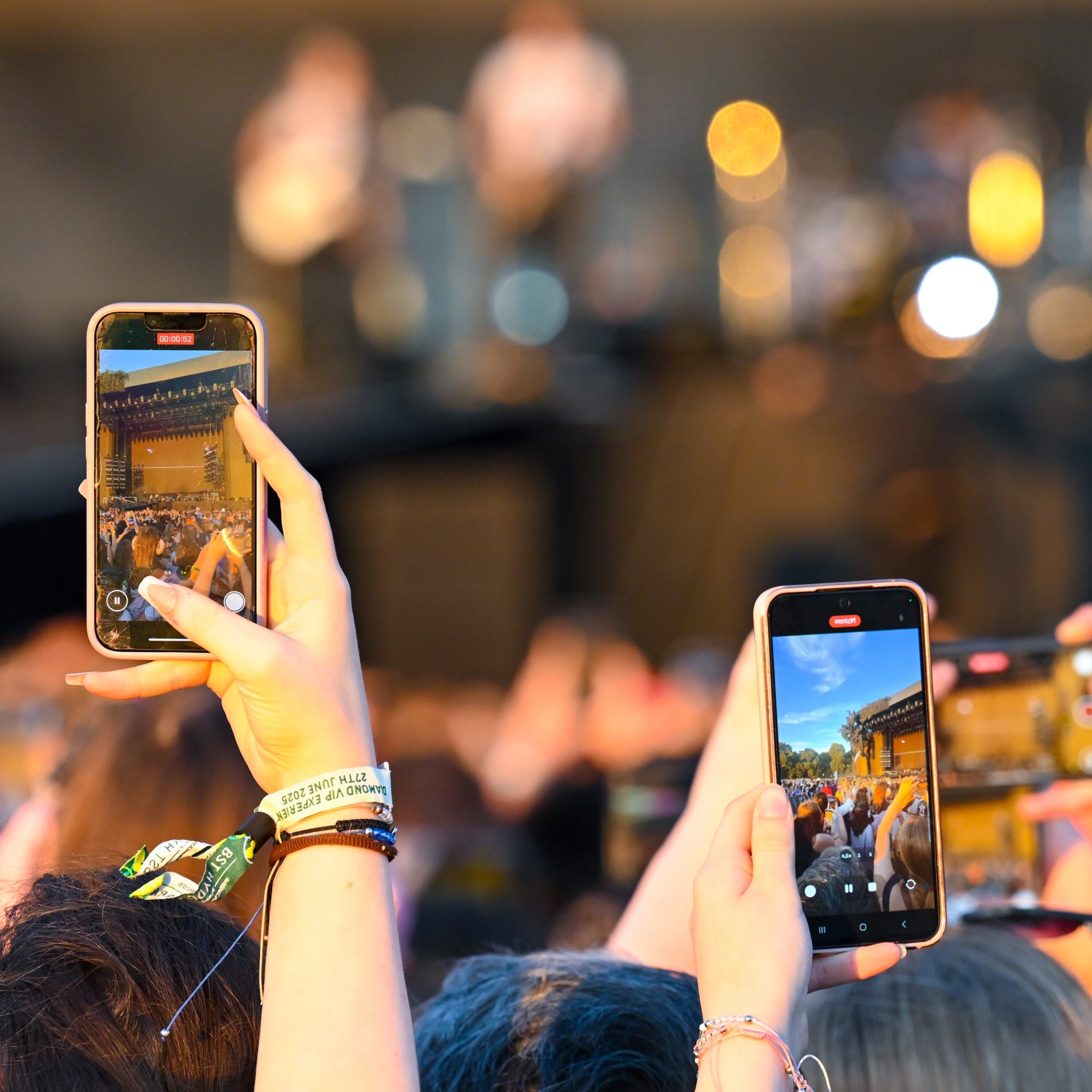
I agree. I think the most fun festival experiences I have had have been when you're closer to the back or in an open field situation. You have lots of room to dance with your friends. You can see like, you're far enough back that people probably aren't obstructing you, but the music probably sounds a little bit better and you're not getting crushed. I'm a big dancer at festivals and I think you just have more fun when you're in a part of the crowd where you have a little bit more space to hang out with your people. It's less stressful. You're not getting pushed and separated by the crowd. And that kind of leads into my take, which is, I think there shouldn't be phones at music festivals, or at least you shouldn't be predominantly on your phone at music festivals. And I think a lot of times when you see videos of the front row, it's a lot of people on their phones filming the festival. And I just think it's like, put the phones away.
- [04:24]
Aisha Harris
Yeah.
- [04:24]
Isabella Gomez Sarmiento
Service is probably bad at festivals. Like, I think a lot of times you don't even need your phone to like communicate with each other because the towers might not be working properly. Like, I just, I'm all for leaning into the in person experience, communal experience. And I think being on a phone or being in the front row doesn't really facilitate either of those things.
- [04:42]
Aisha Harris
Yeah. I will also say that in my experience, I've only paid for VIP once at one of these things. But I know that vip, when you pay that extra money, they know that the best seats are not in the front. You're gonna be off to the side, usually elevated. So I mean, look, that's a whole other thing. Cause you can definitely see better there. Steven, your point completely holds true, which is that who actually wants to be in the front? The one time that I did try to get to the front of a festival, it was Kendrick Lamar. It was after to Pivot. Butterfly had come out and I remember like trying to get all the way to the front, camped out with a group of my friends. And then it was so hot in the front that one of my friends actually, she didn't have enough water or whatever and she passed out and we had to like make sure she was okay.
- [05:28]
Stephen Thompson
Vacate the premises.
- [05:30]
Aisha Harris
Yeah, and I don't think it would have been that bad if we hadn't been at the front smushed with everyone else. It's just not worth it. And also, Steven, you're a tall person, but like as a small person myself, it's like even if I'm very, very close, I'm still probably not gonna be able to see anyway. Cause there's just too many bodies. And the closer you are and the short. It's like the vision. It's basically impossible. So why?
- [05:53]
Stephen Thompson
Well, and as a taller person with somewhat poofy hair, I'm also self conscious about blocking the views of people behind me. And so I'm constantly kind of like, oh, I'm sorry, sorry.
- [06:04]
Aisha Harris
That's very kind of you, Steven.
- [06:06]
Isabella Gomez Sarmiento
Not everyone is like that, Steven. And we are grateful for you.
- [06:09]
Stephen Thompson
Okay? But I mean, it's not about my. It's kind of about my virtue, but it's also, it is kind of self consciousness inducing. And we haven't even gotten into the volume. You know, I'm a big proponent in general as somebody who now wears hearing aids because I've attended too many concerts without proper hearing protection that the front row is often. You're positioned right under these gigantic speakers. You're not necessarily getting the best sound, maybe you're getting the best visuals, but you're also just having your precious, precious hearing possibly permanently damaged. You know, the very first festival I ever attended included the band Dinosaur Jr. Which is one of the loudest live bands in history. And I'm probably still paying the price for that festival more than 30 years later.
- [06:54]
Aisha Harris
Yeah, absolutely. I mean, Isabella, you've already hinted at what yours is, but this does go hand in hand, I think is the idea of like being on your phone. And this is your take, right? Like no phones, banned phones.
- [07:07]
Isabella Gomez Sarmiento
I'm anti phones. I think it's like festivals are one of the few opportunities where, like, you can really disconnect from the world. Like, you are there with a certain number of people, be it your friends, be it your family, maybe you're going solo. I think festivals should encourage the experience of being in the moment, exploring the grounds. Oftentimes when I've been at festivals, especially at camping festivals, it's like you just don't need your phone. It's way easier to be like, I'll meet you at this stage at this time, or I'll meet you at this food truck at this time. You're often more likely to run into people than you are to find them via trying to text. And I do think, I mean, for concerts in general, I have become infuriated with videos of crowds at concerts or festivals where everyone is just standing and recording. I don't understand the point of that. I don't know how likely you are to go back and watch those videos. It's become kind of like a content farming thing. Everyone wants the best video to post on TikTok. And I think that is so far removed from, like, the communal experience of live music. This year, for example, there were videos of Sabrina Carpenter's set at Coachella where she brought out Madonna as a surprise guest. And. And everyone was just standing there holding their phones. And it made me so sad and it made my skin crawl because I just don't think that's the point. And I can't imagine it's very much fun for an artist to perform to a crowd of people who aren't moving, who aren't singing, and are just sticking phones in their faces, especially in that front row. Like, I don't think that that's a fun thing to look out to. So, yeah, I just. I don't think you need it. I think for the one day, two days, three days that you're there, you can probably get by without it. There's plenty of resources to get to. Water stations, food, medical tents. Like, you know, festivals are set up to be insular spaces. You can put the phone away, you can log off for a few hours.
- [08:48]
Stephen Thompson
I've often found at festivals that I have a terrible signal. Basically, the larger the crowd, the more people are using their phones, the less likely you're gonna have a signal, and the more trouble I'm going to have playing Pokemon Go. And so very often my phone just winds up staying in my pocket anyway, because unless I'm trying to text someone, hey, where are you? There's not really a ton of use for it because you're already struggling to get a signal. And, you know, I will say, you know, just kind of inside baseball, you know. Issa, you and I both work around the tiny desk. You and I have both, you know, produced tiny desk concerts. Phones have been a scourge at tiny desk concerts, which is a very controlled, very contained space to the point where we have now instituted a policy where when the artist comes out, everybody pulls out their phone and snaps a picture. Then everybody is required to keep their phones in their pockets. And we have security stopping people from pulling out their phones and taking photos. Because we want people to be in the moment.
- [09:51]
Aisha Harris
Yeah, yeah.
- [09:52]
Isabella Gomez Sarmiento
I just think it's like I get wanting to take a couple pictures. I get maybe wanting, you know, a short video of your favorite song, having it on you for an emergency. Like, you really can't find your friend. You need to know what's going on. But overall, it's like you just don't really need it for 99% of the time that you're there. And I think you're more likely to impede somebody else's experience by having your phone out excessively than you are to, like, regret not having the 30 second clip of whatever song you were trying to record. Well, that's the thing, right?
- [10:17]
Aisha Harris
At this point, so many concerts are so well documented already. They have the videographers on stage who are also impeding your view if you are watching. Cause they're like, you know, Christina Aguilera is, like, dancing. And then, like, the videographer comes up and it gets in front of her and her dance, like, look, I'm not gonna knock the videographer from doing their job, but because we have that. Why do I need your really crappy, shaky cam video? Where you can also probably see.
- [10:43]
Stephen Thompson
Let the professionals do their work, Right?
- [10:45]
Isabella Gomez Sarmiento
Yes.
- [10:46]
Aisha Harris
And you can also probably see other people's phones in your video because everyone is holding them up. It's like, what is the point here? This is an experience. If you're gonna shell out that much money, why are you not in the moment? And I will say my one caveat to this experience is, like, if you're filming yourself and your friends, that feels different, Right? Like, I've taken video of myself and it's like, I wanna be able to remember who was there with me, remember this moment, but I'm not. I'm also doing maybe 10, 15 seconds, and then I put it away. Because you want to be in the moment and there is nothing to be gained and when I think about the videos that I do have from Festivals Pass, I don't think I've ever really gone back and watched any of them back when I was still doing that, when I was trying to video them. Yeah, it's just seems like a waste. Absolutely agree. Well, we're going to take a quick break and when we come back, I'm going to share my pick for a music festival. Etiquette Hill I would die on this
- [11:43]
Narrator/Announcer
message comes from Whole Foods Market. This is summer at its peak. Whole Foods Market Summer Fruit Fest is your invitation to eat the season fresh, organic and bursting with flavor. Start your day with peaches and organic blueberries and yogurt. Build a grazing board with fresh fruit, prosciutto and artisanal cheese. Then fire up the grill with no antibiotics ever, proteins and fresh produce. Savor the season. Shop Summer Fruit Fest at Whole Foods Market. Support for this podcast and the following message come from Strawberry Me Be honest. Are you happy with your job? Are you stuck in a job you've outgrown or never wanted in the first place? Are your reasons for staying really just excuses for not leaving? Let a career coach from Strawberry Me help you get unstuck. Discover the benefits of having a dedicated career coach in your Corner and get 50% off your first coaching session at Strawberry.
- [12:42]
Narrator/Reporter
This message comes from Wise the smart way to manage your money around the world With Wise, you can send, spend and receive Money in over 40 currencies at the mid market rate. Learn more at wise.com Ts and Cs apply this message comes from Great Wolf Lodge where there is adventure for the whole family. You and your pack can splash away in the indoor water park where it's always 84 degrees and filled with fun. From water slides to pools, a lazy river and more. Plus adventurous attractions, delicious dining, spacious suites and daily entertainment all under one roof. With 22 lodges across the country, you're always just a short drive away, so bring your pack together at a lodge near you. Learn more@greatwolf.com Aisha what is the hill
- [13:32]
Stephen Thompson
that you would die on when it comes to festival etiquette?
- [13:35]
Aisha Harris
Okay, so mine is actually, I feel like it's kind of an extension. It all comes down to that experience of being in a large crowd. And the older I get, the less I can tolerate it. I'm just like, I can't deal with this. But like, I think we've all been here where we're standing. We've got our place, we've got our people, and we're in our spot, and we're like, this is where we're gonna be. This is where we're camped out. If we have to go to the bathroom, we're gonna go, but we're not going to move too much. And then all of a sudden, you see someone trying to pass through, and you're like, okay, sure, you're trying to pass through. You can go. And then all of a sudden, another person is passing through, and then another, and then another. And then finally it's like 10 people are passing through. And because it's a large crowd, they're taking forever. And now you're missing whatever is happening, or you're getting bumped or you're getting inconvenience and other people around you are not moving, and it turns into, like, a traffic jam. My thing, my hill that I will die on is that if you are going to move through a crowd, and it's fine if you want to, because I've been there, I want to pass sometimes. Sometimes you're trying to find someone, but when you are going to do that pass with no more than three of you at a time, because three feels like the perfect number. It's, you know, it's gonna take probably about 15 to 20 seconds, depending on, you know, the crowd and who's more willing to let you go by than others. But once you get past three people, you are inconveniencing everyone. This long train that just goes on and on and on until the end of time is so disruptive. And I think, like, the whole cell phones thing, like, people are like, well, how am I gonna find my friends? Or, like, if you're with a large group, and at festivals, you often are with a large group, it's like, how do I find them? It's like, well, you know what? There are ways around this. There are analog ways around this. I have friends who have discovered this way, which is one of you brings, like, a big, giant, plushy animal on a stick. On a stick. Or if one of you is really tall, you wear a funky hat so that you can find them if you need to. And it works. Or you just, you know, you separate three at a time, three at a time, but don't all go the same way.
- [15:34]
Isabella Gomez Sarmiento
Do you understand my pain 100%?
- [15:37]
Stephen Thompson
Yeah. And one reason that I understand your pain particularly vividly is that I am a person who really does not like to be in a very tightly packed crowd. We're talking about, like, a field full of people. I will try to position myself in such a way that there is some space in front of me at all times. And some of this is just like a desire for an exit strategy. Some of it is kind of anxiety about kind of being crushed or compressed. I like to leave some space in front of me. This makes me a natural person to not cut in front of, like, steal a place in line, but to move in front of. I am a natural person to move in front of, in part because I'm not gonna be like, hey, man, I was here. But also because I have left a little bit of space. And like you said, it's fine when it's one or two or three people, but when it suddenly becomes between 40 and 11,000 people, it can be very frustrating. And it can create the kind that was the reason I left that space in the first place.
- [16:41]
Isabella Gomez Sarmiento
Yeah, I totally agree. And I think this goes back to Steven's point, which is a lot of times people are pushing through or passing through because they're trying to get to the front, which is like, the front's taken. People have been up there elbowing each other for hours. You know, if you're, like, one or two people, maybe you have good chances of kind of, like, wedging your way in there. But a group of more than three, you're probably not gonna make it to the front. You're probably making the people who have been standing here, like, physically uncomfortable. There's too many of you. And I agree. It's like, have a friend with a bandana that can wave it up and let you know what general area to move in. Also, I just think a part of festivals is, like, the groups get split off. If you're part of a big group, it ends up being like, three people are in one part of the crowd. Three people are gonna go towards the back. Like, you see each other after the set. Just enjoy. I think there's nothing more stressful than spending an artist set, like, struggling to find your friends or struggling to move through the crowd. Like, just pause where you are, enjoy the music, resume afterwards. It's not that serious.
- [17:41]
Aisha Harris
Yeah, just be. And look. I'm gonna be that person if you try to pull that with me. And there's more than three people, I will just maneuver myself so no one else can pass, and I'll say, like, nope, sorry. You all gotta go around. I've done it before. Some people don't like it. Some people are too drunk to realize what's happening.
- [17:58]
Stephen Thompson
Path is closed.
- [18:00]
Aisha Harris
Yeah. I'm like, no. I'm like the troll at, like, no more passing. No One passes. But I think that's only fair because again, as Isabella said, we should not be spending our time trying to do other things. We shouldn't be on our phones. We shouldn't be trying to make our way to the front. Just be. Just exist. I think that's really what it comes down to. And I think all of these things can kind of coalesce and be implemented not just in festival settings, but in concert settings generally.
- [18:29]
Stephen Thompson
Just exist in society.
- [18:32]
Aisha Harris
Exist in society. Yes. Yes, yes. Well, I feel like we've all made our points and we hope that this gets out to the general populace and they all practice them in the real world, in society. Just be nice. Exist. That's it. Right.
- [18:51]
Stephen Thompson
Festivals are supposed to be fun and good.
- [18:53]
Aisha Harris
Yes. Yes. Not stressful.
- [18:55]
Stephen Thompson
They should not be like miserable camps in which we're all getting heat stroke and dehydrating and damaging our hearing. They're supposed to be fun.
- [19:04]
Isabella Gomez Sarmiento
Also, make friends with strangers. You're navigating the crowd. Like, look up. Talk to the people around you. Engage. That's part of the experience.
- [19:12]
Aisha Harris
Absolutely. Look, Kay is closed. That is our story. We're sticking to it. That brings us to the end of our show. Stephen Thompson, Isabella Gomez Sarmiento, thanks so much for being here. Thank you.
- [19:22]
Isabella Gomez Sarmiento
Thank you.
- [19:23]
Aisha Harris
Yeah, I love being cranky about music festivals. That's my bag. That's my bag. This episode was produced by Mike Katzeff and Lennon Sherburne and edited by our showrunner, Jessica Reedy. Hello. Come in. Provides our theme music. And thank you for listening to Pop Culture Happy Hour from npr. I'm Aisha Harris, and we'll see you all next time, maybe at a festival.
- [19:48]
Narrator/Announcer
This message comes from Integrative Therapeutics, makers of Cortisol Manager. Daily stressors come and go and heightened stress can affect sleep and focus. Cortisol Manager helps support a healthy response to everyday stress. Available at Amazon.com, use code STRESS2026 for 20% off. These statements have not been evaluated by the Food and Drug Administration. This product is not intended to diagnose, treat, cure or prevent any disease.
- [20:15]
Aisha Harris
The last time Antonio Mays Sr. Heard from his son, it was in a note the 16 year old left in the family's garage.
- [20:23]
Narrator/Reporter
He told me he was going to make me proud.
- [20:25]
Aisha Harris
Antonio Jr. Left home to join a protest in Seattle. A week later, he was shot and killed there. I need some arrest made justice for my son. Listen to We Keep Us Safe on the embedded podcast from npr.