← Post Moves with Candace Parker & Aliyah Boston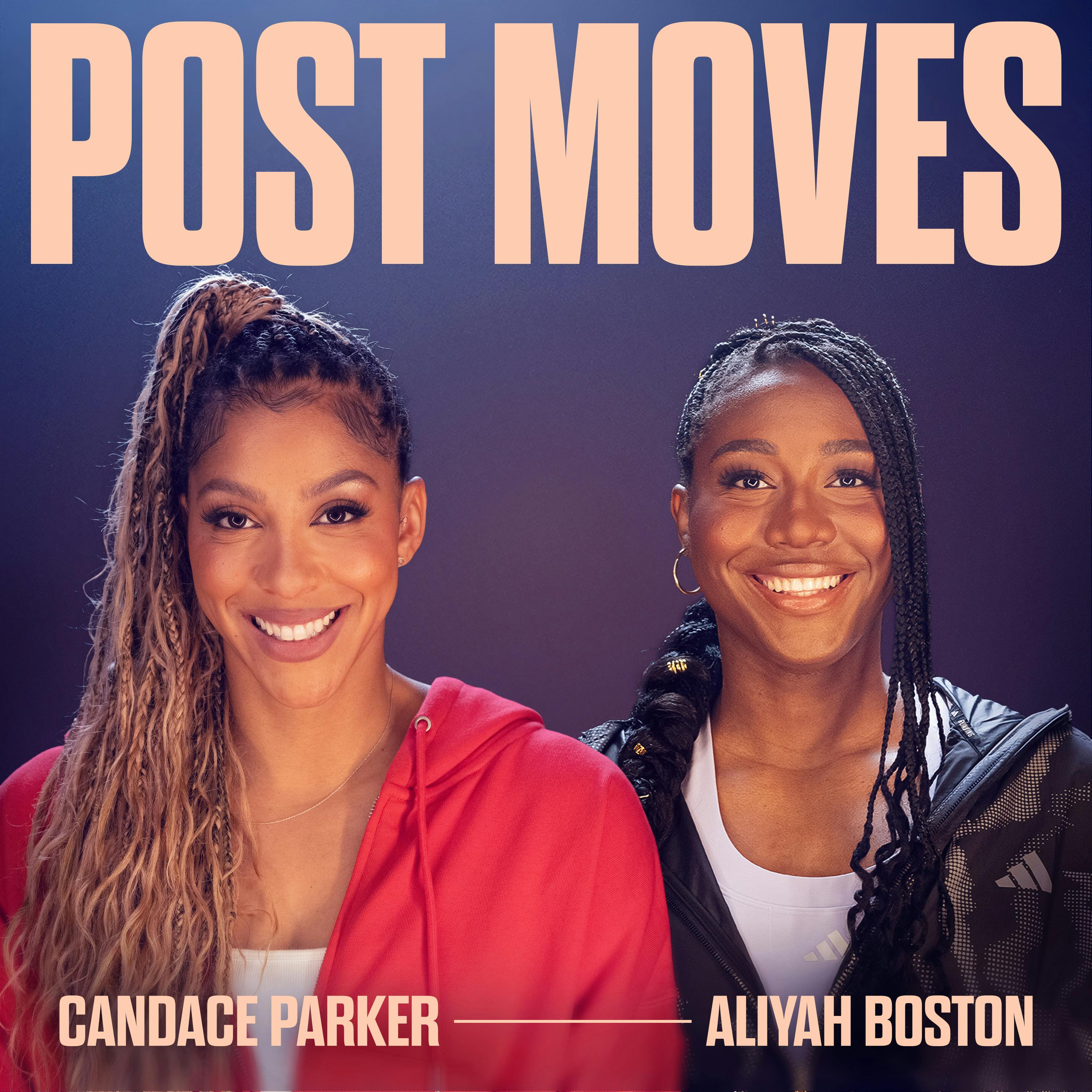
Post Moves with Candace Parker & Aliyah Boston
Robin Roberts talks Pat Summitt’s Legacy, WNBA Favorites & Rise of Women's Basketball | Ep.30
00:45:35
Loading summary
Transcript183 lines
- [00:00]
A
So who is your player comp? Like, what did you play like?
- [00:03]
B
I'm gonna say Leah, period. You know what? I'm gonna tell you. You can't see. I would use this. Let's be right. I'll get a rebound out. What? Get out my way. I was a 510 post player. Yes. And so when those little six footers thought they had something on me, who
- [00:23]
C
they think they are, let them know
- [00:25]
A
she was throwing them bows.
- [00:27]
B
Better catch a bow. You better catch a bow.
- [00:29]
A
Aaliyah, you got a lot of player
- [00:30]
B
comps that throw bows. I don't know.
- [00:44]
A
What's up, everyone? And welcome back to Post Moves. I'm Candice Parker, here with my co host, Aaliyah Boston.
- [00:49]
C
That's me. That's me. I was going to sing a song, but I couldn't think of a song that's hello, oh Lord.
- [00:56]
A
Follow us at postmove show on all
- [00:59]
C
socials and don't forget to subscribe on YouTube, Spotify, Apple, wherever you get your podcast. And new episodes drop every Wednesday.
- [01:07]
A
And Aaliyah's soundtrack will not be on Spotify.
- [01:11]
C
I don't know why.
- [01:12]
A
Or Apple. It'll just be our podcast. She is not going to create a soundtrack. What is it. What is it called? The little where you can create a song and anyhow, no, it. Okay, well, we have a very special guest joining us today. The legendary Robin Roberts. We're going to get to that in a second, but first, I think it's time for our fresh take of the week presented by Wendy's. Get yourself a $4 Biggie Bites, $6 Biggie Bag or an $8 Biggie Bundle now at Wendy's. And this week, my fresh take. Drum roll, please. Is that I hate when people aren't honest about their heights.
- [01:55]
C
Oh, me too. Especially a man. You might be talking in general, but especially. Especially lying. Cuz, you know, like when you see someone, are you always lying?
- [02:07]
B
Oh, my God.
- [02:08]
C
Oh, my God.
- [02:11]
A
But why are you lying? We know that you're six foot.
- [02:14]
B
You're five.
- [02:16]
C
It's crazy though, because anytime you look at a guy's height, you have to automatically subtract 2 inches.
- [02:21]
A
But. But the funniest is. Okay, so some of my friends are on dating apps, and I love living vicariously through them because it just. I love stories. And they'll say that they'll meet somebody that will say that they're six foot because I guess that's the magic height, aren't they? And they're like five, seven. Like, how do you. What Are you going to do. Are you going to explain yourself when you get to the date?
- [02:43]
C
Because genuinely, I'm going to leave. Like, just leave. We don't have to finish.
- [02:48]
A
It's not. It doesn't just go with guys that are six foot. Like, guys in the NBA be lying about they heights.
- [02:53]
C
That's what I'm saying.
- [02:54]
A
You, like, you see Chris Paul and you're like. I mean, no, I know he's catching. Now I'm about to throw out a straight. Chris Paul is not six foot three. What do they list him at? Six three? I said, chris, you know you lying. Same thing with Draymond. Draymond is not. What is he listed at? 6, 7. I'm like, Draymond, you are 6 5. Like, we are. We are looking eye to eye. We are. We are similar height. Kevin Durant, he goes the other way. Kevin Durant lists himself at 6:10. And like, dude, you're seven foot, and
- [03:25]
C
he's like seven feet.
- [03:26]
A
Exactly. So, guys, I think the common denominator that I'm getting out of all of this, whether you're going up in height, whether you're going down in height, whether you're lying, you're lying about, you're lying, be yourself. Because also, are you like a shoes on height person? Like, because you list yourself at 6 5, right?
- [03:45]
C
Yeah. Which obviously is.
- [03:46]
A
Are you shoe. Are you shoe on?
- [03:48]
C
Yeah, I think it's shoe on six five. Because like, when I go to the Doctor, they're like 6:3, and then they start squinting and they're like, you know, we can just.
- [03:56]
A
But it's also like the nurse that's five foot two that's trying to measure you, and you're like, this isn't going to work. You don't have a chair.
- [04:03]
C
So, yeah, I'm. I'm like six five with shoes on, I think.
- [04:06]
A
Okay. And I'm legit six four. Like, no shoes, no socks.
- [04:12]
C
Yeah, no shoes. I'm like 6 foot 4.
- [04:13]
A
In fact, my knees are valgus, so I'm actually probably taller. If my legs were straight, then I'd probably be like 6 5. But because my leg's starting to go in a little bit, I'm actually 6 4.
- [04:26]
C
I'm just gonna let that sit right there. You know what I'm saying? Anything I say is just not the word here.
- [04:32]
A
Talk about my disability, my valgus knee. It's okay, you can talk about. I think that everybody should just be honest with their height.
- [04:41]
C
Me too.
- [04:42]
A
You should go to the doctor. Whatever the doctor says, that you are. You should double check and measure it and make sure that you're not lying because you just look stupid when you lie. So that is my fresh take of the week. Everyone, please send in your fresh takes of the week. We would love to hear them. Aaliyah, you're up next. All right, I think it's time to welcome our guest. You know her as the award winning broadcaster and co anchor of ABC's Good Morning America. She spent 15 years at ESPN covering some of the biggest moments across the sports world. She's also a member of the Women's Basketball hall of Fame and a longtime champion for women's sports. We are so excited to have her with us today. Please welcome Robin Roberts. Robin, you're joining us today as the executive producer of the upcoming documentary Breaking the Pat Summitt story, which premieres March 25 on Hulu. What made this the right moment to bring Pat Summitt's story to the screen in this way?
- [05:45]
B
Oh, and talking to you and Aaliyah about this means everything. And before I get started, proud of both of you. I mean, you guys exemplify what Pat always wanted, going beyond the court. So I just can't. I want to give you your flowers and I wanted to say how proud I am and how happy I am. Pat, it's going to be 10 years, 10 years in June that we lost her. I can't believe it's been a decade. And March is also Women's History Month. And so what better time than this time and during March Madness because how can you think of March Madness and not think of Pat Summit? I mean, every single Lady Vols program, they're the only program, sorry, Leah. Only program to make every single NCAA tournament. I know Candace is really beaming about that, but it's been a work in progress. I sat down with her beloved son, Thai man Tyler soon after the passing and wanted to do something and just had to wait for the right timing. And then to work with someone like Don Porter, who is a phenomenal Emmy award winning director who went out in the field, who really mined. A lot of, a lot of people always say never before seen footage. This is never before seen footage that we have of Pat Summitt in this docuseries.
- [07:07]
A
What do you think was brought to light that people maybe didn't know about coach or the mom or the educator or the motivational speaker or, or, or, or, or which. She was all of those things and
- [07:24]
B
more, you know, too. I just laugh because I just think about your time there, Candace, and but we'll get to that. I'm sure we'll get to that, right, Aaliyah? We'll get to that with. With Candace. The lighter side of her, you know, everyone remembers that iconic Sports Illustrated cover and the steely blue eyes. And, yes, she was intense. Of course she was. But I think what people are going to see and what I even found in doing this is the softer side to her. The seeing her literally dancing on the table after she promised the team that they would win if they won, that she would dance. And she had a lot of strengths. Dancing was not one of them. She had no moves, but she got up on that. On that table and danced just the same. So I guess seeing that side of her, I think that's going to be something that's going to be enlightening for a lot of people to know that she could have that tenacity. Could have. I mean, when she retired 10, 98 wins, nobody, no man, no woman who ever coached basketball had more victories at that time. A lot of people know that. They know about the 100% graduation rate, all those things, but what they're going to learn about her is the woman, the woman behind the icon that we. We've come to love.
- [08:45]
C
So I know you. You and Candace, you guys have been blessed to get to know Pat, and that wasn't the case for me, but I kind of want to, like, take it back a little bit. So how did you guys really, like, become friends and have this strong, like, relationship?
- [08:57]
B
Oh, thank you, Leah, for asking that. It was a simpler time. It was the 1980s. I was a little cub sports reporter in Nashville, Tennessee, and Lady Balls won their first national championship. And I drove from. From Nashville to Knoxville to interview Pat, and typical Pat fashion, she poured into me. She didn't see many women who were sports journalists at the time. And here I come, bounding up, you know, fresh off the farm, from Mississippi, really. And she embraced me, and she was. She was really. She. She. From that moment, we became fast friends. And then, of course, working at ESPN all those years and covering the tournament and going to her home many times and just the many interviews, but the times I really enjoyed was just getting on the boat with her. That woman could cook. Whoa.
- [09:52]
A
Jalapeno corn. I'm telling you, the Halloween that's.
- [09:55]
B
You already.
- [09:55]
C
You already know exactly what you're.
- [09:59]
A
Ice cream. The homemade ice cream was homemade ice cream. And I thought I was special because she made it for me, but really, she did it for every recruit. But it makes you feel special.
- [10:09]
B
She made everybody feel like she was doing it just for them. But those are the memories that I hold dear to me. But the fact that I got to know her as I did way back when, before she had Tyler, before, you know, that first national championship was so key because people thought, you know, could she get over the hump? And then she did that, and then there were some lean years and then Candace and the Meeks come in and, you know, it's history from that point on. But just getting I miss her birthday calls, I miss her, you know, I kept on my voicemail for the longest time. The last message that she left me for my birthday, I mean, she just was somebody who is as busy as she was. She just made you feel special. She made you feel seen.
- [10:55]
A
I think the quality time element that you speak of is something that I know all of us that were touched by Pat carry forward because when you were in her presence, similar to you felt like she was only making ice cream for you or she was only making jalapeno corn for you, you felt like you were the most important thing in the world. And I look back now and, you know, it's been 10 years, but I'm still learning lessons that Pat taught me from my time at Tennessee and beyond. And I say that in the fact of, like, I look around at all the things that she exposed us to as a team. I mean, we were going to Lion King on Broadway, we were eating at extravagant restaurants. She fought for us to be able to charter, you know, charter from place to place so that we could get back from class. Sometimes I didn't want to get back for the 8am class, but we got back for the 8am Class. Like, she forced us to sit in the first three rows, which I still, still sit in the first three rows of any. Anything I'm at, I sit in the first three rows. And so all of these lessons that I think I'm carrying forward now, but the main thing is to make sure that you're surrounding yourself and looking at greatness. And I think the amount of just women that she brought back, whether it was the head of T Mobile and Sue Noakes, whether it was Robin Roberts coming in to just be in the locker room and just be around and have individual conversations with like, she exposed us to greatness. What was it like in terms of seeing her rise and seeing her continue to be the same type of person? Because listen, Robyn, she would get off the plane from speaking to the CIA. Yeah, she would.
- [12:46]
B
She.
- [12:46]
A
She just randomly mentioned that she gave a speech to CIA and then she would come to practice and have the practice plan and act like nothing happened that morning.
- [12:53]
B
What about the beauty of her? You know, because to her, it wasn't a big deal. Of course. Why wouldn't the CIA want to hear from Pat Summit? Why wouldn't. They had a. I mean, Fortune 500 companies are reaching out to her, wanting to her, wanting to know her secret sauce. And I love her, you know, definite dozen. And how about, you know, discipline yourself so nobody else has to. Oh, my gosh. I mean, it goes on and on and on like that, but I think that that was part of. Part of her essence and what she wanted. I love everything that you just mentioned, and I'm glad that you talked about her as you did and let people know that side to her and. Yes. Did she want to win a national championship every time. Did she want to. She never had a losing season.
- [13:39]
A
She did not like to lose. Don't let all this other stuff. I mean, I don't think that that is in question.
- [13:45]
C
Let me say. All I'm saying is if she's taking you to watch it on Broadway, watch Lion King on Broadway. You better win. You better win. Because, honestly, I'm not going to have beef with Coach Staley. I'm not. And I know we're talking about Coach Summit, but Coach Daily never took us to Broadway. I'm confused.
- [13:59]
B
I don't know why. Oh, come on. She could still reach his. You know, Coach St. And we talked to Don. Don is a part of the. Of the film. We sat down with her, and it was. It was great how. And she said everything that you were just talking about. That was her love language. That was Pat's love language. You know, she was tough, but that's. That's how she got it done. And. And she didn't want. Because, you know, she grew up on a dairy farm. And in the film, you see her on a tractor bailing hay.
- [14:28]
A
Yep.
- [14:29]
B
Oh, bailing hay and shucking corn and throwing it to the animals. And, you know, there with her mother and her father, and, you know, you see the barn where she learned how to play, or her dad, you know, put up the hoop in the barn. And then I love the fact that her parents, you know, when she came, what's coming along and where she was going to school, they didn't have women's basketball, so the family moved. So she.
- [14:49]
A
At that time. At that time, I mean, so she
- [14:54]
B
remembered those things, and she wanted to instill those things in her players. And because she wasn't Exposed to some things she wanted to make sure because she knew, would you go to Lion King? Would you ever have a chance to go to Broadway? Would you ever have a chance to eat at the finer restaurants? No. But then, you know, Candace, I look at you, and I look at the other former players, and you, Aaliyah, with Coach Staley, how blessed you are and what a blessing you are to carry on their legacies, both of you, by being the strong leaders that you are, whether it was on the court and Aaliyah, you're still on the court or off the court. You know, Candace, I cannot keep up with you, girl.
- [15:36]
C
Neither can I. Neither can I.
- [15:39]
A
Hey, I'm just. I'm just trying to. Real talk. Real talk, Robin. Like, I'm just trying to be like you. Honestly, I think being exposed to a variety of things as a result of Coach Summit opened my eyes to being versatile and being open to, like, putting your hand in different boxes and buckets and being in different rooms and, you know, understanding that you deserve to be there. And to be honest with you, I just. I'm super grateful for you all setting the bar and sometimes raising the bar and opening the doors, because the things that you were doing, like, for me to turn on SportsCenter and see a black woman that looked like me talking about sports did something to me. And I say that in, like, Coach Summit was ahead of her time in what she had the expectations for athletes, for us, for women, for what we deserved, for how she treated us, for the bar that she held us to. And so what is that like, when you're kind of forging a path and you're opening the doors and you're doing things that people are saying that you shouldn't be doing. I mean, you went from sports speaking about sports, where people are probably like, hey, shouldn't probably speak about sports, to now saying good morning to millions and millions of people every single morning? I mean, it's. It's phenomenal what you are doing.
- [17:02]
B
Well, I appreciate that, and sometimes I want to pinch myself as well, but it's all about venturing outside of your comfort zone. And the best thing that happened to me was title nine and being exposed to sports because for generations, you talk to men, and the reason they went on to be successful in business and other areas of life is because they. They. They played sports. And it was. It was the same for me. And it was. You know, I was so busy doing my job that. That I didn't have time to think that, okay, I'm forging A path no one has done. Some of the things that I have done to be the first Black woman at ESPN, getting there in 1990, staying for as long as I did, not wanting to go. But then this opportunity of Good Morning America. And I remember talking with another mentor of mine, Billie Jean King, who we also talked to for the. For the film, because she just thought the world of Pat Summit. And I remember talking to Billy and saying, you know, hey, I have this opportunity. Good Morning America wants me to come on board. And I wanted her to say, no, you got to stay with us. You've got to stay in sports. And she was like, what are you talking about? Go? You've said no for so many years. Because when I was coming along in local television and doing so well in the sports division, the news director was like, you can make more money over here. You can make more prestige. I wanted to do sports. That was where my heart was. And Billy was the one who really encouraged me. And she said, you're not leaving sports. You're taking us with you. And I love that. And I was like, yeah, because look, doing this film, going. Still going to the. To the Final Four. I love that. I was there a couple of years ago when you're South Carolina playing Caitlin Clark in Iowa, and there was a shot of me on the sidelines. I wasn't working. I was going to do Good Morning America the next day. And I had a look on my face that was just like a proud mama. I was just beaming, seeing what was taking place on the court, knowing it was setting a record as far as TV ratings, seeing the place filled there in Cleveland, and just such immense pride. So I. I'm. I'm thankful to be a part of it, but it doesn't do any good unless those that come after us, such as yourselves, I mean, to see the explosion right now of not just women's basketball, but women's sports is just extremely gratifying that it has gone mainstream, and there are many reasons for it. The caliber of play is just off the charts. And I wish Pat was here to see it. I really do, you guys, I really. I remember in nineteen oh, what was it? 1996. Was it 95, 96. When Tennessee, Connecticut, that first game, and it wasn't supposed to be Tennessee. It was on Martin Luther King Day, 1995. January 1995. I was in Gampel Pavilion, and it was supposed to be an ACC team to play Connecticut. No one wanted to do it. And Pat said, we'll go. We'll do It. And they. They went there, they played Connecticut. It was a. It was just raucous. And that's when UConn was starting to take off in that great rivalry between the two of them. But that was pat. She didn't just want the best for the Lady Vol. She wanted what was best for women's basketball, what was best for the sport. And when you have someone like that, and I miss that, and I wish that more people have that quality in thinking beyond themselves, beyond their playing field, and just thinking about the big picture. And she was a really, a big picture kind of person.
- [20:49]
C
Well, I just. I just want to add, I mean, you talked about, like, you bringing Billie Jean King, said you're bringing us with you, and I feel like you're still doing that. So I just want to, like, take this moment, though, to, like, tell you thank you. I mean, no matter what happens, like, you play a game, you win a championship, the next day, you see everyone on Good Morning America. Like, I think you seriously just continue to bring us with you. You continue to shine the light on our sport in general, on women athletes in general. And it is truly so amazing to be a part of. Everyone gets their best spits on. They know everyone's going to be watching them. They post that they're on Good Morning America, and it truly is amazing. So I just. I just want to say thank you. As someone that wants to, like, be in everyone's footsteps, I want to follow what Candace do, like, be in the media. Like, you, like, you guys seriously have. Are, like, great role models for me. And so I just really want to tell you thank you for what you continue to do for us.
- [21:40]
B
I appreciate that. And you should know, you know, in the early years, it was very difficult. I would go to gma, I'd go to say, hey, we want to do this. And they go, I don't know. Now when I ask, they don't bat an eye, period.
- [21:54]
C
Queen.
- [21:55]
B
Yeah. It really is wonderful to see how it is being truly, truly embraced and rightfully so.
- [22:02]
A
You know, Robyn, it's crazy because Aaliyah is 24.
- [22:06]
C
Here we go. What did that have to do with.
- [22:08]
B
Hold on, hold on.
- [22:09]
A
When she's.
- [22:10]
C
Hold on, hold on. I know this is always have to get back to my age. This is weird.
- [22:14]
A
I just am telling you the lens at which she's looking at the world so that you can know that when we're talking about 20 years ago, she was not, you know, she was four, but I mean.
- [22:26]
C
But I was around. But I was. Yeah, I mean, you said 95. I wasn't there yet. Was it there yet?
- [22:32]
A
Like, that's what it is. But. But obviously, I like to say women's basketball is having not a moment, but momentum, and it's being pushed forward into record viewership, sold out arenas, huge stars emerging. Can you speak more on the UConn Tennessee rivalry? Because I don't think. Like, I know we say we want Pat here to see it, but Pat was a part of building that. I mean, I remember standing in TBA, seeing 24,000 people screaming. And obviously, the national coverage, international love for women's basketball especially, is huge, but Tennessee was a huge foundation in building what we see today. So just experiencing, like, what it was like. Pat was a rock star on the road. She could not go anywhere in Knoxville. She was the mayor, the president, the governor. She was all of those things and more. And so I just think that you were there. You came to Knoxville so many times and witnessed this. You were there on the international stage. So what can you say about what, Coach? I know she's not here to physically see it, but I think she saw it, and she was a huge part of building this.
- [23:47]
B
I think she. Yeah, she saw what she was doing, and that was the intent behind it. I mean, she really. She believed in the players. She believed in the sport. She believed that how she was able to get people to come out, I mean, now it's commonplace, but it was difficult back then canvas, you know, to sell out the arenas as she did. And you guys, you. You would come to town, and much like we see with Caitlyn, and everybody was talking about how Caitlin, and rightfully so, and how people would come to those games. That was Pat Summon and the Tennessee Lady Balls back then, when they would come into town, people who normally wouldn't go to a game would come out to see Pat, to see the Lady Balls, to see something. And so I'm really hopeful that this film, because it breaks my heart to know there are some playing the game today who are not fully aware of her legacy. And that just. Oh, that just. You have no idea. I'm sure you do, how that hurts. And so I want people to be able to understand that what we are seeing today, and thank goodness we're seeing it today, she was at the cornerstone of it. She was very big about laying the foundation for that and that Connecticut, Tennessee series. Man, oh, man, oh, man. And again, it started because Pat said, I'll go. I'll do it. When nobody else wanted to. She said, I'll go. I'LL do it.
- [25:18]
A
Yeah. Malia, we played the toughest schedule every single year, okay? We didn't dodge. We ain't dodge Gamecock.
- [25:23]
C
I don't know what you're talking about. I don't know what you're talking about, but what. All I know is the Gamecock is going to dodge all the smoke. No one ever want to put them on the schedule. Thank you. Thank you. Thank you.
- [25:34]
A
Hey. Hey. Quick question before this gets off the rails and you know the rivalry between South Carolina and Tennessee? What? Who are your favorite players nowadays to follow? And I'm sorry to hit the hard question. Do you have a favorite WNBA team?
- [25:53]
B
I don't do that.
- [25:54]
A
I mean, I just. Listen, we're here to ask the tough questions.
- [25:56]
C
I mean, Indiana Fever is a viable option, though.
- [25:59]
B
This is what I talk to K. Don't shy. Asia. Y. Asia?
- [26:05]
C
Yeah.
- [26:06]
B
Come on. I mean, there's just no one better right now. Just everything about her game. I just. I just. Absolutely. Yes, I give absolute respect to Caitlyn Clark. You know, this Aaliyah. My goodness. I. I went to do an interview with her. She was still at Iowa. It was before the last Final Four. And to see the logo, to see. I mean, the range from this woman, it's crazy.
- [26:35]
C
No, it really is crazy. It's crazy.
- [26:38]
B
She's so much fun to watch. I want. She's gotta stay healthy. Gotta stay healthy. Gotta do what she needs to do to be able to stay stay healthy. But Asia is my. And I have to say, I'm a little bit of a Liberty fan.
- [26:52]
A
I was about to say. I've seen you at games. Proximity. We'll give it to proximity.
- [26:59]
B
And I do go to Connecticut Sun. I do okay. Period.
- [27:02]
C
Period.
- [27:03]
B
But, you know Clara Wu, and you know, she's much like what you said about Pat. I mean, how she was fighting for things, not just for the Liberty, but. Yeah. But like Kane, why aren't we chartering? There's no reason why you shouldn't be chartering in the wnba. All these things that I'm hopefully, you know, the cba. I hope that, you know, everything's crossed. That some things will. Good will come out of it, and some things that they're really. The players are deserving. They. They will receive. But I cannot believe you put now any other place. So if somebody else wins. They're not going to. Come on, GMA oh, you're a Liberty fan.
- [27:37]
A
I'm sorry. You taught me. You taught me to ask the hard questions. I'm sorry. I'm sorry. I'm sorry. Well, listen, we'll get you off the hot seat. We want to talk about your basketball career. Yeah, we want to talk about your basketball career and what led you. I want to hear all about it. Because you started playing in the early 70s. Title 9 had just passed for those. Title 9 basically guaranteed all women the opportunity for equality for federally funded universities. So therefore, scholarships were a part of the package in 1972. Obviously. My mom. My mom is 72 to 76, so she kind of missed the bandwagon because people were, you know, schools were getting their stuff together, but this entire generation benefited from being able to have Title IX and use it to get an education.
- [28:29]
B
Yeah, I was 79, 83 at Southeastern Louisiana University. This is now really dating myself. I sat away, I sent away for the catalog for Tennessee. That's how you would do it. You'd send for the catalog and they'd send you the catalog for the university. I was too scared to ask or to put myself out there to play for Pat, but she was on my radar. But playing it, I have no regrets. Southeastern Louisiana University was very, very good to me. In fact, I just opened a media center there because I got my degree in communications and just wanted to get back to the university. And so to have a media center that bears my name means everything. I had a good time playing ball. You know who I played against? Kim Mulkey.
- [29:13]
A
Oh, wow.
- [29:15]
B
Kim Mulkey was at Hammond High. Southeastern Louisiana is in Hammond, Louisiana. She was at Hammond High. She got more press than we did at the university. Okay.
- [29:27]
A
Somehow I'm not surprised.
- [29:28]
C
That's so funny.
- [29:29]
A
I'm not surprised.
- [29:31]
B
Then she goes to Louisiana Tech. Louisiana Tech had this. Their fans, they would not sit down until the opposing team scored. We kept those people on their feet for a long time because, oh, my. Begging us to score so they could sit down. But I, you know, I had a thousand plus points and rebounds. I love defense. Loved everything about the game. Was so grateful. Little known fact, my scholarship actually was tennis, but I played basketball instead. Tennis was. Yeah, so it was a tennis scholarship. Was going to play both sports, but I also needed to go to class.
- [30:08]
A
That worked out pretty good for you, going to class.
- [30:12]
B
You know, I look back, if we had 10 people in the stands, they were our parents and my mother, Lucy marion. Love you 2 bits, 4 bits, 6x dollars. She was the one that was cheering for us in the stands. And I wouldn't have changed a moment of that time. I still. We were playing the game because we loved it. And as I said before, I'm a proud, proud product of Title ix and very grateful for all the attributes that you learn through playing sports. How to lose as well as how to win, how to handle the losses as well as the victories. And I'm just really, really grateful to my university. And, you know, I'm even. I got my T shirt on.
- [30:55]
C
As you should.
- [30:56]
B
You know, everybody should be Rep it.
- [30:57]
C
Rep it.
- [30:58]
B
Carolina Gamecocks, baby.
- [31:00]
C
Why don't you ask Candace how the Voles did against South Carolina this year?
- [31:06]
A
That's what we're doing. All right.
- [31:08]
C
I'm just saying we're talking about repping. Like, we're repping university, like, rep. Yo.
- [31:12]
A
All I'm saying is if you're not first, you last, so you're only as good as your last game. So.
- [31:20]
C
Okay. Okay.
- [31:21]
B
Ouch.
- [31:22]
C
What about your last game?
- [31:23]
B
What about your last game?
- [31:24]
A
We both took an L and A.
- [31:25]
C
Last. Did you even make it? Where did you make it?
- [31:28]
A
Okay, this is really what happens. I'm sorry that you're exposed. I'm sorry. Let me. Let me ask you this, Robin.
- [31:38]
B
Before.
- [31:38]
A
Before things get off the rail again, who was your player comp. What was your plan? Because listen, we have Leslie. Leslie Jones is on the podcast. And what did she say? She was like. She just elbow people and she was more like everyone.
- [31:54]
C
Like, basically. That was my comment. I was like, I don't really.
- [31:57]
A
Yeah, she said she's Aaliyah Boston. No, she did say she was.
- [32:00]
B
Yeah.
- [32:00]
A
Cuz you elbow a bunch of people.
- [32:01]
C
So I don't. I literally.
- [32:04]
A
So who is your player comp? Like, what did you play like?
- [32:08]
B
You know, I'm gonna. I'm not gonna. First of all, I sat next to Leslie at the Unrivaled. When it went to. With the.
- [32:15]
A
I thought you laughed.
- [32:16]
B
I laughed my mind off. Oh, my God. I was sitting next to her and Wanda Sykes. Oh, my gosh. That was a great scene. It was a great scene, but I'm gonna say Aaliyah, period. You know what I'm gonna tell you. You can't see. I would use this as you. Let's be right.
- [32:37]
C
I'll get a rebound out.
- [32:38]
B
What? Get out my way. I was a 510 post player. Yes. So when those little six footers thought they had something, who they think they
- [32:47]
A
are, let them know she was throwing them bows.
- [32:50]
B
You gotta catch a bow.
- [32:51]
A
You gotta catch a boy. I like.
- [32:54]
C
Thank you. Thank you.
- [32:55]
B
Yes.
- [32:56]
C
This is the best.
- [32:57]
A
Aaliyah.
- [32:57]
B
You got a lot of player comps that throw bows before the game.
- [33:06]
A
That's what Aaliyah does. That's exactly.
- [33:09]
B
But I did enjoy that. People underestimated me because of my size, because they thought, you know, be. And that's. That's another thing that I learned through sports because I was a 510 post player in high school, Everybody, you know, that was tall. But Southeastern, no one wanted a 510 post player. So on my own time, my senior year of high school. Come on, little man. My senior year of high school, I went into the gym to learn that outside shot, you know, not because I wanted to be freshman of the year at Southeastern Louisiana University.
- [33:38]
C
Hey, talk.
- [33:39]
A
Yo.
- [33:39]
B
Please hold your applause.
- [33:40]
A
Talk about talk, that stuff.
- [33:43]
B
Your proximity is power. You have to put yourself in position for good things to happen. And so I was able to learn that new post, you know, new position so I could get that scholarship. And I'm just really, really grateful for just. You know, I just. I just. And I love that people underestimated me when I wanted to be a sports journalist, because I love that it's commonplace now. You turn on the tv, you don't bat an eye. When you see a woman doing sports, you're like, yeah, but I got. I'm telling you, I could. I could sense when I was on espn, I could sense beer cans pelting TV sets all across, like, you know, throwing stuff, beer cans at me, like, what is she doing? And all I wanted was an opportunity. And what I really appreciated, it was a time when I was in Nashville. I was in Nashville, and the local paper had already said, you know, I was coming to town or whatever, blah, blah, blah, blah, blah. I hadn't even been on the air yet. And I answered the phone in the sports office, and, you know, Ronald Robertson, this guy goes, I don't like you. And I'm like, I haven't even been on the air yet. What do you mean? Well, women doing sports, blah, blah, blah, blah, blah. I said, dude, just. Can I. Just give me a shot. Call me back in six months. No, no. Hey, little man. Run, little doggy. Here. Three months later, he called back, and all he said was, are you all right?
- [34:59]
A
And that's a nod. That's a nod. Yes.
- [35:02]
B
And so I love. And you know, you. Same way you love it when someone thinks that you can't because you're like, oh, you think I can't? I'm going to show you that I
- [35:10]
C
can show you Exactly.
- [35:11]
A
Yep.
- [35:11]
B
What I can do, not what I can't do.
- [35:14]
A
What do you think the biggest lessons that you've learned from basketball Your journey within sports that you carry with you every day. Because it seems like when you broadcast, you are carrying us with you, which you talked about, but you're approaching it from a lens of an athlete. And I keep trying to tell people that athletes are different. It's so different. I think we're seeing the value of what it is like to learn to lose, to work hard, to battle with people that you don't agree with sometimes, to find a common place to reach across the aisle and understand that competition is healthy. And throwing bows, there's nothing, you know, there's nothing personal, it's just competition. So it just seems like every time I see you, you're a forever athlete and you carry that with you in your broadcasting.
- [36:02]
B
Bless you. Bless you. I am a forever athlete. And what it taught me was the big picture. You'll, you can lose the game, doesn't mean you're going to lose the championship, doesn't mean you can't come back and beat the national champion. I love that. It really taught me so much about dreaming big but focusing small. You'd set those goals at the beginning of the season, what you wanted to do and you, you'd work toward whatever it is that ultimate goal was. And I did the same thing when I was graduating from Southeastern. There weren't a lot of people who wanted to hire me to be a sports journalist. They did want to hire me for news, but I didn't want to do that. I received one part time offer, $5.50 an hour, 30 hours a week, to be the new the weekend sports anchor in Hattiesburg, Mississippi. I didn't hesitate to take that job. I was dreaming big but focusing small. Okay, I'm going to be here in Hattiesburg. I'm going to learn as much as I can. Went to a bigger station in Bililoxi, Nashville, Atlanta, ESPN. And all along the way I was positioning myself. The thing that we learned through playing sports is you can wish, hope and pray all you want, but if you don't position yourself for that rebound, if you don't position yourself to get in the right scoring position, it's not going to happen. I remember when we were at Southeastern and we were playing lsu, much bigger school and all our coach said is like, keep this, keep the score close, just keep it close. You never know what could happen at the end. If we had just said, they're a better school, they're a better team, we'll just lay on, we won't even try, they'll run the score up but we kept chipping away, chipping away, chipping away. And it was the final minutes of the game. We had an opportunity to win, and the opposing player at lsu, I purposely fouled her to put her on the line to try to get the ball back. And they had been cocky all game long. And so she goes to the line and her players are coming up to encourage her, and she's like, give away. I'm like, she's scared.
- [37:54]
C
She's nervous. She's shaking at her boots.
- [37:57]
B
Oh, okay, I got you scared. Sure enough, she misses the shot, we get the rebound, we win the game. That's life, you know, and, you know, so I, I, I am so grateful that I've always been a. Not a glass half, empty, glass half. See the glass, people don't be worried if it's half empty or half, you know, the fact that you have glass, and, and that's something that I learned through playing sports, that proximity is power. You can wish prayer, pray, and hope all you want, but you had to put yourself in position for good things to happen. And that is something that has stayed with me and has really helped me throughout my career and beyond life and everything going through. My health, challenges, cancer, twice, same thing. I approached it dreaming big. I want to be cancer free. Okay, what do I have to do? Okay, chemo, radiation, doing all the things I have to do. And then I remembered what Pat Summitt said. Left foot, right foot, breathe. Left foot, right foot, breathe.
- [38:57]
A
I gotta put it. Wait, I gotta put it right here. There it is. Oh, yeah, there it is. I got it on my. Yeah, I got it on my arm. There's nothing there. That's the best advice ever. When things get difficult, you put one foot in front of the other. You left foot, you right foot, you breathe. And guess what? You repeat. And then you look up and you're right where you're supposed to be. And Robin, I must say, I've learned so much. I've learned dress for the job that you want. And while staying consistent in the job that you already have, I've learned that there is power in understanding that you deserve to be where you're at when you put the work in. And we've learned that from watching you all of these years continue to raise the bar and continue to bring us along. So I really appreciate you taking the time. I cannot wait to watch Pat summit and what you've put together. Breaking the glass, breaking the glass, breaking the glass. I cannot wait to watch breaking the glass. But I cannot wait to watch you Know your friendship and all of those things. And so thank you so much.
- [40:08]
C
Yes.
- [40:08]
A
Thank you from Aaliyah and myself for sitting down with us. And, yeah, I appreciate you all. We will cross paths so many times this summer. Let's, let's. Let's make it.
- [40:19]
C
And don't forget to vote for the Indiana Fever when we're playing the New York Liberty. Thank you.
- [40:23]
B
Thank you.
- [40:23]
C
Just a reminder.
- [40:26]
B
See, this is what.
- [40:27]
C
Just a reminder. Just a reminder. Available.
- [40:31]
B
You can do that.
- [40:33]
A
I don't know what you're talking about. You taught me this.
- [40:39]
B
I'm gonna say what I said at the beginning. Proud of you both. Thank you.
- [40:43]
C
Thank you.
- [40:44]
B
Thank you for caring for coming on. Yeah, you got it. Let's go.
- [40:47]
A
Appreciate you.
- [40:53]
C
Before we go, we gotta get to our driver's seat moment of the week presented by Volkswagen, where we celebrate somebody who stepped up, took control, and really had a moment. Okay, Candace, I know you don't really be all up on social media like that. Sometimes, you know, I do, but. No, you're an old head. I don't think so. A few weeks ago, I saw a video of a 78 year old DoorDash driver named Richard Pulley who went viral after a customer's doorbell caught him delivering her food very slowly. I don't know if you saw it. It was like the cutest thing in the world, but at the same time, it was like, oh, like, look at him. Are you kidding me?
- [41:31]
A
Oh, my goodness. He is walking up the stairs.
- [41:37]
C
I know.
- [41:38]
A
Putting the doordash.
- [41:40]
C
No, it was like, it was really cute. And. But anyways, the customer, Brittany Smith, she actually tracked him down and started a GoFundMe to help him and his wife retired. And it raised almost a million dollars. Like, are you kidding me? That is so awesome.
- [41:59]
A
That is incredible. I mean, first of all, I melt at old people, dogs, and babies. Those are my three.
- [42:07]
C
I love that it's the three categories.
- [42:10]
A
Those are my three. It's like, but that was precious. And then for her to think, to
- [42:15]
C
do that was it just. I mean, there's hope.
- [42:19]
A
There's hope and humanity. By this time you're listening, it probably is over that. And I am definitely gonna go contribute because that is just the cutest thing in the world. The cutest thing in the gosh.
- [42:33]
C
I love it. Me too.
- [42:34]
A
This gives me hope. That's a wrap on this week's episode of Post Moves. Thanks again to Robin for joining us. We had a fantastic conversation. We threw some bows too. So, you know, it's always a good thing Aaliyah got another player comp.
- [42:48]
C
And whatever. Whatever.
- [42:51]
A
There's a trend. There's a theme.
- [42:53]
C
You know what? But everyone loves it. Thank you.
- [42:55]
A
You're right. I love it, too. Okay, new episodes drop every Wednesday. Subscribe on YouTube and wherever you get your podcast and follow post moves on all socials at Post Move show. That's two S's. I knew it was coming. You didn't scare me.