← Power Hour Optometry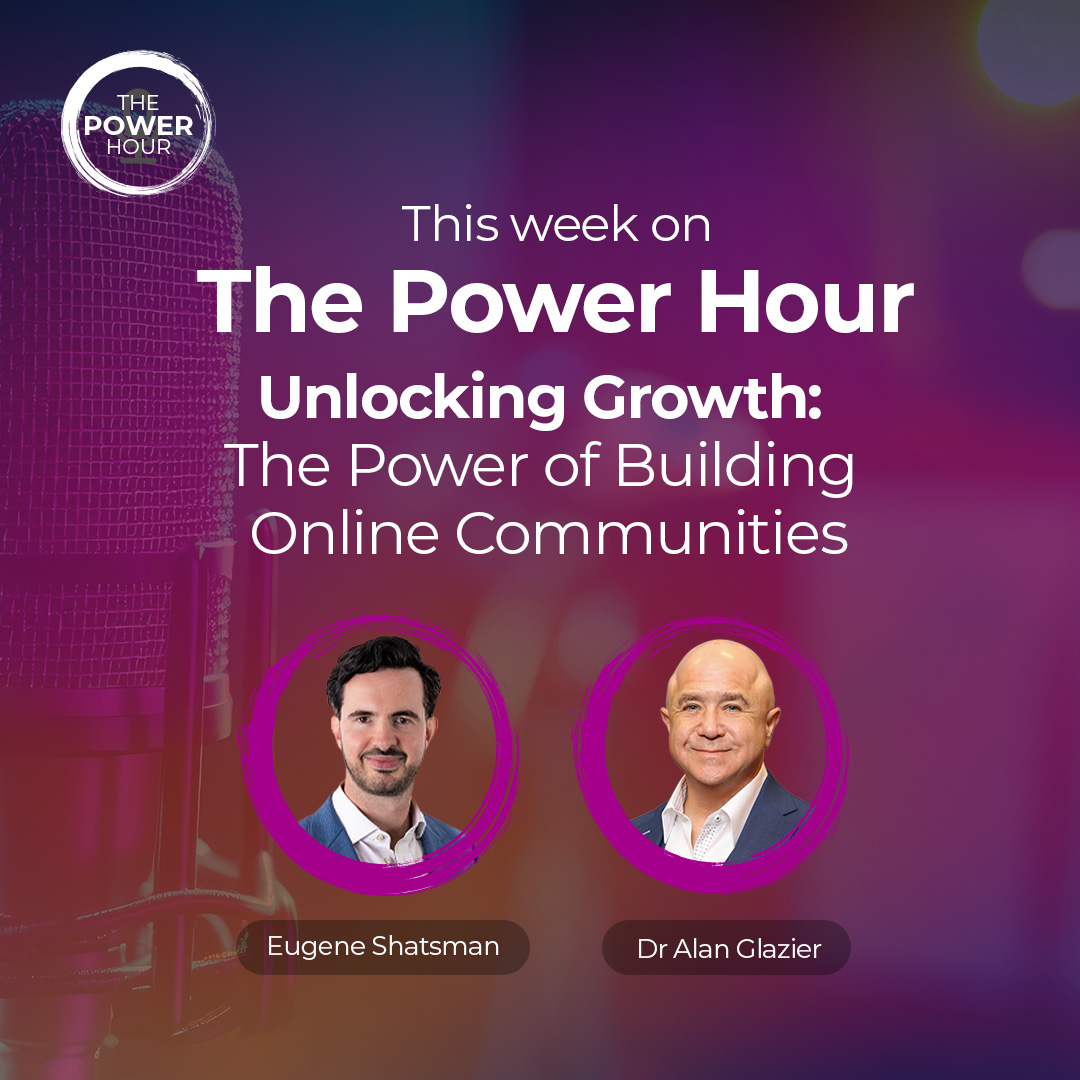
Power Hour Optometry
ODs on Facebook: The Online Community Shaping the Future of Optometry with Dr. Alan Glazier
00:56:26
If you’re in optometry, chances are you’ve heard of — or are already part of — ODs on Facebook. With over 47,000 members, millions of annual comments, and hundreds of ODs engaging daily, it’s the largest and most influential optometry...
Loading summary
Transcript154 lines
- [00:00]
A
Foreign.
- [00:07]
B
Welcome to the Power Hour, Optometry's biggest and longest running show. I'm your host, Eugene Shotsman and we've.
- [00:13]
A
Got a great show for you today.
- [00:15]
B
You have probably heard of my guest if you've spent any amount of time in Optometry's online communities. Dr. Alan Glazier is the founder of OD's on Facebook. It is the largest optometry community on social media. He's got over 47,000 members and millions of comments every year and tens of thousands of people engaged every single day. In this episode we go pretty deep into what it takes to build and sustain a group like that. I actually was really curious about Alan's origin story and how this whole community kind of came to be. Also, I was wondering about how he keeps the conversations from devolving into things that, you know, social media is actually pretty well known for.
- [00:59]
A
And he addressed that. He talked about how he's kept the.
- [01:02]
B
Community of higher quality, what's actually driving engagement in the profession right now, those types of things. We also talk about how running a.
- [01:11]
A
Group like that also gives you a.
- [01:12]
B
Front row seat to the industry's pulse. So for example, from shifting Trends to what ODs are most excited about, what the conversations about, what they're worried about when it comes to new technologies, AI, patient care and just running their business. So we get practical when we talk.
- [01:29]
A
About some of those components of what Alan gets to see.
- [01:33]
B
But we also talk about how Alan's view on social media has changed over the years in terms of how you use social media in your practice and how you can use it to connect with your patients and what you can do to use what he's learned in building his professional community to grow your practice and grow your social media. Let's call it your useful social media initiatives. So if you've ever wondered what it takes to build a thriving professional community or how it is on Facebook came.
- [02:03]
A
To be or what it's doing right.
- [02:05]
B
Now, where Alan sees the group heading and really some of the behind the scenes.
- [02:09]
A
This episode is packed with those types.
- [02:11]
B
Of insights, but also with the meta insights of what does Alan see from looking at all the conversations, from moderating all of the stuff that happens on.
- [02:20]
A
The ods on Facebook.
- [02:21]
B
So I think it's a really great episode packed with lots of insights before we dive in. Quick reminder, I do read and respond when you reach out. You can find me@Eugene Schottzman.com or at.
- [02:32]
A
The Power Practice website.
- [02:34]
B
And we love your feedback, love your episode ideas, love Your questions. Thank you all for doing that. And make sure you're subscribed on YouTube, Spotify, Apple Podcasts, wherever you listen, so you never miss a conversation that could change how you see your practice. And now let's get into today's show.
- [02:49]
A
All right, Dr. Alan Glaser, welcome to the Power Hour. Excited to have you on the show.
- [02:53]
C
Thank you so much for having me, Alan.
- [02:55]
A
You know, I want to kind of get into this through the lens of how you got into this. When we think about the remarkable community that you've built, and it truly is remarkable, and we'll get into some of the stats and some of your learnings, but, you know, it kind of takes some ingenuity and innovation to kind of land at a spot that you're like, oh, hey, I'm just going to build the biggest Facebook community of optometrists. Um, so what? Actually, I've always been curious what's led you to that point. Maybe that's a good place to start our conversation.
- [03:26]
C
Yeah, well, you know, connecting with colleagues, with people. A very social guy. And connecting people. And connecting with people has always been a big part of my life. And, you know, with the advent of the Internet, there was a couple optometry communities that formed even in the late 90s. And the.1 of the major ones that was out there in the mid-2000s was when I was engaging in. But it was a very challenging place to learn because of the way people act on the Internet. You know, they often act in ways they would never face to face. And this was a large group, and it was. There were probably close to 20,000 supposedly ODs in there. And they. Then it was very uncomfortable to be in there. And a lot of the people. You know, the value in these groups is the content that people share, the what they. The knowledge they share. And if you marginalize people, if you make it so they don't want to share, then the quality of the group goes down. This group, boy, it was like that. There was no real admin going on. You could talk about anything in that group. And even if it insulted people or was hurtful or hateful against groups of people, it just. It just stayed up there and it marginalized a lot of people. So that I actually calculated this at one point when I was in. Then there were about 80 people that were the posters in a group of 20,000 people. And if somebody came in from the outside to say something, it was like a crapshoot. You may or may not get bashed. And, you know, after a While that just got old and I got out of there, I never really looked at it.
- [05:01]
A
And then this is like roughly what time frame?
- [05:05]
C
2007. Ish.
- [05:06]
A
Okay, got it.
- [05:07]
C
2003 to 2007, when I was active in there. And then Facebook came around and I was playing with Facebook and I found out about the group function. And actually there are two versions. I set up one of the OD's on Facebook, the first one in 2009. And then overnight Facebook shut down their group function and everybody who had a group lost it. Everyone across Facebook. I had about 3,000 people in there at that point. And I'm like, oh my God, they kicked it back up. I think in 2010 or early 11, in September of 2018, 2011, I started this version of ODS on Facebook and literally it was, it was a concept I came up with on the back of a napkin. And it was the antithesis of everything that I didn't like about that group. So on a napkin I wrote down the things that I didn't like. They became the guidelines. And I did not. One thing I did not know is that I invited like 40 people who were, who I thought were stand up ODs with good things to share, thought leaders and things like that. And I went into the clinic for about three hours to see patients and when I came back there were one hundred and twenty members and there were comments in there like, this is great, Alan. I don't like that other place. We really needed something like this where it's going to be moderated. And from then on I was on the hook, you know, to moderate it. So the secret to it growing, there's a few things, but one main one is staying true to the original mission and, and trying to be fair. And a lot of people don't like how I operate the group, but, you know, I think it's fair when you have 47,000 cats to herd, you give people a warning and they repeat, they got to go, you know, or else it's going to devolve into the way that other forum was. You have to have a strong admin. And I think I was the right guy for that job. So I think that's the main reason why it got to where it was.
- [06:46]
D
Yeah.
- [06:47]
A
And you know, it's funny. Let's actually, I want to explore the things people like and don't like a little bit later in the episode. But let's just talk about those guidelines, the things that you, that the things that you set up. And you said this group will always Be. So what are those things?
- [07:04]
C
So the first place it is, is a place not to marginalize anyone. No hurtful, hateful comments are allowed. The second thing was, and this is almost as important to me, no partisan politics, no partisan rhetoric, nothing in that sense, the divisiveness in there, that was the hardest thing to flip through in that other group because, you know, you're trying to find good information and people are, you know, keep steering it away from that. You know, it's of course to have great clinical content and great practice management content and network. But the, the, the. I tell everybody. Shareglade, great clinical, great practice management, but not at any member's expense. And that, and then there's a bunch of other things in there that as the group got bigger, I realized I had to have in there. The other day we had a post, it was a real nightmare, where there was an OD on OD dispute that one of the odds tried to air out in the group. And it was a terrible, terrible situation that happened. But it's not for this group, you know, so it's not our mandate to, to help suss that out or to, you know, in the, in the rumor mill, who knows who's saying what and what's true, blah, blah, blah. So those kind of things really.
- [08:15]
A
Yeah, it's interesting. So you're right. Kind of the whole concept of a strong admin. And I, I just, I, I do see this sometimes and in. When, when people think about their social media, the whole concept of politics. You're so right about that. When we're trying to keep a professional social media presence. Because, and somebody really wise once told me that, you know, if you're in the room and you, if you're in any room really, like of a number of people, if you think about the way that elections go in the United States, it's usually about 50, 50, right. Half of the population votes one way, half of the population votes another way. It's never even gotten to 60, 40. Right. Like it's not. So, like, mostly it's somewhere in the 50, just over 50, just under 50 type of thing. So if you've got a random room of 100 people, you know, you say one thing, you're gonna offend half of those people and you're gonna alienate half of those people and you're gonna get them to kind of, you know, to feel like they need to respond. And so it's never, it's never. I always agree that while people may feel strongly about politics, and it often does come out on social media. And I also see it right now on LinkedIn a lot, Alan. And it's kind of, it's really creating a whole bunch of divisiveness on LinkedIn. And people will start commenting on super professional posts that offer a whole bunch of valuable information and I'll start commenting politics and then all of a sudden you get other people commenting the opposite side of those politics. And then you, you end up in this horrible thing of like, I was just trying to enjoy the content. Right. Like, I was trying to, I was just trying to learn.
- [09:57]
C
I did not know that about LinkedIn. I mean, I'm on LinkedIn a lot. I guess I just haven't gone deep enough into it. I mean, LinkedIn's a place where people generally just pat each other on the back or say, look at me.
- [10:07]
D
Yeah.
- [10:08]
A
And it's, and it's interesting how you've been able to maintain Facebook, which tends to be more personal than LinkedIn.
- [10:15]
D
Right.
- [10:15]
A
Like you think about, LinkedIn was supposed to be the professional network and Facebook is generally like the personal network where you get to connect with kids and grandkids and look at kittens and puppies and whatever. But you've built this professional community using the Facebook platform. So give me some numbers, like talk a little bit about numbers right now just so that you know, if anybody is not super familiar what, you know, how, how engaged is your community, how big is it, how has it grown over time? Just give me a little bit of more story and then we'll jump into some of the specifics.
- [10:49]
C
Sure, sure. So before I tell you the exact numbers, it's important to know that that od's on Facebook was, it was meant to be an OD driven industry discussion. And that's why you're allowed in there. And people in, in business are allowed in there. The people, their reps are allowed in there, there. You have to be an eye care professional. And I, I quantify, I qualify that as an od, an optician, an ophthalmic tech, the certified ophthalmic tech, we don't allow ancillary staff receptionists in there. And then the people we do business with, the CEOs, down to the sales reps of the companies we're in and, and as, as those numbers. But it's, it. Since it's meant to be an OD driven industry discussion, it's heavily, you know, most of the comments are ODs. Vast. Most of the other people are sit there and listen and watch. Especially the people work for companies they can't comment because their company won't let them. Anyhow, we have about. There's 83% ODs and optometry students in there. There's 47,000. Somehow, I don't know, some hundred members, 600 maybe or less or 200 to 600. And I'm looked lately and so 83% are ODs. About 10% of those are opticians and then a smattering of those other careers. We also have 6,000 international ODs, which I don't count in that 83%. So it's really 89% ODs. You know, ODs in other countries aren't always ODs. You know, they're opticians or trades people. But some countries they are. Like in Canada they are. So if you look at the Canadian ODs, we have, like, we're probably up to 87, 86. There's a lot there. And then other stats, we get about 2.5 million comments a year.
- [12:31]
D
Wow.
- [12:32]
C
In there, that's. That's not posts, but that's comments on posts. I don't know the exact number of posts, but obviously it's a lot less. Ask me some questions.
- [12:44]
A
Yeah, so. So it's a pretty engaged community from that vantage point.
- [12:47]
C
Yeah.
- [12:47]
A
Do you know what percentage you. You kind of mentioned this. In that previous group, you had thousands and thousands of people, but like 80% or 80 people were having the actual conversation.
- [12:57]
D
Right.
- [12:58]
A
So how engaged is this group of 47,000?
- [13:01]
C
So the. So I'll tell you this because I don't have the exact engagement. It's very high. I want to say. I don't know. I don't know the number off top of my head, but I will tell you that. But every day we have on average 33,000 of those 47,000 people come in there. So between 25,000 and 38,000 people a day visited.
- [13:23]
D
Wow.
- [13:24]
C
Now, engagement takes different meanings. There are people who, who, who, who lurk, and there are people who like but don't post, and then there are people who comment and post. So when you look at engagement statistics, I know there's another group out there telling everybody they're the most engaged group out there. But there's really a ratio of member to engaged member, and then there's three different kinds of engaged members. So it's not that simple to, you know, determine if I was just telling you by look, you know, who looks at it, you know, 33,000 out of 47,000 people look at it a day. But how many of those are ODs? How many of those? You know, yeah, sure, we could break this is.
- [14:00]
A
But that is a pretty substantial amount of audience amount of eyeballs that touch your, your digital property that you've developed now. Have you always been a social media guy, Alan?
- [14:12]
C
No. Well, I don't want to say that. You know, I got, I got into Facebook when, when adults were allowed to go into Facebook around 2007, I think. And after it got out of the college scene and I liked playing around with it, I experimented a lot with my own personal social media for different things. I, I ended up using social media personally as a diary. So I'm that guy that posts food pics, but I don't post food pics because I'm trying to show off where I'm eating. I post them because actually when I look back at them, I can re experience that meal and you know, and then family pictures and friends and I love it for that purpose. So personally I get into it for that and then, you know, of course I'm, I'm on there more than most everyone because of OD's on Facebook. But, but so I guess you'd have to say I'm a social media person.
- [14:56]
A
Did you start with the idea that, you know, this might be able to help your practice or were you always just trying to connect with and network with professionals?
- [15:05]
C
Yeah, it started out as, you know, before social media. Before social media I learned how to market. That story is pretty cool, I'll tell you. I'll tell you a little bit about that. When I got into social media, I was in there for a year, two or three, until I realized how, how social media for your practice impacted your position in search.
- [15:28]
D
Yep.
- [15:29]
C
And in 2010 I wrote a book called Social marketing how how engaging in social media professional social media helps your practice show up higher. You know, in the Google Panda updates they were, you know, all about that. So, so when they were doing that and I kind of tried to teach the industry for a good four years I was lecturing on this and telling them how they can really boost their practice by engaging in social media. But before that, it's interesting story. My, my first practice was in a, an industrial zip code and small zip code and it wasn't growing. And I learned that my patients were finding me like through especially VSP or insurance through their zip code. And I realized, oh my God, I got to move into a zip code with a higher population and more businesses. So I did, I moved the location just for that reason. And we had a 20% growth that year right away because people could find us easier by zip code. That was the early days of the Internet, when you searched a doctor by zip code or sites searched it by zip code. And then that lasted up until around 2006 or 7. And then, you know, SEO from 2, from 99 to 2007, SEO matured, but you could still game the system if you knew certain things to elevate yourself. And now it's virtually impossible to do that. So that's kind of the cadence for me.
- [16:47]
D
Yeah.
- [16:47]
A
And it's interesting then. So you were, you were posting on social media initially to basically drive search search engine optimization for your practice, and that's kind of what got you familiar with the tool.
- [17:00]
C
Yes.
- [17:00]
A
And then you saw the groups thing and then you were like, okay, I'll use this to, you know, maybe use another part of this to, for professional networking. Is that how that came about?
- [17:10]
C
Exactly, exactly.
- [17:11]
A
Okay, so how much has it grown? I, you know, we were talking about engagement and how, like, did you expect it to get this big?
- [17:20]
C
No, never. I, I had 40. I, I, when I set it up, I, you know, I really, really. And you can still see from how I run it today, I want it to be the highest quality conversation. And, and I, so I set it up and I invited 40 optometrists I really respected and, and some thought leaders and people who were lecturing that I knew. And you know, I went into clinic for like three hours after I set it up and put the guidelines up there. And when I came out, I did not, what I did not know is you could invite people, they could invite people to the group. And then many filters on for that. And by it came out three hours, we had 120 members. So when comments were in there, like, this is great, Alan. We really need this. Alan, this is, I see what you mean, what you're doing here. This is exactly how we'd like to be. And then, then I realized, oh my God, I'm really on the hook now to manage 120 people. Not the now we're at 47,000. You know, it's, it's quite, quite a. No, no, it's called like the accidental od, I like to call it sometimes. I did not have any intention to make of it being big. I wanted to be quality. But we have both now, I think.
- [18:20]
D
Yeah.
- [18:20]
A
And I think, you know, one of the things that social media tends to get a bad rap because in many cases it's an echo chamber right. In, in certain communities. So talk to me about what, what You've heard about your group and some of the things that, you know, people say that are really positive and then some of the things that people like, oh, no, I don't want to deal with that because, you know, it's just social media.
- [18:44]
D
Right.
- [18:44]
A
Knowing that just social media is such a big part of our lives too.
- [18:48]
C
Right. You know, I think the things people like are pretty self evident. It's a high quality conversation. You don't have to worry about getting bashed or insulted in there unless it happens and I'm not aware of it and then I handle that. People like the fact that it's a safe place to share that way. They like the fact that it's the place that they can go. You know, it's, it's kind of, There's a lot of smaller social media communities around that offer really great value for, for very specific topics, but everything's in this group and they can go there to kind of keep their ear to the ground on the biggest happenings in the industry as well. I think those are the things, some of the things people like and you know, leave it up to them to tell you what else they like, the things people don't like. I mean, if you don't like social media, you're not like any of these things, but you still kind of, it's still. A lot of people still lurk there because they want to see the hot mess that social media can be. So I think a lot of people won't say they like it. A lot of people tell me they're in there, they only lurk and that's fine. You know, my whole, the only thing I care about is influencing the industry in a positive way, doing good things for the doctors and the people in there and optometry. So if they're in there reading and they get some value out of it, then I'm thrilled. You don't have to post for me to be happy. You know, it's, it's, it's happening anyway. Yeah, an inflection point was when I didn't have to like drive the conversation anymore and I could sit back and let other doctors drive it. And you know, there's still times where I have to drive it back in a good direction with a really stern post. And I think there's a lot of people who, who don't understand what, who don't like things about the group. They don't understand what it takes to run a group like that.
- [20:32]
D
Yeah.
- [20:32]
C
And you know, with 47,000 cats to herd, we have Strict guidelines. If somebody breaks a guideline, you know, I warn them very professionally, and then if they do it again, you know, I don't have time to warn them a third time. They're out, and that's it. And there's no coming back. Because by having stern rules like that over the years, first of all, we've trimmed the group. The people who generally act in the way they did in that other group are not in there anymore. So the quality group goes up as those people go out. And then there are people who just test the waters and they find out the hard way. And I think they. They don't like that about me, but I don't care.
- [21:05]
A
Well, what do you mean? So, like, you. The fact that you, you kind of rule the group with an iron fist that you. That if somebody violates, there's not a whole lot of leeway that they get.
- [21:16]
C
Correct. It's. It's all outlined in there for them. Like it's not. Like it's a surprise. And I don't do it arbitrarily. I, I treat everyone the same. I've even had to kick out friends, which is not easy to do.
- [21:30]
D
Yeah.
- [21:30]
A
And, you know, I think the reality is that, as you were saying, 47,000 cats to herd. It's not ever going to be a scenario where everyone likes everything that's going on.
- [21:42]
D
Right.
- [21:42]
A
That's kind of the whole premise of having an engaging conversation is that you got multiple viewpoints.
- [21:48]
C
And you know what, Gene? You touched on something big there. I just want to address, I think that I was the right guy to do this because I really don't care what anyone thinks about me. And I think that if you care about what people think about you, you're not going to run a community like this.
- [22:02]
A
Right. Really? Whether virtual or in person, it's hard to run a community when you're really worried about your. Your image with everybody.
- [22:11]
C
Right, right, right.
- [22:13]
A
So let's go back to the. To some of the stuff that you've seen over the years that's been super, super helpful. What kind of problems have you been able to solve, kind of through this unique channel of social media? And this community that you think would just generally take much, would be just much harder to solve for people.
- [22:33]
C
You mean me personally or the community?
- [22:35]
A
I think the community itself. Yeah, yeah.
- [22:37]
C
You know, the community we've gotten together on. On political issues, you know, to help. To help drive awareness towards things that assist the aoa. And I still am very passionate. I'm a very big aoa. Supporter, big AOA member and we do a lot to, to help support their efforts and explain to people the things that they don't may not know about what the AOA is doing. The AOA takes a lot of heat because they can't telegraph everything that they do because you don't want ophthalmology or you know, organized medicine who often lobbies against us to understand what we're doing. So, so what do they do about this or that? You know, that's commonly hear. Well, you know, talk to somebody face to face in the aoa. If you're curious about that. You're not going to see that on social media, first of all. Well, one of the things I'm most proudest above that most proud about is that we've used the community many times to come to the aid of colleagues who've experienced devastating loss in their businesses. Everything from the fires to what happened in the California fires and the riots. We raised money for some practices. We, we've raised money also for, I'm proud of this. We raised money for states that are going for scope expansion. All told, over $150,000. And we got the community together and people to donate for, for several charitable events which, which really, you know, if you have a community this size and you can't use it for something good for the profession, what good is it? And that's on a, on a global scale, on a local scale. I mean I think it's, it's a great place to get education that you just, you know, it's, it is the doctor to doctor conversation where you see the real feelings about the products and services that we provide to our patients and that we use. And where else can you get that information? You know, the, the, the marketing companies put 10 doctors in a room with a one way mirror, pay them $300 an hour to get 12 to an N of 12. You know, our group a topic that's that people are passionate or interested or find compelling. There'll be 500, you know, doctors talking back and forth about this thing. So it's incredibly valuable content from that regard and that's what the value I think we bring on a more of a micro level to each doctor individually.
- [24:58]
D
Yeah.
- [24:58]
A
And I've seen posts like, you know, I'm trying to transfer a patient to this particular area with this particular issue. Can somebody let me know if they, you know, if they want to take them or something like that with, on a, what we call the micro, micro level. But also I completely agree with you. You get Some real opinions real fast and sometimes really wrong opinions. But like, I guess opinion can't be wrong. You get some very pointed opinions maybe based on inaccurate facts on certain products or services. But then the community does its job and oftentimes corrects the person and says, well, your opinion is based off of this, which isn't really true. And then they kind of get, get through it, which again, as a, as a lurker in your category of engagement, you know, it's enjoying for me to watch that happen. And sometimes, you know, I, I don't even know if I'm allowed to join the conversation. But sometimes as a, as a, as a lurker, I'm like, oh yeah, somebody's got to jump in and say, say that, that you know, that that's not really true. But then somebody always does. You know, whether it takes a five minutes or five days, somebody, somebody always kind of comes back with something that ultimately gets, gets at the heart of the issue.
- [26:16]
C
Of course you're allowed to join the conversation. You have a lot of valuable marketing information, for instance, that you could share that would drive a lot of value to the group. I think that would be wonderful. And I hear this from a lot of people in the industry. Oh, I didn't know I could comment. Doesn't say anywhere that you can't and you're a member of the group, please. You know, I just ask people who have a commercial interest in things to, if they're a doctor, to disclose it and if they're a business person that they can sponsor posts about their businesses, but they can't just use it to, as an opportunity to pitch their products because the bias inherent in that is harmful to the quality of the content as well.
- [26:53]
A
And I agree. I think when you're managing a community, people should know whether an opinion is authentic or if it's got, you know, if it's got a hidden motive behind it and maybe just if it's not a hidden motive, if it's just an obvious motive, just like let people know. That's, that's the obvious mode. Full disclosure. I, I actually am a consultant for this company.
- [27:14]
C
Exactly, exactly. Not too much to ask. And boy, you should see how fired they get up they get. When I ask them, I just simply ask, do you have anything to disclose? And they're, they get all in the mid, the people get defensive, do have something to disclose. You know, it's, it's. I just. What's the big deal in asking that question? You know?
- [27:31]
D
Yeah.
- [27:32]
A
Oh well then it's you know, anytime you speak at a COPE lecture, you gotta, you have all your disclosures. So if you're providing an opinion to the profession and you're trying to position it as if it's your, your opinion and somewhat unbiased, I agree with you. I think that disclosure is great. But, but that's just one of the, I bet that's one of the micro rules that you were able to develop over time in the way that you manage that community.
- [27:55]
D
Right?
- [27:56]
C
Correct.
- [27:57]
D
Yeah.
- [27:58]
A
So, you know, as you're looking at the future of the community, I guess.
- [28:03]
B
First of all, over the last few.
- [28:05]
A
Years, how have the conversations transitioned? What are people really focused on? What's like, you know, this is, it's a great pulse because you're from sitting there from the administrator seat and you get to kind of look at all of the different kinds of conversations. If I'm getting into your brain and saying, Alan, what's driving people's decision making today? What are people most worried about? What are people most excited about? What are those conversations really look like at a meta level from your vantage point as the administrator?
- [28:34]
C
You know, it does vary. It does vary, but the shift has been that. I don't even know. Way back when, I think with pre Covid it was probably 60, 65% practice management, 35% clinical. Now I think it's flipped the other way. It's more 65ish percent clinical and 35%. There's some things in the middle there, like people who are just networking, putting funny stuff up. But in general, the clinical content is greater now than it was pre Covid. So that's one of the issues.
- [29:10]
A
Why do you think that is? What do you think is driving that?
- [29:15]
C
I spent a lot of time trying to make it more clinical because I think that makes it a more relevant site to our daily work in our clinic. And of course the practice management is very important as well. But I feel like, I don't know, I don't know, I enjoy the clinical more. So I think I've kind of shifted, I've kind of manipulated it to be that way because I think it makes it more valuable for what it offers. I don't really have an answer to that. Other than that.
- [29:46]
A
Meaning you encourage more of those posts and you encourage more of the commentary in those posts.
- [29:51]
C
Right. And I built it in a way that kind of encourages people to share their cool clinical findings, cases, images. You know what, I can answer that a little differently. As you know, in social media, images are much more popular posts than posts without 100%.
- [30:10]
D
Yeah.
- [30:10]
C
So I think that probably had something to do with my desire to see it be a little more clinical. It does drive a little more traffic and it gets a little more wow attention. The posts with pictures of, of, of cool retinas. They really get a lot of engagement in them.
- [30:25]
D
Yeah.
- [30:26]
C
So that, you know, clinical, you know, I think that's kind of what drove it pretty much.
- [30:32]
A
And, and you're right, I think people sharing interesting cases is definitely one of the, you know, it's, it's one great way to keep the community engaged. What, what about like on the practice management side, what are people, what are the trends right now? What are people most worried about? What are people most excited about? You know, when you think about like the kinds of answers they're looking for.
- [30:53]
C
You know, a big topic in the group is always electronic health record issues and, and front desk issues, patient handling things, financial. The, you know, AI is starting to be a bigger topic. People wondering about AI products and how AI is going to impact the profession, which understandably, that's a big topic now and those kind of things, the things that we daily struggle with there. Optical is not as something that has shrunk somewhat in conversation in there, but we still get a handful of posts here and there about the different challenges they run into in optical sales, optical fitting and the product, product selection and things like that.
- [31:44]
D
Got it.
- [31:44]
A
You know, and I, I would ask maybe from a AI standpoint, are people more worried about it? Are people more excited about it? Are they, Are they? You know, early on I think it was really fun to point out, like here's how AI screws up. Here's how AI screws up. Here's another dumb thing that the computer did, right? And I've seen some conversations in the industry shift towards, okay, but like how can I actually use this? Like what, what can I actually do with. How can I make this practical? Who's actually succeeding in this? Have you seen a lot of that? And what kinds of things are people talking about?
- [32:20]
C
Yeah, it's definitely shift. In the beginning it was a lot of fear and fear mongering. I equate it to 1999 when everybody was getting ready for Y2K when nothing happened. I have my own thoughts on, on AI and where it's going and what there is or may be to fear. And I post that in our blog ODS on technology, which anybody, it's up now and getting a lot of traffic there. I hope everybody gets a chance to go over there. But you know, as Far as implementing it, that is a big topic now. People are starting to hear about oculomics and what topcon is doing, for instance, which is incredible. They're starting to hear about companies like Bardi, who has AI ascribe in the software, which is, and, and disclosure, I have a, I am a investor in Barty, so, but they, I don't know of anyone else who really is doing what they're doing. That's why I mentioned them. And, and, and we're starting to see people taking different shots and different tries at finding ways to make AI work in their businesses that serve our practices and in our practices, which of course you're going to see that now. It's a huge opportunity.
- [33:30]
A
Yeah. And I, you know, I'm trying to be on the forefront of that innovation. One of the reasons I asked is because this is where my team and I spend so much time trying to say, okay, how can this new technology enable practice owners to go deeper or to be able to do more and to get more patients with less money, or to be more efficient in their practice or to drive to make their staff happier so that they don't have to burn them out and that kind of stuff. And so we're always looking for solutions like that. And it's interesting, you know, you mentioned you have some opinions about what to actually worry about, what to not worry about. Let's jump into that for just a couple minutes because I'm super curious. You know, you're obviously exposed to a lot of opinions out there.
- [34:15]
C
Let me give you a little bit. I hope this is helpful. You may already have thought of this, but for anybody out there trying to come up with an AI idea in optometry or anywhere, the very first thing you have to do is not think about AI. And I posted about this today, actually not in the AI sense, but I'm trying to figure out ways to apply it. And I posted today about asking people to describe different constraints they run into in their practice, because AI can be applied to those constraints in ways that, that other technologies haven't been able to fix. So I'm interested in getting a list. So if you identify constraints in optometry, there's opportunity to apply AI where it's, where there are no marketable solutions currently. So that's that. So, you know, humans operate often out of a, especially ODs, out of a fear, the fear part of their brain. And they're, they're afraid of things that, that they don't understand. And as a result, you know, that they they kind of drive that narrative in their heads. And AI is just another technology. And as right where we are now, it's still in, it's, it's all based on the query, which is human generated. And if you don't, you know, junk in, junk out, if you don't ask it a good question, you're not going to get a good answer, and vice versa. The problem with AI in the future is having it centralized in a, in a company or in a government and controlling it because it's such a powerful tool that they can totally change narratives based on people using it to find out things in very subtle ways that you're not aware of. And they can change whole societies based on that. A big opportunity, I wrote about this in the ods on Technology blog. A big opportunity to keep that from happening is decentralizing AI. And that's happening now. It's happening. A lot of companies have decentralized AI products where they're open source, so everybody can use them and share them and see the code behind them. And that is a way to protect the world from the bad things that can happen from AI. You know, AGI, when it's able to, you know, run itself, that could be a problem as well. But again, if it's decentralized, we still might be able to stop it at a certain point or put in, put in some guardrails for it. But the whole problem is not AI. The whole problem is companies that want to use it for profitable or nefarious governments for nefarious purposes, which in their mind may not be nefarious, but in someone else's they may be. And that's the big scary thing about it.
- [36:53]
D
Got it. Yeah.
- [36:54]
A
And you know, I love your perspective on identifying the constraint. And I think if people. But I go one level further and maybe before you identify the constraint, you have to know what to look for.
- [37:09]
D
Right.
- [37:10]
A
So not all constraints are on the surface. I, as a marketer, for example, I'm very keenly aware when a client says, well, you know, I just don't know if this marketing is producing anything. And so I know to look at, say, well, but look your statistics on your Google business properties and on your SEO and on your campaigns, they're all showing a lot more activity, a lot more phone calls, a lot more appointments, what the heck's going on? And then, you know, so I pick up, I log into the software and I start listening to the phone calls. And I realized that, you know, for an average practice, 25% of phone calls go Unanswered during business hours. I realized that of the appointment opportunities, we schedule something like 65 to 70% of all appointment opportunities where you're actually able to. In a. In a. Now, for a test that we have going on for over. Over five years, I think approaching five years, we're able to schedule over 100% of all appointments. Or for every hundred appointment opportunities, you can schedule over 100 appointments, even if not every single person schedules, because you could schedule multiple per phone call. The reality is that those are constraints that aren't always on the surface. Because when you're walking through your practice, the constraint that might be super obvious is like, well, there's a patient waiting in the chair.
- [38:33]
D
Right.
- [38:33]
A
We got three people waiting, and we're like, a little bit late and that kind of thing. What you don't know is how many patients never even made it to the chair because of a constraint that you have somewhere earlier in the process.
- [38:44]
C
Right.
- [38:44]
A
So it's the. I think it's understanding which data points you should look at to help identify the constraints that ultimately then allow you to say, okay, I see this. This data point is showing me that I have a constraint in that particular area. How could we potentially solve it?
- [39:00]
C
Yeah. And not only data, but look at your processes. You know, one of the greatest business books I ever read, and it's funny because this week I've talked about this three times, different people. Is this book called the Goal by Golrath, Eli Goldrath?
- [39:14]
B
Yeah.
- [39:14]
A
I actually, I interviewed his business partner on the show. I think it was me. They're my fourth or fifth episode, a guy named Dr. Alan Barnard. He's one of the most fascinating people I've ever met.
- [39:25]
C
This book is. It was. I was hesitant to read it. I'm like, I started reading it. It reads like a novel, a business novel. You know, the way it's written makes it very understandable and easy to use. And. And I. After the first chapter, I'm like, ah, this isn't for me. But I finished it. And it changed my life in business because it did help me better identify process constraints that. That you walk by things day in and day out, and you don't realize that that's a problem or that's causing a problem. You know, it may not be a problem itself. And it really takes a different mindset to do that. And that's why that book is good, because it can put you in that mindset. I walked around my office after I read that book. I'm like, oh, yeah, there. Oh, yeah. There, you know, these are four things I could change right away. They're gonna have immediate results in my practice. So that's a book I always recommend.
- [40:09]
D
Yeah.
- [40:10]
A
And I totally agree with you. I think that there's such a, such an interesting perspective on identifying that they call them bottlenecks. Right. And then you find the bottleneck and then you solve for that bottleneck and then you just go searching for the new bottleneck. And in order to do that, you have to be able to have the visibility to understand all the different things. And you know, my opinion that that visibility starts with both data and like you said, you know, understanding of what your processes are.
- [40:35]
C
And the harder the bottleneck that you identify to fix, the more you probably turn away from it and go do something else. Like if it involves.
- [40:42]
A
But also the more, the more value you're going to get when you do solve it.
- [40:45]
C
Yes, yes. Like involves firing a long time patient because you realize that they really are a constraint to patient flow in the way that they're engaging. You know, they may be great in every other way and you're worried you're not going to find somebody good enough to replace them. Well, that's on you, you know, if you don't do that. But those, those are hard, you know. Yeah. The harder they are, the harder they are to identify, I think.
- [41:02]
D
Yeah.
- [41:02]
A
When we come back from the break, I'm going to ask you a little bit about how you apply what you've learned in running this group to things that people can do in their own social media in practice. We'll be right back on the Power Hour. All right, we're back on the Power hour. I've got Dr. Alan Glaser with me. And you know that probably if you're listening to this episode, you're also thinking, you know, this guy has built the biggest community of optometrists on social media and has obviously been successful as a result of some things that have happened on social media as part of that success. So I'm curious, Alan, how you apply some of your learnings to the average practice, let's call them. I don't know whether I'm in Los Angeles or somewhere in Minnesota or somewhere in rural Missouri. Tell me, what can I learn from some of the things that you've been able to glean from social media as to how I can grow my practice to apply it to the concept of practice growth.
- [42:08]
C
Right, thanks. It keeps changing. You know, what I was teaching people in 2011-2015 is not applicable anymore. But that Said there's still a couple of places that people congregate, that your patients congregate, that you can be found and have value driven to your practice from being there and engaging with them. And it's really about engaging now. It used to be about SEO, it's not so much anymore. I know Google hasn't totally eliminated that, but you know, if you want to, if you want to look at it like being found location wise, like people finding practices near them, you definitely have to have a practice Facebook page and you have to have an address on there and things like that. But your Facebook page is probably not going to get much engagement from people because the way the pages are designed is not, is not really for that purpose. Google designed, I mean, Facebook designed the groups for that purpose. So a great way nowadays to get organic social media traffic by engaging people, if you have the time or desire, is to set up a topic, topical group on a subject that you think your patients are interested in. For somebody who is a specialist, like myopia control or binocular vision or contact with whatever, you might want that subject to be around your specialty because it really can't be too broad. You're not going to get a lot of engagement in there. But you do have a captive audience every day of maybe 100 people who come and visit your practice. And you should be steering them towards a group. If you or someone in your practice is going to engage within that group to provide them value, people will go to places where they perceive they're going to learn things and get value.
- [44:01]
A
Now, do you think that it's better to set up your own group and do the administrative side of it, or do you think that it's better to find some of the bigger groups in your area and join those?
- [44:12]
C
Yeah, well, they're both two different, I think, purposes. You know, there are local groups that you can join that where they'd welcome your sharing as a doctor. And then there's other local groups that wouldn't because they think you're pitching yourself. I guess you just have to suss that out for. And then in your own group, of course, you know, you'd have to build it from the ground up and you have to determine whether you're willing to put the time and engagement into growing it and making it part of your life because it's a commitment. Even if you get 100 people on there, but they're asking questions, it's a great way to build a following and following the power of a network, something I've discovered Through it is on Facebook is not only the power but the responsibility of having a network of people gives you. Once you start to have people following you and paying attention to what you're saying, you start to get attention and that's what you want for your practice. But if you stop it, it's done, it's over and it's going to die. I don't find Twitter to be a very valuable tool for driving local business at all, nor do I find LinkedIn on some levels. LinkedIn can be. If you connect with a lot of local professionals and they start seeing your stuff show up in their feeds that I see. You know, I have a lot of local people, but I only know of them because they're, they've connected with me on LinkedIn and they're in my area whether I'm interested or not. You know, scroll on if you're not interested. But those are the real big place. Instagram, very image driven. It's. You're going to attract a crowd under 45 mostly for that. But it's a good place to show that you have a, to show off what you do with images like how fun your practice is, how cool it is with your technology and things like that. But again, you have to build a following on there as well. And you can build, you can have 8,000, 10,000 members, but if they're not from your area, you're not going to really get any business out of that. So. So a couple of years ago this conversation would have been all about how you can use these tools to drive people to find your listing in Google higher, you know, to enter in page rank and ending up in that the three pack and entering up, you know, showing your organic listing higher, that's harder to game now using these tools. So you're better off not spending your time there for their purposes. But people are also not using Google as much anymore and they're going to ChatGPT and Claude and places like that to find because they get a more, more detailed answer more directly from those. And so the day of the search engine is limited. And even if you do use a search engine now, you find that the first answer is AI is there AI?
- [46:52]
A
Yep.
- [46:52]
C
So that's kind of what I think of it right now.
- [46:54]
D
Yeah.
- [46:55]
A
And it's interesting, I think the, the concept of groups and engagement, if you, you're what the, the point that you hit on that I just want to reiterate for the audience, is that if a group has a specific purpose, if we're talking about a particular reason why that group has been created. And you can contribute at a high level of value to that. To that purpose. You know, so if it's a local mom's group that is focused on the health of their children, you know, that's a different type of thing then. Or, you know, maybe like a local. Local moms group where, you know, kids play sports, and that's a different type of group. But that you could potentially contribute as an optometrist, especially as an optometrist with a specialty in sports vision, you know, you can potentially contribute to that.
- [47:39]
C
Yeah. And you could do a general one too, if it's. If it's. If it's localized. Like, you could have a doctor answers eye care questions in Rockville, Maryland. Right. And then people from Rockville, oh, this doctor's gonna answer my questions. But then you're on the hook to answer their questions.
- [47:57]
A
That's right.
- [47:58]
C
But, you know, that's. That's a real. That it used to be when I opened my practice, you used to knock door to door and. And tell local businesses that who you are. Here's a 10 off our optical if you want to come in or send your patients knocking on the same. The analogy that now is knocking on the door is. Is, you know, is using a group and finding. Join it and talking to them. So it's. It's no different. It's just a different medium.
- [48:22]
D
Yeah.
- [48:22]
A
And I think you're. You make a really good point, is that if you're going to commit to authentic interactions on social media, I have a lot of clients, especially when TikTok started, you know, taking off and said, well, you know, we need to be posting on TikTok. We need to be engaged with that social media platform. And the answer is, well, you know, in order to be engaged, you have to be engaging, or in order to get engagement, you need to be engaging. And, you know, this is not something that you can fake because people are attracted to some level of authenticity. So if you're not willing to put in the time, then go do an activity that you are willing to put in the time into. Because social media is becoming less about kind of formal marketing and much more about authentication, interaction, and connection, which is kind of the purpose of it anyway.
- [49:10]
D
Right.
- [49:11]
A
Like, that has been the purpose of it from the. From the very beginning. And of course, there's the exception of, you know, it's also a marketing platform for people who are willing to pay to play. You know, obviously people spend billions of dollars on Facebook advertising collectively as they do on Google Ads and things like that. And so all of those ads have their time in place to interrupt the scroll and to try to get someone educated about a particular thing. But that's just typical marketing when you think about interruption based marketing. So yeah, I think kind of as a final point of perspective, Alan, as you kind of think about the future of where things are headed specifically in the OD communities that given your again kind of meta lens of what people are talking about, what people are thinking about, where things are headed as you look at the algorithm and the way that Facebook tends to prioritize certain things, conversations within your group even, where do you think things are headed from a social media and engagement standpoint and specifically in our industry.
- [50:16]
C
You know, I think people at least hopefully in my lifetime, they like to know they're connecting with real people. And there's, as you know, there's a, there's a real massive trend towards these AI agents, fake people who, whose real content is derived from real human conversations, but it's not human in any regard now they look like real people and you, you soon, you know, you're not gonna be able to tell them apart if you're talking to a real person or fake them. It's we're almost there now. In some ways I think people are gonna, I mean if we're talking about very futuristic, which weren't. We're less than five years from this. There are going to be, you're gonna have to suss out bots from real people. You know, in these groups you'd have to figure out a way. I've already had a few bots, you know, try to join the group and.
- [51:11]
A
Then if it have they started posting. When you, when you have bots join the group, they do anything.
- [51:16]
C
They don't join. I don't let them join the group. But I've been able to identify them so far. But they're gonna get, you know, with AI they're gonna get so good I'll be having trouble identifying them. And then what happens when they're in the group and what are they doing? What are they pitching like that's going to be, that's an ongoing, that's a challenge I'm thinking about ahead of it happening. And in my social media community and every social media community, something crazy like 35% of the content on Twitter is now all bots. 35%.
- [51:44]
A
I've heard bots talking to bots. Basically bots responding to bots, then more bots responding to more bots. Yes.
- [51:50]
C
And Driving agendas that way. So like when you're on there 60, only 65% of what you see is human generated. And that's scary. Like not, not scary in a way that, oh my God, it's the end of the world. But you know, people are going to be moving away from social media where they're really, that's bot generated, I think. And where do they go? I don't know. I think, you know, groups and you know, Facebook by the way, has kind of ruined its, its main feed. I don't even look at my main feed anymore. Most people, I have people, a lot of people join Facebook just to join Otis on Facebook, especially the younger generation, you know, and they tell me that and I'm really, that's a big compliment, you know, But I'm sure once they get in there, they go find other groups because all the only value as far as I see in Facebook is to connect with your friends and family and then have your groups. The rest of your feed is junk. I mean really, I'm not exaggerating. So. So the future of Facebook is just groups. And I've tried to modify things to see where Instagram's going. Images are going to be around for a while, but again, they're going to be bot generated video place. Places that are posting video are, you know, and these, the clips, the what, the reels and the stories, those are also becoming heavier and heavier. Your bot generated. So where are we going to go with that? I don't know. I don't really want to sit and watch bot generated content. I don't have the, you know, ain't got time for that. Right. But it's interesting to watch and think about. There'll be some new social media thing out soon, I'm sure that really probably, probably based around augmented reality. I think that will probably change the game. And then, you know, with, with cryptography, they're able to give you an identification that proves you're human. There are a couple of businesses working on this right now that proves you're a human. So that you'll only be able to join some of these things if you have this particular type of cryptography that you know, will let you in. So those are kind of the trends that we'll see happen in the next five, 10 years.
- [53:50]
A
And you know, it's interesting you talk about protecting your group from bots. I believe that at least from what I'm seeing is that bot generated content is going to be capable of being some of the most engaging content on the Web, because it really is something that you have the almost infinite capacity of analyzing all of the top performing social posts.
- [54:16]
D
Right.
- [54:17]
A
Whether it's a video, whether it's an image, whether it's a set of comments, and then you can really replicate that in an infinite number of ways if you're a machine. And you also have kind of the infinite capacity to split test whatever you're doing in many different ways, as long as you have the access. So what's fascinating about the group component is that in order to join something like ODS on Facebook, you had to answer a whole bunch of questions. And it sounds like you're able to keep the bots out for now with, with asking those questions. But if they do jump, if they do jump in, if they have their own agenda, you know, they can ingest everything that's happening inside your group. And really the only protection you have is the ability to identify those people or people, fake people on the front end so that you, so, so that you keep the group sort of safe. And I'm sure that your, the people who are in that group never even think about that. But you as a group admin and me as somebody who's kind of studying all of the different ways that AI impacts the way our consumers act, it's interesting and it's fascinating to think about what's going to be the challenge that you face at this time in 2026.
- [55:30]
C
Right, exactly.
- [55:31]
D
Yeah.
- [55:32]
A
But anyway, so I think in the meantime, you got a large, successful gathering of, a digital gathering of ODs. It sounds like you guys, some of the trends that we've talked about have been really, really fascinating and obviously you've learned a lot over the years. I think it has been a fascinating conversation, Alan, and I'm so grateful that you were able to spend some time with our audience here.
- [55:56]
C
Yeah, thank you for having me. Thank you for everything you do in the industry and all the value you bring through teaching people the real way to market. I mean, it's. Believe me, I was on that platform for a long time trying to punch that into people's head. It's not an easy message to get across and understand how important that is to growing a practice. So thank you.
- [56:14]
A
Thanks, Alan.