← Power Hour Optometry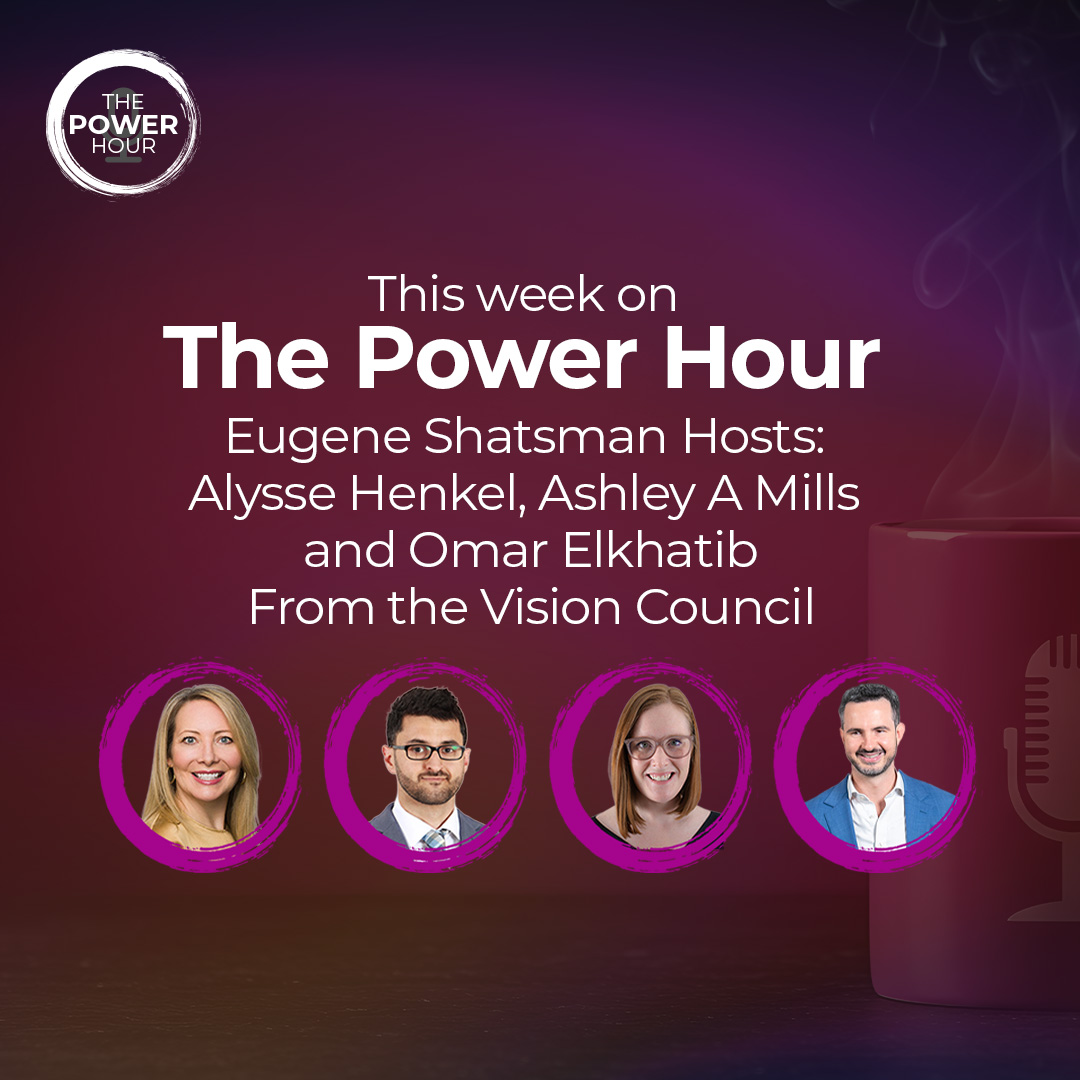
Power Hour Optometry
The Eyecare Industry’s Big Reset: Data Trends, Economic Strain, and the Future of Vision Expo
00:58:49
There’s no sugarcoating it: the data shows the eye care industry is facing headwinds. Patient volume is down. Consumer sentiment is shifting. Tariffs are rattling supply chains, and the future of our biggest industry event is being...
Loading summary
Transcript56 lines
- [00:00]
Ashley Mills
Foreign.
- [00:08]
Eugene Shotsman
Biggest and longest running show.
- [00:10]
Elise Hinkle
We're in our 13th season. I'm your host Eugene Shotsman. And today's episode is one that really cuts across the whole industry. So we've got three major topics on table and I've got an incredible panel from the Vision Council to discuss them with. So who do I have? We have Ashley Mills joining us. She's the CEO of the Vision Council. Got Elise Hinkle, she is the vice president of Research and insights at Division Council and Omar Alatib, who is the senior manager of Government relations. So this panel is going to discuss three really important topics that matter, whether you're leading a company, running a practice or just kind of trying to figure out what the heck is coming next in our industry. So three topics. First one is data. So we dig into some fresh numbers and if you've listened to the episodes with the Vision Council before, you've heard me talk and you've heard about their deep data pool, they're using credit card numbers, they're using actual transactions inside of our industry and the EHR data. And what they're learning is exactly what consumer sentiment looks like from all the consumer sentiment studies and then also what that translates to inside of our practices. So the reality is, I'll give you the rough information which is that unfortunately we're down in the first quarter, volume is down across exams, lenses, frames. And I see that there are some silver lining points though, so you're going to kind of want to listen in for those. And there's also a ton of other sentiment data. How are consumers feeling? How are practice owners feeling? And it really just the data drives decision making and we always talk about this on the show. So our second topic that we zoom in on is tariffs. So you're hearing the noise, you're hearing the news and really we take the politics out of it and we just break down what the heck is really going on in our industry when it comes to tariffs. We talk about the actual cost increases, how they impact manufacturers, what's likely to hit your bottom line in the practice, and what out there is just kind of noise that you shouldn't even bother with. More importantly, we also talk about real advocacy work that Division Council is doing in Washington and like literally walking into the White House with members of our industry to help make our case. And if you want to know how to stay informed or how to take action and get involved, you're going to want to listen in on that particular point. And finally, the big announcement around Vision Expo, you probably heard this, but it's big. Starting in 2026, there is just going to be one Vision Expo, a single event that I think the vision is that it is a flagship event that rotates the as cities and I think the goal is to bring the whole industry together. So Ashley does a great job of breaking down the reasoning behind it, the learnings from previous expos and the data that supported the move and what they're building. They're also talking about what Vision Expo west in Las Vegas is going to look like in September. And so we talk about innovation, we talk about tech previews, new designs, and even kind of a Shark Tank style pitch competition that is going to be included in this year's Vision Expo west lineup. So if you're feeling a little bit of uncertainty in the air, if you're trying to figure out what's going on in the industry, how is everybody else doing? This episode helps make sense of it and maybe even help you see where.
- [03:33]
Eugene Shotsman
Some of the opportunities are.
- [03:34]
Elise Hinkle
It's a good one. And just a quick reminder, if you want to reach out, share an idea, ask a question, or just say hello, you can always do that@eugene shotsman.com Again, that's Eugene Shotsman.com or on the Power Hour website. I do read every single message. Make sure you're subscribed, wherever you listen, Spotify, YouTube, Apple Podcasts. And now let's go to today's show.
- [03:54]
Eugene Shotsman
Okay.
- [03:54]
Elise Hinkle
What a show today.
- [03:56]
Eugene Shotsman
This is an incredible panel. Ashley, Omar, Elise, welcome to the Power Hour.
- [04:01]
Omar Alatib
Thank you, thank you.
- [04:03]
Eugene Shotsman
Excited to have you all on the show. And we've got so much to talk about. And I do think this show is going to kind of highlight for everybody who doesn't know a few of the different things that the Vision Council does, but, you know, we're here in July and I don't think you can open the news without talking about tariffs. And you guys have really zoomed in. You have become a big part of the industry voice on tariffs and on the impact of tariffs. And I wanted to first turn to the data. So, Elise, I'm going to start with you and talk about the data that you guys have been following related to the tariffs, maybe on the consumer side or on the doctor side. Now, what are you hearing in the marketplace specifically with the people who are trying to transact with patients in eyewear or in eye care?
- [04:55]
Ashley Mills
Yeah, for sure. So we've been tracking tariff data in all kinds of different ways this year. Not only are we, you know, we've built a dashboard tool for our members to be able to understand all of the, you know, rapid changes in the tariff rates. And we're pulling in historical Data from the U.S. international Trade Commission into these dynamic dashboards to allow people to sort of make real time decisions about their imports. But sort of stepping back from, like, what, how do all of the hubbub around tariffs this year, how is that affecting consumer sentiment and provider sentiment? We've been tracking that in a couple of different ways. So we have a ton of data at the Vision Council. And sort of two of the pillars of data that we have is that we run regular surveys both with providers and consumers about for providers, we're trying to understand what's going on at their practice, how they're feeling about the economy, how staffing is looking at their practice right now. And on the consumer side, we're tracking all kinds of data related to eye care and eyewear habits, purchases, feelings at a monthly level. So a ton of data to look at a few things that I think are relevant on the tariff side of things or sort of broadly how people are feeling about the economy. So this is not our data, but we are following the University of Michigan's Consumer Sentiment Tracker really closely. So in the news, if you hear about like, consumer sentiment is down, like they're talking about this University of Michigan tracker.
- [06:35]
Eugene Shotsman
As a former alum, I'm very happy that you're using my work that I have nothing to do with.
- [06:44]
Ashley Mills
Well, great. Yeah, happy to make your day with using that data there. And really everyone uses this data when they're talking about consumer sentiment. They've been tracking this, I think since the 60s. So they have a ton of data to track over time. But we saw kind of a bump in consumer sentiment shortly after the election. So it's tracked on an index of really like think about sort of from 0 to 100. And in the November and December, it was kind of in the 70s of last year and and then January, Also in the 70s, February, it started to fall about five points. And then it started to fall in March again about another eight points. And then April again another five points. And it stayed pretty low, like in the 50s in April and May, where it's saying that, you know, people are really concerned about the direction of the economy and are worried about what's happening. And so we're seeing that particularly in April and May. June has had a little bit of a bounce back. So We've cleared the 60 threshold again in June, bouncing back from 52 in April and May. So it's still not where it was last year, still pretty low historically. But I think with all of the tariff announcements that happened, particularly in April and May, people were very concerned and consumers were telling us that. And we're also hearing from providers in our Provider tracker. We asked them in March. So this is a little. So this was before the announcements came out, but we heard that 50% of providers said that tariffs would, they were worried that tariffs would lead to increased prices on eyewear products, practice supplies and materials, whereas we just had one in five. So 21% say that they don't think tariffs would have any negative impact on their business or that any immediate negatives would be sort of balanced by long term positive effects. So overall, like we're hearing that at least in early days of some of the national discussion around tariffs, people working at practices, about half of them were concerned with. We have just finished fielding a survey now for providers. So I don't have that data ready to share yet. But we're asking follow up questions and this will be part of the data that we track each time we talk to providers, asking them sort of how are tariffs affecting your practice? What are you seeing? So I think there's general cause for concern both with providers and consumers right now.
- [09:36]
Eugene Shotsman
Well, in the economic consumer data, as I understand it, is relevant because you know, those numbers that, the lower those numbers go and when it's in the 50s, like that's like recession type stuff from what I understand is like those are like the low points where that's times when consumers basically say, okay, I'm really worried so I'm going to stop spending on stuff and kind of like hold back a little bit. I'm not going to take on more debt. I'm going to be a little bit more careful with the purchasing decisions that I make. I may select a cheaper frame or I may forego my eye exam this year or I may not travel or I may, you know, so all of these consumer decisions start ballooning to say, you know, this is maybe why we're seeing a little bit less volume and practices. And by the way, we'll get to that data momentarily. I think it's true that, you know, you guys have done the, done the research and you're seeing what the trends really look like inside of practices. You know, at least one quick follow up on the doctor on the practice sentiment. You know, how much of this is related to the unknown of like, I just don't know. So I'm worried because I don't know. And how much of this is related to kind of like empirical things people are hearing inside of their practices.
- [11:01]
Ashley Mills
Yeah. So I don't have data, you know, that sort of gets into their mind quite like that. But I really do imagine that, especially because we are fielding this survey in late February, early March, that we have this provider sentiment data from that. I think this is anticipatory feelings right about like, you know, there's a lot of talk that's going on right now and we don't know what's going to happen. And so I think for sure what then we were sort of measuring kind of this anticipatory angst right around tariffs. And what we'll see, probably, and I haven't seen the data yet, so this is just speculating, is that I imagine that 20% of folks that said tariffs won't have any impact on their practice. I imagine that number has dropped a little bit since the tariffs did come out. And in really April and May, that I bet those folks sort of more folks are concerned about the impact of tariffs on their practices.
- [12:04]
Eugene Shotsman
Yeah. Okay. So this is where I want to bring in. And one of the reasons why, Omar, I invited you to join the panel today because quite frankly, obviously this is a big issue and there is, I think there's two things that anyone can try to do, and one of them is sort of bury your head in the sand and pretend it's not happening and just let the world happen around you. And then there's the proactive approach. And from what I've heard and what I've seen, the Vision Council has taken a pretty big advocacy approach and has been an important voice over the industry in this particular, in this, in this kind of situation that is clearly having an impact across the industry. So, Omar, talk a little bit about what division council has done to date and what you're planning on doing from the perspective of government relations.
- [13:00]
Omar Alatib
Yeah, it's a great question. And I think the important thing to keep in mind is that, you know, maybe the unfortunate advantage, if you want to call it that, is that we've been dealing with the tariffs back from the first Trump administration days when the original 301 tariffs hit us. Right. And so those rates were about 7.5% pretty low compared to what we saw this summer. The advantage that we have there is that since that time, we've been building relationships on the Hill, getting our issues in front of the members, policymakers, the committees of jurisdiction that have the power to kind of change that. Right. And so when these new reciprocal tariffs hit, we went to The Hill. And we spoke to the people we already knew, they knew us, they knew our industry. And so we kind of had an advantage there, whereas maybe some other industries that weren't affected by the original tariffs had to react more recently to the new ones. And as you said, you know, we've been on the Hill, I think, over two dozen times this year already. I was just on the Hill yesterday. We spoke to the Senate Commerce Committee. And so it's really about getting those issues in front of the members that can change things and letting them know about the impact that it's having on, on the industry and our members. The we actually back in early April, right, so the, the Trump administration implemented the new reciprocal tariffs that we are seeing expiring this week. But shortly after those were announced, so in late April, we went to the, the White House and we met with the deputy assistant to the President and deputy director of the National Economic Council. And our approach there was really to kind of just pause and look at the industry as a whole and see the different segments of the industry and how we can kind of tell that story to better amplify the voice and the impact that it's having on, that the tariffs were having on the industry as a whole. And so we took over industry leaders from different segments of the industry to go in there and talk about manufacturing impact on shoring barriers, patient access and health impact, government programs that were impacted and the cost there, and to really kind of weave that in and show that, you know, we didn't want to go in there saying that we're sounding the alarm like, you know, the sky is falling kind of thing, because everyone was doing that, right. We wanted to go in there and say, look, this is an issue that has been affecting us. We've been working on it in, you know, XYZ way. And now that it's been amplified, now that these reciprocal tariffs have really been increasing, this is how it's been impacting our, our industry. And in addition to the tariffs, here's all these other obstacles that are, that we are facing. And if we could get help in some of these areas, that might mitigate the effect of the tariffs. Right? So we wanted to differentiate because as the, as the deputy director told us, so many industries were coming through that door, sitting with the White House, sitting with officials and just demanding that the tariffs be lifted, demanding that they get some type of relief from them. And obviously, we would love that. We welcome that opportunity. But we wanted to shift the focus more on these other obstacles and barriers that were impacting us in addition to the tariffs, to really kind of show it as a holistic kind of story there and approach.
- [16:07]
Eugene Shotsman
And Ashley, because you were part of that delegation too, talk a little bit about again, who attended the. That from the perspective of the industry and then also how was it received?
- [16:20]
Omar Alatib
We were really pleased because the Vision Council represents the entire optical industry. We were able to take a really diverse and compelling delegation in. So we took in Brandon Butler from Artisan Labs, he's an independent lab owner. We took in Scott Shapiro from Europa Eyewear, who manufactures in Chicago, Illinois. We took in Ken Bradley from Eschenbach, who, who deals in low vision devices and was able to speak to the impact on veterans. And then we also took in Jamie Rosen, who's the Vision Council's chairman of Rosen Eye Care, who could speak to the impact on practices and also, more importantly, the impact on patients and the barriers that this was creating for patients to go in and seek a comprehensive eye exam, let alone buy glasses. We got as far down the story as to be able to talk about some of the conditions that can be diagnosed in a comprehensive eye exam and how if left untreated, they can be exponentially more damaging to the patient and also expensive and burdensome to the US Taxpayer. So we feel like we use the opportunity well to tell the whole story of the value of vision and the value of the vision industry. And as Omar mentioned, we were able to ask for other things that were headwinds, quite frankly, for the industry that could really help us. One, for example, is that even though eyeglasses are classified by the FDA as a Class 1 medical device, the United States Trade Representative does not recognize that. And that in and of itself would have eliminated the Chinese, the China 301 tariffs from ever affecting optical. So we had a lot of things that we positioned as opportunities for us to work with them on. And I think the meeting was incredibly successful because the door is still open. And we went in as positioning vision as part of a solution to a lot of problems. And so I think we have great opportunity going forward, one, to get some wins for our members and hopefully some relief on some of these pain points like tariffs, but also to make sure that the patient voice isn't lost in all of this. And so I think it was. I think it was a great meeting. I think we're in position to get some constructive things accomplished.
- [18:52]
Eugene Shotsman
And the important thing is it sounds like the door is wide open for you guys to continue that conversation, no matter how all of the tariffs end up shaking out and you know, and it also sounds like because of that meeting, you know, shortly thereafter, it sounds like the tariffs were paused. So I give the whole country gives you guys credit for that, I'm sure. But let's talk about the impact on the members for a moment because you have, as you said, you have different size practices as part of your membership. You also have a lot of manufacturers, frame vendors as part of your membership. So how has this tariff, the reciprocal tariffs and also the tariff uncertainty, how has that impacted your members and what are you hearing from the industry?
- [19:43]
Omar Alatib
Well, we are proud to represent the entire optical industry from an independent boutique eyewear designer such as Vontel, all the way up to the largest players in the industry, similarly independent laboratories, as well as the biggest players in the industry, and also practices optical businesses as well. And so with that perspective, I can tell you it's impacting everyone. And to the extent at the very, very baseline, the impact is that the uncertainty makes it impossible for any CEO to plan, manage or build a strategy because the sands just keep shifting. So it's very different, I mean from supply chain to inventory to sales to pricing, it's just been an incredibly difficult environment and you can't really action strategy on a 3, 6, 9 basis. So it's required every business of every size to just be in constant kind of adaptation mode.
- [21:03]
Eugene Shotsman
And this is more of a question for the, for the group, but are there any interesting opportunities specifically for practices that this may have opened up? And the reason I mentioned that, as we've previously covered on the show, is that, you know, for example, a lot of large players, because of the uncertainty have pulled money away from advertising, which then actually makes it cheaper for an eye care for an independent optometrist to acquire a patient. The reason why, and we see this data empirically to say, hey, it used to cost 20 something dollars to acquire a comprehensive eye exam from a perspective of like Google Ads, and Now it costs $9 and something cents, which is, you know, more than a 50% drop in the cost of acquisition for a patient. Now, you know, there are lots of other barriers for that cost of acquisition, but when large businesses can't plan, you know, oftentimes small businesses can be a little bit more nimble. So what, what have you seen from that perspective?
- [22:08]
Omar Alatib
I don't know if I have an eye on actually seeing people take, take that exam, take that opportunity, which is interesting. We certainly have seen pullback on budget and spend. So what you're saying is certainly true. If someone was willing to invest, there's probably an opportunity for market capture. We've been working with our members to really listen and figure out how we can help everyone be as efficient and effective as possible. Which actually resulted in the validation of our decision to move to just one Vision Expo a year. That decision had been coming for a while, but with the constant headwind economically facing our exhibitors and our attendees, and the desire to still invest and grow, it just makes sense right now to reduce some of that burden and build something that could be a touchstone for the strength of every optical business from manufacturing to patient facing.
- [23:19]
Eugene Shotsman
Well, and I love that. And that was a huge announcement a couple weeks ago, and I want to spend a little bit more time covering that on this show. So let's come back to that particular topic momentarily. Let's go back to a little bit of data because I want to still think, you know, you guys are so deep in the whole tariff quagmire that it's interesting. You're hearing probably from lots of different angles as to how things are. Things are impacting practices. And I know the data will ultimately shake out, but at least, I mean, we know costs are up. Right. And we also know that, you know, sometimes those costs get eaten by the manufacturer, sometimes those costs get eaten by the practices. But oftentimes those practices, those. Eventually those costs end up having to get passed down to the patients, which could potentially result in, you know, additional negative impact from depending on price sensitivity of patients. So what do we know? What do we know about both, I don't know, price sensitivity or what do we know about the amount that costs have gone up for the average vendor in the area? What are some of the data points that we can tie together?
- [24:34]
Ashley Mills
Yeah. So to better understand the landscape, I think it's helpful to sort of give folks some grounding in what the current tariff landscape is and what that would look like from a manufacturer perspective or an importer perspective, because that's sort of. Then what could potentially sort of trickle down to the practice and potentially to the patient as well. So one example right now, the current rates for importing a plastic frame that was manufactured in China. Let's use that as an example to just sort of level set a little bit. So let's say you're with an importer and they're planning to. Last year they imported 10,000 of these plastic frames, acetate frames from China, and let's say their average dutable value. So that's essentially like the cost of the frames to the importer. That that is $10 per frame. This is just an example for easy math. And so last year they were paying, if they, if that's what they imported. Last year they were paying $10,000 to import those, those frames because they were paying at a 10% rate. And now, and it was different earlier this year because the rates have changed, but right now it's at a 40% rate. So if they were to import that same hundred thousand dollar or 100,000 units at $10, that would be at a 40% rate and it would then cost $40,000. So we're looking at a four times increase for the manufacturer right now than what they were looking at last year. And that number was wildly different when the reciprocal tariffs were much higher. I mean, it got into, Instead of the 40% rate, I think we were looking at around like 140%. I mean, it was very different a few months ago. So that's kind of the, the landscape that manufacturers are dealing with right now. And, and so we're still waiting for some data from Q2 to come in, but I can talk about what we've seen in Q1 so far. So that's when there was.
- [26:52]
Eugene Shotsman
Before you do that, I just want to piggyback on your point because I think it's really important to understand and you know it, because this does get thrown around a lot. And I love the kind of the, the clarity that you just kind of brought to this. I'm just going to say this again. So I'm importing 10, 10,000 frames for $10 a piece. That's $100,000 in product cost that I'm going to have. On top of that, last year I'm paying $10,000 in tariffs. So that's a total $110,000 that I as the manufacturer had to, had to shell out. Today, instead of shelling out $110,000, I'm shelling out $140,000, which does represent an increase, but it's not a 4x increase. It is a 27% increase over the previous cost. Right. That extra $30,000 out of 110,000 is a 27% increase. So there's no way to avoid a price increase of some sorts. But also I think that, you know, and this is some of the early stuff that I heard, especially from ecp, that's like, well, my prices are going to double or triple or whatever because I'm seeing, you know, 100% tariff. That means that every, and it's true that something will go. But that's, but that's also the import cost. That's not the cost of what they're selling the product to you for. Right? So yes, their cost of goods just went up by 27%. But at that point it's the, some percentage will have to be mitigated in one way or another. Right. Some of it will get passed on to you, the ECP, who's buying it, who's buying that, because that same $10 product gets sold to you for, call it 50. I'm just making this up. So, but that $10 product now costs 14, not 11. So yes, there's a 27% increase, but your $50 doesn't necessarily have to go up by 27%. Your $50 could go up by $3 because that's what the cost potentially went up by. I'm not talking about any sort of pricing. I just think ECPs tend to panic a little bit thinking like, oh my God, that whole 27% is going to get passed on to me. So my stuff is going to go up by 27%. The reality is that, you know, just like ECPs have cost of goods, any manufacturer has cost of goods. And so anybody who's listening to the show and says, oh my God, 40% increase in my cost of goods, I can't afford that. Truth is, it's probably not going to feel like a 40% increase in the cost of goods because 40% of the import cost, wherever these tariffs shake out. So I just, when I talk to ECPs, I encourage them, don't panic, but do understand that there is an impact and that impact is coming. But in that same example that you gave, which is like a four times increase on what I was paying in duty, you know, in that particular case, it's a $3 price increase on that particular frame that the manufacturer is paying. So I just, we want to be, I think, aware of, of that when it comes to, you know, when it comes to an ecp, thinking, oh my God, you know, I can't afford to double the cost of my frames and I can't charge the patient double, you know, like that kind of thing.
- [29:54]
Ashley Mills
Yes, I think that's great. Yeah, so what I was talking about was an increase on the duty rate that was being paid and not the all in cost. So yeah, I think that's smart for, you know, people working in practices to understand that. And so, you know, they can talk to the, the folk, their vendors and the folks they work with, like, about price increases and try to understand where that's coming from. Because like, ultimately at a Per unit level, it is generally a few dollars, you know, obviously depending on the cost of the good itself. But typically, you know, if we're looking in, you know, at a $10 item, for example, you're right, like it's an increase of $3. And so that doesn't mean that we're seeing a three times increase on the total price.
- [30:50]
Eugene Shotsman
Same point. To go back to your other point is, you know, your Q1 data reports and I want to dig into that for a moment because I do think it is very illuminating as to how the consumer and the ECP are all feeling about what's going on right now. And I'm really curious when your Q2 stuff comes out. But Q1 was kind of the preparation, the anticipation, the jitters, the pre tariff jitters. And we are still in it, right? We're, we're recording this in July and there's no finality on any of this. And I think you, you guys have said that it seems, and I think it's pretty clear from what the media is putting out is that it seems like there's a lot of effort going on to try to negotiate and that the US Government is interested in negotiating. But at the end of the day, that uncertainty is still fueling some of the economic environment that we're in right now. So Elise, what did we see in Q1?
- [31:50]
Ashley Mills
Yeah, so we saw a little bit of a weaker Q1 than we would normally expect. So really the weakness is coming in on the volume side of the market. So the amount of units or the number of exams that happen. So typically in sort of the seasonal pattern we're usually seeing Q1 is a really strong quarter for a practice where they're seeing a lot of folks with whose managed vision care or other benefits are resetting. Maybe their, you know, flexible spending account is resetting again. And so there's usually a decent sort of bump in Q1 where and what we, we didn't see that as much this year. So for example, on exams in Q1 of last year, we were looking at about 30 million exams in Q1 of 2024 and then in Q1 of 2025 we saw 28.5 million exams. So that has a little bit of a waterfall effect. Also on eyewear purchases. Right. If fewer people come into an office for an exam, we're also then likely going to see lower volumes of prescription eyewear sales. And so that was true for Q1 as well. Where we're seeing in terms of frames units sold in Q1 last year we're looking at about 17 million 17.4 and Q1 this year about 15.7. So this, this quarter over quarter comparison has been generally unfavorable this year. And we're still sort of trying to understand what's happening there because generally across the board we're also seeing some small increases on the value of the market. So and we also are seeing this with our consumer data where folks are telling us about their spending patterns, where we're seeing a little bit of an increase in terms of what folks are spending. So that could be a combination both of a little bit of price inflation. So the cost of the product is going up, that's why they're spending a little bit more. But it also could be that they are buying some add ons for lenses or a little bit higher level of frame. So they're paying a little bit more out of pocket. This is the frame and sort of glasses, all in spending. So what I've been talking about in terms of these Q1 numbers are coming from our Market Insights reports and that is drawn on millions of data points from practices throughout the US as well as credit card spending records. So this is, so this Market Insights data is really drawing on actual transactions that patients have had. We're understanding what they purchased, when they purchased it and sort of how much they spend.
- [35:01]
Eugene Shotsman
Let's get just a little bit specific on those numbers. A little bit more specific on those numbers. Number of exams went down by what percentage? Year over year in Q1 a drop of 5%. Okay, so we dropped 5% year over year in volume of exams. Looks like. What did we drop in terms of total frames sold? 9% fewer frames sold and lenses 14. We lost 14% in total lens volume. So this is Q1 2024. 5 over Q1 2024.
- [35:39]
Ashley Mills
Yeah.
- [35:40]
Eugene Shotsman
And what that. But you're saying volume wise in terms of total dollars spent, are we flat? What are, where are we so value.
- [35:49]
Ashley Mills
We'Re actually seeing an increase, so we're seeing about a 5% increase from Q1.24Q to Q1 25 for frames about a 7% increase and for lenses about a 14% increase. So it's essentially pretty closely mirror what we're seeing on the volume side. And really we still need I think more data to understand what's been happening. But it's really that seemingly the spending has gone up but the volume has gone down. And that's been what's been really different over the last couple of years where we've seen people really focused on kind of budget level spending. So really shopping for the kind of like value eyewear. We haven't seen that quite as much this first quarter of the year where we're seeing spending is up. Maybe folks are sort of treating themselves.
- [36:51]
Eugene Shotsman
When they are ended up being the better, the better patient, I guess. The patient that is willing to spend more money.
- [37:03]
Ashley Mills
Yeah, it seems like.
- [37:05]
Eugene Shotsman
Right, so it's like decrease in exams and 9,9% decrease in total frame cells means that we're still on that pattern of increased exam only. However, of the people who ended up buying, they ended up kind of making up the gap for the practice because they bought more expensive stuff.
- [37:28]
Ashley Mills
Yeah, that's what we're seeing in Q1. I am very curious to know how Q2 has come about because that's where we saw consumer sentiment really sinking in Q2 and that was consistent across income levels. And so I'm really curious to see what it looks like in terms of the amount of spending in in Q2, what we've seen so far because we get this data monthly, our consumer tracker, where folks are telling us how much they spent out of pocket. So the market estimates include out of pocket spending plus managed vision care reimbursement. So they're combining the two. In our consumer tracker, we just get information because consumers don't have any idea about what their managed vision care reimbursement looks like. We just asked them about their out of pocket spending and I may have talked about this on your show before, but back in the end of 2022 we saw that people were at the same rate, were spending less than $100 out of pocket all in for their prescription eyewear. So this is including lenses plus frames and 35% were telling us so the same rate, 35% were telling us they were spending more than $200 out of pocket. So we're looking. So essentially like the kind of value level spending or budget level spending was the same as the more sort of luxury level spending at the end of 2022. And since then what we've seen is a gap growing between the two. Where we see that budget level has been rising in last year, we were looking at an 11 percentage point difference on average between those two spending numbers. So that way, way more people were moving into the budget category and away from the luxury category. What we've seen, and I have some initial Q2 numbers on this, is that we've seen that flatten and stay about the same for the first two quarters of this year. Where we're going from that 11% gap to a 9% gap. So it's still not a 0% gap, which is what we saw at the end of 2022, but a 9% is a decrease from what we saw the last couple of years.
- [39:43]
Eugene Shotsman
So that supports your data. The people who did get an eye exam spent more money on it, but overall fewer people got eye exams and fewer people bought frames in Q1. Let's see what happens in Q2. When we come back. I want to zoom in on Vision Expo west and I also want to talk a lot more about this, this new show that's going to start in 2026 or this new evolution of the Vision Expos that starts in 2026. We'll be right back in the Power Hour. All right, we're back on the Power Hour. I have the, I'll call it the Power Panel from the Vision Council. And I want to turn to you, Ashley, because I think you alluded to this earlier in the show, but there has been a big decision that was recently publicized by the Vision Council to move to one annual Vision Expo. Now, you, earlier in the show, you said this is a, this is the idea is that you want to kind of align the fact that people do business a little bit differently and also that we've got some resource constraints, economic constraints, and that you want to kind of build value for the people who show up to the show. So let's kind of decouple a couple things and start with this decision to get go to one show. And I guess, you know, how was this related to the show that happened in March with February, March, Orlando, how was that, how was it related to the Orlando show? What did you learn? And how can we, you know, and, and just really describe for us your vision for how expos are going to go starting in 2026.
- [41:30]
Omar Alatib
Thank you for asking. And I'd like to take it even one step back and explain how everything we've talked about today is related to Vision Expo. So Vision Expo was formed and created decades ago to strengthen the entire optical industry. The Vision Council owns this show. The Vision Council's mission is to advocate for growth and economic success for the entire industry and all of our members. And that is why we are on Capitol Hill. That's why we're at the White House. That's why we provide consumer data, market data and practice management data. It's why we do consumer outreach. All of that is to fuel the vision, the Vision Council's mission of promoting growth. And so everyone in the optical industry benefits from the Vision Council's work that is made possible by Vision Expo. So it's all very, very interrelated. So all of our Expos for the last decades have helped us build this exceptional research capability and this very effective and high profile advocacy arm, as well as the other services the Vision Council provides to our members. So with everything that's going on, even most recently, let's say in the last year, it has become increasingly clear that this industry needs to unify and we will be stronger and more effective as a result. All of that thinking was going on at the same time. About a year ago, we enlisted a third party consultant to do research about the trends of the trade shows and how we could make sure that Vision Expo continues to be the best show it could possibly be for all optical businesses. And so in January, the Vision Council's Board of Directors, along with our partners at Reed Exhibitions, came to the conclusion that it would be wise and more valuable for us to focus on creating one unifying flagship event. As you can imagine, we did a ton of research. And so we know that the main driver for a practice to send their doctor or their buyer or their optician is because they want to see what is new. And Vision Expo provides that opportunity. And so by moving it strategically into Q1 of every year and operating one show a year, we can show you everything that's new. All of the innovation, all of our exhibitors, full collections, their new collections, all of their product launches. It can all happen and take place at once, which is just so much more unifying and so much more efficient for an attendee and a doctor. You can show up, you can see everything, and you can do it in a matter of days. And then by virtue of that, we build a strong show that can continue to fuel the Vision Council's work on behalf of a strong environment that recognizes the value of vision.
- [44:48]
Eugene Shotsman
It almost sounds like it's the destination show. It's like everybody's just gotta come together and you get to see what's new, you get to show off what's new. And if you're not there, you're gonna miss something out.
- [45:00]
Omar Alatib
Absolutely. And I don't want to jump too far ahead, because we do. This will start in 2026. So in March 26, we will start our flagship One show concept.
- [45:15]
Eugene Shotsman
That one's going to be in Orlando still, right?
- [45:17]
Omar Alatib
It'll be in Orlando. But we recognize that this is a very large country and the flagship show of North America needs to rotate to make sure that we're doing our best for every region of the country. So Orlando 26, Las Vegas 27, New York City 28. And then open to making decisions about maybe the Midwest or other cities as we move forward past 2028. But I don't want to skip ahead of the fact that we're also planning the very last Vision Expo west, so to speak, which will take place this year, September 20th, September 17th to 20th. And hearing all of the feedback from attendees. Knowing that the key driver is to see the latest in innovation, the latest products, the latest designs and full collections, which is something you don't get at trunk shows or other smaller regional events, we have built a really strong innovation and technology program. For the first day of the show that Thursday, we're partnering with VSP and topcon to bring the Global Innovation Challenge to the show. So that'll take place on Thursday of Vision Expo west in September. And then we're also expecting.
- [46:35]
Eugene Shotsman
That's like a Shark Tank sort of thing. I was reading about this and I was asked a few questions about it a few weeks ago, but it sounds like it's like a bunch of innovators applied. And then you get to literally, if you're in the audience, you get to watch them do kind of Shark Tank style presentation to their to showcase whatever new thing they're bringing to the industry, right?
- [47:00]
Omar Alatib
Absolutely. And as it is global and there were several really competitive submissions, this will be a very evolved Shark Tank style moment for the show. I think it's of interest to practitioners as well as to exhibitors because we're all looking to see what is next and where the opportunity lies. But there is a tremendous emphasis on technology and disease management.
- [47:31]
Eugene Shotsman
Makes sense. All right, so that's one thing that's happening on Thursday. You said there were a few other ones around.
- [47:37]
Omar Alatib
Yeah, there's also. So the Vision Council has expanded its membership to include a healthcare and technology division. So we'll do our inaugural healthcare and technology kickoff meeting at Vision Expo west and agenda set for the industry around those two topics. And then to kind of complement the global Innovation Challenge, the ODS on Facebook have a technology group and they're also hosting an event for practitioners that are really leaning into technology and their practices. So that's a very strong Thursday from an innovation, technology and disease management perspective. And then we also have an enhanced NOW awards competition where you'll see also the fashion side of the equation and the absolute latest designs from every, every exhibitor, every designer, from independent boutique luxury to big global brand. So we have a really strong complement that represents the totality of the industry and then the other things that Vision Expo west will offer. Of course, you'll get to see equipment. Our exhibitors invest heavily in bringing all of their equipment to the show. That's something that can't come and see you in your practice. So you can see also how you could partner with independent labs. Our independent lab community is thriving and they're there and willing to talk about how you can. How you can partner up and make your patients really happy, reduce errors between optician and laboratory and support independent, independent optical.
- [49:20]
Eugene Shotsman
Yeah, and it sounds like, you know, so we've got technology, we've got all of the industry vendors kind of showcasing their full collections, whether it's of their product or of their frames or of their particular technology suites. It also sounds like there's a lot of interesting meetings going on at the same time and. Or adjacent. Is there anything else from the main stage that you want to highlight?
- [49:49]
Omar Alatib
The main stage is packed. I couldn't possibly, you know, what I know about it's absolutely packed. But we're going to record everything this year because the quality and caliber of the presenters on the main stage and the intricacies of the dialogues that they have are so good, we're afraid we're not capturing them. So we're going to record this year and we'll be able to share because there's some really important conversations at the highest levels that are happening that everyone can engage in.
- [50:24]
Ashley Mills
I would just add, if I can make a plug, that I will be on the main stage talking about our latest research related to smart eyewear. So sort of tying in both research and technology. We did research about consumer sentiment and awareness about smart eyewear back in 2023, and, boy, has the landscape changed since then. No, that's such a hot topic now. We're doing research right now this summer to understand where consumers are related to smart eyewear. And so I'm really excited to have a panel on the main stage to talk about that in more detail on Friday afternoon at the show.
- [51:04]
Eugene Shotsman
I think that's such an important topic and I really am trying to get myself caught up on it. But when you see something like Meta invest billions of dollars into the eye care industry, you know, everybody is looking at that kind of the next frontier, that eyewear is the next frontier of mobile technology in some capacity. And, you know, I see a lot of AI innovations happening where, you know, we're diagnosing, we're using the back of the glasses to diagnose the things that are going on with the whole human, not just with our, with our visual acuity and things like that. And at the same time I'm also using the front of the glasses to enhance lifestyles. And there's just, I, I think that that frontier is so interesting and there are so many innovators that are, and big companies that are gobbling up little innovators because they're investing in it. Similar in the, in the same way that, you know, you kind of saw five or six years ago, you saw big companies start gobbling up little innovators on the self driving car mode and in the AI space. And now you're sort of seeing a lot of push from investment into the eyewear, eyewear space and you're seeing that from huge organizations who are technology companies. So you know, I think going from a medical device to a phone fashion device to now really like a full, full scale smart device, I just, I think that's such an important topic and give you guys so much credit for discussing it at the show because it's, it is, I think, a big part of the future that we need to be looking at. 1, 1 quick update that I think would be really interesting for everyone to know is that, you know, Vision Expo west this year you already talked about some of the technology, but if you just, if you're constantly going to Vision Expo west and if you're typically expecting to go to Vision Expo west, what's the, you know, aside from the innovation component? Right. Is there anything else that is going to be different about this particular show, this particular year?
- [53:20]
Omar Alatib
Yeah, I mean, we're always evolving this show. So, you know, there's been a lot of really positive change in the optician community and we partnered with the United Opticians association, so they'll be delivering our optician reprogram and they'll be there in full force. This is their event, this is their touchstone at the Vision Council. We believe that with the expanded scope of what docs are doing, that makes the optician even more important. And they're the ones selling the multiple pairs and talking about coatings and other revenue generators and things that can increase margin. Margin. So we have a lot going on with the opticians this year. That's really exciting and, and Vision Expo attracts the entire industry. So Jobson will be there putting on programming. The Optical Women's association will be there putting on programming. This is really an event for the entire community and like I said earlier, I think there's never been a better time for us to come together and really unify around the value of what we all do.
- [54:26]
Eugene Shotsman
Yeah, and I'm, I'll plug as well because I think the AI AI and Eye Care Summit is evolving again this year and I'm excited to share the stage with some really, really smart people at that, at that event. It's going to be pretty cool. Okay, so that's, I think we've got the full scope of understanding or at least from this, from this point as to what's happening at Vision Expo West. We've talked about what's happening going forward with the Vision Expos and I'm sure we can bring you back after, after Vision Expo west and kind of get your perspective on where the industry is heading. I love talking about data. So Elise will link some of the reports back in the show notes because I think that some of the things that you referenced are so important for us to keep track of and I think we've covered a lot. And Omar, this tariff situation is continuing to evolve. So what can, what can, I guess industry participants, anyone listening to the show, how can they get more information and what, what can they do to take action to, you know, not sit idly and let it happen to them?
- [55:39]
Omar Alatib
Yeah, look, understandably, tariffs have caused confusion, right? And businesses are seeking guidance on how to, how tariffs affect their bottom line, how to ensure compliance with the evolving regulatory standards and what those long term implications are for their. For the optical sector. The advice we give to members is to really just stay informed and approach decisions strategically based on their unique business models. Everyone's different with different variables to consider and we think by leveraging the tools and insights available through the Vision Council members can better understand their exposure and develop thoughtful responses and reactions to those economic shifts. And some of those resources and tools are the latest tariff developments page that we have on our website has real time updates on policy changes and trade actions throughout, including the latest country specific proposed rates. So we have PDFs there that are constantly updated with all the rates. Elise mentioned the Tariff Dashboard, a simulation tool to model the financial impact of tariffs, industry resources and guidance. We have country specific explanations, archived webinars, recordings that we've had. We've had a couple hundred people on those webinars each time. Had a lot of those in early April when the tariffs were a really big thing. Kind of slowed down during the summer, but we anticipate having more of those here in the next couple weeks as the deadlines start approaching. And we also have a campaign that we launched that I feel has been very successful, which is our congressional connections campaign. And that's an opportunity for our members to engage with us, the government relations team, to help facilitate visits from their members of Congress in their districts to go and visit their facilities so they can get accustomed to and learn about what's actually happening in their communities, in their districts, how this is impacting the jobs there. And we think by having that bridge and connection there really amplifies what we're doing in terms of advocacy on the Hill. It complements that very well because when the members know who's in their district and how much our industry is a big part of their district, that helps us. In addition to that, if members want to come down to D.C. our team will gladly take them to visit their member of Congress up on the Hill for like a personal Hill day to really interact with them and have them voice their concerns to the members directly. So we've had several members take advantage of that, and it's been, it's been very successful. And we've had members themselves, members of Congress want to go back to visit some of these facilities because they just think, you know, there's so much good work being done there by our TVC members. And so if any member wants to take advantage of that, they could reach out to our, our team. But there's several resources out there that they could take advantage of. So just keep, you know, stay tuned to the, to whatever we put out there, and we'll try to get as much information out as early as possible.
- [58:17]
Eugene Shotsman
Thank you so much. Omari. I always impressive how much Division Council is doing, from the millions of data points that you guys have to all of this government relations stuff that you're doing to really being the hub for the whole industry. So thank you all for all your, for all your amazing work. Thank you for joining me on the Power Hour today. And I think you guys did a great job.
- [58:36]
Omar Alatib
Thank you for having us.