← Power Hour Optometry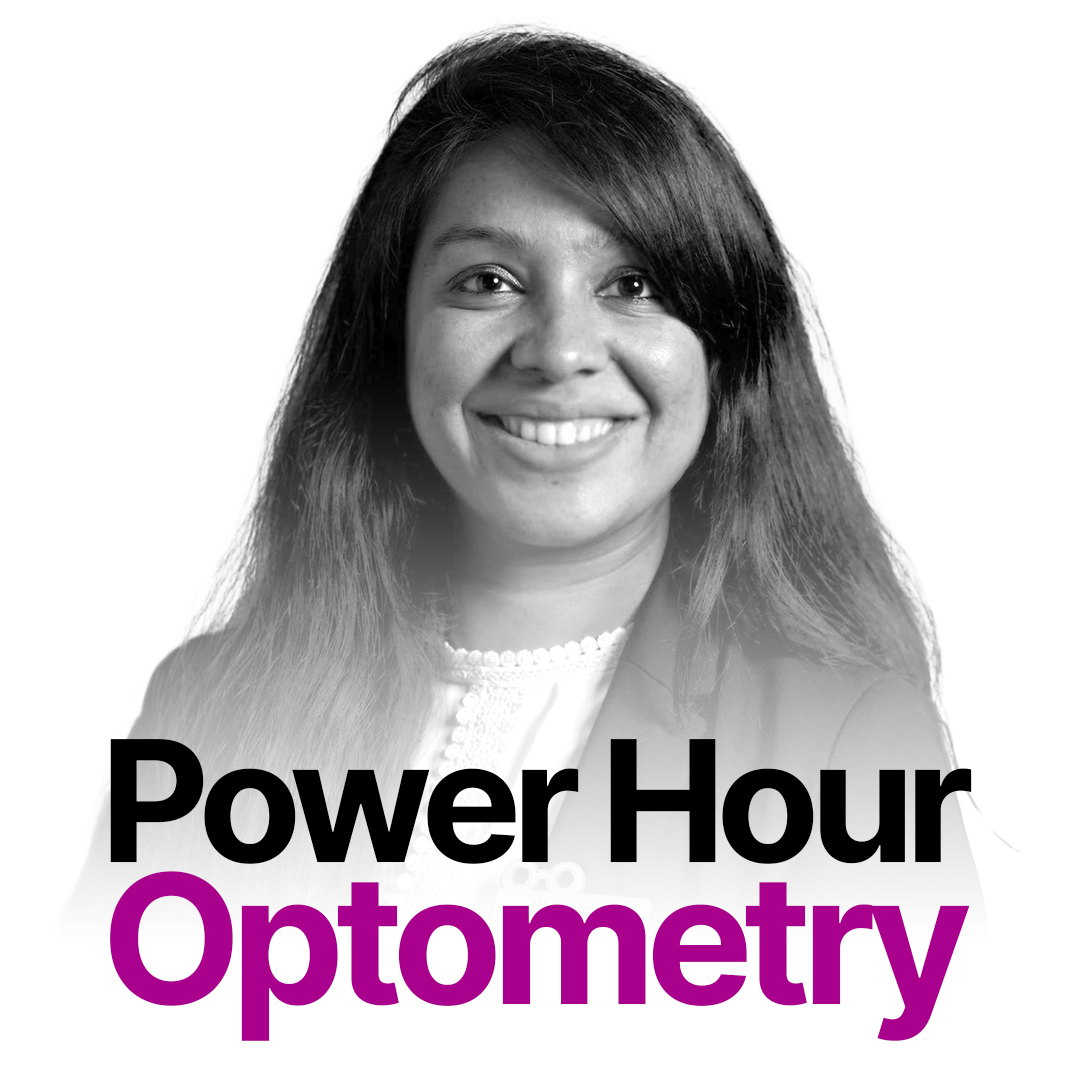
Power Hour Optometry
The Nerdy Optometrist: Technology, Curiosity, and the Next Era of Eye Care with Dr. Ukti Vora
00:58:28
Description What can optometry learn from today’s entrepreneurs and innovators? In this episode of The Power Hour, Eugene sits down with Ukti Vora (The Nerdy Optometrist) to explore how innovation, technology, and mindset are shaping the future of...
Loading summary
Transcript83 lines
- [00:00]
A
I'm loving the fact that people are embracing so much more within their practice. It could be like, say, becoming a myopia specialist or incorporating new AI solutions and even adding services like esthetics or building your own app because you've seen a problem and now you want to solve it.
- [00:16]
B
What are the problems that you see people trying to solve when you talk.
- [00:20]
A
About problems they're trying to solve, I would kind of try to put it in two buckets. The first bucket is how to make my practice efficient. Because I think that has been the core question. And now that we know with so much technology that's available, efficiency is something that everybody's talking about. And the second thing is which innovation or which solution to adapt? Because what might work for your practice might not work for mine. So I think this combination of I want efficiency, but there are 10 applications, I don't know which one I want to do, and feeling overwhelmed and not sure which direction to go, and sometimes it's hard to start. So I think those are a few problems that I'm seeing that with so much out there, people might also feel like, you know what, this is just too much. I. I don't want to add one more solution or an app.
- [01:03]
B
If I'm just a typical practice owner who is running a practice, just trying to optimize, trying to make tomorrow better than yesterday, what do I need to do now in order to really start paying attention and embracing some of these trends?
- [01:17]
A
I think if you are a practice who just wants to get started, I definitely would want.
- [01:31]
B
Welcome to the Power Hour. Welcome to optometry's biggest and longest running show. I'm your host, Eugene Shotsman, and today's episode is a fun one. My guest is Dr. Uti Bora, known to some of you as the nerdy optometrist. She's got a podcast and her journey is really interesting. She started her career in India as an ophthalmic tech, became an optometrist and a lecturer, moved to the United States. She completely reinvented herself, earning an MBA and then carving out kind of a unique career at the intersection of optometry business and innovation. So we talk about what it's like to restart your professional life from scratch in a new country, but really also like how international optometry compares to the US model, and also why UK believes this is really one of the most exciting times to be in eye care. We also talk about some of the trends that she's spotting from many of the innovators that she talks to. From whether it's AI scribes or practice efficiency tools, the rise of oculomics, wearable tech, all these types of things that are shaping our industry's future. So if you've been kind of looking for some advice on how to separate the noise from the useful stuff when it comes to technology, or how to future proof your practice before the Googles and the metas kind of of the world, do it for you, I think you're going to enjoy this conversation. Before we jump in, quick reminder, if you have an idea, a question, or a guest that you'd like to see on the show, reach out to me directly. Eugene Shotsman.com I read every message. I love hearing from listeners like you and make sure you're subscribed on YouTube, Spotify, Apple Podcasts so that you never miss an episode. And now let's go to the show. Okti Vora, welcome to the Power Hour. Excited to have you on the show.
- [03:09]
A
Likewise. Thank you so much for having me.
- [03:11]
B
Yeah, so I think that you have a really unique background and the perspective that you bring, which is what I want to build the show around today. I think it necessitates us to spend a little bit of time on your background, so maybe just give us a little bit more of your career pathway and specifically kind of the international element to it.
- [03:32]
A
Absolutely. Thank you so much again for having me and helping me go back to the memories like, you know, where it all started. My favorite question is also the same thing of like, how did it all start? So I just want to let everybody know. I'm sure some of them wanted or dreamt to be an optometrist. For me, it was a complete accident. So I'm going to start from there. I had no yeah. About what optometry was or what optometry is and like I'll ever end up doing optometry as my career. But fortunately enough, I'm sure like many of us, if you are in an eye care industry, there is no going back. So that's what happened with me. I started my optometry journey back in India, where I started with something known as the Diploma in Ophthalmic Technician. So I started as a technician first in India and then I was like, I need to go and learn more. That's how I became an optometrist in India and I completed my bachelor's, my undergrad as well, as we have an opportunity of doing masters in optometry as well. That's how the career path is. So I completed my optometry which is equivalent to a doctor of optometry. Then you do masters where you specialize in whichever area you would like to. I completed both of that. I was practicing back in India for a couple of years before I met with a beautiful accident of meeting my husband. And he said, let's restart everything. And that made me move from India to United States. That's been my background in India. But after moving here, I knew about the fact that you basically have to restart because fortunately, unfortunately, the degrees internationally are not recognized in United States. So you also have to go back to school. School. And I was very passionate and adamant of going back to school and going through the entire education process again for like maybe two years if I get it through neco, otherwise four years. But it was daunting and it was very pricey. Let's. Let's be honest about that. So though I was like, I want to go back to school. I want to study, restart my career and start practicing as an optometrist in India again. You know how life changes. So I tried to get through NECO and I wasn't able to crack the final round. And I didn't get the admission to become an OD or get into the program. And I thought maybe I was always interested in business. So let me see if, while I'm waiting for the next year to restart my application, if I can revisit what I wanted to do. Because I had an optometry background and I was working in a practice, I wanted to understand the business aspect of optometry, which is not really taught in. In our schools. Right. We are so focused on the clinical side of it, but the end of the day, we are all into a business. So I decided to opt for an MBA here in United States. So I got my MBA degree and I never looked back. I felt this is another area of the eye care industry that I haven't explored. I have a clinical background. I now have a new business knowledge. And since then I've been with the industry. I think it's been almost nine years now, entering into 10, that I've been into the corporate world in the United States. So I started working at a startup which was the telehealth space. It was brand new. Nobody talk about telehealth. And it was before COVID So I've seen the entire evolution of nobody talks about technology, and then suddenly, boom, Covid happens. Everybody is talking about telehealth. And I was fortunate enough, though I had my own hesitations. I started early on getting exposure into how eye care can be so different with new technologies. And since then I've been in the eye care and the technology space forever.
- [07:21]
B
So that, that's my fascinating. And I think the journey kind of highlights a couple things. So number one, obviously we'll end up talking a little bit about the business of optometry and what you've learned as part of your journey. You're also a fellow podcast show host. So I'm curious about some of the trends and things that you're recognizing from some of the guests that you've talked to. And then, you know, I want to kind of go back and take you back to India and see, you know, now that you've had the exposure of what practice is like in the United States through some of your industry work, what does it. What's different? How. How is being an optometrist in the US different than being an optometrist in India and what are some of the recent trends there?
- [08:04]
A
Yeah, so I can tell you where it all started and where it is now. So when I was practicing as an optometrist in India, it was very different where people or optometrist, it wasn't really an independently recognized profession. So we either work with an optical chain. We would have our own optical practice or you would work in hospitals with ophthalmologists. So you're basically working in conjunction with an ophthalmologist or with an optical is an independent optometry practice. So that was one major difference that I noticed. You know, the practice in India versus practice in United States.
- [08:41]
B
Could you own the optical practice too or. No?
- [08:43]
A
You can, but it is more of a retail business versus an optometry practice. That's. That was.
- [08:49]
B
I see. So is it true that most optometrists and work with an ophthalmologist in, in India, is that right?
- [08:56]
A
If you are clinically inclined, yes. If you, if you're more into like retail business, then you would work with optometrist. I would say it's 5050 because as we all know, you get more money in the optical business versus an opcalmic practice. So it would depend on what you are inclined, where you are inclined towards and what your interests is. But it is both. It's not. But there are less independent optometry practices with just pure optometry practice of like, you know, focusing on clinical. Initially it was mainly like working alongside some of the practices. But that has changed and I think I've been very fortunate to see some of my friends actually changing that trend. In India in the past 10 years now, people are having more independent optometry practices and they're able to practice the whole full scope of optometry, more comprehensive optometry practice, similar to the way you practice in United States earlier. It was more of just like, you know, prescription, and only if sometimes you see some signs, you would refer them to an ophthalmologist. You had very limited access or very limited scope of practice that you can do in terms of medically, in terms of helping your patient. That's why it was more of working alongside an ophthalmologist.
- [10:11]
B
Got it. So what kinds of things, I guess historically in India are things that get treated by an ophthalmologist and what kind of things get treated by an optometrist? So I, and I guess maybe how is that different than some of the US Based treatment?
- [10:29]
A
Yeah, so I think as far as anything that's drug based is not being touched or allowed. Like as an optometrist, you can't prescribe any drugs. So that's like a major, major difference in terms of, like the scope of practice what or someone in United States can do versus someone in India. That's why you would work along with an ophthalmologist. So, so you know, they can do any prescribing drugs or.
- [10:52]
B
Including eye drops.
- [10:53]
A
Yes. Yeah, including eye drops.
- [10:56]
B
So in, in India, an ophthalmologist has to. Has to prescribe eye drops?
- [10:59]
A
Yes. Yes.
- [11:00]
B
Interesting. Okay.
- [11:02]
A
Yeah. So unless it's like a lubricating drop, which is over the counter, you can talk about it. But there's no, like prescription drugs. But, but ophthalmologists were very heavily focused on the surgical part and they didn't really have any scope to practice low vision or speciality contact lenses. So earlier they used to hire optometrists who are well trained, but, you know, you work alongside them. But now I'm seeing the trend having more and more optometrists opening their independent contact lens or myopia clinics or say low vision clinics. So now that's happening in the past few years, but earlier it would always be as part of a hospital or along with an ophthalmologist because you had limitations or restrictions. Now it's more of a referral system. So now we are working as colleagues versus, you know, someone working under an ophthalmologist.
- [11:53]
B
Would you say that training or the practice is more rigorous in the US or in. Or in India?
- [12:02]
A
In terms of what you mean regulations or in terms of the actual practice?
- [12:06]
B
No, I Think the actual practice, like is it, is it harder to practice in one place or over another?
- [12:12]
A
I would, I feel it has its own, own pluses and minuses. Here you kind of have to follow a certain rigorous formula because of like the insurance and the medical compliance and the legal aspect of your licenses. In India it's a little bit easier because you don't have like a license that you own after you graduate. So there is a little bit of flexibility of what level of care you can provide to the patient. But because in India you see so many clinical cases, you end up practicing a comprehensive, you know, eye exam or providing a comprehensive eye exam anyways. So there is a scope of someone not providing a comprehensive care. They might just do like a refraction, but because of the clinical cases that you see, you end up doing more of a comprehensive eye exam.
- [12:58]
B
Yeah, so what, what can a US based optometrist learn from that's kind of commonplace in India or what can they learn from a, from somebody who's had a chance to practice in India?
- [13:11]
A
I think if you are anywhere, you know, focused on the clinical side on if that's your core interest, whether it's dry eye, whether it is myopia, whether it is binocular vision, the number of cases that you would see here versus an optometrist, the number of cases they see in India I would say is at least two to three times more. So if you ever get a chance to go to India and like learn from an optometrist or just see them, the number of cases that you might see in the textbook, they might be seeing every other day or like at least once a month. So I think sheer exposure because of the population that we have, if you want to strengthen your clinical expertise or just see things outside the textbook, I think that's the place you should go to.
- [13:56]
B
Got it. And then likewise, you know, if somebody in India were to come over here, what would they want to learn from the, from the optometric space here?
- [14:07]
A
I think one thing that they can learn is the fact, because historically, you know, we have always been working along with an ophthalmologist, so we have not been co decision makers many times. So I think when you start looking as an optometrist who have similar knowledge and they are able to make decisions, you tend to earn a little more confidence in terms of your own knowledge base and the thoroughness. Sometimes because of the regulations that are placed in, in an optometry practice in the U.S. you have to go through a comprehensive eye exam every Time and using the technology. I think those are the things that an optometrist from India can learn. Also, the fact, as I mentioned, right, like for prescribing medications has never been a full scope practice in India. That's something that we can definitely learn from people practicing in the United States.
- [14:57]
B
Yeah. And do you find that there's a lot of collaboration going on right now, like country or people in both countries trying to learn from each other and possibly trying to innovate together?
- [15:07]
A
Yes, absolutely. I think there is definitely a lot of scope for more of innovation and collaborations to happen, but at least I'm seeing like, you know, people from United States are going and becoming part of different conferences in India, sharing their knowledge and practices as well as learning, you know, how things are practiced in India versus United States. So I think there's a lot of collaboration and there's a lot more scope as well.
- [15:31]
B
Yeah. So let's kind of transition now to think a little bit about because I think the audience understanding or what the context looks like and what, what point of view you bring to the table is super important. When I ask you this following question, which is that, you know, you're you, you run a podcast. You talk about industry trends as well. You talk about things that people are challenged with. You talk about things that people are working on. What are some of your observations given your background, given where you came from, and also given what you're doing right now for the last few years? What are some of the things that you're noticing when you're talking to some of these folks on your show?
- [16:13]
A
Yeah, absolutely. So I wanted to share, like why when I started nerdy optometrist, right. So I basically when I came from India to United States, I that, okay, maybe going back to optometry school is the only option or maybe becoming an optician, getting that license. But while I was exploring, what are the other options? As I said, MBA happened and I went into business. That's when I realized I have few friends who have moved out of India and settled in Malaysia, New Zealand, South Africa, Australia, and they've all done something different. And I'm like, there could be so much more that you can explore and learn from each other. Of course Optometry, PhD are always an option, but what if I want to cover different path? So I actually started nerdy optometrist to talk about those stories which you can't Google and those are like personal stories and experiences and from. That's the whole core of nerdy optometrist. And throughout the experience of talking to people, I've realized that trend has continued. Like right now, if I talk to so many optometrists in United States specifically, they are less optometrist. I wouldn't say less. They are. They are beyond optometrist, they are an entrepreneur, they are innovators, they are challenging our industry, and they're making sure that we grow every single day. I feel while many of us were hesitant, we had no idea what we were getting into. But I'm loving the fact that people are embracing so much more within their practice. It could be like, say, becoming a myopia specialist or incorporating new apps or new AI solutions and even adding services like aesthetics or building your own app because you've seen a problem and now you want to solve it. And you'd feel like another company might not really understand it because they're not seeing patient in and out. So I want to solve the problem. And then working together, like Dr. Contact Lens, for example, I think we're doing a great job as an industry to kind of incorporate innovation and being at the forefront versus just at the backseat and then using the apps. So I think that's the greatest trend that I've seen. I'm very excited about as well.
- [18:29]
B
Well, and I want to explore that a little bit more because I think you're onto something where you were talking about, hey, in India you get a lot more at bats, but that means that you're also seeing a lot more patients per day, probably, right? How many patients in India do you think an optometrist sees per day?
- [18:46]
A
It all depends on the practice they are at, but it can range anywhere between 20 to 50 at least. So that's like the bare minimum, I would say.
- [18:58]
B
Got it. So the bare minimum is 20 to 50 patients. And I think you're right, you know, because it's a little bit more clinical. You're kind of in and out and in and out. And it sounds because. And I think we sometimes take this for granted when I talk to practice owners is it sounds like we in the US because we have the really the ability and the freedom to determine what kind of practice we want to build. A lot of optometrists start thinking, and I know a lot of optometrists who listen to the show start thinking about themselves as entrepreneurs. And you're taking that a step further and saying, well, they're not just entrepreneurs in the way they run their practice, but they're entrepreneurs. And the way they add additional adjacencies to Their practice, whether it's partnering with somebody to develop a solution, which we see all the time. We, you know, and I, I think the optometric industry gets, gets a lot of. I hear this frequently where people say, oh, well, we're kind of a backwards industry. We're behind the times. We're not caught up with other things. But the truth is, you're absolutely right. We do have to take the time to appreciate all the innovators who frequently are optometrists themselves. And they are seeing patients, but they're also developing solutions because those solutions are helpful in their office. But then they're also starting to say, well, maybe they're helpful to somebody else. And then they start building businesses around that. And I think that's one category of entrepreneur. The other category of entrepreneur is the person who says, I just want to optimize my practice. I want to make my practice, I want to take the thing that I have built and I want to leverage that thing to create the max amount of impact on my patients and then also obviously create the max amount of economic impact that it possibly can as a business entity. And I think those, that group of entrepreneurs, whether they're adding aesthetics or dry eye, or they're, or they're just zooming in on a particular metric, I don't know, exam only or phone capture rate or something like that, they're also acting like entrepreneurs. They're not just sort of in and out or they're not seeing patients in and out and acting as employees, but the sheer number of entrepreneurs who can control their business destiny in this, in this particular industry. I think, I agree with you. I think it's very impressive.
- [21:13]
A
Yeah. And also not to forget the influencers. I know, like, sometimes we tend to feel like becoming a social media influencer is easy, but no, I think they going heads on with so many people having their own channel, whether it's on Instagram, whether it's on LinkedIn, and not just click, creating awareness for the patients, but also establishing themselves that can eventually also help their practice. So I think going out there sometimes might feel daunting or you feel that place is crowded, but I feel we, as an eye care industry here really need to talk more about eye care, create more awareness and be more out there. It's never enough sometimes.
- [21:49]
B
Well, yeah, and I think you end up in. I'm curious how you deal with this, but you, you have to be able to separate the useful stuff from the noise. Right. And so, you know, I think somebody told me once that there's something like 600,000 pages of clinical studies published in optometry every single year. Well, you know, none of us have time to read that. And at the same time, there's articles and news and things that get published by popular media. But then there's also again, the social media component. And here's, you know, doctor, so and so doing yet another really cool thing. So I guess as you've been keeping track of the industry, what advice would you give to someone about keeping. About separating the noise from the useful stuff?
- [22:42]
A
I think for me, what has worked is the fact I definitely want to kind of dig deep and make sure that the content is factually right, especially if it's coming from a doctor. Right. Whether it's more fluff or whether it's reality, I would always do, like a check to make sure that who I'm following is actually making sense. And also, sometimes it also, we need to understand from the patient perspective, like, you might feel, oh, this is way too much. This is way too flashy for me as a doctor. But is it attracting more attention to the patient or like the gender population? Is that what they like and is that helping the industry? So as far as, like, just if you're talking about social media, that's how I would kind of separate who I want to follow and what I want to follow. And sometimes what someone is doing might not be my style. So that's fine. I don't have to have a comment or a feedback on everything. I can just look and see, like, whether it's good or bad for me, unless it is harming the bigger cause. I would want to kind of talk more about it, but till it is factually correct, I'm fine.
- [23:46]
B
Yeah. So when we come back from the break, what I want to do is zoom in a little bit on some of the trends that you're seeing in terms of this innovation and some of the things that you've identified that are kind of the hottest topics of conversation right now and what you've heard about them. So we'll be right back on the Power Hour. All right, we're back on the Power Hour with Uchti Vora. And I am curious, as you've been talking to people in the industry, as you've had an opportunity to kind of network with people who talked about innovators. Right. Who are solving problems and who are entrepreneurs in many different ways, what are the problems, first of all, that you see people trying to solve? Let's talk about that. And then let's talk about some of the more interesting solutions and really topics of conversation that you're seeing.
- [24:37]
A
Yeah, definitely. I think when you talk about problems you're trying to solve, I would kind of try to put it in two buckets. The first bucket is how to make my practice efficient. Because I think that has been the core question. And now that we know with so much technology that's available, efficiency has been something that everybody's talking about, like, make your practice more efficient, see more patience, spend more quality time with your patient, versus spending most of your time in charting and documentation. So I think efficiency is, is the core, which everybody is chasing and trying to improve their practice with or solve that problem. And the second thing is which innovation or which solution to adapt? Because what might work for your practice might not work for mine. What might work for your, your demographic might not be suitable for my level of practice. So I think this combination of I want efficiency, but there are 10 applications. I don't know which one I want to do. And feeling that overwhelmed with so much of innovation out there and not sure which direction to go, and sometimes it's hard to start. So I think those are a few problems that I'm seeing that with so much out there, people might also feel like, you know what? I'm. This is just too much. I don't want to add one more solution or an app for me. And I'm majestic where I am. So I think starting and efficiency, I'll.
- [26:00]
B
Throw, I'll throw in two more into the mix, which I think, you know, if you ask practices, I think they'll. They'll add two more which are staff, anything related to staff, which I think is, you know, very adjacent to efficiency. But lots of issues around staff number, the staff management, staff retention, staff happiness, just getting people who really care about the. The same thing that the owner cares about. But, you know, we hear people problems are. We hear that all the time. And the other one is demand generation. Right. There are some practices that are specifically in rural areas that are kind of busting at the seams and they absolutely need to be more efficient. And there are some practices that are like, well, we could see more patients and we're burning time on our schedule, so how do we solve that problem and balancing that out? And. And then there are some practices are like, well, you know, in order for me to grow, I need to hire another od. But then you could, you know, kind of pair two of those solutions, which is, hey, you could potentially be more efficient and you could generate more demand in your area. So demand Generation and efficiency then allows the same number of ODs in your practice to see more patients and you can get those patients to come in reliably. So I think that you're, you're absolutely right at like then deciding which solution to adopt. It oftentimes leads people to inaction because they're just so much noise, as we were talking about before. And separating the practical solutions from the noise is always something that's a challenge. So great, we got our list of problems. Now let's talk about kind of the trends of conversations that are happening around the industry. And maybe what you're hearing, maybe what I'm hearing, where some of those conversations are leading people down a path of practical and useful solutions.
- [27:55]
A
Yeah, definitely. I think when we. So we did highlight the problems, but talking about solutions, I think the good thing right now is we're still at a very early stage of adopting this innovations and solutions. So as a practitioner, you have a lot of scope of being involved of where these solutions are actually going in the long term. So there are a lot of innovations and solutions out there. I think there are a couple of approaches that I have seen from people I'm talking to and the trends that I've seen is one, you try it yourself, right? I think that's the best approach. Especially with so many applications and solutions out there. There are ways of, you know, getting more involved or trying them or asking for a demo, trying out for a couple of months or weeks and then deciding whether you want to offer that. And most important thing, which you also had mentioned, is involving your staff in the decision making. I think sometimes you might love a solution, but that might not be the right fit for, for your staff or for your patients. So having a little more collaborative approach to what solution you want to adapt really helps the practices who thrive versus those who, like, I like this solution. This is cheap. I'm going to put it in. And the staff's life is miserable and they're like, we're never going to see a patient with using this application. So I think finding a solution that is a good fit for your practice really is critical when you're adopting something. And if you are overwhelmed with the noise of like, this sounds good, that sounds good. I think maybe talking to your colleagues, because sometimes, you know, their experiences and knowledges also help to give you a little more the pros and cons of different solutions that they have actually used and experienced. So I think talking to people in the industry, as well as trying it yourself, are the best way of adopting Your solutions.
- [29:45]
B
Yeah. And I think you hit on an important point, which is, I want to go back to the staff point is if you. And the way we think about this is, look, if you identify a problem in your practice or a goal in your practice, let's say you want to adopt an adjacency like, I don't know, dry eye or aesthetics or anything like that, or if you want to see more patients or whatever, you set a goal and you decide how you're going to measure that. So, for example, if I'm going to have more dry eye patients, well, let's just decide that we're not just going to add dry eye, but we're going to see, I don't know, we're going to have 20 dry eye patients in treatment by the end of the quarter. Okay, well, if that's our goal, let's work backwards. Okay. And who can be in that subcommittee that helps us figure out what treatment really looks like? Because as much as I agree that the person who owns the practice should make the final decision, I think that the people who are going to be in the practice, whether it's the associate OD or it's going to be the staff who are going to be, you know, administering some of the treatment or the pre tests or whatever, get them involved in the process, make a little subcommittee where they have to have some sort of answer to you because they will be bought in. And at that point, if they're, if they're bought in, then you, the person who owns the practice, don't have to drag everybody kicking and screaming, right?
- [31:13]
A
Yeah, yeah, absolutely. And I think I liked what you also mentioned about the goal because sometimes when you talk about I see a problem and I want to bring a solution to it, but what if your staff doesn't see that problem or they are not able to relate with that problem or be in the same alignment with you in terms of the solution that you're seeking for, whether it's your goal to add a new specialty or to bring in more efficiency. So I think having that clarity with the team is even something that I've heard and I've seen many times that people who have that clarity and they talk to the team are more successful than someone like working in silos. They definitely struggle.
- [31:50]
B
Yeah. And it's to your point, if you're trying to be more efficient, well, let's define what that means, right? Like let's add some numbers behind it and then let's start identifying what behaviors can drive those numbers. And then I Don't know if it's equipment that could potentially drive efficiency or if it's an app that can drive efficiency, or if it's a new process that can drive efficiency, or whatever that looks like, or a piece of technology that's a piece of software. But all of those things could potentially be things that you test. But if you all know what the ultimate end goal is and then you all know what you're measuring to evaluate whether that test is effective, and it makes it a lot easier and it also makes people feel like they're part of, again, if they're part of the decision making process, then they're going to be way more likely to adopt the solution.
- [32:41]
A
Yeah, absolutely.
- [32:42]
B
So I think, you know, it's interesting and I guess I would ask, you know, in terms of conversations that you've had recently on your show, what are some of the highlights in terms of the types of technologies that people are working on to help solve some of these problems?
- [32:58]
A
Well, of course, talking about technologies, they're out there, like, you know, talking how to incorporate more and more AI with kind of data that we already collect. I think we kind of underestimate or we are not able to kind of think in that direction. As an optometrist, we collect so much of data and there are a lot of innovators out there, including people within the industry and outside the industry. If we have to talk about a simple fundus image can talk so much about our health. And there are a lot of innovators working in that direction. And I think that's a huge plus point for us because that will bring us into the center of the healthcare system. We are just not eye care because we are the only people who can see a live tissue without any invasion. And I think that has a lot of value to understand people's overall health. So I think the biggest scope that I see in terms of innovation, which has excited the entire industry now we also have a term coined around it called oculomics, which is basically trying to understand more and more about what can you learn from an ocular image and using that data, what are the other trends that we can explore that will also help us increase our scope of practice from eye care to healthcare. So people who have diabetes will also know I need to get an eye exam done, or if they come for an eye exam, you send them back to, you know, someone to their primary care or their diabetologist. So it kind of will be more collaborative, more cohesive kind of a practice. The other things that I'VE seen in terms of innovation is the specialities like say for myopia or for dry eye. But because everybody wants to try and look more young and beautiful with so many million things and solutions that are available. I think skincare with like 10 or 15 step skin routine has really knocked the industry and the youth. But I think with eye care and aesthetics, we can also do the same. So I think aesthetics is another side of innovation with many optometrists or practices are also focusing on because dry eye is real. Like, you know, skincare, you, yes, of course you all want to look young and beautiful, but you also want to be able to see well and feel good. Don't blink like 500 times and use drops every hour. So I think dry eye is also another space where people are trying to learn more and more about how can they make the surface better, how can they make the treatments better. And I think there's a lot of innovation happening in that side. The third thing that I've seen, of course, is myopia. There are a lot of ways to kind of track and monitor because you all, we all are aware like how our next generation is going to be impacted with myopia. And even beyond all these things, I feel though we are all trained optometrists, we have a great cause and purpose. People are trying to explore and understand the unknowns. And thanks to AI, I would say in some way where it's easy to kind of just type out your question and get that knowledge, which earlier would have been a little more difficult. So collaborating with people beyond eye care. So you collaborate with engineers, you collaborate with your marketing people, your sales people, and becoming an entrepreneur. I don't think so. People had thought of that path, but I think many people are getting more and more involved and being at the forefront versus just an user.
- [36:16]
B
Yeah. And I think, you know, it's interesting to me, as you were saying, people outside of eye care and as we were talking about oculomics, I do think that this is, and I've heard this point before, is that this is technically the optometric space right now, but there's a lot of big companies that are trying to get into that space, into the data that we're able to gather with wearable devices. Maybe speak to that a little bit if you've seen any of that.
- [36:49]
A
Oh yeah. I mean, especially with the recent announcement from Meta where, you know, they have kind of come up with like more and more technology with wearable eyewear and their collaboration with luxottica, slr, Luxottica I think there is a lot of things happening and it's all around collecting data. Data is the next gold or the money that you kind of want to focus on. So I feel, because we already have been doing this for years, I think collaborating with this kind of company, you're just keeping an eye out of what trends they are focusing on. Everybody has a Fitbit, everybody's trying to walk 10,000 steps just hoping that, you know, you'll become slim just by walking 10,000 steps a day. But we basically, we actually know how these variables can help us even understand with like your eye health and your overall health. So I think these trends are definitely worth watching out for. And I mean, I know I've been working with topcon, I have a lot of optometrists who have kind of collaborated and are part of the eye care industries. But I think you also have a scope to be part of these bigger companies like Google and Meta. I'm sure nobody looks out for like a job or positions there, but they are also building solutions within eyewear and wearables, like why not be part of that and be involved in that innovation? So I think that's something that we need to look out for as an industry overall and be more involved with these bigger companies as well.
- [38:17]
B
You think embrace it or claim or try to stake the space now, which one?
- [38:22]
A
Both? Yeah, I think embracing is not an option because honestly they have the money, budget and the population who are going to use it. So I think we should embrace it. But can we make it more useful and motion friendly is what is the aspect that we should be focusing on?
- [38:41]
B
Yeah, I think the concept of using wearable technology to change the way that humans interact with information is just going to continue to expand into eyewear. Right. We've done this. When you got a watch, we got earbuds. But the future, as I've heard of what devices look like is we no longer carry a phone or we never look at our phone. Everything happens to us in front and so maybe even people who don't have a prescription would potentially be using some sort of eyewear and then you become an authority potentially. Right. You could very well be an authority in a space because you're constantly prescribing eyewear or you could be irrelevant. And that also is a possibility. So I think we have to stake our claim now as an industry. So, you know, what conversations have you heard that help people do that? If I'm just a typical practice owner who is running a practice and as we said in the beginning of the show, just trying to optimize, trying to make tomorrow better than yesterday. How do I. What do I need to do now in order to really start, I guess, paying attention and embracing some of these trends?
- [40:03]
A
I think if, yeah, if you are a practice who just wants to get started with, with something very basic, I definitely would want them to kind of invest in solutions that help them retain more patients. Because everybody wants things in their smartphones and be able to have like reminders, be able to kind of, you know, have prescription refilled. Easier way to kind of communicate with the doctor, having those kind of applications which sends them reminders, which helps them communicate with the doctor, which has AI assistance to kind of remind them about the medications and the prescriptions, minimizing their dropout rates. I think that's very important because if you're trying to cater to a newer generation, everybody is tech savvy. So if you do not have a technology that can help their experience better, they would not probably stick around. They would want to be someone who, you know, who has those kind of solutions. The other thing that I feel you can do to make your life easy as a practitioner is investing in some AI assistants who can work on like scribing and writing your notes and documentations. I have been into practices where they say, can we, can I start on my AI assistant to make notes so I can actually talk to the doctor face to face versus seeing his or her back while I'm trying to talk and tell about my problems? Right. So investing in those scribes, that definitely takes away your work and it also makes you look a little more proactive in terms of adapting the technology. So I definitely feel these things are more on the practice efficiency side that you can work and involve and especially with say, staff challenges. If you have an assistant or like a solution that can send patient reminders can help assist patients and appointments. It will also help you in terms of crisis where you are short staff. So I think you are looking at a solution that is helping your staff as well as yourself from patient standpoint, investing in instruments or applications or devices which can also inform them of what the treatment looks like. I think that is something that people want to now be more involved or actively involved in their Solution. Everybody has Dr. Google and Dr. Chatgpt on their fingertips now. So if you involve them like, hey, this is what your report looks like. Say, if I'm treating you for myopia, this is where you were six months ago, this is where you are now, this is where we are Looking for a patient education, a patient facing solution is very helpful to help elevate that experience overall. So I think these are the three solutions I would focus on right away. If you are just starting fresh and don't know, you know, where to go about it.
- [42:50]
B
Well, I think number three helps with number one, I guess, patient retention. Because if you have a good patient experience, then your patients are more likely to come back, they're more likely to tell their friends and they're more likely to really, I think overall be able to have an impact on the practice in the same way that the practice is able to have an impact on that. So if you go back and you say, okay, so we've got patients retention, slash communication tools, right? We've got practice efficiency technology and then we've also got something that is patient facing patient education technology. Would you say on a scale of, I don't know, 1 to 10, you know, how mature is the technology in each of these spaces? And I have an opinion too, and at least a couple of these, but based off of your exposure to the industry or some of the people that you've talked to, let's take them one at a time. So the first one is patient communication technology, patient reactivation, patients and I guess just overall patient communication stuff. On a scale 1 to 10, 1 being like totally needs to be developed, 10 being like operates perfectly and is really smart. Where would you say?
- [44:15]
A
I think there are a couple of solutions out there which I would say would be around 7ish, which are really efficient and can really help in communications. But of course there's always scope with so much happening out there. Right. So I would say there are a couple of solutions that are between like 7ish around in terms of patient retention, patient communication.
- [44:36]
B
Okay, I'll weigh in. I think I'm probably right there with you. I think like six to eight depending on, depending on what you wanted to do. So for example, there's almost no solutions that do strategic reactivation, which is reactivating patients who haven't been in your practice three to five years from now or three to five years ago. But at the same time there are solutions that are pretty efficient at reminding people that their eye exam is coming up and there's quite a few of them. But then you start putting them together and you say, well, what's possible? And I think what's possible is slightly more personalized communication and also leveraging AI in some of that communication. And you know, you look at inbound and outbound patient communication with AI and that turns into a whole other component of really being a efficient tool that also elevates the patient experience.
- [45:35]
A
Absolutely. Yeah. That's why I think you did share all the details that that's why I placed it at seven. I'm like, I don't want to say what's good and bad, but I'm like, that's what I would, I would rate it. There's definitely a lot of scope to improve.
- [45:46]
B
All right, let's talk about AI scribes here. I have very few opinions, although I, I've seen a number of solutions. But what do you think?
- [45:56]
A
I think for AI scribes, at least the ones that I have seen, I would say they are between like 6ish. They're around 6ish is what, is what I feel. Some are really good. I have actually also seen a really nice, I don't know nice. I don't have any opinion for it. I would take my word back from saying nice. But I have seen some AI scribes. But I've actually also seen scribes where actually a person is typing in for you. They're just listening in to your recording. So there's like more accurate solution versus an AI where it is accurate, but you might have to go in and kind of update your notes sometimes. So I would say it's around 6ish. Yeah.
- [46:37]
B
And I think you're spot on. And I, I think some of these tools, EHR integration and double entry is a problem. And I agree with you that if the goal is the patient not seeing the doctor's back and the doctor being able to see more patients per hour, that can happen. Now there's like, you should be using a scribe. Whether it's an AI scribe or virtual scribe or an in person scribe, it doesn't really matter, but it's going to make you more efficient and make you more money. So from a business perspective, really, like, like no, no, no reason not to use it unless you just don't have the patient demand. But then you should go focus on solving the patient demand problem that we talked about before. Okay. And then your third, your third problem.
- [47:25]
A
I would say that would also be around 7ish.
- [47:30]
B
Okay, you mean patient education. So talk, talk. Give me a little bit more about, you know, what's, what's good, what's not good about patient education currently.
- [47:41]
A
Yeah. So I think right now I've seen a lot of companies are providing these patient education documents. I think that really helps the practices to provide that information so you don't always have to start from scratch in terms of what can you give out. And many, many devices are coming out now with like patient education tools and apps. So if you are investing, if you are like working in some specialized. I'm just going to pick again. Myopia. There's been a lot of patient education tools and apps that are also available and which are available. They are pretty good because they help you track the trend. They can talk about nutrition, they can talk about activities that you can do like in a spend more time outside things that you should do and like do's and don'ts which you would anyways Google. So if you are investing in those apps. So apart from just tracking trends and showing that to the patient, there are also applications I would say especially in spaces of citri eye and myopia, which helps the patient to kind of be more involved and understand and track their own progress. So I think they are also pretty good in terms of 7ish. But are they all say devices in the application for example, are they all talking really well to each other? Well that's, that's the area or scope that can be improved. But are they independently available then? Yes.
- [49:02]
B
Yeah. So I think you're, you're a little bit more generous than I am. I would have said like five or six because I think you're absolutely right. There are three areas if you're trying to get patient education into the hands of the patient. And like if you think about what's the best frictionless way to do that, I'll tell you what's not. What's not is, you know, I actually, this actually really happened to me. I'm, I live in Cleveland and I went to the Cleveland Clinic and I had a small issue and my doctor, literally, the Cleveland Clinic doctor literally pulled up Wikipedia and printed out the, printed out the description from Wikipedia and then like went to his laser printer in a different room and came back and gave me some like poorly formatted piece of paper with wicked with a printout from. I don't know if it was WebMD or Wikipedia or something like that, but it was like here is, you know, here's more information. And like that is freaking terrible for a giant health organism.
- [50:00]
A
Like in this version of like I've seen really good apps kind of give like very good reports to the patient. That's why probably I'm saying 7 how will they interact with, with your systems is a different question.
- [50:13]
B
Yeah, right. But, but I think you're, you're, you're, you're on point with that. There's like, then there Seems to be three components. One is having the patient have something that they can take home and they can explain or they can research or they can understand as information. But a lot of patients are like, before I do treatment for this, whether it's because this thing sounds expensive or because I have to schedule a surgery or because I have to, you know, schedule some sort of thing for future follow up, before I do this thing, I want to know what it is, I want to read about it again because this interaction we just had right here isn't going to be enough for me to make that decision. And also I want to talk it over with my partner, with my, you know, my kids, whatever. Right. Like I, I, I want to be able to have some sort of takeaway information. So I think you're right. Like independently, some of that information exists. Then I think that there's a second category of decision making in clinic. Some of the best providers that I know can have this magical effect of they got a big screen in their office and they pull up the image and they turn the image and they kind of like point here and point there and say, this is this and this is that and this is why you should get this, get this done. And, and as they kind of talk and point and you know, the patient, I think is that that process is dependent on the talent of that provider. And as soon as that provider gets an associate or gets behind or whatever, then that talent level might not exist. And so you might end up in a place where, you know, unfortunately you, you're, it's a really inconsistent component. So in clinic education tools, super helpful when paired with, you know, diagnostics and imaging and whatever, then that becomes super helpful to explain to a patient, here is the baseline or here's what happened or here's, here's why you should have this done. And then you have the third category, which I think you pointed out, and I didn't even really think about it until you said it, which is the ability to interact with something, to track your own progress. Right. As I'm getting treatment, how do I, you know, let's say I'm a dry eye patient. If I'm getting treatment and I'm saying, okay, today my symptoms are seven, today my symptoms are five. Today my symptoms are four. Oh look, you self rated your symptoms as going down because you're getting this treatment. But the ability to kind of interact and engage, I think, you know, some of that is hit and miss based off of the industry. But then the reason I give it all a five is because there's very few things that all work together and pair into your ehr, which makes it super simple for the patient to, for the patient to interact. And I, you know, one more example is there's a doctor who I know who has done an amazing job of creating some really great educational videos about certain conditions. And like it's infuriating to me to watch him in clinic and him say, you know, I'm gonna have my, my staff text you a video that you can watch on YouTube by me so that you have more information about this procedure before you make the decision to come back to me and have this procedure. And I just watched this process and I mean there's so many things wrong with this process. But you know, it's great that he's invested his own time into creating some education, but putting it all together, you know, again, those systems I think are really great or it can, can become a really great impact on the practice. They just don't necessarily all work together yet.
- [53:57]
A
Yeah. And I feel, I think maybe I 7ish, probably can go to 6 because of course some conditions.
- [54:04]
B
Oh, I've convinced you.
- [54:06]
A
You have because. So here's where, here's what I think. I think some conditions have really got very good patient education and very good patient trending or analysis and things that, you know, patient can be more involved for say dry eye myopia. I'm just seeing like some of the conditions but not all the conditions in eye care. And like your patients just don't come with like one or two conditions. Right. They have so many diseases. We see so such a wide variety of patients. So I agree with you for the fact that I was just excited to say seven for the fact that I've seen something which did not exist and now it's so much more efficient. So I would.
- [54:41]
B
That's true.
- [54:42]
A
We didn't have any of it. We were like printing things like, you know, which would self develop. But now even the industry has started investing so much in education and giving you resource to help you retain. So I feel even from the industry standpoint earlier I think there was few practices, as you said, right. Would create handouts, would create some videos and they would succeed. But now the companies are providing those solutions or like those templates to the doctors to make their life easy, which I don't know how much of it really existed in the past, but that's the shift that I've seen and I was very happy about the fact that, okay, now at least you, you don't have to start from scratch, people are being more consistent and proactive and focusing on that piece.
- [55:26]
B
But I think you're onto something, which is that the fact that this is a 7 and not a 10 gives the people or, you know, some of these things are somewhere between 5 and 10, right? It is, but most of them are somewhere 5, 6, 7. Right. If you're trying to go back to the beginning conversation, you're trying to optimize your practice, if you're trying to take your business as an entrepreneur to the next level and take advantage of some of the opportunities that are afforded to you, it's good that these things are imperfect because if they were perfect and everybody would be doing them, then you don't have a competitive advantage. If you jump in now while the systems are imperfect, yes, it might be a little bit more adaptation, but it's, it's a much bigger upside. And rather than playing catch up, you're getting ahead of the curve. So I agree with you. I think that that's, that's where the opportunity presents itself and I think that that's where we should, we should focus as an industry. So. Yeah, yeah, go ahead.
- [56:25]
A
No, I'm also talking from an industry standpoint. Right. Like, no solutions is perfect on day one. Right. It all started from somewhere in someone's office or in someone's garage, as many engineers talk about it. But I feel if you don't adapt it, I'd say five, six or seven, you won't be able to give feedback, you won't be able to kind of define it. That is helping the overall industry, which I think we should also be focusing on. If it was 10, that I don't feel any applications or any solutions are 10, that means there's no scope of improvement. In my mind, I would always keep it at 9, maybe 9.5, and that's where it would stay forever. In my view. 7 is pretty good, but it also is really hard to reach nine. So I think there's a lot of scope for all of us to be more involved and actively try to bring it up to as high as possible.
- [57:21]
B
Yeah, I think that's a phenomenal observation. Well, thank you so much, utip, for contributing some of your knowledge, for sharing some of your background, and I think it's been a really interesting conversation. Any parting thoughts for the audience?
- [57:35]
A
Yes, for sure. If anybody's out there who has great ideas and not sure where to start, trust me, all the people that I've spoken to have also started with the fact, like, I have no idea what I'm doing. But now they are thriving and killing it. So if you have idea, if you are an optometrist, if you want to push yourself, just go for it. If you fail, you'll have a great story to share. So that's what I would like to tell everyone.
- [57:59]
B
And out of failures come more opportunities and probably a lot more insight. So it's not really a failure if you can turn it into something amazing.
- [58:09]
A
Absolutely.
- [58:10]
B
All right. Thanks so much for joining me on the Power Hour today.
- [58:12]
A
Thank you so much for this opportunity. It's been a fun talking to you and I look forward to conversations.