← What Is Happening Here | Canadaland Investigates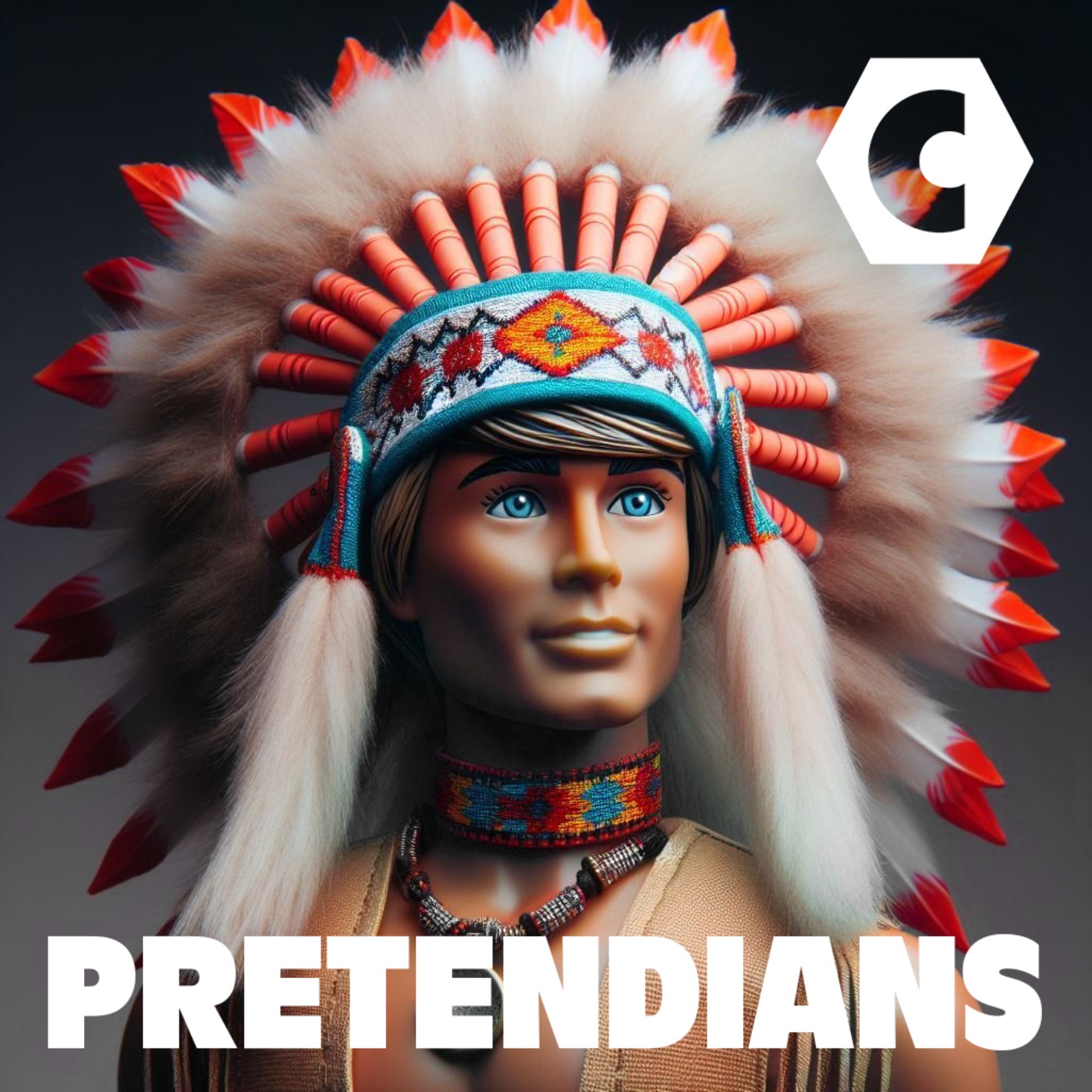
Loading summary
Transcript190 lines
- [00:01]
Robert Jago
Canada Land funded by you.
- [00:05]
Angel Ellis
So, Robert, do you remember watching your first film with native people? Like, what do you remember seeing?
- [00:12]
Robert Jago
Probably Westerns, you know, when I was home from school, and this is the 80s, so it was the only thing really on TV. I saw a bunch of Indians getting shot and having really toned abs.
- [00:26]
Angel Ellis
I mean, I watched a lot of films as a kid. The first one I remember with actual natives in it was probably Last of the Mohicans. Seeing West Duty, who's, like, from my own state, that was like a big deal to me. And he's on the big screen and it's this blockbuster film. But I also kind of remember, you know, Daniel Day Lewis is like, the adopted brother, cousin of the tribe, and he's the good guy, right? He's the white good guy and West Stud is the bad guy. And that kind of freaked me out. Like, why is the real native the fucking bad guy here? Like, that's. That's weird. I really identified with West Duty. I was like, hell, yeah, kidnap people. Do what you got to do, friend.
- [01:10]
Robert Jago
You know, I never seen that whole movie. I've just seen their fight with the Tomahawks.
- [01:14]
Angel Ellis
You know, I have to admit, and this is my dirty secret, I'll just spill it here. Fucking love that soundtrack, man. It's fire acting. It's, like, all about pretending you're somebody. El. And Charlton Heston, he pretended to be Mexican.
- [01:37]
Robert Jago
Talk English, can't you? I'm no cop now. I'm a husband. You better come outside with me, amigo. Laurence Olivier, I think he's the one that played Othello.
- [01:46]
Angel Ellis
Oh, yeah.
- [01:46]
Robert Jago
In blackface. Yul Brenner is the King of Siam.
- [01:49]
Angel Ellis
Oh, yeah.
- [01:50]
Robert Jago
He entered his eyes with a little twist up. When I shall sit, you shall sit. When I shall kneel, you shall kneel, etc. Etc. Etc.
- [01:59]
Angel Ellis
They do it to, like, every people. It doesn't matter, you know, if it's natives or black or, you know, Mexican. So it's no surprise that a bunch of white people pretend to be natives in movies. But there's one big difference. The actors we're gonna talk about today were so good at pretending to be Indian, they even convinced themselves they were Indian. And today we're going to be devoting our entire episode to Hollywood and all the people who have played native and who kept the act going for the rest of their lives. Hello, it's Giles Whittell from Tortoise.
- [02:38]
Robert Jago
Welcome to the news meeting. I think the danger here is that we're not as relentless as we were.
- [02:44]
Angel Ellis
The first time around.
- [02:45]
Robert Jago
We have to keep that up. Just one newspaper found 30,000 thousand lies or falsehoods or misleading statements during his last term. Trump met the moment here. Because traditional media is in crisis, we should be talking about how our reporting is getting into the hands of people and how we're building trust with those audience. ACAST powers the World's Best Podcasts Here's a show that we recommend. We all have bad days and sometimes.
- [03:28]
Angel Ellis
Bad weeks and maybe even bad years.
- [03:31]
Robert Jago
But the good news is we don't.
- [03:32]
Angel Ellis
Have to figure out life all alone. I'm comedian Chris Duffy, host of Ted's.
- [03:36]
Robert Jago
How to Be a Better Human podcast.
- [03:38]
Angel Ellis
And our show is about the little ways that you can improve your life. Actual practical tips that you can put into place that will make your day to day better. Whether it is setting boundaries at work or rethinking how you clean your house. Each episode has conversations with experts who.
- [03:52]
Robert Jago
Share tips on how to navigate life's ups and downs.
- [03:56]
Angel Ellis
Find how to be a better human wherever you're listening to this.
- [04:01]
Robert Jago
ACAST helps creators launch, grow and monetize their podcasts everywhere. Acast.com In 2017, it felt like drugs were everywhere in the news. So I started a podcast called On Drugs. On Drugs. We covered a lot of ground over two seasons, but there are still so many more stories to tell. I'm Jeff Turner and I'm back with season three of On Drugs. And this time it's gonna get personal.
- [04:31]
Angel Ellis
I don't know who sober Jeff is. I don't even know if I like that guy.
- [04:36]
Robert Jago
On Drugs is available now. Wherever you get your podcasts, there's no business like show. It's my business. You know, even when the cameras stop there rolling. I still think my name is Dancing Crow. Even when I'm with my cousin Bolin. He says, larry, please, it isn't so shut up. On with the show. Welcome to Pretendians From Canada Land, a show where we uncover the fraudsters and phonies who play Indian for profit and fame. I'm Robert Jago. I'm a writer and journalist from the Kwantlen First Nation and Nooksack Indian tribe.
- [05:20]
Angel Ellis
And I'm angel ellis. I'm a 15 year veteran journalist from the Muscogee Creek Nation in Okmulgee, Oklahoma. What comes to mind first when you.
- [05:32]
Robert Jago
Hear the words Hollywood Pretendian Ed Chigliak from Northern Exposure. My uncle won't come in. Why?
- [05:40]
Angel Ellis
Doesn't like doctors?
- [05:41]
Robert Jago
He doesn't trust them. Why is that? He is a doctor. Oh really? Which Kind. Which.
- [05:48]
Angel Ellis
Which.
- [05:49]
Robert Jago
Which. Which what? Which doctor? Right.
- [05:53]
Angel Ellis
Your uncle is a witch doctor.
- [05:55]
Robert Jago
That one bumped me out so much.
- [05:57]
Angel Ellis
That was like the heartbreaker one for you when you found out.
- [06:00]
Robert Jago
It was like, it's this young, funny Native dude who, like, lives kind of broadly speaking, in. In my region, and he does Native stuff, and he's really funny, and he's. He, like, played Native in a moder. Just a total stereotype. And then it turns out it's like, a blonde guy with a tan. That really bumped me out.
- [06:22]
Angel Ellis
So what pisses me off is finding out that Audrey Hepburn did this. I'm going out there, Ben. There won't be any fight. I'm going out to my people where I belong. When I found out she actually played Native, it pissed me off, and it kind of hurt my heart. So for me, like, one of the first people that I knew as a Pretendian, my dad pointed this out to me. You remember the Ironized Cody?
- [06:49]
Robert Jago
The Crying Indian?
- [06:50]
Angel Ellis
Yes. So Iron Eyes Cody is cast in the Keep America Beautiful campaign advertisements. And everybody's bombarded with these commercials of what they think is a Native. And he's looking at the water, and it's, like, all peaceful, but he sees the trash, and it makes him sad. And then he's, like, looking off in the distance at the planes, and someone drives by and throws out garbage, and it makes him sad. And he's. He's sitting there reflecting on the earth being harmed.
- [07:23]
Robert Jago
Some people have a deep, abiding respect for the natural beauty that was once this country. Some people don't.
- [07:31]
Angel Ellis
He has this single tear rolled down his cheek. And it kind of plays into that trope that the Native Americans are the, like, defenders of land and water, which, you know, is kind of a true thing, right? Where the kind of OG protectors of all those things. But the catch is, is that he's just some white dude playing an Indian.
- [07:52]
Robert Jago
Hello again. One of our guests today is a Native American whose face is the most recognizable since that of the Buffalo Head nickel. Please join us in welcoming Ionize Cody. You look great. How have you been? Oh, I'm doing fine. You work with John Wayne many films? Oh, yes. John Wayne made about eight with John Wayne at Republic Studio. About eight. About four of them with Ford. John Ford working with these great stars. Looking back at your career? Oh, I like them all.
- [08:23]
Angel Ellis
And they could have gotten any number of actual Native activists to do those kind of parts, right?
- [08:28]
Robert Jago
They could have, but I don't know if they would have had the nice craggly features and, and prominent cheekbones that he had. I mean, he. For a fake Indian, he's good.
- [08:37]
Angel Ellis
Oh yeah, yeah.
- [08:38]
Robert Jago
I mean, you could put him outside a cigar store.
- [08:40]
Angel Ellis
Oh, man, he, he looks just exactly like he should be on a pack of cigarettes. He's stoic as. So, like the reason they cast him in this like Keep America Beautiful campaign is because he has this prolific career in Hollywood. He's like got 200 films to his credit. He played Crazy Horse in Sitting Bull.
- [09:06]
Robert Jago
Wants Gold. He is worse than the long knives and the blue coats.
- [09:17]
Angel Ellis
He's basically always been playing Indian. But he wasn't born Iron Eyes Cody. His real name was Espera Oscar de Corte. And he was born in Louisiana.
- [09:29]
Robert Jago
I own horse and I own a buffalo. When I was that little. In Oklahoma, you had a buffalo. Oh, yeah. Where in Oklahoma? Growing up Fort Gibson, Oklahoma. I see. Growing up there. Fort Gibson, Oklahoma.
- [09:41]
Angel Ellis
So he's actually the child of Italian immigrants. His mom is Sicilian and his father was from southern Italy. And at the time in Louisiana there was like a lot of anti Italian sentiment. You know, it's, it's the south, white is right down there. And that's kind of how it is. So there was this whole 30 year period starting around 1890 where there was like a ton of violence against Italians. And in 1891, this angry mob actually lynched 11 Italian folks.
- [10:13]
Robert Jago
Well, like all at the same time. What'd they do?
- [10:15]
Angel Ellis
The New Orleans police chief had been shot to death. And the story goes that with his last dying breath, this guy uttered a slur for Italians. And so a bunch of the Italians were rounded up in the community. It's been called a long standing wound.
- [10:31]
Robert Jago
In New Orleans and across the world. Some of the 11 victims killed all Italian immigrants had been accused of murdering the police chief but were acquitted.
- [10:40]
Angel Ellis
A mob then stormed the jail and even one of them was like a 14 year old child.
- [10:44]
Robert Jago
After the assassination, the Italian government threatened war against the United States.
- [10:49]
Angel Ellis
The backdrop of Iron Ice Cody's life is he's born in 1904. And for him, playing Indian was a bit of a romantic kind of escape from daily discrimination.
- [11:01]
Robert Jago
You have a prayer. What is this prayer about? Tell me about your Indian prayer. It's a prayer that my father taught me many, many years ago. I said first in my language.
- [11:17]
Angel Ellis
He was obsessed with the pictures. At the time, Westerns were the powerhouse of film.
- [11:23]
Robert Jago
Right?
- [11:23]
Angel Ellis
Like that's what everybody loved. He told people that his father was Cherokee and that his mother was Cree. And that kind of helped get him cast in More native roles. So he's kind of playing the typical Hollywood native. You know, sometimes they were like just the couple lines and they were just like there to kind of stand in and be the. Be the pin cushion for the cowboys, bullets or whatever. Or they were there to ride on a horse or, you know, just to make something look kind of cool on film. And the natives were usually the bad guys.
- [12:00]
Robert Jago
Paraguar.
- [12:01]
Angel Ellis
Are they friendly?
- [12:03]
Robert Jago
I don't call a poisonous snake my friend on account of he don't bite me. Snakes is snakes.
- [12:09]
Angel Ellis
So he got cast a lot in that. And to all the Hollywood people, he kind of fit their image, right? You kind of talked about it. He's got a nice chiseled face. He looks pretty good. He's got the dark hair. He was often seen wearing his costumes. You know, he liked them so much that he would just wear them around. Like. Have you ever seen the modern pictures of him? He like, owns more fringe than a leather store. I don't. Don't know what to think about that. But I mean, he's not around today. But his regular outfits also included like a braid wig. So he had his leather and braids and moccasins and beads, and he was just all in.
- [12:46]
Robert Jago
I mean, if it stops you from getting lynched, I guess.
- [12:50]
Angel Ellis
No, this was up until the 1990s. He was still walking down Hollywood Boulevard with a braid wig and moccasins when Friends was on. It just seems like he was always in costume. I couldn't find a picture of him without his feathers and leathers. And that's just really odd.
- [13:09]
Robert Jago
You know what you're making me think of, like. And maybe this is why he was so successful in Hollywood. So there's the Simpsons episode Radioactive Men in Springfield. And you see like the film guys and they're trying to set the scene, and in order to set the scene, they're painting a horse to look like a cow.
- [13:26]
Angel Ellis
Sir, why don't you just use real cows?
- [13:28]
Robert Jago
Cows don't look like cows on film. You gotta use horses.
- [13:31]
Angel Ellis
What do you do if you want something that looks like a horse?
- [13:35]
Robert Jago
Usually we just type a bunch of cats together. Maybe that. That's kind of like how I feel with guys like this. You know, maybe in real life he probably wouldn't look that native, but for some reason, you get him on screen, he looks hella Indian. Like, maybe Indians don't look Indian enough on screen. And so you need like a white guy with like gaunt cheeks and sharp features to actually sell Indian on screen.
- [13:56]
Angel Ellis
Yeah, maybe the Indians don't look Indian enough to him.
- [13:59]
Robert Jago
Yeah, I know. You get. You get an Indian on screen, for some reason, the camera makes us look. I don't know th. But you get a guy like that and bam. Indian.
- [14:06]
Angel Ellis
Well, like, he did it so much that his. Like, it's like his. His acting merged into his real life. He just kind of morphed into presenting himself as Native every day. And, like, the longer he went along with it, the more he. He himself believed it. When I first saw it, you know, I. I really thought this was a Native that I was looking at. Like, he kind of was like, oh, he hit all the right identifiers that I thought were. Were what it was to be Native. And it took my dad telling me that, you know, it was just some dude who really, really wanted to be native this whole time. And the weird part of it is, and this kind of blows my mind, that he actually married a real native woman and she had children, and he adopted actual native kids.
- [14:56]
Robert Jago
What's been the hardest for Iron Eyes Cody? What's been the hardest. The hardest thing for me is to try to get my people to believe in themselves and get together. These American Indian children are having a tough. They don't. They feel like they're. No one loves them. That's why they become alcoholics. Our problem is we should all believe we're all Indians. Whether you're 8th or 16th or anything else like that, Right?
- [15:21]
Angel Ellis
What's weird to me, and, like, I don't know if you've seen it, where actors do the workshops and they try to teach other people how to act. Sir Ian, who played Gandalf, does a really funny, Funny one about it, and he does this spoof and skit, and he's like, I show up on a day, I read a script, I pretend to be someone I'm not. And then when it's. They say cut, I go back to being Sir Ian. Cody doesn't ever stop.
- [15:43]
Robert Jago
Yeah, it's. It's. It's sad. It's kind of pathetic to do your job and then make that your identity. It says there's, like a real emptiness in that man's life.
- [15:51]
Angel Ellis
Yeah, it's. It was. It is pretty sad. And. And like, you're getting. You're getting crucified as an Italian, so you pick another really marginalized people to try to be. But his half sister really didn't like it. And back in the 90s, she tried to out him and. And said, you know, hey, we're. We're Italians. But he continued to deny it. And he never really fessed up. And it was only after his death that a lot of this stuff started coming out.
- [16:18]
Robert Jago
That surprises me. How is he not out from the beginning? I mean, he's just such a stereotype. How did people not know?
- [16:24]
Angel Ellis
When you talk about, like, how can a person fool people for that long? Well, some people like to be fooled. You know, they don't. They don't. They don't really want to see natives and they don't really want to know what actual natives are about. They like the Hollywood version of natives. And so they see a guy in a fringe jacket and they're like, oh, hey, okay.
- [16:45]
Robert Jago
Like here's the thing that non natives don't know. It's that every single native person you've ever met has been questioned about 10,000 times by some ignorant jerk saying, you don't look native to me. It's like such a common thing because none of us go around dressed like headdresses. And it was really funny as he probably has never had that.
- [17:04]
Angel Ellis
Yeah, because he wore his headdress everywhere.
- [17:07]
Robert Jago
Yeah. So I guess that's the first sign you're pretending. If no one has ever walked up to you and said, you don't look native to me, you're probably a pretendian. I'm guessing that most of the Canadians listening to this right now already listen to Canada Land, the Americans. I'm not so sure. For over 10 years, Canada land has been publishing weekly episodes that look critically at the media, break news stories, and bring listeners like you perspectives from across Canada that you won't find anywhere else. Angel, since you started working on the show, have you been listening? Have you been catching up in all things across the medicine line?
- [17:40]
Angel Ellis
People are always telling me that you Canadians are nice, polite, boring folks. But I've been listening to some news stories and holy cow, the stereotypes are wrong. You guys are wild. I heard stories about medical coverups, election interference, right wing trolls, racism, messed up policing, and something called a pokeroo. Anyway, you guys are like the US but with less guns and a younger, better looking president or leader, whatever you call him. I've learned a lot.
- [18:12]
Robert Jago
Yep, Canadians are just as awful and outrageous and messed up as Americans are. They just hide it better.
- [18:17]
Angel Ellis
I'm learning that Robert, you can listen.
- [18:19]
Robert Jago
To and follow Canada Land anywhere you get your podcasts.
- [18:26]
Angel Ellis
So the next pretendian I want to talk about is Sasheen Littlefeather.
- [18:31]
Robert Jago
I believe the most important thing that we can do as human beings is to know ourselves and to love ourselves.
- [18:39]
Angel Ellis
Now this One's really spicy. Do you remember Sachin?
- [18:42]
Robert Jago
Yes. This is a very depressing story.
- [18:44]
Angel Ellis
Part of me, like, was kind of raised with this legend of a person, and then to find out that it all kind of comes apart just freaks me out.
- [18:52]
Robert Jago
No one walked up to Sachin Littlefeather and said, you don't look native to me, so maybe that's a clue. She looked very stereotypical. She was the exact twin of the Land o'lakes lady.
- [19:04]
Angel Ellis
Yeah.
- [19:04]
Robert Jago
Do you know the Land o'lakes butter lady?
- [19:06]
Angel Ellis
I do. She had, like, the parted down the middle hair. The really gorgeous. Like, the creator favors you. Perfect, beautiful, straight, thick black hair. So Sasheen, she's, like, in her 20s, and she's really interested in modeling and acting. And she becomes connected to Marlon Brando by some mutual acquaintance because he's really interested in the American Indian movement. Like, he's kind of one of those famous people who kind of stays hip to what's taking place.
- [19:36]
Robert Jago
I read a book called Indians of the Americas. I, after reading the book, realized that I knew nothing about the American Indian and that everything that we are taught about the American Indian is wrong. Also, what we've learned about the Indians has been largely taught to us by Hollywood and by motion pictures.
- [19:57]
Angel Ellis
And the story goes that before the Academy Awards in 1973, Brando had called her up and was like, hey, so I'm nominated for this award, best actor for the Godfather. I don't want to accept the award. If I win, will you go on stage and give a speech instead? And at the time, there's this huge standoff at Wounded Knee in South Dakota. The FBI are, like, bearing down on the natives who are holed up. About 200 activists are occupying the town of Wounded Knee on the Pine ridge reservation.
- [20:28]
Robert Jago
For 80 years ago, at the tiny village of Wounded Knee, 200 of their forefathers were massacred by American cavalry in the last major action of the Indian wars. After that action, Wounded Knee remained a quiet place until a few weeks ago, when a group of militant demonstrators from the American Indian Move raided this store, stole rifles and ammunition, and proceeded to take over the village.
- [20:52]
Angel Ellis
In the middle of all this, Brando, he gives this opportunity to shed national light on a really important Native issue. And he wins the award for the role in the Godfather. And Sasheen gets on the stage.
- [21:08]
Robert Jago
Hello, my name is Sasheen Littlefeather. I'm Apache, and I am president of.
- [21:14]
Angel Ellis
The National Native American Affirmative Image Committee.
- [21:18]
Robert Jago
I'm representing Marlon Brando this evening, and he has asked me to tell you that he very regretfully cannot accept this very generous award. And the reasons for this being are the treatment of American Indians today by the film industry.
- [21:39]
Angel Ellis
Excuse me.
- [21:49]
Robert Jago
And on television in movie reruns, and also with recent happenings at Wounded Knee.
- [21:56]
Angel Ellis
The legend is that John Wayne himself was so furious, he was waiting in the wings, wanting to drag her off stage, and he had to be held back by security. When Americans heard about that and they saw this pretty young woman getting booed, and a lot of people kind of felt sympathetic to her and felt that she was really brave for what she did. Robert that speech was hailed as a victory by the American Indian movement. And a lot of people to this day consider it, you know, a turning point, the moment that the sympathy of the American public shifted a bit from the cowboys to the Indians. What I did at the Academy Awards affected the outcome of what happened at wounded knee in 1973. Now, I knew that I was on the right track. When word got to me from Coretta Scott King, who was the widow of Martin Luther King, congratulating me at what I did at the Academy Awards, I knew I was on the right track. And when word got to me from Cesar Chavez congratulating me about what I did, I knew I was on the right track, despite what anybody else said. What I did by refusing the Academy Award for Marlon Brando, it was by an Indian me about Indians for Indians. And it took place in the glitz and the glamour of the Academy Awards. So that's how Sasheen Littlefeather becomes like a household name amongst natives. She continues to be a Native American activist throughout her life. I mean, my being exotic really paid off in Italian films. They loved me. And that's when I met, of course, other Native Americans, and we shot in Indian Country. We had our great times out there in Indian country. And then after her death, Jacqueline Keiller, the Pretendian hunter, who we talked about the last episode, she gets in touch with Sashin's sister, and Sasheen's sister revealed that their family is Mexican. You know, my dad feels like she did these, like, incredible things and stood up and was courageous. But then also it's like, man, why did you lie about it? That's where the hurt comes, because I think that you can be an ally and you can be honest, and you could probably even become ingratiated into the community.
- [24:29]
Robert Jago
Yeah, I guess I see that point, because, I mean, had she just been out about it and just been, like, a strong, militant ally, she could have been as hardcore and militant as. As anybody. As long as she was honest about it.
- [24:42]
Angel Ellis
Yeah. Because I think she actually claimed a certain tribe. I'm Sasheen Cruz, Little Feather. I'm White Mountain Apache and Yawkey. And I'm half Indian and half savage. Half Indian and half white.
- [24:56]
Robert Jago
Oh, that's a bad look.
- [24:57]
Angel Ellis
Yeah. And then that's where people get hurt.
- [24:59]
Robert Jago
Just coming in and saying she claimed a certain tribe. That's what makes it bad. Yeah, that's where it just goes, ooh.
- [25:10]
Angel Ellis
So Hollywood kind of has this, like, cycle, right? Like, first the Indians were the villains. Right. The cowboys were the good guys. And white actors were sprayed darker or put on makeup to make, you know, like put on red face so that they could play the natives. Starts out with Indians are the villains. Then they were the noble savage villains. You know, they. They're still the bad guys, but they kind of have that little bit of an anti hero kind of thing. Like, yeah, they're bad, but can you blame them? And an example of that is Scar in John Wayne. The John Wayne movie the Searchers. He's played by this white German actor, Henry Brandon.
- [25:52]
Robert Jago
You big shoulders young one. He who follows you speak pretty good American for a Comanche.
- [26:04]
Angel Ellis
And then the 60s come around and the Indians are suddenly kind of fashionable. But Indian actors are not. Instead, the Indian in the film is a white guy who somehow turns into an Indian. Such as Dustin Hoffman and Little Big Man.
- [26:20]
Robert Jago
No. Do you hate them? Do you hate the white man now? Ew.
- [26:27]
Angel Ellis
Or like later on, Kevin Costner in Dances with Wolves or Daniel Day Lewis in Last of the Mohicans. And that brings us up to our final pretendion of the episode Johnny Depp.
- [26:47]
Robert Jago
I must admit, Jack, I thought I had you figured. It turns out you're a hard man to predict.
- [26:54]
Angel Ellis
Me?
- [26:54]
Robert Jago
I'm dishonest. And a dishonest man you can always trust to be dishonest. Honestly, it's the honest ones you want to watch out for.
- [27:03]
Angel Ellis
Do you know anything about Johnny Depp's claims to indigeneity?
- [27:08]
Robert Jago
A bit, yes. From Vancouver, growing up Here in the 80s, Johnny Depp was always in the news because this is where they filmed 21 Jump street and he was always getting in fights.
- [27:16]
Angel Ellis
Johnny Depp, he's been acting since the 80s. His first films, Nightmare on Elm street. And he's had this great and successful career. Remember Edward Scissorhands? Like, he's like super fucking white, you know, I know that some of that was makeup. Right. But does start to start looking more like he's been sitting in tanning Beds trying to become, you know, big chief or something. But he's also, around the early 2000s, he would casually mention in a bunch of interviews that he was native. And he claimed that his great grandmother or someone was like a lot native. He said that he was thinking that she was Cherokee or Creek. He did mention this in a bunch of interviews during that Pirate of the Caribbean era. So maybe he's a Indian pirate.
- [28:03]
Robert Jago
I can remember my grandparents, you know. You know, talking about how, you know, we had some degree of Indian blood and it was for me, a point of pride. You know, as a very little kid, you know, it was a great point of pride. So, you know, before he became a pirate, he actually did take a shot at playing Indian, like professionally. This is like 95. It's. It's called Dead Man. It has great native actor. I think it's Gary Farmer.
- [28:30]
Angel Ellis
I can't remember Gary Farmers in Res Dogs.
- [28:32]
Robert Jago
Thank you. He's in Res Dogs. He plays like the grandpa or whatever, right?
- [28:36]
Angel Ellis
He's. Yeah, he's uncle with the sonic cups.
- [28:38]
Robert Jago
Okay. Yeah, so he's. He's still around. He plays the stereotype of the half breed who's rejected by both sides. You know that one? Oh, God, So freaking tired. It's like a share song. And Johnny Depp is an accountant. He finds him, he has a mystical journey, becomes an outlaw, and eventually he dies and he gets face pain and he becomes like an Indian and he sends him off to the happy hunting rounds. Time for you to leave now, William Blake.
- [29:05]
Angel Ellis
Time for you to go back to.
- [29:07]
Robert Jago
Where you came from. You mean Cleveland? Back to the place where all the.
- [29:13]
Angel Ellis
Spirits came from and where all the spirits return.
- [29:19]
Robert Jago
In that one, Johnny Depp is slowly becoming sort of like one of the Indians, if not an Indian himself. And then he takes it a step further in his directorial debut. And that's with a movie called the Brave.
- [29:32]
Angel Ellis
I'm already offended at the title.
- [29:34]
Robert Jago
Oh, right. I didn't even think of that. I'm so dumb. Oh, my God. Oh, as in a brave.
- [29:42]
Angel Ellis
Your mind's been flipped and you can't. You didn't even make that, like close connection.
- [29:46]
Robert Jago
This movie is to trauma porn. As two girls, one cup is to porn porn.
- [29:51]
Angel Ellis
Oh, my God.
- [29:53]
Robert Jago
Disgusting. And there is Johnny Depp in Brown Face. Or maybe he's just very tanned with long hair and a headband. He's playing an Indian and he's drinking no name liquor out of the bottle. You actually gonna drink that? No wonder you people are on your last leg. What do you want Unless you plan on putting that pretty little wife and kids of yours on playing to fucking Bora Bora. I'm gonna find him, then I'm gonna kill him. And then I'm gonna him see you in the movies, Tonto.
- [30:28]
Angel Ellis
What the hell? Like what? I have never heard of this movie ever.
- [30:34]
Robert Jago
Well, that's because it was never released in the Americas. So they released it at Cannes and I guess after they got the feedback there, they decided to hide it. It's every embarrassing, humiliating, just cheesy ass joke trope about our people and he crams it into one film. I looked at some of Johnny Depp's interviews about this movie and there's this one he does with this Japanese reporter and he just sums it up. He says, you know what? I don't like the winners. I like the losers. I like the the losers in the world. And all it is is him just trying to portray us as the biggest losers in history. And that's who he identifies with. That's what he wants to be about. He wants to be with the losers.
- [31:20]
Angel Ellis
So Johnny Depp has been like laying the tracks for his Indian train, right? Like he is started with this crazy. It comes to a total head in 2013 when Depp was cast in this controversial role of Tonto, a Comanche sidekick in the Ranger.
- [31:45]
Robert Jago
The Lone Ranger in my friend. Your friend white man never friend of Indian in my friend. For many years. No man could have better give you my word.
- [31:59]
Angel Ellis
So what do you know about the Lone Ranger?
- [32:01]
Robert Jago
I know that the Johnny Depp one involved him wearing a goddamn bird on his head.
- [32:05]
Angel Ellis
Like a whole ass looking chicken.
- [32:07]
Robert Jago
Like it's a whole crow on or raven or something on his head.
- [32:11]
Angel Ellis
Tonto literally means fool, right? And that he's always the sidekick to the Lone Ranger, the white smart guy. And like I've seen the trailer of Johnny Depp's version and he does play just a complete bamboozled.
- [32:26]
Robert Jago
Something very wrong with that horse.
- [32:29]
Angel Ellis
Horse dead.
- [32:31]
Robert Jago
I can see that.
- [32:32]
Angel Ellis
And it's after the release of the movie that Johnny Depp starts talking about his native ancestry and he starts coming under fire and he's accused of appropriation.
- [32:43]
Robert Jago
Don't believe Johnny is native at all. Oh God. And the Indian is Johnny Depp, right?
- [32:49]
Angel Ellis
So Indian country today did an investigation and found that he has no native ties to any tribe and has never been recognized by a nation. And this really seems like the story that he just kind of made up. So many in the native community have called him a pretendian for quite a long time. It's almost like he's, like, famously pretending. But what is weird and interesting is during the promotion of the Lone Ranger, he gets adopted by a Comanche woman named LaDonna Harris.
- [33:22]
Robert Jago
Johnny Depp's portrayal of the famous Native American sidekick got a huge stamp of approval this week. Ladonna Harris, esteemed Comanche and president of Americans for Indian Opportunity, announcement that the actor would be joining the tribe, saying in a statement, it seemed like a natural fit to officially welcome Johnny into our Comanche family. A Native American activist who lives in Albuquerque has a new son. He's 48, and he's a Hollywood A lister. Johnny Depp is now a member of.
- [33:48]
Angel Ellis
A Comanche family and has an Indian.
- [33:50]
Robert Jago
Name that suits him perfectly. His Indian name is Mawome.
- [33:53]
Angel Ellis
It's shape shifter. This was pretty convenient for Johnny, and the timing seemed to fit just right with the print campaign around the Lone Ranger movie. The adoption made some of those questions quiet down a little bit about whether or not he had any business playing Tonto. And as you just heard, the press went ahead and just assumed that if he was adopted by a Comanche woman, that meant he was now a member of the tribe. But I called the Comanche Tribal Citizenship Office to find out if that's true. And Robert, they had a bit of a laugh at my question and told me that Johnny Depp was absolutely not an enrolled citizen of the Comanche Nation.
- [34:35]
Robert Jago
They must be pretty pissed off in that community about the whole thing.
- [34:38]
Angel Ellis
Actually, it's kind of strange. I asked around and chatted with some Comanche community members to find out how they feel about Johnny Depp claiming to be one of them. It's kind of a mixed bag. Some older folks kind of roll their eyes at the whole thing, and some younger folks think it's kind of cool. And what kid hasn't seen Jack Sparrow? Overall, I got the feeling that the Comanche community is sort of ambivalent about Johnny Depp. They're not really sure if they want people to think he's one of them or not. I figured I should call the Comanche tribal office back just to confirm that Johnny Depp is 100% not a Comanche. But this time, the call went down differently.
- [35:22]
Robert Jago
Comanche Nation enrollment.
- [35:23]
Angel Ellis
Yeah, Hi. My name is Angel Ellis and I'm a journalist. And we've been kind of diving into Johnny Depp's past. Is he a citizen of the Comanche Nation?
- [35:36]
Robert Jago
Well, ma'am, I'll tell you this right now. I can't give out personal information on any tribal Enrollment enrolled member. Due to our privacy laws, I'm not going to speak on Johnny Depp's behalf. Ma'am, I'm very limited on what I can talk to you about. Sure. It's probably best from here. If you need to know anything else, you maybe email us.
- [35:56]
Angel Ellis
So, Robert, once Johnny Depp is adopted into a Native American family, guess what he does next?
- [36:03]
Robert Jago
I don't know. Get diabetes?
- [36:05]
Angel Ellis
Close. He signs a $20 million deal with Dior to be the spokesman for their new Indian themed perfume. Let me show you the ad. And while you watch it, tell the people what you're seeing.
- [36:21]
Robert Jago
Starts in la, in downtown la. And there's Johnny Depp. He is, as they say in the 80s, grinding.
- [36:33]
Angel Ellis
I gotta get out of here.
- [36:35]
Robert Jago
Oh, he's leaving la. He's passing oil derricks in the. In the desert. Which way? And there's a buffalo. For some reason. Eagle screech. Can't not have that. And there's a coyote.
- [36:48]
Angel Ellis
I can feel it.
- [36:50]
Robert Jago
Wow, he's taking it all off. Sauvage. Dior. Sauvage is the French word for savage. So if you go back to the ochre crisis or something, when the white mobs were stoning Mohawks in the streets, the word they were screaming was Sauvage. It is a racial slur in French. And the English version is savage, which is also a racial slur against Native people.
- [37:17]
Angel Ellis
So I don't know a single place in the world where I, as an actual Native, can go and say a terrible racist word and make $20 million from it. And Johnny Depp did that with this Sauvage campaign.
- [37:33]
Robert Jago
See you in the movies, Tonto.
- [37:41]
Angel Ellis
So, Robert, that's our look back at the history of the weird phenomenon of pretendions in Hollywood. It started way back and it kept happening right up until Johnny Depp. But I don't know, maybe things are different now.
- [37:57]
Robert Jago
Maybe. I mean, we finally have indigenous creators directing film and tv, like Sterling Harjo or Jeff Barnaby. And I'd hold up any episode of Res Dogs against stuff like Johnny Depp's of the Brave any day.
- [38:08]
Angel Ellis
So things do seem better than when I was growing up, when nobody was representing me in a good way. I sat at Sundance last year and watched Lily Gladstone and Fancy Dance, and it was one of the most beautiful films I've seen in my life. And I mean, Lily was in the room during Q and A, and she is this. This beautiful, majestic, articulate and talented woman. I wish I seen more of her when I was growing up. But some things never change. Most people know Lily Gladstone from the movie Killers of the Flower Moon, a movie all about Native Americans. But the main characters were still white guys, played by Leonardo DiCaprio and Robert De Niro.
- [38:52]
Robert Jago
Well, at least that movie was clear. But the white guys were homicidal psychos trying to rob native people. They didn't magically transform into natives who were better at being native than real natives. So maybe that's progress.
- [39:03]
Angel Ellis
Maybe that's just showbiz.
- [39:20]
Robert Jago
I'm gonna get me an agent and get me a screen test. Well, I know them. Star's gonna shine for me. I'm gonna be whoever I need to be. Next time. On the last episode of the season, Angela and I asked the question at the heart of all of this, why does someone pretend to be indigenous? And what's it like to keep the lie going every day of your life? Our executive producer and editor is Jesse Brown.
- [39:54]
Angel Ellis
Additional production from Caleb Thompson.
- [39:56]
Robert Jago
Julie Shapiro is our contributing editor.
- [39:58]
Angel Ellis
Canadaland's editor in chief is Karen Pulesi. If you like Pretendians and want to hear more of it, it's really important to help us get the word out. When you follow us, subscribe to us, rate us, and review us on Spotify and Apple podcasts, the sacred algorithm takes note and spreads the word to others. Please do it now.
- [40:16]
Robert Jago
You can listen ad free and early on Amazon music included with Prime.
- [40:20]
Angel Ellis
Thanks for listening.
- [40:28]
Robert Jago
In 2017, it felt like drugs were everywhere in the news, so I started a podcast called On Drugs. We covered a lot of ground over two seasons, but there are still so many more stories to tell. I'm Jeff Turner and I'm back with season three of On Drugs. And this time, it's gonna get personal.
- [40:49]
Angel Ellis
I don't know who sober Jeff is. I don't even know if I like that guy.
- [40:53]
Robert Jago
On Drugs is available now. Wherever you get your podcasts.
- [41:00]
Angel Ellis
Hello, it's Giles Whittell from Tortoise.
- [41:03]
Robert Jago
Welcome to the news meeting. I think the danger here is that we're not as relentless as we were the time around. We have to keep that up. Just One newspaper found 30,000 thousand lies or falsehoods or misleading statements during his last term. Now, Trump met the moment here. Because traditional media is in crisis. We should be talking about how our reporting is getting into the hands of people and how we're building trust with those audiences. Acast powers, the world's best podcasts. Here's a show that we recommend.
- [41:49]
Angel Ellis
It's the question that's on everyone's mind. How do you live a good life? How much do work, health, relationships matter? What about happiness, meaning money and love? What if you're alone or anxious, ill or in pain? These are the questions we explore weekly on the top ranked Good Life Project podcast hosted by me, award winning author, four time industry founder and perpetual seeker Jonathan Fields. Every week I sit down with world renowned experts, iconic writers and researchers and well, everyone from Olympic gold medalists to world shaking activists, a list, celebs, musicians and more. All with a single goal to help understand what it truly takes to live a good life and to feel a little less alone along the way. Listen to the Good Life Project podcast wherever you get your podcasts.
- [42:35]
Robert Jago
ACAST helps creators launch, grow and monetize their podcasts everywhere.
- [42:40]
Angel Ellis
Acast.com.