
Podcast
Prof Snyder's Music Biz News
Hosted by AI Music and Music Industry Educator, Jeff Snyder · EN
Current, Interesting, Offbeat, Music Biz News Updates Curated from Various Sources.
“The secret to success is to know something nobody else knows.” – Aristotle Onassis
Video Versions at https://www.youtube.com/@snydersmusicbiznews
For 27+ years as a Music Professor teaching Music Business and Recording classes, as well as being a professional musician, one of my favorite classes was Intro to Music Business. Each week we discussed current news in the music industry that I found interesting and worth discussing. Now retired, I still try to stay current on what's happening, and have decided to share what I find with a (potentially) much bigger class...Prof Snyder's Music Biz News.
Links to articles referred to in the topics discussed will be posted on my blog https://snydersmusicbiznews.blogspot.com/
So if you actually learn something new, please follow, like, and subscribe. Thanks! Snyder
20episodes
Episodes
Newest firstAll episodes
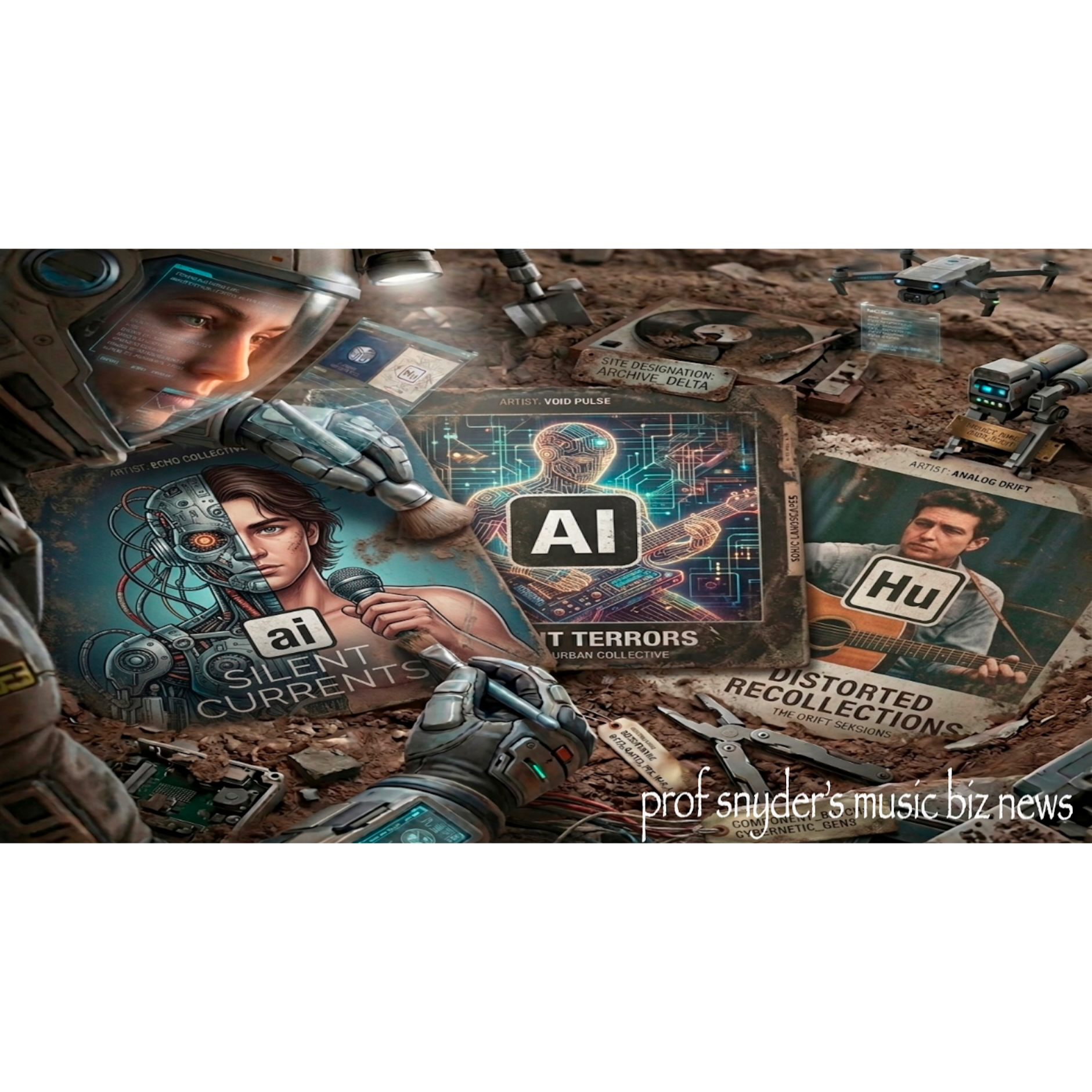
Will New Voluntary AI Music Labeling Make A Difference?
1w ago00:06:48Tap to summarizeA new label may be attached to songs, in addition to explicit content labels from the 80s-90s. The RIAA, Recording Academy, and others have proposed 2 labels: 1 with uppercase AI for total AI generated songs, and another with lowercase ai for songs with some ai generated material. (I added an Hu on the thumbnail since there should also be a label for 100% human made). Those uploading or distributing songs are on the honor system to admit using AI and how much. How honest will they be? How could this affect royalties? They say this is for listeners who will have 2 labels to check, one for explicit material, the other for AI material. What would Dee say? (watch to the end). Is the battle-cry now sex, drugs, and rock roll...and honesty?
Transcribe →
AI In The Classroom: The Future of Music Education
Jun 2900:08:27Tap to summarizeWhile SUNO is portrayed by many as the evil AI music company training AI on copyrighted music without permission, traditional music schools worldwide, like the Frost School of Music at the University of Miami and the National Institute of Education in Singapore, embrace it.Meanwhile students at Berklee College of Music say AI is ruining their education. Other institutions like Syracuse University are cutting music or deleting music programs altogether. On the horizon, will independent self-thinking agentic bots not only teach music classes, but also even give one-on-one music lessons? If music programs hope to be around ten years from now, they have to treat AI not as a novelty or a threat to hide from, but as a tidal wave reshaping the musical world students are entering. The real question isn’t whether AI will be part of that world—it’s whether schools will prepare students to survive in that world.
Transcribe →
Why Did 2 Live Crew Lose 'Me So Horny'
Jun 1900:07:40Tap to summarize2 Live Crew just lost the copyrights to their records. Copyright law states that they could get their music back from the labels after 35 years if they follow the instructions, and in 2024 they did. But they just lost on appeal by the label, not because of usual 'work-for-hire' issues, but rather because one of the members who had died, filed bankruptcy decades ago. This is a first. Musicians filing bankruptcy is pretty common, even with hit songs, especially those with bad contracts. Will this case have lawyers digging into past bankruptcies now to deny artists their recordings after 35 years? From Salt-N-Pepa to 2 Live Crew, labels are finding creative ways of keeping those recordings, no matter how much they say they love their artists. Oh...and Luther Campbell of 2 Live Crew is running for senate! sources: https://snydersmusicbiznews.blogspot.com/2026/06/2-live-crew-loses-copyrights.html
Transcribe →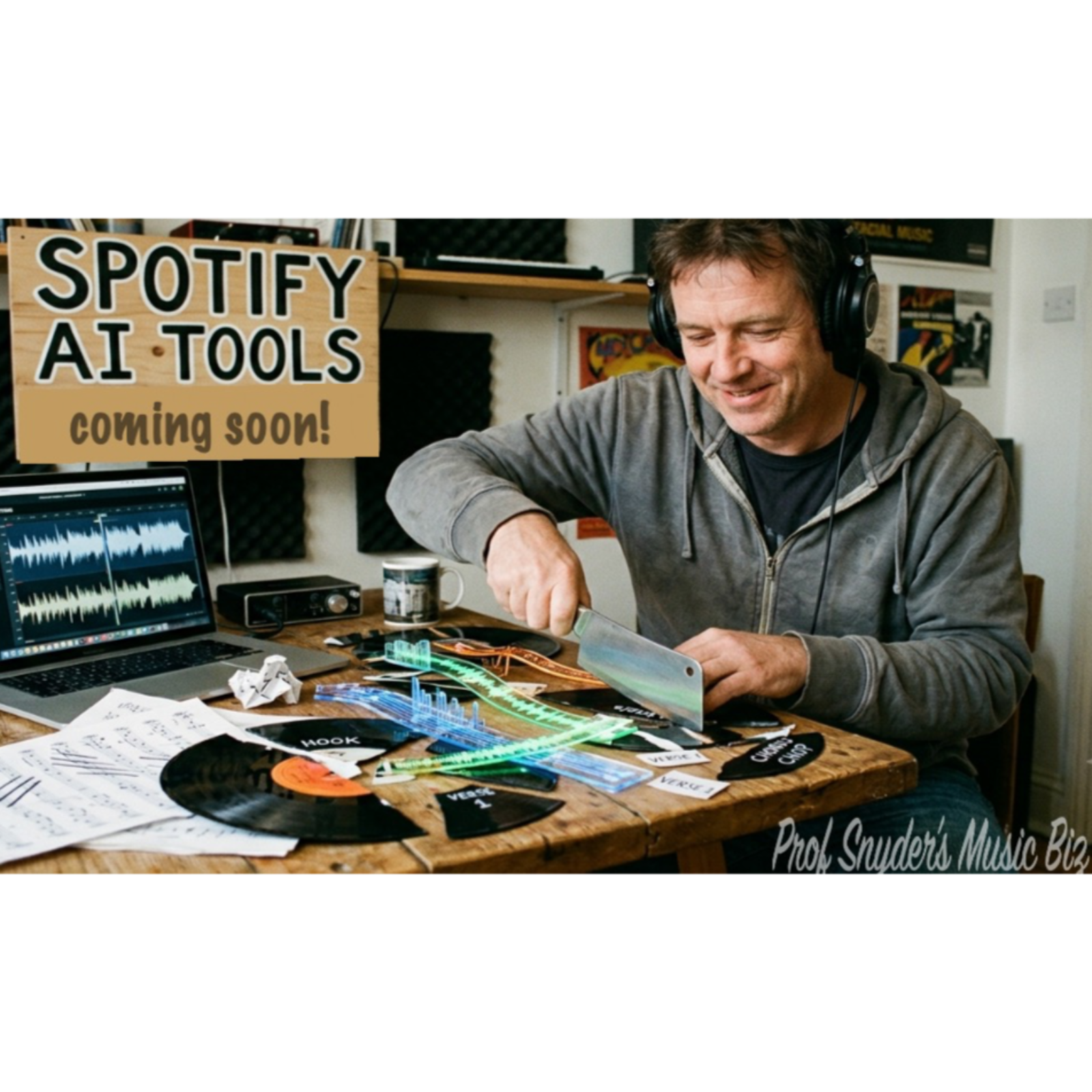
Spotify Evolves from a Streaming Service into an AI Music-Creation Ecosystem.
Jun 900:09:42Tap to summarize"Spotify and Universal Music Group (UMG) have officially signed a licensing agreement that will allow “AI-enabled superfans” to produce AI covers and remixes of participating UMG songs." Up until now a song was created to listen to, dance to. An artist's official release has been the definitive version of a song. Listeners could interpret it differently, but the recording itself remained fixed. Soon, the labels and Spotify see all of those songs, maybe yours, as the 1st building block for Spotify users to take your song, and create 1000s of variations. "The sources confirm artists can opt out, but do not specify whether participation is opt-in or opt-out by default and neither Spotify nor UMG has clarified this." "It also isn't clear whether "participating" is determined artist by artist, catalog segment by catalog segment, or through some broader label-level agreement with individual exceptions. That mechanism is simply undisclosed." Does it matter to you if your song is sliced and diced and made into something you wouldn’t like, or even recognize? sources: https://snydersmusicbiznews.blogspot....
Transcribe →
Ozzy Osbourne and the Beginning of the Deadbot Music Era
Jun 900:08:56Tap to summarize"He will exist digitally as himself for as long as we have computers." The emerging world of “deadbots”—AI-powered digital recreations of deceased individuals that can speak, answer questions, and interact using a person’s voice, personality, and digital history. With reports that Sharon and Jack Osbourne are developing an interactive AI version of Ozzy Osbourne, the music industry may be entering an entirely new era. Unlike hologram concerts or archived recordings, these systems could engage in real conversations, recognize fans, and potentially continue an artist’s commercial legacy long after death. Could estates eventually license AI versions of artists for concerts, films, museums, theme parks, and virtual meet-and-greets? Could digital performers continue generating revenue indefinitely? And are living musicians ready to share the stage with deadbots? Sources: https://snydersmusicbiznews.blogspot.... 00:00 Bring Out Your Deadbots 00:55 Ozzy Osbourne's AI Legacy 01:55 Who Owns a Digital Person? 02:15 The Digital Afterlife 03:20 The Business of the Dead 04:05 The AI Legacy Clause 05:35 We've Already Started Down This Road 05:50 The Backlash 06:40 The Future of Music 07:55 Living with Deadbots 08:35 Final Thoughts and Questions
Transcribe →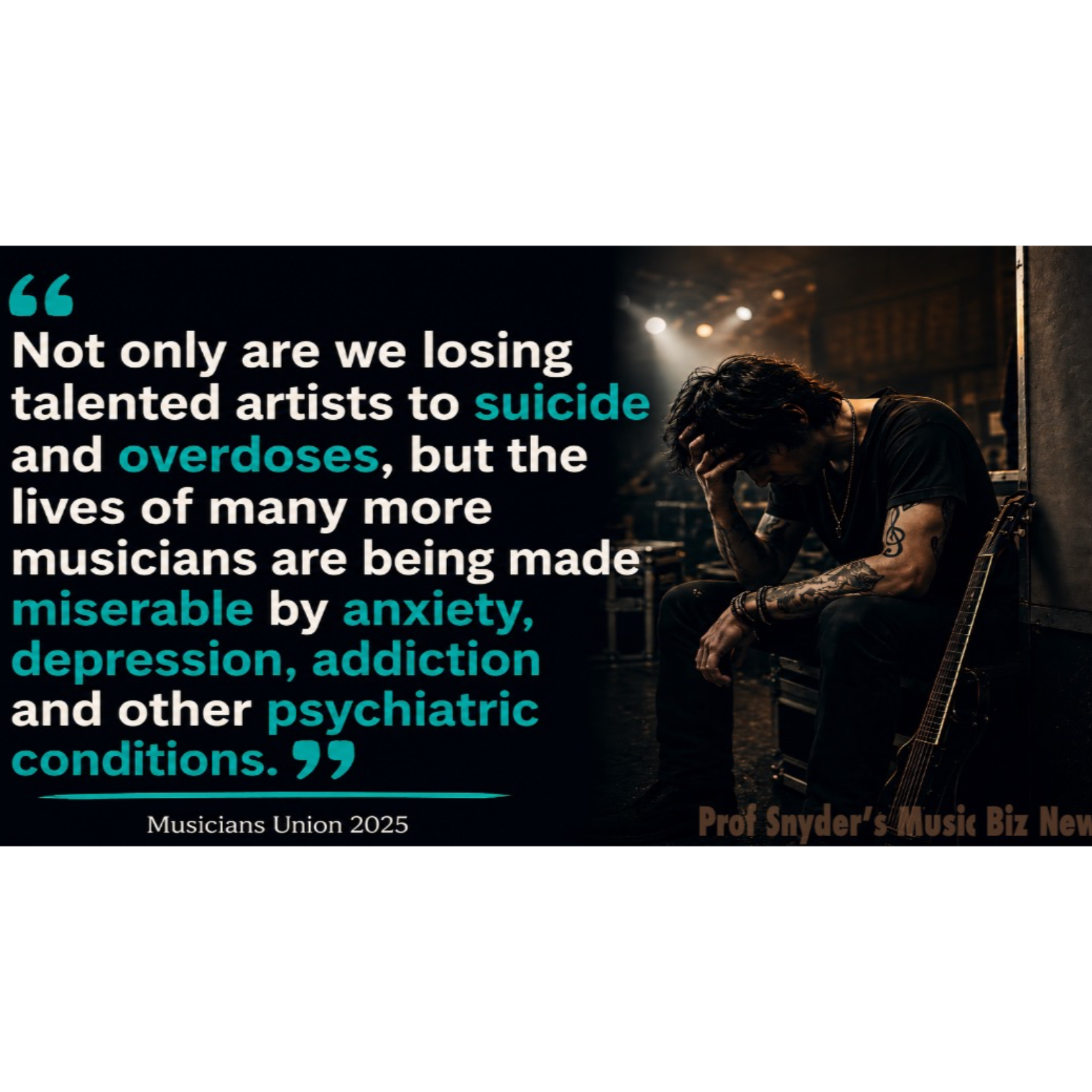
The 988 Lifeline. More Than Most, Musicians Need to Know.
May 2500:12:54Tap to summarize(May is Mental Health Awareness Month) It's not just Schumann, Monk, Cobain and Adele. It's the 1st Chair Violinist in your local orchestra, the flamenco guitarist in the Mexican restaurant, the roadie setting up the PA, the person on the rigs hanging lights, the piano major in college, the choir director at church, etc. Out of 100,000, 138 of them will commit suicide, The national average is 32 across all occupations (CDC report: Suicide Rates by Industry and Occupation. 2021). (This was before the increasing negative effects of AI on the music industry) Maybe if those 138 had just been made aware of the many free services available just for them...sources and links to support orgs: https://snydersmusicbiznews.blogspot.com/2026/05/the-988-lifeline-more-than-most.html
Transcribe →
Reanimated. Repackaged. Redeployed. By Agentic AI
May 1700:09:14Tap to summarizeGeorge Romero's Night of the Living Dead is in the public domain. (That's why I can use a screen grab and not worry about copyright infringement.) But Hal Roach made the zombies green and so created a derivative that he could copyright and make $ licensing. BMG's announcement about Synch + brought to light how agentic AI is replacing music supervisors and song pluggers. "AI tools analyze BMG’s repertoire of over three million songs and 200,000 production music tracks to find precise matches for film, TV, and advertising briefs." Those who opt-in to allow BMG's agentic AI train on their music should be aware of the results. AI training creates a permanent capability to generate unlimited similar works....derivatives that BMG owns, with nonstop countless derivatives of the derivatives that only create $ for the label. Once your song's DNA is out there, there's no pulling it back. Maybe even if you decide to later opt-out. (Be sure to read the license you grant. Even better seek legal counsel). "While the “ethical” data training touted by some in the music industry may provide certain compensation in the short-term for the music on which these models are licensed, there are tangible long-term risks to production music libraries, composers and creators that should be considered." "It is not just about selling a song. It is about owning the source material, the derivatives, the licensing pathway, and the machine that helps produce the next wave of derivatives." Romero never made a dime on the derivatives of his creation. Will those who opt-in to feed AI? Sources: https://snydersmusicbiznews.blogspot....
Transcribe →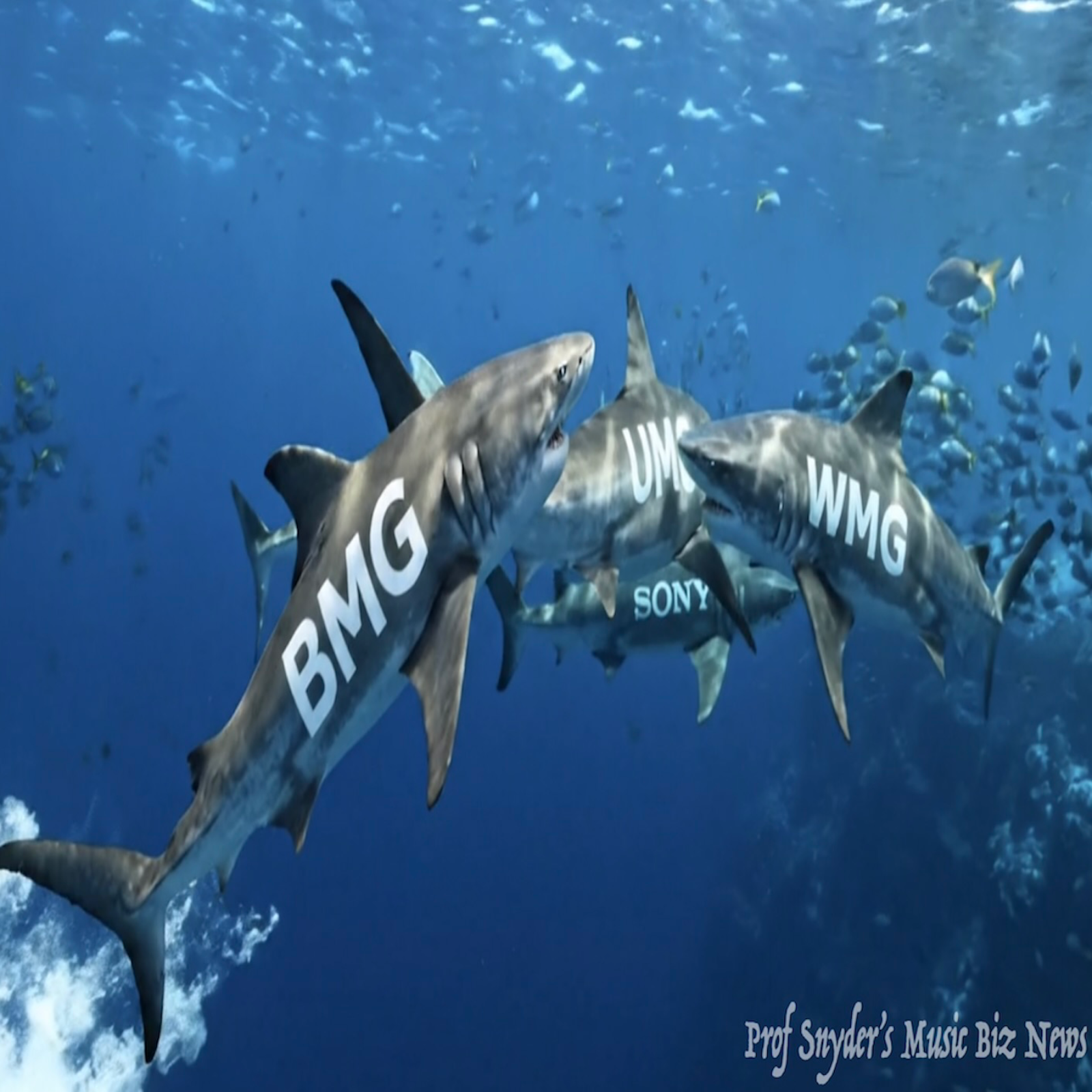
Another Shark in the Food Chain? The Big 4
May 400:08:56Tap to summarizeFor the last 14 years, the Big 3, the holy trinity SONY, WMG, and UMG have dominated the music industry, devouring all of the other labels, and scooping up music catalogs. BMG, once a major label itself, though seemingly disappeared, has been kept alive by its parent company Bertlesmann, and it has sprung back to life joining with the old jazz label, Concord. Both have been on a feeding frenzy of music catalogs owning 4.3 million songs, enough to claim a spot with the Big 3 labels ....(BMG would prefer to be considered the king of indies). Though the headlines have broadcast the merger and the major shift with the Big 4, most haven't noticed that BMG is just a small part of the Bertelsmann empire, that with the merger owns Penguin Random House, the largest book publisher, 10,000 plays and musicals including Hamilton and Rogers and Hammerstein's works, and even classic movies like King Kong, Citizen Cane, and It's a Wonderful Life. Along with the titles, Bertelsmann has large divisions of marketing, streaming, and yes...AI. Regardless if it's one of the Big 4, or King of the Indies, it has moved up the food chain, and will undoubtedly have a major impact on the music industry. Sources: https://snydersmusicbiznews.blogspot.com/2026/05/another-shark-in-food-chain-big-4.html
Transcribe →
Wild Free-Range AI Music Has Its Own PRO, Charts, Etc.
Apr 2400:10:22Tap to summarizeThe 1st AI Music Chart (versus Billboard charts) The 1st Performing rights Organization (versus ASCAP, BMI, SESAC) The 1st AI Streaming platform (versus Spotify) Just three of the parallel music organizations in the rapidly expanding AI music industry. (This is not an endorsement of AI Music...just reporting what I see) "A new music industry is being built—with its own rules, its own economics, and its own definition of success. And for the first time in modern history… That industry doesn’t need the old one to survive." ChatGPT Sources: https://snydersmusicbiznews.blogspot....
Transcribe →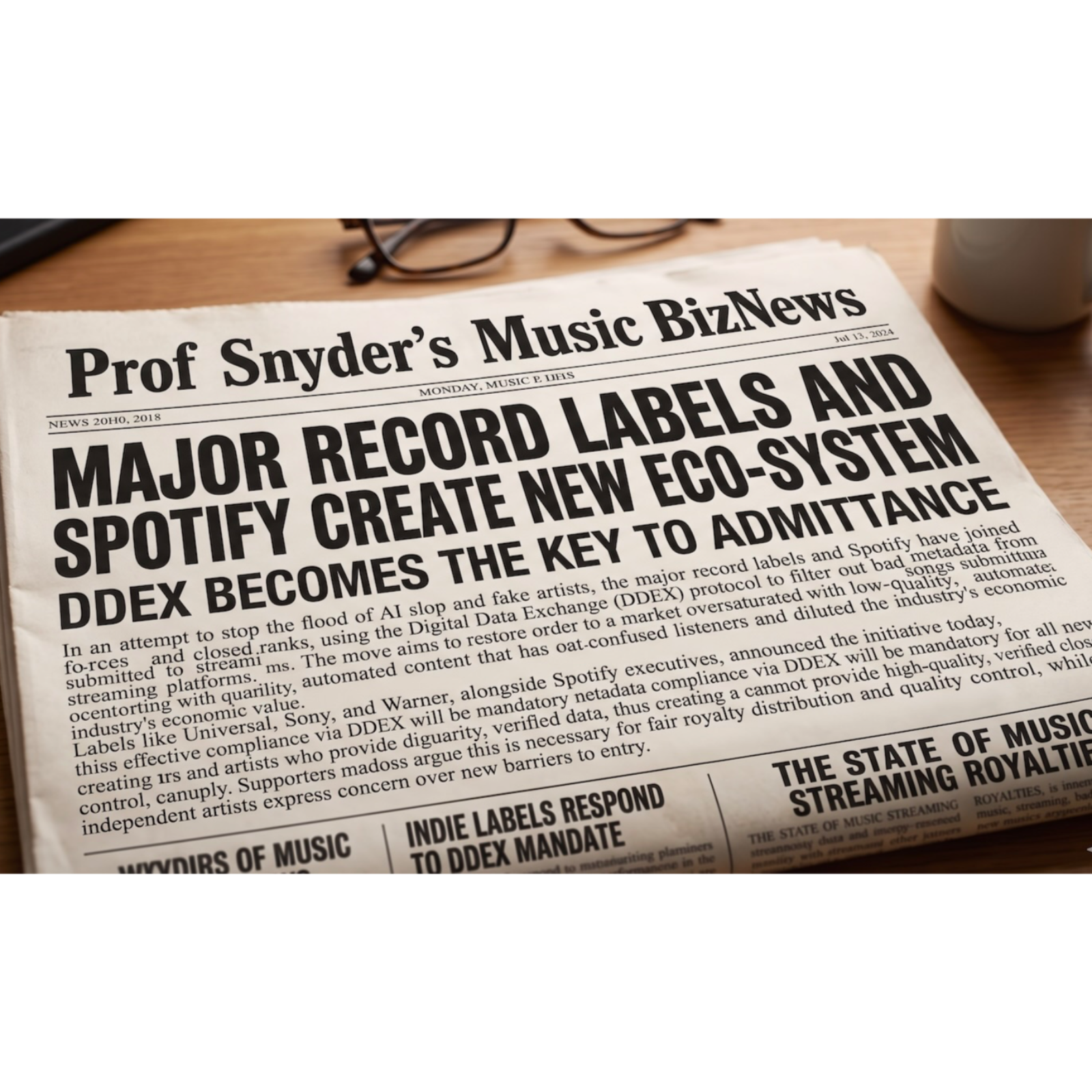
DDEX Adds AI Info to Meta Data: Now The Required Ticket Into The New Music Ecosystem
Apr 1500:09:59Tap to summarizeThis is the 3rd and last podcast linking 3 music biz events that I believe marks a change in access to the music markets. Indie distributors and labels being swallowed by majors, major labels and Spotify now allies working together to create an answer to AI music (and market control), and DDEX becoming the required meta data required for access to the new music ecosystem. DDEX has added AI descriptions into the Meta data of song files. Spotify and the major labels have adopted DDEX as the sole source of Meta Data Spotify requires to accept new uploads. While this will gratefully screen out false or misleading AI generated music, it also gives them control...they make the rules. Meta data has been a mystery to most musicians and who have left it up to distributors like Distrokid and Record labels to create and add meta data to their songs based on the accuracy and truthfulness of the artists' submissions. Most music companies accepted the data without question. Now, meta data comes into view with the dominant majors and Spotify creating a new collaborate music ecosystem controlling access to the market, with the DDEX standard becoming the sole accepted meta data source. Spotify's 'gatekeeper' now closely examines uploaded songs for DDEX before accepting them for streaming. Only labels and record labels can add DDEX data to your songs. While the accuracy of the DDEX data created by indie distributors and indie labels may vary based the accuracy of info when submitted by the artist, requiring closer examination, Spotify knows that music presented by the major labels in their new agreement is 'clean', with legit AI use of licensed music and accurate song info, so fast-tracks the music into the streams. It's imperative that musicians now learn the importance of meta data and providing accurate information when submitting a song to a distributor for upload to Spotify, publishers, etc. or risk their music being rejected. sources: https://snydersmusicbiznews.blogspot.com/2026/04/ddex-and-new-music-world-order.html
Transcribe →