← Proof: A True Crime Podcast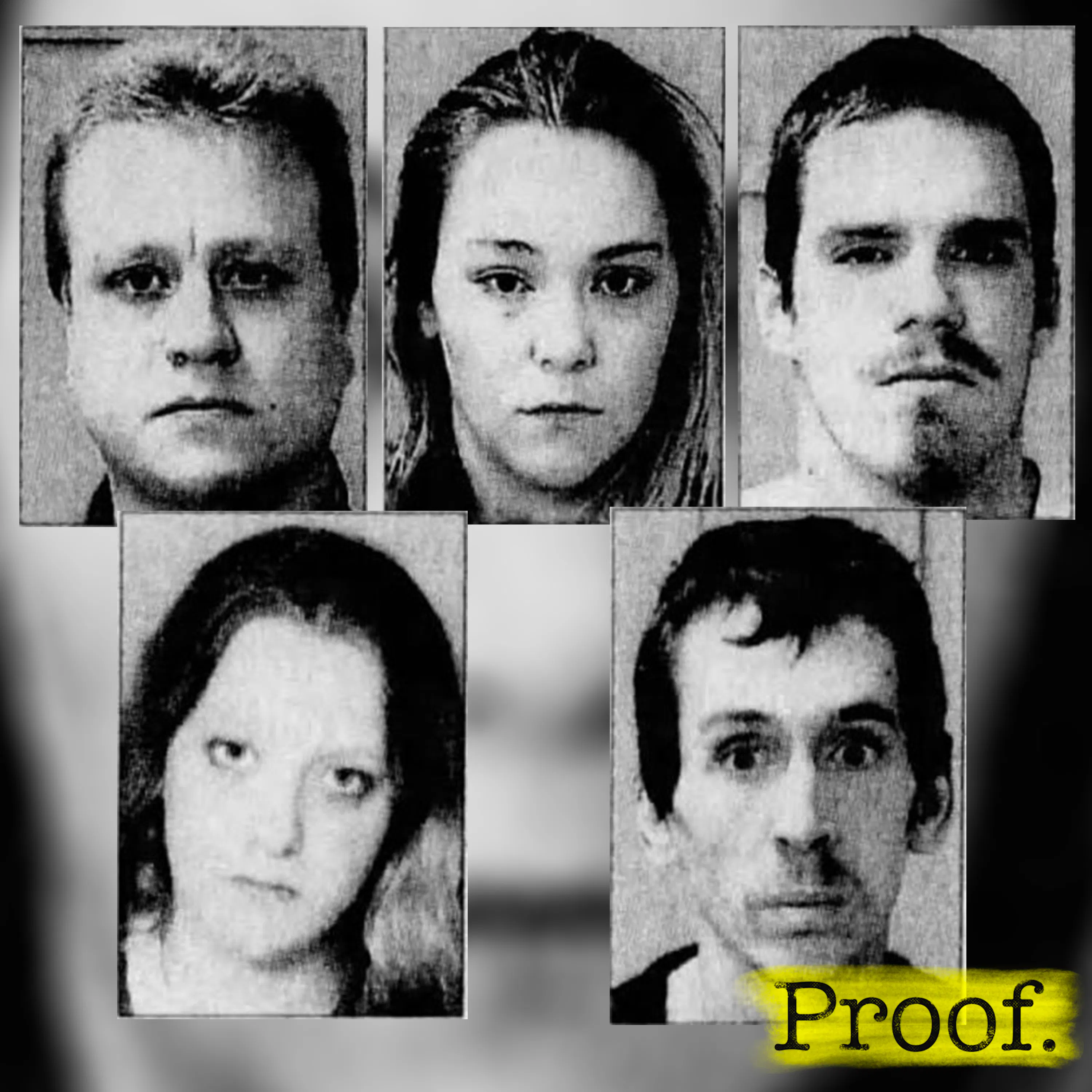
Proof: A True Crime Podcast
Murder at the Bike Shop | Ep. 9 – The Dilemma
01:09:28
Scott Baldwin said there were others like him—innocent people convicted by the Kalamazoo Cold Case Team. The Polderman murders could be the most troubling.
Loading summary
Transcript278 lines
- [00:01]
A
Reggie, I just sold my car online. Let's go, Grandpa. Wait, you did?
- [00:06]
B
Yep.
- [00:06]
A
On Carvana.
- [00:07]
B
Just put in the license plate, answered a few questions, got an offer in minutes.
- [00:11]
A
Easier than setting up that new digital picture frame. You don't say.
- [00:15]
B
Yeah, they're even picking it up tomorrow. Talk about fast.
- [00:18]
C
Wow. Way to go.
- [00:20]
A
So, about that picture frame. Ah, forget about it. Until Carvana makes one, I'm not interested.
- [00:25]
D
Car selling made easy on Carvana. Pickup fees may apply. Hey, everyone. Before we continue with this episode, I want to tell you about another podcast. Have you ever wondered what it feels like to watch your house burn down or be attacked by an alligator? Or learn that your spouse hired someone to kill you? If you're dying to know, then what Was that Like? Is the podcast for you? What Was that Like? Is filled with real stories about the most surreal experiences of people's lives. On the show, host Scott Johnson dives deep with his guests into the unbelievable situations they found themselves in, like animal attacks, plane crashes, winning, the Price is Right, and more. The show brings you tons of completely surreal, completely true stories, all told through the lens of the person who actually experienced it.
- [01:11]
C
Check out some of these episodes about wild and gripping stories to gain some insight on what it was like to, say, be a professional bridesmaid or lose a leg in a shark attack.
- [01:20]
D
Susan, I think you'd be a really good professional bridesmaid.
- [01:23]
C
And you'd be really good losing a leg in a shark attack.
- [01:24]
D
Oh, gee, thanks.
- [01:28]
C
So if you want to hear some disturbing and inspiring firsthand stories, you need to check out what was that Like? Every story is thoroughly researched and fact checked. So, you know, even the most bizarre tales are someone's reality. Listen to what was that like on Apple Podcasts, Spotify, or wherever you get your podcasts. Before he died, Scott Baldwin told us that he knew there were others like him out there in the Michigan prison system. Others who were convicted by the Kalamazoo cold case team, but who were innocent.
- [02:00]
B
How many other cold cases or people are going to come forward and go, hey, man, you need to look at my shit because I didn't do it. How many others are going to do that? How many more do we have?
- [02:10]
C
We already know Jeff Titus was wrongly convicted by the cold case team. And if it's just Jeff, well, then that's tragic. But these things happen. What if it's not just Jeff? If there are more cases that the cold case team got wrong, then we're no longer talking about an isolated event. That's why Scott thinks the System couldn't accept that he was innocent, too. Because if he was, then what the hell happened in Kalamazoo? What had the cold case team done?
- [02:41]
B
Look how many cases they solved in that short a period of time and how many have questions. I believe they're afraid of what they're about to open up. It's going to cause a flood effect. And that means they have to point one hell of a big finger at somebody and say, yeah, this was wrong.
- [03:01]
C
As you've heard this season, we have questions about many of the Kalamazoo cold cases. But what happened in the cold case team's final investigation may be the most troubling case of all.
- [03:17]
B
There was a. What was in Kalamazoo called the Polderman murders, another cold case.
- [03:25]
C
The Polderman case was a horrific triple homicide of three senior citizens slaughtered in their own home. It went unsolved for seven years, but then the cold case team took over and broke the case wide open. Not only did they convict someone for the murders, they convicted five someones based on a story that is contradicted by everything found at the crime scene and by all the physical evidence.
- [03:51]
D
What do you know about the Polderman case?
- [03:53]
B
Joe Williams was one of the guys that was convicted of it, and Joe was here. We called him Joe Dirt, actually was his nickname. He looked like Joe Dirt.
- [04:01]
D
The guy you knew, Joe Dirt. Did he admit to it or did he say he was innocent?
- [04:07]
B
He said he was innocent. He got set up by people that Ricky set him up. He's like, I had nothing to do with everybody saying Ricky did it.
- [04:16]
C
The Ricky that Scott's talking about here is Richard Vindeville. We know from police files that Vindeville was in fact, an informant for cold case detective Mike Werkema. Though in prison, Vindeville had told Scott a slightly different version of that story.
- [04:31]
B
He told me that he was confronted by work of mine, told about a couple cases, and told to go get information about those cases and report it back to him. And he said he couldn't do that. That would be snitching or ratting.
- [04:43]
D
Do you think he did? Do you think he was a CIA?
- [04:45]
B
I know he did.
- [04:48]
C
Vindeville did give information on several different cold cases. And In February of 2007, he gave info on the Polderman case, a case where he himself had been the lead suspect for five years. Prosecutor Scott Brower gave him use immunity to do so. That meant what he said could never be used against him, but it could be used against whoever he accused. That's When Vindeville told detectives the five people who had committed the crime. And how, you might ask, did Vindeville know who had killed the Poldermans? Well, Cold Case detective Rich Madison explained
- [05:28]
A
he was there. He admitted that he had ridden out there on a dirt bike and watched from a distance and had turned them onto it.
- [05:41]
C
Vindeville told detectives that on the day of the murders, he had secretly followed the five defendants to the Polderman's house. That's how he knew they'd done it. Since Findeville was an eyewitness, you'd think he would have been called to testify at trial. But he didn't appear at a single proceeding in the Polderman case. Instead, the prosecution's case was based entirely on the Polderman defendant's own statements, their own words. Because detectives had interrogated the five people Vindeville named again and again until, by the end, four of them had confessed. The methods by which detectives got these confessions are alarming in themselves. But just as alarming is how the detectives either didn't notice or didn't care that the confessions made no sense.
- [06:32]
B
I want to die in prison for something I didn't fucking do. No, you're not going to die in prison for something you didn't do. You guys don't understand. I don't understand either, Joe, but we're gonna get you out. You didn't do anything, okay? No, it's not okay. I'm not okay, neither.
- [06:54]
C
This episode is the story of the Kalamazoo Cold Case team's final investigation and how a wild tale told by an unreliable informant led to five convictions that never should have happened. I'm Susan Simpson.
- [07:17]
D
And I'm Jacinda Davis.
- [07:19]
C
I'm an attorney and investigator.
- [07:21]
D
And I'm a true crime TV producer.
- [07:23]
C
And this is Proof. Season three, Murder at the Bike Shop. Proof is a Red Marble Media production in association with Glassbox Media.
- [07:32]
D
New episodes are released on Mondays and on Thursdays. You can catch our sidebar episodes where we talk about the case, talk to guests, and tell you more about what's going on behind the scenes.
- [07:47]
C
This is episode nine, the dilemma.
- [07:56]
B
Do you understand how long 18 years is? 18 years ahead of.
- [08:03]
D
That's Joe Williams. He's currently serving three life sentences, plus another 14 years for perjury for denying under oath that he'd committed the Polderman murders.
- [08:14]
B
Every day is a new struggle just to. Just to wake up and try to fight. And then knowing that almost every path I take ends up being a dead end.
- [08:26]
D
Did you have anything to do with the Polderman murders?
- [08:30]
B
No, absolutely not. I'm a lie to say, but that's not one of them. I was a drug addict and a thief, but I'm not a killer.
- [08:41]
D
Joe had a drug addiction and a history of funding it by shoplifting, stealing out of cars and committing retail fraud. Nothing like murder, nothing violent. But he'd been in jail before. In fact, he went to jail for check forgery a couple weeks before he became a suspect in this case. So all of his phone calls were recorded. We can hear his reactions in real time to what was happening to him. Like when he called his mom after finding out he was now a suspect in the Polderman murders.
- [09:14]
B
There's all kinds of bullshit. I don't know what the fuck's the truth. I'm being accused of the most heinous crime in history of fucking Kalamazoo ever. They've told me this is the most horrible thing to happen in Kalamazoo. But you weren't in there. I know this, but they don't. How the fuck am I gonna prove it? I have no alibi.
- [09:34]
D
The Pulderman case was one of the most heinous cases in Kalamazoo history. Three senior citizens brutally killed in their own home in the middle of the day. And the case had gone cold for seven years. There was a lot of pressure on the police to get it solved. Here's prosecutor Scott Brower in one of his opening statements explaining how the five defendants had initially got away with the crime, but finally got caught.
- [10:03]
A
A wall of lies and deceits had been built to hide the truth. But the police were able to chip away at the wall. Their secret had been this. That the five of them had planned the home invasion of the Polarman home, that they brought weapons with them, and that they were responsible for unmercifully beating and stabbing to death 93 year old Marina Spohlerman, his 91 year old wife Sari, and their 62 year old daughter Hannah Lewis.
- [10:48]
D
That wall of lies and silence had finally broken when four of the five defendants confessed to the murders. That's how the arrests were made. But were those confessions actually true?
- [11:01]
C
It's hard to believe that four people would falsely confess, I guess.
- [11:05]
D
But it's happened before.
- [11:06]
C
It's happened before.
- [11:09]
D
That's Olivia Vigiletti from the Michigan Innocence Clinic. She's Scott Baldwin's attorney and also the attorney for Joe Williams. There's all these different reasons people falsely confess. And it's happened many times in really brutal cases like this, where you wouldn't think they would confess to something so heinous. Olivia believes the Polderman defendants are victims of false confessions, that the many stories of how they had committed the murders were just made up.
- [11:38]
C
How hard of a hurdle is that to get past for a defense?
- [11:41]
D
Yeah, false confession is really, really difficult because the public does not agree that people would confess to something that they didn't actually do. I think even for me, it was one of sort of my hardest mental hurdles to overcome in doing this work. And it's only because I've seen it so many times that I now do believe it.
- [12:03]
C
As we've heard in other Cold Case investigations this season, just because someone says something happened doesn't make it true. Just because Stacey said Scott Baldwin had a bank bag stolen from the bike shop doesn't mean he actually did. Just because a woman claimed she'd had an affair with Patrick Mitchell and he'd confessed to her that he'd killed his girlfriend doesn't mean that woman actually knew him. Just because three jailhouse informants told the Cold Case team that Roberto Davanzo had confessed to them doesn't mean he actually had. And just because an eyewitness said he saw Hyland Sterling at the crime scene with longish hair doesn't change the fact that Hyland was completely bald. This same principle applies to confessions, too. Someone saying they did a crime doesn't mean they did if there isn't any other evidence to prove it. Because if the Polderman defendants actually did this murder, then how come none of them knew what rooms in the house the victims were killed in? How come none of them knew how the victims were killed or the weapons that were used? How come none of them even knew where the Polderman house was located? And how is it there's absolutely no physical evidence linking any of the five to the crime scene? Four of the Polderman defendants did confess during interrogations, and some of them allegedly also confessed to jailhouse informants and to acquaintances. But those confessions contradicted each other wildly. They didn't even name the same people. So why were detectives so sure it was the five they arrested who were responsible? We asked Detective Rich Madison what he thought. There's others who confessed. There's others who were said to be there that don't end up in the mix. Why this grouping and not a different grouping? How'd you settle on those five?
- [13:52]
A
They were always together. They lived together. I don't remember how their names came up. I really don't at this Point.
- [14:00]
C
The five people convicted of killing the Poldermans were Joe Williams, Andrew Miller, Brandy Miller, Ben Platt, and Angela McConnell. At various points, they'd all lived together off and on at a house on Steger Street. Four of the five were closely connected by marriage, family and kids. Joe Williams sister was married to Andrew Miller, who was the brother of Brandi Miller. And Joe used to date Angela McConnell. He considered her daughter to be his own. And Angela referred to Joe's mother as Mom. She often lived with his family. The fifth defendant, Ben Platt, was close friends with Joe Williams, though he didn't spend much time with the others.
- [14:42]
A
Did you ever have any doubts that those five. No, I did not.
- [14:44]
B
No.
- [14:45]
A
But that Richard. But that Vendeville may have been warned?
- [14:47]
B
No.
- [14:48]
C
Vindeville was Brandy Miller's boyfriend at the time and had previously been considered the lead suspect in the case. The official story told at trial, though, is that Richard Vindeville was an innocent victim in all of this, that he had only ever become a suspect because the Polderman defendants had conspired together to frame him. Unofficially. However, a lot of detectives suspect that Vendeville might have been more involved in this case than he's saying. I don't understand how the Polderman 5 could have been there but not Vendeville. It doesn't seem.
- [15:25]
A
Pullerman5 I like that those kids were controllable, too. I mean, you can see Vandeville, you know, just having his claws in them.
- [15:33]
C
After watching some of those kids interrogation videos, I have to agree with Madison. They were controllable. They weren't that hard to manipulate. These days when it comes to clothes, I am all about quality over quantity. I want my closet to have great, comfortable clothes that I love wearing. They're easy to find, and I'm not just digging through piles of laundry every single week.
- [16:10]
D
Is that why you love Quince so much?
- [16:12]
C
That is why I love Quince so much.
- [16:14]
D
If you don't know Quince, check it out. Quince makes high quality wardrobe staples using premium fabrics like 100% European linen, 100% silk, and organic cotton poplin, lightweight cotton cashmere sweaters. Perfect for the changing seasons and can't miss seasonal colors and print prints for spring. Versatile, well made pieces that make getting dressed simple. But even with so many colors to choose from, there's nothing wrong with sticking with the basics. Like the heather charcoal lightweight cotton cashmere V neck sweater I just ordered.
- [16:46]
C
So stop waiting to build the wardrobe you actually want. You don't need a closet full of options. You just need pieces that work right now.
- [16:52]
D
Go to quince.com proof for free shipping and 365 days return.
- [16:57]
C
Go.
- [16:57]
D
That's a full year to wear it and love it. And you will now available in Canada too. Don't keep settling for clothes that don't last, go to Q-U-I-N-C-E.com proof for free shipping and 365 days returns.
- [17:13]
C
That's quince.com proof. Jacinda what's the one thing we need the most during the podcast season?
- [17:24]
D
Anything that helps make our lives happy, easier and more simple. And that includes food and meal prep.
- [17:31]
C
Yeah, the only reason I'm not eating just like instant noodles the entire podcast season is thanks to Green Chef.
- [17:36]
D
Yeah, same here. It's the only reason I'm eating healthy. Green Chef Box delivers certified organic produce and responsibly source proteins and seafood. That means avoiding ultra processed fillers, which would be my go to if I didn't have Green Chef.
- [17:51]
C
Green Chef cuts through the noise as the trusted authority in clean eating, delivering only real farm sourced ingredients. Green Chef is convenience made simple. Take control of your health without the
- [18:01]
D
stress and you can trust every bite with over 40 clean, customizable weekly recipes designed to give you peace of mind.
- [18:10]
C
So head to greenchef.com 50Proof and use code 50Proof to get 50% off your first month. Then 20% off for two months with free shipping. That's code 50Proof@greenchef.com 50Proof.
- [18:27]
D
When you manage procurement for multiple facilities, every order matters. But when it's for a hospital system,
- [18:33]
A
they matter even more.
- [18:34]
D
Grainger gets it and knows there's no time for managing multiple suppliers and no room for shipping delays. That's why Grainger offers millions of products in fast, dependable delivery so you can keep your facility stocked, safe and running smoothly.
- [18:49]
C
Call 1-800-granger.
- [18:50]
D
Click granger.com or just stop by Granger for the ones who get it done.
- [19:00]
C
The only Polderman defendant who never confessed to participating in the murders was Joe Williams.
- [19:09]
B
As you read, you'll see I never blamed anybody. I never said anybody did it because nobody ever told me that they were involved.
- [19:18]
C
Joe's co defendants all did confess, though they all accused other people as well. But why would they have confessed if they weren't actually guilty? Joe has had a lot of time to wonder about that.
- [19:31]
B
I've been trying to figure out shit for 18 years now. I still don't know what to think or say or believe or hard. Fuck. I don't even Understand how I got convicted. I don't understand how, if they didn't have nothing to do with that, why they would confess.
- [19:52]
C
It can often be hard to understand why someone would falsely confess to a crime they didn't commit. But in the Polderman case, I actually don't think it's hard to understand at all. Do you know what prisoner's dilemma is
- [20:08]
B
called? Prisoner's dilemma.
- [20:11]
C
The prisoner's dilemma is a thought experiment. It asks, given certain conditions, would a rational actor confess to a crime? In the Polderman case, the detectives created a prisoner's dilemma where if the defendants believed what the detectives told them was true, then the only rational choice was for them to confess. Because here were the terms of the dilemma that they set out. If none of the defendants confessed, they would all walk free. There's no other evidence to charge them with. But if any one of them did confess, then all the others who didn't would likely be convicted and sentenced to life in prison, while the confessor would only serve a short sentence or maybe even no sentence at all. And then the detectives took this one step further. They lied to each of the defendants and told them, your co defendants have already confessed. The game is already lost. Your only choice now is to confess to and get a deal or to be the sucker who dies in prison. In the interrogation of Joe's co defendant, Andrew Miller, you can hear the detectives lay out the stark terms that were being offered.
- [21:26]
A
Ben's telling on Joe, and Joe's telling on Ben. Angela's telling on Brandi. Brandy's telling on Angela. Rich is telling on everybody. But you have a problem because you won't even fess up to that because I didn't do it. And I know that's a lie. Andrew, I'm convinced that you were out there. You gotta take care of yourself right now.
- [21:48]
B
I know, but I don't have nothing
- [21:49]
A
to take care of, okay, Andrew, I'm really serious, guys. The jury's gonna take that and wipe their ass with it. Why? Because that's what juries do for lying motherfuckers. Everybody else has cut deals. That's gonna cause problems for you in particular. Bullshit. A lot of people get prosecuted and go to jail for the rest of their life on bullshit, okay? Is that what you guys are trying to do to me or something? Your defense attorney is gonna say, motherfucker, you got a problem. You got a problem because these motherfuckers are telling on you. These people are all gonna get deals. They're gonna get a lower sentence. To people that are not telling on people. The accessory after the fact, okay? Limitations. Already wrote down on it. Nobody can be held culpable for cleaning cars, burning certain items out of the car and all that type of stuff, okay?
- [22:54]
C
The offer made to Andrew Miller was simple. All he had to do was confess to helping the others cover up the murders. Confess to being an accessory after the fact. And because the statute of limitations had run out on that offense, he couldn't be charged with it. He could accuse the others and walk free. Or so the detectives told him anyway.
- [23:20]
A
Accessory after the fact. I'm not gonna sit there and when
- [23:24]
C
I didn't do something, gonna sit there
- [23:26]
A
and say, oh yeah, oh yeah, got some clothes and there's whatever accessory app.
- [23:32]
C
Even though I don't get in trouble
- [23:34]
A
for it, if I didn't do it, I'm not gonna say I got it.
- [23:37]
C
I had no.
- [23:37]
A
Nothing to do with it. I have nothing to do with it.
- [23:39]
D
Okay?
- [23:39]
A
Now you going to stick with that?
- [23:41]
C
I am. That's what.
- [23:42]
A
I have no involvement in it. Okay? If you stick with that, you're why? If you stick with that, because of our rules, because what we know, it's not the truth. True.
- [24:01]
C
Here's the thing about the prisoner's dilemma that the Polderman defendants were offered. If the defendants believed the detectives, and they did, then whether they personally were innocent or guilty was irrelevant. The stakes were the same either way. Whether they'd done the crime or not didn't change anything. The choice became do you save yourself by claiming to know something about the murders, or do you deny knowing anything at all and doom yourself to die in prison? You might be thinking to yourself right now, I'd never confess to a crime I didn't commit. But when the difference between you walking out of that interrogation room to go home and you never going home ever again is whether or not you're willing to say a few simple words. Are you so sure you wouldn't say
- [24:50]
A
them when you're on the way? You do a fuck away from prison ain't. Or then you'll believe me. If you were involved in portion of this, tell us. I haven't been involved in any of it.
- [24:59]
C
Okay?
- [24:59]
A
It's important.
- [25:00]
C
I know it's important.
- [25:01]
A
And I want to do anything I can to clear anything up.
- [25:06]
C
About six hours later, Andrew Miller did confess.
- [25:14]
D
To understand how the Polderman defendants were arrested in 2007, we have to go back five years to 2002, when Richard Vendeville was arrested for breaking into a garage and stealing A purse. Because Vendeville got caught. He had the victim's credit cards and driver's license in his pockets. But when they tried to question him, Bendeville just kept saying over and over again, I need to talk to Detective Werkema from the Cold Case Squad. Hey, I need to talk to Detective Workama from the Cold Case Squad. I've got info on a murder. Vendeville had traded information for favors before, and he was hoping to do it again. So Cold Case Detective Mike Werkema came out to speak to him. Here's Kevin reading a portion of his report on what Vendeville said.
- [26:04]
A
Richard Veniveville stated that he had information that could break the Polderman case wide open. Richard stated that he picked Joe Williams up close to the homicide on the day of the homicide and believes Joe Williams has involvement in the homicide, as well as another person who has confessed to him. Richard stated he didn't want to talk any further on the case until the prosecutor was involved in giving him some type of immunity.
- [26:32]
D
So why would Vendeville tell Detective Workima this story? Well, two reasons. We know from interviews with other inmates at the jail that while there, Vendeville had been telling them about the recently announced $20,000 reward in the Polderman case and how he believed he could exchange information about a homicide to get a deal on his burglary charges and reward money. And as for why he was accusing Joe Williams, well, Bendeville was really unhappy with him at the time.
- [27:04]
B
What made you say that? Rich thought Brandi and I were sleeping together back then. That's what the police said, too, because Rich said it.
- [27:12]
D
That's Joe Williams speaking to his mother, Barb, on a recorded jail call in 2007. Joe's mother had been very close to Brandi Miller, and she knew Vendeville. So she'd heard the talk before about Vendeville's jealousy of Joe.
- [27:28]
B
Yeah. Cause Rick was always questioning me. How come Brandi looks at you and smiles? Why is Brandi so sweet to you? Why are you so sweet to her? You know, everyone saying sweet. Are you fucking her? Why? Brandi's always nice to you? Always worried about you,
- [27:44]
C
like, no, I
- [27:44]
B
ain't fucking her, dude. You better not be,
- [27:49]
D
Richard Vendeville has often been described as paranoid. But it turns out he was right about this one.
- [27:57]
B
And then we found out he got pissed.
- [28:01]
D
In fact, Joe Williams didn't know it until he was charged in the Polderman case. But Vendeville had accused Joe of all kinds of crimes after his arrest in May 2002. Not just the Pulledeman murders. He also claimed it was Joe who had actually committed the burglary Vendeville was in jail for. Vendeville had merely been the lookout, he said. Joe told us there's no truth to any of that. So you weren't breaking into houses like Vendeville claims?
- [28:29]
B
No.
- [28:29]
D
Why do you think he said you two were doing that together?
- [28:33]
B
I have no idea why he would say we'd do them together. Rich and I didn't get along. We didn't. We never liked each other. We just associated because of, like, ties, I guess. Family ties. I would describe it because Brandy and Andrew were brother and sister, and he was over there that partying with Andrew.
- [28:57]
D
Richard Vendeville's plan to implicate Joe Williams ended up backfiring after hearing from Vendeville. Werkema went to speak to Vendeville's girlfriend, Brandi Miller, to try and verify Vendeville's story. And at first, she actually backs him up. Oh, yeah, she tells Werkema, Vendeville told me, too, that he had information about the Polderman case. He's interested in the reward. But then things between Vendeville and Brandi start getting messy. Like, really messy. It's not clear if it's because of Brandi's new relationship with Joe, but either way, Brandi and Vendeville both start accusing each other of all kinds of things. Vendeville says Brandi is abusing their son and gets Child Protective Services involved. Brandi says it was actually Vendeville who killed the Poldermans. In fact, she's the one who drove him out there that day. And, oh, yeah, he confessed to her that he killed those old people. We don't have a recording of Brandi's 2002 interviews, but here's her testifying at one of the Polderman trials about how she'd accused Vendeville of the murders. I said that I went out there
- [30:06]
C
and I dropped him off, and he was gonna go look for marijuana and that. Basically, I drove around for a while. I came back, and I seen him come out behind a tree, and he was covered in blood.
- [30:24]
D
The end result of all these back and forth accusations was Richard Vendeville became the prime suspect in the PMAN murders, but he wasn't charged. The case against him fell apart when Brandi recanted. Here's Brandy testifying at one of the Polderman trials when asked to explain why in 2002, she'd accused Richard Vendeville of killing The Poldermans.
- [30:47]
A
You made a statement, in fact, implicating Richard Venable, is that right?
- [30:51]
C
Yes.
- [30:52]
A
Why in May of 2002, make the statement that you had dropped Richard off in the area?
- [30:59]
D
I wanted to get back at him after I had our child. The guy beat me, stalked me, was
- [31:13]
C
very violent,
- [31:17]
B
dragged me down as a person.
- [31:19]
C
Just. He put me through a lot of things. I made up a story that myself and Richard Vendeville at the time, went out to the Perlman's house and that he did it. So because he was a bad boyfriend,
- [31:36]
A
you put a triple homicide on him?
- [31:38]
C
Yes, I did.
- [31:44]
D
Richard Vendeville recanted, too. Here's what was written in the police report.
- [31:50]
A
Bendeville says he told the police about picking up Joe out near the Polderman's house, but said that was a lie. He said that he made it up for a chance on getting probation on his charges and for the reward money.
- [32:11]
C
With Brandi recanting, Ventiville couldn't be charged in the Polderman case, but he was still in jail for the burglary, and he was charged with home invasion, first degree. He was convicted and sentenced to 20 to 40 years in prison. But that wasn't the end of the Polderman case.
- [32:31]
A
This is Lieutenant Werkema, Detective Sergeant Rich Madison. We're about to make contact with Brandy Miller regarding the Polderman homicide.
- [32:40]
C
The Polderman case went unsolved, but for five years, Richard Vindeville had remained the lead suspect. And in January 2007, after taking over the case, the cold case team went to speak to Brandi Miller once again. Prior to vindeville's arrest in 2002, he'd been detective Werkema's cold case informant. But now Vendeville is the cold case suspect that Werkema's hoping to arrest.
- [33:07]
A
And I know because I spent a whole lot of time with him, as you know.
- [33:10]
C
Right.
- [33:10]
A
He's a very dangerous person.
- [33:13]
C
The case against Vindeville had stalled out five years earlier when Brandi recanted to make a case against him. Now the cold case team will need Brandi's help. They need her to unrecant and go back to the statement she made in 2002 about Vindeville going to the Poldermans house and coming back covered in blood. But Brandi tells them none of that actually happened.
- [33:37]
B
Honest to God, I don't know anything.
- [33:39]
C
And if I did, I would come to. Right for the first time.
- [33:42]
D
You did come forward, but it was a lie.
- [33:44]
A
Oh, was it?
- [33:45]
C
Yes, it Was. This is when the prisoner's dilemma begins for Brandi. The detectives tell her that they know what she said in 2002 was the truth. Because Joe Williams told them she'd confessed to him. She had told him everything.
- [34:05]
D
I never said anything to cause like that.
- [34:09]
A
He's willing to test it by take the stand and say you did. Yeah, we know the whole story. He puts you right there.
- [34:17]
C
The detectives are lying to Brandi here. They did talk to Joe. That part's true. But Joe didn't tell them anything about Brandi confessing to him. But Brandi doesn't know that.
- [34:29]
A
I'm telling you in front of a jury, you're going to be in a lot of trouble. It puts you in a situation without a question. But you are important to us.
- [34:39]
C
But I don't know anything. In this interview, Werkema told Brandi that if the detectives wanted to, they could consider her 2002 statement to be a murder confession. Brandi said she'd been an accomplice to a murder Bentonville committed, which makes her guilty of murder, too, potentially. But they don't want her as a suspect. They tell her they'd rather have her as a witness. And by the end of the interview, Brandi relents. She tells the detectives what they want to hear. Vendeville killed the Poldermans. Only the detectives tell her. That's not enough. Now. They now believe two people committed the murders, so they need Brandi to accuse someone else, too.
- [35:26]
A
You took two people out there that day. We already know that. Second person. Ben.
- [35:34]
C
Ben is Ben Platt. He was 20 years old at the time of the murders, and he's close friends with Joe Williams. After the Cold case team tells Brandi that they believe Ben Platt was out there with them when she drove Bendeville to the Polderman house, Brandi confirms for them, yes, Ben was there with us, too.
- [35:54]
A
It's a gigantic yelp. This is big.
- [35:57]
C
I just don't want to get in trouble with her. Three boys in the room playing around her. Brandi tells the detectives, I just don't want to get in trouble.
- [36:07]
A
You got your kit? This was a big hump I wanted to get you over.
- [36:15]
D
With. Brandi's story changing yet again, the detectives moved on to their new suspect, Ben Platt. When we spoke to Ben, we asked him about Brandy Miller and why she might have accused him of murder.
- [36:30]
B
We never. We never talked, really. She was with a guy named Richard Vanderbilt, and I think he was, like, a really jealous guy that didn't want anybody around her. So she was never around when he wasn't there. And she wasn't really allowed to even speak to other guys. I didn't really like Richard. I. I've never cared for that guy. Oh, he just kind of struck me as off. So
- [37:04]
D
Ben says he didn't really get along with Richard, who didn't even really know Brandy. But when the detectives came to interrogate him, he too confessed. He said the three of them had gone out to the Polerman's house that day.
- [37:20]
B
Did you do it? No, absolutely not. The thing is, people usually, you know, believe if you've been charged, you're guilty. And that's just how it is, you know, so. And your case is complicated by the fact there are numerous confessions. Have you watched the, like the interrogation tapes or anything? No, I wish. I've not gotten those tapes. Well, if you get a chance to watch that, you'll see
- [37:49]
D
Ben's interrogation lasted for over 16 hours. We don't have a recording of it. But the cold case team laid out the prisoner's dilemma once again. Brandy's already confessed everything to us. They told him, you're screwed if you deny you did this, then we'll charge you with murder too. But Ben had a possible way out. Because one thing the cold case team did when interrogating the Polderman defendants was to tell them about a recent high profile case. A guy named Randy Britton had helped someone move a body. And in exchange for testifying against him, Randy only got one year in jail. If Ben didn't want to die in prison, he just needed to be Randy Britton.
- [38:31]
A
He told me, the only way I can go home is if I admitted to this and I gave up Rich. So I let you give me a little bit of stuff and I just said everything. That way I would get it down days. One day.
- [38:50]
D
That's from Ben's third interrogation, one week after his first. In this interrogation, Ben repeats his prior confession about how him and Rich, Vendeville and Brandy all went out to the Poldermans and how after Venville had killed them all, Ben had gone inside and helped move the bodies. But the detectives tried to get more details from him about exactly what happened.
- [39:15]
A
Maybe you've already seen rich assault Mr. Poleman. So stuff started to hit the fan. And if he's inside and you see this van coming up the driveway, I mean, that had to really increase the price factor for you. So I think that that van arriving would really stick in your mind.
- [39:42]
D
Most of Ben's interview is full of incredibly long pauses. Just due to time, we're going to clean up those pauses, but they never go away. As you hear Ben in this interrogation, remember that he's actually pausing for long stretches before almost all of his answers, sometimes taking as long as 60 seconds before he comes up with an answer. Ben told us that's because he was trying to figure out what story he was supposed to be saying because he had no idea what had actually happened.
- [40:15]
B
If you could watch it, you would see, like, I didn't even have anything to tell him until they gave me something I was able to. Like, they were basically spoon feeding me the story the whole time.
- [40:28]
D
Most of the interrogation isn't even Ben speaking. It's just the detectives talking about the crime scene and him responding sporadically.
- [40:38]
A
Just tell us in a very short version what you seen when you first walked in. What did you see as far as where the bodies were at? It happened so quick. I can't. I can't remember when I seen the first one or not. And then the lady, the younger of the two, she was by the top of the stairs. I don't remember stepping over or anything to help. Okay, so as he told us that he helped Rich carry Mr. Pullman out of that back bedroom.
- [41:11]
B
Right? Right.
- [41:12]
A
And eventually, after moving Mr. Polderman down, he went back upstairs and helped him carry the younger of the two women down.
- [41:20]
C
I want to pause for a moment here. This detail about how Ben and Vindeville carried Mr. Polderman's body into the basement while Anna Lewis's body was at the top of the stairs might seem insignificant, but it's not. It's so wildly wrong, so impossible, that I can't understand how the detectives heard it and didn't know instantly. Ben's story was a lie that he has no idea what he's talking about here. First of all, Mr. Polderman was not killed upstairs. He was killed in the basement. His throat was cut, and he bled out there on the floor. Second of all, there's no way Anna's body was at the top of the stairs. There's hardly any blood on the floor there. There's a lot in the walls, but not the floor. And none of that blood belongs to Anna. She was stabbed twice with a large knife and her throat was cut. If her body had been there, her blood would have been there, too, but it's not. And thirdly, Ben's story about them carrying Mr. Polderman to the basement while Anna's body is still there at the top of the stairs makes no sense. At all if you look at the Polderman's home, the top of the basement stairs was a cross, cramped nook about 4ft wide, maybe between a kitchen, a bathroom, and a back door. And a vanity stool takes up some of that space. Anna was not a small woman, and if she had been there, she would have blocked the way through. The idea of two people carrying another body into the basement while she's lying there makes no sense at all. And if it did happen, Ben would have definitely remembered how difficult it was. Again and again throughout his confession, what Ben describes is at odds with the layout of the Polderman property and the known timeline of events. Almost nothing he says is consistent with either the crime scene or the prosecution's eventual theory of what actually happened. Ben didn't even know how the Poldermans were killed.
- [43:22]
A
And you still don't remember any slash marks in their neck?
- [43:25]
D
No.
- [43:26]
A
Were you ever aware that that had happened? No. Like I said, not until I spoke with you last week.
- [43:36]
C
The few details Ben does know about the Polderman murders seem to have come from detectives. And there's so much more that he does not know at all. So much more that he just gets wrong. But if Ben was lying about being involved, then why. Why make up a story about moving bodies if he didn't know anything about it? Well, that's not too hard to understand, actually, based on what detectives were telling him, if Ben believed what they were saying was true, then he only had two options here. He could make up a story about helping Richard Bendeville move some bodies and maybe get only a year in prison, just like Randy Britton had. Or he could continue to deny knowing anything about the crime. But since Brandi had already agreed to testify against him, he'd likely then be convicted and given a life sentence. So if Ben's goal was to not die in prison, then it's not a hard choice. And it's the same choice, regardless of whether he's guilty or innocent. Though if he's innocent, it does make it a lot harder to come up with a good story.
- [44:41]
A
And that's all we're doing, is we're just trying to match statements up. So, I mean, if you can't, it's okay. That's not gonna. It's okay. Don't kill your brain on it.
- [44:52]
D
This third interrogation, the one you're hearing now, began with Ben being asked to repeat the confession he'd made one week earlier about going to the Polderman house with Vendeville and helping him move the bodies after Vendeville had killed them. But then the interrogation took a bizarre turn.
- [45:12]
A
I wonder how you'd felt, if. How Brandy might have said that Joe was out there that day.
- [45:21]
B
What?
- [45:21]
A
I want to know how you would feel if I told you that Brandy said that Joe was out there that day with you guys. I don't know how I feel.
- [45:35]
D
The detectives hit Ben with their new theory. We know Richard Vendeville is innocent. They told him. In fact, we know that you, Joe and Brandi all conspired to frame him for the murders you committed. We don't know why the detectives were no longer interested in prosecuting Richard Vendeville, the man who had been the prime suspect for five years. That detail isn't recorded anywhere that we can find. But for some reason, the detectives no longer wanted Vendeville to be part of Ben's confession.
- [46:05]
A
Listen, I don't give a. I'm just gonna tell him, Rich. Franny said that she was covering for Joe this entire time. And gosh damn it, they had a thing. Yes, they were buddies. Rich was suspicious.
- [46:21]
D
Then, as far as we can tell, the detectives were lying to Ben. There's no recorded interview with Brandi at this point where she said anything about lying about Vendeville to protect Joe. She was still telling detectives she drove Vendeville out to the Poldermans and he came back covered in blood. But Ben didn't know that.
- [46:42]
A
Don't try to deceive us. I can't risk my reputation on putting the wrong guy in prison. Look me in my fucking eye. Brandy does not want to lose the chance of losing her kids. She's crying at night. It's fucking Rich and all that. She was fucking lying to me. And I fucking just asked her flat up and she told me that was fucking joke.
- [47:05]
D
If Brandi lies to us, the detectives told Ben, she'll go to prison and lose her children. She won't risk that. She will tell us what she needs to tell us to keep her kids. So you're screwed, Ben.
- [47:20]
A
When you put a bra in a fucking lick like this, the bra's the fucking weak link. Every time, brother. It's in every gosh damn rap song. Everybody knows don't put a fucking bra in. Bras are weak. Cause they love their kids more than their men. So is everything true other than that Rich is really joke? Or is this whole thing kind of fabricated? Oh, how are you? I know you hate me. I'm fucking good. But I'm throwing your life for you, man. I hate myself right now. Honestly, I wasn't there. And that's the truth. I made this stuff up. I let you lead me into it and let you give me a little bits and pieces of information. I thought maybe you guys would have figured that out and just been like, what?
- [48:14]
B
True?
- [48:16]
A
What are you saying? Well, I'm saying I let you lead me through the whole story. I was not there. I'm saying my statement. I gave you that to try and save my life. It never struck you as odd that he couldn't draw a picture of the inside of the house? I couldn't draw a picture of the inside of the house. I couldn't tell you where the bodies were until you told me where the bodies were. There's a reason for that. I wasn't. That I was trying to save my ass because I didn't have no alibi. And I figured my best bet was to go for something, anything, to keep me from doing the rest of my life in prison. That's the truth. I can't go through and do that all over again. All, okay, now I'm gonna put this guy here, and you guys want me to start over and, you know, change it up. I can't do it. I can't do it again.
- [49:18]
D
Just one week earlier, the detectives had convinced Ben his only chance of ever going home was to accuse Richard Vendeville. But for reasons that we still don't understand, the detective's focus changed suddenly. And now Ben was told his only hope of going home was to say Vendeville was innocent and someone else was guilty instead.
- [49:41]
B
That's when I was like, I'm done playing your game. But why did they change their mind about Vendeville? I have no idea. They never explained it.
- [49:50]
C
Ben recanted his confession, but that didn't matter. The fact he'd confessed to anything was enough to convict him, even though he confessed committing the crime with Richard Vindeville and was charged instead with committing the crime with four other people. So the detectives moved on to the next defendant, Joe Williams. He, too, was presented with a prisoner's dilemma. Afterwards, he'd called home from jail to tell his family what had happened.
- [50:20]
B
Thank you for using AT&T. Hello? Yeah, they're charging me with the murders. How, Joe, can they charge you? I don't know, but they are. Brandy said she see me. Brandy drove me. Ain't been out there, and I had blood on me. And that's what Ben's saying, too.
- [50:40]
C
The detectives were lying to Joe. Ben had named Vindeville, not Joe. And then he'd recanted But Joe didn't know that.
- [50:50]
B
They sold me pictures of these people, man. The most horrific and graphic thing I'd ever seen in my life. Real life. Shit.
- [50:59]
C
Joe was not actually charged with the Polderman murders at that time. The detectives didn't have enough evidence yet, but Joe now knew they were after him. A couple of days later, he called home again and found out that Angela McConnell, his ex girlfriend, was over at his mom's house. Joe's mom was like a second mother to Angela. And she often stayed there
- [51:23]
B
trying to charge me with this. I know. I seen the papers. I don't see how, Joe, how the could they charge you with it. Because Brandy said she seen me, that she drove me out there and I had blood on me when she picked me up. No, that's not what she told me. She told me that she drove Rich out there, and when he come out of the house, he was covered in blood. Well, now she's saying it was Ben and I that she drove out there. See, originally, she's. She drove Rich and somebody else out there. I will go to court. Like I told your mom, if you get hung for this, I swear to God I will kill Brandy. I will find a way to kill Rich. Well, that's what they're saying. And they want to talk to you, too. I didn't kill them people, Angela. I know you didn't, Joe. I didn't either. And they seem to think I had something to do with it, too.
- [52:14]
C
At the time of this phone call with Joe, the detectives thought Angela had maybe known something about the murders, maybe helped after with the cleanup. But she hadn't been a suspect. But then the detectives talked to Richard Vindeville, and he told them actually, Angela committed the murders, too. I saw her drive to the Polderman house with the others. So the detectives went back to Angela. It was her turn to be presented with the prisoner's dilemma. After the interrogation, she called home from jail and told her husband what had happened.
- [52:50]
B
But listen, this is what's going on. Ben and Joe are admitting to going out there, but Joe's saying I was with him. Now, listen. And because they would have charged you for that, they don't.
- [53:03]
C
Nothing.
- [53:03]
B
Don't admit to nothing. I'm not admitting to nothing. I don't know, but I'm so scared. Don't. Don't.
- [53:13]
C
Angela's husband was right. This was all bullshit. In reality, neither Joe nor Ben had ever mentioned Angela, and Brandy hadn't either. Not yet, anyway. But Angela didn't know that. And she confessed. She told the detectives all about the night she, Brandy, Joe, Ben and Andrew all drove out to the Polderman house. And how when they got there, all the lights were off and everything was dark. So they had thought no one was home. Which didn't make any sense. The murders had been committed in the middle of the day in broad daylight. But Angela didn't know that either.
- [53:53]
B
I don't know. I'm just so scared, though.
- [53:57]
C
So Angela confessed to going inside the Polderman house. But soon she recanted. She told her husband she'd made the whole thing up. And she was pretty sure the others had made up their stories too.
- [54:11]
B
None of us were there, baby. None of us. They can go to fucking. That's what I tried telling you. Swear to God, on my kids life. We weren't there. None of us were. Oh, somebody's talking, telling a whole different fucking story. I don't care what they're telling them.
- [54:26]
C
For months, Angela went back and forth, telling the detectives one version of a confession, then disavowing it, only to go back and tell the detectives a whole new confession. When she found out, though, that Brandi had taken a plea deal that would give her 15 years, maybe even less. In exchange for testifying against the others, Angela decided to take a plea deal too.
- [54:49]
A
Obviously, we're getting together today based on the plea agreement that you agreed to yesterday, to be completely truthful from that time forward. Okay? So we're just want to make sure that you understand. You gotta be completely truthful.
- [55:09]
C
Detective Madison told us about how both Brandi and Angela have been given an out on the murder one charges.
- [55:16]
A
And those girls, both Brandi and what was the other girl?
- [55:19]
D
Angela?
- [55:20]
A
Yeah, she had an out. I mean, Brandi was given the deal. And Angie, Angela had. I think it was.
- [55:26]
C
Man, she gave it up. She got the deal and she gave it up. She wouldn't testify.
- [55:30]
A
Angie.
- [55:31]
C
Yeah, she had the deal. And she said I was lying. I can't do this.
- [55:34]
A
Yeah, so she went to prison and died. I remember reading that she killed herself.
- [55:45]
D
Unlike Angela, Brandi did not withdraw her plea agreement. She did change her story about 20 different times though, to adapt to the detectives changing theories about the crime. And at trial, Brandi testified she'd been lying anytime. She claimed she didn't know anything about the murders. But in letters she wrote from jail, she said something very different. Somehow she seemed convinced that this problem they were all in was only temporary. Here's a letter she wrote to Joe's.
- [56:17]
C
Sorry, sorry, sorry. I don't want anyone to be mad or hate me after all of this is over. I just got so tired of all the bs. How is Joe doing? Hope he is okay. You know I miss him and love him too. A trap was set for me and I fell right into it. We are all going to be coming home soon because it is all a bunch of bs. I love you. Everyone just needs to keep hanging on and the storm will pass. P.S. we will be all home soon.
- [56:49]
D
We tried multiple ways to reach Brandi for comment but so far she has not responded.
- [57:06]
A
Close your eyes, exhale, feel your body relax and let go of whatever you're carrying today.
- [57:13]
D
Well, I'm letting go of the worry that I wouldn't get my new contacts
- [57:16]
C
in time for this class.
- [57:17]
D
I got them delivered free from 1-800-contacts. Oh my gosh they're so fast. And breathe.
- [57:23]
C
Sorry.
- [57:23]
D
I almost couldn't breathe when I saw the discount they gave me on my first order. Oh sorry.
- [57:29]
B
Namaste.
- [57:30]
D
Visit 1-800-contacts.com today to save on your first order.
- [57:34]
C
1-800-contacts new year, new me.
- [57:38]
A
Cute. But how about new year new money? With Experian you can actually take control of your finances. Check your FICO score, find ways to save and get matched with credit cards
- [57:48]
C
card offers giving you time to power
- [57:51]
A
through those New Year's goals. You know you're gonna crush start the year off right.
- [57:55]
C
Download the Experian app based on FICO scoring model offers an approval not guaranteed. Eligibility requirements and terms apply subject to credit check which may impact your credit scores. Offers not available in all states. See experian.com for details. Experian
- [58:06]
D
When a young woman's car is
- [58:08]
A
found abandoned on a New Jersey bridge,
- [58:11]
D
detectives want to know how did she simply vanish into the night?
- [58:15]
C
Nobody knew where she was.
- [58:17]
D
It was a 19 year old girl
- [58:19]
C
who would have normally been attached to
- [58:21]
D
her phone, and she was off the grid.
- [58:24]
A
Secrets, Trust, and a friend's ultimate betrayal.
- [58:29]
D
I'm juju Chang from 2020 and ABC Audio.
- [58:33]
A
Listen now to Bridge of Lies, wherever you get your podcast.
- [58:45]
D
Day by day, statement by statement, the cold case team built its case. Brandy confessed, then Ben, then Angela. They weren't done yet, though, because Richard Vendeville had told them he'd seen five people go to the Polderman's house that day and there were still two to go, Joe and Andrew. Joe's sister Nikki told him what she'd heard about the case the detectives were building against him.
- [59:12]
B
They brought Rich. Rich is up there somewhere and Rich is saying he followed behind you guys, because he was jealous of you and Brandy, afraid you and Brandy were gonna get together. It's a mess, Joe, with the shit hitting the fan big, I wish the police would know that they're digging in the wrong direction. Andrew and I didn't have nothing to do with his fucking murders. I know you guys didn't. I mean, yeah, we're both thieves and drug addicts and liars and, you know, but that's all.
- [59:37]
D
Again and again, the detectives kept going back to Joe Williams, telling him all his friends and family had already turned on him and that if he didn't turn on them in return, then they'd know it's because he's the real killer. Maybe you're the one that forced the knife into Anna's heart, one detective told him. Joe responded, I thought they were beaten. We don't have the recordings, but you can feel the detectives frustration bleeding through the pages of the transcripts. One detective tells him, fuck, we've been talking for fucking 14 hours one day. We talked for another fucking seven hours last night. We talked for four and a half hours today. But you can't get it through your fucking skull. Nothing. No matter how many times, though, just. Joe told the detectives that he wasn't involved in any murder. The detectives wouldn't believe him. And Joe told us he'd spent the last 18 years since then hoping someone finally would.
- [60:36]
B
I would die for people to believe me and to understand, to take an innocent person, anybody in the whole entire world. I would give my life up for them to live in my shoes for 10 minutes inside here, knowing what I know about my innocence, just so they could see the. Feel the agony. I'd give my life to prove my innocence.
- [61:03]
D
Shortly after Angela McConnell was arrested, Andrew Miller was arrested, too. When Joe next called home, his sister, who was Andrew's wife, gave him the news.
- [61:16]
B
Andrew's been arrested. What's Andrew in jail for? To hold him in. Brandy told the cops he was here, that he was there. Are you serious?
- [61:26]
C
Yep.
- [61:27]
B
Why would Brandi say Andrew was there? I don't know. He don't know. He's scared shitless right now.
- [61:34]
D
Andrew is Brandi Miller's brother. Brandi had not initially implicated her brother in any way. Not in any of her first five or six confessions anyway. But later, after Vendeville had accused Andrew and made him a suspect, the detectives go back to Brandi again. Richard, Vendeville's already told us everything they tell her. Tell us the real story. So Brandi changed her story again and told them she'd driven with Ben, Joe, Angela, and Andrew out to the Polderman house. They'd all gone inside while she waited out in the car. And when they came back, they were bloody. In letters she wrote home from jail to their mom and dad, Brandy explained her decision to accuse her brother.
- [62:23]
C
Hey, mom, you really know what it comes down to. Him or me. If I do what I am doing, he goes away and I come home someday. I surely didn't have three kids just so someone else can raise them. I'm not proud of what I'm doing, but my boys need me, Mom. Nobody will ever understand how it feels to be in the spot I'm in. So I'm sorry, but I pick myself and my boys over my brother. Is that wrong? P.S. sorry. The ink is smeared. I was crying, but I'm okay. Smiley face. Based on the statement that Vendeville had given while under immunity, the detectives interrogated Andrew. He was told it was in his best interest to go along with Vindeville's story because Vendeville had given him a way out. They say Vindeville said he was less responsible than the others.
- [63:22]
A
The bridge laid it out for me. I don't know what your role is, other than what Rich told me it was because Richard says that you were his soon to be baby's uncle, and he was looking out for you on that. Oh. Oh, my God. I heard at all. So I got to learn it all. You got to help us clear this up.
- [63:46]
D
I don't know.
- [63:47]
C
I don't.
- [63:48]
A
We talked about the cleaning up of the car, the cleaning up of the truck. I'm s. Lying. No. We want Andrew.
- [63:56]
C
The detectives told Andrew that they already knew all about how after the murders, he'd gone to Vindeville and asked for advice. How do we get away with this? Andrew asked him. What do we do? So Andrew's choice was simple. If he admitted to cleaning up the crime scene, to being an accessory after the fact, then the detectives couldn't charge him with anything. The statue of limitations had run out, they assured him. Or Andrew could admit nothing and die in prison.
- [64:31]
A
Because everybody is around you with their fucking pants down and pissing on you still. And you love it. I love it. Do you love it? No, I don't. Okay, then fucking wipe the piss off you and start fucking talking. I don't know.
- [64:44]
C
Nothing to say, though.
- [64:45]
A
And you got fucking problems. You got problems. If you decide to come clean with me here today, you will be back at your house this afternoon, relaxing. Clean. What he's trying to say is this is the calm before the storm of everything that's gonna be hitting soon. Okay? So it's like Andrew needs to take care of Andrew.
- [65:06]
C
We only have a recording of the first two hours of this interrogation. But by hour seven, Andrew had signed a confession. It detailed how, after the murders, Andrew had gone to Vindeville for advice on what they should do. On Vindeville's instructions, Andrew went to the store and bought Kaboom bathroom cleaner and a gallon of bleach. He grabbed a bucket and a scrub brush, and then he, Joe and Ben all returned to the Polderman house, where they spent an hour cleaning away every fingerprint and every trace of DNA they left behind. Just like Richard Vindeville had said to the detectives. He had told them he'd explained to Andrew how to clean the crime scene perfectly, how to ensure no trace of the five would ever be found there. And that's why no DNA or fingerprints from the five Polderman defendants had been found at the scene. Vindeville also told detectives that he'd explained to the five defendants how to leave decoy DNA behind to fool investigators making a turn. He'd called it. And Andrew, in his confession, confirmed that they'd followed Bendeville's instructions and quote, planted evidence with other people's fingerprints close to the victims. So that's why an unknown person's fingerprints were found at the crime scene and why in the grand where Marinus Polderman had fought with his attacker. An unknown man's DNA was found on a broken piece of rubber glove mixed in with Mr. Polderman's blood. Because criminal mastermind Richard Bendeville had told them to leave fake evidence behind to send detectives looking in the wrong direction,
- [66:52]
D
like Ben Platt and Angela McConnell. Andrew Miller recanted his confession. Here's him on the phone with his wife after he was arrested,
- [67:04]
B
scared, saying that all these people are pointing their fingers at you. You know, so fucking I was supposed to let him point it. Well, I didn't, you know, I started making up shit they're all fucking telling me, all giving me overdo, you know, all the answers and shit. Any stupid fucking idiot could have fucking made up a fucking story. That's the way they work, honey. They'll lie to you. They'll make you promises. They'll do whatever they can do. I just made fucking lies, dude. I know that.
- [67:40]
D
With Andrew's confession, the detectives finally had enough to file murder charges against all five of the defendants.
- [67:48]
B
Wouldn't die in prison for something I didn't fucking do. We're gonna kick you out. You didn't do anything. And I'm gonna prove it. I promised that with all my life. I will prove it. You didn't do nothing. And you're not gonna get railroaded for something you didn't. I'm all righty, Railroad. Don't you guys get it? I'm a fucking scapegoat. I'm a goddamn fucking sacrificial lamb.
- [68:24]
C
The Cold Case team started out trying to solve Kalamazoo's most notorious cold case by charging Richard Vindeville. But instead, they ended up believing Vindeville's claim that he knew who really had committed the murders, and they charged the five people he accused. Joe Williams, who never confessed, was convicted. So were Ben Platt, Andrew Miller and Angela McConnell, who all did confess, but then recanted by either not confessing or recanting. They all lost the Prisoner's Dilemma. All are serving life in prison, except for Angela, who committed suicide in 2023. Brandi Miller took a plea. She only served 12 and a half years and was released in 2020. 20. But she didn't win the Prisoner's Dilemma either. She just lost less than the others. Because when she initially confessed, she did so thinking it meant she wouldn't have to go to prison. But that wasn't the case at all. We still don't know what happened to the three members of the Polderman family who were killed. But I am confident it is not what any of the Polderman defendants described in their many confessions, because none of their stories match what was found at the crime scene. But even though the details in the case do not add up, when judges and juries hear that four people confessed to a murder, the details stop mattering, and so do all the unanswered questions. Unanswered questions, like what really happened at the Polderman house that day? And how did Richard Vindeville go from informant to suspect and back to informant again? So add another five Cold Case convictions to the list of cases we needed to investigate further. Before we close, though, a note to our listeners. We're taking a week off to do more investigating, but on Monday, March 30, we'll be back with a new episode. It will put us in Kalamazoo, where we'll keep looking for answers to what really happened at the bike shop and how it all went so wrong for some. SCOTT.
- [70:29]
D
Next time on Proof,
- [70:33]
A
you may have your focus on your suspect and continue to build the case that you believe that that individual may be involved, but just don't eliminate everything.
- [70:44]
B
It was about quarter to seven in
- [70:46]
A
the morning and it was summertime and it was unusual to see a car
- [70:51]
B
in the parking lot that early. I don't expect to see the owner
- [70:56]
A
there at that time or anybody else. Their aggressive tactics with this case that I was intimately involved in, it seemed like once they knew who he was, what he was in prison for, it was just a matter of find the trail that leads us there.
- [71:14]
D
Foreign. You've been listening to Proof, a podcast by Red Marble Media in association with Glassbox Media. Send us your questions and comments@proofcrimepodmail.com we'll respond during our bonus episodes. Proof sidebar on Thursdays. Kevin Fitzpatrick is our executive producer. Our theme music is by Ramiro Marquez. Audio production for this episode is by Michael Ulatowski, Michael Alfano, and Jesus Orbaez. Our social media manager is Leanne Cook. And thank you to our sponsors who make this podcast possible. Follow us everywhere with the handle roovecrimepod and on our website, proofcrimepod.com that's all for this week. Thanks so much for listening.