Podcast
Psychofarm Podcast
Hosted by Psychiatry, Skepticism, and Integration. · EN
PsychoFarm Podcast is a deep dive into the intersection of psychiatry, psychopharmacology, and the evolving understanding of mental health. Hosted by 2 psychiatrists, the podcast explores complex topics such as diagnosing mood and personality disorders, the role of medications in treatment, and the challenges of psychiatric training. Each episode breaks down the clinical insights and philosophical debates surrounding mental health care, providing both practitioners and curious listeners with thoughtful analysis, expert opinions, and practical advice.
psychofarm.substack.com
psychofarm.substack.com
33episodes
Episodes
Newest firstAll episodes
Mood Stabilizers for Bipolar Disorder: Lithium, Lamotrigine, Depakote & More
2d ago01:01:57Summary readyMood stabilizers for bipolar disorder can be confusing because lithium, lamotrigine, Depakote, carbamazepine, and oxcarbazepine have very different strengths, risks, and clinical roles. In this episode, two psychiatrists break down how they think about maintenance treatment, lithium dosing and monitoring, common side effects, lab levels, toxicity counseling, and medication interactions. They also compare Depakote for mania, lamotrigine for bipolar depression, carbamazepine’s interaction burden, and the potential role of oxcarbazepine. Along the way, they discuss combination treatment, diagnostic uncertainty, pregnancy and fertility considerations, rash counseling, and why effective bipolar care requires focusing on long-term episode prevention rather than the symptom of the day. This is a public episode. If you would like to discuss this with other subscribers or get access to bonus episodes, visit psychofarm.substack.com
Summary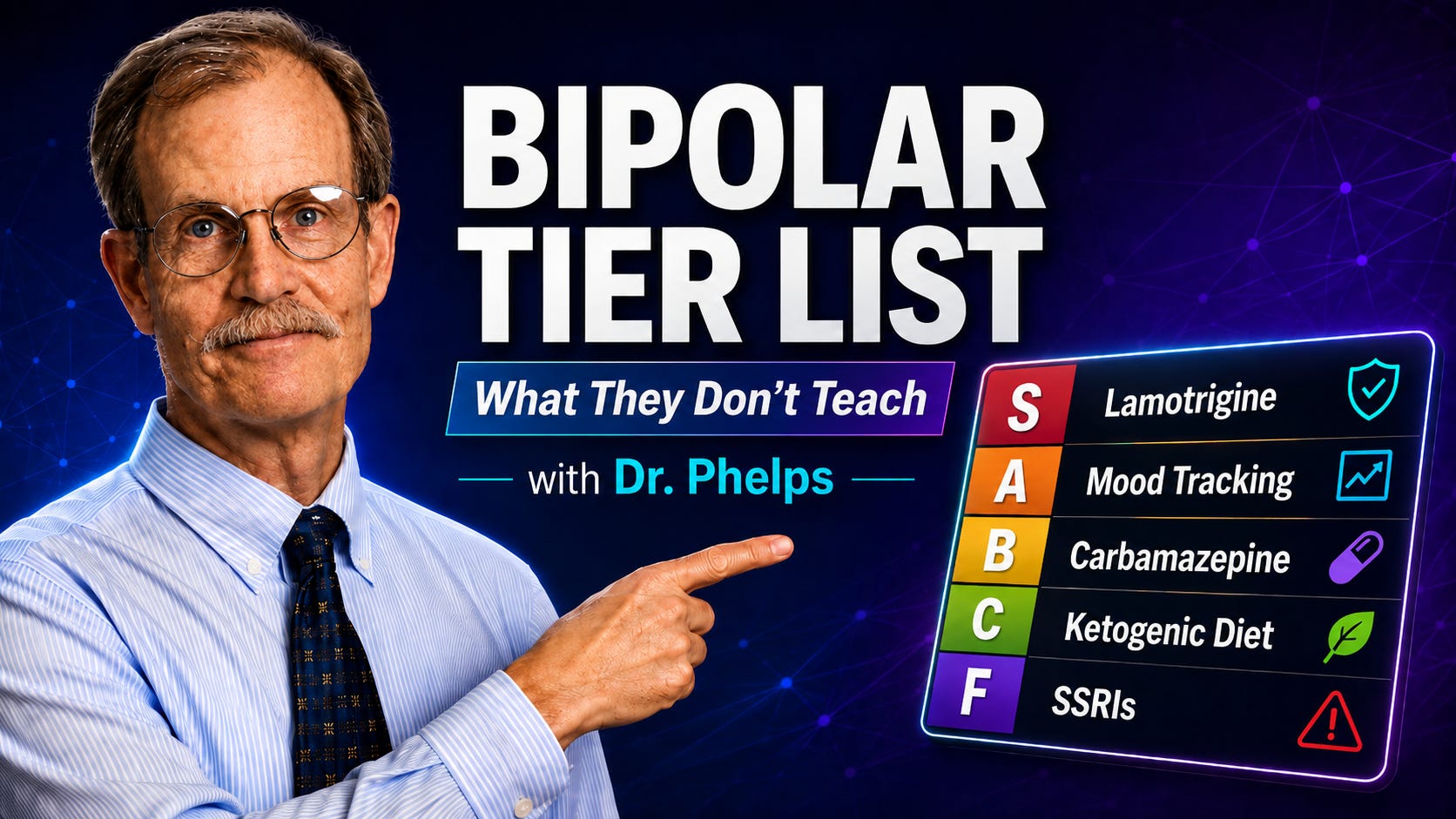
Dr. Jim Phelps’ Bipolar Treatment Tier List: Lessons from 30+ Years in Psychiatry
1w ago01:12:22Summary readyBipolar disorder treatment is put to the test in this clinically grounded tier list with psychiatrist Jim Phelps. He and Dr. Malzberg rank low-dose lithium, lamotrigine, social rhythm therapy, dark therapy, dawn simulators, antidepressants, carbamazepine, supplements, ketogenic diet, mood tracking, and group psychoeducation. Along the way, they discuss why sleep and circadian rhythm belong in the mood stabilizer conversation, how antidepressants may worsen cycling or mixed states, and why the long-term goal is not simply treating the mood of the day. The episode also explores practical adherence, bipolar comorbidity, passive sleep tracking, and underused nonmedication approaches.Dr. Phelps’ YouTube: https://www.youtube.com/@psycheducation This is a public episode. If you would like to discuss this with other subscribers or get access to bonus episodes, visit psychofarm.substack.com
Summary
Anxiety Medications Tier List: The Best and Worst Treatments for GAD
2w ago01:03:05Summary readyAnxiety medications tier list: two psychiatrists rank the treatments they actually use for generalized anxiety disorder… and the ones they avoid. The discussion covers first-line SSRIs, why buspirone may be underrated, when benzodiazepines can help or harm, and how to think about mirtazapine, hydroxyzine, propranolol, gabapentin, pregabalin, quetiapine, and bupropion. Just as important, the episode argues that “anxiety” is not a diagnosis: re-diagnosis, mindfulness, CBT and ACT principles, exercise, reducing caffeine or stimulants, and understanding avoidance may matter more than adding another prescription. The result is a practical, opinionated guide to anxiety treatment that combines evidence, clinical experience, side effects, dependence risk, and long-term recovery. This is a public episode. If you would like to discuss this with other subscribers or get access to bonus episodes, visit psychofarm.substack.com
Summary
Psychodynamic Technique and Therapeutic Intervention: Mirroring, Clarification, Confrontation, Interpretation
Jun 3000:40:02Summary readyPsychodynamic therapy interventions are the focus of this episode, organized through a practical levels framework for clinicians. Dr. Fu and Dr. Greg break down empathic mirroring as a way to keep the patient’s narrative moving, clarification as a tool for deepening detail, confrontation as a gentle way to point out patterns or discrepancies, and interpretation as the rare intervention that should come only after enough groundwork. Along the way, they connect these skills to diagnostic interviewing, medication management, forensic psychiatry, therapeutic alliance, and the difference between helping a patient talk more and pushing too quickly toward insight. This is a public episode. If you would like to discuss this with other subscribers or get access to bonus episodes, visit psychofarm.substack.com
Summary
ECT Treatment: When to Refer, Who It Helps, and What Actually Happens with Dr. MaryEllen Eller
Jun 1700:54:47Summary readyUnfortunately no Dr. Fu today, but Dr. Malzberg speaks with the wonderful psychiatrist Dr. Mary Ellen Eller, who walks through what modern electroconvulsive therapy actually looks like and when clinicians should consider it. The episode covers ECT history, stigma, seizure monitoring, memory concerns, side effects, and the real-world logistics patients face during a treatment course. It also explores where ECT fits in the algorithm for severe depression, depression with psychosis, catatonia, bipolar mania. The result is a grounded, clinician-friendly guide to a misunderstood treatment. This is a public episode. If you would like to discuss this with other subscribers or get access to bonus episodes, visit psychofarm.substack.com
Summary
Suicide Risk Assessment: Acute vs Chronic Risk, Formulation, and Suicidal Ideation Types
Jun 201:03:40Summary readySuicide risk assessment is often taught like a checklist, but this episode argues that the real work is formulation. We talk about why history is only the starting point, how acute and chronic risk differ, and why suicidal ideation can mean very different things depending on context. We cover stress-related suicidality, intoxication, baseline recurrent thoughts, mood and psychotic disorders, OCD intrusive thoughts, hospitalization decisions, red flags, countertransference, and documentation. The result is a practical psychiatry conversation for clinicians and trainees who want to think more clearly about suicide risk without pretending they can predict the future. This is a public episode. If you would like to discuss this with other subscribers or get access to bonus episodes, visit psychofarm.substack.com
Summary
Antidepressant Tier List: Psychiatrists Rank Depression Medications for MDD
May 1901:14:22Summary readyPsychiatrists rank antidepressants for major depressive disorder, including SSRIs like sertraline, escitalopram, fluoxetine, and paroxetine; SNRIs like venlafaxine and duloxetine; and atypical options like bupropion and mirtazapine. They also cover lithium, low-dose aripiprazole, trazodone, esketamine, stimulants, benzodiazepines, TCAs, and MAOIs, with emphasis on diagnosis, side effects, withdrawal, weight gain, sexual dysfunction, anxiety, insomnia, and why “which antidepressant is best” depends on the patient. This is a public episode. If you would like to discuss this with other subscribers or get access to bonus episodes, visit psychofarm.substack.com
Summary
Mindfulness in Psychiatry: How to Teach It as a Clinical Treatment Skill
May 500:52:29Summary readyMindfulness in psychiatry is the focus of this episode, with Doctors Malzberg and Fu treating it as a practical clinical skill rather than vague wellness advice. They define mindfulness as deliberate attention to the present moment without judgment, then connect it to DBT, MBCT, ACT, anxiety, depression, PTSD, substance use, and trauma-informed care. The conversation also covers when mindfulness should be modified, why it is not always a standalone treatment, and how clinicians can teach it through short, scheduled practice, DBT “what skills,” grounding techniques, and careful follow-up. This is a public episode. If you would like to discuss this with other subscribers or get access to bonus episodes, visit psychofarm.substack.com
Summary
Psychiatric Technique for Diagnostic Interviewing and Therapy: 6 Mantras Every Clinician Should Know
Apr 2100:46:03Summary readyPsychotherapeutic techniques are the subject of this episode, as the conversation lays out six memorable therapy mantras for better diagnosis, formulation, and treatment. Rather than focusing on abstract theory, the discussion shows how clinicians can stay close to patient material, clarify vague symptom language, notice countertransference, rewind key moments, and make links that improve both psychotherapy and medication management. It’s a practical lesson in interviewing: ask simpler questions, tolerate not knowing too quickly, observe contradictions, and avoid getting lost in content when the process is where the diagnostic data actually lives. This is a public episode. If you would like to discuss this with other subscribers or get access to bonus episodes, visit psychofarm.substack.com
Summary
Psychodynamic Technique and Therapeutic Intervention: Containment
Apr 800:58:18Summary readyPsychodynamic technique is the throughline of this episode, which argues that the core skills of therapy belong at the center of psychiatry, not at the margins. The conversation maps five levels of intervention, from level zero through interpretation, while stressing that the most important work usually happens earlier: frame, alliance, follow the affect, and technical containment. Rather than glamorizing clever interpretations, the episode shows why reflective listening, emotionally accurate language, and careful therapeutic interventions help patients think, regulate, and elaborate on their experience. It’s a practical discussion for clinicians who want to improve interviewing, formulation, and treatment across everyday psychiatric practice.Lots of material from this lecture is from here: https://www.appi.org/Products/Psychotherapy/Clinician-Technique-in-Personalized-Psychotherapy This is a public episode. If you would like to discuss this with other subscribers or get access to bonus episodes, visit psychofarm.substack.com
Summary