
Podcast
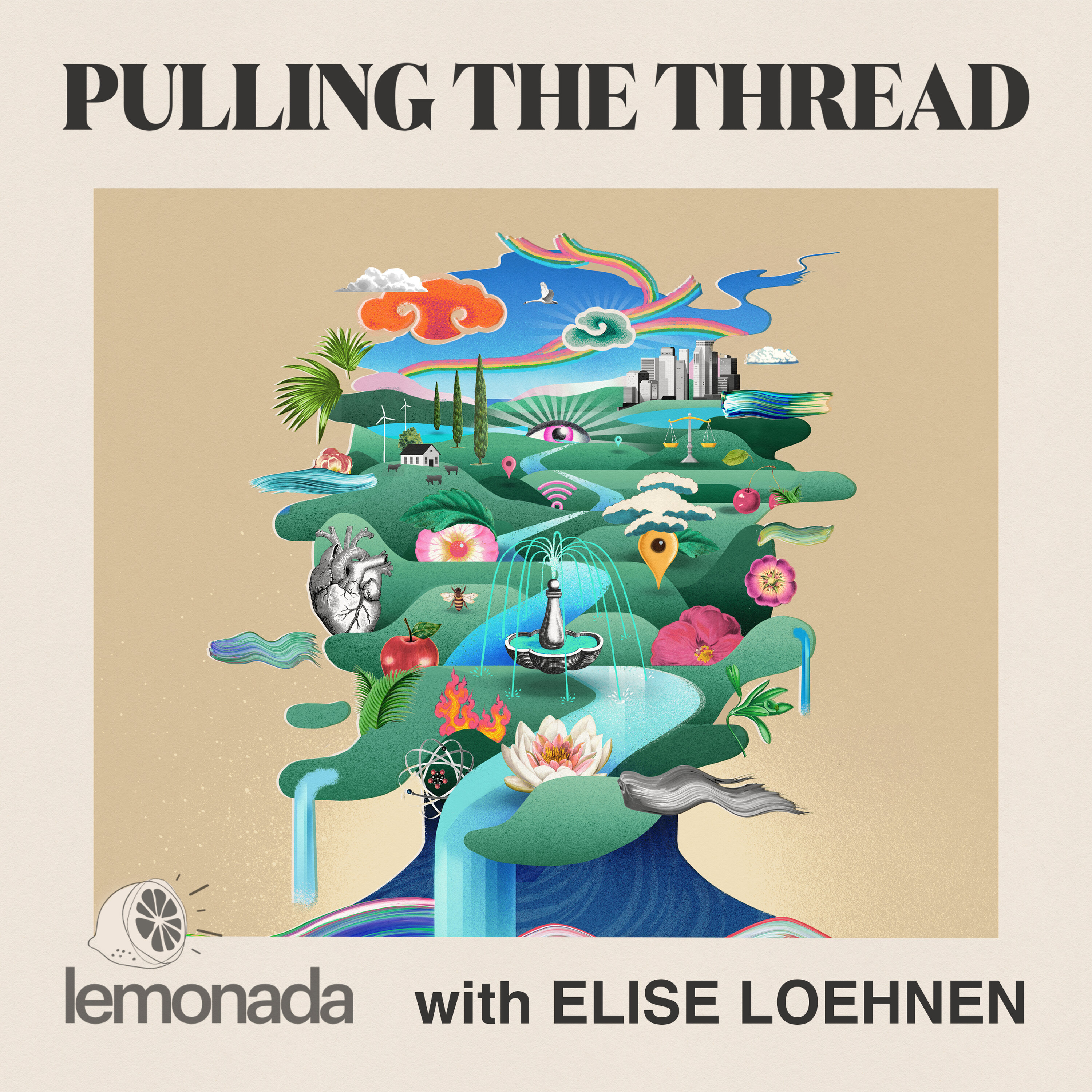
Pulling The Thread with Elise Loehnen
Hosted by Elise Loehnen · EN
Writer Elise Loehnen explores life’s big questions with today’s leading thinkers, experts, and luminaries: Why do we do what we do? How can we understand and love ourselves better? What would it look like to come together and build a more meaningful world?
Sales and Distribution by Lemonada Media https://lemonadamedia.com/
52episodes
Episodes
Newest firstAll episodes
The 63-Second Chance to Rewire Your Brain (Caroline Leaf, PhD)
Aug 7, 202500:38:50Tap to summarize“We can’t change what’s happened, but we can change what it looks like inside of our mind-brain-body network,” says neuroscientist Caroline Leaf, PhD. Here, Leaf shares what she’s learned about how our minds work, and how we can change a thought, a habit, a pattern. And we get into the compelling 63-second intervention from her new book, Help in a Hurry: Simple Tips for Finding Peace When You're Overwhelmed, Anxious, or Stressed. For the show notes, head over to my Substack.See omnystudio.com/listener for privacy information.
Transcribe →When We’re Committed to the Most Extreme Reaction (Thomas Hübl, PhD)
Jul 31, 202500:32:58Tap to summarizeThomas Hübl (a frequent guest here) is a renowned teacher whose work has focused on resilience and healing trauma. In this conversation, we explore: Some of our biggest fractured interpretations of the world, and how we can gain more clarity and connection. The impulse to become very certain about something very quickly, and our tendency to see other people in 2D—and the consequences of doing so. Using our own energy to temper, or shift, a larger energy that feels overwhelming. Different ways to approach conflict. Letting go of our commitment to having the most extreme reaction. And some of our judgments around wellness and self-care. For the show notes, more on Thomas Hübl, and links to all our previous conversations together, head over to my Substack.See omnystudio.com/listener for privacy information.
Transcribe →So You Want to Write a Book? (Monthly Solo)
Jul 28, 202500:45:01Tap to summarizeIn this month’s solo episode, I’m sharing some thoughts on why everyone seems to want a book under their belt, why that may or may not be the right move for you, as well as concrete tips and takeaways about what to think through before you begin putting words on paper. Most importantly, I share some tips and frameworks for getting you through the creative process once you begin. For the show notes (and so many links if you want to go deeper), head over to my Substack.See omnystudio.com/listener for privacy information.
Transcribe →Who Am I If I’m Not Pleasing Anyone? (Meggan Watterson)
Jul 24, 202500:58:58Tap to summarizeToday, I’m talking to Meggan Watterson—theologian and author of The Girl Who Baptized Herself—about the importance of being embodied, the search for self, where we derive power, and the way that culture is edited and passed down to us. Watterson tells the incredible stories behind the Gospel of Mary (and what happened to Mary Magdalene), and the Acts of Paul and Thecla (and what happened to Thecla). We also explore where my work meets hers, and the birth of the seven powers, which become the seven cardinal vices, or the seven deadly sins. For the show notes, head over to my Substack. See omnystudio.com/listener for privacy information.
Transcribe →How to Be an Effective Idealist (Rutger Bregman)
Jul 17, 202500:57:42Tap to summarizeRutger Bregman is the New York Times–bestselling author of Moral Ambition. Today, he shares his model for living a more meaningful life. It’s not about being an idealist, or following your “passions.” It is, in many ways, about effectively solving the problems in our lives using the talents we already have. For Rutger Bregman’s work (including that amazing viral Davos clip, in case you missed it), head over to my Substack. See omnystudio.com/listener for privacy information.
Transcribe →What Would Happen If We Related to Money Differently? (Elizabeth Ralph)
Jul 10, 202500:53:52Tap to summarize“What matters is: Are you free?” asks Elizabeth Ralph. “Do you feel free?” Ralph is a former finance trader, and the founder of the Spiritual Investor, where she now helps people reach financial freedom in less traditional ways. Together, we explore some of my own (self-limiting) stories around money, and how our ego and identity gets wrapped up in our relationship to money. Ralph coaches us through moving toward a place of money neutrality, where it feels like money doesn’t have such a tight grip on us. And she explains why she believes the spiritual world “has to wake up to money.” For links to Elizabeth Ralph’s programs and the show notes, head over to my Substack. See omnystudio.com/listener for privacy information.
Transcribe →The Gold of Midlife (Chip Conley)
Jul 3, 202500:34:44Tap to summarize“The midlife crisis is not a dark night of the soul,” says Chip Conley, founder of the Modern Elder Academy. “It’s a dark night of the ego.” Conley, who is also the author of Learning to Love Midlife, outlines the main myths that we’re led to believe about midlife—and some optimistic data about what actually happens during this chapter of our lives. He shares different frameworks for navigating the transitions that come in midlife. We talk about how in the early parts of our lives, we’re often naturally focused on constantly accumulating knowledge—and how it can be such a relief, and a gift, to be able to shift into distilling it all into wisdom. For links to Chip Conley’s work and the show notes, head over to my Substack. See omnystudio.com/listener for privacy information.
Transcribe →Is This Our Push Up the Spiral? (Monthly Solo)
Jun 30, 202500:53:23Tap to summarizeIn this month’s solo episode, I’m sharing: The tools and people helping me to manage my fear right now. Thoughts on growing up versus waking up. The most important things I’ve learned from the Spiral Dynamics theory of human development, and Ken Wilbur’s concept of holarchies. What makes me believe there is a way for many of us to expand our worldviews and push up the spiral now. And more. For the show notes (and so many links if you want to go deeper), head over to my Substack. See omnystudio.com/listener for privacy information.
Transcribe →How to Think About Genius (Helen Lewis)
Jun 26, 202500:58:08Tap to summarizeIn her new book, The Genius Myth, journalist Helen Lewis explores how and why we label certain people geniuses; and the impact this has on said geniuses, us, and culture at large. Today, we talk about our perception of the exceptional, and some of our more pernicious and dark misperceptions. For the show notes, head over to my Substack. See omnystudio.com/listener for privacy information.
Transcribe →Why We Overthink (Amanda Montell)
Aug 15, 2024Tap to summarizeAmanda Montell is the author of the New York Times bestseller The Age of Magical Overthinking: Notes on Modern Irrationality, as well as Cultish: The Language of Fanaticism and Wordslut. Amanda is a linguistics major from NYU and all of her work centers around the way that words—and thoughts—shape our minds, and how our minds are permeable to other factors, whether it’s the halo effect, confirmation bias, or Cult-like sensibilities. Amanda is also the host of a podcast, “Sounds like a Cult.” Okay, let’s get to our conversation.MORE FROM AMANDA MONTELL:The Age of Magical Overthinking: Notes on Modern IrrationalityCultish: The Language of FanaticismWordslut: A Feminist Guide to Taking Back the English LanguageFollow Amanda on InstagramAmanda’s WebsiteAmanda’s Podcast: “Sounds Like a Cult”Amanda’s Newsletter Learn more about your ad choices. Visit podcastchoices.com/adchoicesSee omnystudio.com/listener for privacy information.
Transcribe →